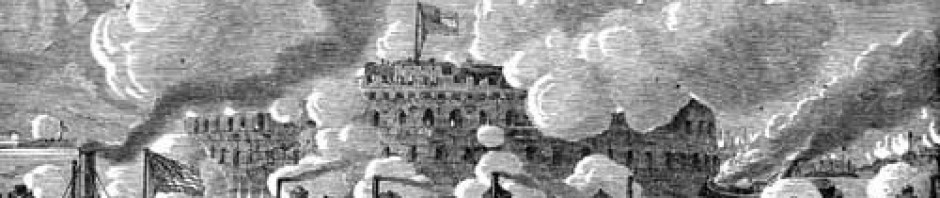
Early on the morning of July 31, 1875 former president and U.S. Senator Andrew Johnson died at his daughter Mary’s home after suffering a couple strokes. An editorial in the August 1, 1875 issue of The Chicago Daily Tribune (Page 4) found some good and some bad in the man:
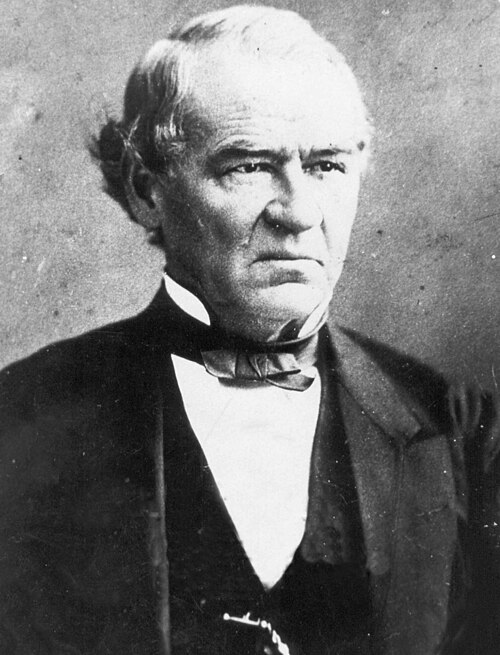
Senator Johnson, March 1875
ANDREW JOHNSON DEAD.
Ex-President ANDREW JOHNSON died yesterday in Tennessee, from the effect of a paralysis with which he had been stricken on Friday. He was born Dec. 29, 1808, and was in the 66th year of his age. His public record is a remarkable one. At 10 years of age he was apprenticed to a tailor, and worked at that in Raleigh, N. C., until he was 18, —teaching himself to read. With his widowed mother, he moved to Greenville, in East Tennessee, where he worked at his trade and married. At 20 years he was elected an Alderman of the town; was Mayor from 23 to 26; a member of the Legislature from 27 to 31; canvassed the State as Presidential Elector at 32; elected to State Senate at 33; to Congress at 35; and, during ten years’ continuous service, took an important and conspicuous part in legislation; served four years (until 1857) as Governor of Tennessee; was then elected United States Senator for six years; arrayed himself on the side of the Union and against Rebellion; was appointed Military Governor of Tennessee from 1862 to 1865; was elected Vice-President November, 1864; inaugurated March 4,1865; succeeded as President of the United States April 15 in the same year; retired March 4, 1869; and in February, 1875, was elected United States Senator, taking his seat on the 4th of March. From his election as Village Aldermen in 1820 to the time of his death he was continuously in elective office, except during the time he served as Military Governor, and the six years following the expiration of his term as President.
ANDREW JOHNSON was no ordinary man. Indeed, he was an extraordinary character. His success was due to no advantages of wealth, family, or education. He was poor at the outset, and remained comparatively poor to the end. He was thrifty and sparing in his expenditures. He was a man of great natural abilities, which made themselves conspicuous despite his illiteracy and want of education; they enabled him to surmount obstacles that were fatal to others. He enjoyed the personal confidence of his immediate neighbors, and of the people of his State, and that confidence had even a wider constituency among the American people.
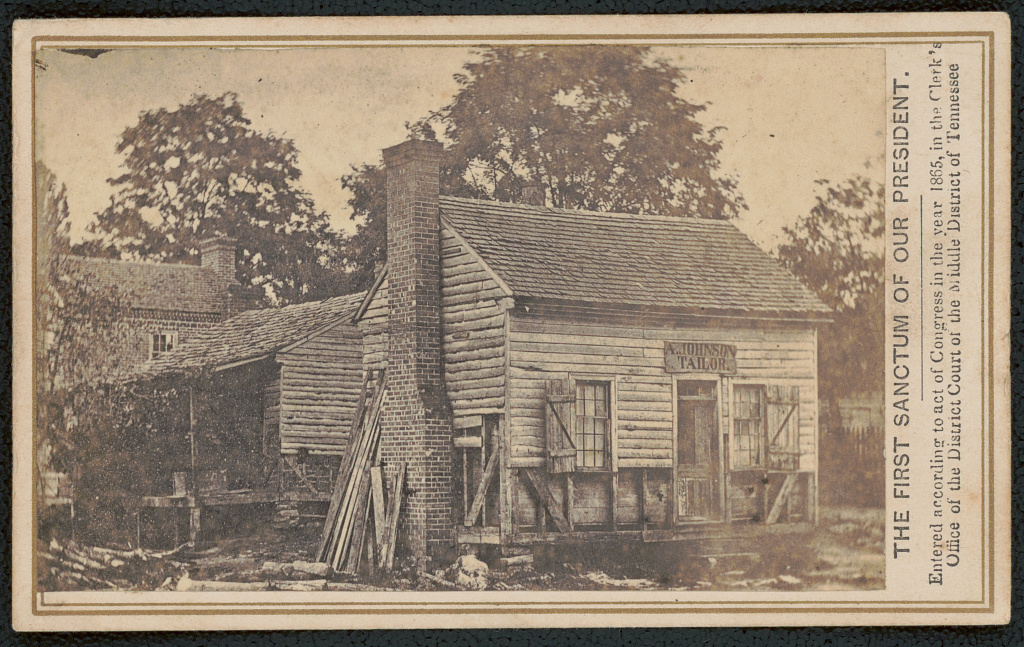
tailor shop in Greenville, Tenn
There was one particular in his character that should never be forgotten, and which should serve as an incentive to all classes, and especially to men holding public station, and that was his inflexible personal honesty. No suspicion of any official turpitude ever existed of ANDREW JOHNSON; and it was to the public faith in his integrity that he owed the victories which he gained in his contests in his own State.
ANDREW JOHNSON’S public career, of course, reached its zenith in the Presidency. The extraordinary events of his Presidency are fresh in the memory of the public. He succeeded Mr. Lincoln under the awful and unprecedented circumstances of assassination. He succeeded at the close of a long bloody civil war, when the Government had to deal with even the more difficult question of the reconstruction of twelve millions of people, four millions of whom had been elevated from the personal condition of slavery to that of freedom and political citizenship. Between the two races, the line which separated the superior from the inferior had been broad and impassable for a century; it had been intensified by the comparative ignorance of the one race and the cultivation of the other; and the problem which met the Administration of Johnson was how to create, upon an enduring basis, Governments for these people in which there should be no distinctions of race or color, and where the master and slave were to be on a common level of right, of freedom, and political equality.
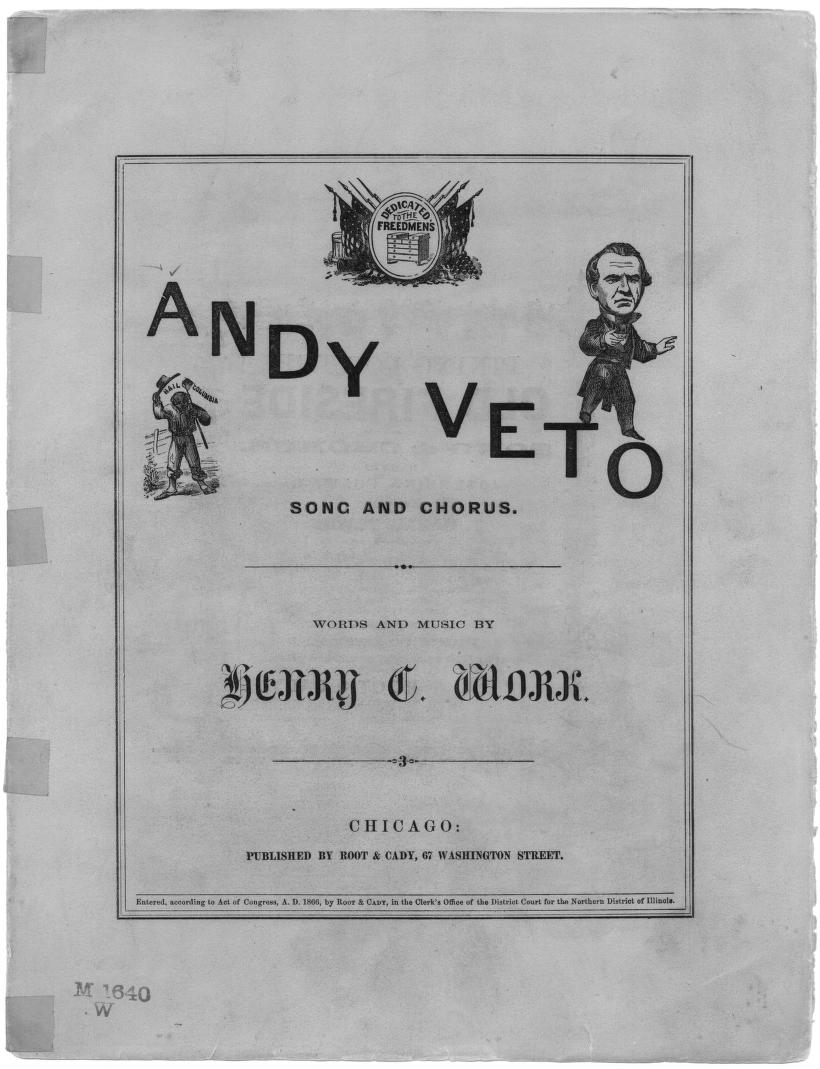
“unbending pertinacity or
obstinacy”
One of the peculiar traits of ANDREW JOHNSON’S character was inordinate egotism, — his complete confidence in himself and in the unbending pertinacity or obstinacy with which he adhered to his own ignorant convictions. Before the meeting of Congress he had marked out his “policy” of negro serfdom, and sought to so commit the Government thereto that Congress would have to acquiesce. But Congress refused, and for three years there was a constant and bitter struggle between the Executive and Legislative Departments. The President vetoed all the measures of Reconstruction, and, so far as he was able, used his authority to nullify and defeat them. Congress, on the other hand, resorted to legislation having for its practical effect to deprive the President of the power to remove and appoint the civil officers of the Government, including even the members of his own Cabinet. The President was not amiable under the controversy. He was defiant and aggressive, and was especially abusive in his speech. The Congress, fortified by an overwhelming verdict of the people, at last resorted to the extreme measure of impeachment, and a formal conviction and deposition failed only by a single vote in the Senate. We do not think it extravagant to say that the general action of Congress in the matter of Reconstruction, as opposed to that of ANDREW JOHNSON, was sustained by five-sixths of the American people; and the actual reconstruction of the ex-Rebel States was only accomplished in spite of and against the unrelenting opposition of the President. This is hardly the occasion to discuss the opposing policies of the President and of Congress in the matter of Reconstruction. Reconstruction is now completed, and the excitements and passions and vindictive feelings that prevailed in 1865 – ‘8 had so far relaxed and faded away that the people of the North, of all parties, generally were gratified when the Legislature of Tennessee, last winter, elected the ex-President to the United States Senate. His election was a personal triumph. He defeated the caucus, through the voluntary demands of the common people of the State that he be elected.
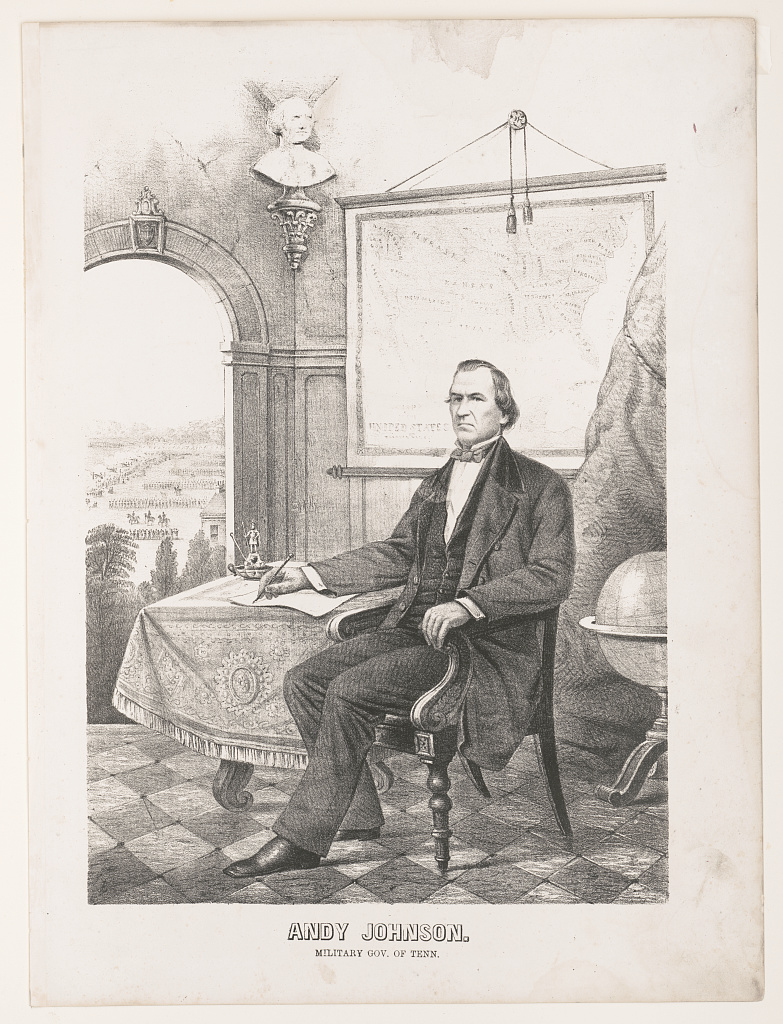
Military Governor of Tennessee
ANDREW JOHNSON, however, by his conduct in 1861, in opposing Secession and Rebellion in Tennessee, gained a place in his country’s history which even a subsequent successful impeachment could not have wholly obscured. He faced Disunion, Treason, Secession, and Rebellion on the soil where these flourished, and where it required courage and patriotism of the highest order to do so.
ANDREW JOHNSON could, however, have hardly adopted any other course. He had bean a living protest against the aristocracy which was founded upon Slavery. He was a man of the common people. Ha had no ancestry or lineage to refer to; he was not a descendant of a family rich in lands or slaves; he was a laborer, living upon the wages which his own hands earned; his appearance as a leader in politics was resented as an encroachment upon the domain of those born to rule; he might be tolerated as a useful retainer, but as a Captain never! Every office he obtained he forced from the “upper class” of his party. At last he reached Congress, and for ten years he was content to represent his immediate neighbors and friends. His party refused to recognize him further. In the Presidential election of 1852 the State had voted for the Whig candidate, and, in 1853, ANDREW JOHNSON was essential to the success of the party, and thus he forced the old nullifiers, abstractionists, secessionists, and aristocrats to take the Tailor of Greenville and make him Governor of the State. Two years later he was again called upon to meet Knownothingism, and succeeded. He made war on the aristocratic wing of the party, and so strong had he become that Tennessee was one of the strongest Union States at the South. It refused to secede in 1861, and, in the end, was declared to have seceded, by fraud and swindling upon the part of its executive officers.
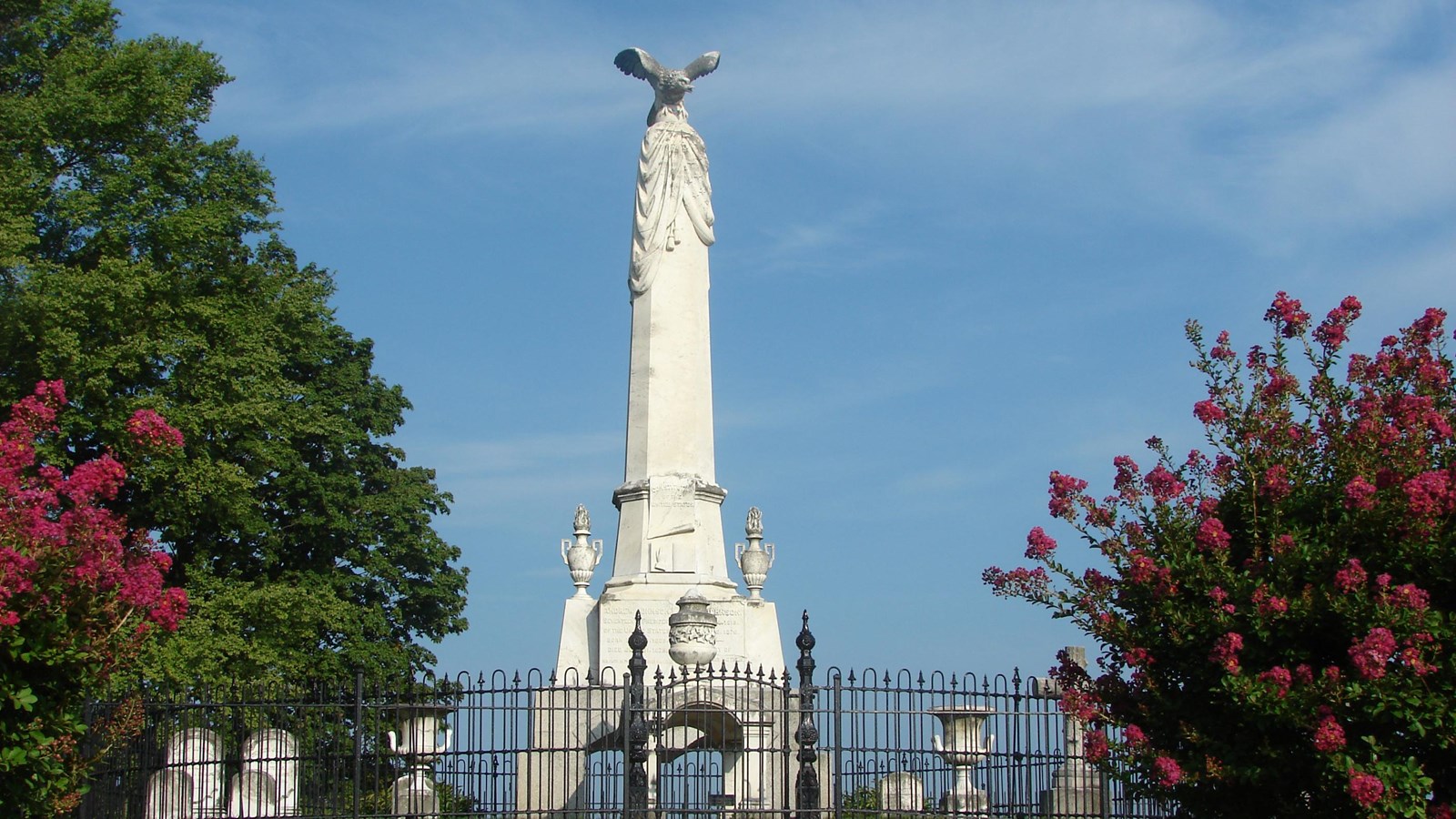
monument at the grave of Andrew and Eliza Johnson in Greenville Tennessee
ANDREW JOHNSON had his faults, personal and political. He had many very wild political vagaries, which, however, despite their absurdity, he honestly believed in. He was excessively dogmatic. He was intolerant in his opinions, and always extreme. Owing to his deficient education, and his residence among a people who at that time were hardly as well improved as himself, and the personal antagonisms he had to encounter because of his humble origin and his mechanical occupation, he in early life had to resort to language in his popular addresses which was far more forcible than elegant. In the vituperation common on the stump in Tennessee he had but one rival, and that was the Whig Parson BROWNLOW, and for nearly fifty years these men led a life of bitter denunciation. JOHNSON was perfectly at home in such a strife, and there were few men, in Tennessee or out of it, who would venture a second time into that kind of discussion with him. In after life, when in more elevated positions, he could not get rid of this rude style altogether. It followed him to the last, attracting more unfavorable comment in his exalted positions than in his earlier days.
He lived to an advanced age, and has gone down to the grave bearing many honors. His own intense combativeness provoked a counter warfare on him. The country will hear of his death with no revival of unkindness. Though condemned by the nation, and at times regarded as a dangerous man, nevertheless, at the grave of the Village Alderman, Mayor, legislator, Congressman, Governor, Senator, Vice-President, and President, all his faults and errors will be overlooked in the brightnes [sic] of the epitaph, — “In the day of treason, he was an American patriot.”
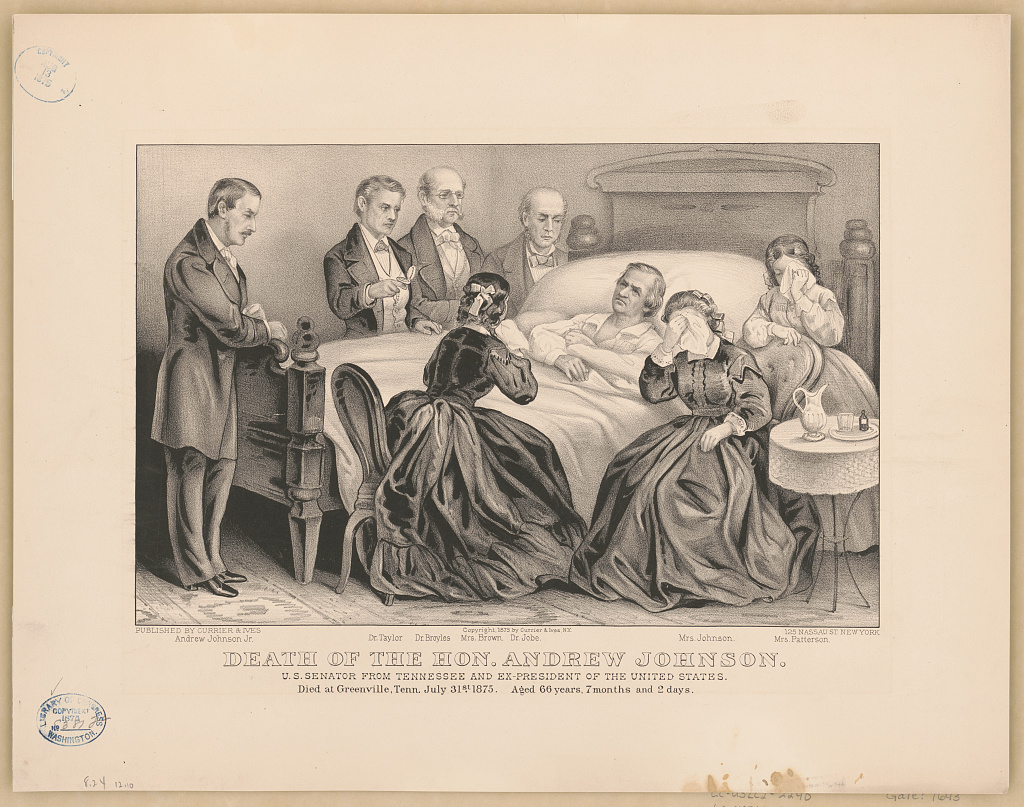
death of an “American patriot”
