On the first day of 1776 John Morgan, the chief medical officer with the American army at Boston sent out a public letter thanking people in Massachusetts for donating hospital supplies to the army. He then went on to request similar donations from people in other colonies. Here’s Doctor Morgan’s letter from the January 29, 1776 issue of Dunlap’s Pennsylvania Packet, The General Advertiser from Philadelphia (page 2):
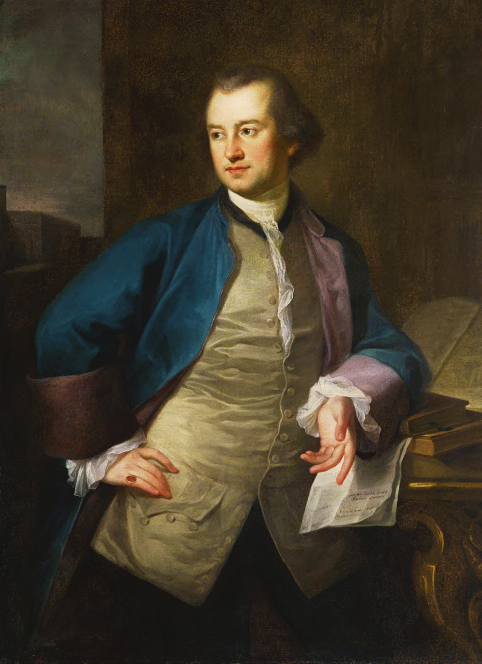
Dr. John Morgan
General Hospital at Cambridge, January 1, l776
TO THE P U B L I C.
IMPRESSED with a lively sense of the spirit of patriotism which so eminently adorns the good people of this country, the subscriber, who is appointed to the chief direction of the sick and wounded, thinks it incumbent on him to make known the seasonable aid he has lately received from the towns of Concord, Bedford, first and second parishes of Sudbury, Acton, Marlborough, Stow and Lincoln. The Hospital having, for some time past, been in great want of old linen for bandages, compresses and lint; of fine tow for dressings; sadlers or sole leather, and web or gartering for tourniquets; of tape, thread, needles, pins, and other articles of a like nature; application was made to the inhabitants of the above-named places for a supply, at such prices as they themselves should think reasonable. No sooner were our wants thus made known to them, than with an alacrity and zeal truly characteristic of the people, the business of collecting those things was immediately undertaken by some of their Select-Men, and other proper persons. The Clergy in particular of the several congregations engaged warmly in the work. To their pious and animated exhortations, from the sacred desk, may be ascribed much of that Christian charity, and those laudable effusions of philanthropy which were manifested on this occasion, and which cannot fail to secure to them the esteem of the public, and to reflect a lasting honour on their attachment to the cause of liberty, and the rights of human nature. What they could, they furnished with an unsparing hand: Offer of pay they nobly rejected, preferring the conscious pleasure that arises from deeds of charity to every selfish, sordid gratification that interest inspires: An instance of benevolence worthy of admiration! Neither is its importance limitted by the intrinsic value of the donation: It holds up a bright example of imitation to others.
Ever since the first establishment of a military hospital among us, there has been too great a scarcity of those essential articles; and though the present supply is truly liberal in respect to the numbers who furnished it, yet its salutary influence cannot be lasting, unless it is still continued from other quarters. May we not therefore expect that a spirit of emulation will be kindled in every humane breast, and an affectionate concern to yield all possible assistance to the wants and distresses of the sick soldiery. Men who chearfully [sic] and hourly expose their lives for their country’s welfare; and who, amidst the destructive rage of battle, willingly encounter danger in all shapes, for its defence, may surely challenge the compassion of those who reap the advantage of their courage, without any of that risk which is inseparable from it. Can it be once doubted, then, whether the inhabitants of other places will be backward to contribute what need to cost them so little, towards laying in a sufficient store of those articles to secure against all future apprehensions of further scarcity or want of them? But whilst they are of a low price in themselves, yet money cannot always purchase them, and from their exceeding utility, in cases of need, they become of inestimable value.
As it is impracticable for the subscriber to make personal application to people at a distance to furnish a supply of what is wanted of this sort for the patients in the hospital, he hopes all printers of the public news will be pleased to give this address a place in their papers: He alto flatters himself the Committees established in different places, especially in all large towns, will be pleased to set on foot a further collection of such of the articles already enumerated, as may be most easy for them to procure, especially of old sheets and soft worn linen; and to forward the same to the Camp with all possible dispatch. The expence of conveyance, if any, will be cheerfully paid, and the generous donors may rest assured their contributions will be managed with the strictest care to prevent waste, and meet with due acknowledgment from their humble servant, JOHN MORGAN,
Director General of the Continental Hospital,
and Chief Physician to the Army.
N. B. Blankets are greatly wanted for the Hospital; for which a suitable price will be given, if sent to Cambridge. Any persons having blankets to dispose of, who live at a distance, if they will be to kind as to send notice thereof by the post, mentioning the quality and price of them, shall have an immediate answer.
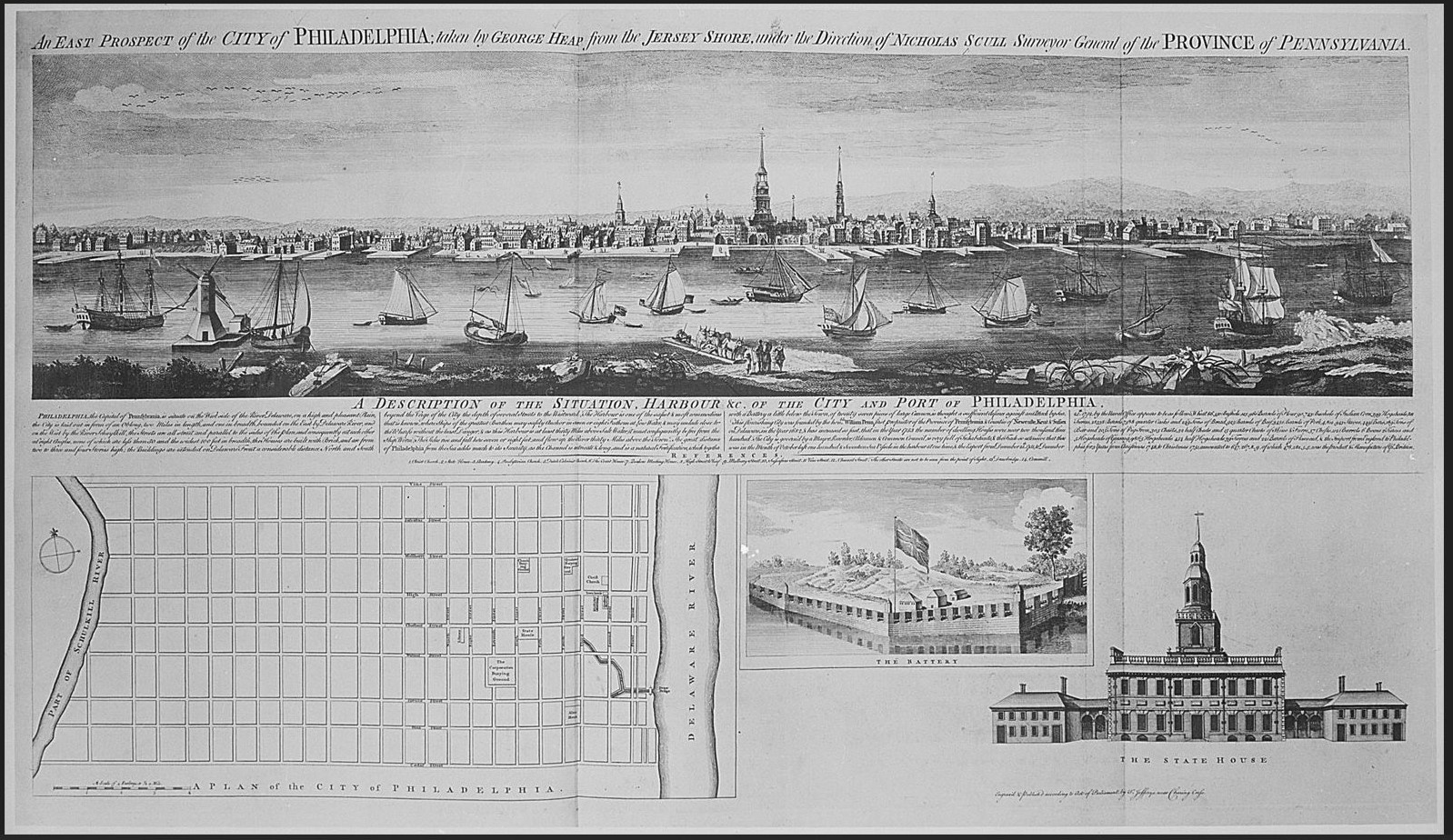
Philadelphia from New Jersey, 1768
The Spirit of ‘Seventy-Six, mentions Dr. Morgan in a section on “Health, Hospitals and Medicine.” Like the American Civil War, more soldiers died from disease than from battlefield wounds. The large number of deaths from disease was due to the general condition of medicine in the 18th century (“more medieval than modern”) and the specifics of the American situation. For the most part American soldiers were healthy but America had few well-trained doctors, almost hospitals, “and a desperate want of medicines, surgical instruments, bandages, bedding and other necessities.” Congress did not adequately address the medical issues. It did not provide enough funds for reasonable medical wages, and “arrangements for hospitals, food. clothing, bedding and medicines were likewise niggardly.”
Dr. Morgan replaced Benjamin Church as director-general. Morgan studied medicine at Edinburgh and on the continent and helped found the Philadelphia College of Medicine. Although he “was generally regarded as the first doctor of the country … within a year Dr. Morgan had fallen victim to a combination of professional jealousy and impossible conditions of work, and was cavalierly dismissed” [1]
You can read more about John Morgan at University of Pennsylvania.
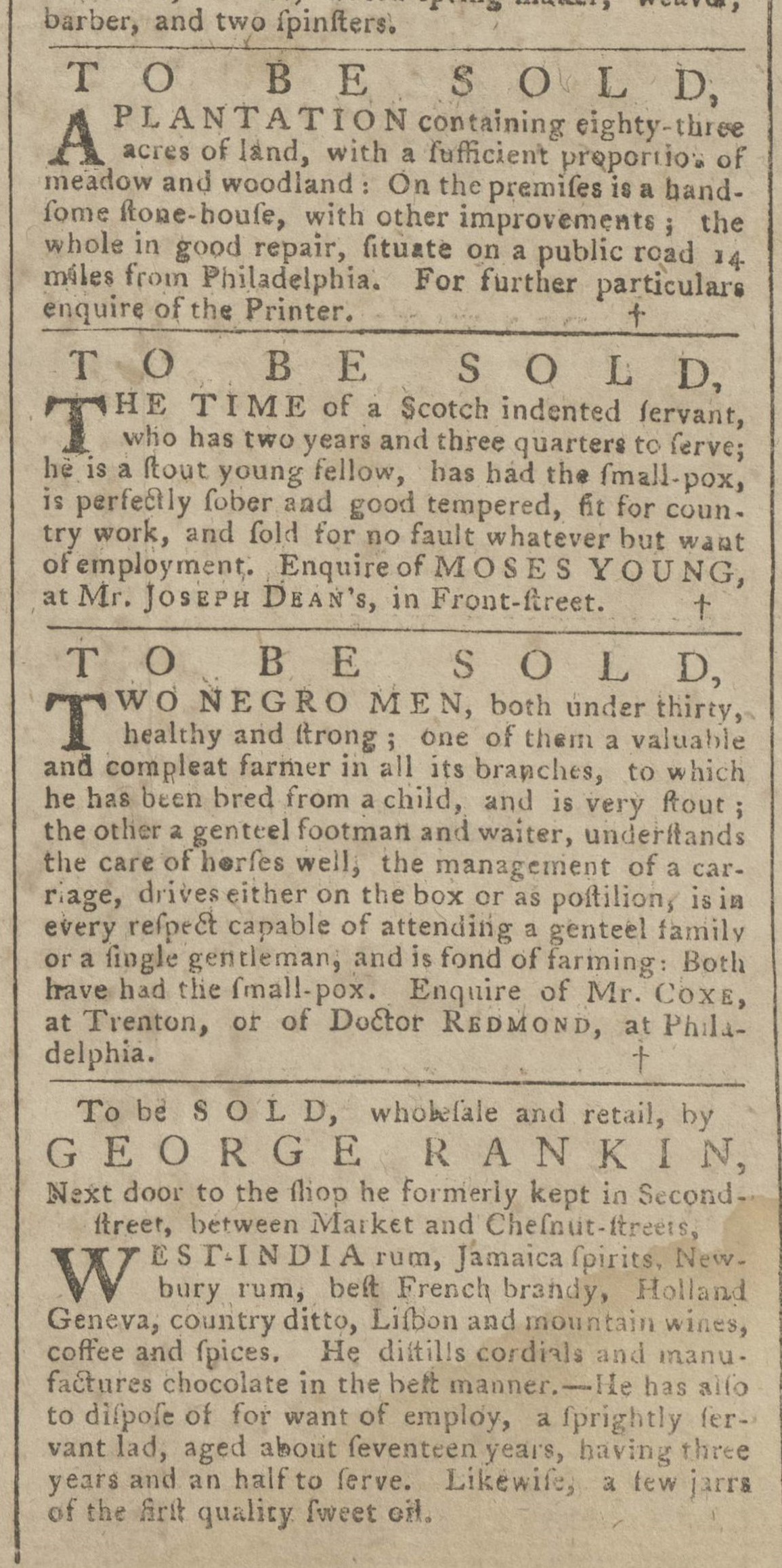
In the last post I mentioned that Common Sense was published on January 9, 1776. When I glanced through the January 29, 1776 issue of Dunlap’s Pennsylvania Packet, The General Advertiser, I noticed that by January 29th a second edition was already being sold, although there was a dispute with the author about what was being printed. I also noticed some other advertisements. Slavery was legal in Pennsylvania in 1776. Also, a couple ads that reminded me of high school social studies so long ago – indentured servants and the three-way trade between Britain, the Caribbean, and the English colonies in North America (“West-India rum Jamaica spirits”).
According to the National Park Service, “In 1780 the Pennsylvania Assembly passed the Act for the Gradual Abolition of Slavery into law. It was the first of several legislative enactments to abolish slavery in the United States between 1780 and 1804. The act did not free anyone immediately …” Apparently, Triangular trade was more complicated than I remember being taught.
for sale
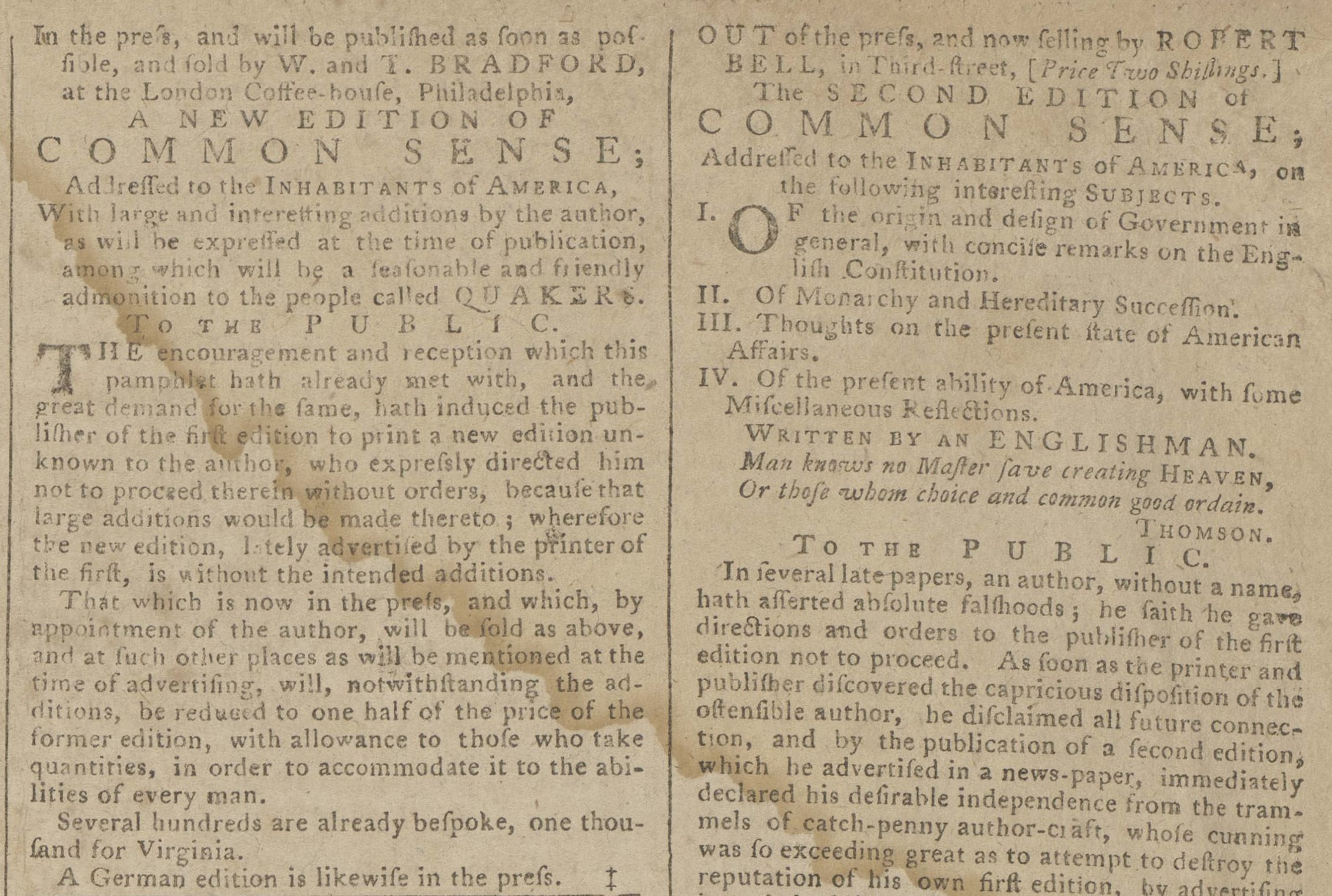
flying off the presses
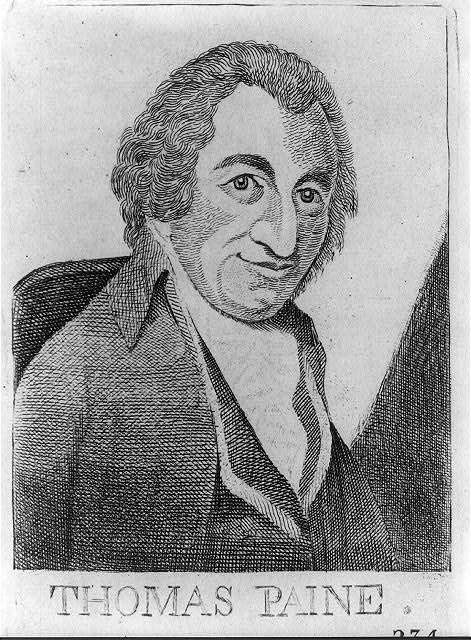
it’s Common Sense
As of February 7, 2026 this issue of the newspaper was available at the Library of Congress.
From the Library of Congress: the January 29, 1775 issue of Dunlap’s Pennsylvania Packet, The General Advertiser from Philadelphia, Pennsylvania; portrait of Thomas Paine.
From Wikipedia: Angelica Kaufman’s 1764 portrait of John Morgan.
From the National Archives: the image of Philadelphia (“Taken by George Heap from the Jersey shore, under the direction of Nicholas Scull, surveyor general of the province of Pennsylvania. Engraved and published according to an act of Parliament by T. Jeffreys, near Charing Cross.”)
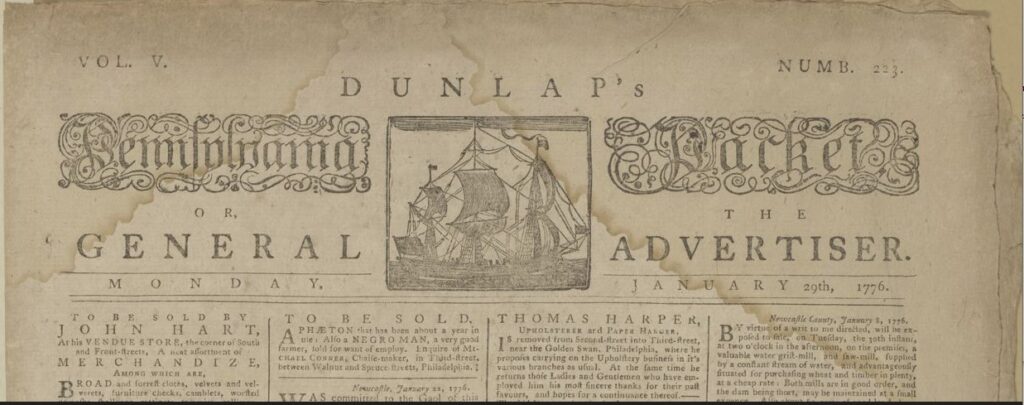
the newspaper
- [1]Commager, Henry Steele and Morris, Richard B. (eds). The Spirit of ‘Seventy-Six. Edison New Jersey: Castle Books 2002, pages 815-816] ↩
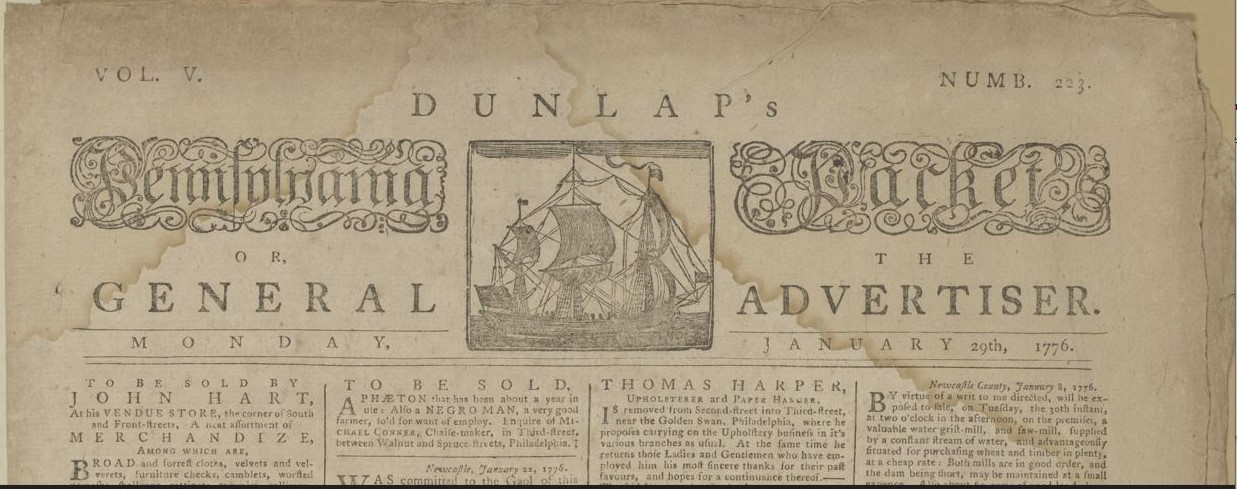
the newspaper
