The first major military actions of the American Revolutionary War occurred on April 19, 1775 when the British sent a force from Boston to capture and destroy colonial military supplies. About eleven months after the Battles of Lexington and Concord, the Continental Congress passed a resolution encouraging patriots throughout the thirteen colnies to disarm their opponents. In its April 12, 1776 issue (at the Library of Congress), The Virginia Gazette published the March 14th resolution.
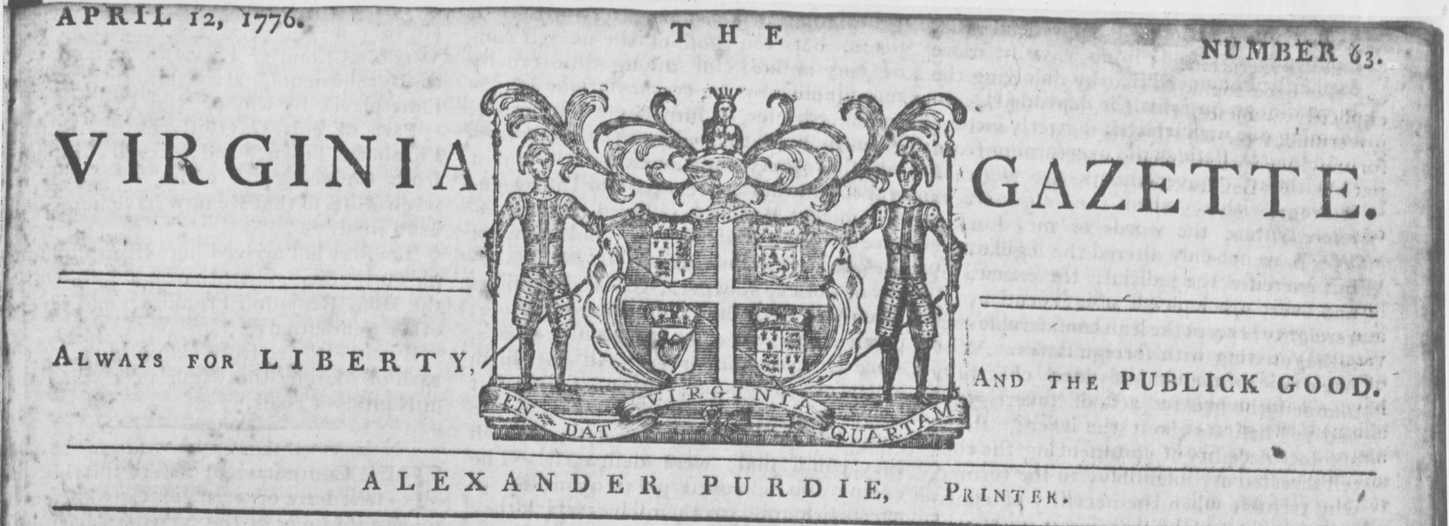
The Virginia Gazette
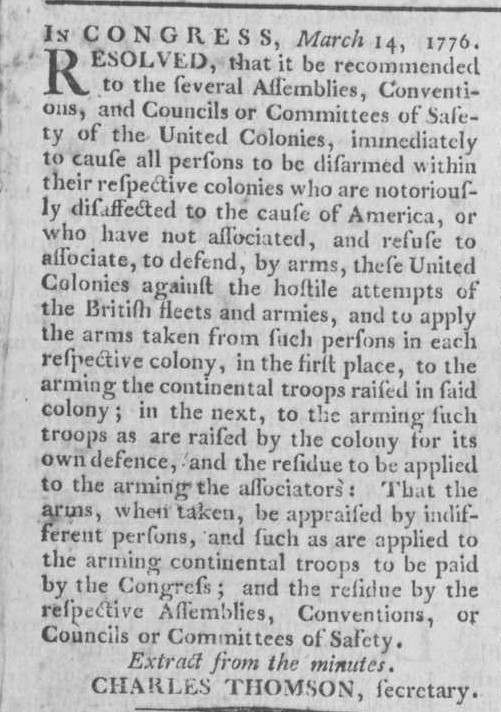
disarm the disaffected
__________________________________________
Here’s how the Library of Congress published the resolution (with more modern spelling) in 1906 (at the Library of Congress, Volume 4, page 205)
Resolved, That it be recommended to the several assemblies, conventions, and councils or committees of safety of the United Colonies, immediately to cause all persons to be disarmed within their respective colonies, who are notoriously disaffected to the cause of America, or who have not associated, and shall refuse to associate, to defend, by arms, these United Colonies, against the hostile attempts of the British fleets and armies; and to apply the arms taken from such persons in each respective colony, in the first place to the arming the continental troops raised in said colony; in the next, to the arming such troops as areraised by the colony for its own defence, and the residue to be applied to the arming the associators; that the arms when taken be appraised by indifferent persons, and such as are applied to the arming the continental troops, be paid for by Congress, and the residue by the respective assemblies, conventions, or councils, or committees of safety.
Resolved, That a copy of the foregoing resolve be transmitted by the delegates of each colony, to their respective assemblies, conventions, or councils, or committees.
The same issue of The Virginia Gazette included a report about the condition of Boston after the British evacuated it on March 17, 1776:
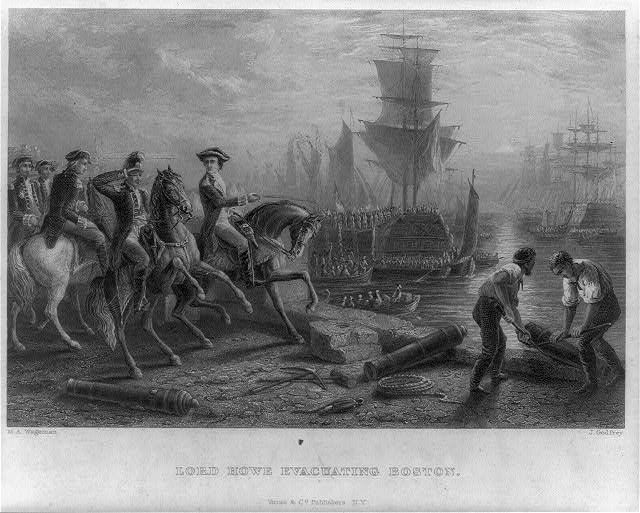
The British are leaving!
CAMBRIDGE, March 21.
The joy of our friends in Boston, on seeing the victorious and gallant troops of their country inter [sic] the town, almost at the heels of their barbarous oppressors, was inexp[???] great. [?The mutual con??]gratulations which soon afterwards took place, between those of the nearest connexions in life, for a long time cruelly rent asunder by the tyranny of our implacable enemies, surpasses description. From such a set of beings the preservation of property was not expected; and it was found that a great part of the evacuated houses had been pillaged, the furniture broke and destroyed, and many of the buildings greatly damaged. It is worthy of notice, however, that the buildings belonging to the hon. John Hancock, esq; particularly his elegant mansion-house [?], were left in good order. All the linen and woollen goods, except some that might be secreted, were carried off by the enemy. All the salt and molosses, which they could find, were destroyed. The enemy also destroyed great quantities of effects belonging to themselves which they could not carry off, such as gun carriages, and other carriages of various kinds, house furniture, &c. together with a quantity of flour and hay. All their forts, batteries, redoubts, and breastworks, remain entire and complete. They left many of their heaviest cannon, mounted on carriages, and several of them charged; all of them were either spiked up or had a trunnion beat off. They also left several of their largest mortars; quantities of cannonshot, shells, numbers of small-arms, and other instruments of war, have been found in many parts of the town, thrown off the wharves, concealed in vaults, or broken in pieces. In the fort on Bunker’s Hill, several hundred good blankets were found. It is said about 15 or 20 of the king’s horses have been also taken up in the town; and it is thought about the same number of Tories remain behind, all the rest being gone with the fleet.
The prisoners, who were long confined in jail, were cruelly carried off in irons.
Tuesday evening the enemy set fire to the block-house and barracks at the castle, and yesterday they were employed at the same place in blowing up and demolishing the fortifications.
A part of the continental army are now employed in fortifying Fort Hill, in Boston, to secure the town against any attacks which may be made by the enemy’s ships of war.
The enemy’s fleet, consisting of about 100 sail, still lie between the Castle and Nantasket.
We have since heard they have all put to sea, by their course supposed to be bound for Halifax.
Two vessels arrived at Portsmouth the beginning of this week, and brought in six tuns of gunpowder.
We have just learned that between 90 and 100 pieces of cannon, 2 or 3000 bushels of wheat, and a vast quantity of coal, have been found in Boston, also upwards of 100 horses.
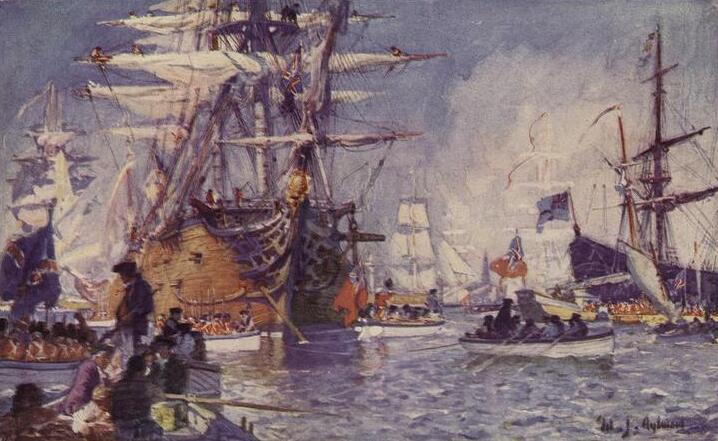
“implacable enemies” evacuate Boston
The Spirit of ‘Seventy-Six mentioned Boston and the disarmament resolution in its introduction to a section called Independence Like a Torrent. There were many factors that caused the torrent: Washington’s victory before Boston, Common Sense, King George III’s intransigence; decisive steps by the Continental Congress – authorizing privateers, embargo on exports to Britain and British West Indies, sending Silas Deane to France to negotiate for aid and tell the French total separation was increasingly probable, resolving to disarm Loyalists, excluding British ships from American ports and trade; a change of opinion in the states – except for the Middle States, “the radicals succeeded in getting control of the machinery of government, and committing their states to independence.” For example, on April 12th North Carolina instructed “her delegates to support independence.” “Virginia and Massachusetts had precipitated the issue with the mother country; now at last both embraced the logical conclusion of their policies and their arguments, and committed themselves to independence.” At meetings in Massachusetts towns throughout May and June freemen voted overwhelmingly for independence. On May 15th in Williamsburg the Virginia Convention voted unanimously for independence. That night Patriots in Williamsburg raised a “Union Flag of the American States.” On May 10th the Continental Congress passed a resolution instructing the colonies to institute governments best suited for happiness and safety of their constituents and America.[1]
According to the University of Pennsylvania, Charles Thomson “was the first tutor hired by the Academy of Philadelphia (the forerunner of the University of Pennsylvania).” Thomson was Pennsylvania’s leading protest organizer after the 1765 Stamp Act. From 1774 he served fifteen years as Secretary to the Continental Congresses and Confederation Congress. At Colonial Willamsburg you can read an interview with The Virginia Gazette owner Alexander Purdie, played by Dennis Watson,
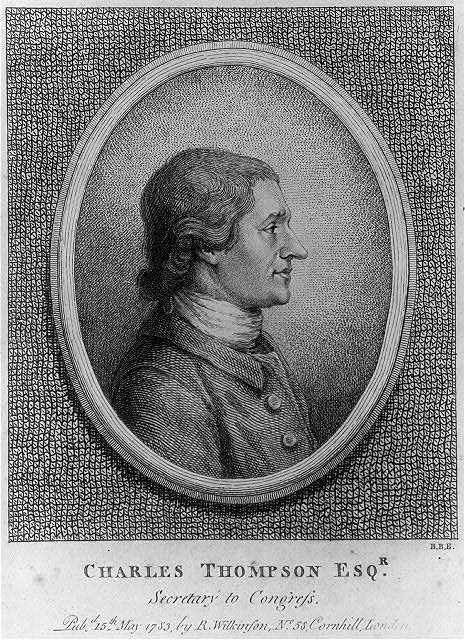
Pennsylvania Patriot
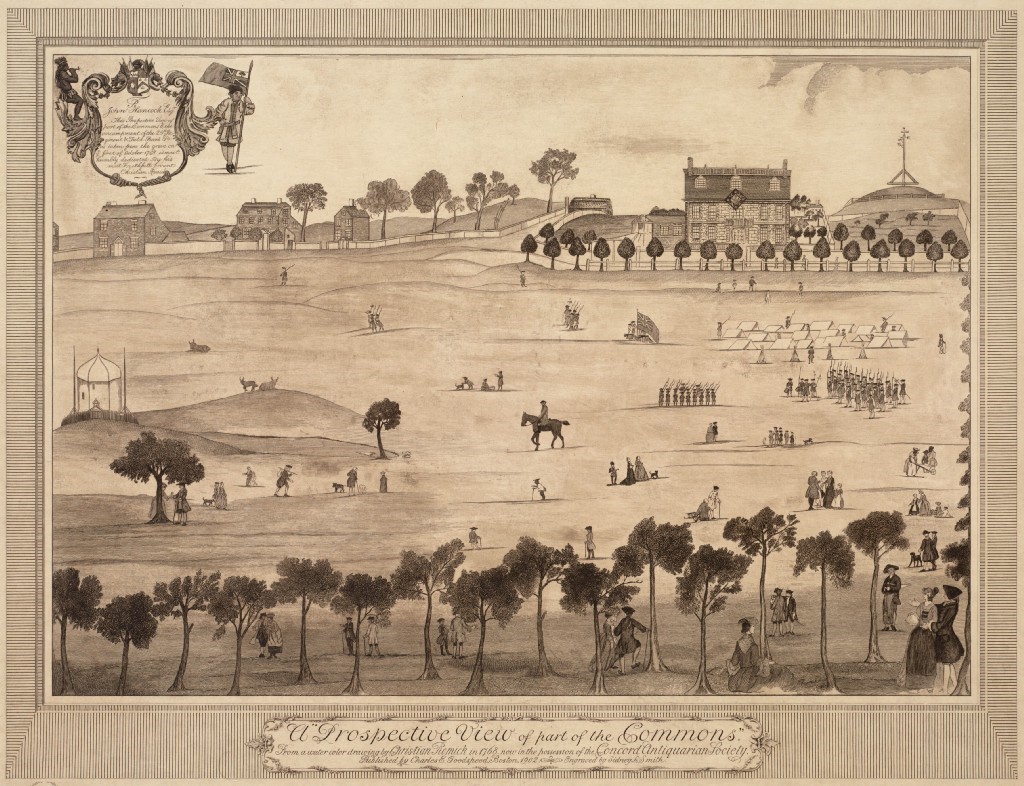
Hancock mansion-house at the Commons
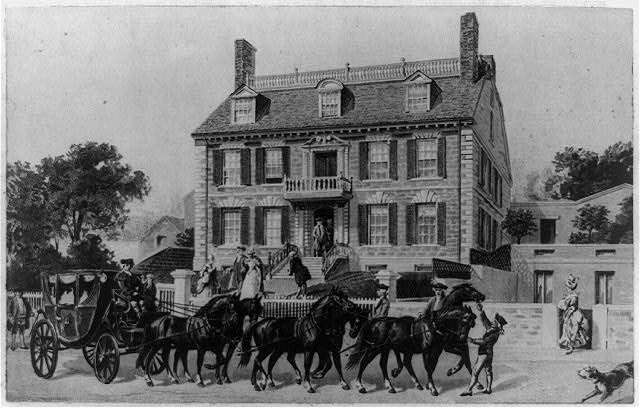
Hancock’s house close up
From the Library of Congress: the April 12, 1776 issue of The Virginia Gazette; Lord Howe’s leaving Boston with some of the king’s horses; the portrait of Charles Thomson; John Hancock’s mansion; 1862 view of Williamsburg during Peninsula Campaign; Civil War envelope
From Wikipedia: William James Aylward’s 1911 painting of the British evacuation of Boston; part of Boston Commons with Hancock mansion upper right – “Notes: 1902 engraving by Sideny L. Smith after Christian Remick’s 1768 watercolor. Note 2.) Print dedicated to John Hancock. Note 3.) Print depicts October 1, 1768.” According to the article, “The Hancock Manor became the headquarters of General Henry Clinton while he remained in Boston; he took command at Charlestown in September 1775. Both house and stables were in part occupied by the wounded from Bunker Hill. The house, however, remained relatively intact during the occupation, the furniture showing little signs of damage and the paintings none.”
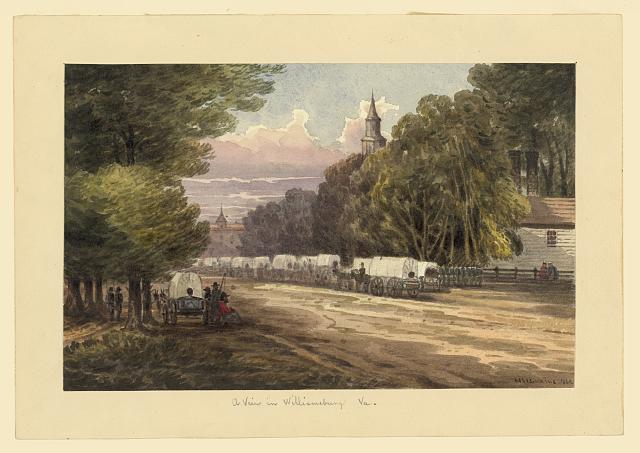
On to (the outskirts of) Richmond!
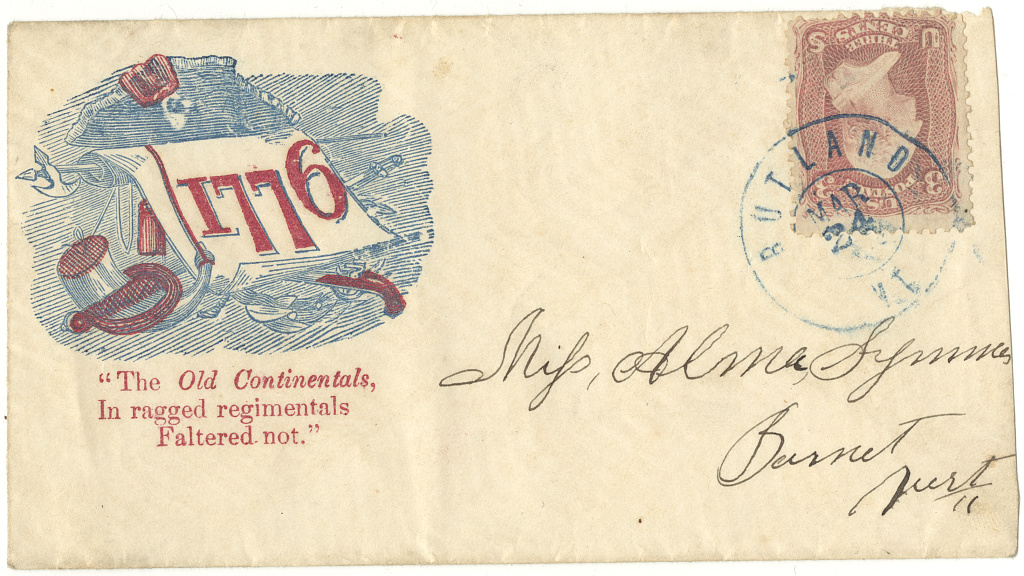
revolutionary inspiration
- [1]Commager, Henry Steele and Morris, Richard B. (eds). The Spirit of ‘Seventy-Six. Edison New Jersey: Castle Books 2002, pages 292-293] ↩
