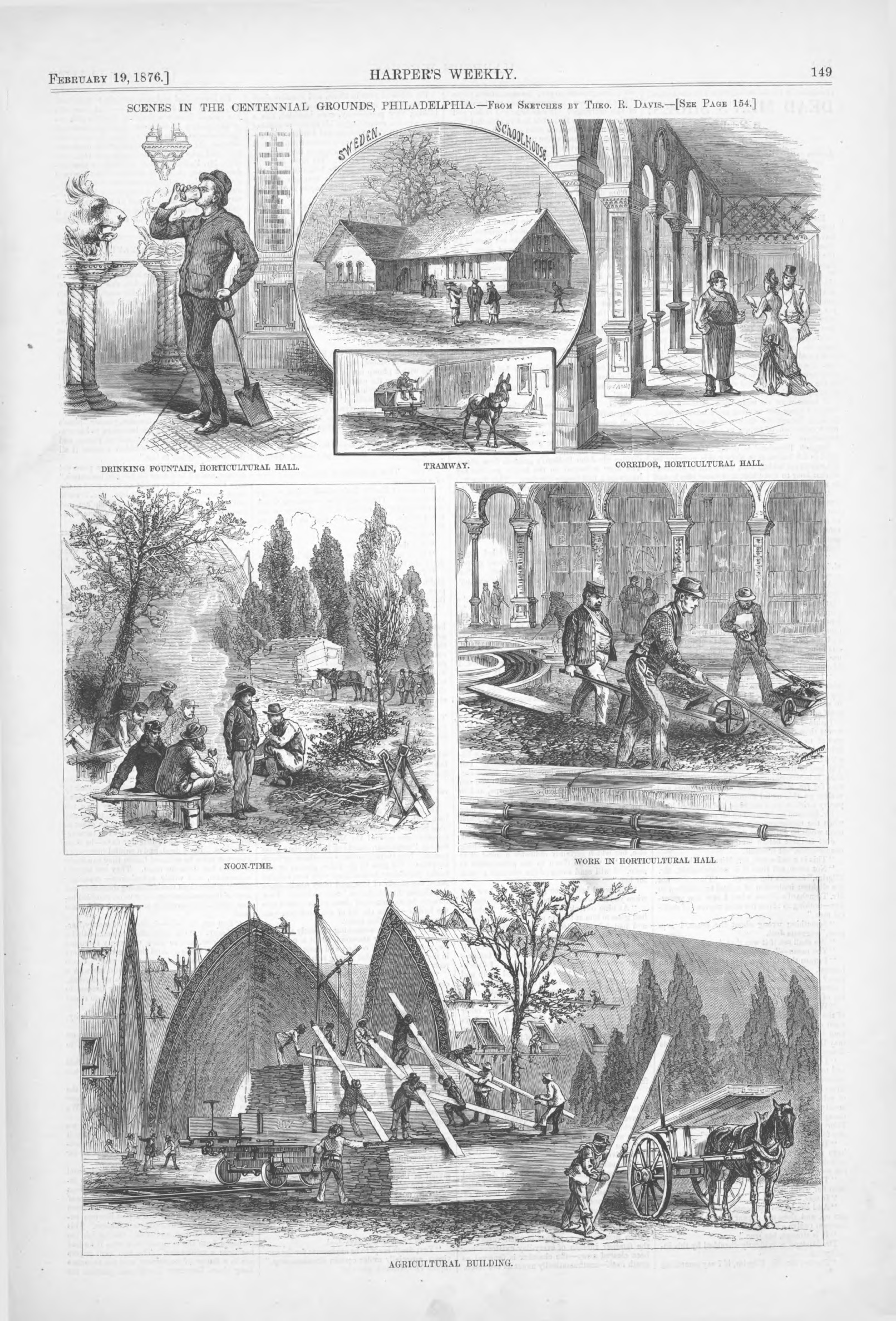
In its February 19, 1876 issue Harper’s Weekly published some artist’s sketches from the grounds of the U.S. Centennial Exposition in Philadelphia as the May 10th opening approached:
at the workste
CENTENNIAL SKETCHES.
We give on page 149 a few choice sketches from our artist’s portfolio — notes, as it were, of a day’s ramble through the Centennial Exhibition grounds, The “Swedish School-House,” situated quite near the main Exhibition building, and almost joining the Judges’ Pavilion, is destined to be an attraction to many visitors, who will see in the simple but exquisite little structure a model for the future school for their little ones. A short walk, during which you cross, by rustic bridges, a quiet brook, brings you to the Horticultural Building, which is in itself an exhibition worth quite a journey to see. In architectural features it is Moorish. The exterior is rich in color and ornament; the interior is even more florid in effect. The corridors formed by columns and arches of variously colored brick; the iron truss brightened with brilliant tints. Great carved heads of lions for drinking fountains attract attention for the moment; next you gaze through glass into the forcing-house, upon orange-trees the branches of which are filled with fruit, and the tropical verdure surrounding seems out of place as you turn and look at the workmen in overcoats bringing in the few last loads of rich earth with which to complete the great garden of the main building. These beds are to be heated by numerous steampipes, as will be seen by the sketch, and within a month are to be ready for the reception of plants permanently arranged for the Exhibition.
In your walk from Horticultural Hall to the Agricultural Building you pass the nearly finished American Restaurant, picturesquely located in a grove of oaks, within which are groups of dark fir. The workmen are clustered about the small fires which, if carefully guarded, they are permitted to build for comfort during their noon hour. While warming numbed hands at one of these chip comforts, our artist’s attention is invited to “the way the boss will make them nagurs git when the whistle blows; he wants that car unloaded ter wonster, Sir.” Suffice to say that car-load of lumber for the Agricultural Building was unloaded by ten minutes after one by “colored help.” Work upon the main building is nearly complete, but as many as fifty structures, additions, etc., are yet to be finished, and all of this by the 10th of next May.
The National Centennial Bulletin of America, 1776-1876 (at the Library of Congress) showed a couple of the buildings that Harper’s Weekly mentioned above.
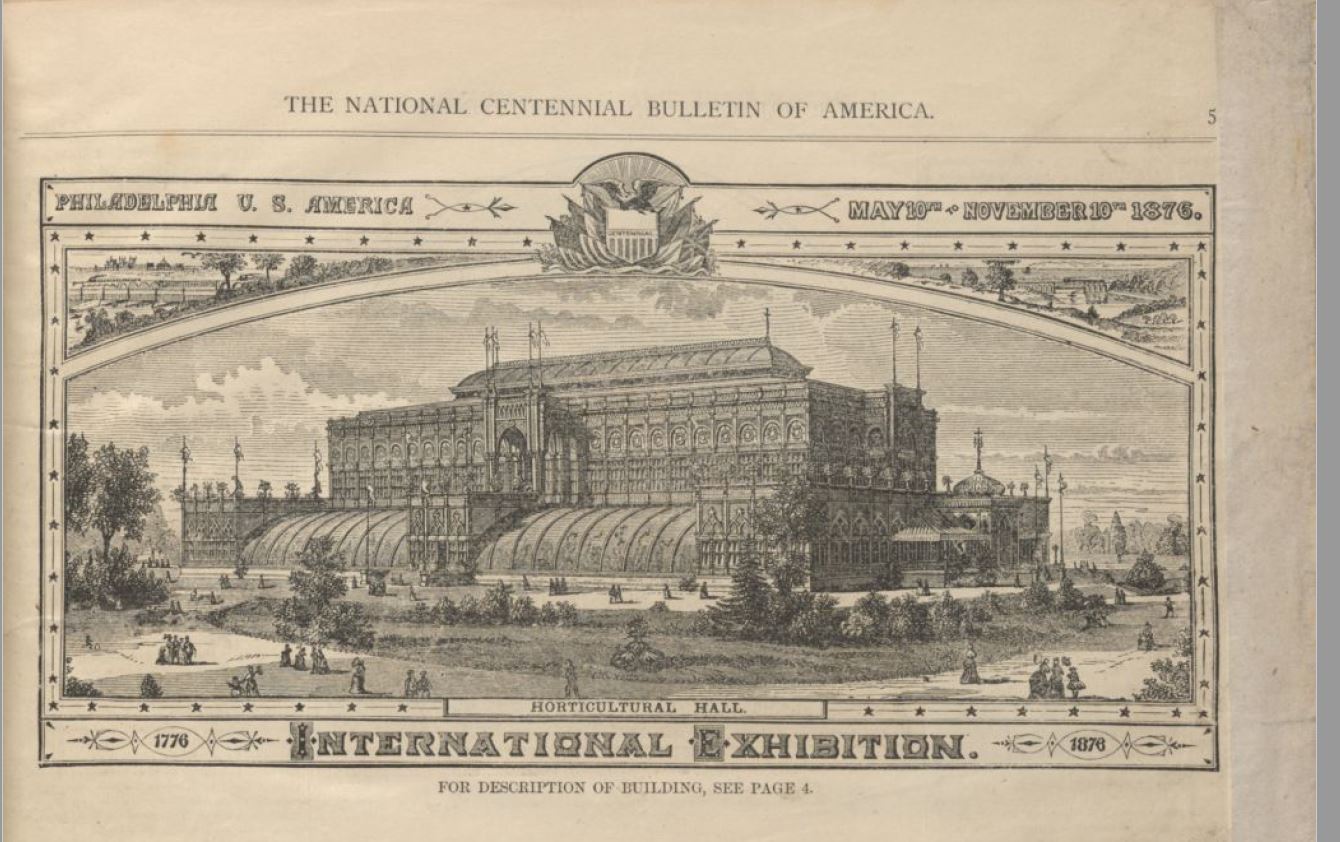
Horticulture Building
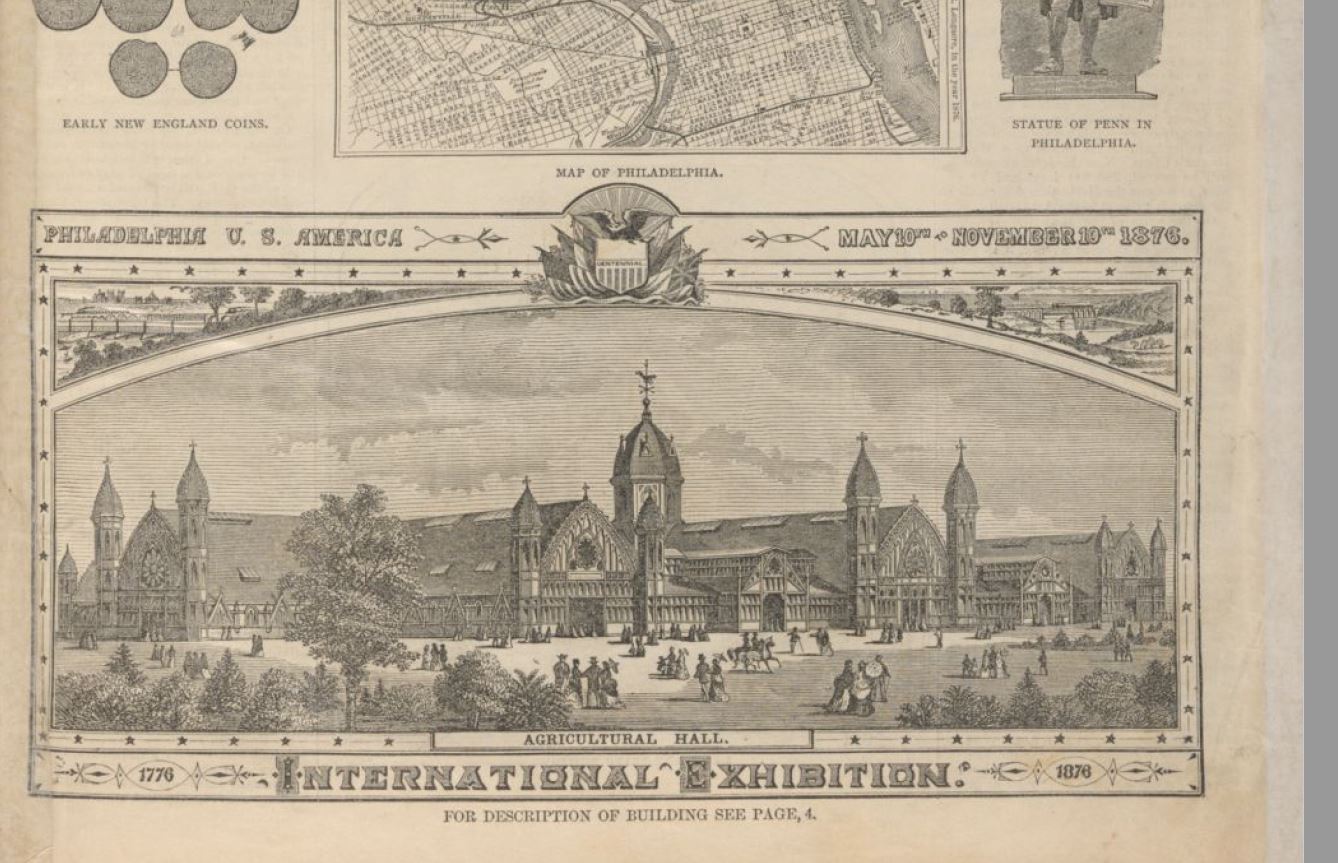
Agriculture Building
George Washington would have been 294 this past February 22nd. I was sorry I missed it, but I hadn’t organized my time right. Anyway, here’s part of David McCullough’s conclusion to 1776:
“… Above all, Washington never forgot what was at stake and he never gave up.
“Again and again, in letters to Congress and to his officers, and in his general orders, he had called for perseverance – for ‘perseverance and spirit,’ for ‘patience and perseverance,’ for ‘unremitting courage and perseverance.’ Soon after the victories of Trenton and Princeton, he had written, ‘A people unused to restraint must be led, they will not be drove.” Without Washington’s leadership and unrelenting perseverance, the revolution almost certainly would have failed. As Nathanael Greene foresaw as the war went on, ‘He will be the deliverer of his own country.'”[1]

George Washington’s centennial
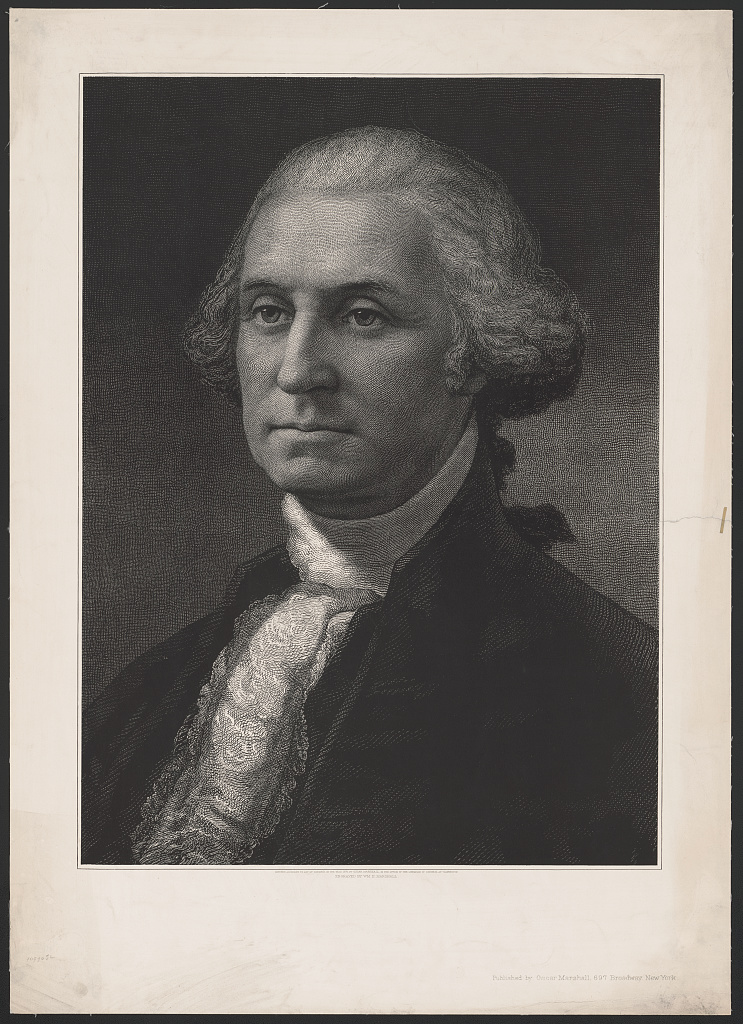
“he never gave up”
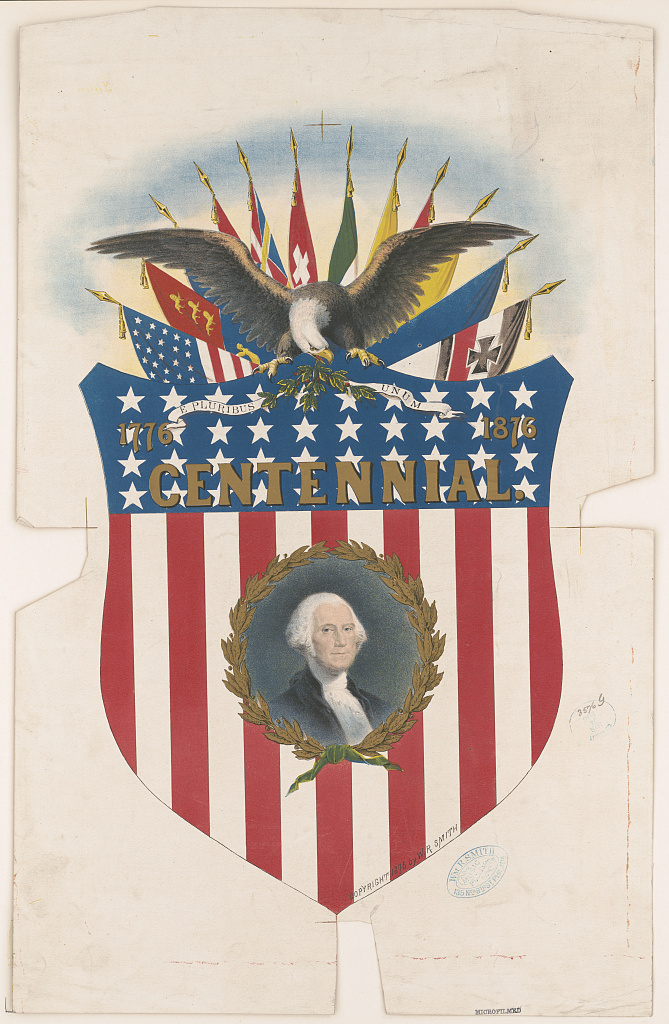
thanks to George Washington and others
According to 1776 the Washington quote is from a letter to Lord Stirling fromThe Papers of George Washington, Revolutionary War Series , VII,110; the Nathanael Greene quote is from a letter to James Varnum from The papers of Nathanael Greene, X,36.
You can see Harper’s Weekly for 1876 at Hathi Trust.
From the Library of Congress: Centennial Bulletin, the whole thing is 48 pages; the image of a Philadelphia commemoration of the centennial George Washington’s birth – “The event shown in this lithograph is the civic procession held in Philadelphia on February 22, 1832, in honor of the centennial anniversary of George Washington’s birth. Onlookers cheer the participants in front of the Second Bank on Chestnut Street, between 4th and 5th Streets. City officials and other prominent people of Philadelphia lead the parade, followed by tradesmen, volunteer fire companies, and the military. The top-hatted artisans (the artificers of the title, who struck special commemorative medals for the event) are led by a mounted parade marshal, their craft represented on a float carrying men operating a coin press. The print is by Manneville Elihu Dearing Brown (1810-96), a premier early Philadelphia lithographer and painter who received some early training in Boston. Several years after producing this work, he moved to Upstate New York, where he concentrated on portrait painting.”; Washington portrait, c.1876; Centennial shield – Print shows a stars and stripes shield with a bust portrait of George Washington, facing right, within a wreath, an eagle perched on the top of the shield, and the American flag with several other flags representing other countries. A ribbon on the shield states “E Pluribus Unum.”;
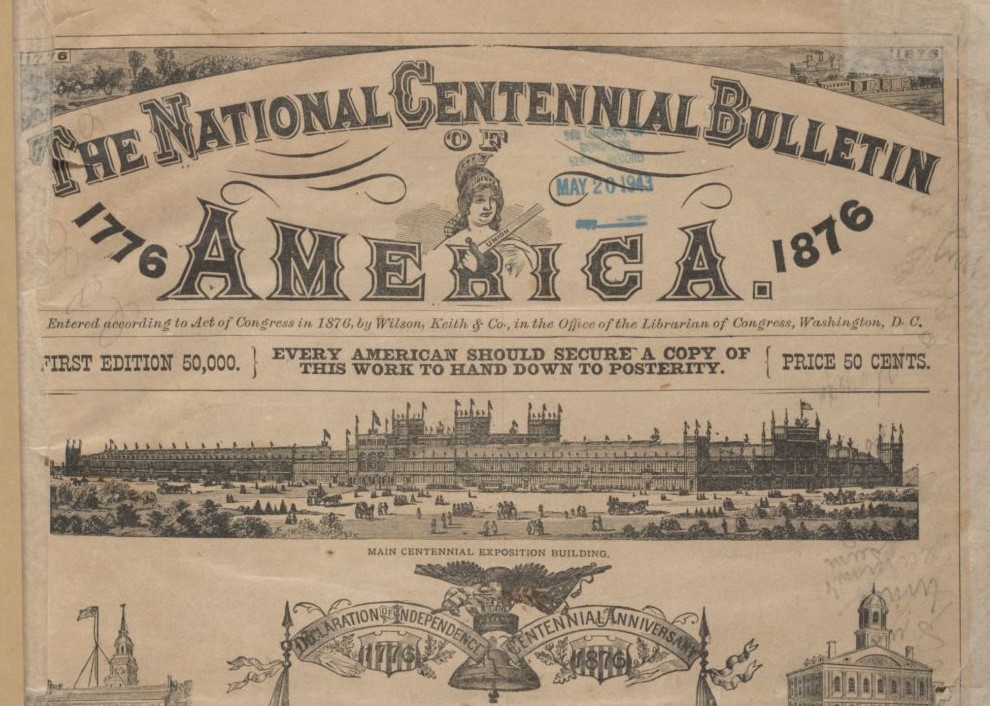
souvenir’s holding up great after 150 years
- [1]McCullough David, 1776. New York: Simon & Schuster Paperbacks, 2006. Pages 293 – 294. ↩
