“practice at once wise and beautiful”
President Grant’s seventh Thanksgiving Proclamation (from Pilgrim Hall Museum):
THANKSGIVING DAY 1875
BY THE PRESIDENT OF THE UNITED STATES OF AMERICA – A PROCLAMATION
In accordance with a practice at once wise and beautiful, we have been accustomed, as the year is drawing to a close, to devote an occasion to the humble expression of our thanks to Almighty God for the ceaseless and distinguished benefits bestowed upon us as a nation and for His mercies and protection during the closing year.
Amid the rich and free enjoyment of all our advantages, we should not forget the source from whence they are derived and the extent of our obligation to the Father of All Mercies. We have full reason to renew our thanks to Almighty God for favors bestowed upon us during the past year.
By His continuing mercy civil and religious liberty have been maintained, peace has reigned within our borders, labor and enterprise have produced their merited rewards; and to His watchful providence we are indebted for security from pestilence and other national calamity.
Apart from national blessings, each individual among us has occasion to thoughtfully recall and devoutly recognize the favors and protection which he has enjoyed.
Now, therefore, I, Ulysses S. Grant, President of the United States, do recommend that on
Thursday, the 25th day of November, the people of the United States, abstaining from all secular pursuits and from their accustomed avocations, do assemble in their respective places of worship, and, in such form as may seem most appropriate in their own hearts, offer to Almighty God their acknowledgments and thanks for all His mercies and their humble prayers for a continuance of His divine favor.
In witness whereof I have hereunto set my hand and caused the seal of the United States to be affixed.
Done at the city of Washington, this 27th day of October, A.D. 1875, and of the Independence of the United States of America the one hundredth.
U.S. GRANT
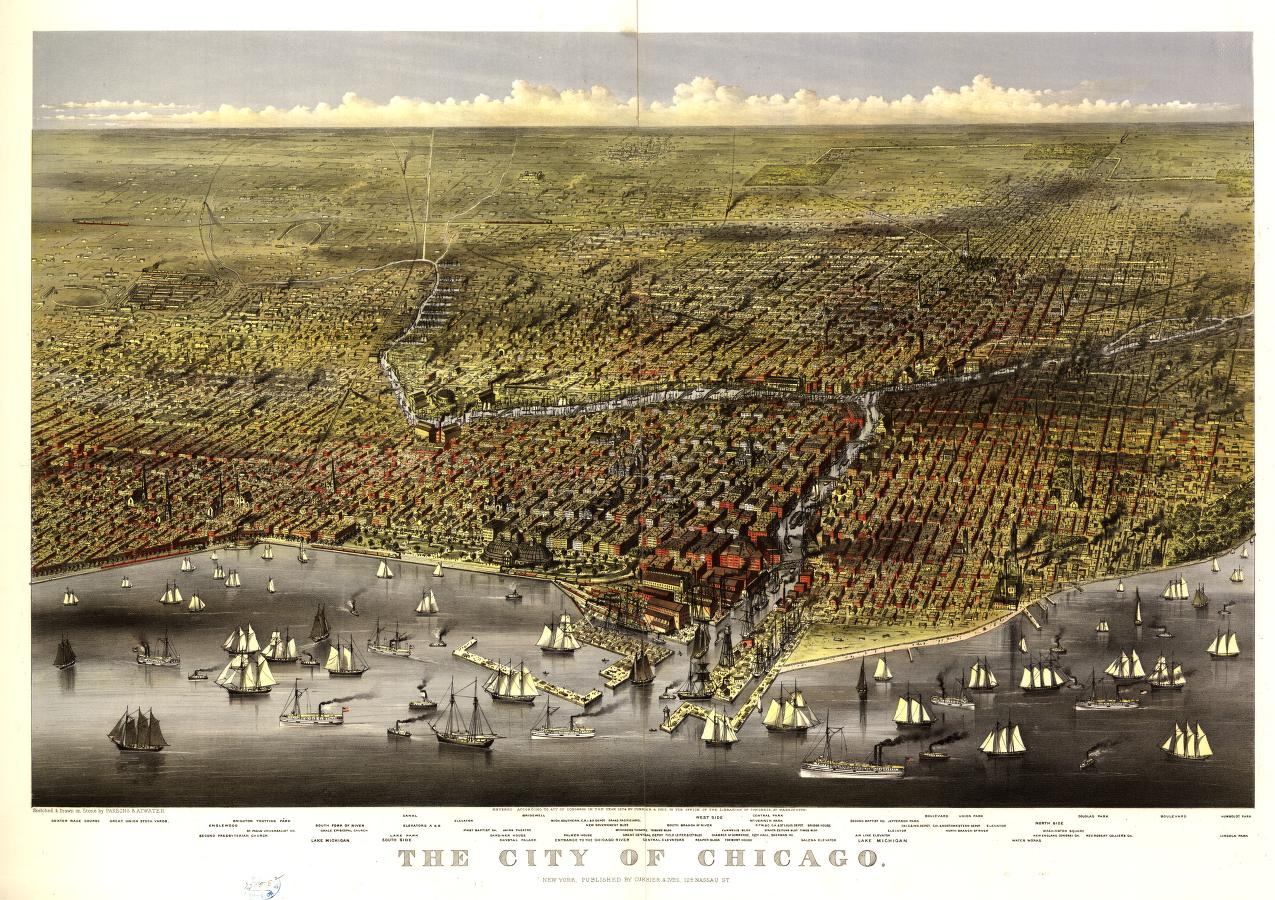
A Chicago newspaper’s Thanksgiving editorial 150 years ago stressed the importance of Thanksgiving as a day for families to get together (much like the New York Herald the year before). I don’t understand everything on the paper’s list of reasons to be thankful, but I can understand why Chicagoans would be happy that there weren’t any major fires in 1875 and that the river didn’t stink. The editorial ended by quoting another publication on making the day a people’s Thanksgiving – don’t let the preacher’s have all the fun. From the November 25, 1875 issue of The Chicago Daily Tribune (page 4):
LET US GIVE THANKS.
The day for the annual giving of thanks has arrived, and all of our readers who are not ungrateful wretches will take this occasion to display their gratitude for the mercies which have been vouchsafed them during the year. The motive for the Puritanic observance of this day was the exhibition of the plenty which had crowned the year and the pouring out of blessings from its cornucopia, their purpose was to be of good cheer, and our grim old ancestors never failed to exhibit that good cheer, — if not in an uproarious, at least in a substantial manner. Out of this purpose has grown the custom, which still exists, of filling the larder to overflowing and of making the Thanksgiving table groan with its wealth of turkey and chicken, of vegetables and game, of pies and puddings, and the cheer that comes in bottles. On other days the Puritan was naturally abstemious; on Thanksgiving Day he was cheerful. Since his time the country has progressed. His descendant, even on ordinary days, is disposed to be cheerful in the culinary sense; on Thanksgiving Day, to express his gratitude by gormandizing. In the ordinary course of things, therefore, it must eventuate that all over this land to-morrow the physicians will be busy in correcting the effects of the surplus of gratitude which will afflict the average American to-day.
Whatever may be the purposes or effects of Thanksgiving, whether people have reason to be thankful or not, and without regard to prospective dyspepsia and doctors’ bills, there is one episode of Thanksgiving Day which should endear it to all. It is the occasion for family reunions under the old roof-tree. The currents of American life are so diversified, and flow in so many divergent channels, that it is only on some such occasion as this that the scattered members of families can get together and renew those ties of affection which may have been weakened by distance and absence. For this reason, if for no other, should Thanksgiving Day be sacredly observed. It cannot but make every man better.
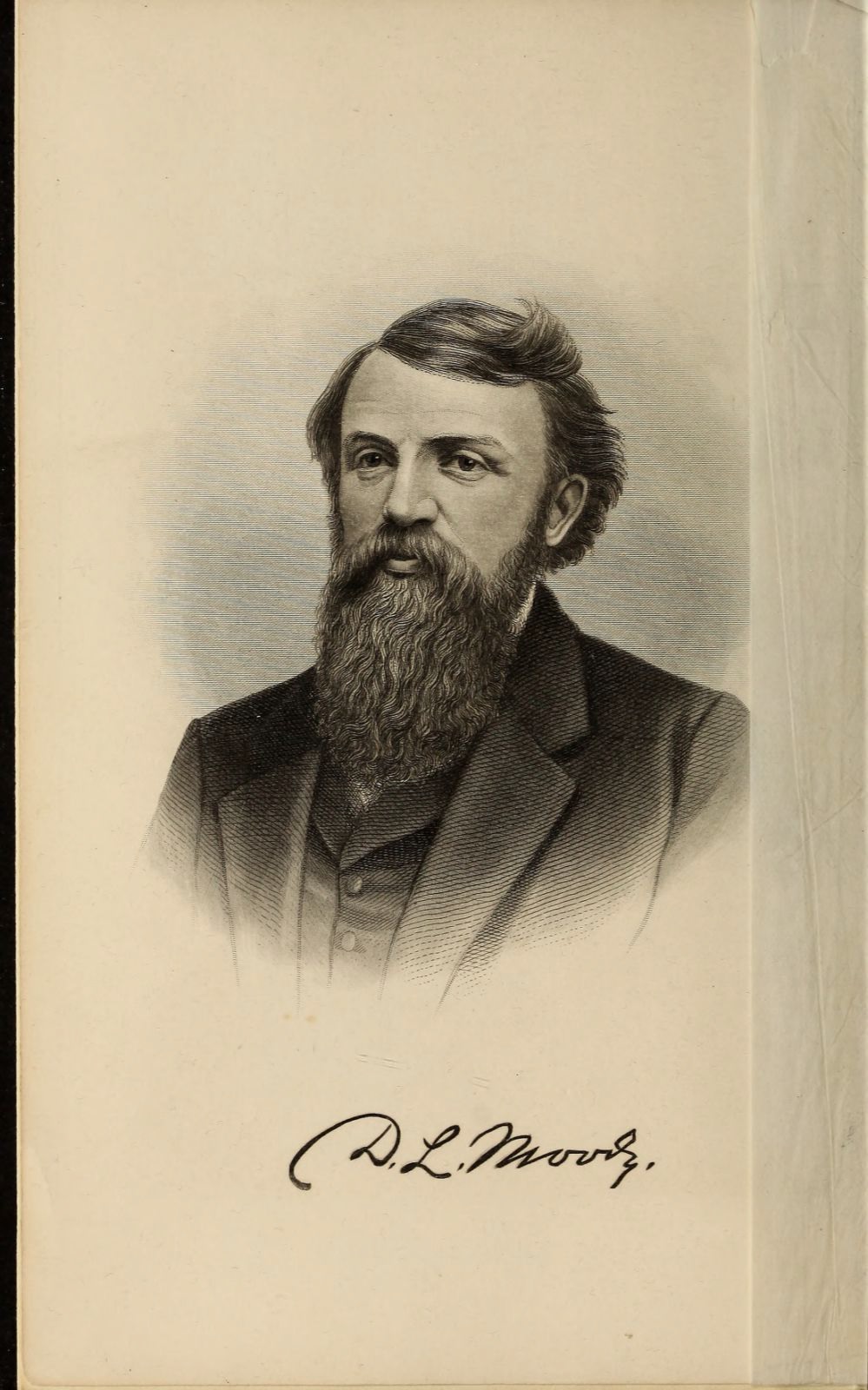
Dwight L. Moody
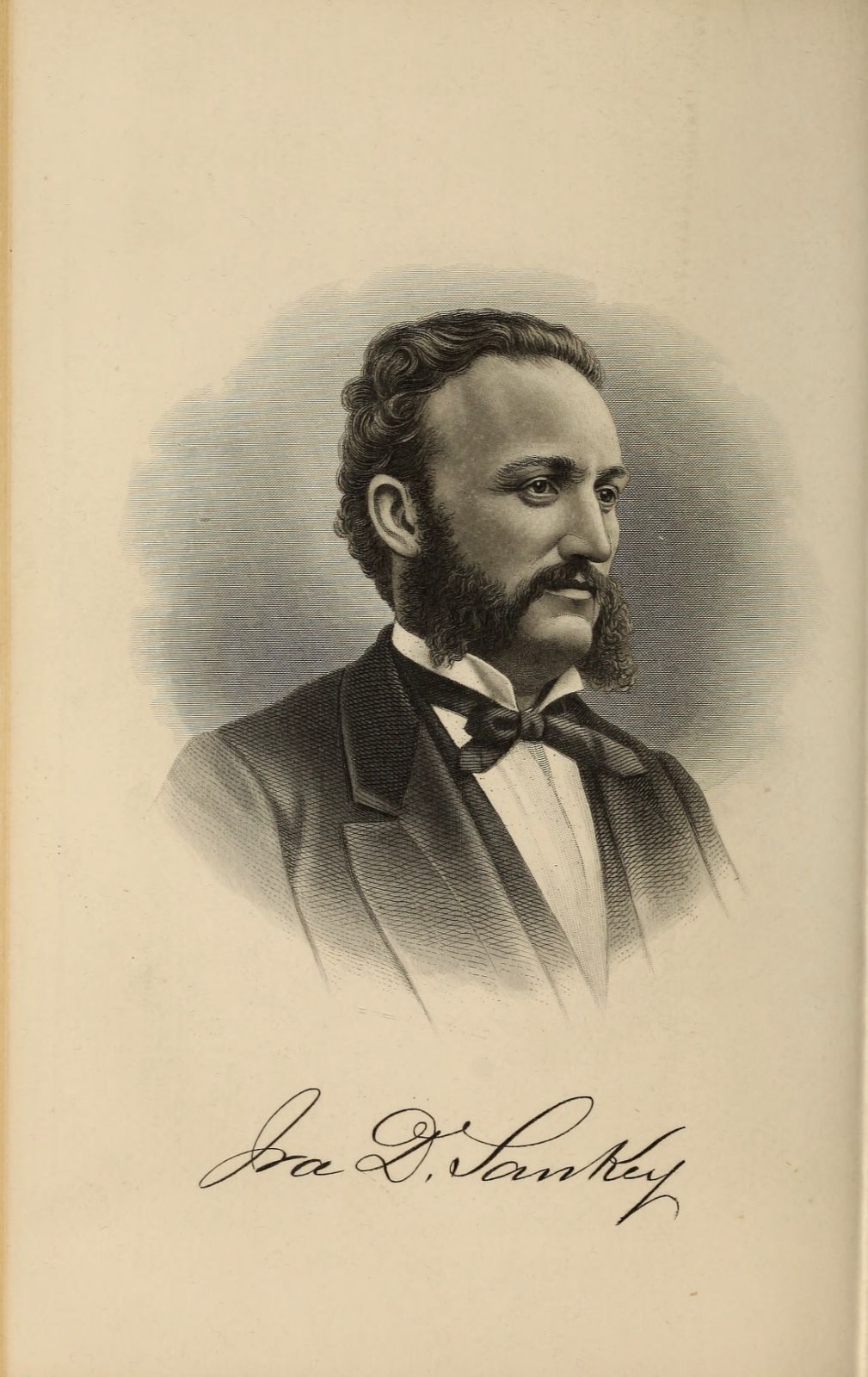
Ira D. Sankey
Chicago overview
______________
In making a retrospect of the year, there is great reason for thankfulness. First of all, let us be thankful for all of God’s blessings, for in every year, if we should stop to make the calculation, we should find that tho average of mercies exceeds that of misfortunes. Let us be thankful that Brother MOODY and the melodious SANKEY are overwhelming, one after the other, the strongholds of sin, and are bringing hardened sinners to a realizing sense of their condition, and that they have disinfected Brooklyn of the odors of the BEECHER business. Let us be thankful for an abundant harvest, and that all the crops have yielded richly to the husbandman, filling his garners with future wealth. Let us be thankful that the country is blessed with good health, and that no plague or pestilence prevails within our borders. Let us be thankful that we have largely recovered from the effects of the financial panic which grow [grew?] out of the War of the Rebellion, and that we are beginning to realize tho importance of national economy. Let us be thankful that, the people in November voted to be honest, and expressed themselves in favor of the money made by the Almighty rather than the rags of the paper-mill and printing-press. Let us be thankful that in our own city the people shivered an infamous Ring, defeated tho gamblers and thieves, and redeemed tho county from their clutches. Let us be thankful for our exemption from fire and flood and great catastrophes. Let us be thankful for the city’s growth in all the elements of greatness. Let us be thankful that the Mayor’s term is so nearly expired; that fire insurance is so cheap; that there is a gleam of hope that the City and County Architects may agree upon some uniform plan for a City Hall; that the taxes have not eaten up all our property; that the river does not smell bad; that we are not wicked as St. Louis; that HERRING [?] is not County Treasurer; that our churches are getting along without scandal; that pull-backs are still the fashion; that the South Side Street Railroad is to have conductors; that the Sunday Lecture Society meets but once a week; that oysters and other winter vegetables are plenty; that book-peddlers and life-insurance men are not so plenty; that building material is cheap; that we have an inexhaustible supply of good water; that none of our ministers have fallen from grace; that HARRIS didn’t drive his swamp-elm piles; that the man at the Crib is well and happy; that HICKEY threatens the bunko men; that the doctors have so little to do; that the South Side Company’s gas gives any light at all; that we are not down among the dead men; and that the Plymouth Church cornet is a thing of the past. For all these and numerous other blessings, including to-day’s dinner, let us all be thankful. And in the midst of all our thankfulness let us not forget the worthy poor who have so little cause to be thankful. Let us relieve them from our own bounteous store and make them happy.
With this prelude we commend the day to each reader, and, in the language of a correspondent of the Congregationalist, we say: “Has anyone found grace to repent and seek the Lord; has any found grace to reform; has any one received the present of a cord of wood, a pair of shoes, a new coat, a cow? Has any one recovered from sickness, or met with a narrow escape; have people been kind to you in trouble? has your farm produced well; have your cows done well; have you good neighbors? this is a good place and time to thank God. Make it a glad day. Let some songs be sung wherein all the house shall sing. Never mind discords. Sing. Pray. ‘Break your drumstick.’ Make a loud noise. Have no sermon in the way. Don’t go to telling how we ought to be thankful, but be thankful. Express gratitude. Make it the people’s Thanksgiving, not the minister’s alone.
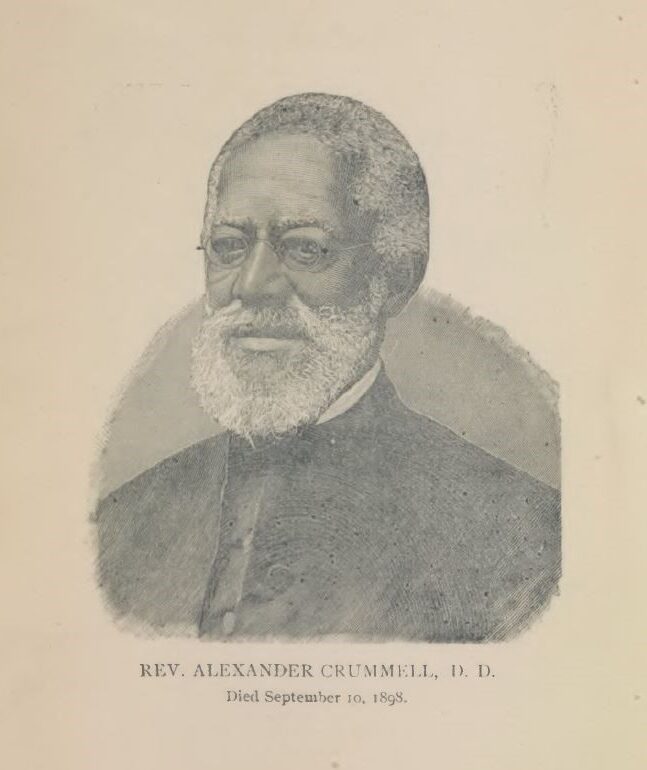
According to documentation at the Library of Congress, one minister who did deliver a sermon (or discourse) on Thanksgiving Day in 1875 was Reverend Alexander Crummell, who spoke at St. Mary’s Chapel in Washington, D.C. Rev. Crummell expanded on a few points for the published version of his discourse. Crummell began his talk with reasons to be thankful, then spent most of his address explaining how black Americans should use God’s blessings to improve themselves and their situation. Here’s his beginning:
Reverend Crummell
MORE than a month has passed away since we received the proclamation of the Chief Magistrate of this nation, appointing the 25th of November a day of public thanksgiving to Almighty God. And, in accordance with this pious custom, we, in common with millions of our fellow-citizens throughout the republic, have met together this morning, to offer up our tribute of praise and thankfulness to our common Parent in heaven, for all the gifts, favors, blessings and benefactions; civil, domestic, religious, and educational, which have been bestowed upon us during the year: — for the blessings of heaven above; for the precious fruits brought forth by the sun; for the precious things of the earth and the fulness [sic] thereof; for the golden harvests of peace, unstained by blood, and unbroken by strife; for the constant stream of health which has flowed through our veins and households, untainted by plagues or pestilence; for the babes whom the Lord has laid upon your arms and given to your hearts; for the plentiful supply of food which has been granted us from the fields, and which has laden our boards; for the goodly instruction which trains the mind and corrects the hearts of our children, and prepares them for responsibility, for duty and, eternity; for the civil privileges and the national freedom, in which we are permitted to participate; for the measure of success which God has given His Gospel, and for the hope that is ours that the Cross shall yet conquer everywhere beneath the sun, and that Jesus shall rule and reign through all the world. For these and all other gifts and blessings we render our tribute of praise and gratitude to the Lord, our maker, preserver and benefactor, through JESUS CHRIST our Lord!
Grateful as is this theme of gratitude, and inviting as it is for thought and further expression, it is not my purpose to pursue it to-day. I feel that we should turn the occasion into an opportunity for improvement and progress. Indeed all the gifts and benefactions of the Almighty are, and are designed to be, so many agencies and incentives for man to rise to higher degrees, and lotfier [loftier] positions of growth, of expansion, and of principle. We have been blessed during the year in many various and signal ways. But the end which God has had in view, in our blessings, has been, that we might secure a propulsive power, in and by His blessings, to carry us on to a nobler manhood, and a superior plane of being. And hence, while it is indeed well for us, ever and anon, and especially on an occasion like the present, to sit down and count over our mercies, it is equally well to ponder and reflect upon the end for which these blessings have been given us; and to study out the means by which we can use our mercies aright; and cause our talents to bring forth abundantly for human good and the Divine glory.
St. Mary’s Chapel (while still at Kalorama Hospital)
More especially is this the duty of a people situated as we are in this country; cut loose, blessed be God, for evermore, from the dark moorings of servitude and oppression; but not fully arrived at — only drifting towards the deep, quiet waters of fullest freedom and equality. Few, comparatively, in numbers; limited in resources; the inheritors of prodigious disasters; the heirs of ancestral woes and sorrows; burdened with most manifest duties and destinies; anxious for our children; thoughtful for our race; culpability and guilt of the deepest dye will be ours, if we do not most seriously consider the means and instruments by which we shall be enabled to go forward, and to rise upward. It is peculiarly a duty at this time when there is evidently an ebb-tide of indifference in the country, with regard to our race; and when the anxiety for union, neutralizes the interest in the black man.
The agencies to the high ends I have referred to The agencies to the high ends I have referred to are various; but the text I have chosen, suggests a train of thought, in a distinct and peculiar line. It gives us an insight into that spirit of unity which the world exhibits, when it would fain accomplish its great, commanding ends. …
Reverend Crummell’s text was Isaiah 41: 6,7: “They helped every one his neighbor, and every one said to his brother, Be of good courage. So the carpenter encouraged the goldsmith, and he that smootheth with the hammer him that smote the anvil saying, It is ready for the soldering: and he fastened it with
nails that it should not be moved.”
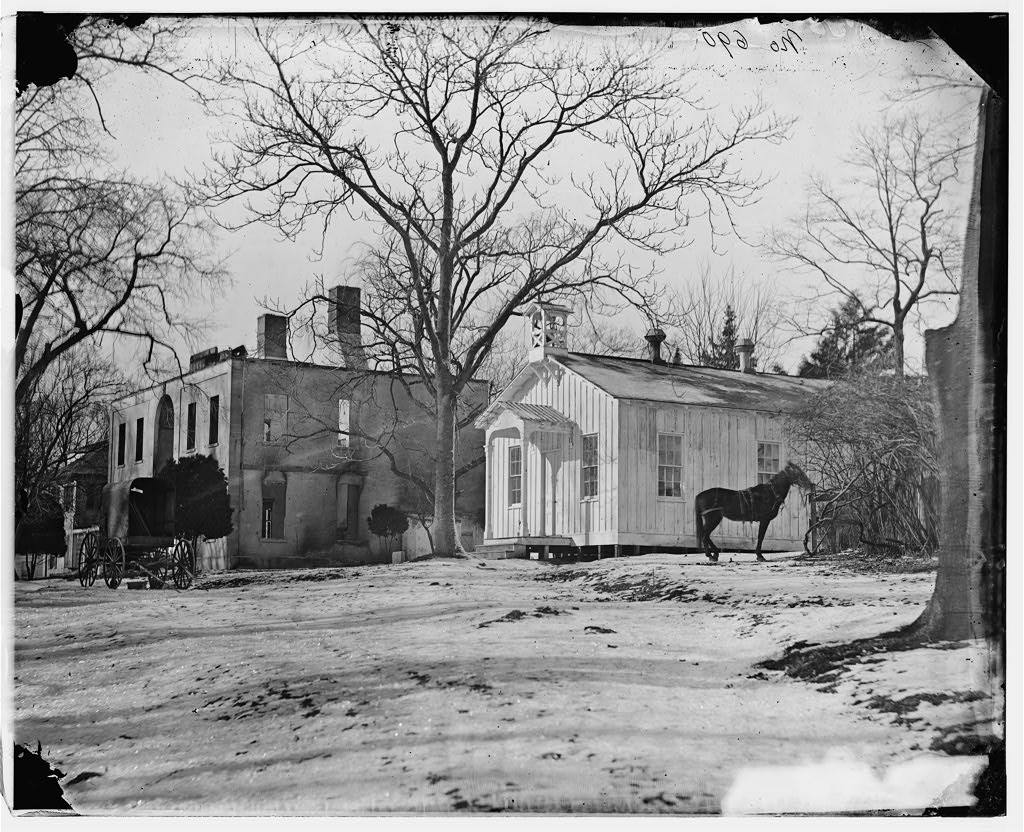
According to Foggy Bottom Association, St. Mary’s Chapel is now St. Mary’s Episcopal Church. In 1865 African Americans sought an Episcopalian Church where they could worship without discrimination. An Episcopalian “donated land in Foggy Bottom as a location for the church. Epiphany parishioner and President Lincoln’s Secretary of War Edwin M. Stanton was able to relocate a chapel attached to Kalorama Hospital to the Foggy Bottom site. This frame chapel was opened for the first Divine Service on the second Sunday in June 1867.” “In 1873, the Rev. Dr. Alexander Crummell became the church’s first full time rector,” but he eventually left the church because of land title disputes. You can read more of the history and see a picture of the Kalorama Hospital chapel at St. Mary’s Episcopal Church’s website
.
To get back to The Chicago Daily Tribune editorial, D.L. Moody and Ira D. Sankey worked as an Evangelical team for much of the second half of the 19th century. Mr. Moody focused on the preaching, Mr. Sankey the music – he was a talented musician with an excellent voice. At the Moody Bible Institute you can read bios about Moody and Sankey. Another bio is The American Evangelists, Dwight L. Moody and Ira D. Sankey. Both men served during the Civil War. In the spring of 1861 Sankey enlisted in the 22nd Pennsylvania Infantry, a three month regiment. Moody ministered to the Union soldiers at Camp Douglas in 1861. According to The American Evangelists, Dwight L. Moody and Ira D. Sankey, Moody ministered to the sick and wounded at Fort Donelson, Shiloh, and Murfreesboro. Moody’s church was destroyed in the Great Chicago Fire in 1871. For two years beginning in 1873 Moody and Sankey preached and sang in The United kingdom and Ireland. By fall 1875 they were back in the States and held services in Philadelphia on Thanksgiving.
I have many, many reasons to be thankful. For example, recently, thanks to Father James Kubicki, S.J., I learned about Cardinal Francis Xavier Nguyen Van Thuan, who was imprisoned for thirteen years after the fall of Saigon in 1975. According to Father Kubicki, during this time Bishop Van Thuan still found reasons to be thankful: “… the morning dew on the grass, the light of the sun, the heat of the day, sparkling water from a fountain, the freshness of the wind, the warbling of a bird. Have I ever thought of giving thanks for all of this? I enjoy all these gifts without having paid a penny. If I keep my eyes open and my spirit alert, I will live in continual thanksgiving. …” Also, Bishop Van Thuan thanked God for being his child and for Mother Mary. “Thank you for so many brothers and sisters who sustain me. Thank you for the people who place obstacles in my path and cause me trouble; they help me to become holy. I should sing your praise my whole life long for just one of these gifts. …”[1]
Thanks to the “Farm Security Administration – Office of War Information photograph collection” at the Library of Congress we can see an example of what “the people’s Thanksgiving” was like in 1942 at the home of Mr. and Mrs. Earle Landis in Neffsville, Pennsylvania.
turning over turkey
getting pies
freezing ice cream
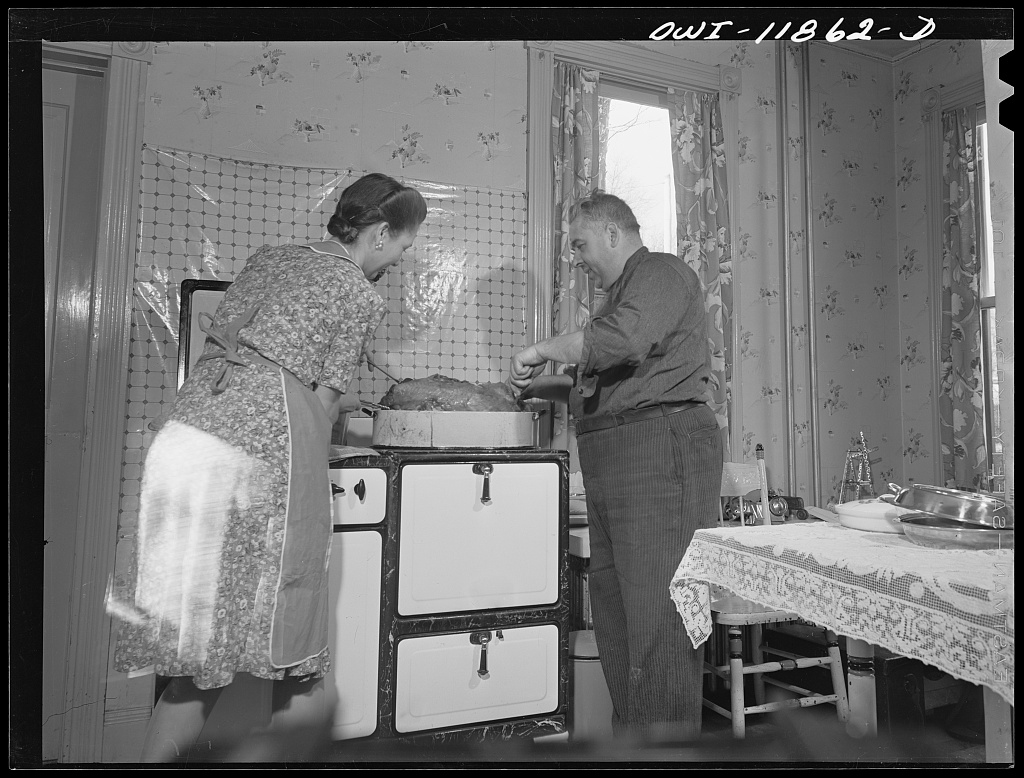
turning over turkey
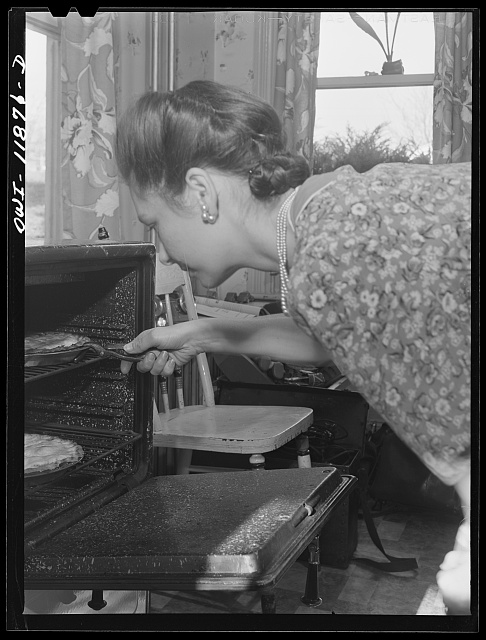
getting pies
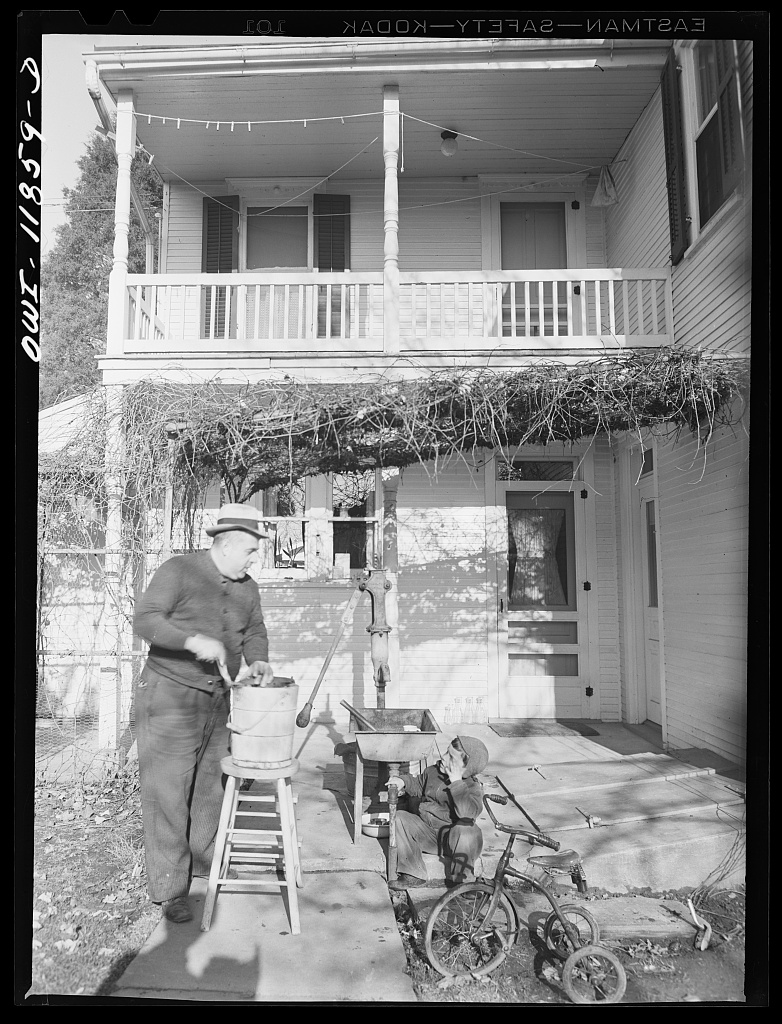
freezing ice cream
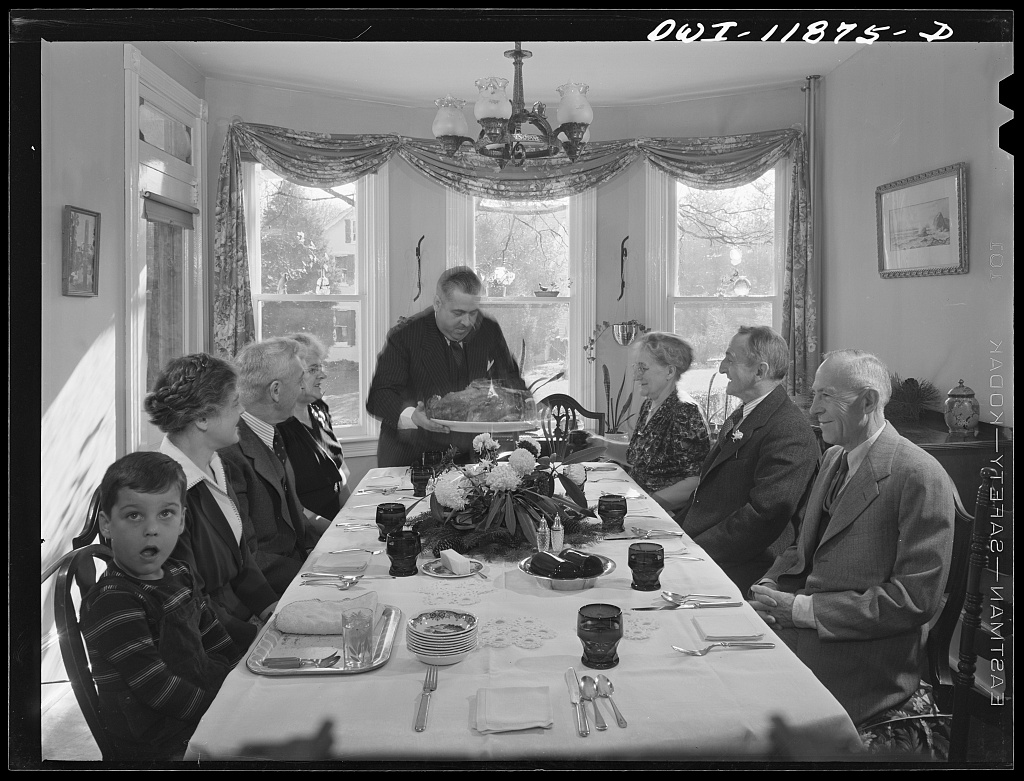
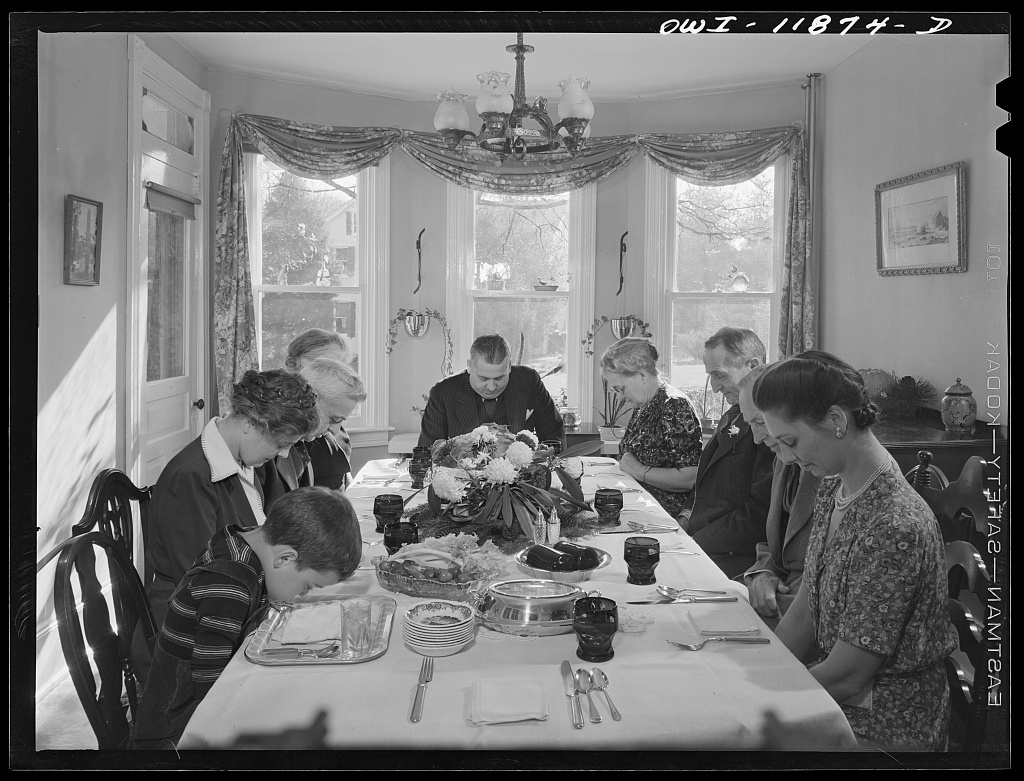
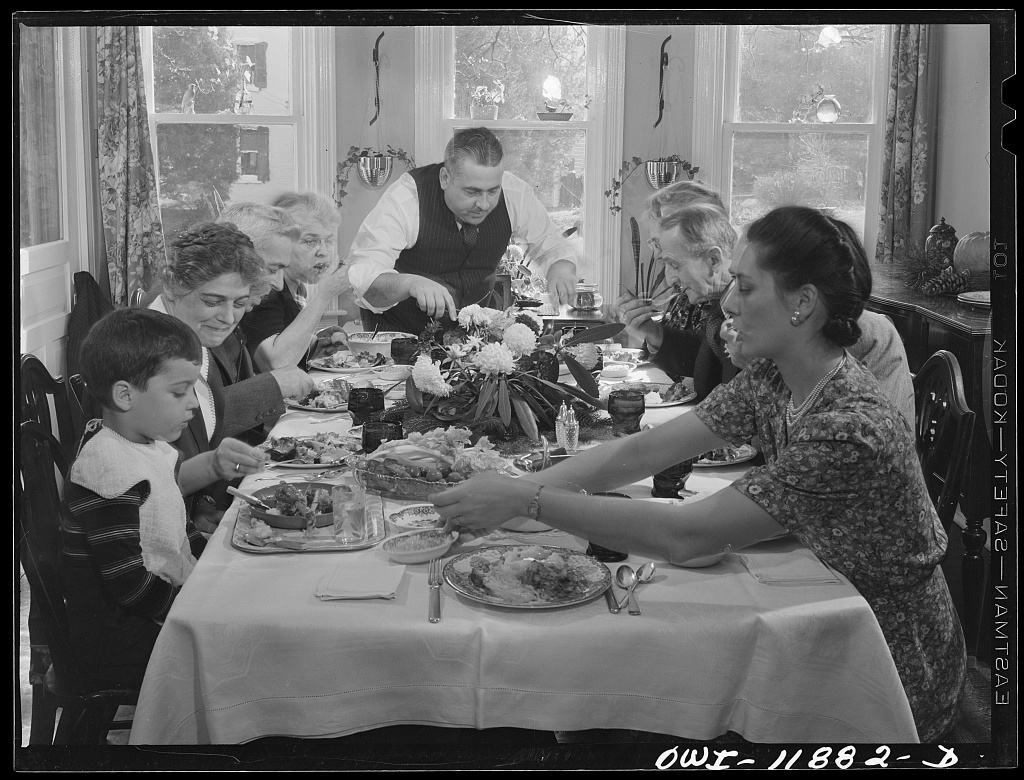
It looks like the only missing was some football on the TV, but I read that TV wasn’t widely available in the United States until the 1950s. Also, according to AI Overview, the NFL suspended games on Thanksgiving, even though there was a regular season of games played the first fall after Pear Harbor.
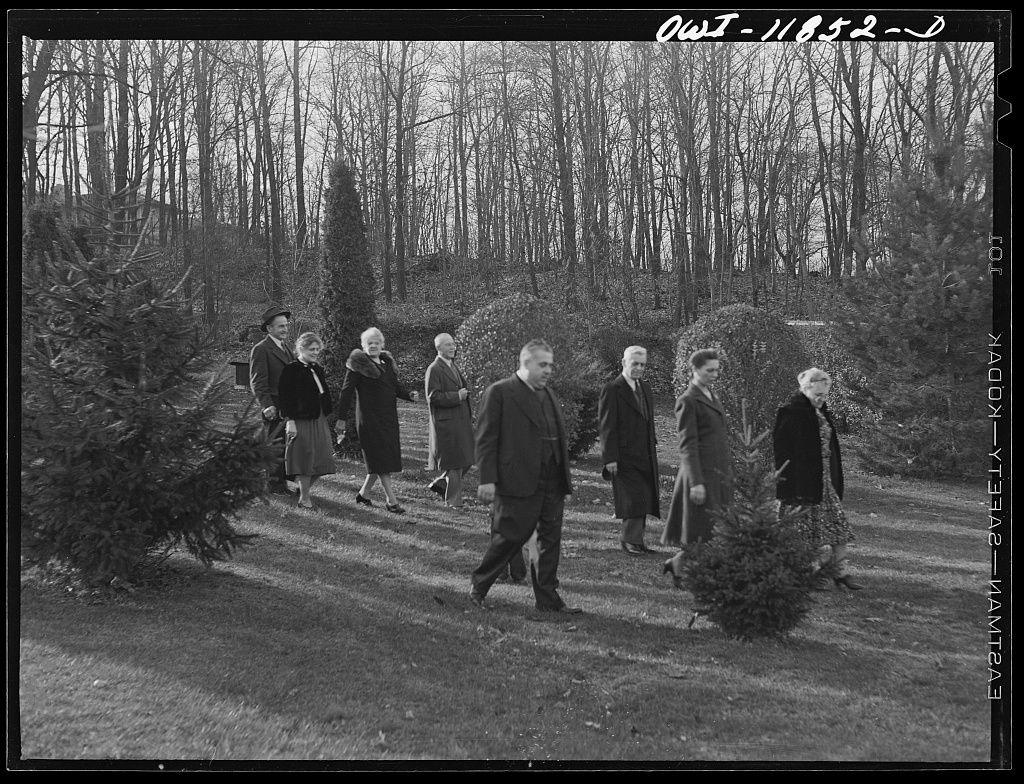
walking off the big meal
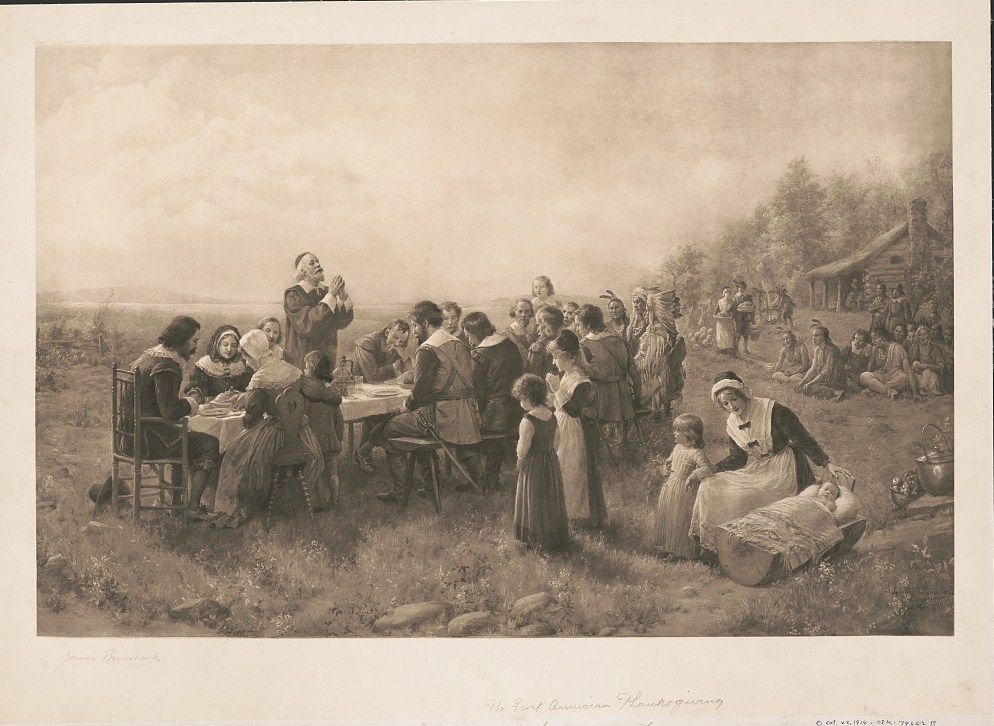
The Thanksgiving greeting comes from ClipSafari. From the Library of Congress: The first American thanksgiving; the portrait of Rev. Alexander Crummell is from an 1898 address in memoriam of Reverend Crummell delivered in 1898 by Rev. Henry L. Phillips to the American Negro Historical Society of Philadelphia; the photo of St. Mary’s Chapel at Kalorama Hospital, which “shows the Anthony Holmead House (“Kalorama”) after the Christmas Eve fire of 1865″ and before the chapel was moved to Foggy Bottom; if you search for “Earle Landis” at the Library of Congress you can see the photos that Marjory Collins took of the Thanksgiving celebration at the Landis house in 1942; the pictures of Dwight L. Moody and Ira D. Sankey are from The American Evangelists, Dwight L. Moody and Ira D. Sankey –

- [1]Kubicki, S.J. James, A Year of Daily Offerings Giving Your Life to God One Day at a Time. San Francisco: Ignatius, 2024. Page 350. ↩
