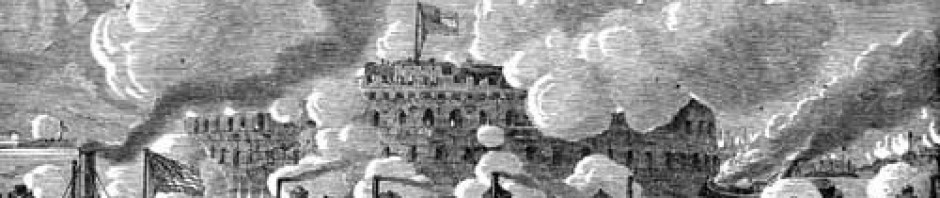
From my growing up I had heard about Zouave units associated with the American Civil War but didn’t know much more about it. According to Wikipedia it wasn’t until 1859 that Zouaves were brought to the American public attention when Elmer Ellsworth toured nationally with a Zouave drill company. Apparently it caught on. One of the first things I noticed after the Civil War Sesquicentennial began was a large number of clippings from Seneca County, New York newspapers about a Zouave unit organized by James E. Ashcroft, a resident of Seneca Falls, that gave public demonstrations of its skill in light infantry tactics. Mr. Ashcroft organized a non-Zouave company for the 19th New York Infantry after the shooting started at Fort Sumter. Both the Union and Confederacy fielded Zouave units during the Civil War.
According to that Wikipedia link Zouaves “gradually vanished from the U.S. military in the 1870s and 1880s, as the militia system slowly transformed into the National Guard.” Nevertheless, according to the August 15, 1868 issue of Harper’s Weekly, 150 years ago this summer a company of Zouaves from Boston traveled to Manhattan for a drill competition against a New York City unit.
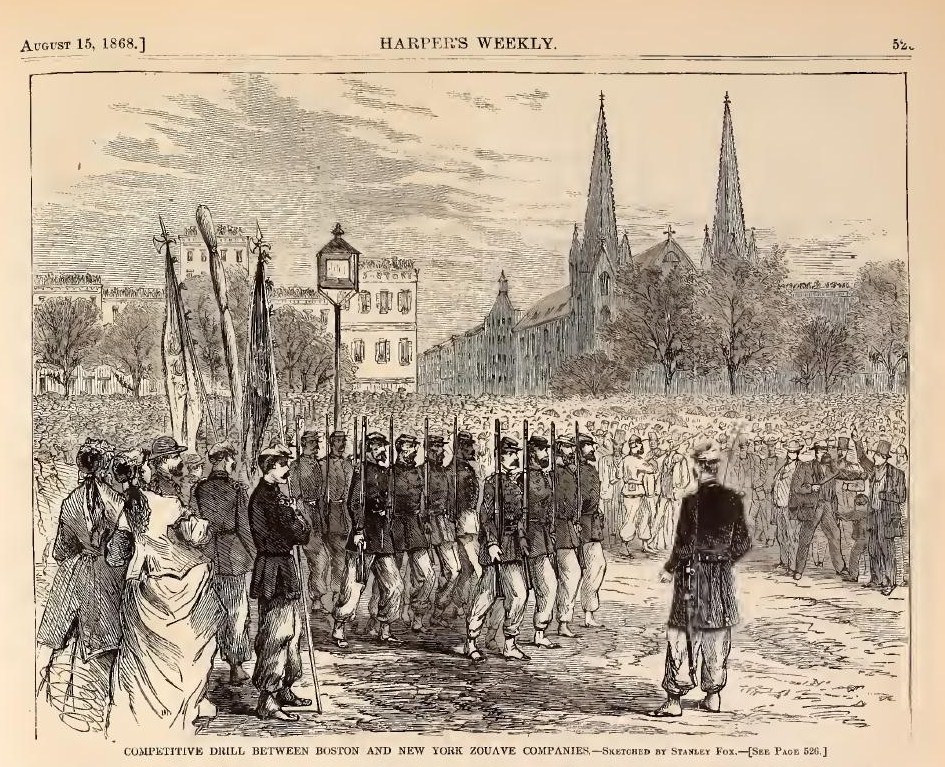
friendly military competition
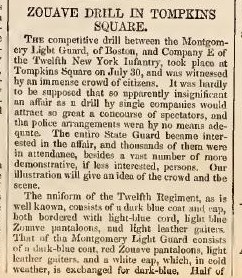
thousands in attendance at Tompkins Square
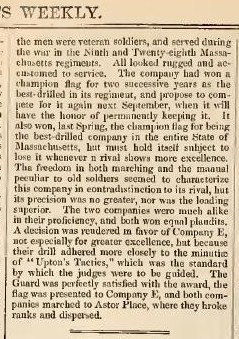
New York eked out a technical victory
It’s probably not too surprising that Boston and New York competed well before Babe Ruth changed from red stockings to pinstripes. Apparently it’s not just military and sports competition.
An article at The Bowery Boys sees the inter-city rivalry going back all the way back to the 17th century when “Many so-called heretics fled the Puritans [in New England] and were granted haven by the Dutch [in New Amsterdam].”
Boston was the hotbed of the American Revolution; New York pretty much stayed in British hands throughout the war but then served (briefly) as the first federal capital under the new Constitution.
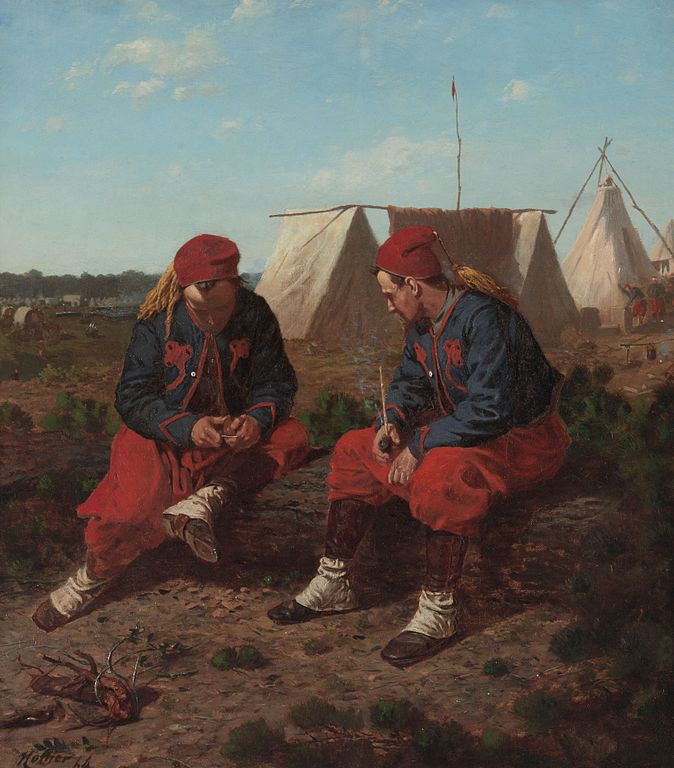
1864 painting
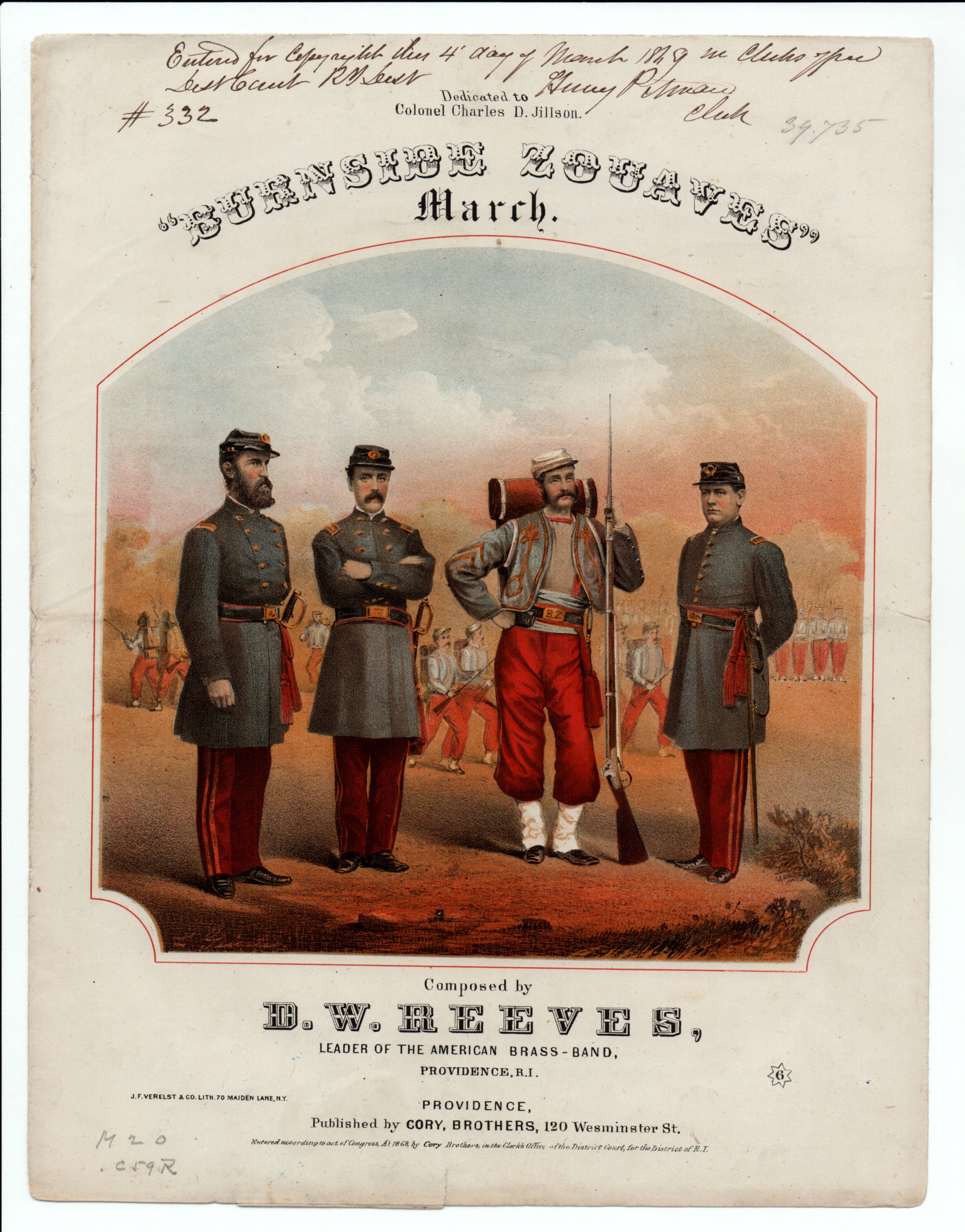
1868 sheet music
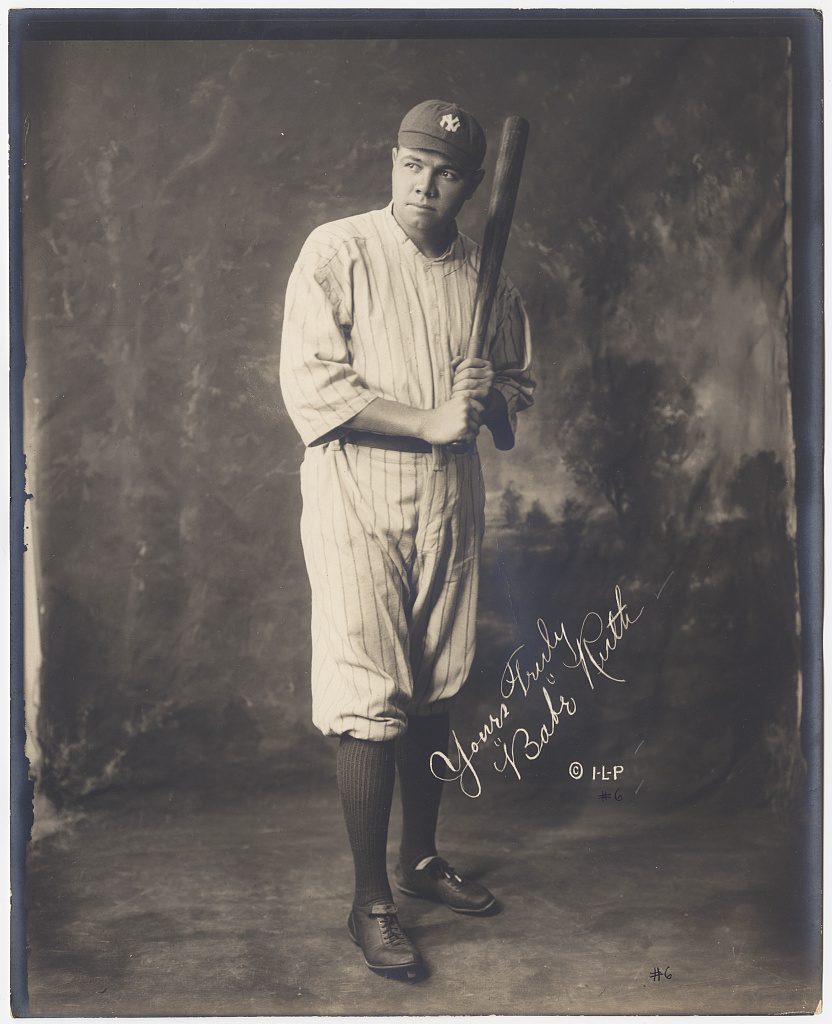
built house in the Bronx
There’s more information out there: Burnside Zouaves; Zouave Database; Montgomery Guards;
I don’t want to do anything to spread the misinformation, disinformation out there. I have no idea where Babe Ruth lived. The original Yankee Stadium was referred to as “The House That Ruth Built”
You can see the Harper’s Weekly image and article at the Internet Archives, pages 526 and 527; From the Library of Congress: Burnside’s; Babe; envelope. I got Winslow Homer’s 1864 painting at Wikipedia.
![[Civil War envelope showing Patriot labeled "Secured" holding the Constitution and Zouave soldier labeled "Defended," with message "The Union forever"] (Cin[cinnati] : Jas. Gates Pub., [1861] ; LOC: https://www.loc.gov/item/2013648212/)](https://www.bluegrayreview.com/wp-content/uploads/2018/08/34721v-1.jpg)
a northern take

