teacher vs. student

General Beauregard
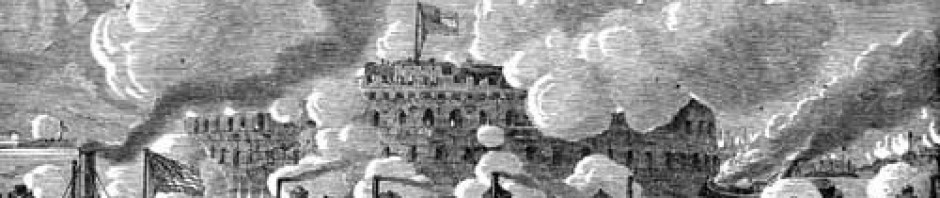
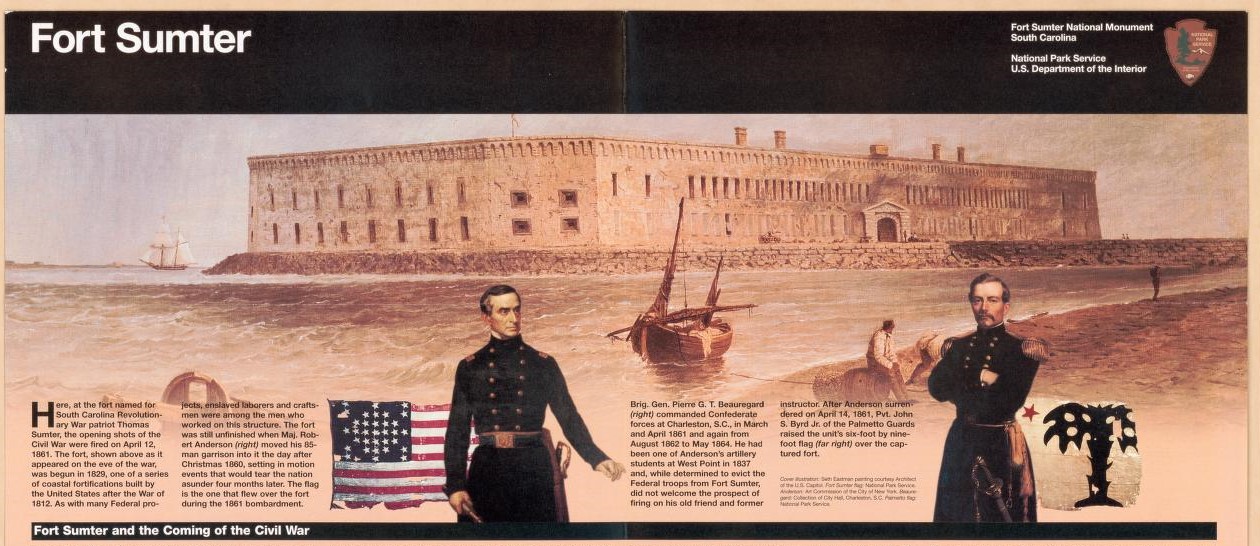
It’s been about fifteen years since the American Civil War sesquicentennial began with the 1860 election campaign. After Abraham Lincoln was elected U.S. president, southern states began to secede and by April 1861 rebel forces were threatening Union-held Fort Sumter in Charleston Harbor. General P.G.T. Beauregard commanded the Confederates and opposed his West Point artillery instructor Major Robert Anderson in charge at the fort. As the above National Park Service brochures says, Beauregard was “determined to evict the Federal troops from Fort Sumter, [but] did not welcome the prospect of firing on his old friend and former instructor.” But Beauregard did fire; Anderson surrendered after a 34 hour shelling. Ten years later Mr. Beauregard was reportedly working and living a peaceful civilian life in New Orleans. From the September 18, 1875 issue of the Public Ledger (Memphis, Tennessee – page 1):
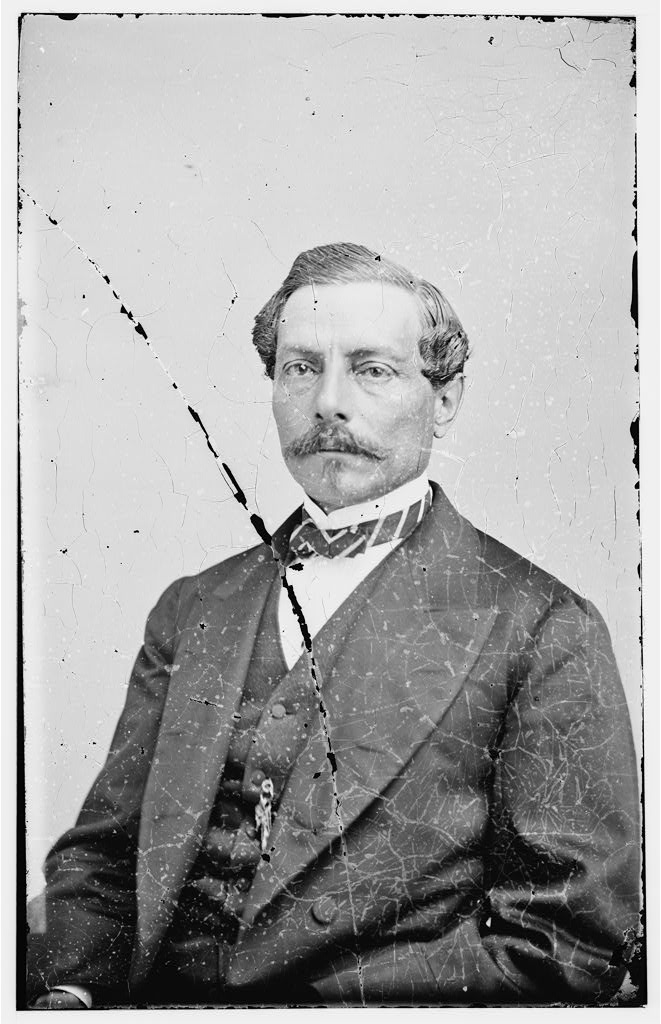
Pierre Gustave Toutant-Beauregard
Pierre Gregoire Tousaint Beauregard is now a resident of New Orleans and daily wanders through the haunts of men one of the most quiet and unobtrusive of gentlemen. He is now fifty-eight years of age, but such is his careful and rigid system of living that he looks to be only fifty and promises to live to a ripe old four-score or more. Since he doffed the gray and yielded to the fate of war, Beauregard has philosophically accepted the situation, and has made it a ruling principle of his later life to shun as a plague political discussions, and sternly frown upon the slightest incident dealing in even the remotest degree with the reawakening of the dead issues of the war. I have said that he is a quiet gentleman. I may add that he is intensely so. To look at him he gives you the impression that he loves not the society of mankind and prefers to keep himself to himself. Although exceedingly wealthy at the outbreak of the war, he suffered the reverses of fortune incident to so many thousand Southrons during that epoch, and now enjoys but a moderate competence derived from his services as President of a street railway company, and the rental of the remnant of his once vast property. His daily life is a quiet one, and leads him but little within the scope of public observation; he is simple and unostentatious in manner, and appears rather to avoid than to court popular notice, moving along in the even tenor of his way, contented to pursue his peaceful and modest mission in life undisturbed by useless regrets over the past, or longing ambitions for the future.
According to Wikipedia, Beauregard was involved in politics after the war. In 1872 he helped found the Reform Party of Louisiana, which wanted to “replace the Democratic party and sought to end Radical Republican taxation.” In 1873 he was involved with the Reform Party’s effort to create the Louisiana Unification Movement, which supported less discrimination and more rights for blacks in exchange for black support for some political goals the white members hoped to achieve. “The chant of the Unification movement was ‘Equal Rights! One Flag! One Country! One People!'” The Unification Movement invited fifty white and fifty black leaders to attend a meeting held in New Orleans on June 16, 1873. The blacks were “Creoles of color, who were well-off and had been free before the war.” Beauregard, as chairman of the resolutions committee, submitted the Unification Movement’s resolutions at the meeting. The New Orleans Republican reported on the meeting and the resolutions in its June 18, 1873 issue (page 3). Among other policies, the resolutions supported the end to discrimination in public places and an equal division of state political offices between whites and blacks.
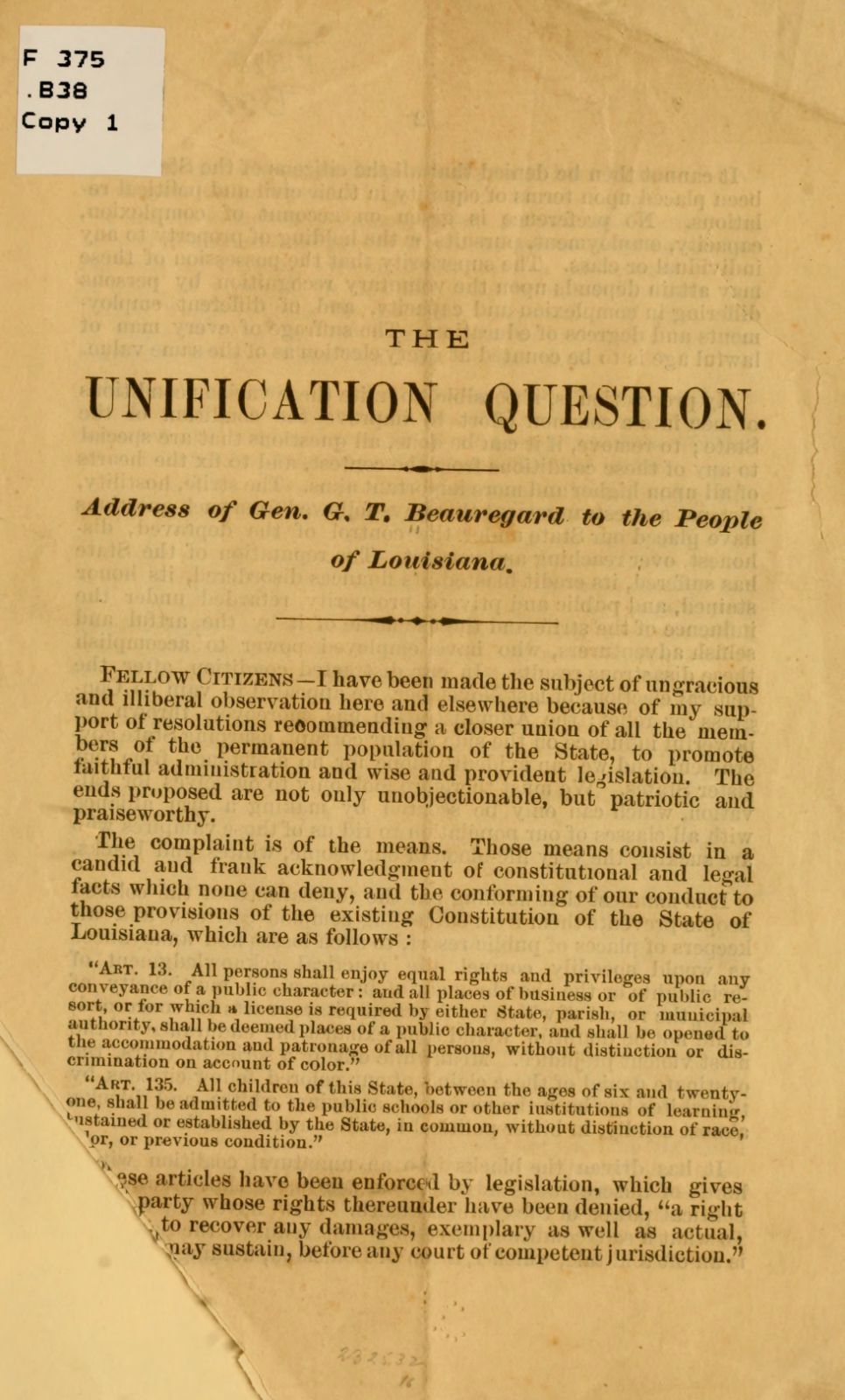
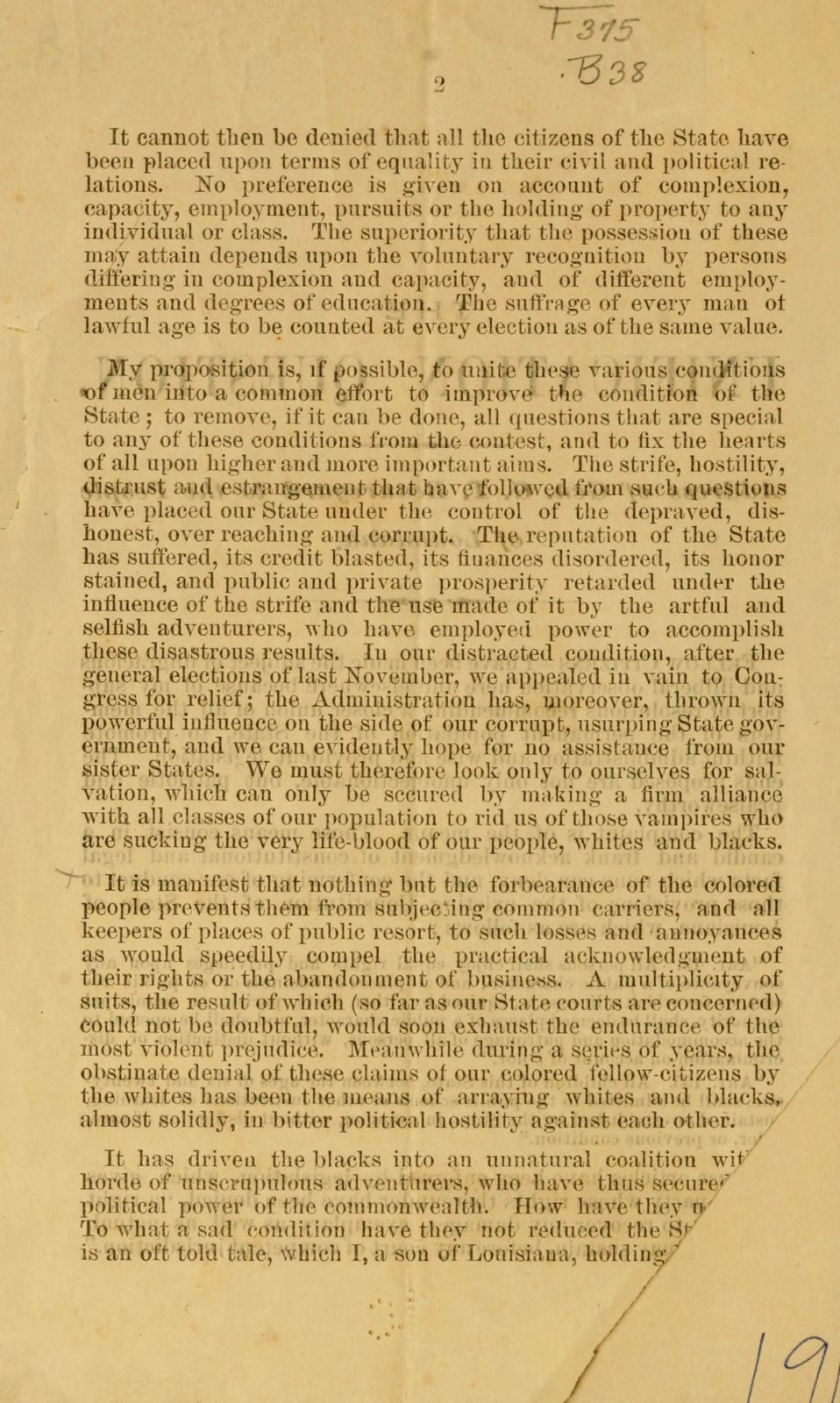
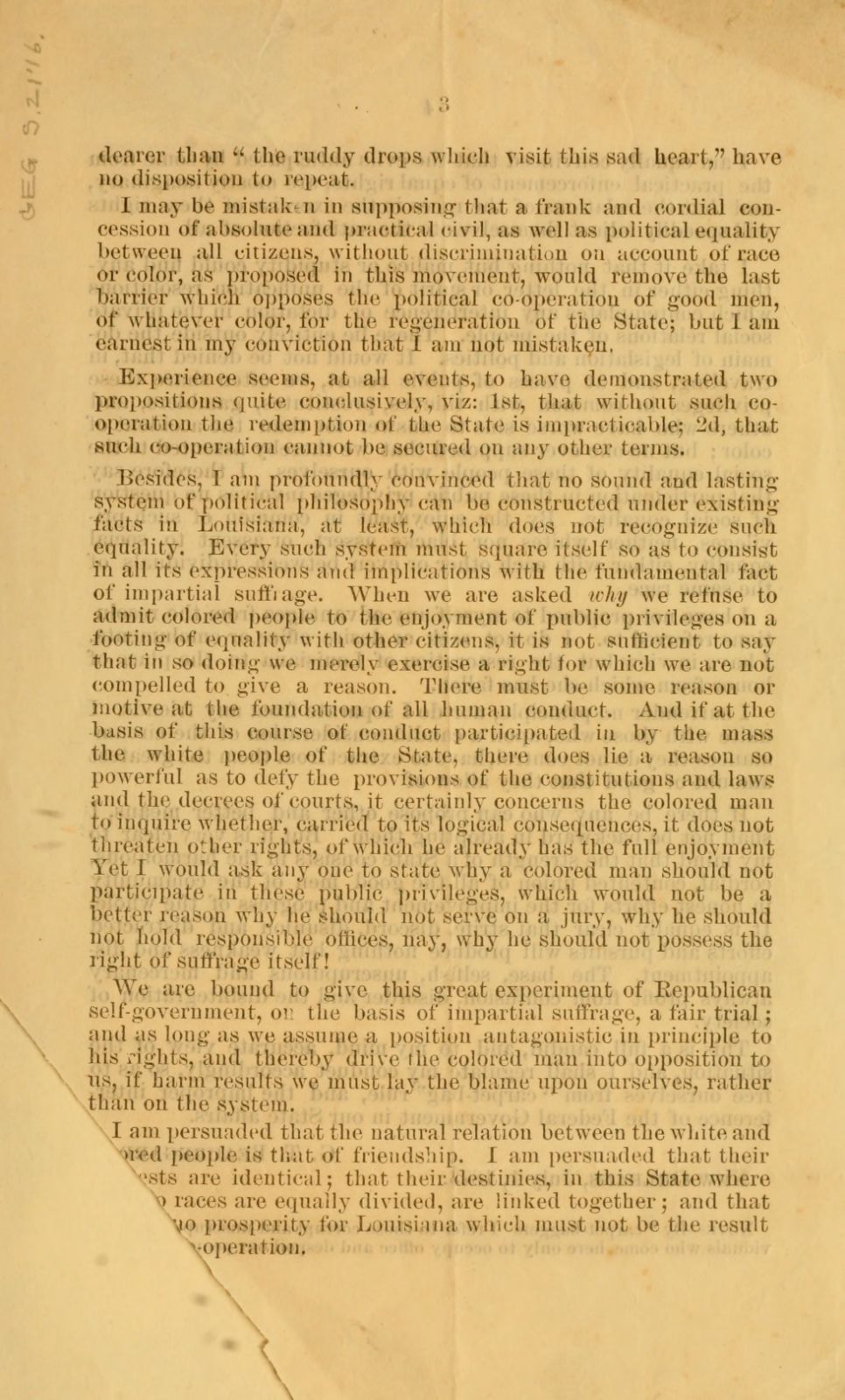
On July 1, 1873 a letter from General Beauregard was published to his “fellow citizens.” The letter responded to criticism of the Unification Movement and its proposals after the movement’s resolutions were made public. It’s a long letter. Here are the last few paragraphs:
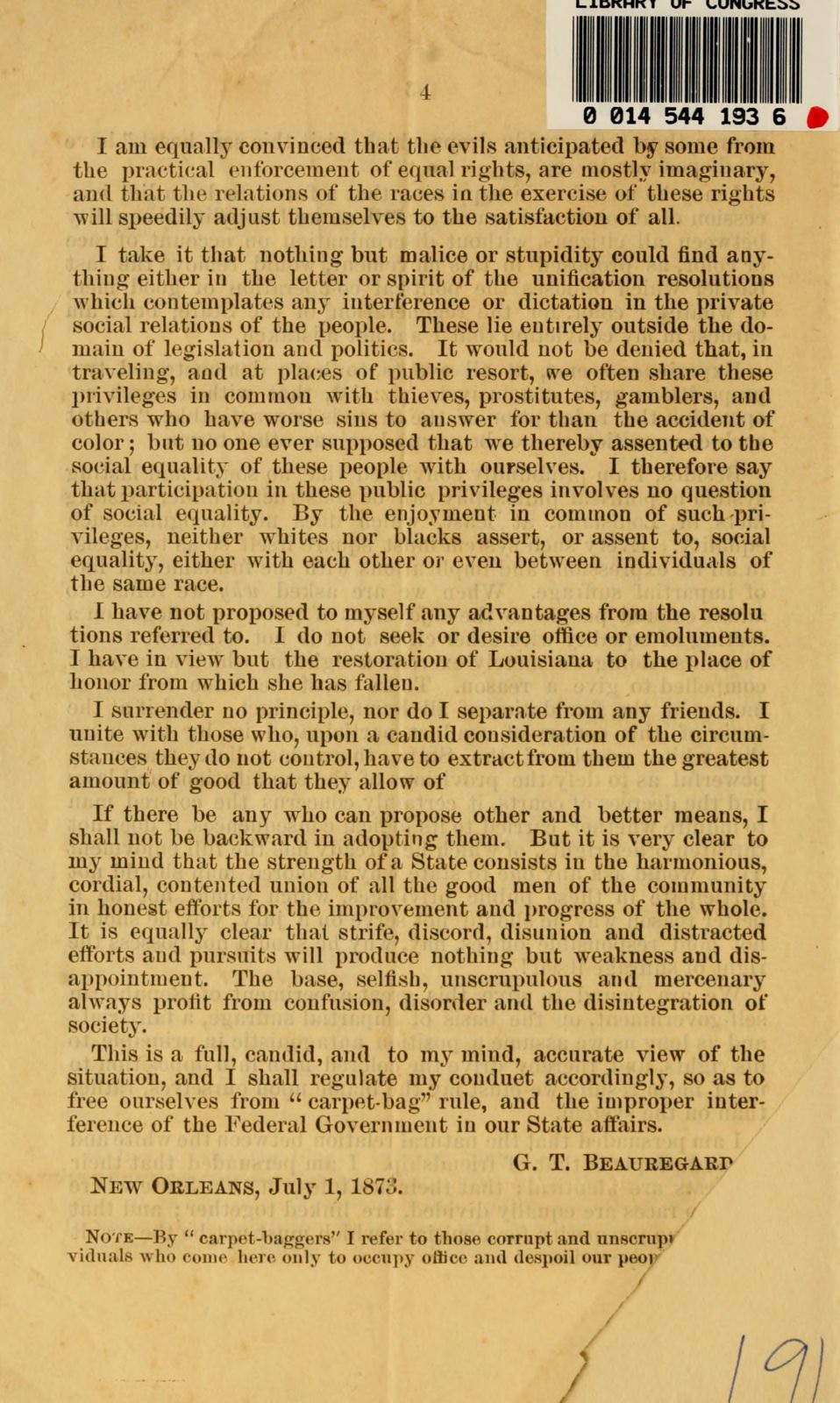
I take it that nothing but malice or stupidity could find anything either in the letter or spirit of the unification resolutions which contemplates any interference or dictation in the private social relations of the people. These lie entirely outside the domain of legislation and politics. It would not be denied that, in traveling, and at places of public resort, we often share these privileges in common with thieves, prostitutes, gamblers, and others who have worse sins to answer for than the accident of color; but no one ever supposed that we thereby assented to the social equality of these people with ourselves. I therefore say that participation in these public privileges involves no question of social equality. By the enjoyment in common of such-privileges, neither whites nor blacks assert, or assent to, social equality, either with each other or even between individuals of the same race.
I have not proposed to myself any advantages from the resolutions referred to. I do not seek or desire office or emoluments. I have in view but the restoration of Louisiana to the place of honor from which she has fallen.
I surrender no principle, nor do I separate from any friends. I unite with those who, upon a candid consideration of the circumstances they do not control, have to extract from them the greatest amount of good that they allow of.
If there be any who can propose other and better means, I shall not be backward in adopting them. But it is very clear to my mind that the strength of a State consists in the harmonious, cordial, contented union of all the good men of the community in honest efforts for the improvement and progress of the whole. It is equally clear that strife, discord, disunion and distracted efforts and pursuits will produce nothing but weakness and disappointment. The base, selfish, unscrupulous and mercenary always profit from confusion, disorder and the disintegration of society.
This is a full, candid, and to my mind, accurate view of the situation, and I shall regulate my conduct accordingly, so as to free ourselves from ‘“ carpet-bag” rule, and the improper interference of the Federal Government in our State affairs.
G. T. BEAUREGARD
NEW ORLEANS, July 1, 1875.
Note — By“ carpet-baggers” I refer to those corrupt and unscrup viduals [unscrupulous individuals] who come here only to occupy office and despoil our peo [people]
This is General Beauregard’s letter from the Library of Congress:
In 1873 Republican “carpet-bagger” William Pitt Kellogg was Louisiana governor. In its July 5, 1873 issue Harper’s Weekly was skeptical of the Unification Movement’s sincerity and stated that black and white Louisiana Republicans would still want federal protection until the proposed reforms were actually carried out.
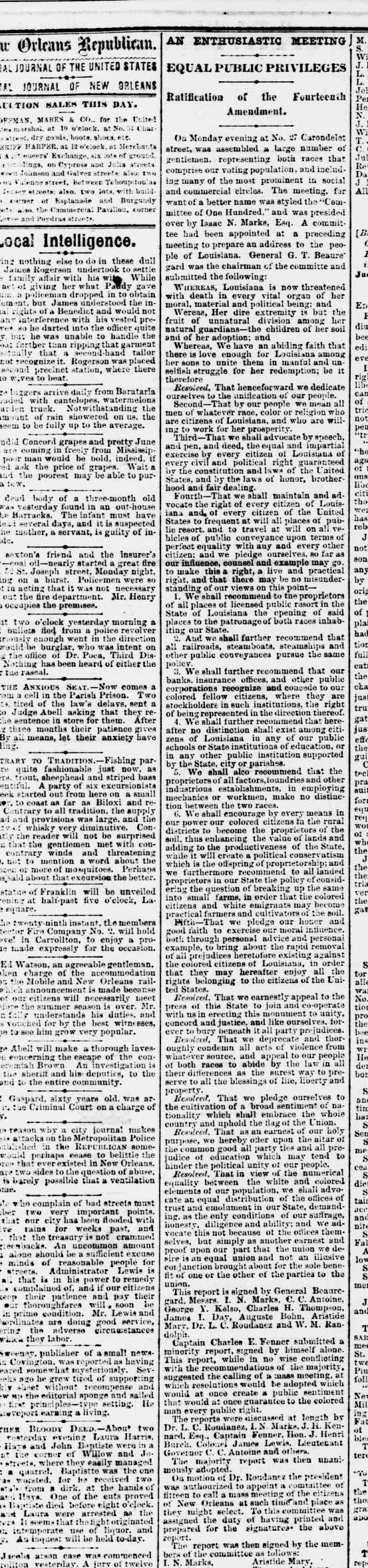
New Orleans Republican June 18, 1873 from page 3
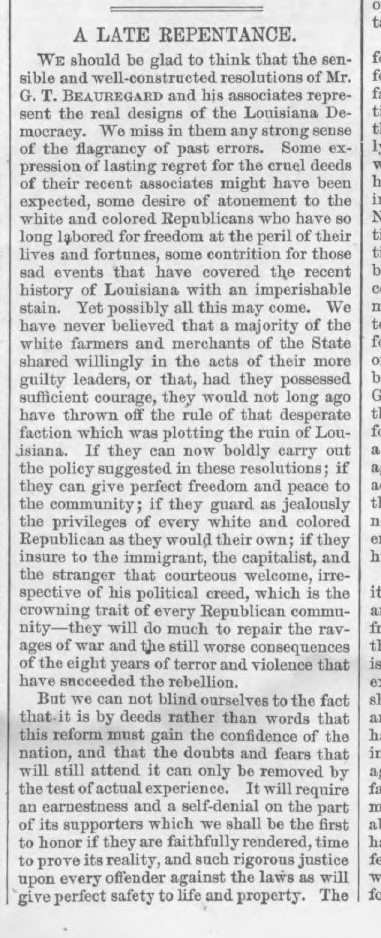
Harper’s Weekly July 5, 1873 (page 570)
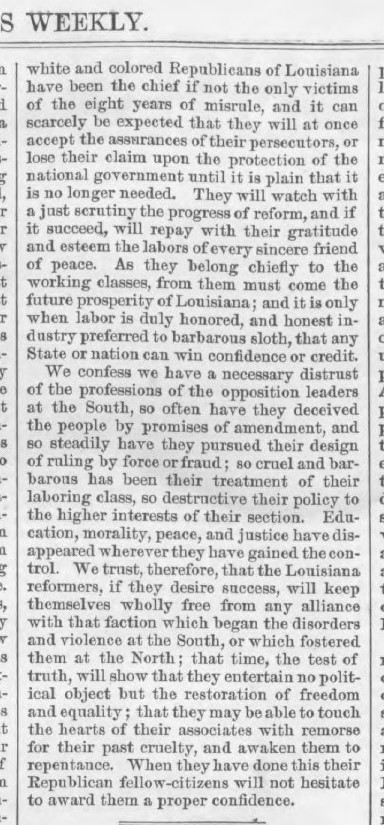
Harper’s Weekly July 5, 1873 (con’t)
___________________
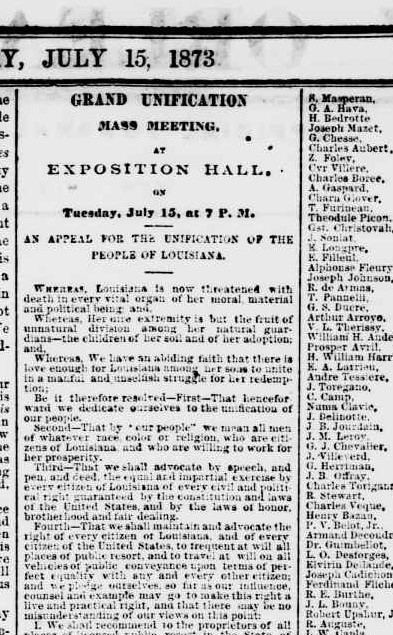
mass meeting
New Orleans Republican July 15, 1873 page 2
A 1962 thesis by Vincent Marsala (downloadable at LSU) provides a great deal of information about the Unification Movement. Although many people in New Orleans favored Unification, there was little support for Unification in the rest of Louisiana. A mass meeting was held in New Orleans on July 15th for “public ratification” of the Unification platform. A black leader “ridiculed and scolded the whites.” Also, a letter signed by black leaders stated that blacks would work with whites to get rid of carpetbagger rule after the whites demonstrated their support for black political and civil rights. This sine qua non did not go over well at the meeting. The meeting effectively ended the movement for unification. G.T. Beauregard and another white leader were not at this July 15th meeting. Mr. Marsala believed it probable that Beauregard realized the movement would never achieve statewide support and didn’t want to be embarrassed at the meeting. In his conclusion Mr. Marsala described Louisiana’s dire economic situation during Reconstruction. White businessmen and planters wanted to use the Unification Movement to help alleviate the extremely high tax rates made possible by freemen voting for Republicans. General Beauregard and other businessmen thought they could control the black votes after the freemen left the Republican party. The white motivation for unification was economic and not primarily concerned with guaranteeing equal rights for blacks. The movement failed because of a lack of white and black support and a lack of political expertise. [1]
Eric Foner wrote that the Unification Movement failed “since most freedmen distrusted the motives of its white organizers, while its genuine concessions to blacks alienated the bulk of the white electorate.” Democrats reverted to the “open racism” for the 1874 elections. In Louisiana the White League violently worked for white supremacy and fought the Battle of Liberty Place, which caused a strong federal intervention. Mr. Foner quoted one of whites involved in the Unification movement who, by 1874, supported the white supremacy tactics: In 1873 the unifiers humbled themselves to gain black cooperation for better government; that effort failed, but there was no way blacks would rule the whites. [2]
Possibly the failure of the unification movement along with White League violence and Governor Kellogg’s reelection caused Beauregard to seem non-political by the time of the 1875 article on top, which I’m pretty sure got Mr. Beauregard’s second name wrong. According to Walter L. Fleming’s The Sequel of Appomattox (1919, page 147-148, at Project Gutenberg), General Beauregard had a pretty consistent view of blacks between 1867 and 1873. Discussing the federal military administration in the post-war South, Mr. Fleming wrote:
The military administration was thorough, and, as a whole honest and efficient. With fewer than ten thousand soldiers the generals maintained 147 order and carried on the reconstruction of the South. The whites made no attempt at resistance, though they were irritated by military rule and resented the loss of self-government. But most Southerners preferred the rule of the army to the alternative reign of the carpetbagger, scalawag, and negro. The extreme radicals at the North, on the other hand, were disgusted at the conservative policy of the generals. The apathy of the whites at the beginning of the military reconstruction excited surprise on all sides. Not only was there no violent opposition, but for a few weeks there was no opposition at all. The civil officials were openly unsympathetic, and the newspapers voiced dissent not untouched with disgust; others simply could not take the situation seriously because it seemed so absurd; many leaders were indifferent, while others—among them, Generals Lee, Beauregard, and Longstreet, and Governor Patton—without approving the policy, advised the whites to coöperate with the military authorities and save all they could out of the situation. General Beauregard, for instance, wrote in 1867: “If the suffrage of the negro is properly handled and directed we shall defeat our adversaries with their own weapons. The negro 148 is Southern born. With education and property qualifications he can be made to take an interest in the affairs of the South and in its prosperity. He will side with the whites.”
From the Wikipedia article: Beauregard was appointed Superintendent of U.S. Military Academy on January 23, 1861. “However, when Louisiana seceded from the Union, the Federal Government immediately revoked his orders and he subsequently relinquished his office after only five days.” After his work as president of the street railway company, Beauregard worked as a supervisor of the Louisiana State Lottery Company and as adjutant general for the Louisiana state militia. “An equestrian monument by Alexander Doyle in New Orleans depicted him. The monument was removed on May 17, 2017” in the aftermath of the Charleston church shooting.
The Reconstruction topic at 64 Parishes has a very instructive one paragraph summary of the Unification Movement. The paragraph is under “The Kellogg Era, 1873–1877” – the movement’s resolutions represented advanced thinking on race and were very similar to Civil Rights Act of 1964.
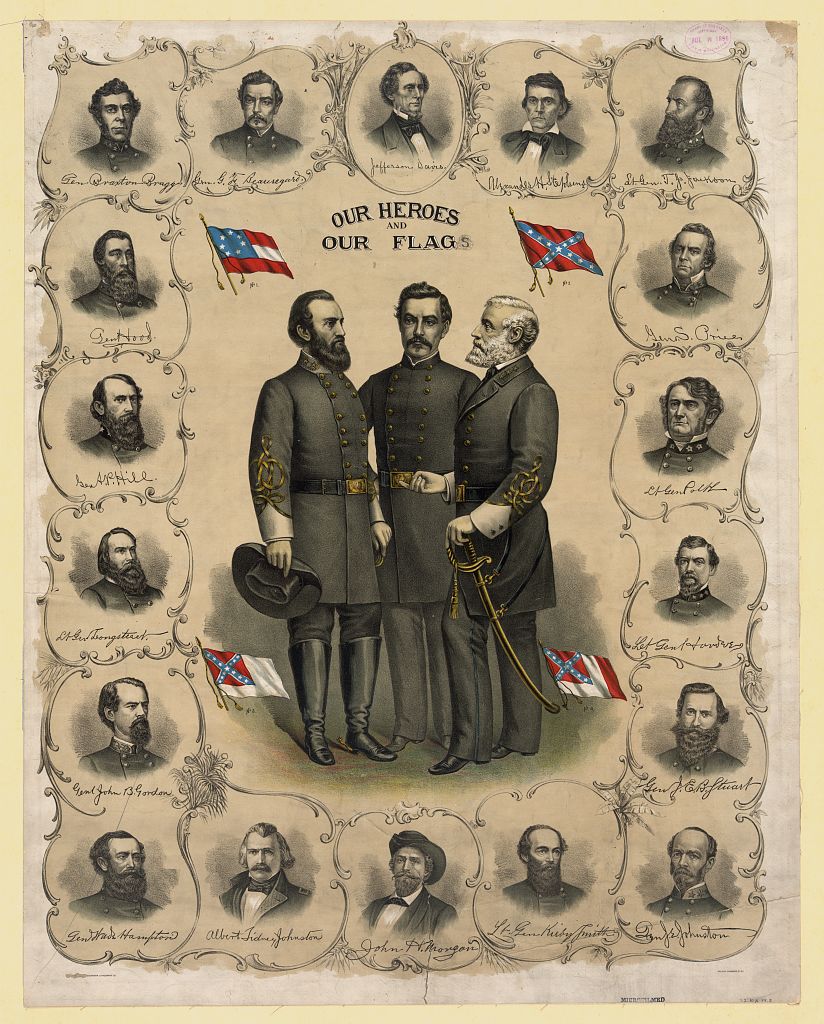
c1896: Jackson, Beauregard, and Lee
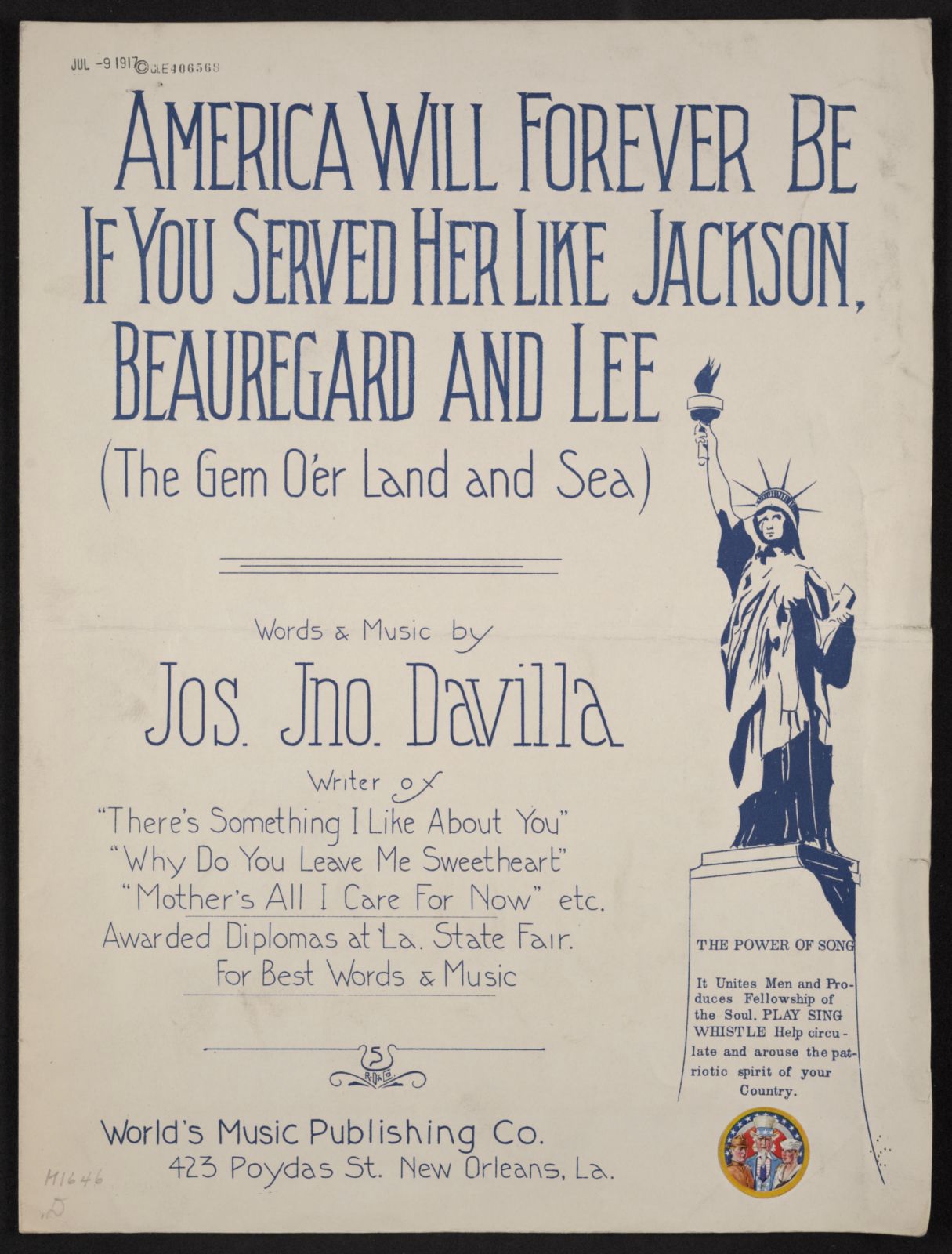
1917: same heroes, different flag

c1941: Camp Beauregard in Louisiana
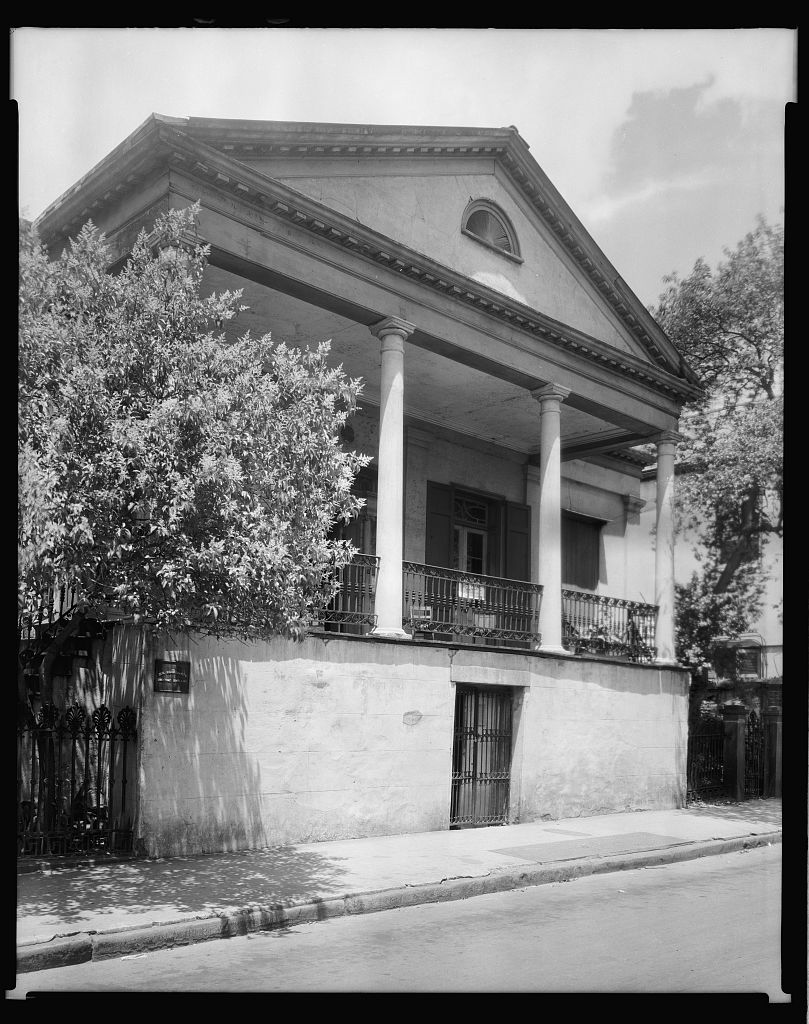
Beauregard house at 1113 Chartres St., New Orleans
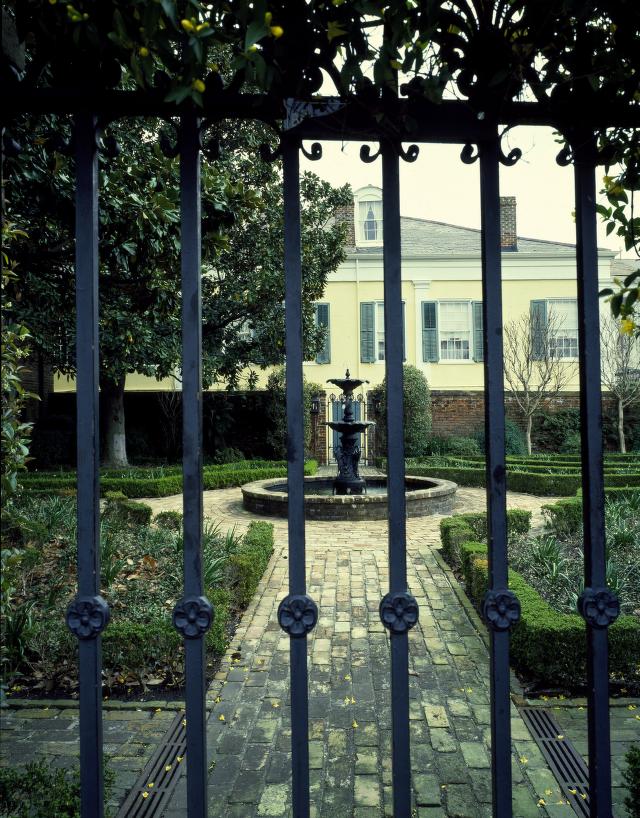
Courtyard of Beauregard’s home in New Orleans
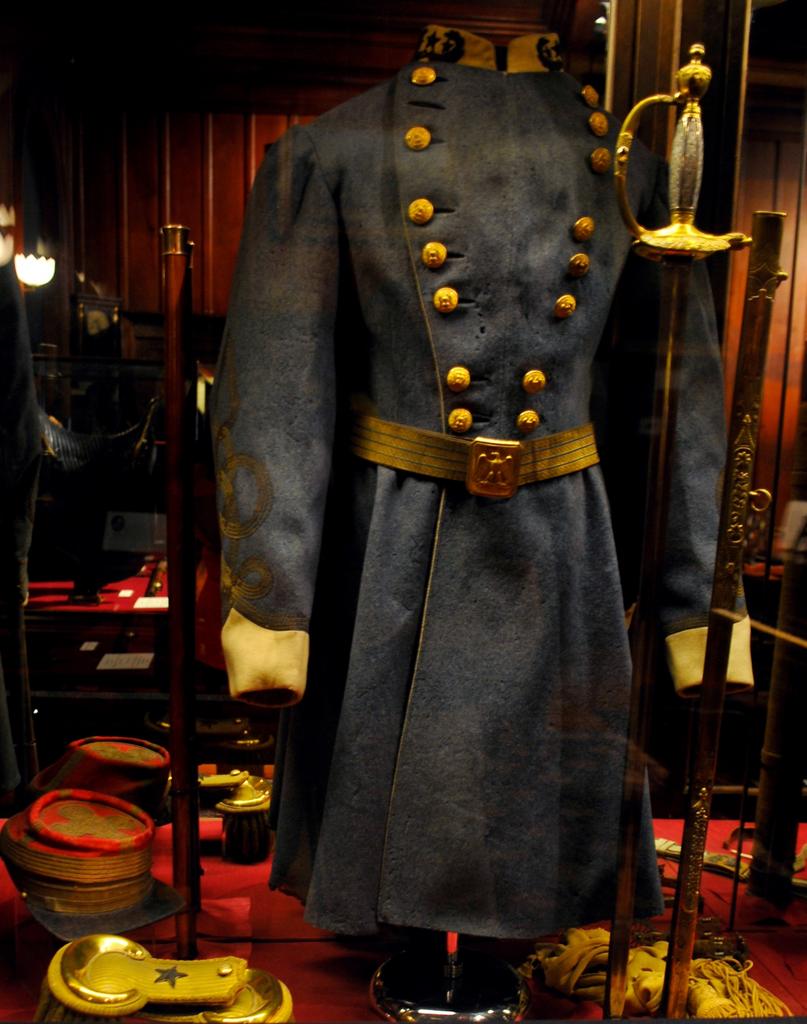
General Beauregard’s old uniform
The statue of General Beauregard on horseback is from Wikipedia: Infrogmation of New Orleans’ October 2008 image is licensed under the Creative Commons Attribution-Share Alike 2.0 Generic license. Also from Wikimedia: Matysik’s August 30, 2014 image of the “uniform worn by Brigadier General Pierre Gustave Toutant Beauregard (CSA), Confederate Memorial Hall museum in New Orleans, Louisiana” – it is licensed under ” Creative Commons CC0 1.0 Universal Public Domain Dedication”
From the Library of Congress: NPS Fort Sumter brochure from 2006; a Matthew Brady photo of the general; P.G.T. Beauregard between 1860 and 1870; Confederate heroes and flags about 30 years after the Civil War; sheet music from World War I – the Confederate generals were fighting for liberty just like the later doughboys; Camp Beauregard around 1941 – camp originally used for World War I training; Carol M. Highsmith’s photo of the Beauregard courtyard in New Orleans; front view of Beauregard house at 1113 Chartres St., New Orleans (1937-1938); the mass meeting announcement from the July 15, 1873 issue of the New Orleans Republican – the next day’s issue (page 1) described the meeting, it headlined “The Manifesto Ratified” and closed with “After Colonel Lewis sat down there were loud calls for General Beauregard and others, but none of them appearing, a motion to adjourn was made, put and carried.” – I was surprised that the manifesto was ratified but not that Beauregard didn’t appear
Harper’s Weekly 1873 is available at HathiTrust
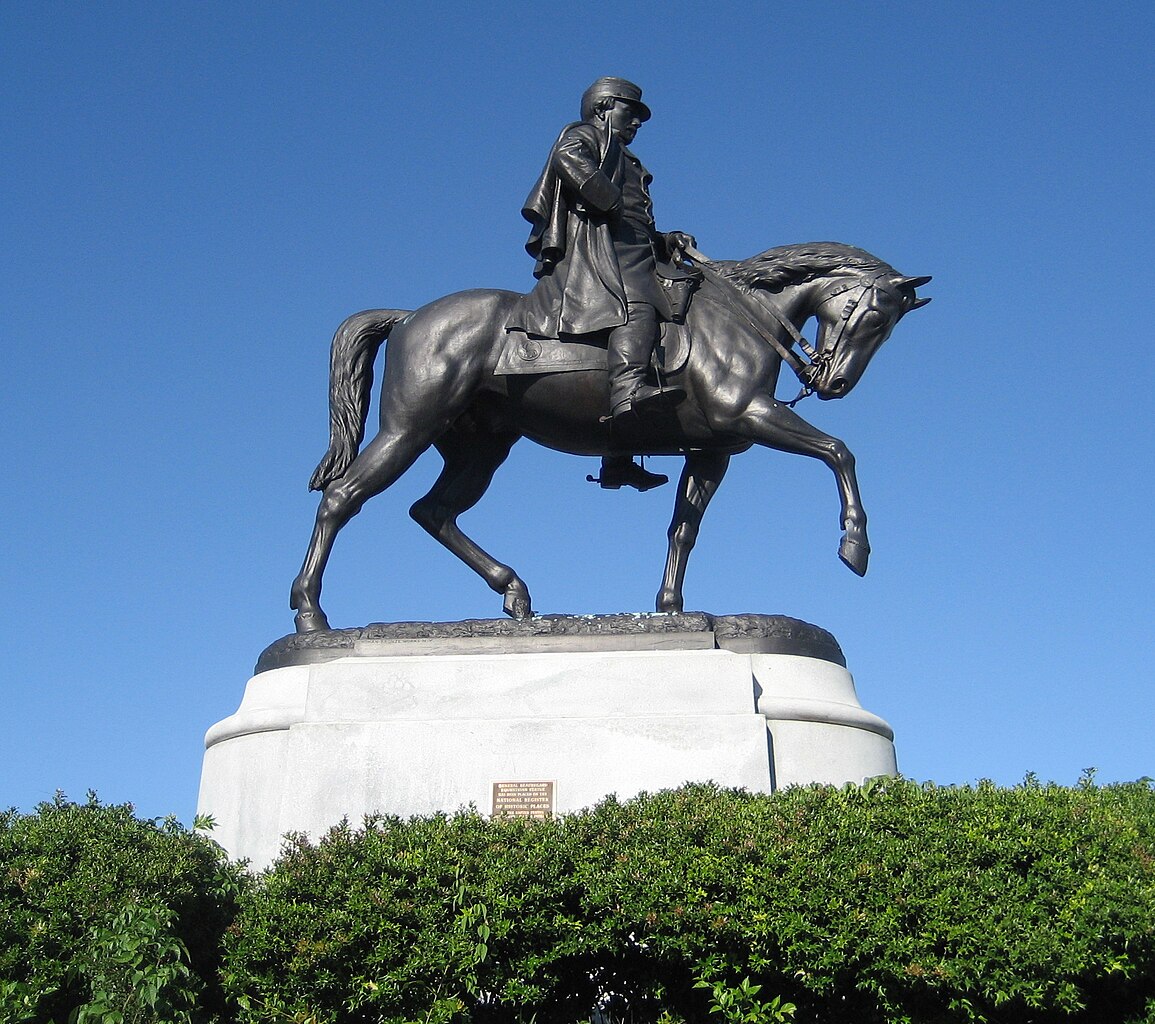
1915–2017: Beauregard statue in New Orleans
- [1]Marsala, Vincent, “The Louisiana Unification Movement Of 1873” (1962). LSU Historical Dissertations and Theses. 8275. https://repository.lsu.edu/gradschool_disstheses/8275↩
- [2]Foner Eric, Reconstruction: America’s Unfinished Revolution, 1863-1877. New York: HarperPerenial ModernClassics, 2014. Page 547-551. ↩

