250 years ago American rebel forces were besieging Boston and the British Redcoats holed up in it. One of the American commanders Nathanael Greene wrote a letter to fellow Rhode Islander Samuel Ward, a member of the Second Continental Continental Congress meeting in Philadelphia. In his fourth paragraph General Greene recommended a “declaration of independence”.
From American Archives, Fourth Series, at Internet Archive:
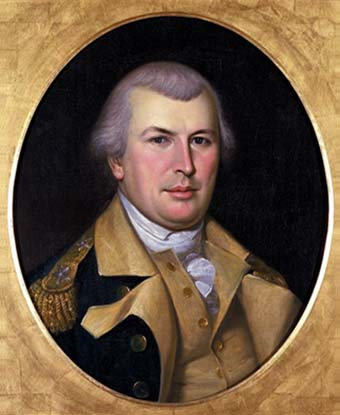
General Nathanael Greene
GENERAL GREENE TO SAMUEL WARD.
Camp on Prospect-Hill, January 4, 1776.
Dear Sir : Your kind favour of the 23d last, is now before me. I am extremely happy to find your views so affectionately extended to the combined interests of the United Colonies. Your apprehensions that George III, is determined, at all hazards to carry his plan of despotism into execution, is fully confirmed by his late gracious speech to both Houses of Parliament. In that, you will find, he breathes revenge, and threatens us with destruction. Indeed, it is no more than common sense must have foreseen long since, had we not been blinded by a too fond attachment to the parent state. We have consulted our wishes, rather than our reason, in indulging the idea of accommodation. Heaven has decreed that tottering empire to irretrievable ruin, and, thanks to God, since Providence has so determined it, America must raise an empire of permanent duration, supported upon the grand pillars of truth, freedom, and religion, based upon justice, and defended by her own patriotick sons.
No doubt a large army must be raised in addition to the forces upon the present establishment. You are acquainted with my sentiments upon that head already. How they must be divided, and where stationed, is a matter at present problematical. However, one thing is certain, the grand body must be superior in number to any force the enemy can send. All the forces in America should be under one commander, raised and appointed by the same authority, subjected to the same regulations, and ready to be detached wherever occasion may require. Your observation with regard to the Canadians has often struck me ; that their attachment to the one party or the other will greatly depend upon the superiority of force. To prevent which in some measure, and fix them to the common interest, let us raise one or more regiments of Canadians to serve in New-England, and send an equal number into Canada from the Colonies, in addition to what you have proposed. With regard to the scanty measure dealt out to the Army upon the new establishment, we are not altogether different in sentiment ; yet I am convinced the regiments will fill to their full complement. I believe they are more, upon an average, than half full already. Undoubtedly, the detaining of arms, being private property, is repugnant to many principles of civil and natural law, and hath disgusted many. But the great law of necessity must justify the expedient, till we can be otherwise furnished. The pay of the soldiers is certainly generous, and the officers likewise, except the field officers, whose pay is much below that of any others, considering their rank and experience, and it will operate to excite an opinion derogatory to their merit.

Samuel Ward
My dear, sir, I am now to open my mind a little more freely. It hath been said that Canada, in the late war, was conquered in Germany. Who knows but that Britain may be, in the present controversy! I take it for granted, that France and Spain have made overtures to the Congress. Let us embrace them as brothers. We want not their land force in America; their navy we do. Their commerce will be mutually beneficial; they will doubtless pay the expense of their fleet, as it will be employed in protecting their own trade. Their military stores we want amazingly. Those will be articles of commerce. The Elector of Hanover has ordered his German troops to relieve the garrisons of Gibraltar and Port-Mahon; France will, of consequence, attack and subdue Hanover with little trouble. This will bring on a very severe war in Germany, and turn Great Britain’s attention that way. This may prevent immense expense, and innumerable calamities in America.
Permit me, then, to recommend from the sincerity of my heart, ready at all times to bleed in my country’s cause, a declaration of independence; and call upon the world, and the great God who governs it, to witness the necessity, propriety, and rectitude thereof.
My worthy friend, the interests of mankind hang upon that truly worthy body of which you are a member. You stand the representatives, not of America only, but of the whole world; the friends of liberty, and the supporters of the rights of human nature.
How will posterity, millions yet unborn, bless the memory of those brave patriots who are now hastening the consummation of freedom, truth, and religion! But want of decision renders wisdom in council insignificant, as want of power hath prevented us here from destroying the mercenary troops now in Boston. Frugality, a most amiable domestick virtue, becomes a vice, of the most enormous kind, when opposed to the common good. The tyrant, by his last speech, has convinced us, that to be free or not, depends upon ourselves. Nothing, therefore, but the most vigorous exertions on our part, can shelter us from the evils intended us. How can we, then, startle at the idea of expense, when our whole property, our dearest connexions, our liberty, nay! life itself is at stake; let us, therefore, act like men inspired with a resolution that nothing but the frowns of Heaven shall conquer us. It is no time for deliberation; the hour is swiftly rolling on when the plains of America will be deluged with human blood. Resolves, declarations, and all the parade of heroism in words, will not obtain a victory. Arms and ammunition are as necessary as men, and must be had at the expense of every thing short of Britain’s claims.
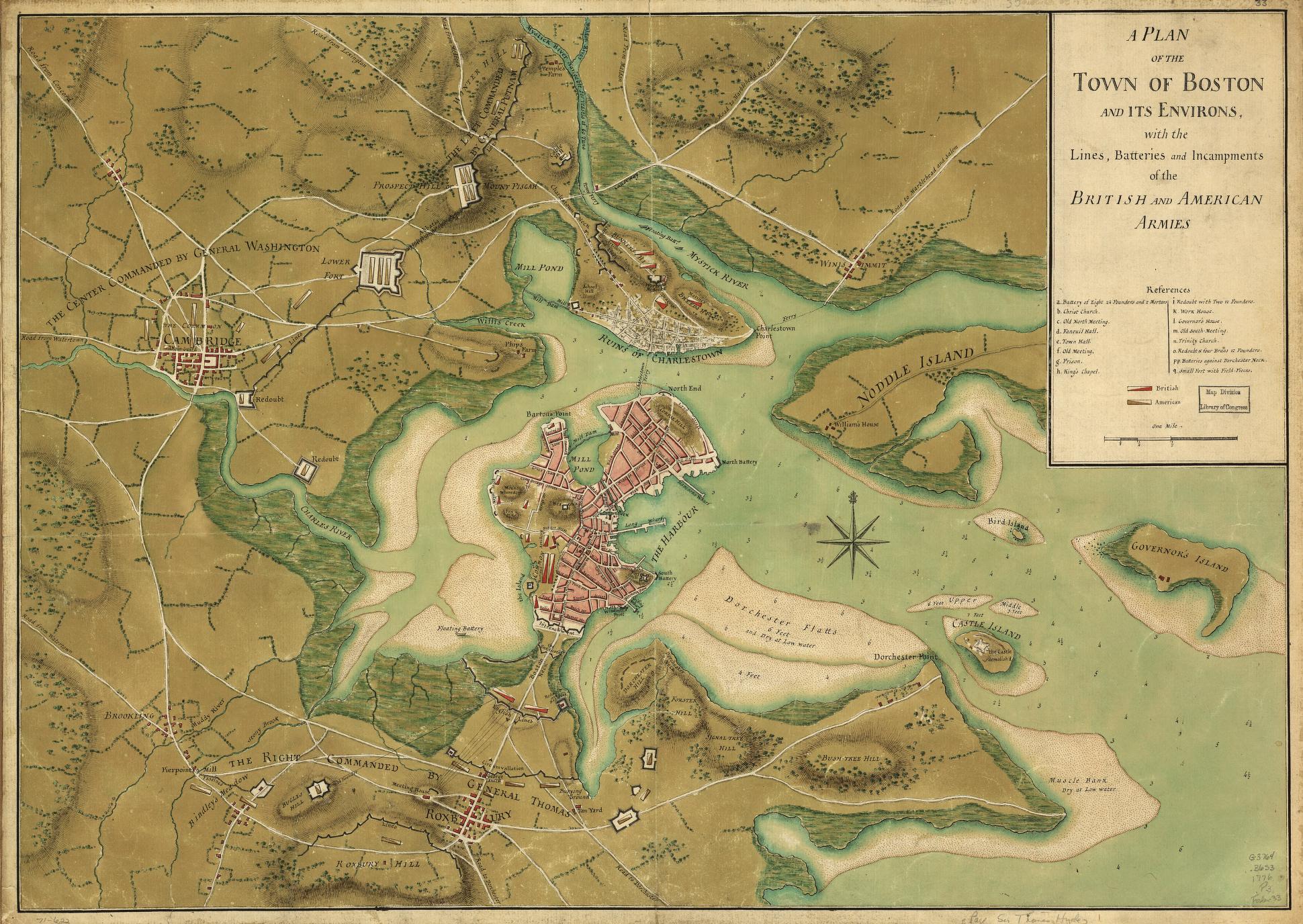
Siege of Boston with Prospect Hill
An army unequipped, will ever feel the want of spirit and courage ; but properly furnished, fighting in the best of causes, will bid defiance to the united force of men and devils. When a finishing period will be put to the present dispute, God only knows. We have just experienced the inconveniences of disbanding an army within cannon shot of the enemy, and forming a new one in its stead. An instance never before known. Had the enemy been fully acquainted with our situation, I cannot pretend to say what might have been the consequence. A large body of troops will probably be wanted for a considerable time. It will be infinitely safer, and not more expensive in the end, for the Continent to give a large bounty to any number of troops in addition to what may be ordered on the present establishment, that will engage during the war, than to inlist them from year to year without a bounty. And should the present regiments be inclined to engage for the same term, let them receive the same encouragement. There is not the least prospect of our being able to disband and form a new army again, without the enemy’s availing himself of the advantage.
I have taken the liberty to show your last letter to General Lee, whose knowledge of Europe, and American genius and learning, enable him to give you the advice you want. He has written you fully on the subject ; it would be mere arrogance in me to say any thing upon the subject, after he has taken up the pen.
I this day manned the lines upon this hill, and feel a degree of pleasure that I have not felt for several days. Our situation has been critical. We have no part of the militia here, and the night after the old troops went away, I could not have mustered seven hundred men, notwithstanding the returns of the new inlisted troops amounted to nineteen hundred and upwards. I am now strong enough to defend myself against all the force in Boston. God bless you and preserve you. Adieu, &c.
David McCullough began 1776 in 1775. On October 26, 1775 British King George III rode to the Palace of Westminster to deliver a speech to Parliament. The king wanted to put down the rebellion in America. “he was committing land and sea forces – as well unnamed foreign mercenaries – sufficient to put an end to that rebellion, and he had denounced the leaders of the uprising for having American independence as their true objective, something those leaders themselves had not as yet openly declared.” After George III left Parliament both Houses heatedly debated the king’s proposal; both Houses voted to support the king.[1]
On January 1, 1776 the American troops at Boston first saw copies of George III’s October speech. “The reaction among the army was rage and indignation.” Soldiers burned the speech in public. With the new year the speech marked a turning point – no more possibility of reconciliation. In a letter General Washington referred to “a tyrant and his diabolical ministry,” and wrote ” we were determined to shake off all connections with state so unjust and unnatural.” January 1st was also the day many volunteers went home and new recruits took their places. Washington declared a new army with a continental point of view, even though most of the soldiers were still from New England. A 13-gun salute introduced the raising of a new flag – thirteen red and white stripes with the British colors in an upper corner. [2]
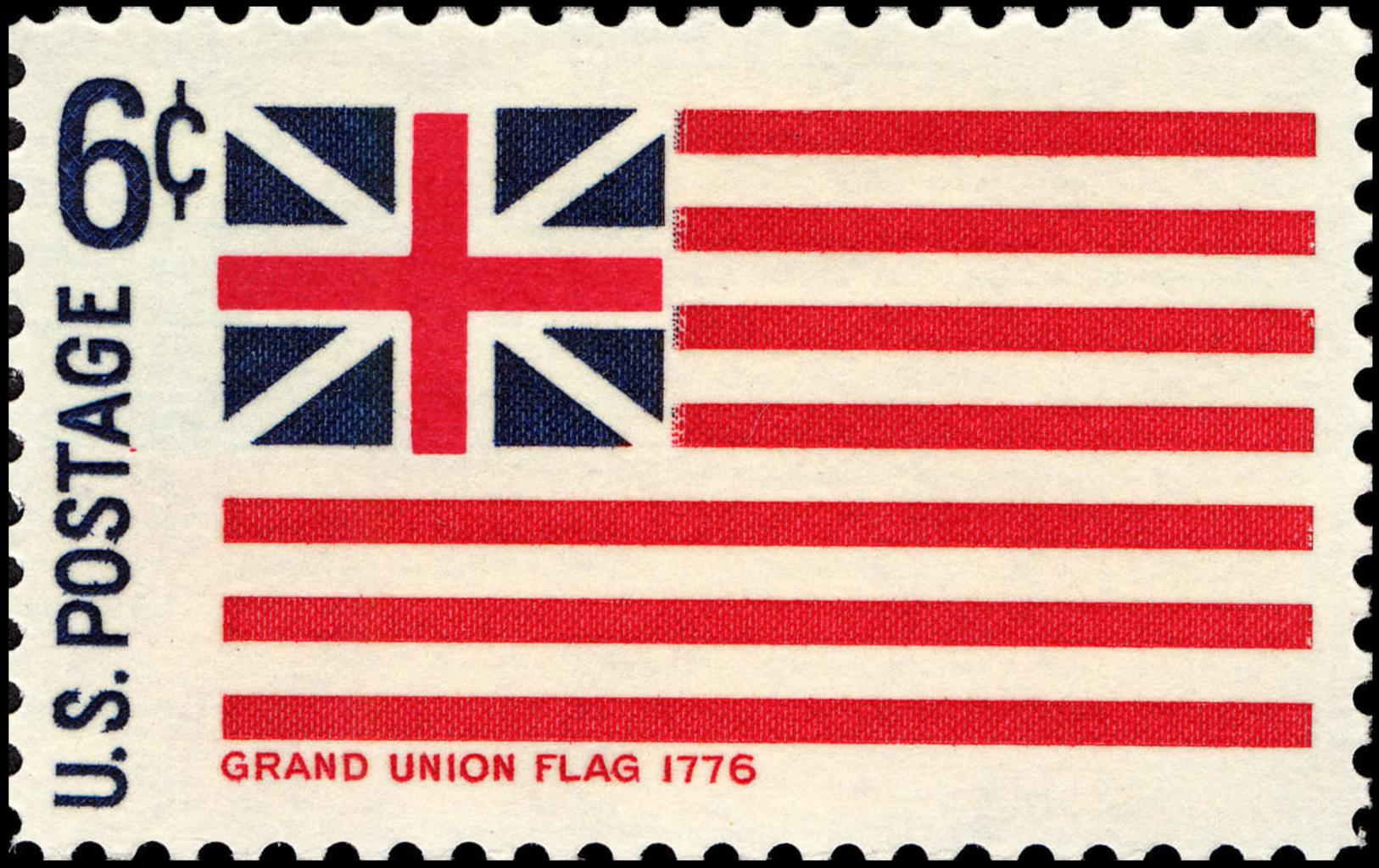
probably raised on Prospect Hill on January 1, 1776
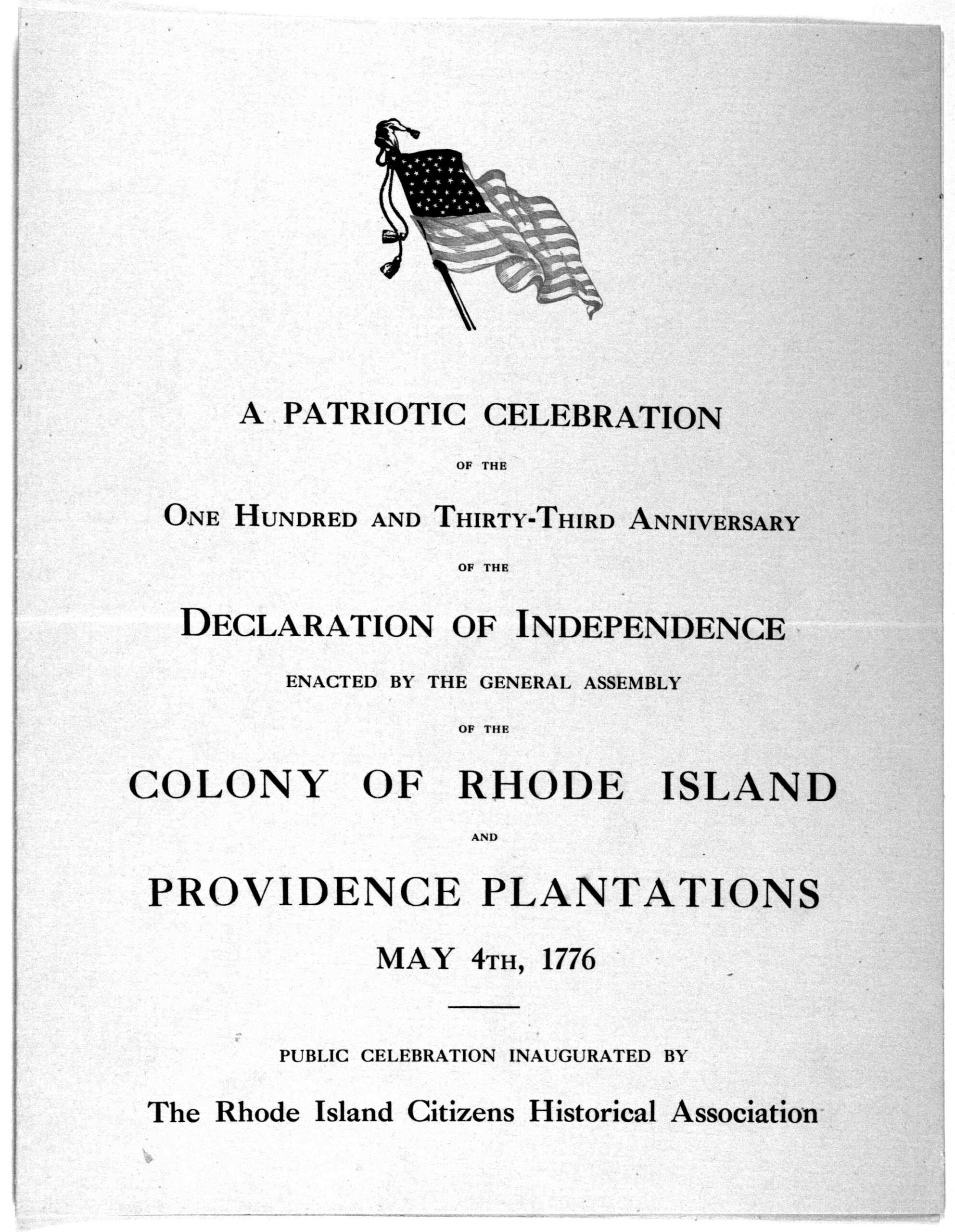
Happy Fourth … of May!
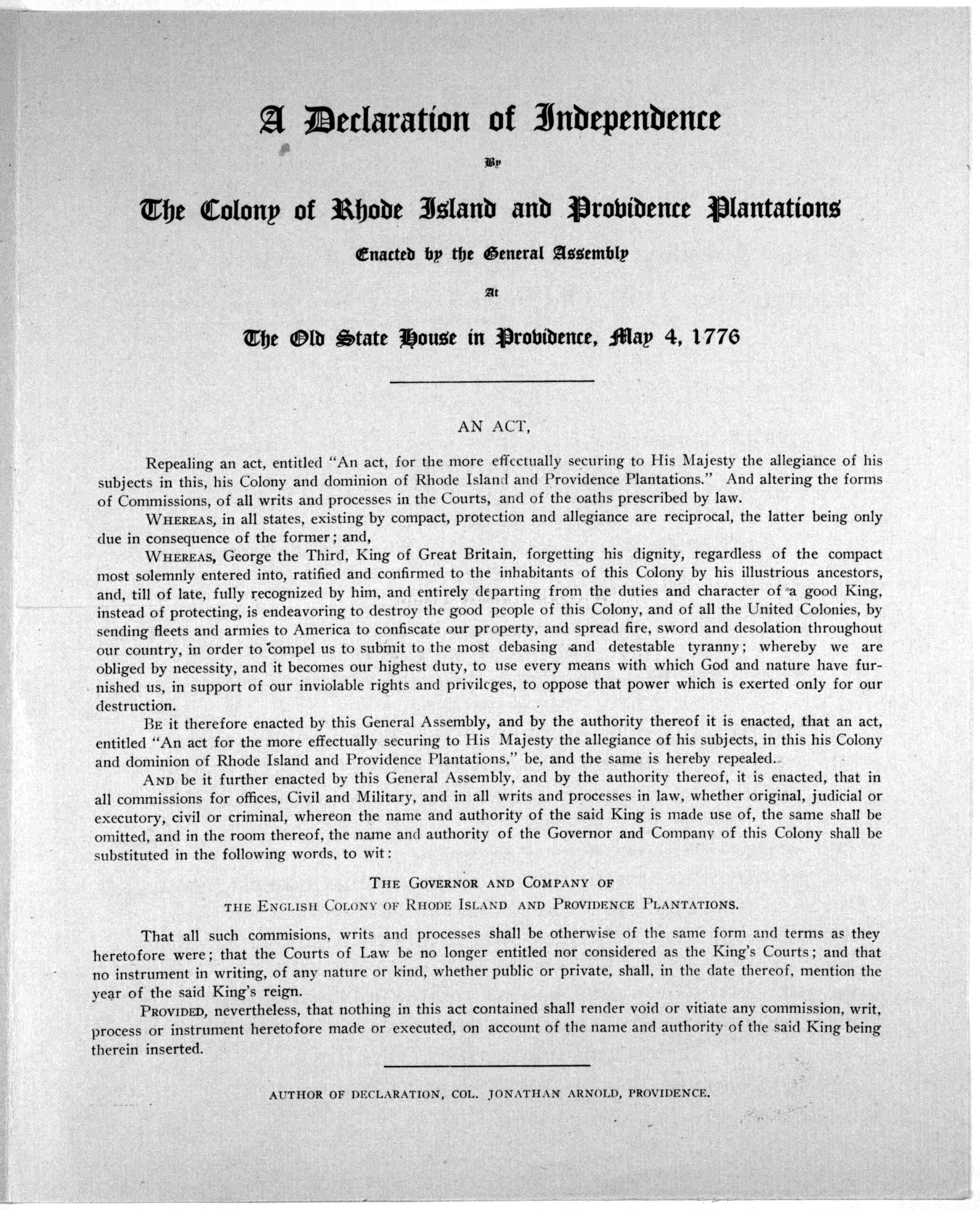
Rhode Island’s declaration
Excerpts from Nathanael Greene’s letter to Samuel Ward appear in The Spirit of ‘Seventy-Six in a section called “The Turn of the Tide.” Also in the section: Thomas Jefferson wrote a letter in November 1775 suggesting that separation was probably imminent (Greene’s and Jefferson’s expressions for independence “could be matched in every colony”); excerpts from Common Sense, published on January 9, 1776, “Doubtless the most important single influence in bringing about a change in popular sentiment” in favor of separation; opposition to Common Sense by Virginian Landon Carter.[3]
Samuel Ward died in March 1776 of smallpox, so he didn’t have the opportunity to vote for independence and sign the declaration. He’s a member of the Rhode Island Heritage Hall of Fame. According to George Washington Greene, Nathanael Greene’s grandson and another Member of the Rhode Island Heritage Hall of Fame, Samuel Ward also didn’t live to see the colony of Rhode Island declare its own independence on May 4, 1776. From Greene’s A Short History of Rhode Island (1877; at Project Gutenberg, page 228):
While these events, so grievous in the present, so full of a glorious future, were passing, Samuel Ward, who had so nobly represented the highest conscience and culture of Rhode Island in the Continental Congress, was dying of small-pox in Philadelphia—the advanced post of civil heroism. An upright and conscientious man, who had drawn from books and men those lessons which make men wise in judgment and firm in principle and bold in action. Had he lived a few weeks longer his name would have been foremost among the signers. A marble monument was voted him by Congress, “in testimony of the respect due to his memory, and in grateful remembrance of his public services.”
The last Colonial Assembly of Rhode Island met on the 1st of May. On the 4th, two months before the Congressional Declaration of Independence, it solemnly renounced its allegiance to the British crown, no longer closing its session with “God save the King,” but taking in its stead as expressive of their new relations, “God save the United Colonies.”
You can read more about Prospect Hill at the National Park Service. Most scholars think the flag raised on January 1, 1776 was indeed the Grand Union Flag, but there is some disagreement. “During the 1860s, Civil War regiments used the land as a training field and campsite.”
The portrait of Nathanael Greene is from the National Park Service. I got the Samuel Ward portrait at Free-Images, along with the image of the stamp depicting the Grand Union Flag, the flag probably raised on January 1, 1776 by the American army at Boston.
From the Library of Congress: the map showing American and British troop dispositions during the Siege of Boston (after March 5, 1776 when American troops under General John Thomas took control of Dorchester Heights, according to 1776 page 90); calendar showing and describing Henry Knox and the transport of cannon from Fort Ticonderoga to the American lines at Boston. It seems the artillery arrived in late January -this was very important for the American plan to get the British out of Boston – the artillery was in use when the Americans occupied Dorchester Heights; the portrait of Henry Knox – you can read more about him at the U.S. Army, According to 1776 Knox arrived back in Cambridge on January 18, 1776, the cannon were still at Farmingham but would soon follow; leaflet commemorating the Rhode Island declaration of independence on May 4, 1776, which still referred to Rhode Island and Providence Plantations as an English colony – one of the songs for the 1909 commemoration was “Battle Hymn of the Republic,” written by Julia Ward Howe, a great-granddaughter of Samuel Ward, Greene’s correspondent in the letter above.
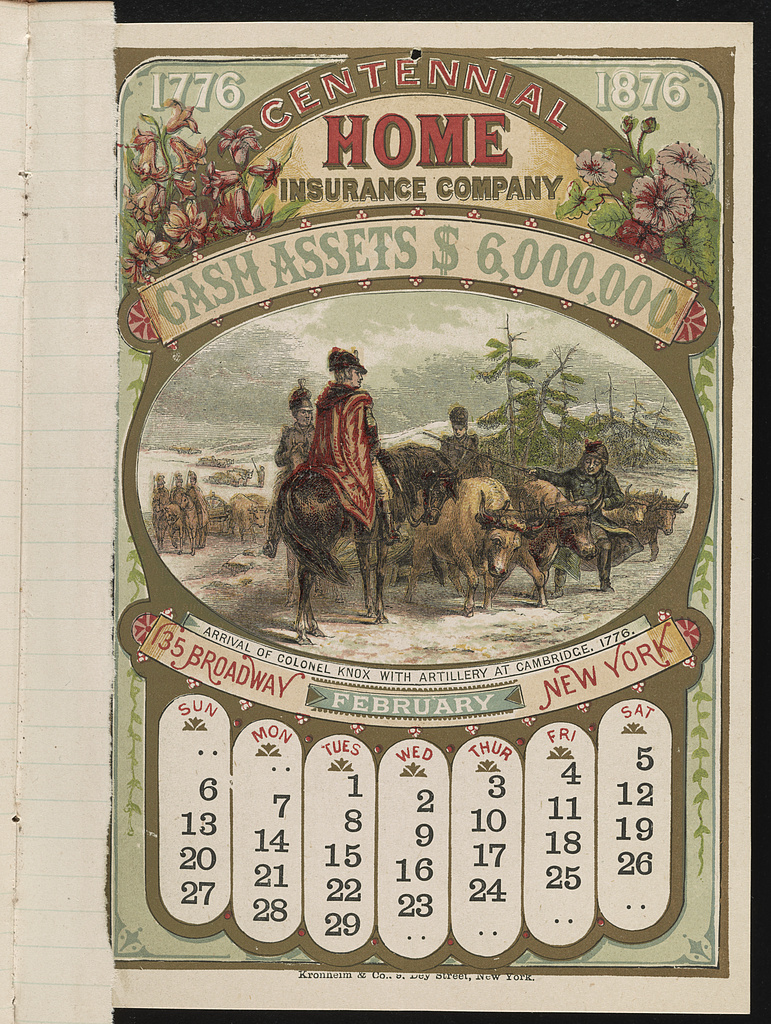
Knox and Ticonderoga cannon arrive at siege
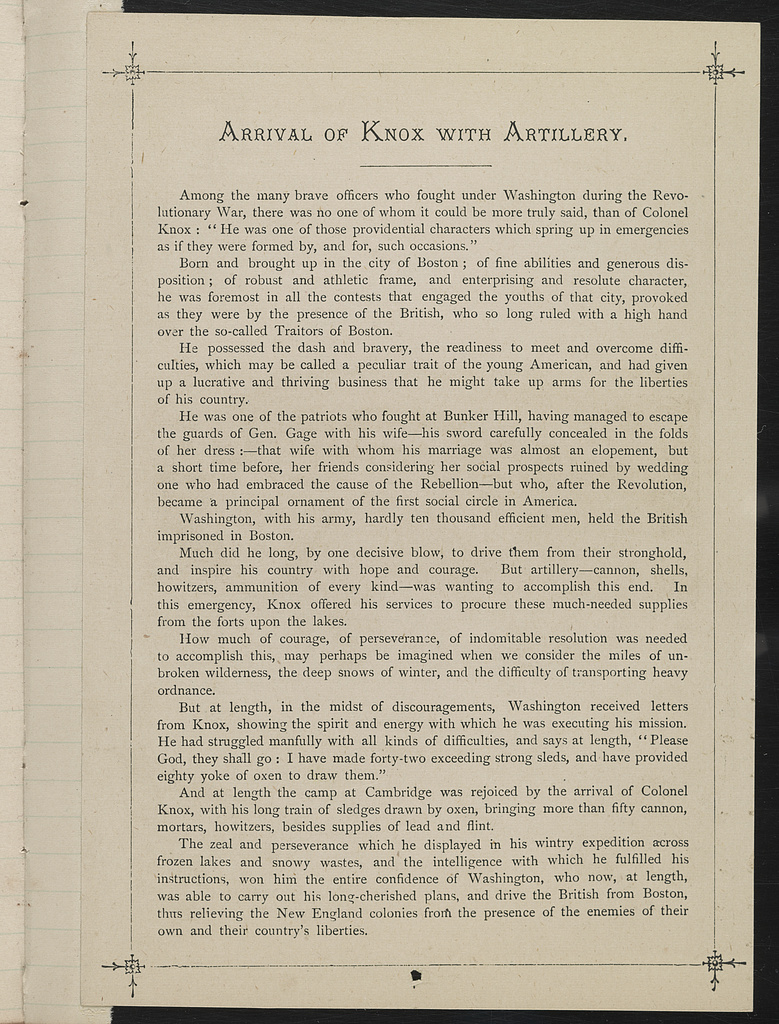
frigid mission
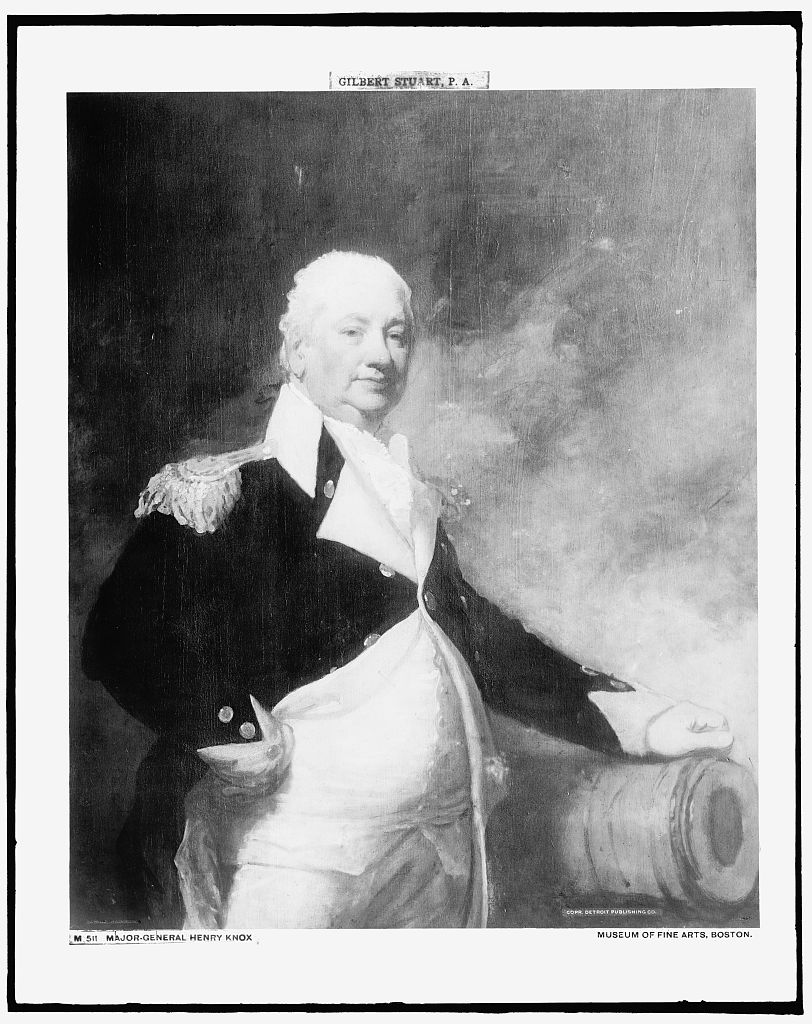
Henry Knox
_________________
