No. In its May 6, 1876 issue Harper’s Weekly lauded President Grant for vetoing a bill that would have reduced the U.S. president’s salary by 50%:
not much of a demagogue
THE SALARY VETO
WHEN the bill reducing the salary of the President was passed by Congress, we said that the President would probably veto it, and he has done so, upon the most legitimate grounds. The increase of salary, it will be remembered, was a part of the “grab bill,” which was part of an appropriation bill. The grab was so called not because it raised the President’s salary, but because it gave back pay to members of Congress as well as raised their salary. The President now remarks, with great force, that the salary of $25,000 was fixed when the population was about 3,000,000, and when members of Congress received but $6 a day for actual service. The population is now nearly 40,000,000, and allowing five months’ session each year, they receive fully $30 a day. Congress has voted to restore the President’s salary to the original sum, but not that of its own members. The act is an illustration of Democratic “reform” in the House and of Republican pusillanimity in the Senate. The majority in the Senate which voted for the general increase also voted for the particular decrease, and threw upon the President the odium, which it did not dare to accept itself, of seeming to withstand an economical reform. The President is too little of a demagogue to follow an unworthy example, and his veto is manly and sensible, and will be approved by the country.

no claptrap
He truly says that the cost of living is entirely out of proportion to what it was when the salary was fixed at $25,000, and that he knows by personal experience that the old salary is inadequate to the proper and necessary expense of the White House establishment. He has, of course, no personal interest in the reduction, for his official emolument can not be increased or diminished during his term. Moreover, unless the salary was grossly extravagant eighty years ago, Which has never been pretended, it is insufficient now. It is possible, indeed, that a President might keep house at the White House for $15,000 or $10,000 a year. And there are doubtless gentlemen who would gladly take the Presidency without any salary at all. But those are not very cogent reasons for paying the President meanly. General GRANT has shown a proper regard for the national dignity and for the honorable comfort of his successors in vetoing a bill whose passage was a piece of clap-trap and demagogery, and an insult to the popular intelligence.
Thomas Nast did a couple cartoons for the same issue of Harper’s Weekly. One implied that the U.S. House was controlled by ex-Confederates who were willing to shut down the federal government over President Grant’s veto. The other cartoon is on the front page of the May 6th issue. It shows corruption and scandals possibly associated with the Grant administration. According to invaluable, the Greek scandal was a relatively minor scandal. Other scandals like the Whiskey Ring were more serious. Wikipedia agrees in its Scandals of the Grant administration – “The worst and most famous scandal to hit the Grant administration was the Whiskey Ring of 1875 … .” The Salary Grab Act is considered one of the scandals. You can read Wikipedia’s full article about the Salary Grab here. “The proposal for a salary increase was fueled by what was considered low pay for members in government, while the salary for the president was the same as it had been for George Washington. The bill subsequently included a 50 percent salary increase for the president and for members of Congress, retroactive to the beginning of their [members of Congress] term, which was the most highly contested provision in the bill. Public outcry led Congress to rescind the congressional salary increase [in 1874].” The increased pay for President and Supreme Court stayed the same.
According to several sources, including Oregon State, $50,000 in 1876 would be worth at least $1,000,000 today. It seems that back in 1876 the president and members of Congress had to pay more expenses associated with their offices from their salaries. Grant’s veto message might be suggesting that. That was one of the motivations for the Salary Grab. See the cartoon in bronze below.
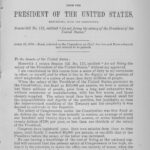
veto message (part 1)
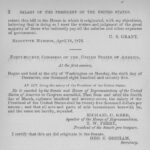
part 2
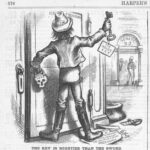
Harper’s Weekly May 6, 1876
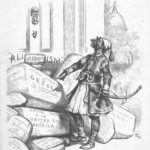
corruption scandals
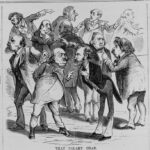
grabbers galore
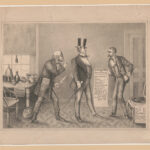
D.C.’s expensive
From the Library of Congress: President Grant’s veto message; the cartoon from the December 27, 1873 issue of Frank Leslie’s illustrated Newspaper; another cartoon that lists some of the high prices at the nation’s capital.
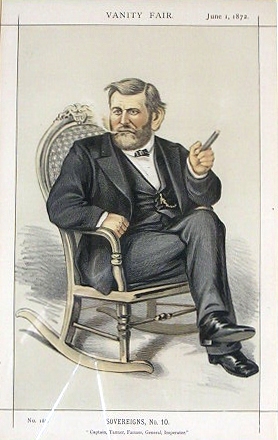
From Wikimedia: Thomas Nast’s 1872 Vanity Fair caricature of U.S. Grant – “Captain, Tanner, Farmer, General, Imperator”; the Carte de visite of General Grant – “by Theo. Lilienthal’s Photographic Gallery, 102 Poydras St., New Orleans,” “possibly from Grant’s visit to New Orleans in August 1863”.
You can see Harper’s Weekly for 1876 at Hathi Trust.
According to several sources, including Oregon State, $50,000 in 1876 would be worth at least $1,000,000 today. It seems that back in 1876 the president and members of Congress had to pay more expenses associated with their offices from their salaries. Grant’s veto message might be suggesting that. That was one of the motivations for the Salary Grab. See the cartoon in bronze below.

veto message (part 1)

part 2
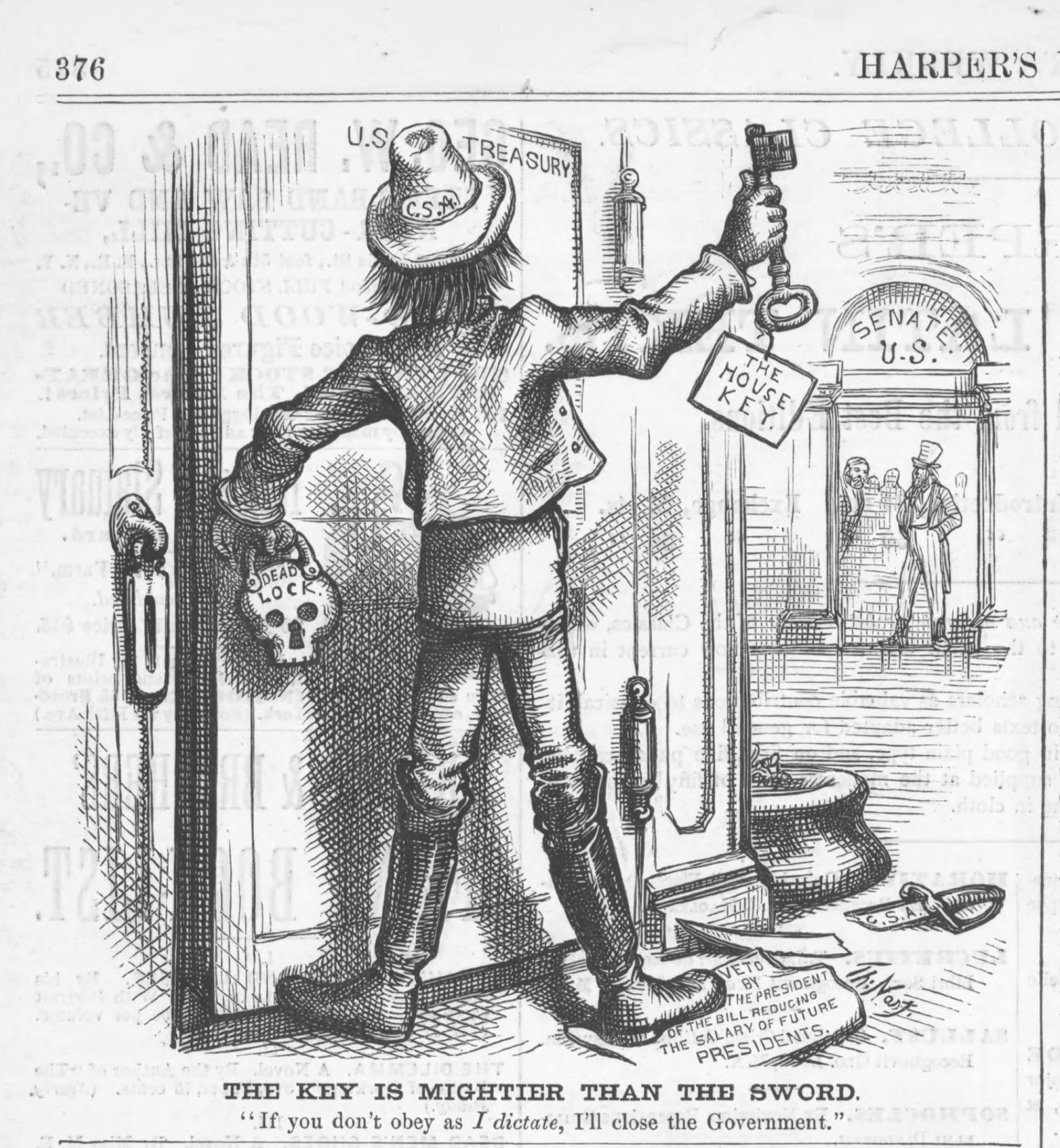
Harper’s Weekly May 6, 1876
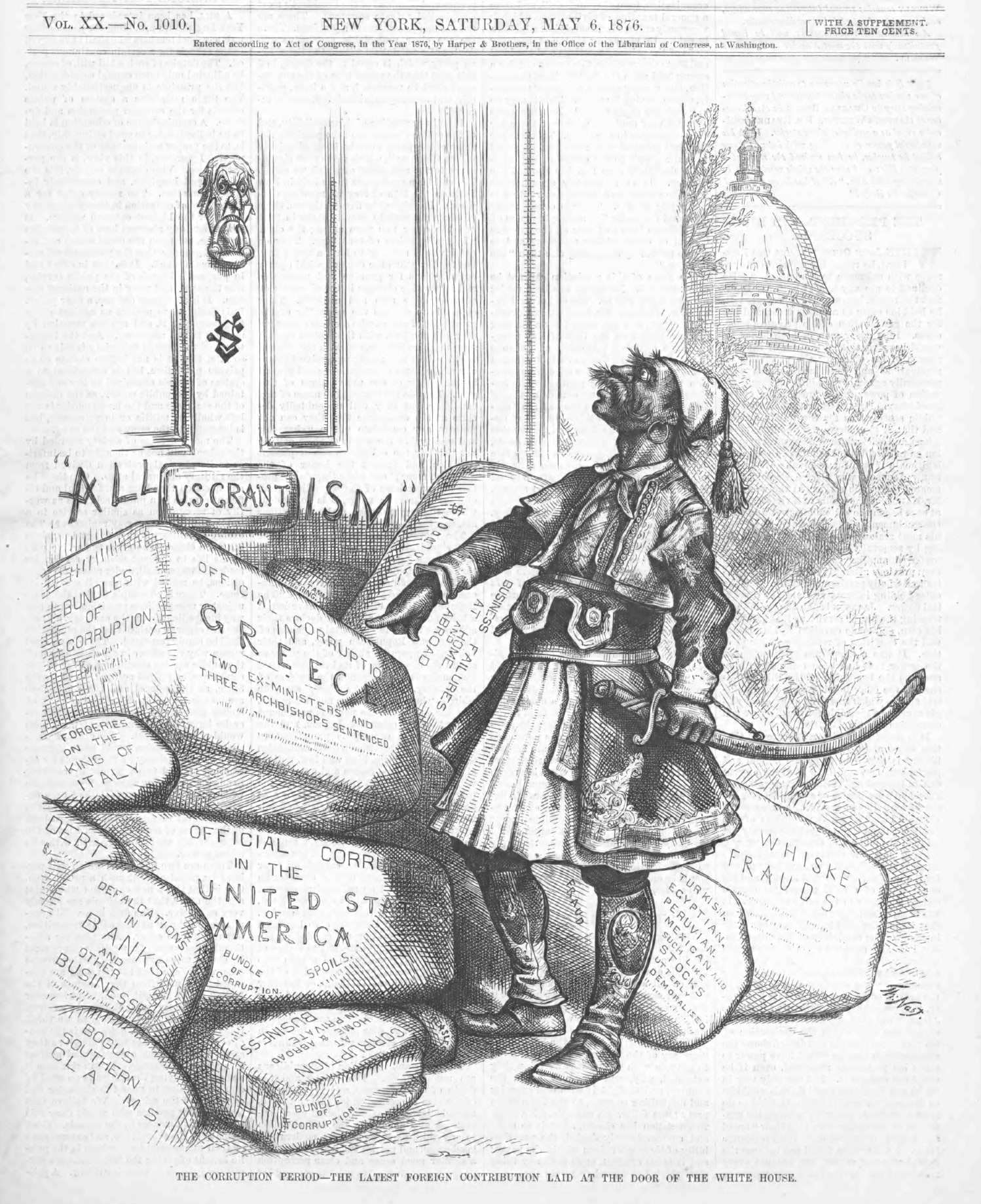
corruption scandals
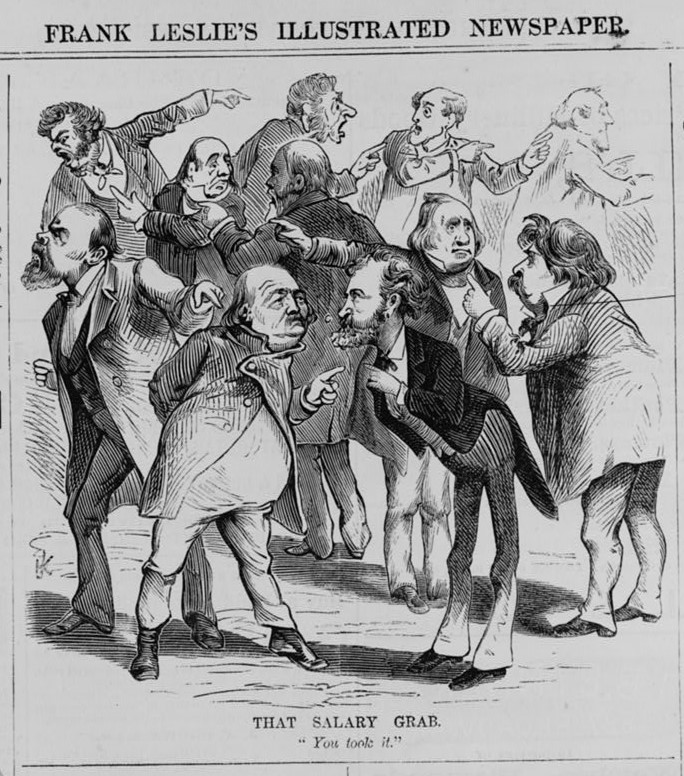
grabbers galore
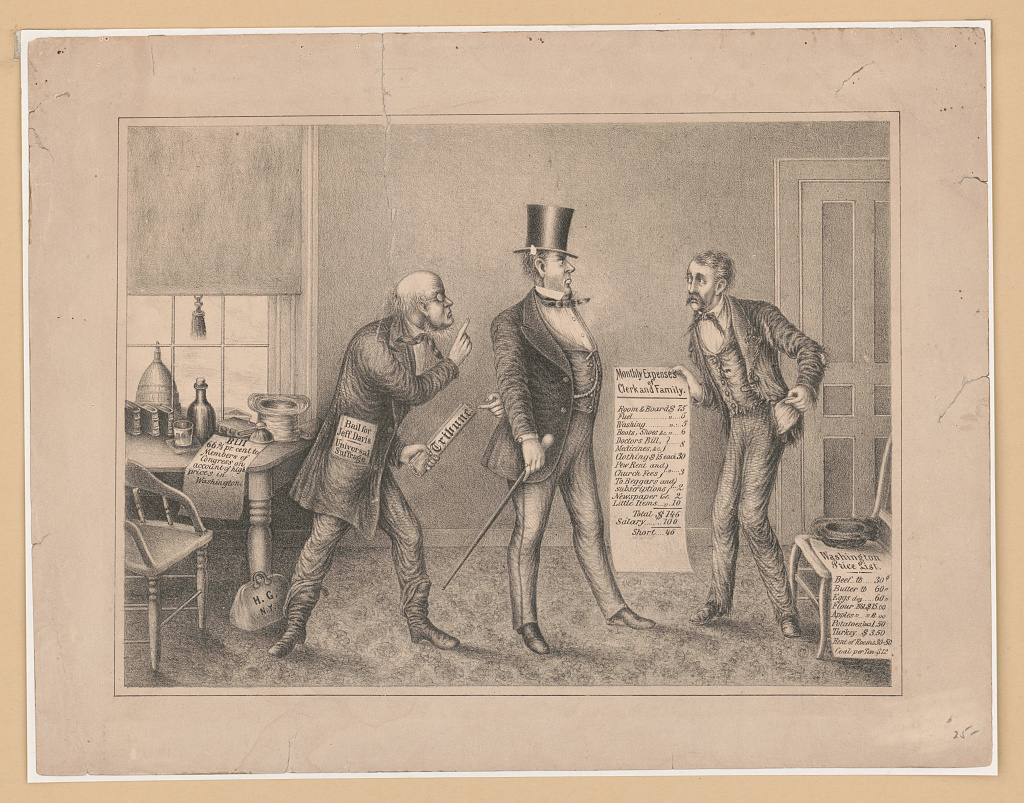
D.C.’s expensive


