“if there are any of us left alive”

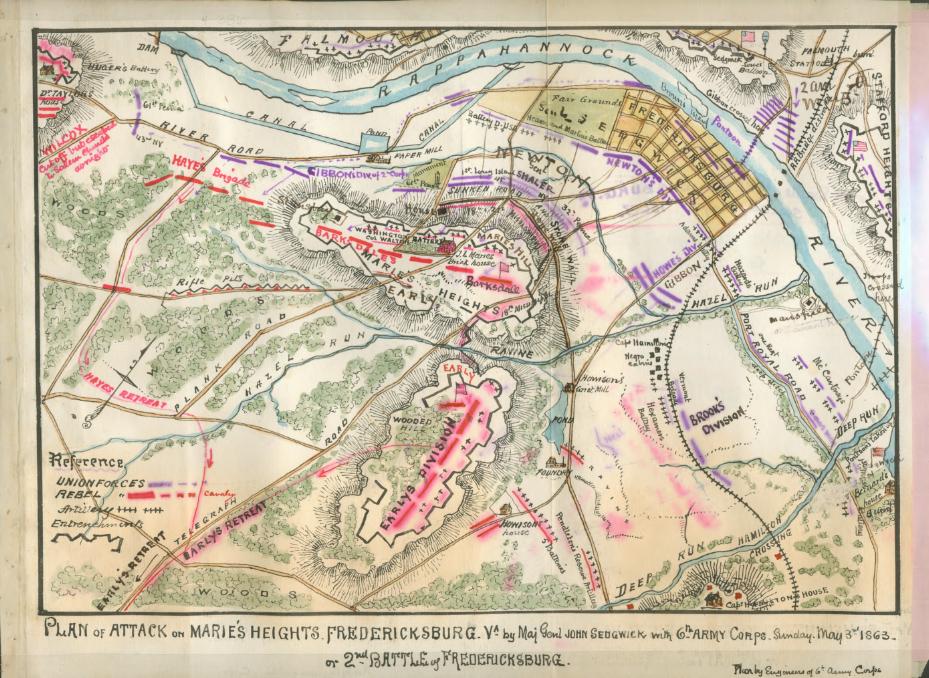
Plan of attack on Marie's Heights, Fredericksburg, Va. or 2nd Battle of Fredericksburg. By Maj. Genl. John Sedgwick with 6th Army Corps, Sunday, May 3rd, 1863.  Sneden, Robert Knox, 1832-1918.  (LOC: gvhs01 vhs00022 http://hdl.loc.gov/loc.ndlpcoop/gvhs01.vhs00022)

33d fought at Second Fredericksburg 5-3-1863

From a Seneca County, New York newspaper in 1863:

Letter from Capt. Edwin J. Tyler.

Casualties in Co. A, of the 33d.

CAMP 33D REG., N.Y.V., NEAR
FREDERICKSBURG, Va., May 8th 1863.

It becomes my painful duty to report for publication, for the information of those interested, an account, as near as possible, of the casualties in my Company, in the battle of the 4th inst., in rear of the heights of Fredericksburg:

1st sergeant A.B. Randolph, wounded in leg below the knee; brought off the field, but afterwards taken prisoner.

2d Sergeant William Proudfoot, besh [sic] wound in thigh; prisoner.

5th Sergeant David Lawrence, in left side, not dangerous; in hospital.

Corporal George H. Welles, shot through the body; left on the field; supposed to be dead.

Corporal Daniel A. O’Neill, in face; missing.

Corporal William F. Hecker, in ankle; not dangerous; is in hospital.

Corporal John McDonald, fell on the field, is missing.

PRIVATES.

John Proudfoot, flesh wound in thigh; in hospital.

M. Poquette, in arm below elbow, (broken) and in side slightly.

Washington Waite, through both thighs, (dangerous and prisoner.

Andrew J. Clarke, fell on the field, and missing.

Irwin P. Humphrey, in leg above the knee; in hospital.

J. Warren Hendricks, left arm amputated.

William Pow, in back, serious.

Patrick Ryan, in breast, not dangerous.

Harrison Lewis and Goorge Matzger [George Metzler], taken prisoners on the field.

Robert Jardine, Charles Whitcomb, and David P. Miller, missing, – killed or prisoners.
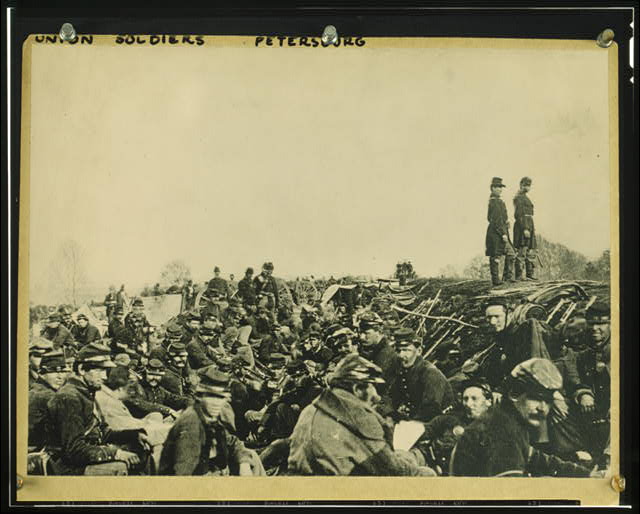
Union soldiers entrenched along the west bank of the Rappahannock River at Fredericksburg, Virginia (by Andrew J. Russell, photographed between April 29 and May 2, 1863, printed later; LOC: LC-USZC6-48 )

members of the sixth corps before “storming the heights”

This is the most correct statement possible to make at this time. It is with deep sorrow that I have to record such fearful fatality; for out of forty-three men that I took into the fight, until to-day I could only muster eighteen. The Company and Regiment have acted with heroic bravery, and did all that men could do. We were among the first in storming the heights on Sunday, and fought more than twice our number from sunrise until dark on Monday, and had possession of the field, and were engaged in picking up and taking care of the wounded, as well as possible in the dark, when we received the order to retreat to Banks’ Ford, being at the time almost entirely surrounded by an immensely superior force.
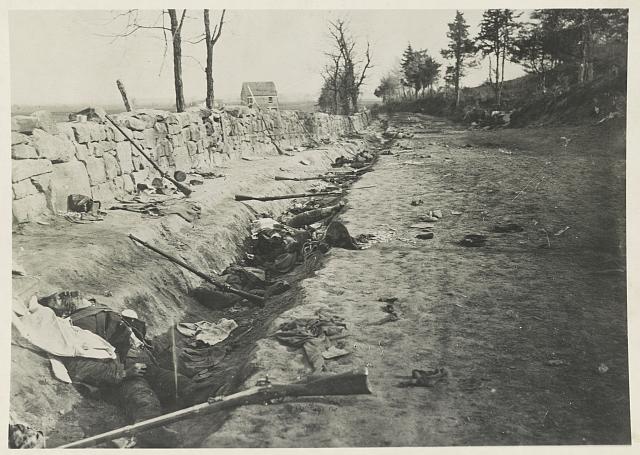
Stone wall below Marye's Heights, May 3, 1863 (by Andrew J. Russell, photographed 1863,; LOC: LC-DIG-ppmsca-32937)

‘Stone wall below Marye’s Heights, May 3, 1863’

You will bear in mind that all the fighting at and around Fredericksburg was done by the 6th Army Corps, entirely independent of the main army. The fighting began on the night of the 28th of April, and ended on the night of May 4th, and in the whole war I have not seen displayed more desperate valor, or sturdy bravery and perseverance, than was exhibited by the glorious old 33d, as our decimated ranks but too well testify. Our flag is torn into shreds, by shot and shell, and at one time nothing but the most determined valor saved it from falling into the hands of the enemy.

The regiment went into the fight 466 strong (rank and file,) and at roll-call, after we had got back on this side of the river, there were 191; but this number will be augmented to about 250, by men slightly wounded, stragglers, &c. There were but two or three men in Company A but were hit somewhere, and there were many instances of individual bravery. Some of my men were taken prisoners, and afterwards the captured became the captors, and brought their prisoners safely into our lines.
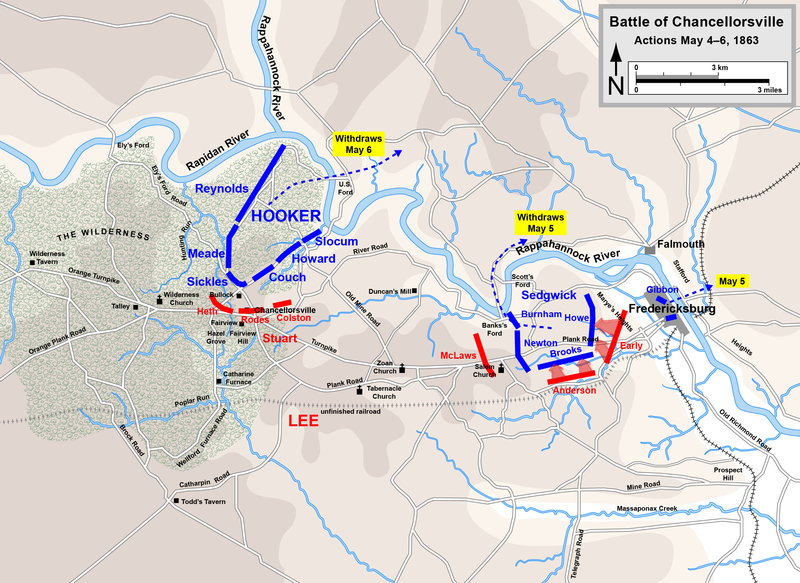
Map of a portion (May 4-6) of the battle of Chancellorsville of the American Civil War.

retreat over Banks’ Ford

The people of Seneca have no occasion to blush for their sons in this Regiment; they have done their whole duty from the first, and will continue to do it until the morning of the 22d of May, and then, if there are any of us left alive, we expect to be allowed to come home to visit our friends.

Respectfully yours,

E.J. TYLER,
Capt. Co. A, 33d Reg., N.Y.V.

The map of May 4-6 1863 by Hal Jespersen is licensed by Creative Commons

Posted in 150 Years Ago This Week, Chancellorsville Campaign, Military Matters | Tagged , , , | Leave a comment

“Like some hunted beast”

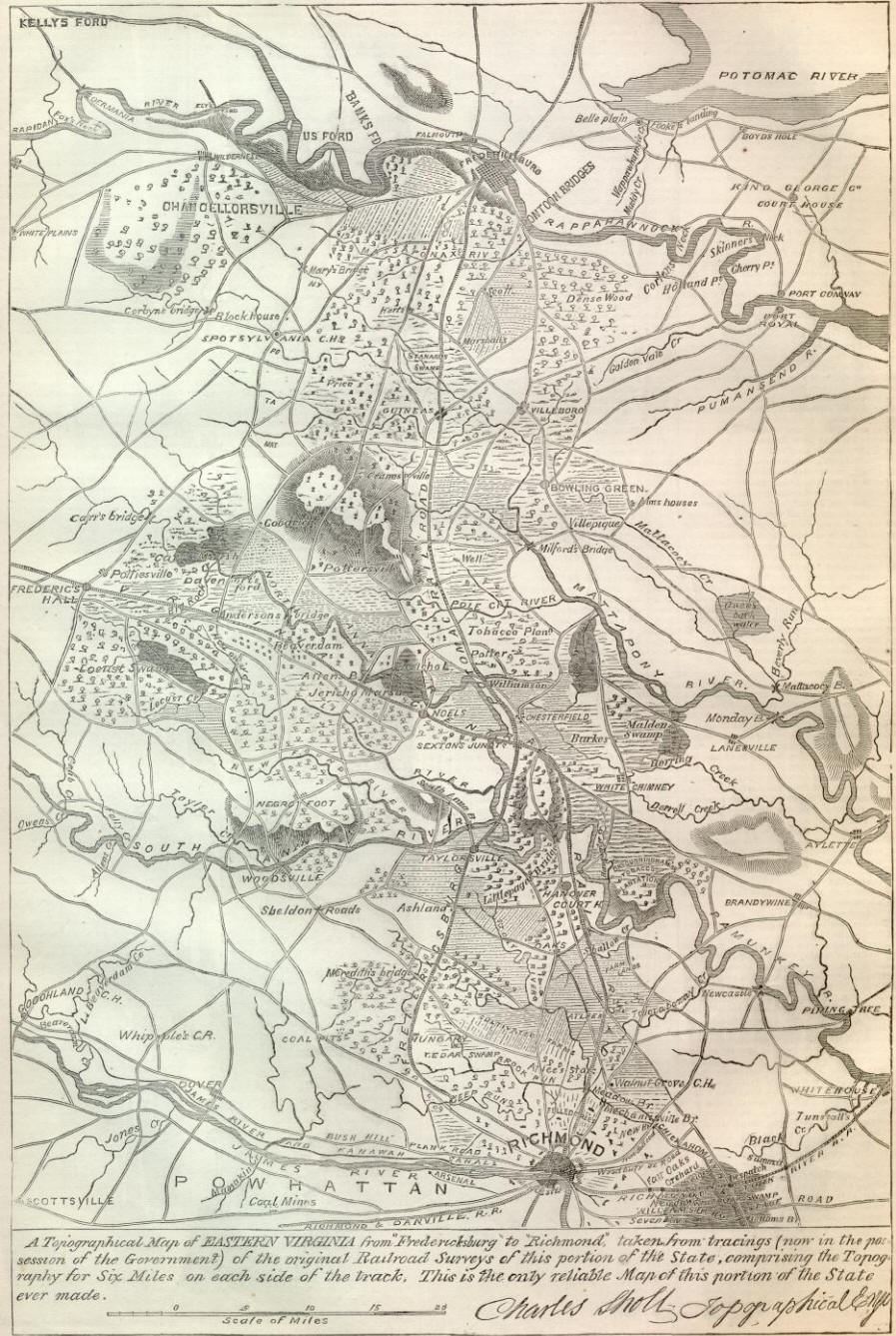
Map shewing [sic] movements of Union and Rebel armies and Battle of Chancellorsville, Virginia from April 27th to 4th May 1863.  Sneden, Robert Knox, 1832-1918. (LOC:  gvhs01 vhs00300 http://hdl.loc.gov/loc.ndlpcoop/gvhs01.vhs00300)

field of schemes – the rail splitter next to try his hand?

From the Richmond Daily Dispatch May 8, 1863:

The Situation on the Rappahannock

The information received from the Rappahannock to the present time is not detailed, and with respect to the present condition of the opposing forces not very definite. It is understood that the enemy being driven from Chancellorsville, fell back in the direction of the United States ford, where he collected his forces and commenced fortifying. Our own army has command of the fords above and below him. Thus matters stand; but it may be inferred will not remain thus long.

Soldiers engaged in the fight at Fredericksburg with Sedgwick’s corps, report that after he crossed on Monday night several very bright fires were seen on the Falmouth shore. They were of such magnitude as to justify the supposition that immense buildings or stores were consumed. Our men were at a loss to conjecture what was the cause; but some inferred that the enemy was alarmed, under the apprehension of an advance of our forces, and were burning stores. The same evening immense lines of wagons were seen winding along, up the river. These were no doubt conveying provisions for Hooker’s army in its new camps.

The enemy cannot feel very comfortable in his present position, to which he has been driven. Like some hunted beast he can but feel that he enjoys a temporary respite from his pursuers. Oh! for a gunboat! he no doubt ejaculates. A gunboat to a Yankee in such a strait is the blessedest thing on earth! To McClellan, at Wilcox’s wharf, the mailed vessels were like guardian angels. They gave rest and sound sleep to the wounded and wearied Yankees, such as they had not known for many nights.

Though our victory is important, and the results of great magnitude, it might possibly receive some additions. Everybody, however, feels entire confidence in our army and its able commander, and are convinced that whatever can be done will be done, and that in good time.

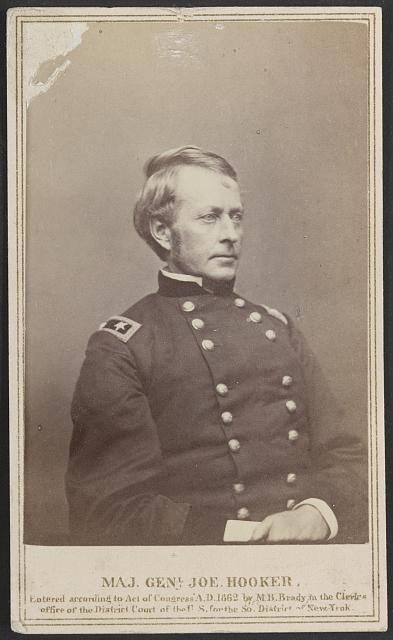
Maj. Genl. Joe Hooker (between 1860 and 1863; LOC: LC-DIG-ppmsca-32308)

gonna get by with a little help from his Pres?

Meanwhile, 150 years ago yesterday President Lincoln telegraphed General Hooker. The president succinctly faced the fact of defeat, encouraged more aggressive action, expressed confidence in his general’s judgment, but offered to help come with a new plan of action, if requested.

From The Papers And Writings Of Abraham Lincoln, Volume Six:

TO GENERAL J. HOOKER.
HEADQUARTERS ARMY OF THE POTOMAC, May 7, 1863.

MAJOR-GENERAL HOOKER.

MY DEAR SIR:—The recent movement of your army is ended without effecting its object, except, perhaps, some important breakings of the enemy’s communications. What next? If possible, I would be very glad of another movement early enough to give us some benefit from the fact of the enemy’s communication being broken; but neither for this reason nor any other do I wish anything done in desperation or rashness. An early movement would also help to supersede the bad moral effect of there certain, which is said to be considerably injurious. Have you already in your mind a plan wholly or partially formed? If you have, prosecute it without interference from me. If you have not, please inform me, so that I, incompetent as I may be, can try and assist in the formation of some plan for the army.

Yours as ever,

A. LINCOLN.

Posted in 150 Years Ago This Week, Chancellorsville Campaign, Confederate States of America, Lincoln Administration, Military Matters | Tagged , , , | Leave a comment

“ingloriously sacrificed “

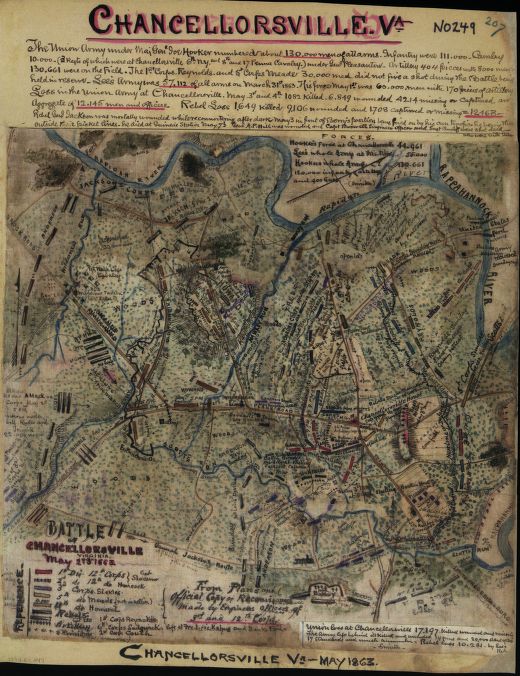
Battle of Chancellorsville, Virginia, May 2nd & 3rd 1863 by Robert Knox Sneden; LOC: gvhs01 vhs00299 http://hdl.loc.gov/loc.ndlpcoop/gvhs01.vhs00299 )

“ill-fated battle-field”

After the Union loss at Chancellorsville the press and public in Seneca Falls, New York received all sorts of feedback and formed opinions about the debacle. Here’s a start.

From a Seneca County, New York newspaper in May 1863:

The Killed and Wounded.

The slaughter at Fredericksburg under HOOKER is without a parallel since the commencement of the war. Almost the entire nation is in mourning over the loss of the brave ones who were so ingloriously sacrificed upon that ill-fated battle-field. As the smoke of battle clears away, we begin to realize more fully the horrors of this bloody drama. Our losses are very large, and it is believed that 30,000 is not too high an estimate for the number in killed, wounded and missing. The telegrams from Washington placing the losses at 10,000 are believe [sic] to be destitute of the truth, and circulated to relieve HOOKER of the curse of an inglorious defeat.

A correspondent of the New York Times, who professes to have excellent facilities for forming a just judgment in this matter, says competent judges put down the grim total at about Seventeen thousand, but this evidently is under the mark. Dr LETTERMAN, medical director of the army, this correspondent says, estimates the total number of wounded alone at ten thousand. – Add to this prisoners and wounded now in rebel hands, and we have some some seven thousand more, to say nothing of the number killed.

150 years ago today people in the Confederate capital could also read an opinion about its victory and General Hooker’s ignominy. The Richmond editors agree Hooker is cursed but don’t think the Lincoln Administration is going to shield him.

From the Richmond Daily Dispatch May 7, 1863:

The last victory

We have a few more details this morning of the resent victory on the Rappahannock.–The marÅavres [?] and achievements of our army during the powerful contest are of the most brilliant character. The enemy, in his own efforts to retrieve his fortunes, has added immensely to the splendor of the triumph. To Gen. Sedgwick, one of their ablest and most accomplished commanders, was assigned the task of assailing the rear of our army with a large force of fresh troops. They gained some advantages over our command at Fredericksburg; but were afterwards repulsed, and by a prompt and rapid movement by Gen. Lee were routed and forced to retreat rapidly across the Rappahannock, under cover of their guns on its north bank. Saturday and Sunday are amongst the most brilliant in the annals of the Southern Confederacy, already illumined with triumphs which, for number and magnitude, are not surpassed in history.

This terrible defeat is a sad finale for the thousands of men in the Yankee army whose terms of service were on the eve of expiring. Hooker could not afford to wait till they were at liberty to leave him. He felt the necessity of bringing all the men he could against the brave army of Gen. Lee, and they were led to slaughter.

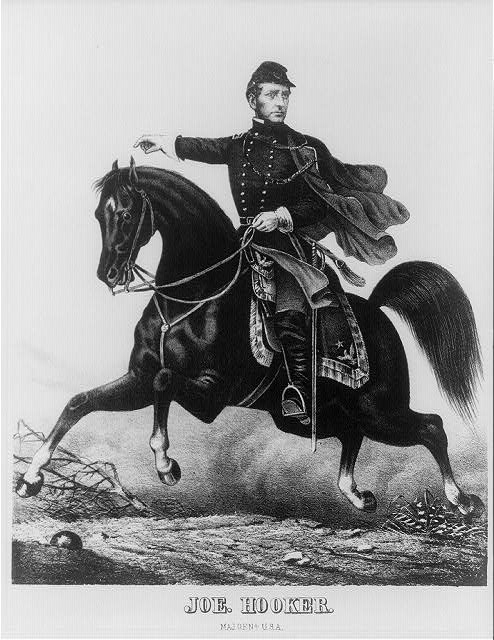
Joe Hooker, Maj. Genl., U.S.A. (between 1862 and 1864; LOC: LC-USZ62-35089)

on the Highway to Hades?

So far as his reputation is concerned, Hooker might well envy the dead. He obtained command of the army he has led to defeat by defaming his brother officers and the assiduous obtrusion of his own conceits of strategy on the Government. He was gratified with the chance of winning renown by retrieving the fortunes of the oft-defeated Federal army of the Potomac. He has met a well merited fate, and must now go to the Yankee Hades of all defeated Generals.

What our enemies propose next, and how long they will extend the time for the capture of Richmond, we shall perhaps soon learn. They have displayed great perseverance in this object so dear to them, and may not be willing yet to abandon it. It is probable that Rosecrans will be the next star in the Yankee heavens. Let us hope, however, that there will be time to sink him below the horizon before the new ” On to Richmond” can be planned.

The blow on the Potomac will be salutary in its effects upon the enemy and upon our own men. It will cheer ours as much as it will depress his, and give tone to the summer campaign. If it does the situation of affairs will undergo a great improvement, both at home and abroad.

The glorious [Confederate] Army of the Potomac merits the lasting gratitude of the nation. It has won a renown equal to that of any army the world ever saw.

Dr. Jonathan Letterman (1824-72) (U.S. Army Medical Museum)

knows his wounded

Jonathan Letterman “is known today as the “Father of Battlefield Medicine.” His system enabled thousands of wounded men to be recovered and treated during the American Civil War.” His system of triage, field hospitals, and an ambulance corps was proving to be effective by the December 1862 battle in Fredericksburg.

The Times correspondent’s 17,000 figure of total losses was quite accurate, as was Dr. Letterman’s estimate of 10,000 Union wounded. The Confederate total losses were over 13,000, but I guess you could say their sacrifice was a lot more glorious because they pushed the Federals back across the Rappahannock – again.

Posted in 150 Years Ago This Week, Chancellorsville Campaign, Military Matters, Northern Politics During War, Northern Society | Tagged , , , , , | Leave a comment

breathing and burning from prison

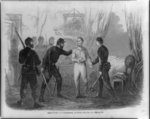
Arrest of Hon. C.L. Vallandigham, at Dayton, Ohio, May 5 [1863 (no date recorded on caption card; LOC: LC-USZ62-42029)

Vallandigham arrested in Dayton

On May 1, 1863 Ohio Peace Democrats held a meeting in Mount Vernon, Ohio to express opposition to General Ambrose Burnside’s General Order No. 38. As commander of the Department of the Ohio, Burnside outlawed “the habit of declaring sympathy for the enemy.” Two Union officers were at the May Day meeting and reported back to General Burnside that Clement Vallandigham had violated the order.

The general ordered his immediate arrest. On May 5, 1863, a company of soldiers arrested Vallandigham at his home in Dayton and brought him to Cincinnati to stand trial.

Burnside charged Vallandigham with the following crimes:

Publicly expressing, in violation of General Orders No. 38, from Head-quarters Department of Ohio, sympathy for those in arms against the Government of the United States, and declaring disloyal sentiments and opinions, with the object and purpose of weakening the power of the Government in its efforts to suppress an unlawful rebellion.

Mr. Vallandigham didn’t waste any time getting a letter off to his fellow Democrats. He seems to have claimed that Southern rebels and Northern abolitionists both wanted him locked up.

From a Seneca County, New York newspaper in May 1863:

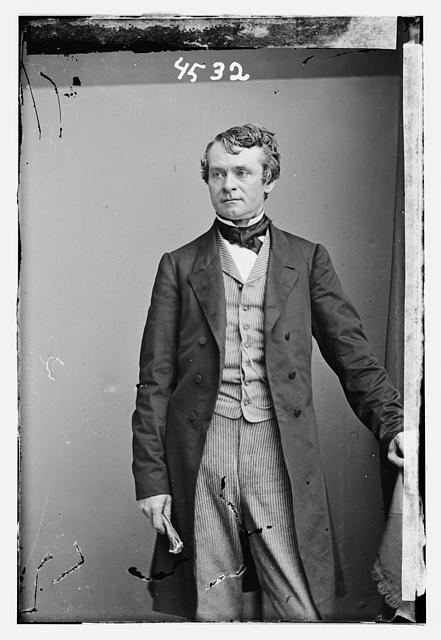
Hon. Clement Laird Vallandigham [?] of Ohio (between 1855 and 1865; LOC: LC-DIG-cwpbh-01193)

letter from a military bastile

“Words that Breathe, and Thoughts that Burn.”

MILITARY PRISON, CINCINNATI, O.,
May 5, 1862. [sic]

To the Democracy of Ohio:

I am here in a military bastile for no other offense than my political opinions, and the defence of them, and of the rights of the people, and of your constitutional liberties. Speeches made in the hearing of thousands of you in denunciation of the usurpations of power, infraction of the Constitution and laws, and of military despotism, were the sole cause of my arrest and imprisonment. I am a Democrat – for Constitution, for law, for the Union, for liberty – this is my only “crime.” For no disobedience to the Constitution: for no violation of law; for no word, sigh, or gesture of sympathy with the men of the South who are for disunion and southern independence, but in obedience to their demand, as well as the demand of northern abolition disunionists and traitors, I am here in bonds to-day; but

“Time, at last, sets all things even!”

Meanwhile, Democrats of Ohio, of the North west, of the United States, be firm, be true to your principles, to the Constitution, to the Union, and all will yet be well. As for myself, I adhere to every principle, and will make good, through imprisonment and life itself, every pledge and declaration which I have ever made, uttered, or maintained from the beginning. To you, to the whole people, to TIME, I again appeal. Stand firm! Falter not an instant!

C.L. VALLANDIGHAM

Posted in 150 Years Ago This Week, Lincoln Administration, Northern Politics During War, Northern Society | Tagged , | Leave a comment

“we dread to hear”

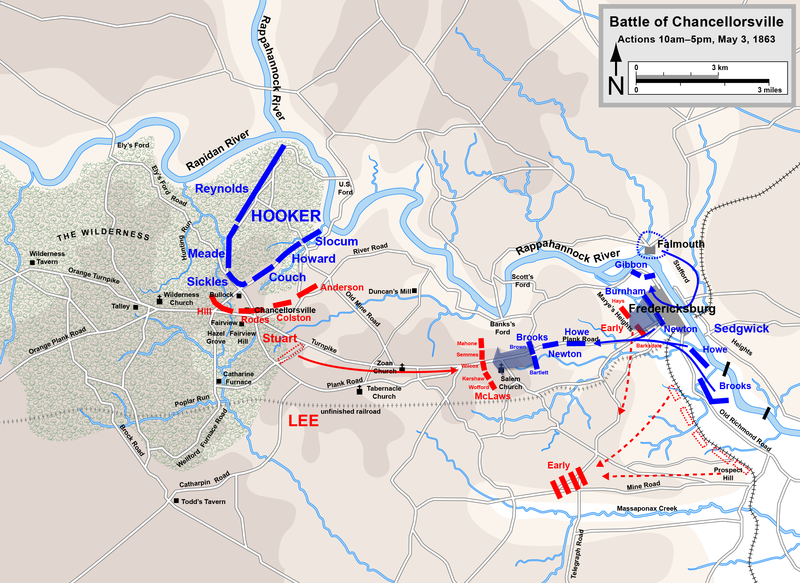
Map of a portion (May 3, 10am-5pm) of the battle of Chancellorsville of the American Civil War

halted at Salem Church

The 33rd New York Infantry Regiment fought with John Sedgwick’s Sixth Corps during the Chancellorsville Campaign. On May 3, 1863 the 33rd helped drive the Confederates off Marye’s Heights. The VI Corps then started marching toward the main Federal force in the Chancellorsville vicinity. The corps halted at Salem Church, where it fought a battle on May 3rd and 4th. Sedgwick withdrew his corps across the Rappahannock overnight May 4-5.

From a Seneca County, New York newspaper in May 1863:

The Thirty-Third Regiment.

This gallant regiment bore a conspicuous part in the awful battle at Fredericksburg. Many of the brave ones have fallen, and we dread to hear the full particulars of the terrible carnage. Our brave boys were in the thickest of the fight, being in Sedwick’s [sic] Corps, which alone lost 5000 men. Among the published list of killed and wounded we notice a number from our own county, but we will mention no names until more authentic information is received from the field of slaughter. In the mean time let us hope for the best.

From a Seneca County, New York newspaper in May 1863:

Letter from Col. Taylor.

The following paragraph is extracted from a letter received on Saturday evening by Mrs. Taylor, of Rochester, wife of Colonel R.F. Taylor, of the 33d Regiment. It is dated 5th of M[a]y Col. T. says he will send further details in a day or two:

“My loss in two days was 155 killed, wounded and missing. They are as follows Three captains, three Lieutenants wounded and one missing. The officers are as follows: Capts, Cole, Root and Warford – the latter very slight – Lieuts, Byrne, Rossiter and P[ort]er wounded, and Caywood missing. I lost 74 men in one charge. Frank Miles is missing – think he is wounded. Lieut. Col. Corning had his horse killed. Mine was slightly wounded. Did not receive a scratch, nor either of my field officers.

Frank Miles

Franklin found

The map by Hal Jespersen is licensed by Creative Commons

Posted in 150 Years Ago This Week, Chancellorsville Campaign, Military Matters, Northern Society | Tagged , , , , | Leave a comment

Richmond has fallen?

150 years ago the people of Seneca Falls, New York got fooled real good. The culprit? – A Democratic party-oriented publication pointed its finger at the Lincoln Administration.

From a Seneca County, New York newspaper in May 1863:

The Capture of Richmond.

Our village on Sunday last was the scene of the most uproarous demonstrations, over the reported capture of the Confederate capitol. The news was circulated at an early hour, and soon after almost everybody was in the streets discussing the probability of the occurrence. To doubt its truthfulness was treason, or one desired that it should not be so. “General MILLER brings the news from Albany,” and, exclaims our Abolition friends, “he is too much of a Copperhead to circulate such a story, unless it were true.” “He believes it,” and, as a matter of course, they believed it, and the more affair was discussed, the firmer the belief in its truthfulness. The exuberance of patriotism was very great, and only equalled by the excess of that kind of enthusiasm which is retailed at so many different places in our village, at five cents per glass. Everybody was jubilant, except a few prominent Abolitionists, who were greatly displeased because Copperheads rejoiced. Hundreds of guns were fired during the day, the church and ship bells were rung, and altogether there was a grand fen de joie. On Monday morning pretty much all business was suspended, and the people awaited with breathless anxiety the arrival of the morning papers, – but alas, with disappointment. The reported capture of Richmond was a cruel and wicked hoax. No such event had happened. It was only one of the many attrocious [sic] and inexcusable lies, circulated by the Lincoln Administration. [sic] to draw the attention of the people from Hooker’s inglorious and disastrous defeat. Inexcusable, did we say? It might have been excusable, had it restored to us the brave men fallen in that awful struggle, or assuaged the woes and lamentations of the widows and orphans of this weary war. God save us from an Administration that so trifles with an afflicted and sorrow-stricken people.

I’m not totally sure the date of this misguided celebration was May 3rd, but on the same date rumors were rife in the Confederate capital. The people of Richmond were antsy, apparently on account of the Union cavalry raid.

From the Richmond Daily Dispatch May 4, 1863:

The “Situation”–a Yankee raid.

The city yesterday was in a high state of excitement, which was caused by a number of reports of a Yankee raid made on a scale which has heretofore been unapproached by them. In the afternoon several thousand persons were congregated at the depot of the Richmond and Fredericksburg railroad, anxiously awaiting the news expected to arrive by the train. The train, however, was destined not to arrive. The rumors which circulated yesterday might be extended in the sensation style to several columns, but, reduced to the absolute facts of the case, may be stated as follows:

Yesterday the Yankees entered Columbia, Fluvanna county, Va., and destroyed the canal banks there.

At 7 o’clockyesterday evening a force of Federals was within eight miles of Farmville, with the intention of destroying the High Bridge, on the Southside railroad.

In the morning the Federals entered Ashland with a large force of cavalry and artillery, and, it is stated, burnt the town, which consists of a hotel and some twenty or thirty cottages.

In the evening they were reported to be at a station on the Richmond, Fredericksburg and Potomac railroad, eight miles distant from the city. This report is supposed to be correct, though nothing was heard of them afterwards. It is more likely that after the raid at Ashland they turned their attention to the Central Railroad, which last night at 9 o’clock had been torn up near Peak’s, about six miles from the city. The party performing this feat is evidently on its way down the Peninsula to secure a safe retreat within their lines. On their way they will meet General Wise’s command, and may be overpowered by it and captured.

When the raid on Ashland was consummated our ambulance train, with 198 sick and 69 wounded, was captured, and it is stated that the cars were burnt after the prisoners were paroled.

A gentleman who arrived here last night states that a body of Yankees, numbering 15,000, (an exaggeration doubtless,) were at Deitrick’s Store, in Goochland county, yesterday, and were taking all the horses and negroes to be found in the neighborhood.

From Gen. Lee’s army we learn that on Friday we met the enemy at Chancellorsville, in Spotsylvania county, defeated them and drove them back five miles. Among the killed on our side was Major Chauning R. Price, of Richmond, Aid to Gen. Stuart. Among the wounded was Col. Harris, of the 16th Mississippi. It was stated that yesterday there was heavy fighting along the lines; but, as the telegraph lines were down, and there was no railroad communication, of course the report is not to be relied on.

The Central train last night, at 7½ o’clock, brought down 59 prisoners captured on Friday.

The city has now troops enough within its limits to defend it from any raid of the nature above described, and enough we hope to catch the raid makers. Last night, on the public square, several regiments of citizens were formed, in accordance with the general desire to have a hand in protecting Richmond against the invaders, should they attempt to come to the city.

And 150 years ago today Abraham Lincoln was also wondering what was going, as he telegraphed the Army of the Potomac’s chief of staff, Daniel Adams Butterfield. From The Papers And Writings Of Abraham Lincoln, Volume Six:

GENERALS LOST
TELEGRAM TO GENERAL D. BUTTERFIELD.

WASHINGTON, D. C., May 3, 1863. 4.35 P.M.
MAJOR-GENERAL BUTTERFIELD:

Where is General Hooker? Where is Sedgwick Where is Stoneman?
A. LINCOLN.

It’s too bad for the folks in 1863 that CNN hadn’t been invented yet. Thankfully, today we can read all about Day Three of Chancellorsville at Civil War Daily Gazette.

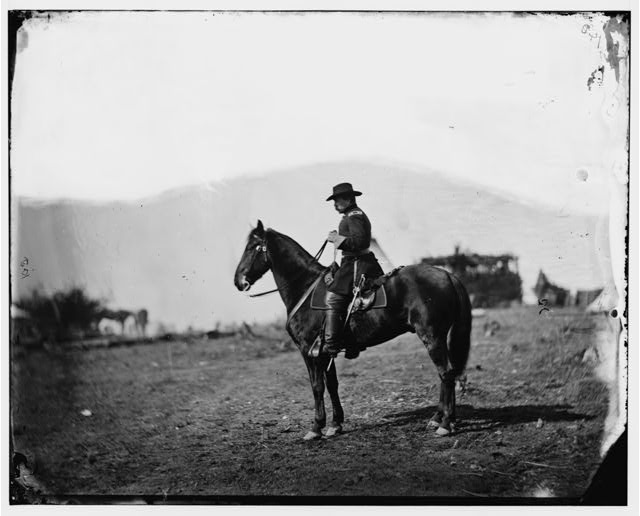
Falmouth, Virginia. Gen. Daniel Butterfield on horseback (by TimothH. O'Sullivan, April 1863; LOC:  LC-DIG-cwpb-04034)

generals’ keeper – General Butterfield at Falmouth in April 1863

Posted in 150 Years Ago This Month, 150 Years Ago This Week, Confederate States of America, Northern Politics During War, Northern Society | Tagged , , , , , | Leave a comment

Pennsylvania’s safe

Gov. Andrew Curtin, PA (between 1855 and 1865; LOC: LC-DIG-cwpbh-01288)

Curtin calling (well, telegraphing)

150 years ago today, as the Battle of Chancellorsville continued, President Lincoln assuaged the fears of Pennsylvania Governor Curtin: the rebels weren’t threatening his state – no need to call out the militia.

From The Papers And Writings Of Abraham Lincoln, Volume Six:

TELEGRAM TO GOVERNOR CURTIN.
WAR DEPARTMENT, WASHINGTON, April 28, 1863.

HON. A. O. CURTIN, Harrisburg, Penn.:

I do not think the people of Pennsylvania should be uneasy about an invasion. Doubtless a small force of the enemy is flourishing about in the northern part of Virginia, on the “skewhorn” principle, on purpose to divert us in another quarter. I believe it is nothing more. We think we have adequate force close after them.

A. LINCOLN. …

TELEGRAM TO GOVERNOR CURTIN,
EXECUTIVE MANSION, MAY 1, 1863

GOVERNOR CURTIN, Harrisburg, Penn.:

The whole disposable force at Baltimore and else where in reach have already been sent after the enemy which alarms you. The worst thing the enemy could do for himself would be to weaken himself before Hooker, and therefore it is safe to believe he is not doing it; and the best thing he could do for himself would be to get us so scared as to bring part of Hooker’s force away, and that is just what he is trying to do. I will telegraph you in the morning about calling out the militia.
A. LINCOLN,

TELEGRAM TO GOVERNOR CURTIN
EXECUTIVE MANSION, MAY 2, 1863

GOVERNOR CURTIN, Harrisburg, Penn.:

General Halleck tells me he has a despatch from General Schenck this morning, informing him that our forces have joined, and that the enemy menacing Pennsylvania will have to fight or run today. I hope I am not less anxious to do my duty to Pennsylvania than yourself, but I really do not yet see the justification for incurring the trouble and expense of calling out the militia. I shall keep watch, and try to do my duty.

A. LINCOLN P. S.—Our forces are exactly between the enemy and Pennsylvania.

Meanwhile, after a quiet day during which some men in the NY 33rd Volunteers visited the exact spot where little George Washington felled his father’s cherry tree, the regiment crossed the Rappahannock below Federicksburg. From The story of the Thirty-third N.Y.S. vols.; or, two years campaigning in Virginia and Maryland (by David W. Judd (page 287-289)):

Posted in 150 Years Ago This Week, Military Matters | Tagged , , | Leave a comment

Collision Expected

fredericksburg-map harper's Weekly 5-16-1863

“neighborhood of Chancellorsville”

From the Richmond Daily Dispatch May 2, 1863:

The news from the Rappahannock — the movements of the Hammy [Enemy] — a fight Hourly anticipated.

The news from the armies now confronting each other on the Rappahannock is highly important and it is more than probable that one of the severest conflicts of the whole war will take place to-day or to-morrow. The enemy, in very heavy force, have crossed, and are now on the south side of the Rappahannock and Rapidan rivers. They were not disposed to again attempt to force their way to Richmond by assaulting our position on Marye’s Heights and along the line of the Messappuax, and have consequently sought crossings for the main body of their forces some seventeen to twenty miles above Fredericksburg, at Ely’s Ford and Germans. These points are on the Rapidan, a few miles above its junction with the north fork of the Rappahannock. The advices received by the train last evening represent that the advance of the enemy had reached a point within two miles of Spotsylvania Court House at noon yesterday–In view of this change in the movements of the enemy, it is probable that our whole front will be changed, and, instead of the general conflict taking place in front of Fredericksburg, or on the same ground of the battle of the 13th of December, it will doubtless be fought in the vicinity of the Court-House, or near the centra of the county.

A heavy artillery duel was fought on Thursday afternoon, near the mouth of Deep Run, but without any decisive result on either side.

Another report states that the enemy has also crossed a considerable body of troops at United States Ford, six miles above Fredericksburg, and that a collision was expected to occur in the neighborhood of Chancellorsville.

The map was published in the May 16, 1863 issue of Harper’s Weekly and can be viewed at Son of the South

Posted in 150 Years Ago This Week, Military Matters | Tagged , | Leave a comment

Something’s up

In Richmond the news from Fredericksburg was only a day late 150 years ago. By April 29th Federal forces had crossed the Rappahannock in the same vicinity that General Franklin’s Grand Division had crossed back in December, as part of General Burnside’s failed attempt to drive the rebels out of Fredricksburg.

Based on the following account, the plan of current Union commander, Joe Hooker, seemed to be working. He wanted to use part of his army to “hold those Confederates in place” in Fredericksburg while the rest of his army flanked the rebels by crossing the river northwest of town. The reporter in Fredericksburg seems to be only aware of the crossing to the south.

From the Richmond Daily Dispatch April 30, 1863:

Important from the Rappahannock.
the enemy Crossing in force!
fight at Deep Run.

The advices from the Rappahannock, received yesterday, leave no doubt as to the fact that the Yankee army has at last commenced a movement in the neighborhood of Fredericksburg. A gentlemen who left Hamilton’s Crossing yesterday morning. Informs us that the enemy, on Tuesday night, under cover of a dance [dense] fog, succeeded in laying down two of their p[o]nt[o]on bridges, over which they crossed a force, variously estimated at from 5,000 to 10.000. At the time of the crossing the 18th Georgia regiment were on picket at the mouth of Deep Run, and a brisk fight ensued, which lasted from daylight until 10 o’clock, at which time the Georgians were relieved by the 6th Louisiana regiment. Our picket force had fallen back from the river to the road running parallel with the Rappahannock.

A general fight is anticipated within the next few days, as it is believed that the movement is a general one.

In the fight yesterday morning, it is reported that there were two killed and some half drown wounded.

The mouth of Deep Run, at which this morning was effected, is about one and a half miles below Fredericksburg, and is the same point at which that portion of the enemy’s forces crossed that engaged the right wing of our army in the battle of the 13th of December. The land on this side in the immediate vicinity of the river is a level plain of nearly two miles in width, across which the enemy must advance to attack our position on the hills in the neighborhood of Hamilton’s Crossing. It was as they advanced over this plain in December that they suffered such terrible loss. On the opposites or Stafford side of the river the country is hilly, and affords admirable positions for the batteries of the enemy, under cover of which they have successfully thrown their forces over the river.

The VI corps under John Sedgwick was one the three corps operating below town in the vicinity of Hamilton’s Crossing. Part of the VI corps was the 33rd New York Infantry Regiment, whose two-year enlistment was scheduled to end on May 22nd.

According to The story of the Thirty-third N.Y.S. vols.; or, two years campaigning in Virginia and Maryland (by David W. Judd (page 280 and following)) the 33rd was called off picket duty on the afternoon of April 28th to join the rest of the corps down by the river:

The 33rd, as part of Howe’s Division crossed the Rappahannock on Saturday, May 2nd.

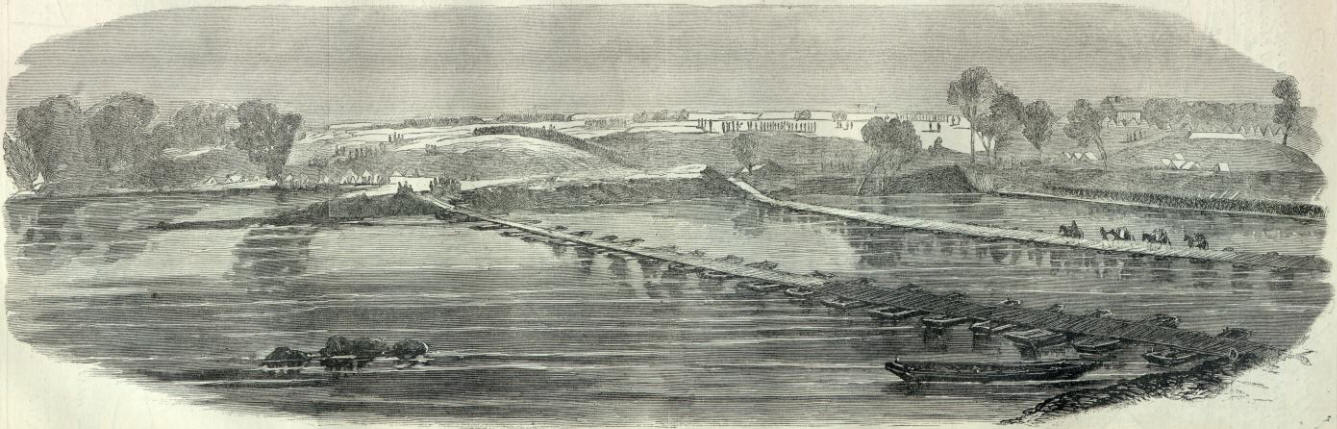
PONTOON BRIDGES ERECTED FOR GENERAL SEDGWICK'S CORPS TO CROSS.—SKETCHED BY MR. A. R. WAUD (Harper's Weekly, 5-16-1863)

pontoon bridges for General Sedgwick’s corps

Image by Alfred R. Waud in the May 16, 1863 issue of Harper’s Weekly at Son of the South

Posted in 150 Years Ago This Week, Military Matters | Tagged , , | Leave a comment

He had a dream

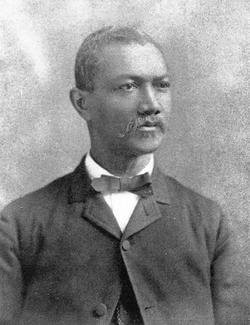
Alexander Thomas Augusta

Alexander Thomas Augusta

From the Richmond Daily Dispatch April 29, 1863:

“Nigger” Surgeons.

–The recently appointed negro surgeon, Dr. A. S. Augusta, writes to the Washington Star that he holds the appointment of full regimental surgeon U. S. V. instead of assistant surgeon, as heretofore stated.

Alexander Thomas Augusta was born free in Norfolk in 1825. He was determined to become a doctor but was blocked at medical schools in the United States because of his race. He earned a medical degree from Trinity College at the University of Toronto in 1856. He returned to Baltimore in 1861.

Augusta went to Washington, D.C., wrote Abraham Lincoln offering his services as a surgeon and was given a Presidential commission in the Union Army in October 1862. On April 4, 1863, he received a major’s commission as surgeon for African-American troops. This made him the United States Army’s first African-American physician out of eight in the Union Army and its highest-ranking African-American officer at the time. Some whites disapproved of him having such a high rank and as such he was mobbed in Baltimore during May 1863 (where three people were arrested for assault) and in Washington for publicly wearing his officer’s uniform On October 2, 1863 he was commissioned Regimental Surgeon of the Seventh U.S. Colored Troops.

Dr. Augusta was the only African-American on the faculty of the medical school at Howard University when it opened in 1868. He is buried at Arlington National Cemetery, where “Augusta’s grave, set apart from the rows of white headstones, identifies him as “the commissioned surgeon of colored volunteers.”

Posted in 150 Years Ago This Week, Military Matters, Northern Society | Tagged , , , , | Leave a comment