right to fight

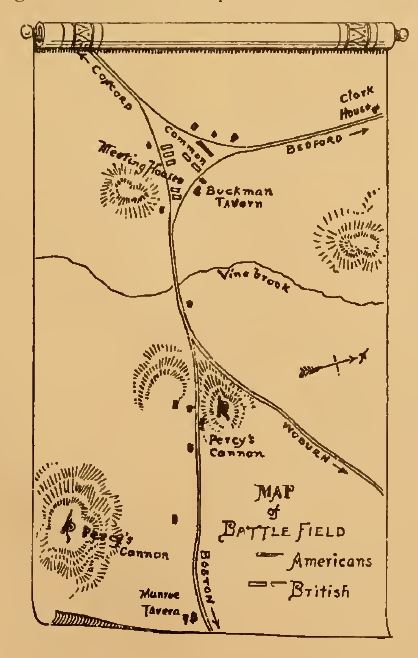
On April 19, 1775 American colonists fought British troops during the Battles of Lexington and Concord with 393 estimated combined casualties. The two sides went at it again a couple months later during the June 17th Battle of Bunker Hill – 1,532 estimated combined casualties. According to documentation at the Library of Congress, 250 years ago today the Continental Congress officially declared why American colonists were forced to take up arms against the mother country.
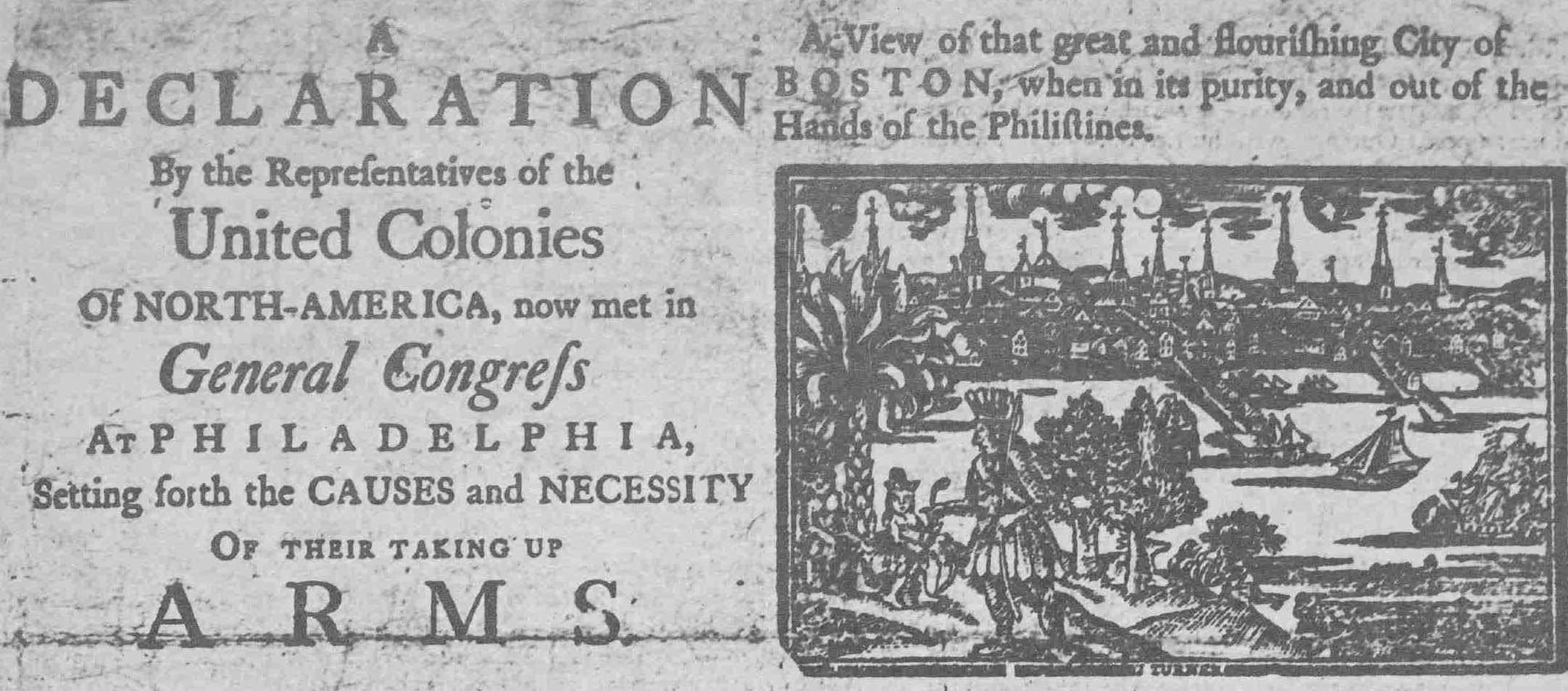
bearing arms for Boston

A DECLARATION By the Representatives of the United Colonies Of NORTH-AMERICA, now met in General Congress AT PHILADELPHIA, Setting forth the CAUSES and NECESSITY Of their taking up ARMS.

IF it was possible for Men, who exercise their Reason, to believe, that the Divine Author of our Existence intended a Part of the human Race to hold an absolute Property in, and an unbounded Power over others, marked out by his infinite Goodness & Wisdom, as the Objects of a legal Domination, never rightfully resistible, however severe and oppressive, the Inhabitants of these Colonies might at least require from the Parliament of Great Britain, some Evidence, that this dreadful Authority over them has been granted to that Body. But a Reverence for our Great Creator, Principles of Humanity, and the Dictates of common Sense, must convince all those who reflect upon the Subject, that Government was instituted to promote the Welfare of Mankind, and ought to be administered for the Attainment of that End. The Legislature of Great-Britain, however stimulated by an inordinate Passion for a Power not only unjustifiable, but which they know to be peculiarly reprobated by the very Constitution of that Kingdom, and desperate of Success in any Mode of Contest, where Regard should be had to Truth, Law, or Right, have at length, deserting those, attempted to effect their cruel and impolitic Purpose of enslaving these Colonies by Violence, and have thereby rendered it necessary for us to close with their last Appeal from Reason to Arms.—Yet however blinded that Assembly may be, by their intemperate Rage [for] unlimited Domination so to slight Justice and the Opinion of Mankind, we esteem ourselves bound by Obligations of Respect to the rest of the World, to make known the Justice of our Cause.
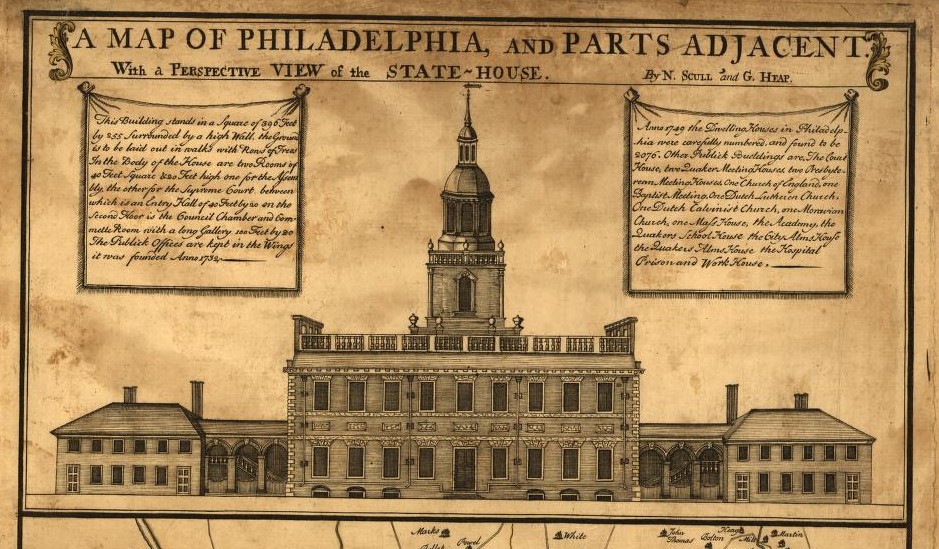
where General Congress met

Our Forefathers, Inhabitants of the Island of Great Britain, left their native Land to seek on these Shores a Residence for civil and religious Freedom. At the Expence of their Blood, at the Hazard of their Fortunes, without the least Charge to the Country from which they removed, by unceasing Labor and an unconquerable Spirit, they effected Settlements in the distant & inhospitable Wilds of America, then filled with numerous and warlike Nations of Barbarians.—Societies or Governments, vested with perfect Legislatures, were formed under Charters from the Crown, and an harmonious Intercourse was established between the Colonies and the Kingdom from which they derived their Origin.—The mutual Benefits of this Union became in a short Time so extraordinary, as to excite Astonishment. It is universally confessed, that the amazing Increase of the Wealth, Strength and Navigation of the Realm, arose from this Source; and the Minister who so wisely and successfully directed the Measures of Great Britain in the late War; publicly declared, that these Colonies enabled her to triumph over her Enemies.—Towards the Conclusion of that War, it pleased our Sovereign to make a Change in his Counsels.—From that fatal Moment, the Affairs of the British Empire began to fall into Confusion, and gradually sliding from the Summit of glorious Prosperity to which they had been advanced by the Virtues and Abilities of one Man, are at length distrated by the Convulsions that now shake it to its deepest Foundations.— The new Ministry finding the brave Foes of Britain, though frequently defeated, yet still contending, took up the unfortunate Idea of granting them a hasty Peace, and of then subduing her faithful Friends.
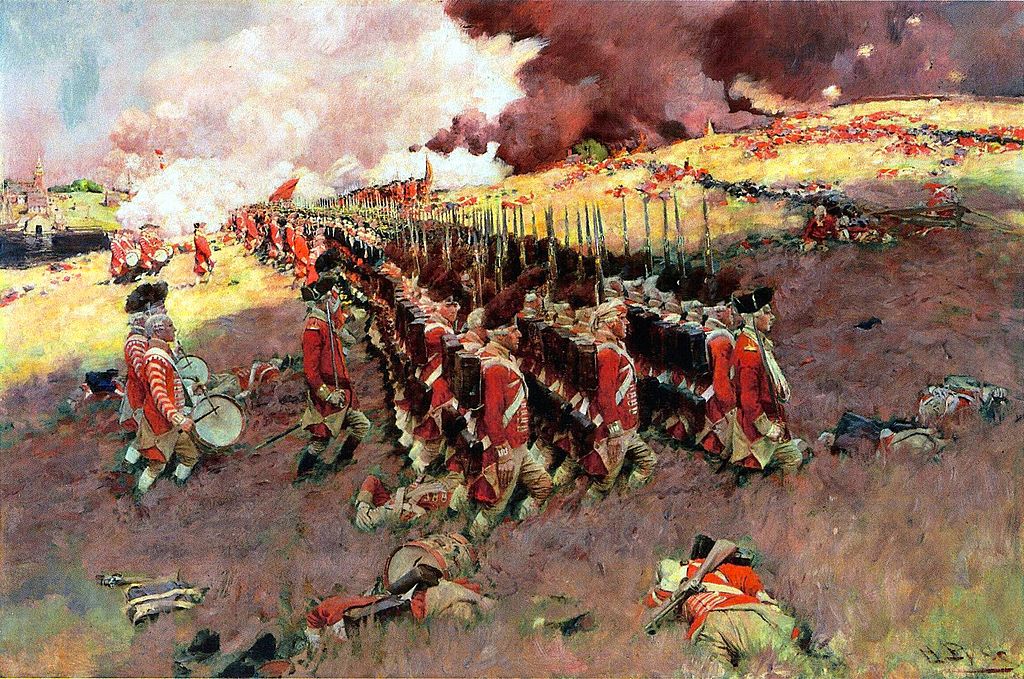
seeing red

These devoted Colonies were judged to be in such a State, as to present Victories without Bloodshed and all the easy Emoluments of statuteable Plunder.—The uninterrupted Tenor of their peaceable and respectful Behaviour from the Beginning of Colonization, their dutiful, zealous and useful Services during the War, though so recently and amply acknowledged in the most honorable Manner by his Majesty, by the late King, and by Parliament, could not save them from the meditated Innovations.—Parliament was influenced to adopt the pernicious Project, & assuming a new Power over them, have in the Course of eleven Years, given such decisive Specimens of the Spirit and Consequences attending this Power, as to leave no Doubt concerning the Effects of Acquiescence under it. They have undertaken to give and grant our Money without our Consent, tho’ we have ever exercised an exclusive Right to dispose of our own Property; Statutes have been passed for extending the Jurisdiction of Courts of Admiralty and Vice Admiralty beyond their ancient Limits: For depriving us of the accustomed and inestimable Privilege of Trial by Jury in Cases affecting both Life and Property; for suspending the Legislature of one of the Colonies; for interdicting all Commerce of another; and for altering fundamentally the Form of Government established by Charter, and secured by Acts of its own Legislature solemnly confirmed by the Crown; for exempting the “Murderers” of Colonists from legal Trial, and in Effect, from Punishment; for erecting in a neighbouring Province acquired by the joint Arms of Great Britain and America, a Despotism dangerous to our very Existence; and for quartering Soldiers upon the Colonists in Time of profound Peace. It has also been resolved in Parliament, that Colonists charged with committing certain Offences, shall be transported to England to be tried.
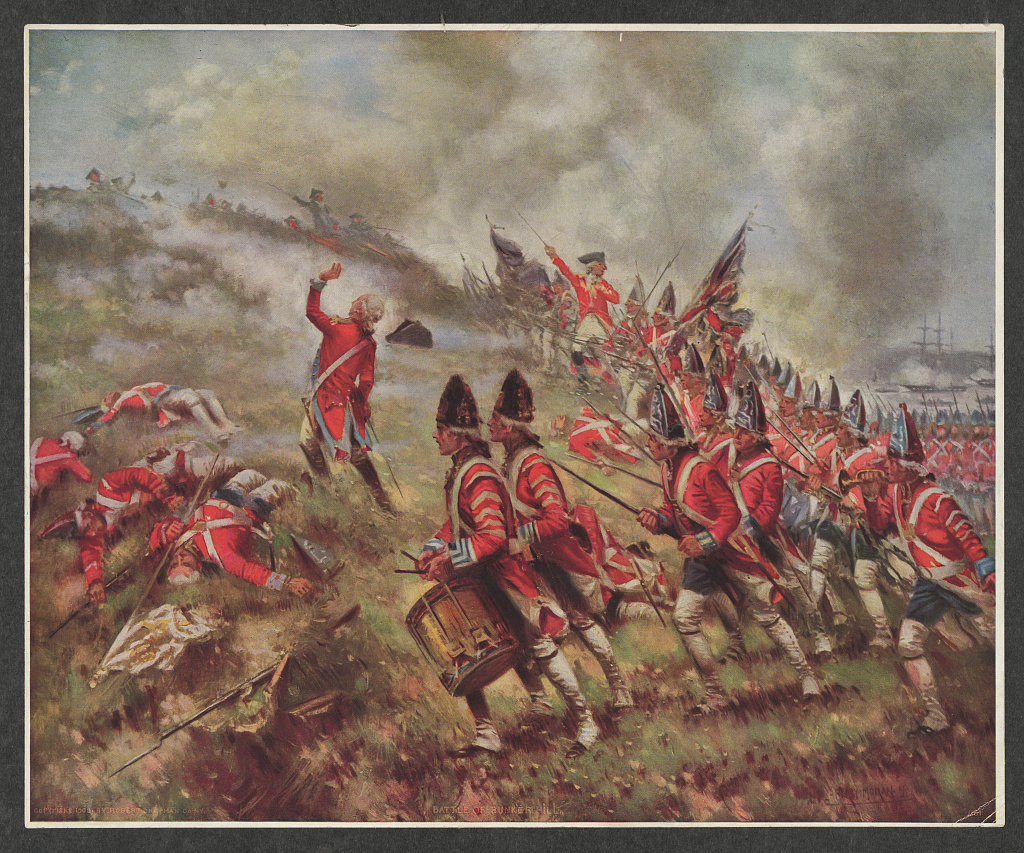
more Bunker Hill

But why should we enumerate our Injuries in Detail? By one Statute it is declared, that Parliament can “of Right make Laws to bind us IN ALL CASES WHATSOEVER.” What is to defend us against so enormous, so unlimited a Power? Not a single Man of those who assume it, is chosen by us; or is subject to our Controul or Influence; but on the contrary, they are all of them exempt from Operation of such Laws and an American Revenue, if not from the oftenmost Purposes for which it is raised, would actually lighten their own Burdens in Proportion, as they increase ours. We saw the Misery to which such Despotism would reduce us. We for ten Years incessantly and ineffectually besieged the Throne as Supplicants; we reasoned, we remonstrated with Parliament in the most mild and decent Language. But Administration, sensible that we should regard whose oppressive Measures as Freemen ought to do, sent over Fleets and Armies to enforce them. The Indignation of the Americans was roused it is true; but it was the Indignation of a virtuous, loyal, and affectionate People. A Congress of Delegates from the united Colonies was assembled at Philadelphia, on the fifth Day of last September. We resolved again to offer an humble and dutiful Petition to the King, and also addressed our Fellow Subjects of Great Britain. We have pursued every temperate, every respectful Measure, we have even proceeded to break off our commercial Intercourse with our Fellow Subjects, as the last peaceable Admonition, that our Attachment to no Nation upon Earth should supplant our Attachment to Liberty.— This, we flattered ourselves, was the ultimate Step of the Controversy: But subsequent Events have shewn, how vain was this Hope of finding Moderation in our Enemies.
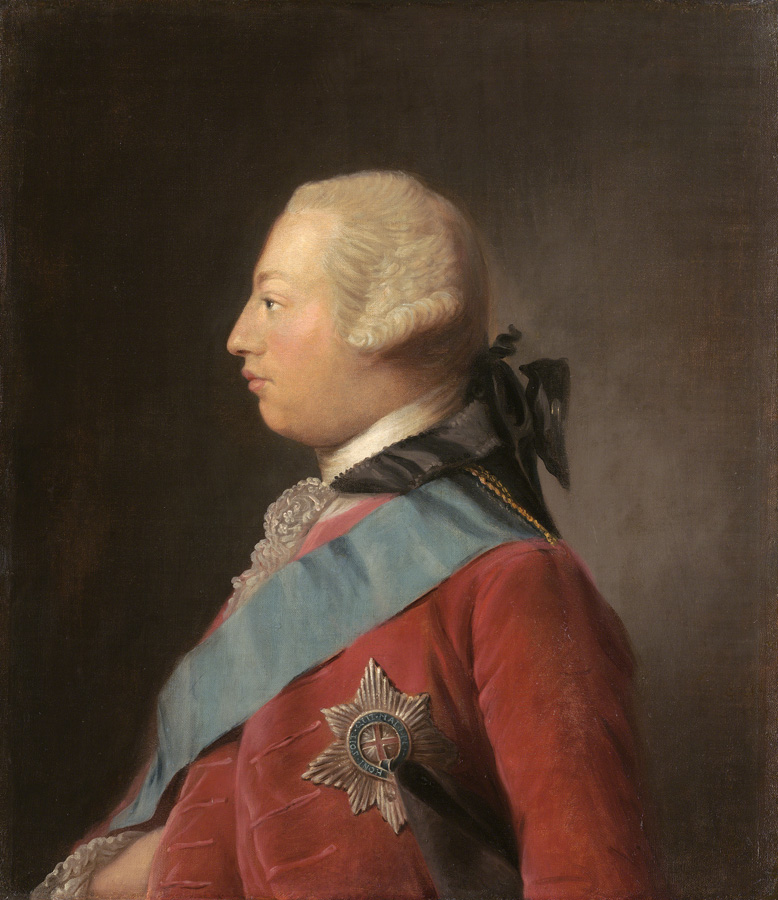
George III (1762)

Several threatening Expressions against the Colonies were inserted in his Majesty’s Speech; our Petition, though we were told it was a decent one, that his Majesty had been pleased to receive it graciously, and to promise laying it before his Parliament, was [huddled]into both Houses amongst a Bundle of American Papers, and there neglected. The Lords and Commons in their Address, in the Month of February last, said, “that a Rebellion at that Time actually existed within the Province of Massachusetts Bay; and that those concerned in it, had been countenanced and encouraged by unlawful Combinations and Engagements, entered into by his Majesty’s Subjects in several of the other Colonies; and therefore they besought his Majesty, “that he would take the most effectual Measures to inforce due Obedience to the Laws and Authority of the supreme Legislature.”— Soon after the commercial Intercourse of whole Colonies, with foreign Countries and with each other, was cut off by an Act of Parliament; by another, several of them were intirely prohibited from the Fisheries in the Seas near their Coasts, on which they always depended for their Sustenance; and large Reinforcements of Ships and Troops were immediately sent over to General Gage.
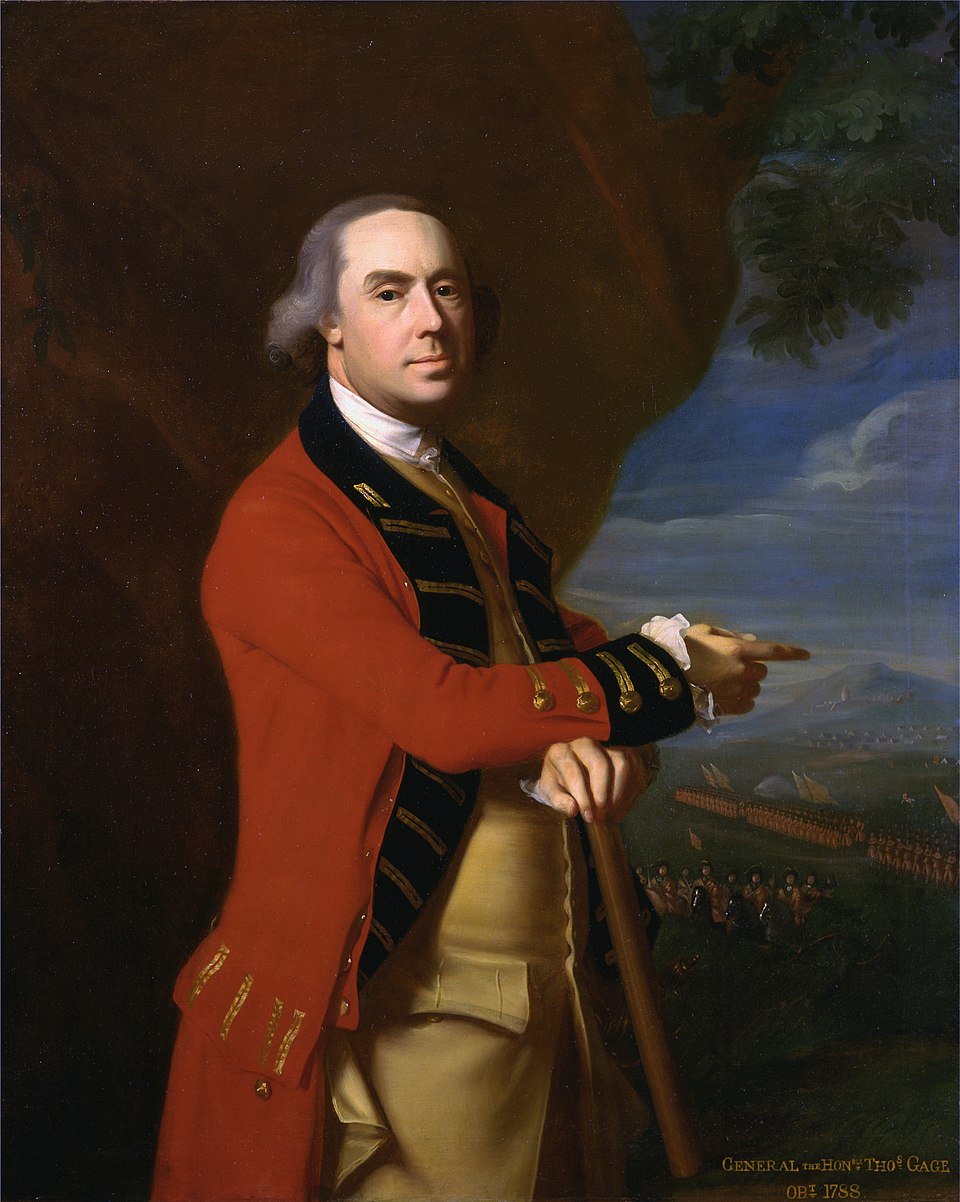
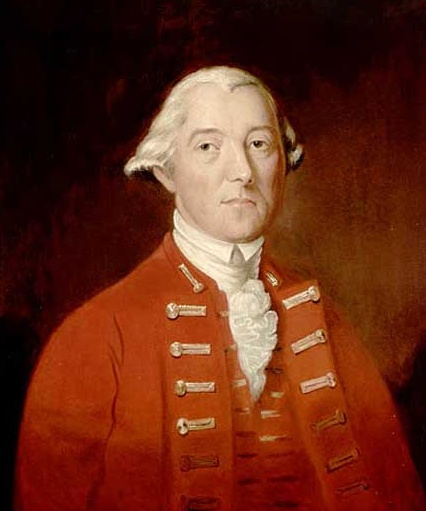
General Gage

Fruitless were all the Entreaties, Arguments and Eloquence of an illustrious Band of the most distinguished Peers and Commoners who nobly and strenuously assessed that Justice of our Cause, so stay, or even to mitigate the heedless Fury with which these accumulated and unexampled Outrages were hurried out.—Equally fruitless was the Interference of the City of London, of Bristol, and many other respectable Towns in our Favour. Parliament adopted an insidious Manoeuvre calculated to divide us, to establish a perpetual Auction of Taxations where Colony should bid against Colony, all of them uninformed what Ransom would redeem their Lives, and thus to extort from us at the Point of the Bayonet, the unknown Sums that should be sufficient to gratify, if possible to gratify, Ministerial Rapacity, with the miserable Indulgence left to us of raising in our own Mode the prescribed Tribute. What Terms more rigid and humiliating could have been dictated by remorseless Victors to conquered Enemies? In our Circumstances to accept them would be to deserve them.
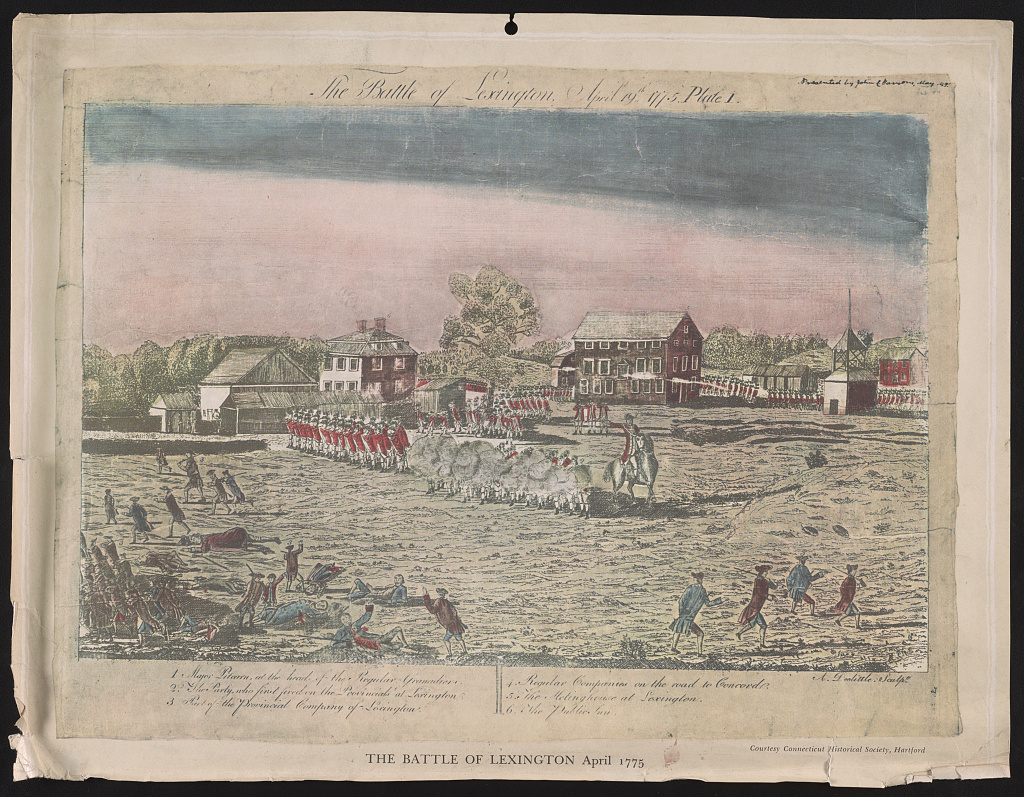
Lexington April 19, 1775

Soon after the Intelligence of these Proceedings arrived on this Continent, General Gage, who, in the Course of the last Year, had taken Possession of the Town of Boston, in the Province of Massachusetts Bay, and still occupied it as a Garrison, on the 19th Day of April, sent out from that Place a large Detachment of his Army, who made an unprovoked Assault on the Inhabitants of the said Province, at the Town of Lexington, as appears by the Affidavits of a great Number of Persons, some of whom were Officers and Soldiers of that Detachment, murdered eight of the Inhabitants, and wounded many others. From thence the Troops proceeded in warlike Array to the Town of Concord, where they set upon another Party of the Inhabitants of the same Province, killing several and wounding more, until compelled to retreat by the Country People suddenly assembled to repel this cruel Aggression. Hostilities thus commenced by the British Troops, have been since prosecuted by them without Regard to Faith or Reputation.—The Inhabitants of Boston being confined within that Town by the General their Governor, and having in order to procure their Dismission, entered into a Treaty with him, it was stipulated that the said Inhabitants having deposited their Arms with their own Magistrates, should have Liberty to depart, taking with them their other Effects. They accordingly delivered up their Arms, but in open Violation of Honor, in Defiance of the Obligation of Treaties, which even savage Nations esteem sacred, the Governor ordered the Arms deposited as aforesaid, that they might be preserved for their Owners, to be seized by a Body of Soldiers; detained the greatest Part of the Inhabitants in the Town, and compelled the Few who were permitted to retire, to leave their most valuable Effects behind.
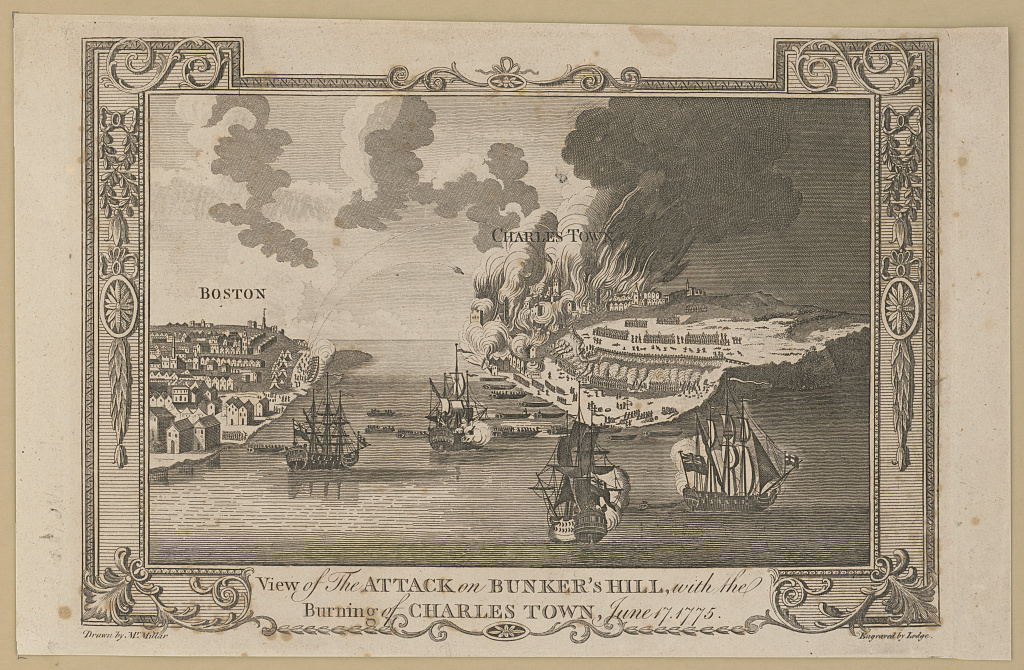
Bunker Hill and burning Charles Town

By this Perfidy, Wives are separated from their Husbands,  Children from their Parents, the Aged and Sick from their Relations of Friends, who wish to attend and comfort them; and those who have been used to live in Plenty, and even Elegance, are reduced to deplorable Distress.

The General further emulating his ministerial Masters, by a Proclamation bearing date on the 12th Day of June, after venting the grossest Falsehoods and Calumnies against the good People of their Colonies, proceeds to “declare them all either by Name or Description to be Rebels and Traitors, to supercede the Course of the common Law, and instead thereof to publish and order the Use and Exercise of the Law martial.”—His Troops have butchered our Countrymen; have wantonly burnt Charles Town, besides a considerable Number of Houses in other Places; our Ships and Vessels are seized; the necessary Supplies of Provisions are intercepted and he is exerting his utmost Power to spread Devastation and Destruction around him.
General Carleton

We have received certain intelligence that General Carleton, the Governor of Canada, is instigating the people of that province and the Indians to fall upon us; and we have but too much reason to apprehend, that schemes have been formed to excite domestic enemies against us. In brief, a part of these colonies now feels, and all of them are sure of feeling, as far as the vengance of administration can inflict them, the complicated calamities of fire, sword, and famine.-We are reduced to the alternative of chusing an unconditional submission to the tyranny of irritated ministers, or resistance by force.-The latter is our choice.-We have counted the cost of this contest, and find nothing so dreadful as voluntary slavery.-Honor, justice, and humanity, forbid us tamely to surrender that freedom which we received from our gallant ancestors, and which our innocent posterity have a right to receive from us. We cannot endure the infamy and guilt of resigning succeeding generations to that wretchedness which inevitably awaits them, if we basely entail hereditary bondage upon them.
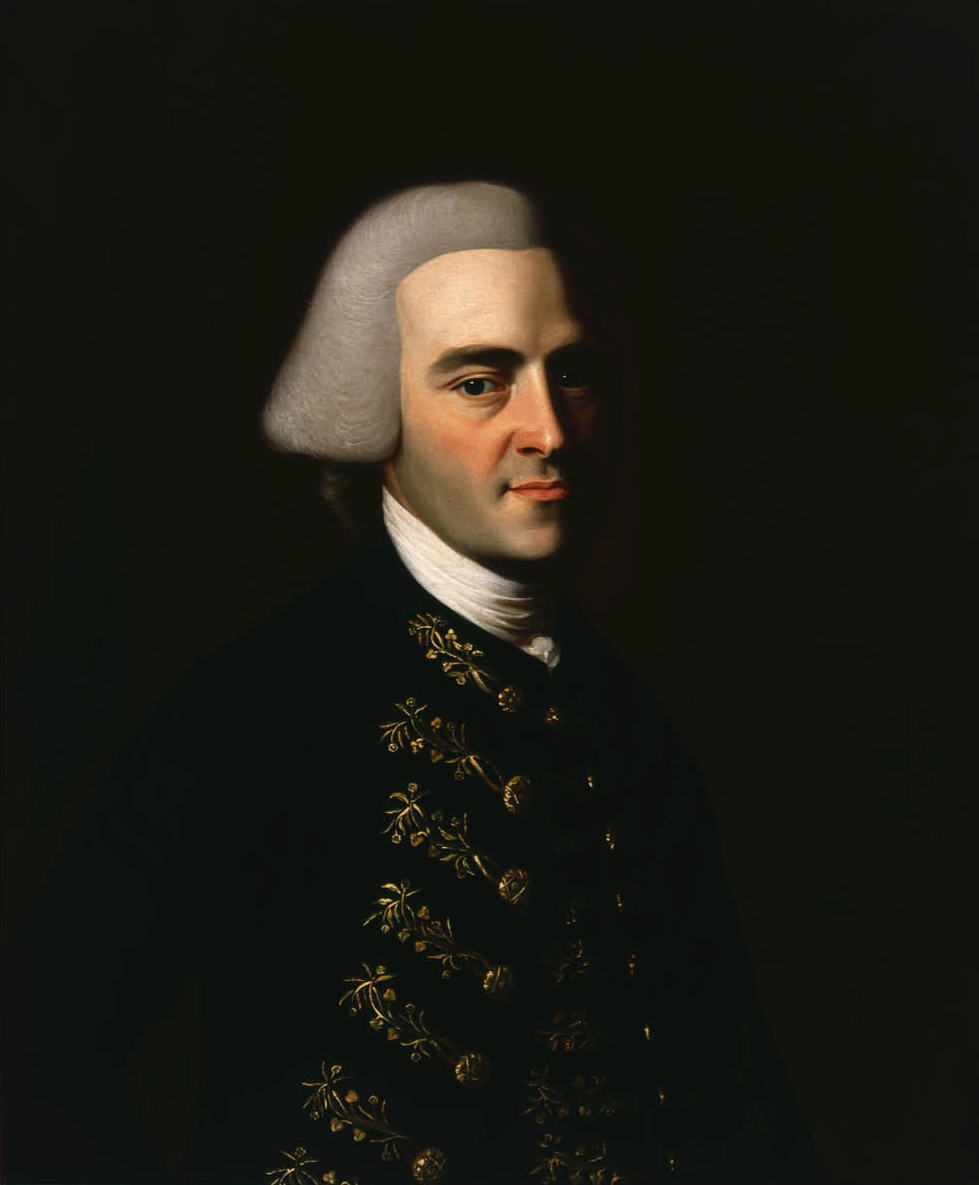
President John Hancock

Our Cause is just. Our Union is perfect. Our internal Resources are great; and if necessary, foreign Assistance is undoubtedly attainable.—We gratefully acknowledge, as signal Instances of the Divine Favour towards us, that his Providence would not permit us to be called into this severs [severe] Controversy, until we were grown up to our present strength, had been previously exercised in Warlike Operations, and possessed of the Means of defending ourselves.—With Hearts fortified with these animating Reflections, we most solemnly, before GOD and the World declare, that, exerting the utmost Energy of those Powers, which our benificent Creator hath graciously bestowed upon us, the Arms we have been compelled by our Enemies to assume, we will, in defiance of every Hazard, with unabating Firmness and Perseverance, employ for the Preservation of our Liberties, being with one Mind resolved, to die Freemen rather than to live Slaves.

In our own native Land, in Defence of the Freedom that is our Birthright, and which we ever enjoyed till the late Violation of it— for the Protection of our Property, acquired solely by the honest Industry of our Fore-Fathers and ourselves, against Violence actually offered, we have taken up arms. We shall lay them down when Hostilities shall cease on the Part of the Agressors, and all Danger of their being renewed shall be removed, and not before.
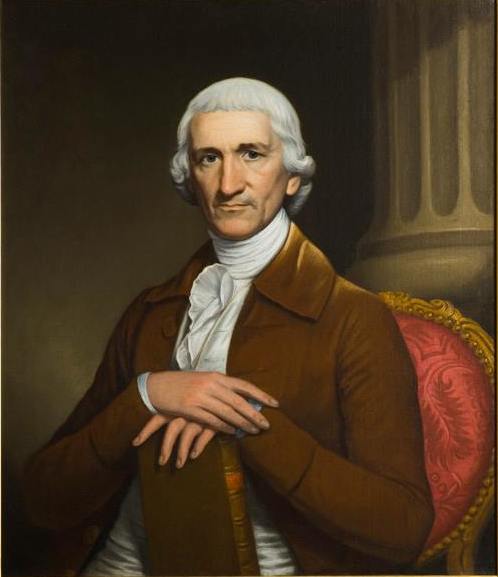
Secretary Charles Thompson

Left this Declaration should disquiet the Minds of our Friends and fellow Subjects in any Part of the Empire, we assure them, that we mean not to dissolve that Union which has so long and so happily subsisted between us, and which we sincerely wish to see restored.—Necessity has not yet driven us into that desperate Measure, or induced us to excite any other Nation to war against them.—We have not raised Armies with ambitious Designs of separating from Great Britain, and establishing independent States.—We fight not for Glory or for Conquest. We exhibit to Mankind the remarkable Spectacle of a People attacked by unprovoked Enemies, without any Imputation, or even Suspicions of Offence. They boast of their Privileges and Civilization, and yet proffer no milder Conditions than Servitude or Death.—

With an humble Confidence in the Mercies of the supreme and impartial Judge and Ruler of the Universe, we most devoutly implore his divine Goodness to conduct us happily through this great Conflict, to dispose our Adversaries to Reconciliation on reasonable Terms, and thereby to relieve the Empire from the Calamities of civil War.

By Order of CONGRESS, JOHN HANCOCK, President.

Attested, Charles Thompson Secretary,
Philadelphia, July 6th, 1775
Sold at the Printing Office in Portsmouth.

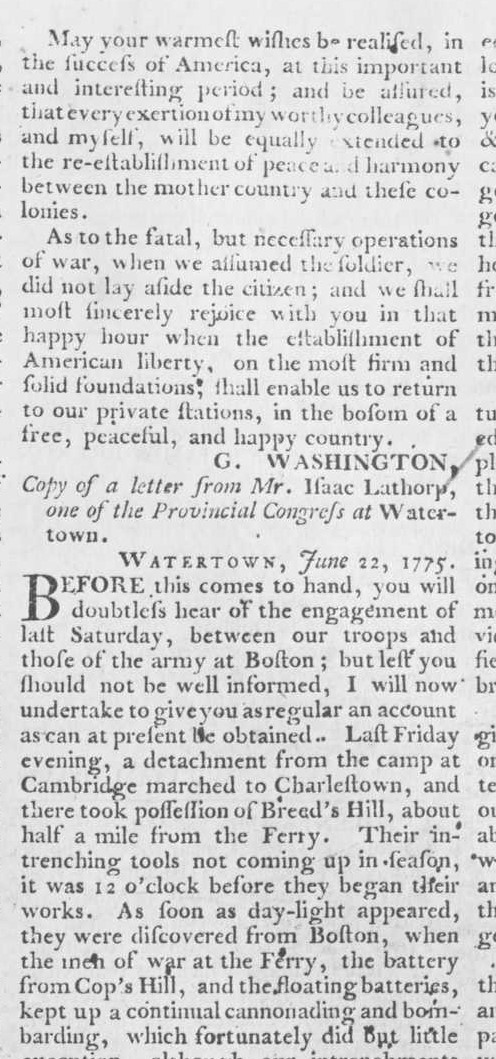
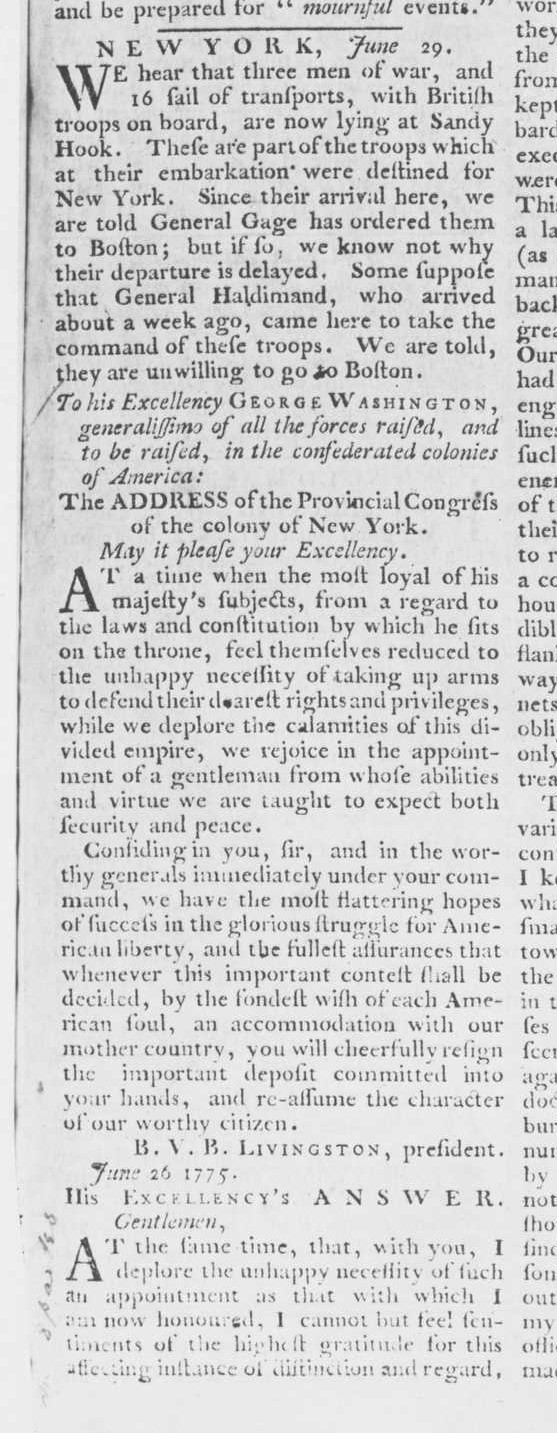
Three weeks before this declaration, the Continental Congress appointed George Washington as commander in chief for the provincial armies. On a June 15th motion from John Adams, Congress unanimously appointed Washington to “command all the continental forces.” It was a decisive step, “an act second in importance only to the Declaration of Independence the following year.” Washington accepted “in a speech of simplicity and modesty.” He refused any compensation beyond his expenses. [The Spirit of ‘Seventy-Six (edited by Henry Steele Commager and Richard B. Morris, Castle Books 2002, pages 138, 140]. In its July 14, 1775 issue (page 3), The Virginia Gazette published correspondence between the New York Provincial Congress and General Washington. The New Yorkers congratulated the general on his appointment but expected him to return to private life after the war was won. Washington wrote that he was planning to do just that after the “establishment of American liberty, on the most firm and solid foundations”. Peter Van Brugh Livingston “was a delegate to the New York Provincial Congresses, and was President from May 1775 to August 1775 and from September 1776 to March 1777.”
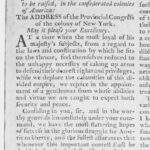
Virginia Gazette July 14, 1775 page 3
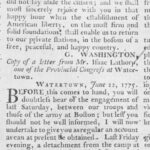
(continued)
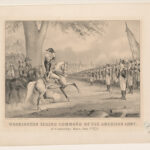
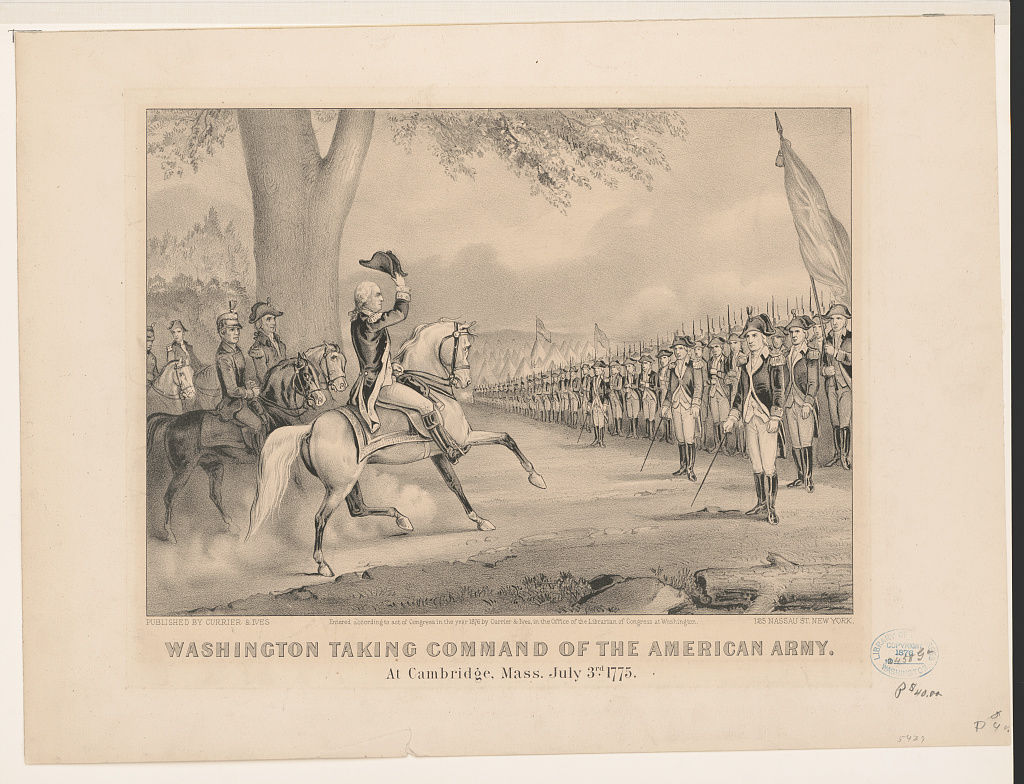
taking command at Cambridge, Mass

While Congress was considering the declaration to take up arms, it also passed the Olive Branch Petition, which “was adopted by the Second Continental Congress on July 5, 1775, and signed on July 8, 1775, in a final attempt to avoid war between Great Britain and the Thirteen Colonies in America. The Congress had already authorized the invasion of Canada more than a week earlier, but the petition affirmed American loyalty to Great Britain and entreated King George III to prevent further conflict. It was followed by the July 6, 1775 Declaration of the Causes and Necessity of Taking Up Arms, however, which made its success unlikely in London. In August 1775, the colonies were formally declared to be in rebellion by the Proclamation of Rebellion …” John Dickinson wrote the Olive Branch Petition. During this time, “differences of opinion over the fundamental question of separation or reconciliation were deep, and grew deeper with the swift rush of events. What is most interesting is that these differences were not merely between radicals like John Adams or Jefferson and conservatives like Dickinson or [James] Wilson; they were differejnces in the hearts and minds of individuals. … John Adams and John Dickinson found themselves equally torn by doubts and misgivings.” [The Spirit of ‘Seventy-Six (edited by Henry Steele Commager and Richard B. Morris, Castle Books 2002, page 277]
The Declaration of the Necessity to Take up arms mentioned reconciliation but labeled the British government and troops as enemies. On July 5th Benjamin Franklin wrote a note to his British friend William Strahan. The National Archives indicates that Franklin never actually sent the letter:
Philadelphia, July 5, 1775
Mr. Strahan,
You are a Member of Parliament, and one of that Majority which has doomed my Country to Destruction. You have begun to burn our Towns, and murder our People. Look upon your Hands! They are stained with the Blood of your Relations! You and I were long Friends: You are now my Enemy, and I am, Yours,
B. Franklin

From Wikimedia: Howard Pyle’s 1898 Battle of Bunker Hill; Allan Ramsay’s 1762 portrait of King George III; John Singleton Copley’s painting of General Thomas Gage; General Guy Carleton; John Singleton Copley’s painting of John Hancock; Joseph Wright’s portrait of Charles Thomson, the Secretary of both Continental Congresses throughout their existence.
From the Library of Congress: the declaration – I used the American Battlefield Trust’s interpretation of the declaration to make a few changes to the Library’s rendition – according to Battlefield Trust, Thomas Jefferson and John Dickinson wrote the declaration, and Wikipedia says, “Dickinson also reworked Thomas Jefferson’s language to write the final draft of the 1775 Declaration of the Causes and Necessity of Taking Up Arms.” ; 1752 image of the Pennsylvania state house (now known as Independence Hall after several modification); E. Percy Moran’s c1909 image of Battle of Bunker Hill; battle of Lexington; Bunker’s Hill and the burning of Charles Town; Currier & Ives c1876 take on General Washington assuming command of colonial armies at Cambridge on July 3, 1775; the July 27, 1774 issue of The Pennsylvania Journal; And The Weekly Advertiser.
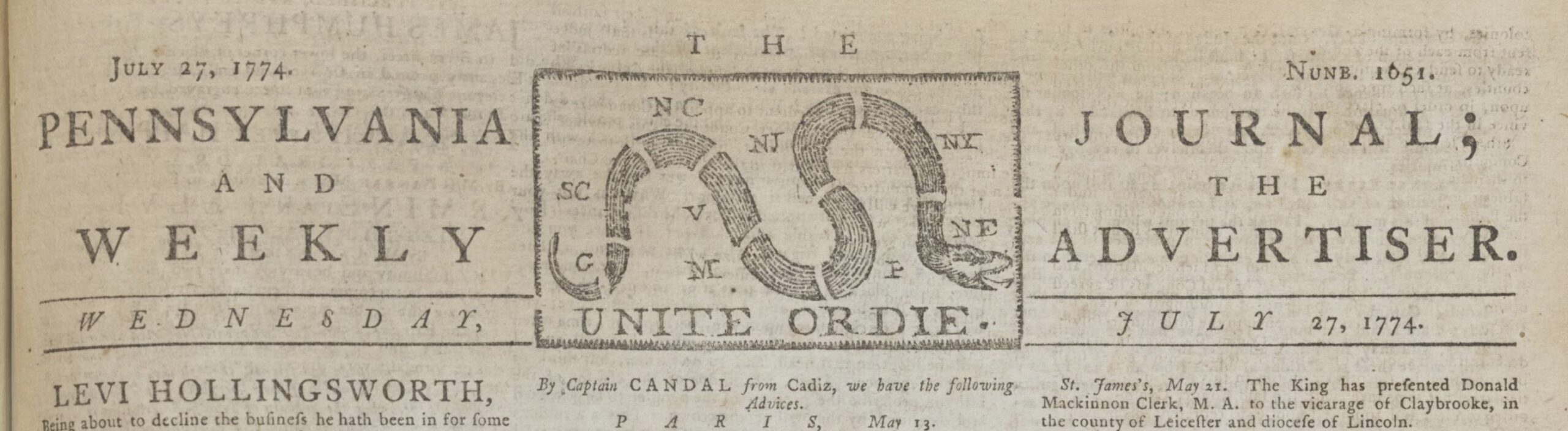
unite and fight

Posted in 250 years ago, American History | Tagged , , , , , , , , , , , , , , , | Leave a comment

“3½ or 4 miles per hour”

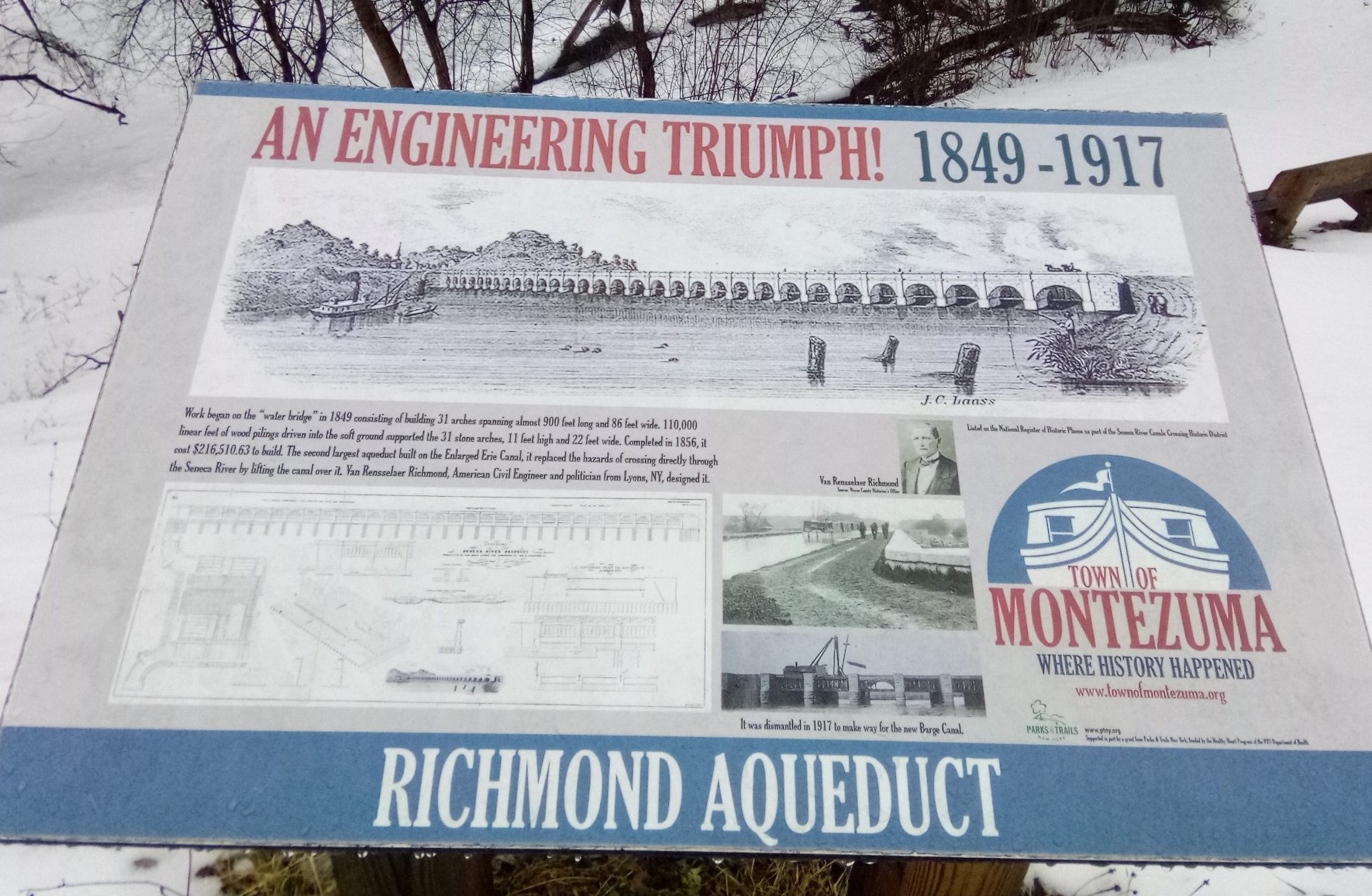
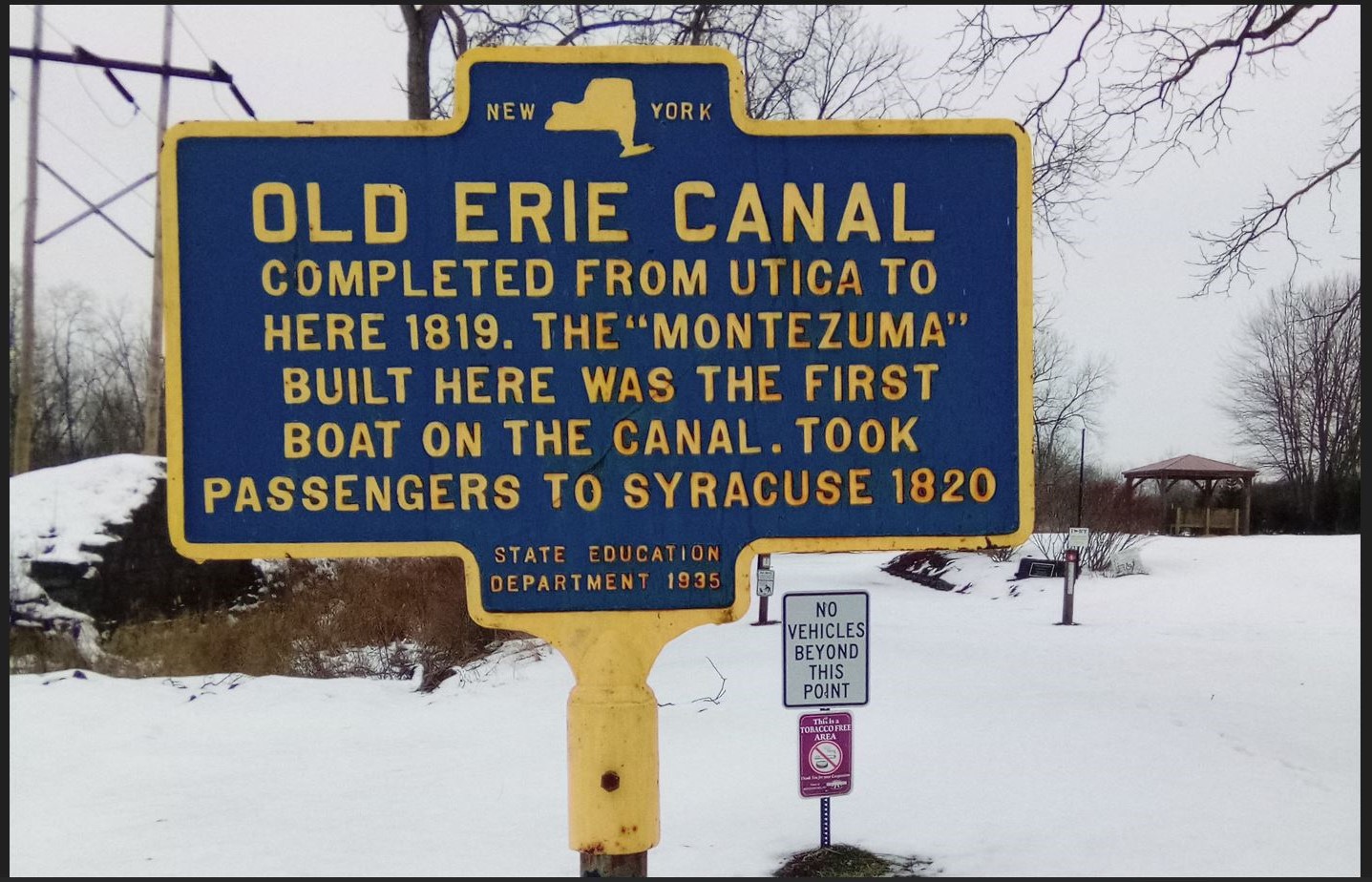
Replica: the Montezuma

This year is the 200th anniversary of the official opening of the original Erie Canal. On October 26, 1825 New York Governor DeWitt Clinton boarded the packet boat Seneca Chief in Buffalo at the western terminus of the canal. The governor and an entourage consisting of several other canal boats traveled the entire length of the canal to Albany, where the Erie met the Hudson River. A steamboat towed the Seneca Chief down the Hudson to New York City. On November 5th Governor Clinton poured Lake Erie water into the Atlantic Ocean for the ceremonial Wedding of the Waters.

at the Montezuma Heritage Park

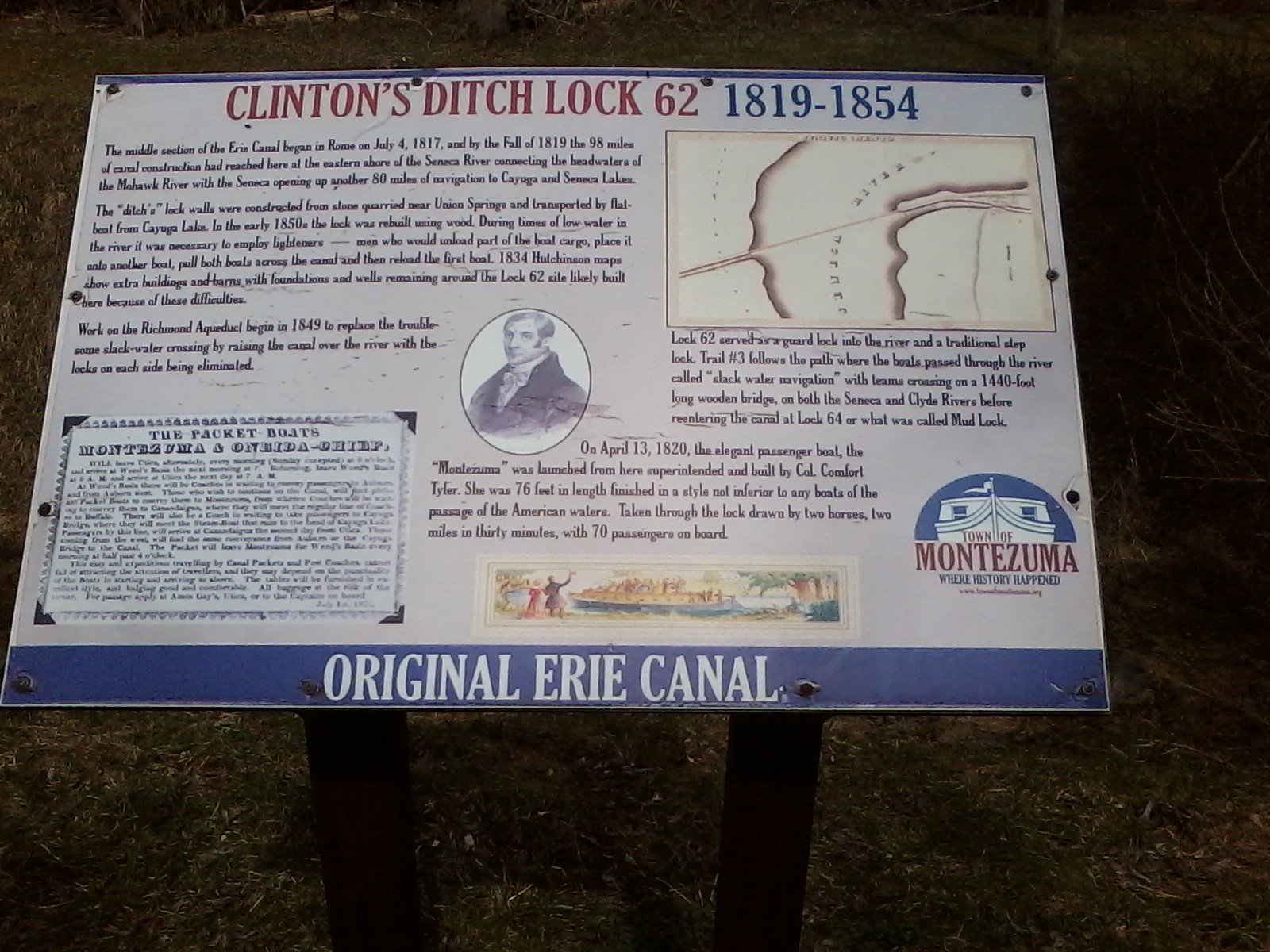
But people were traveling on the canal long before the official opening. According to a historical marker in Montezuma, the middle section of the canal was completed in 1819. A canal boat traveled from Montezuma to Syracuse in 1820. In its May 30, 1820 issue, the Edwardsville Spectator in Illinois published a report (page 3):

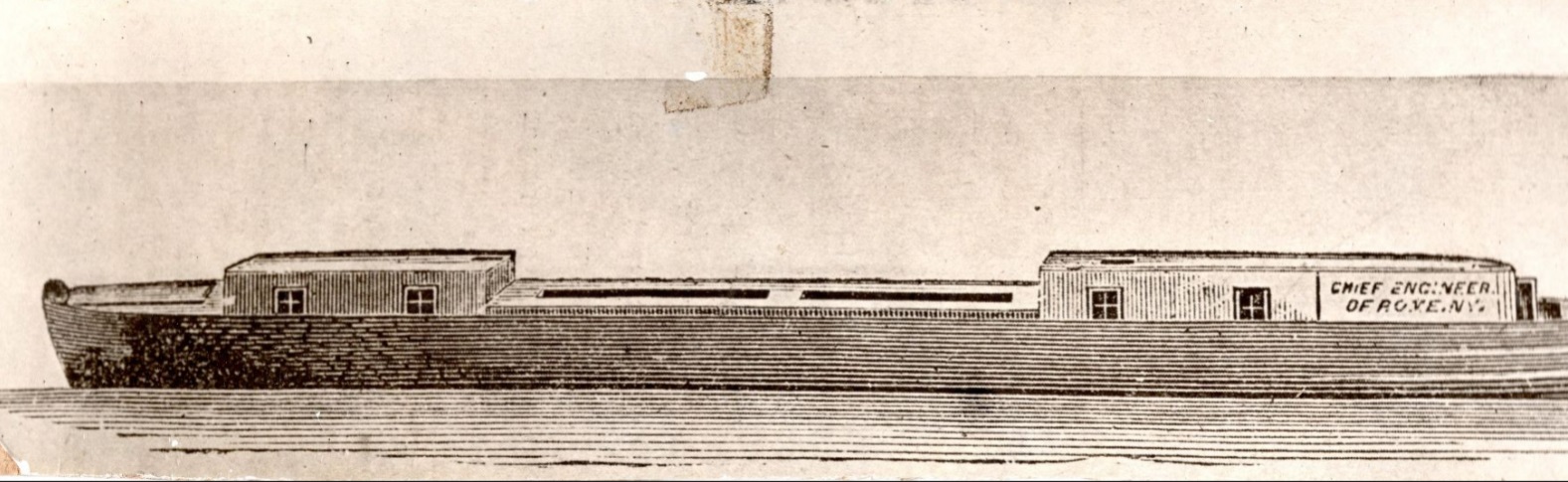
Grand Canal.—The Onondaga Register, of April 25th announces the arrival at Syracuse, (Salina) of the Canal barge Montezuma—she has two commodious cabins, with a kitchen—is 76 feet long and 15 wide. At Syracuse a party of ladies and gentlemen amounting to 100 persons went on board of her, when she started for Salina, a distance of one mile and a half, which she performed in 22 minutes. On her return to Syracuse 150 persons were on board. The shores of the Canal was lined with spectators, who manifested the greatest joy at her success. At the rate the boat travelled, it is computed that one horse will convey 100 persons at the rate of 3½ or 4 miles per hour. The water in the canal was two and an half feet deep—the barge drew but twelve inches of water, notwithstanding she was heavily laden. The distance from Utica to Montezuma, 94 miles, is now navigable. The canal boat Chief Engineer has performed the whole route.

Chief Engineer

Middle section completed first

You can read more about the Montezuma’s first trip on April 20th to a very young Syracuse at syracuse.com. Apparently, 4 mph wasn’t the speed limit on the canal. The packet boat arrived late because of a delay when a team of fast horses was hooked up to it. The horses arrived at a full trot, “kicking up a wake that soaked many of the onlookers.” Comfort Tyler, who built the Montezuma purchased The Chief Engineer (along with Simon Dexter Newton). The two boats began a regular service between Montezuma and Utica. The Erie Canal Museum provides more information about the canal in 1820 – other boats also started using the middle section of the canal in 1820.
200 years ago a famous visitor also traveled on the Erie Canal before its official opening. During his 1824-1825 grand tour of the United States the Marquis de Lafayette rode on the canal for much of his trip from western New York State to Albany on his journey to Boston for the 50 year commemoration of the Battle of Bunker Hill. Lafayette was feted at many places on his journey, but he to keep moving to make it to Boston in time. In Buffalo he had a reunion with the famous Native-American Red Jacket. The general and his entourage went by land from Rochester to Syracuse by detouring through the northern part of some of the Finger Lakes. This past Saturday Auburn, New York celebrated Lafayette’s June 8, 1825 visit and the new historical marker commemorating it. You can read an account of Lafayette’s journey off and on the Erie Canal in Auguste Levasseur’s 1829 Lafayette in America in 1824 and 1825, Vol. 2 at Project Gutenberg (Chapter XII).

canal boats travel over the Seneca River

Richmond Aqueduct remains

Ditch marker

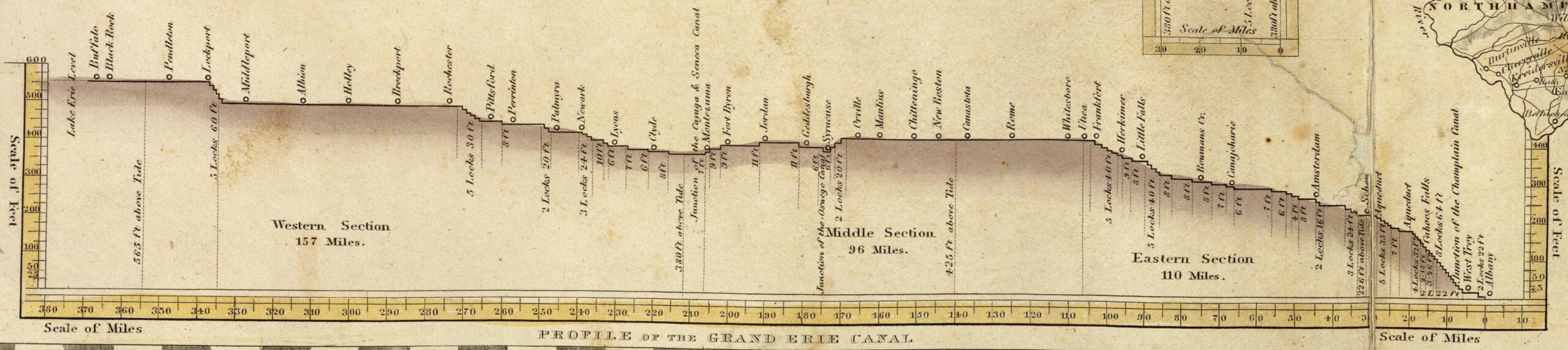
The image of canal boat Chief Engineer is from Family Photo Collection, Palmyra Community Library. Canal Boat. Retrieved from New York Heritage Digital Collections. The 1832 profile of the canal is from Wikipedia.
I took the other photos in this post during the first few months of 2025 at The Montezuma Heritage Park. The park features the remains of the Richmond Aqueduct built during the Erie Canal’s “first enlargement,” but there are other interesting sites throughout the park, including a portion of the original ditch. The Montezuma Park’s webpage includes three virtual tours of the park with historian Mike Riley. The Erie Canal provides lots of information and includes more about the Montezuma Aqueduct.

Remnant: The Grand Canal (or Clinton’s Ditch)

Posted in 200 Years Ago, Technology | Tagged , , , , , , , , | Leave a comment

Hallowed for how long?

150 years ago May 30th fell on a Sunday, so it appears that many communities observed Memorial Day on either the 29th or the 30th. According to an editorial from Portland, Maine, many people were surprised that ten years after the end of the Civil War the Decoration Day was still being The paper thought it was right to honor those who died “while battling for human freedom and popular government” and wondered if the tradition would continue after every Civil War veteran had died. The editorial went on to say that it was good that the sections were reconciling, but it wasn’t right to honor Confederates dead in the same way as the deceased Union military personnel.

From the May 31, 1875 issue of the Portland Daily Press (in Maine):

Memorial Day.

It has been predicted by many that Memorial day would be observed but a few years; and there certainly was reason to fear that the intense zeal of our people to secure the greatest amount of present good, the past with its labors and sacrifices would to be forgotten. But those who have made such predictions or entertained such fears, are doubtless surprised to observe that the days set apart for memorial services of the nation’s dead this year, are more generally observed than at any previous time, proving that the American people are not unmindful of or ungrateful to the memory of the patriot dead. In view of the general purpose of the people to render tribute to their fallen defenders, may we not expect that when the last veteran of the late war has been added to the roll of the dead, the succeeding generations which reap the blessings secured by their devotion and valor, wilt hallow Memorial Day?

It should be so; for no generations or nation can monopolize the fame or the achievements of those whom we honor to-day, nor is their patriotism or devotion exclusively the product of the age in which we live. The men whom we honor to-day have fallen in one of the battles in that century-long conflict between freedom and oppression. That same immortality which pours its golden light down through the vista of centuries upon the defenders of Thermopylae, is theirs. Names are lost; faces are forgotten; time and space are annihilated; deeds alone live; so that by that kinship which unites heroic purpose and self-denying devotion in all ages, the souls who tasted immortality at Thermopylae, the martyrs who died in hopeless conflict with the brutal tyranny of the feudal ages, the men who crimsoned the slope of Bunker Hill or at Valley Forge, displayed such fortitude and endurance, and the men who fell by thousands for freedom in our late war — all these martyrs have fought under one banner, and their deeds, their victories and their examples are our priceless heritage.

How fitting are these reflections on these memorial days, when it is remembered that under the green mounds upon which are placed the floral offerings, lie stranger forms, who, as men, would be no more to us than others, but resting from life’s battle in graves hallowed by martyrs’ deaths, the memory of their deeds makes them our dead, as is the country they saved our heritage. To-day we would not recognize the faces of many of those we honor. Their voices would awaken no chord of memory. Many wanderers, many from beyond the sea, many whose tongues had not learned our speech, many to whom our flag was the emblem of deliverance, are among them; but lying there we know them all, and the benediction of the Republic falls like rain upon them, and when the first waves of vendure break in spring flowers upon our Northern hill – sides, we gratefully gather them for our annual offering to them.

We know there are many whose extreme devotion to the practical leads them to look with little favor upon Memorial Day and its exercises. They ask: Of what good, not to the dead, how to the living? It is useful, Mr. Gradgrind, to save the nation from your sordid mold. We need to pause once in a while to think of something else than the mad pursuit of wealth and to step out of the round of every -day work, which makes us little better than machines. We need to recall the past with its great deeds. We need to pay the memory of heroic men the reverence there [sic] due and thereby call down upon ourselves the inspiration of their devotion and the fragrance of their memories. We must not forget that into that sublime half decade of war was profusely pored the highest hopes, the grandest ambitions, the most exalted sacrifices and the most precious life of the nation. It is, indeed, a sad day for the nation, if it has come to pass that the generation which laid life and temporal prosperity upon the country’s altar, has come to place a slight value upon that high devotion which led it to brave death for principle. Dark, indeed, to-day, if before the arms are rusted or the old uniforms moth-eaten, the American people should forget to hallow these days. We must not forget that upon our dead in the war, the blood-stained mantle of freedom was consigned by the fathers. Dying while battling for human freedom and popular government, they have transmitted that heritage, richer by their lives and costlier by their deaths.

To-day, as we stand amidst the graves of the nation’s saviors, we thank God that the jealousies and heart-burnings of the war are dying out — that manly forgiveness and brotherly love are succeeding. Standing above our dead, the man who wore the blue offers his hand to the man who wore the gray. Tears glisten a reconciliation which quivering lips cannot speak. Their clasped hand is a token of the Union which is to be.

But while we have tears, pity and kindness for the gray, we should reserve our garlands and honors for the blue. There are many who would go further — who would put the man who died fighting against national existence on a level with him who poured out his life to preserve it. We do not desire to have treason punished, but we do protest against making that crime a virtue to be rewarded alike with loyalty. Neither do we think this course is necessary to show our good will to our Southern brethren. Hundreds of occasions present themselves to show our friendliness. The summer pestilence of 1873 and the Mississippi floods of 1874 were occasions for us to show our brotherly regard, and right generously did the North respond. The Christian world had as well be asked to show its conciliation toward those who crucified the Lord by paying the same homage to those who put Him to death as to the Master himself. When we put the men who died in defense of Right on a level with those who died to perpetuate Wrong, we strike their names from the roll of the world’s martyrs. Let us rather cherish our dead because they were a nation’s redeemers; because in the thick night, with strong faith, with godlike devotion, with blood-stained colors, they wrought the salvation of fatherland.

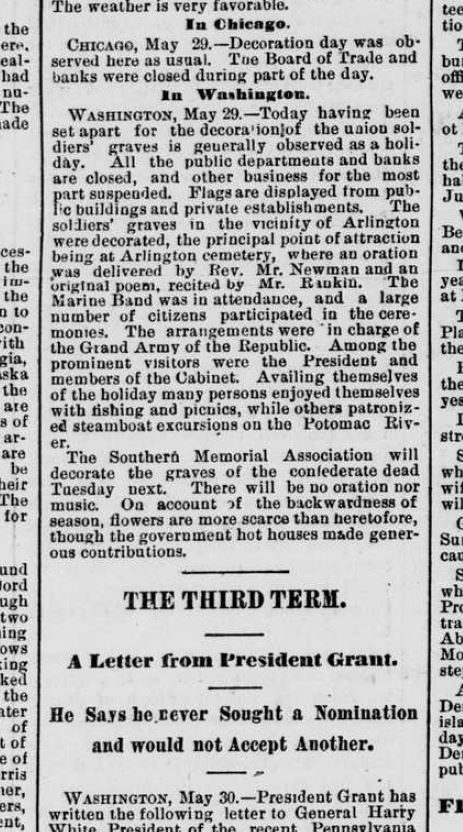
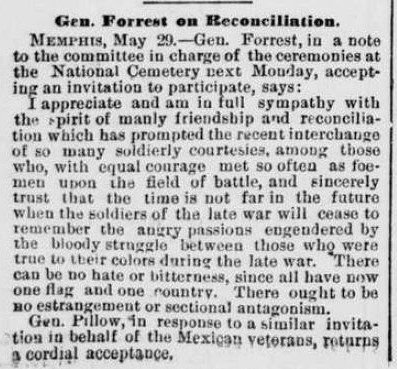
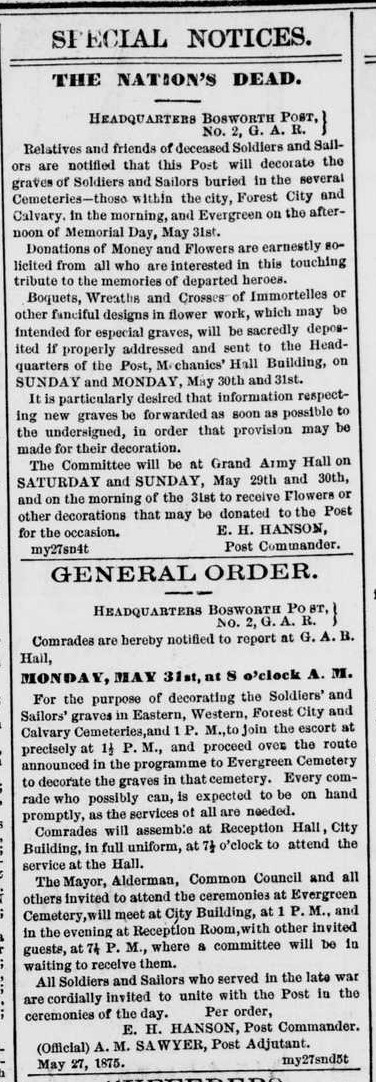
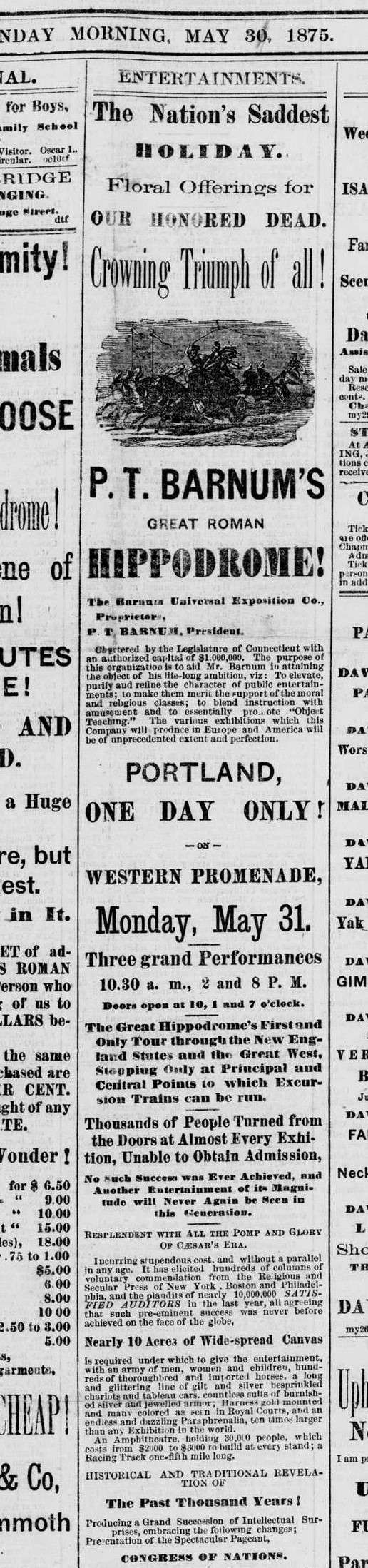
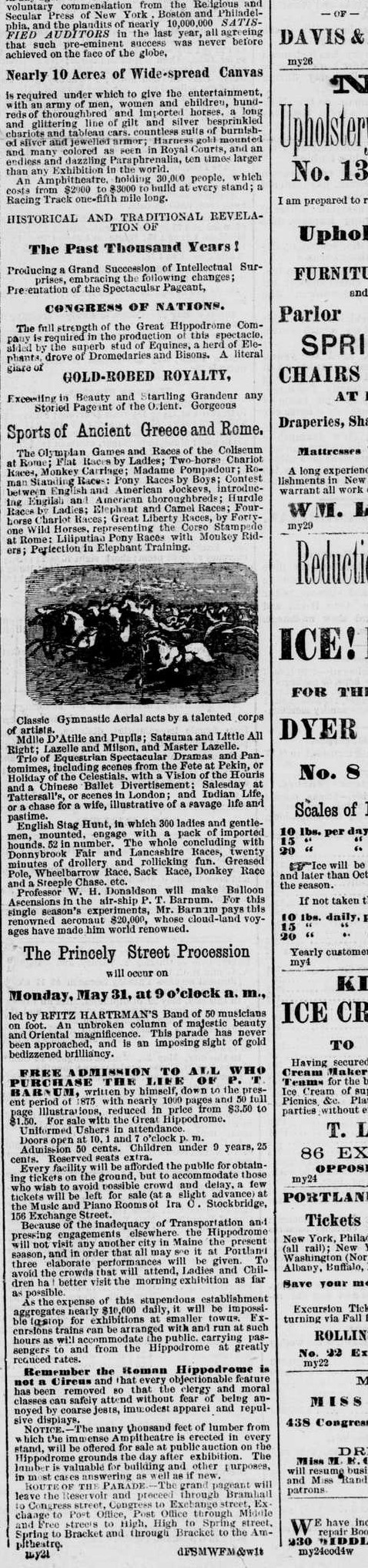
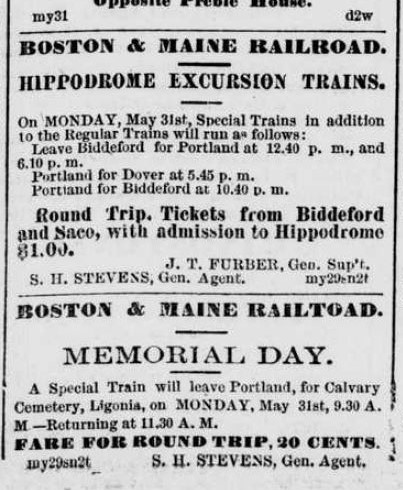
Here are some clippings from the same issue of the newspaper. Washington D.C. observed the holiday on May 29th. President Grant and cabinet members attended the memorial service at Arlington National Cemetery. Citizens also went fishing had picnics, and enjoyed steamboat excursions on the Potomac. The Southern Memorial Association would decorate Confederate graves on the next Tuesday. The GAR decorated graves in Portland on May 31st, and P.T. Barnum’s Hippodrome was in town for three performances on the “The Nation’s Saddest Holiday.”

D.C. observance

Gen. Forrest in favor of reconciliation

Portland GAR decorating graves on May 31st

“Nation’s Saddest Holiday”

part 2 of Barnum ad

excursion trains to Barnum Hippodrome

__________

The Fayetteville, Arkansas chapter of the Southern Memorial Association is still in operation: “The next Southern Memorial Day Ceremony will be held on Saturday June 7, 2025 at 10:00 a.m. at the Confederate Cemetery.” The site’s history page echoes the Portland editorial: “When another hundred years have passed, will the Confederate Cemetery on East Mountain still stand as a tangible reminder of the brave men who died for a way of life they held dear and the proud women who loved and honored them?”

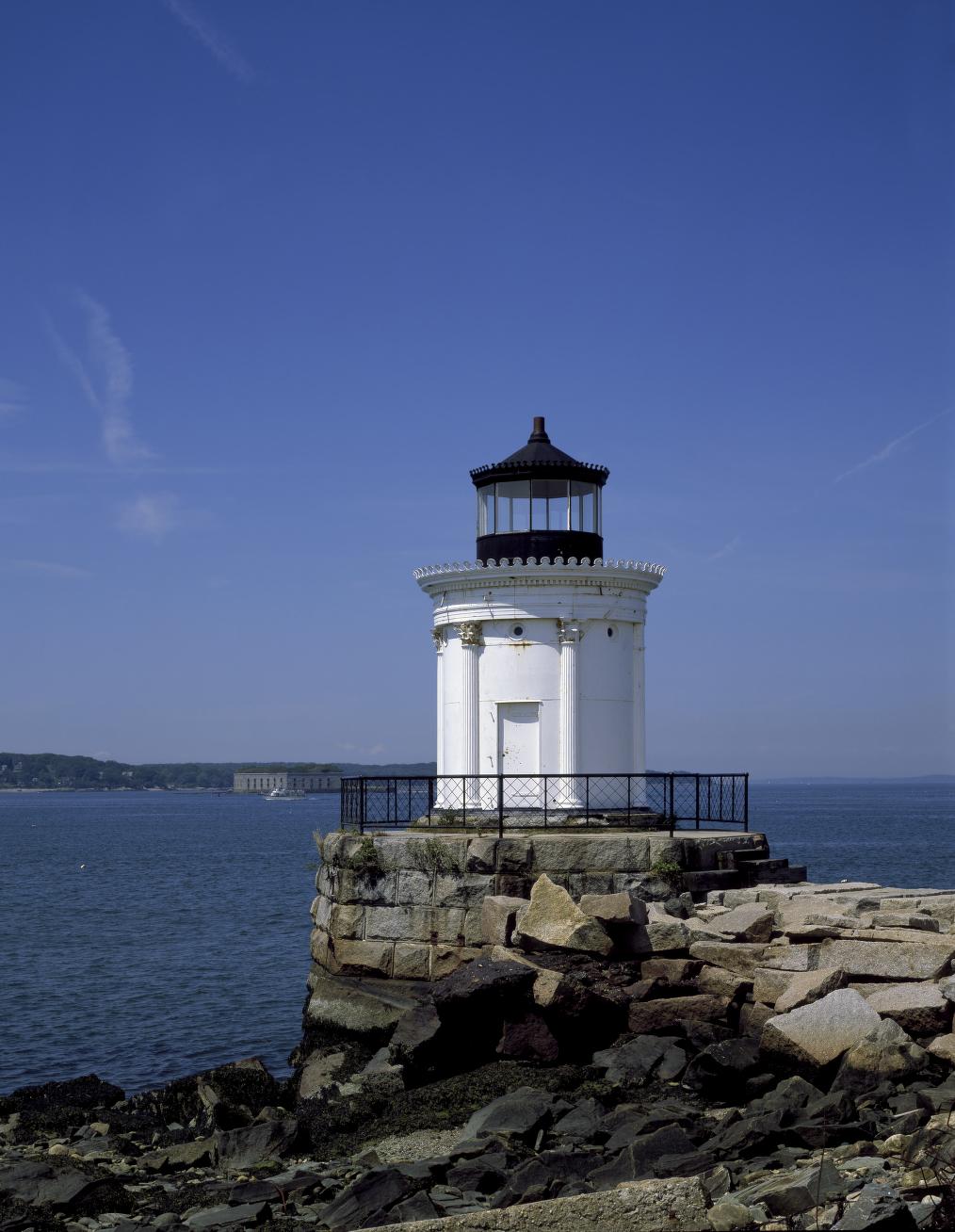
The front page of the May 31, 1875 issue of the Portland Daily Press says it’s Monday May 30, 1875, but it must be the 31st – the paper wasn’t published on Sundays. I corrected many words to avoid a whole lot of [sic]. From the Library of Congress: the May 31, 1875 issue of the Portland Daily Press; Carol M. Highsmith’s photograph of the Breakwater ‘Bug’ Light built 150 years ago..

Portland’s Breakwater ‘Bug’ Light built in 1875

Posted in 150 Years Ago This Month, Aftermath, American Culture, Postbellum Society | Tagged , , , , , , | Leave a comment

Centennial self-control

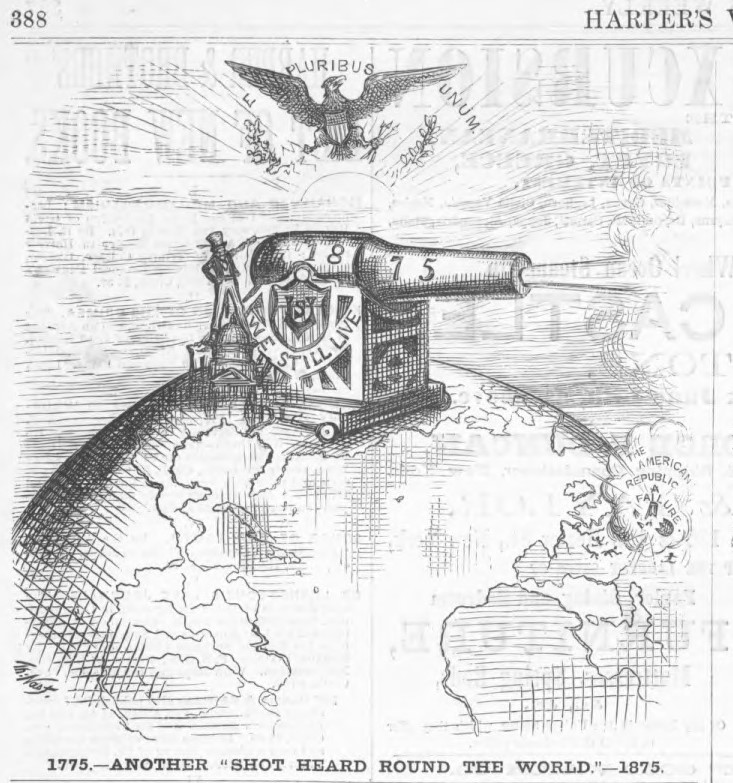
150 years ago Americans were beginning to celebrate the United States Centennial. On April 19, 1875 large crowds were in Lexington and Concord, Massachusetts to commemorate the battles that took place a century earlier. In an editorial in its May 8, 1875 issue (page 375) Harper’s Weekly praised the good behavior of the crowds in Lexington and Concord, especially given the dearth of police officers at the sites:

Harper’s Weekly May 1, 1875 Supplement page 369

THE NINETEENTH OF APRIL.

THE imposing spectacle of the first great Centennial anniversary of the Revolution, the day of Concord and Lexington, is the beginning of a long and proud series of holidays which will continue for seven years. They open in Massachusetts, and they will close in Virginia. Every event of the long struggle was but a logical consequence of the 19th of April, and Yorktown was the natural result of Concord, Lexington, and Bunker Hill. The next great day is that of Bunker Hill, within less than two months — the day of PRESCOTT, PUTNAM, and of “him, ah! him” — JOSEPH WARREN. It falls in the loveliest season of the year, and it commemorates the most familiar and famous of the Revolutionary battles, and will be observed with an enthusiasm which all that of the late great day will not abate. General DEVENS, now upon the Massachusetts bench, an accomplished and magnetic orator, will deliver the address, standing where DANIEL WEBSTER stood fifty years ago. LAFAYETTE was then here, and sat by the orator. Revolutionary veterans were grouped around him, and as the orator apostrophized them, the air rang with grateful acclamations. The speaker of to-day will be inspired with the glorious remembrance, and the emotion of the hour will have a fitting utterance.

Nor can there be any doubt of the happy moral and patriotic effect of these Centennial holidays. They will teach the whole country its heroic early history, and make it familiar with the soldiers and statesmen of the Revolution; and they will show that quality of character and the nature of those institutions which have made republican government possible. The celebration of the 19th of April was a pleasant illustration of the habit and power of popular self-control in New England. The throng of people in the two villages of Concord and Lexington was immense and unprecedented, and there could be very little management except that which the people themselves chose to provide. The police were few, and could make only a show of authority against such overwhelming odds. But the vast crowd in both villages, although there were necessarily confusion and disorder, was not riotous nor headstrong, and while there were more than a hundred thousand holiday strangers in the two towns, there was no serious accident or mishap. Every man was used to taking care of himself. He was a son of independence. During a sudden tumult in the tent at Concord the president of the day, Judge HOAR, said that the sovereign people of America are gentlemen, and when they assemble upon such an occasion, they will keep order and preserve silence. And they justified his words. The quality to which he appealed, and of whose existence he was conscious, is just that which has made the country. It is, in the best sense, conservative, as Mr. DANA showed in his masterly discourse at Lexington when he was speaking of the colonists. When this power of self-control is lost, popular government becomes impracticable, and until it exists such a government is impossible. The dependence upon the army, which is so familiar a fact in France, is the powerful argument against a French republic.

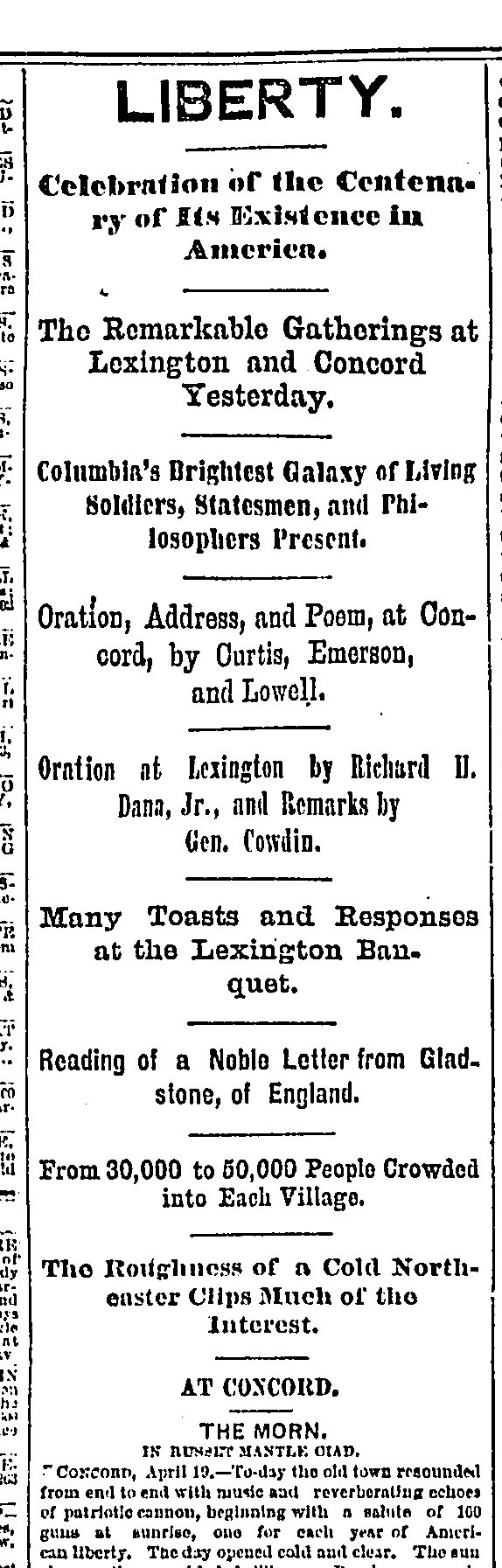
The Chicago Daily Tribune April 20, 1875

There is another aspect of the Centennial anniversaries which is interesting and valuable. They will present to the popular mind, in speech and essay, the actual superiority in general condition of the American citizen. When all exception is made and criticism is exhausted, there remains the fact that every man has a fairer chance in America than elsewhere. In many special points we are surpassed in other lands, but upon the whole the well-being is greater here. The poor man does not instinctively turn to Europe, but to America. Again, and just at this time, the Centennial holidays, by kindling the most generous patriotism, tend to reunite the country. It was a very striking spectacle at Lexington, that of the Governor of South Carolina responding cordially, and with sincere, not formal, cordiality, to the hearty greeting of Massachusetts. He was not, indeed, a South Carolinian by birth, but he was a fair representative of the new South Carolina, which will be again as closely bound with Massachusetts as the two colonies were a hundred years ago. And on the 17th of June the Georgian who may answer as warm a welcome will not propose to call the roll of his slaves on Bunker Hill, but to call his State upon the roll of freedom.

A revival of a just and noble national pride will be a renewal of the national character, and that is what we have the right to expect of the Centennial days. It will inspire every American with an interest in the great Centennial Fourth of July which nothing else could produce; and when at the Concord dinner General HAWLEY, the president of the Centennial Commission, appealed to the audience in behalf of the due celebration of the victories of peace which are not less renowned than those of war, there was a hearty and universal response. The greatest and happiest result of the Centennial years will be the promotion of a new era of national good feeling, founded not upon disastrous compromise, but upon sound, original, and eternal American principles, which are now sure to be freshly considered and approved by the American people.

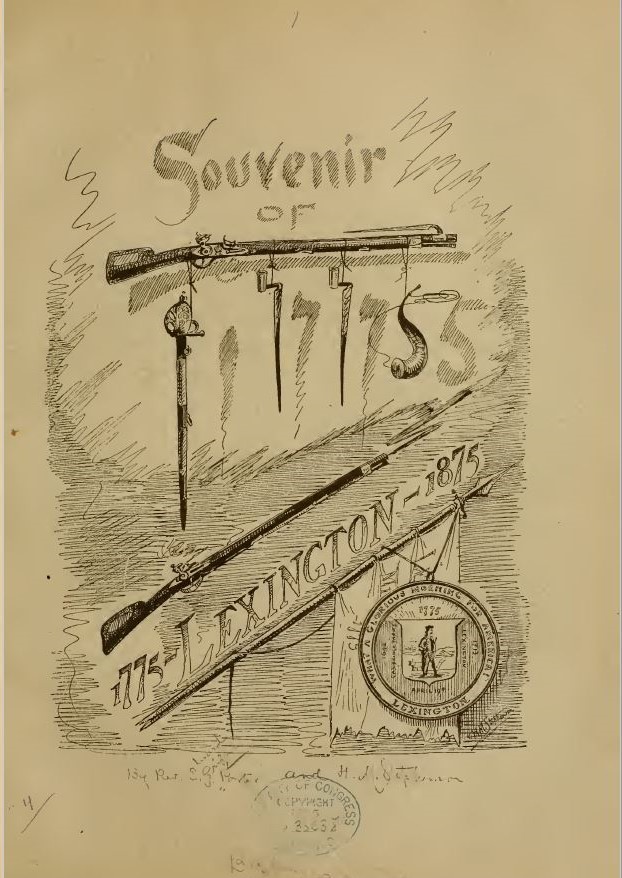
Lexington Centennial souvenir cover

from Lexington souvenir

still hadn’t failed

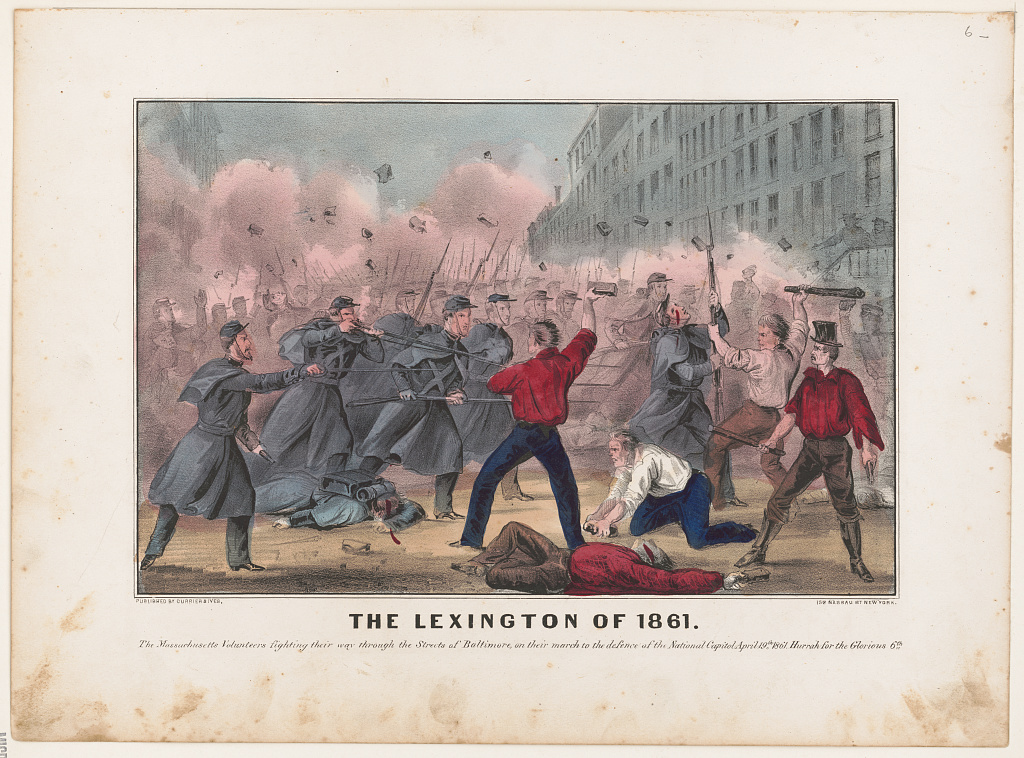
Ebenezer Rockwood Hoar was born in Concord, Mass and served as U.S. Attorney General from 1869-70 and one term (1873-75) as U.S. Representative. The South Carolina governor was Daniel Henry Chamberlain, who was born in West Brookfield, Massachusetts, served as an officer with the Fifth Massachusetts Cavalry, a black regiment, during the Civil War, and moved to South Carolina in 1866. Joseph Roswell Hawley served as an officer throughout the Civil War and mustered out of the army in 1866 as a Brevet Major General. The Pratt Street Riot occurred on April 19, 1861 as Union troops tried to change trains in Baltimore.
At the Minute Man National Historical Park you can see webpage devoted to the semiquincentennial with links to Lex250 and Concord250.

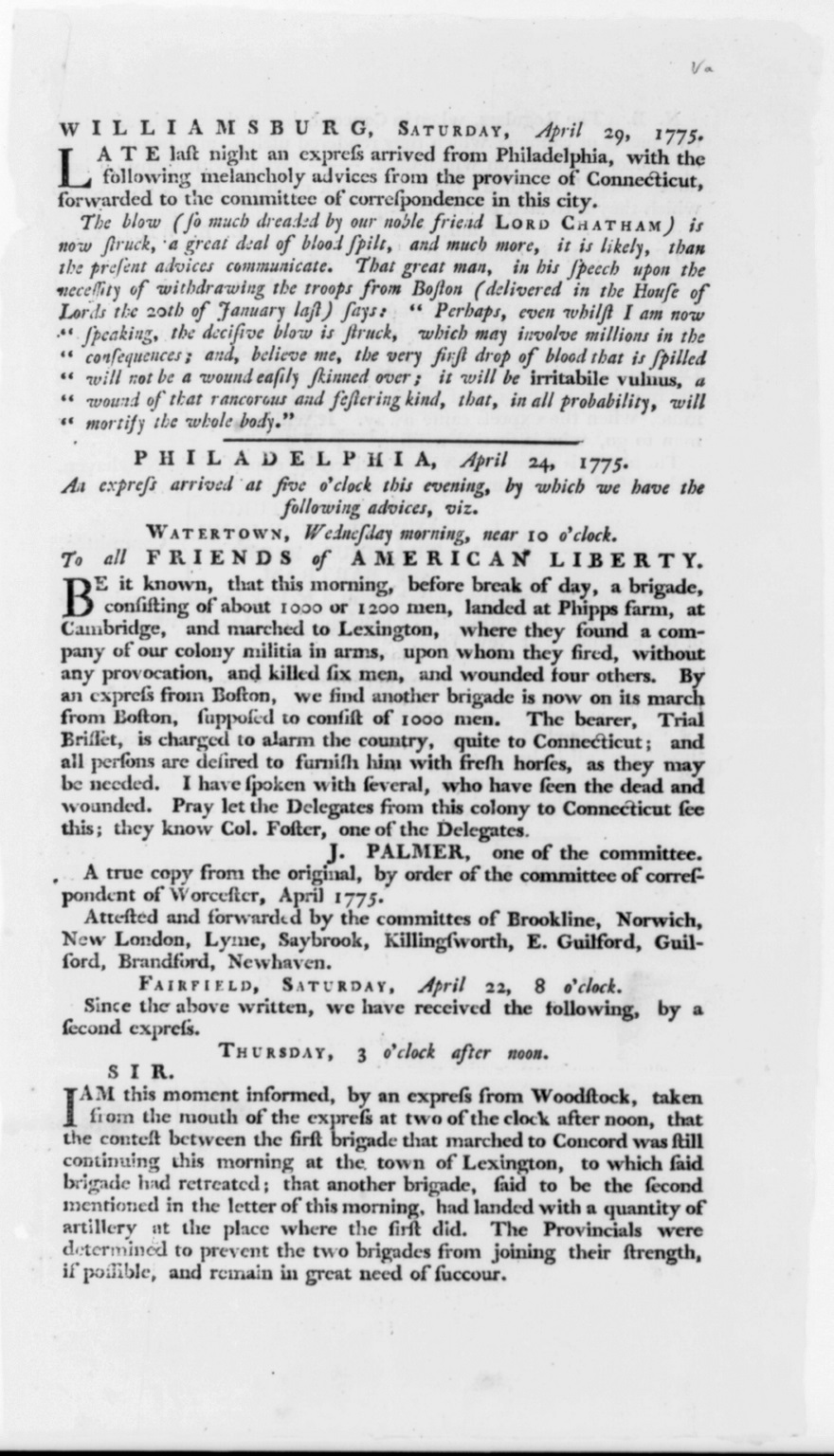
news made it to Williamsburg April 29, 1775

Pratt Street riot

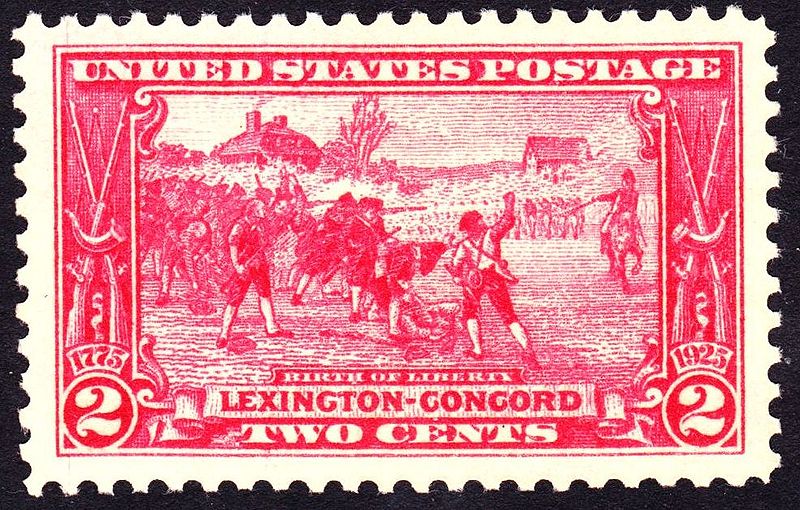
800px-Lexington_and_Concord-2c

Sesquicentennial commemoration

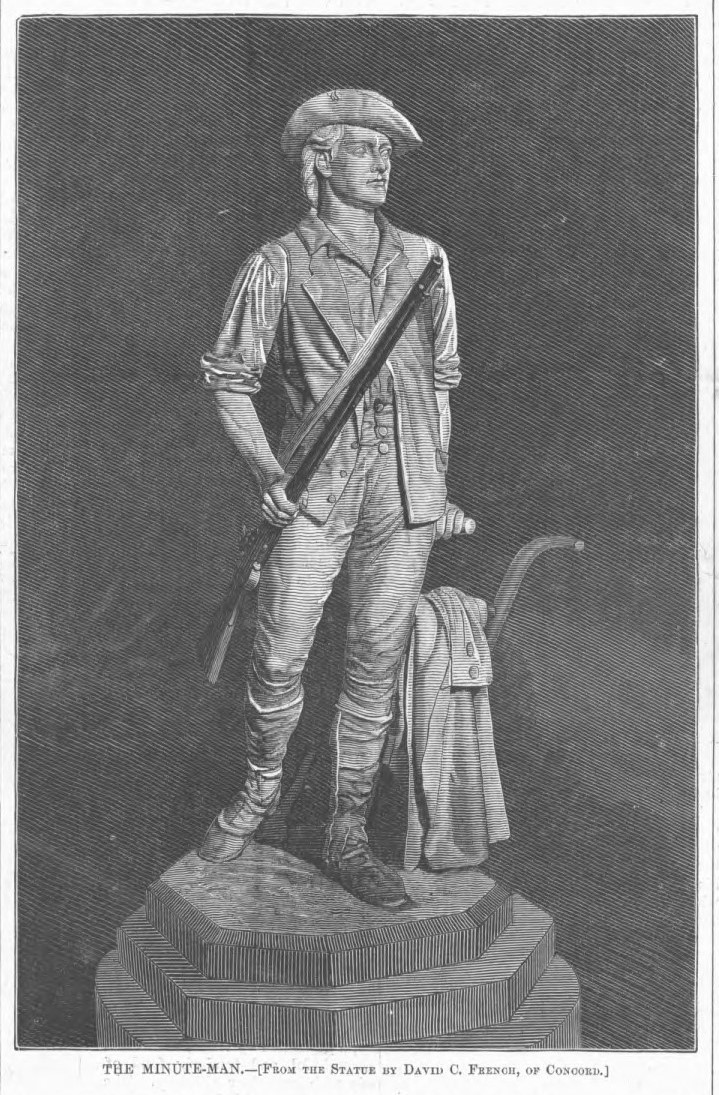
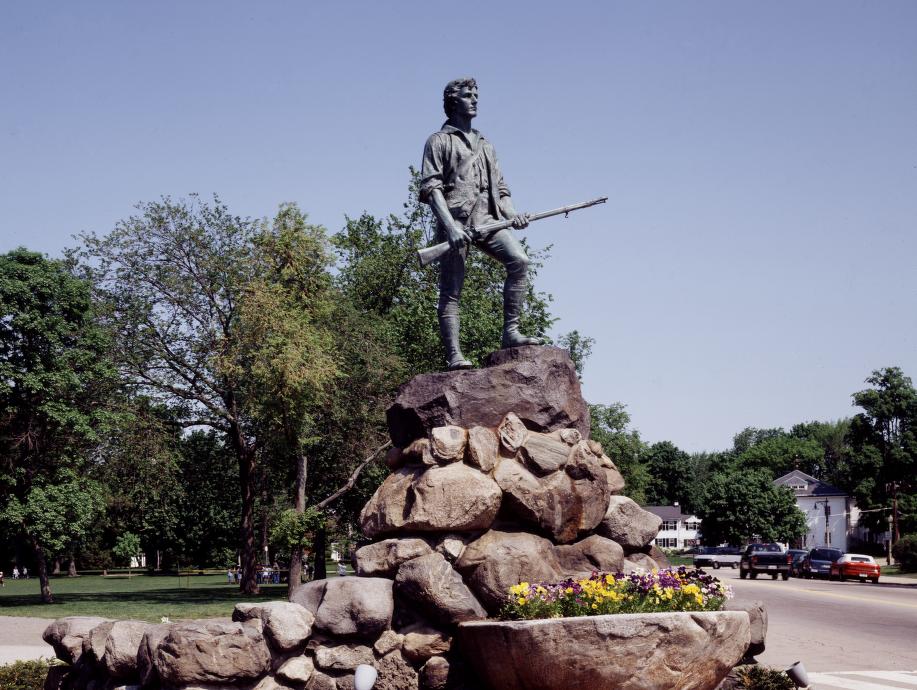
Harper’s Weekly for 1875 is at HathiTrust. The material in this post came from the May 1st and 8th issues. In its May 1st Supplement (pages 369-372)the magazine reprinted an oration by George William Curtis at Concord on April 19, 1875 and included the image of the Minute Man statue by Daniel Chester French, which was unveiled for the Concord Centennial when the sculptor had just turned 25 years old. Henry Hudson Kitson sculpted Lexington’s Minute Man statue, erected in 1900.
The image of the postage stamp comes from Wikipedia.
From the Library of Congress: The April 20, 1875 issue of The Chicago Daily Tribune – page 2 has the Lexington and Concord report; the Lexington Centennial Souvenir; the Williamsburg broadside; Currier & Ives’ take on the Pratt Street riot; Carol M. Highsmith’s photograph of the Minute Man statue in Lexington.
[April 15, 2025 – I corrected a page reference for Harper’s Weekly]

Lexington’s Minute Man statue

Posted in 150 Years Ago This Month, American History, United States Centennial | Tagged , , , , , , , , , , | Leave a comment

a separate equality?

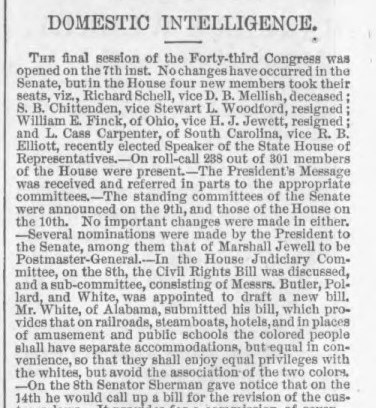
Harper’s Weekly December 26, 1874

In 1870 Charles Sumner introduced a Civil Rights bill in the United States Senate. While on his deathbed in March 1874, Senator Sumner implored his onlookers to make sure the Civil Rights bill did not fail. That plea might have taken on a greater urgency after the 1874 midterm elections in which Democrats took control of the House of Representatives. Republicans would probably need to get the bill passed before the last session of the 43rd Congress ended in March 1875. In its “Domestic Intelligence” section, the December 26, 1874 issue of Harper’s Weekly noted that the House Judiciary Committee discussed the Civil Rights bill on December 8th. A subcommittee was appointed to draft a new bill. One member of the subcommittee, Alexander White, a Republican from Alabama, proposed a bill that would ensure that in many public businesses and in public education black people would have “separate accommodations, but equal in convenience,” so that there would be equal privileges but no association between blacks and whites. Apparently a bill was reported that only applied the separate but equal concept to public education. Harper’s Weekly excoriated separate but equal public education in its January 9, 1875 issue:

AN ACT TO CONFIRM PREJUDICE.

THE probability of the passage of a civil rights bill is not great, but that is no reason for the introduction of such an act as has been presented to the House by the Judiciary Committee. If, as the opponents of the bill constantly declare, we cannot abolish prejudice by law, we are certainly not called upon to sustain and perpetuate it by law. Yet this is what the proposed bill does. It is an act to stigmatize a class of American citizens on account of color and previous condition of servitude. This it does by authorizing any State to maintain separate schools or institutions with equal facilities in all respects to all classes entitled thereto. But as separate schools are demanded only on account of color, this is the authority to establish them. Of course such a provision makes the whole bill ridiculous, as any shrewd Democrat could instantly show by moving to amend by making the provision which applies to schools apply also to “inns, public conveyances on land and water, theatres, and other places of public amusement.” If the prejudice against color is to be respected in the school-house, why not in the theatre and the tavern and the railroad car? It is no harder for a white child to sit beside a colored child at school than for a white parent to sit beside a colored parent in a car or at a public table or in a theatre. The distinction is without a difference. The bill as reported is an insult to every intelligent colored citizen, as it is a humiliation to every white citizen who remembers that the Constitution guarantees to all the equal protection of the laws — a guarantee which is deliberately violated when the law stigmatizes any class of innocent citizens under any pretense whatever.

The folly of such a rule was shown by Mr. CONWAY’S letter describing his experience as Superintendent of Schools in Louisiana, and by the daily reports from New Orleans, which state that “the color line in schools promises to be the momentous question, as it is difficult to settle who are colored.” As for the alleged prejudice, it is now frankly confessed that before the war the lighter-colored children — quadroons and others — were admitted to the schools, and no issue was raised; while it is perfectly well known that some of the most refined, cultivated, courteous, and wealthy citizens in that city were “tainted” with color. But not only is it impracticable to decide who is “colored,” but even if every child who is to be stigmatized by this law were coal-black, so that no question could arise, the mischief lies in the obloquy thus cast by law upon certain citizens to whom the Constitution secures equality. Suppose any other class against whom there is a similar feeling should be selected for this leper-like segregation, its enormity and injustice would be at once conceded. If, for instance, the Jews were by law separated from the rest of their fellow-citizens in schools and other public institutions, the sense of shame in all decent American breasts would soon burn out the law from the statute-book. In darker ages and more barbarous countries than ours the Jews were the victims of an inhuman prejudice. What does the honorable American think of those times and countries? And does he wish that his country to-day shall follow that example? There is, indeed, a difference in the cases. The feeling against the Jew was the growth of a Christian tradition of hatred against those who had crucified the Son of God. The feeling against the colored race is the American tradition of hatred against those whom we have foully wronged.

The prejudice unquestionably exists, but why should a Republican Congress propose to strengthen and perpetuate it by law? Is any member of Congress so amusingly stupid as to suppose that a prejudice strong enough to separate the schools would permit them to be equal “in all respects?” or that it is of any practical use to enact that a pariah who is excluded from the schools and cemeteries may have “full and equal enjoyment of the accommodations, advantages, facilities, and privileges of inns, public conveyances on land and water, theatres, and other places of public amusement?” Moreover, it is as impossible to determine what is a full and equal enjoyment of such privileges as it is to decide who is “colored.” The bill will not pass, and it certainly ought not to pass.

president signed bill

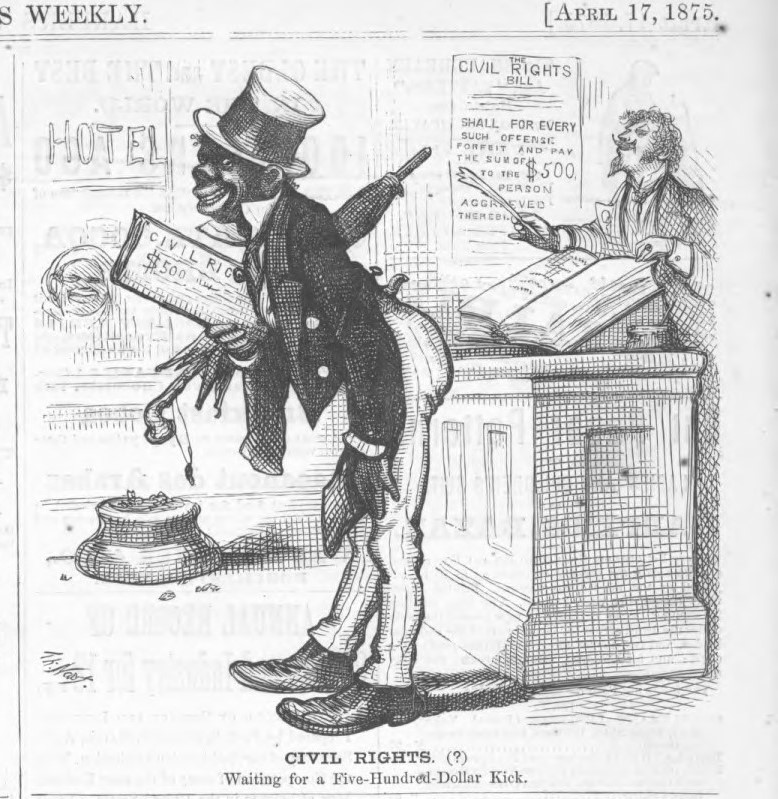
Actually, a bill did pass. President Grant signed the Civil Rights Act of 1875 on March 1st, but that law did not mention public education: “… all persons within the jurisdiction of the United States shall be entitled to the full and equal enjoyment of the accommodations, advantages, facilities, and privileges of inns, public conveyances on land or water, theaters, and other places of public amusement …” Those who did not provide the equal accommodations could be held liable in civil or criminal court. The civil penalty was $500. Federal courts had jurisdiction. The act did not mention anything about “separate but equal.”

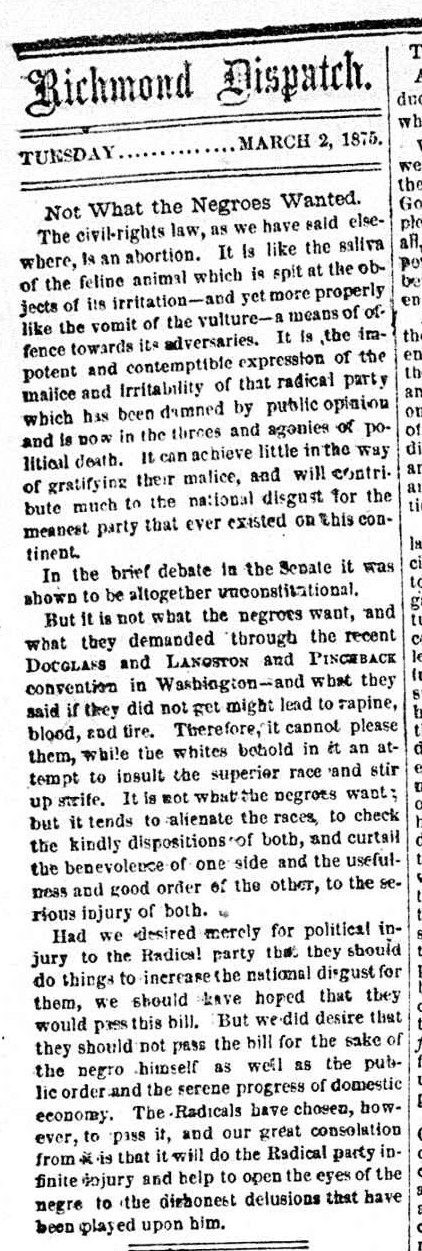
Daily Dispatch March 2, 1875

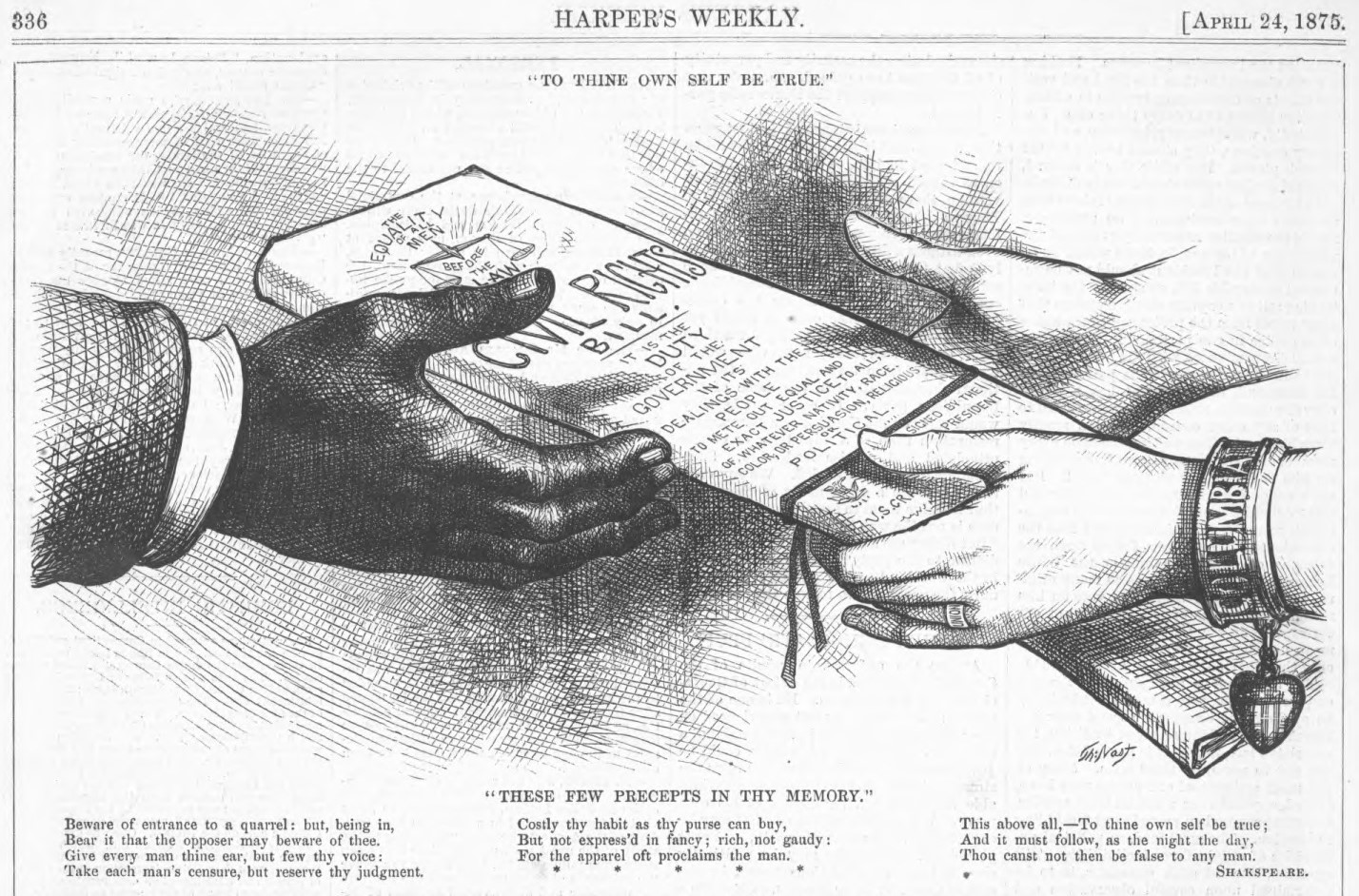
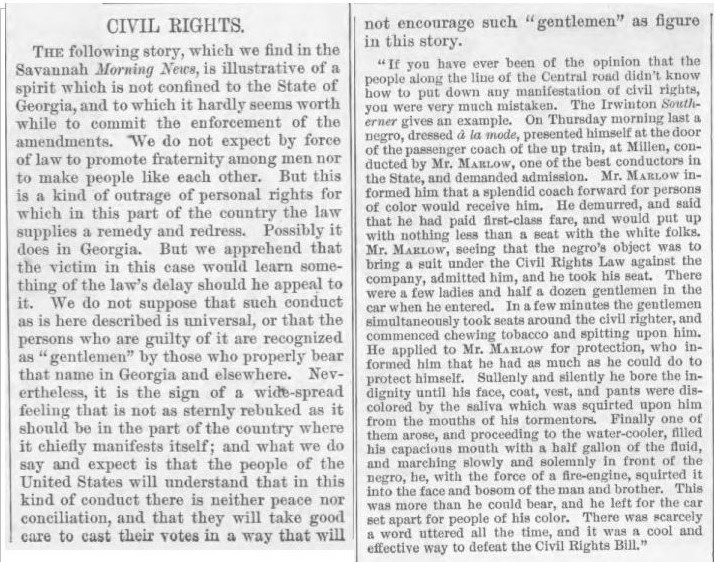
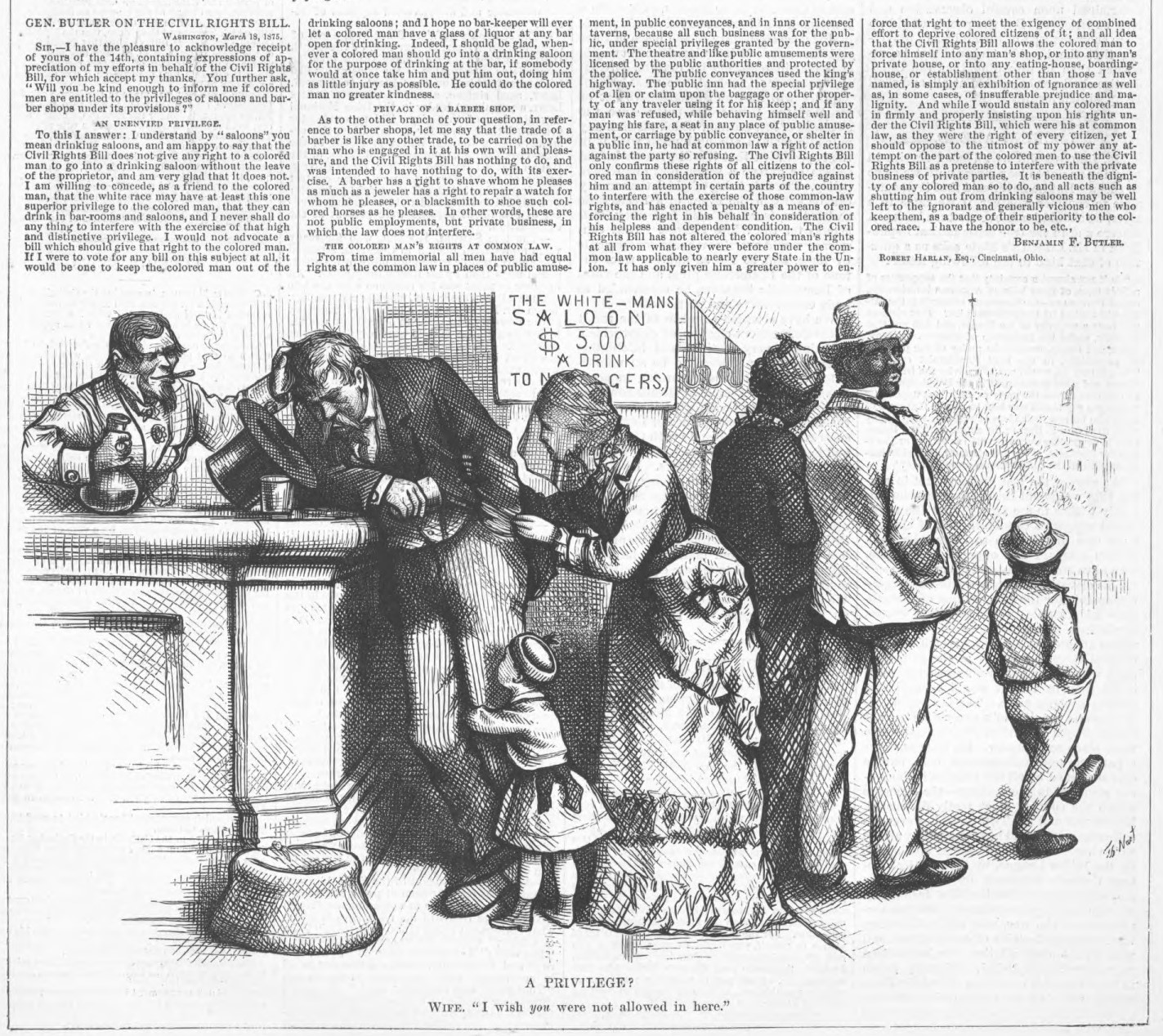
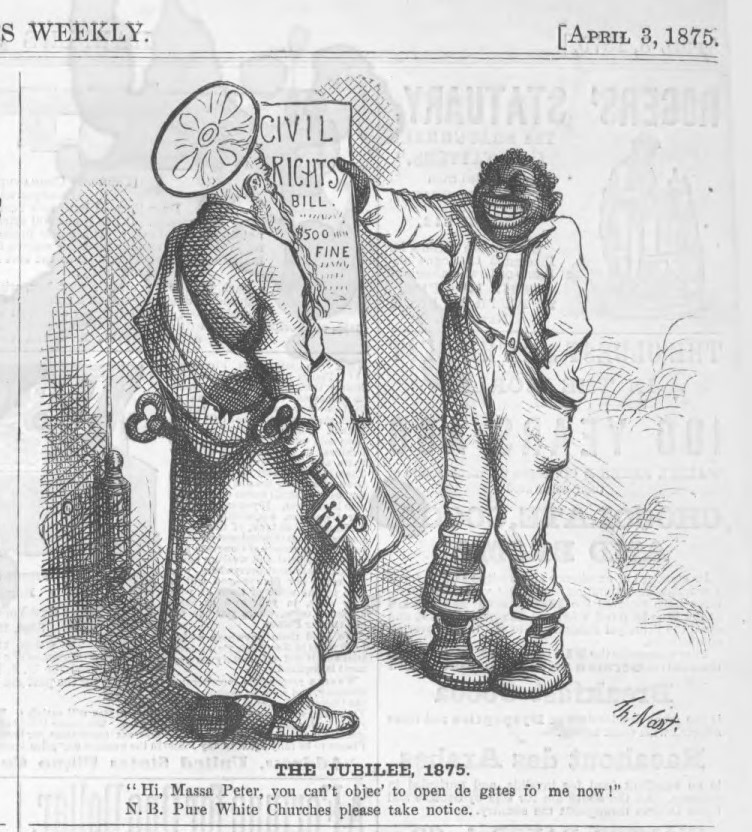
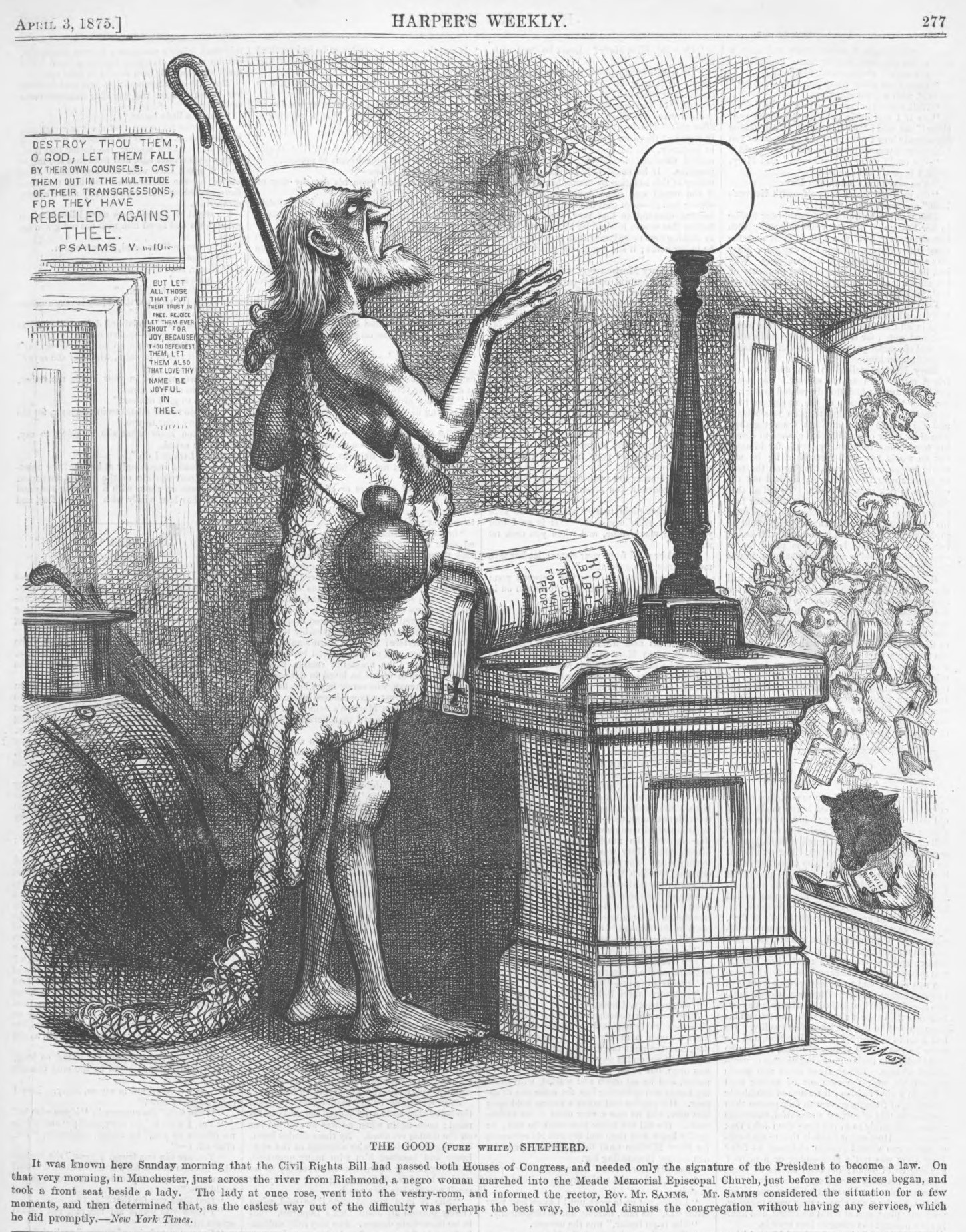
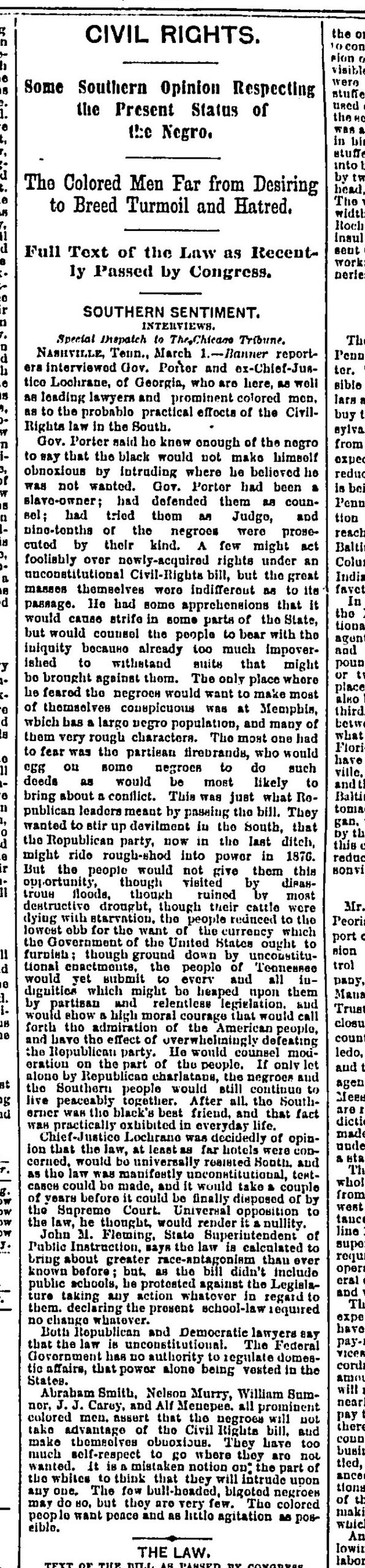
In its March 2, 1875 issue Richmond’s Daily Dispatch called the act an abortion. The law was not what the negroes wanted, and whites saw the law as “an attempt to insult the superior race and stir up strife.” Harper’s Weekly criticized the act for excluding public education. It published some cartoons and a letter by Congressman Benjamin Butler, who maintained the act only covered rights that blacks should already have had under common law. In July reproduced an article from a southern newspaper that anecdotally suggested that at least one train did have separate cars for blacks and that whites had a sly way to keep blacks out of the white car without forfeiting the $500. In a report from Nashville The Chicago Daily Tribune (page 5) reported on some Southern reaction, including the act’s legality: “Both Republican and Democratic lawyers say that the law in unconstitutional. The Federal Government has no authority to regulate domestic affairs, that power alone being vested in the States.”

The Supreme Court agreed with that last point. According to the Federal Judicial Center, “In The Civil Rights Cases of 1883, the Supreme Court ruled that the act was unconstitutional because the Fourteenth Amendment applied only to state, and not to private, action.”

Harper’s Weekly March 20, 1875 page 231

Harper’s Weekly July 24, 1875 page 1063

Ben Butler explains Civil Rights Act (HW April 24, 1875 p336

Federal law applies to heaven

church still segregated?

The Chicago Daily Tribune March 2, 1875

According to Eric Foner: “Despite having been shorn of its schools provision, the law represented an unprecedented exercise of national authority, and breached traditional federalist principles more fully than any previous Reconstruction legislation…” But the act “was more a broad assertion of principle than a blueprint for further coercive action by the federal government. It left the initiative for enforcement primarily with black litigants suing for their rights in the already overburdened federal courts. Only a handful of blacks” tried to avail themselves of the law’s provisions, “and well before the Supreme Court declared it unconstitutional in 1883, the law had become a dead letter.” [1].
From Mr. Foner’s book I also learned that the idea of separate but equal was around before Alexander White introduced his bill. From 1865 – 1875 there were great gains in the rights Northern blacks enjoyed. “Although, state courts generally held that segregated facilities, if truly equal, did not violate the Fourteenth Amendment, discrimination in transportation faded in many parts of the North.” Black gained access to public education in many areas throughout the North, and “in a few states, integrated education now became the norm,” but “Some cities with sizeable black populations, like New York and Cincinnati, maintained separate schools…”[2]. Harper’s Weekly was published in New York City.
You can read about the act and see a handwritten copy of the law with signatures of Speaker, Vice President and President Grant at the United States Senate. The text is also available in a PDF at the University of Baltimore. According to the U.S. House’s History, Art & Archives section, the 43rd Congress ended on March 3, 1875. The United States Supreme Court ruled “Separate but equal constitutional in Plessy v. Ferguson (1896). One of The >Harper’s Weekly cartoons above referenced the Catholic 1875 Jubilee – according to Wikipedia there were Jubilee riots in Toronto in September and October.
HathiTrust has the Harper’s Weekly material for this post – 1874 and 1875.

incentivized

  1. [1]Foner Eric, Reconstruction: America’s Unfinished Revolution, 1863-1877. New York: HarperPerenial ModernClassics, 2014. Page 556.
  2. [2]Ibid, page 471
Posted in 150 Years Ago This Month, Reconstruction, The Grant Administration | Tagged , , , , , , | Leave a comment

banditti busters?

riding to the city of New Orleans (The Chicago Daily Tribune December 29, 1874)

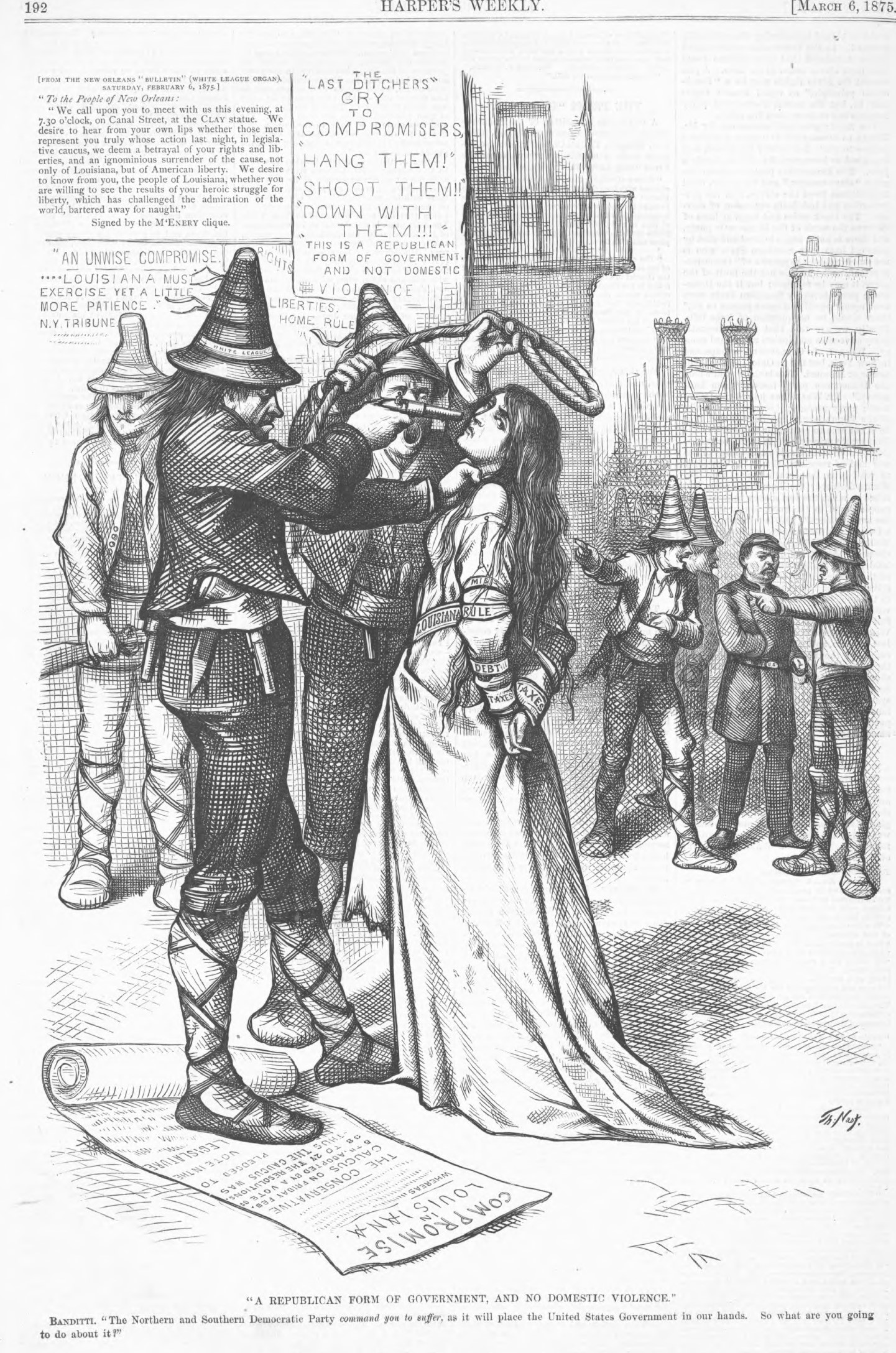
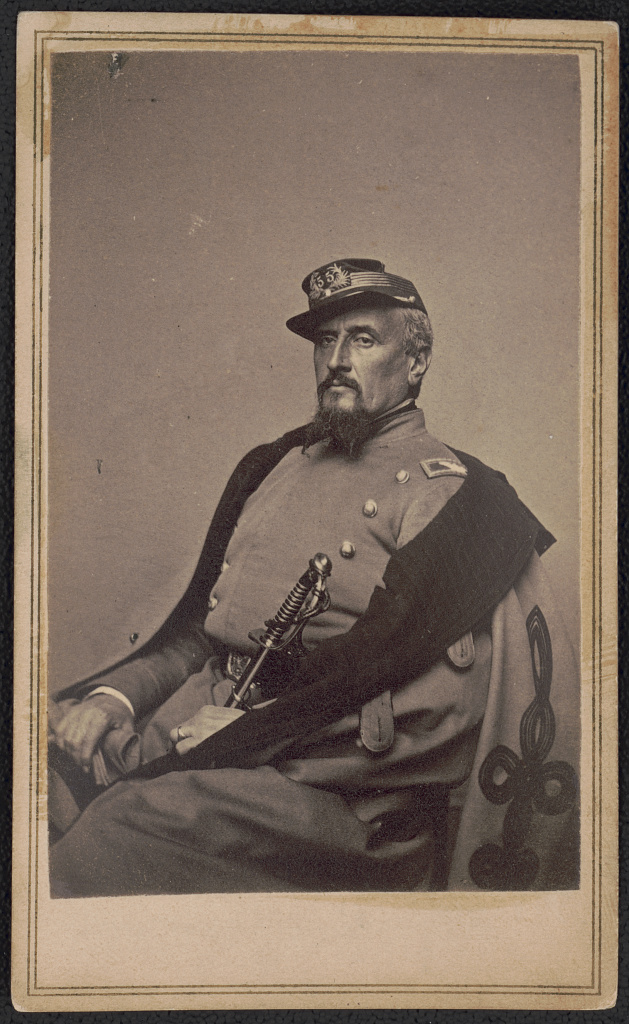
Louisiana’s political affairs were still unsettled in the aftermath of the September 1874 Battle of Liberty Place, in which the white supremacist White League began an insurrection to take control of the state government. At that time federal troops put the insurrection down. In December 1874 President Grant sent General Philip Sheridan to Louisiana to investigate the situation and possibly take command of the Department of the Gulf. Sheridan made it to New Orleans a few days before the organization of the state legislature on January 4, 1875. On that day, even though they were outnumbered 52-50, Democrats attempted to take control of the assembly by installing five Democrats who had not been declared elected by the “Returning Board”. Affairs were confusing and chaotic. United States General Régis de Trobriand and a few soldiers arrived in the hall and eventually removed the five non-elected Democrats. The Democratic members then marched out of the assembly. General Sheridan assumed command of the Department of the Gulf on the night of January 4th after the events in the legislature. The next day he contacted Secretary of War William W. Belknap to suggest that the federal government declare White League ringleaders to be “banditti,” so they could be tried by military commission.

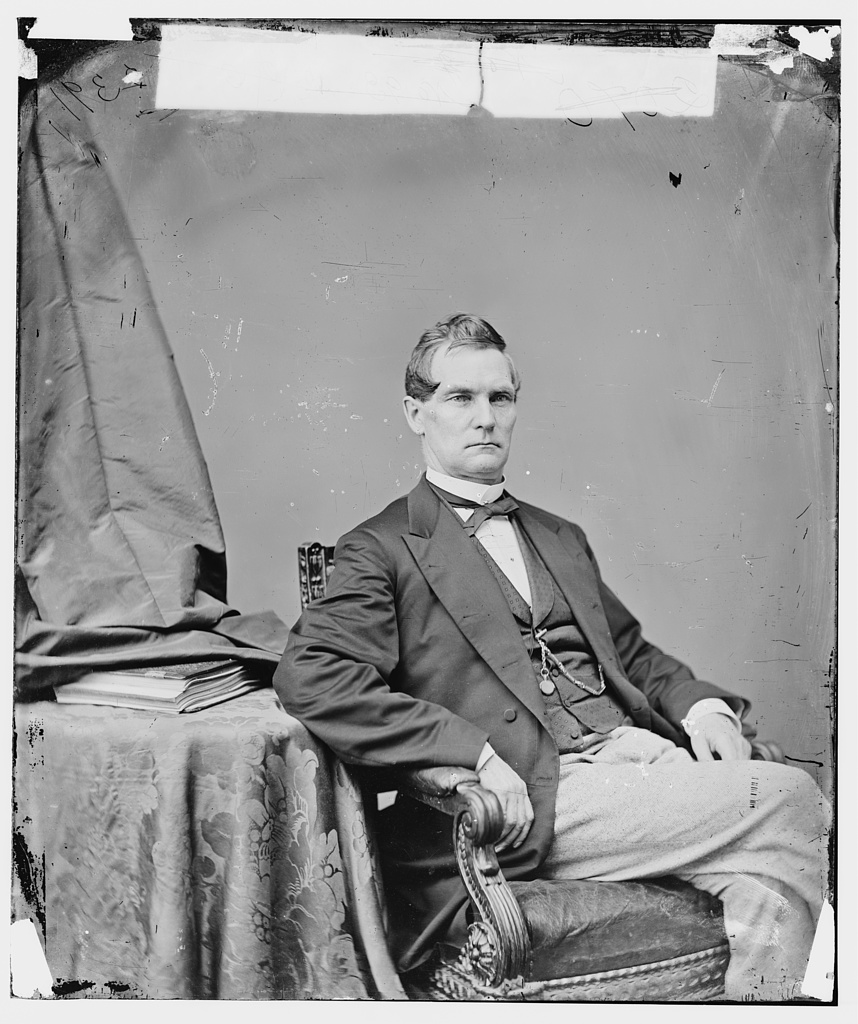
General de Trobriand during Civil War

“banditti” (Harper’s Weekly January 30, 1875)

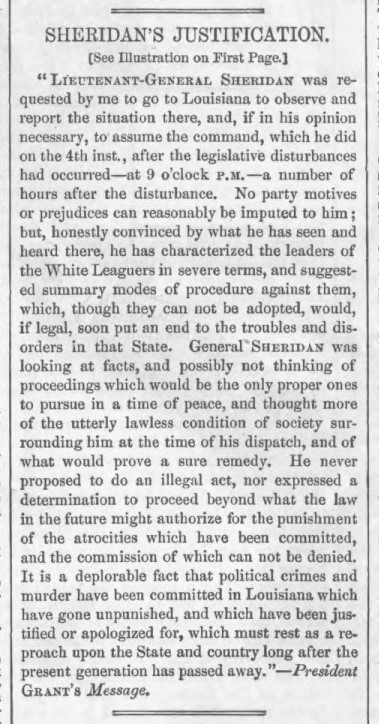
Sheridan’s report: unparliamentary procedure (HW 1-23-1875)

_____________________________

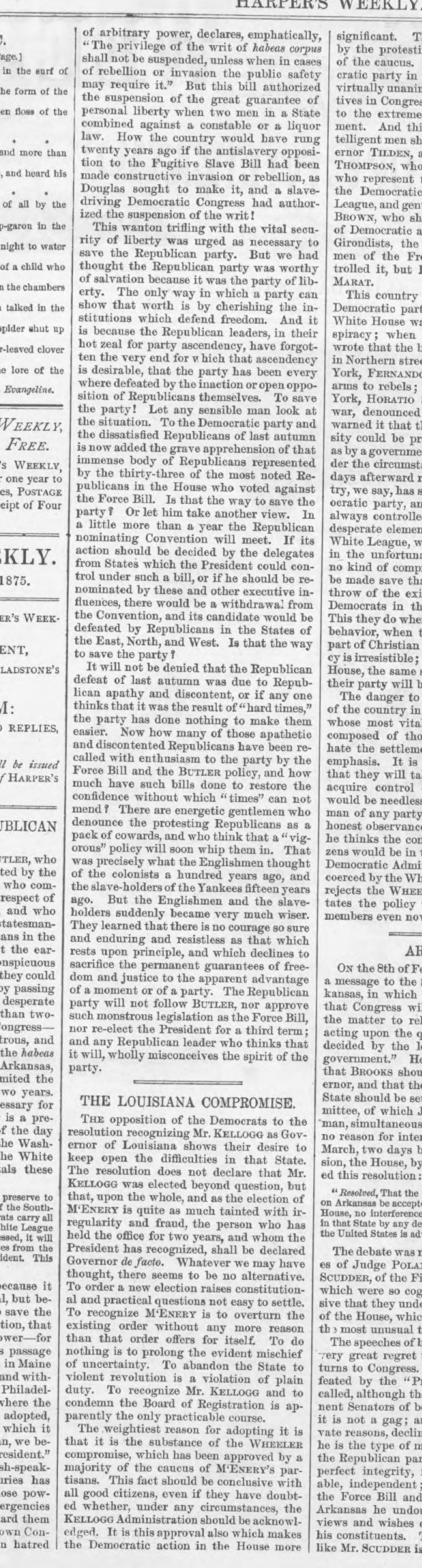
The federal troop intervention in the state legislature and Sheridan’s banditti comments caused a major brouhaha throughout the country – north and south. Eric Foner has written that the public supported federal troops putting down the Liberty Place insurrection but opposed the military’s intervention in the state legislature on January 4th, which showed “the dangers posed by excessive federal interference in local affairs.” United States troops taking charge in the state assembly caused “more Northern opposition than any previous federal action in the South.” Citizens in Boston met “at Faneuil Hall to demand Sheridan’s removal” and praised the White League as “defenders of republican freedom.” Wendell Phillips was at that meeting. When he said President Grant should have the power to protect the interests of the freed slaves, the crowd hissed, laughed, and told him to sit down. Louisiana affairs “divided and embarrassed the Grant Administration.” Things settled down after a Congressional committee headed by William A. Wheeler from New York came up with a compromise in February – Republicans would control the Louisiana Senate, Democrats would get control of the lower house, and Republican Governor Kellogg, considered a usurper by the Democrats, would remain in office. The Louisiana problems led the Republican party to become more hands-off in the South.[1]

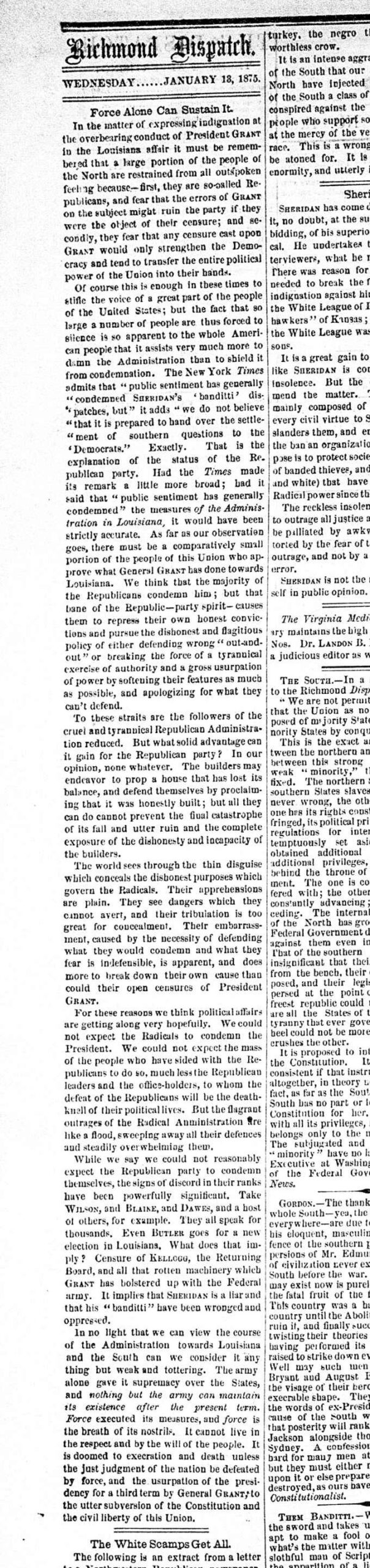
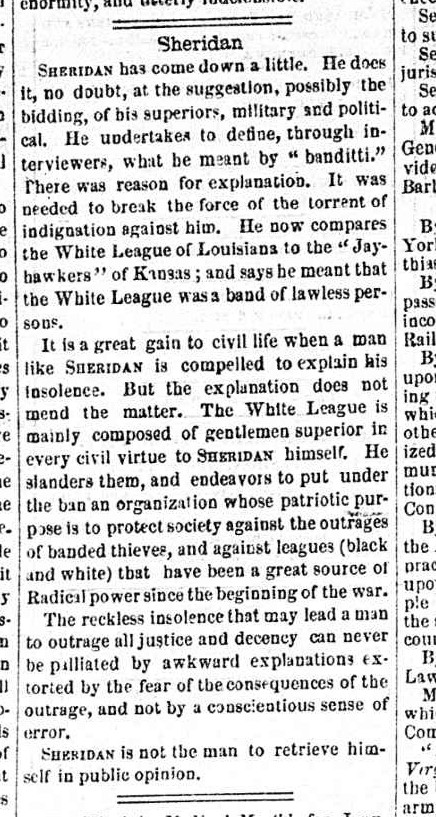
Here are a few clippings from reaction around the country. According to a page 1 headline in January 5, 1875 issue of The Memphis Daily Appeal, the January 4th incident was “the last straw.” The accompanying article detailed the events in the legislature. In it’s January 13, 1875 issue Richmond’s Daily Dispatch said more Republicans would oppose the Grant Administration’s handling of Louisiana if they weren’t afraid of strengthening the Democratic party. The paper was glad Sheridan had to explain his “banditti” comments and stated that “The White League is mainly composed of gentlemen superior in every civil virtue to Sheridan himself.”

The Memphis Daily Appeal January 5, 1875

Daily Dispatch January 13, 1875 page 2

Daily Dispatch January 13, 1875 page 2

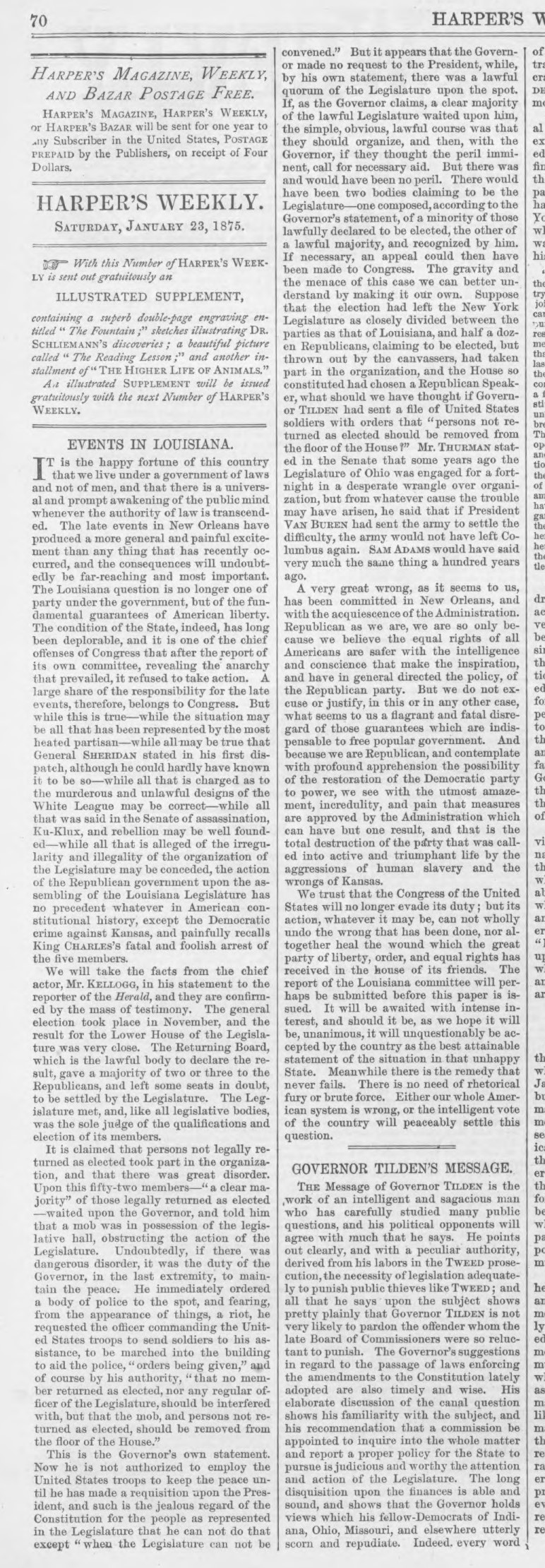
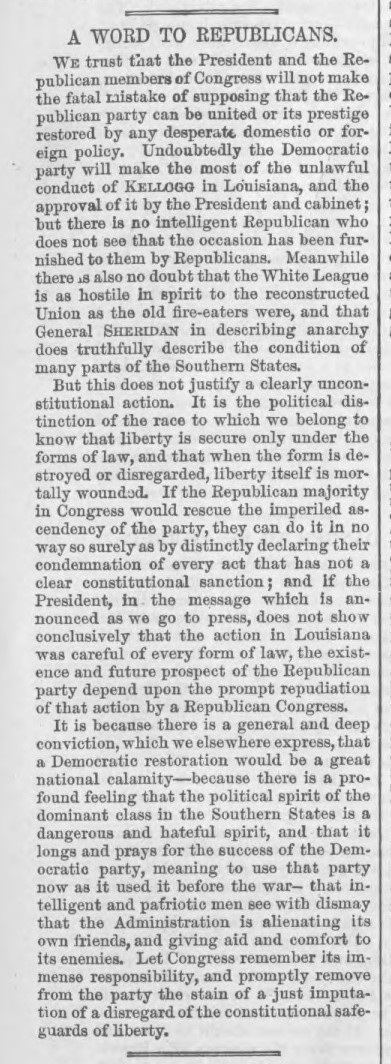
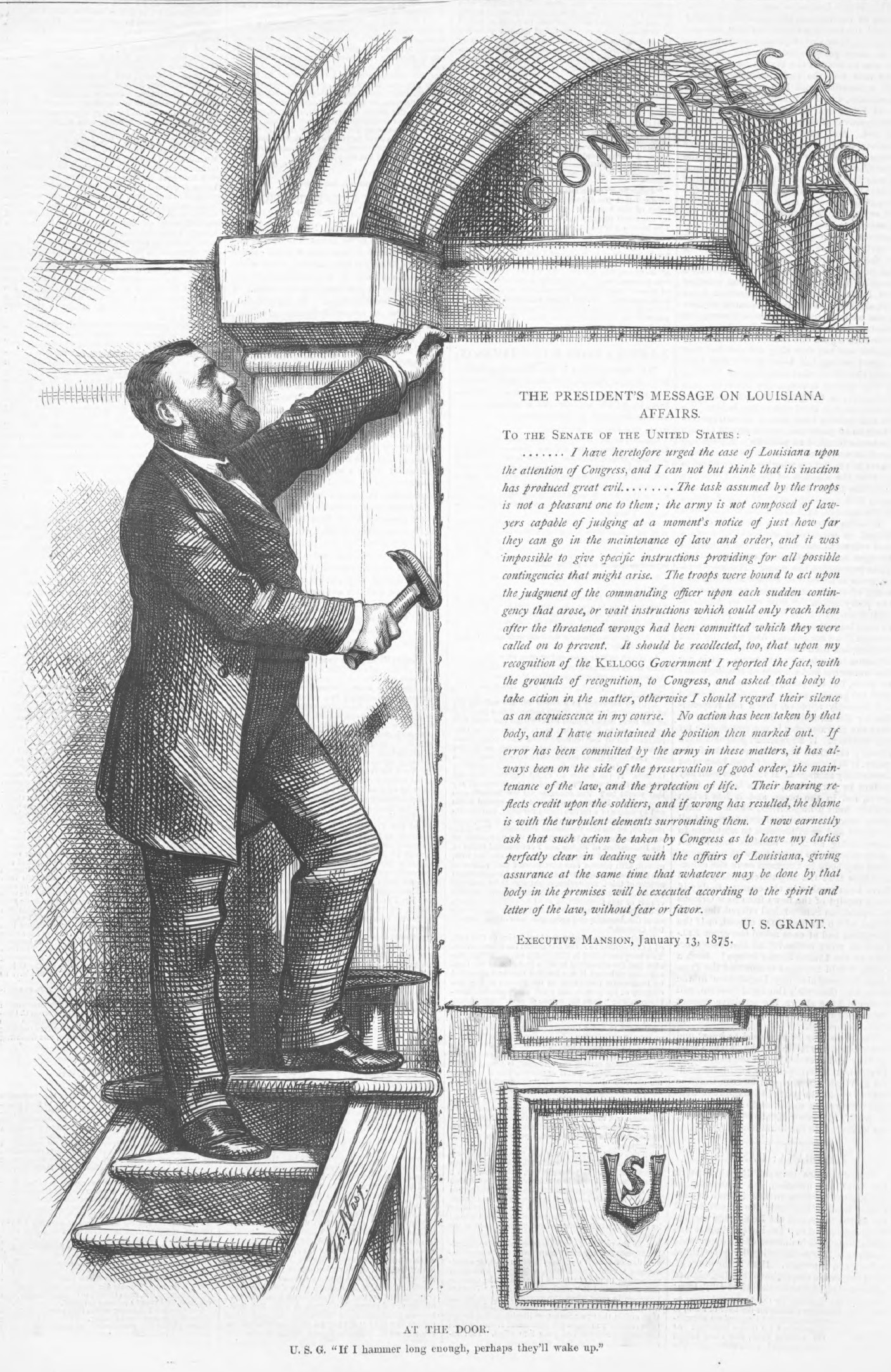
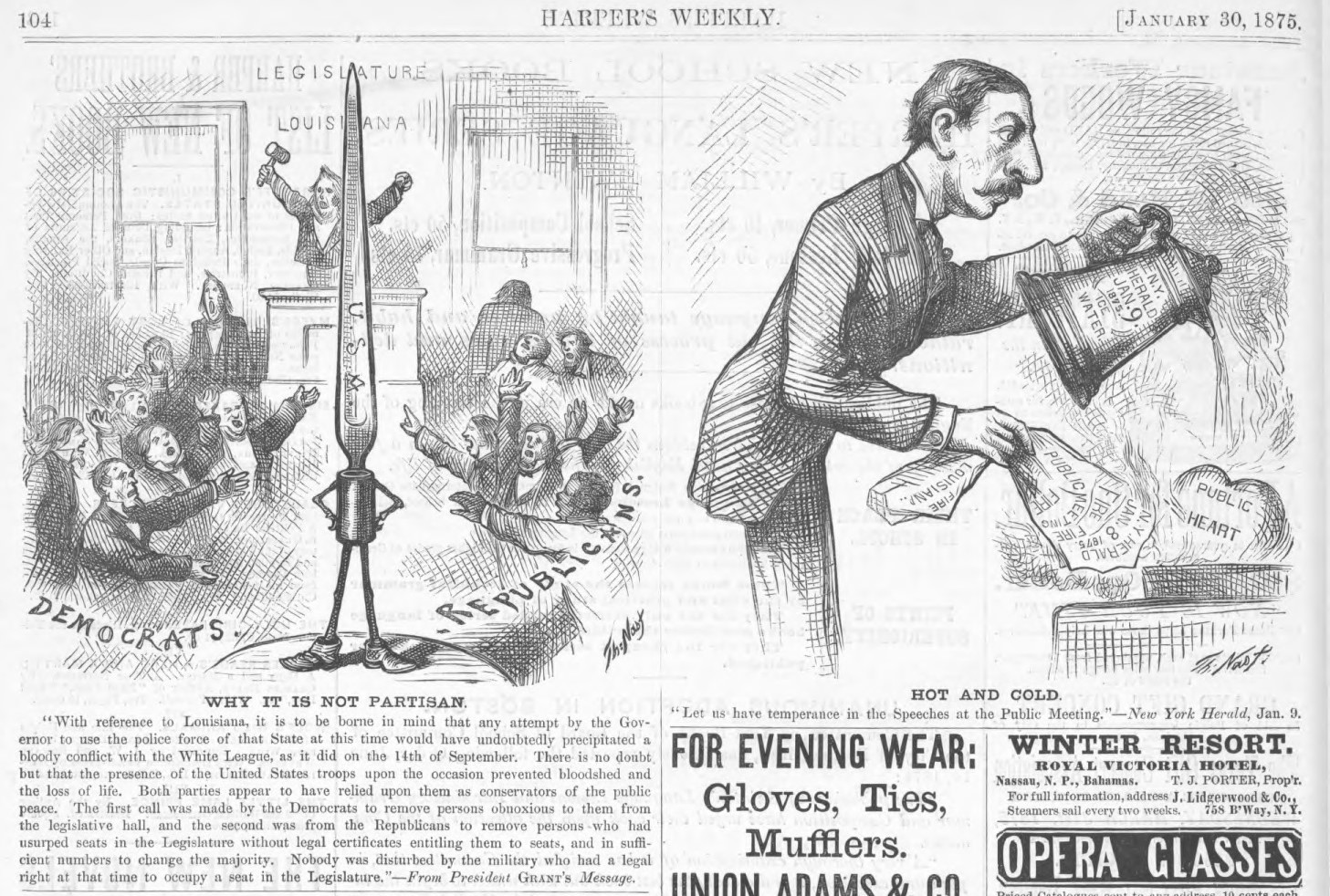
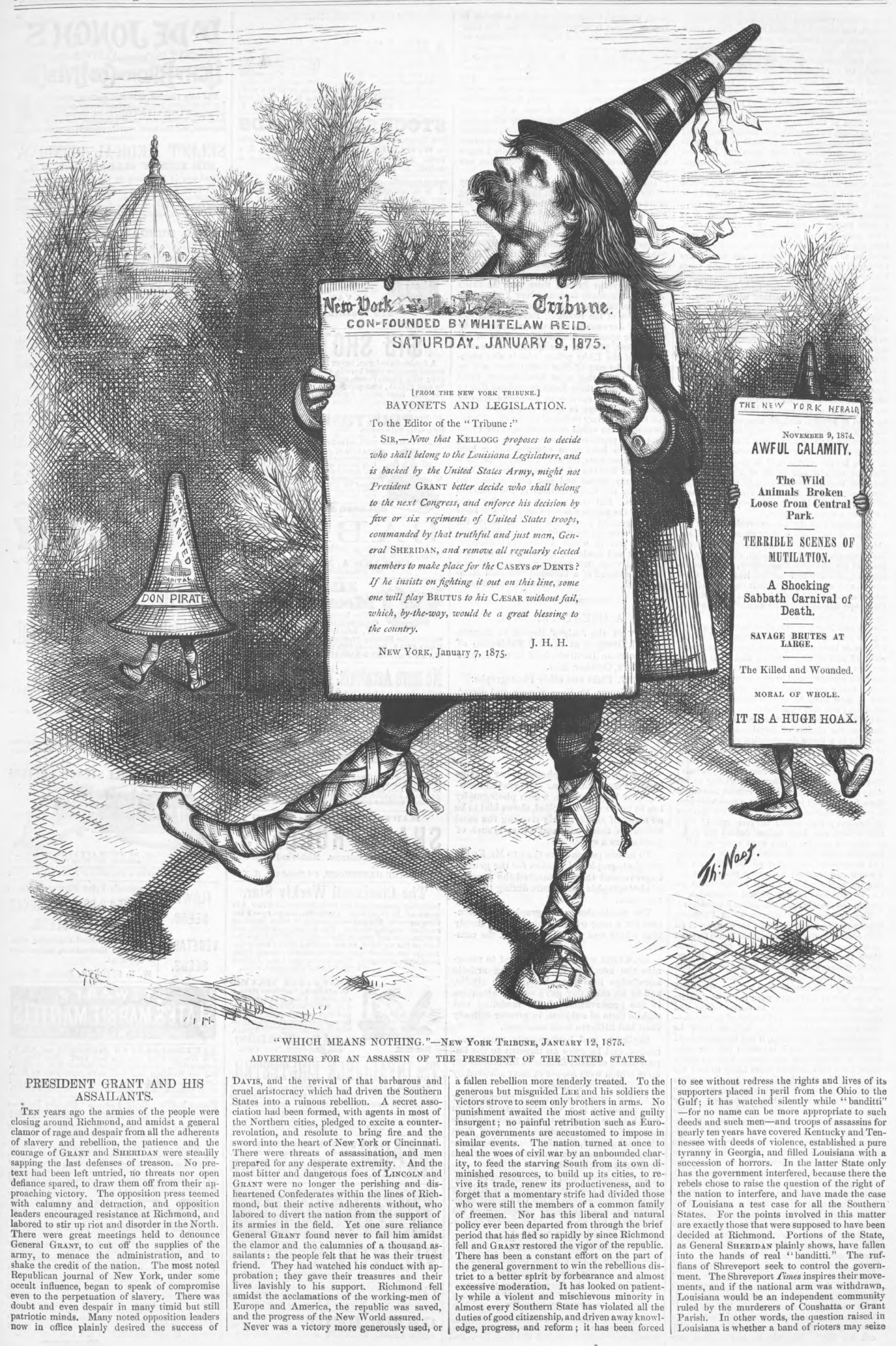
Harper’s Weekly provided a lot of coverage and had much to say about the events in Louisiana. Louisiana Governor Kellogg did not have the constitutional right to use federal troops without the permission of the U.S. president and the governor could make the request only when the state legislature was not in session. The paper opposed any desperate policy ventures to reunite the Republican party or restore its prestige. A couple cartoons summarized President Grant’s January 13th message to Congress. (According to the front-page article in The Memphis Daily Appeal on January 5th, General De Trobriand first appeared in the hall by himself after Democrat L.A. Wiltz took over the speakership and the five extra Democrats were seated. During the swearing in ceremony the sergeants at arms tried to prevent Republicans from leaving the hall. “Several scuffles ensued, when, on motion of Mr. George DuPre, General De Trobriand was sent for, who cleared the lobby of the police and spectators at the speaker’s request.” About 15 minutes later the general returned with troops and two letters from Governor Kellogg requesting the troops to remove the members not validated by the Returning Board. After the removal L.A. Wiltz eloquently protested the federal interference.) Another cartoon printed a letter to the editors of the New York Tribune that seemed to support assassinating President Grant. Also, some Democrats and members of the White League were pushing back.

Harper’s criticizes Republicans (1-23-1875)

don’t try desperate ventures (1-23-1875)

Harper’s Weekly January 30, 1875 page 92

Grant explains Sheridan’s actions in New Orleans

fed troops good – depending

Harper’s Weekly January 30, 1875 p101

William A. Wheeler

Louisiana Compromise (HW 3-20-1875)

compromised (HW 2-13-1875)

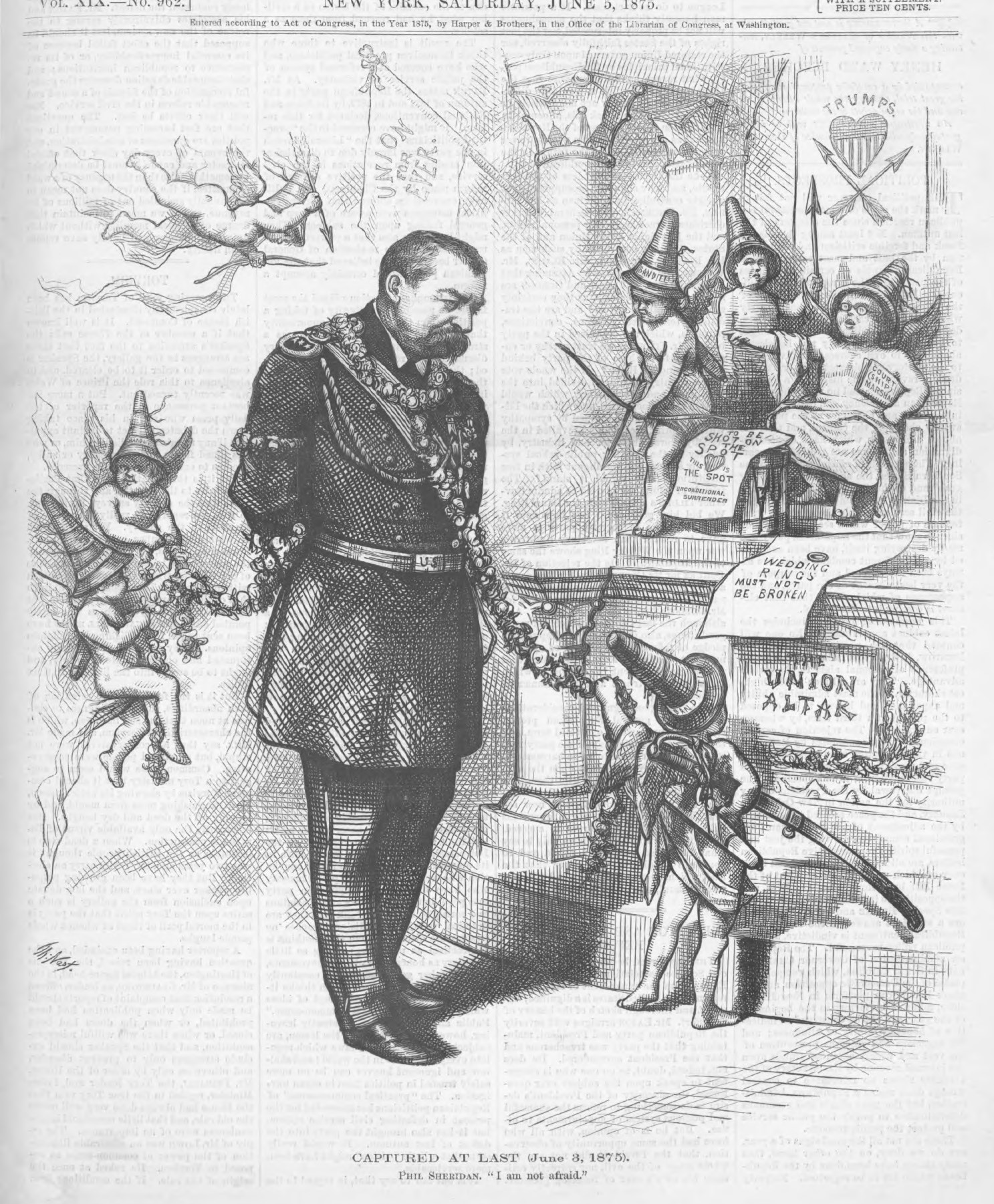
Sheridan didn’t turn out to be a banditti buster. According to Eric Foner, in the same section of his book cited above, Grant sent Sheridan to Louisiana to “protect the colored voter in his rights,” and ordered Sheridan to use federal troops to keep Governor Kellogg in office and squelch the violence. Too much of the country didn’t like the events of January 4th and Sheridan’s baditti letter. General Sheridan got married on June 3, 1875. He and his wife moved to Washington, D.C.

Kellogg still governor

You can read more about Sheridan’s famous Ride during the Civil War at the National Park Service. French-born Régis de Trobriand was naturalized in 1861 and served in the Union army throughout the war. His brigade performed courageously at the Wheatfield during the Battle of Gettysburg. He fought in the Indian Wars, and in 1874 President Grant assigned him to New Orleans.
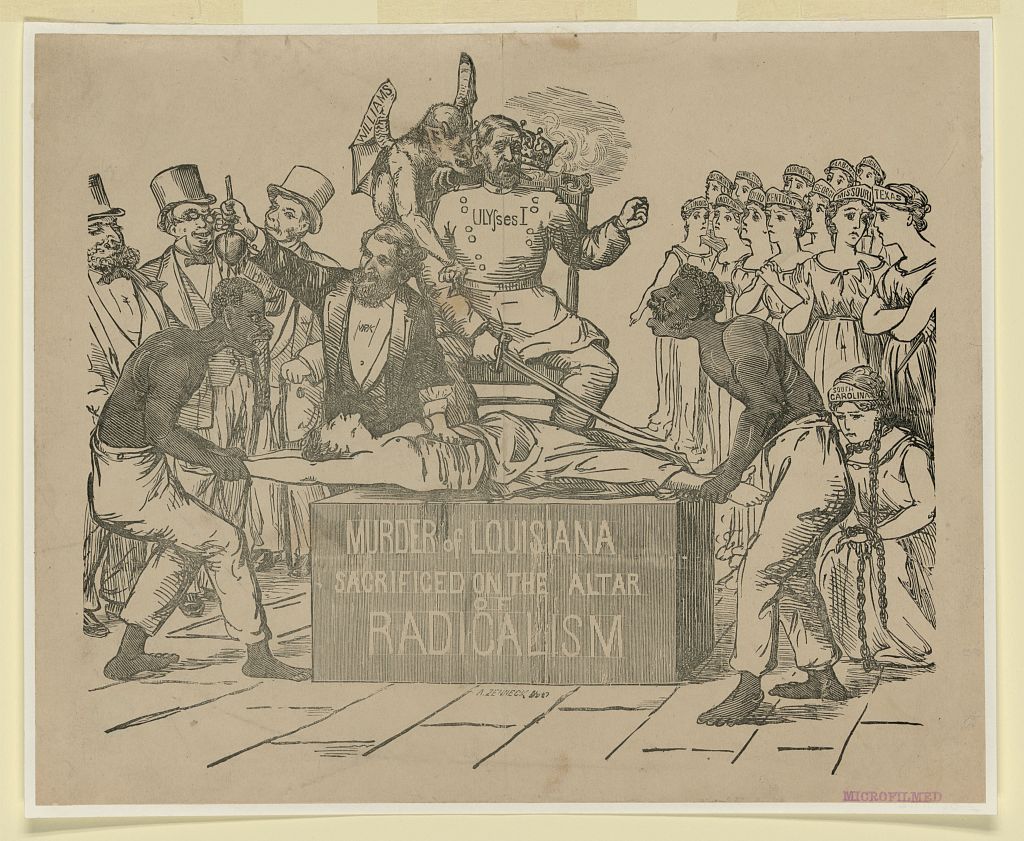
From the Library of Congress: the December 29, 1874 issue of The Chicago Daily Tribune; Régis de Trobriand; the Murder of Louisiana: “President Ulysses S. Grant and Congress turned a blind eye to the disputed 1872 election of carpetbagger William P. Kellogg as governor of Louisiana. In this scene Kellogg holds up the heart which he has just extracted from the body of the female figure of Louisiana, who is held stretched across an altar by two freedmen. Enthroned behind the altar sits Grant, holding a sword. His attorney general, George H. Williams, the winged demon perched behind him, directs his hand. At left three other leering officials watch the operation, while at right women representing various states look on in obvious distress. South Carolina, kneeling closest to the altar, is in chains.”
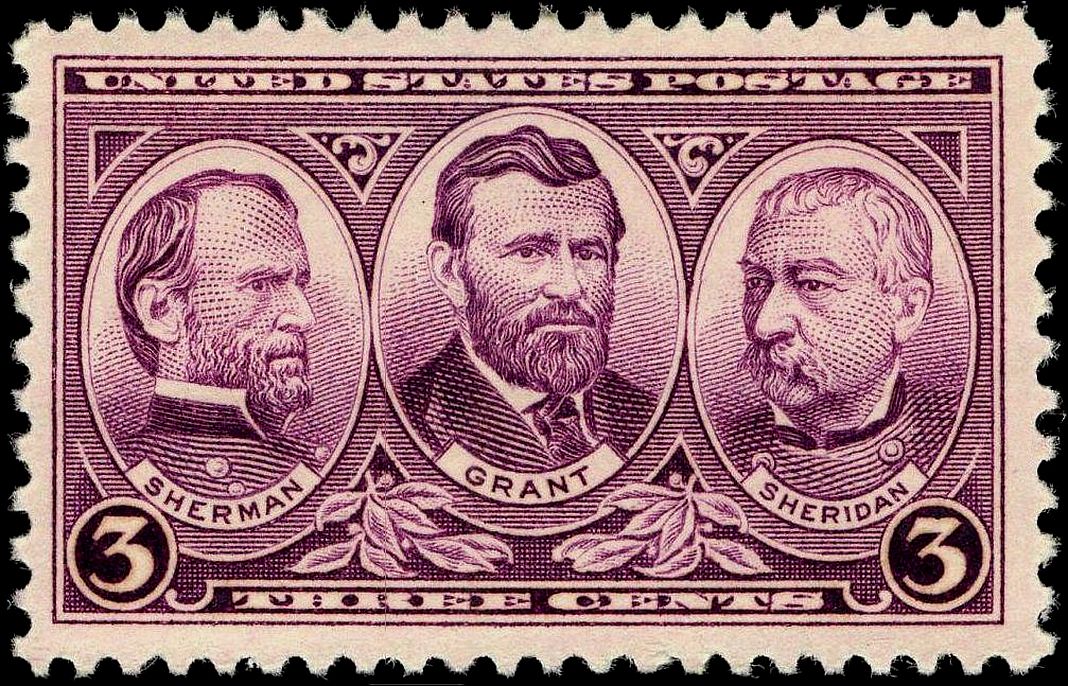
I got the stamp at the Wikipedia article about Philip Sheridan. That’s the reference for his marriage, along with the Harper’s Weekly cartoon. Most of Harper’s Weekly for 1874 is at HathiTrust.

Harper’s Weekly June 5, 1875

not easy in New Orleans


_____________________

  1. [1]Foner Eric, Reconstruction: America’s Unfinished Revolution, 1863-1877. New York: HarperPerenial ModernClassics, 2014. Page 554-555.
Posted in 150 Years Ago, Postbellum Politics, Reconstruction, The Grant Administration | Tagged , , , , , , , , , | Leave a comment

It’s over –

– Reconstruction in Alabama

big gain for the Democrats

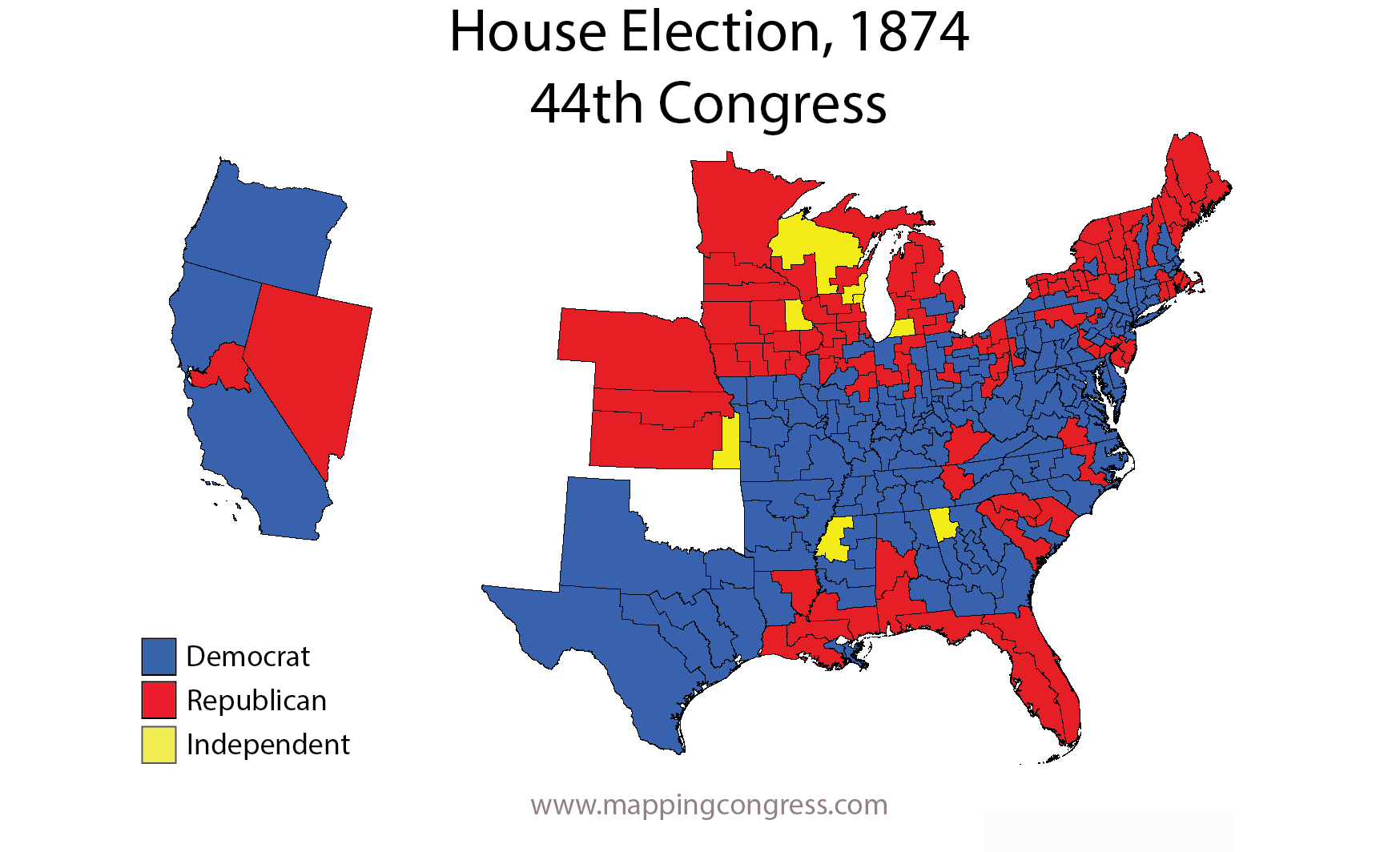
Overall, the 1874 United States elections were a boon to the Democratic Party, especially in the House of Representatives where Republicans lost 92 seats and the Democrats gained a dominant majority: “The Panic of 1873, a series of scandals, and an unpopular Congressional pay raise all damaged the Republican Party’s brand. With the passage of the Reconstruction Amendments, the importance of the parties’ roles in the Civil War also receded in the minds of many. Though Republicans won governorships in Northern states such as Pennsylvania, the election increased Democratic power in the South, which it later dominated after the end of Reconstruction.”

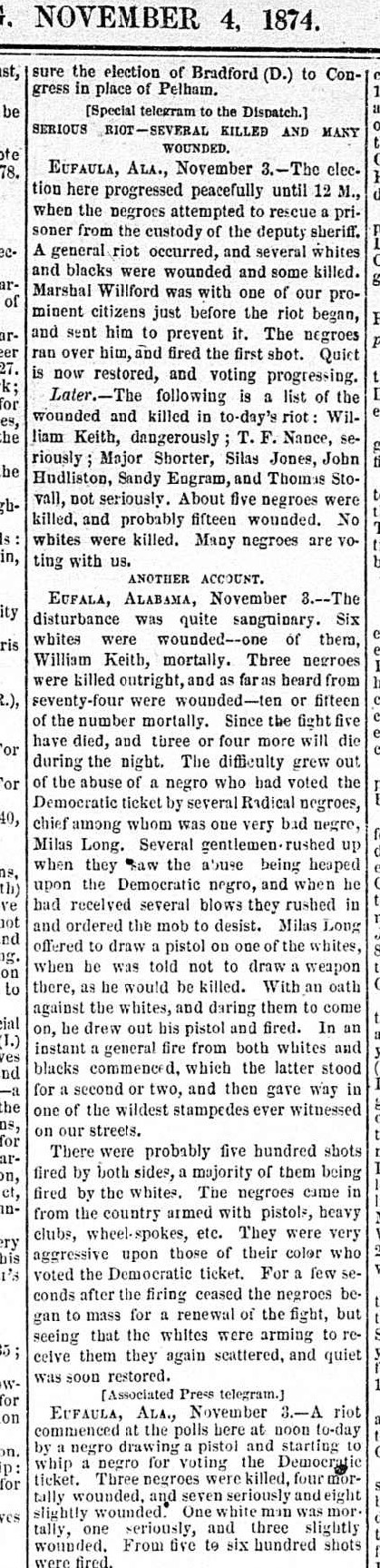
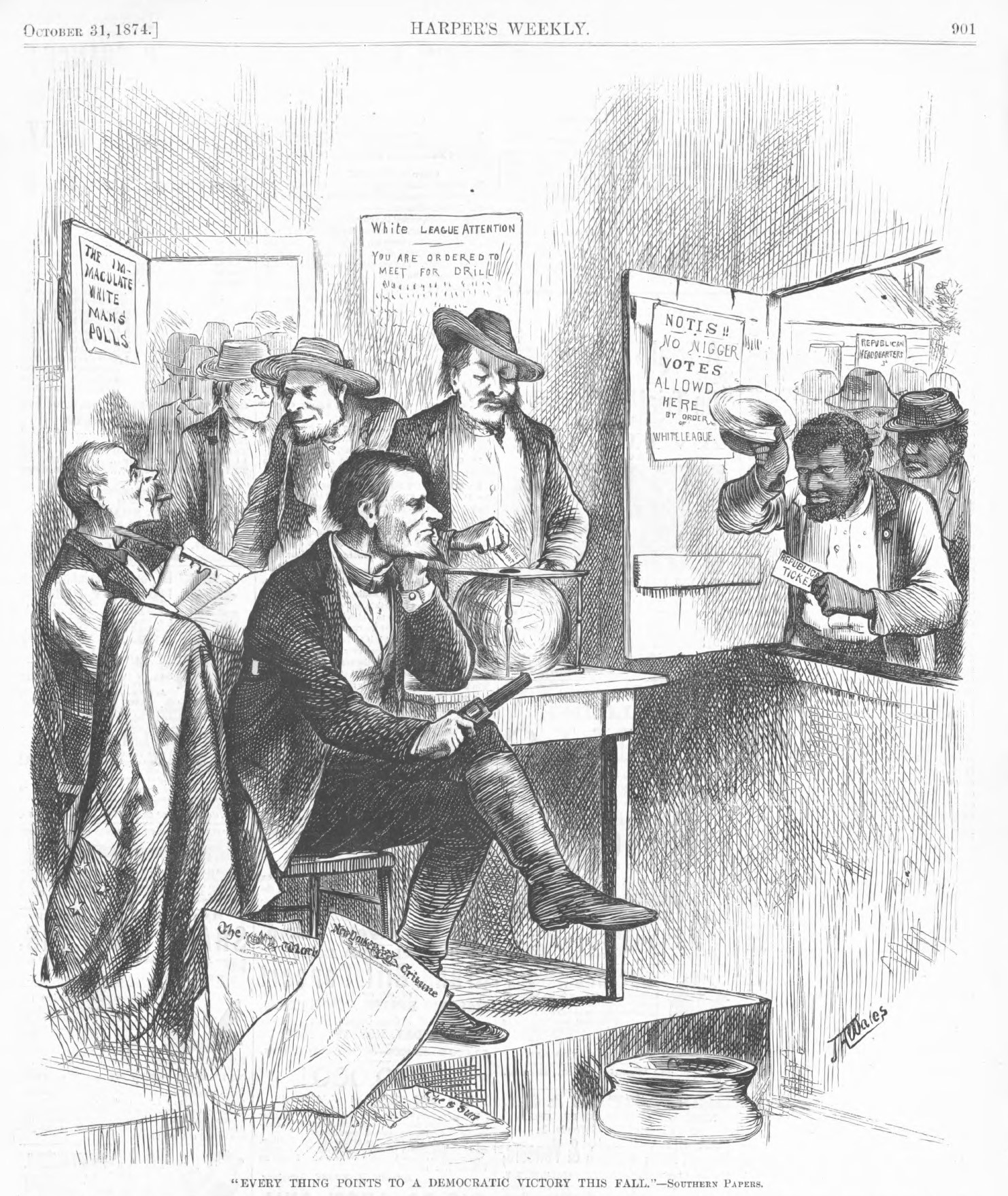
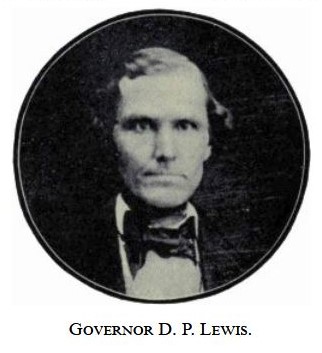
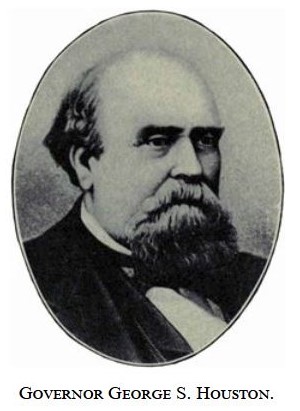
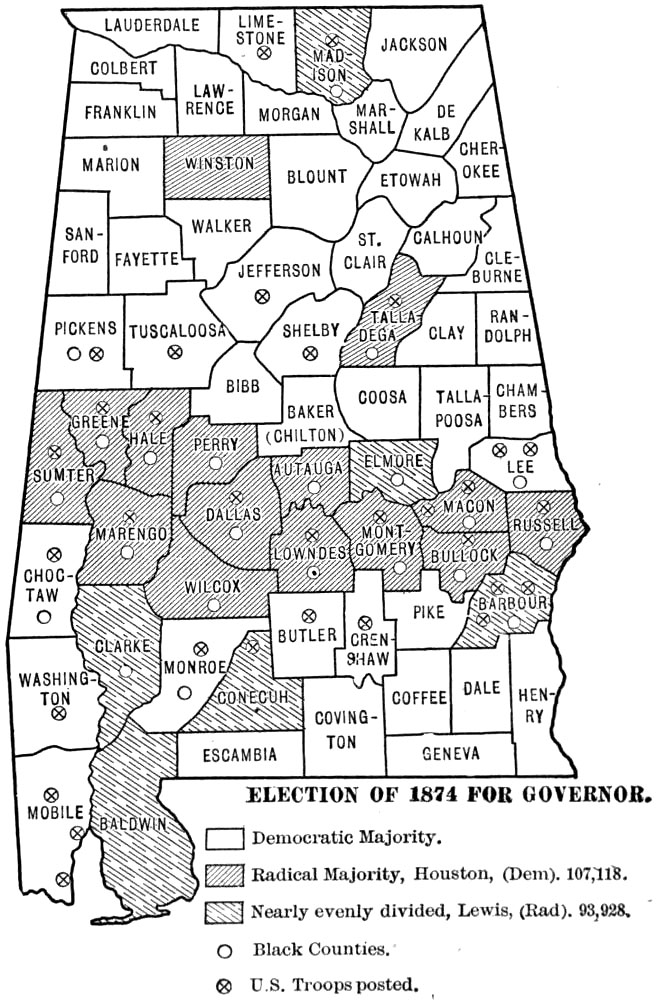
Democrats did gain power in Alabama. Although there wasn’t an election for U.S. senator, the Democrats picked up four House seats and the Democratic gubernatorial candidate, George S. Houston, defeated David P. Lewis, the Republican incumbent. Historian Eric Foner has written that Alabama was the second black belt state (after Georgia) to be “redeemed” – after the 1874 election white Democrats dominated state politics well into the 20th century. Although the economic depression was a factor, Alabama Democrats made race the main issue of the 1874 campaign. For example, “Democrats harped particularly on the school integration clause of the pending [federal] Civil Rights Bill …” That bill divided black and white Republicans – the Republican convention nominated all whites for state offices, refused to endorse the Civil Rights Bill, and emphasized that the party did not support racial social equality or mixing the races in schools and accommodations. Democrats used violence and destruction to hinder the Republican campaign and reduce black turnout. The Election Massacre of 1874 disrupted black voting in the Barbour County towns of Eufaula and Spring Hill. Armed whites also prevented blacks from voting in Mobile. Black turnout was high, but the violence helped Democrats win in Barbour and six other black-majority counties. “With Democrats in control of the state offices and both houses of the General Assembly, Reconstruction in Alabama had come to an end.” [1]

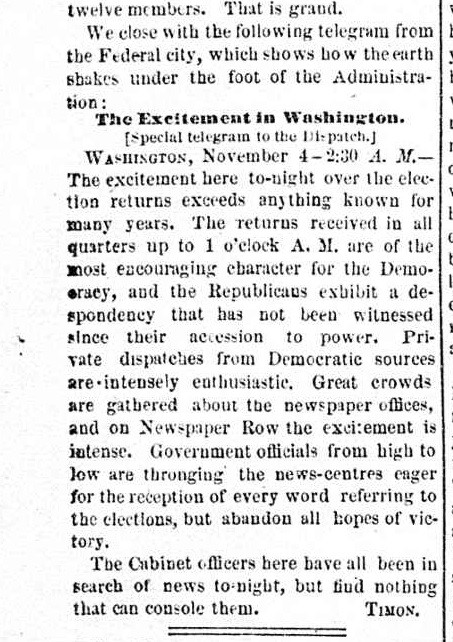
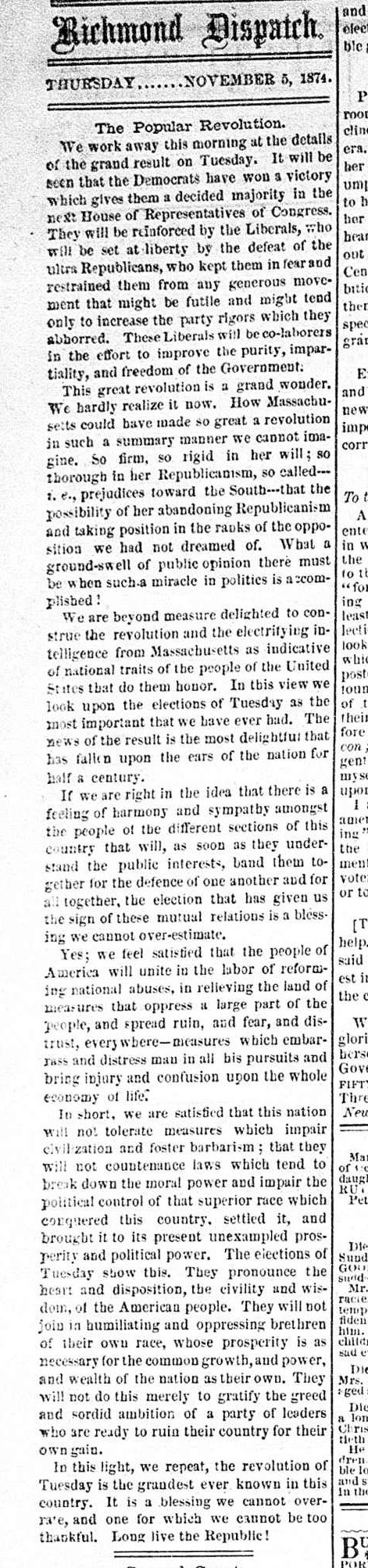
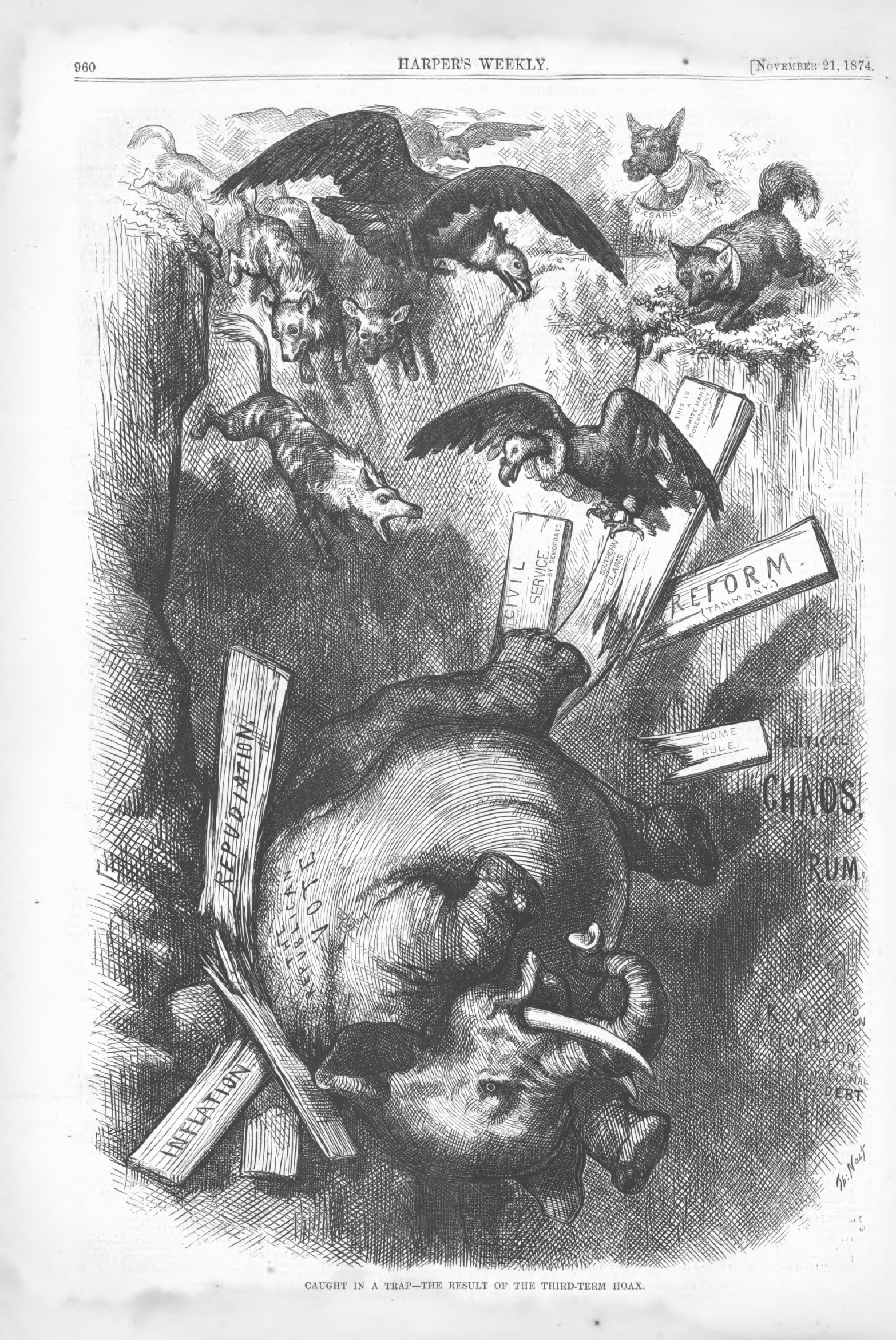
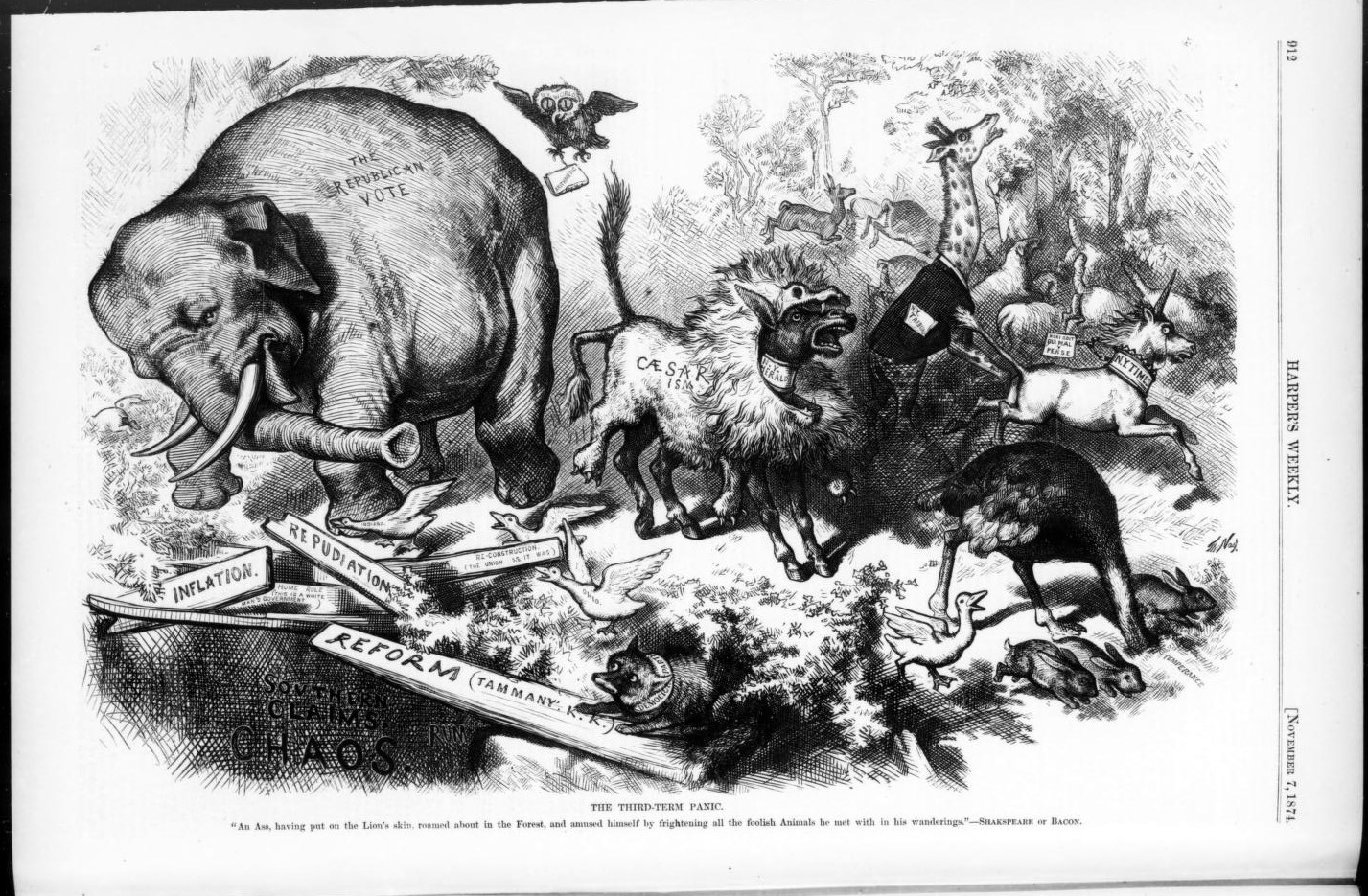
The telegraph was working well 150 years ago. The day after the election Richmond’s Daily Dispatch knew the Democrats had a good election overall. It’s a little hard to make out, but the paper headlined “A Glorious Day for the Conservatives and Democrats,” “Glad Tidings From All Points of the Compass,” “Serious Riot in Alabama,” “Massachusetts Redeemed and Beast Butler Bottled,” etc. The front page had some reports from Eufaula. The next day the editors declared the election “The Popular Revolution” and thought the vote indicated support for the “superior race.” The editors also thought the election results would discourage General Grant from seeking a third presidential term, but he might just try anyway for the good of the country – “Caesarism” was one of the many issues in 1874. In its November 21, 1874 issue, Harper’s Weekly said President Grant should have made it clear that he wasn’t going to run again.

Eufaula – Daily Dispatch</em November 4, 1874

Election night excitement in DC (Daily Dispatch</em 11-4-1874 p2)

Popular Revolution – Daily Dispatch November 5, 1874 (page 2)

prophetic

Republican vote crashes

but Dems only have the House (Harper’s Weekly Dec. 5, 1874

Walter L. Fleming agreed with Eric Foner that the 1874 election ended Reconstruction in Alabama. In his 1905 Civil War and Reconstruction in Alabama he includes the 1874 election in a chapter called “The Overthrow of Reconstruction.” There were many factors involved in the campaign, but Democrats did make race the leading issue. Here is Fleming’s account of the election itself:
The Election of 1874
The election of 1874 passed off with less violence than was expected; in fact, it was quieter than any previous campaign. The Democrats were assured of success and had no desire to lose the fruits of victory on account of riots and disorder. So the responsible people strained every nerve to preserve the peace. A regiment of soldiers was scattered throughout the Black Belt and showed a disposition to neglect the affairs of the blacks. But here, in the counties where the numerous arrests had been made, the blacks voted in full strength. In fact, with few exceptions, both parties voted in full strength, and, as regards the counting of the votes, it was the fairest election since the negroes began to vote. There were instances in white counties of negroes being forced to vote for the Democrats, while in the Black Belt negro Democrats were mobbed and driven from the polls. But the negro Democrats resorted to expedients to get in their tickets. In one county where the Democratic tickets were smooth at the top and the negro tickets perforated, the Democrats prepared perforated tickets for negro Democrats which went unquestioned. In other places special tickets were printed for the use of negro Democrats with the picture of General Grant or of Spencer on them and these passed the hurried Radical inspection and were cast for the Democrats. In Marengo County the Democrats purchased a Republican candidate, who agreed for $300 that he would not be elected. By his “sign of the button,” sent out among the negroes, the latter were instructed to vote a certain colored ticket which did not conform to law and hence was not counted. Other candidates agreed not to qualify after election, thus leaving the appointment to the governor.
In the Black Belt, now as before, the negroes were marshalled in regiments of 300 to 1500 under men who wrote orders purporting to be signed by General Grant, directing the negroes to vote for him. In Greene County 1400 uniformed negroes took possession of the polls, and excluded the few whites. A riot in Mobile was brought on by the close supervision over election affairs, which was objected to by a drunken negro who wanted to vote twice, and who declared that he wanted “to wade in blood up to his boot tops.” The negro was killed. A conflict at Belmont, where a negro was killed, and another at Gainesville were probably caused by the endeavor of the whites to exclude negroes who had been imported from Mississippi. By rioting the Republicans had everything to gain and the Democrats everything to lose, and while it is impossible in most cases to ascertain which party fired the first shot or struck the first blow, the evidence is clear that the desperate Radical whites encouraged the blacks to violent conduct in order to cause collisions between the races and thus secure Federal interference. In Eufaula occurred the most serious riot of the Reconstruction period that occurred in Alabama. The negroes came armed and threatening to the polls, which were held by a Republican sheriff and forty Republican deputies. Judge Keils, a carpet-bagger, had advised the blacks to come to Eufaula to vote: “You go to town; there are several troops of Yankees there; these damned Democrats won’t shoot a frog. You come armed and do as you please.” The Democrats were glad to have the troops, who were disgusted with the intimidation work of the previous month. Order was kept until a negro tried to vote the Democratic ticket and was discovered and mobbed by other blacks. The whites tried to protect him and some negro fired a shot. Then the riot began. The few whites were heavily armed and the negroes also. The deputies, it was said, lost their heads and fired indiscriminately. When the fight was over it was found that ten whites were wounded, and four negroes killed and sixty wounded. The Federal troops came leisurely in after it was over, and surrounded the polls. The course of the Federal troops in Eufaula was much as it was elsewhere. They camped some distance from the polls, and when their aid was demanded by the Republicans the captain either directly refused to interfere, or consulted his orders or his telegrams or his law dictionary. At last he offered to notify the white men wanted by the marshal to meet the latter and be arrested. Another commander, who took possession of the polls in Opelika in order to prevent a riot, was censured by General McDowell, the department commander. The troops were weary of such work, and their orders from General McDowell were very vague. After the election, as was to be expected, an outcry arose from the Radicals that the troops had in every case failed to do their duty.
When the votes were counted, it appeared that the Democrats had triumphed. Houston had 107,118 votes to 93,928 for Lewis. Two years before Herndon (Democrat) had received 81,371 votes to 89,868 for Lewis. The presidential campaign in 1872 had assisted Lewis. Grant ran far ahead of the Radical state ticket. The legislature of 1874-1875 was to be composed as follows: Senate, 13 Republicans (of whom 6 were negroes) and 20 Democrats; House, 40 Republicans (of whom 29 were negroes) and 60 Democrats.
The whites were exceedingly pleased with their victory, while the Republicans took defeat as something expected. There were, of course, the usual charges of outrage, Ku Kluxism, and the intimidation of the negro vote, but these were fewer than ever before. There was considerable complaint that the Federal troops had sided always with the whites in the election troubles. The Republican leaders knew, of course, that for their own time at least Alabama was to remain in the hands of the whites. The blacks were surprisingly indifferent after they discovered that there was to be no return to slavery, so much so that many whites feared that their indifference masked some deep-laid scheme against the victors.
The heart of the Black Belt still remained under the rule of the carpet-bagger and the black. The Democratic state executive Committee considered that enough had been gained for one election, so it ordered that no whites should contest on technical grounds alone the offices in those black counties. Other methods gradually gave the Black Belt to the whites. No Democrat would now go on the bond of a Republican official and numbers were unable to make bond; their offices thus becoming vacant, the governor appointed Democrats. Others sold out to the whites, or neglected to make bond, or made bonds which were later condemned by grand juries. This resulted in many offices going to the whites, though most of them were still in the hands of the Republicans.
Houston’s two terms were devoted to setting affairs in order. The administration was painfully economical. Not a cent was spent beyond what was absolutely necessary. Numerous superfluous offices were cut off at once and salaries reduced. The question of the public debt was settled. To prevent future interference by Federal authorities the time for state elections was changed from November, the time of the Federal elections, to August, and this separation is still in force. The whites now demanded a new constitution. Their objections to the constitution of 1868 were numerous: it was forced upon the whites, who had no voice in framing it; it “reminds us of unparalleled wrongs”; it had not secured good government; it was a patchwork unsuited to the needs of the state; it had wrecked the credit of the state by allowing the indorsement of private corporations; it provided for a costly administration, especially for a complicated and unworkable school system which had destroyed the schools; there was no power of expansion for the judiciary; and above all, it was not legally adopted.
The Republicans declared against a new constitution as meant to destroy the school system, provide imprisonment for debt, abolish exemption from taxation, disfranchise and otherwise degrade the blacks. By a vote of 77,763 to 59,928, a convention was ordered by the people, and to it were elected 80 Democrats, 12 Republicans, and 7 Independents. A new constitution was framed and adopted in 1875. …

lost in ’74

winning Democrat

U.S. Troops posted all over the state

You can also read about the Election Riots of 1874 at Encyclopedia of Alabama. The article explains that there was “evidence of the disparity in eyewitness accounts” about whether or not blacks voting in Eufaula were armed. To back that up, Eric Foner wrote that the blacks were unarmed; one of the reports from Eufaula said the blacks were armed.
George S. Houston started quite a trend. Alabamans only elected Democrats for governor from 1874 until Republican H. Guy Hunt won in 1986. There is an article at Wikipedia about the Solid South with lots of maps and charts (including gubernatorial elections).
Wikipedia cites Party of the People: a History of the Democrats pp.244-245 for the quote in the top paragraph in this post. LaDale Winling’s House election map is licensed under the Creative Commons Attribution-Share Alike 4.0 International license. I haven’t made any changes. The map shows six Alabama districts; the state had two at-large districts. Six Democrats and two Republicans were elected.
Most of Harper’s Weekly for 1874 is at HathiTrust. I got the bottom picture on page 912 of the November 7, 1874 issue of Harper’s Weekly at Internet Archive. According to History that Thomas Nast cartoon was important for the adoption of the elephant as a symbol of the Republican party. The elephant was used for Republicans a couple times during the Civil War, “but the pachyderm didn’t start to take hold as a GOP symbol until Thomas Nast, who’s considered the father of the modern political cartoon, used it in an 1874 Harper’s Weekly cartoon.” “The Third-Term Panic” criticized Caesarism, and Nast returned to that theme and the elephant symbol for “Caught In A Trap” (above) in the November 21st issue. History says that Nast continued to use the symbol and by 1880 others were following along.
From the Library of Congress: Richmond’s Daily DispatchNovember 4 and November 5, 1874. The Alabama map and the pictures of Lewis and Houston are from the Fleming book.

Elephant as Republican symbol

  1. [1]Foner Eric, Reconstruction: America’s Unfinished Revolution, 1863-1877. New York: HarperPerenial ModernClassics, 2014. Page 552-553.
Posted in 150 Years Ago, Aftermath, Reconstruction, Southern Society | Tagged , , , , , | Leave a comment

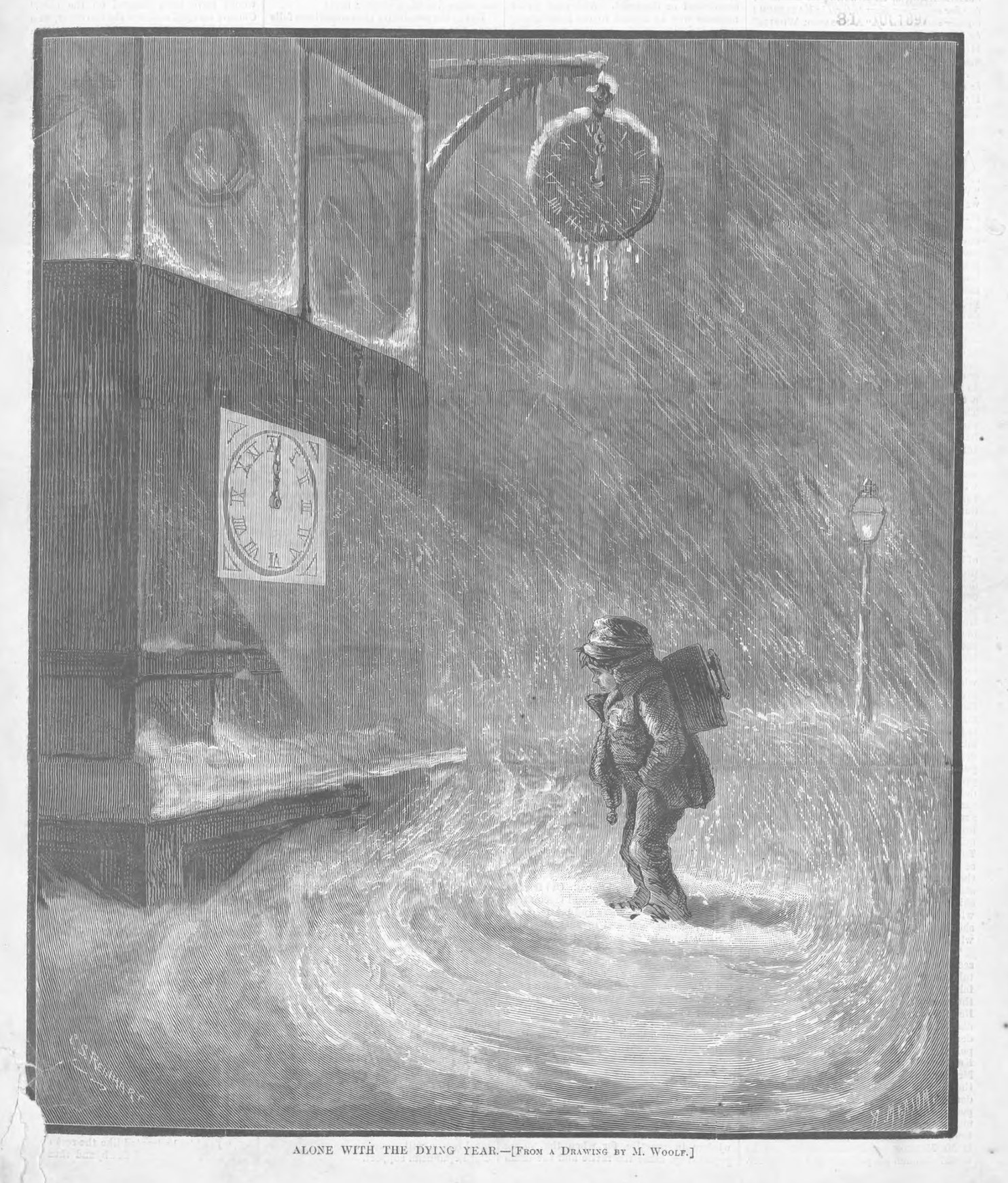
rebirth again

Harper’s Weekly January 2, 1875

Harper’s Weekly January 9, 1875

________________________________________________________

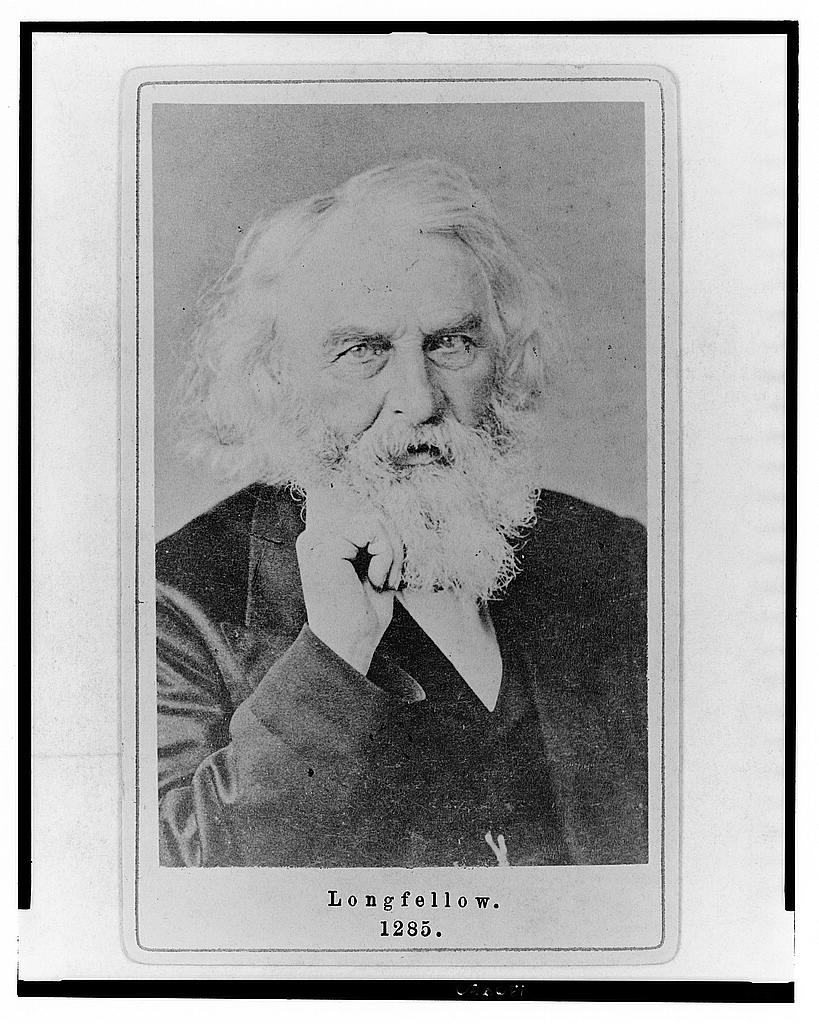
Henry Wadsworth Longfellow wrote a poem that seems pertinent.

MIDNIGHT MASS FOR THE DYING YEAR

Yes, the Year is growing old,
And his eye is pale and bleared!
Death, with frosty hand and cold,
Plucks the old man by the beard,
Sorely, sorely!

The leaves are falling, falling,
Solemnly and slow;
Caw! caw! the rooks are calling,
It is a sound of woe,
A sound of woe!

Through woods and mountain passes
The winds, like anthems, roll;
They are chanting solemn masses,
Singing, “Pray for this poor soul,
Pray, pray!”

And the hooded clouds, like friars,
Tell their beads in drops of rain,
And patter their doleful prayers;
But their prayers are all in vain,
All in vain!

There he stands in the foul weather,
The foolish, fond Old Year,
Crowned with wild flowers and with heather,
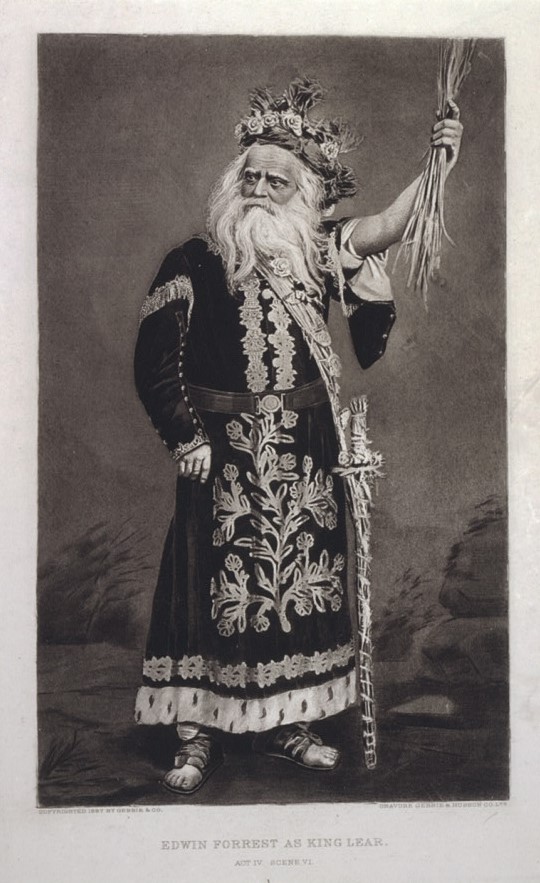
Like weak, despised Lear,
A king, a king!

Then comes the summer-like day,
Bids the old man rejoice!
His joy! his last! O, the man gray
Loveth that ever-soft voice,
Gentle and low.

To the crimson woods he saith,
To the voice gentle and low
Of the soft air, like a daughter’s breath,
“Pray do not mock me so!
Do not laugh at me!”

And now the sweet day is dead;
Cold in his arms it lies;
No stain from its breath is spread
Over the glassy skies,
No mist or stain!

Then, too, the Old Year dieth,
And the forests utter a moan,
Like the voice of one who crieth
In the wilderness alone,
“Vex not his ghost!”

Then comes, with an awful roar,
Gathering and sounding on,
The storm-wind from Labrador,
The wind Euroclydon,
The storm-wind!

Howl! howl! and from the forest
Sweep the red leaves away!
Would, the sins that thou abhorrest,
O Soul! could thus decay,
And be swept away!

For there shall come a mightier blast,
There shall be a darker day;
And the stars, from heaven down-cast
Like red leaves be swept away!
Kyrie, eleyson!
Christe, eleyson!

King Lear

H. W. Longfellow

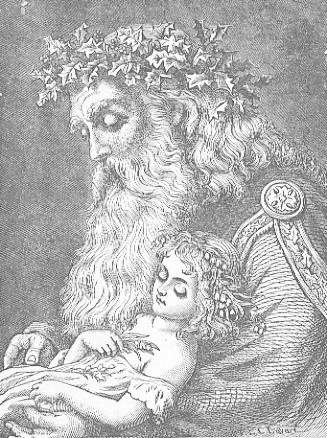
Father Time and Baby New Year from Frolic & Fun, 1897

repeat

I got Longfellow’s poem from The Complete Poetical Works of Henry Wadsworth Longfellow at Project Gutenberg. According to the Maine Historical Society’s Henry Wadsworth Longfellow website, the poem was published in 1839’s Voices of the Night. We can search for it. “Midnight Mass for the Dying Year” was a bit over my head and I’m no expert, but I’d have to say this poem isn’t quite as optimistic as “Christmas Bells”, which the National Park Service says was probably written in 1864 and first published in 1865. Longfellow was “preoccupied with his son’s convalescence and other demands of business” in December 1863. The son was severely wounded in November 1863 fighting for the Union during the Mine Run campaign.
One of the reasons I’m looking forward to 2025 is because it should be a good chance to look back into the past – way, way back, even more than 150 years. The original Erie Canal was completed in 1825. The bicentennial should be pretty interesting.
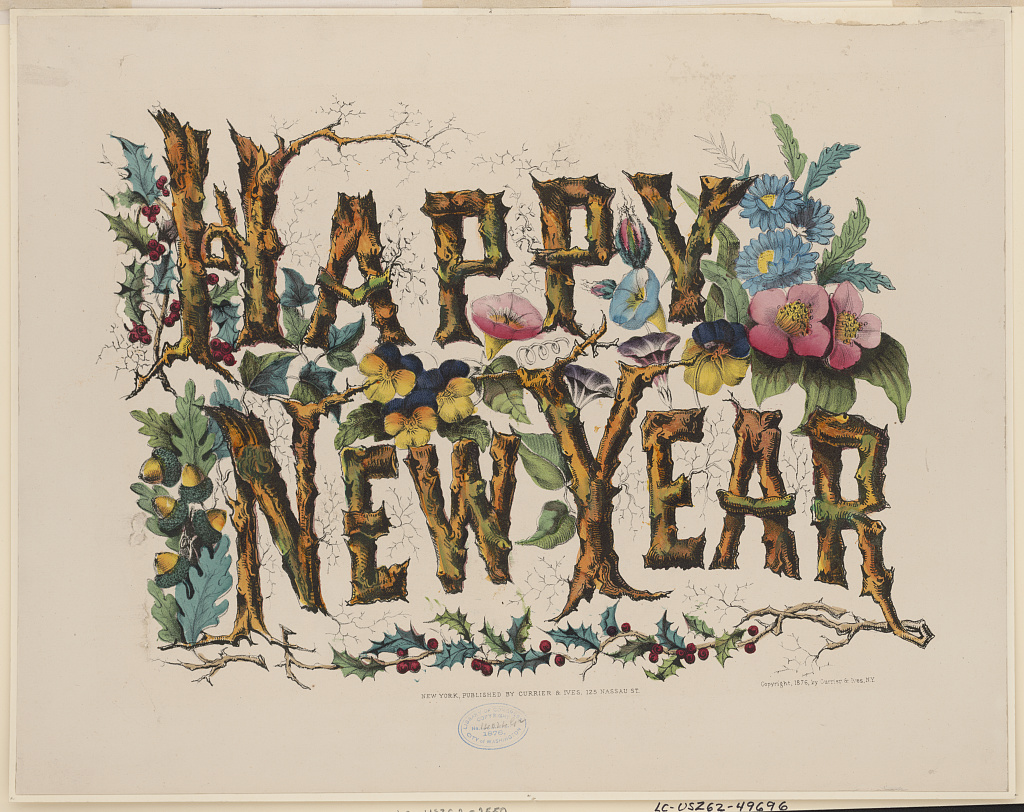
Harper’s Weekly 1875 is available at HathiTrust. The images above are on pages 1 and 32. From the Library of Congress: Edwin Forrest as King Lear, c1897; Longfellow, ca.1880; Currier & Ives c1876 greeting. The 1897 image of Father Time and baby New year is available at Wikimedia Commons
Happy new year (New York : Published by Currier & Ives, c1876.; LOC: https://www.loc.gov/item/2002695831/)

Happy 2025!

Posted in 150 Years Ago | Tagged , , | Leave a comment

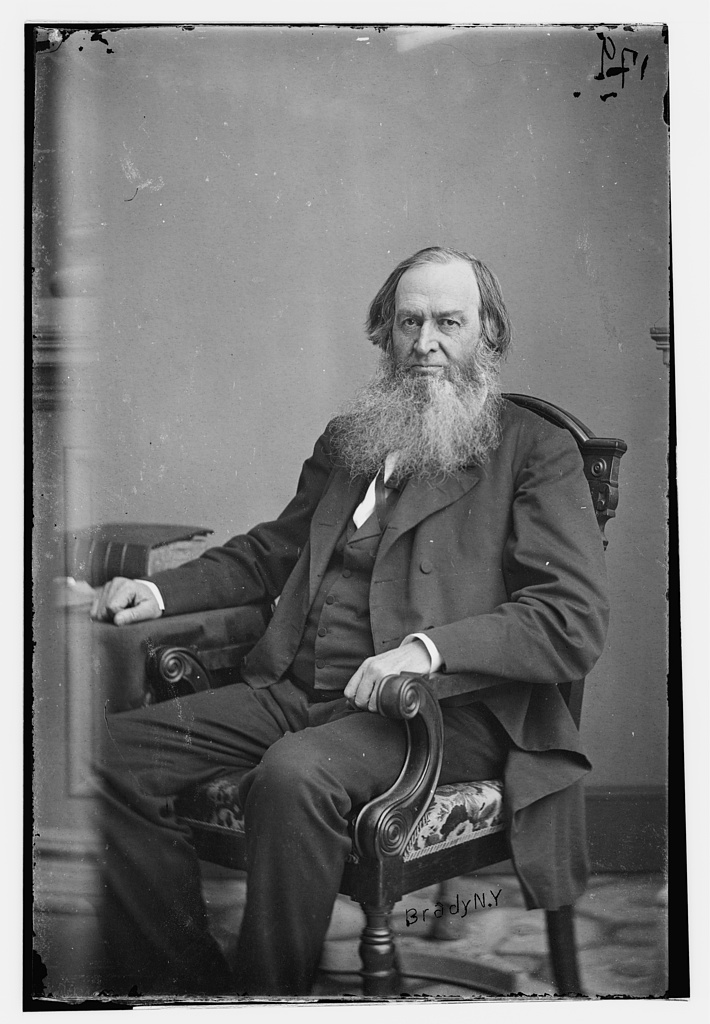
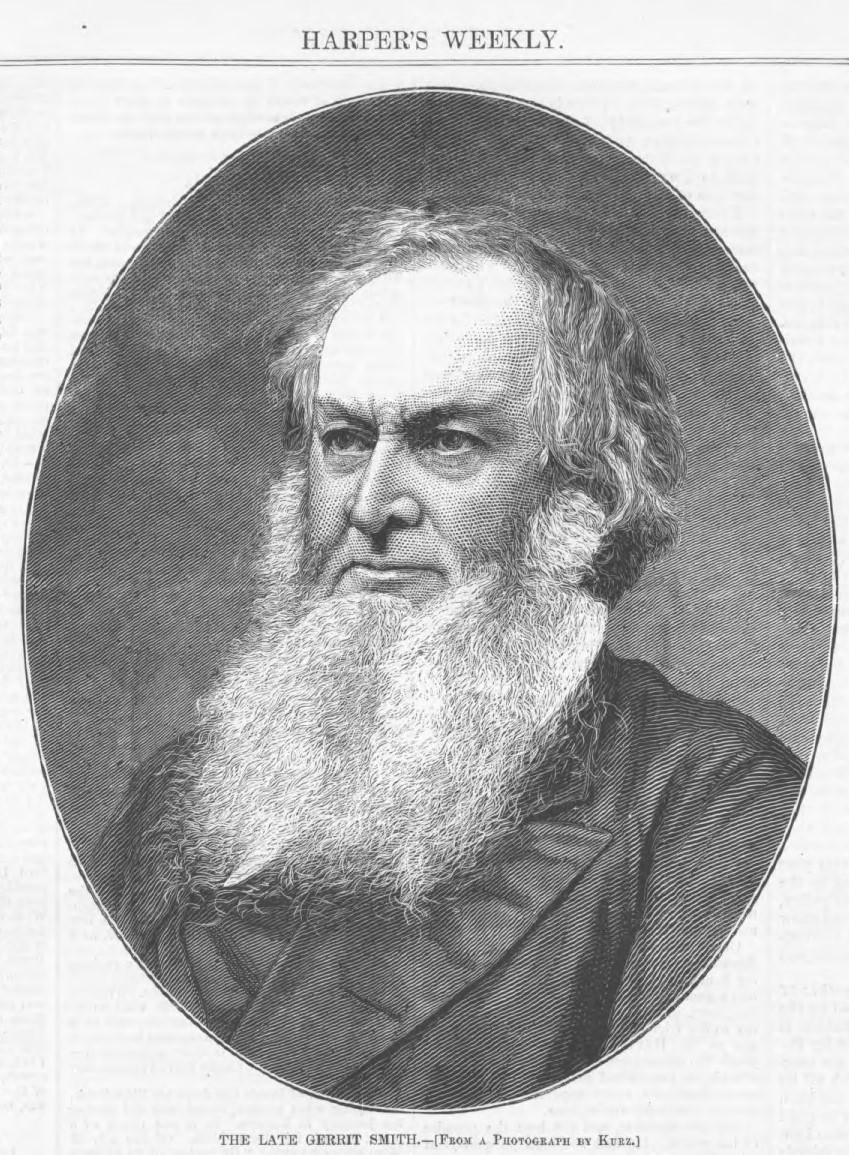
The death of Gerrit Smith

The well-known abolitionist Gerrit Smith died on December 28, 1874. Harper’s Weekly published a eulogy and brief biography in its January 16, 1875 issue:

philanthropist, abolitionist, social reformer

GERRIT SMITH.

THE active antislavery movement in this country began forty years ago, and it is not surprising that many of its most famous champions have already gone or are departing in a ripe and honorable age. GERRIT SMITH was one of that band of moral heroes, and he was also one of the few Americans who may be called public men although not in official position, and who have a signal and influential individuality. He was born seventy-seven years ago, and his long life, his great riches, and his admirable talents were devoted to the relief and elevation of the forlorn and friendless and oppressed, and in a large and generous sense to the service of humanity. He was essentially a noble man. His advocacy of reforms was so strenuous and uncompromising that he seemed often fanatical and impracticable, but his great heart so overflowed with goodness and sympathy that no one who knew him could be his enemy, and in Congress, where nobody was more radical or more positive, no one was more heartily liked, even by his bitterest opponents.

In all things he was perfectly independent. No American had the courage of his opinions more than he, and he never hesitated to say what he thought with incisive vigor. There was always a man behind his words, and that, a wise man tells us, is the secret of eloquence. Naturally he was not a bigoted partisan. He was more political than the Garrisonian Abolitionists, with whom he most truly fraternized, and more radical than the Republicans, with whom he generally acted. His profound conviction that the long inhumanity with which the negro has been treated in this country has left in him and in public opinion consequences which are not to be removed by any merely formal provision led him to the deepest distrust of the Democratic party, under whose ascendency the crime against human nature in this country was defended and strengthened, and made him regard the possibility of a Democratic restoration as a deplorable calamity, for the reason that it was the restoration of the traditions, tendencies, and spirit of class oppression.
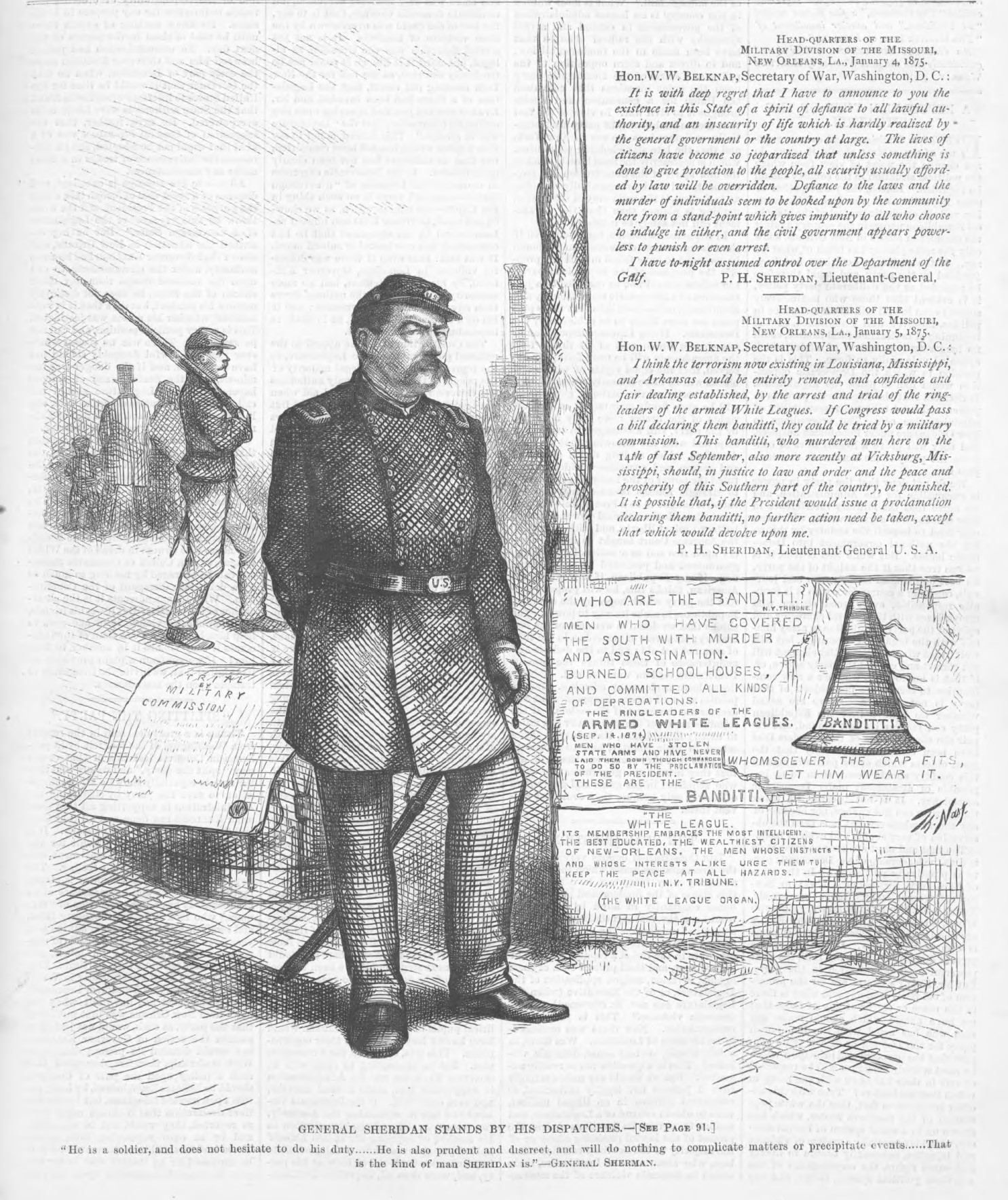
His charity was immense, and like EZRA CORNELL, he made himself the steward of his riches as a trust for the needy. Toward his home in Peterborough suffering men and humane causes constantly turned, and found his hospitable door and heart and purse always open. He knew no sectarian lines, and did not regard a man’s belief, but his life. A brave, good, beneficent man, who lived not for ease and selfish ambition, but for duty and the general welfare, he was, with the exception of one illness, robust in health as he was stalwart in frame. Indeed, his largeness and manliness of nature were well shown in his lofty form and bearing.

GERRIT SMITH was one of the men whose service to this country was not inferior to that of the fathers of the Revolution. As the earlier patriots made the nation independent, their later brethren made it free and just. When GERRIT SMITH began to take an interest in public affairs it was doubtful whether the American republic would not soon end in a huge slave empire. There was no national flag in Christendom so disgraced as ours, for no other was prostituted to an internal slave-hunting which was worthy of Dahomey. Mr. SMITH was one of those whose voice did not spare the infamy and its abettors, and who by their courageous eloquence and action aroused the dormant heart and conscience of America, until the people threw off the tyranny which was destroying them. For his part in this great service his name will be cherished and honored; and if those who know with him the perils that still menace our peace can not think without sorrow that the noble heart and lion port and uncompromising conscience of GERRIT SMITH have now become only a memory, they will not forget that they are also an inspiration.

GERRIT SMITH.

This distinguished philanthropist, whose sudden death in this city on the 28th ult. awakened universal sorrow and regret, was born at Utica, in this State, on the 6th of March, 1797. He was educated at Hamilton College, under President AZEL BACKUS, graduating in 1818 with the highest honors. During his collegiate career he gained a high reputation as an orator as well as a student. After leaving college he married the daughter of President Backus, but she died within less than a year. He subsequently married the daughter of Colonel FITZHUGH, of Maryland, who survives him.

“uncompromising conscience”

His father was Judge PETER SMITH, a man of character and note in his day. In early life he was a partner in business with JOHN JACOB ASTOR. They had but little money, and kept a small shop in New York, where they dealt in furs. In summer they used to go up the Hudson to Albany on a sloop, and thence penetrate the interior of the State on foot, through forests, rivers, and swamps, to purchase the furs which the Indians had collected during the winter. These furs, with the assistance of the Indians, they would bring on their backs and in canoes to Albany, and thence transport them down the Hudson to New York. They continued several years in this business, accumulating a good deal of money, when they dissolved partnership. Mr. SMITH established his home in the interior of the State, and commenced buying lands on an extensive scale, until he counted his acres by hundreds of thousands. Years afterward, during the financial embarrassments of 1837, GERRIT SMITH applied to his father’s old partner for the loan of $250,000. It was granted without hesitation on his mere verbal promise to give mortgages on certain property. The mortgages were immediately executed, but, through the carelessness of the County Clerk, they were not forwarded, and several weeks afterward Mr. SMITH received a letter from Mr.Astor asking if he had forgotten to have them made out. All this time Mr. Astor had not held a scratch of the pen as security for this immense sum.

GERRIT SMITH was early placed in charge of his father’s business, and, while husbanding the original estate, gave his attention largely to land investments. His transactions were characterized by sagacity and foresight. He owned land at one time in fifty-six of the sixty counties in this State. In the northern part of New York he owned eight hundred thousand acres, all in one piece, known as “John Brown’s Tract.” Much of this immense tract was given away to negroes and other settlers, almost always with a little money to help them along.
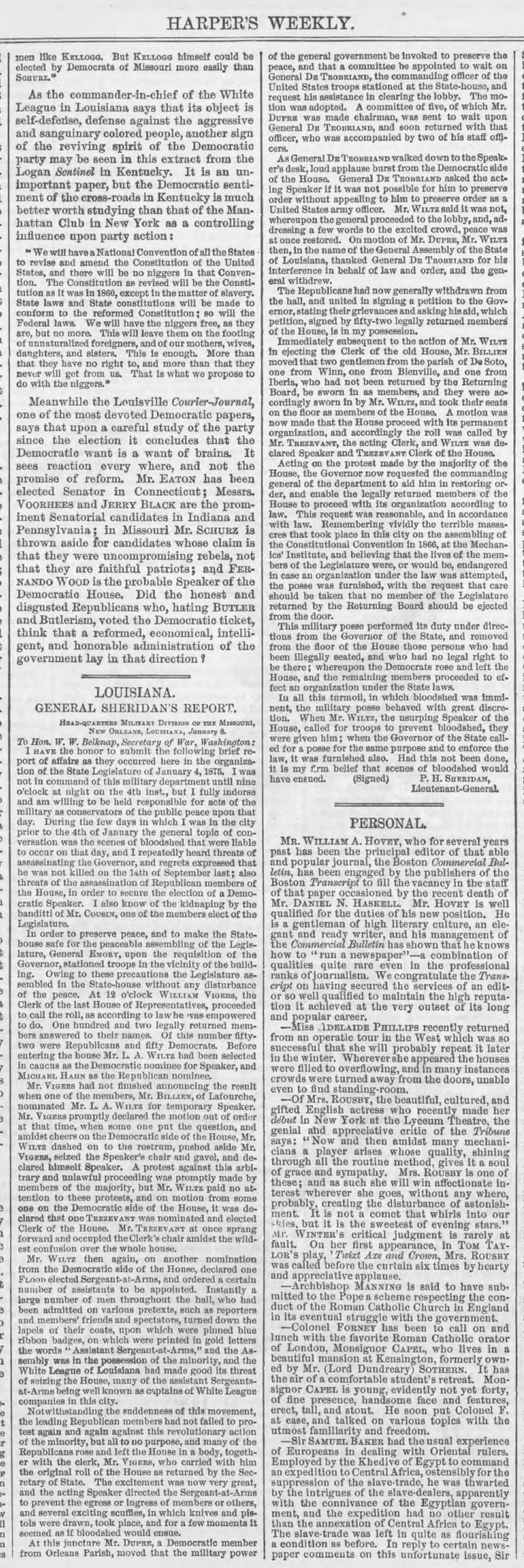
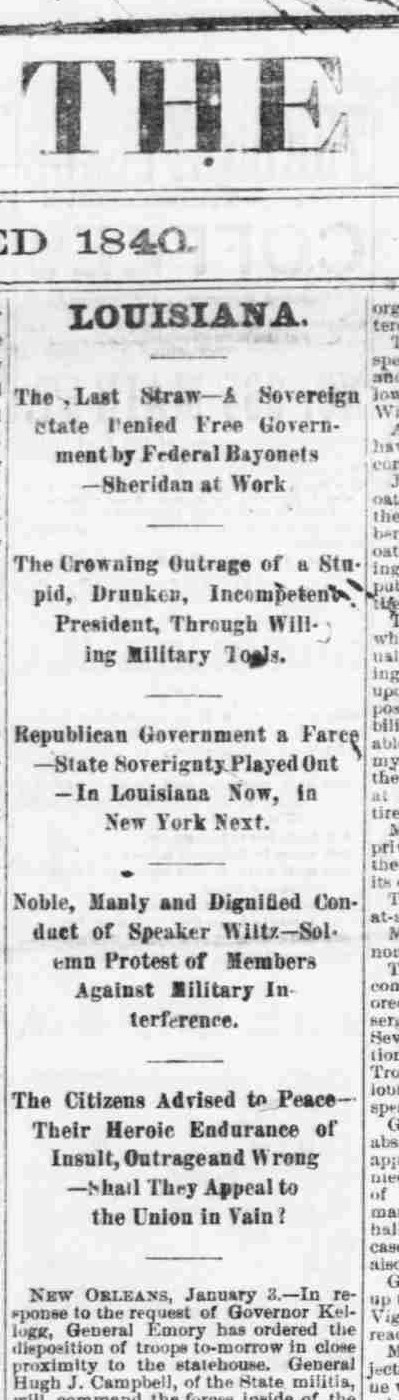
Mr. SMITH had a fondness for legal studies, was well versed in the laws relating to real estate, and late in life applied for admission to the bar for the purpose of defending a poor friendless German accused of murder. He gained the case. From his youth he was a politician, though he held office but once in the course of his long life. In 1852 he was elected to Congress in the Madison and Oswego district, receiving a large majority over a popular candidate. He resigned his seat at the close of the first session. But though office-holding was not to his taste, he always took an active part in politics, acting first with the old Whig party and afterward with the Republicans. From his earliest youth he was a true friend to the oppressed and a stanch opponent of slavery. His home at Peterborough was the refuge of hundreds of fugitive slaves, whom he received, protected, and assisted in obtaining the means of living. He was, indeed, one of the most generous of men. No worthy applicant for relief was ever turned away empty-handed from his door. At his residence, which looked like the country-seat of an English nobleman, he exhibited an elegant and liberal hospitality.

During the war Mr. SMITH heartily supported the government in its efforts to suppress the rebellion, but he entertained no hostility toward the people of the South, and after the war joined with HORACE GREELEY in signing the bail bond of JEFFERSON DAVIS. He was at one time wrongfully accused of abetting JOHN BROWN’s wild scheme for revolutionizing the government by invading Virginia at the head of five white men and five negroes. Brown’s unhappy fate depressed him exceedingly, and for a little while so seriously affected his mind as to make a resort to the Utica Asylum a necessity. Under the treatment of Dr. GREY, he soon recovered fully.

At the time of his death Mr. SMITH was on a Christmas visit at the house of his nephew, General COCHRANE. He seemed to be in his usual health. On the morning of the 27th ult, he was stricken with apoplexy while dressing. He lingered until a little after noon the next day, when he passed away.

A 1957 history of New York State mentioned Gerrit Smith several times. The following is part of an overview of antebellum humanitarian reforms:

In this reform movement New York, particularly the upstate region, led the nation. No other section produced leaders of the caliber of Theodore Weld, Charles Finney, Elizabeth Cady Stanton, Gerrit Smith, and the Tappan brothers in New York City. Probably the most irrepressible reformer was Gerrit Smith, whose career, like a seismograph, registered every tremor of the reform movement. Smith became interested as a young man in the benevolent societies, notably the Sunday School Union and the American Bible Society. Soon he branched out into temperance and abolition, the major concern of his adult life. But other reforms captured his fancy. He experimented with manual-training schools; he served as vice-president of the American Peace Society; he backed the crusade for women’s rights; he clamored against tobacco, secret societies, and British rule in Ireland.[1]

Smith is mentioned in The Underground Railroad from Slavery to Freedom: A comprehensive history (at Project Gutenberg): “Gerrit Smith, the famous philanthropist, kept open house for fugitives in a fine old mansion at Peterboro, New York. He was one of the prime movers in the organization of the Liberty party at Arcade, New York, in 1840, and was its candidate for the presidency in 1848 and in 1852. He was elected to Congress in 1853 and served one term. It is said that during the decade 1850 to 1860 he ‘aided habitually in the escape of fugitive slaves and paid the legal expenses of persons accused of infractions of the Fugitive Slave Law.'” The quote is from O. B. Frothingham, Life of Gerrit Smith; National Cyclopedia of American Biography, Vol. II, pp. 322, 323. I highlighted Peterborough in the map below. The map is from the Project Gutenberg book. The full map shows that the midwest had many more routes than central New York state.

Peterborough in yellow

According to Adirondack Almanack, the John Brown of John Brown’s tract is not the John Brown with the “wild scheme.” The Almanack only mentions 210,000 acres and nothing about Gerrit Smith. The National Park Service says, “As a philanthropist he gave away forty acres of Adirondack land in Northern New York to 3000 poor (and “temperate”) African Americans, to permit them to meet the requirements for voting, and in hopes of promoting self-sufficiency. He subsequently sold John Brown the land at North Elba, New York (where Brown is buried, near Lake Placid). The plan was for Brown’s family to help the new settlers to become productive farmers. Though much of the land was clearly unsuitable for farming, some lasting settlements were formed. In all it is estimated that Smith’s philanthropy reach $8 million before he died.”

According to New York History Net, Smith was implicated in John Brown’s Harper’s Ferry raid: “Though Smith and several of Brown’s other co-conspirators (The Secret Six) reportedly avoided knowledge of the specifics, there is little doubt that he was generally aware of, and helped to finance, Brown’s plans for anti-slavery action in Virginia.”

Gerrit Smith is a member of the National Abolition Hall of Fame at the National Abolition Hall of Fame and Museum.
I got volume 19 of Harper’s Weekly (1875) from HathiTrust. The Gerrit Smith articles are on pages 50 and 52.
From the Library of Congress: the photo of Gerrit Smith
  1. [1]Ellis, David M., James A. Frost, Harold C. Syrett, and Harry J. Carman. A Short History of New York State. Ithaca, New York: Cornell University Press, 1957. Print. page 308.
Posted in 150 Years Ago, 150 Years Ago This Week | Tagged , , , , , , , , , , , , | Leave a comment

Light show

“Oh come, let us worship and bow down;
Let us kneel before the Lord our Maker.”

Milky Way

Let there be light

Earth and Seas

joy to the world

lights

The bible verse is Psalm 95.6 (New King James Version)
From Wikipedia: Bartolomé Esteban Murillo’s painting Adoration of the Shepherds, c.1650; There is a link to the later painting (circa 1668) on the same subject, which is a thumbnail above; the two photographs of the earth taken during the Apollo 8 lunar mission from December 21–27, 1968 – “Earthrise was taken during lunar orbit, the other photo was taken about 30,000 kilometers from earth and South America is visible, you can hear the Christmas Eve broadcast from Apollo 8 to earth at the same link.
From the Library of Congress: Currier & Ives’ 1876 lithograph. From Free Images: Milky Way; snowy scene
Merry Christmas (New York : Published by Currier & Ives, 125 Nassau St., [1876])

to you and yours

Posted in World Culture | Tagged , , | Leave a comment