new American revolution?

In a long 1777 letter to the Committee of Secret Correspondence Benjamin Franklin and Silas Deane, American Commissioners in Paris, wrote the following optimistic assessment of Europe’s regard for America and its rebel cause:

Tyranny is so generally established in the rest of the world that the prospect of an asylum in America for those who love liberty gives general joy, and our case is esteemed the cause of all mankind. Slaves naturally become base as well as wretched. We are fighting for the dignity and happiness of human nature. Glorious it is for the Americans to be called by providence to this post of honor.[1]

Those words seem very ironic 238 years later; especially after we just re-witnessed almost four and a half years of disunion and the agony of the American Civil War. I’m pretty sure no one was fighting the American Revolution for the real slaves held in bondage in the Colonies. 150 years ago this week a Northern editorial acknowledged that the cause of furthering American liberty would require a change in racial attitudes and predicted a period of “social persecution.” “To undertake to exalt the Southern blacks by dragging down the Southern whites would only strengthen the animosities of the two races, and fit them for internecine war.”

From The New-York Times July 22, 1865:

The Magnitude and Importance of the Revolution at the South.

The revolution in the South involves a prodigious change, and it will require, at the very least, a generation to complete it. We never expect to see the South entirely clear of the old theories of the subordination of the races, and of the doctrines of State sovereignty, until those who are now upon the stage give place to those born in the new era. Meantime there will be, as in every transitional period, a great deal of irregularity. The new relations of the white and black races of the South will not adjust themselves without much rough collision, and not a little hardship to the weaker race. We may lament this. We may and should do our utmost to avert and to check it. Yet to some extent it will be inevitable, and altogether beyond our control. It will come from impulses of human nature which it is quite beyond the power of any government perfectly to restrain or regulate. We ought to regard it as the price we must pay for the new promises of the future, and like wise, practical men, make the best of it.

The qualities that we shall have most need to cultivate are docility and patience. The experiences we have had in the last four years show the folly of undertaking to fix developments according to a predetermined plan. No man four years ago had any conception of such results as now confront us. The unforeseen had far more to do in guiding us through the war than the foreseen. We are bound to suppose that this baffling of antecedent theories and calculations will continue, to a greater or less extent, in the reorganization of the South. We must content ourselves to be still taught in no small measure, by events, to get our best ideas of the real needs and remedies by an observance of actual developments. It is true of all human affairs on a large scale that the springs which control them are too manifold, too complex, and too variable to make it possible for the human intellect, even in its best estate, surely to determine in advance their combined operation. More than ever is this true after such civil and social shocks as the South has lately experienced. The great success of President LINCOLN’s administration came from his willingness and his aptitude to draw instruction and guidance from facts rather than theories. It is this disposition and habit in President JOHNSON that gives the best promise that he will, in like manner, be successful.

But we may have even greater need of patience than ever during the war — at least may have to exercise it for a longer period, though not perhaps under such bitter trials. For many years yet Southern patriotism will fall short of the Northern standard, and this will show itself in a thousand vexatious and harassing ways. The treatment of the freedmen too will not be in accordance with our own highest ideas of justice and equity, in spite of any national laws or regulations. Even the grant of the suffrage would furnish little or no security against social persecution, as is proved distinctly enough by the experience of the black race in the North. These things may greatly grieve us, but they will never be remedied by contumelious words or individual acts. To inveigh against the South can only deepen its sectional bitterness, and alienate it all the more from the government. To undertake to exalt the Southern blacks by dragging down the Southern whites would only strengthen the animosities of the two races, and fit them for internecine war. To yield to impatience would be to defeat our own ends, and run the hazard of most fearful consequences.

If we will but take wise counsel of developments as they arise, and shape our practical policy accordingly, always keeping sound principles and right ends in view, and if we will steadily exercise forbearance and kindness, we shall sooner or later see the South as instinct with the national life as any part of the Union. We shall see its vital forces reviving under their new conditions, and playing with a healthfulness and freedom never before known. We shall see new duties recognized, new standards adopted, a new character formed. Every material interest, every industrial law, every moral influence, will work together to effect this change now that the iron barriers of slavery are leveled forever — if we patiently give them time, and allow them their own just scope. We have but to take good heed to our own ways to insure, in due time, a complete restoration of the South, body and spirit, to the Union.

  1. [1]Schiff, Stacy. A Great Improvisation: Franklin, France, and the Birth of America. New York: Henry Holt and Company, 2005. Print. page 64 and note on page 426.
Posted in 150 Years Ago This Week, Aftermath, American Society, Postbellum Society, Reconstruction, Southern Society | Tagged , | Leave a comment

progress on government plantations

From The New-York Times July 22, 1865:

The Freedmen of the South The Successful Progress of the Policy of the Government.

It is gratifying to know that the Freedman’s Bureau in Washington, under the management of Major-Gen. HOWARD, and the officers of the army detailed as superintendents in the various States, is fast overcoming all difficulties and achieving a most decided success. The colored people, under its direct charge, are adapting themselves with great cheerfulness to its regulations, and are cultivating the new crops with steadiness and general good behavior. They have come to an understanding that freedom does not mean idleness, and that their future well-being must depend mainly upon their own exertions; and they show little or no disposition to abuse the mild policy of the Government. The experiment is already far enough advanced to make it quite certain that all these freedmen will soon be brought to a self-supporting condition, and will be quite as well able to take care of themselves in all respects as the white population about them.

We refer particularly to the laborers on the government plantations, and those others who are under the special supervision of Gen. HOWARD’s bureau. To have brought them up so soon to this high line of good conduct is in itself a great point gained. It proves what wise and kind treatment can accomplish with the liberated slaves, and will show conclusively that it will be the fault of the planters if good results do not come from emancipation. It puts at rest forever the old bugbear that the freedom of the blacks would let loose all their bad passions, and make chaos of Southern society. It demonstrates that their confidence can be won, and that they can be brought to respond as favorably as any other men to reasonable inducements.

It would seem, indeed, that the freedmen can more easily accommodate themselves to their new condition than their old masters. The latter readily enough recognise theoretically that the blacks are no longer their chattels; but practically find it very difficult to treat the blacks as free moral agents. They are constantly inclined to impose their own will in the old arbitrary fashion, and to look to their own interests exclusively. Old habits are a second nature; and it is not at all singular that the Southern planters do not throw theirs off with more ease and grace. One of the duties of the Freedman’s Bureau is to check this propensity of the planters by securing to those they employ fair wages, and prescribing general regulations for their protection. Interference in this direction is not at all welcome to the planters; yet there is no serious attempt by them to make trouble. The fact is, that in the present transitional state of things, they look chiefly to the government for their security, and their power to carry on their plantations at all, and they will submit to almost anything required of them, however much it may go against their old grain. We may hope that gradually the new ways will be seen to be conducive to the interests of all, and that the relations of employers and employed, in the South, will regulate themselves with as little injustice to either side as they do here in the North.

The successful adjustment of this labor question is the primary concern in the reorganization of the South. Labor, the world over, lies at the foundation of all prosperity; nay, we may say, of any social existence at all. Communities may subsist without general suffrage, and without popular instruction, but are sure to go to ruin without work. If what had been told of the Southern blacks had been true, that they naturally were such haters of work that nothing but the lash could hold them to it, it would have established the claim that slavery was a Southern necessity. If it could have been proved that the sudden breaking up of slavery would entail a long breaking up of all Southern labor, justice to both, success in the South, and to the country at large, would have imperatively required the adoption of the gradual system. Four years ago, nine-tenths of the people of the country, North and South, believed sincerely that the inevitable result of any sudden emancipation would be universal black vagabondage; and that was, very justly, accounted a sufficient condemnation of any such scheme. It is of universal import that experience is proving the contrary. It supplies the only solid basis possible for the renovation of the South. To the whites it affords every inducement to return to the cultivation of their great staples with new energy, and to do their part toward establishing a new order of things. To the blacks it will furnish a title for every privilege of independent manhood. Men of any color, who have self-control enough to be steadily industrious, and honest enough to perform faithfully all their engagements, have the elements of a character that must, sooner or later, be put in the possession of all just rights and privileges. If the blacks of the South, as the prospect now is, should come up to the industrial standards held out by the Freedman’s Bureau, and contract the orderly and thrifty habits it seeks to establish, there need not be the slightest apprehension that they will not come to all the educational privileges and all the political power that may belong to them.

But again we invoke patience. Immense changes are yet to be wrought before the work is complete. All that has been gained thus far is but an earnest of what is to come from faithful endeavor in the future. What has hitherto been realized is valuable only as a promise. It took centuries to break down the feudal system of Europe, and sweep away the last vestiges of serfdom. Slavery had nearly, if not quite, as strong a hold upon Southern society. Do the best we can, it will take years to rid the land of its remnants. Its baneful influences will be felt by the poor freedmen through all this living generation. The greatest iniquity of slavery is not that it taxed the muscles of the slave without requital, but that it robbed him of every high quality of manhood. To raise him to his rightful level must be a gradual work. It will require time, and all good men should grant it without murmuring. Let there be no rashness, no precipitency, no sacrifices for mere abstractions, no indulgence of uncertain theories, but a calm, resolute, steady following up of a practical policy that, like the present, daily gives new tokens of final success.

The same issue included a report by A.S. Hitchcock, who apparently worked as an overseer of government plantations near Beaufort, South Carolina. Mr. Hitchcock saw both good and bad in how the former slaves had adapted to freedom and their new economic condition. Here’s an excerpt:

… So but little is decided by the success, or want of success agriculturally, of last year. The blacks worked; many of them worked hard. They carried their crops with tolerable efficiency. They were peaceable and law-abiding. They were mainly honest in their dealings. They bought themselves lands with money in hand, and built themselves settlements. They maintained good order among themselves, and sent their children to school and attended themselves to some extent. Now these are facts, and they form a basis on which to reckon and build favorably for the future, but progress will be slow and halting, with many untoward and unfortunate events and much to discourage one who is not full of faith and patience.

You may ask — well, will they work for wages? Some will and some will not. If the question is asked having in view the work done by Northern laborers and their habits, they would prove quite unsatisfactory. They need much culture and hard discipline to change their habits of labor. They must learn to consider hard, faithful labor a duty they owe to their employers as well as an interest for themselves. Heretofore their labor has been the result of force and fear; hence the habit of shirking and all possible avoiding of work. The habit of free steady labor, regular from morning till night, week by week, and month by month throughout the year they know nothing about as a general thing. …

Posted in 150 Years Ago This Month, Aftermath, Postbellum Society, Reconstruction, Southern Society | Tagged , , , | Leave a comment

tech times

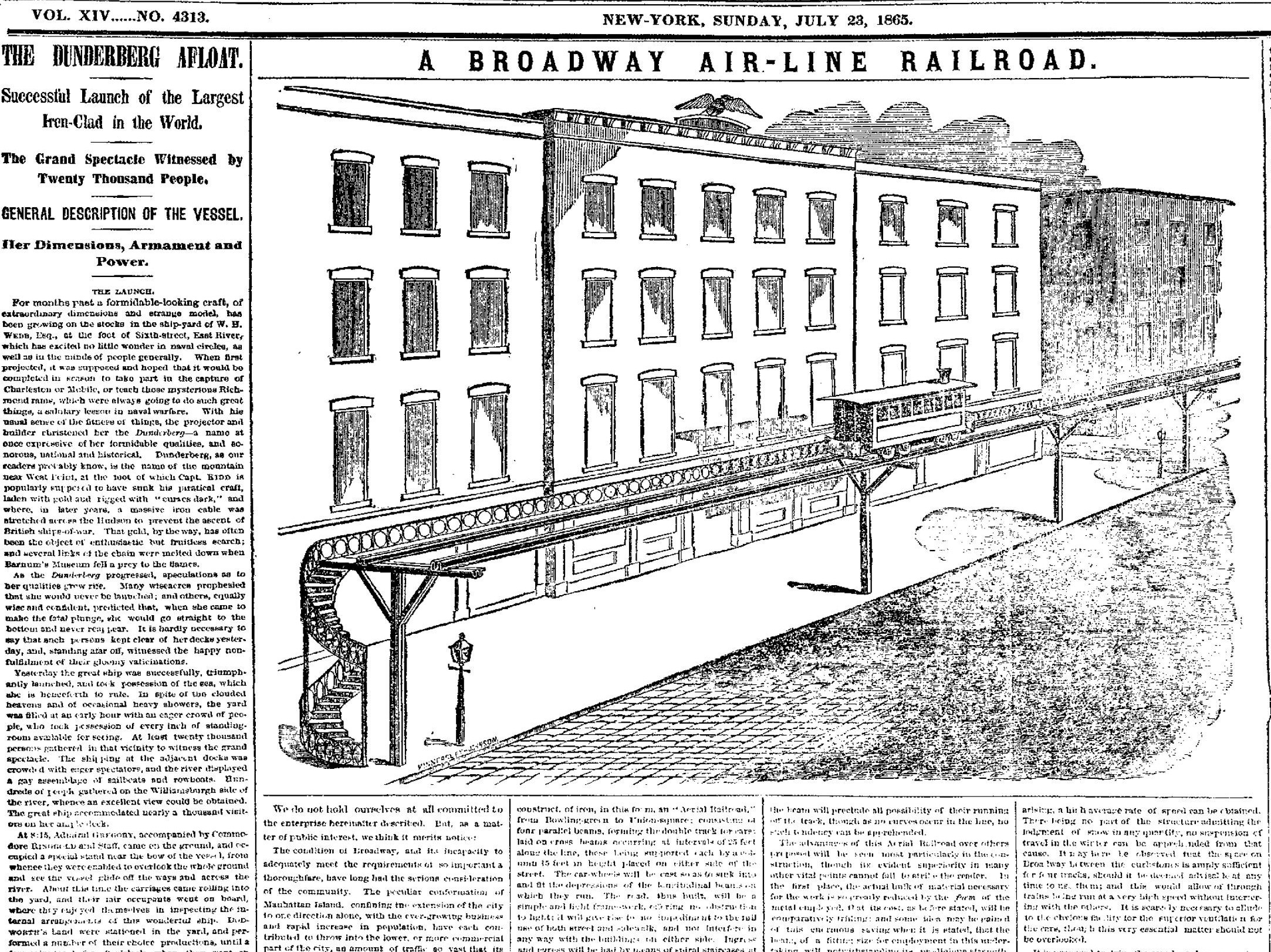
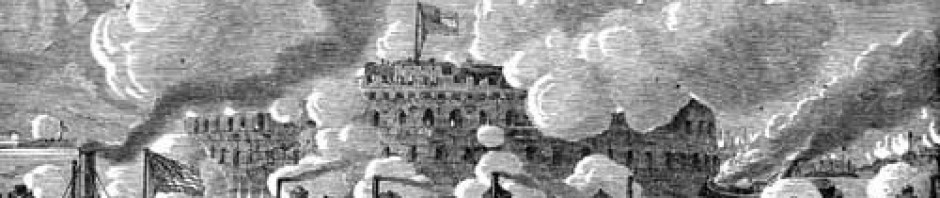
150 years ago today The New-York Times headlined some remarkable technology. The world’s largest ironclad was launched three months after the Civil War ended, and some people imagined trains running up in the air over Broadway.

NYT 7-23-1865

New York Times July 23, 1865

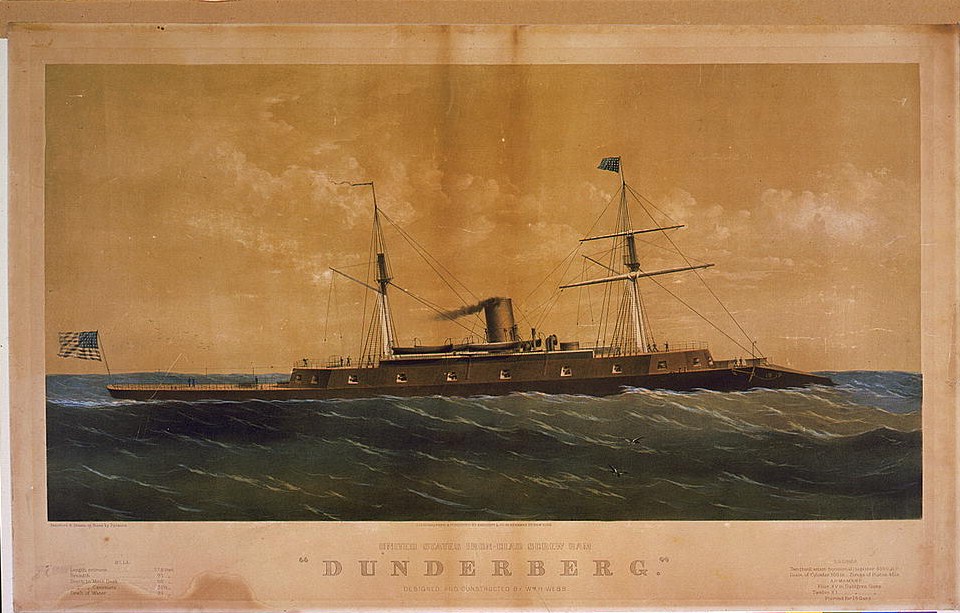
The USS Dunderberg was never accepted by the United States Navy. France bought the ship in 1867 to sort of beat Prussia to the punch. The renamed Rochambeau never saw action in the Franco-Prussian War and was scrapped in 1874.

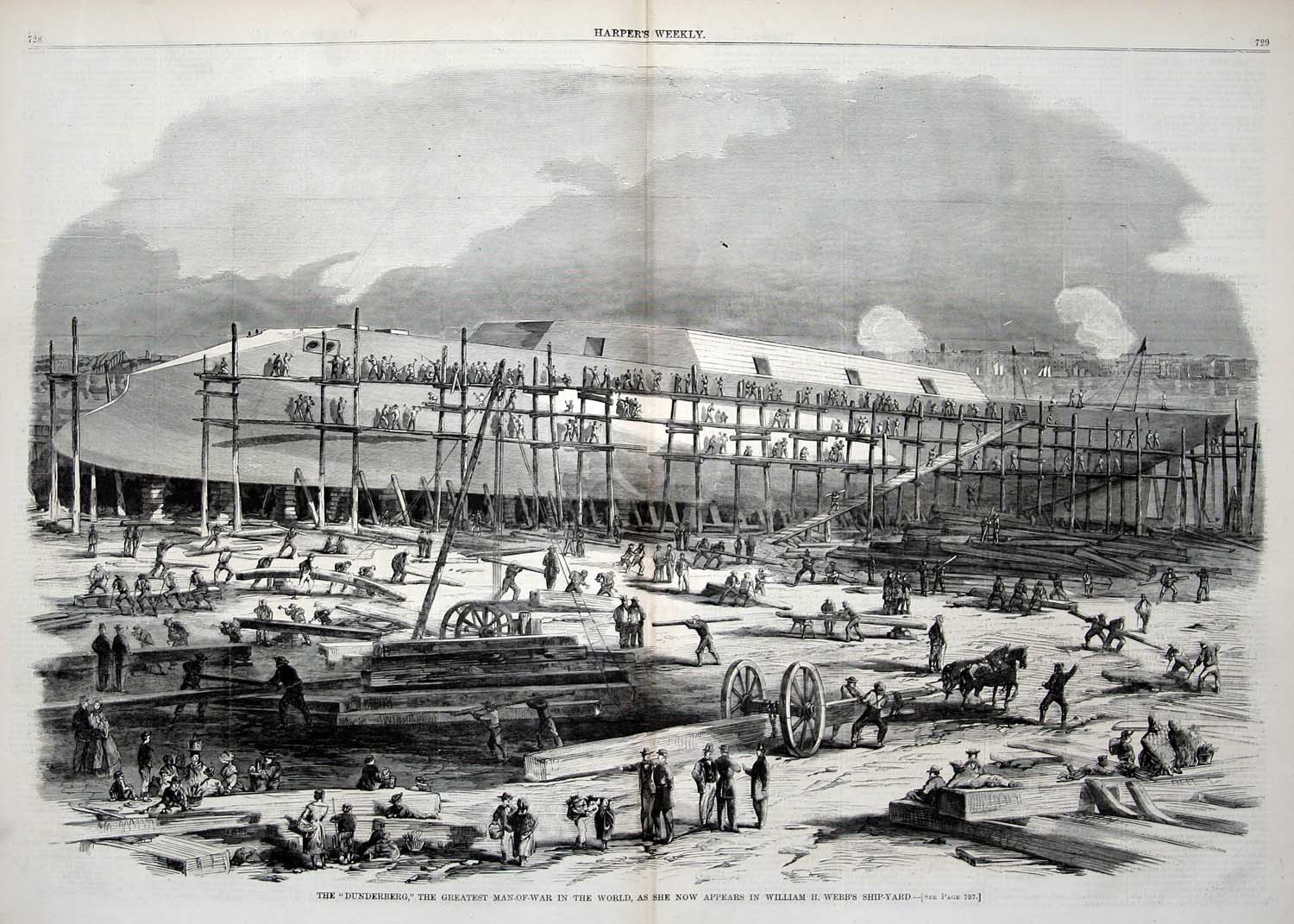
ship-building-1500 (Harper's Weekly November 14, 1863)

The Fabulous Dunderberg – under construction

United States iron-clad screw ram "Dunderberg"--Designed and constructed by Wm. H. Webb / sketched and drawn on stone by Parsons ; lithographed and published by Endicott & Co., New York. (1867; LOC: http://www.loc.gov/item/93506101/)

“United States iron-clad screw ram “Dunderberg”–Designed and constructed by Wm. H. Webb / sketched and drawn on stone by Parsons ; lithographed and published by Endicott & Co., New York. ” (c.1867, Library of Congress)

The image of the big ironclad being constructed was published in the November 14, 1863 issue of Harper’s Weekly (at Son of the South The Library of Congress provides the image of the Dunderberg afloat.
Posted in 150 Years Ago This Week, Aftermath, Naval Matters, Postbellum Society | Tagged , , , , , | Leave a comment

.24

Probability of dying at “Hellmira”

From a Seneca County, New York newspaper in July 1865:

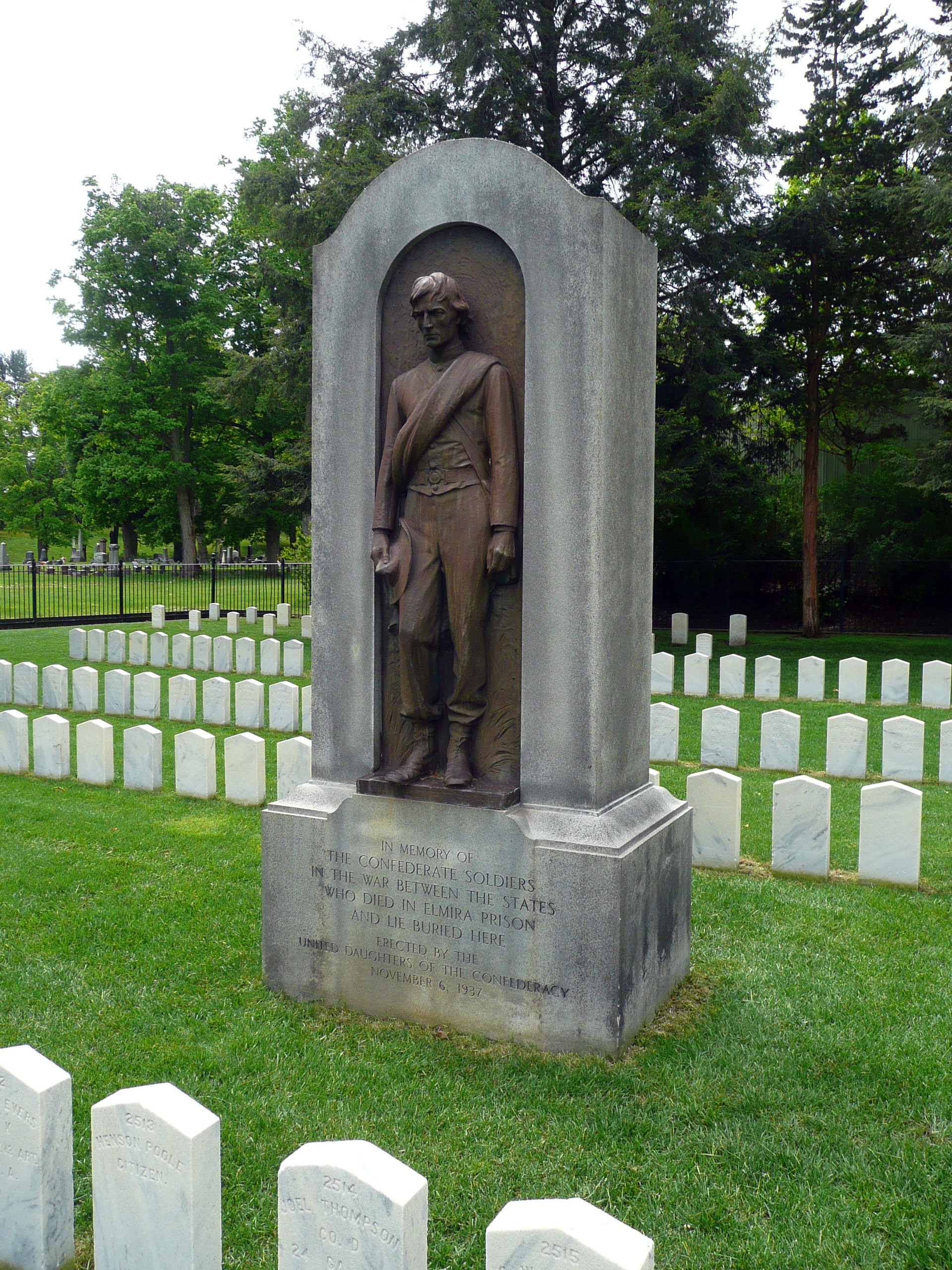
REBEL PRISONERS AT ELMIRA. – The Elmira Advertiser gives the statistics of the number of rebels that have been imprisoned at Elmira. The whole number received from July 6th 1864 up to May 12th, 1865, was 12,122, of whom previous to July 1, 1865, 2,917 had died, 17 had escaped, and 218 were in Hospital. All save those who are sick, have been released on parole, and sent home.

Monument to Confederate dead at Woodlawn Cemetery, Elmira, NY. Photo by Hal Jespersen, May 2010.

Rebel prisoners buried at Woodlawn National Cemetery, Elmira

Posted in 150 Years Ago This Month, Aftermath, Civil War prisons | Tagged , | Leave a comment

“our sad, though interesting duties”

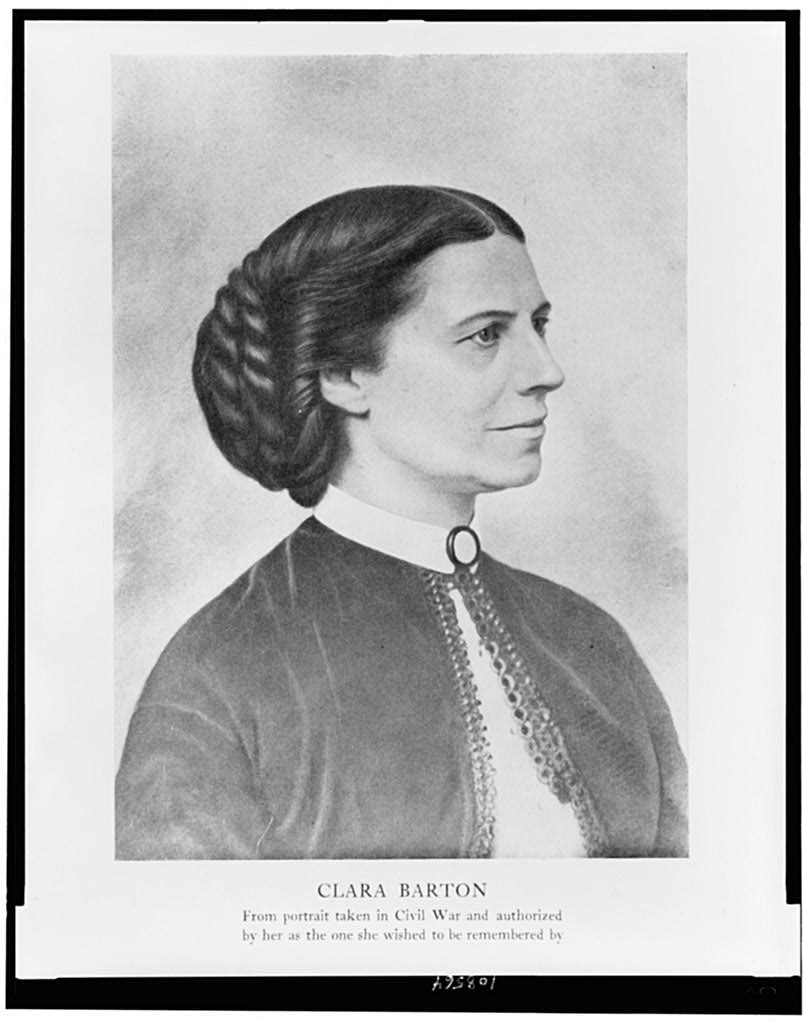
Clara Barton - from portrait taken in Civil War and authorized by her as the one she wished to be remembered by (1890; LOC: http://www.loc.gov/item/93513623/)

“Clara Barton – from portrait taken in Civil War and authorized by her as the one she wished to be remembered by ” (1890, Library of Congress)

From a Seneca County, New York newspaper on July 20, 1865:

Miss Clara Barton, daughter of Judge Barton, of Worcester, Massachusetts, who has obtained national repute by publishing a list of missing soldiers and by heroic deeds to the wounded, and even under fire, left Washington on Friday, on a Government vessel, with a party for the purpose of enclosing the area of ground at Andersonville where so many Federal prisoners perished from want and exposure, and of putting up head-boards at their graves. She conceives that she has a correct list of the deceased, and has accordingly obtained seventeen thousand head-boards for the purpose.

From The New-York Times August 2, 1865:

The Graves of Union Martyrs at Andersonville.; TWO HUNDRED AND SEVENTY-SIX MURDERED AT THE “DEAD LINE.”

From the Washington Republican.

Miss CLARA BARTON, the humane annalist of our Union martyrs, who accompanied Capt. MOORE on his expedition to Andersonville to give Christian burial to the prisoners who died there, writes the following note to her uncle, JAMES BARTON, Esq., of this city:

ANDERSONVILLE, Ga., Wednesday, July 12, 1865.

DEAR UNCLE: We arrived here on the 13th [?], and are now in the active prosecution of our labors. Capt. JAMES M. MOORE, kindly detailed by Gen. D.H. RUCKER to assist me in the performance of our sad, though interesting duties, is now organizing our forces, and preparing the ground for the reception of our heroic dead. Two hundred and seventy-six were recovered yesterday from the ground known as outside of the “dead line,” or, as it was generally known to the public, outside of a prohibited line, beyond which they had accidentally strayed for the purpose of procuring a little fresh water, or the roots of shrubs or trees, to allay the pangs of thirst and hunger, and for so doing were barbarously murdered. The grounds are all selected for the cemetery, and in a few days I will send you a statement for publication, if the editors of Washington think it worthy of publication in their columns. Your affectionate niece,

CLARA BARTON.

Posted in 150 Years Ago This Month, Aftermath, Civil War prisons | Tagged , | Leave a comment

Southern roadblock?

If delegations from the rebel states are re-admitted to the Congress without conditions, could they stifle the ratification of the Thirteenth Amendment outlawing slavery?

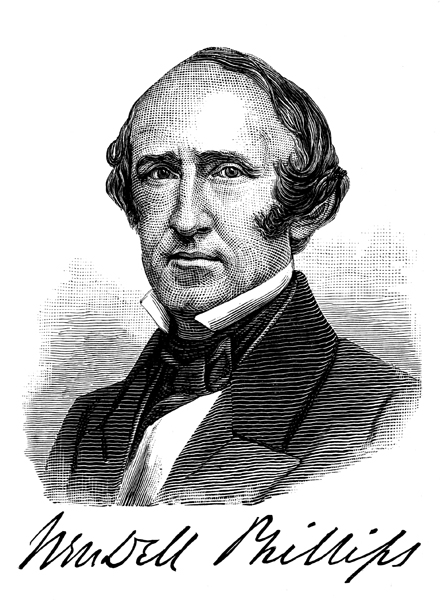
wendell-phillips-1 (http://ushistoryimages.com/wendell-phillips.shtm)

keep the rebels out

From The New-York Times July 9, 1865:

Letter from Wendell Phillips.

THE RESTORATION OF THE SOUTHERN STATES.

The following letter from WENDELL PHILLIPS appears in the Anti-Slavery Standard this week:

To the Editor of the Standard:

Let me call your attention an[d] that of the country to the danger pointed out in the following extract from the letter of an acute and vigilant friend:

President JOHNSON is rapidly issuing proclamations for the reorganization of all the rebel States. The Governors appointed are old politicians, who know all the ropes. Is it not their design, and will they not be able, before next December to make all their new Constitutions and elect new Governors and full Congressional delegation? Then what is to prevent those States from presenting themselves, fully accredited, on the floor of the new Congress, and participating in its organization. They will claim, as President JOHNSON does, that their States have never been out of the Union; that the government declares (as it will) the rebellion suppressed and military occupation withdrawn, and that they now resume their relations with the Federal Government, which have been only temporarily suspended. In this claim they will be backed by the whole power of the Administration, and this is the trap to be sprung on us. The Clerk of the House, you remember, presides until a new Speaker is elected. If he had firmness enough to refuse to receive the credentials of these rebel members, and to refuse to count their votes, this danger might be averted. But can we count on so much virtue in any politician? We may, perhaps, ba[???]ie this plan in the Senate. That body being always organized, no members can be admitted without the concurrence of the rest. But how long would even the Senate stand up against the action of the House of Representatives, and enormous pressure of every other kind?

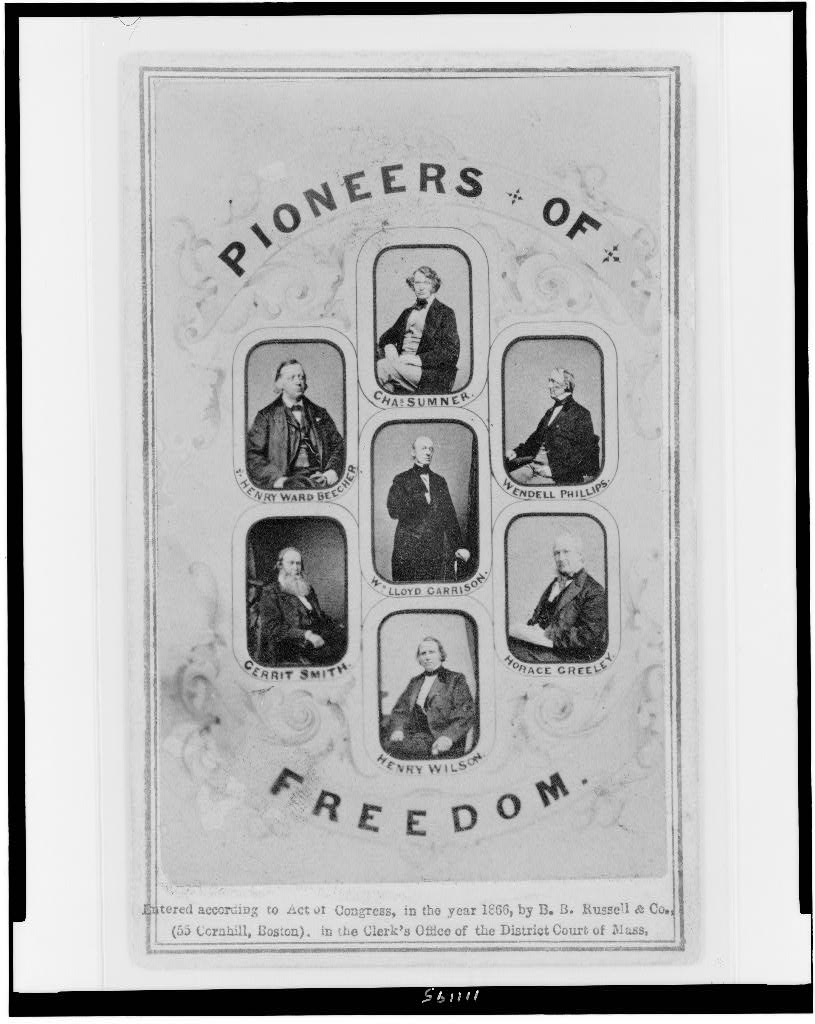
Pioneers of freedom (1866; LOC: http://www.loc.gov/item/94507586/)

Mr. Phillips, et al. as Trailblazers (1866)

I believe that this attempt will be made at the next meeting of Congress. Possibly South Carolina might be kept out, but even that is doubtful. I may exaggerate the importance of this matter, but that the attempt will be made there can be no doubt.

The importance of these suggestions cannot be overestimated, and every means should be taken to avert this peril. We have been counting on the possibility of rallying a majority of the legally elected members of Congress to keep the members from the rebel States out of Congress, at least till they consented to certain conditions — ratifying the anti-slavery amendment and other matters. Some sanguine friends believe they can be kept out until they agree to give the negro the right to vote. But, according to this rebel plot, the Southern members may enter Congress without agreeing to the anti-slavery amendment, or to any other conditions. Once inside the doors, they may take part in all the discussions and votes affecting themselves and their claims, and may checkmate the anti-slavery amendment itself. In fact, our fate rests in the hands of the Clerk of the House of Representatives. I know nothing about him; but how few men in the nation could be trusted to stand firm in such a post? The whole North should be roused to guard against this danger. If the rebel States, in their present mood, can in any way get inside Congress, and wield eighty-four votes there, and more especially if they can get there unpledged to any conditions, and wield those votes, then truly the “South” will be as strong as ever, and the negro almost as defenceless. Yours,

WENDELL PHILLIPS.

As it turned out the Thirteenth Amendment was ratified with the support of previously seceded states, although some of those states tried to attach conditions:

When South Carolina ratified the amendment in November 1865, it issued its own interpretive declaration that “any attempt by Congress toward legislating upon the political status of former slaves, or their civil relations, would be contrary to the Constitution of the United States”. Alabama and Louisiana also declared that their ratification did not imply federal power to legislate on the status of former slaves. During the first week of December, North Carolina and Georgia gave the amendment the final votes needed for it to become part of the Constitution. (references at Wikipedia)

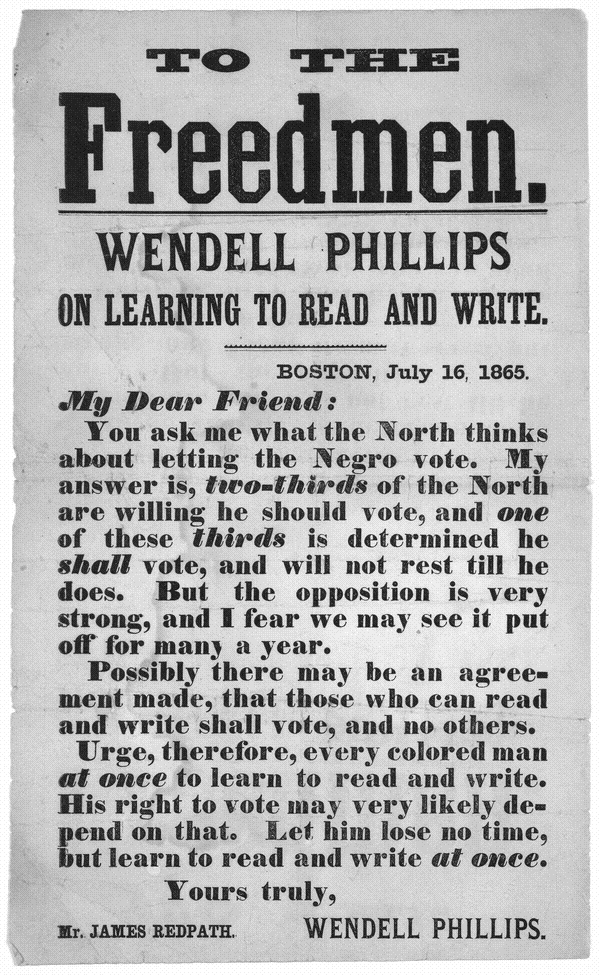
150 years ago today Wendell Phillips was thinking beyond the Thirteenth Amendment:

wendell phillips july16,1865

it’s fundamental

The portrait of Mr. Phillips is found at U.S. History Images. The Library of Congress provides the images of the Pioneers and the Notice to Freedmen
Posted in 150 Years Ago This Month, Aftermath, Northern Politics During War, Postbellum Politics, Postbellum Society, Reconstruction | Tagged , , , , , , | Leave a comment

cleaning up

Soldier's graves near cemetery no. 2 (Wilderness) (by G. O. Brown,  Baltimore, MD : American Scenery (Stereoscopic) 267 West Lexington St., [1865]; LOC: http://www.loc.gov/pictures/item/2015647109/)

“Soldier’s graves near cemetery no. 2 (Wilderness)” (1865; Library of Congress)

From a Seneca County, New York newspaper apparently in July 1865:

The party which went out to bury the dead in the Wilderness battle field, took with them twenty wagon loads of coffins and three weeks’ rations.

Soldier's graves of the 5th A.C. (i.e. Army Corps) Wilderness battle field (by G. O. Brown, Baltimore, MD : American Scenery (Stereoscopic) 267 West Lexington St., [1865]; LOC: http://www.loc.gov/pictures/item/2015647105/)

“Soldier’s graves of the 5th A.C. (i.e. Army Corps) Wilderness battle field” (1865, Library of Congress)

Rebel grounds, near triangle of death. Wilderness field (by G. O. Brown, Baltimore, MD : American Scenery (Stereoscopic) 267 West Lexington St., [1865]; LOC: http://www.loc.gov/pictures/item/2015647112/)

“Rebel grounds, near triangle of death. Wilderness field” (1865, Library of Congress)

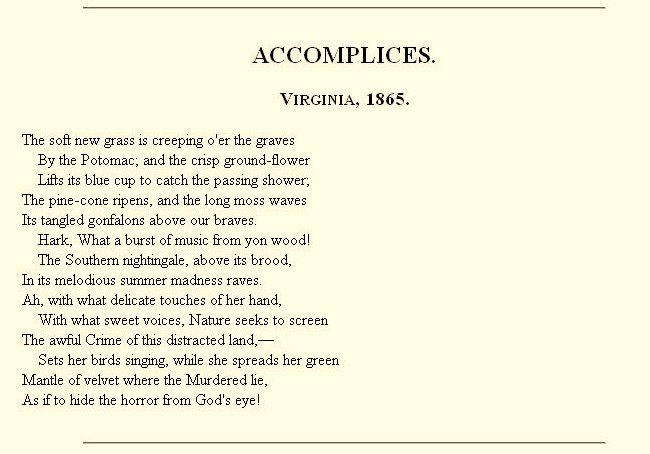
Poet Thomas Bailey Aldrich saw Nature helping restore the sacred battlefields of Virginia to a more antebellum order. From The Atlantic Monthly, VOL. XVI.—JULY, 1865.—NO. XCIII.:

Virginia 1865

Nature hides the horror

150 years ago CYMON reported that agriculture was having a similar healing effect on a famous battlefield north of Mason-Dixon. From The New-York Times July 10, 1865:

GETTYSBURGH BATTLE-FIELD.; The Field Revisited Old Scenes Revived Appearance of the Battle-Field Two Years After the Conflict Vestiges The Cemetery and Monument Gettysburgh and its People.

GETTYSBURGH, Penn., Tuesday, July 4, 1865.

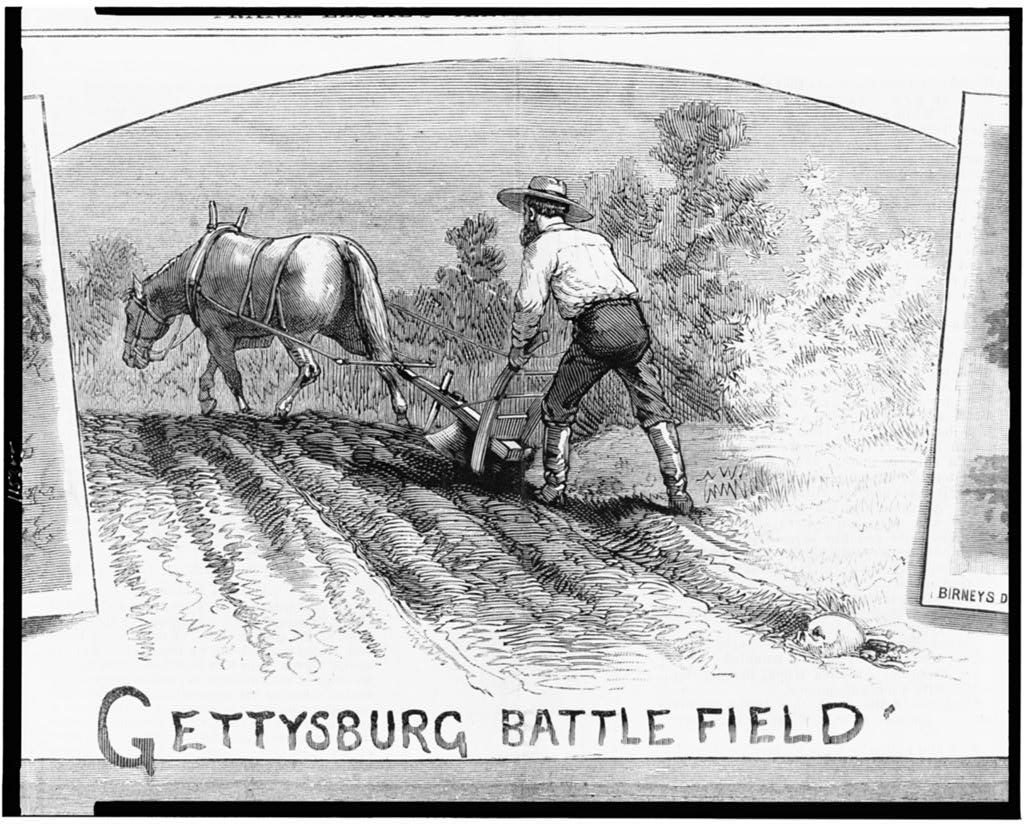
Our swords are ploughshares and our spears are pruning-hooks. The wand of the husbandman and the influence of the season has so tenderly healed the scars of savage war, that but few vestiges remain of the terrible conflict of two years ago. Here and there fast crumbling breastworks or grass grown lunettes mark the spot where our line of steel and flame hurled back the enemy from the heights he sought to storm; but on other portions of the field, where the battle was fiercest, and where fortune hung quivering over the contestants for two days, there are only fields of waving, golden grain, or green pastures, fresher and richer for the rivulets of blood and battalions of dead that sunk beneath the sod.

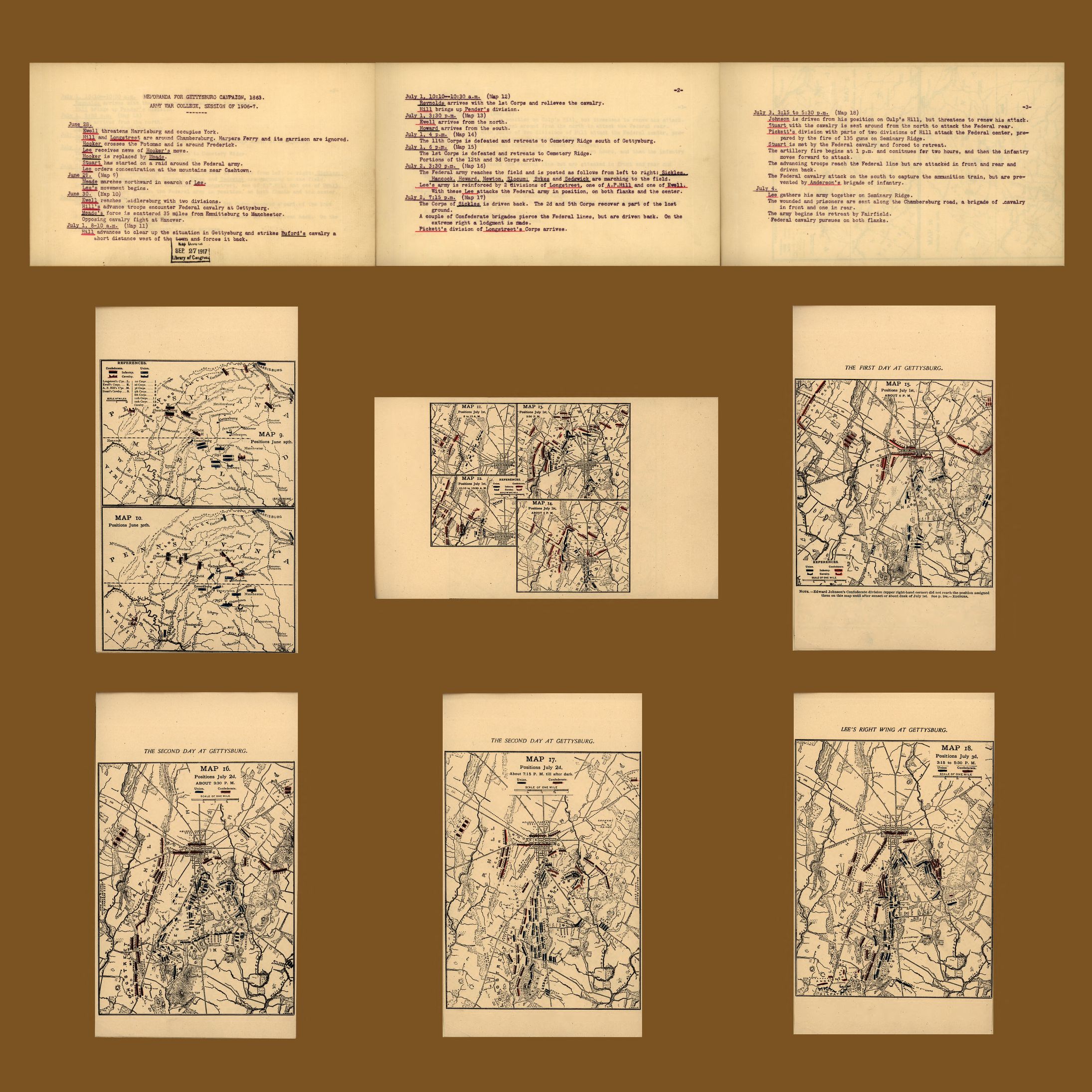
gburg 1906 maps (LOC: http://www.loc.gov/item/99439178/)

Army War College studied Gettysburg in 1906

But this is now historic ground. The carnage and smoke and dust of battle are not needed to bring back vividly the scenes of those first days of July, ’63. Engraven as upon stone in the memory of every eyewitness and participator, the scene is freshly reenacted as the eye rests upon the now quiet and serene landscape, then so red and hot with the glare of the conflict. And the battle is being “fought over again” with a vigor akin to the struggle of the armed hosts when the onward march of rebellion was forever stayed. Thousands of visitors stroll along the lines, and every hill, every ravine, this stone wall, that clump of trees, yonder woods, Culp’s Hill, Cemetery Hill, Round Top and the peach orchard where SICKLES began the fight, are all before us again as natural as when they were bristling with the cannon and bayonets of the soldiers of the republic.

But though the vestiges of that battle fade away and disappear until nothing is left but the ground on which it was fought, it is nevertheless perpetuated not alone in history but in a grand and holy work first inaugurated by LINCOLN and EVERETT, whose monuments now too tower toward the skies simultaneously with this, which is to mark for ages the resting-place of four thousand other patriots. The country is familiar with the conception of this exceedingly appropriate plan, and will rejoice to know that the work is being steadily pushed forward by the National Monument Association, and another year will see this mausoleum complete in all respects, its grounds highly ornamented, its avenues hard and smooth, and its chaste marble shaft surmounted by the Genius of Liberty and the victor’s wreath of laurel, while war, history, peace and freedom shall be typified in allegorical statues at its base. …

[Much of the long article is a kind of walking tour of the battlefield and a description of the monument that had its cornerstone laid on July 4, 1865, but there was evidence that the human commercial spirit helped clean the field of war relics]

The right of the line, held by SLOCUM, still presents the most visible evidences of the conflict. The breastworks still remain, though in a crumbling condition, for the avarice of the owner of the ground has induced him to demolish these monuments of the battle for the sake of selling the timber cut down by the soldiers for the defence of their line. Culp’s Hill, so well defended by GEARY, is still covered by the forest of oaks and beeches, with their battle faces sadly marred by weather-beaten and slowly-healing wounds. The axe has been busy, and the relic-hunter and speculator in old iron has tramped over every inch of the ground, and now scarce a piece of iron or lead is ever discovered. It is only when a heavy rain washes bare a few battered bullets that a relic of the battle can be found on the grounds. … Passing still further down the road, we alight at the primitive cottage known as “Gen. Meade’s Headquarters,” surprised to find that there is still a board or shingle left. There is not on the line a point of greater interest. Situated within a stone’s throw of our line of battle on the left, subjected to a converging fire of artillery, I remember most vividly the scenes of Thursday and Friday, July 2 and 3, 1863. Headquarters were never so thoroughly and completely “under fire.” A perfect simoon of shot and shell came screeching over the line, and raking this miserable little dwelling; a score of staff horses tied to the very fence which now incloses the humble garden, were killed outright; two or three staff officers wounded, and a hundred narrow escapes; everybody hugging the ground, and wishing themselves as thin as wafers; a thundering, screeching, tearing shower of shells, plunging and bursting everywhere; it seemed impossible that anything should live through such a feu d’enfer. But the cottage stands; it looks not a bit older; a mark of rude treatment only here and there; the fences as they were; the well, which was the only hospitality of the place; the single apple-tree, bearing now a few specimens of red harvest apples, one of which we pluck as a memento; while the poor German widow traffics in relics from the field, and bemoans to visitors the destruction wrought upon her household effects. …

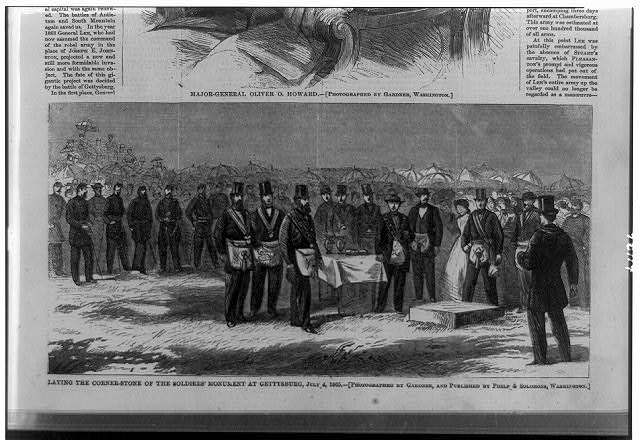
Laying the corner-stone of the Soldiers' Monument at Gettysburg, July 4, 1865 (LOC: http://www.loc.gov/pictures/item/89706320/)

“Laying the corner-stone of the Soldiers’ Monument at Gettysburg, July 4, 1865) (Library of Congress)

The monument whose corner-stone was so imposingly laid to-day, will undoubtedly be reared before the close of the present year, and perhaps by another fourth of July the entire cemetery will be complete in all its respects — the gatekeeper’s house occupied, the drives in good order, the ornamentation of the grounds complete, and the whole plan happily carried out. Descriptions of the cemetery have been heretofore given. There are now buried here nearly 3,000 soldiers, most of whom are known, and their names, company and regiment cut into the granite which forms their head-stone. These head-stones form a continuous line of granite blocks, rising nine inches above the ground, and showing a face or width of ten inches on their upper surface. The designer of the monument is JAMES G. BATTERSON, of Hartford, Conn., who furnishes the following description: …

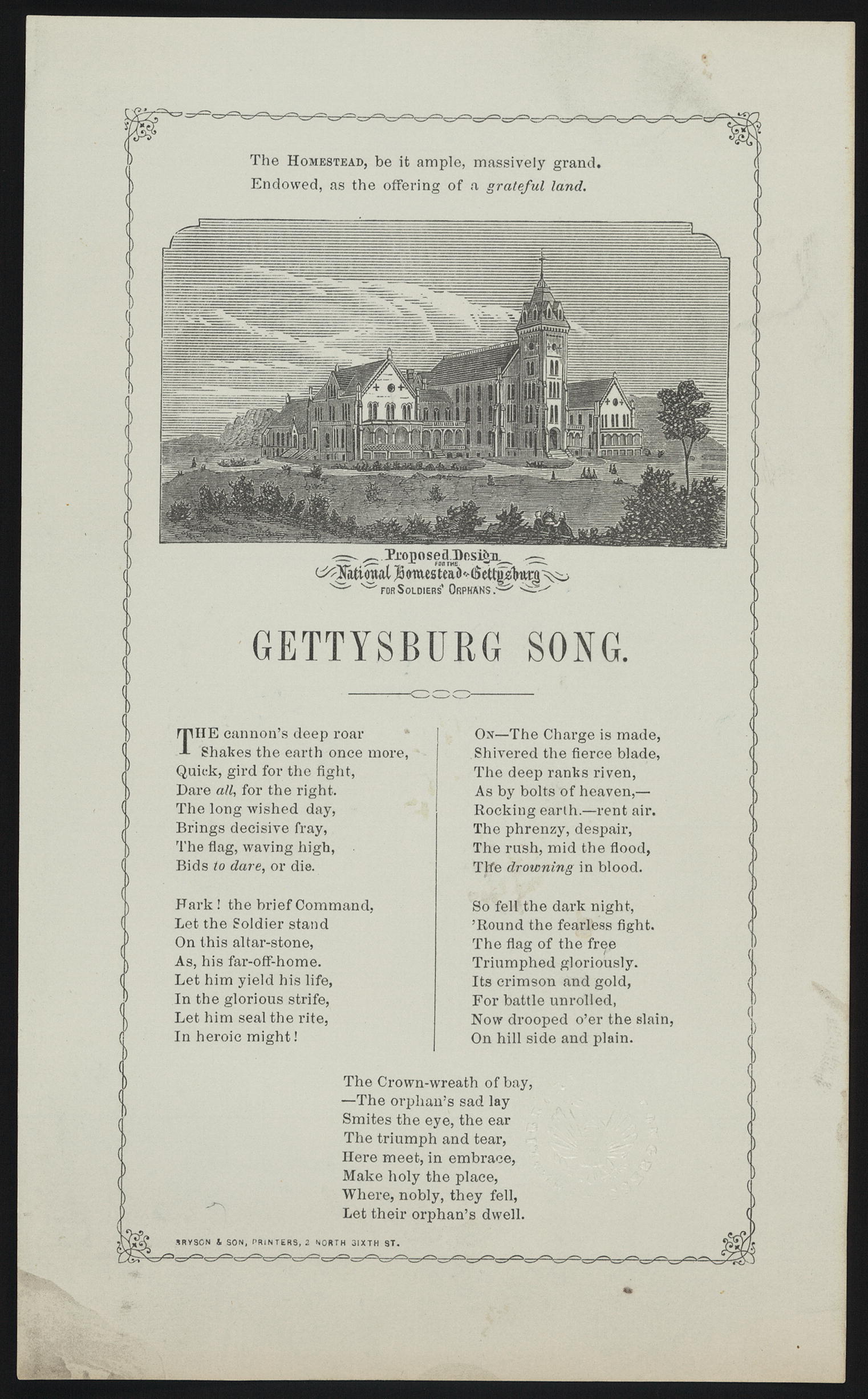
National Homestead Gettysburg (LOC: http://www.loc.gov/item/scsm000533/)

“Proposed design for the National Homestead of Gettysburg for soldier’s orphans” (Library of Congress, Rare Book and Special Collections Division, Alfred Whital Stern Collection of Lincolniana.)

Gettysburgh and its people, on a former occasion, received considerable attention at my hands. This time your correspondent came near receiving considerable attention at the hands of the citizens, of a character not calculated to impress him with the justice of their claims for hospitality and kindness. In other words, it was proposed to resort to lynch law to prove that my statements of two years ago were not correct. But happily the leading and respectable citizens of the place, having the honor of Gettysburgh and a desire to preserve law and order at heart, promptly put down the demonstrations of a few demagogues, and gave your correspondent every opportunity for learning that the claims of the village for hospitality and kindness are not unfounded. Having no desire but to deal justly by all, I must say that notwithstanding the experiences of this occasion, I was able to learn that many of the citizens, on recovering from the paralysis of the battle two years ago, devoted themselves, with self-sacrificing ardor, to the care of the wounded. Some noble women ministered to our men at their own houses, with the shot and shell flying over their heads. The people who acted thus deprecate and condemn as strongly as any one the disreputable conduct heretofore complained of, and are anxious that all should have an opportunity to learn that that class does not constitute the majority of the citizens of Gettysburgh. Personally, the treatment and courtesies extended to me by those with whom I came in contact were of the most cordial and happy character, and convinced not only myself but many other strangers that Gettysburgh has a large population of intelligent, influential and hospitable citizens. CYMON.

I’m pretty sure the citizens of Gettysburg have shown a lot of hospitality over the last century and a half.

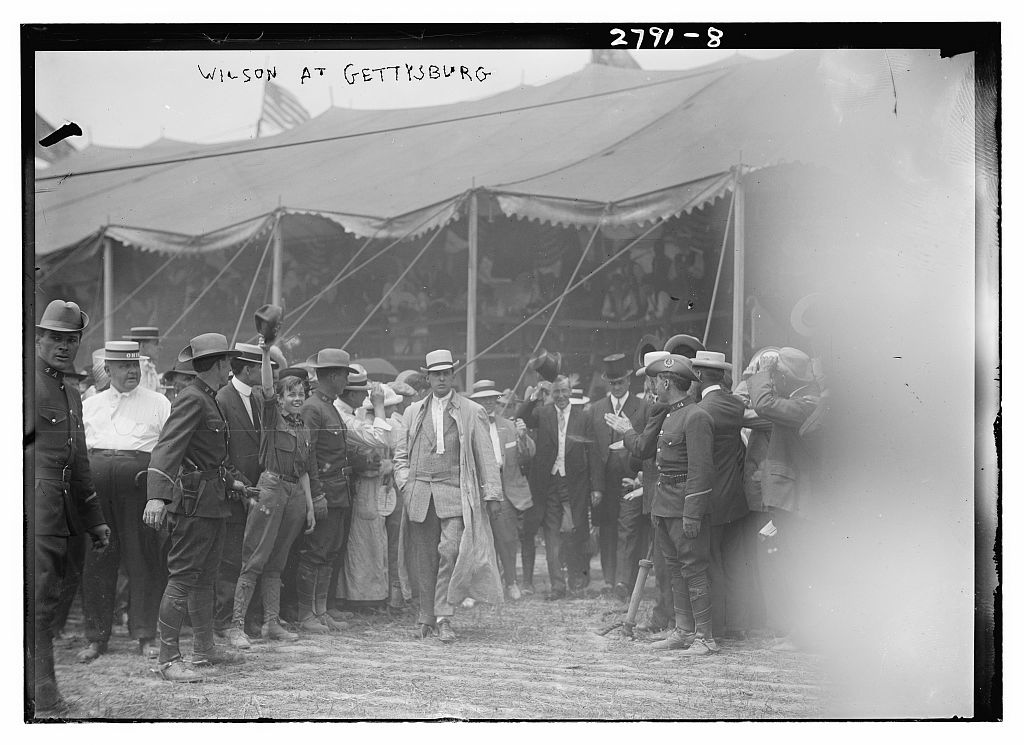
Wilson at Gettysburg  (1913; LOC: http://www.loc.gov/item/ggb2005013864/)

President Wilson at Gettysburg reunion in 1913 (Library of Congress)

And from a Seneca County, New York newspaper in July 1865:

There is said to be some 800 New York soldiers buried in the Gettysburg Cemetery at the present time.

Gettysburg battlefield  ( Illus. in: Frank Leslie's illustrated newspaper, 1882 June 24, pp. 280-281. ; LOC: http://www.loc.gov/item/95522081/)

from Frank Leslie’s on June 24, 1882

You can find out more about the Gettysburg maps at the Library of Congress. The National Homestead at Gettysburg apparently operated from 1867-1877.

The world might be much bigger than the American Civil War, but so far I haven’t done much else.

Posted in 150 Years Ago This Month, Aftermath, Battle Monuments, Northern Society, Postbellum Society | Tagged , , , , | Leave a comment

“boots and saddles” no more

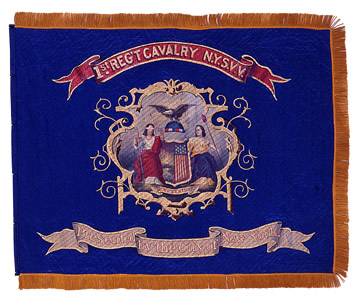
1stCavalryStandard2006.0315

standard after three-year term

From the Seneca County Courier July 13, 1865:

LETTER FROM A SENECA FALLS SOLDIER-BOY.

The following interesting letter is from a native of this town, who was among the very first to respond to the President’s first call for Volunteers and who continued in the army during the war:

CAMP 1st N.Y. (LINCOLN) CAVALRY,
HART’S ISLAND, N.Y. HARBOR,
Friday, July 7th, 1865.

FRIEND FULLER – Today our regiment, with others has been discharged from the military service of the United States. Four years ago, with hundreds of thousands more, we marched southward to aid in restoring the authority of the Union. We followed McClellan through his Peninsula campaigns and through his subsequent campaign in Maryland. Transferred to the Department of West Virginia shortly after the battle of Antietam, we saw arduous service among the Alleghany Mountains and in the Valley of Virginia until Milroy’s retreat from Winchester in June 1863. After participating in the second campaign north of the Potomac, we returned to our rich “hunting grounds” in the Shenandoah Valley, where the tracks of our scouting parties would make a complete net work stretching from the Potomac to Harrisonburg; and from the South Branch, beyond the Blue Ridge. In January, 1864, we re-enlisted for three years or during the war. Returning from veteran furlough, we fought with Sigel at New Market, and followed Hunter on his raid to Lynchburg, and on that long weary retreat across the mountains to the Ohio River. – Returning to the Valley by railway, we went through Sheridan’s active campaign, under the immediate command of the gallant Averill. Breaking camp on the morning of Feb. 27th, the regiment now in Custer’s division, followed Sheridan until Lee and Johnston had surrendered. Ordered back to Alexandria and thence here, we are again to-night civilians, and proud citizens of the grandest nation on earth.

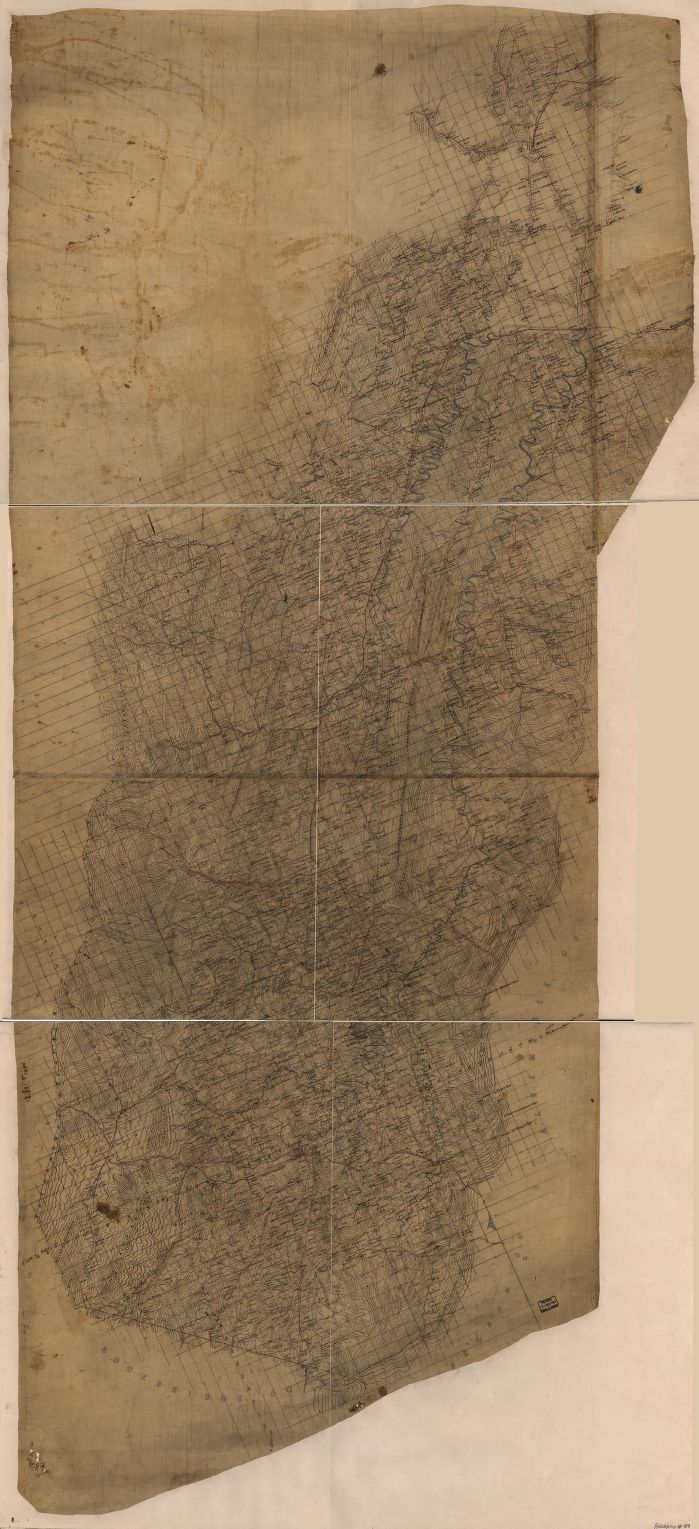
ShenValley1862 (by Jedediah Hotchkiss, 1862; LOC: http://www.loc.gov/item/99446754/)

net work effect (Library of Congress, Geography and Map Division)

To-night we look on a picture of peace. – Near the long rows of the white tents of our camp, now almost deserted, the waters of the old salt sea ripple gently along the shore. – Ships and schooners are slowly sailing past where the full moon shines down on the harbor and the opening sound. There are no more details for guard or picket duty during the long night. No more fear of bugles sounding “boots and saddles” to call us hurriedly at midnight from our hard beds. No more expectation of going into battle in the morning. No more bivouacs on the frozen ground, holding our horses by the bridles as we sleep. It is hard to realize the change as we recall some of the stirring times through which we have passed, when a day without fight was something unusual. We recall the “Seven days” before Richmond, and the long weary days on Hunter’s raid, where, with nothing to eat, we would ride all day, and lie down supperless at midnight to dream of splendid dinners at our homes in the North; awaking to breakfast on birch bark and a handful of corn, and resume our march over the interminable mountains. Faint as we were, how we found strength to cheer the wagon train, with its precious load of “hard tack,” that at last met us.

We remember the dark days of doubt when we would wonder if all these things were to be, after all, in vain. We have always had a kind of respect for bold-fighting rebels, but words are wanting to tell what we have thought, and still think of the faint-hearted or malicious traitors in the North; old men finding fault with the Administration and Gen. Grant, and worrying about the price of gold; young men fleeing to Canada, or bravely submitting to any sacrifices, even the mutilation of their own bodies, that they might not be subject to the draft; women, who never sewed a stitch nor spoke a word of encouragement for the suffering soldiers. On that memorable Sunday after the fall of Sumter, a venerable man of God taught the religious duty of patriotism. said he, “If there be in this church any man or woman who will not, with all their energies, support the cause of our country in this hour of her peril, let them not enter my house nor touch my hand.”

It is with different feelings that we remember those who have worked so constantly for the soldiers; who have supplied them with necessaries and luxuries; who have written and spoken so many kind words of encouragement, friendship and Christian hope. The remembrance of their good deeds will be a source of happiness to them always.

We have many sorrowful recollections of brave, generous comrades whom we have left buried in Southern soil; either killed in battle or starved in prisons. But it some consolation to know that they do not rest in a foreign land.

We believe that the sacrifices it has cost to preserve the Union will teach the people vigilance in the future. None of us can ever forget our sorrow for the martyred Lincoln, nor what we owe to the true patriot Generals and statesmen who have led the country through its past perils.

Yours, &c., ***

The New York State Military Museum explains that the standard pictured up top was used after the initial three year enlistment had been served.

The Library of Congress provides the 1862 map of the Shenandoah Valley by Jedediah Hotchkiss. A few days ago I noticed that a 1945 dictionary did not have an entry for network

___________________________________________________________

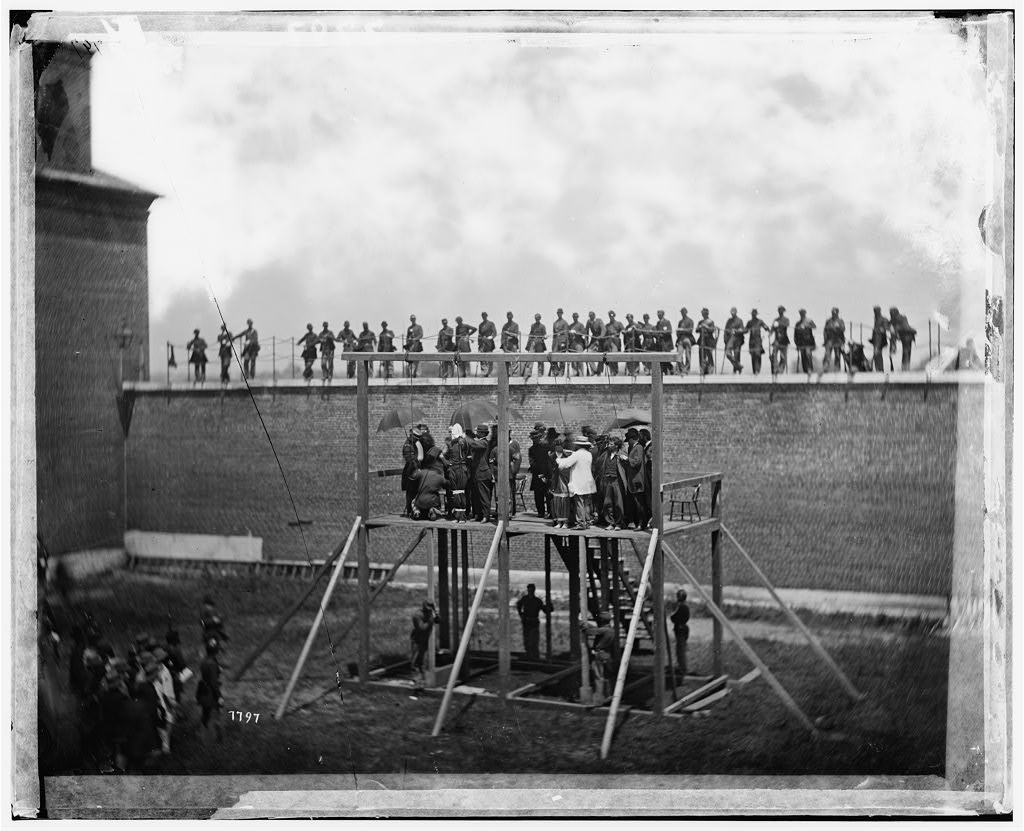
Less than three months after the assassination of Abraham Lincoln four convicted conspirators were hanged:

Washington, D.C. Adjusting the ropes for hanging the conspirators (by Alexander gardner, July 7, 1865; LOC: http://www.loc.gov/pictures/item/cwp2003001013/PP/)

July 7, 1865: “Washington, D.C. Adjusting the ropes for hanging the conspirators” (Library of Congress)

Posted in 150 Years Ago This Week, Aftermath, Military Matters, Northern Society, Veterans | Tagged , , , , , | Leave a comment

“devout joy at the salvation of the country”

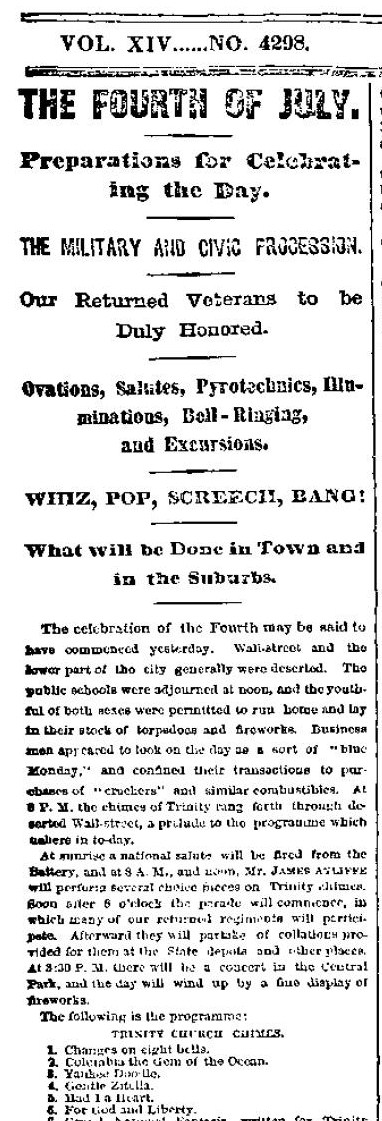
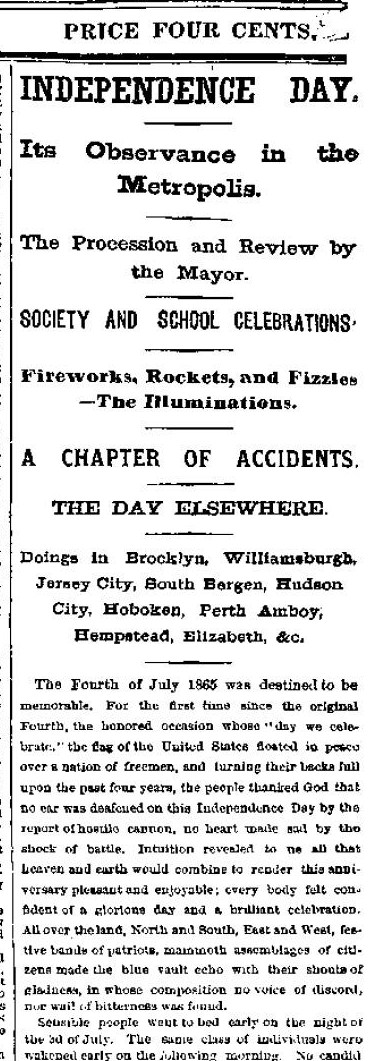
NY Times 7-4-1865

NY Times July 4 1865

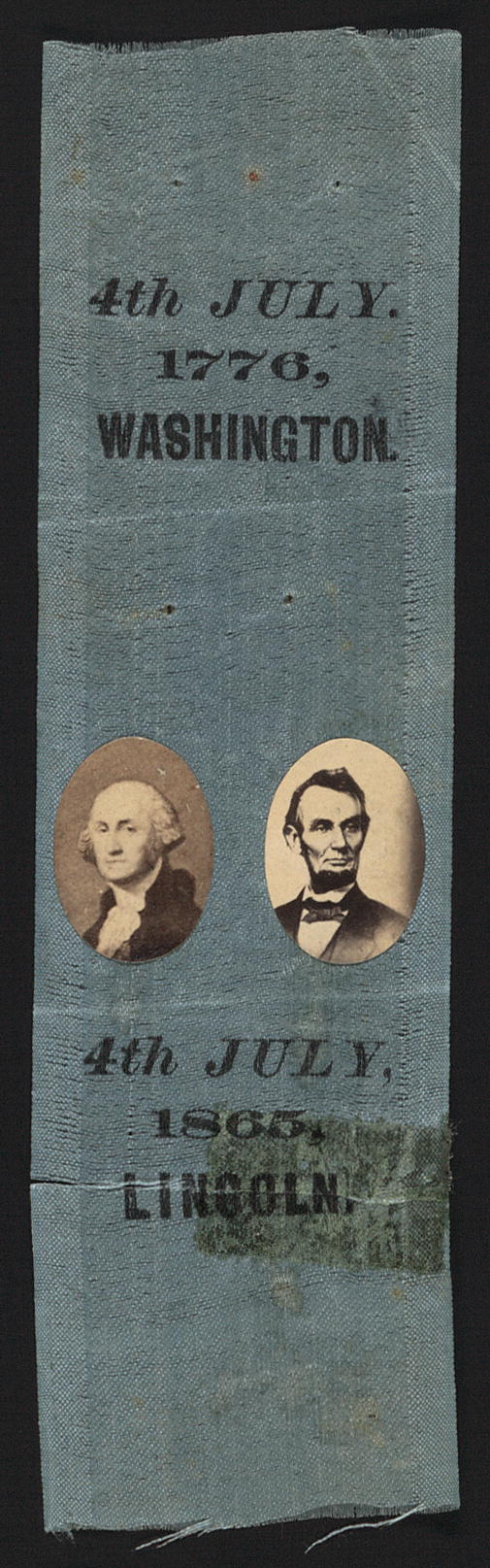
memorial badge (LOC:)

people showed “spirit of devout gratitude and unselfish patriotism”

From The New-York Times July 6, 1865:

THE CELEBRATION OF INDEPENDENCE DAY.

The observance of the National Anniversary was characterized everywhere throughout the country by a sober heartiness and earnest enthusiasm, in perfect keeping with the peculiarities of the occasion. The public fully appreciated the moral grandeur of the festival. The all-pervasive sentiment, finding its expression in public utterances and private merrymakings, was profound gratitude at the happy issue of the terrible ordeal through which the nation has just passed victoriously. This feeling of gratitude, though dominant, was tempered, nevertheless, by the saddened memories which must cling for long, long years to the epoch of the rebellion. There was devout joy at the salvation of the country, redeemed from the dark stigma of slavery, and established on surer and better foundations as the land of a free people, whose right to self-government has been vindicated before the world, and whose success finds a response of thankfulness in the hearts of the down-trodden and oppressed among all peoples. There were also the sorrowful remembrances of homes made desolate, families bereft, broad lands devastated, and great cities laid waste by fratricidal strife. No wonder, then, that the day was fraught with conflicting emotions, and was not the less fruitful of sober thoughtfulness than exhuberant patriotism.

NY Times July 6 1865

NY Times July 6 1865

New York Times July 6 1865

New York Times July 6 1865

In all the demonstrations yesterday the gallant men to whose courage and endurance the nation owes its life, received, as was meet they should, the homage of a grateful people. Their’s was the honored place in the public celebrations and at the festive board. The people themselves mingled harmoniously together, everywhere imbued with the same spirit of devout gratitude and unselfish patriotism, animated by the same noble sentiment which the late President so forcibly expressed, of “malice toward none — charity for all,” and thus showed in their manner of observing the day that they were worthy of the heritage of a free and enlightened republic.

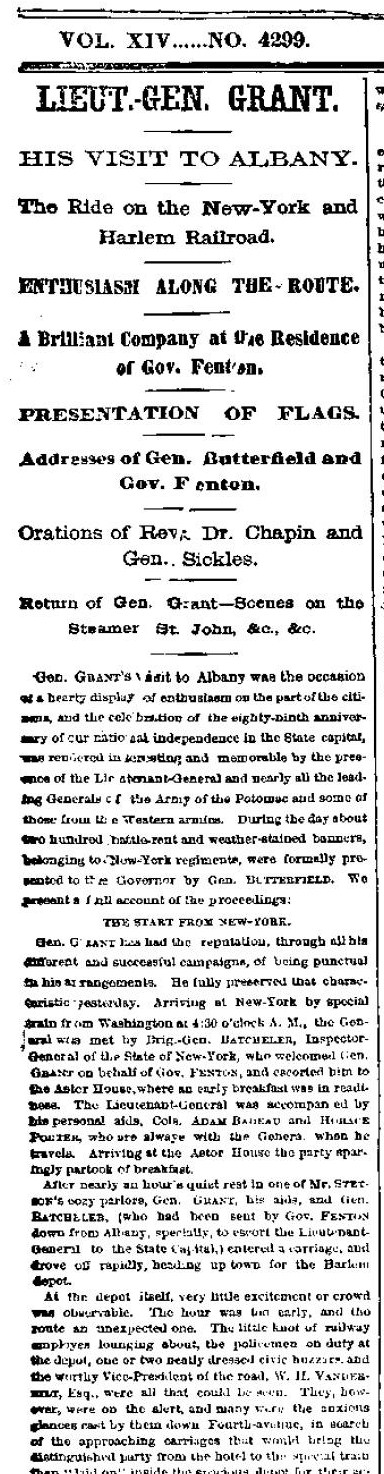
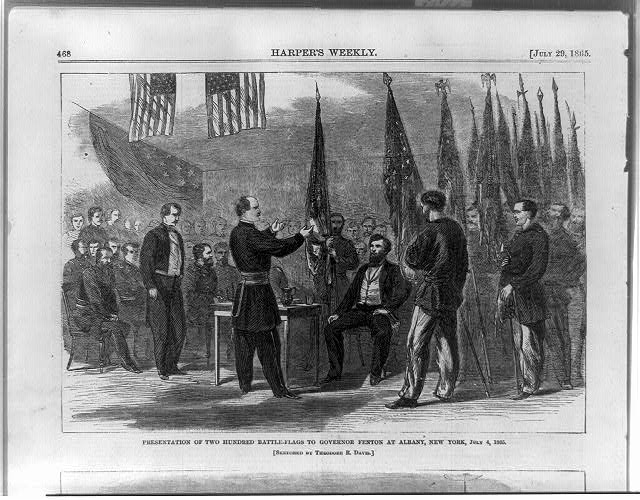
General Grant attracted a lot of attention as he traveled by train from New York City to Albany on the Fourth. At Albany General Butterfield presented many New York regimental battle-flags to Governor Fenton. Further North in Saratoga another Union general urged a charitable policy towards the defeated rebels. From a Seneca County, New York newspaper in July 1865:

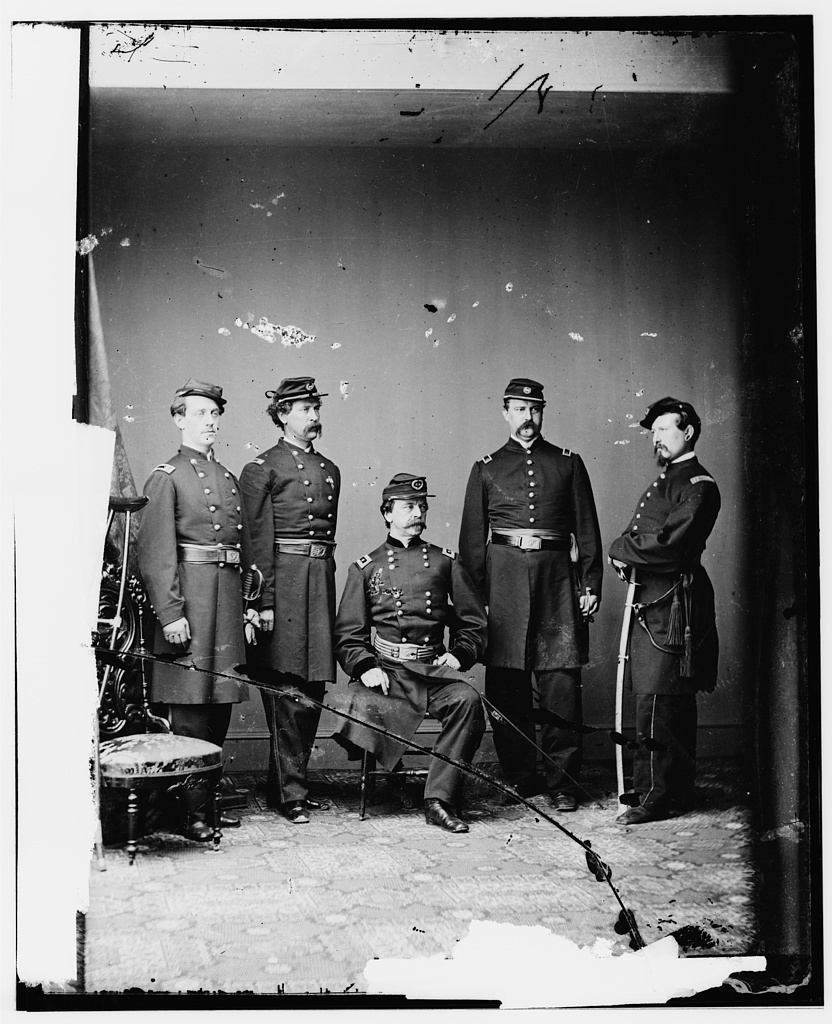
GENERAL SICKLES, who lost a leg during the rebellion, was at Saratoga on the 4th and made a speech on the state of the country. He simply urged the policy of mercy and fraternity towards the subjugated foe, and made this pointed thrust at the radical hyenas who thirst for the blood of the prostrate victims: “If those who have served their country in the field can can sincerely look with these sentiments upon those with whom they have been so lately engaged in battle, then, I think the civilians throughout the land – especially the politicians who have done so much to get us into this war – can do so.

Gen. Daniel E. Sickles & Staff  (LOC: http://www.loc.gov/item/brh2003003954/PP/)

General Sickles and staff after Gettysburg

Presentation of two hundred battle-flags to Governor Fenton at Albany, New York, July 4, 1865 / sketched by Theodore R. Davis. (Harper's Weekly June 29, 1865; LOC: http://www.loc.gov/item/89706322/)

“Presentation of two hundred battle-flags to Governor Fenton at Albany, New York, July 4, 1865 / sketched by Theodore R. Davis. ” (Library of Congress)

____________________________________________________________________
In Seneca Falls, New York the day was beautiful, the war had ended, peace, returned soldiers marched in the procession and were honored. Unfortunately, the fireworks were only fair. From a Seneca County, New York newspaper in 1865:

Soldier's return quickstep  (1865; LOC: http://www.loc.gov/item/ihas.200000280/)

a tune for the 148th’s band? (1865; Library of Congress, Music Division.)

The Celebration.

The celebration of the Fourth of July in this village was in all respects a successful and imposing demonstration. The weather was propitious and the occasion one of no ordinary interest. At an early hour the people began to assemble and by the time the procession commenced forming a very large crowd thronged the streets, all anxious and eager to participate in the festivities of the day. The morning train from the west brought in the splendid Band of the 148th regiment, and large delegations from neighboring towns. At 10 o’clock the procession was formed on State street under Brigadier General Guion and his assistants, and conducted through the principal streets to the Park, where a large stand had been erected for the occasion. In the procession were a large number of returned soldiers of the 15th and 50th Engineers, the 148th regiment, the 8th cavalry and the 3d Artillery, bearing their appropriate colors, and preceded by a fine band of martial music. Conspicuous in the procession were the colors which the gallant 148th regiment had borne through so many sharp engagements. The boys of the 8th cavalry carried a banner upon which was inscribed “Heroes of Sixty-four Battles.”There were also quite a number of veterans of 1812 in the procession, among the number our venerable friend Gen. Z.A. Disbrow, of Waterloo. During the parade through the streets the reception of the returned soldiers was most enthusiastic, they being the object of the attention of all. The music of the 148th Band was particularly fine during the march.

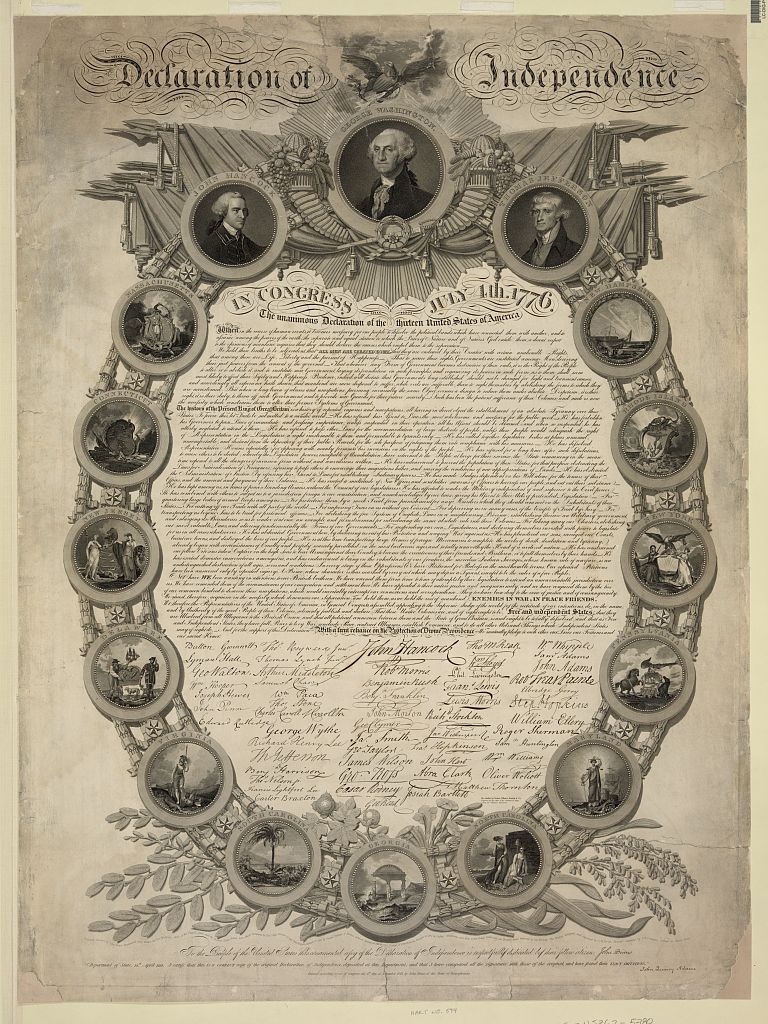
Declaration of Independence (1819; LOC: http://www.loc.gov/item/2003690785/)

well-read document (1819, Library of Congress)

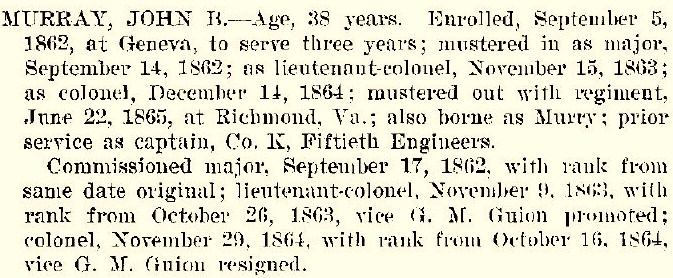
The exercises at the Park were of a very pleasant character. The President of the day, Mr. Abram Failing, announced the order of exercises, which consisted of prayer by the Rev. Mr. Baker, the reading of the Declaration of Independence by Charles A. Hawley, Esq., an an oration by Col. John B. Murray, interspersed with patriotic airs by the Band of the 148th. Mr. Hawley read the Declaration of Independence very acceptably, and Col. Murray spoke with his accustomed force, vigor and eloquence. His remarks were most favorably received. Immediately after the oration, Col. Johnson alluded to the proposition for an erection of a suitable monument to those from our town who have fallen in the defense of the government, announcing that a meeting for that purpose would be held at Union Hall this (Friday) afternoon.

After the benediction by the Rev. Mr. Oakley of the baptist Church, the procession re-formed and marched to Union Hall where a sumptuous dinner had been provided by the ladies of the place. The tables were bountifully supplied with all the substantials and delicacies of the season and their appearance reflected much credit upon all interested in their arrangement. Not being present at the Hall we cannot particularlize as to what occurred, but learn that everything passed off most agreeably to all.

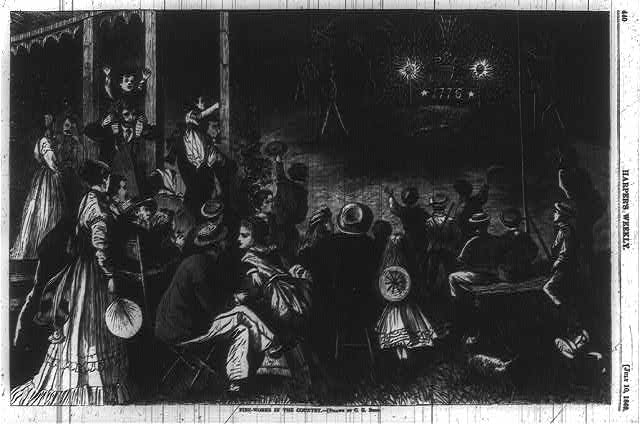
Fireworks in the country  (Harper's Weekly 10 July 1869,; LOC: http://www.loc.gov/item/2003673135/)

what might have been (from Harper’s Weekly July 10 1869 (Library of Congress))

The Horse fair brought together a large concourse of people and was one of the most attractive features of the day. It was all respects a success.

The Fireworks in the evening were fair, but not brilliant. The exorbitant price of every thing of a pyrotechnical character precluded the committee from the purchase of many very brilliant pieces. No accident occurred during the display, and the people generally expressed themselves satisfied with the entertainment.

This closed the Fourth so far as relates to the public celebration. The affair was creditable to all concerned, and every way worthy of the day of the occasion.

John B. Murray

“force, vigor and eloquence”

The success of the Horse Fair kind of reminded me of the popularity of classic car shows today – people admiring a good-looking ride?

From a Seneca County, New York newspaper in July 1865:

Brigadier General Disbrow.

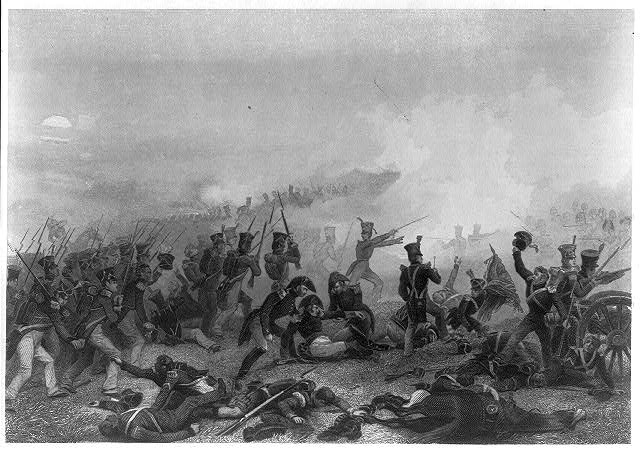
Lundy's Lane / from an original painting by Chappel. (1859; LOC: http://www.loc.gov/item/2012645298/)

Remember Lundy’s Lane!

Our old fellow townsman, Brig. Gen. Zalmon A. Disbrow, was ferried across Cayuga Lake last Fourth of July, it being just seventy years since he came into our county by the same route. Since the year 1795 General Disbrow has been a citizen of Seneca county. Occupying an honorable and distinguished post in the last war with Great Britain, his martial spirit has burned with unabated fire thro’ the winter of his declining years. In grateful remembrance of military services rendered, the State conferred upon him, last year, the star of a Brigadier of Veterans of 1812.

During the past war he has been as unswerving and earnest in his loyalty as his record would indicate. His voice and influence have been for that country his young arm helped sustain, and his action such as we might expect from one whose maiden vote was cast for Jefferson, and whose bold heart dared the battle’s front at Queenstown Heights and Lundy’s Lane. – Waterloo Observer.

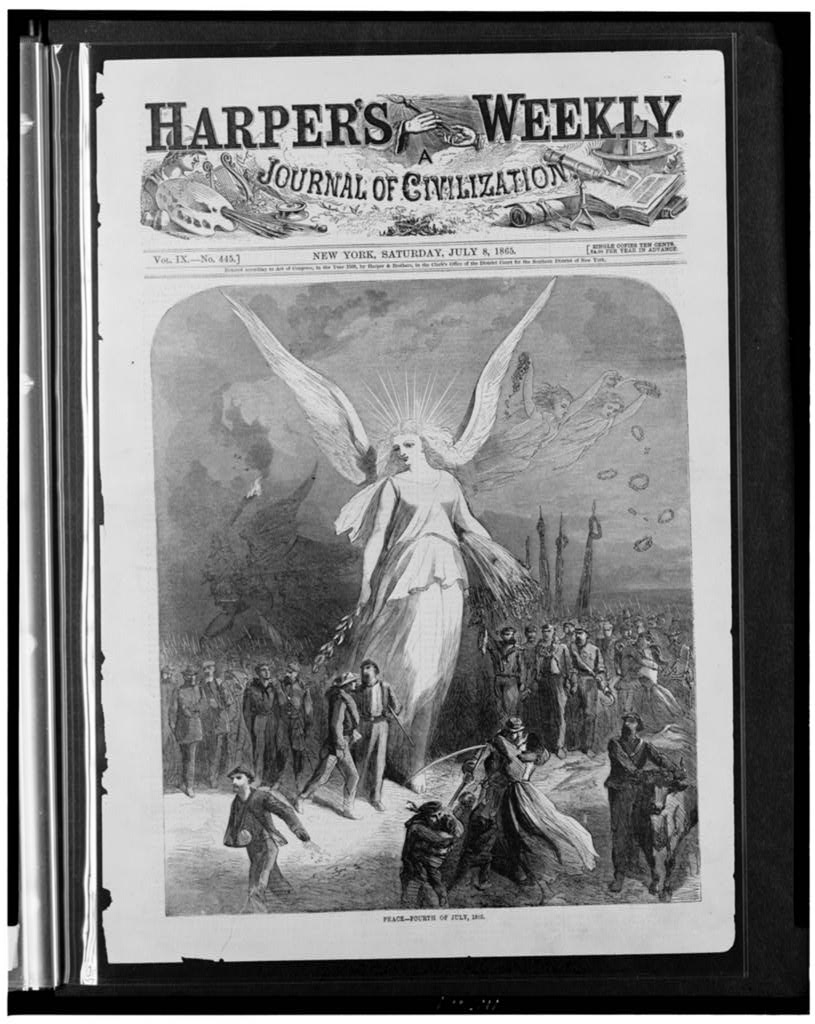
Peace--Fourth of July, 1865

Peace–Fourth of July, 1865 (Library of Congress)

________________________________________________________________
________________________________________________________________

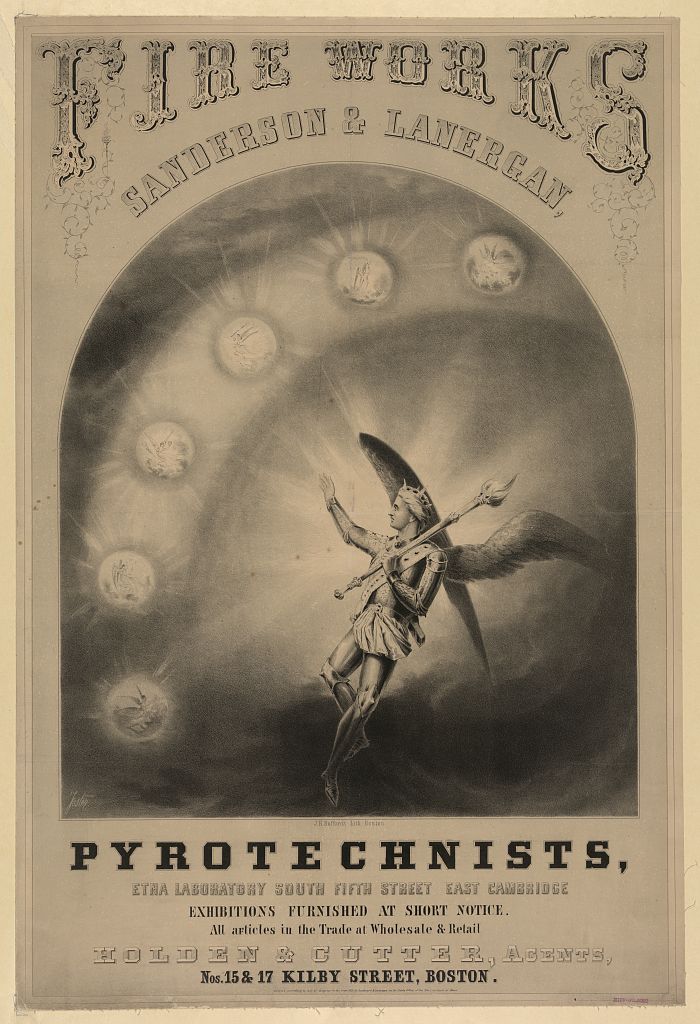
Fireworks Sanderson & Lanergan, pyrotechnists, ... (LOC: http://www.loc.gov/item/2003653318/)

ready for some “whiz, pop, screech, bang!”?

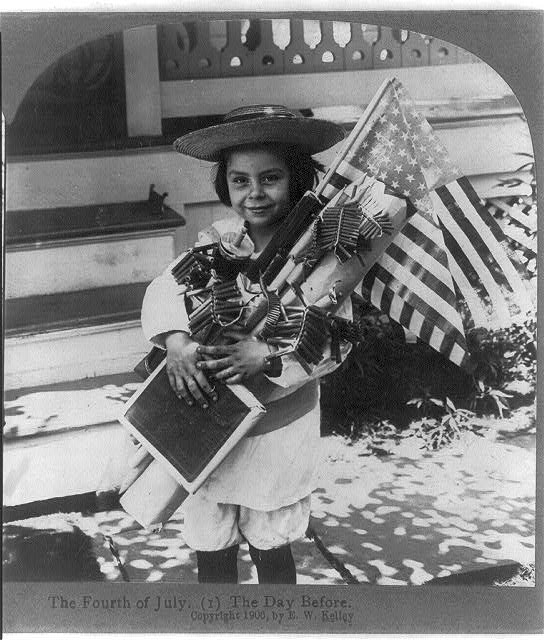
The Fourth of July (1) The Day Before (c1906; LOC: http://www.loc.gov/item/2004681979/)

“The Fourth of July (1) The Day Before ” (c.1906; Library of Congress)

Posted in 150 Years Ago This Week, Aftermath, Northern Society, Reconstruction, Veterans | Tagged , , , , , , , , , , , , , , , , | Leave a comment

“noble devotion”

"[Portrait of Maj. Gen. George G. Meade, officer of the Federal Army, and corps commanders, vicinity of Washington, D.C., June 1865: Horatio G. Wright, John A. Logan, Meade, John G. Parke, Andrew A. Humphreys] " (Library of Congress)

“[Portrait of Maj. Gen. George G. Meade, officer of the Federal Army, and corps commanders, vicinity of Washington, D.C., June 1865: Horatio G. Wright, John A. Logan, Meade, John G. Parke, Andrew A. Humphreys] ” (Library of Congress)

From The New-York Times June 30, 1865:

ARMY OF THE POTOMAC.; Maj.-Gen. Meade’s Farewell Order.

WASHINGTON, Thursday, June 29.

The farewell order of Gen. MEADE is published. It is as follows:

HEADQUARTERS OF THE ARMY OF THE POTOMAC, June 28, 1865.

SOLDIERS: This day two years ago, I assumed command of you under the orders of the President of the United States. To-day, by virtue of the same authority, the army ceasing to exist, I have to announce my transfer to other duties, and my separation from you. It is unnecessary to enumerate all that has occurred in these two eventful years, from the grand and decisive battle of Gettysburgh, the turning point of the war, to the surrender of the Army of Northern Virginia at Appomattox Court-house. Suffice it to say that history will do you justice. A grateful country will honor the living, cherish and support the disabled, and sincerely mourn the dead. In parting from you, your Commanding General will ever bear in memory your noble devotion to your country, your patience and cheerfulness under all the privations and sacrifices you have been called on to endure.

Soldiers, having accomplished the work set before us, having vindicated the honor and integrity of our government and flag, let us return thanks to Almighty God for his blessing in granting us victory and peace, and let us earnestly pray for strength and light to discharge our duties as citizens as we have endeavored to discharge them as soldiers.

GEORGE G. MEADE,

Major-General United States Army.

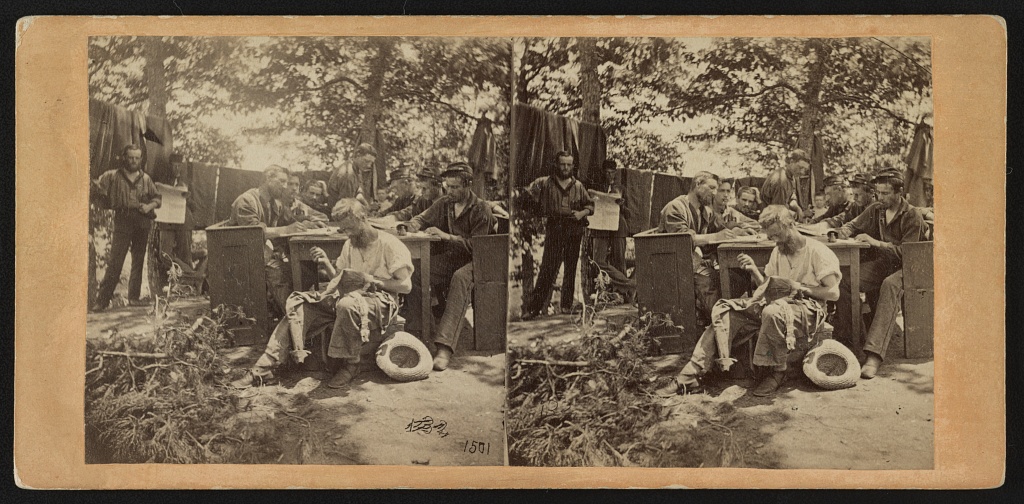
"War views. No. 1501, Camp life, Army of the Potomac - writing to friends at home " (LOC: http://www.loc.gov/item/2012649696/)

the stories they could tell (“War views. No. 1501, Camp life, Army of the Potomac – writing to friends at home” (1865; Library of Congress))

In his Memoirs Ulysses S. Grant summarized General Meade’s performance during the war:

General Meade was an officer of great merit, with drawbacks to his usefulness that were beyond his control. He had been an officer of the engineer corps before the war, and consequently had never served with troops until he was over forty-six years of age. He never had, I believe, a command of less than a brigade. He saw clearly and distinctly the position of the enemy, and the topography of the country in front of his own position. His first idea was to take advantage of the lay of the ground, sometimes without reference to the direction we wanted to move afterwards. He was subordinate to his superiors in rank to the extent that he could execute an order which changed his own plans with the same zeal he would have displayed if the plan had been his own. He was brave and conscientious, and commanded the respect of all who knew him. He was unfortunately of a temper that would get beyond his control, at times, and make him speak to officers of high rank in the most offensive manner. No one saw this fault more plainly than he himself, and no one regretted it more. This made it unpleasant at times, even in battle, for those around him to approach him even with information. In spite of this defect he was a most valuable officer and deserves a high place in the annals of his country.

[Portrait of Maj. Gen. George G. Meade, officer of the Federal Army, and staff, vicinity of Washington, D.C., June 1865]  (LOC: http://www.loc.gov/item/cwp2003000354/PP/)

“Portrait of Maj. Gen. George G. Meade, officer of the Federal Army, and staff, vicinity of Washington, D.C., June 1865” (Library of Congress)

Posted in 150 Years Ago This Week, Aftermath | Tagged , , | Leave a comment