The trials of Silas Moore

Silas G Moore 33rd

Moore’s record in the 33rd Volunteer Infantry

From a Seneca County, New York newspaper in May 1864:

Returned to the Service.

The trial of SILAS MOORE, of this village, at Elmira, for desertion, resulted in his conviction and he was sentenced to serve in the army for the term of one year and ten months. MOORE enlisted with Capt. GUION in the old 33d regiment, but soon after the regiment was mustered into the service, deserted and returned home. He claims, however, that he was not regularly mustered, and that under some arrangement with the Captain, he was not to serve. The military authorities thought otherwise, and the fact of his name being found on the muster roll at Washington, was pretty conclusive that he ought to serve out his time.

MOORE has been acting Deputy Provost Marshal in this vicinity for the last eight or ten months, putting on a great many airs, and doing pretty much as he pleased with the volunteers. He has evidently made a good thing speculating upon the short comings and misfortunes of the soldiers.

It looks like Mr. Moore at least began serving his sentence in the N.Y. 179th Volunteer Infantry:

Silas G Moore 179th

just deserts? (recorded in the 179th roster)

The 179th New York Infantry Regiment joined the Army of the Potomac at Cold Harbor on June 11, 1864.

According to a report at the National Archives one of the responsibilities of the Provost Marshal General’s Bureau was to oversee the arrest of deserters.

Posted in 150 Years Ago This Month, Military Matters, Northern Society | Tagged , , , , , | Leave a comment

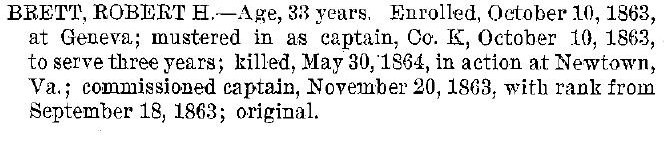
Captain Brett killed

During the Civil War New York’s 33rd Volunteer Infantry was a two-year regiment. After it was mustered out on June 2, 1863, one of its members who re-enlisted was Robert H. Brett, who later joined the 1st Veteran Cavalry and went back for more. Despite some date discrepancy there is a good chance Captain Brett was killed or mortally wounded 150 years ago today.

From a Seneca County, New York newspaper in June 1864:

Capt. Brett Killed in a Skirmish.

A corresponend [sic] of the Baltimore American gives the following account of the skirmish, in which Capt. BRETT was killed:

MARTINSBURG, May 31st, 1864. – On Monday morning early, as a train of sixteen wagons, loaded with medical stores, with a guard of eighty-five men from this place, was proceeding to general Hunter’s headquarters, when at Newton, eight miles beyond Winchester, they were assailed by about three hundred and fifty Rebel cavalry, under the notorious Gilmore. After a gallant resistance our men were obliged to leave their train in the hands of the enemy, who cut the horses loose and burnt the wagons. Just at the time they were winding up their little programme a train of empty wagons, with a guard of infantry coming this way, came upon them, when they were obliged to beat a hasty retreat, leaving some twenty prisoners in our hands. We have to regret the death of Captain Brett, of the 1st New York Veteran Cavalry, who fell gallantly leading his men. Yours, D.J.A.

I did not notice anything about this skirmish in Harry Gilmor’s book
Another clipping from a Seneca County, New York newspaper in June 1864:

CAPT. BRETT’s FUNERAL. – The funeral of ROBERT H. BRETT, of the 1st Veteran cavalry, took place at Waterloo on Sunday afternoon, and was very largely attended. – He was buried with Masonic honors, and delegations of the order were present from Geneva, Seneca Falls, and Bearytown.

RH Brett 1st NY Vet Cavalry

Robert H. Brett

You can see captain Brett’s grave stone in Waterloo, New York here. Waterloo still observes the traditional May 30th Memorial Day.

Posted in 150 Years Ago This Week, Military Matters | Tagged , , , | Leave a comment

hopeful thinking

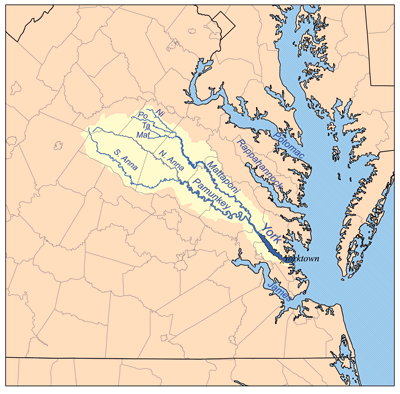
map of the York River Watershed and includes the Mattaponi and Pamunkey rivers. I, Karl Musser, created it based on USGS data.

now south of the Pamunkey

After church five weeks ago (in 1864 time) General George Meade drove some visitors over to Culpeper to see the new Lieutenant General. 150 years ago today the Army of the Potomac had spent almost four weeks of fighting and flanking and slogging its way toward the rebel capital. He at least wrote to his wife that he hoped a grand finale at Richmond might be soon. From The Life and Letters of George Gordon Meade … (page 199):

SOUTH SIDE OF PAMUNKEY RIVER, HANOVERTOWN,
HEADQUARTERS ARMY OF THE POTOMAC, 10 A.M., May 29, 1864.

We have crossed the Pamunkey, and are now within eighteen miles of Richmond. Lee has fallen back from the North Anna, and is somewhere between us and Richmond. We shall move forward to-day to feel for him. We are getting on very well, and I am in hopes [we?] will continue to manœuvre till we compel Lee to retire into the defense of Richmond, when the grand decisive fight will come off, which I trust will bring the war to a close, and that it will be victory for us.

General Meade’s tone changed over the next few days. For example, the “grand decisive fight” at Richmond became a “quasi-siege” of Richmond on June 1st.

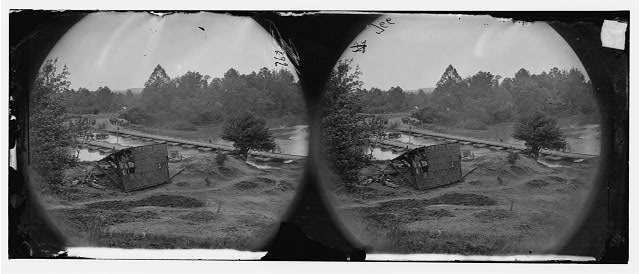
Hanovertown Ferry, Virginia. Canvas pontoon bridges at Hanovertown Ferry, constructed by the 50th N.Y.V. Engineers, May 28, 1864 (by Timothy H. O'Sullivan, May 1843; LOC:  LC-DIG-cwpb-00369)

pontoons bridging the Pamunkey – built by 50th NY Engineers May 28, 1864

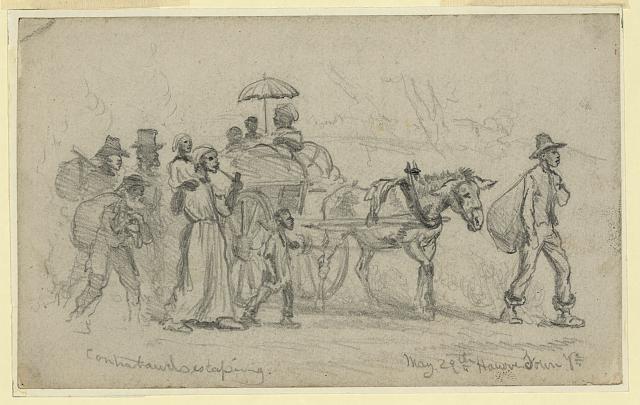
The following drawing by Edwin Forbes is dated May 29, 1864 and said to be “contrabands escaping” and I think it might say “Hanover Town”:

Contrabands escaping (LOC: C-DIG-ppmsca-20701)

Contrabands escaping

Karl Musser’s map of the York River watershed is licensed by Creative Commons

Posted in 150 Years Ago This Week, Military Matters, Overland Campaign | Tagged , , , | Leave a comment

capital gratitude

[Illustrated Civil War "Union Envelopes"]: Rebel arms of Virginia (between 1861 and 1865; LOC:  LC-USZ62-53595)

Union take on Virginia’s State arms

150 years ago this week VMI cadets were in Richmond, where the were thanked for their valor in helping the Confederates win the Battle of New Market. Governor “Extra Billy” Smith also presented them with a new flag.

From the Richmond Daily Dispatch May 28, 1864:

The Lexington Cadets — Presentation of a flag.

The Cadets of the Virginia Military Institute were last evening the recipients of well-deserved honors at the hands of the State authorities. At about half-past 6 o’clock they marched into Capitol Square, headed by Smith’s band, and were drawn up in line on the avenue fronting the Governor’s mansion. They bore with them their tattered colors, which waved triumphantly through the battle in the Valley, and which were soon to be replaced by a new and handsome flag. Governor Smith, General Bragg, and General E. L. Smith (of the Institute) soon made their appearance in front, and the Governor unfurled a flag of blue silk, bearing the State arms of Virginia, which he presented to the Cadets with appropriate remarks, in which he told them that he placed implicit confidence in their ability and determination to defend it. The flag was gracefully received by the color bearer. The corps was then reviewed by General Bragg, who seemed much pleased with its fine soldierly bearing. After this the Cadets marched to the east front of the Washington Monument, and were addressed by Speaker Bocock. He told them of the resolution, unanimously adopted by the House of Representatives, thanking them for their gallant conduct in the battle of the 15th of May, under General Breckinridge, and added that the country expected them to maintain the reputation they had so heroically won. He continued some fifteen or twenty minutes in a strain of patriotic eloquence, and closed by invoking the blessing of God upon their future movements.–This over, the Cadets marched back to their quarters.

The ceremonies throughout were of a highly interesting character, and were witnessed by an immense throng, including a large number of ladies.

From Encyclopedia Virginia:

Shortly after three o’clock, the Confederate general ordered another attack on Bushong Hill, this time calling in the boys from VMI. “They are only children,” he had told an aide earlier in the day, but in fact their average age was eighteen, and reminiscent of the “foot cavalry” made famous two years earlier by Thomas J. “Stonewall” Jackson they had marched eighty miles from Lexington to New Market in just a few days. When a hundred-yard-or-more gap in the Confederate lines opened up where the Virginians had retreated under heavy artillery fire, Breckinridge used the cadets to plug the hole and sent them after the Union battery. The cadets charged across a field so muddy that some of their shoes were sucked off their feet—hence the legendary “Field of Lost Shoes”—and eventually they were able to take Kleiser’s battery and even a few members of the 34th Massachusetts. Sigel’s men began to panic, with Sigel himself riding up and down the line, “all jabbering in German,” as one of his officers recalled, so that “the purely American portion of his staff were totally useless to him.”

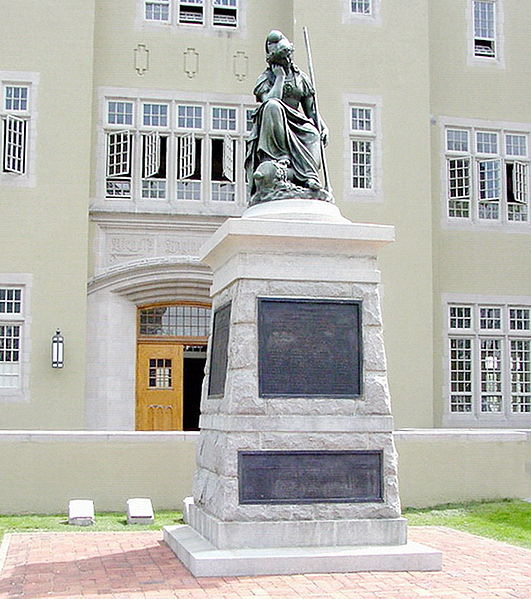
Moses Jacob Ezekiel, one of the wounded cadets, eventually sculpted “Virginia Mourning Her Dead”, which is still situated at VMI:

 The state of Virginia "Mourning Her Sons". The young Virginia Military Institute Cadets killed at the Battle of New Market defending Virginia are buried behind the memorial and headstones appear as white "blocks".

“Virginia Mourning Her Dead”

Posted in 150 Years Ago This Month, 150 Years Ago This Week, Confederate States of America, Military Matters, Southern Society | Tagged , , , , , | Leave a comment

“salutary retaliation” plank

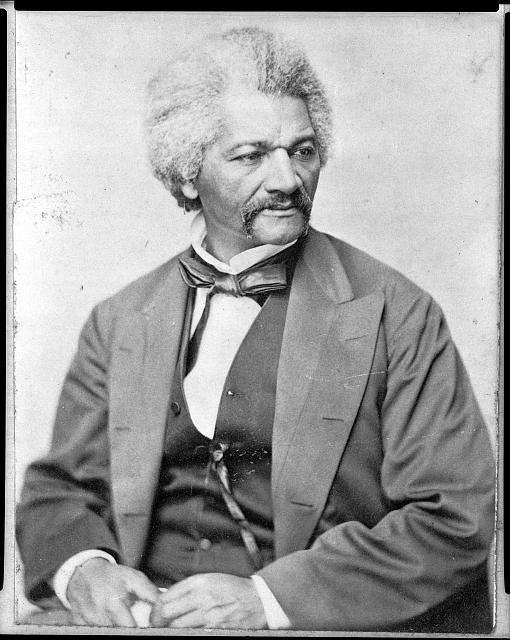
Frederick Douglass, head-and-shoulders portrait, facing right (ca. 1850-1860?; LOC: LC-USZ62-15887)

no Government positive or negative discrimination based on class

150 years ago this week anti-Lincoln Republicans convened in Cleveland to set up an alternative party to contest the 1864 presidential election. Here Frederick Douglass set out his expectations for the fledgling party’s platform. Understandably (Mr. Douglass pushed for the enlistment of blacks), Fort Pillow and Southern treatment of black soldiers in general seems to have been one of his main concerns.

From The New-York Times May 27, 1864:

THE CLEVELAND CONVENTION.; Letter from Mr. Fred. Douglass.

From the New-York Tribune of yesterday.

SIR: I mean the complete abolition of every vestige, form and modification of Slavery in every part of the United States, perfect equality for the black man in every State before the law, in the jury-box, at the ballot-box and on the battle-field; ample and salutary retaliation for every instance of enslavement or slaughter of prisoners of any color. I mean that in the distribution of offices and honors under this Government no discrimination shall be made in favor of or against any class of citizens, whether black or white, of native or foreign birth. And supposing that the convention which is to meet at Cleveland means the same thing, I cheerfully give my name as one of the signers of the call.

Yours, respectfully,

FREDERICK DOUGLASS.

E. GILBERT, Esq.

ROCHESTE[R], May 23, 1864.

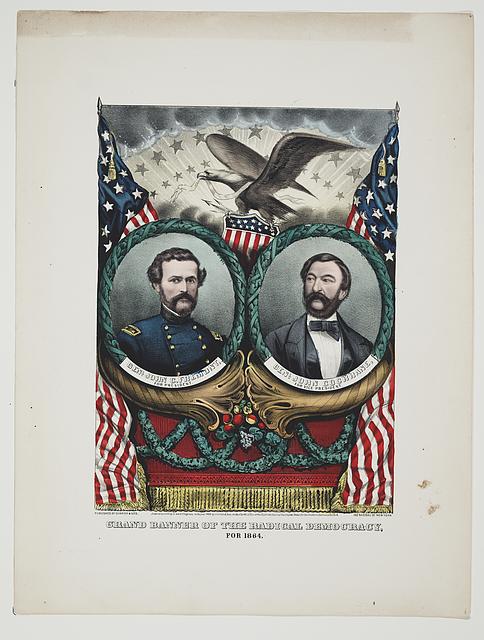
You can read a review of the Radical Democracy (and the 1864 campaign) at HarpWeek. On May 31st the delegates nominated the first Republican presidential candidate, John Fremont, for president and John Cochrane as his running mate. The June 11, 1864 issue of Harper’s Weekly (at Son of the South) published a one paragraph summary of the convention and its platform. I did not notice a salutary retribution plank. The delegates voted to call themselves the Radical Democracy party.

Grand banner of the radical democracy, for 1864 ( New York : Published by Currier & Ives, c1864; LOC: v)

Fremont and Cochrane

Posted in 150 Years Ago This Week, Northern Politics During War, Northern Society, The election of 1864 | Tagged , , , , , | Leave a comment

Christian Commission

we brought up with us nearly three thousand letters, written for disabled soldiers by the delegates of the commission.

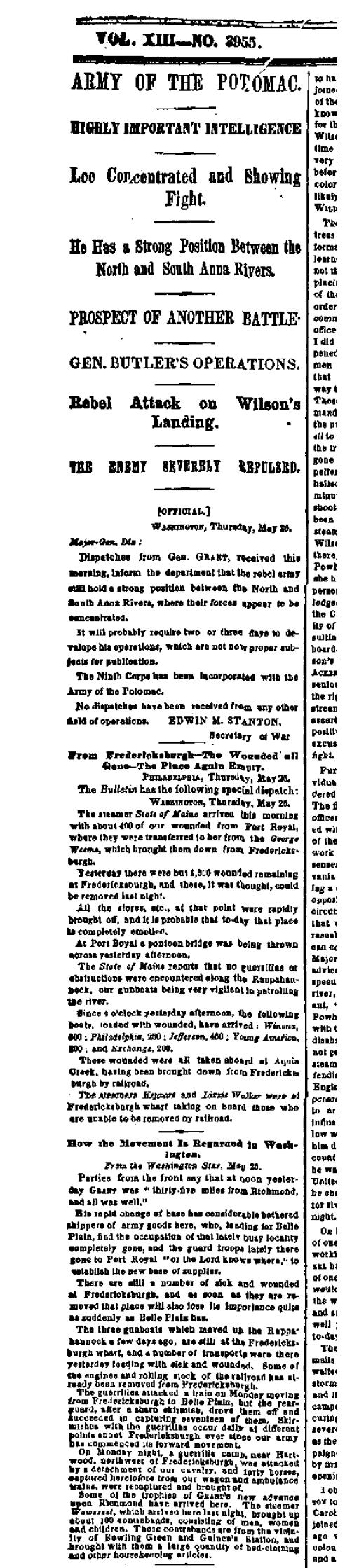
NY Times 5-27-1864

The New-York Times May 27, 1864

The New York Times column at left features a matter-of -fact telegram dated May 26, 1864 from Secretary of War Stanton to New York City commander General Dix (no glorious Union victories 150 years ago today). In addition most of the wounded in Fredericksburg have been removed. And Grant’s constant flanking movements were nettling the shippers that had to supply the huge Army of the Potomac. From The New-York Times May 27, 1864:

How the Movement Is Regarded in Washington.

From the Washington Star, May 25.

Parties from the front say that at noon yesterday GRANT was “thirty-five miles from Richmond, and all was well.”

His rapid change of base has considerable bothered shippers of army goods here, who, loading for Belle Plain, find the occupation of that lately busy locality completely gone, and the guard troops lately there gone to Port Royal “or the Lord knows where,” to establish the new base of supplies.

There are still a number of sick and wounded at Fredericksburgh, and as soon as they are removed that place will also lose its importance quite as suddenly as Belle Plain has. …

The United States Sanitary Commission was caring for the wounded soldiers at Fredericksburg. And so was the United States Christian Commission. From The New-York Times May 27, 1864:

The Christian Commission.

PHILADELPHIA, Wednesday, May 25, 1864.

To the Editor of the New-York Times:

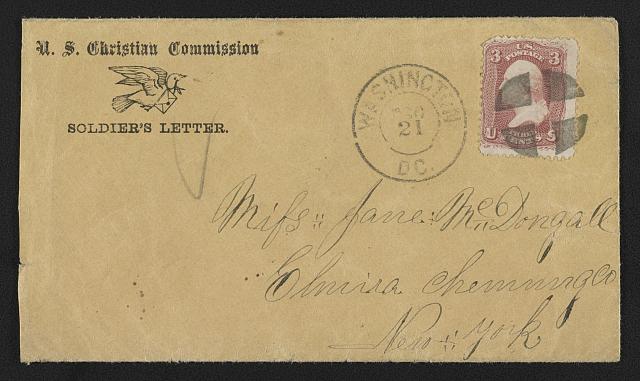
Having just returned from a week’s visit to the wounded in the late battles in Virginia, in company with Bishop MCILVAINE, of Ohio, it gives me great pleasure to assure the friends of those noble heroes throughout the country that our Government is doing everything in its power to relieve suffering, (more than any Government ever did before,) and that we found the work of the Christian Commission thoroughly organized, with an efficient corps of over two hundred and fifty volunteer delegates laboring incessantly for the temporal and spiritual comfort of our soldiers. As the result of one day’s labor at the headquarters of the commission in Fredericksburgh, we brought up with us nearly three thousand letters, written for disabled soldiers by the delegates of the commission.

Civil War envelope for U.S. Christian Commission showing carrier pigeon with letter (between 1861 and 1865; LOC: LC-DIG-ppmsca-31700)

part of its ministry

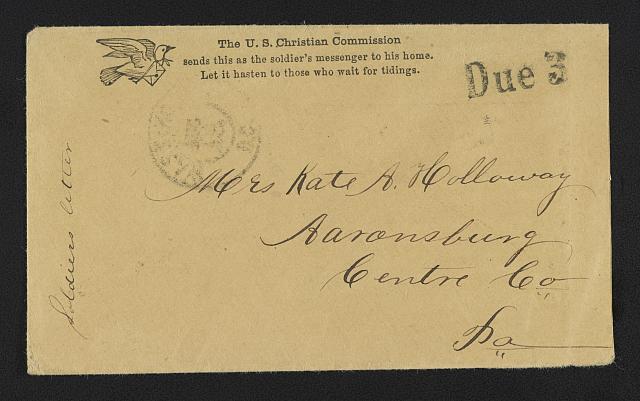
Civil War envelope for U.S. Christian Commission showing carrier pigeon with letter (between 1861 and 1863; LOC:  LC-DIG-ppmsca-31726 ))

“labor of love”

The great difficulty is in the transportation of supplies. Encouraged by the generous contributions of the people to our treasury, we have made arrangements to remedy this by purchasing and sending forward two additional wagons, with eight horses. We also chartered two schooners and a tugboat. To make the work of the commission more efficient on the field, we arrange for a set of delegates to work by day and another by night, so that there will be Christian men always present to minister to the sick and wounded and to stand by the bedside of the dying. The delegates of the commission have already accomplished a wonderful work, saving hundreds of lives and relieving untold suffering. They are still at their posts. It remains for the Christian philanthropic people of the land to keep them supplied with the means of carrying on and increasing their labor of love. GEO. H. STUART,

Chairman Christian Commission.

I’m not implying that the envelope images are examples of the Fredericksburg letters in the story.
____________________________________________________________
____________________________________________________________

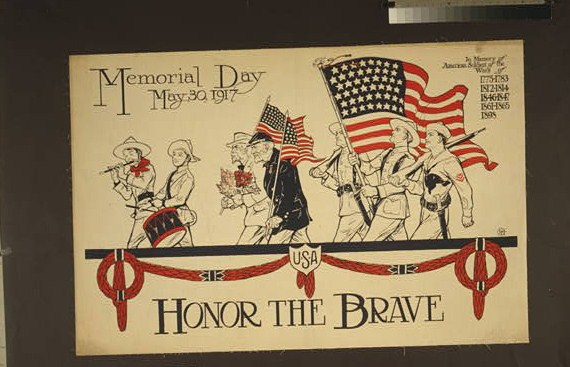
Honor the brave Memorial Day, May 30, 1917. (1917; LOC: LC-USZC4-8122)

Posted in 150 Years Ago This Week, Military Matters, Overland Campaign, Uncategorized | Tagged , , , , | Leave a comment

“God save the Lieutenant-General!”

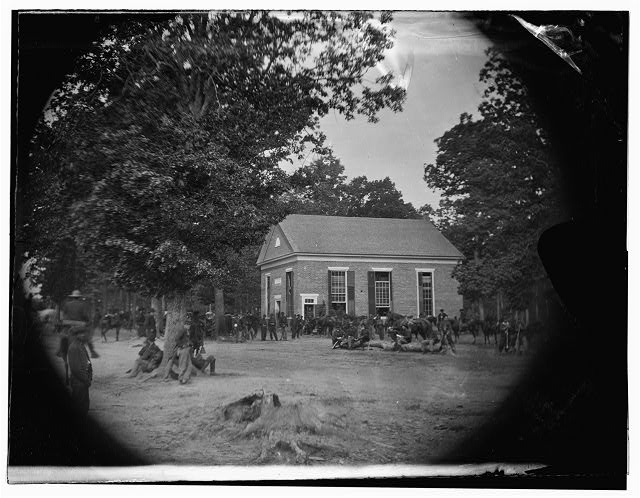
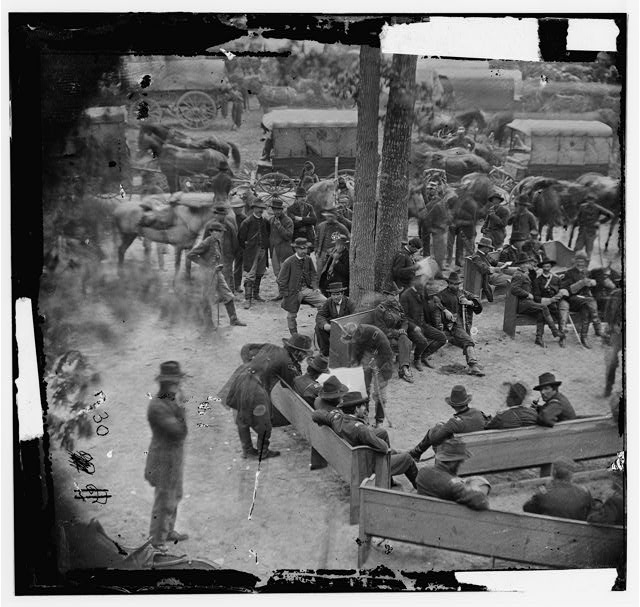
Massaponax Church, Va. View of the church, temporary headquarters of Gen. Ulysses S. Grant, surrounded by soldiers (by Timothy H. O'Sullivan, 1864 May 21; LOC:  LC-DIG-cwpb-01190)

“Massaponax Church, Va. View of the church, temporary headquarters of Gen. Ulysses S. Grant, surrounded by soldiers” May 21, 1864

From a Seneca County, New York newspaper in May 1864:

TO ALL PATRIOTS. – The New York Times proposes that the whole country send up prayers to Heaven for the protection of the great leader of our army, Lieut-Gen. Grant. His great Lieutenant has fallen – Sedgwick is no more. The heroic Wadsworth sleeps in death. Hays, Stevenson, Rice and Owens have fought their last fight. many others of his staunchest Generals, scores upon scores of his Colonels, and hundreds of other invaluable officers, have been killed or put out of the field by wounds. How terrible the thought that some one of the million whizzing bullets may perchance strike the head or heart of Gen. Grant. God save the Lieutenant General! God save the Lieutenant General! Amen! Amen!

I got fooled when I read this. I thought the Seneca County Democrat newspaper exaggerated the call for prayer in the Times into a sarcastic comment on the war and the Times’ support for its “vigorous prosecution”, but I was wrong. The Democrat paper played it straight except for the final Amens. From The New-York Times May 13, 1864:

To ALL PATRIOTS.

— Let the whole country send up prayers to Heaven for the protection of the great leader of our army, Lieut.-Gen. GRANT. His great lieutenant has fallen — SEDGWICK is no more. The heroic WADSWORTH sleeps in death. HAYS, STEVENSON, RICE and OWENS have fought their last fight. Many others of his staunchest Generals, scores upon scores of his Colonels, and hundreds of other invaluable officers, have been killed or put out of the field by wounds. How terrible the thought that some one of the million whizzing bullets may perchance strike the head or heart of Gen. GRANT. God save the Lieutenant-General! God save the Lieutenant-General!

Massaponax Church, Va. "Council of War": Gen. Ulysses S. Grant examining map held by Gen. George G. Meade (by Timothy H. O'Sullivan, 1864 May 21; LOC: LC-DIG-cwpb-01192)

“Massaponax Church, Va. “Council of War”: Gen. Ulysses S. Grant examining map held by Gen. George G. Meade” May 21, 1864

Posted in 150 Years Ago This Month, Military Matters, Northern Politics During War, Northern Society, Overland Campaign | Tagged , , | Leave a comment

deconstructing Bobby Lee

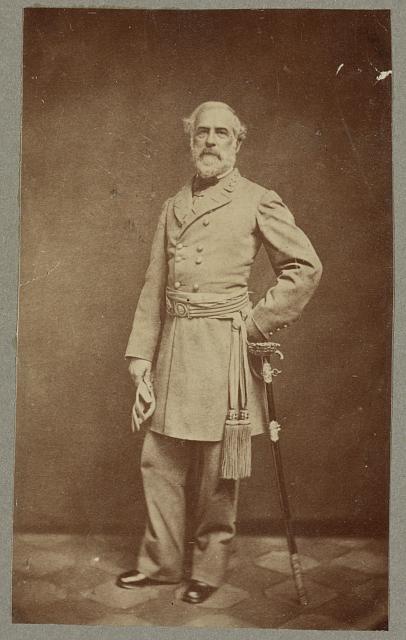
General Robert E. Lee, full-length portrait, standing, facing front, with left hand at waist, on sword, wearing military uniform (by Juilan Vannerson, 1864?; LOC: LC-DIG-ppmsca-35446)

bad blood

From The New-York Times May 23, 1864:

The Chivalry of the Rebel Gen. Lee.

“When monkeys are gods, what must the people be?” ROBERT E. LEE, Commander of the rebel army, is deemed the paragon of Southern chivalry. The rebels have always been vain of being led by one of such pure blood, such stainless honor. Justly enough by their standard. But let us put him to a civilized test.

What is his blood? His grandfather, R.H. LEE, had the taint of treason in him. Writing in 1790, on the Federal Constitution, he said, “When we [the South] attain our natural degree of population, I flatter myself that we shall have the power to do ourselves justice, with dissolving the bond which binds us together.” His great uncle, “Light-Horse HARRY,” was stigmatized by JEFFERSON, who knew him well, as “an intriguer,” “an informer,” a “miserable tergiversator.” Maj.-Gen. CHAS. LEE, of Revolutionary memory, and a kinsman, was, as one may see by IRVING’s Washington, not only a calumniator of WASHINGTON, but was a plotter to supersede him; he was tried by court-martial, after the battle of Monmouth, was found guilty of disobedience of orders, misbehavior before the enemy, and disrespect to the Commander-in-Chief; was subsequently dismissed from the service in disgrace, and soon afterward died in Berkley County, Virginia, leaving in his will these words: “I desire most earnestly that I may not be buried in any church or churchyard, or within a mile of any Presbyterian or consecrated meeting-house; for, since I resided in this country, I have kept so much bad company, while living, that I do not choose to continue it when dead.” The great uncle, ARTHUR LEE, was the libeler of FRANKLIN and JAY and JEFFERSON, and is described by TUCKER, in his life of the latter, to have been “singularly impracticable in his temper and disposition.” The uncle, HENRY LEE, was in Congress at the time of the Presidential struggle between JEFFERSON and BURR, and, according to TUCKER, advised “desperate measures” to defeat the former; and he was a man of such bad character that when, in 1830, Gen. JACKSON, whose fiery partisan he had been, sent his nomination to the Senate for the consulship at Algiers, Mr. TAZEWELL, of his own party and State, Chairman on Foreign Relations, reported against it, and it was unanimously rejected. It would be difficult to name an old family in this country, of any historical mark, whose “blood” has been shown to be of worse quality than that of the LEES of Virginia.

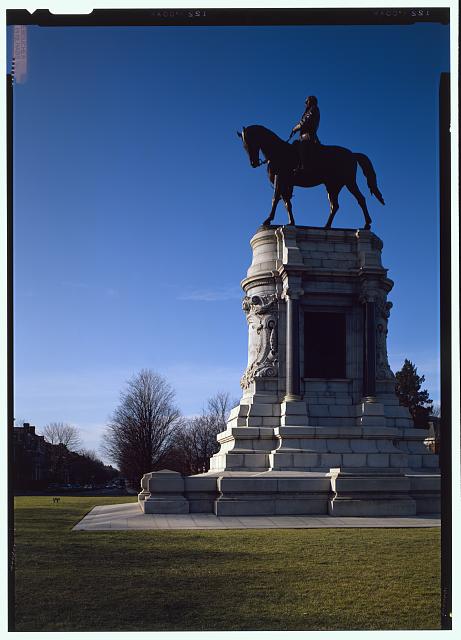
View of the south and east sides (duplicate of HABS No. VA-1295-2) - Lee Monument, Monument Avenue & Allen Avenue, Richmond, Independent City, VA

off his pedestal?

But it is not family that makes the gentleman, or the reverse. It is personal honor. Has ROBERT E. LEE this? We say emphatically that he has it not. He is deficient in its very first and most essential element — truth. He is as mendacious as BEAUREGARD himself. This can be proved incontestably, and that too without going back of the history of the last fortnight. On the 14th of this month he issued an address to his soldiers, which we have published. It is brief, but it contains five broad falsehoods. …[on Sigel, Averill, Steele, Sheridan, and Butler] …

Now these misstatements must have been willful. They are of a character that precludes the possibility of their being the product of mere misapprehension. LEE deliberately and flagitiously lied. If it be said in his behalf that he did it in order to keep up the drooping spirits of his soldiers, we have to say that it is an expedient which no soldier of honor ever adopts. No Commander of the Army of the Potomac has been guilty of anything of the kind. GRANT or MEADE would die on the spot before they would degrade their own manhood, and insult the manhood of their soldiers, by such deception.

The simple truth is that the very fact of a soldier’s abandoning his flag involves an abandonment of character. LEE received his military education from the Government, had been constantly honored and trusted by the Government, and it was the extreme of perfidy in him to turn traitor against the Government. The soul that could once work itself up to a crime like that is capable of any violation of professional honor or moral duty. Amazement is often expressed at the displays of turpitude by rebels who were formerly reputed high-minded men. But we do not sufficiently appreciate the terribly demoralizing effect of the very act of committing treason. It is not morally possible to perpetrate this supreme crime without wrenching and in fact breaking down the whole moral nature. Treason cannot be committed on any scale without its malignity extending to every part of the moral constitution. Fidelity lies at the very core of sound character, and when that rots, all rots.

Posted in 150 Years Ago This Week, Confederate States of America, Military Matters, Northern Society, Overland Campaign | Tagged , | Leave a comment

“lying about in heaps”

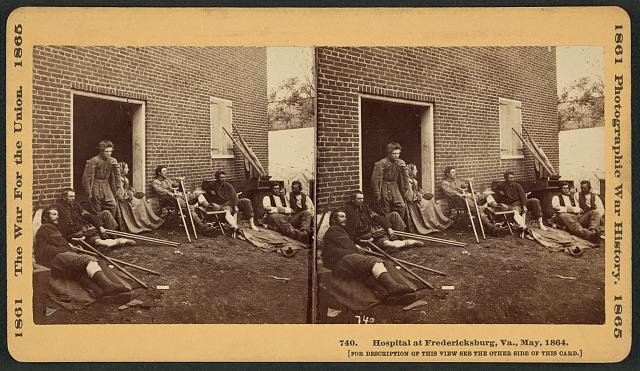
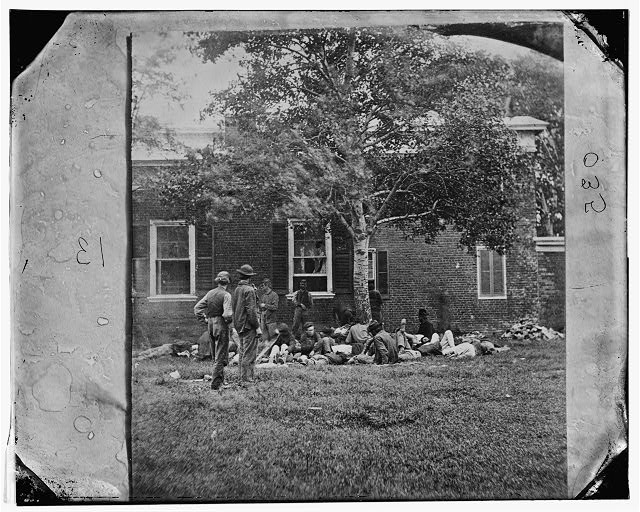
Hospital at Fredericksburg, Va., May 1864 (by James Gardner; LOC: LC-DIG-ppmsca-18952)

Hospital in Fredericksburg, May 1864. Nurse from Sanitary Commission

One of our local publications reprinted a report from the Albany Argus. From a Seneca County, New York newspaper in May 1864:

The Wounded at Fredericksburg.

HEART-RENDING SCENES.

From a gentleman who arivee [sic] in this city yesterday morning, direct from Fredericksburg, we learn some interesting particulars with reference to the scenes that are now to be witnessed in that city and vicinity. Our informant left Fredericksburg on Tuesday morning at eleven o’clock in company with a member of the Army of [?] Medical Corps.

They made the journey to Washington in an ambulance, driving all the way at a rapid rate for fear of being intercepted by guerrillas, who often harass travelers on the route. He states that on Monday, Moseby’s men were within four miles of Alexandria, where they captured ten or twelve sutler’s wagons, containing a quantity of medical stores.

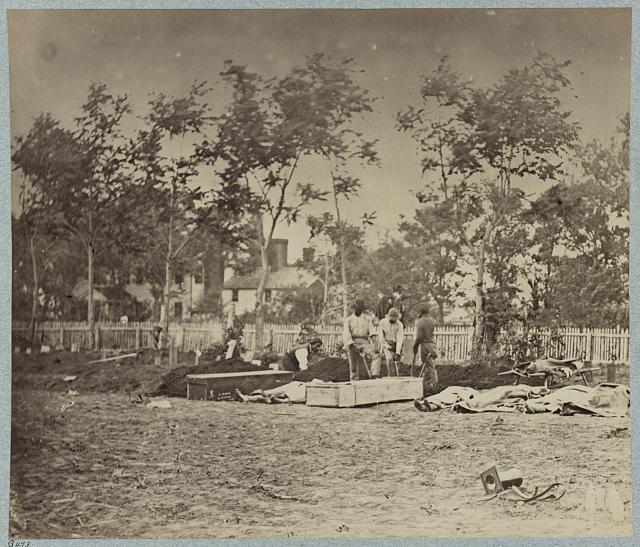
Fredericksburg, Virginia. Burial of Federal dead (by Timothy H. O'Sullivan, 1864 May [19 or 20]; LOC: LC-DIG-cwpb-01840)

burial of Union dead at Fredericksburg, May, 1864

The scenes in and about Fredericksburg baffled all attempt at description. The wounded, the dying and the dead were to be found everywhere and in every direction. Every house, barn, or other building that could afford shelter was occupied with the suffering wounded. The streets and alleys were also filled with them, while outside of the city acres of the fields were covered with the wounded and dying. The picture was the most heart rending that it was possible to behold. Thousands and tens of thousands of men lying about in heaps in the burning sun, bleeding to death for lack of medical attention, or famishing for want of nourishment and care. – Our informant says that their shrieks and groans are still ringing in his ears. Thousands were crying for a cup of cold water, and many were dying from the heat of the sun. At the time he left, the number of wounded in the city of Fredericksburg was estimated at 40,000. Quite a proportion of them were rebels, who lay indiscriminately mixed in among the Union men. The men who but a few hours before had met in deadly combat, now lay peacefully side by side. With them the Virginia Campaign was ended. Though fighting under different flags, they had been borne off the field together, and together many of them were waiting the approach of the messenger of death.

Fredericksburg, Va. Wounded from the Battle of the Wilderness (by James Gardner, May 1864; LOC: LC-DIG-cwpb-01842)

wounded at Fredericksburg from Wilderness


A Surgeon with whom he conversed, informed him that a large proportion of the wounds were breast wounds – the ball taking effect in the breast, neck or head. – Great numbers of the wounded were being constantly brought in – a detachment of three or four thousand men from the ambulance corps being engaged in that business. Some were brought in on cars, some on wagons, and some hobbled in on foot.

The impression among the suffering soldiers was that the engagements thus far had been drawn battles, but they felt great confidence in the result of the campaign. The soldiers were sure that Grant and his Generals were competent to lead the army on to victory, and to capture Richmond. – Among all the suffering to be witnessed, the patience exhibited was wonderful, and none of them seemed to regret that they had joined the Union Army. – Argus.

Burying the dead at hospital in Fredericksburg, Va. ( LC-DIG-ppmsca-32927)

“Burying the dead at hospital in Fredericksburg, Va.” (May 1864)

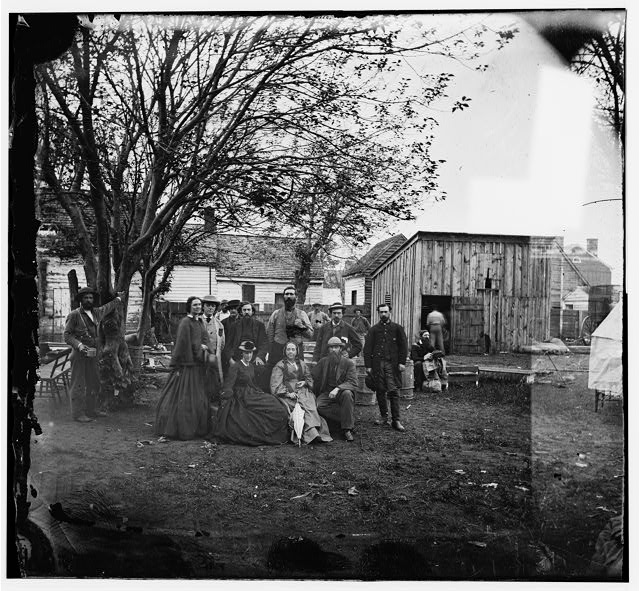
Fredericksburg, Va. Nurses and officers of the U.S. Sanitary Commission (by James Gardner, May 1864; LOC: LC-DIG-cwpb-01195)

hands full (members of the U.S. Sanitary Commission in Fredercksburg, May 1864)

Posted in 150 Years Ago This Month, Military Matters, Overland Campaign | Tagged , , , | Leave a comment

“we have been pretty severely thrashed”

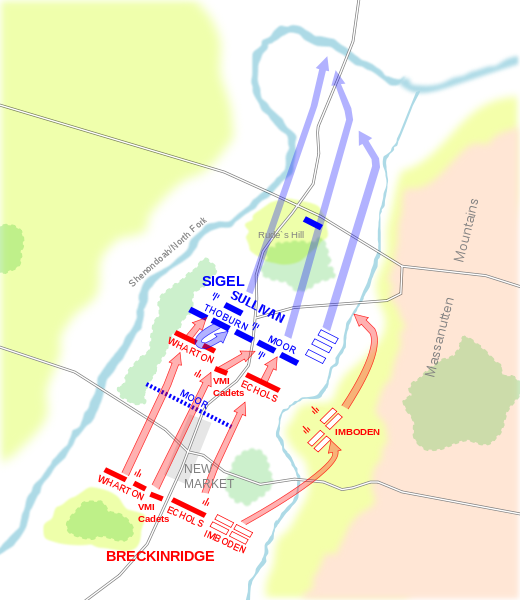
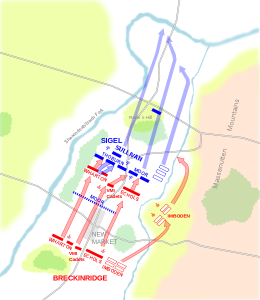
520px-New_Market.svg Andrei nacu

Battle of New Market

SENECA and his fellow soldiers in the 1st New York Veteran Cavalry took part in the May 15, 1864 Union defeat at New Market.

From a Seneca County, New York newspaper in 1864:

From the Veteran Cavalry.

NUMBER V.

CAMP NEAR CEDAR CREEK, VA.,
May 21, 1864.

FRIEND STOWELL: – “A mail for home to-morrow” has just rung through the camp and as it is many a day since we have received or sent out a mail, all who are not on duty are busy writing to the dear ones at home.

Since my last there have been “Rows and Ructions at Lanagan’s Ball.” The Veterans have been travelling around through Western Virginia pretty extensively, and at last have met the enemy in a pitched battle. As many an anxious one at home have heard little or nothing from us during the past month, I will briefly recapitulate our doings during this period.

On the 18th of April, three hundred picked men from the 1st Veteran (among whom was thirty from Co. K) joined Gen. Averill’s command for a grand raid through Western Virginia. We proceeded as far as Clarksburg, about two hundred and fifty miles from Harpers Ferry and fifty miles from the Ohio. After remaining here a few days, we were ordered back by Gen. Sigel, while the rest of the expedition proceeded on its way and of its glorious results, how it has destroyed the Western Railroads, and defeated the enemy in three different battles, you have doubtless already heard.

On the 29th ult., the Army of the Shenandoah took the field and advancing up the Valley formed one of the connections between the Army of the Potomac and the Army of the West.

On Sunday, May 1st, one column entered the city of Winchester with bands playing and flags flying – encamping just outside the town for several days, we again advanced and on the 9th reached Cedar Creek, where Gen. Banks lost all his baggage and commissary stores, when Stonewall Jackson drove him down the Valley. Here news of the great conflict between Grant and Lee began to reach us and the camp was wild with all sorts of rumors and reports.
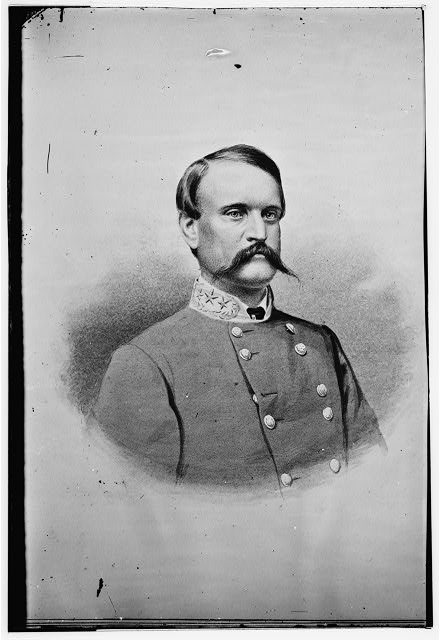
Breckinridge, CSA (between 1860 and 1870; LOC: LC-DIG-cwpb-07429)

General Breckinridge

On the 11th, the Veterans advanced on Woodstock, which place was held by a body of Rebel Cavalry. We drove the “Johnnies” from the town and across the Shenandoah, and on the 13th inst., after a short engagement, again drove them from Mt. Jackson and captured the Barracks, &c. built by Stonewall.

Learning that Gen. John C. Breckinridge was coming down the Valley in force, Gen. Sigel hastened hastened his army forward to meet the enemy, who were said to be strongly posted at New Market, under Imboden and Gilmore. WE arrived near the town on Sunday morning, the 15th inst. Our columns were immediately deployed, the Artillery posted and soon commenced the

                    BATTLE OF NEW MARKET,

one of the sharpest engagements ever fought in this Valley, and one of the most unsatisfactory in its results. The plan (as far as I can understand it in dutch) was to fight and whip the rebel force at New Market before Gen. Breckinridge arrived, but he was already there with ten thousand Infantry, before the battle opened and we were thus confronted by a vastly superior force of the enemy. Our men fought bravely, desperately, put [but] it was of no avail. Owing to the small force of our Infantry, our Cavalry were placed in rather a novel position, and the Batteries were supported by us alone, that all the Infantry might be put in line of battle, but even then we were out flanked on both sides and nearly surrounded. Company K was divided and one half, under Capt. Brett, was placed on the extreme left of our lines in advance, and the rest of the company occupied a like position on the extreme right of the line of battle. These two position [sic] we held during the whole day without losing a man. Sergt. A.B. Randolph was the only one wounded, he being knocked from his horse by a piece of shell but is all right now.

The Rebels worked their Artillery with wonderful accuracy. Nearly every shell tore through the Cavalry Squadron or made wicked gaps in the Infantry line. – For a time our men fought well, but when the rebels advanced, in three magnificent lines of battle, upon us, our Infantry already much weakened by the severe canonade [sic], could stand no longer and broke and fled from the field in disorder, leaving the Cavalry to bring off the Artillery and cover the retreat. Our boys behaved splendidly and the 1st Veterans was the last regiment to leave the field and then only on a walk, although the shot and shell were pouring in from all sides.

Gen. Julius Stahel (Hungarian name [SZAMWALD?] (between 1860 and 1870; LOC:  LC-DIG-cwpb-05219)

General Julius Stahel

After driving our forces back about four miles the rebels gave up the chase, but we fell back during the night twenty-two miles to Woodstock, destroying the bridges on the way, and next day continued our retreat twelve miles farther to Cedar Creek, where we took up a strong position, which we now hold, daily expecting an attack from the enemy.

There is no use denying the fact that we have been pretty severely thrashed, although we made the enemy pay pretty dearly for the chase he gave us, and we have brought off all our baggage and commissary stores, for which Gen. Sigel deserves much credit.

Upon the battle field there were of course some mistakes and some green performances; at one time it was almost impossible to tell who commanded the Cavalry. One officer would ride up and give an order which would be instantly countermanded by another. A certain Lieut. Col. whose namesake lived a good many years before the flood, made himself very officious. Once the regiment received orders to change its position, and had just began to execute the movement when up came Gen. Stahl [Julius Stahel] on a gallop screaming out “Where is mine Gabblery! Where he go! Who sent him dere? Stop, stop mine Gabblery!” Of course the “Gabblery” was stopped and a laugh rang through the ranks, mingling strangely with the screaming of shells, the whistling of bullets, and the groans of the wounded and dying.
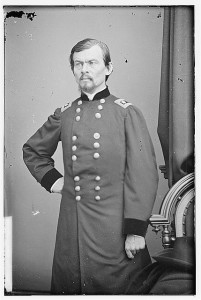
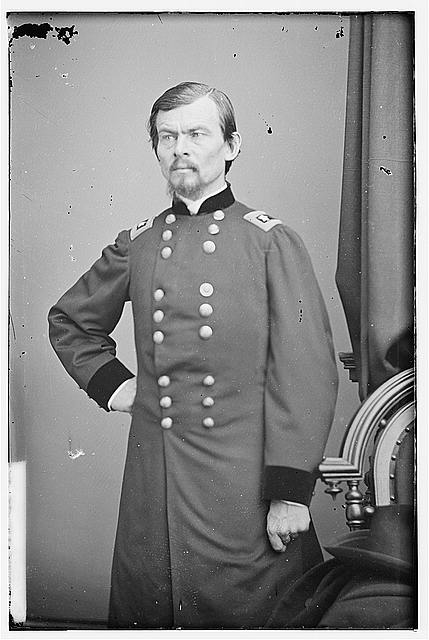
Franz Sigel (between 1860 and 1870; LOC: LC-DIG-cwpb-05089)

saved baggage and commissary stores

The “Veterans” have received the thank [sic] of Gen. Sigel for the coolness and courage they displayed during this disastrous day, and the gallant conduct of our commanding officers will never be forgotten by their men. Our color bearer fell mortally wounded on the field and as he held our battle flag in his dying grasp, said: “Tell my mother I died by the old flag.” Several officers had their horses shot under them and many non-commissioned officers and private [sic] distinguished themselves on this bloody field, but it is wrong to particularize where all did so well, and none of our friends will ever blush for what was done at Mew Market, by the boys from

SENECA.

Shelby Foote alluded[1] to the language issue as he wrote about General Sigel being in his element during the battle. He kept his composure under fire, “but betrayed his inner excitement by snapping his fingers disdainfully at shellbursts as he rode about, barking orders at his staff. Unfortunately, he barked them in German, which resulted in some confusion…”

[...] Kerr and Harvey Carter [...] of battery which fired first and last shots of Battle of New Market, 1864

“[…] Kerr and Harvey Carter […] of battery which fired first and last shots of Battle of New Market, 1864” (1923)

  1. [1]Foote, Shelby. The Civil War, A Narrative. Vol. 3. Red River to Appomattox. New York: Random House, 1986. Print. page 249.
Posted in 150 Years Ago This Week, Military Matters | Tagged , , , , , , , | Leave a comment