“Melt the Bells”

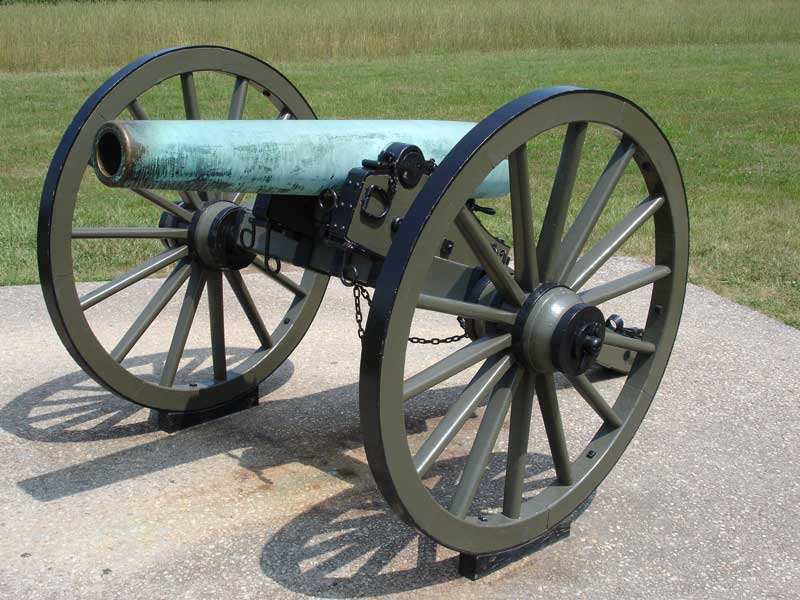
CW_Arty_Confederate_Napoleon

From the Richmond Daily Dispatch April 1, 1862:

To the patriotic — the value of Church Bells.

The Ordnance Bureau of the Confederate States the use of such bells as can be spared during the war, for the purpose of providing light artillery for the public defence. While copper is abundant, the supply of deficient to convert the copper into bronze. Bells contain so much tin that 2400 pounds weight of bell metal, mixed with the proper quantity of copper, will suffice for a field battery of six pieces.

Those who are willing to devote their bells to his patriotic purpose will receive receipts for them and the bells will be replaced, if required, close of the war, or they will be purchased at prices.

Bells may be directed as follows: …

The Government will pay all charges to these places, and receipts will be promptly returned to the proper parties.

Persons and congregations placing their at the service of the Government, are requested to send a statement of the fact, with a description and weight of the bell, to the Chief of the Bureau of Ordnance at Richmond, for record in the War Department.

From the same issue:

Patriotic example.

–The congregation of the Second Baptist Church in this city have set an example that may challenge emulation, but for self-sacrificing patriotism cannot be excelled. They met not long since and by unanimous vote gave their church bell to be cast into cannon to be sued in the public defence. To show that this was not an empty promise made for effect, they immediately had it taken down to be put to the use indicated. At the same meeting at which the resolution above stated was passed, it was determined to subscribe and such sufficient to purchase enough metal to add to that in the bell to form into a battery to he called the Second Baptist Church battery. Mr. John F. Tanner, and influential member of the church, and largely engaged in the foundry business, promised on behalf of himself and associates that the battery should be ready at an early day, and without cost to those who furnished the material. The churches in New Orleans (a large proportion of them being Catholic) have, with the sanction of their Bishop, adopted the same course.

It is said that in 1862 General Beauregard came up with the idea of using church bells to make cannon. “Melt the Bells” was a poem published in the Memphis Appeal.

Richmond’s Second Baptist Church supports the Dispatch article: “During the Civil War the church assisted the Confederacy in many ways, from preparing bedding and bandages, to donating the steeple bell and selling the pew cushions, to furnishing some members to defend the city.”

Posted in 150 Years Ago This Week, Confederate States of America, Military Matters, Southern Society | Tagged , , | Leave a comment

Turning Over in His Grave?

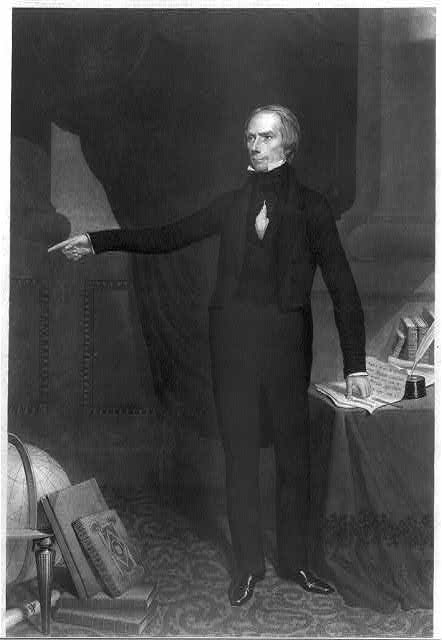
Henry Clay (no date recorded on shelflist card; LOC: LC-USZ62-5106)

Never would want the Pelican flag over New Orleans

Disunion was off the table for the Great Compromiser

150 years ago this week The New-York Times was speculating on Union operations on the lower Mississippi. In a long article that quotes heavily from the Richmond Daily Dispatch the editors try to piece together some information about what the federal forces might be up to and what tactics the rebels are using to defend themselves. The Times gets things going with a patriotic opening paragraph. Here’s a couple excerpts.

From The New-York Times March 29, 1862:

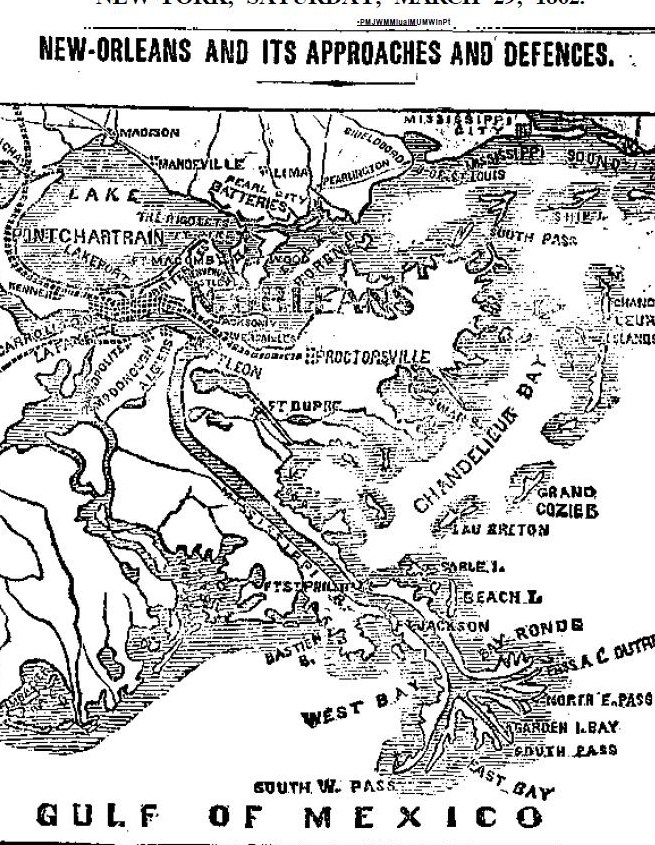
NEW-ORLEANS AND ITS APPROACHES AND DEFENCES.; THE DEFENCES OF NEW-ORLEANS.

Twelve years ago, HENRY CLAY, speaking in the United States Senate, uttered the memorable words: “I say in my place, never will we, who occupy the broad waters of the Mississippi and its upper tributaries, consent that any foreign flag shall float at the Balize, or upon the turrets of the Crescent City — never, NEVER!” It is over a year now since other flags than the Stars and Stripes — the miserable three-barred bunting of rebellion, and the yellow Pelican rag — were raised upon these turrets; and for all that time until now have they flaunted defiance in the face of the nation, and barred out from their heritage those who dwell on the upper tributaries of the father of waters. The time is now at hand, however, if it has not already arrived, when these alien emblems shall be torn down and made the winding-sheets for secession, to be replaced once more on Balize and turret by the flaming symbol of Union and Nationality.

NO-NYT 3-29-1862

3-29-1862 NY Times map

There are various indications that operations have actually been begun against the river and lake defences of New-Orleans by Gen. BUTLER and Capt. PORTER. …

… There are also said to be other formidable obstructions of various kinds in the river, to prevent the passage upward of a fleet. A correspondent at Ship Island, writing recently, says:

“I have conversed with some prisoners recently taken, in reference to the obstructions placed across the Mississippi by the rebels to prevent the passage of Federal men-of-war. From them I learn there is an immense raft of logs, containing eighty thousand feet, stretched across the river at a point called the ‘Jump.’ The raft is secured to the banks of the river, on either side, by heavy chains, which are dropped when any of the Confederate steamers pass. This formidable obstruction is commanded by a strong battery.”

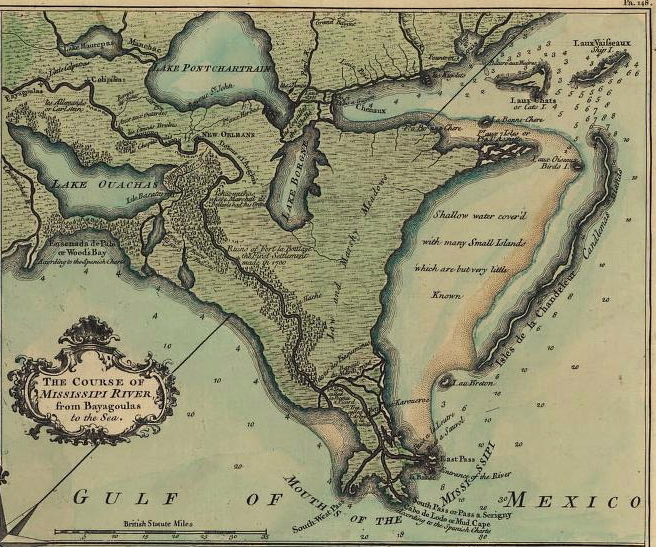
Lake_Borgne_de_la_Tour_map_1720

1720 map

New-Orleans is the great commercial and financial emporium of the South. It is the great Southern cotton emporium. Superior cheapness of transportation by water draws thither all the cotton produced in Middle and Western Tennessee. Arkansas, Eastern Texas and Mississippi. The tobacco, hemp, and the cereals of our vast Western empire find their way thither from the same cause. Half a continent pours its productive wealth into its bosom, and finds thence its way to the markets of the world. It is, in brief, the key to the wealth, the prosperity and advancement of fifteen States, its possession would be of vast material benefit. It would afford us at once the means of forcing the States of Texas, Louisiana and Western Mississippi back to their allegiance, and serve as the point from whence we could force our other rebellious sisters of the Southwest back to their duty. The fact of its capture would inspire the utmost terror throughout the entire South. A moral paralysis would fall upon the boldest spirits of secessionism.

The population of the City, by the census of 1860, was 168,472. This has doubtless been greatly reduced since that time, but, allowing for the operation of all reducing causes, and it still probably numbers considerably rising a hundred thousand souls. If we may not now daily look for news of its full, we may at least anticipate learning what is virtually the same thing — that Gen. BUTLER and Capt. PORTER have captured all its defences, opened up the river, and hold the contumacious city at the mercy of the mortars.

La Balize, Louisiana “was the first French fort and settlement near the mouth of the Mississippi River …”

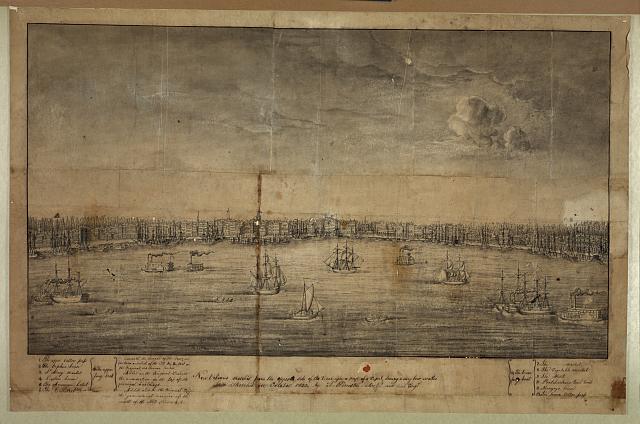
New Orleans, sketched from the opposite side of the river upon a mast of a vessel during a very low water (S.Pinistri - artist;1839 Oct; LOC: LC-DIG-ppmsca-23151)

Crescent City - 1839

Posted in 150 Years Ago This Week, Military Matters | Tagged , , , , | Leave a comment

Peninsula Prelude

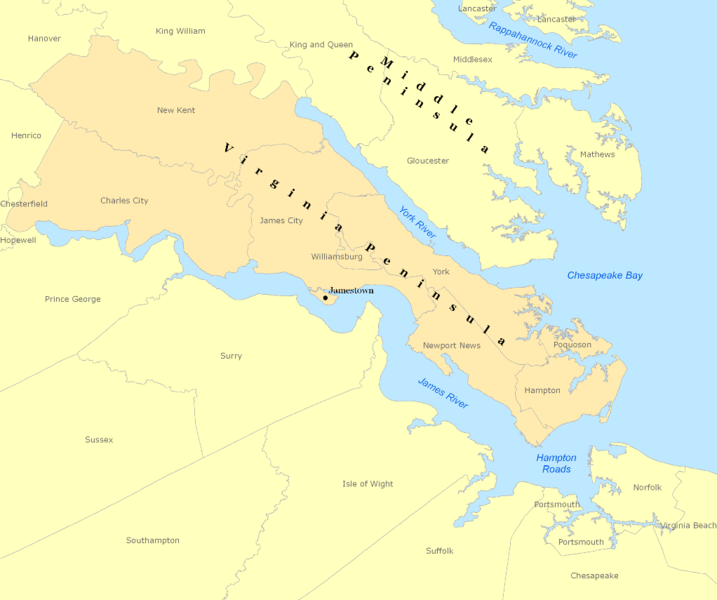
Virginia-peninsula

Twixt the York and the James - guard your buttermilk

As Union General McClellan ships his huge Army of the Potomac to Virginia Peninsula a couple sketchy reports are published by the Richmond press that seen to indicate things are heating up around Yorktown.

From the Richmond Daily Dispatch March 29, 1862:

From the Peninsula.

advises from the Peninsula are a little exciting. They represent the enemy in large force on Yorktown. The inhabitants are leaving that region by very means of transportation at their command, in anticipation of the grand struggle that seems to be pending. A slight skirmish took place on Thursday, in which Lt. John W. Wise, of the Old Dominion Guard, was in the [?]. No other casualties are reported. A time is looked for, and the most news from that quarter is expected.

From the same issue:

Drummer boys captured.

–Three Yankee drummer boys were recently captured by our pickets near Newport News while at a farmer’s house in search of buttermilk and other plunder. When taken before Gen. Magruder they were very communicative, and wished to know from him the price of drummers in this section. They were brought to Richmond on Thursday night, viz York river, and lodged with their fellow-prisoners.

Even the Yankee drummer boys seem mercenary. Maybe not “beauty and booty” but at least “buttermilk and booty”.

The map is licensed by Creative Commons.

Posted in 150 Years Ago This Week, Military Matters, Peninsula campaign 1862 | Tagged | Leave a comment

Working on the Railroad

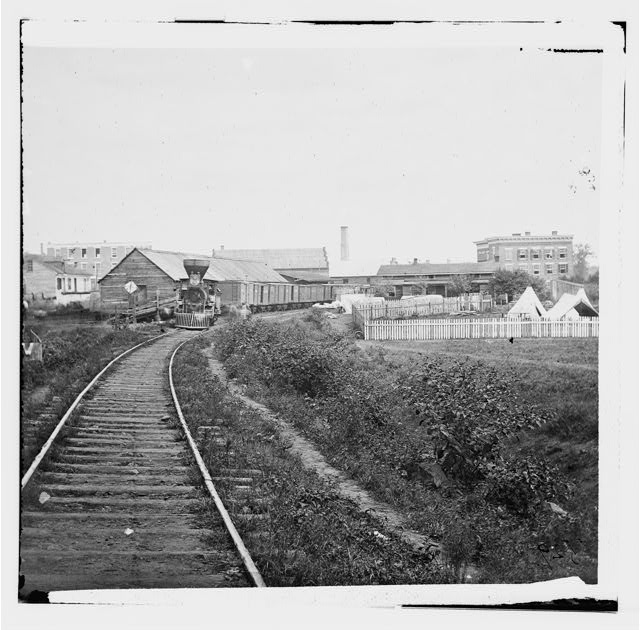
Culpeper Court House, Va. Freight train on Orange and Alexandria Railroad (O'Sullivan, Timothy H August 1862; LOC: LC-DIG-cwpb-01078)

Orange and Alexandria Railroad, August 1862

Adviser Lee’s First General Order

In early March 1862 Jefferson Davis recalled Robert E. Lee from the South Carolina area to Richmond to serve as the president’s military adviser. At the time the Richmond Daily Dispatch hailed Davis’ decision – Lee’s caution was like Washington’s caution and could turn out to be advantageous; he did a great job fortifying the more southern coast and it would be good to have all the armies under one “commander-in-chief”.

Presumably the following is the first of General Lee’s orders in his adviser job. Lee is trying to make sure the railroad are less dangerously chaotic. Apparently military commanders were not coordinating with a railroad’s Supervisor.

From the Richmond Daily Dispatch March 27, 1862:

A Sensible order.

The order we publish below will commend itself to every reflecting person. It is well known that it is necessary to have the utmost system in the management of railroads, to promote the safety of persons and the maximum efficiency of the machinery. To the Superintendent, who is best acquainted with the movement of the trains, the condition of the rolling stock and road, the grades, length of turnouts, and capacity of the several water stations, and to him alone, the subordinate officers look for orders; and when such orders are interfered with or countermanded by military officers, we are sure the interests of the Confederacy must suffer. Where the transportation is so great as it has been during the war, it is impossible to effect it without the best system, and any interference, however good the intentions, may, and probably will, prevent such system from being carried out. Whenever, as in this order, the whole responsibility rests on the Superintendent, we may confidently say, all that can be done towards expediting Government demands, with the facilities at hand, will be. This order leaves the military men to do the fighting, and the Superintendents alone to do the running, in which capacity we are sure they will each do their part well. Like all other orders emanating from its source, it is excellent, and will no doubt give universal satisfaction to the railroad officers throughout the Confederacy.

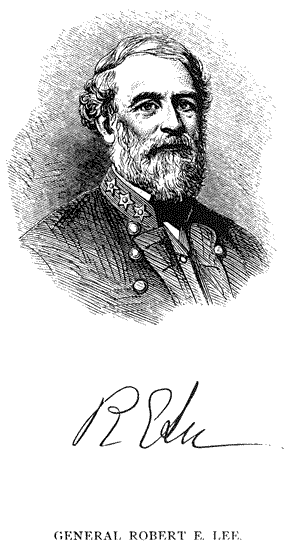
General Robert E. Lee

Avoiding 'destruction of life and property, as well as obstruction to all transportation'


Headquarters, Richmond, Va.,

March 20, 1862.

General Orders, No. 1.

To avoid the danger, if not the certainty, of frequent collisions, and the consequent destruction of life and property, as well as obstruction to all transportation, it is absolutely necessary that the movements of railroad trains should be under one undecided control. These considerations make it imperative that all trains should be regulated in their movements and speed only by their conductors and engineers, in accordance with the regulations and time-tables of the company. All the operations of a road should be controlled by its Superintendent, or other authorized officer, and all orders for transportation of every kind, and the movement of every train, will be directed through him, when the exigencies of the service demand a variation from the regular schedule. Disregard of this rule will inevitably be attended with disastrous consequences.
By order of

Gen. R. E. Lee.

W. H. Taylor, Asst. Adj. Gen.

The March 27th Dispatch issue also alludes to a more recent and more immediately urgent general order. General Order No. 16 cancels all furloughs and leaves of absence. The Union advance makes it imperative that all soldiers get back to their units.

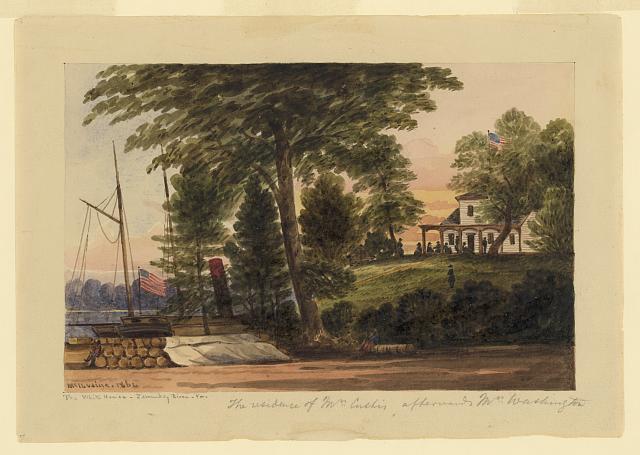
On March 14, 1862 General Lee wrote a letter to his wife (living at the White House plantation on the Pamunkey River) in which he expresses concern about the Yankee advances and foresees that he might not be at his desk job in Richmond for too long:

How long it will be practicable for you an[d?] Charlotte to remain there I cannot say. The enemy is pushing us back in all directions, and how far he will be successful depends much upon our efforts and the mercy of Providence. I shall, in all human probability, soon have to take the field, so for the present I think things had better remain as they are. Write me your views. If you think it best for you to come to Richmond I can soon make arrangements for your comfort and shall be very glad of your company and presence.

Disunion has a good piece that looks at the relationship between Davis and Lee.

The White House - Pamunkey River, Va. (McIlvaine, William, 1813-1867, artist; 1862; LOC: LC-DIG-ppmsca-20003)

White House in Federal hands - later in 1862

Posted in 150 Years Ago This Week, Confederate States of America, Military Matters | Tagged , | Leave a comment

Apathetic Farmers

From the Richmond Daily Dispatch March 27, 1862:

The crops.

–The crops of the present year, as we were yesterday informed by an intelligent farmer of Henrico, are very backward both in that county and all adjacent ones, the planters seemingly being apathetic about the matter and indisposed to put forth their usual exertion. So many homilies have been read by the press on the absolute necessity of a full and prompt attention to agricultural duties, that we are not disposed to repeat a “thrice-told tale.” It suffices to say, that while there may be enough grain in the country to last another year, it is the bounden duty of every farmer to see that we are on the safe side by making assurance doubly sure. Very few, if any, of the Henrico farmers have yet planted their oats, and the time has arrived for corn to be planted; and yet, in a majority of instances, ground has not been broke for that purpose.

Posted in 150 Years Ago This Week, Confederate States of America, Southern Society | Tagged | Leave a comment

White Runaways

I’m used to advertisements in the Richmond Daily Dispatch offering rewards for runaway slaves. 150 years ago today there were at least three advertisements for military deserters. Here’s an example from the Richmond Daily Dispatch March 26, 1862:

Deserters.

–The following named men, having deserted from my company during the past week, I will give the reward affixed to their names if delivered to me at my office, on Bank street between 9th and 10th streets:

John Abbott $100 John Garre $100
John Archer 100 John Hynes 200
Thomas Booney 100 Patrick Clark 100
Paul McCarthy 100 Dan. Ford 104
James Connelly 100 John Watson 100
Thomas C. Cook 100 John Jenkins 200
Thomas Mack, $50.

The police and guard are requested to use every exertion to arrest the above named men.

Emmett E. Depriest,

Lieut. and Recruiting Officer

Richmond Sharp Shooters,

mh 25–2t* Bank, betw 9th and 10th sts.

Hynes and Jenkins must be quite the sharpshooters. The Richmond Sharpshooters was Company H of the 23rd Regiment Virginia Infantry.

The North has been known to shoot a deserter, at least when the deserter is also a spy.

Posted in 150 Years Ago This Week, Military Matters, Southern Society | Tagged , , | Leave a comment

A Fire-Eater Sobered

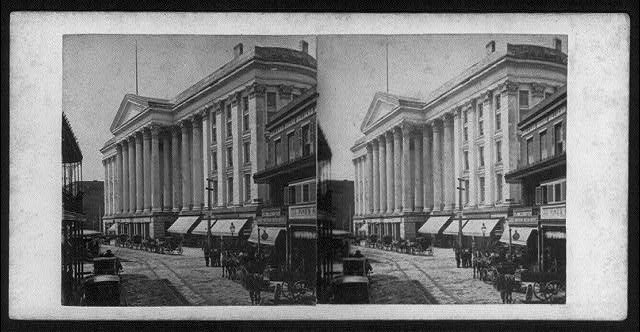
St. Charles Hotel, New Orleans, La. (ca. 1869; LOC: LC-USZ62-57352)

Where Yancey spoke

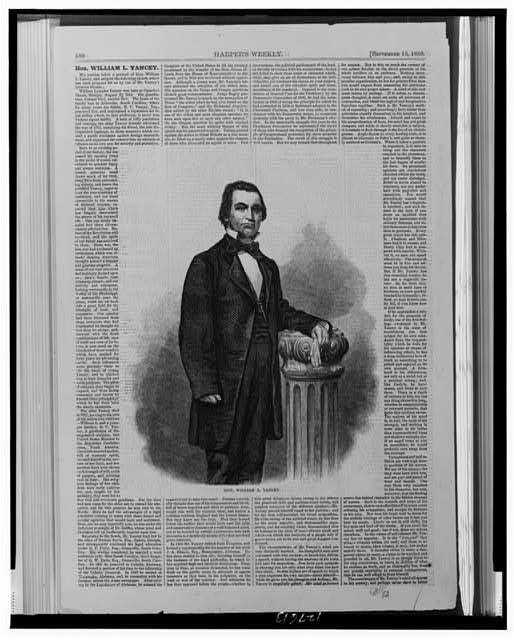
The well-known fire-eater William Lowndes Yancey has returned from a year-long diplomatic mission to Europe. He failed to get either England or France to recognize the Confederacy. Yancey stopped at New Orleans on his way to Richmond to take his place in the Confederate senate. He gave a speech that summarized his European mission. Europe looks down on the South because of slavery but knows that Yankees are a bunch of hypocritical liars. The continental powers want the war to drag on as long as possible so that the up-and-coming American nations are severely weakened. Like many other southerners he seems to say that the blockade is a good thing because it will make the CSA more self-reliant. Yancey says that Europe would intervene to prevent the South from being subjugated. On the one hand, he admits that American cotton is not king because of a huge worldwide supply; on the other hand, he says that Europe will intervene to raise the blockade because only American cotton is compatible with the manufacturing machinery in place in Europe. Yancey closed his remarks by emphasizing self-reliance and unity.

From the Richmond Daily Dispatch March 24, 1862:

Mr. Yancey in New Orleans.

We copy the following from the New Orleans Delta, of the 14th inst.:

Yesterday Mr. Yancey arrived in the city from Berwick’s Bay, via the Opelousas Railroad, and stopped at the St. Charles. In the course of the evening, billing in the rotunda of the hotel, and a large impromptu assemblage of gentlemen having collected, he was called out and almost forced to make some remark. He mounted the centre-table, looking remarkably well after his voyage, and commenced, as, indeed, he continued throughout nearly the whole of his remarks, in a style perfectly free from passion, and remarkable for calm conviction and confidence in our cause.

Hon. William L. Yancey (Harper's weekly, v. 4, no. 194 (1860 Sept. 15), p. 580; LOC: LC-USZ62-127613 )

Expect no sympathy from Europe

It was one year, lacking two days, since he had quit our hopes, and he was glad to stand among his countrymen again. He came back convinced that we had no friends in Europe, that we must fight the battle alone, and rely only on our firm hearts. (Applause)

They looked coldly upon the South because of its slavery institutions. There was not a country in Europe which sympathized with us. Even the great principles of our revolution were not understood by them any more than by the Northerners, who have never been able to seize the true spirit of our institutions. With the North Europe believed in the unqualified supremacy of government, not understanding that government is made for the people. They have, therefore, got no friendship for, nor sympathy with us; neither have they however, for the North.

They regard the North, as a people, mendacious, unjust, and hypocritical. They do not believe a word said either by the people, the press, the Cabinet, or the President. Europeans are prejudiced against slavery, but they do not wish to deprive men of their property without honestly paying for it; they have no idea of cutting the chains of bondage with a lawless sword. They have discovered the Northern motive in this war to be political, not social; not a strong principle against wrong, but a determination to rule.

Having, therefore no sympathy for us, and turning with honest contempt from the hypocritical Yankee, they would look with positive indifference on the contest but for their own interests involved. They desire to cripple a dangerous rival. This country was getting too vigorous, and they are determined that it shall forever remain separated. They would never allow the South to be subjugated, and would interfere to prevent such a result, but that they feel certain it cannot be accomplished. They know and say the South will be free. In the meantime, they wish to see the war drag on until each side is thoroughly exhausted, and overwhelmed with a debt which shall crush its energies for years, or, if possible, ages to come.

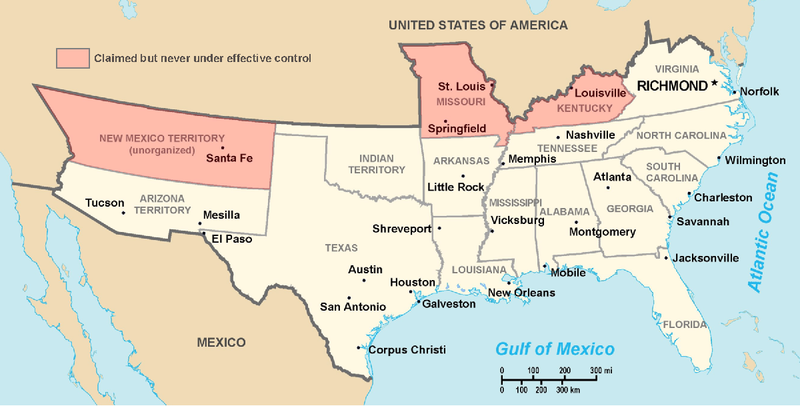
Map of CSA

Unrecognizable - at least not until "our blood-reeking sword (is) stretched over a conquered and prostrate North."

To further this policy they ignore the well established fact that the blockade has been run at least a thousand times. They set aside, practically as against us, the plainest behests of the European treaty which fixes the law of blockade. They are determined, in the face of all law, of all equity of all humanity, not to recognize us until the last possible moment, and will never do so until they see our blood-reeking sword stretched over a conquered and prostrate North.

[Here the speaker was interrupted with cries of “We don’t want it, then;” “D — n them, they can let it alone,” &c.]

As to the blockade said Mr. Yancey I don’t know that we should want it raised. If it continued six months longer, he would not, on any consideration, wish such a misfortune as that it should be raised. By that time our internal energies will have been developed, our manufactures established, and he had such confidence in the ingenuity and enterprise of our people as to believe them capable of attaining within themselves, all necessary ends. As to luxuries, indulgence in them was not becoming to a people laboring in the very throes of a heroic struggle. [Emphatic applause] …

One principal ground of miscalculation here as to the blockade had been the idea that cotton is king. …

We cannot look for any sympathy or holp from abroad. We must rely upon ourselves alone. Men and women — I beg their pardon, said Mr. Y., the ladies are ever foremost, and when they are first, men should not be laggards — all must work. I return and find your regular Government fully organised for six years. Some may say you have made had selections. It is not now the time to amend.–all are embarked in the same ship together. The storm is raging around her; the thunder is bursting over head; angry waves are dashing against her sides, and all must stand together. It there is any insubordination, any mutiny, all will sink together.

Through at his speech Mr. Yancey was warmly applauded, and evidently held the warmest sympathy of his audience, especially at these places where he expressed indignation against the injustice of foreign Governments. After the conclusion of his remark, we understood him to say, in conversation, that he would advise the immediate recall of all our representatives and evolve in Europe.

Mr. Yancey leaves immediately for Richmond.

The Richmond Daily Dispatch on March 25, 1862 commented on Yancey’s address by citing one of Aesop’s fables that stressed the importance of self-reliance: “when a man ceases to depend upon others, and takes his affairs into his own hands, his business is pretty sure to be done.” Harper’s Weekly on April 26, 1862 noticed some contradictions: “Having shown that the rebellion is hopeless, Mr. Yancey closed by expressing the strongest confidence in its success.”

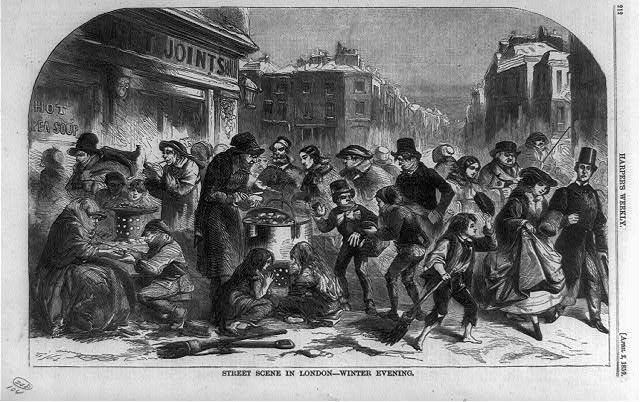
Street scene in London--winter evening by Thomas Nast (Harper's weekly, 1859 April 2, p. 212; LOC: LC-USZ62-99301)

Mr Yancey won't miss it

Posted in 150 Years Ago This Week, Confederate States of America, Southern Society | Tagged , , , | Leave a comment

In Lieu of a Gym Membership

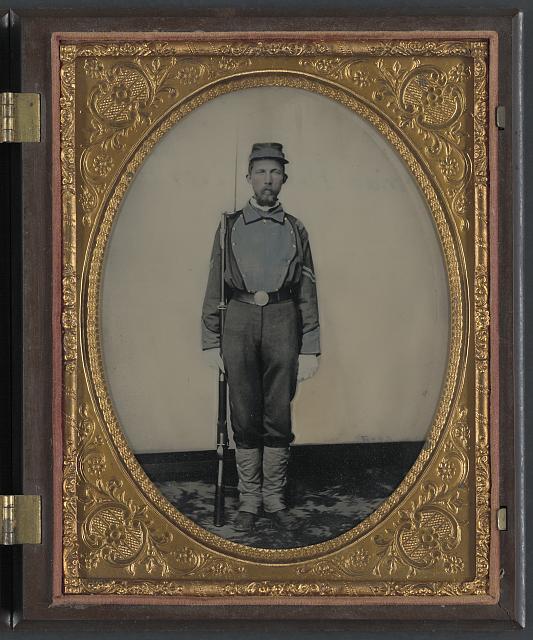
Captain Samuel H. Overton of A Company, 44th Virginia Infantry Regiment and A Company, 20th Battalion Virginia Heavy Artillery Regiment in uniform and kepi with bayoneted musket (between 1861 and 1862; LOC: LC-DIG-ppmsca-32457)

In the pink of health ...

Do Newspaper Editors Lead Sedentary Lives, too?

The soldier-power shortage is nothing new, but this sales ploy sure surprised me.

From the Richmond Daily Dispatch March 23, 1862:

The soldier’s life.

–It is said that the frequenters of the gymnasium experience its advantages in renewed vigor, expanded muscle and the robust health that usually follows judicious exercise. The languor of the student, and the weakness of the sedentary alike disappear under the health inspiring influences it produces. If this be so, in regard to the gymnasium, it is doubly true in regard to the life of the soldier. The exercise necessary to be taken by the soldier is the true medicine of nature, and a “pain extracter” that thousands of dyspeptic and consumptive young men have felt the benefit of. It imparts a healthy step and vigorous mind, and gives a firm tone to both, by a happy combination by which every part of the system receives appropriate care and development. If some of those who seek to escape the responsibilities of military duty by getting substitutes on the equally reprehensible practice of discovering ailments and diseases for the occasion to bring about the desired exemption, were to try this panacea, they would fall in love with it. As the song says, “a soldier’s life is always gay,” unless we may add, you get a mean commander, and if this be so, it is your own fault and can be remedied. The formation of various companies in this city at the present time presents favorable opportunities to those who desire not only to benefit themselves but their country.

From the same issue of the Dispatch:

The ladies and the militia.

To the Editors of the Dispatch:

The militia of Louisa county have been mustered in full force at the Court-Bousedays. Out of two hundred and fifty or three hundred able-bodied men, one hundred and thirty have been exampled on account of physical inability. Men who before this war commenced were never heard to utter one word of complaint, have suddenly become lame, blind, and in fact beset with “all the evils flesh is heir to.” Under these pitiable circumstances, the ladies of the county feel that the protection of the militia is very little to be relied on, so they have concluded to form a “Home Guard,” composed of ladies, to protect the above mentioned unfortunates individuals, who are not strong enough to defend themselves.

Very respectfully,

Some Ladies of Louisa.

Posted in 150 Years Ago This Week, Confederate States of America, Southern Society | Tagged | Leave a comment

Whipping Post

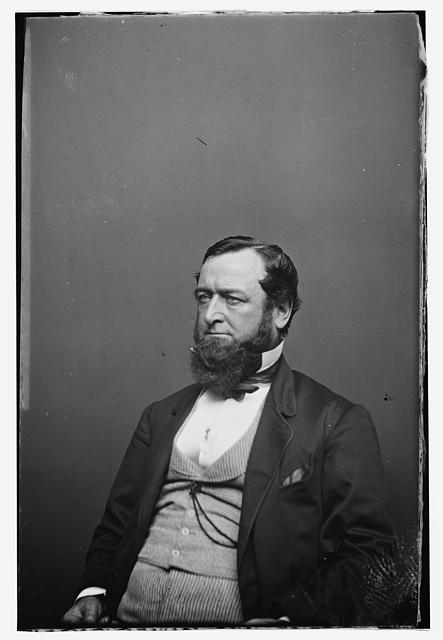
Hon. Chas. R. Train (between 1855 and 1865; LOC: LC-DIG-cwpbh-01727)

Representative Train presnts whip to president

From The New-York Times March 22, 1862:

A SHORT SPEECH BY THE PRESIDENT.

A party of Massachusetts gentlemen met in Washington, at the rooms of Hon. Mr. TRAIN, on the 13th inst., to accompany him to the White House, and there witness the presentation of an elegant whip, made by a Massachusetts whip company. Mr. LINCOLN received the party in his council chamber, where Secretaries CHASE and STANTON were with him, and cordially greeted each one. Mr. TRAIN, holding the whip, made a few remarks and presented it to the President. Receiving the gift, Mr. LINCOLN examined it and then remarked:

“I thank you, Mr. TRAIN, for your kindness in presenting me with this truly elegant and highly creditable specimen of the handiwork of the mechanics of your State of Massachusetts, and I beg of you to express my hearty thanks to the donors. It displays a perfection of workmanship which I really wish I had time to acknowledge in more fitting words, and I might then follow your idea that it is suggestive, for it is evidently expected that a good deal of whipping is to be done. But, as we meet here specially, let us not think only of whipping rebels, or of those who seem to think only of whipping negroes, but of those pleasant days which it is to be hoped are in store for us, when, seated behind a good pair of horses, we can crack our whips and d[r]ive through a peaceful, happy and prosperous land. With this idea, gentlemen, I must leave you for my business duties.”

A glimpse of President Lincoln looking beyond the war – with no malice

Charles Russell Train represented Massachusetts in the U.S. House long enough to help manage the impeachment of West Humphries. He also served as “volunteer aide-de-camp to General George B. McClellan.”

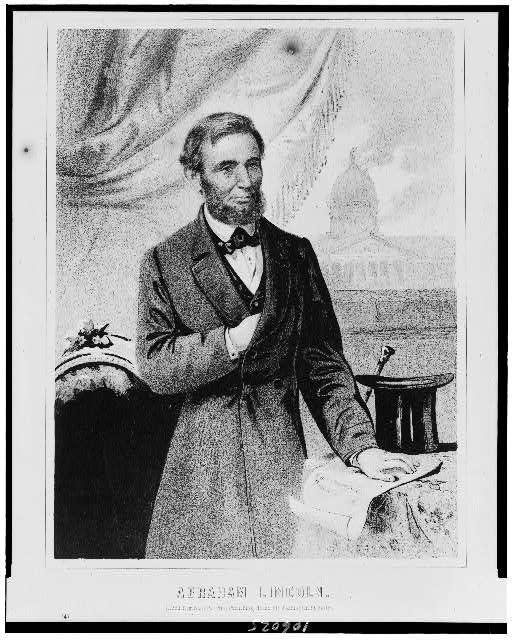
Abraham Lincoln (Issued from Bufford's Publishing House, c1862; LOC: C-USZ62-106025 )

Longing for a peaceful buggy ride

[February 12, 2025 – The NY Times link is no accessible to all]
Posted in 150 Years Ago This Week, Lincoln Administration, Northern Society | Tagged , | Leave a comment

FernadinaLeaks

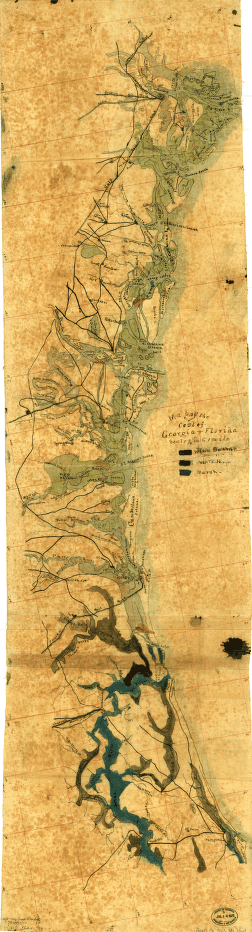
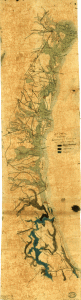
Covers the coast between Savannah and St. Augustine; From the papers of Joseph Roswell Hawley. 1863? LOC: http://hdl.loc.gov/loc.gmd/g3922c.cw0129700

It's a coastal thing - from Savannah to St. Augustine

In early March a Union naval expedition under Samuel F. Du Pont captured and occupied the area around Fernadina, Florida. During the occupation a correspondent found an early 1861 letter from then U.S. Senator David Yulee to a friend back home. The letter indicates that southern senators were in consultation with the secession conventions then going on in their home states. While still nominally supporting the U.S. Constitution, the senators were plotting with their home states on the most effective timing for secession. The senators wanted their states to secede as soon as possible but thought it might possibly be advantageous to hold off, so that the senators could remain in Congress and hamstring the Buchanan administration and the Republicans in Congress. The Times makes hay out of this great primary source from fourteen months earlier.

From The New-York Times March 15, 1862:

Treason in Embryo A Remarkable Document.

Our correspondent with the expedition which lately took possession of Fernandina, Fla., transmits us a number of letters, documents, memoranda, etc., which he picked up in the town after the hasty hegira of the inhabitants on the approach of the Union force. Among these, curiously enough, turns up a letter dated Washington, Jan. 7, 1861, written by YULEE, then United States Senator, addressed to “JOSEPH FINEGAN, Esq., Tallahassee, Fla.,” which gives us a most interesting glimpse of the secret doings of the chief secession conspirators at that period. The telegraphic columns of the TIMES of that same day (Jan. 7, 1861,) contained the following Washington dispatch: “The Southern Senators last night (Jan. 6) held a conference, and telegraphed to the Conventions of their respective States to advise immediate secession.” Now, the present letter is a report by YULEE, who was present at this “consultation,” as he calls it, of the resolutions adopted on this occasion, transmitted to the said FINEGAN, who, by the way, was a member of the “Sovereignty Convention” of Florida, then sitting in the town of Tallahassee. The original of this remarkable historical document, which was probably written by YULEE in his seat in the United States Senate, is now before us. It is as follows:
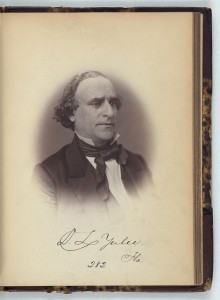
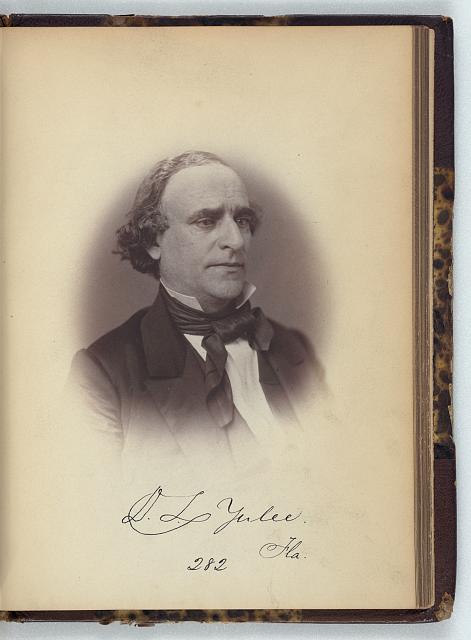
David L. Yulee, Senator from Florida, Thirty-fifth Congress, half-length portrait (1859; LOC: LC-DIG-ppmsca-26821)

Should we stay in the senate to hinder Republican plans?

WASHINGTON, Jan. 7, 1861.

Mr DEAR SIR — On the other side is a copy of resolutions adopted at a consultation of the Senators from the Seceding States — in which Georgia, Alabama, Louisiana, Arkansas, Texas, Mississippi and Florida were present.

The idea of the meeting was that the States should go out at once, and provide for the early organization of a Confederate Government, not later than 15 February. This time is allowed to enable Louisiana and Texas to participate. It seemed to be opinion [sic] that if we left here force, loan and volunteer bills might be passed, which would put Mr. LINCOLN in immediate condition for hostilities — whereas if [sic] by remaining in our places until the 4th of March, it is thought we can keep the hands of Mr. Buchanan tied, and disable the Republicans from effecting any legislation which will strengthen the hands of the incoming Administration.

The resolutions will be sent by the delegation to the President of the Convention. I have not been able to find Mr. MALLORY this morning. HAWKINS [the member from Florida] is in Connecticut. I have therefore thought it best to send you this copy of the resolutions.

In haste

Yours truly D.L. YULEE.

JOSEPH FINEGAN Esq (“Sovereignty Conference”) Tallahassee Fa.
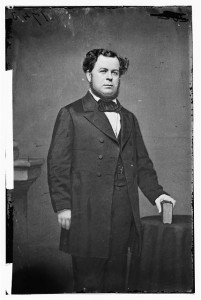
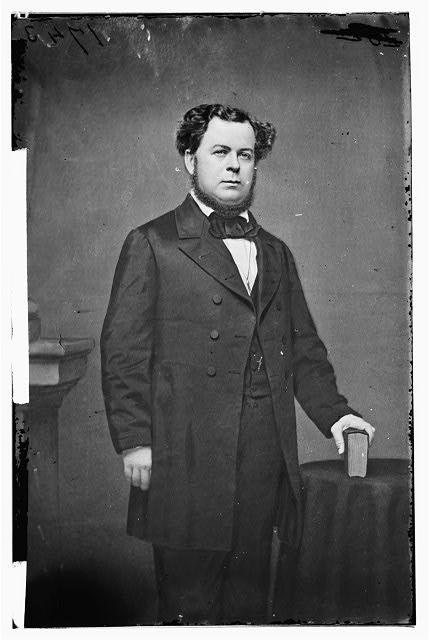
Portrait of Secretary of the Navy Stephen R. Mallory, officer of the Confederate States Government (Between 1860 and 1865; LOC: LC-DIG-cwpb-05609)

Stephen Mallory's 1861: U.S. Senator from Florida to CSA Navy Secretary

The following were the resolutions referred to:

Resolved I. That in our opinion each of the Southern States should as soon as may be, secede from the Union.

Resolved 2. That provision should be made for a Convention to organize a Confederacy of the Seceding States, the Convention to meet not later than the 15th of February, at the City of Montgomery, in the State of Alabama.

Resolved, That in view of the hostile legislation that is threatened against the Seceding States, and which may be consumated [sic in original, for it seems his secession mania extended even into orthography] be fore the 4th of March, we ask instructions whether the delegations are to remain in Congress until that date for the purpose of defeating such legislation.

Resolved, That a Committee be and are hereby appointed, consisting of Messrs. DAVIS, SLIDELL, and MALLORY, to carry out the objects of this meeting.
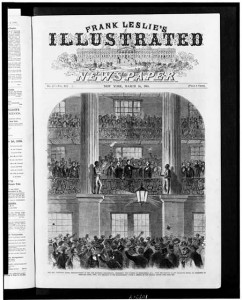
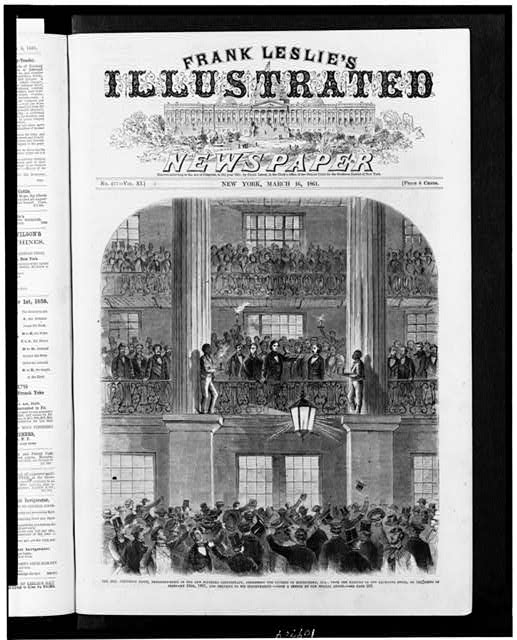
The Hon. Jefferson Davis, president-elect of the new southern confederacy, addressing the citizens of Montgomery, Ala., from the balcony of the Exchange Hotel, on the night of February 16th, 1861, and previous to his inauguration (Frank Leslie's illustrated newspaper, 1861 March 16, p. 257; LOC: LC-USZ62-109704)

Right on schedule - Jeff Davis in Montgomery 2-16-1861

It will thus be seen that this remarkable letter, which breathes throughout the spirit of the conspirator, in reality lets us into one of the most important of the numerous secret conclaves which the plotters of treason then held in the Capital. It was then, as it appears, that they determined to strike the blow and precipitate their States into secession. But at the same time they resolved it would be imprudent for them then openly to withdraw, as in that case Congress might pass “force, loan, and volunteer bills, which would put Mr. LINCOLN in immediate condition for hostilities.” No, No! that would not do. (So much patriotic virtue they half suspected, half feared was left in the country.) On the contrary, “by remaining in our places until the 4th of March, it is thought we can keep the hands of Mr. Buchanan tied, and disable the Republicans from effecting any legislation which will strengthen the hands of the incoming Administration.” Ah! What a tragic back-ground, full of things unutterable, is there there! It appears, however, that events were faster than they, and instead of being able to retain their seats up to the 4th of March, they were able to remain but a very few weeks. JEFF. DAVIS withdrew on the 21st of January — just a fortnight after this “consultation.” But for the rest, mark how faithfully the programme here drawn up by this knot of traitors in secret session, was realized. Each of the named States, represented by this cabal, did, “as soon as may be, secede from the Union” — the Mississippi Convention passing its ordinance on the heels of the receipt of these resolutions, on the 9th of January, Florida and Alabama on the 11th, Louisiana on the 26th, and Texas on the 1st of February; while the “organization of the Confederate Government” took place at the very time appointed, DAVIS being inaugurated on the 18th of February. And here is another plot of the traitors brought to light. These very men, on withdrawing from the Senate, urged that they were doing so in obedience to the command of their respective States. As DAVIS put it, in his parting speech, “the ordinance of secession having passed the Convention of his State, he felt obliged to obey the summons, and retire from all official connection with the Federal Government.” This letter of YULEE’s clearly reveals that they had themselves pushed their State Conventions to the adoption of the very measure which they had the hardihood to put forward as an imperious “summons” which they could not disobey! ‘Tis thus that Treason did its work.
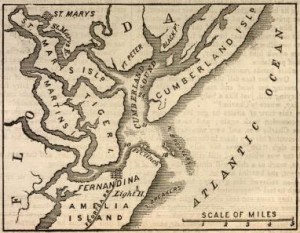
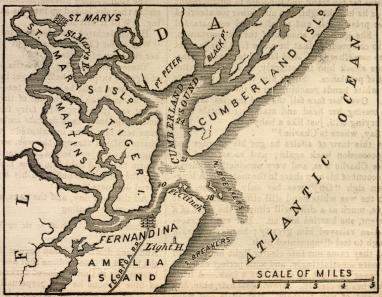
fernandina-florida;  Harper's Weekly 10-26-1861

Yulee's 'affrighted gaze' at Union fleet in harbor

But how has Time brought round his revenges. A little more than a year after the date of this epistle, YULEE, the writer of the letter, and FINEGAN, the correspondent to whom it was addressed, were both at Fernandina, Fla. Suddenly before their affrighted gaze the fleet of the Union makes its appearance in the harbor. They and the rebel soldiery are fain to take to flight by the railroad, away from the wrath to come. And they were just in time, for one of DUPONT’s gunboats sent a shell into the rear car, and YULEE had but time to escape to the lagoons where he will have ample opportunity to meditate on the sacredness of that oath which he took to support the Constitution of the United States. Moreover — for this affair like the rest of the rebellion, is full of its dramatic elements — this same Florida railroad also plays a not unimportant part in the farce-fiasco of YULEE, Florida and secession. He and FINEGAN — Jew and Irishman — were co-contractors on it, and the Senator was constantly chasing Government for fat mail contracts and subsidies. He succeeded better than he deserved; but it is well known that it was because his Jew heart did not get all it craved that he urged the secession of Florida — and, like the base Judean, threw away a pearl richer than all his tribe.

The excellent Civil War Florida has a lot of information about Fernadina.

In addition to being a politician and owning a sugar cane plantation David Levy Yulee is known as the “Father of Florida Railroads”. Levy was the first Jew elected to the U.S. senate and experienced anti-Semitic attacks throughout his life. (See last Times paragraph above.) Levy left the senate two weeks after this letter was written. He served in the Confederate Congress.

Speaking of Florida, here is more evidence of the Union blockade’s effectiveness. It seems to be more suggested Southern resilience and is almost literally making lemonade out of lemons. From the Richmond Daily Dispatch March 19, 1862:

Lemons and limes.

–We are informed that throughout our State, particularly in the eastern and southern portions, there has been a fine crop of lemons and limes grown this year, which are now being permitted to rot, there being no market for them, in consequence of the blockade.

We have been requested to suggest to the owners of such fruit the propriety of expressing the juice from them, and bottling it up. There are thousands of old bottles that are now useless, and there would be no difficulty in the way in this respect. It would require but little labor, will keep well, and meet with a ready sale throughout she Confederacy, particularly to our armies. We hope our contemporaries throughout the State will call attention to this matter. –Florida Dispatch.

The map of Fernadina harbor was published in Harper’s Weekly and can be viewed with other southern harbor maps at Son of the South.
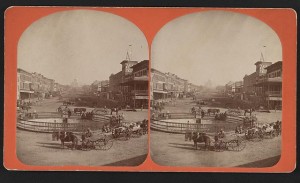
Jeff Davis was inaugurated in this State House, Montgomery Ala. head of Commercial Street Ar. at M. April 28th left 30th 1879 (1879; LOC: LC-DIG-ds-00596)

Hazy look back (in 1879) - where President Davis inaugurated
Posted in 150 Years Ago This Week, After Fort Sumter, Confederate States of America, Secession and the Interregnum | Tagged , , , , | Leave a comment