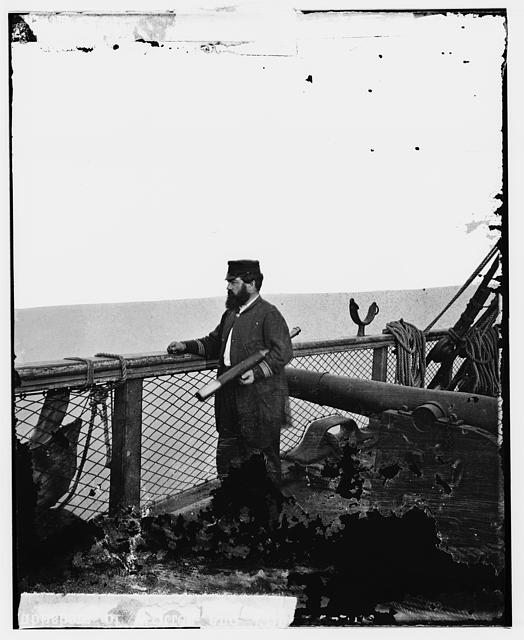
Sharpshooters and “balloon reconnoissance”

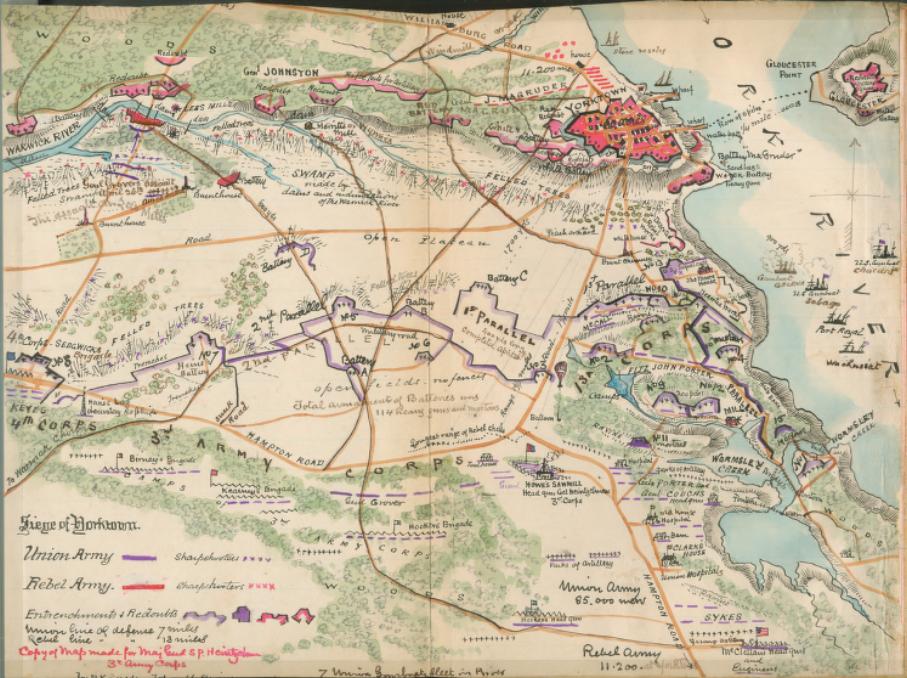
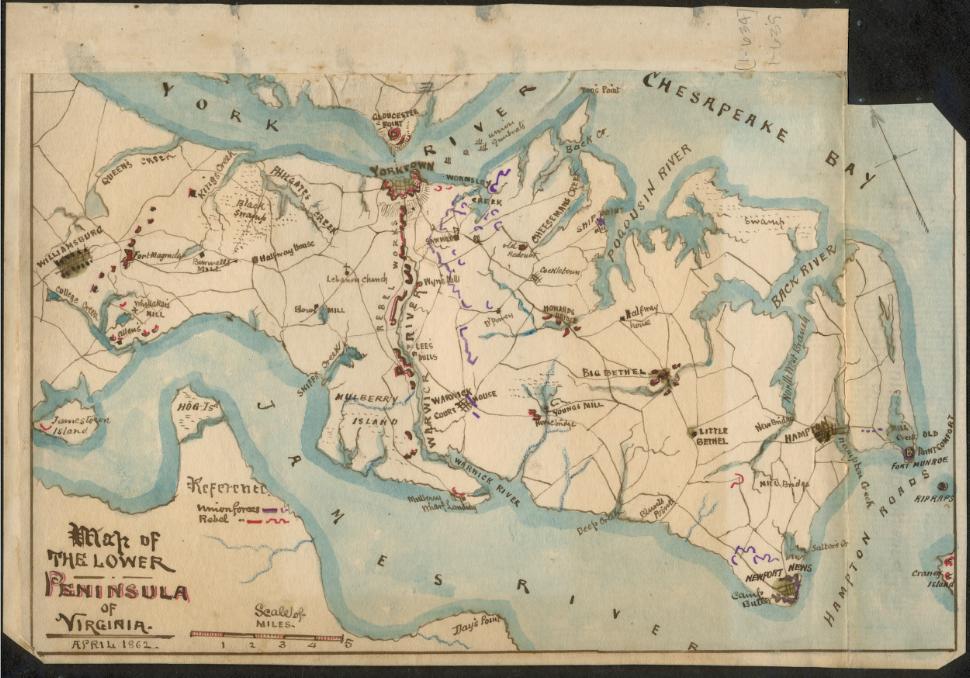
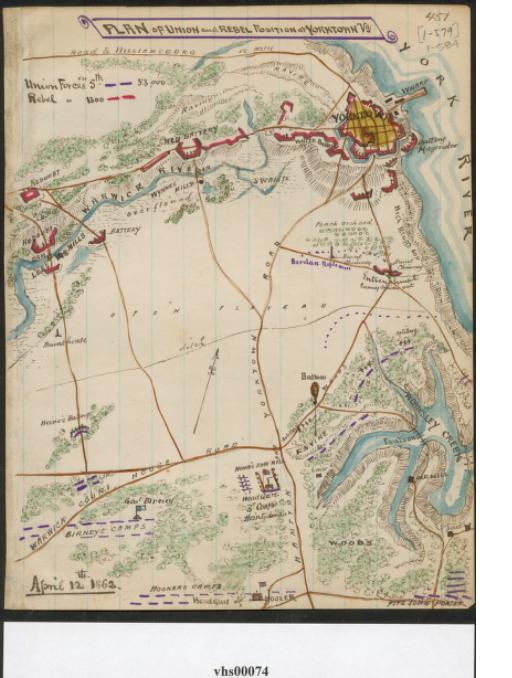
Robert Knox Sneden's April 12, 1862 map at Yorktown (gvhs01 vhs00074 http://hdl.loc.gov/loc.ndlpcoop/gvhs01.vhs00074 )

April 12, 1862 map shows Berdan's and a balloon

From The New-York Times April 13, 1862:

THE SIEGE OF YORKTOWN.; The Weather once more Favorable for Military Operations. Heavy Reinforcements Received by the Rebels. SUCCESSFUL BALLOON RECONNOISSANCE. Compliments to the National Troops.

NEAR YORKTOWN, Saturday, April 12.

The sun shone brightly yesterday and to-day, much to the relief of the thousands of soldiers who are compolled to sleep in the open air. The roads are still to very bad condition.

The rebels still continue to open with artillery whenever they discover a picket post, to which our guns never reply.

The rebel forces have been greatly increased within the last two days. On Thursday several vessels were seen to land troops at Yorktown, and also at Gloucester, opposite, which place has not been occupied up to this time. Reinforcements have also been received from Norfolk by way of the James River.

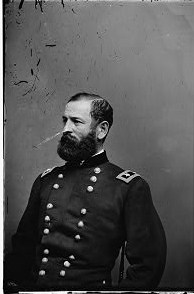
Fitz-John Porter (between 1860 and 1870; LOC: LC-DIG-cwpb-04578)

Fitz John Porter

The balloon reconnoissance made yesterday, by Gen. FITZ JOHN PORTER, shows that the rebels had materially strengthened their works since the advance of the National troops, and that many additional guns had been placed in position. He reached an altitude of five thousand feet, affording an unobstructed view as far as Williamsburgh and Norfolk.

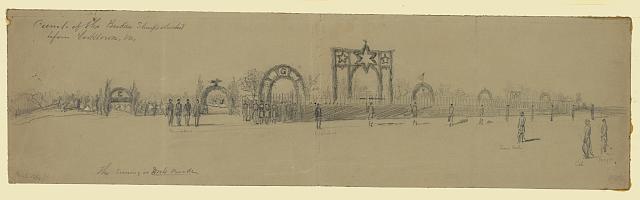
Gen. MCCLELLAN has written a letter highly complimenting the Sixth Maine Regiment for their gallant behavior while making a reconnoissance on Warwick River. Similar honors have also been bestowed on the Berdan Sharpshooters, by Gen. PORTER, for their conduct while acting as skirmishers during the advances. They now do picket duty in front of the enemy’s work, and many a rebel has fallen from the bullets of their unerring rifles.

Among the wounded in the Division Hospital is private FRED. KOWALSKI, of the Mississippi Battalion, who was shot through the lungs while deserting from the enemy.

Capt. SPAULDING, of the Fourth Michigan Regiment, was severely wounded, on Thursday, in the left shoulder.

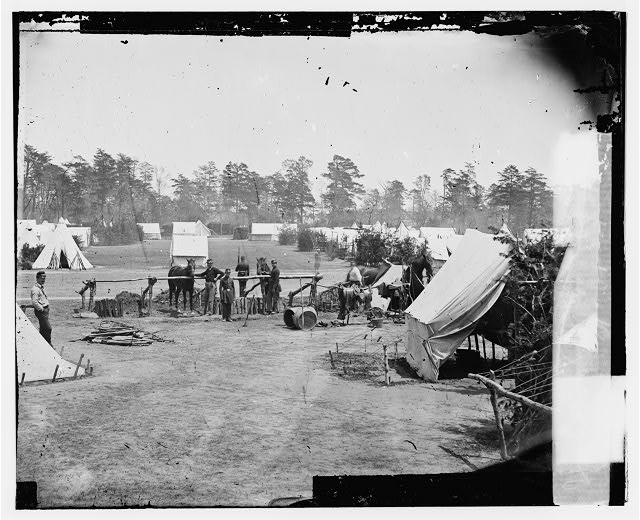
Camp of the Berdan Sharpshooters before Yorktown, Va (by Alfred R. Waud 1862 April; LOC: LC-DIG-ppmsca-22410)

Berdan Sharpshooters' camp near Yorktown

Posted in 150 Years Ago This Week, Military Matters, Peninsula campaign 1862 | Tagged , , , | Leave a comment

Trading Barbs and Bullets

Siege of Yorktown (Robert Knox Sneden, April 1862; LOC - Civil War Maps)

Siege of Yorktown

From a Seneca County, New York newspaper in 1862:

Letter from Lieut. Brett.

Camp Near Yorktown, Va.
April, 11th 1862.

Since I last wrote, we have had some pretty sharp fighting. Our brigade thus far has done all the skirmishing for the entire corps, and the gallant 33d took the lead of the Brigade in the advance, clear up to line of the enemy’s fortifications, which now temporarily impede our march “on to Richmond.” I am happy to say that our boys face the music with as much coolness and unconcern as would have done honor to Napoleon’s Old Guard. On Saturday we were marched in line of battle up to within 500 yards of one of the rebel forts, and were kept there till dark as a support for four field pieces while they tried to see what the enemy were made of. The shells went flying over our heads in every direction. Our guns shot away their flag staff twice during the skirmish, and you ought to have heard them yell every time our shells burst among them. Had they not thrown their shells so very high, hundreds would have been killed in our Brigade. As it was but two of our men were killed, and four or five wounded. One poor fellow was killed by a shell, which passed right through his body.

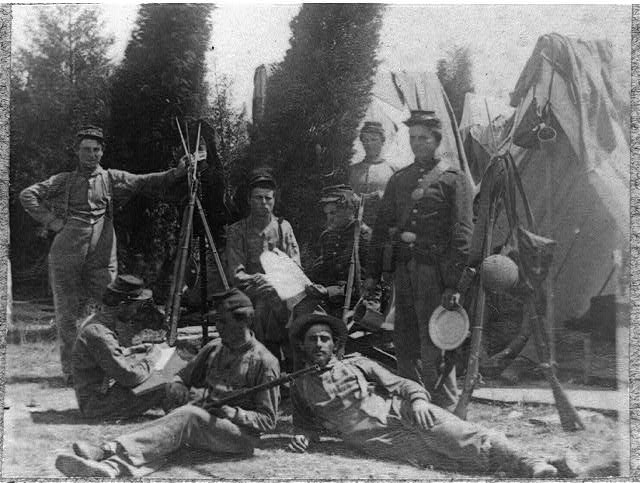
33rd New York Infantry (between 1861 and 1865; LOC: LC-USZ61-2124)

Members of the 33rd New York

What you said about the Old Banner made me feel quite patriotic, for I had retained the one which we brought out with us, sometimes carrying it on my back in my knapsack, and sometimes in my bosom, for we had to leave all our trunks and baggage when we got orders to march the last time, and even the officers had to carry their blankets and rations, and I did’nt know but I might perhaps have occasion to raise the noble old emblem upon the enemy’s works during the war.

But to go on with my story. We were kept within a short distance of the enemy all that night. Next day our company was placed on the right of the guns and our first platoon was deployed out at intervals, right in front of two of the forts, in full view of the rebels to act as skirmishers, and telegraph anything they might see to Gen. Davidson. The rebel battery had been silenced the day before but they favored us with an occasional shell. One struck a limber within six rods of my 2d platoon, and all of the cartridges attached to the shells in the limber exploded, blowing it to atoms. It contained forty-five shells and most of the fuzes were ignited, but some one with a good deal of presence of mind, after the first one exploded caught up a bucket of water which the gunner had used to wet his swab in, and threw on them, and prevented further disaster. This was a fortunate escape, as the gunners as well as our boys had time to throw themselves upon their faces and not a man was injured. the rebels jumped upon the parapet, yelled and danced at the prospect, undoubtedly, of a great extermination of the Yankees. They soon changed their tune, however, for Capt. Ayres sent four shells, one after another, among them, which seemed to settle their tea for that day.

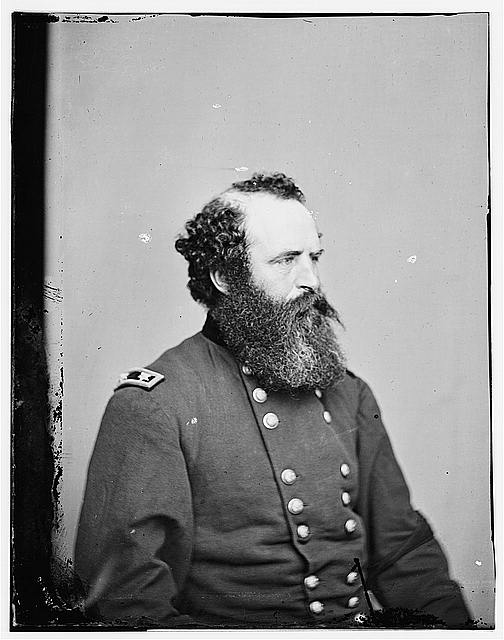
Portrait of Maj. Gen. Romeyn B. Ayres, officer of the Federal Army (Between 1860 and 1865; LOC: LC-DIG-cwpb-05268)

Romeyn B. Ayres - his artillery settled rebels' tea - for a day

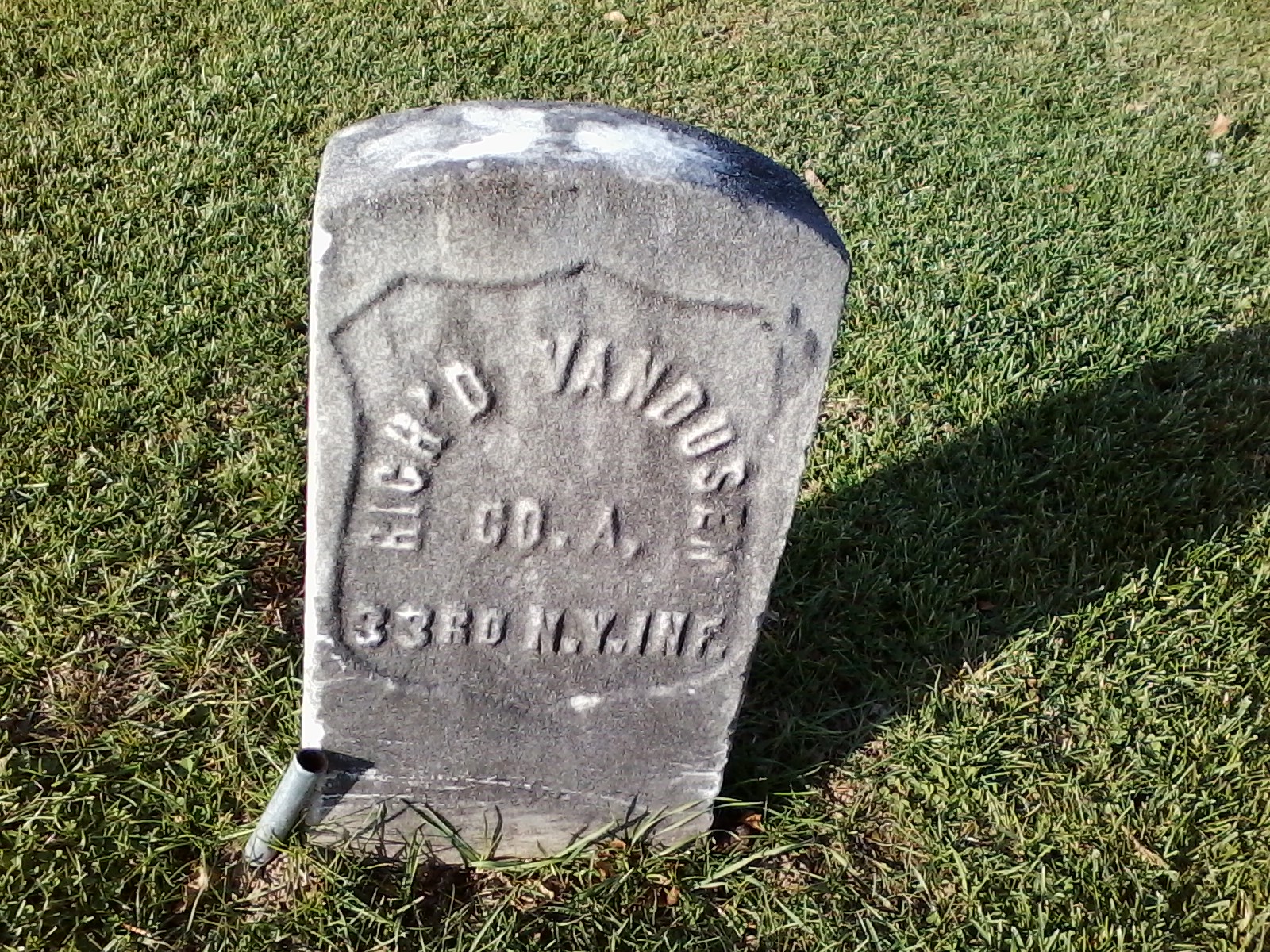
There is a marsh which extends for miles in front of the rebel fortifications, and in front of us. It is about 200 yards in width. Capt. Guion had Co. A., deployed to the left of the fort in front of a rifle pit, very near the marsh, and within speaking distance of the enemy. At intervals, or whenever they stopped shooting at each other, they kept up a conversation with the rebels. This placed our humorous friend, Dick Van Dusen right in his element, and he got off some pretty good things at the expense of our chivalrous Southern friends. They called us all sorts of hard names. One fellow asked if we had any wooden nutmegs to sell. At this one of our boys sent a bullet among them, with the remark that there was one, asking how they liked it. Our boys kept themselves covered so well by the trees that none were injured, but the enemy were seen to carry several who were either killed or wounded.

Young’s Mills we took a week ago without firing a shot. I went through all through the batteries and barracks in order to find some trophy to send you, but could find nothing except a few Georgia newspapers too old to send home.

John W. Davidson (from The Photographic History of the Civil War in Ten Volumes - Volume Ten: Armies and Leaders edited by Francis Trevelyan Miller, published by The Review of Reviews Co. of New York City in 1911, page 311.)

General Davidson - received telegraphs from the swampy front

Our camp is now about a mile from the enemy, back in the woods. On Monday while standing in the rain almost in sight of the rebel breastworks, I saw Gen. Smith, commander of our Division, Gen. Keyes, commander of our Corps, and another person dressed as a private, in earnest conversation, who I at once recognized as Major-General GEO. B. MCCLELLAN. The last named gentleman gave us to understand, I afterwards ascertained, that we were getting into close quarters, and ordered the main part of our forces back, leaving nothing but a picket, till we were better prepared to occupy a position nearer the enemy.

Wednesday night at 12 o’clock I was sent with 30 men to release the picket, precisely where Capt. Guion was on Sunday, with strict orders to keep the men from exposing themselves. I had all I could do to prevent [appears a word was missing in newspaper article] from doing so. As daylight began to make its appearance, the enemy on the other side of the water opened the ball by crowing like so many cocks, all along the line. Upon hearing this our boys immediately opened their cartridge boxes. One of the rebels finally cried out, “halloo, you Abolition Yankees over there, wake up!” This was responded to by our side by some one saying, “I am sorry I cant come over there and bid you good morning,” and with that he sent a bullet, saying “There is my card.” – Secesh immediately cries out that he shot too high, and a little far to the left. And so matters went on with an occasional exchange of shots till 11 o’clock, when we were released. More anon.

R.H. BRETT.

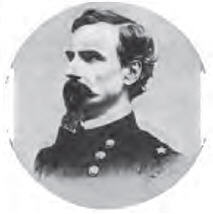
Lt. Brett

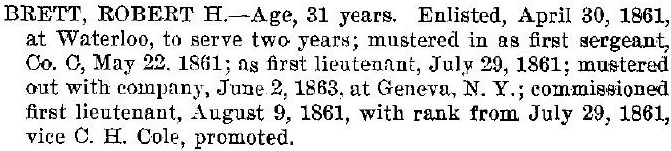
Lt. Brett's bio with the 33rd

It is said that Robert H. Brett re-enlisted in 1863 with the rank of captain. He was shot in the lungs and killed at Newtown, Virginia on May 30,1864. He is buried in Waterloo, NY.

"our humorous friend" - grave at Restvale Cemetery, Seneca Falls, NY (November 26, 2015)

“our humorous friend” – grave at Restvale Cemetery, Seneca Falls, NY (November 26, 2015)

The New-York Times’ BUFFALO correspondent also wrote a letter 150 years ago today that substantiates much of what Lt. Brett wrote about the work of John Wynn Davidson’s brigade, including the fall back on Monday, April 7th.

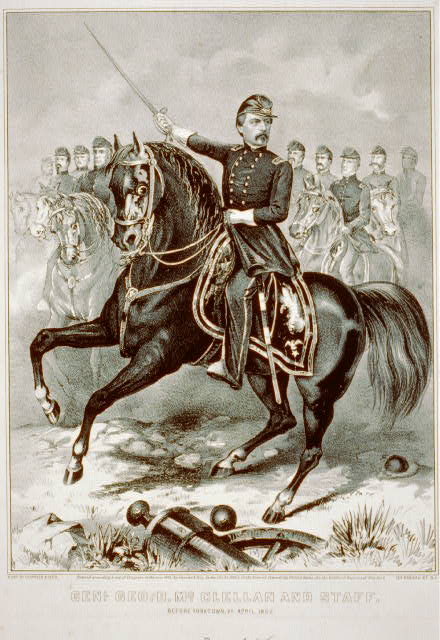
Gen'l. Geo. B. McClellan and staff, before Yorktown, Va., April 1862 (Pubd. by Currier & Ives, c1862; LOC: LC-USZC2-2426)

Orders tactical fall back of Davidson's brigade

Posted in 150 Years Ago This Week, Military Matters, Peninsula campaign 1862 | Tagged , , , , , , , , , | Leave a comment

Thanksgiving in April

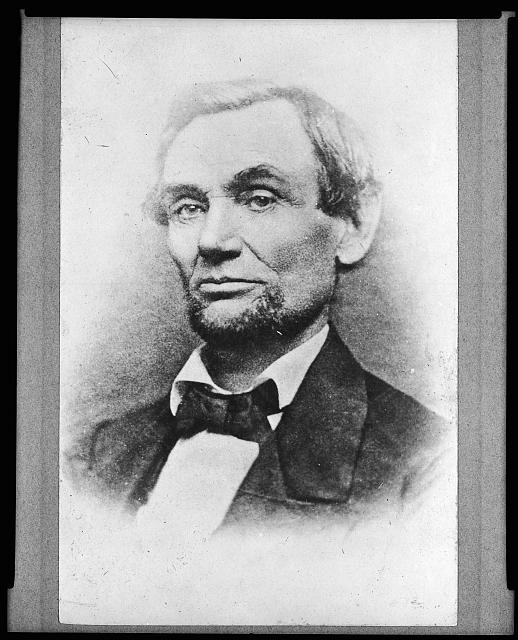
Abraham Lincoln: President-elect (1860 November 25, printed later; LOC: LC-USZ62-15984)

A. Lincoln in November 1860

It seems that proclamations calling for days devoted to prayer and fasting or thanksgiving were pretty common in the Civil War era – both North and South. 150 years ago today President Lincoln issued the following:

PROCLAMATION RECOMMENDING THANKSGIVING FOR VICTORIES,
APRIL 10, 1862.

BY THE PRESIDENT OF THE UNITED STATES OF AMERICA:

A Proclamation

It has pleased Almighty God to vouchsafe signal victories to the land and naval forces engaged in suppressing, an internal rebellion, and at the same time to avert from our country the dangers of foreign intervention and invasion.

It is therefore recommended to the people of the United States that at their next weekly assemblages in their accustomed places of public worship which shall occur after notice of this proclamation shall have been received, they especially acknowledge and render thanks to our Heavenly Father for these inestimable blessings, that they then and there implore spiritual consolation in behalf of all who have been brought into affliction by the casualties and calamities of sedition and civil war, and that they reverently invoke the divine guidance for our national counsels, to the end that they may speedily result in the restoration of peace, harmony, and unity throughout our borders and hasten the establishment of fraternal relations among all the countries of the earth.

In witness whereof I have hereunto set my hand and caused the seal of the United States to be affixed.

Done at the city of Washington, this tenth day of April, A.D. 1862, and of the independence of the United States the eighty-sixth.
A. LINCOLN.

By the President: WILLIAM H. SEWARD, Secretary of State.

You can read more of President Lincoln’s writings at Project Gutenberg

Posted in 150 Years Ago This Week, Lincoln Administration, Military Matters | Tagged , | Leave a comment

“an elephant at a bridge”

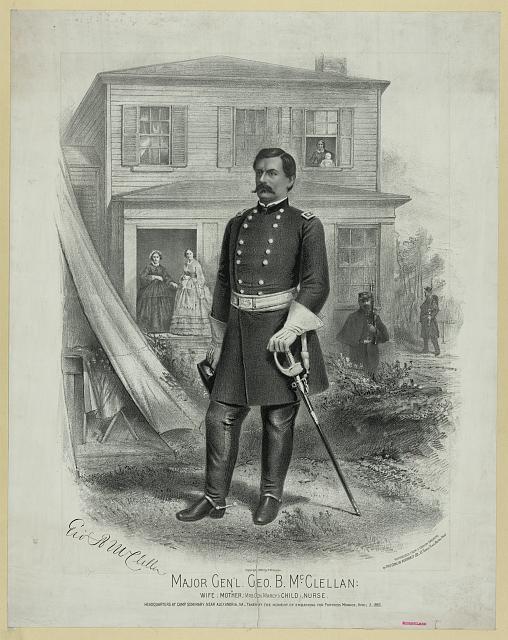
Major Gen'l. Geo. B. McClellan, wife, mother (Mrs. Gen. Marcy), child, nurse, headquarters at Camp Seminary, near Alexandria Va., taken at the moment of embarking for Fortress Monroe, April 3, 1862 (Boston : Conlin Portrait Co., c1892; LOC: LC-DIG-pga-00527)

He's got the Richmond press wondering what he's up to

From the Richmond Daily Dispatch April 10, 1862:

Yorktown.

There is yet nothing from Yorktown indicating an immediate fight. The enemy, now believed to be under McClellan, had, instead of attacking, after sending a few shot at long range, commenced throwing up breastworks! It was supposed that an invading army, whose duty it was to obey the last mandate from Washington, to crush rebellion in ninety days, would have marched boldly on to attack our forces, which were so much inferior in numbers to his own; but like an elephant at a bridge, however rapidly he may have approached it, he pauses to see whether it be safe to go further! May-be he will not cross it at all, and then all the goads of the keepers of the animals can’t make him venture upon it.

In this position of matters at Yorktown, it is not plain what the enemy is after and how long he will remain stationary. He may be forced to do yet what he has no intention of doing. Of one thing he may rest assured, and that is, that our cause at Yorktown will be maintained by as brave and determined an army of patriots as ever shouldered a gun.

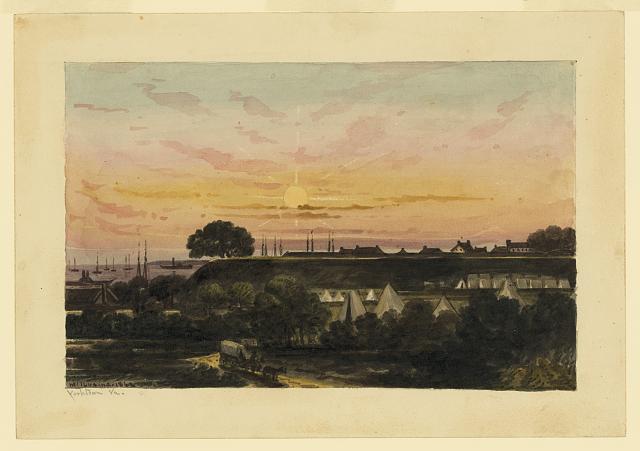
Yorktown, Va. (by William McIlvaine 1862; LOC: LC-DIG-ppmsca-20008)

Yorktown view in 1862

Yorktown, Va., vicinity. Headquarters of Gen. George B. McClellan, Camp Winfield Scott (1862 May 3; LOC: LC-DIG-cwpb-00997)

An elephant in the camp?

__________________________________

In the Grasp?

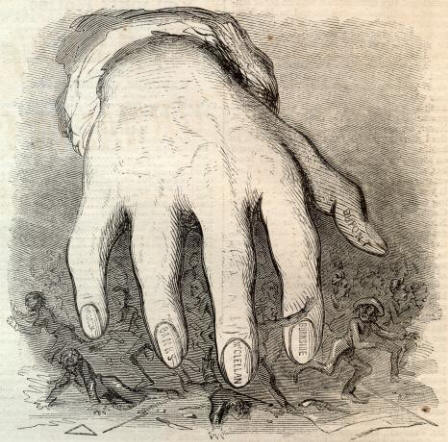
A northern view of the Yankee war machine taking it to the rebels all over the place (from Harper’s Weekly April 5, 1862):

The Hand Closing (http://www.sonofthesouth.net/leefoundation/civil-war/1862/april/civil-war-cartoons.htm)

The Hand Closing

Posted in 150 Years Ago This Week, Military Matters, Peninsula campaign 1862 | Tagged , , , | Leave a comment

“A Probable Siege of Two or Three Days”

Virginia Peninsula April 1862 by Robert Knox Sneden (1862-1865; LOC: gvhs01 vhs00076 http://hdl.loc.gov/loc.ndlpcoop/gvhs01.vhs00076)

from Fortress Monroe to Yorktown and Warwick River by April 7th


From The New-York Times April 8, 1862:

IMPORTANT WAR NEWS; Gen. McClellan Before Yorktown with the National Army. The Water Batteries on York River Shelled Out by Our Gunboats. Gen. Magruder in Yorktown with 30,000 Rebel Troops. Shipping Point in Our Possession. Some of the Rebel Outworks Carried. A Probable Siege of Two or Three Days. …

WASHINGTON, Monday, April 7.

The following is a summary of the intelligence received by the War Department up to 10 o’clock to-night:

Yesterday, the enemy’s works were carefully examined by Gen, MCCLELLAN, and were found to be very strong and the approaches difficult. The enemy was in force and the water batteries at Yorktown and Gloucester said to be much increased. There was sharp firing on the right, but no harm was done. Our forces were receiving supplies from Ship Point, repairing roads and getting up large trains.

It seemed plain that mortars and siege-trains must be used before assaulting.

Another dispatch received at 10 1/2 A.M. states that Yorktown will fall, but not without a siege of two or three days. Some of the outer works were taken.

A dispatch from Gen. WOOL states that Gen. MAGRUDER had 30,000 men at Yorktown.

Another dispatch to the Secretary of War states that a new rebel camp was discovered on the beach at the Rip Raps, and was shelled out by Col. HOLLIDAY. Several regiments of the enemy’s infantry were seen from the Rip Raps during the day.

There were no signs of the Merrimac. A rebel tug was seen making a reconnoissance off Sewall’s Point, on the afternoon of Tuesday.

WASHINGTON, Monday, March 7.

On the afternoon of Sunday, Ship Point Battery had been taken, and our gunboats had shelled out the water batteries.

There was considerable delay caused in crossing Deep Creek, at Warwick Court-house, and resistance was made by the rebels, during which several casualties occurred on our side.

All the fortified places of importance before Yorktown had been taken at every point.

The greatest enthusiasm prevailed among our troops.

A fuller account is contained in the following dispatch:

BEFORE YORKTOWN, Saturday Evening.

Hon. Edwin M. Stanton, Secretary of War:

That portion of the Army of the Potomac recently concentrated at Old Point, advanced yesterday morning in the direction of Yorktown, twenty-four miles distant. The right was assigned to Gen. MORRILL’s Brigade, of Gen. PORTER’s Division, two companies of the Third Pennsylvania Cavalry and a portion of BERDAN’s Sharpshooters acting as skirmishers. Nothing of interest took place until their arrival at Big Bethel, twelve miles distant, where they met the outer pickets of the rebels. The troops were delayed here two hours in reconstructing a bridge which had been destroyed.

The rebels retreated before the advance of our skirmishers to Howard’s Creek, where they had some abandoned earthworks. Four shots were fired here by the rebels from two field pieces which were soon silenced by the Fourth Rhode Island Battery, when the rebels beat a hasty retreat, taking their pieces with them. The main body of the army here rested for the night, while Gen. MORRILL’s Brigade advanced three miles to Cuckleville and six miles from Yorktown, and then encamped.

By 7 o’clock this Saturday morning, the column was again in motion, and at 10 o’clock was in front of the enemy’s works at Yorktown.

The first shot fired was by the rebels, the shell passing over the heads of Gen. PORTER and Staff without exploding. The batteries of GRIFFIN, Third and Fourth Rhode Island and Fifth Massachusetts, were now placed in position, replying to every shot sent by the rebels. The cannonading continued, with but slight intermission, until dark. About 400 shots were fired by both parties during the day. The loss on our side, was three killed, as follows:

ED. LEWIS and CHARLES L. LAID, of the Third Massachusetts Battery, and JOHN REYNOLDS, of the Fourth Rhode Island Battery; wounded, TIM DONOHUE, in the hand, FREEMAN KARRIG and CHARLES TUCKER, confusion of chest, all of the Third Massachusetts Battery; Sergt. JAMES WADE, of Company C, in the arm, CYRUS WILCOX, Company C, pieces of shell in the leg, and C.W. PECK, of Company F, in the leg, all of BERDAN’s Sharpshooters.

The position of the rebels is a strong one. From present indications, their fortifications extend some two miles in length, and mount heavy guns. The ground in front of their heavier guns is low and swampy, making it utterly impassable.

[The following important paragraph appeared in the National Intelligencer of yesterday morning. So much information had not been allowed to come over the telegraph wires. — EDS. TIMES.]

“Private intelligence from Gen. MCCLELLAN’s army, at seven o’clock on Saturday night, announces his advance to Yorktown with three Divisions, and his attack on that position. The bombardment of Magruder’s fortifications was progressing well, with very few casualtes on our side. The final result will probably so known here to-day.”
Posted in 150 Years Ago This Week, Peninsula campaign 1862 | Tagged , , , , | Leave a comment

Shirker

A couple paragraphs that made me ask a lot of questions:

From the Richmond Daily Dispatch April 7, 1862:

A leap for liberty.

–On Saturday a colored individual, named John Williams, was carried before the Mayer for the rather novel offence of jumping from the window of Jno. Hagan’s office in order to escape from working on the batteries. It appears that Williams, as a member of the colored fraternity, had been notified of his liability to contribute a little of his personal exertion towards erecting certain batteries near this city. Failing to respond to the intimation he was taken up and at the time of his attempted escape was in process of being transferred VI et armis to the scene of his future usefulness. The case presenting several model features for constellation, the Mayer continued it in order to discontinue the amount of guilt involved in attempting to escape from work.

There’s no indication that John Williams was a slave. I guess the state has a right to conscript individuals for its protection? Apparently Barney Moore was also free.

From the same Dispatch issue:

Death of a Faithful Negro.

–Our readers in this city will doubtless remember the lean form and meek face of an old negro man who dispensed the Dispatch to its many subscribers in the metropolis for years past; his name was Barnett Moore. We are called upon to record his death, which we do with sincere regret. He died yesterday morning after a brief illness. For more than a quarter of a century he was a carrier of newspapers, to which daily avocation he sometimes united, that of preacher to his colored brethren.–Faithful in all that he undertook, neither summer’s sun or winter’s storm ever deterred him from laying at each door the daily news; and his humility and honesty of heart made a friend of every one that knew him. Poor Barney! He was many a time a weary with his tedious round of duty, but at last, full of infirmity and years, he has been gathered to his fathers, where the weary are at rest. –He fulfilled the term of life alletted to man, being about seventy years of age. Peace to his ashes.

Posted in 150 Years Ago This Week, Southern Society | Tagged , | Leave a comment

Big Tow Operation

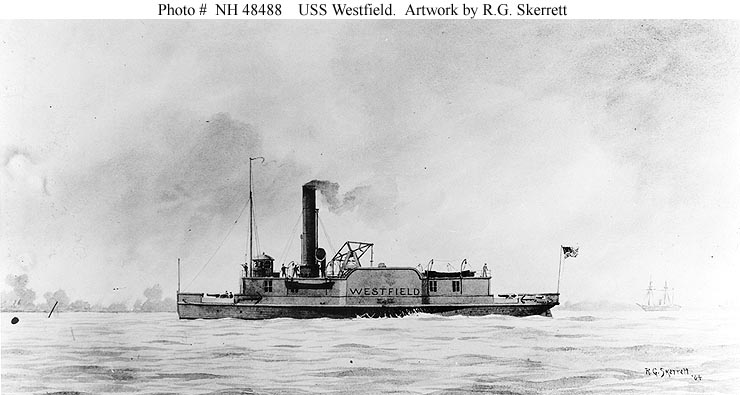
USS Westfield by R.G. Skerrett

Helped tow ships over the bar at Mississippi's mouth

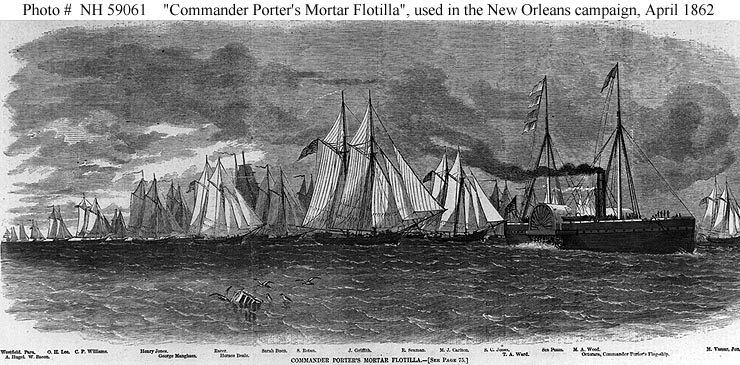
150 years ago this fortnight a native son of Seneca Falls, New York wrote some letters home from far, far away at the mouth of the Mississippi River. JOHN was a mate in the Union navy that was preparing for an assault up the river to capture New Orleans, the largest city in the Confederacy. Steamers were towing other ships over the sand bar at the Mississippi’s mouth. The following letters were published by a Seneca Falls newspaper.

From Commodore Porter’s Fleet

The following letters will be read with interest, as coming from JOHN ARNETT, son of WM. ARNETT, of this village, who is now Master’s Mate on the U.S. Steamer Westfield, in Commodore Porter’s Fleet:

Adm. David D. Porter, Lt. Commander, on deck of U.S. Steamship Fulton. (between 1862 and 1865; LOC: LC-DIG-cwpbh-03367)

David Dixon Porter

U.S. Steamer Westfield
March 30, 1862.

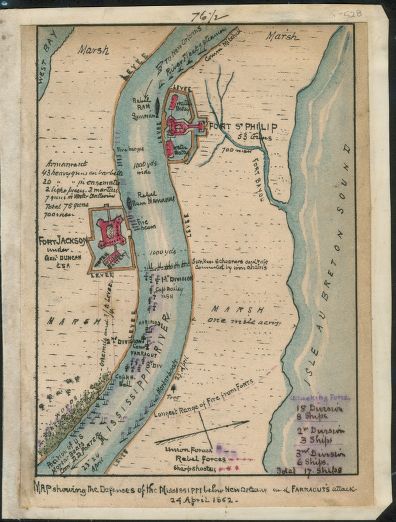
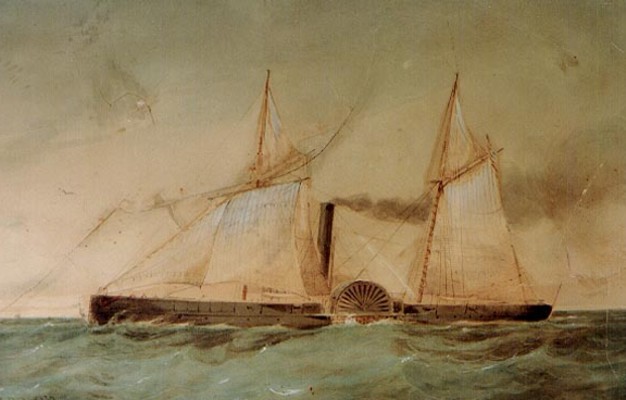
We are here in the Mississippi River, towing vessels over the bar at the mouth of the river. All of the bomb fleet are here with the exception of the steamer “Octorora,” which is the flag ship of the fleet. There are thirty sailing vessels and seven steamers in the fleet, besides the frigates Richmond, Pensacola, Mississippi, Colorado, Verona, Cayuga, and every day some vessel comes to join the Expedition. We are going to have a hard fight before we take New Orleans as the rebels are doing all in their power to beat us. Forts Jackson and St. Phillip are between us and New Orleans, and are very strongly fortified, and there are batteries all along the River from there to New Orleans. I was talking with a Pilot to-day, who is a prisoner that was taken while running the blockade; he told me that just below the forts they had constructed a large raft composed of drift-wood fastened with chains, and so arranged that they can let it all break and come down on the fleet when the attack commences. The story is verified as we do not see any drift-wood floating down the River, which at this season of the year is usually full of it. The weather is warm and pleasant. All of the houses are closed around here, and the owners, with their families, have gone to New Orleans. There is a little Rebel steamer that runs in sight of us every day, and when one of the gun-boats makes a start she will “make tracks” up the river, as she is a fast sailor. I wish we could get her within range of our one-hundred-pound rifle gun once. We have to work slow, as there is almost always a donse [sic] fog here on account of the fresh water uniting with the salt, and some of the large ships are hard around, and we have plenty of work to do. I think before this reaches you the battle will be fought, as everything is working with all possible despatch [sic], so as to avoid the hot weather and get up the River before June. This mortar fleet is a “big thing.” I think the frigates will go ahead of us as we shall have the second division of Mortar schooners to tow. The mortars can throw two-hundred-pound shells four miles with accuracy at a target, and twice that distance with a full charge. I saw one of the shells strike a small house, and the way the shingles and boards flew was a caution. I am very well contented, and anxious for the ball to open. I have been on the sick list but once and that did not last twenty hours. An unfortunate accident occurred yesterday. One of the Mates in casting off a hawzer [hawser], had his hand badly smashed

Yours &c.,

JOHN

____________________

Map showing the defenses of the Mississippi below New Orleans and Farragut's attack 24 April 1862.  by Robert Knox Sneden

Forts along the Mississippi - obstacles to New Orleans

U.S. Steamer Westfield
April 5, 1862.

We are at anchor in a dense fog up the River a few miles, and this is the first quiet day I have had in some time, as we have been very busy towing vessels over the bar. It is Sunday, and thinking a few lines to you would be better than “turning in,” (as I have just come off the watch) I sit down to write:

We had general muster service and and inspection service this morning – how unlike the Sundays at home – tracts are distributed, and the sailors read them (as a general thing) with much interest. We do not carry a chaplain, as our vessel is not allowed any, but we have some very good men on board. The weather is warm, and I regret that I did not bring some light clothing along, but I think I can get a suit made on board. How would you like to see me in a roundabout again? That is the Navy style of summer coats. We shall be away from here when the hot weather sets in if we are successful in taking New Orleans, which we will without doubt before this reaches you.

A little skirmish took place yesterday a little further up the river between one of our steamers and a Rebel Gunboat, but the …[missing data from newspaper clipping]… make the attack on the forts in a few days, and when they are taken New Orleans is ours if Commodore Foote does not get the windward of us. Please give my kind regards to Mr. JENNINGS, and say to him that I have seen WM. PENFIELD once again and he seemed glad to see me, he is coming to see me to-morrow again, and wished me to give his regards to Mr. JENNINGS and family.

Yours, &c.,

JOHN

____________________________

April 9, 1862.

Nothing of importance has transpired since writing the foregoing. We have got the vessels all over. General BUTLER arrived yesterday and reported to the Commodore that his forces were all ready, and when they arrive and we coal and mount four more guns, we shall be ready to move up the river. My health is very good, and has been since I left home, while my old complaint is entirely cured. I am very well contented and have the good will of every one on the ship. God bless and preserve you all.

JOHN

USS Octorara (1862-1866)  Watercolor by Alex Stuart.  Courtesy of the Navy Art Collection, Washington, DC.  U.S. Naval Historical Center Photograph.

Porter's flagship - the USS Octorara

Line engraving published in "Harper's Weekly", 1862, depicting the mortar schooner flotilla commanded by David Dixon Porter during the April 1862 attack on the forts below New Orleans.

Porter's Mortar Flotilla (the Westfield on far left)

Posted in 150 Years Ago This Week, Military Matters | Tagged , , , , , , , , , | Leave a comment

Yorktown Naval Battery

150 years ago today General George McClellan began the Union army advance up the Virginia Peninsula.The rebels say they are ready for a “second battle of Yorktown.”

From the Richmond Daily Dispatch April 4, 1862:

The army of the Peninsula.

Yorktown Naval Battery. March 31st, 1862.

To the Editors of the Dispatch:

In a late issue you are induced to promise the speedy prospect of stirring news from the Peninsula. You will then admit a correspondent this quarter, although not yet herald of the good news which your readers are eagerly looking for. Your information was doubtless correct as to the advance of the enemy in force; but the latest intelligence from below is to the effect that he has retreated in somewhat inglorious haste, and our army will probably be again consigned to disappointment and the every-day monotony which succeed those oft-repeated rumors of attack. Still, this sudden withdrawal of the enemy’s forces may be only a feint, and a few days may develop something more definite and satisfactory. Come when they may, they can never find the army of the Peninsula more ready and willing to receive them. Our defences are complete by sea and land, and our brave boys, of every corps of the service, have attained an efficiency of discipline and drill which renders them fit to cope with the best trained armies on the globe.

The enthusiastic spirit evinced by the various branches of the army, in responding to the call for re-enlistments, has been emulated here to a very satisfactory extent. A large portion of the troops of this command were originally recruited for the war, and within the last two months the twelve months volunteers have re-enlisted almost to a man — There are but few who have not gone in for the war, and with these few the delay is a mere question of time.

We, of the Naval Battery, were among the first companies to take position on this river, in May of last year, and we naturally reflect with some degree of pride that we are among the veterans of the Peninsula. The company is now being re-organized for the war by that accomplished officer and universal favorite, Lieut J. Hatley Norton, at present Adjutant of the Battery. In addition to old members, we are receiving volunteers from other twelve months companies, to augment our number to the maximum prescribed by law.

Should the long-looked-for advance of the enemy be a combined attack by land and water, we may safely promise you that the river batteries will give a good account of themselves. Prudence forbids my writing more definitely as to the strength of our position at the present juncture. But we are confident in the better that the chapter in our history which will record the second battle of Yorktown, will be one of the most glorious in the annals of Time.

G. W. F.

Posted in 150 Years Ago This Week, Military Matters, Peninsula campaign 1862 | Tagged , | Leave a comment

Where’s Jasper?

See the 57th Article of War

Edwin McMasters Stanton, seated, with his son Edwin Lamson Stanton, standing in profile (between 1852 and 1855; LOC: LC-DIG-ppmsca-19600)

'fountain of almost feminine tenderness'?

It’s been a long time since I’ve copied anything from JASPER, The New-York Times’ antebellum Charleston correspondent. After the surrender of Fort Sumter JASPER escaped north to write again another day. In this piece he makes Secretary of War Stanton out to be more tender than his public demeanor would suggest and questions the federal policy of controlling press reports on military movements.

From The New-York Times April 4, 1862:

OUR WASHINGTON CORRESPONDENCE.; THE HEART OF THE SECRETARY OF WAR INJUSTICE OF THE FIFTY-SEVENTH ARTICLE OF WAR.

WASHINGTON, Friday, March 28, 1862.

An incident has recently transpired which brings out in bold relief a most touching instance of delicacy in one whom the public look upon as the grim, stern, and even Draconic, Secretary of War, Mr. STANTON. It shows that deep down in his heart there wells up a fountain of almost feminine tenderness. About two weeks since a private in one of the New-York regiments was killed while on picket duty at our outposts on the Potomac. He was a young man, beloved by his companions, and the sole hope of a widowed mother. When she heard of his death she hurried on here from Rochester, hoping, through the aid of the Government, to have her son’s remains sent to his native place. She found that it would cost her quite a heavy sum, and far more than her slender purse would permit. Disappointed, and with her cup of sorrow now filled to repletion, she was about to return unsuccessful, when an old army officer, Capt. MAGUIRE, volunteered to aid her through a letter to the Secretary of War. Mr. STANTON was so impressed with her story that he immediately sent an order to the proper officer, with instructions to have the dead soldier disinterred, properly coffined, and forwarded, with every memento of respect, to his home, free of charge, to the devoted mother who had offered her all on the altar of her country.

When you hear from me again it will be from the tented field — from a corps d’armee marquee. I should like to tell you something about my own particular corps, but I look with holy horror upon the 57th Article of War, and religiously refrain. Let it be observed, however, that it is not in consonance with the spirit of our institutions to refuse to allow the loyal people, who are spending their blood and treasure like water in the cause, to know the facts about our preparations, while the friends of the C.S.A. — to be counted by the scores in every street in Washington, and in many cases still holding office under the Union Government — remit almost daily, to the would-be destroyers of the Union, all the facts they wish them to know. It is hardly worthy of a great power to so dread the publication of facts. We ought to feel that we are now so strong, and that the South is so contemptibly weak and utterly unable to cope with us, that we might as well let them know the full and entire strength of our armies. They would then see the utter hopelessness of resistance, and would gladly lay down their arms, in expectancy of a general amnesty. So think, and so will the mass of the people echo, the sentiment of. JASPER.

Posted in 150 Years Ago This Week, Lincoln Administration, Military Matters | Tagged , , | Leave a comment

Letter from a “bagged rebel”

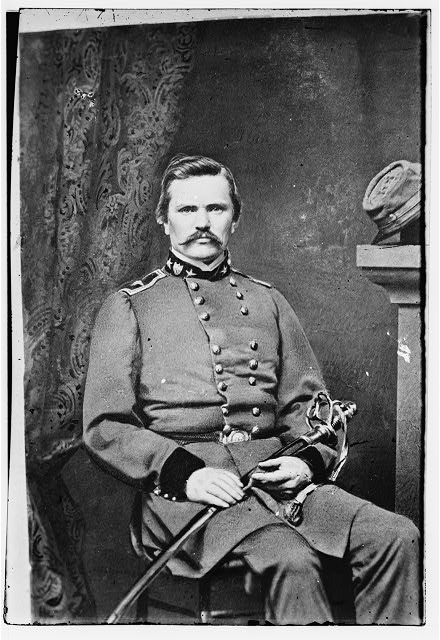
S.B. Buckner CSA (between 1860 and 1870; LOC: LC-DIG-cwpb-07431)

Out of the clink?

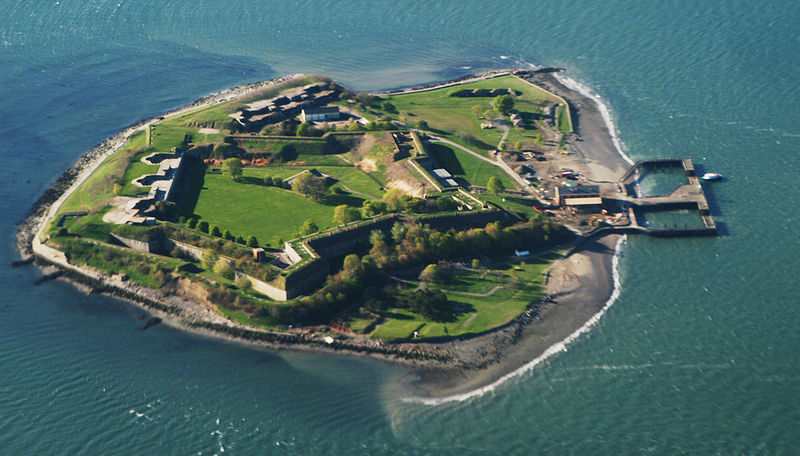
Fort Warren at Boston Harbor “had a reputation for humane treatment of its detainees.” Given the circumstances, I’d say that newspapers and whiskey from your home state (especially if that state is Kentucky) would go on the humane side of the ledger.

From the Richmond Daily Dispatch April 3, 1862:

Letter from Gen. Buckner.

The Louisville Journal, of the 15th, publishes the following as a letter from General Buckner. Of course, Prentice could not forego the opportunity of exhibiting as a blackguard, and the “bagged rebel,” as he called Gen. Buckner, is treated to an extraordinary specimen of the Journal’s characteristic style:

Fort Warren, Mass., March 4, 1862.

To the Editors of the Louisville Journal:

Among other luxuries of which I have been deprived since my imprisonment, is the pleasure of perusing those chaste and refreshing notices with which, for some time past, your paper has honored me; and although in my progress through the North I have met with many attempts on the part of the press at an imitation of your peculiarly felicitous style of misrepresentation, I have found none to equal the original. I am, therefore, under the necessity of applying at the fountainhead. I inclose two dollars, for which please send me your country daily to the following address.

Gen. S. B. Buckner,

Care of Col. Dimick,

Fort Warren, Mass.

P. S.–Since writing the above, our friend, Col. R. W. Hanson, has reached this celebrated resort, and desires me to add that the present of a demijohn of whiskey, which he learns you have promised him, would never be more acceptable than at this time — the locality and the latitude, as well as the sentiments of our neighbors up the harbor, holding out most tempting inducements to cultivate a taste for that delightful beverage. As a matter of caution, however, he urges me to add that he hopes, if the liquor be of good quality, you will not venture to taste it, as he might thereby incur much risk of losing it altogether — a privation which, however agreeable to yourself, would be attended with serious inconvenience to himself during the prevalence of the prevailing “nor’easters.”

S. B. B.

After Simon Bolivar Buckner surrendered unconditionally at Fort Donelson he was imprisoned at Fort Warren until August 15, 1862, when “after five months of writing poetry in solitary confinement [?], Buckner was exchanged for Union Brig. Gen. George A. McCall. The following day he was promoted to major general and ordered to Chattanooga, Tennessee, to join Gen. Braxton Bragg’s Army of Mississippi.”

Skipping over the rest of the Civil War: Buckner was governor of Kentucky from 1887-1891. His son served as an American general in the Pacific Theater during the Second World War. Simon B.Buckner, Jr. was killed by Japanese artillery fire during the Battle of Okinawa.

Georges_Island_and_Fort_Warren_in_Boston_Harbor

Fort Warren still stands

The photo of Fort Warren is licensed by Creative Commons.

Posted in 150 Years Ago This Week, Civil War prisons, Military Matters | Tagged , , , | Leave a comment