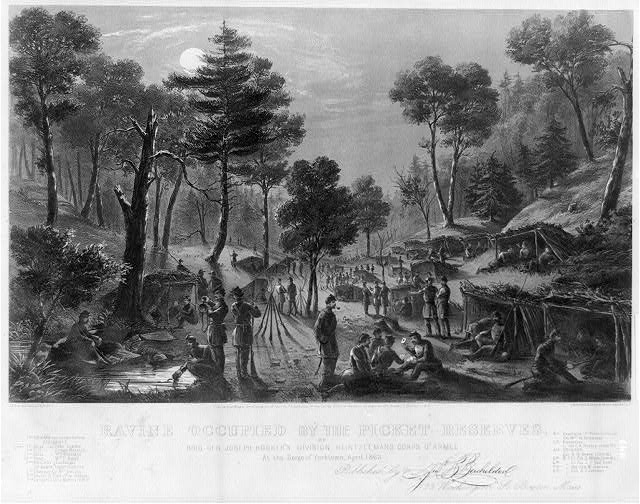
“on the qui vive” in Yorktown

Ravine occupied by the picket reserves, of Brig. Gen. Joseph Hooker's division, Heintzlemans corps d'armee, at the seige of Yorktown, April, 1862 (v; LOC: LC-USZ62-1143 )

Reserved Union troops at Yorktown

What are the Yankees waiting for?

From the Richmond Daily Dispatch April 26, 1862:

Correspondence.
from the Peninsula.

Yorktown, April 21, 1862.

Nothing stirring, as yet, has transpired on the Peninsula. The enemy seem to have no disposition to attack. Recent events have demonstrated that they have a large force in front of us, and what they are waiting for time alone will reveal. Our forces are ever watchful — continually on the qui vive; and depend upon it, a warm reception will be given when it is needed.
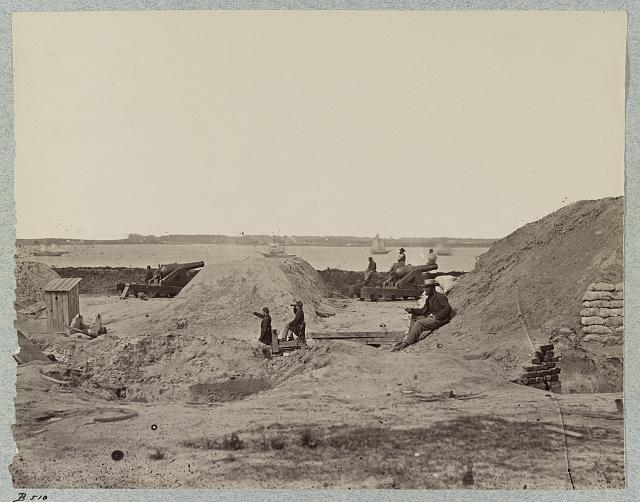
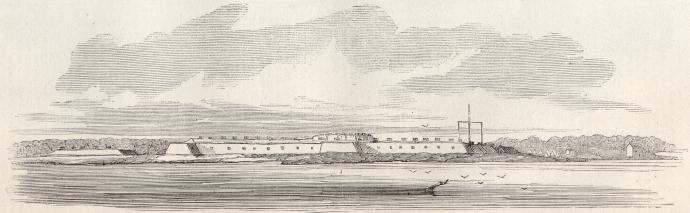
Confederate fortifications, Yorktown, Va. (photographed between 1861 and 1865, printed between 1880 and 1889LOC: LC-DIG-ppmsca-32789)

After the bantering - some ex-rebel works at Yorktown

With the exception of the demonstration the other day of Winn’s [Wynn’s?] Mill, a little commanding [cannonading?] from our batteries, and considerable bantering on the part of our outpost pickets, nothing of note has occurred.

The Conscription bill, recently passed by Congress, is the great topic of discussion, and with the twelve months men, undoubtedly gives considerable dissatisfactions not, in fact, as to the matter, but as to the manner in which they are held. It cannot be denied that they do and will complain loudly of the poor recompense given by the Government for their patriotism in answering promptly the first call of the country.

I must not close before telling you of the disgraceful manner in which the Yankees treated their dead, after the engagement the other day at [Lee?]’s mill. Their wounded, and the bodies of their dead, lay in and in our side of the slough, from Wednesday night until Saturday evening–the wounded to die and the dead to –and yet no effort was made by the Yankee General to relieve his wounded or bury his dead. When a flag of truce was sent by our commander for permission to bury their dead, that were becoming offensive, his reply was, that they didn’t trouble him, but we could bury them if we wanted to. What a comment upon their “Bull Run investigation.”

Warren.
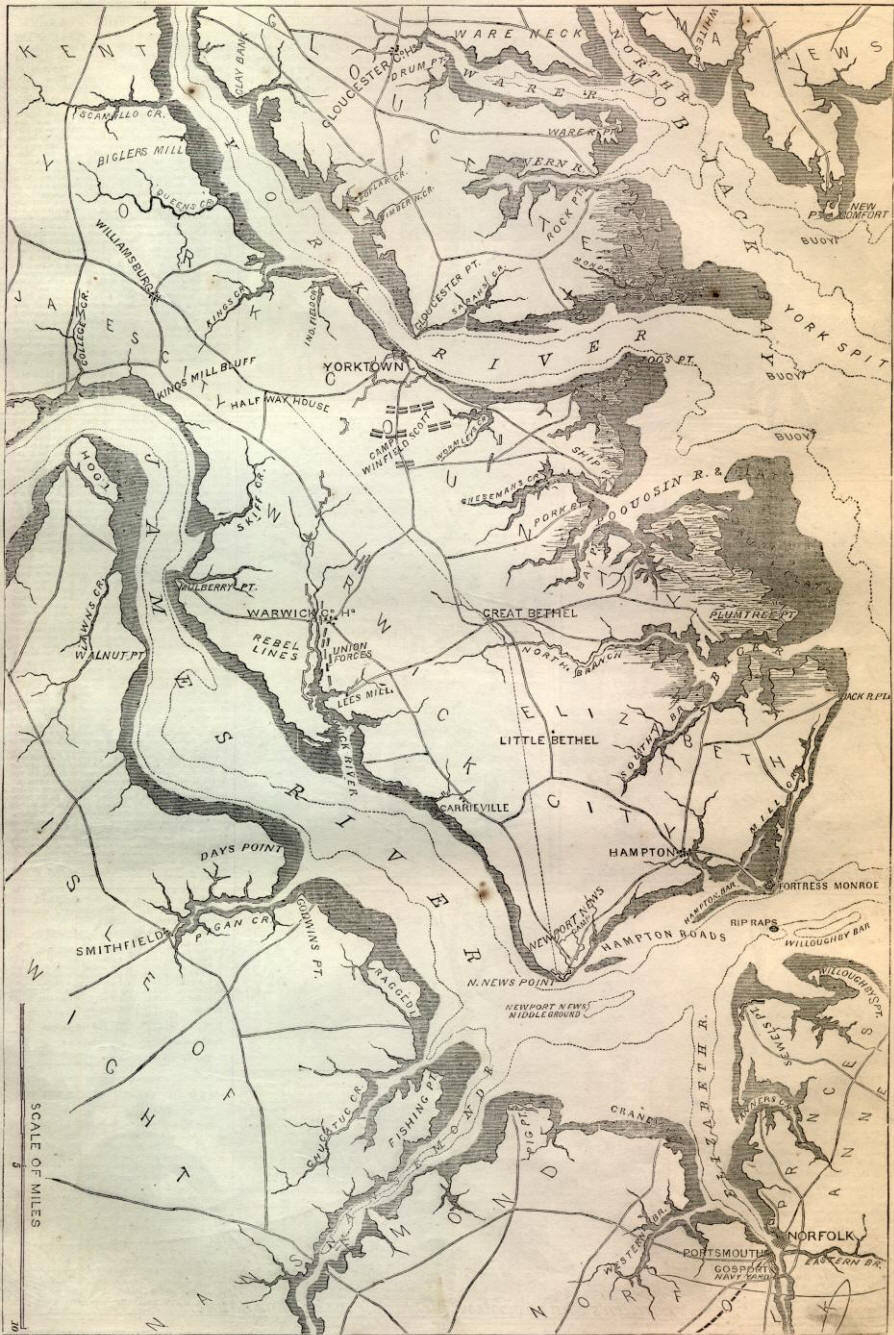
yorktown-map Harper's Weekly 5-3-1862

A peninsular seat of war

Harper’s Weekly map displayed at Son of the South
Posted in 150 Years Ago This Week, Confederate States of America, Peninsula campaign 1862 | Tagged , , , | Leave a comment

Your Horse Is Our Horse

Horse

Not a time to stand idle

From the Richmond Daily Dispatch April 22, 1862:

Impressment of horses.

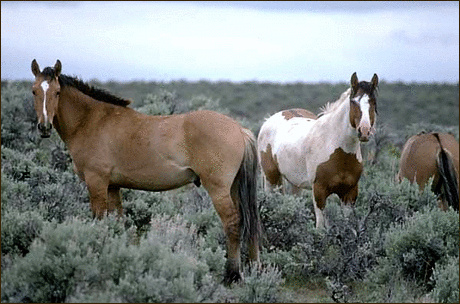
–The people of Lynchburg are groaning over the fact that the agents of the Government have been twice in that region impressing and buying up all the serviceable horses to be found.–Richmond has never been “afflicted” in this way, and our mountain neighbors are unable to perceive the justice of the reason for the immunity hitherto granted her. They are right, and we trust that the next haul will be made from the surplus stock of horses in this region. We learn that some public back owners do not now permit their horses to be used, because Gen. Winder has intimated that they shall conform in their charges to the rates prescribed by the city ordinances. This is not the time for horses or any other animals to be standing idle, therefore let the Government take not only them, but the carriage and private riding horses, if they can be made to contribute to the welfare of the Republic.

__________________________

You can find the photo of the horses and other public domain images at WP Clipart.

Posted in 150 Years Ago This Week, Confederate States of America, Southern Society | Tagged , , | Leave a comment

“Twenty-five thousand 13 inch shells”

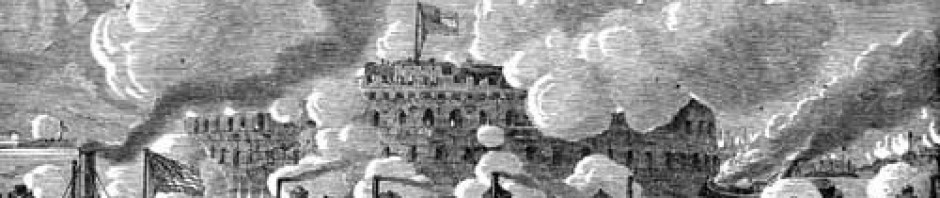
fort-jackson-civil-war (Harper's Weekly 5-24-1862)

Fort Jackson

150 years ago today people in Richmond could have read some “telegraphic news” from the day before. The Union navy is firing thousands of bombs into Forts Jackson and St. Phillip on the Mississippi, but the forts have not been damaged very much at all. The spirits of the Confederate troops are excellent, and there have been few casualties. However, as Civil War Daily Gazette has reported, 150 years ago today the Union fleet under David Farragut brushed passed the forts.

From the Richmond Daily Dispatch April 24, 1862:

The bombardment of Fort Jackson.

New Orleans, April 23

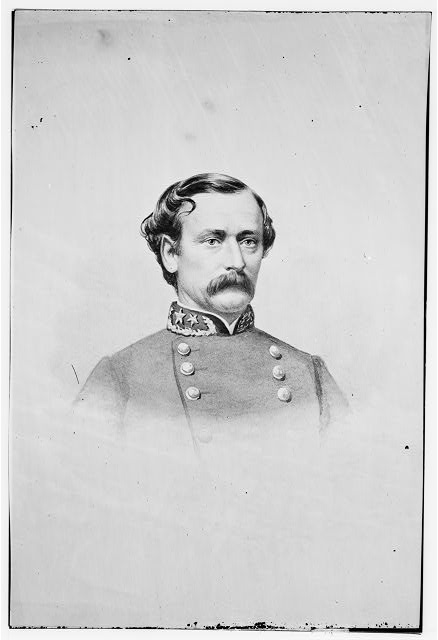
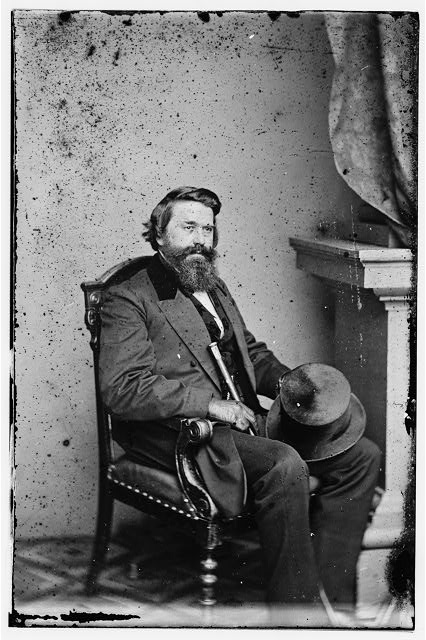
Mansfield Lovell, C.S.A. (between 1860 and 1870; LOC: LC-DIG-cwpb-07504)

Keep up the good work

–The following is a copy of an official dispatch from Major-General Lovell to Brig. Gen. Duncan, commanding at Fort Jackson:

“Say to the officers and men of your command that their hereto fortitude in enduring one of the most terrific bombardments known, and the energy and skill with which they crush the enemy whenever he dares come from under cover, attracts the admiration of all, and will be recorded in history as a splendid example for patriots and soldiers. Anxious but confident families and friends are watching them with firm reliance, based on the gallant exhibition thus far made of indomitable courage and great military skill. The enemy will try your powers of endurance, but we believe with no better success than that already experienced.

(Signed) M. Lovell.

Major-General Commanding.

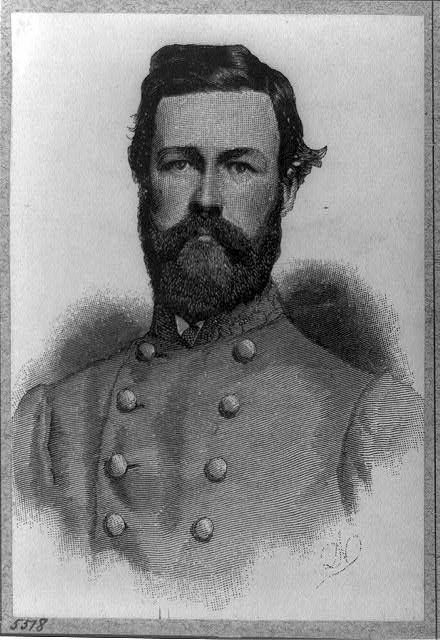
Gen. Duncan’s reply to Major-Gen. Lovell runs thus:

“I have to report this morning, as previously, that the bombardment is still going on furiously. They have kept it up furiously by reliefs of their divisions. One of their three masted gunboats, painted gray, came above the point this morning, but was struck, and retired. We are hopeful and in good spirits, and I cannot speak in too high praise of all the officers and men. I have no further casualties to report. Let the people have faith and fortitude, and we will not disgrace them.

(Signed) J. K. Duncan,

Brigadier-General”
[Second Dispatch.]

New Orleans, April 23.

Brig. General Johnson Kelly Duncan, head-and-shoulders portrait, facing front (between 1861 and 1870; LOC: LC-USZ62-98740)

'They must soon exhaust themselves.–If not, we can stand as long as they can'

–The following dispatch was received from Fort Jackson to-day:

“A heavy continued bombardment was kept up all night and is still progressing. There have been no further casualties except two men slightly wounded. God is certainly protecting us. We are still cheerful, and have an abiding confidence in our ultimate success.–We are making repairs as best we can. Our best guns are still in working order. Most of them have been disabled at times. The health of the troops continues good. Twenty-five thousand 13 inch shells have been fired by the enemy, thousands of which fell in the fort. They must soon exhaust themselves.–If not, we can stand as long as they can.

(Signed) Brig. Gen. J. K. Duncan,

Comd’g Fort Jackson.

The image of Fort Jackson is at Son of the South.

Both Mansfield Lovell (born in Washington, D.C.) and Johnson Kelly Duncan (born in Pennsylvania) were West Point graduates.

Posted in 150 Years Ago This Week, Military Matters | Tagged , , , , | Leave a comment

Hold the Applause?

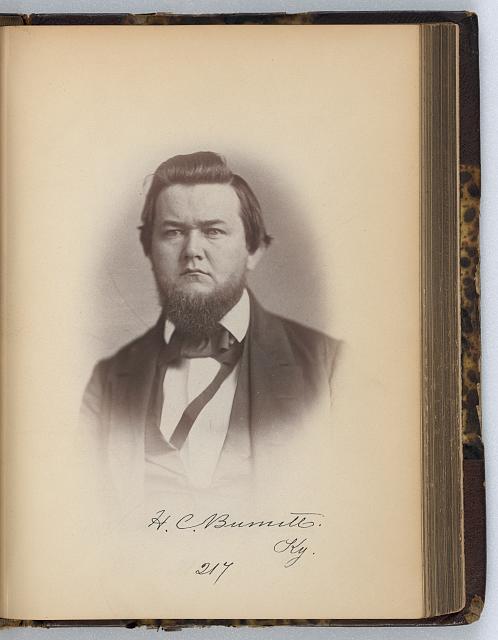
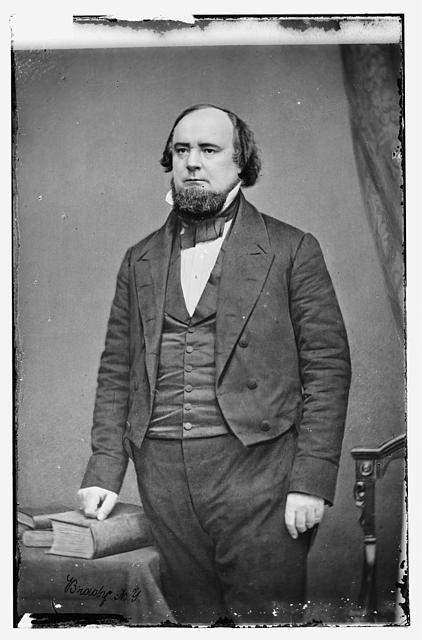
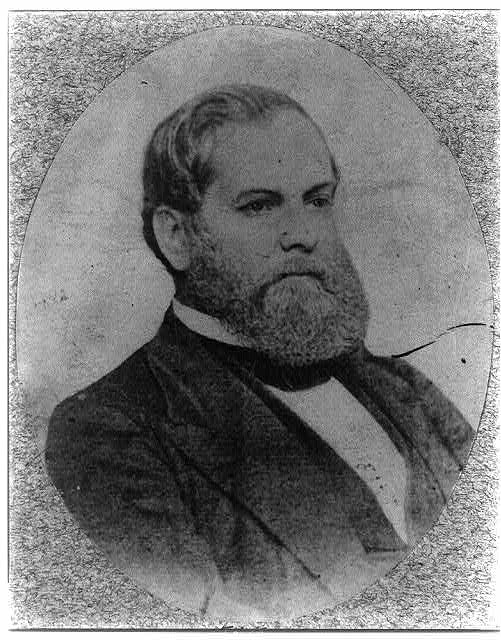
Henry C. Burnett, Representative from Kentucky, Thirty-fifth Congress, half-length portrait (1859; LC-DIG-ppmsca-26756)

Doesn't want to fight like West Pointers

Burnett’s proposal for irregular warfare applauded by soldiers watching senate proceedings

From the Richmond Daily Dispatch April 21, 1862:

Applause in the galleries.

Mr. Burnett again spoke in favor of irregular warfare, and contrasted its advantage in a striking manner with the more regular tactics of West Point. His remarks were of such a character as to elicit a thunder of applause from some soldiers in the gallery.

The President pro blem [tem] (Mr. Ore [Orr]) desired the gentleman to cease, and instantly ordered the disorderly persons in the gallery to be removed by the Sergeant-at-Arms.

Mr. Wigfall, of Texas.–I hope, Mr. President, we will do more than turn them out. Applause in the galleries of the Senate is something that might be expected from the mob at Washington, but which I did not think could occur in this country, and it should be punished on the first offence.

Hon. James L. Orr (between 1855 and 1865; LOC: LC-DIG-cwpbh-02852)

President pro tem Orr

Mr. Clark, of Mo.–Oh no, do not be harsh with it. It was merely admiration of excellent sentiments expressed out of time and place, and perhaps inexpressible.

Mr. Yancey himself approved the sentiment, and urged the gentleman from Texas to make some little allowances for liberty.

Mr. Wigfall–Yes; but if you permit applause you will afterwards have to endure hisses, and moreover I want it distinctly understood that this is no public arena.

Several gentlemen interjected remarks in behalf of forgiveness for this, the first offence, and finally Mr. Wigfall acquiesced, contenting himself with having brought the matter to the notice of the Senate. Section second of the bill was stricken out, and the act was passed.

V

Worried about hissing in the peanut gallery

The Senate soon after took a recess till 7[1/2] o’clock P. M. The evening session was with closed doors.

Louis Wigfall

At the beginning of the war Wigfall was a close friend of Confederate President Jefferson Davis. Like political alliances throughout his career, he would first support then split with Davis as the war progressed. Davis supported an increasingly strong national government, while Wigfall, forever an advocate of states rights, moved to block the creation of the Confederate Supreme Court, fearing Davis’ appointments would rule against the states. Wigfall also challenged Davis, a West Point graduate and former United States Secretary of War, on many of his military-related policies, ridiculously citing his own military experience in the Seminole Wars. Wigfall was a close friend of Confederate General Joseph E. Johnston and frequently proposed legislation on the general’s behalf. He was also an early proponent of making Robert E. Lee commander of all Confederate armies

James Lawrence Orr

was one of the three commissioners sent to Washington, D.C. to negotiate the transfer of federal property to the State of South Carolina; the failure of these negotiations led directly to the bombardment of one of the highest-profile federal assets within South Carolina, Fort Sumter.

It is said that Henry Cornelius Burnett’s proposal occurred on April 19th:

In an April 19, 1862 address to the legislature, Burnett denounced Davis’ preference for those who were, like Davis himself, graduates of West Point. The speech drew such a vigorous positive response from the gallery that some of the most zealous had to be removed.

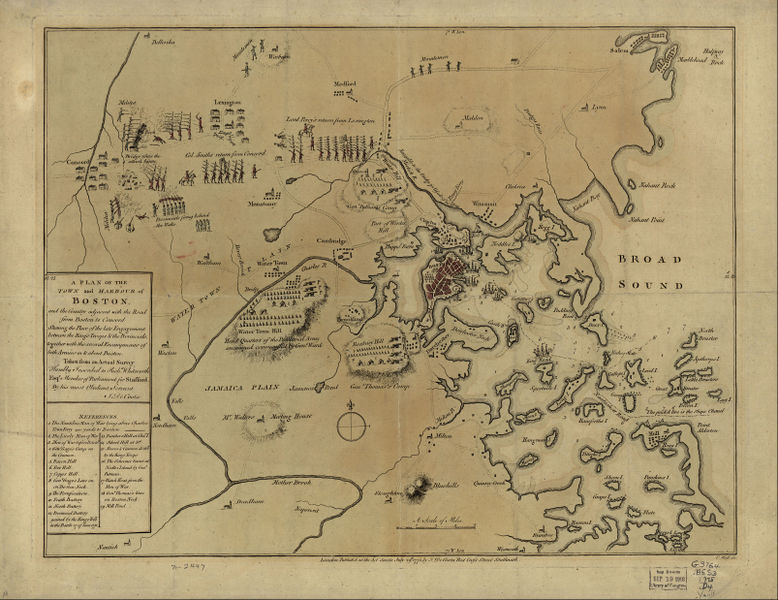
The date seems appropriate because 87 years earlier to the day irregular tactics (like setting up ambushes while hiding behind trees) helped some other rebels harass the bright red targets in the British army as it was returning to Boston from Concord.

A slightly inaccurate hand-colored map depicting the 1775 Battles of Lexington and Concord and the Siege of Boston (7-29-1775; http://hdl.loc.gov/loc.gmd/g3764b.ar090000)

1775 map of Concord, Lexington, Boston

Posted in 150 Years Ago This Week, Confederate States of America, Southern Society | Tagged , , , , , | Leave a comment

The Price Is Wrong

Price Controls in Richmond

From the Richmond Daily Dispatch April 22, 1862:

Seizure of eggs.

–The Chief of the Provost Marshal’s Police seized on Saturday a couple of barrels of eggs, belonging to a man who had been selling them at higher rates than the law allowed. They were confiscated and sent to the hospitals, where they were made use of by the sick soldiers.

_______________________________

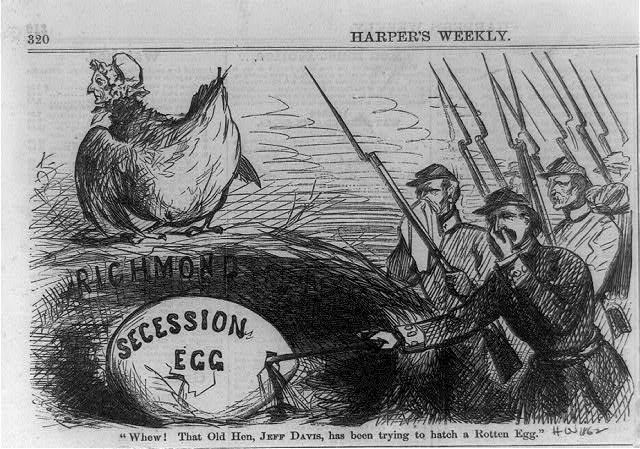
The following was published in the May 17, 1862 issue of Harper’s Weekly:

"Whew! That old hen, Jeff Davis, has been trying to hatch a rotten egg" (Harper's Weekly 5-17-1862 (LOC: LC-USZ62-88850)

Something's rotten in the state of Virginia

Posted in 150 Years Ago This Week, Confederate States of America, Southern Society | Tagged , , , | Leave a comment

Flag Mystery

Land of the Thirteen Rays?

I never heard of or saw this CSA flag.

From the Richmond Daily Dispatch April 21, 1862:

A joint resolution Adopting the flag of the Confederate States of America.

Resolved, by the Congress of the Confederate States of America, That the flag of the Confederate States shall be as follows: A red field charged with a white saltier, having in the centre the device of a sun in his glory, on an azure shield, the rays of the sun corresponding with the number of the States composing the Confederacy.


Posted in 150 Years Ago This Week, Confederate States of America | Leave a comment

Severely Wounded in Mexico; Mortally Wounded at Shiloh

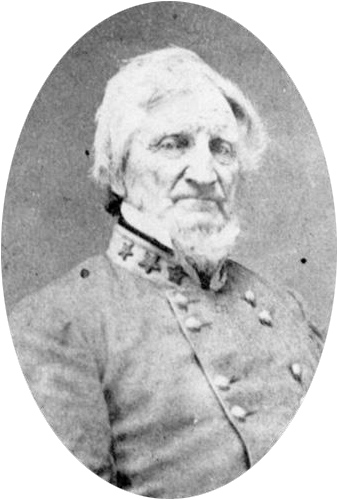
Adley H. Gladden, d. 1862 (no date recorded on caption card; LOC: LC-USZ62-83409)

Adley H. Gladden

You can read a lot of interesting information about the Battle of Shiloh at Seven Score and Ten. Here’s an obituary of a Confederate general who was mortally wounded early in the battle.

From the Richmond Daily Dispatch April 19, 1862:

The late Gen. A. H. Gladden.

–We take from the Columbia South Carolinian the following sketch of this gallant officer, who fell at Shiloh:

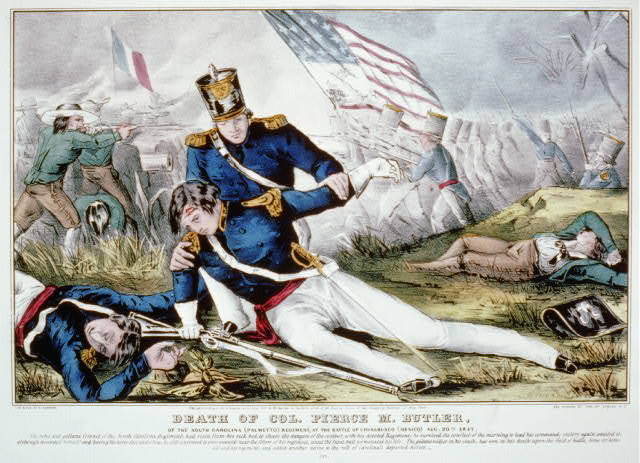
He was born in Fairfield, S. C., October 28, 1810. In 1830 he removed to Columbia, and entered into the business of a cotton merchant. He served in the Florida campaign in the Rich and Rifle company. On his return he resumed his former business, and was in 1841 appointed by President Tyler Postmaster of Columbia, which office he held during that administration. 1845 he volunteered for the Mexican war in the Palmetto regiment, and was elected Major — Pierce M. Butler being Colonel, and J. P. Dickinson, Lieutenant Colonel. He fought gallantly, as his whole regiment did, at Contreras, Churubusco, Chapultepec, and the gates of Mexico, and upon the fall of Col. Butler and Lieutenant Colonel Dickinson, he was chosen Colonel of his regiment. When Gen. Quitman called for a flag to be raised upon the gates of Balen, Col. Gladden handed the Palmetto flag to Lieut Selleck, of South Carolina, who planted it upon the well — it being the first American flag raised on taking the city of Mexico.

Death of Col. Pierce M. Butler: Of the South Carolina (Palmetto) regiment, at the Battle of Churubusco (Mexico) Aug. 20th 1847 (N. Currier, 1847; LOC: LC-USZC2-2233)

Gladden's colonel dies in Mexico

Lieut. Selleck, being ordered down by Gen. Quitman, handed the flag to Col. Gladden, who bore it until he fell severely wounded by one of the last shots fired as the city was entered.

The reports of the general officers to the War Department hear the highest testimony to the gallantry and great capacity for discipline of this distinguished officer.

After the war, he settled in New Orleans, where he remained in mercantile business until the secession of South Carolina. When the State of South Carolina seceded, he was appointed and accepted the post of Lieut. Colonel in Gregg’s First regiment, and immediately reported for duty. But the pressure from his adopted State of Louisiana forced him to return there where, as a member of her Convention, he did good service in promoting her secession. Soon after, he accepted a regiment and went to Pensacola, when the President soon sent him a commission as Brigadier-General in the Confederate service. He was placed in command there, and all who know him know that his command was behind no other in drill and efficiency.

You can see a Columbia, South Carolina monument to the Palmetto Regiment and its service in Mexico here.

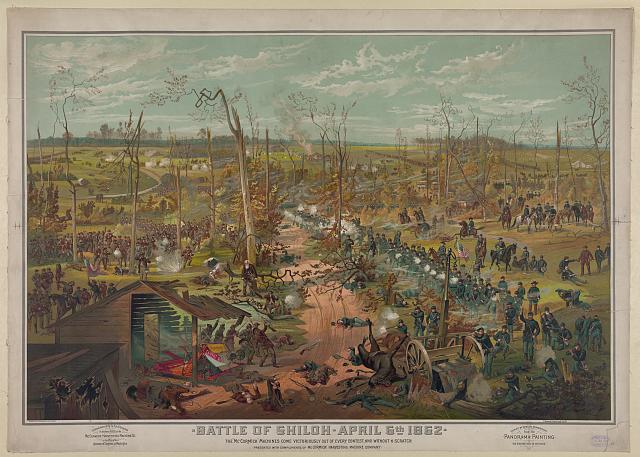
In his official Shiloh report corps commander Braxton Bragg wrote this about Adley Hogan Gladden:

Brig. Gen. A. H. Gladden, First Brigade of this [J. M. Withers] division, fell early in the action, mortally wounded, while gallantly leading his command in a successful charge. No better soldier lived. No truer man or nobler patriot ever shed his blood in a just cause.

Battle of Shiloh April 6th 1862 (c1885 Dec. 31; LOC: LC-DIG-pga-00540)

Battle of Shiloh April 6th 1862

Posted in 150 Years Ago This Week, Confederate States of America, Military Matters | Tagged , , | 1 Comment

Medical Alcohol?

John Henry Winder

Druggists 'escaped merited punishment'

The war caused governments North and South to increase restrictions on civilian rights. As Encyclopedia Virginia points out, on March 1, 1862 President Jefferson Davis declared martial law in Richmond, and “The Confederate government also prohibited the sale of liquor in 1862.” The following article seems to suggest that the Assistant Provost Marshal office was involved in conducting a sting operation to make sure retailers were complying with the prohibition of alcohol sales. Apparently druggists could (or at least thought they could) sell alcohol under a doctor’s orders.

From the Richmond Daily Dispatch April 18, 1862:

Selling liquor by the druggists.

–Several of the city papers alluded, a short time since, to the fact that four of the druggists doing business here had been arrested by order of the Assistant Provost Marshal for selling liquor in an unauthorized manner. We are enabled, by the courtesy of one of the parties concerned, to lay before our readers an official copy of the proceedings of the Court Martial in their case. In doing so, it is proper to say, that on their arraignment they severally pleaded that the order to which they had sold the liquor was believed by them to have emanated from a resident city physician, (as directed by law,) but it was afterwards ascertained that the same had been concocted in the office of the Assistant Provost Marshal. With this explanation, we submit the proceedings of the Court Martial, which read as follows:

Headq’rs Department of Henrico, Richmond, Va.,April 14, 1862.

General Orders, No. 14.

At a general Court-Martial, assembled in Richmond, Va., pursuant to paragraph two, Special Orders No. 57, headquarters department of Henrico, issued April 2d, 1862 were arraigned and tried–1st, A. Bodeker; 2d, John T. Gray; 3d; John W. Frayser; 4th, R. W. Powers, upon the following charge:

[charge.]

Sale or disposition of spirituous liquors, or other intoxicating beverages. To which charge the prisoners severally pleaded not guilty, and the Court, having considered the evidence, find the accused, each and severally, of the charge not guilty, and do, therefore, pronounce that the said A. Bodeker, John T. Gray, John W. Frayser, and R. W. Powers, are fully and honorably acquitted.

II. The proceedings in the foregoing cases are disapproved of by the Reviewing Officer, who considers that the evidence presented to the Court fully sustains the charge preferred.

The prisoners are hereby ordered to be released from confinement, and they may congratulate themselves upon having escaped merited punishment.
By order of

Brig.Gen. John H Winder.

L. R. Page, A. B. General.

A native of Maryland, John Henry Winder served as a career United States army officer until the aftermath of Fort Sumter. Early in his Confederate service

He was … appointed brigadier-general in the Confederate army and made inspector-general of the camps around Rich­mond, which included for the first few months supervision of the prisons. He afterward commanded the Department of Henrico, which is the county in which Richmond is situated, and was also provost-marshal-general of Richmond, where his strictness created considerable feeling against him.

Well, I guess you need a marshal if you impose martial law.

Winder’s later Civil War career included oversight of prisons in Alabama and Georgia.

Posted in 150 Years Ago This Week, Confederate States of America, Southern Society | Tagged , , | Leave a comment

Soul-Stirring in Georgetown

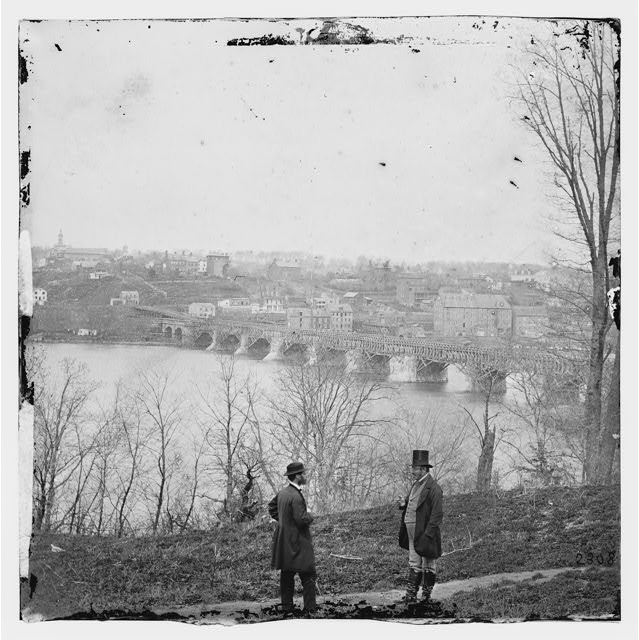
Washington, D.C. The Aqueduct bridge and Georgetown from the Virginia bank (Between 1860 and 1865; LOC: LC-DIG-cwpb-01489)

Georgetown from Virginia side of Potomac

As Civil War Daily Gazette explains, 150 years ago today Abraham Lincoln signed into law a measure that freed all slaves in the District of Columbia.

The following little story tends to show the southern attitudes that still existed in Washington.

From the Richmond Daily Dispatch April 17, 1862:

Spirit of the South.

We learn that on a recent occasion in Georgetown, when the clergyman of one of the churches read the prayer of thanksgiving for Northern victories, most of the congregation rose from their knees, and some of them left the church. The flame of patriotism is still burning brightly in the very strongholds of despotism.

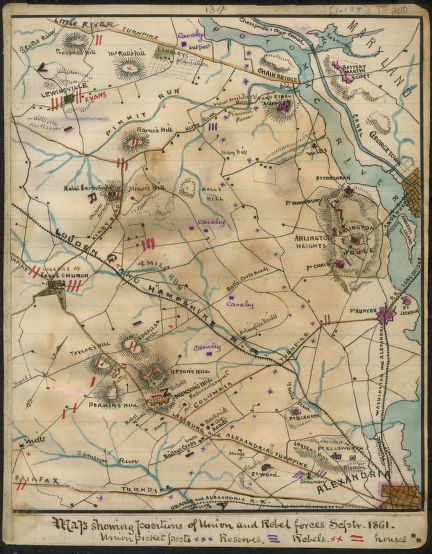
Map showing positions of Union and Rebel forces Septr 1861 by Robert Knox Sneden (gvhs01 vhs00064 http://hdl.loc.gov/loc.ndlpcoop/gvhs01.vhs00064)

A peek at Georgetown - 1861

Posted in 150 Years Ago This Week, Lincoln Administration, Southern Society | Tagged , | Leave a comment

Loaded for Bear

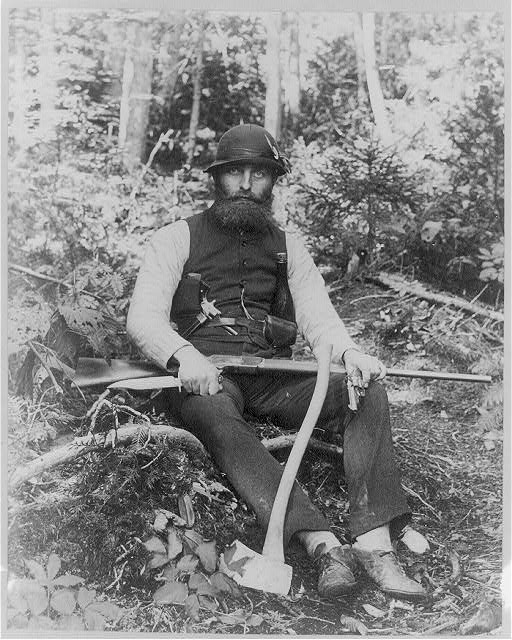
No word today from SUMPTER, who obviously should take lessons from this fellow:

Bearded man armed with ax, rifle, hunting knife, and two pistols, Maine (1886; LOC: LC-USZ62-40381 )

Maine 1886: 'sic semper paratus'

Posted in Uncategorized | Leave a comment