Truly a Public Servant

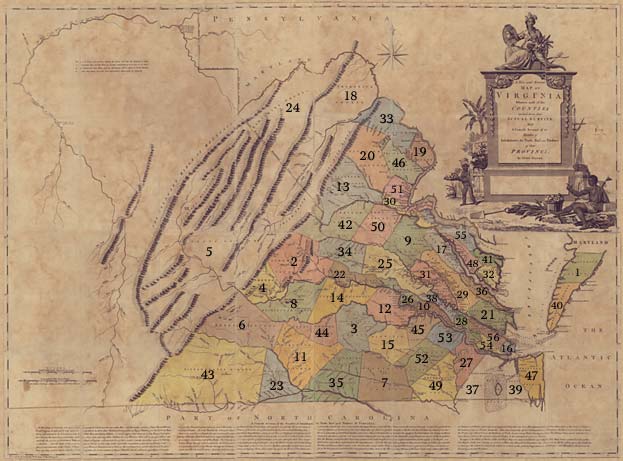
Virginia County boundaries based on a 1770 map (LOC: Call Number: G3880 1770 .H4 Vault. Library of Congress, Geography and Map Division)

Chesterfield County - Number 12

Let the old and infirm legislate

From the Richmond Daily Dispatch May 10, 1862:

To the people of Chesterfield county.

–On yesterday I resigned my seat as your Representative in the House of Delegates of Virginia. In thus disposing of the honorable position to which your partiality and confidence assigned me, I have not been unmindful of your interest — Your cause in another sphere needs all the aid you can afford. I find that my duties in the army conflict with duties in the Legislature. I do not hesitate, therefore, to last [leave] the Legislature to take undivided part in the great drama that is being enacted around us for the support of which we have pledged our lives, our fortunes, and our sacred honor. You have men whose years and physical condition forbid them the field, and whose capacities befit them for civil life.

I am, very truly,

Your fellow-citizen,

Chas. T. Friend

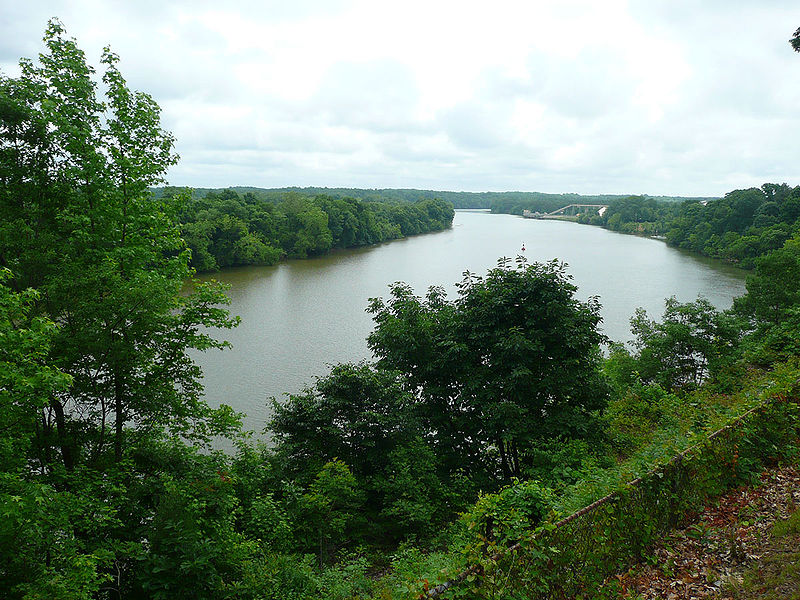
There is evidence here that Mr. Friend stuck to his guns. As it turns out, Drewry’s Bluff is in Chesterfield County.

Drewry's_Bluff_view_downriver by Hal Jespersen june 2009

From Drewry's Bluff on the James

Posted in 150 Years Ago This Week, Confederate States of America, Southern Society | Tagged , | Leave a comment

Bombastes Furioso Butler

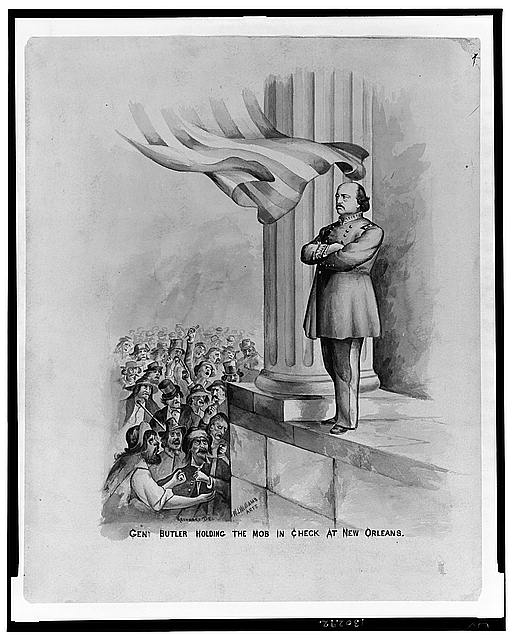
Genl Butler holding the mob in check at New Orleans (ca. 1896 by Charles Stanley Reinhart; LOC: LC-USZ62-130292)

'gross, vulgar tool of Yankee tyranny'

The gradual, persistent constriction of Anaconda: the Yankees and General Butler have control of New Orleans 150 years ago now. The Dispatch calls names. How can that
“oleaginous carcass” be running the South’s largest city?
From the Richmond Daily Dispatch May 9, 1862:

General Butler.

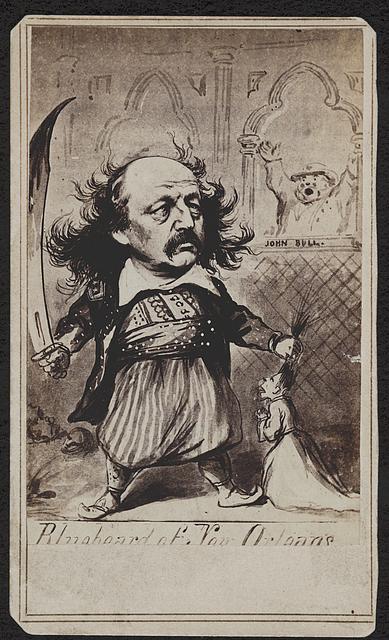
Bombastes Furioso and his myrmidons are now in possession of New Orleans, and if anything could add to our sympathy with the generous and warm-hearted people of that city, it is that such a specimen of Yankeedom should be their Military Governor. A more polished and chivalric population cannot be found on this continent, and every instinct of their natures must revolt at the gross, vulgar tool of Yankee tyranny who is now lordling it over a community who have never before seen such a being outside the guard-house. It was had enough that they should be given over without a blow to the hands of the enemy, that their fortifications should be abandoned and blown up, their army taken, away, and their own private arms taken with them; but that B. F. Butler should be put in command of the forsaken city, is the last drop in the bitter cup of humiliation and shame.–Of all the Yankee Generals, he has the least pretensions to the qualities of the soldier and the gentleman. A verier humbug, in a military point of view, was never created. The battle of Bethel, at which he took good care not to be present, is the only battle with which he ever had the most remote connection. He never so much as landed at Hatteras till the guns of the shipping had silenced the fire of the fortifications, and he is not heard of at New Orleans till the gunboats have achieved their bloodless victory. He is now in his element, sporting laurels which do not belong to him — an ass in a lion’s skin. We predict that General Butler will leave before the weather becomes excessively warm. His oleaginous carcass will evaporate speedily before the burning sun. The yellow fever will, before long, put an end in one way or another to the dominion of Bombastes, and open batteries upon his forces generally which can neither be resisted by power nor paralyzed by treason. If McClellan’s forces are already seriously affected by our comparatively salubrious swamps in Virginia, what must become of those who have undertaken to “hold, occupy and possess” the death breeding waters of the Mississippi?

Bombastes Furioso was written in 1810 and subtitled A Burlesque Tragic Opera. Bombastes was a general who went mad.

Bluebeard of New Orleans (1862; LOC: LC-DIG-ds-00287)

no soldier, no gentleman

Posted in 150 Years Ago This Week, Confederate States of America, Southern Society | Tagged , | Leave a comment

Baton Rouge Surrenders to Iroquois

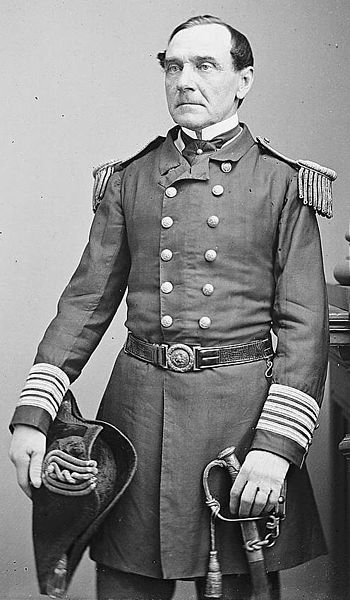
James S Palmer

From Ship's Boy to Rear Admiral (in 1866)

With Ben Butler in charge at New Orleans the Union fleet moved up the Mississippi. 150 years ago today Baton Rouge, the Louisiana state capital, surrendered to James Shedden Palmer, commanding the USS Iroquois:

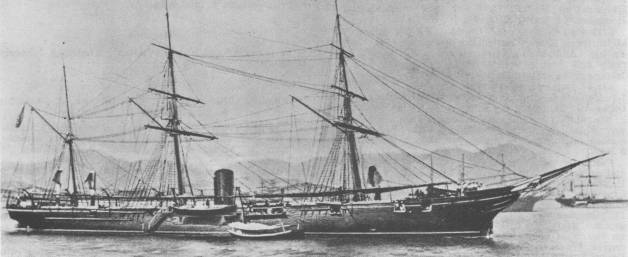
After the great victory [New Orleans] Iroquois advanced up the river with Farragut, with the aim of eventually joining Flag Officer Foote, who was driving southward. A landing party was sent ashore at Baton Rouge 8 May 1862 and Comdr. Palmer received the surrender of the Louisiana capital that day. Iroquois, along with Oneida, also took possession of Natchez 13 May as the fleet moved steadily toward the Southern stronghold at Vicksburg. Within a week they were below the city and preparing to pass the formidable batteries.

USS Iroquois 1859 (United States Navy Historical Center)

USS Iroquois

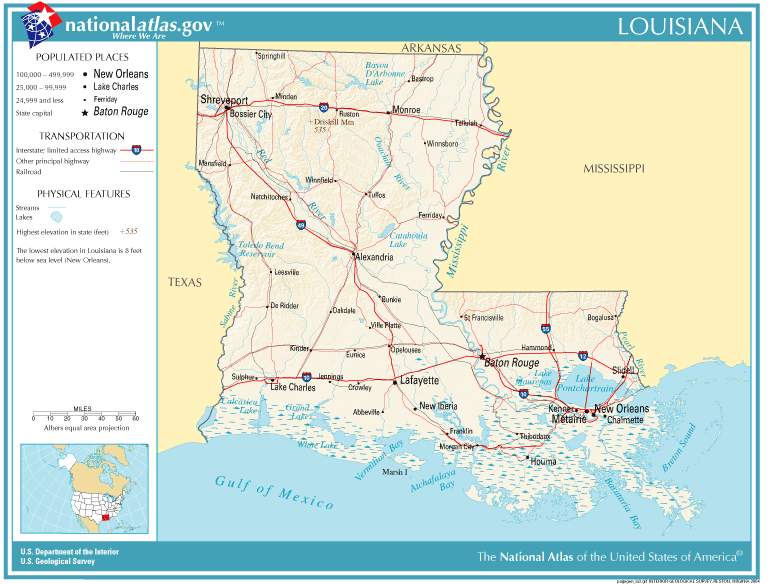
National-atlas-louisiana

'L' is for Louisiana

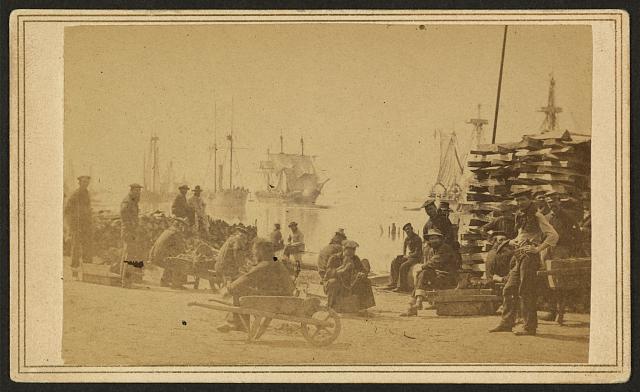
Coaling Admiral Farragut's fleet at Baton Rouge, Louisiana (1862?; LOC: LC-DIG-ppmsca-10906)

At Baton Rouge

Posted in 150 Years Ago This Week, Military Matters | Tagged , , , | Leave a comment

Good Business Model?

From the Richmond Daily Dispatch May 7, 1862:

Camp near Yorktown,
April 30, 1862.

Deserted — On the 26th inst., from the camp of the 19th regiment Virginia Volunteers, one Robert Byrnes, a private of Company K, same regiment. Said Byrnes was accepted as a substitute on the 25th inst.; says that he was born in Ireland, but has more the appearance of an English sailor; is about 5 feet11½ inches high, dark complexion, gray eyes, dark hair, and about 27 years old; has a considerable scar on the left side of his neck. All officers, civic and military, are earnestly requested to use every exertion to arrest this man. He is no doubt lurking about Richmond, probably endeavoring to hire himself again as a substitute — The usual reward will be paid upon his delivery to me here, or if he is lodged in any jail where I can get him.

Matthew Lyle,
Capt. commd’g Co. K. 18th Va. Reg’t. P. S.–Byrnes had with him naturalization papers of a very recent date; given him in Richmond. M. L. my 8–tw

Byrnes probably sees a good way to make some money by serving as a substitute for multiple Confederate citizens – but the “considerable” scar on his neck might be an issue for him.

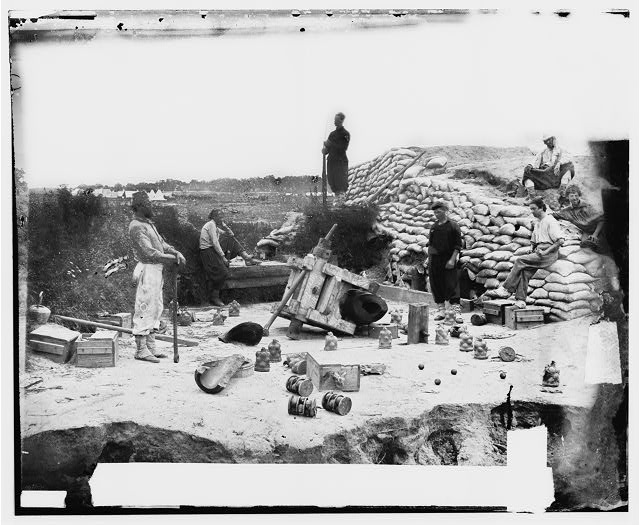
Yorktown, Virginia. Exploded gun in Confederate battery (1862 June; LOC: LC-DIG-cwpb-01034)

After all the rebel soldiers left Yorktown

Posted in 150 Years Ago This Week, Confederate States of America, Military Matters | Leave a comment

Bedding Down with the Dead and Wounded

In the rain and mud

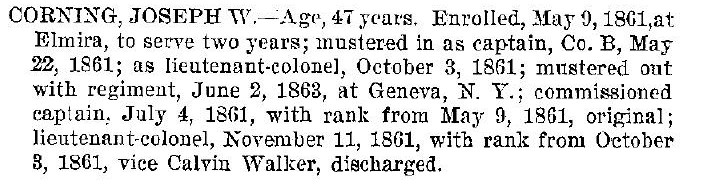
150 years ago today the Battle of Williamsburg was fought. Here’s how the lieutenant colonel of the 33rd New York wrote home about the regiment’s role in the fight. The 33rd was in Smith’s division of Keyes’ corps.

From a Seneca Falls, New York newspaper in 1862:

Letter from Lieut. Col. Corning

The Palmyra Courier of last week publishes the following letter from Lieut. Col. CORNING, of the gallant Thirty-Third, concerning the fight at Williamsburg on the 5th. inst. the letter will be read with interest by our readers:

FORT MCGRUDER, Va.
May 6th, 1862.

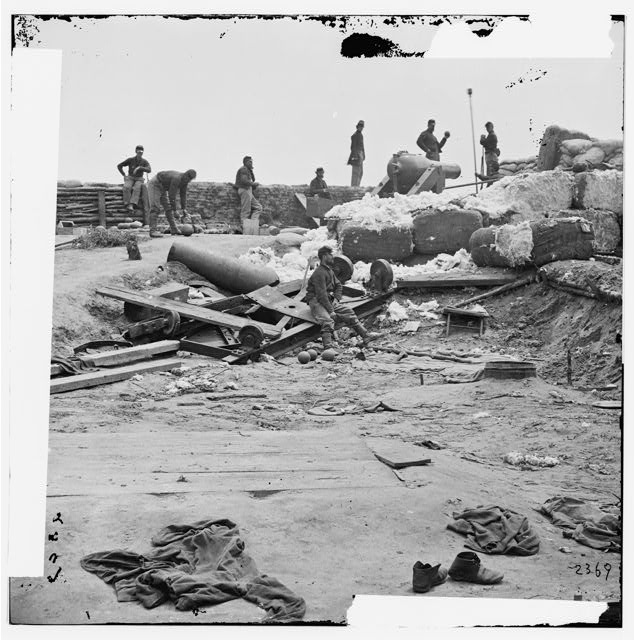
Yorktown, Va. Confederate fortifications reinforced with bales of cotton (1862 June; LOC: LC-DIG-cwpb-01604)

A Rebel fort at Yorktown after evacuation

***** We have had another hard fight through rain and mud, and, Southerners would say, a right smart fight. We engaged the enemy on the right flank, and after hours of hard fighting, drove them panic-stricken from the field. It gives me much pleasure to say that the Thirty-Third came out ahead of any Regiment engaged at this point. Three of our Companies were not engaged in this action, having been left in one of the rebel forts, as guard, about a quarter of a mile in the rear of the scene of action. Col. TAYLOR was with four companies, a little to the right and front, in the woods, as skirmishers. I had command of three other companies on the field, with the exception of some thirty men back on the road, guarding and helping our division train-wagons through. So you can see that the Thirty-Third was not in a very good condition to make a big fight;but for all that they did most nobly. The companies under my command stood the fire of the rebels well. The enemy came upon us rather unexpectedly, and our artillery were obliged to retire to secure a better position, as also two regiments of infantry. There was one regiment on our right that retired a short distance and halted. I brought my companies back a few rods, halted, came to the front and continued the fire. The regiment on our right fell back again, the enemy coming up at a double quick. They were now within 25 rods of us, when Col. TAYLOR came up, and after a brief consultation ordered our regiment to charge. The boys with terrific yells, rushed to the front, discharging their pieces with terrible effect, carrying terror and dismay to the opposing lines, resulting in the final discomfiture and defeat of the enemy.

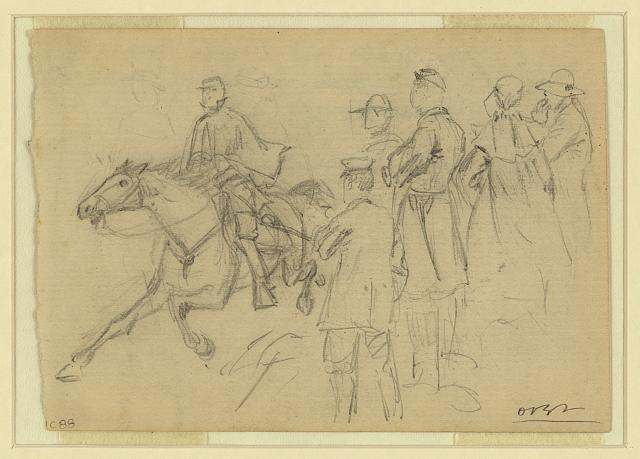
The C. de Paris riding into Yorktown with the first clear account of affairs at Williamsburg (by Alfred R. Waud, 1862 May 5; LOC: LC-DIG-ppmsca-20388)

Count of Paris brings news of Williamsburg to Yorktown (and presumably General McClellan)

Night and drizzling rain were now upon us; but as the smoke lifted, we could see that the ground was thickly strewn with the rebel killed and wounded, presenting a ghastly and sickening sight. One Colonel, a Lieutenant Colonel, and a Major of the general staff, were among the killed. We took three captains, two Lieutenants, and 150 prisoners; from 60 to 70 killed, and many more wounded. The 33d took nearly all the prisoners. Our part of the fight was of short duration, but most gloriously done. Gen. MCCLELLAN sent his compliments to our regiment this morning, for the bravery and heroic conduct displayed on the occasion. We had one Captain and 28 men missing; 18 wounded, two of whom will most likely die. It appears almost remarkable that our regiment had so few casualties.

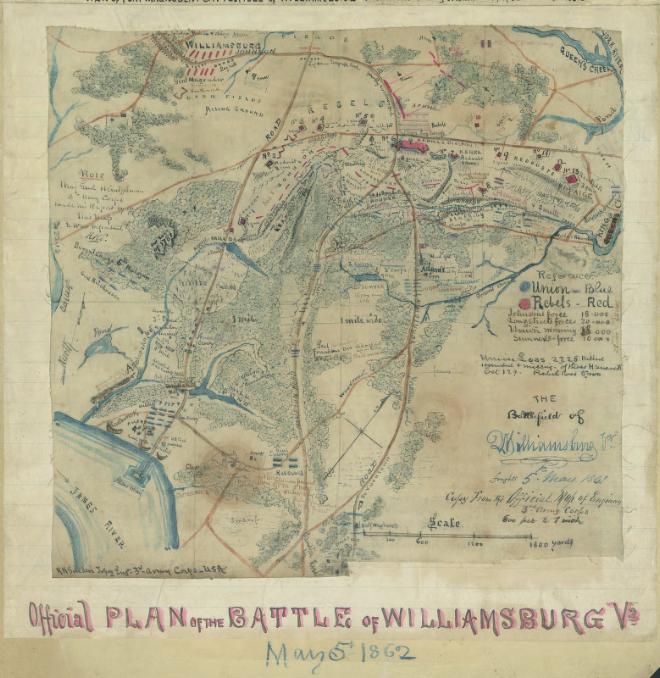
Battle of Williamsburg map (by Robert Knox Sneden; LOC: gvhs01 vhs00006 http://hdl.loc.gov/loc.ndlpcoop/gvhs01.vhs00006)

Battle by Sneden

***** But what a day and what a time to march and fight; every man wet to the skin, our clothes covered with mud throughout. Mud-mud-mud!- Even the field where the fight occurred was ankle-deep with mud. But night was upon us – a cold, dark, cheerless night. – Around us lay the dead and wounded – friend and foe, who had fallen fighting together. But wrapping our blankets around us to protect us from ceaseless rain, we lay down to obtain that rest which we all so much needed. To some it proved a long and tedious night, while others slept as calmly as though reposing on a bed of down. As for myself I did not expect to sleep, and was surprised when at last I fell into a short but undisturbed slumber. – Very few there were who did not joyfully hail the morning’s dawn. Few can realize what we have passed through during the past 48 hours; and yet to-day our men feel very cheerful. We have pitched our tents, and if we get a good night’s rest, we shall feel as good as new again. L.W.C.

Joseph W. Corning of the New York 33rd

Our correspondent

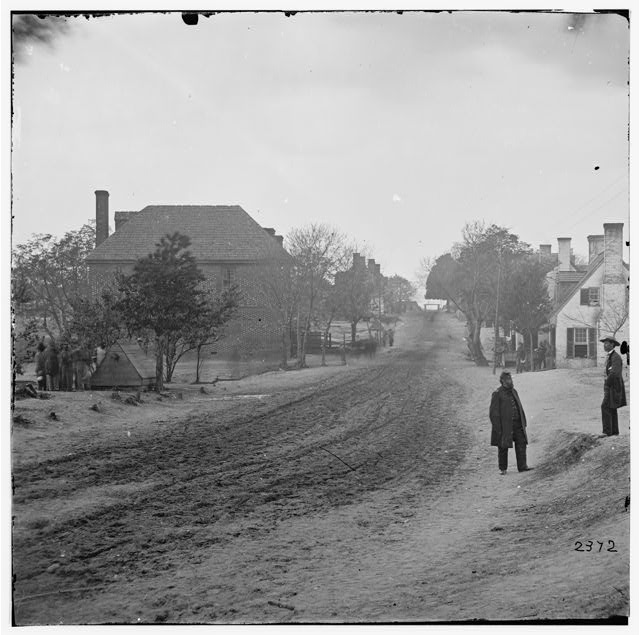
Yorktown, Virginia. Street view (1862; LOC: LC-DIG-cwpb-01610)

Looks like even streets in Yorktown could get real muddy

Posted in 150 Years Ago This Week, Military Matters | Tagged , , , , , | Leave a comment

Three French Princes

The rebels on the Virginia Peninsula in the spring of 1862 might have had a prince commanding a division, but the Union army had three French princes along with it.

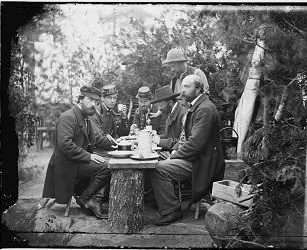
Yorktown, Virginia (vicinity). Comte de Paris, Duc de Chartres, Prince de Joinville and friends at lunch. Camp Winfield Scott (1862 May 3; LOC: LC-DIG-cwpb-00118)

French luncheon 150 years ago yesterday

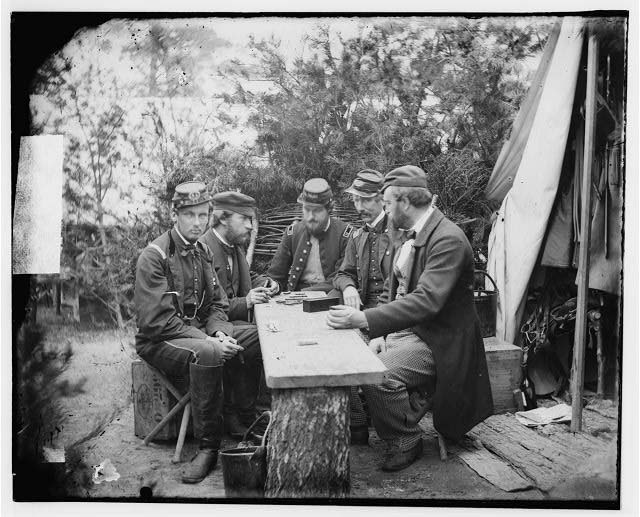
Yorktown, Va., vicinity. Duc de Chartres, Comte de Paris, Prince de Joinville, and friends playing dominoes at a mess table, Camp Winfield Scott (1862 May; LOC: LC-DIG-cwpb-00995)

Domino theory at Camp Winfield Scott

________________________________

Thanks, Pa. In 1861, when the American Civil War started Prince François, Prince of Joinville “proceeded to Washington, D.C., and placed the services of his son and two of his nephews at the disposal of the United States government.”

Union General McClellan’s natural hesitancy might have been reinforced by the Prince’s opinion (along with union engineers):

The Prince DE JOINVILLE, who is here, considers the fortifications at Yorktown and its vicinity much stronger than those at Sebastopol were. TODTLEBEN, the celebrated Russian engineer, constructed his works at places possessing more natural defences than Yorktown. All of our engineers admit the enemy’s line of defences to be complete in every respect. One fact is important, however; we have a much larger army, and a greater number of guns –possessing all the latest improvements — than the Allies had when they besieged Sebastopol.

This is said about Prince Philippe, Count of Paris:

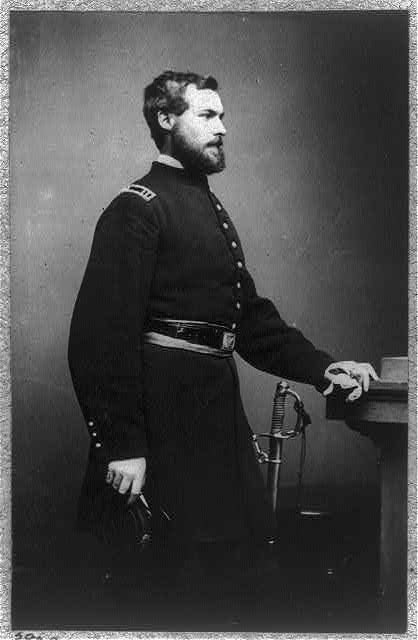
A historian, journalist and outspoken democrat, the Count of Paris volunteered to serve as a Union Army officer in the American Civil War along with his younger brother, the Duke of Chartres. As Captain Philippe d’Orléans, the Count of Paris served on the staff of the commander of the Army of the Potomac under Major General George McClellan for nearly a year. He distinguished himself during the unsuccessful Peninsular Campaign. His history of that war is considered a standard reference work.

Paris, Louis Philippe Albert d'Orléans, Comte de, 1838-1894 (no date recorded on caption card; LOC: v)

Comte de Paris wrote a book about the Peninsula campaign

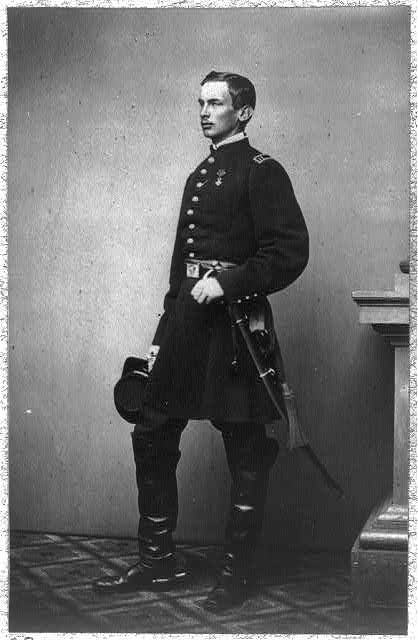
Chartres, Robert Philippe Lousi Eugène Ferdinand d'Orléans, Duc de, 1840-1910 (no date recorded on caption card; LOC: LC-USZ62-55228 )

Duc de Chartres

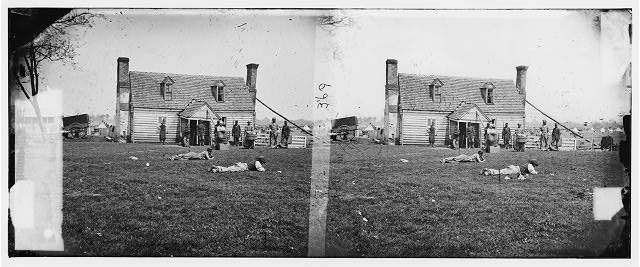
Yorktown, Virginia (vicinity). Allen's farm house. Headquarters of General Fitz John Porter. Lafayette's headquarters before the battle of Yorktown (1862 May; LOC: LC-DIG-cwpb-00126)

French nobility has been here before

Posted in 150 Years Ago This Week, Military Matters, Peninsula campaign 1862 | Tagged , , , , | Leave a comment

Contemplating Custer

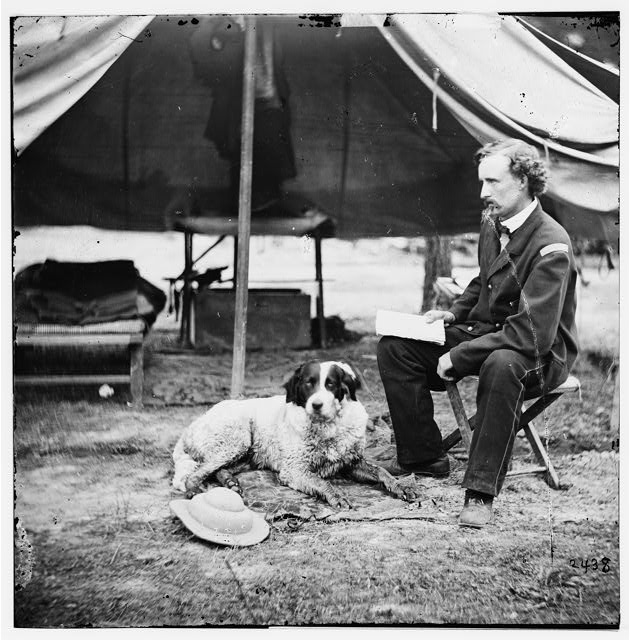
The Peninsula, Va. Lt. George A. Custer with dog (1862; LC-DIG-cwpb-01553)

Custer on the Peninsula

Posted in 150 Years Ago This Week, Military Matters, Peninsula campaign 1862 | Tagged , , | Leave a comment

Like the Murmurings at Meribah

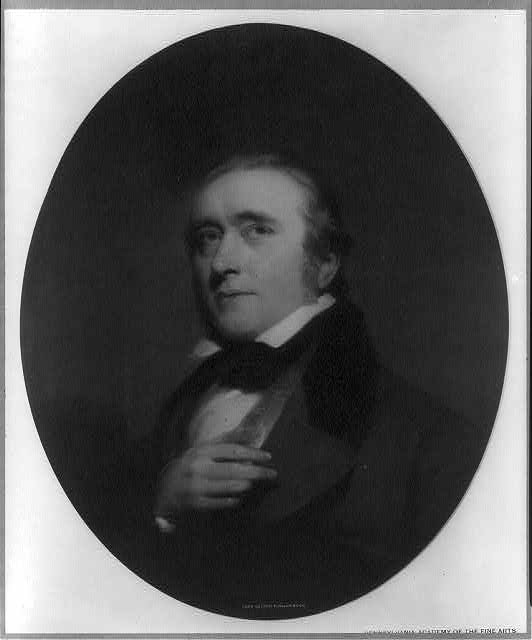
Thomas Babington Macaulay, 1800-1859, head-and-shoulders portrait, facing left (Reproduction of painting by Thomas Inman, c.1913; LOC: LC-USZ62-47812)

Pain always on our mind

The Dispatch philosophizes about the price of southern freedom from northern oppression – it didn’t take long for the Hebrews to forget about their Red Sea experience.

From the Richmond Daily Dispatch May 2, 1862:

Human nature.

–For the benefit of the people of the present day, we make the following extract from volume three, Macaulay’s History of England:

It is the nature of man to overrate present evil, and to underrate present good; to long for what he has not, and to be dissatisfied with what he has. This propensity, as it appears in individuals, has often been noticed both by laughing and weeping philosophers. It was a favorite theme both of Horace and Pascal, of Voltaire and of Johnson. To its influence on the late of great communities may be ascribed most of the revolutions and counter-revolutions recorded in history.

* * Down to the present hour, rejoicing like those on the shore of the Red Sea have ever been speedily followed by murmuring at the waters of Strife. The most just and salutary revolution cannot produce all the good that has been expected from it by men of uninstructed minds and sanguine tempers. Even the wisest cannot, while it is still recent, weigh quite fairly the evils which it has removed. For the evils which it has caused are felt, and the evils which it has removed are felt no longer.

Thomas Babington Macaulay was a British politician, writer, and historian who died in 1859.

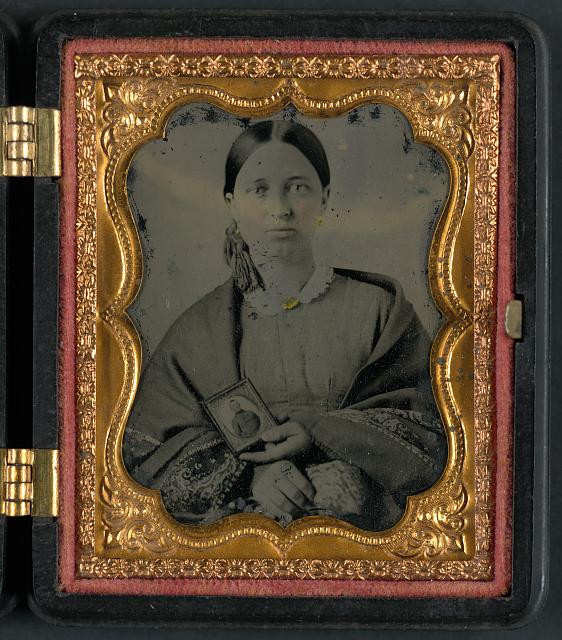
Unidentified woman holding a cased photograph of an unidentified solder in Confederate uniform (between 1861 and 1865; LOC: v)

Posted in 150 Years Ago This Week, Confederate States of America, Southern Society | Tagged , , | Leave a comment

Pithy, Pointed, Prodding

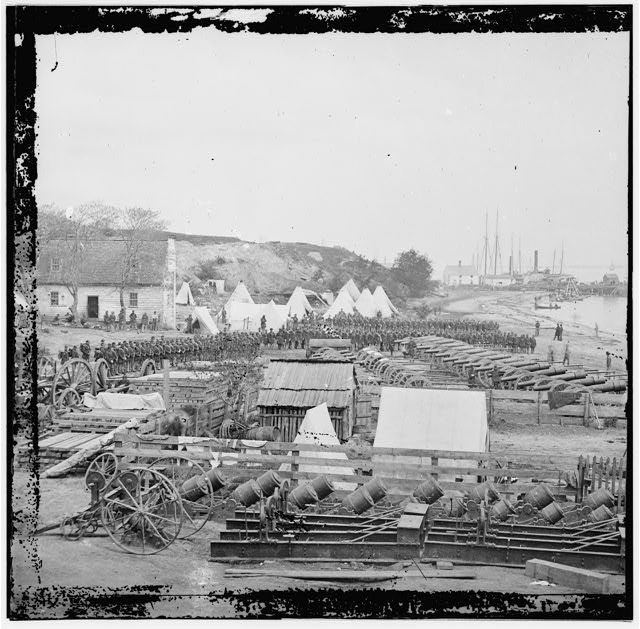
Yorktown, Va. Federal artillery park (Between 1860 and 1865; LOC: LC-DIG-cwpb-01580)

Federal artillery at Yorktown

On April 4, 1862 General George McClellan and his huge Union Army of the Potomac set out from Fortress Monroe for Richmond. By April 7th the army had made it to the Warwick River and the Yorktown area (approximately 25 miles from the Fortress), where there was a line of Confederate fortifications. Since then the Union troops were settling down into siege-mode except for a few relatively minor altercations. 150 years ago today President Lincoln telegraphed General McClellan to try to get the army moving on toward Richmond.

TELEGRAM TO GENERAL McCLELLAN
EXECUTIVE MANSION, WASHINGTON, MAY 1, 1862

MAJOR-GENERAL McCLELLAN:

Your call for Parrott guns from Washington alarms me, chiefly because it argues indefinite procrastination. Is anything to be done?
A. LINCOLN.

One place you can read President Lincoln’s writings is at Project Gutenberg.

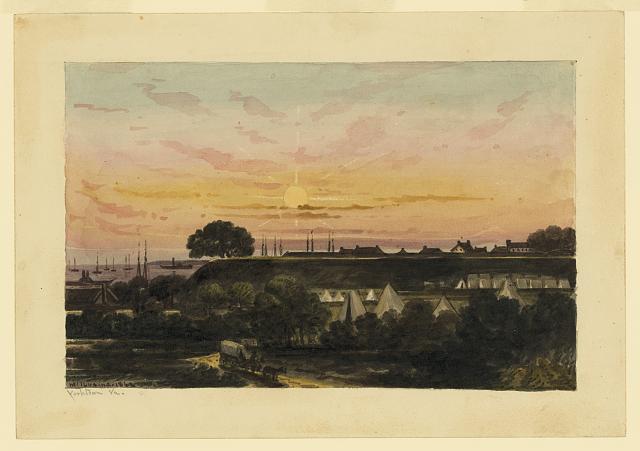
Yorktown, Va. (by William McIlvaine, 1862; LOC: LC-DIG-ppmsca-20008)

Yorktown 1862

Posted in 150 Years Ago This Week, Lincoln Administration, Military Matters | Tagged , , , , | Leave a comment

All for $13 per month (with pork and hard bread)

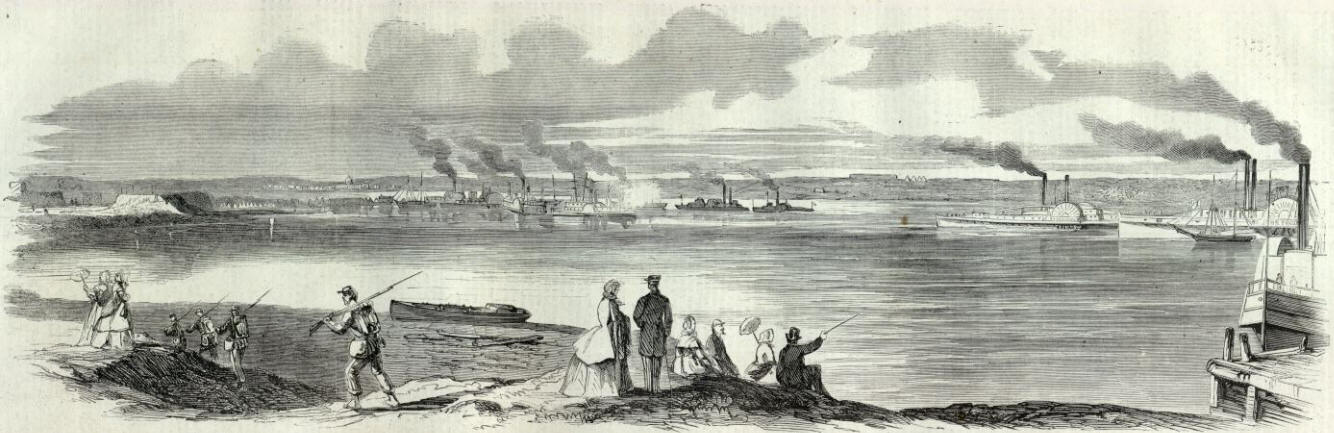
Transports at Alexandria removing troops (by Alfred R. Waud; Harper's Weekly 4-19-1862)

Boat ride preferable to muddy march through Virginia

Here’s another letter from a member of the 33rd New York Volunteer Infantry. 150 years ago this week the 33rd was taking part in the Union siege of Yorktown. This is quite a long letter that begins with a recap of the regiment’s movements from mid-March when the Army of the Potomac advanced to find that the Confederates had retreated from the Manassas vicinity.

From a Seneca County, New York newspaper in 1862:

The March of the Thirty Third

Camp on James River; Advance toward Richmond: Engagement near Fort Hunter; Skirmish at Lee’s Mills; Negro regiments, &c, &c.

IN FRONT OF THE ENEMY’S LINES.
April, 24, 1862.

Having from various reasons known only to “Uncle Sam” been unable to give you any account of the doings of the 33d for the month past and thinking that some of our friends would like to know what we have been at during that period and how we have earned our Thirteen Dollars per month and rations of Pork and hard bread, I copy a few extracts from my Journal, as a sort of preface to the communications I am once more allowed to send you.

“March 14th 1862. – Our whole Division left Camp Griffin at daylight and took up the line of march for the rebel stronghold Manassas. Passed through Lewinsville and Vienna, both very insignificant places of ten or a dozen houses each, and toward evening encamped before Fairfax Court House. Here we heard of the evacuation of Centerville and Manassas and as the object of our advance was thus accomplished we went no further.

March 15th. – Ordered to Alexandria, – marched fifteen miles in a terrible storm, with the mud six inches deep. Encamped in the woods.

March 23d. – Marched to Alexandria, and embarked on a fleet of transports waiting to carry us to our destination. The voyage down the Potomac river and Chesapeake Bay was delightful and much enjoyed by the boys who unanimously voted it far preferable to to marching through Virginia mud.
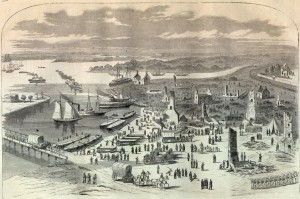
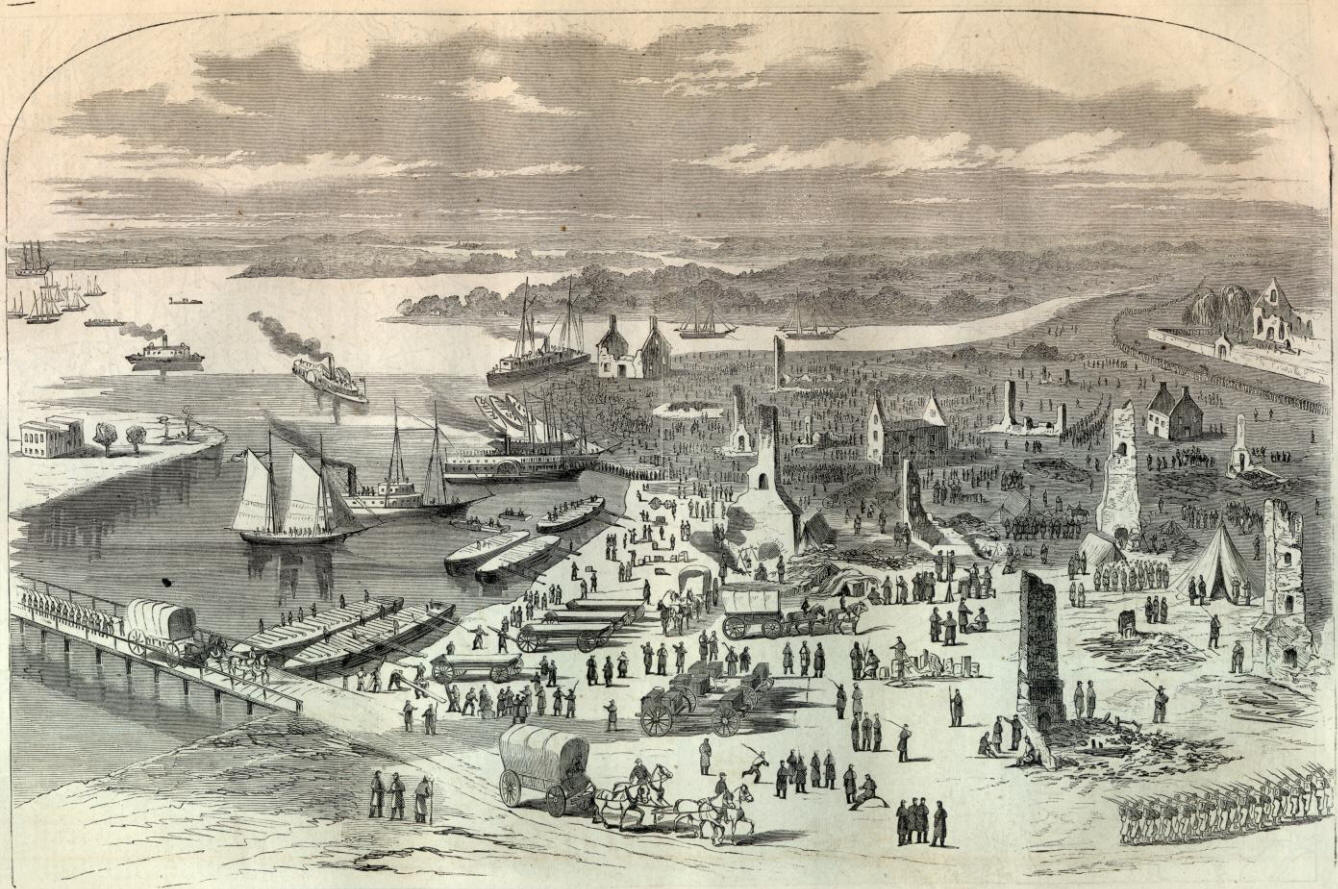
FEDERAL TROOPS AT HAMPTON, VIRGINIA.-SKETCHED BY AN OFFICER OF THE TOPOGRAPHICAL ENGINEERS. (Harper's Weekly 4-19-1862)

The 33rd marched through Hampton

March 26th. – Landed at Fortress Monroe early this morning. Marched through Hampton and encamped upon a beautiful plain near the James River.

Hampton, formerly a very fine town and built entirely of brick, was destroyed by fire last fall to prevent our troops enjoying it as winter quarters. The walls of many of the buildings are yet standing, among them I noticed many lofty columns, heavy arches and other evidences of former grandeur, also the walls of an old church built of various colored brick brought from England, many a year ago.

March 27th. – Left camp this morning, marched all day, and drove the enemy’s Pickets and scouting parties to Bethel. – Bivouaced in the woods.
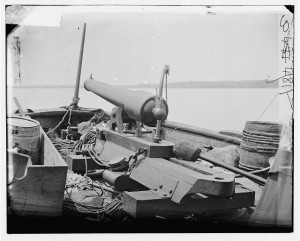
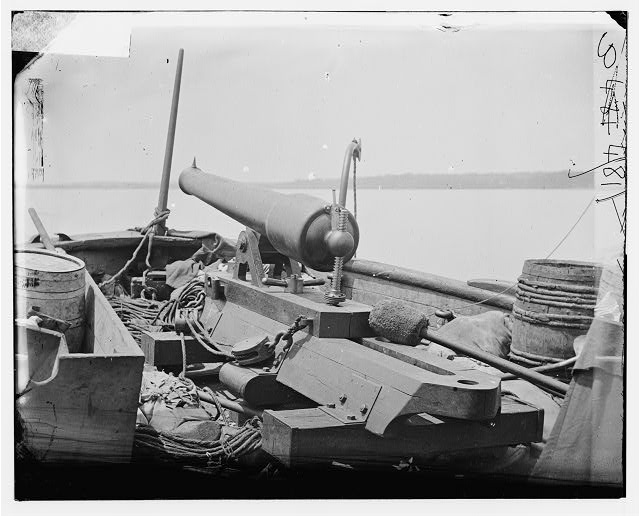
Bow Gun on Confederate gunboat Teazer, captured by the Maritanza (1862 July 4; LOC: LC-DIG-cwpb-01052)

Aboard the Teazer after its 7-4-1862 capture

On the next day we returned a few miles and encamped on the bank of the James River, three miles from Newport News. – For a few days the boys enjoyed themselves hugely digging for oysters, clams and bathing in the waters of the James river, which is a noble stream, seven miles wide at this point. On the opposite shore frown the long lines of Rebel batteries, and occasionally the “Rebels” send over a gunboat very appropriately named the Teazer, to throw a few shells into our camp, and reminds us that we are away down south in Dixie. On one of these excursions she surprised thirty or forty of the boys bathing in the river, and dropping a couple of shells among them caused them to beat a hasty retreat into camp. Such “time” I never saw made before. On, on they came as if the “old nick” was after them, without hats, without coats, without shoes, and some of them without anything.
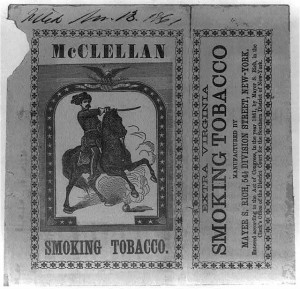
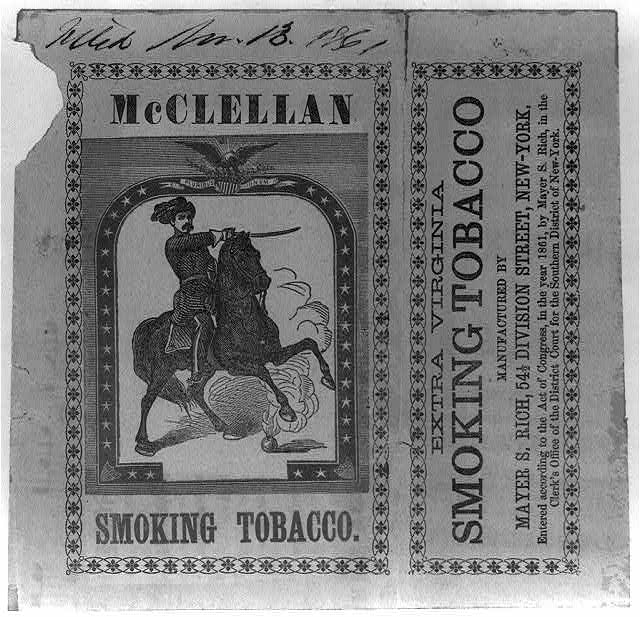
McClellan (c1861; LOC: LC-USZ62-79517)

'On to Richmond, McClellan leads'

This part of Virginia, lying between the James and York rivers is known as the Peninsula, and varies from three to fourteen miles in width for a long distance up. Many little creeks and inlets, set in from either side and some of them reach almost across making it very difficult, to march a large army up the Peninsula, but “nothing is impossible to him that wills,” and GEN. MCCLELLAN, having transported his grand Army hither, arrived in person on the 2d of April and on the 4th the whole army was in motion.

“On to Richmond, McClellan leads” was now the exciting cry, and amid the music of a thousand bands, and the shouting and singing of the soldiery, the long lines went gleaming forth and thousands of bright bayonets flashed in the rising sun. On rolled the artillery and the heavy columns of Infantry and following them came the long lines of trains of ammunition and Baggage wagons, and soon the whole grand Army, with McClellan at its head, in accordance with his plans laid long before in Washington, sweeping the Peninsula from river to river, was on the march to Richmond.
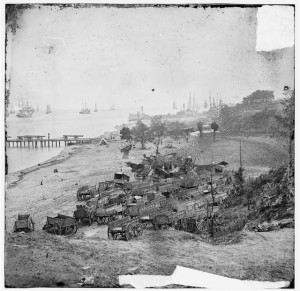
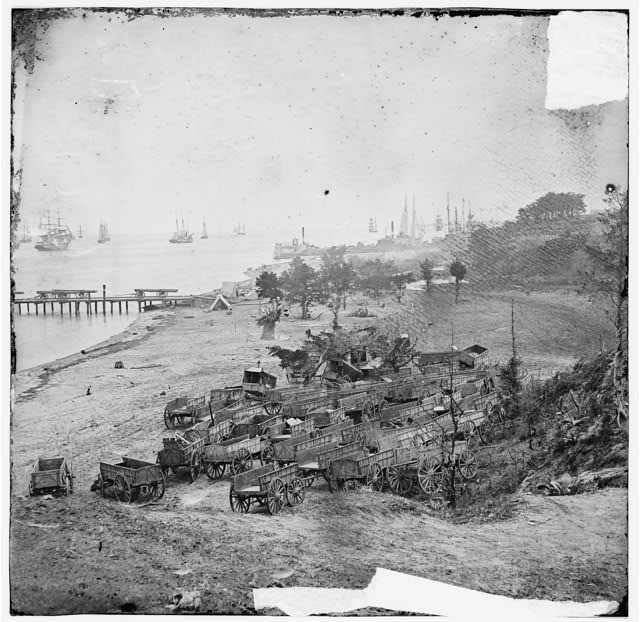
Yorktown, Va. Federal wagon park (May-August 1862; LOC: LC-DIG-cwpb-01577)

An army marches with its wagons

Our Division led the column on the left, on James river road, and after marching about eight miles arrived at a strongly intrenched rebel camp, on Deep Creek at a place called Young’s Mill’s. The 3d. Brigade led, and the 33d. Regiment forming in line of Battle, with the 7th Maine thrown out as skirmishers, at once advanced upon the fortifications of the enemy. But the “Rebels” had gone, and left only a rear guard in the camp who retired after a single volley. – Remaining here until morning we again advanced in the same order, the 7th, deployed as skirmishers and the 33d. marching through dense woods and wading through many a creek and swamps in line of battle, expecting every moment to meet the foe, and about eleven o’clock, we met them and in good earnest too. Just as we were emerging from a swamp, ar [?] morass about two miles across, we came upon the enemy strongly fortified upon the bank of the Warwick River, a narrow but deep stream, running nearly across the Peninsula and emptying into the James River. As soon as the enemy discovered us the artillery opened on us on both sides, and the round shot and shells came crashing through the trees around us in every direction. To the 33d. was given the dangerous task, of supporting the Batteries, and nobly our men performed their duty. Not a man flinched but but all steadily kept their posts during the entire day, and when the enemy attempted to out flank us on the left and COL. TAYLOR, led his men across the open field amid a storm of shot and shell, to meet the advancing foe, not a man faltered and the ranks were as steady as if we were upon dress parade. – The rebels were driven back and at sunset the firing ceased. We rested upon our arms and before morning were thrown forward in front of the Batteries to meet the enemie’s riflemen who were deployed in front of their lines; at daylight the ball was reopened. All day long we kept at it, and so near were the skirmishers to each other that a lively conversation was carried on between us. We ascertained that the 10th, Georgia was confronting us and that the fort in our front was called Fort Hunter, after R.M.T. Hunter, formerly U.S., Senate, from Virginia. Many a joke was cracked on either side, as we cracked our rifles at each other, but the “unkindest cut of all” was when one of our boys in answer to one of ‘drives,’ inquired the price of salt among them. (You know they haven’t any, and what is worse can’t get any.)

On Monday Gen. McClellan having reconnoitered the position of the enemy and ob- [missing data] dered our forces to retire about two miles, and the famous reconnoisence on Fort Hunter, and the enemy’s lines to Yorktown was over.
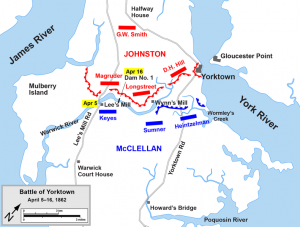
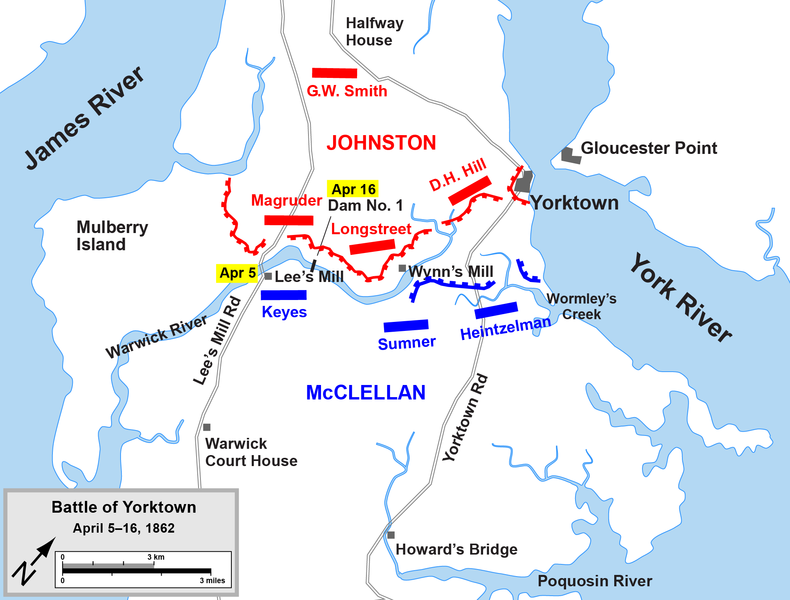
Map of the Battle of Yorktown of the Peninsula Campaign of the American Civil War by Hal Jespersen

33d. was on the Union left in Keyes' corps

Since then we have been gradually moving to the right, skirmishing with the enemy nearly every day, and we are about thirty miles from Fortress Monroe. Every day we are at work. First on Picket, then throwing up fortifications. One day building corduroy roads over this Virginia mud, the next supporting a battery, or out skirmishing with the enemy. Sometime we can sleep in our tents, but more commonly we lie on the ground in the open air, and often in a drenching rain, with our arms in our hands ready for a brush with the foe. Our lines are now only separated by the Warwick river and every few days we have a dash at the enemy or they make a rush upon us, while the artillery keeps up a continual storm. – Day before yesterday, the Rebels crossed and attacked our pickets, but they were soon driven back, with severe loss. The sharpest skirmish we have had since the fight in front of Fort Hunter, took place on the 16th. inst when after moving some distance to the right we made a reconnoisance in force along on front and extended our lines down to the river at Lee’s Mills, The Rebels made a strong resistance but our troops drove them back, at the point of the bayonet, and not satisfied with this, three companies of Vermont boys charged over the river into one of their forts, when they were met by a whole Brigade of Rebels and two regiments of Niggers, the black scoundrels were armed with shot guns, axes, scythes, and all sorts of weapons, and literally mowed our boys down as they rushed upon the the breastworks: of course so small a force was obliged to retire to this side of the creek but as the Black and White Rebels swarmed out after them, they were met by thirty-two rounds of grape and cannister from our artillery, and the slaughter was terrible. But all these skirmishes are are but the first faint mutterings of the awful storm that is so soon to burst all along these lines. The Rebels are concentrating all their troops at this point, and working day and night upon their fortifications. Their force is variously estimated form Eighty to One Hundred and thirty thousand men. This is evidently their last stand, and here they will make a most desperate struggle. Upon our side everything is progressing finely. I would not give you any particulars, but it should satisfy every loyal citizen in town to know that our noble Commander, Gen. McClellan, directs everything in person, and when he gives the command for us to advance upon the foe, we shall rush to the charge confident of Victory.

Ever yours

G.

More evidence that General McClellan had the confidence of his troops.

There’s debate about whether there were black Confederate soldiers during the American Civil War. G.’s story here about the black soldiers during the Battle of Lee’s Mill would seem to be at best hearsay. Maybe the black men were slaves being made to help fortify the works and were defending themselves when the Vermonters attacked.

G.’s anecdote about the Teazer shelling the Union bathers out of the James is backed up in The story of the Thirty-third N.Y.S. vols.; or, two years campaigning in Virginia and Maryland by David W. Judd, pages 74-75.
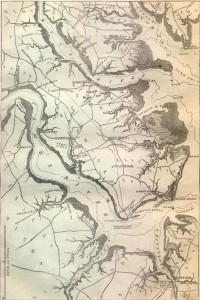
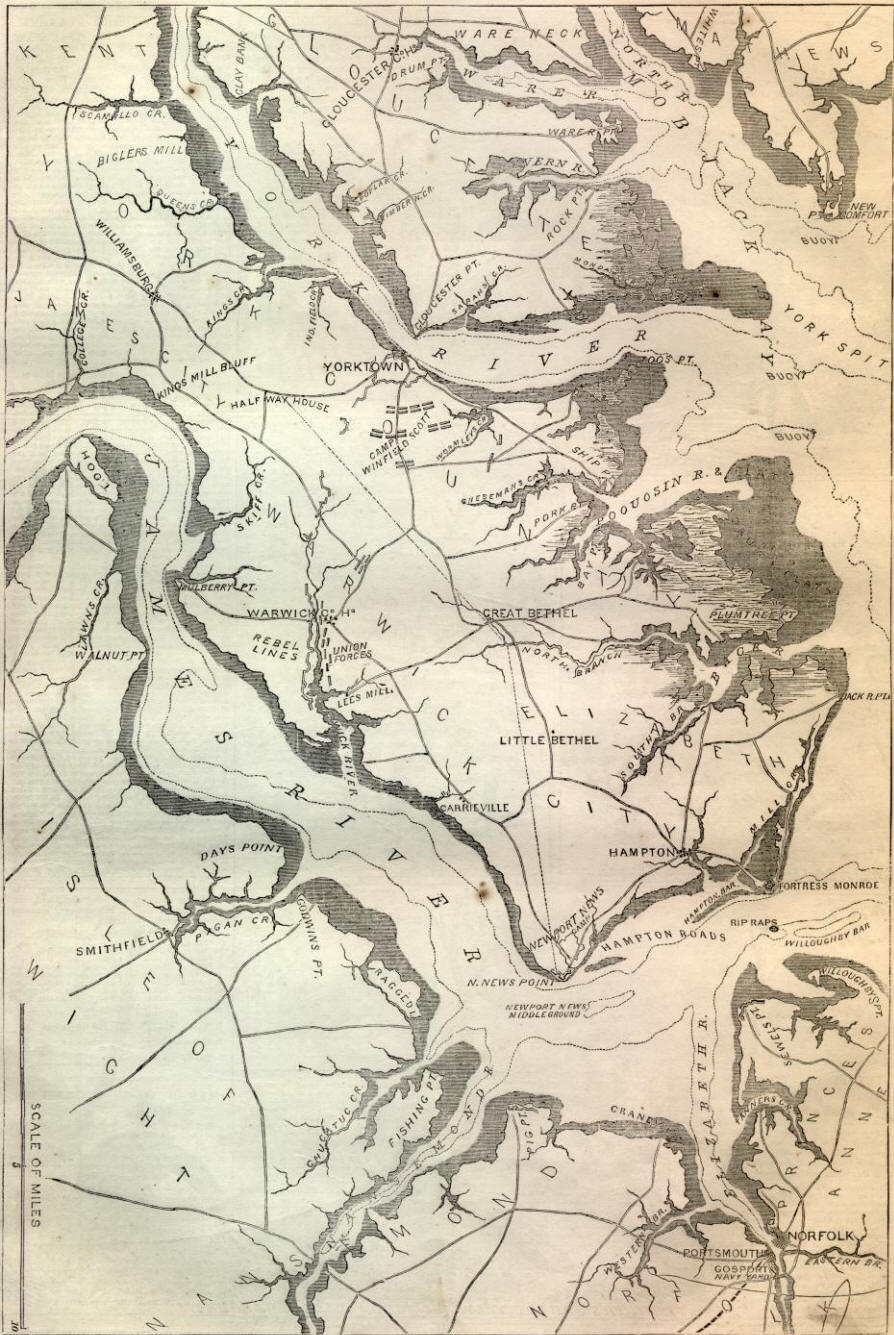
GENERAL MAP OF THE SEAT OF WAR IN VIRGINIA, SHOWING THE ROAD TO RICHMOND.  (Harper's Weekly 4-19-1862)

The images of Alexandria, Hampton, and the old map were all published in the April 19, 1862 issue of Harper’s Weekly.

Hal Jespersen’s map of the Battle of Yorktown is licensed by Creative Commons.
Posted in 150 Years Ago This Week, Military Matters, Peninsula campaign 1862 | Tagged , , , , , , , | Leave a comment