happy new wheels

hw1-9-1869page17 (https://archive.org/details/harpersweeklyv13bonn/page/n5)

not just at Christmas

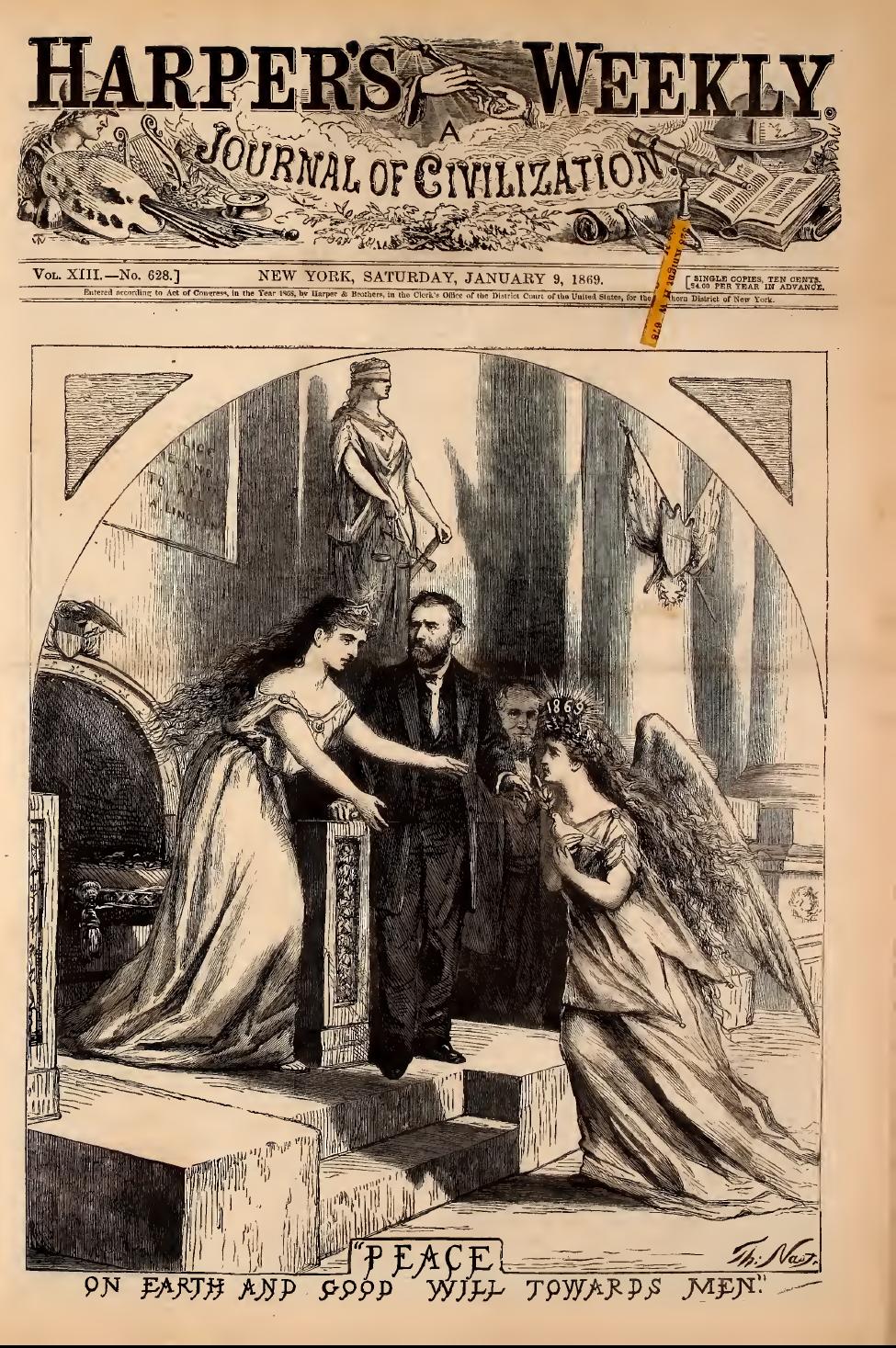
Based on its January 9, 1869 cover, it seems that Harper’s Weekly had pretty great expectations for the new year in general and president-elect Ulysses S. Grant in particular. It’s true that General Grant did successfully carry out the political will of Abraham Lincoln to keep the Union in one piece no matter what the cost, and eventually the South was battered into submission, so that the hot war ended and a relative peace came to the United States; it’s also true that General Grant’s slogan for the 1868 presidential campaign was “Let us have peace.” But the earth is quite a large place, and the general wasn’t even due to be inaugurated until March 4th.

Another publication also had high hopes. In an article on January 1, 1869 The New-York Times stated that peace, prosperity, and the settlement of reconstruction issues was guaranteed when General Grant took office. On the other hand, there wouldn’t be any peace during the New Year’s holiday for New Yorkers who overindulged during the celebration.

HAPPY NEW YEAR!

The First Day of 1869 – The Old Time Observances – Making Calls – New Year’s Eve – German Festivities – Church Ceremonies.

New Year's calls ([New York, N.Y.] : [George Stacy], [between 1861 and 1866]; LOC: https://www.loc.gov/item/2017647818/)

“time-honored custom”

To-day, according to time-honored custom, the honest burghers of New-Amsterdam will visit each others’ families, pronounce the usual benediction for the three-hundred-and-sixty-five days next to come, and partake of the hospitalities of the season. The prospect is that it will not be a good day for getting about, but this will not interfere much with the plans of those who have made up their minds to make a day of it. The habit of breaking bread with your neighbor on the first day of the year is much more sensible than many of those by which society in these parts is enslaved. For renewing old acquaintances and forming new ones, forgetting little past differences and harmonizing elements hitherto discordant, this is the occasion of all the year especially set apart, If every man would become his own peace-maker on this day, and consider it a religious duty to exchange New Year’s civilities with his enemy, he would be celebrating the birth of a new era in the proper spirit.

hw1-16-1869page48 (https://archive.org/details/harpersweeklyv13bonn/page/n5)

got too much steam on

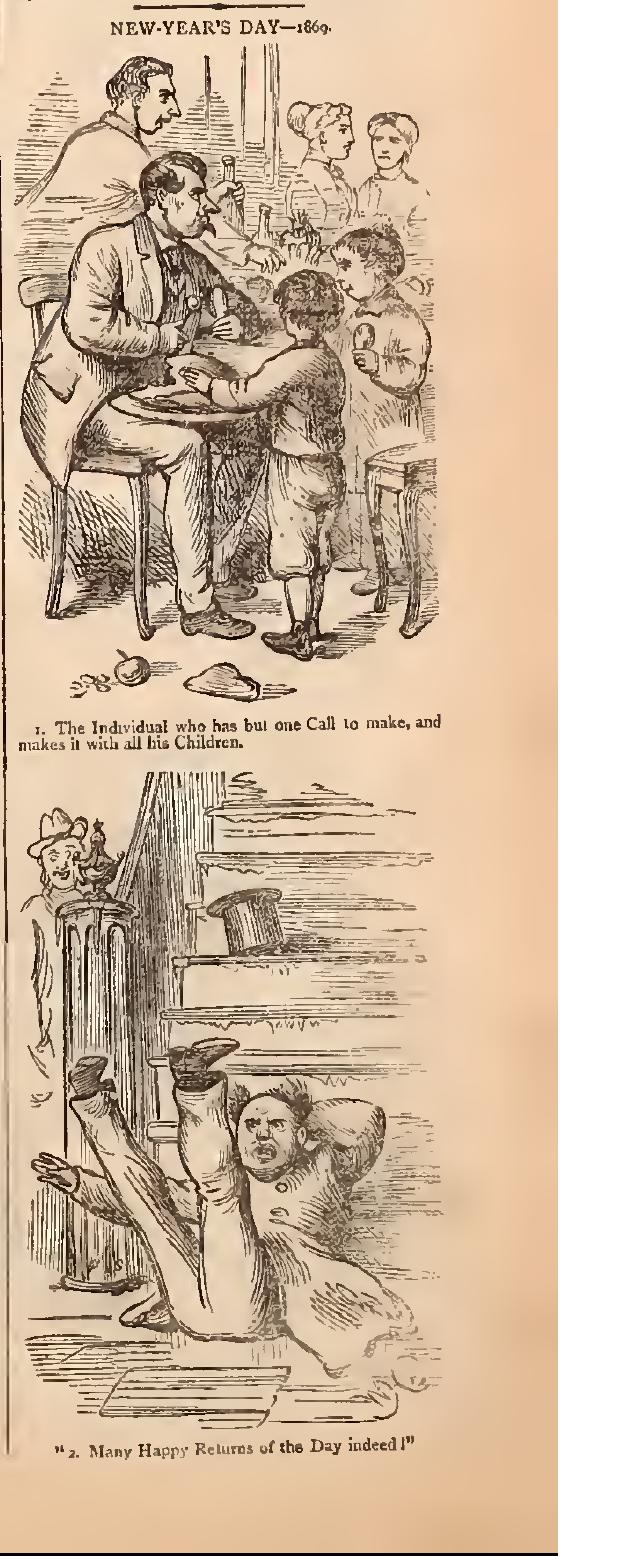
Unfortunately, the spirit which ordinarily possesses those who have made many calls is of a different proof, and many who commence the day in the most amiable mood are transformed by it ere the midnight hour into the enemies of their own peace and of that of the entire neighborhood in which they may happen to make their more boisterous demonstrations. The temptation to get too much steam on when there are so many convenient places along the road for filling the boiler, is very great. It is not wonderful if some are carried too far before the train with the crazy engineer aboard can be stopped. Without reading a temperance lecture, we will merely take occasion here to caution those who are inclined to travel to-day that there is more danger than usual of a collision and a smash up. The prediction that there will not be so many calls to-day as usual, like that to the same effect made just before every other New-Year’s Day, will probably not be verified. The custom certainly is not falling into disuse, and if the weather should be clear all day, doubtless, the streets will be filled as usual till a late hour by parties of gentleman, some on foot, and others in all manner of conveyances, hastening in a wild way from house to house, with such long lists of “friends” to be called upon that they might stagger the poet who wrote,

“He who has one is blessed beyond compare.”

Temperance map. ([S.l.] : C. Wiltberger, 1838. ; LOC: https://www.loc.gov/item/2012592020/)

navigational aid

monster (Grappling with the Monster, by T. S. Arthur; http://www.gutenberg.org/files/13509/13509-h/13509-h.htm)

IN THE MONSTER’S CLUTCHES
Body and Brain on Fire

hw1-9-1869page27 (https://archive.org/details/harpersweeklyv13bonn/page/n5)

less is more

_____________________

The principal object in life of many young men to-day, will be to ascertain by experience precisely how many of their lady acquaintances they can manage to see within a given number of hours. …

The last hours of the expiring year were, as usual, embittered[?] by the numerous individuals who deem it a scared duty that they owe to society to go about the City blowing horns loudly … in commemoration of the occasion. These gentleman did their duty last night faithfully, …

AMONG THE GERMANS the Sylvester Abend, or New Year’s Eve, is an occasion of universal festivity. …

[The Times provided a quick review of 1868, which included a list of those who had died on both sides of the Atlantic. In the United States it only mentioned the Impeachment trial of Andrew Johnson and “the election of Gen. GRANT, with the guarantees of future peace and prosperity and of a final settlement of the reconstruction questions”. In the wider world there was revolution in Spain, Reform movements in England, and the Chinese Embassy: “China has opened a hole in the wall that immured her from the nations, and through it has sent forth her Ambassadors to the Governments of the principal peoples of the world, with overture for opening new relations with them all upon a basis much wider than that of the prejudices which she has entertained for ages.”]

WATCH-NIGHT MEETINGS.

The time-honored custom of watching the old year out and the new year in, prevalent among the members of the Methodist denomination, was observed last night in nearly all the churches in the City, with peculiar religious services. The exercises, as a rule, began at 9 o’clock with a sermon, which continued until 10 o’clock. Prayer and experience meetings followed until within a few minutes of the hour of midnight, when a brief season of silent prayer was indulged in. As the clock noted the arrival of the hour of 12, hymns of praise were sung, the benediction was pronounced, and the meetings were brought to a close.

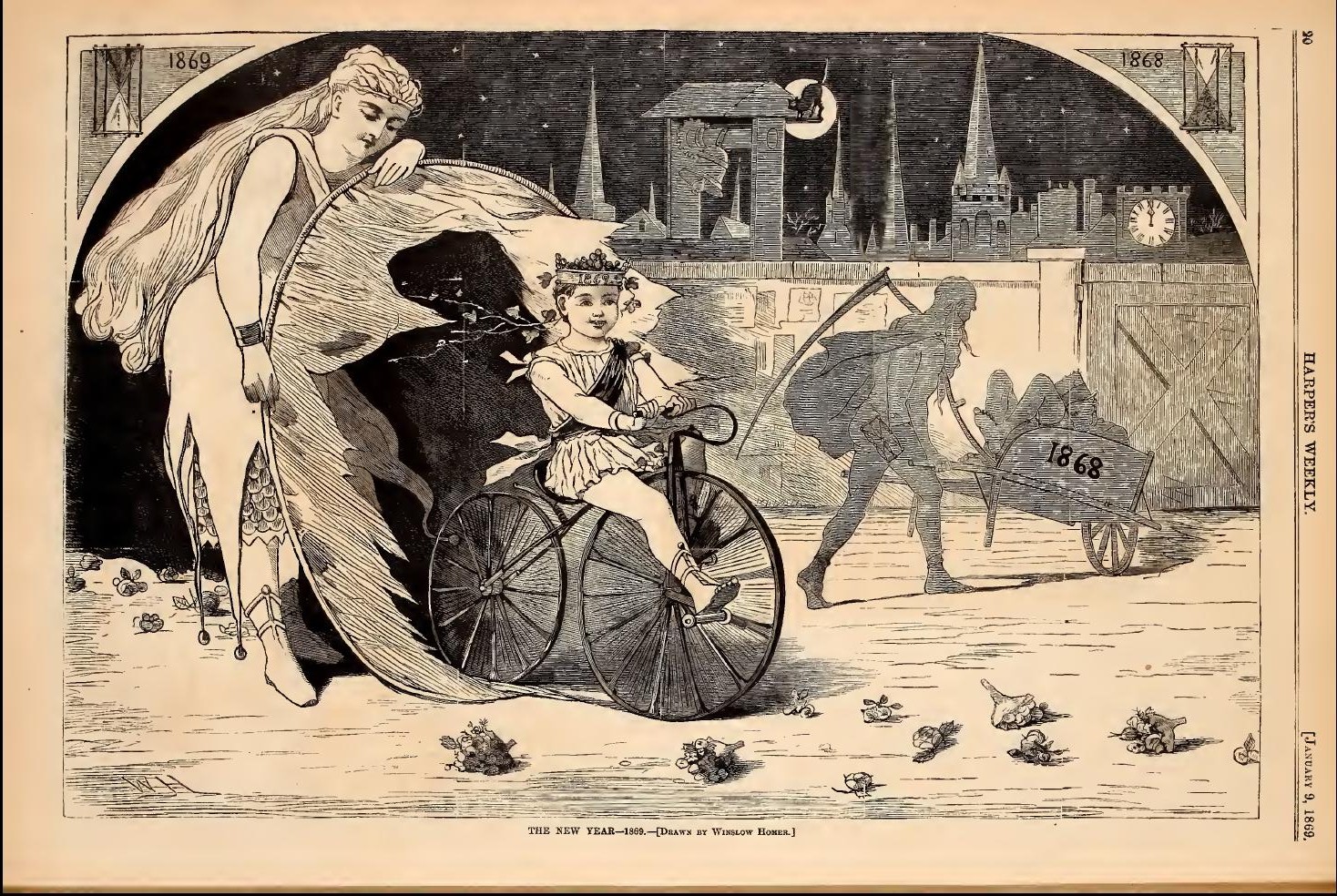
Towards the end of 1868 a velocipede craze began to have an impact on at least parts of America. Innovative pedals on proto-bicycles allowed riders to keep their feet off the ground and move at relatively high speeds. The January 9th issue of Harper’s Weekly pictured Baby New Year pedaling happily into 1869:

hw1-9-1869page20(https://archive.org/details/harpersweeklyv13bonn/page/n5)

baby’s got new wheels

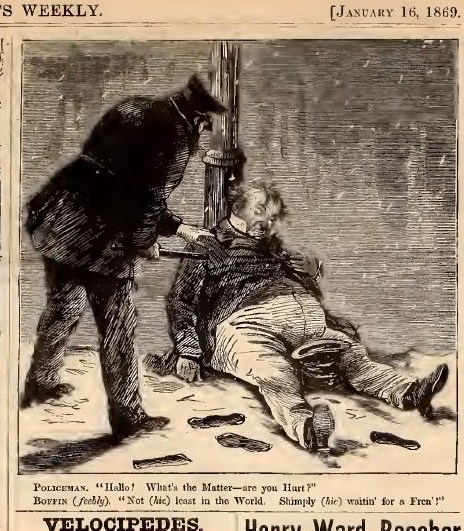
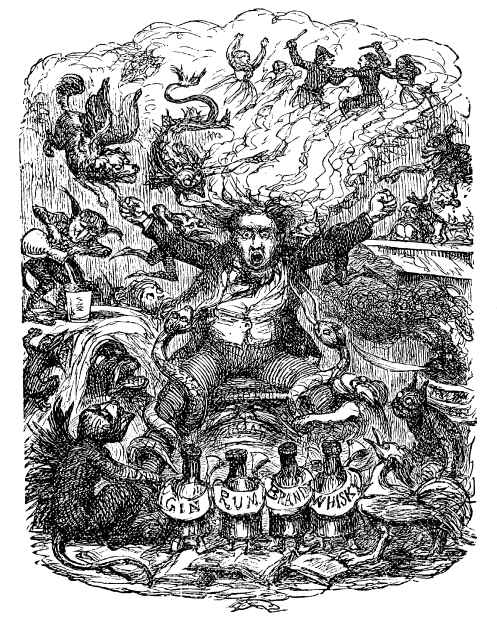
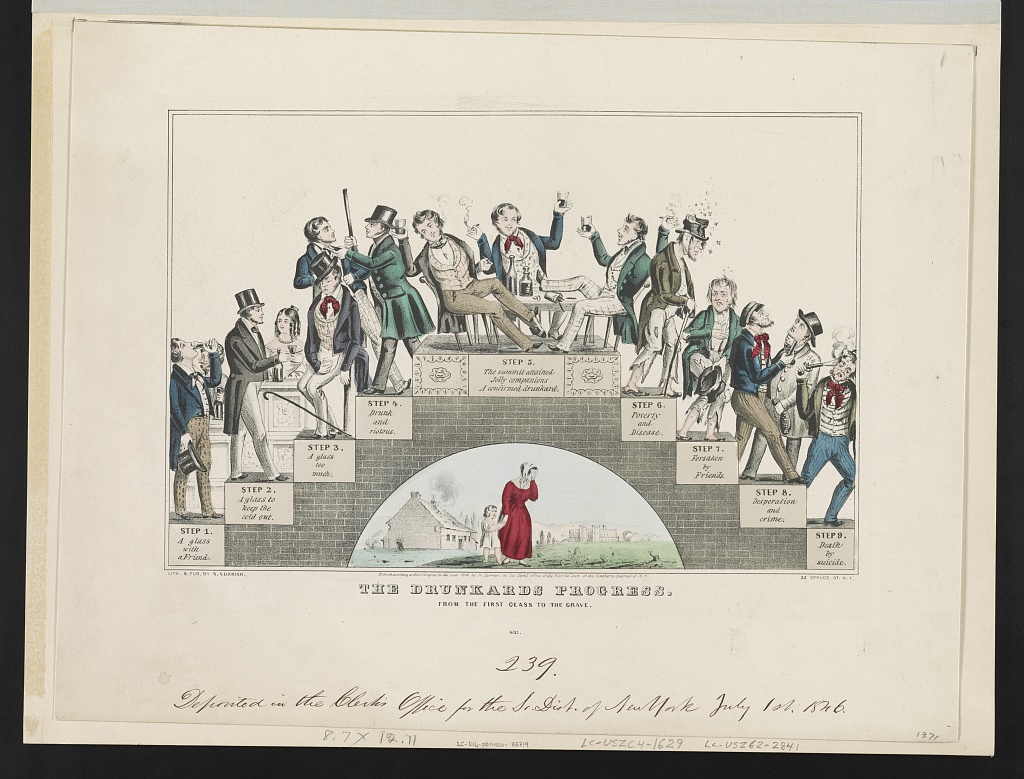
All the material from the various issues of Harper’s Weekly in January 1869 can be found at the Internet Archive. The cartoon of the policeman with the boffin made me want to include a bit more from the Times article: many of the celebrants on New year’s Eve didn’t make it to midnight – “by stress of frequent libations, were in such a condition that in the language, partly Latin and partly in English, apparently, they “‘hic – couldn’t see it.'” The monster clutches cartoon was published in Grappling with the Monster by T.S. Arthur at Project Gutenberg. From the Library of Congress: New Year’s Calls; a Currier & Ives greeting; Temperance map; “The drunkards progress. From the first glass to the grave” c1846 by Nathaniel Currier.
The drunkards progress. From the first glass to the grave ( New York : Lith. & pub. by N. Currier, c1846; LOC: https://www.loc.gov/pictures/item/91796265/)

grave end

hw1-16-1869page48a (https://archive.org/details/harpersweeklyv13bonn/page/n5)

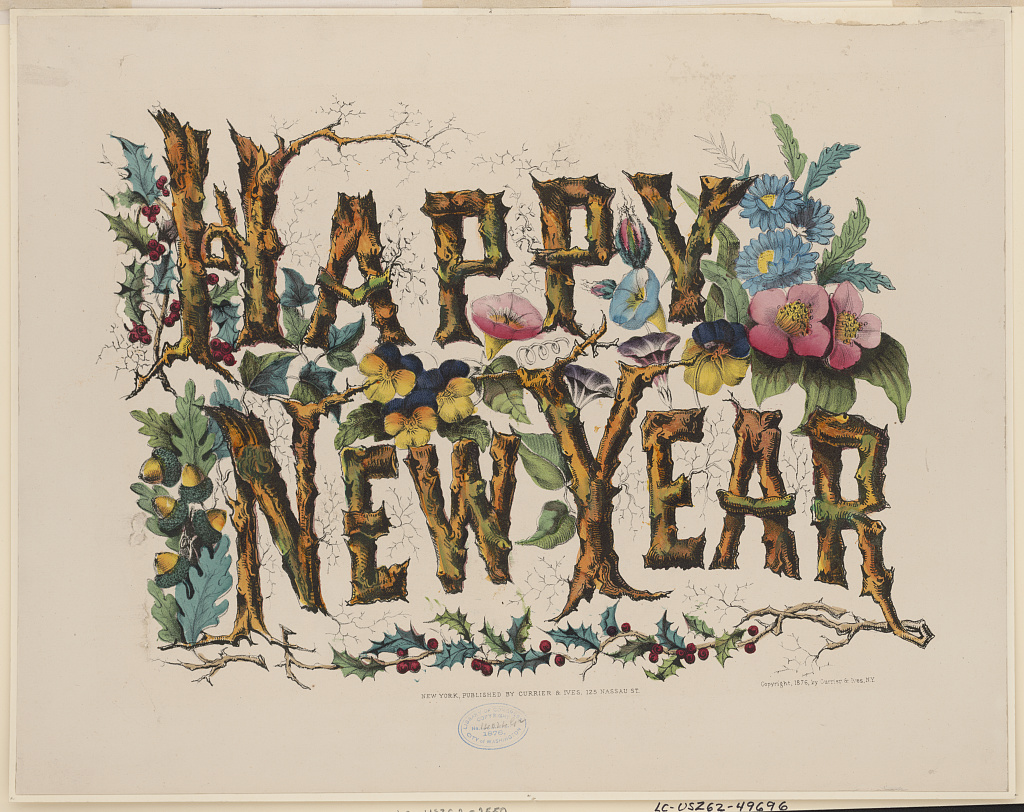
French design, American made

Happy new year (New York : Published by Currier & Ives, c1876.; LOC: https://www.loc.gov/item/2002695831/).

Posted in 150 Years Ago This Week, American Culture, Postbellum Society | Tagged , , , , , , | Leave a comment

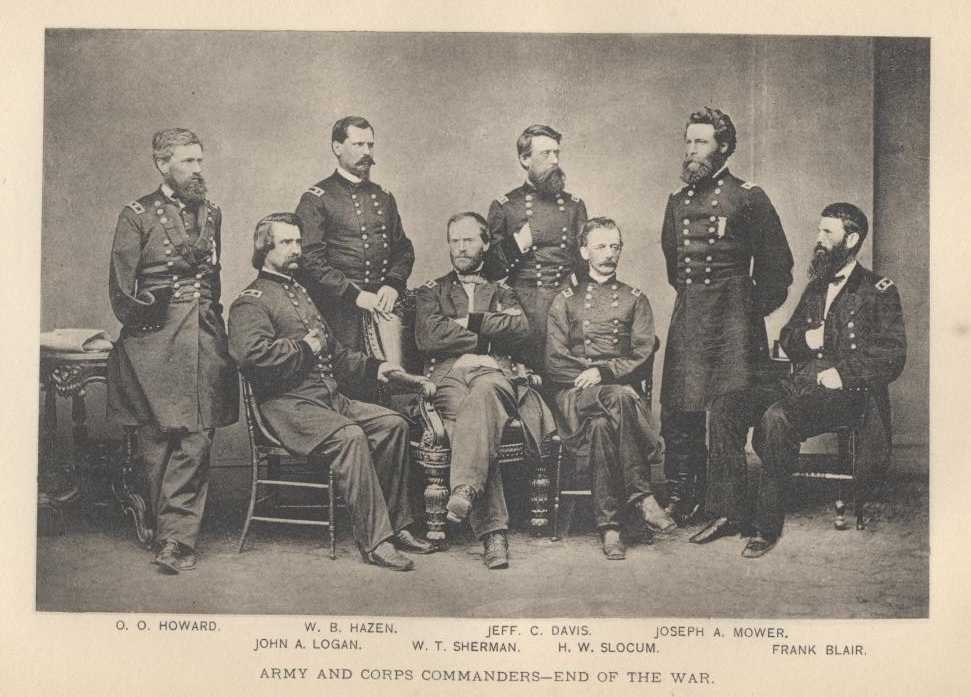
nationalist reunion

Commanders end of war (The Memoirs of General W. T. Sherman; http://www.gutenberg.org/files/4361/4361-h/4361-h.htm)

some nationalist leaders

From the January 9, 1869 issue of Harper’s Weekly:

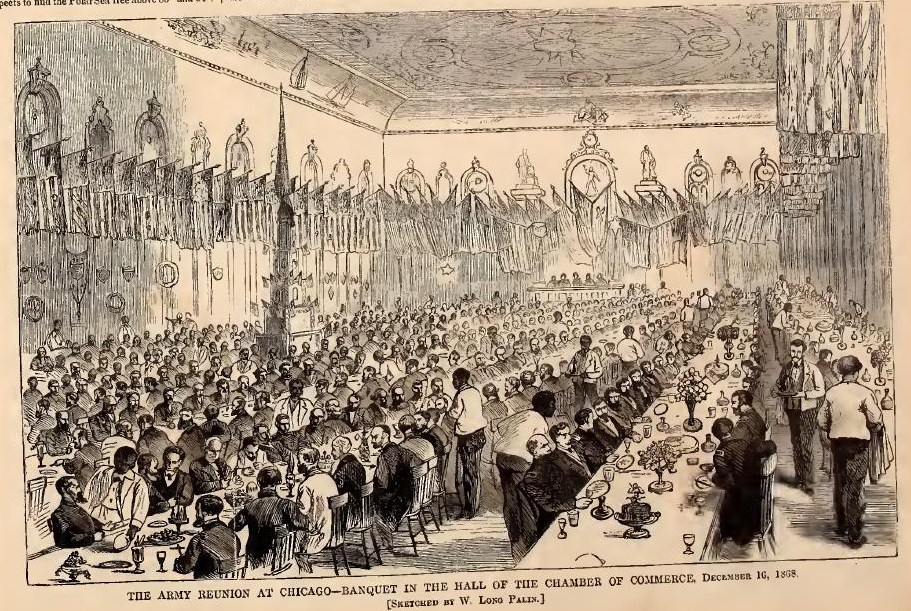
THE ARMY REUNION AT CHICAGO

THE immense congregation of officers and soldiers assembled at Chicago on the 15th and 16th of December were representatives of our volunteer armies. Many were present who also belonged to the regular army, but they were not there on that account. This annual reunion has not, nor is likely ever to have, any bearing on partisan conflicts. Nevertheless it has great political significance; it is not simply the manifestation of military pride, or the expression of that fraternity which always exists among soldiers who have periled their lives in the same cause; it is something more – it is the intelligent recognition by our armies not only of the great work which they have accomplished, but also of the patriotic motives which called them to arms. The Chicago meeting was a token of our national strength and of national unity. General SHERMAN, in his address to the soldiers at the Opera-House, reminded them of this when he said: “Happily, my friends, you did not belong to that class of our people in whose hearts was planted from youth the pernicious doctrine of State power, that the citizens should love a part of the country better than the whole.”

The armies of the Cumberland, the Ohio, the Tennessee, and of Georgia have each a separate organization, and the meeting was the reunion of all four. We give an illustration of this event on page 29. On the evening of the 16th there was a grand banquet in the hall of the Chamber of Commerce, at which General SHERMAN presided. The nine immense tables bore the devices of the generals of the various armies who participated in the celebration, together with many memorials of the late war.

hw1-9-1869page29 (https://archive.org/details/harpersweeklyv13bonn/page/n5)

page 29

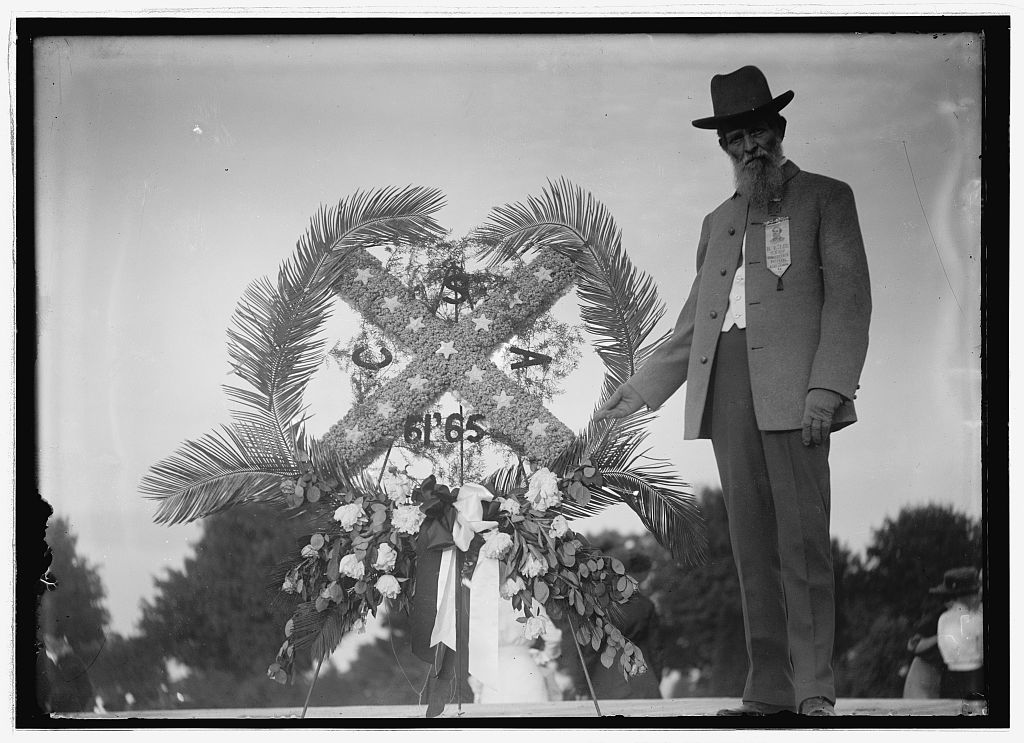
The material from Harper’s Weekly comes from the Internet Archive. The photograph of William T. Sherman and the other generals at the end of the war is from his memoirs (at Project Gutenberg). You can see the photo the presumed Confederate veteran at Arlington at the Library of Congress. I believe the gentleman’s ribbon shows a picture of General Lee and says, R.E. Lee Camp, Confederate Veterans, Alexandria[?], Va.”
Confederate soldiers with wreath, Arlington, Va. (LOC: https://www.loc.gov/item/2016822950/)

loved a section more than the whole?

R.E. Lee Camp [between 1912 and 1930](LOC: https://www.loc.gov/item/2016822950/)

loyal to his state and his people

Posted in 150 Years Ago This Month, Aftermath, Postbellum Society, Veterans | Tagged , , , , , | Leave a comment

conservative counterpoise

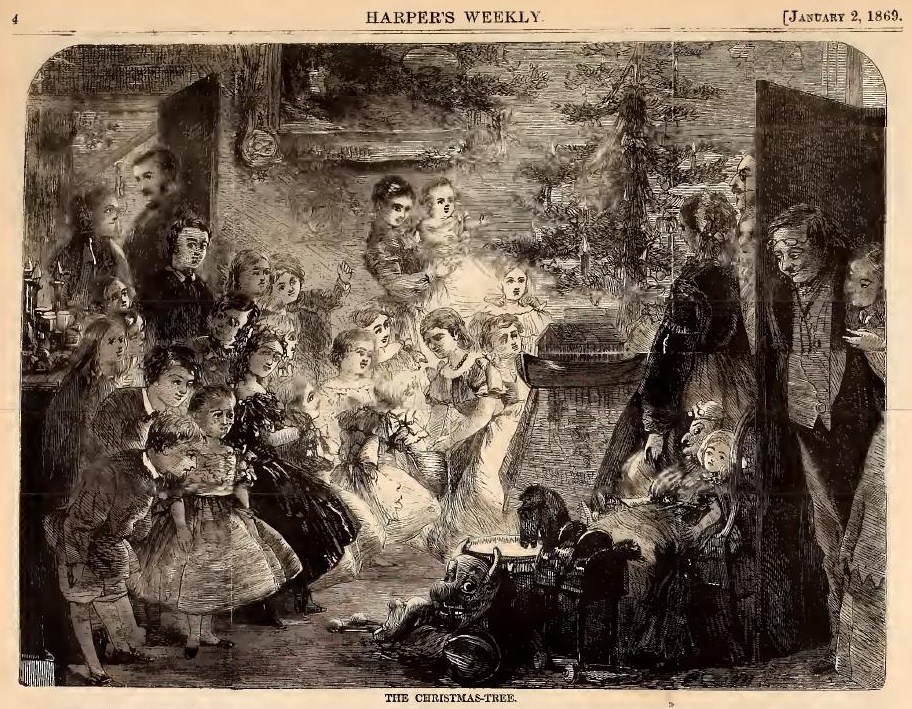
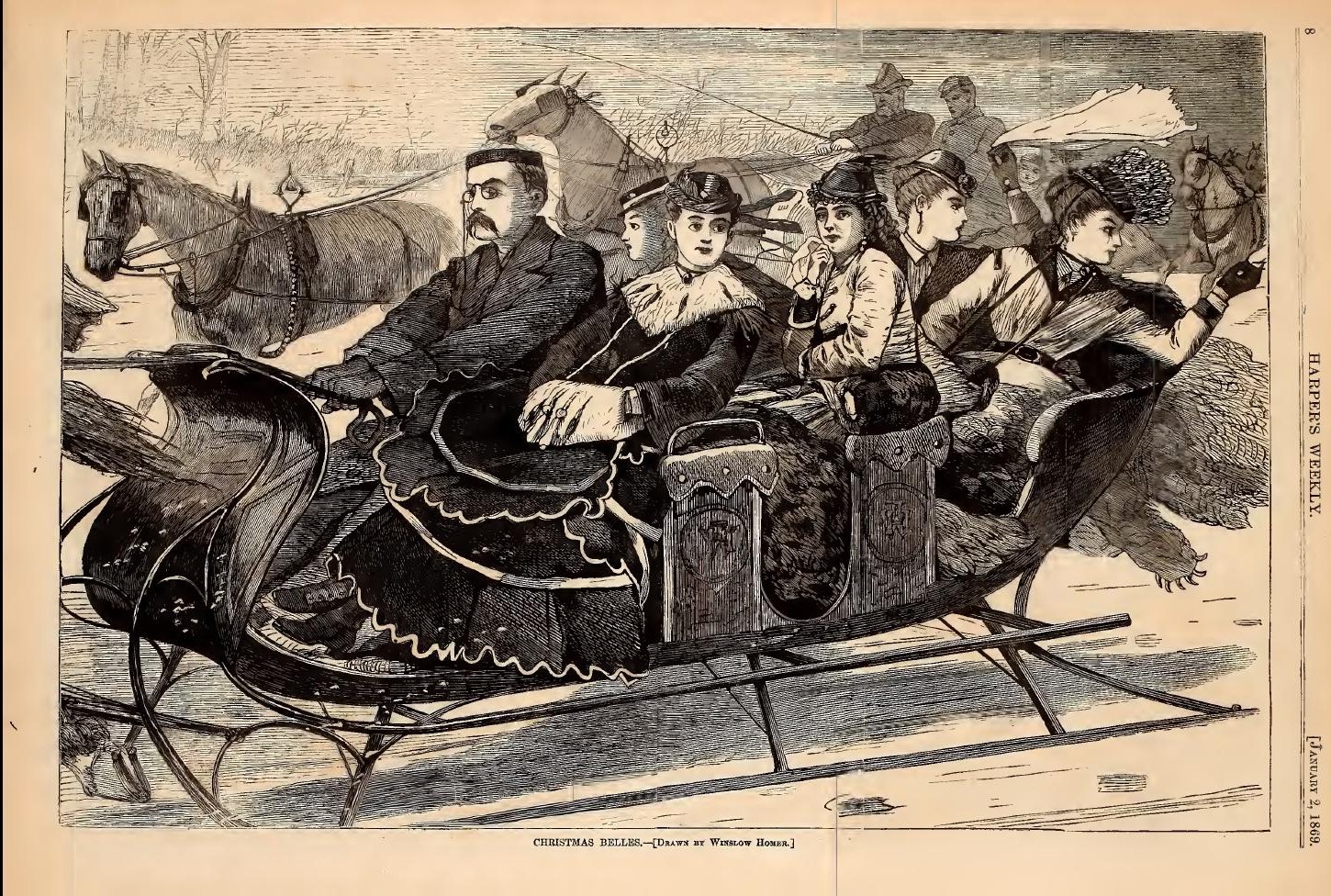
HarpersWeekly1-2-1869page4(https://archive.org/details/harpersweeklyv13bonn/page/n5)

“hearty, cheery, old-fashioned Christmas”

In an editorial on December 25, 1868 The New-York Times stressed that Christmas was a traditional, family time in a world of great technological change, especially the transportation revolution caused by steam power. The technological innovation led to social change:

CHRISTMAS.

HarpersWeekly1-2-1869page8 (https://archive.org/details/harpersweeklyv13bonn/page/n5)

time-honored travel

It is declared on the high authority of THOMAS TUSSER, who lived and flourished three hundred odd years ago, that “Christmas comes but one a year;” which fact the philosophical TUSSER turns into a rhyme and an argument for exhorting us all, when Christmas does come, to “play and have good cheer.”

With its traditional sports and its time-honored observances; with its old, familiar frolic, its wealth of kindly feeling and memories of love and home; with its jocund ceremonies, its feasting, and reveling, and masquerading, – and with its sacred and tender historic memories, too, ever coming up to tinge the extravagance of pastime to a soberer hue – perhaps, with its undertone of private sorrow or melancholy, heard, distinct and low, amid the loudest roar of boisterous laughter, – nay, even with its traditional weather, time out of mind clear and crisp, and bracing, and cold, Christmas has come. let those of us who can, scruple not to “play and have good cheer,” – not forgetting to give “good cheer” to some that are without it.

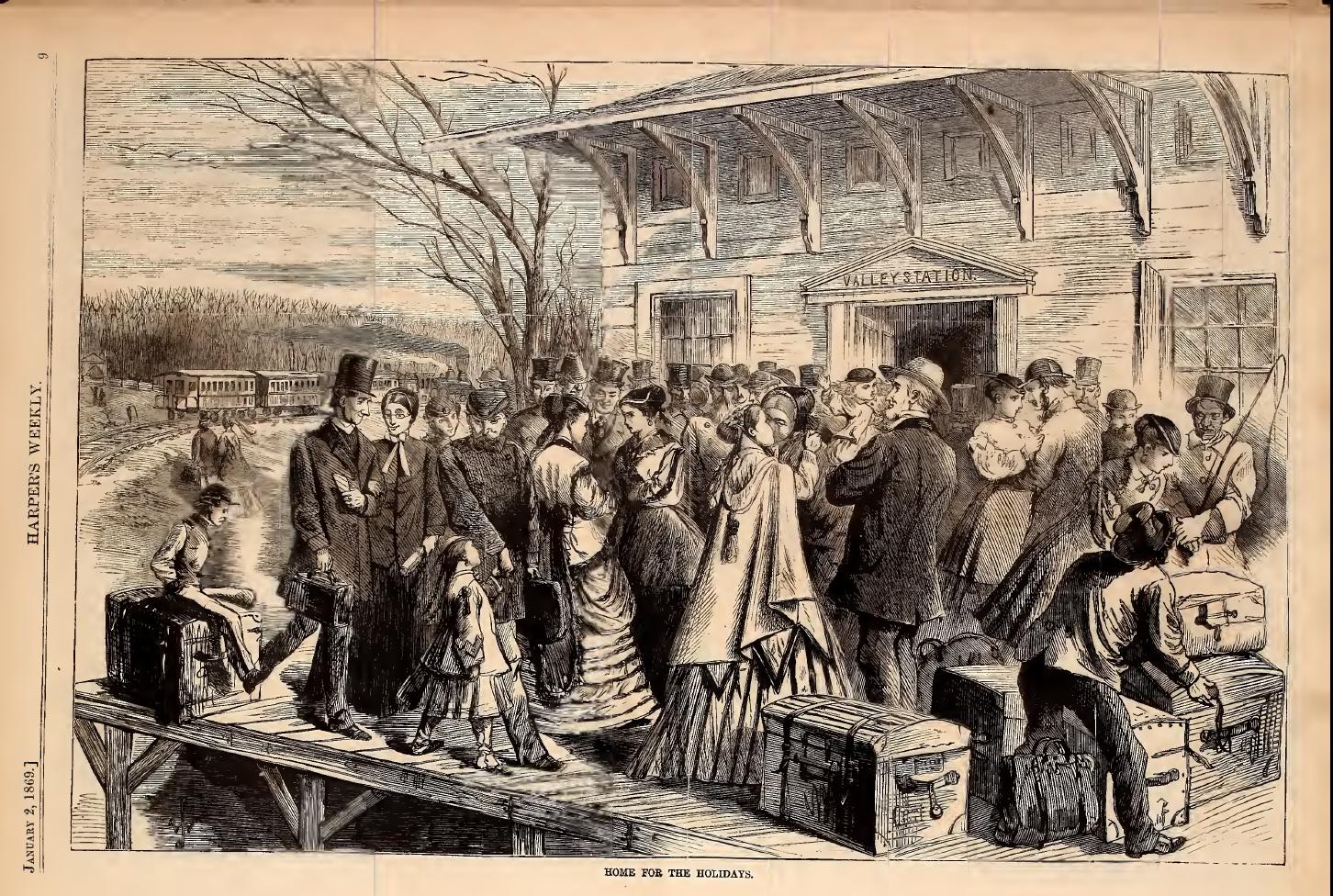
Harper's Weekly 1-2-1868page9 (https://archive.org/details/harpersweeklyv13bonn/page/n5)

wanderers return – by steam

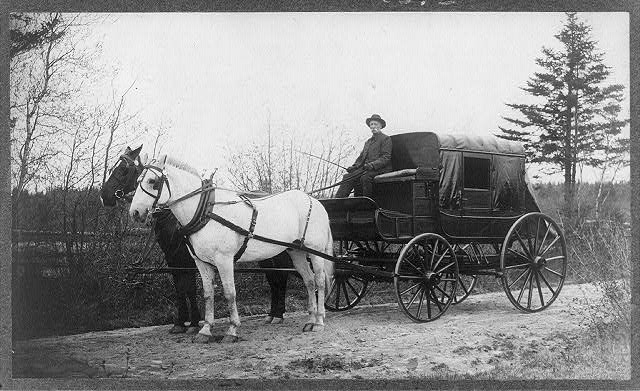
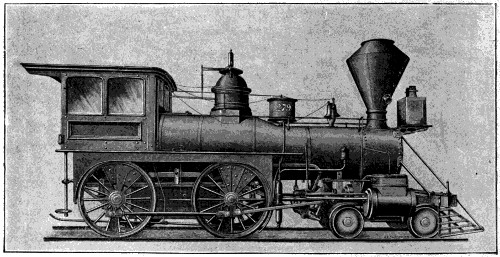
Now, more than ever before, the family element in Christmas tops all others – for it is not merely the season of general merriment and jollity, but that of domestic gathering, a summons back to the wanderers, if may be, around the old fireside, beneath the old roof-tree. For, the family is no longer that stable and compact institution it was of old. Modern civilization has gradually undermined it, and year by year its hold upon society grows looser and looser. Steam strains and snaps the bonds of the family system; for, whereas once the labor and discomfort of travel were great, and to make one’s way across the world on foot or on hoof deterred even the restless and helped to keep him near at home, now the whole globe is open and accessible. Of old the traveled youth was a rarity, but now the home-keeping youth is the real curiosity. Of old, grandsire and son, and son’s son lived and died within the same parish precincts, and every settlement bore the names and the impress of character written upon it centuries before. Now, lands and races intermingle. The stage-coach era has gone by. Country youths habitually seek their fortunes in the city, and city youths wander across the world. With steam transportation, men go a thousand miles in search of gain or pleasure. Have you been to Alaska this Summer, to Italy this Winter, to Japan, to Jericho? – it sounds hardly stranger than it once did to ask last week’s news from Buffalo. So it turns out that the locomotive and the steamboat are revolutionizing society, and lengthening the ties which bind to the native acres, to the parental hearth.

[Stagecoach (between ca. 1900 and ca. 1910; LOC: https://www.loc.gov/item/2013646138/)

bygone era

illo136(http://www.gutenberg.org/files/41538/41538-h/41538-h.htm)

straining family ties

illo149 (http://www.gutenberg.org/files/41538/41538-h/41538-h.htm)

centrifugal forces

_______________

In this changing phase of society under a civilization itself revolutionized through modern mechanical appliances, comes Christmas, hearty, cheery, old-fashioned Christmas, conservative, family-loving Christmas, to act some small part as a counterpoise, and to help bind together those whom fate and society carry apart, or who are driven asunder in the contrifugal [centrifugal ?] whirl of modern life.

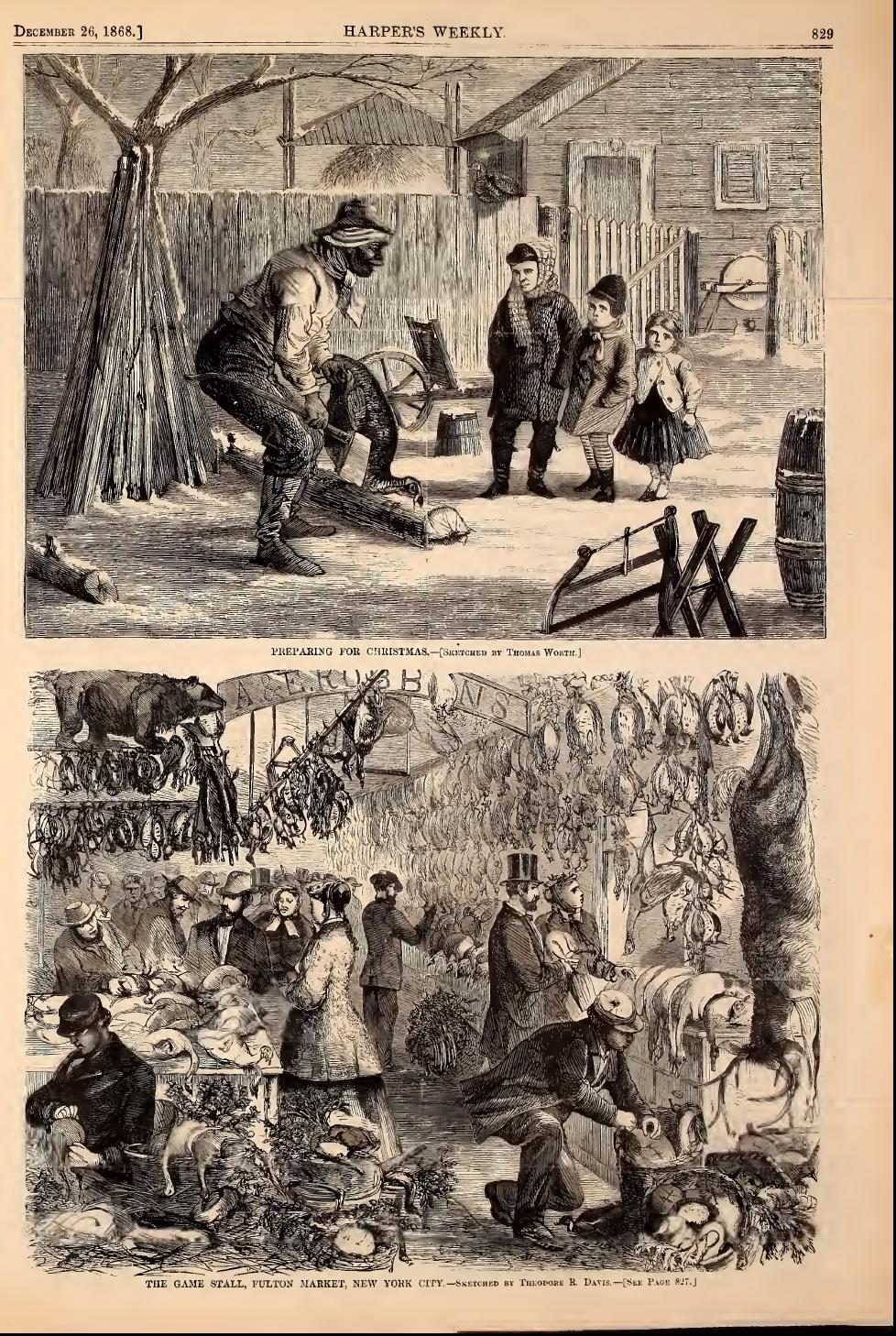
hw12-26-1868page829 (at the <a title="Internet Archive" href="https://archive.org/details/harpersweeklyv12bonn">Internet Archive</a>)

meat: town and country

It is a season, too, of brotherly kindness and charity. Never are the hearts of the charitable so free, so generous, so sympathetic, never do the poor and suffering hope so confidently for relief and with such reason for hope. It is a tight purse-string that will not loosen a little at Christmas-time; for what lessons of love and charity does not its origins teach, and what softening memories of boyhood do not spring to the minds of the most cynical of us? This delicious air of Christmas Eve and Christmas morning, just reddening the cheeks of the tardy gift-buyers, or brightening the glistening eyes of the revellers, is “a nipping and an eager air” to the destitute. The Christmas game, and beef, and wine, do not keep the generous from thought of the hungry; nor the cheery Christmas laugh of the gaily-dressed from hearing a cry from the thinly-clad and despairing. So, with its emblems and its honored customs, its evergreen and holly, its wreaths and crosses, its toys, its feasts, its gifts, its kindly wishes from mouth to mouth and heart to heart, another Christmas comes and goes, and is added to the record of our Christian era.

A few days earlier the Times encouraged its readers to exhibit charity to some destitute who were pretty much stuck in a home.

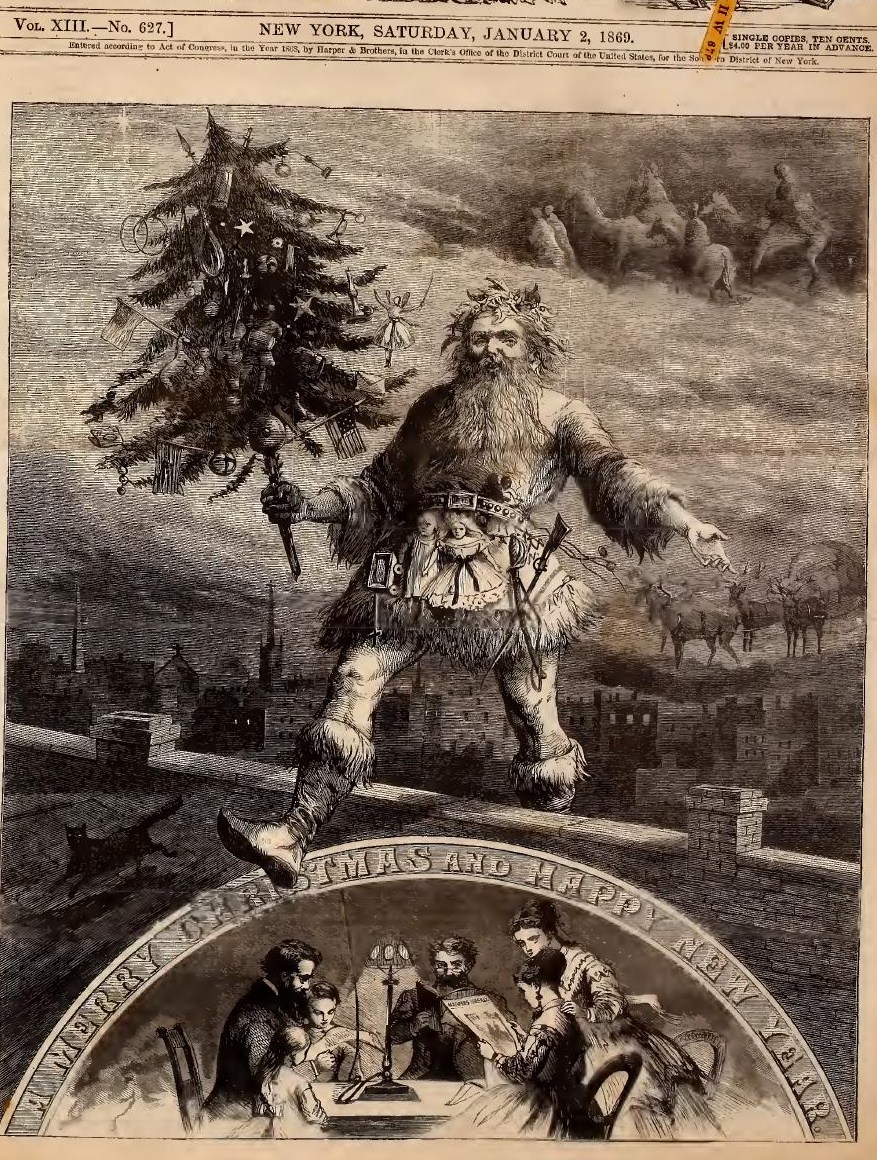
HarpersWeekly1-2-1869page1 (

star-spangled tree

From The New-York Times December 21, 1868:

Christmas for the Maimed Soldiers.

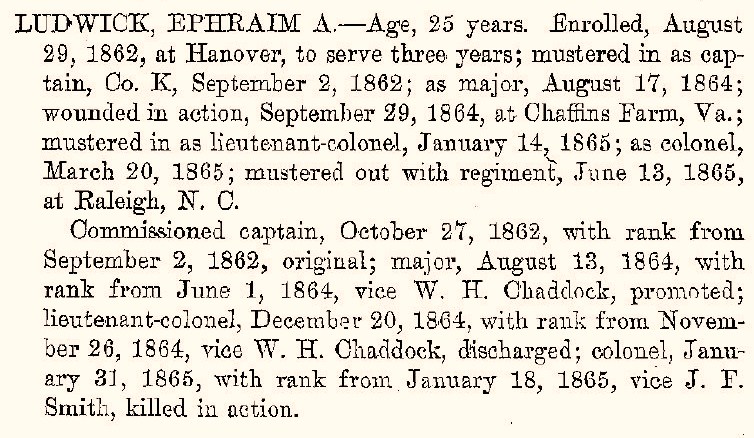
The attention of the patriotic friends of the crippled soldiers is called to the appeal of Col. LUDWICK, in our advertising columns, for the means to provide suitable cheer for the disabled men at the “Home for Disabled Soldiers, State of New York,” on Christmas Day. Col. LUDWICK desires to give the boys a good Christmas dinner, and to decorate the institution appropriately to this festive season. We know of no class more deserving of good gifts and of hearty remembrance than the crippled survivors of our war for the Union, and predict, on the part of our citizens, liberal responses to the appeal of Col. LUDWICK and those concerned with him in the good work.

Contributions received at the places named in the appeal.

According to Historic Milwaukee VA Ephraim A. Ludwick was also maimed:

A native of Pennsylvania, Ludwick enlisted at Hanover, NY; was commissioned an officer in Company K, New York 112th Infantry Regiment on October 27, 1862; and promoted to Major on June 1, 1864. He lost his right arm in late 1864 after receiving a severe injury at Chapin’s Farm, Virginia. He was promoted to Lt. Colonel on November 26,1864, and Colonel on January 18, 1865. He mustered out on June 13, 1865 at Raleigh, North Carolina. (New York: Report of the Adjutant-GeneralThe Medical and Surgical History of the Civil War.)

The site explains that Colonel Ludwick was the chaplain of the Milwaukee National Asylum from 1870 to 1873 and details a touching baptism ceremony of little girl at the National Asylum: “The father of the little girl baptized, Sgt. Lair, and the godfather, Sgt. O’Brien, and the Chaplain, Col. Ludwick, all had given their right arms in defense of their country, while the hushed audience that filled the chapel was largely composed of war-scarred and maimed soldiers deeply interested in the consecration to God of the child of their comrade.”

Colonel Ephraim would eventually work (I think) at the Sailor’s Home in San Francisco. He died in 1887 when he was 50 and is buried in the San Francisco National Cemetery.

wounded at Chaffin's Farm

wounded at Chaffin’s Farm

Two unidentified Civil War veterans] / C.W. Borah, photographer, S.W. corner High & Town Streets, Columbus, Ohio (between 1880 and 1910; LOC: https://www.loc.gov/item/2017660606/)

unidentified Union veterans

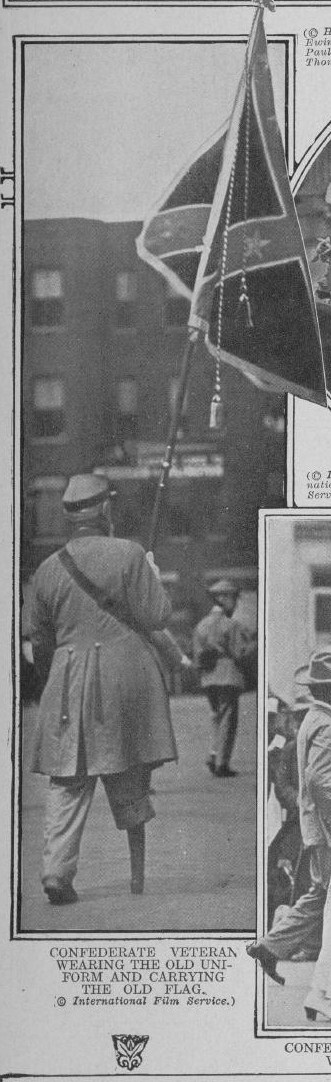
unidentified confederate-NY-Times-6-17-1917 (LOC: https://www.loc.gov/resource/sn78004456/1917-06-17/ed-1/?sp=6)

unidentified Confederate veteran

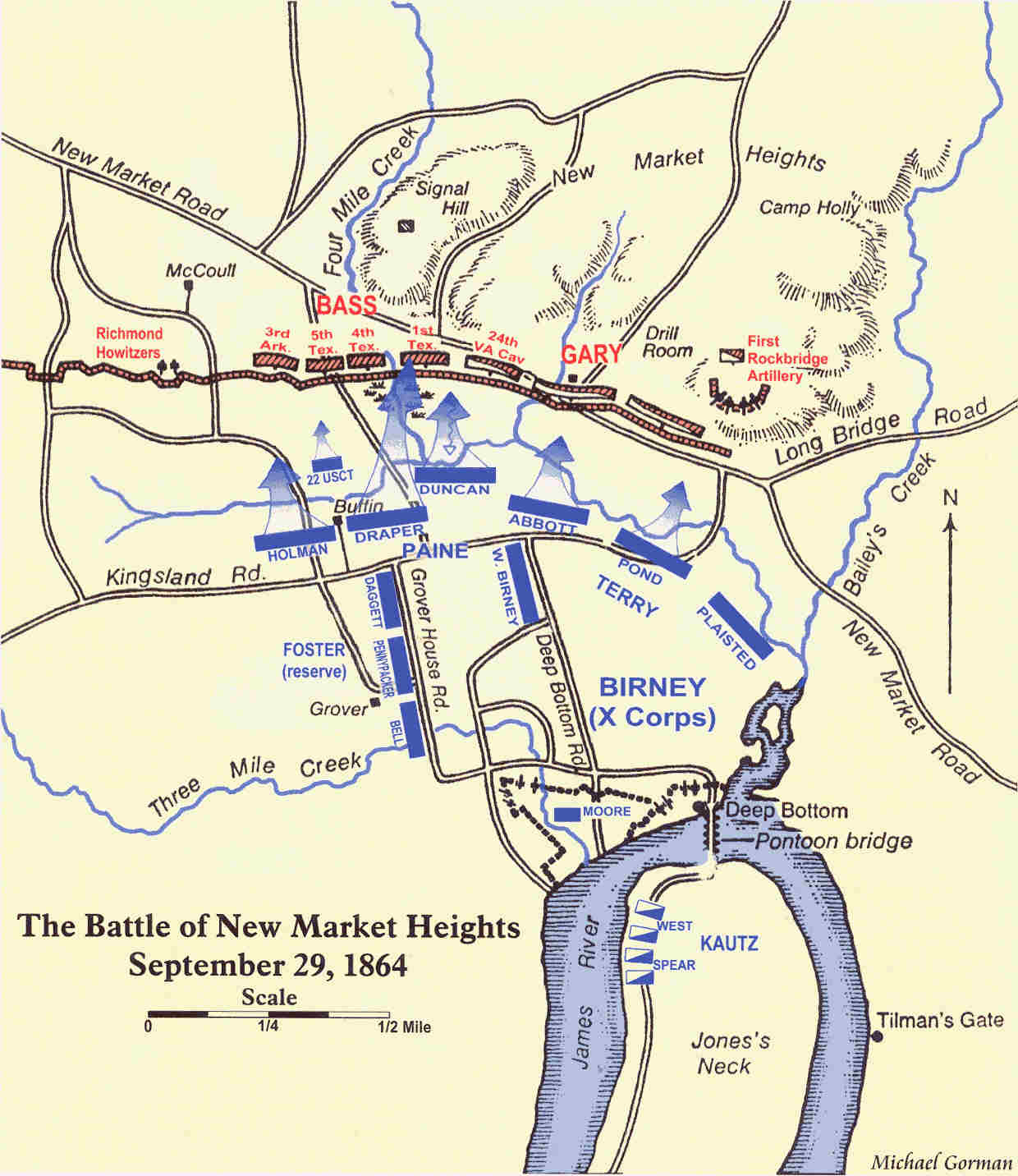
Newmamap (https://en.wikipedia.org/wiki/Battle_of_Chaffin%27s_Farm#/media/File:Newmamap.jpg)

112th in Daggett’s brigade

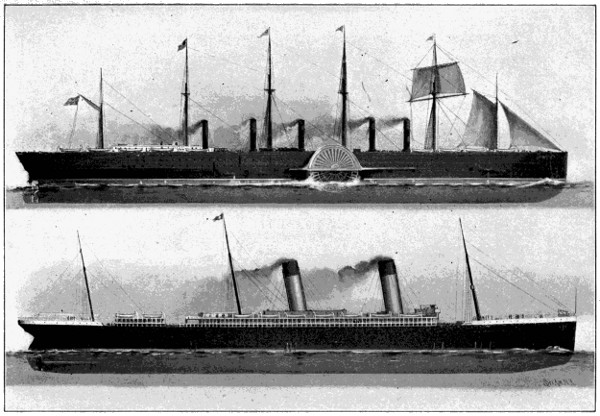
You can see portraits of Ephraim A. Ludwick at SUNY Morrisville) and the 112th New York Volunteer Infantry. The map of the Battle of Chaffin’s Farm and New Market Heights is found at Wikipedia. The images of the steam locomotive and steamships come from Edward W. Byrn’s The Progress of Invention in the Nineteenth Century (1900, at Project Gutenberg). From the Library of Congress: stagecoach; Union veterans; a Confederate veteran from the June 17, 1917 issue of The New-York Times; Currier & Ives 1876 greeting. All the material from Harper’s Weekly comes from either the December 26, 1868 or January 2, 1869 issues and can be found at the Internet Archive (1868, 1869. Page 827 in the December 26th issue describes the game-stall at Fulton market: “The sales at this stall are entirely of game and poultry, and amount to half a million of dollars per annum. It is the most enterprising and most perfect establishment of the kind in this country. In variety it is inexhaustible, including venison, duck, partridge, quail, woodcock, snipe, hare, and in fact every thing which is sought after by the most fastidious connoisseurs. It has become the resort of our most aristocratic citizens. [The illustration above represents] “the appearance which this stall presents at the season immediately preceding Christmas. The poultry for sale here comes chiefly from Bucks County, Pennsylvania; later in the season the turkeys are sent frozen from Vermont. The receipts by shipment from all parts of the country amount on average to about four tons per day. But before Thanksgiving and Christmas it is increased to about six tons. The proprietors of this stall are the largest dealers in this country, and they occasionally make shipments to Europe.”
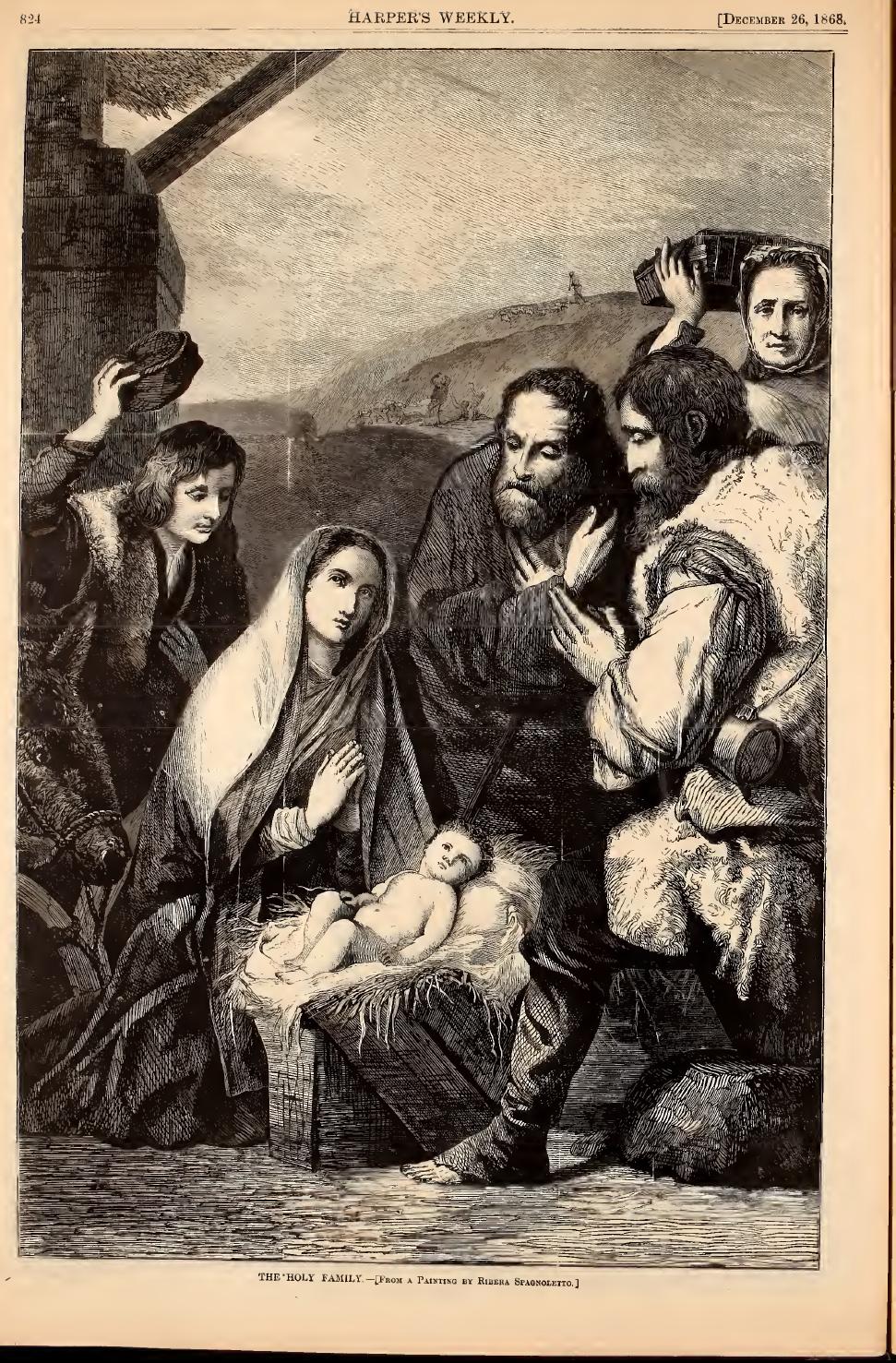
hw12-26-1868page824 (at the Internet Archive)

a family tinging “the extravagance of pastime to a soberer hue”

Merry Christmas (New York : Published by Currier & Ives, 125 Nassau St., [1876])

traditional greeting

Posted in 150 Years Ago This Week, Aftermath, Technology, Veterans, War Consequences | Tagged , , , , , , , , | Leave a comment

Khaki Christmas

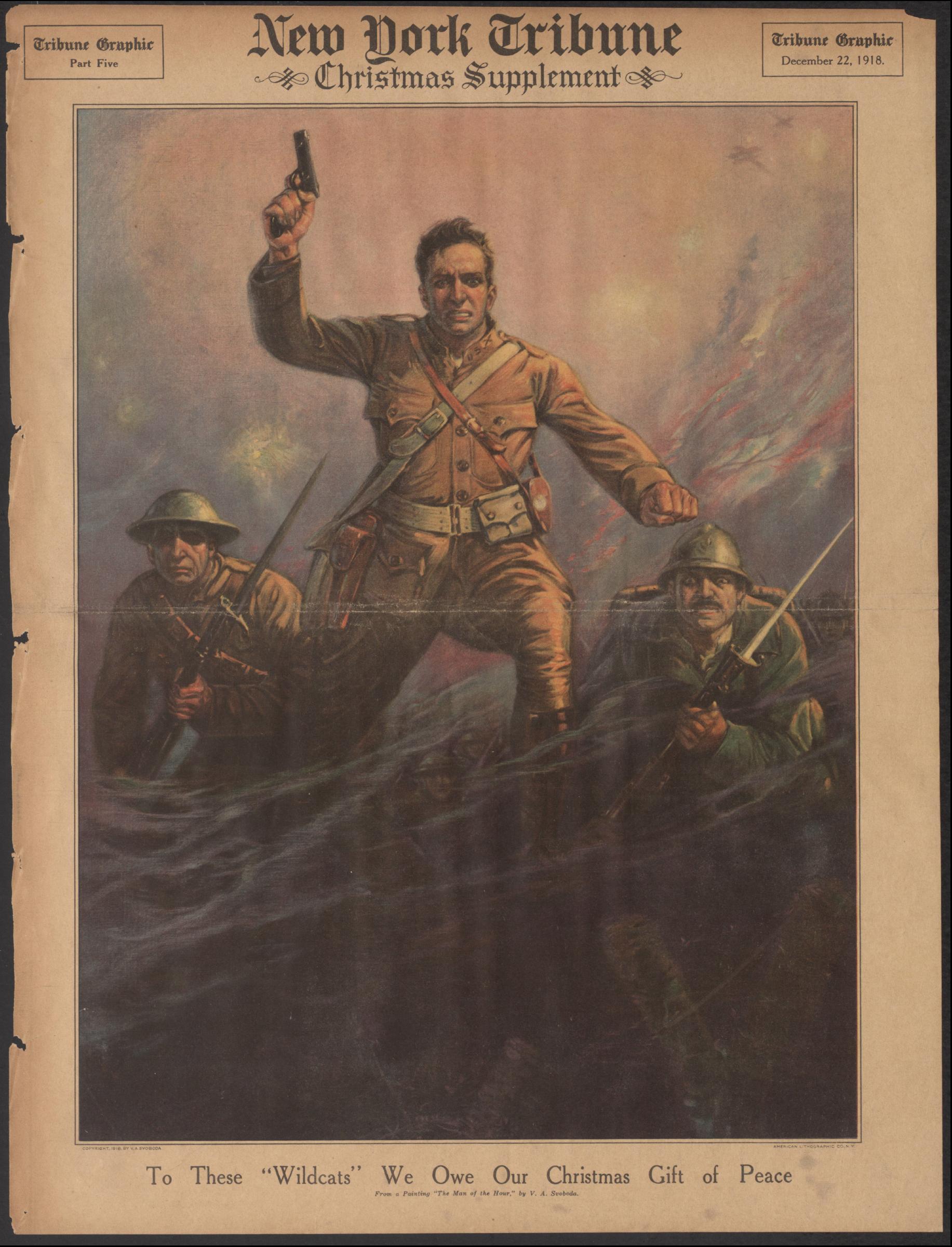
trib12-22-1918page1(LOC: https://www.loc.gov/resource/sn83030214/1918-12-22/ed-1/?st=gallery)

peacemakers

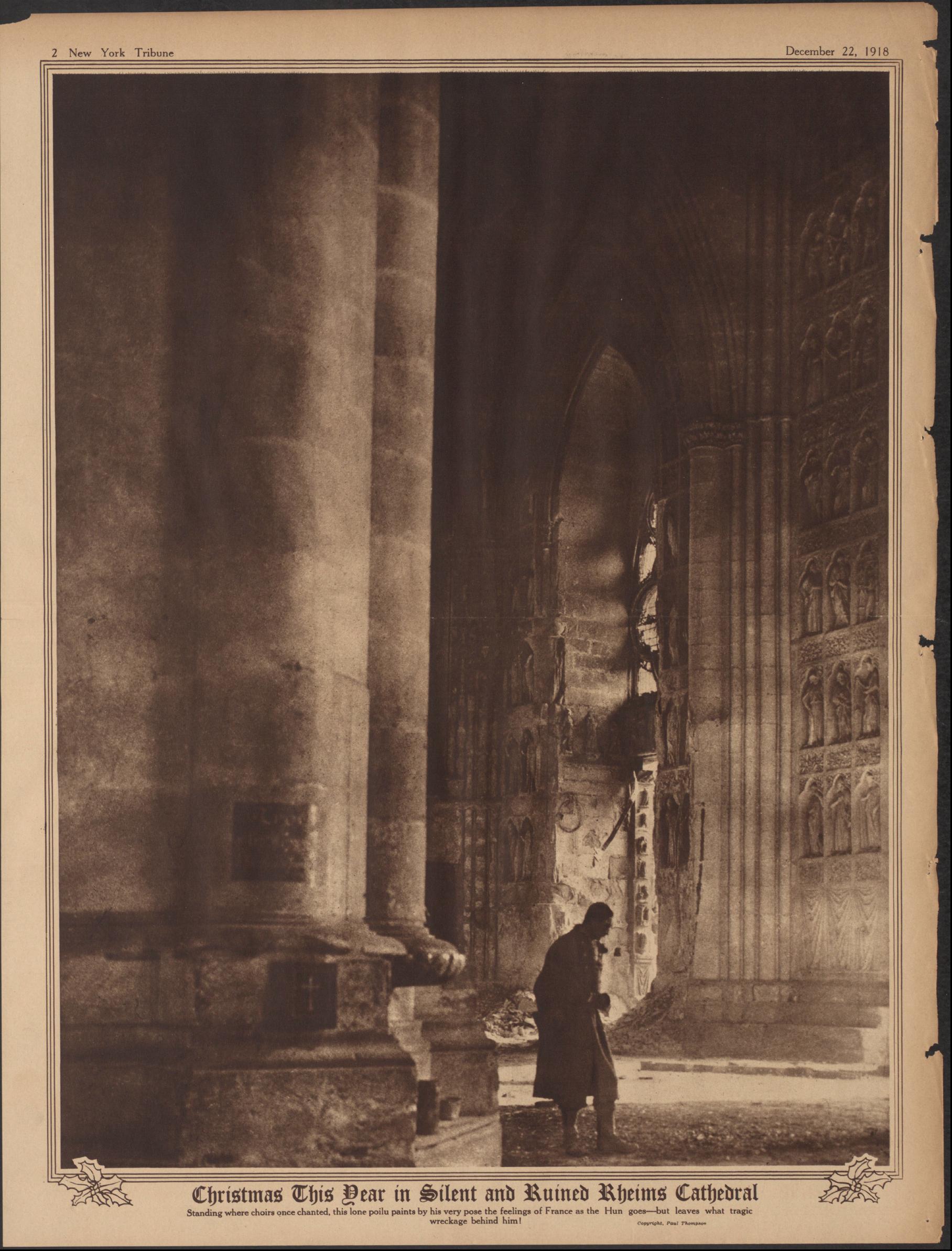
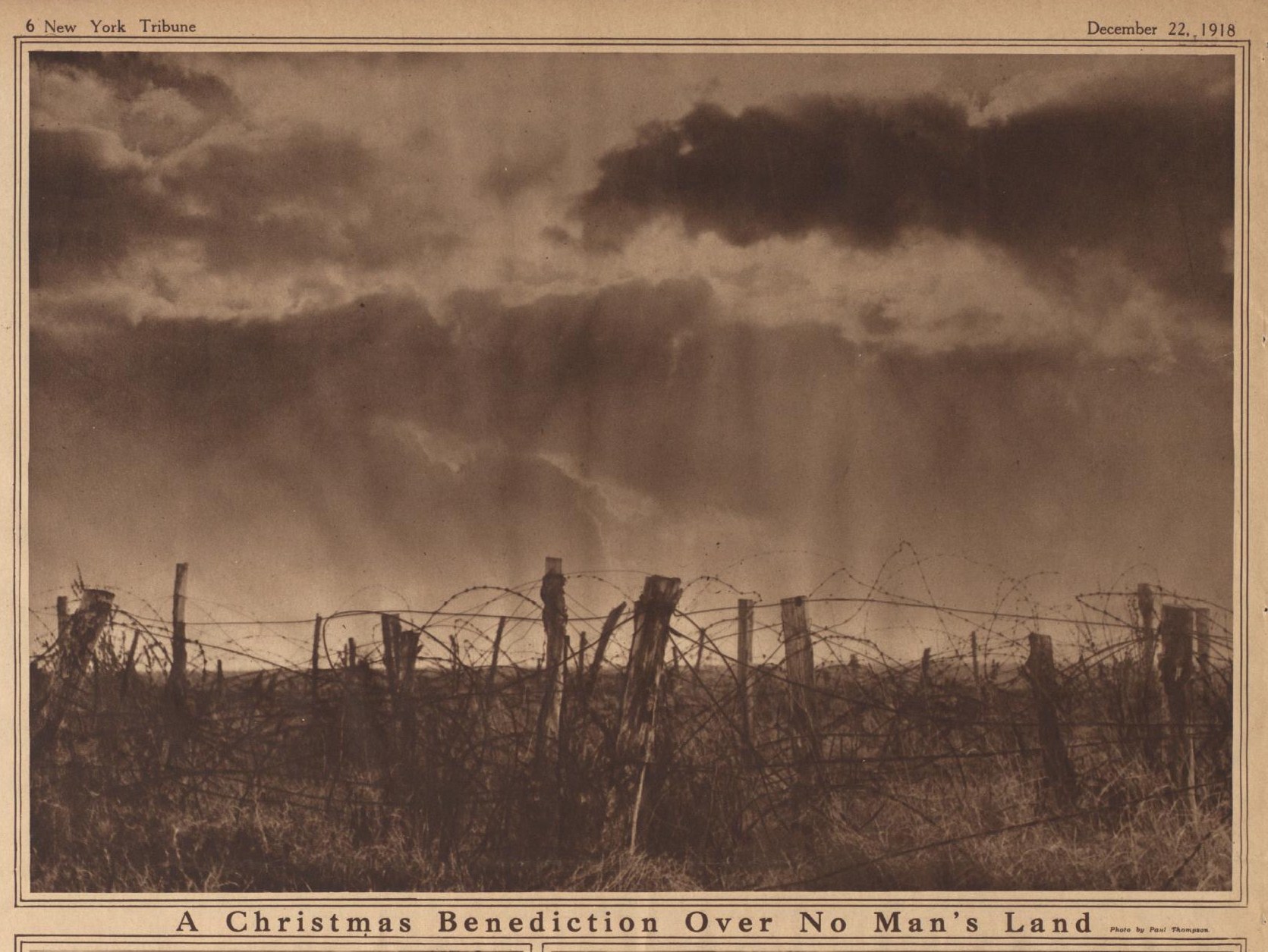
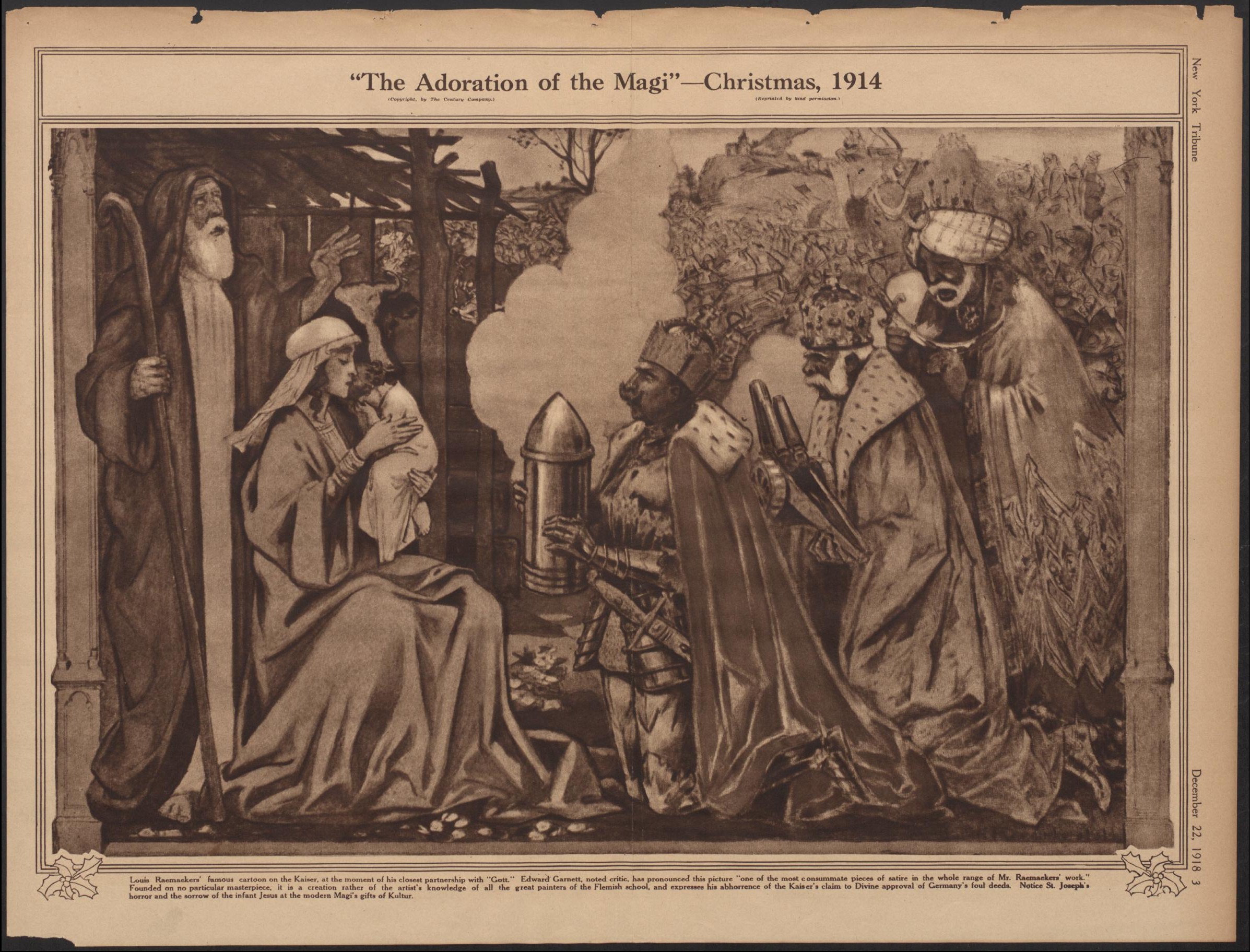
The New York Tribune didn’t think it was dreaming in its December 22, 1918 issue. Although America entered the Great War late, its military prowess did help the French-British alliance eventually subdue the German-led coalition. One of the great promises of Christmas seemed imminent. It was finally all quiet on the western front – the constant shelling, death, and destruction had ended. Of course, people were still fighting; for example, according to Wikipedia, the Russian Civil War from 1917 until at least 1923 was extremely destructive: “There were an estimated 7,000,000–12,000,000 casualties during the war, mostly civilians. The Russian Civil War has been described by some as the greatest national catastrophe that Europe had yet seen.” But there was a relative peace, especially for the United States. The other great promise – of goodwill toward humankind – that was maybe even more difficult. The Trib resurrected a cartoon from 1914 depicting Kaiser Wilhelm as one of three gift-bearing kings. Tough love might be a part of goodwill, but retribution – maybe not so much.

trib12-22-1918page2 (LOC: https://www.loc.gov/resource/sn83030214/1918-12-22/ed-1/?st=gallery)

silent night at last

trib12-22-1918page6a (LOC: https://www.loc.gov/resource/sn83030214/1918-12-22/ed-1/?st=gallery)

over by Christmas (1918)

nytrib12-22-1918page5 (LOC: https://www.loc.gov/resource/sn83030214/1918-12-22/ed-1/?st=gallery)

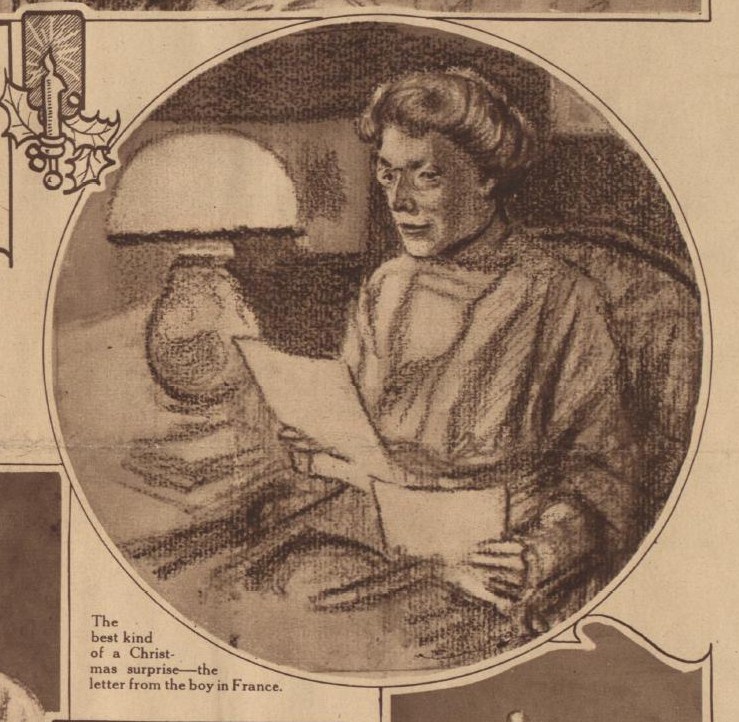
some still over there

trib12-22-1918page3 (LOC: https://www.loc.gov/resource/sn83030214/1918-12-22/ed-1/?st=gallery)

three ballistic kings

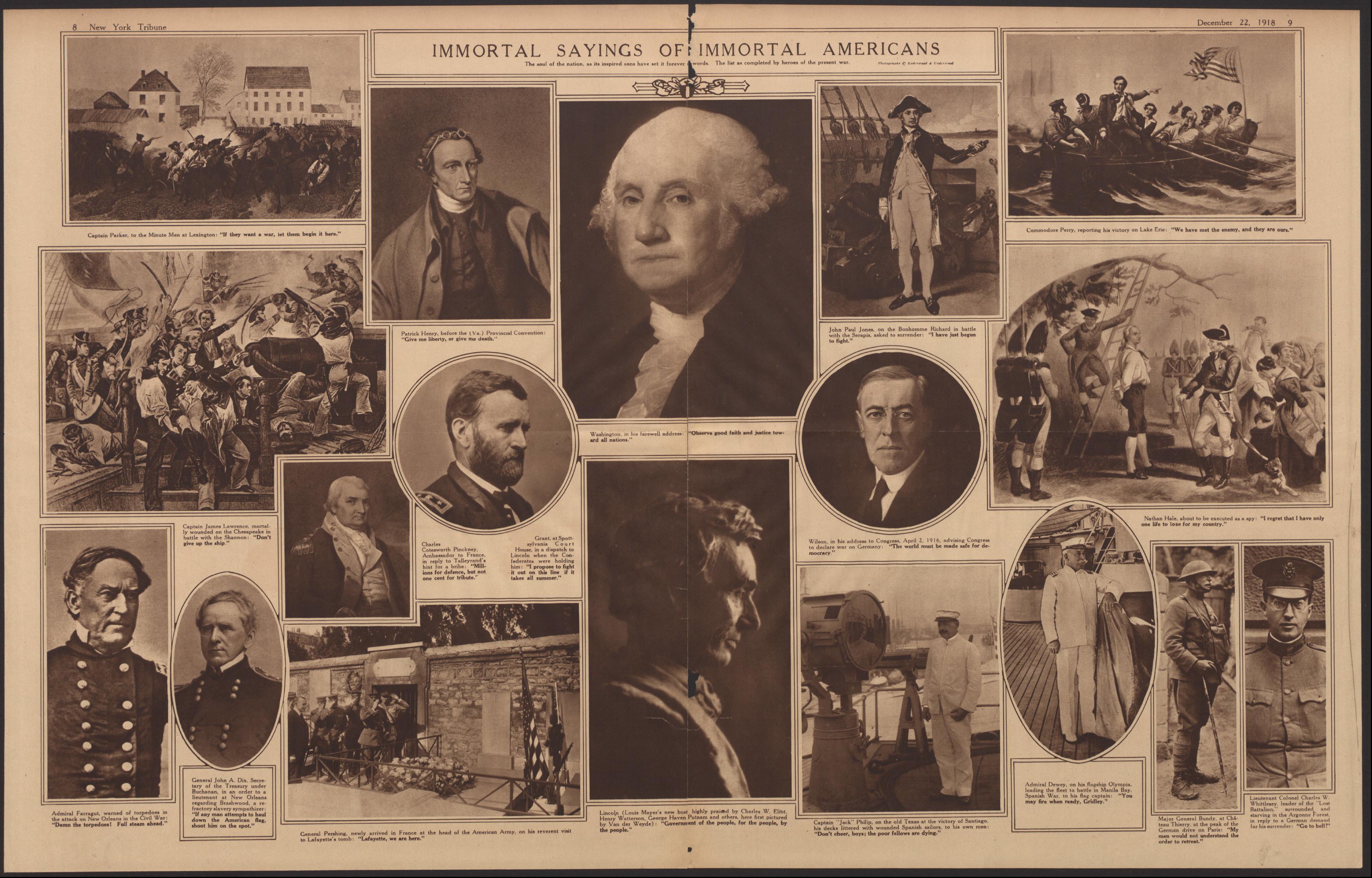
It was a Khaki Christmas tinted red, white, and blue: The Tribune devoted a two page spread to immortal quotes from famous Americans, including four from Civil War era (Union) heroes: President Lincoln, Admiral Farragut, and Generals Grant and Dix.

trib12-22-1918page8and9 (LOC: https://www.loc.gov/resource/sn83030214/1918-12-22/ed-1/?st=gallery)

a patriotic little Christmas

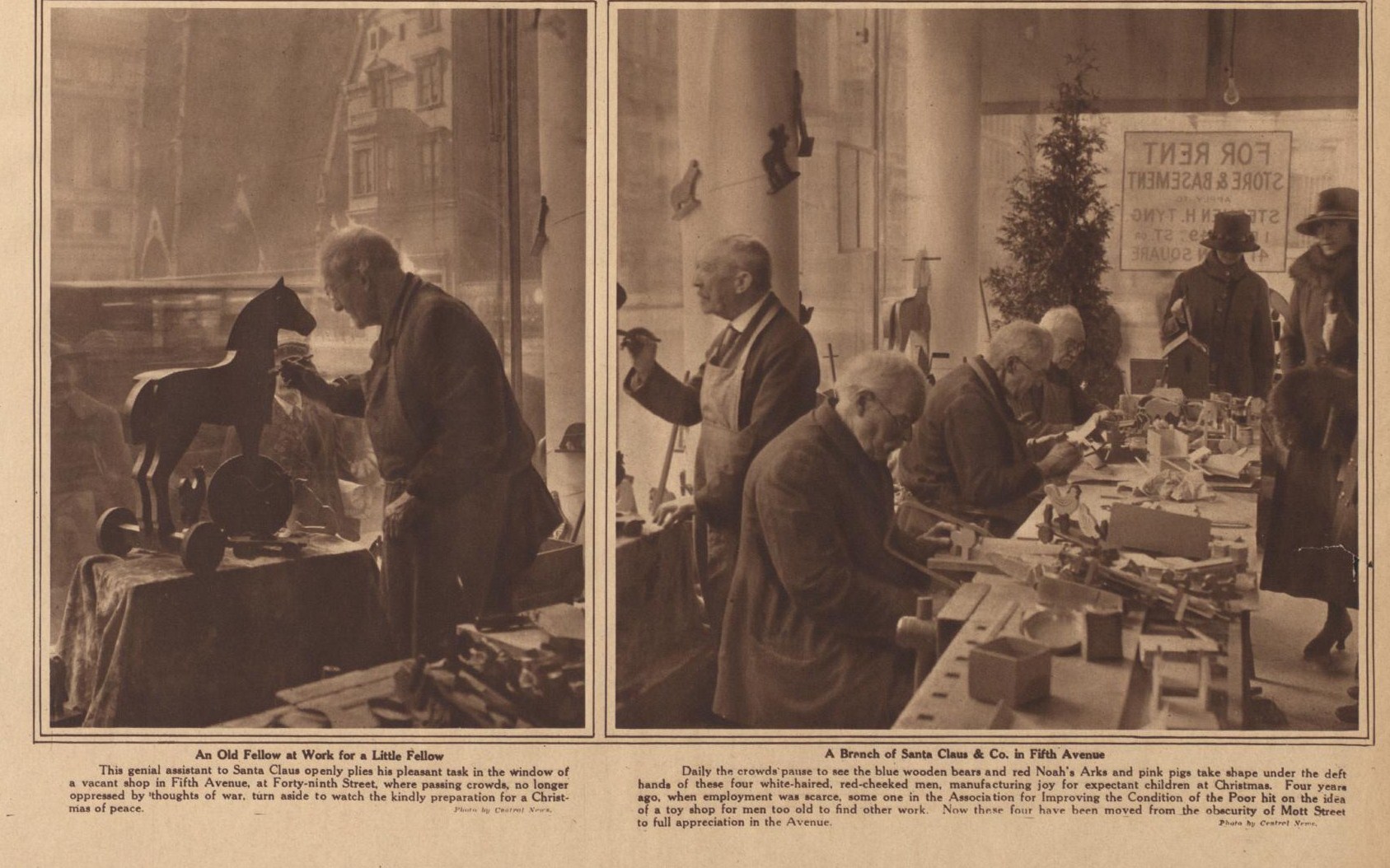
For nearly a century people knew that St. Nick was extremely busy during the month of December, so it probably isn’t surprising that in 1918 photographers found evidence that he was outsourcing some of the work. At least I’m pretty sure Fifth Avenue is a long, long way from the North Pole.

trib12-22-1918page6b (LOC: https://www.loc.gov/resource/sn83030214/1918-12-22/ed-1/?st=gallery)

jolly old elves

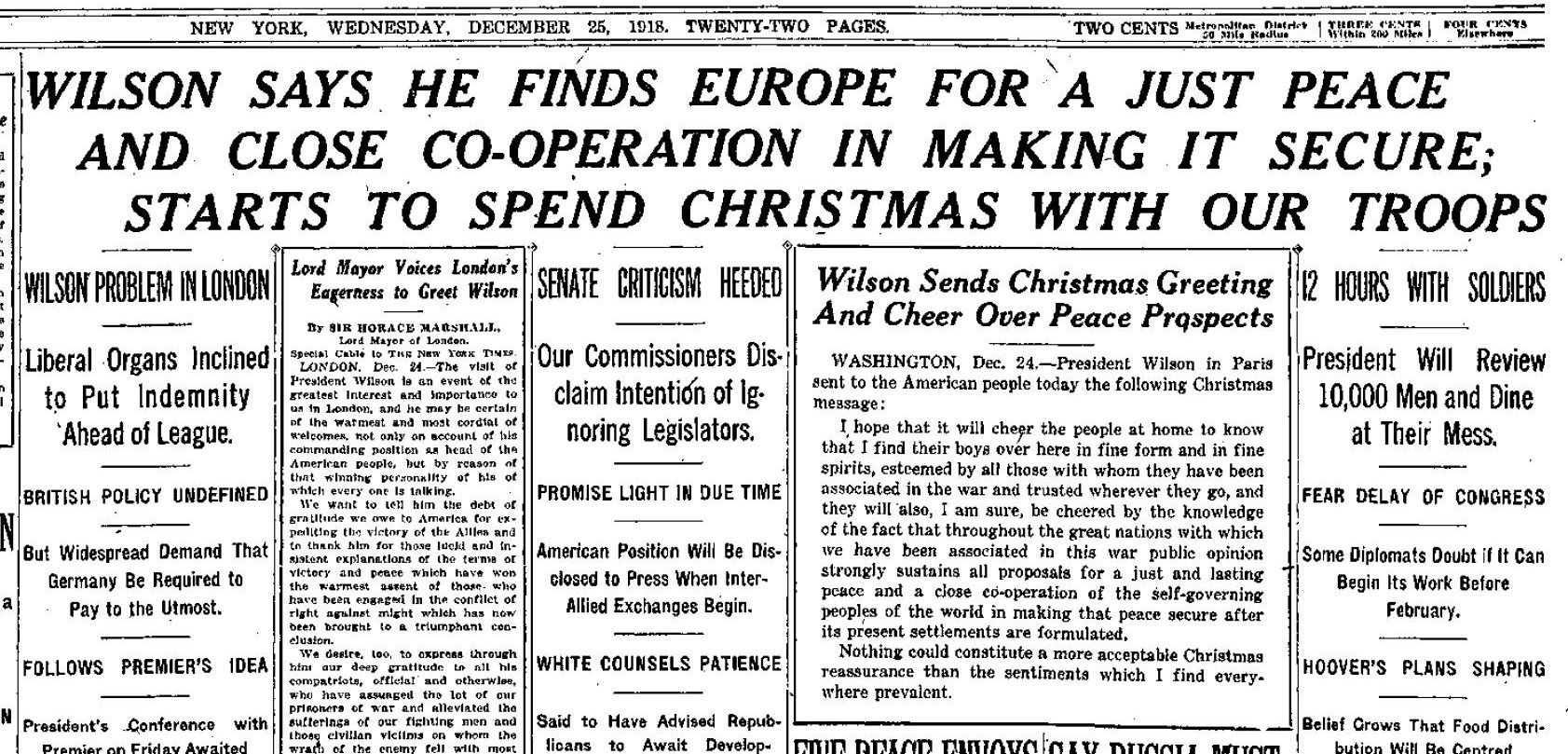
One of the great American quotations Woodrow Wilson’s about making the world safe for democracy. One hundred years ago the president was in Europe preparing for a peace conference. The December 25th issue of The New York Times included a message from President Wilson to the American people.

New York Times December 25, 1918

The New York Times December 25, 1918

All the material from the December 22, 1918 issue of the New York Tribune can be found at the Library of Congress.
The newspaper might have changed the order of Abraham Lincoln’s “people” closing to his Gettysburg Address.
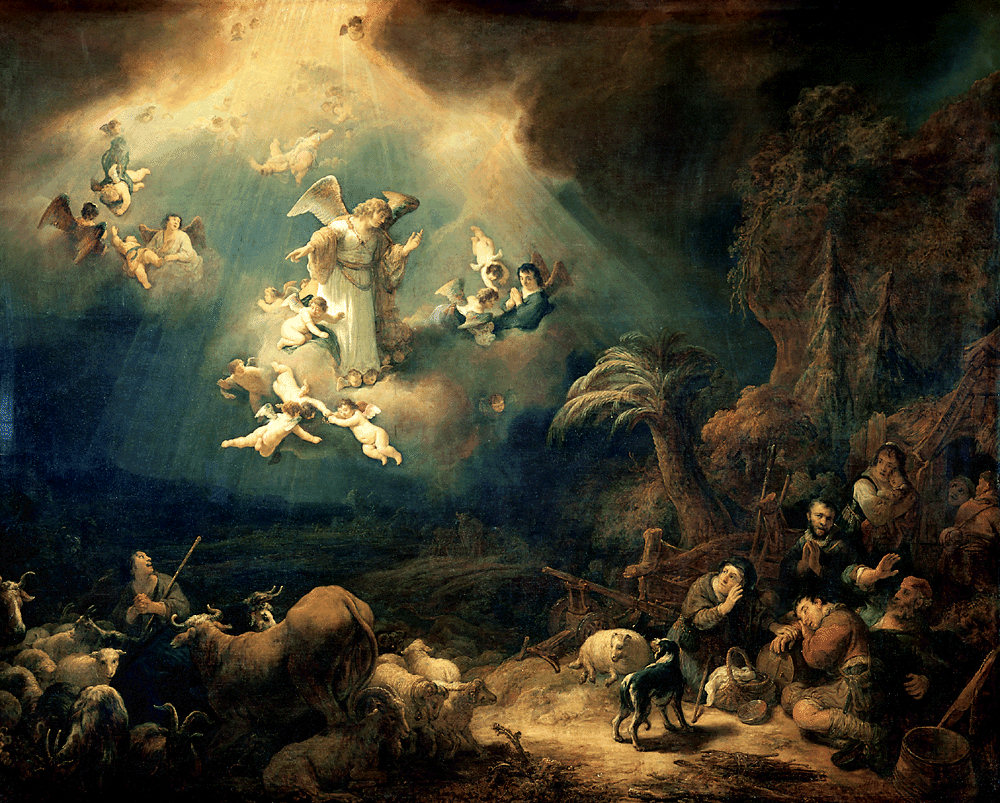
Govert Flinck’s 1639 The Angel Appearing to the Shepherds comes from Wikipedia
Govert_Flinck_-_Aankondiging_aan_de_herders (https://en.wikipedia.org/wiki/Annunciation_to_the_shepherds#/media/File:Govert_Flinck_-_Aankondiging_aan_de_herders.jpg)

a message of peace and goodwill

Posted in 100 Years Ago, World War I | Tagged , , , , , | Leave a comment

the velocipede revolution

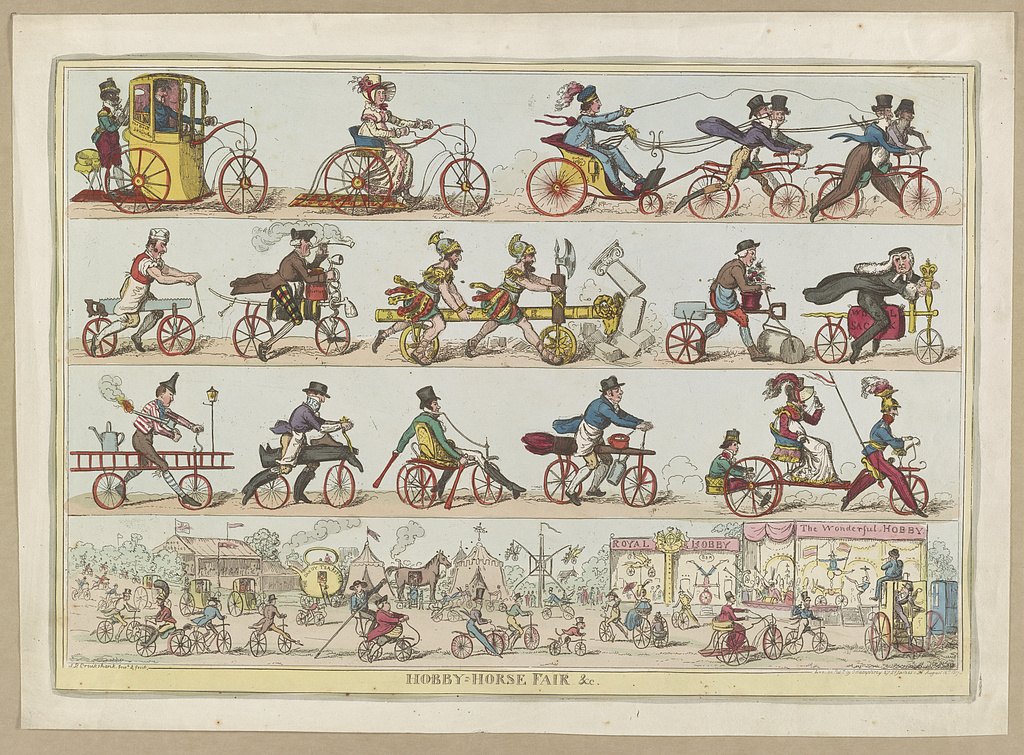
Hobby-horse fair &cc / I. R. Cruikshank, inv. & fecit. (London : Pubd. by G. Humphrey, 27 St. James's St., August 12th, 1819; LOC: https://www.loc.gov/item/2006681691/)

toeing the lines (c. 1819)

The times they are a-modernizin’. Back in April 1868 an American periodical urged better preservation of historically important places. 150 years ago this month the same paper enthusiastically described a new device – a traveling machine. It wasn’t just the very high speeds possible – up to ten miles per hour on the streets of Paris – that was so appealing; the paper consulted medical experts, who determined that there were health benefits for those who used the new contraption. Technical experts at Scientific American contrasted the new American models with the French tries. A famous preacher was an early adopter. Another man reportedly used the machine for a quicker and more enjoyable commute. Schools of instruction opened, and there were even organized races in Paris. The new device compared favorably with old technology (the four-legged type).

From the December 19, 1868 issue of Harper’s Weekly:

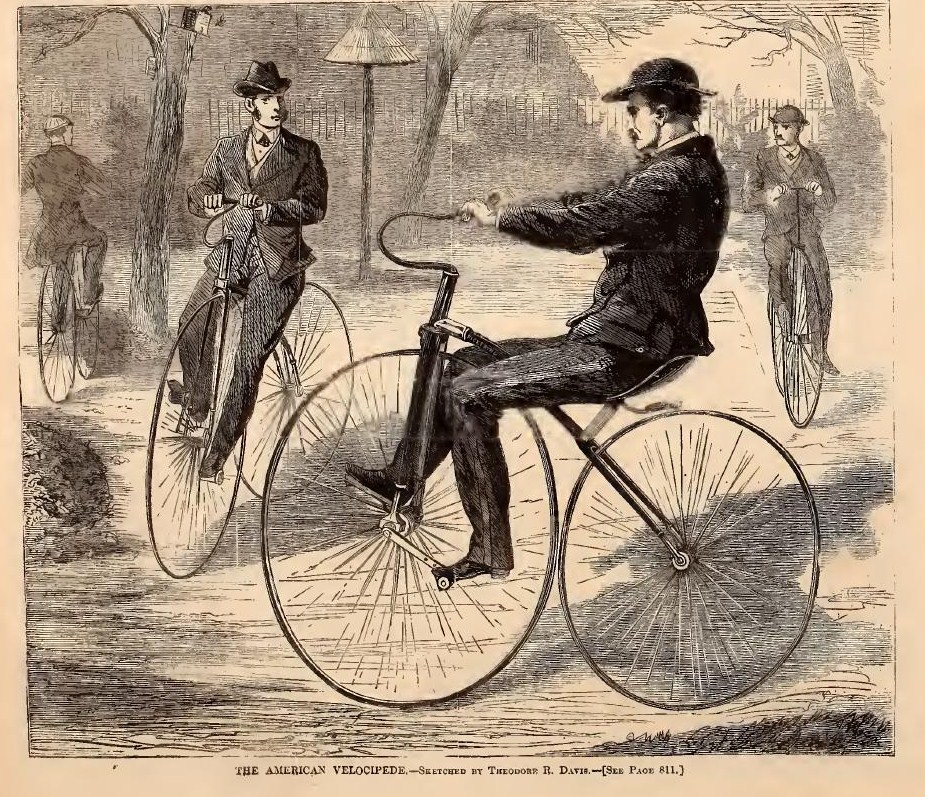
THE AMERICAN VELOCIPEDE.

SOME months have passed since we heard of the advent in Paris of a strange something on which it was possible for an active Frenchmen, furnishing his own motive power, to traverse ten miles of the streets of Paris during a single hour. It was a bicircle, a veloce. It was a two-wheeled contrivance, and something decidedly new.

There seemed to be no very definite information with reference to the machine. It was like Paris – fast; and, unlike the generality of French contrivances, seemed likely to be useful.

The fever which raged so high in France seems to have broken out in America. The veloce was inspected by ingenious Americans, and a number of professional inventors are now laboring to bring it to American completeness. A few persons in New York have the velocipede for sale, and are doing quite as driving a business as the riders of their wares.

American Velocipede hw 12-19-1868 p812 (https://archive.org/details/harpersweeklyv12bonn)

American velocipede

The machines now offered for sale are four-wheeled, three-wheeled, and two-wheeled. The first two may be used tolerably well during a first trial, but the two-wheeled affair needs acquaintance before one may ride it successfully. Then it is incomparably the best, for its movement is graceful and easy. The power required for driving it is but little, when the machine is properly made. Of the various velocipedes yet produced the American seems to be the best, for various reasons. It does not, like the French machine, contract the chest; it is simpler, lighter, and withal stronger and more durable. The constructor took great pains to obviate the decided objection to the French machine – that of retarding rather than assisting the development of the chest – and constructed his patterns under the advice of one of the best surgeons in New York, who, with others, now recommends the velocipede as an excellent means for healthful pleasure. The Scientific American says: “The reach, or frame, is made of hydraulic tubing. PICKERING’S is made by gauge, just as sewing-machines, Waltham watches, and Springfield muskets are made, so that when any part wears out or is broken it may be replaced at an hour’s notice. Its bearings are of composition or gun metal, and the reach or frame is tubular, giving both lightness and strength. The hub of the hind wheel is bushed with metal, and the axle constitutes its own oil-box. It differs from the French veloce in the arrangement of the tiller, which is brought well back and is sufficiently high to allow of a perfectly upright position in riding. The stirrups or crank pedals are three-sided, with circular flanges at each end; and, as they are fitted to turn on the crank pins, the pressure of the foot will always bring one of the three sides into proper position. They are so shaped as to allow of the use of the fore part of the foot, bringing the ankle joint into play, relieving the knee, and rendering propulsion much easier than when the shank of the foot alone is used, as in propelling the French vehicle. The connecting apparatus differs from that of the French bicycle in that the saddle bar serves only as a seat and a brake, and is not attached to the rear wheel. By a simple pressure forward against the tiller, and a backward pressure against the tail[?] of the saddle, the saddle-spring is compressed and the brake attached to it brought firmly down upon the wheel.”

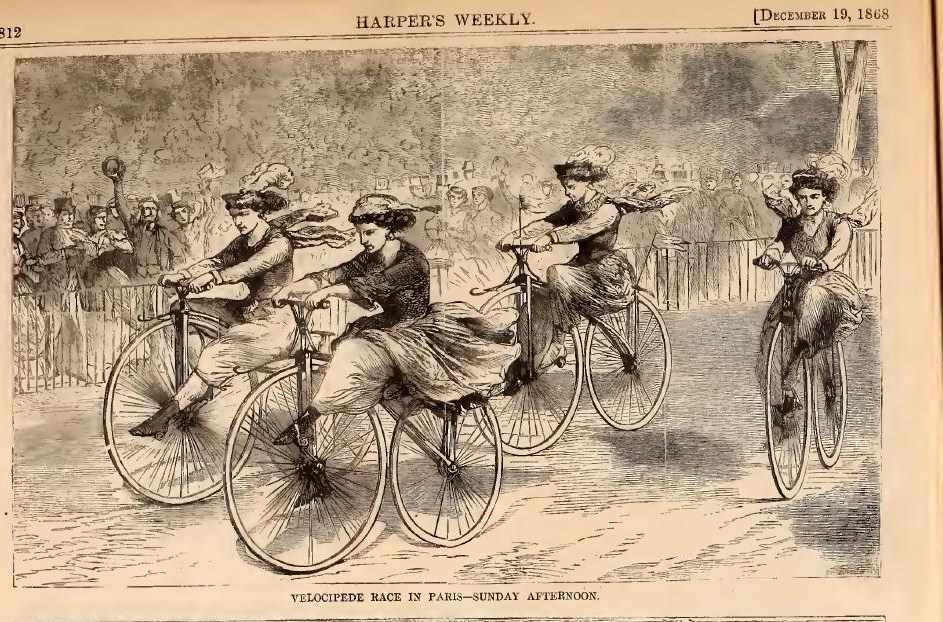
Paris race hw 12-19-1868 p812 ( v)

breaking the four minute mile?

A number of persons in this city and its vicinity are already making use of the velocipede as a means of traversing the distance from their homes to and from their places of business. One gentleman takes his ride of nearly ten miles daily, and saves time as well as enjoying the ride. The Rev. HENRY WARD BEECHER has secured two of the American machines, and other gentlemen, well known in the literary and artistic world, are possessed of their magic circles.

Schools for the instruction of velocipede-riding are being opened. Youngsters ride down Fifth Avenue with their school-books strapped in front of their velocipedes, and expert riders cause crowds of spectators to visit the public squares, which afford excellent tracks for the light wheels to move swiftly over.

The best speed thus far attained is a mile in a few seconds less than four minutes. In Paris the Americans carried off the prizes, as well for slow as fast riding. The slow riding is much the more difficult, as it is far easier for the rider to keep his equilibrium in a rapid ride than while moving slowly – just as in the case of a boy driving his hoop, the faster it goes the more direct is its line. To ride a velocipede well is much less difficult than to learn to skate, and the danger of a fall is not imminent. The present scale of prices demanded by dealers is about the same, ranging from sixty to one hundred dollars.

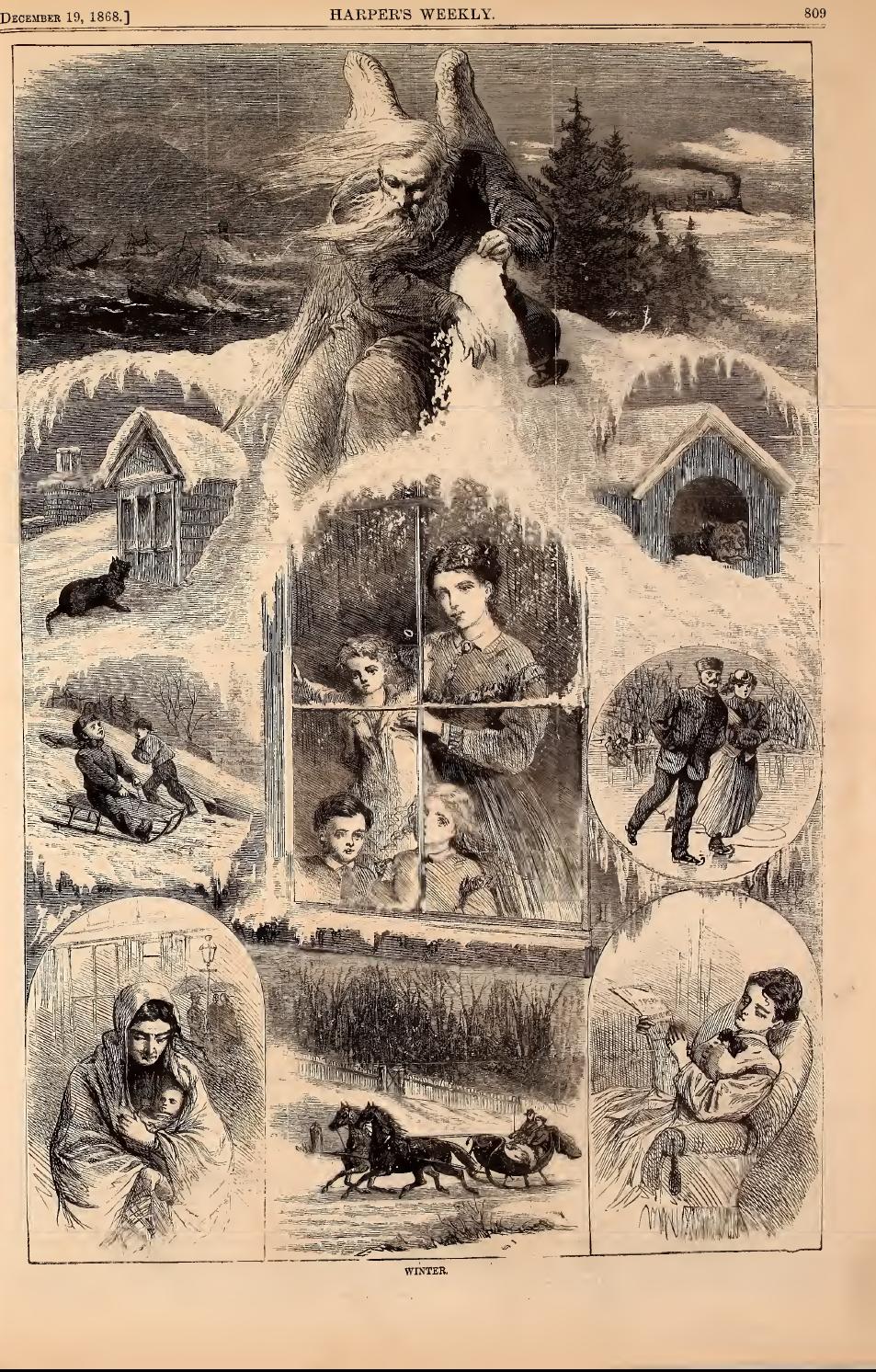
winter hw12-19-1868p809 (https://archive.org/details/harpersweeklyv12bonn)

not favorable for making velocipede’s acquaintance

“A horse costs more, and will eat, kick, and die; and you cannot stable him under your bed,” remarked an expert rider to a friend.

The weight of a medium-sized velocipede is about sixty pounds, and the size of driving wheel most in favor from 30 to 36 inches in diameter. The springs of the vehicle are so arranged as to make it ride easily over a tolerably rough pavement. A fair country road is a good a track as one could desire; but hills of more than one foot ascent in twenty cannot be climbed without dismounting and leading the machine.

The winter season is not favorable to veloce-riding, but with opening of spring we may expect to see the two-wheeled affairs gliding gracefully about the streets and whizzing swiftly through the smooth roads of the Park.

According to Edward W. Byrn’s The Progress of Invention in the Nineteenth Century (1900, at Project Gutenberg), before mid-century cycling devices required striking the toes on pavement for propulsion (like a modern skateboard). Pedals began being used extensively after 1866. People enthusiastically took to the velocipede, even though their heavy wooden wheels made them “bone-shakers”:

However superior to other animals man may be in point of intellect, it must be admitted that he is vastly inferior in his natural equipment for locomotion. Quadrupeds have twice as many legs, run faster, and stand more firmly. Birds have their two legs supplemented with wings that give a wonderfully increased speed in flight, and fish, with no legs at all, run races with the fastest steamers; but man has awkwardly toddled on two stilted supports since prehistoric time, and for the first year of his life is unable to walk at all. That he has felt his inferiority is clear, for his imagination has given wings to the angels, and has depicted Mercury, the messenger of the gods, with a similar equipment on his heels. We see the ambition for speed exemplified even in the baby, who crows in exhilaration at rapid movement, and in the boy when the ride on the flying horses, the glide on the ice, or the swift descent on the toboggan slide, brings a flash to his eye and a glow to his cheeks.

A characteristic trend of the present age is toward increased speed in everything, and the most conspicuous example of accelerated speed in late years is the bicycle. It has, with its fascination of silent motion and the exhilaration of flight, driven the younger generation wild with enthusiasm, has limbered up the muscles of old age, has revolutionized the attire of men and women, and well-nigh supplanted the old-fashioned use of legs. It is the most unique and ubiquitous piece of organized machinery ever made. The thoroughfares and highways of civilization fairly swarm with thousands of glistening and silently gliding wheels. It is to be found everywhere, even to the steppes of Asia, the plains of Australia, and the ice fields of the Arctic.

The true definition of the bicycle is a two-wheeled vehicle, with one wheel in front and the other in the rear, and both in the same vertical plane. Its life principle is the physical law that a rotating body tends to preserve its plane of rotation, and so it stands up, when it moves, on the same principle that a top does when it spins or a child’s hoop remains erect when it rolls.

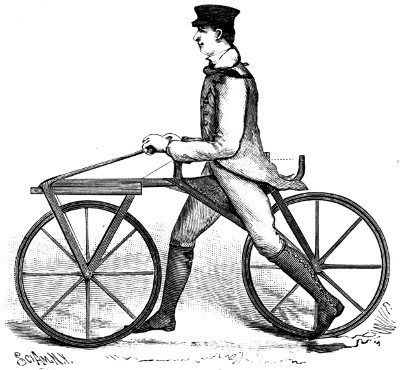
FIG. 180.—THE DRAISINE, 1816. (http://www.gutenberg.org/files/41538/41538-h/41538-h.htm page 270)

FIG. 180.—THE DRAISINE, 1816.

A form of carriage adapted to be propelled by the muscular effort of the rider was constructed and exhibited in Paris by Blanchard and Magurier, and was described in the Journal de Paris as early as July 27, 1779, but the true bicycle was the product of the Nineteenth Century. It was invented by Baron von Drais, of Manheim-on-the Rhine. See Fig. 180. It consisted of two wheels, one before the other, in the same plane, and connected together by a bar bearing a saddle, the front wheel being arranged to turn about a vertical axis and provided with a handle for guiding. The rider supported his elbows on an arm rest and propelled the device by striking his toes upon the ground, and in this way thrusted himself along, while guiding his course by the handle bar and swivelling front wheel. This machine was called the ā€œDraisine.ā€ It was patented in France for the Baron by Louis Joseph Dineur, and was exhibited in Paris in 1816. In 1818 Denis Johnson secured an English patent for an improved form of this device, but the principle of propulsion remained the same. This device, variously known as the ā€œDraisine,ā€ ā€œvĆ©locipĆØde,ā€ ā€œcĆ©lĆ©rifĆØre,ā€ ā€œpedestrian curricle,ā€ ā€œdandy horse,ā€ and ā€œhobby-horse,ā€ was introduced in New York in 1819, and was greeted for a time with great enthusiasm in that and other cities.

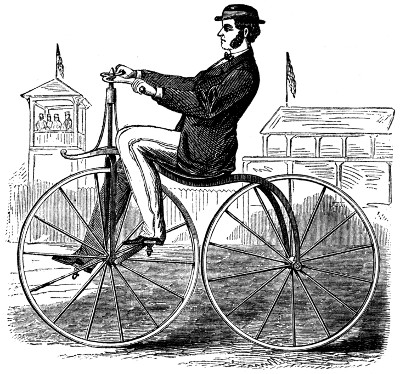
FIG. 181.—VELOCIPEDE OF 1868. (http://www.gutenberg.org/files/41538/41538-h/41538-h.htm page 271)

FIG. 181.—VELOCIPEDE OF 1868.

On June 26, 1819, William K. Clarkson was granted a United States patent for a vĆ©locipĆØde, but the records were destroyed in the fire of 1836. In 1821 Louis Gompertz devised an improved form of ā€œhobby-horse,ā€ in which a vibrating handle, with segmental rack engaging with a pinion on the front wheel axle, enabled the hands to be employed as well as the feet in propelling the machine. Such devices all relied, however, upon the striking of the ground with the toes. Their fame was evanescent, however, and for forty years thereafter little or no attention was paid to this means of locomotion, except in the construction of children’s carriages and velocipedes having three or more wheels.

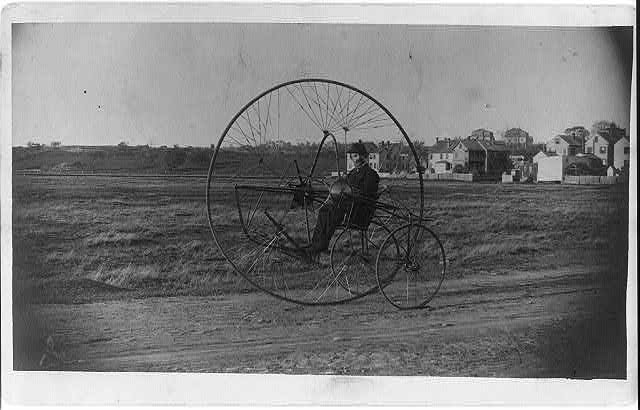
In 1855 Ernst Michaux, a French locksmith, applied, for the first time, the foot cranks and pedals to the axle of the drive wheel. A United States patent, No. 59,915, taken Nov. 20, 1866, in the joint names of Lallement and Carrol, represented, however, the revival of development in this field. Lallement was a Frenchman, and built a machine having the pedals on the axle of the drive wheel, and it was at one time believed that it was he who deserved the credit for this feature, but it is claimed for Michaux, and the monument erected by the French in 1894 to Ernest and Pierre Michaux at Bar le Duc gives strength to the claim. The bicycle, as represented at this stage of development, is shown in Fig. 181. In 1868-’69 machines of this type went extensively into use. Bicycle schools and riding academies appeared all through the East, and notwithstanding the excessive muscular effort required to propel the heavy and clumsy wooden wheels, the old ā€œbone-shakerā€ was received with a furor of enthusiasm. …

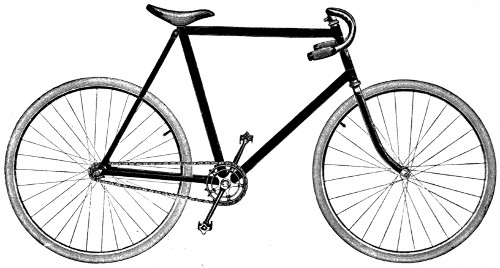
And the innovations continued during the rest of the century, including the sprocket chain and pneumatic tire, until the “safety” bicycle appeared: “Its diamond frame of light but strong tubular steel, its ball bearings, its suspension wheels and pneumatic tires impart to the modern bicycle strength with lightness, and beauty with efficiency, to a degree scarcely attained by any other piece of organized machinery designed for such trying work.” By 1899 a bicycle broke a one minute mile behind a train’s wind break.

FIG. 184.—MODERN ā€œSAFETY.ā€ (http://www.gutenberg.org/files/41538/41538-h/41538-h.htm page 274)

FIG. 184.—MODERN ā€œSAFETY.ā€

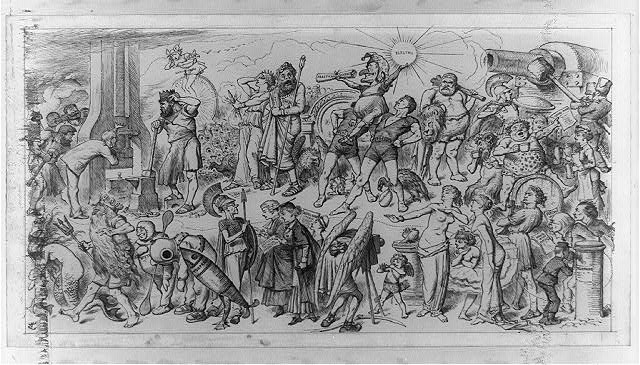
Mr. Byrn’s book combines the bicycle and the automobile in one chapter. He saw the auto as liberating for the horse: “It is not probable that man will ever be able to get along without the horse, but the release of the noble animal from the bondage of city traffic, which was begun only a few years ago with mechanical street car propulsion, promises now to be extensively advanced by the substitution of the motor carriage and the auto-truck for team-drawn vehicles. The rapidity with which this industry has grown, and its promise for the future may be realized when it is remembered that so far as practical results are concerned it has all grown up in the last decade of the Nineteenth Century …
A recent issue of Parade asked celebrities for their most treasured gift. Nancy McKeon said, ā€œMy bicycle. If you had a bike, you had some freedom.ā€
My mind started clouding over when I read the Scientific American’s technical details, but I sure am thankful the bicycle had been invented by the time I was growing up.
According to the Smithsonian the wheel was unlike most human invention – it was not inspired by nature. The first human use of the wheel was for making pottery not for locomotion.
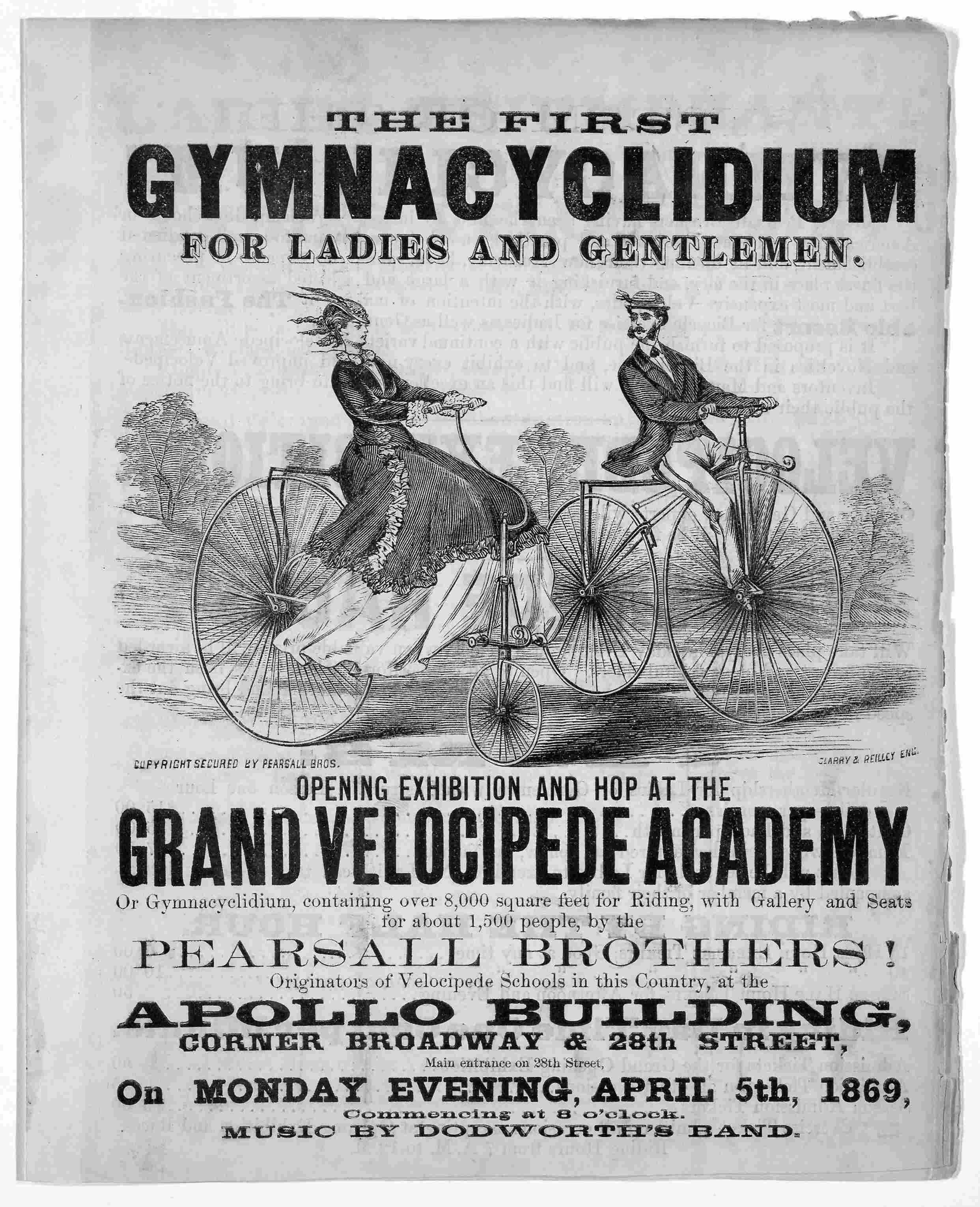
gymnacyclidium (New York, 1869. ; LOC: https://www.loc.gov/item/98131173/)

promoting a
co-educational institution

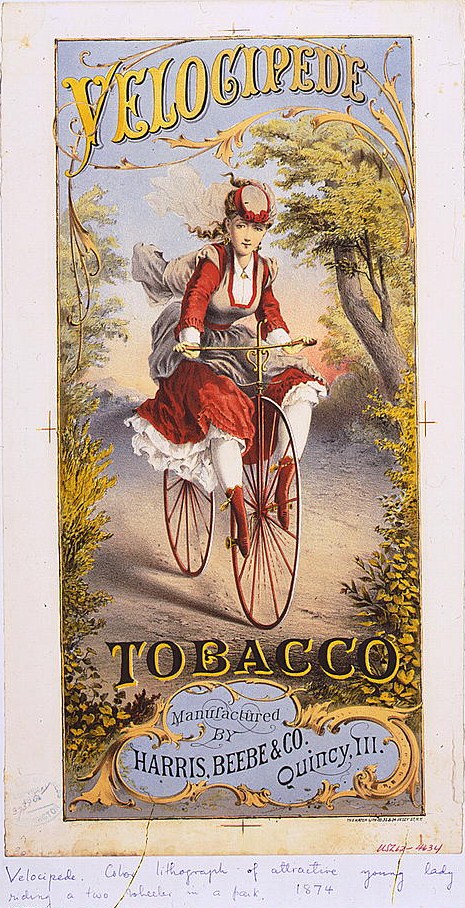
Velocipede tobacco--Manufactured by Harris, Beebe & Co. Qunicy, Ill. / The Hatch Lith. Co. 32 & 34 Vesey St. N.Y. (c1874. ; LOC: https://www.loc.gov/item/96504699/)

speed sells

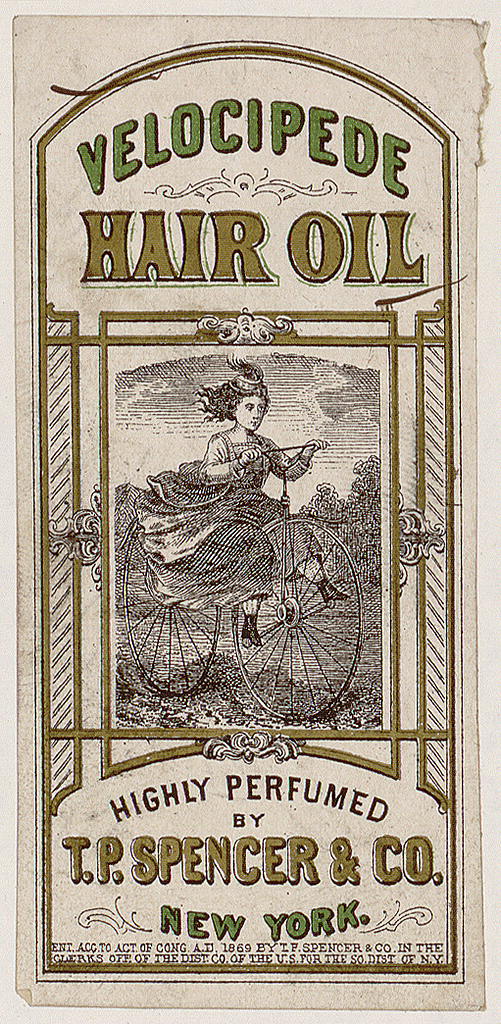
Velocipede hair oil - highly perfumed by T.P. Spencer & Co., New York (c1869; LOC: v)

freedom sells

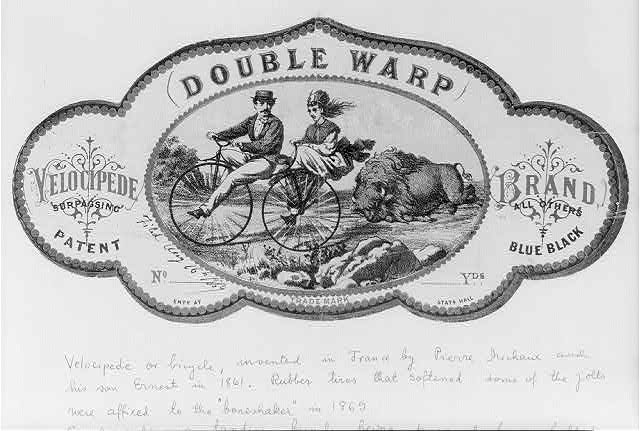
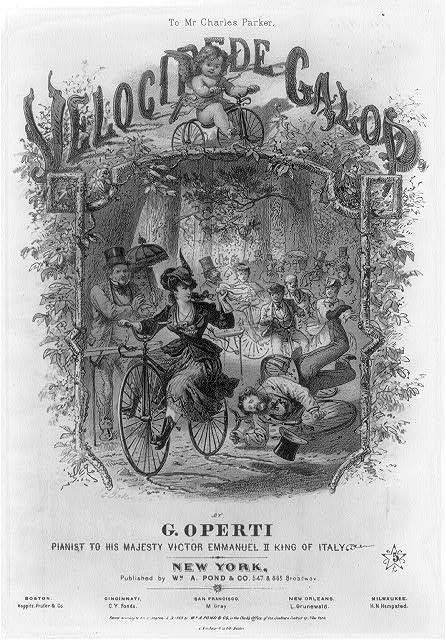
All the Harper’s Weekly material comes from the Internet Archive. From the Library of Congress: Hobby Horse Fair; gymnacyclidium; tobacco label; hair oil label; brace – I can’t tell if they are selling fashion and/or safety; double warp – according to the handwriting on the print, “Rubber tires that softened some of the jolts were affixed to the ‘boneshaker’ in 1868”; tune; exercising Quakers; a tricycle from 1882; Given Byrn’s description of Mercury in the first paragraph above, I added 1879’s Prometheus unbound; or, science in Olympus, which depicts “the messenger Mercury, wearing a winged helmet and holding a caduceus, rides a velocipede while listening into the receiver of a telephone.”
I gotta make some time to re-listen to that Billy Preston dong after decades. Youtube will probably be able to help me out.
Velocipede brace / lith. of Henry Seibert & Bros. Ledger Building [cor. Wi]lliam & Spruce Sts. ([New York] : Lith. of Henry Seibert & Bros. Ledger Building [cor. Wi]lliam & Spruce Sts. [N.Y.], [1869]; LOC: https://www.loc.gov/item/2017651501/)

but missing a helmet?

Double-warp Velocipede Brand (c.1869; LOC: https://www.loc.gov/item/2001701486/)

velocipede built for two?

Velocipede galop, op. 134 (William A. Pond & Co., New York, 1869. ; LOC: https://www.loc.gov/item/ihas.100002764/)

1869 sheet music

The spirit moving the Quakers upon worldly vanities!! / Yedis, invt. ([London] : Pubd. by J Sidebethem, 287 Strand, 1819. ; LOC: https://www.loc.gov/item/2006689059/)

Quakers of London (1819)

Prometheus unbound; or, science in Olympus (1879; LOC: https://www.loc.gov/item/2009617455/)

Mercury – a distracted velocipede driver

View of Oldreive's new tricycle, or the New Iron Horse, with a gentleman inside (c1882; LOC: https://www.loc.gov/item/2003654884/)

Will it go round in circles?

Posted in 150 Years Ago, 150 Years Ago This Month, Postbellum Society, Technology | Tagged , , , | Leave a comment

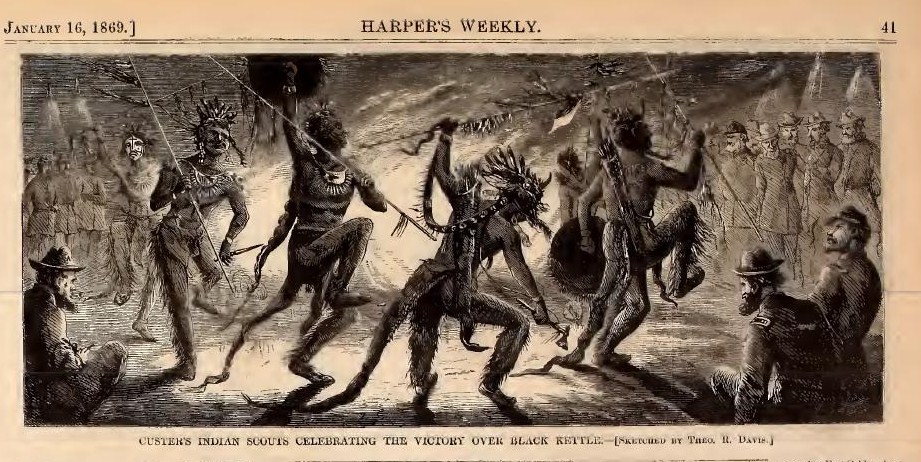
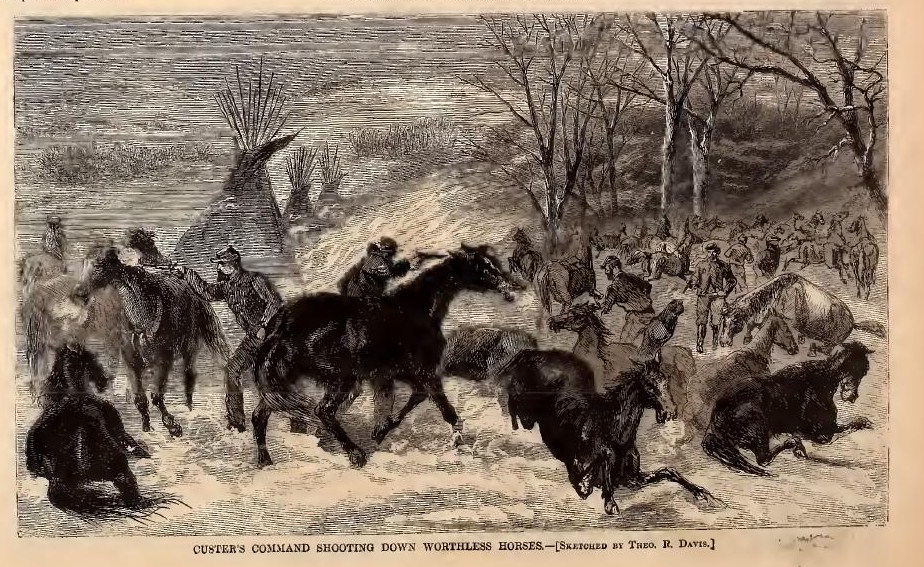
Custer vs. Black Kettle

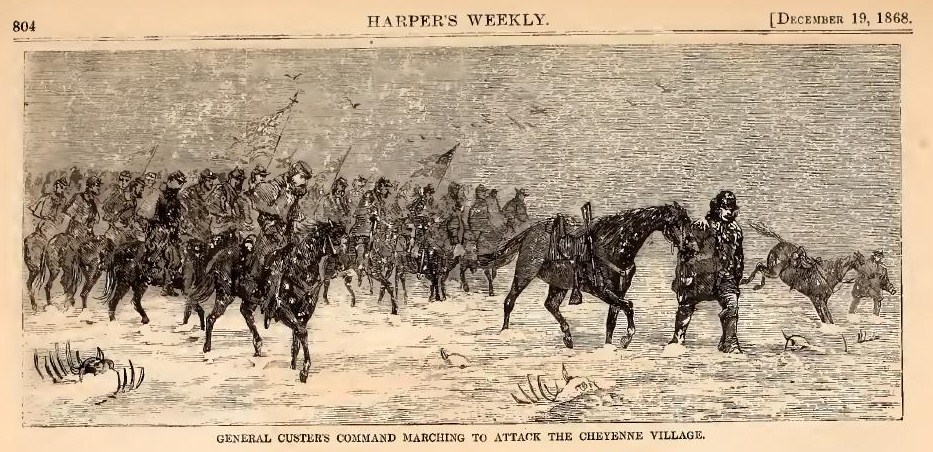
hw 12-19-1868 p804a(https://archive.org/details/harpersweeklyv12bonn)

“in search of hostile Indians”

From the December 19, 1868 issue of Harper’s Weekly:

THE INDIAN WAR.

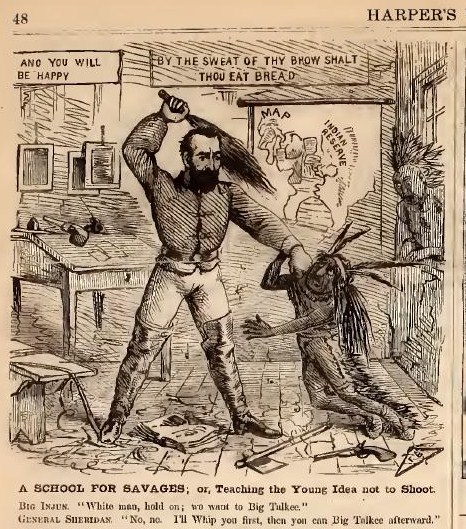
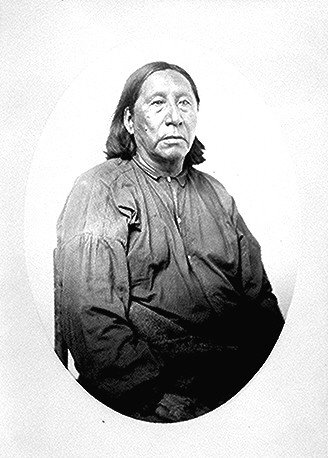
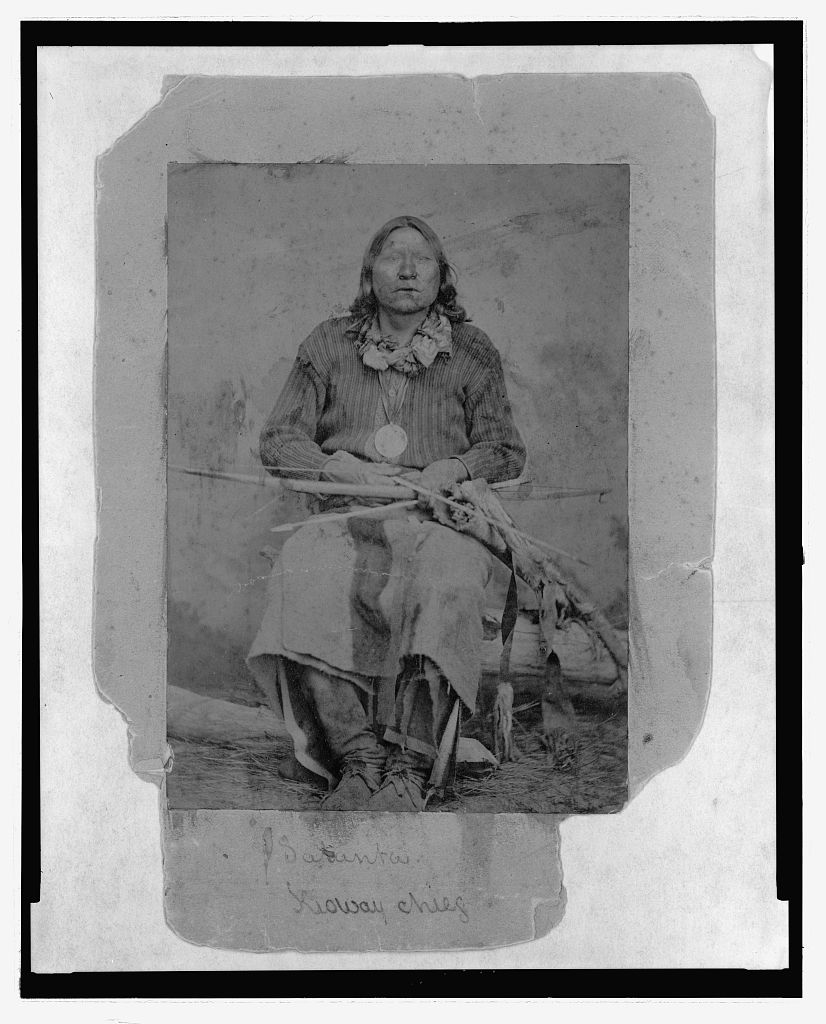
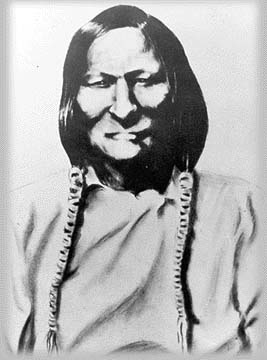
GENERAL SHERIDAN has conceived a plan of Indian warfare which will yield substantial results. General SHERMAN’S report to the War Department from St. Louis, on the 2d instant, incloses a report from General SHERIDAN of the first stage of his campaign. As SHERMAN says, “it gives General SHERIDAN a good initiation.” It seems that at the start SHERIDAN met with old acquaintances. “The bands of BLACK KETTLE, LITTLE RAVEN, and SANTANTA are well known to us, says SHERMAN, “and are the same that have been along the Smoky Hill for the past five years, and ……embrace the very same men who first began this war on the Saline and Solomon rivers.

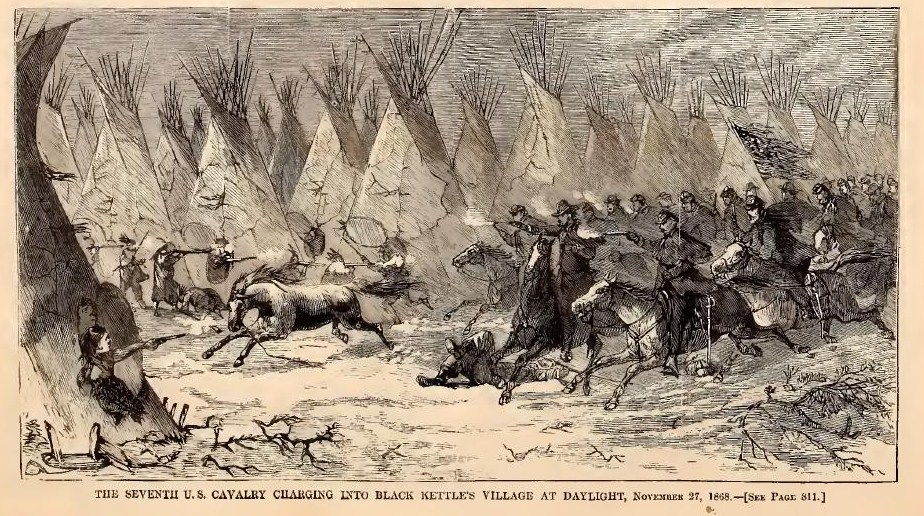
hw 12-19-1868 p804b(https://archive.org/details/harpersweeklyv12bonn)

cavalry charge


General SHERIDAN reports from Canadian River, junction of Beaver Creek, Indian Territory, November 29, 1868:

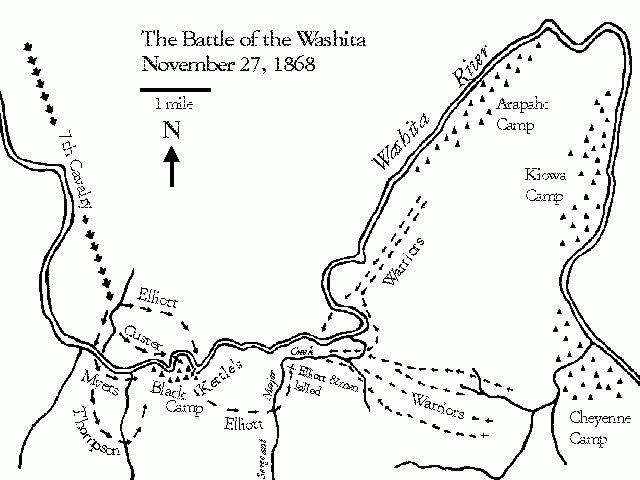
Battle_of_Washita_map (https://en.wikipedia.org/wiki/Battle_of_Washita_River#/media/File:Battle_of_Washita_map.gif)

four-pronged approach

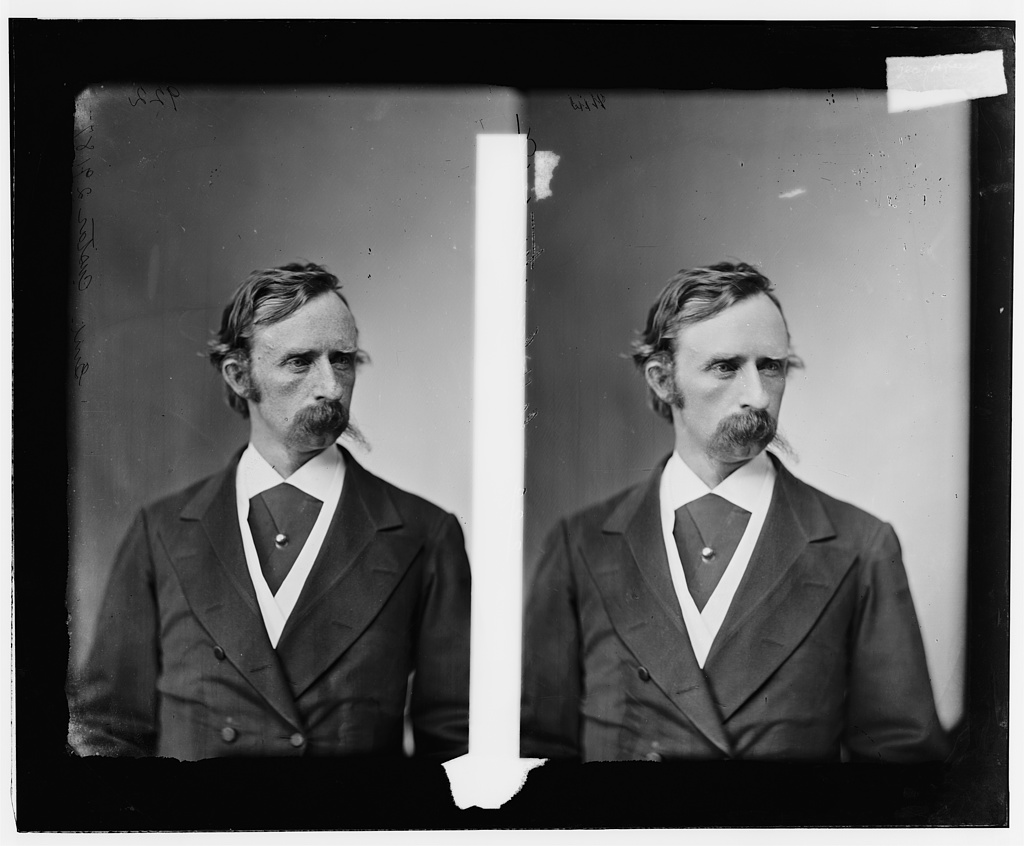
Gen. George A. Custer, U.S.A. ([December 1869; LOC: https://www.loc.gov/item/2017895224/)

George A. Custer

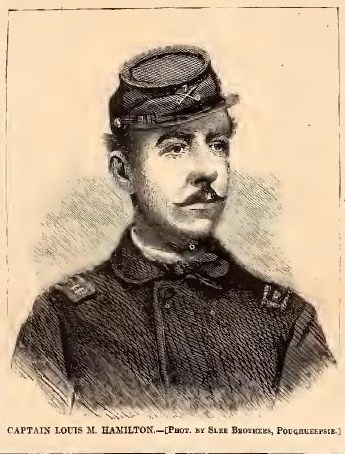
“I have the honor to report, for the information of the Lieutenant-General, the following operations of General CUSTER’S command: On the 23d of November I ordered him to proceed with eleven companies of the Seventh Cavalry in a southerly direction toward the Antelope Hills in search of hostile Indians. On the 26th he struck the trail of a war party of BLACK KETTLE’S band returning from the north, near where the eastern line of the pan-handle of Texas crossed the main Canadian. He at once corralled his wagons and followed in pursuit over the head waters of the Washita, thence down that stream; and on the morning of the 27th surprised the camp of BLACK KETTLE, and after a desperate fight, in which BLACK KETTLE was assisted by the Arrapahoes [sic], under LITTLE RAVEN, and the Kiowas, under SANTANTA, we captured the entire camp, killing the chief, BLACK KETTLE, and 102 warriors, whose bodies were left on the field, all their stock, ammunition, arms, lodges, robes, and fifty-three women and their children. Our loss was Major ELLIOTT, Captain HAMILTON, and nineteen enlisted men killed. Brevet Lieutenant-Colonel BARNETZ, Brevet Lieutenant-Colonel J.W. CUSTER, Second Lieutenant Z. MARSH, and eleven enlisted men wounded. LITTLE RAVEN’S band of Arrapahoes and SANTANTA’S band of Kiowas were encamped six miles below BLACK KETTLE’S camp. About 800 or 900 of the animals captured were shot, the balance being kept for military purposes. The highest credit is due to General CUSTER and his command. They started in a furious snow-storm, and traveled all the while in snow about twelve inches deep. BLACK KETTLE’S and LITTLE RAVEN’S families are among the prisoners. It was BLACK KETTLE’S band that committed the first depredations on the Saline and Solomon rivers, in Kansas.

“The Kansas regiment has just come in. They missed the trail and had to struggle in the snow-storm. The horses suffered much in flesh, and the men were living on buffalo meat and game for eight days. We will soon have them in good condition. If we can get one or two more good blows there will be no more Indian troubles in my department. We will be plached[?] in ability to obtain supplies, and anture[?] will present many difficulties in our winter operations, but we have stout hearts and will do our best. Two white children were recaptured. One white woman and a boy ten years old were brutally murdered by the Indian women when the attack commenced.”

hw 12-19-1868 p804c (https://archive.org/details/harpersweeklyv12bonn)

killed in the fight

Cheyenne village was captured on the morning of November 27, as stated in the above report. General CUSTER on this occasion won fresh laurels.We regret the loss of HAMILTON, BARNETZ, and ELLIOTT; but we rejoice that one of the most hostile of the Indian encampments has been destroyed. SHERIDAN’S plan, as we have previously stated, is the destruction of Indian lodges. This, fully accomplished, will make it impossible for the savages to begin their depredations in the spring. SHERIDAN’S harvest is one which could only be garnered in the winter season, and thus far he has proved himself an efficient reaper.

From the December 26, 1868 issue of Harper’s Weekly:

INDIAN PRISONERS TAKEN BY CUSTER.

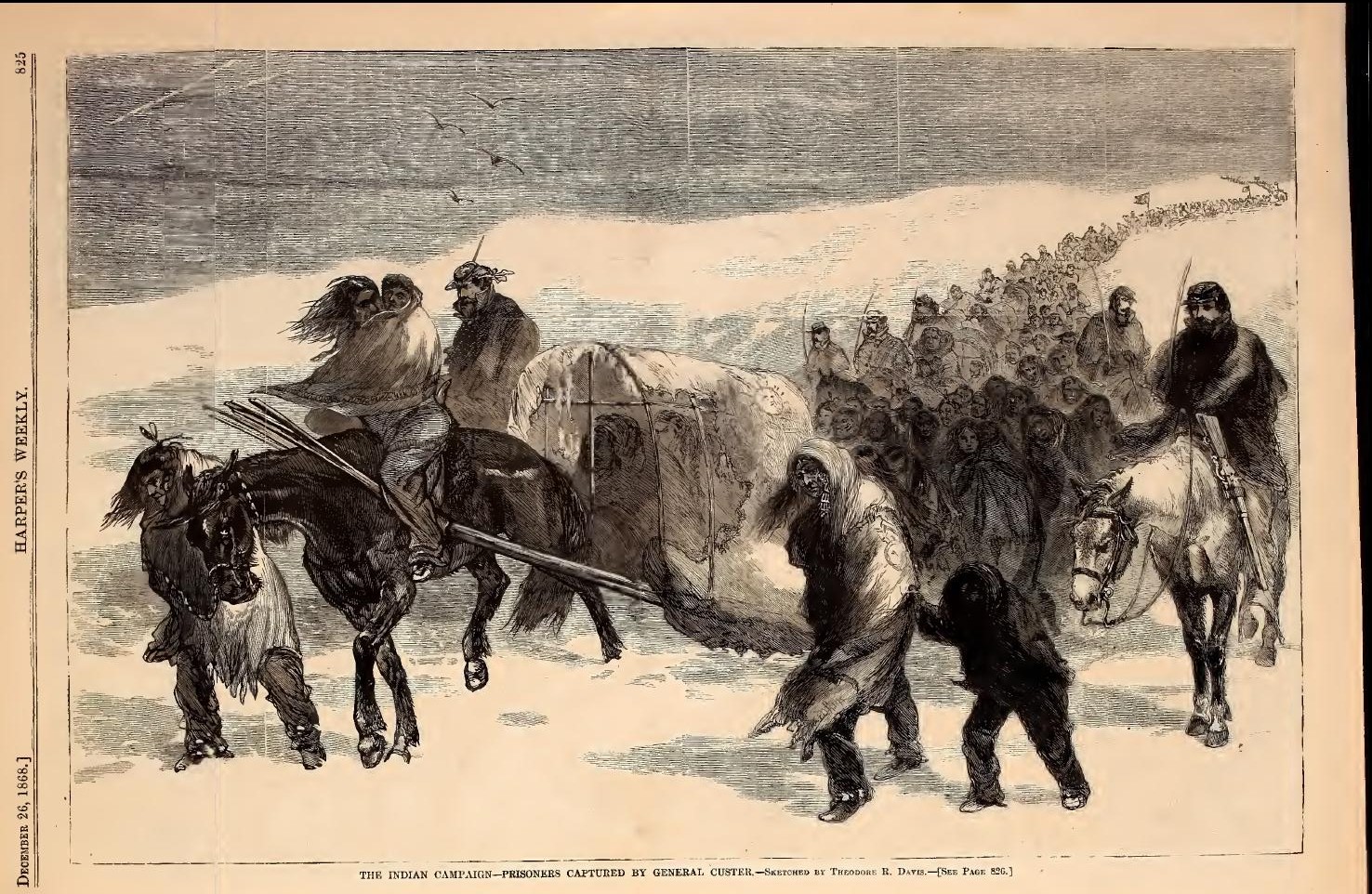
Our engraving on page 825 illustrates a peculiar feature of SHERIDAN’S plan of Indian warfare. His object is to break up the nomadic habits and to destroy the irregular settlements of the hostile Indians. He finds them as at Black Kettle village out of their proper place; he pounces upon them, shows his power by a physical conquest, breaks up their villages and lodges; but after that comes the most important and most difficult portion of his work:he has to bag the whole parcel of vanquished savages and bear them off – the warriors, the aged, and the young – to their proper reservation. And there the Indian must stay, understanding that if again found wandering he must suffer the severest penalties of martial law.

The action of Congress in transferring the entire management of Indian affairs to the War Department will very materially facilitate General SHERIDAN’S operations. The Department of the Interior has made a sad bungle of this Indian matter; its immense patronage has introduced corruption and almost criminal negligence and thus Indian agencies as well as the Indians themselves have become demoralized.The new arrangement will make it possible to reduce the Indians to their proper position in relation to the Government; it will make coercion possible in so far as that may be necessary, and it will bring peace to our borders through the stern lessons of war – the only lessons which savages can appreciate.

Our illustration shows the method adopted in transferring Indian prisoners to their reservations. The old men and women and pappooses [sic] are tied to ponies, as represented in the cut, while the hardy young Indians perform the tedious journey through the snow on foot.

hw 12-26-1868 p825 (https://archive.org/details/harpersweeklyv12bonn)

heading back to the reservation

According to the Wikipedia article about the Battle of Washita River the actual number of casualties has always been controversial, and historians still debate whether Washita was a battle or a massacre. Also, a footnote mentions that Black Kettle was not considered a military commander by the Cheyenne: “Among the Plains Indians a chief was elected as a peace and civil officer and there was no such office as war chief.”

In discussing the Battle of Washita in his memoirs (at Project Gutenberg) General Sheridan had a different view of Black Kettle:

Custer had, in all, two officers and nineteen men killed, and two officers and eleven men wounded. The blow struck was a most effective one, and, fortunately, fell on one of the most villianous of the hostile bands that, without any provocation whatever, had perpetrated the massacres on the Saline and Solomon, committing atrocities too repulsive for recital, and whose hands were still red from their bloody work on the recent raid. Black Kettle, the chief, was an old man, and did not himself go with the raiders to the Saline and Solomon, and on this account his fate was regretted by some. But it was old age only that kept him back, for before the demons set out from Walnut Creek he had freely encouraged them by “making medicine,” and by other devilish incantations that are gone through with at war and scalp dances.

When the horrible work was over he undertook to shield himself by professions of friendship, but being put to the test by my offering to feed and care for all of his band who would come in to Fort Dodge and remain there peaceably, he defiantly refused. The consequence of this refusal was a merited punishment, only too long delayed.

Little Raven (https://www.archives.gov/research/native-americans/pictures/select-list-104.html)

Little Raven, Head Chief of the Arapaho

Satanta, Kioway chief (between 1870 and 1875; LOC: https://www.loc.gov/item/2006679482/)

Santanta the Kiowa

Chief_Black_Kettle (https://commons.wikimedia.org/wiki/File:Chief_Black_Kettle.jpg)

Black Kettle killed

According to an American history textbook, the Civil War played a role in this story. Despite agreements protecting Indian land, European-Americans continued to push west in the mid-nineteenth century. “… in 1862, after federal troops had been pulled out of the West for service against the Confederacy, most of the plains Indians rose up against the whites. For five years intermittent but bloody clashes kept the entire area in a state of alarm.”[1]

The same textbook discusses Philip Sheridan’s ambivalence. It quotes him as saying, “The only good Indians I ever saw were dead. ” But also, “We took away their country and their means of support, broke up their mode of living, their habits of life, introduced disease and decay among them, and it was for this and against this that they made war. Could anyone expect less?”[2]

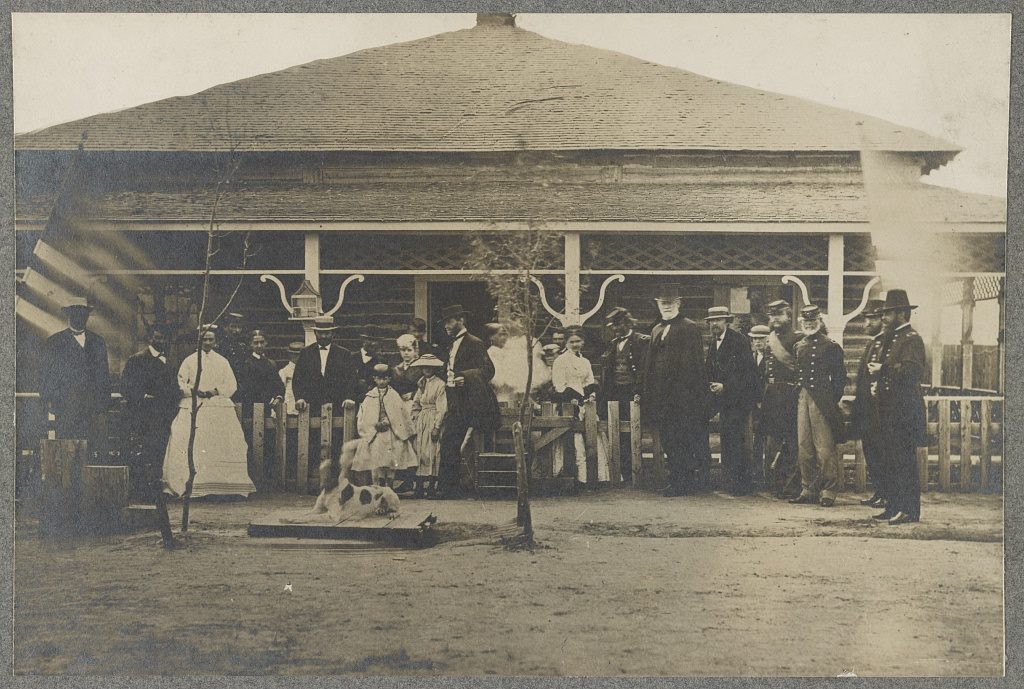
Generals Grant, Sherman, Sheridan, Hooker, Harney, Dodge, Gibbon, and Potter at Fort Sanders (1868; https://www.loc.gov/item/2013647598/)
Sheridan, Sherman with U.S. Grant, et. al. at Fort Sanders, Wyoming 1868
You can see all the Harper’s Weekly text and images from the December 19 and 26, 1868 issues at the Internet Archive. Wikipedia provides the battle map and the image of Black Kettle. The picture of Little Raven comes from the National Archives. From the Library of Congress: Santanta; the portrait of George Custer in civilian clothes, said to be from December 1869; the photo of all the ex-Union brass at Fort Sanders, which “shows a group gathered for a meeting regarding the Union Pacific Railroad at Fort Sanders Wyoming, in July of 1868.”
  1. [1]Garraty, John A., and Robert A. McCaughey. The American Nation: A History of the United States, Seventh Edition. New York: HarpersCollins Publishers, 1991. Print.page 489.
  2. [2]ibid. page 490
Posted in 150 Years Ago, Aftermath | Tagged , , , , , , , | Leave a comment

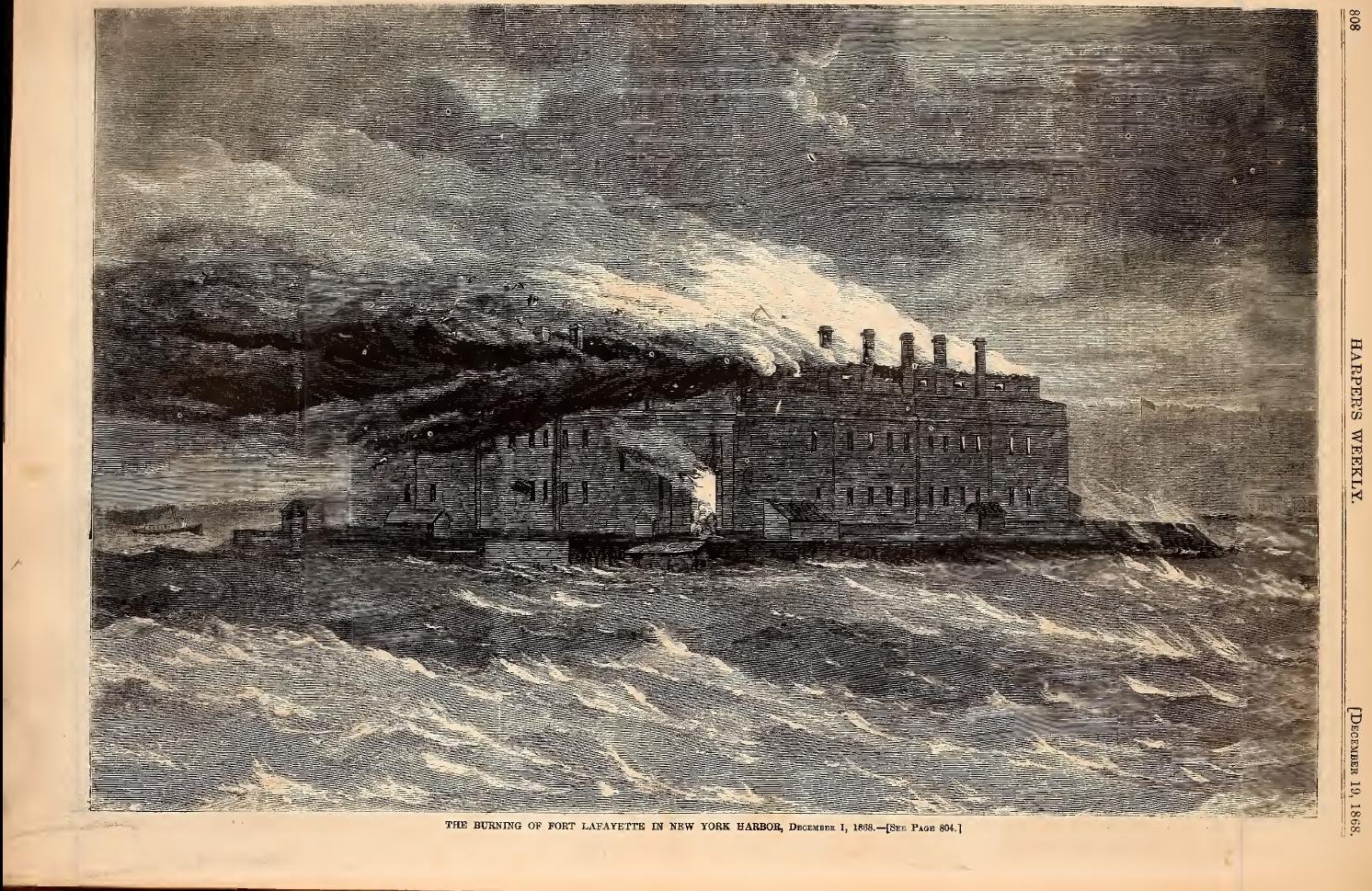
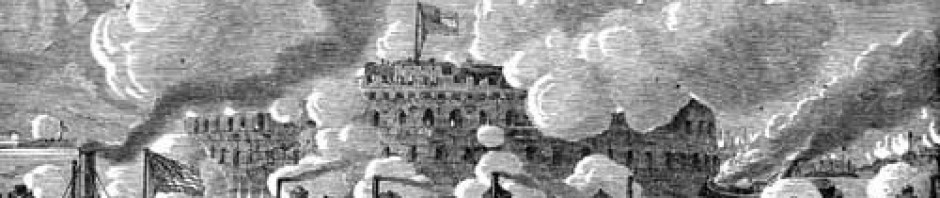
harbor fire

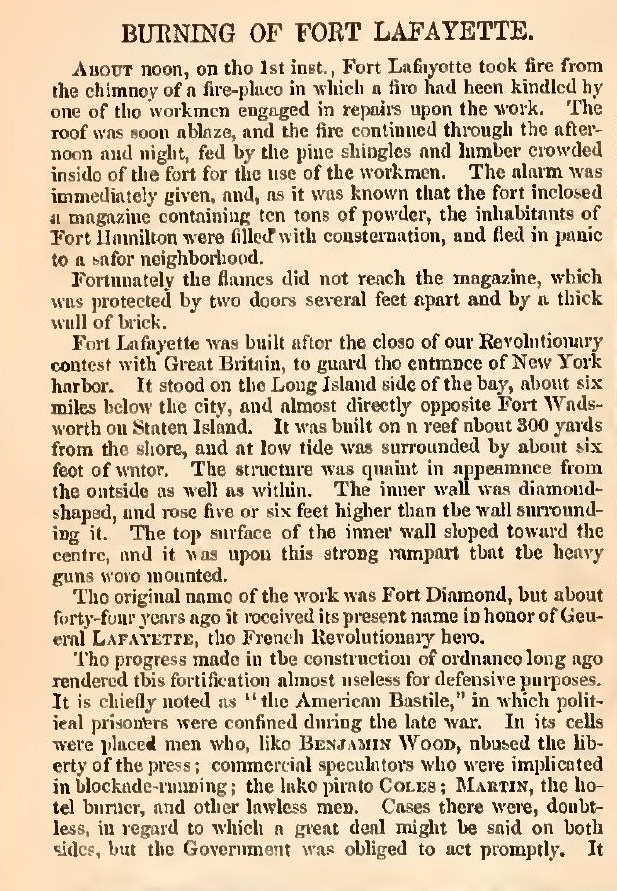
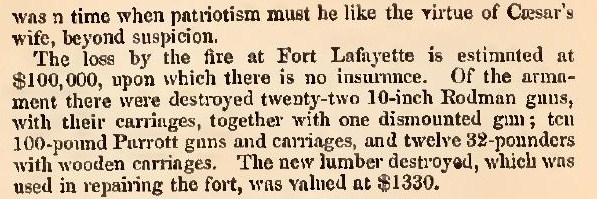
During The American Civil War Fort Lafayette in New York harbor was used to lock up political prisoners. 150 years ago today a fire burned a good deal of the fort – an estimated $100,000 worth. The December 19, 1868 issue of Harper’s Weekly reported:

hw 12-19-1868 p808 (https://archive.org/details/harpersweeklyv12bonn)

quaint structure originally called Fort Diamond

hw 12-19-1868 p804a (https://archive.org/details/harpersweeklyv12bonn)

“the American Bastile”

hw 12-19-1868 p804b (https://archive.org/details/harpersweeklyv12bonn)

patriotism had to be “like the virtue of Caesar’s wife”

bastilesofnorth (https://babel.hathitrust.org/cgi/pt?id=loc.ark:/13960/t6m04jn34)

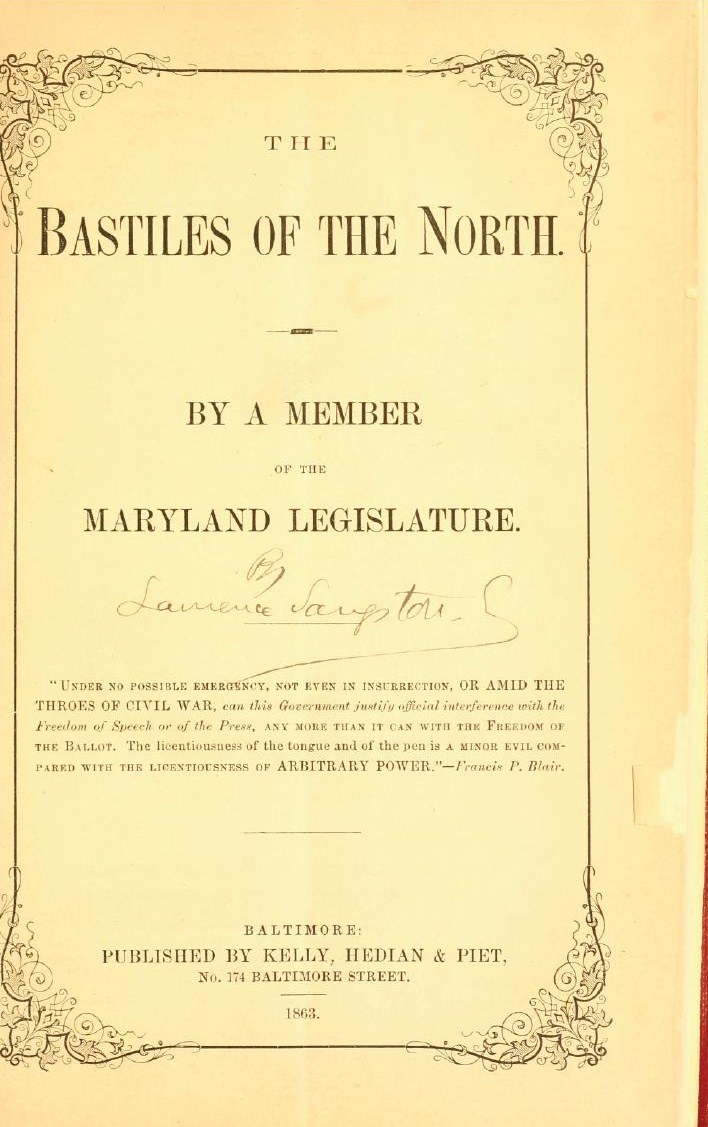
counterpoint

You can read the December 29th issue (along with the rest of the 1868 Harper’s Weekly) at the Internet Archive. Francis P. Blair’s quote supporting freedom of speech and freedom of the press no matter what appears on the title page of Lawrence Sangston’s 1863 The Bastiles of the North (at Hathi Trust)
Posted in 150 Years Ago This Week, Aftermath | Tagged , | Leave a comment

holiday for the homes

Plymouth Colony: Pilgrims Going to Church (http://ushistoryimages.com/plymouth-colony.shtm)

“Plymouth Colony: Pilgrims going to church”

In October 1868 President Andrew Johnson proclaimed a national day of Thanksgiving on November 26th, the last Thursday of the month. This continued a tradition begun five years earlier by Abraham Lincoln.

In its November 28, 1868 issue Harper’s Weekly thought the day should focus less on church and more on the home:

THANKSGIVING.

hw11-28-1868p760 (https://archive.org/details/harpersweeklyv12bonn)

“the wisely silent husband”

THERE are not many dies fasti with us Americans. How nations and times differ in this regard! The ancients, owing to their love of outward show, had frequent festivals; and the same is true of the more barbarous races of the present time. Thus among the Abyssinians two-thirds of the days of the year are festival days. The progress of civilization has a tendency toward the elimination of these days from the calendar. This is to be accounted for partly by the fact that life, as regulated by civilization, is forever growing busier and more[?] intense; as men depart from their primitive modes of living they have less leisure, they live more and more “by their wits,” and find that the necessities of such a life occupy nearly all their time. Besides, the cultivated intellect looks rather to the inherent[?] significance of life, and therefore devotes less attention to outward show; it rejects feast-days and processions; and thus it is that the earnestness of modern thought has discarded most of those external manifestations without which the life of the barbarian would be insufferably dull and tedious. Not that modern life is less of a drama; on the contrary, it is a subtler and intenser drama, more significant and more profound.

Civilization develops home life, and reserves for that the greatest and best of its powers. Our two great festivals – Thanksgiving and Christmas – are home-festivals. The former is national, it is true, and the latter is religious; but while they are thus connected in our thoughts with our common country and our common faith, while they are bonds of social union and harmony, still they are celebrated by families, and find their natural centre in our hearth-stones.

hw11-28-1868p761 (https://archive.org/details/harpersweeklyv12bonn)

“a bit of heaven!”

Hence the memorable feature of Thanksgiving Day is not the sermon but the dinner. This festival is preserved not for its outdoor show but for its private sacredness. If our artists had prepared for our readers a sketch representing a congregation listening to a Thanksgiving sermon instead of the characteristic pictures on pages 760 and 761, nobody would take the trouble to look at it. But who will not be touched by our illustration representing a family at the market purchasing their Thanksgiving dinner? We almost go through the whole scene in our imaginations. We hear the market-man praising his nice fat turkeys as if they were his pets; we see the serious face of the good-wife, who is counting the cost and calculating how far the contents of her purse will go, and we congratulate the wisely silent husband, who regards his wife with a deferential look that seems to say: “Everything depends upon you, my love.” Truly has Mr. EHNINGER portrayed this interesting group; and not less characteristic is Mr. JEWETT’S illustration on the opposite page. It is “The first Thanksgiving Dinner” of a poor little girl who has been called in from the cold street to feel the delicious warmth of a home such as she never has had, and to taste dishes and dainties never tasted before. Those who called her in do not fully appreciate the situation; it is with them a common affair – but to the little wanderer it seems like a bit of heaven!

Oh, if we only knew what charity really means – what really is the pith of our Christianity – then indeed there would be happier hearts all the world over, and not only Thanksgiving Day but all the days of the year would be crowned with the love of Christ.

Plymouth Church,--Rev. Henry Ward Beecher, Orange Street, Brooklyn / Stacy 691 B'way. ([New York City, N.Y.] : [George Stacy], [1863] ; LOC: https://www.loc.gov/item/2016653293/)

“the odor of the coming feast fills the air”

And clergymen were also preaching on Thanksgiving Day. Just like eight years earlier Henry Ward Beecher delivered a discourse at Plymouth Church in Brooklyn. Unlike 1860 The Union had won the war and slavery was officially outlawed in the United States. Reverend Beecher didn’t have to demand that his congregation choose between the barbaric South and the civilized North; instead, according to a report in the November 27, 1868 issue of The New-York Times he also seemed to focus mostly on the household. The article summarized Reverend Beecher’s sermon:

… Thanksgiving was a New-England holiday. New-England then blended the Hebrew and the Greek character. In its intense individualism, its deep moral force and its household life it is preĆ«minently Jewish. In ts admiration of metaphysics, its deification of argument and its worship of ideas, it is preĆ«minently Greek. New-England is not Greek in its taste and love of beauty, but it is in its passion for reason … The development that is yet to come in Northern social life is in joyousness, and, as I think, the joyousness of home life. The family, always rich in social virtues, is to become yet richer. The civilizing centre of modern America must be home and the family circle. Thanksgiving is the day of nature, of the harvest, the field, of the household and the home. It is the one great festival of American life that pivots on the household. The Hebrews, like the Yankees, knew how near the virtues lay to the stomach. [Laughter.] The various national customs introduced here by immigrants from abroad were likely to enrich the American household. The Northern races are the races of domestic and home habits. There is little idea of family in Spain, still less in Italy. … It may almost be said that the frost line marks the realm of republics. True Republican commonwealths grow out the power that is generated in the household. … The increasing intelligence of women is to contribute largely to … [a richer household in America]. It is in vain that people cry out against what are called “woman’s rights.” Her social life commenced at zero and has been steadily advancing, adding at step to the well being of society. Albeit, every step of her advancement was supposed at the time it was taken, to be a deviation from “propriety.” … The next step in woman’s advancement will be suffrage. A citizen at the present day without a vote is like a smith without a hammer. Women will never “unsex” themselves, or become men by their external occupations. God’s colors don’t wash out, and sex is dyed in the wool. Those who are most afraid that women will become men, I have always noticed, are they who are themselves the nearest like women. It is a kind of latent rivalry. [Laughter.] Weakness is not a woman’s charm. … Let us not be afraid of taking down barriers, and saying to every human being, “do what is right – what God has given you the ability and power to do well.” In the future we shall have stronger and purer households. The “frailty of the fair sex” will cease to be a theme for deriding poets, when women learn that strength is feminine. While we have little to fear from these supposed dangers, there are real dangers which we should fear. These are extravagance and luxury, self-indulgence and ostentation. The yearning for approbation incites women to these vices. Were she made freer, better employed and better educated, she would be satisfied, and would find her happiness in more rational things. … [more on marriage and the family] But he had detained them too long – the odor of the coming feast fills the air. Go then and remember God’s bounty throughout the year. Give the day to thanks, to joy, to gratitude, and remember amid your feastings to forgive your enemies, purify your hearts and augment your charities to the poor and destitute.

And now let us sing, and it shall be “America” of course, and all who cannot sing let them make a joyful sound.

jchamberlainproc1868 (LOC: https://www.loc.gov/resource/rbpe.02702400/?st=gallery)

Maine Governor Joshua Chamberlain’s proclamation

hw 11-28-1868 p757 (https://archive.org/details/harpersweeklyv12bonn)

trap turkey

hw 11-28-1868 p758 (hw 11-28-1868 p757 (https://archive.org/details/harpersweeklyv12bonn))

necks will be wrung

Pilgrims: Public Worship at Plymouth (http://ushistoryimages.com/pilgrims.shtm)

“Pilgrims: Public worship at Plymouth”

You can find all the text and images from 1868’s Harper’s Weekly at the Internet Archive. From the Library of Congress: Reverend Beecher’s Plymouth Church; Joshua Chamberlain’s 1868 proclamation. Jon Harder’s photo of the 1979 Macy’s parade is licensed by Creative Commons The two Pilgrim images come from U.S. History Images: traveling to church and listening in church. According to Wikipedia Pilgrims never wore the buckle hat.

Macys-parade-1979 (https://en.wikipedia.org/wiki/Macy%27s_Thanksgiving_Day_Parade#/media/File:Macys-parade-1979.jpg)

“cultivated intellect … devotes less attention to outward show”

Posted in 150 Years Ago This Week, Aftermath, American History, American Society, Postbellum Society, Reconstruction | Tagged , , , , , , | Leave a comment

“the greatest of all human Blessings”

Independence and Peace

150 years ago Americans observed the national Thanksgiving Day on November 26th. I don’t seem to be able to wait that long. According to Pilgrim Hall Museum Congress proclaimed the first National Thanksgiving Day on November 1, 1777 to be observed on Thursday December 18th. About 16 months after a declared independence the thirteen fledgling states were still hanging on and winning some military victories (including Saratoga two weeks before the proclamation):

FORASMUCH as it is the indispensable Duty of all Men to adore the superintending Providence of Almighty God; to acknowledge with Gratitude their Obligation to him for Benefits received, and to implore such farther Blessings as they stand in Need of: And it having pleased him in his abundant Mercy, not only to continue to us the innumerable Bounties of his common Providence; but also to smile upon us in the Prosecution of a just and necessary War, for the Defense and Establishment of our unalienable Rights and Liberties; particularly in that he hath been pleased, in so great a Measure, to prosper the Means used for the Support of our Troops, and to crown our Arms with most signal success:

Surrender of General Burgoyne at Saratoga N.Y. Oct. 17th. 1777 (LOC: New York : Published by N. Currier, c1852.; LOC: https://www.loc.gov/item/2002695771/)

thanks for the victory

It is therefore recommended to the legislative or executive Powers of these UNITED STATES to set apart THURSDAY, the eighteenth Day of December next, for SOLEMN THANKSGIVING and PRAISE: That at one Time and with one Voice, the good People may express the grateful Feelings of their Hearts, and consecrate themselves to the Service of their Divine Benefactor; and that, together with their sincere Acknowledgments and Offerings, they may join the penitent Confession of their manifold Sins, whereby they had forfeited every Favor; and their humble and earnest Supplication that it may please GOD through the Merits of JESUS CHRIST, mercifully to forgive and blot them out of Remembrance; That it may please him graciously to afford his Blessing on the Governments of these States respectively, and prosper the public Council of the whole: To inspire our Commanders, both by Land and Sea, and all under them, with that Wisdom and Fortitude which may render them fit Instruments, under the Providence of Almighty GOD, to secure for these United States, the greatest of all human Blessings, INDEPENDENCE and PEACE: That it may please him, to prosper the Trade and Manufactures of the People, and the Labor of the Husbandman, that our Land may yield its Increase: To take Schools and Seminaries of Education, so necessary for cultivating the Principles of true Liberty, Virtue and Piety, under his nurturing Hand; and to prosper the Means of Religion, for the promotion and enlargement of that Kingdom, which consisteth “in Righteousness, Peace and Joy in the Holy Ghost.

And it is further recommended, That servile Labor, and such Recreation, as, though at other Times innocent, may be unbecoming the Purpose of this Appointment, be omitted on so solemn an Occasion.

The state of Massachusetts-Bay followed the Continental Congress’s suggestion:

In Congress. November 1, 1777. Forasmuch as it is the indispensible duty of all men to adore the superintending providence of Almighty God, to acknowledge with gratitude their obligations to Him for benefits received ... [Boston: Printed by John (LOC: https://www.loc.gov/item/rbpe.04001400/)

God save the USA!

In Congress. November 1, 1777. Forasmuch as it is the indispensible duty of all men to adore the superintending providence of Almighty God, to acknowledge with gratitude their obligations to Him for benefits received ... [Boston: Printed by John (LOC: https://www.loc.gov/item/rbpe.04001400/)

“an extremely rare broadside”

Happy Thanksgiving!

The image of Saratoga comes from the Library of Congress

Posted in American History | Tagged | Leave a comment

dark deed in broad daylight

BF Randolph (hw 11-21-1868 p740 https://archive.org/details/harpersweeklyv12bonn)

from chaplain to carpetbagger?

In mid-October 1868 The New-York Times reported that Benjamin F. Randolph, a black clergyman and Republican state legislator, was murdered in South Carolina.

In its November 21, 1868 issue, Harper’s Weekly reprinted the report of a Charleston newspaper:

MURDER OF THE REV. B. F. RANDOLPH.

One of the most satisfactory results of General GRANT’S accession to the Presidency will be peace in the South, involving protection to life as well as property, and a toleration of each political party of the opinions of the other. It is not chiefly the fact that GRANT has been elected President which will secure this result, but rather the utter defeat which that election brings upon them in the South who as a habit intimidate their political opponents and slay all whom they can not intimidate. It is now settled that the national law means Liberty and Equal Rights, and that those who violate that law must be punished as law-breakers. We give on this page a portrait of the Rev. B. F. RANDOLPH, a Methodist clergyman of South Carolina, and a Senator of that State, who, on the 17th of last month, fell a victim to assassination for his political opinions. Shortly after the murder the Charleston Christian Advocate published the following account:

BF Randolph's intended journey (LOC: https://www.loc.gov/item/78696479/)

murdered near Cokesbury

“We are called upon to record one of the most daring and cold-blooded murders that ever darkened the pages of history, committed upon the person of one of the members of our Conference. The Rev. B.F. RANDOLPH was, on the 17th inst., assassinated, in open day, while traveling by public conveyance. He was upon a lecturing tour in one of the upper counties of the State. He lectured at Abbeville on the 15th inst., and left on Friday morning to do to Anderson, where he was to lecture in the evening. When he got upon the Greenville train at Hodge’s station he put his carpet-bag and shawl on a seat, and the returned to the platform of the car to speak to a colored man. While engaged in conversation with this person he was shot from behind by three ruffians, simultaneously, and fell dead, the shots taking effect in his head, lungs, and bowels. These murderers came to the depot on horseback, and immediately after committing the deed remounted their horses and rode quietly away. The report is that they are unknown and cannot be identified. This speaks for itself, when it is remembered that the deed was committed in open day, with the usual throng of passengers on the cars and around the depot. No one starts in pursuit, and all scorn to concede that it is useless to make any effort to identify or arrest the murderers. Brother RANDOLPH’S remains were taken on the following day to Columbia and interred on Sabbath, the 18th inst., with appropriate religious services, a vast concourse of people following them to the grave. Mr. RANDOLPH was born in Kentucky, and was educated at Oberlin, enjoying the advantages of the classical department. He was duly licensed and ordained as a minister in the Old School Presbyterian Church. Having received the appointment of chaplain in the army, and assigned to a colored regiment in that capacity, the fortunes of war brought him to our State. After the organization of the South Carolina Conference, he felt that the field opened by the Methodist Episcopal Church in this section would afford a greater opportunity for usefulness than he could enjoy in continuing his connection with the Presbyterian Church. He consequently solicited admittance to the Methodist Episcopal Church, and was duly received and admitted on trial at the session of our Conference in the spring of 1867. His first appointment was in connection with the Freedmen’s Bureau as Assistant Superintendent of Education in this State. His next appointment by the Conference was to Columbia. Although he was connected with our Conference, he received no fund from our Missionary Society. When the Charleston Advocate was started he held to it the relation of an assistant editor, in which he was continued until the resignation of the entire editorial corps in anticipation of the appointment of an editor, as arranged by the last General Conference. At the time of his death Mr. RANDOLPH was a member of the State Senate and Chairman of the Republican State Central Committee. In these official positions he was doing good service for his race and the cause of human rights. He took the position which he occupied in connection with the political interests of the State from a sense of duty which he could not well resist from the peculiar state of political affairs here.”

26th_Regiment_USCT_colors (https://commons.wikimedia.org/wiki/File:26th_Regiment_USCT_colors.png)

Reverend Randolph’s unit

According to Wikipedia, Benjamin F. Randolph was born free in Kentucky and grew up in Ohio. He attended Oberlin College for about a year and then moved to Buffalo, New York in 1958. He worked as the principal of a public school for black children. In December 1863 Reverend Randolph volunteered for the Union army, serving as chaplain for the 26th Regiment Infantry U.S. Colored Troops. After the war he stayed in South Carolina. As a member of the Freedmen’s Bureau, Randolph worked as assistant superintendent for education in Charleston. He was a delegate to to the State Constitutional Convention of 1868 and later elected as state senator for the Orangeburg seat. Although a couple men were detained, no one was ever tried for the assassination.

You can read some more about B.F. Randolph at The History Engine.

The town where Reverend Randolph delivered his last speech has a couple blue-gray links. According to Wikipedia, Abbeville:
Abbeville has the unique distinction of being both the birthplace and the deathbed of the Confederacy. On November 22, 1860, a meeting was held at Abbeville, at a site since dubbed “Secession Hill”, to launch South Carolina’s secession from the Union; one month later, the state of South Carolina became the first state to secede.
At the end of the Civil War, with the Confederacy in shambles, Confederate President Jefferson Davis fled Richmond, Virginia, and headed south, stopping for a night in Abbeville at the home of his friend Armistead Burt. It was on May 2, 1865, in the front parlor of what is now known as the Burt-Stark Mansion that Jefferson Davis officially acknowledged the dissolution of the Confederate government, in the last official cabinet meeting.

Abbeville County (LOC: https://www.loc.gov/item/78696479/)

Abbeville County encircled

Rock_at_Secession_Hill (https://en.wikipedia.org/wiki/Abbeville,_South_Carolina#/media/File:Rock_at_Secession_Hill.jpg)

secession fever

https://en.wikipedia.org/wiki/Abbeville,_South_Carolina#/media/File:Burt-Stark_house.jpg

where Jeff called it quits

The Harper’s Weekly text and portrait come from the Internet Archive. The Library of Congress provides Colton’s 1876 map of South Carolina. Both Abbeville photos care licensed by Creative Commons: Bill Golladay’s Burt-Stark House and Danbert8’s rock (By Danbert8Own work, CC BY-SA 4.0, Link). The regimental banner comes from Wikimedia
Posted in 150 Years Ago, 150 Years Ago This Month, Aftermath, Postbellum Society, Reconstruction | Tagged , , , , , , | Leave a comment