Stones and Bullets in Frankfort

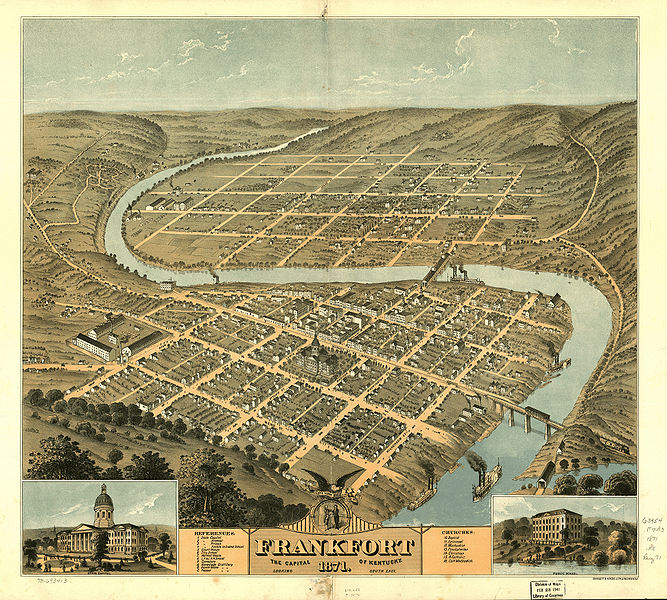
Frankfort, Kentucky 1871

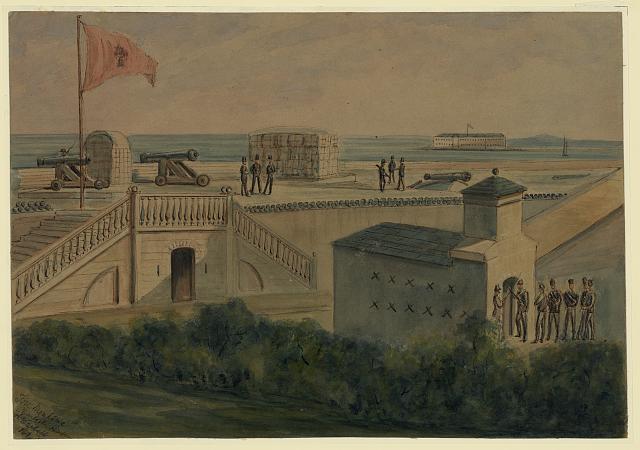
Ten years after the train violence: Frankfort 1871 (LOC - DIGITAL ID g3954f pm002340)

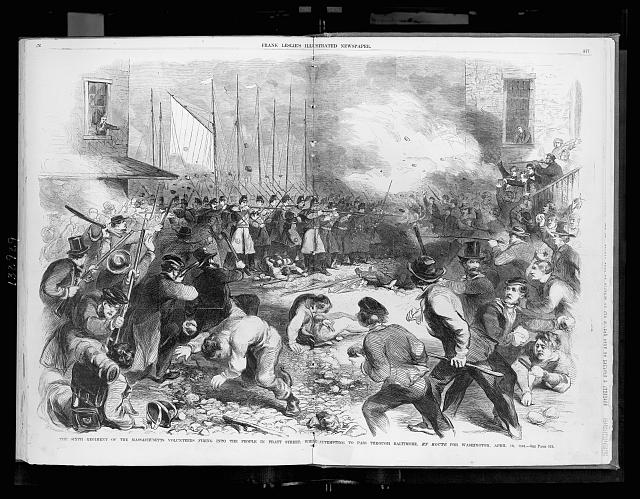
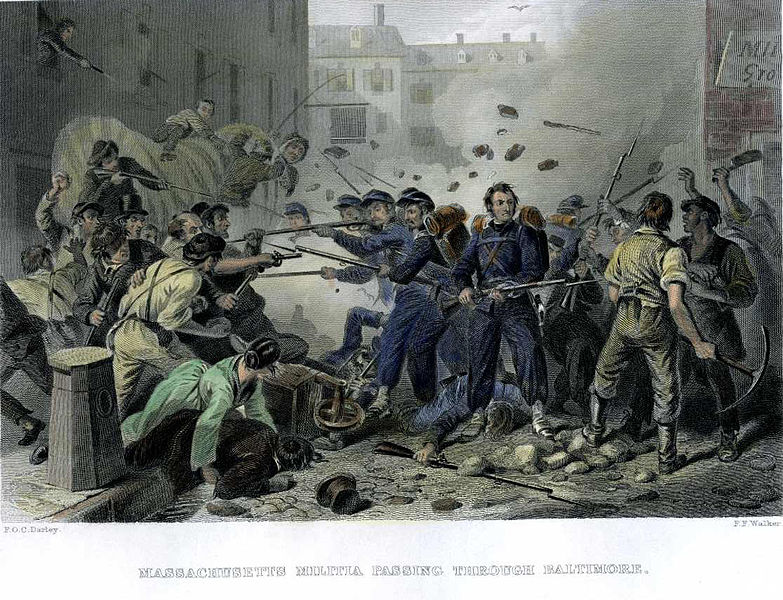
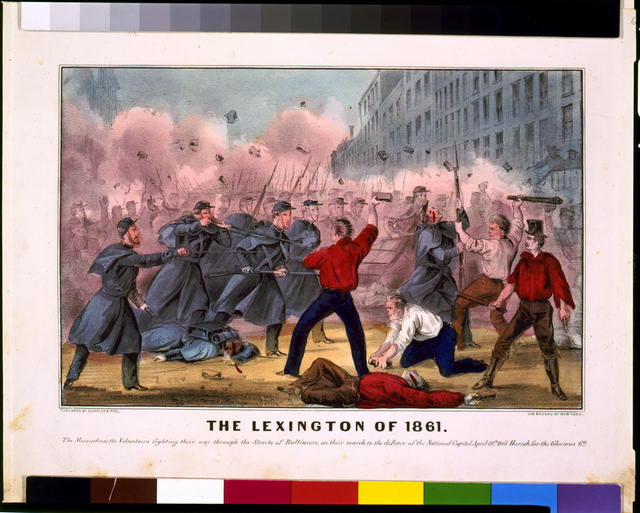
On April 19, 1861 southern-sympathizing citizens in Baltimore attacked Union troops marching through their city on the way to Washington, D.C. Three days later something like a reverse scenario is reported to have played out in Kentucky, another border state.

From The New-York Times April 24, 1861:

CINCINNATI, Tuesday, April 23.

A Company of Secessionists, numbering 113 men, left Cynthiana, Ky., yesterday, to join the Southern Confederate army. When the train arrived at Frankfort, Ky., they were ordered to show their flag, which they did by displaying a secession flag from a window of the cars. Several stones were thrown at it, when the Lieutenant of the Company fired into the crowd. Immediately the cars were attacked by the citizens, and boulders and paving stones rained upon them promiscuously.
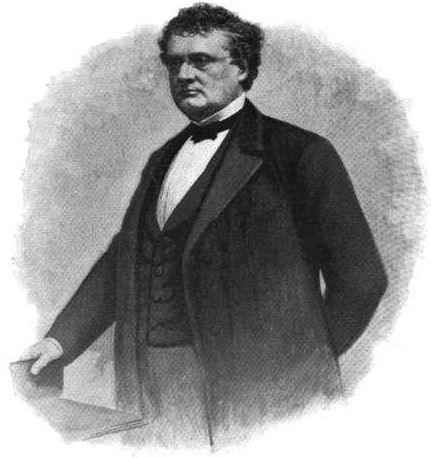
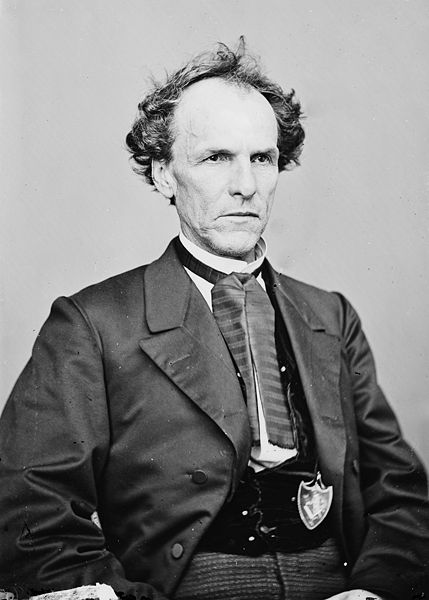
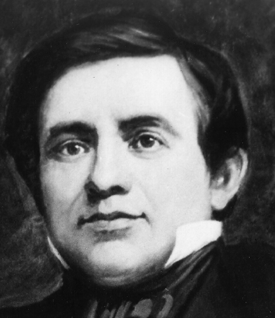
395px-Beriah_Magoffin_-_Brady-Handy

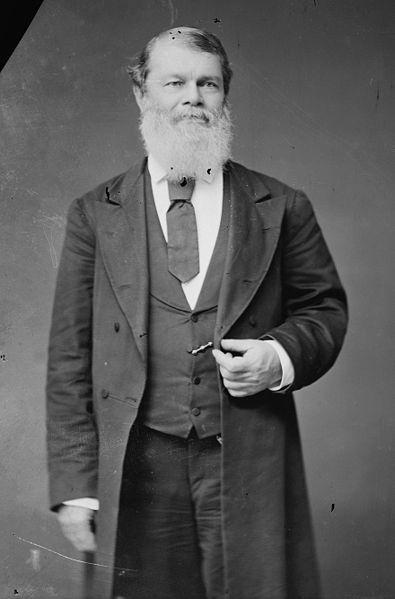
Magoffin governs bluegrass ambivalence (LOC - LC-DIG-cwpbh-04523)

They finally got off with but little personal injury. Great excitement prevailed during the remainder of the day, and threats were made to tear up the railroad track. The citizens declare that no more trains bearing secession troops shall pass through that place.

There is a movement on foot, and will probably be adopted in a day or two, between the civil and military authorities of Louisville, Jeffersonville and New-Albany, to prevent any invasion by hostile troops from the North or South, so long as Kentucky preserves her present status.

Kentucky’s Governor Beriah Magoffin responded passionately to President Lincoln’s request for troops after the surrender of Fort Sumter:

I will send not a man nor a dollar for the wicked purpose of subduing my sister Southern States.
470px-John_Jordan_Crittenden_-_Brady_1855

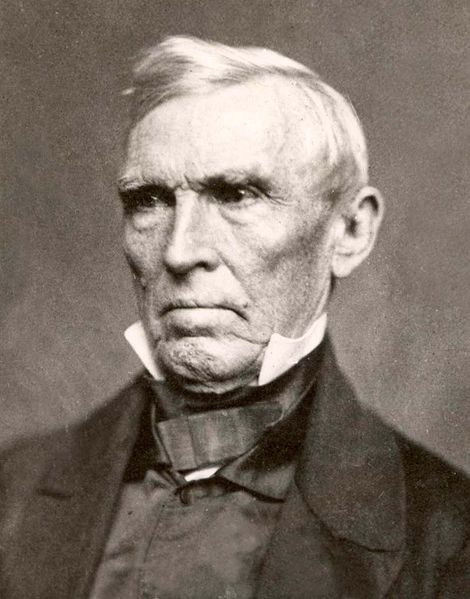
ex-Senator Crittenden: Kentucky safety requires Kentucky neutrality

In editorializing against Border State Neutrality on April 26, 1861 The New-York Times mentions part of a speech John Jordan Crittenden made on Kentucky neutrality:

“That he saw no safety to the State, but in a petition of neutrality — saying to both that, while she should hold herself in readiness at all times to act as a mediator between the parties, in order to restore peace, neither should cross her limits for hostile purposes, and that she was ready to defend herself against all who might attack her, or endeavor to thwart her purposes of peace.”
Posted in 150 Years Ago This Week, After Fort Sumter | Tagged , , , | Leave a comment

Tar and Feathers at Wheatland?

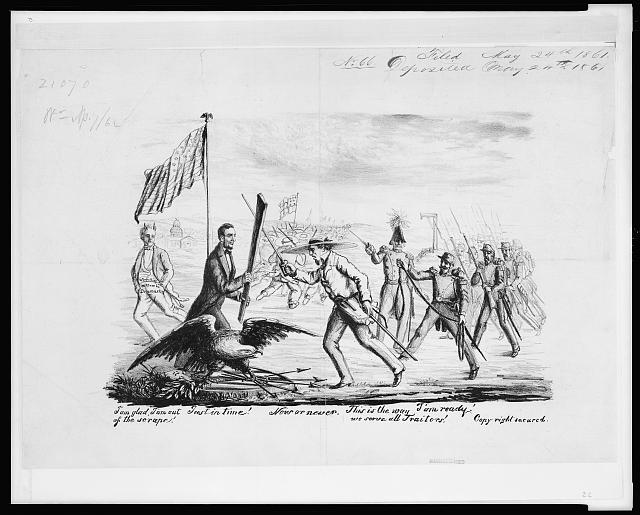
early Civil War cartoon

Buchanan (not exactly "sustaining the administration): "I am glad I am out of the scrape!" (LOC - LC-USZ62-89617)

Apparently northern women were ready to do more than make bandages in support of the Union during the fervently patriotic days after Fort Sumter.

From The New-York Times April 24, 1861:

The following dispatch was sent, a few days ago, to JAMES BUCHANAN, late President of the United States:

Resolved, By a few of the women of New-York that we have read with feelings of great indignation the dispatch sent to Mr LINCOLN by JAMES BUCHANAN, late President of the United States, saying that he will ‘sustain the administration;” and are determined, though abhorring this type of Southern civilization, unless said JAMES BUCHANAN keeps quiet and silent, henceforth in the cupboard of Wheatland to provide the necessary weight of feathers and other accompaniments for the single ladies of Wheatland, who we hear, have threatened to make a “coat” for the man who has, by his imbecility, involved us in one of the most dreadful wars the world has ever seen — the man who now offers to “sustain,” yet sustained nothing but the design of the rebels when he could have sustained the majesty of LAW — who said that if States wished to secede, no one could prevent it, while knowing that the Constitution distinctly says “The Union of those States is PERPETUAL” — the man who permitted the laws to be defied and the flag of his country to be disgraced without raising a hand to rebuke or prevent either outrage.

To the Editor of the New-York Times:

We learn that the meeting of ladies at your house this morning, adjourned to meet again in the vestry of Dr. POTTS’ Church, corner of Tenth-street and University-place, on Wednesday. It occurred to us that if notice was given, through the papers to-morrow morning, for the hotels in the City to contribute their old linen to make lint, a large quantity could be gathered of the best maternal for that purpose.

We will contribute all we have, and deliver it at the vestry on that day. We are, very respectfully,

Your obedient servants. CLARK & MOSELEY.

BREVOORT HOUSE, Tuesday, April 22.

The Civil War Reenactors explain that making lint means making bandages.

Here’s a different view of Buchanan and the secession crisis.

Buchanan tries to stop states other than South Carolina from seceding

Buchanan tries to stop states other than South Carolina from seceding (LOC - LC-USZ62-92039)

For more detail on the elements of the cartoons check out the Library of Congress: Buchanan as a devilish coward and as a struggling cowherd

The cartoon showing Lincoln wielding a rail-club against secession seems appropriate for another article in the same issue of The Times:

Lincoln and the Country.

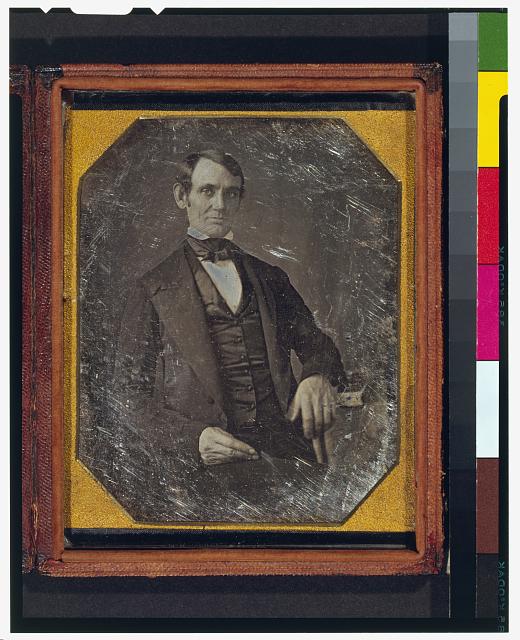
Abraham Lincoln in 1846 or 1847

"I swear eternal fidelity to the just cause, as I deem it, of the land of my life, my liberty, and my love." (1846 or 1847 LOC - LC-USZC4-2439)

A correspondent sends us an extract from a speech made by ABRAHAM LINCOLN in 1840, during the great political campaign of that year. He had been holding a debate with Messrs. DOUGLAS and LAMBORN, and in reply to a remark of the latter that they were sure of victory, Mr. LINCOLN said:

“The probability that we may fall in the struggle, ought not to deter us from the support of a cause which we deem to be just; It shall not deter me. If ever I feel the soul within me elevate and expand to those dimensions not wholly unworthy of its Almighty Architect, it is when I contemplate the cause of my country, deserted by all the world besides, and I standing up boldly and alone, and hurling defiance at her victorious oppressors. Here, without contemplating consequences, before high Heaven, and in the face of the world, I swear eternal fidelity to the just cause, as I deem it, of the land of my life, my liberty, and my love. And who, that thinks with me, will not fearlessly adopt the oath that I take. Let none falter, who thinks he is right, and we may succeed. But, if after all we shall fall, be it so. We shall have the proud consolation of saying to our conscience, and to the departed shade of our country’s freedom, that the course approved by our judgment and adored by our hearts in disaster, in chains, in torture, in death, we never faltered in defending.”

This was language worthy even of the present emergency. It indicates a patriotic devotion to the welfare of the country, which should inspire confidence in the man who uttered it, and who is now the leader of the nation in its struggle for the preservation of its existence.

Background from Stephen B. Oates, With Malice Toward None: Lincoln and Douglas began their debates in 1839. The 1840 campaign was intense throughout the nation. “The campaign was as noisy in Illinois as everywhere else, complete with parades, bands, glee clubs, barbecues, and flatulent oratory.” (Mentor edition page 55) Although Lincoln, as a Whig, was re-elected as a representative to the state legislature, the Democrats won control of the legislature.

Posted in 150 Years Ago This Week, After Fort Sumter | Tagged , , | Leave a comment

When the Telegraph Won’t Do

A Special Messenger’s Adventure in Maryland: Impersonate a Methodist Preacher

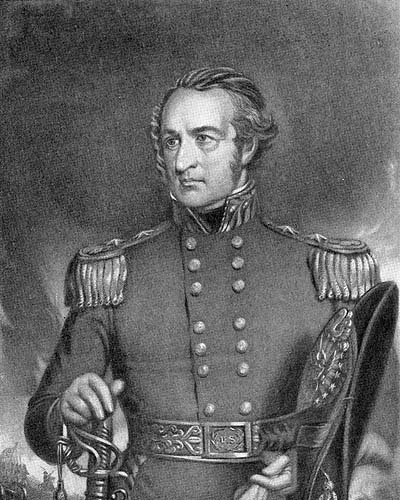
Robert_Patterson

General Patterson - doing business with King Cotton (portrait made during Mexican-American War)

From The New-York Times April 23, 1861:

PHILADELPHIA, Monday, April 22. …

From the Philadelphia Press of yesterday.

Hon. THOMAS B. LOWRY, a prominent citizen of this State, returned last evening from Washington City. He arrived as a bearer of dispatches from President LINCOLN to Gen. PATTERSON, of this city. He left Harrisburgh on Friday, and got to Baltimore in the midst of the excitement consequent on the arrival of the Massachusetts troops; he was a witness of the terrible scenes of Friday. It was expected that troops would arrive by the Philadelphia and Wilmington road, as well as by the Northern Central.

He telegraphed to Gov. CURTIN to prevent their departure from Philadelphia, and resorted to other means to prevent thair arrival, as he saw from five to seven thousand people, with arms in their hands, ready to destroy them when they arrived. No train came to Baltimore on Friday night. He took the cars for Washington city, and arrived there at daylight. He communicated the intelligence to Secretary CAMERON, Gen. SCOTT, and had a personal interview with President LINCOLN. Mr. LOWRY assured the President that Baltimore was in the hands of the mob, and that all communication with the North was cut off by burning the Railroad bridges.

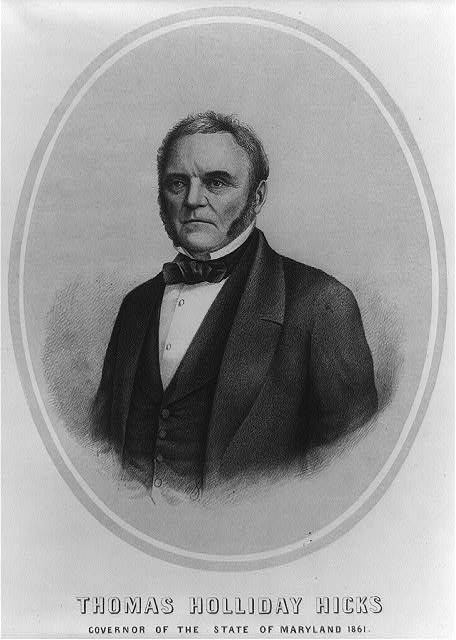
Thomas H. Hicks

Governor Hicks: "Send no more troops." (LOC - LC-USZ62-15306)

The President was very much astonished, and said that Gov. HICKS had assured him, the day before, that the troops would have no trouble in passing through Baltimore, and that if they wanted any troops from Washington he (Gov. HICKS) would telegraph. The President had also received a dispatch from the Governor, saying: “Send no more troops.” He supposed that meant, he wished no help from Washington, and that he would take care and see that the troops passed safely.

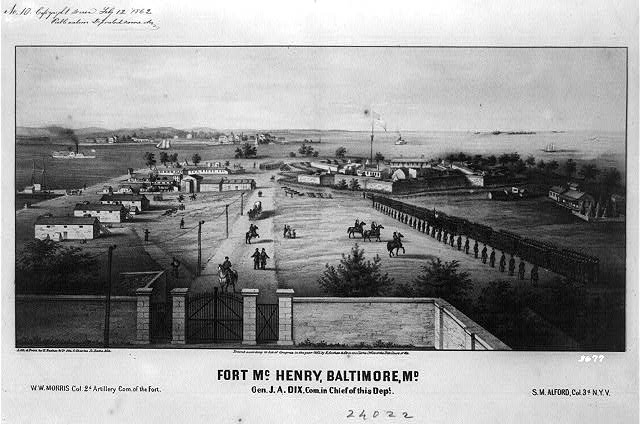
The President directed a Cabinet meeting on Saturday morning. After the meeting was adjourned, Mr. LOWRY was requested to deliver a verbal communication from the President to Gen. PATTERSON, of this city, and accordingly left Washington on Saturday afternoon, and arrived in Baltimore in the evening. He then proceeded on foot to a point opposite Fort McHenry, and within communicating distance of the fort. He remained there at a farm-house until 3 o’clock yesterday morning, when he took a horse and rode rapidly for seven miles without being molested, and stopped at another farm-house, where he left his horse. He then got into a farm-wagon and started north. They had not proceeded far, when they were met by a number of men with rifles in their hands, and stopped. This was about nine miles north of Baltimore. They wished to know who Mr. LOWRY was, and were informed that he was a Methodist preacher. They told him “to go to h — l,” to which he replied, “Brethren, I can pray for you, but I cannot go there.” He was suffered to pass unmolested.

Fort McHenry October 29, 1861

Fort McHenry - October 29, 1861 (LOC - LC-USZ62-3677)

He was stopped several times on his journey, but was always permitted to pass. He found sentinels and armed men at all points in the State of Maryland, whose business appeared to be the detention and examination of wayfarers. Finally, about half past four o’clock, he arrived at Havre-de-Grace, and crossed the Susquehanna in a skiff. After a good deal of trouble he succeeded in reaching the telegraph office, and telegraphed to Wilmington for a special train. At this point there were four merchants who had arrived from Baltimore. They were Union men, who had been compelled to leave the city in consequence of the troubles. The special train arrived, and they came on to Philadelphia, where they arrived about 7 o’clock last evening. Mr. LOWRY at once called on Gen. PATTERSON, and delivered the message with which he had been charged.

We learn from Mr. LOWRY that the Government is well provided with arms, and competent to sustain itself, at least until succor is obtained. In one of the farm houses at which he stopped he saw two badly wounded men of Gen. SMALL’S brigade. One of them had his arms broken, and was otherwise injured. His name was FREDERICK RHEIN, and he belonged to the second company. He said that he had been wounded with brick-bats, had no arms to defend himself, was knocked down, and made his way to the house of this man, who took care of him. The other man was unknown.

It is the universal opinion in Baltimore that the Massachusetts men behaved towards the mob with the greatest forbearance, and only fired when to fire was a necessity. Governor HICKS was still firm to the Union, but he was held in awe by the mob, who neutralized and nullified his efforts.

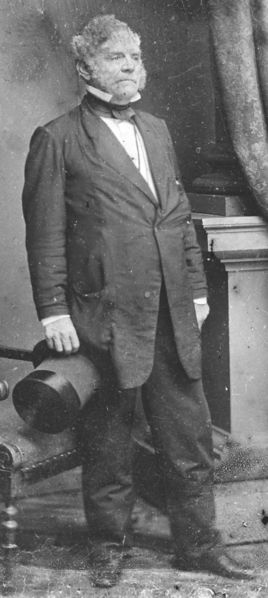
Robert Patterson, emigrated from Ireland. He served in the War of 1812 and was a general in the Mexican-American War. His father was banished from Ireland for being an insurrectionist. By 1861 Robert owned 30 cotton mills in Pennsylvania. He had a very short Civil War career.

Posted in 150 Years Ago This Week, After Fort Sumter, Lincoln Administration | Tagged , , | Leave a comment

Fervor in the Pulpit

Inspires Enlistment After Church

In Auburn [New York], an Irish company was enrolled by sturdy Owen
Gavigan, one of the fighting captains of old Cayuga. It was
obtained in one day, on that memorable Sunday, April 21st,
That day Auburn was filled with almost tumultuous excitement
and patriotic ardor. War meetings were held in the streets,
some old six-pound cannon in the Armory were dragged out
by Kennedy’s men and fired, and flags floated from stores, houses
and spires all over the city. The clergy preached strong ser-
mons on the duty of preserving the Union. At the Church of
the Holy Family, that true patriot and talented preacher, Father
Michael Creedon, made a powerful address, and exhorted Irish-
men to enroll themselves among the defenders of the Union and
upholders of Liberty. This was in the old church on Chapel
street. After mass, sixty-five men went to the new church and
enlisted, and afterwards marching to the Armory in a body they
elected officers and organized. Wm. H. Boyle and Luke Bran-
nick were made lieutenants.

From Cayuga in the Field by Henry Hall and James Hall.

Holy Family, Auburn NY

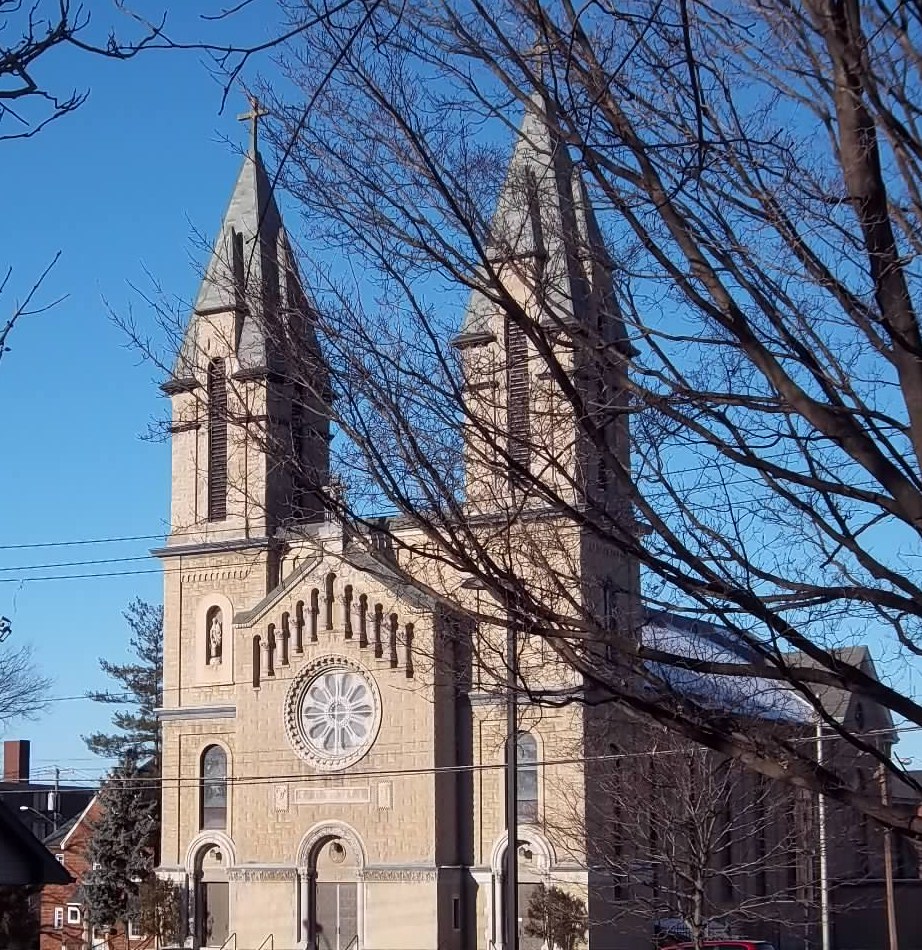
Where an Irish company signed up - Auburn, NY's "new" Holy Family church

__________________________________
Quote of the Week

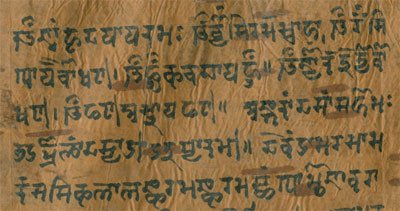
President LINCOLN knows no more of War than he does of Sanscrit …

New-York Times editorial, April 17, 1861

Kashmir_Sharada_MS

Sanscrit, I guess

The point of the editorial was that Lincoln had the common sense to entrust military strategy to General Winfield Scott. It seems that Lincoln, at least eventually, got the big picture – find generals who would relentlessly press the North’s advantages in manpower and material resources. This seems to follow from Lincoln’s relentless will to keep the union together.

____________________________

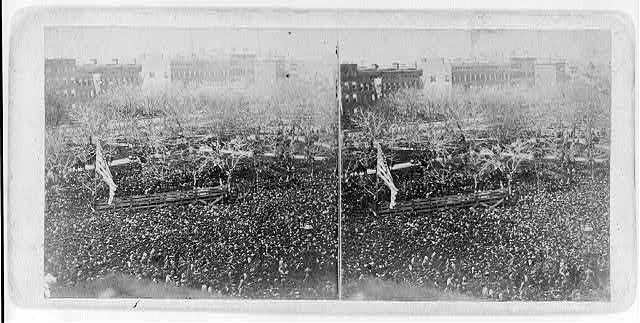
Union Square NY 4-20-1861

Some bigger than Auburn: The great Union meeting in Union Square, New York, April 20, 1861 (LOC - LC-USZ62-77629)

Posted in 150 Years Ago This Week, After Fort Sumter, Military Matters | Tagged , | 1 Comment

Telegraphing Their Intentions

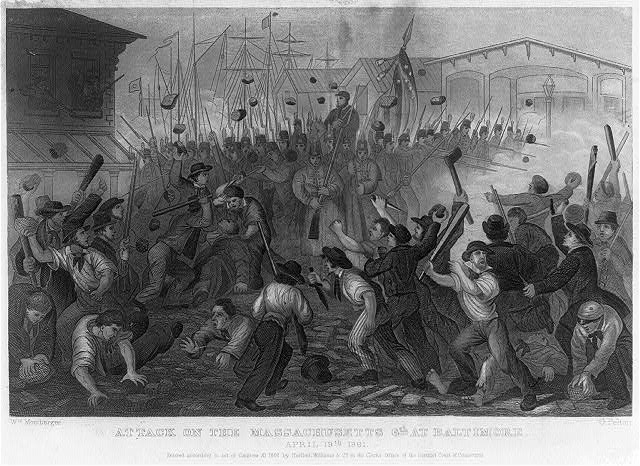
Pratt Street Riot

April 19, 1861: "peaceful march" gone wrong (LOC - LC-USZ62-56105)

Invasion of Our Soil vs. Defence of Our Common Capital

150 years ago today Baltimore Mayor George William Brown and Massachusetts Governor John Albion Andrew exchanged telegraph messages regarding the Pratt Street riot in Baltimore on April 19th. From The New-York Times April 22, 1861:

BOSTON, Sunday, April 21. …

CORRESPONDENCE BETWEEN THE MAYOR OF BALTIMORE AND GOV. ANDREW.

The following telegraphic correspondence explains itself:

BALTIMORE, Saturday, April 20.

Hon. John A. Andrew, Gov. of Massachusetts.

SIR: No one deplores the sad events of yesterday in this city more deeply than myself, but they were inevitable. Our people viewed the passage of armed troops to another State through the streets as an invasion of our soil, and could not be restrained. The authorities exerted themselves to the best of their ability, but with only partial success. Gov. HICKS was present, and concurs in all my views as to the proceedings now necessary for our protection. When are these scenes to cease? Are we to have a war of sections? God forbid. The bodies of the Massachusetts soldiers could not be sent out to Boston, as you requested, all communication between this city and Philadelphia by railroad, and with Boston by steamers, having ceased; but they have been placed in cemented coffins, and will be placed with proper funeral ceremonies in the mausoleum of Green Mount Cemetery, where they shall be retained until further directions are received from you. The wounded are tenderly cared for. I appreciate your offer, but Baltimore will claim it as her right to pay all expenses incurred. Very respectfully,

Your obedient servant,

GEO. M. BROWN,

Mayor of Baltimore.

John_A._Andrew,_Governor_of_Massachusetts

Governor Andrew: "Coercion? What coercion?"

To this the following reply was returned by the Governor:

To his Honor Geo. M. Brown, Mayor of Baltimore:

DEAR SIR: I appreciate your kind attention to our wounded and our dead, and trust that at the earliest moment the remains of our fallen will return to us. I am overwhelmed with surprise that a peaceful march of American citizens over the highway to the defence of our common Capital, should be deemed aggressive to Baltimoreans. Through New-York the march was triumphal. (Signed,)

JOHN A. ANDREW,

Governor of Massachusetts.

A mass meeting of citizens, numbering many thousands, was held in State-street this forenoon, and was addressed by FLETCHER WEBSTER, CHARLES L. WOODBURY and many distinguished citizens. The meeting was to raise a regiment for FLETCHER WEBSTER, and was completely successful. The most intense enthusiasm pervaded the crowd.

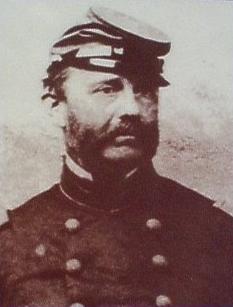
DFWebster

(Daniel) Fletcher Webster: going to fight for his father's "Liberty and Union"

The Mass Meeting in State-street continued from 10 o’clock A. M. till nearly night. It was a remarkable expression of the entire voice of our people. Beacon-street and North End leading merchants and leaders of the Roughs fraternized with entire unanimity of sentiment. The speakers embraced Scotchmen, Irishmen and Germans as well as Americans. It is impossible to convey in words more than an idea of the patriotic enthusiasm of the thousands present. It was altogether an unparalleled demonstration.

The momentous national crisis was the prominent topic in nearly all our pulpits to-day. The clergymen earnestly and eloquently expressed sympathy with the Government.

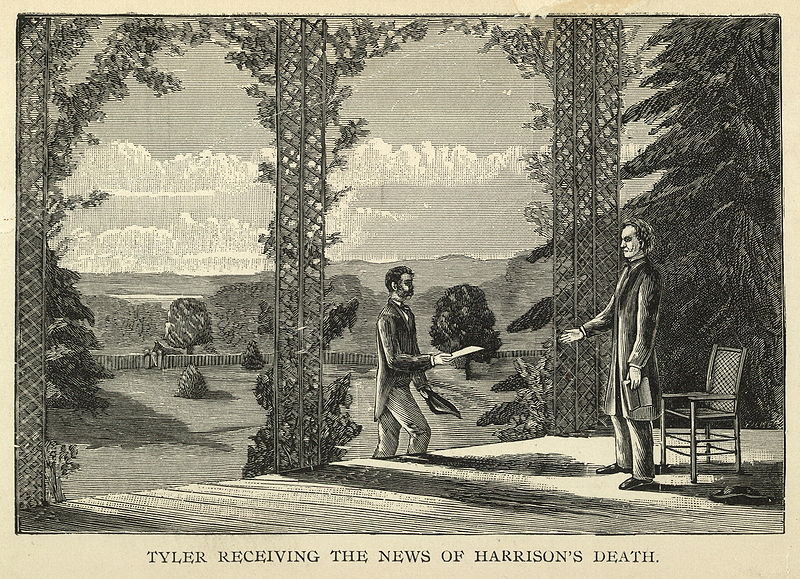
(Daniel) Fletcher Webster was indeed the son of Daniel Webster. Fletcher was killed at Second Bull Run.

800px-VPTyler-news-on-Harrison

Fletcher gives VP Tyler news of President Harrison's death (LOC -LC-USZ62-5997)

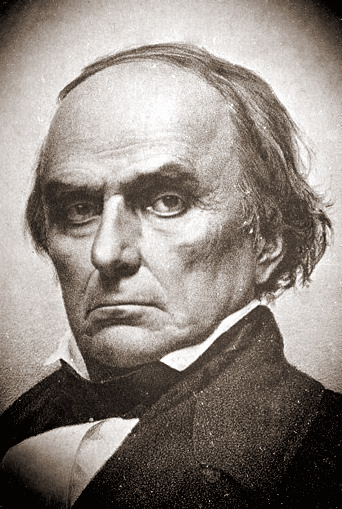
DanielWebster_ca1847_Whipple_2403624668-crop

D Webster: "Liberty and Union, now and forever, one and inseparable."

______________________________

Image of Daniel webster licensed by Creative Commons.

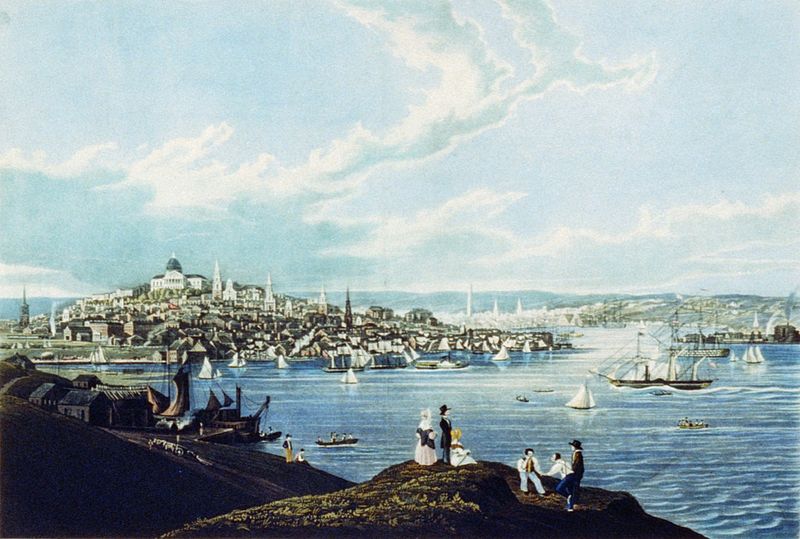
800px-Boston-view-1841-Havell

Tranquility now gone - a view of Boston 1841 (Robert Havell LOC - LC-DIG-pga-03789)

Posted in 150 Years Ago This Week, After Fort Sumter, Military Matters | Tagged , , , | Leave a comment

Red Coats, Blue Coats

Baltimore 4-19-1861

Baltimore's Pratt Street Riot 4-19-1861 (LOC - LC-USZ62-132929)

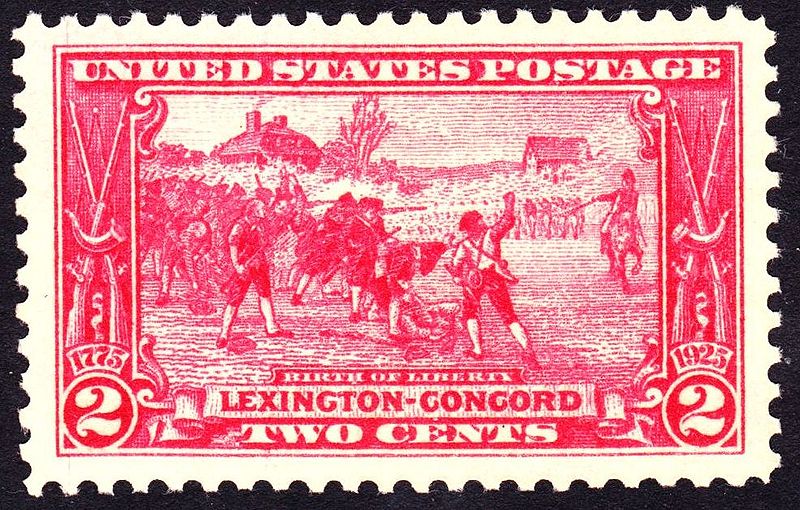
[Edit April 19, 2022: The National Park Service summarizes the April 19, 1861 Pratt street riot on its Fort McHenry website.] Here’s how The New York Times reported the events from Baltimore 86 years after Battles of Lexington and Concord:

STARTLING FROM BALTIMORE.; The Northern Troops Mobbed and Fired upon The Troops Return the Fire Four Massachusetts Volunteers Killed and Several Wounded Several of the Rioters Killed.

BALTIMORE, Friday, April 19.

There was a horrible scene on Pratt-street, today. The railroad track was taken up, and the troops attempted to march through. They were attacked by a mob with bricks and stones, and were fired upon. The fire was returned. Two of the Seventh Regiment of Pennsylvania were killed and several wounded.

It is impossible to say what portion of the troops have been attacked. They bore a white flag as they marched up Pratt-street and were greeted with showers of paving-stones. The Mayor of the city went ahead of them with the police. An immense crowd blocked up the streets. The soldiers finally turned and fired on the mob. Several of the wounded have just gone up the street in carts.

783px-Baltimore_Riot_1861

At the Washington depot, an immense crowd assembled. The rioters attacked the soldiers, who fired into the mob. Several were wounded, and some fatally. It is said that four of the military and four rioters are killed. The city is in great excitement. Martial law has been proclaimed. The military are rushing to the armories.

Civil war has commenced. The railroad track is said to be torn up outside of the city. Parties threaten to destroy the Pratt-street bridge.

As the troops passed along Pratt-street a perfect shower of paving stones rained on their heads.

The cars have left for Washington, and were stoned as they left.

It was the Seventh Regiment of Massachusetts which broke through the mob. Three of the mob are known to be dead and three soldiers. Many were wounded. Stores are closing, and the military rapidly forming. The Minute Men are turning out.

Pratt Street Riot by Currier and Ives

Fighting against coercion (Currier and Ives LOC - LC-USZC4-1736)

BALTIMORE, Friday, April 19 — 2:30 P.M.

Affairs are getting serious. Before all the cars got through, great crowds assembled at various points and commenced obstructing the road.

Reports are now arriving that the mob are tearing up the track.

It is understood the principal portion of the troops have got through.

BALTIMORE, Friday, April 19 — 4 P.M.

A town meeting has been called for 4 o’clock.

It is said there have been 12 lives lost.

Several are mortally wounded.

268px-Thomas_Holliday_Hicks_-_photo_portrait_standing

Governor Thomas Holliday Hicks (LOC - LC-DIG-cwpbh-02372)

Parties of men half frantic are roaming the streets armed with guns, pistols and muskets.

The stores are closed.

Business is suspended.

A general state of dread prevails.

Parties a short time ago rushed into the telegraph office, armed with hatchets, and cut the wires. Not much damage was done.

BALTIMORE, April 19 — 9 P.M.

R.W. DAVIS, of the firm of PEGRAM, PAYNTER & DAVIS, was shot dead during the riot, near Camden Station.

It is reported that the Philadelphians are now at the outer depot.

The President of the Road has ordered the train back, at the urgent request of the Mayor and Governor. They are already off.

The citizens who were mortally wounded are, JOHN MCCAN, P. GRIFFIN and G. NEEDHAM.

Four of the Massachusetts troops were killed and several wounded, but it is impossible to learn their names.

As far as ascertained, only two of the Massachusetts soldiers were killed, belonging to Company C. Their bodies are now at the Police Station.

At the same Station are the following wounded:

Sergeant AMES, of the Lowell City Guard, wounded in the head, slightly.

Private COLUM, of the same place, shot in the head, not serious.

Private MICHAEL GREEN, of Lawrence, Mass., wounded in the head, by stones.

H.W. DANFORTH, Company C, Sixth Regiment, of Massachusetts, slightly wounded.

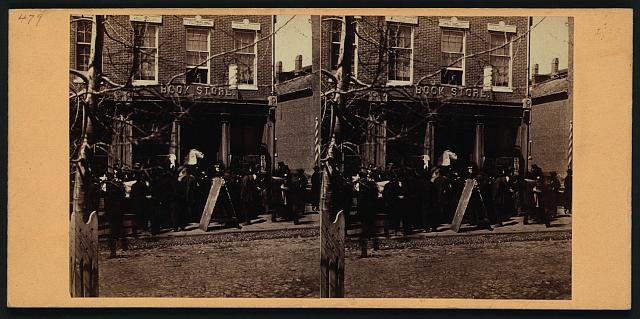
News Received in Cumberland. MD 4-20-1861

News Received in Cumberland. MD 4-20-1861 (stereo shot LOC - LC-DIG-stereo-1s01492)

So far as known at present, seven citizens were killed, including Mr. DAVIS, before mentioned, and JAMES CLARK.

Half a dozen or so are seriously wounded, though it is believed not fatally.

Comparative quiet now prevails. The military are underarms, and the police are out in full force.

There is a large mass meeting here to-night, addressed by the Mayor. The Governor was present.

800px-Lexington_and_Concord-2c

Commemorating 4-19-1775

Posted in 150 Years Ago This Week, After Fort Sumter | Tagged , , | 1 Comment

Frontier Guards in the East Room

429px-James_Henry_Lane

Senator Lane: Kansans to protect the White House (LOC - LC-BH82- 4185)

A day after the Virginia convention passed a secession ordinance there were still lots of rumors about a Confederate attack on Washington, D.C.

From The New-York Times April 19, 1861:

WASHINGTON, Thursday, April 18. …

REPORTED ATTACK ON WASHINGTON.

There has been much anxiety here to-day, became of reports that 2,500 men from Virginia were to attack Washington to-night, and vigilance, to prevent surprise, is doubled. Everybody is on the qui vive, even private citizens supplying themselves with arms and ammunition to be ready for any emergency.

The belief is very general that the attack will be made within the next two days. This is highly improbable, as we have now over 3,000 men here under arms, with picket guards stationed in every direction outside the city. The Long Bridge, connecting the city with Virginia, is guarded constantly by both artillery and infantry. It has two draws which can be thrown open by two men. The Georgetown Aqueduct, and all the other approaches, are equally well watched, and the distance to the city by any other route from Virginia, is so great that any movement of a large body of troops would be discovered, and reported in ample time to concentrate a force for its defence.

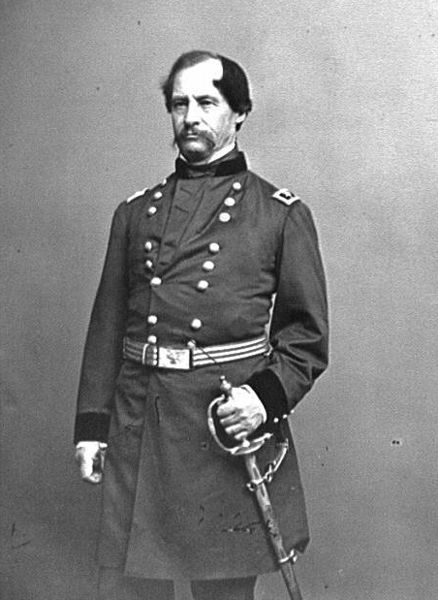
438px-David_Hunter

David Hunter: in charge of the Frontier Guards April 1861 (LOC)

Senator JIM LANE, of Kansas, has formed a corps of volunteers, who have been accepted by the Government, and appointed for special guard duty at the White House. They already have seventy-five men. The East room is their armory; one-half do duty while the others sleep. They were received at the White House by the President. …

DISPATCH TO THE ASSOCIATED PRESS.

WASHINGTON, Thursday, April 18. …

It is the intention of the War Department to muster companies enough in this District to yield a force approaching three thousand men.

The soldiers of the war of 1812 are about adopting a military organization and offering their services for the defence of the seat of Government. …

The rumors of an attempted invasion of Washington to-night, has excited much war feeling. Whatever may be the ground for such reports it is certain that the Government is expeditiously making preparations for all emergencies.

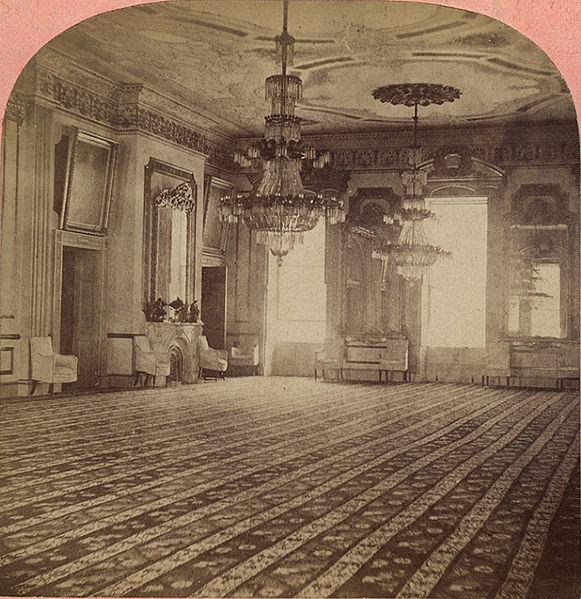
White House East Room during A. Johnson administration

Nice Barracks: White House East Room during A. Johnson administration (Collection of Jim Hood)

The Kansas men now here, about six hundred in number, have formed a company called the Frontier Guards. The have been given the post of honor in the East Room of the President’s House.

So many houses have been altered free of charge by citizens for the quartering of troops, that it is unnecessary to rent any more for that purpose. …

The entire atory is at The New York Times Archive

James Henry Lane had been recently elected as one of Kansas’ first U.S. senators and is said to have arrived in Washington on April 13th.

David Hunter accompanied President-elect Lincoln on his February train trip from Springfield, Illinois to Washington, D.C

You can see a photo of the Frontier Guards in front of the White House at The Cleveland Civil War Rountable.

Posted in 150 Years Ago This Week, Lincoln Administration, Military Matters | Tagged , , , | Leave a comment

Dyed-in-the-Wool

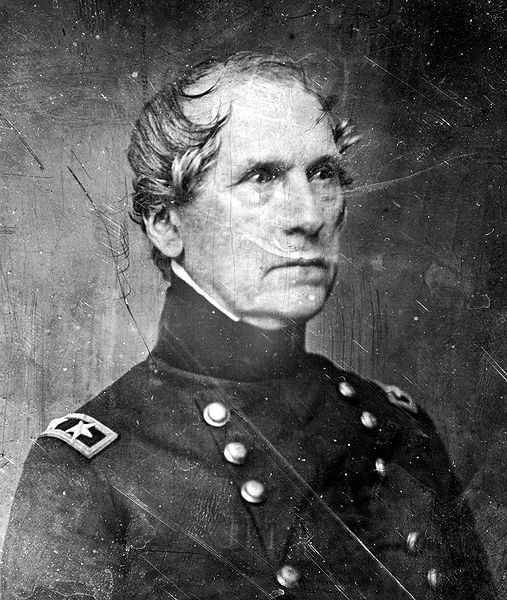
507px-John_E._Wool

General Wool pledges "my heart, my hand, all my energies" to the Union (LOC - LC-USZ62-110101)

A sampling of reaction to the surrender of Fort Sumter and President Lincoln’s call for 75,000 troops to put down the insurrection as reported in the April 17, 1861 edition of The New-York Times:

A. General Wool Is Steadfast

NEW-YORK.

TROY, N.Y., Tuesday, April 16.

At the immense demonstration in this city last evening in favor of the Stars and Stripes, a motion was made to adjourn in a body to the residence of Gen. WOOL, where, on behalf of the citizens, an address was made by MARTIN J. TOWNSEND, to which Gen. WOOL responded that his heart was rejoiced at this glorious demonstration of patriotism. Never, by any former compliment bestowed upon him, had he been thrilled by such a measure of joy. It is true that he had fought under the old flag, but he had done no more than his duty towards the best Government that ever existed. He had fought under the Stars and Stripes that were carried in triumph by WASHINGTON and under which JACKSON closed the second war for independence at New-Orleans in a halo of glory. Will you permit that flag to be desecrated and trampled in the duet by traitors now? Will You permit our noble Government to be destroyed by rebels in order that they may advance their schemes of political ambition and extend the area of Slavery? No, indeed, it cannot be done. The spirit of the age forbids it. Humanity and manhood forbid it, and the sentiments of the civilized world forbid it. My friend, that flag must be lifted up from the dust into which it has been trampled, placed in its proper position and again set floating in triumph to the breeze. I pledge you my heart, my hand, all my energies to the cause. The Union shall be maintained. I am prepared to devote my life to the work and to lead you in the struggle. [Deafening applause, cheers for the Union and Gen. WOOL.]

ALBANY, Tuesday, April 16.

The excitement about war continues to-day, although a heavy rain-storm prevails. …

B.Cash Flowing in the Nutmeg State

CONNECTICUT.

… NEW-HAVEN, Tuesday, April 16.

The Directors of the Mechanics’ Bank of this city this morning unanimously voted to offer $25,000 to the Governor of the State to aid him in equipping and moving any forces he may be called upon to furnish in defence of the Government.

419px-William_Alfred_Buckingham_-_Brady-Handy

Bankers offer cash, much cash, to Governor Buckingham (LOC - LC-DIG-cwpbh-00288)

The Elm City Bank has this day telegraphed to Gov. BUCKINGHAM to draw at sight on them for $50,000 for the same purpose.

The Fairfield County Bank has offered $20,000, and a private gentleman $50,000.

NORWICH, Conn., Tuesday, April 16.

Gov. BUCKINGHAM has issued a proclamation calling for volunteers, to rendezvous at Hartford. The Thames Bank, of this city, have just voted to tender $100,000 to Gov. BUCKINGHAM, to assist in equipping the troops in support of the Government.

NORWALK, Monday, April 16.

The Fairfield County Bank has offered $50,000 to Gov. BUCKINGHAM.

C.A Good laugh in Montgomery

800px-ConfederateCabinet

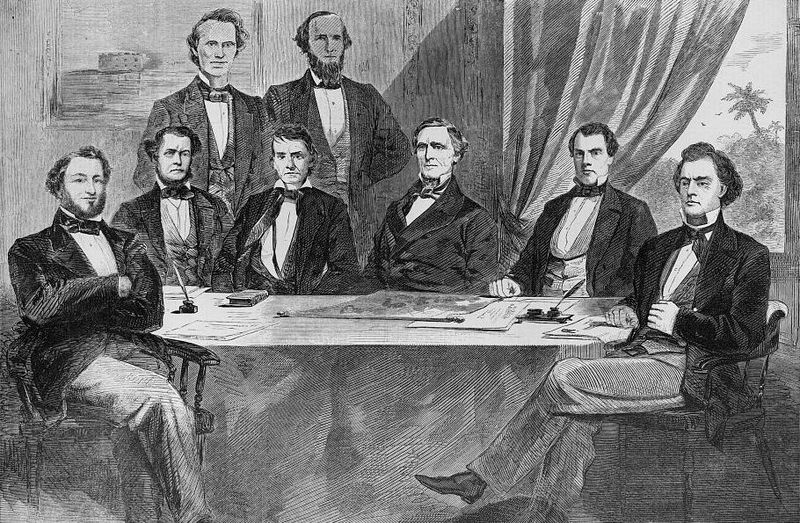
Confederate cabinet: Lincoln's proclamation a real knee-slapper (LOC - LC-USZ62-132563)

LATEST DISPATCHES FROM MONTGOMERY

MONTGOMERY, Tuesday, April 16.

The Cabinet were in council this morning. Mr. LINCOLN’s proclamation was read amid bursts of laughter.

The Secretary of War authorises the statement that 32,000 more troops were called out to-day to meet LINCOLN’s men.

MONTGOMERY, Tuesday, April 16.

Gen. PILLOW guarantees to raise 10,000 men in Tennessee, in twenty days, if President DAVIS will accept of them, and there is no doubt expressed but what he will accept of the offer.

Alexander_Stephens

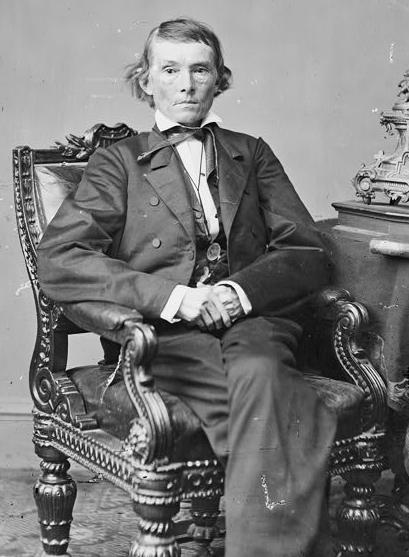
VP Stephens: 75 X 75,000 won't intimidate South (LOC - LC-DIG-cwpbh-04224)

Hon. A.H. STEVENS, in Atlanta, Ga., last night said that it would require seventy-five times seventy-five thousand men to intimidate the Confederate States and then it could not be done.

Of the 32,000 troops called out to-day, 5,000 are from each State except Florida, the number from that State being 2,000.

The Southern people say that they will suppress LINCOLN and SEWARD’s combination, which is less of a Government than our’s, and drive LINCOLN back to his abode in a quicker style than he came through Maryland.

There is perfect confidence expressed here that we can, with DAVIS, PILLOW, BRECKINRIDGE and BEAUREGARD, wipe out LINCOLN’s 75,000 men. Our munitions of war will hold out longer than LINCOLN’s money.

Gen. PILLOW’s Division of Tennessee troops has been accepted by Mr. DAVIS. Gen. PILLOW returned to Tennessee immediately.

We have no controversy but with the Black Re-publicans.

John Ellis Wool began his career as a U.S. Army officer in the War of 1812. “He was the oldest general on either side of the [Civil] war.”

Posted in 150 Years Ago This Week, Confederate States of America, Lincoln Administration | Tagged , , , | 1 Comment

Some Toughness in DC

Fort_sumter_1861

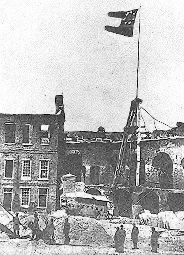
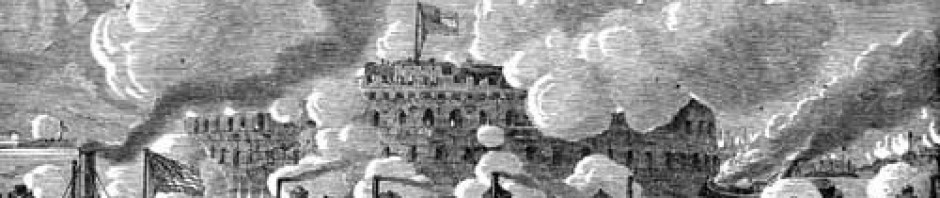
Fort Sumter: April 14, 1861

The Surrender of Fort Sumter

The Civil War Daily Gazette has a great piece on the April 14, 1861 surrender of Fort Sumter. My post on April 13th reproduced a New-York Times article that said that Fort Sumter had been surrendered and evacuated by April 13th. That obviously was not true. It’s a good lesson in taking stuff I read with a grain of salt. As can be seen at the beginning of the following excerpt, by April 14th people in Washington realized that not all the reports they were getting were true.

Lincoln’s Response to the Virginia Commissioners

The Lincoln administration wasn’t dealing with the attack on Fort Sumter in a vacuum. There were other matters to deal with: rumors circulated that the South was going to invade Washington, D.C., and Lincoln had to deal with those three commissioners from the Virginia secession convention. As it turned out he used his April 13th meeting with the Virginia delegation to more clearly explain his policy to the whole country. He gave the text of his response to newspapers to publish. From The New-York Times April 15, 1861 (The New York Times Archive):

Washington, D.C. balloon view May 1861

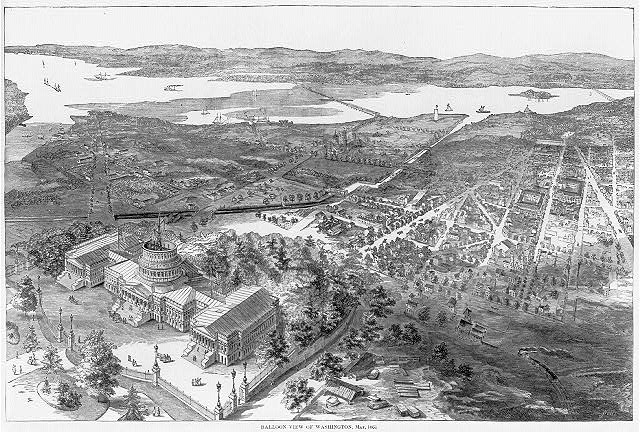
Washington, D.C. balloon view May 1861 (Library of Congress - LC-USZ62-45609)


WASHINGTON, Sunday, April 14.

The excitement here throughout the day has been intense. People gather in groups on the streets and in the hotels, discussing affairs at Charleston and the probabilities of the future.

There is great diversity of opinion relative to the reliability of the news that Major ANDERSON has surrendered. The dispatches to the Associated Press are evidently full of blunders, which cast suspicion on the whole.

The President, nevertheless, has intelligence which satisfies him that the news is too true Private dispatches from Charleston, signed by trusty men, also confirm it; but as the telegraph is known to have been constantly tampered with by the secession authorities, it is feared that even private dispatches may have been mutilated for the purpose of cutting the Government off from all possible means of correct information. …

The rumor that it has been decided to cut off all the mails from the seceded States is premature, to say the least. The Government does not recognize secession, and does not wish to punish the true men of the South together with the traitors. Wherever the mails are interfered with, they will be cut off, but probably not elsewhere. At least no determination otherwise has yet been arrived at by the President, notwithstanding his reference to the subject in the following letter to the Committee of the Virginia Convention, delivered by the President yesterday:

Fort Moultrie 1861

Part of the "unprovoked assault" on Sumter: Fort Moultrie 1861 (Library of Congress - LC-DIG-ppmsca-22981)

To Hon. Messrs. Preston, Stuart and Randolph:

GENTLEMEN: As a Committee of the Virginia Convention, now in session, you present me a preamble and resolution in these words:

Whereas, In the opinion of this Convention, the uncertainty which prevails in the public mind as to the policy which the federal Executive intends to pursue towards the seceded States, is extremely injurious to the industrial and commercial interests of the country, tends to keep up an excitement which is unfavorable to the adjustment of the pending difficulties and threatens a disturbance of the public peace; therefore,

Resolved, That a committee of three delegates be appointed to wait on the President of the United States, present to him this preamble, and respectfully ask him to communicate to this Convection the policy which the federal Executive intends to pursue in regard to the Confederate States.

In answer, I have to say that having, at the beginning of my official term, expressed my intended policy as plainly as I was able, it is with deep regret and mortification I now learn there is great and injurious uncertainty in the public mind as to what that policy is, and what course I intend to pursue. Not having as yet seen occasion to change, it is now my purpose to pursue the course marked out in the inaugural address. I commend a careful consideration of the whole document as the best expression I can give to my purposes. As I then and therein said, I now repeat, “The power confided in me will be used to hold, occupy and possess property and places belonging to the Government, and to collect the duties and imports; but beyond what is necessary for these objects, there will be no invasion, no using of force against or among the people anywhere.” By the words “property and places belonging to the Government,” I chiefly allude to the military posts and property which were in possession of the Government when it came into my hands. But if, as now appears to be true, in pursuit of a purpose to drive the United States authority from those places, an unprovoked assault has been made upon Fort Sumpter, I shall hold myself at liberty to repossess it, if I can, like places which had been seized before the Government was devolved upon me; and in any event I shall, to the best of my ability, repel force by force. In case it proves true that Fort Sumpter has been assaulted, as is reported, I shall, perhaps, cause the United States mails to be withdrawn from all the States which claim to have seceded, believing that the commencement of actual war against the Government justifies and possibly demands it I scarcely need to say that I consider the military posts and property situated within the States which claim to have seceded, as yet belonging to the Government of the United States as much as they did before the supposed secession. Whatever else I may do for the purpose. I shall not attempt to collect the duties and imposts by any armed invasion of any part of the country; not meaning by this, however, that I may not land a force deemed necessary to relieve a fort upon the border of the country. From the fact that I have quoted a part of the Inaugural Address, it must not be inferred that I repudiate any other part, the whole of which I reaffirm, except so far as what I now say of the mails may be regarded as a modification.

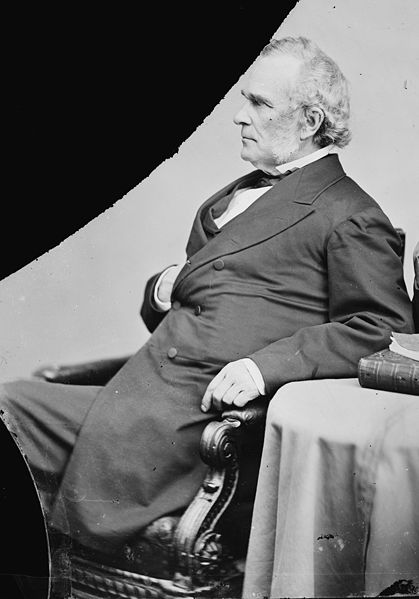
Alexander_Hugh_Holmes_Stuart

Stuart - Lincoln's response highly unsatisfactory

In Cry Havoc!* Nelson D. Lankford recounts the April 132th meeting between Lincoln and the three commissioners – Preston, Randolph, and Stuart. Lincoln was not in a conciliatory mood – he basically read his prepared text that the newspapers published the next day. The commissioners did not appreciate their reception and Lincoln’s words. Alexander Hugh Holmes Stuart was the staunch unionist of the three. Even he said Lincoln’s response was “in the highest degree unsatisfactory.”

As Mr. Lankford points out, President Lincoln is upping the ante by saying that, if the reports of the bombardment of Fort Sumter were true, he would give himself the the right to retake forts lost before his inauguration. It’s interesting that this meeting took place the day after the attack when no one was really sure what all was happening.

Lincoln’s response sure seems different than President Buchanan solicitously assuring the Virginian John Tyler that he would get to the bottom of which way the guns at Fort Monroe were pointing

*(Penguin Books, New York 2008 p100-102)

Posted in 150 Years Ago This Week, Lincoln Administration, Secession and the Interregnum | Tagged , , , , , | Leave a comment

“Thank Heaven we have a Government.”

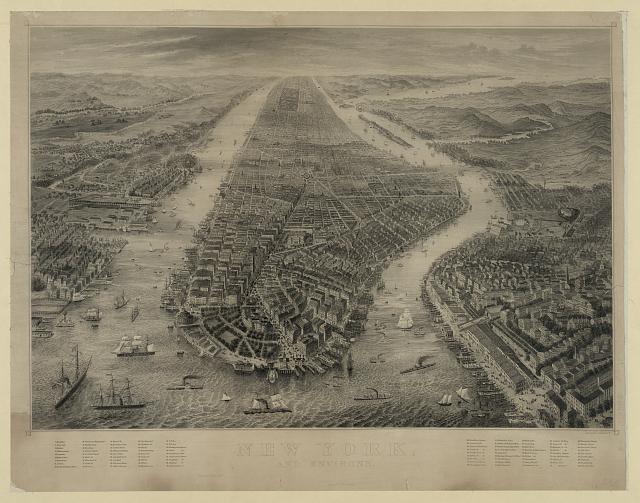
NYC 1867

"Start Spreading the News" (NY City 1867 Library of Congress LC-DIG-pga-01837)

New York City: a Bulletin Board Reader “Read Himself Hoarse”

From The New-York Times April 13, 1861 (The New York Times Archive):

THE NEWS IN NEW-YORK.

Yesterday was a day of excitements. Rumors apparently well grounded concerning the progress of affairs at Charleston flitted through Wall-street, pervaded the thoroughfares and produced sensations of surprise, indignation and rejoicings, according to the nature of the mind to which they were brought. …

At 5 o’clock in the afternoon, however, all uncertainty was set at rest. The telegraphic wire brought the long looked-for intelligence that WAR HAS BEGUN, and that the forces of the Confederated Traitors have struck the first blow. Expected as was the news, it produced a most remarkable and wide-spread sensation. Many had hoped the contest might yet be avoided others thought the Federal Government would back down rather than shed blood; and others were certain that a Divine Providence would interfere to prevent so fratricidal a strife. The bulletin boards were surrounded; the streets near them were blockaded, and the fast-gathering multitude were only satisfied when the self-appointed reader had read himself hoarse in the frequent repetition of the brief announcement of the facts. Hundreds of anxious inquirers besieged the telegraph and publication offices, confident that there might yet be some item of information which was withheld from the masses, and they were only appeased when told that they were in possession of all, and that until this morning’s papers were cut they could have no more.

“Good, good,” exclaimed many a one, as he read the statement, or as it was repeated to him by a friend, “at last we have reached a crisis; something must be done.” The feeling of rejoicing was everywhere to be met, that Major ANDERSON had not lowered his flag, and that President LINCOLN had determined to sustain, even at so fearful a cost, the honor of the country. Of the very many with whom we conversed, and from whom we heard the freeset expression of opinions, we did not find a single individual who did not respond heartily to the sentiment, “Thank Heaven we have a Government.” Speculations and wagers of all kinds were the order of the night, as to the probable effect of this or that battery, of the arrival and probable action of the fleet, and of the result of this first contest; and very long odds were offered and taken that Sumpter would silence Moultrie, and that the fleet, on arrival, would find but little to do. However that may be, the war has begun — the aggressors were the Confederated forces, the Federal post has returned vigorously the fire, and the entire moral support of the North stands about the President in this trying moment, as will the entire physical force stand at his side if a more trying hour should come.

There is so much going on 150 years ago this week I might jump around on the dates. I liked this story because it reminded me of how hungry people seemed to be for the news of Lincoln’s Inauguration. I never realized there were apparently bulletin boards set up throughout cities to publish snippets from the telegraph.

Seven Score and Ten has published an editorial by a Richmond newspaper that sees the Confederate attack of Fort Sumter as the North’s fault. To read a Northern view of the attack check out The New York Times Archive.

Posted in 150 Years Ago This Week | Tagged | Leave a comment