Putting Mouth Where Money Is

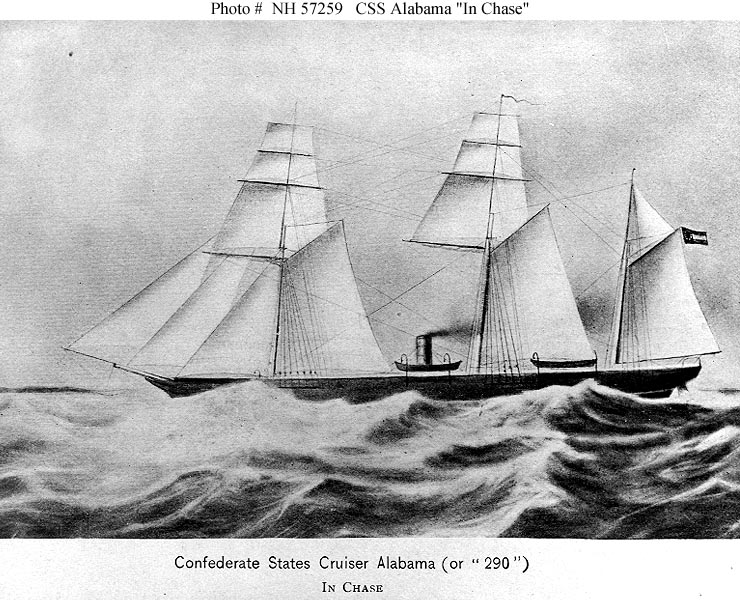
CSS Alabama (1862-1864) "In Chase" Halftone print copied from Arthur Sinclair's "Two Years on the Alabama", 2nd Edition, 1896. U.S. Naval Historical Center Photograph.

chasing American (and British) commerce

According to Wikipedia

The three major tasks of the Confederate Navy during the whole of its existence were the protection of Southern harbors and coastlines from outside invasion, making the war costly for the United States by attacking U.S. merchant ships world-wide and breaking the Union Blockade by drawing off U.S. Navy ships in pursuit of the Confederate raiders.

150 years ago this week the Richmond Daily Dispatch observed that the CSS Alabama in particular must be having some success with the second of these goals because “The New York Chamber of Commerce is still much exercised on the subject of the Alabama.” and reported on a series of resolutions by the Chamber. There was a more complete report in The New-York Times on January 3, 1863:

CHAMBER OF COMMERCE.; Important correspondence Resolutions Relative to Rebel Privateers Fitted Out in British Ports. … Maj. Gen. Butler. …

The following correspondence was read: …
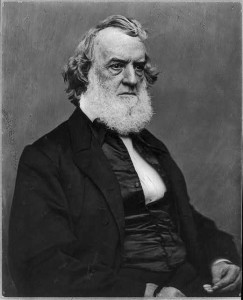
Gideon Welles, 1802-1878 (between 1855 and 1865; LOC: LC-USZ62-72777)

we’re already trying to hunt down the Alabama

FROM SECRETARY WELLES.

NAVY DEPARTMENT, Dec. 11, 1862.

SIR: I have received your letter of the 6th inst., inclosing a copy of a resolution passed at a meeting of the Chamber of Commerce of the State of New-York, on the 4th inst., recommending and suggesting that one or more naval steamers be dispatched to cruise about the Equator, etc., for the protection of American commerce, and in reply would respectfully state the Department has already dispatched armed vessels in that direction.

I am respectfully, your obedient servant,

GIDEON WELLES, Secretary of the Navy.

A.C. RICHARDS, Secretary Chamber of Commerce, New-York.

LIVERPOOL CHAMBER OF COMMERCE.

CHAMBER OF COMMERCE, LIVERPOOL, Dec. 6.

SIR: I am directed by the President of this Chamber to acknowledge the receipt of your letter of the 11th ultimo, (erroneously addressed to the Board of Trade in London,) transmitting a series of resolutions adopted by the Chamber of Commerce of the State of New-York, relative to the burning of the ship Brilliant by the steamer Alabama, and I am to inform you that it shall be laid before the Council of this Chamber at the earliest opportunity.

I remain, Sir, yours, &c.,

ROBERT TRONSON, Secretary.

J.A. STEVENS, Jr., Secretary Chamber of Commerce, New-York.

LONDON COUNCIL OF TRADE.

OFFICE OF COMMITTEE OF PRIVY COUNCIL FOR TRADE, WHITEHALL, Dec. 2, 1862.

SIR: I am directed by the Lords of the Committee of Privy Council for trade, to acknowledge the receipt of your letter of the 11th ult., and I am to request that you will inform the Council that the resolutions passed by the Chamber on the subject of the burning of various ships by the Alabama have been received, and will be laid before her Majesty’s Government. I am, Sir, your obedient servant,

J. EMMERSON TENNENT. …

The ravages of the pirate Alabama were then informally discussed, pending which Mr. LOWE introduced the following preamble and resolutions:
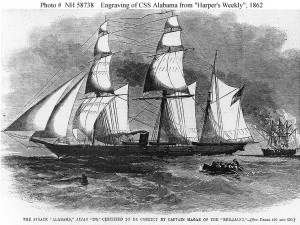
"The Pirate 'Alabama,' Alias '290,' Certified to be correct by Captain Hagar of the 'Brilliant'"  Line engraving published in "Harper's Weekly", November 1, 1862, depicting CSS Alabama burning a prize.  U.S. Naval Historical Center Photograph.

burning the Brilliant

Whereas, On the 21st day of October last, a statement emanating from Capt. HAGAR, of the ship Briliant, recently burned at sea by the captain and crew of the steamer Alabama, was produced in this Chamber, and a series of resolutions was unanimously adopted, the object of which was to warn the merchants of Great Britain in a friendly spirit of the evil consequences likely to ensue from a repetition of such piratical acts from the fitting out in the port of Great Britain, of other vessels like the Alabama, destined to plunder and destroy our commerce on the high seas; and,

Whereas, This Chamber is led to believe that other vessels have sailed from the ports of Great Britain, or are about to sail, for the express purpose of destroying American ships in distant parts of the world; and in an answer of Earl RUSSELL to the Council of the Liverpool Chamber of Commerce is found the following passage, to wit: “Sir, I am instructed by Earl RUSSELL, in reply to your letter of the 6th inst. respecting the destruction by the Confederate steamer Alabama of British property embarked in American vessels, and burned by that steamer. Earl RUSSELL desires me to state to you that British property on board a vessel belonging to one of the belligerents must be subject to all the risks and contingencies of war, so far as the capture of the vessel is concerned. The owner of any British property, not being contraband of war, on board of a Federal vessel captured and destroyed by a Confederate vessel of war, may claim in a Confederate Prize Court, compensation for destruction of such property.” And, whereas, action on the part of the Liverpool Chamber of Commerce, so far as is at present known, has been limited to a reference of the proceedings of this Chamber to their Council, and on the part of the Lords of the Committee of Privy Council for trade to Her Majesty’s Government, as set forth in the two communications just read from Messrs. TRONSON and TENNENT, Secretaries of these bodies.
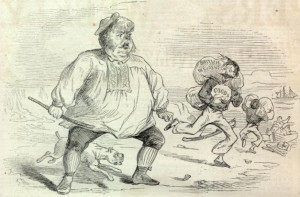
pirate-alabama-cartoon (Harper's Weekly, November 15, 1862)


THE PIRATE “ALABAMA.”
JOHN BULL ( furious.) “Hallo! there, SEMMES; that’s my Property. Fair play, you Rascal! If I’d suspected this, you’d never have got out of Liverpool!” (“Most of the property destroyed by the Pirate SEMMES on board the vessels he has seized was insured in England, and the loss will consequently fall on Englishmen.”—Daily Paper

And whereas, Since the month of October last, it has come to the knowledge of this Chamber, that the Laurette, T.B. WALES, and other ships have been captured and burned by the Alabama, and that in the first named, a considerable portion of the cargo was on British account, and certified to be such, and under the hands and seal of a British consul; and whereas, There is no evidence before this Chamber to show that in the absence of a recognized government of which to demand redress, the British government has issued orders to the naval commanders of her Britannic Majesty’s ships of war to hunt down and destroy the Alabama, as an offender against the property and honor of Great Britain as well as an offender against the rights and interest of humanity; and, whereas, it is alleged that the Alabama is continually supplied from Great Britain with coal and ammunition, by means of which she is enabled to continue her piratical courses against American commerce; the consequence being to raise the premium of insurance on American vessels and their cargoes, and to depress the rates of freight on American ships; and to transfer our carrying trade to vessels of other nations; this Chamber is led to the following conclusions:

1. That through the active instrumentality of the subjects of Great Britain, the so-called Confederate States are furnished with ships, men, arms and ammunition, with which to war upon the commerce of the United States.
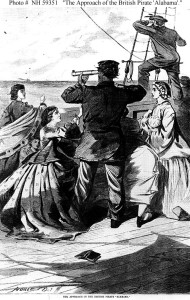
"The Approach of the British Pirate 'Alabama'."  Line engraving after a drawing by Homer, published in "Harper's Weekly", Volume VII, January-June 1863, page 268, depicting an anxious scene aboard a merchant ship as the Confederate cruiser Alabama comes up. This may represent the capture of the California mail steamer Ariel off Cuba on 7 December 1862, as there were many ladies among the prize ship's passengers.  U.S. Naval Historical Center Photograph.

Alabama on the horizon

2. That without such foreign aid the States in revolt against the Government of the United States would be powerless to effect any injury to our commerce on the high seas.

3. That this war upon American commerce, carried on by ships built and manned in Great Britain, is not rebuked by the British Press generally; is not discouraged by the public sentiment of a once friendly nation claiming to be governed by high and honorable principles, and is not effectively and thoroughly arrested by the strong will and stronger arm of the British Government.

4. That as a result of the foregoing facts and conclusions, the merchants of the United States are subjected in a certain degree to the evils that would attend a state of war with Great Britain, and are compelled to witness the carrying trade of their country transferred from their own vessels to — British bottoms, under all the sanctions and advantages of peace and neutrality to the latter — white the source of this great peril, threatening to drive American commerce from the ocean is of British origin.

Now, therefore, Resolved, That a Committee of ten be appointed to take into consideration the foregoing, and to report, at a special meeting to be called for the purpose, what action it becomes this Chamber to take in the premises.

Mr. LOWE urged the passage of the above in a brief and calm statement of the facts regarding the Alabama, and also read a letter from our Consul at Liverpool, Mr. DUDLEY, detailing the efforts made by him to induce the British Government to prevent the Alabama from sailing. Mr. DUDLEY states that four more privateers are now being built in Liverpool and one in Glasgow, and that their aim and purpose is well known to the English Government. …

Mr. MAURY stated that he had private advices from England that the Alabama was so constructed as to to be able to evade the fastest war steamer afloat, and that other privateers were building for the rebels that would even excel her. …

Yesterday we had an article about Nathaniel Banks, Ben Butler’s successor in New Orleans. Beast is spending time in New York and Washington these days:

The steam transport S.R. Spaulding, Capt. HOWES, arrived Thursday morning, from New-Orleans on the 24th ult., bringing as passengers Maj.-Gen. B.F. BUTLER, Mrs. BUTLER, and the General’s Staff. The entire party went to the St. Nicholas Hotel, where Gen. BUTLER quietly passed the day, receiving visitor from his intimate friends, but avoiding anything in way of a public reception by keeping the knowledge of his arrival secret. Yesterday morning Gen. BUTLER, accompanied by Col. SHAFFER, Chief Quartermaster, Capt. HAGGERTY, Judge Advocate, and Capt. PUFFER, Aide, took the early train for Washington. He will return to this City in a day or two.

The political cartoon of Raphael Semmes, the Alabama’s commander, taunting John Bull was published in the November 15, 1862 issue of Harper’s Weekly hosted at Son of the South
Posted in 150 Years Ago This Week, Naval Matters, Northern Society | Tagged , , , , | Leave a comment

Emancipation: the Rebels Did It

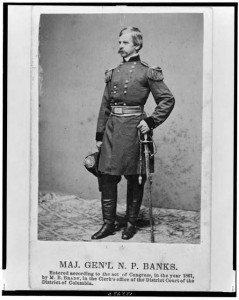
Major General N.P. Banks, full-length portrait, standing, facing left (1861; LOC: LC-USZ62-122438 )

Emancipation: rebellion’s “leaders will have accomplished what other men could not have done.”

150 years ago today a Richmond newspaper printed a document issued by Nathaniel Banks, commander of the Department of the Gulf, explaining the effect of President Lincoln’s Emancipation Proclamation on the people of Louisiana.

From the Richmond Daily Dispatch January 9, 1863:

Gen. Banks’s emancipation proclamation in New Orleans.

General Banks gave New Orleans a Christmas sensation in the way of an emancipation proclamation, after the style of Abraham 1st. The following is the document:

Headq’s Department of the Gulf.

New Orleans, Dec. 24, 1862.

To the People of Louisiana:

In order to correct public misapprehension and misrepresentation, for the instruction of the troops of this department, and the information of all parties in interest, official publication is herewith made of the proclamation by the President of the United States relating to the subject of the emancipation. In the examination of this document it will be observed:

I. That it is the declaration of a purpose only — the full execution of which is contingent upon an official designation by the President, to be made on the 1st day of January next, of the States and parts of States, if any, which are to be affected by its provisions.
II. That the fact that any State is represented in good faith in the Congress of the United States is conclusive evidence, in the absence of strong countervailing testimony, that such State, and the people thereof, are not in rebellion against the United States.
III. That the State of Louisiana has not yet been designated by the President as in rebellion, nor any part thereof, and that it has complied with all the conditions of the proclamation respecting representation.
IV. That pecuniary aid to States not in rebellion, which may hereafter provide for immediate or gradual emancipation; the colonization of persons of African descent elsewhere, and the compensation of all citizens who have remained loyal, “for all losses by acts of the United States, including slaves,” are among the chief recommendations of this important paper.

It is manifest that the changes suggested therein and which may hereafter be established, do not take effect within this State on the first of January proximo, nor at any precise period which can now be designated, and I call upon all persons, of whatever estate, condition, or degree, soldiers, citizens or slaves, to observe this material and important fact, and to govern themselves accordingly. All unusual public demonstrations, of whatever character, will be for the present suspended. Provost marshals, officers, and soldiers, are enjoined to prevent any disturbance of the public peace. The slaves are advised to remain upon their plantations until their privileges shall have been definitely established. They may rest assured that whatever benefit the Government intends will be secured to them; but no man can be allowed in the present condition of affairs to take the law into his own hands. If they seek the protection of the Government they should wait its pleasure. Officers invested with command will be vigilant in the discharge of their duties. …

The war is not waged by the Government for the overthrow of slavery. …

Bombardment of Fort Sumter, Charleston Harbor: 12th & 13th of April, 1861 (Currier & Ives, [1861?]; LOC: LC-DIG-ppmsca-19520)

“The first gun at Sumter proclaimed emancipation.”

The first gun at Sumter proclaimed emancipation. The continuance of the contest, there commenced, will consummate that end, and the history of the age will leave no other permanent trace of the rebellion. Its leaders will have accomplished what other men could not have done. The boldest Abolitionist is a cy[p]her when compared with the leaders of the rebellion. What mystery pervades the works of Providence! We submit to its decrees, but stand confounded at the awful manifestations of its wisdom and power! The great problem of the age, apparently environed with labyrinthine complications, is likely to be suddenly lifted out of human hands. We may control the incidents of the contest, but we cannot circumvent or defeat the end. It will be left us only to assuage the horrors of internecine conflict …

Contest, in public as in social life, strengthens and consolidates brotherly affection. [E]gland, France, Austria, Italy–every land fertile enough to make a history, has had its desolating civil wars. It is a baseless nationality that has not tested its strength against domestic enemies.–The success of local interests narrows the destiny of a people, and is, followed by accession, poverty, and degradation. A divided country and perpetual war make possession a delusion and life a calamity. The triumph of national interests widens the scope of human history, and is attended with peace, prosperity, and power. It is out of such contests that great nations are born. What hallowed memories float around us! New Orleans is enshrined as sacred as Bunker Hill! On the Arostook and the Oregon the names of Washington, Jackson, and Taylor are breathed with as deep a reverence as on the James or the Mississippi. Let us fulfill the condition of this last great trial, and become a nation — a grand nation — with sense enough to govern ourselves and strength enough to stand against the world united.

N. P. Banks,

Major General Commanding.

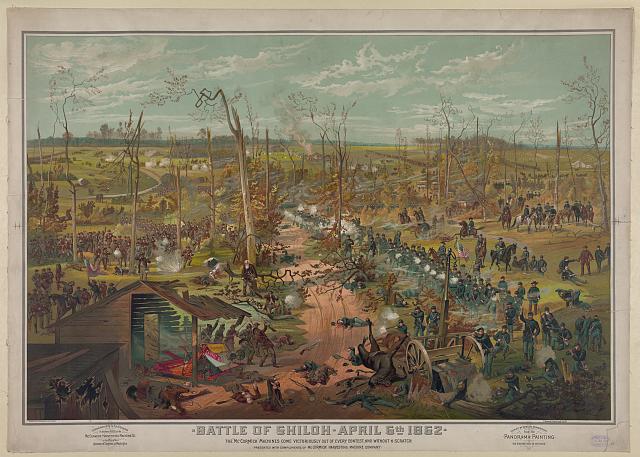
Battle of Shiloh April 6th 1862 (c1885 Dec. 31: LOC: LC-DIG-pga-00540 )

“Contest … strengthens and consolidates brotherly affection”

Posted in 150 Years Ago This Week, Lincoln Administration | Tagged , , , , | Leave a comment

Jackson & Lee

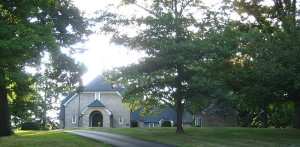
Augusta Stone Church built in 1749

Augusta Stone Church built in 1749

From the Richmond Daily Dispatch January 8, 1863:

Testimonial to Lieut. Gen. Jackson.

The citizens of the county of Augusta, in appreciation of the services of this distinguished chieftain, have presented him with an elegant horse and equipments. The following is his letter acknowledging his acceptance of the handsome testimonial.

Caroline County, Dec. 30, 1862.

To the Hon Alex. H. R. Stuart and others:

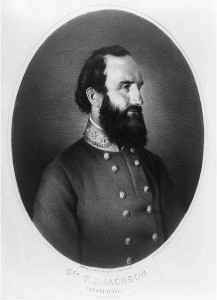
Gen. T.J. Jackson (Stonewall) (by John Lawrence Giles, between 1860 and 1900; LOC:  LC-USZ62-93021)

Thanks, but I can do better

Gentlemen:

I have this day received the beautiful horse and equipments which have been presented to me by you on the part of citizens of Augusta county. I hasten to express my grateful appreciation of the honor you have thus conferred open me. This evidence of regard will continue to be appreciated, not only for its intrinsic worth, but as the kind testimonial of the patriotic people of Augusta.

In reply to the complimentary manner in which you speak of my services, permit me to say that they have fallen far short of my desires.

I trust that God, who had thus far protected your homes, may continue to do so, and soon bless our country with an honorable and lasting peace.

With sentiments of high regard, I am gentleman, your ob’t serv’t.

T. J. Jackson.

From the Richmond Daily Dispatch January 7, 1863:

Address of Gen. Lee to the army.

The following is a copy of the address of Gen. Lee to his army after the victory at Fredericksburg:

Headq’rs Army of Northern Virginia, December 31, 1863,

General Orders, No. 132.

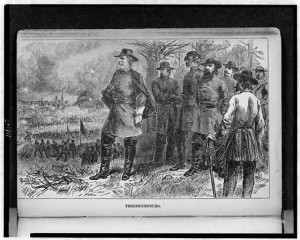
Fredericksburg (Robert E. Lee / by John Esten Cooke. New York : G.W. Dillingham Co., p. 176..1899; LOC:  with his soldiers at Fredericksburg, Virginia. Reproduction Number: LC-USZ62-118167 )

appreciates his army’s “fortitude, valor, and devotion “

1. The General Commanding taken this occasion to express to the officers and soldiers of the army his high appreciation of the fortitude, valor, and devotion displayed by them, which, under the blessing of Almighty God, have added the victory of Fredericksburg to the long list of their triumphs.

An arduous march, performed with celerity under many disadvantages, exhibited the discipline and spirit of the troops, and their eagerness to confront the foe.

The immense army of the enemy completed its preparations for the attack without interruption and gave battle in its own time, and on ground of its own selection.

It was encountered by less than twenty thousand of this brave army, and its columns crushed and broken, hurled back at every point with such fearful slaughter that escape from entire destruction became the boast of those who had advanced in full confidence of victory.

That this great result was achieved with a loss small in point of numbers, only augments the admiration with which the Commanding General regards the prowess of the troops, and increases his gratitude to him who hath given us the victory.

The war is not yet ended. The enemy is still numerous and strong, and the country demands of the army a renewal of its heroic efforts in he behalf. Nobly has if responded to her call in the past, and she will never appeal in vain to its courage and patriotism.

The signal manifestations of Divine mercy that have distinguished the eventful and glorious campaign of the year just closing; give assurance of hope that under the guidance of the same Almighty band the coming year will be no less fruitful of events that will ensure the safety, peace, and happiness of our beloved country, and add now insure to the already imperishable name of the Army of Northern Virginia.

R. E. Lee, General.

Posted in 150 Years Ago This Week, Confederate States of America, Military Matters, Southern Society | Tagged , , , | Leave a comment

President Home

On December 10, 1862 Confederate President Jefferson Davis left Richmond for a tour of the western states, the western seats of war. He returned to Richmond on January 5, 1863:

He was weary and he looked it, and with cause, for in twenty-five days he had traveled better than twenty-five hundred miles and had made no less than twenty-five public addresses, including some that lasted more than an hour. However, his elation overmatched his weariness, and this too was with cause. He knew that he had done much to restore civilian morale by appearing before the disaffected people, and militarily the gains had been even greater. …

Davis himself had done as much as any man, and a good deal more than most, to bring about the result that not a single armed enemy soldier now stood within fifty air-line miles of any one of these three [Richmond, Vicksburg, Chattanooga] vital cities. [1]

President Davis gave an impromptu State of the Confederacy speech when he was serenaded by some Richmond citizens. He paralleled Virginia in the Civil War with Virginia in the Revolution and could point out that the heroic general Robert Lee was the son of “Light Horse Harry”.

From the Richmond Daily Dispatch January 7, 1862:

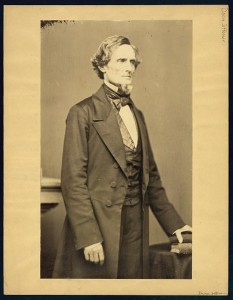
Jefferson Davis, three-quarter length portrait, facing right (between 1858 and 1860; LOC:  LC-DIG-ppmsca-23852)

mistaken for Abraham I?

The President Welcomed Keme [Home] — Serenade and speech.

–On Monday night, about 11 o’clock, some two or three hundred persons assembled at the President’s mansion, with Smith’s Band, for the purpose of paying their respects to the executive head of the Confederacy on his return from an extended tour. After the band had played two popular airs the President appeared at the door, and the crowd gave a cheer, when the gentleman who accompanied him said: “Fellow-citizens, allow me to introduce to you the President of the United States.” There was a momentary silence, when the presenter corrected himself by saying “the President of the Confederate States” This was more satisfactory, and Mr. Davis remarked that he was proud to acknowledge that title, but the other be would spurn. He then gracefully thanked his friends for this manifestation of their regard, and expressed his pleasure at meeting them again on his return to the capital of the Confederate States, in a Commonwealth which has been the size [scene] of the bloodiest battles of two revolutions in defence of the principles of liberty. Now, he believed, the incentive to fight was even stronger than when our forefathers threw off the yoke of tyranny; for they had an open and manly foe, while our enemies come as savages and murderers, despoiling the homes of the living and the graves of the dead. Any further association with Yankees was looked upon with loathing and horror, and even the companionship if hyenas could be more readily tolerated by the people of the South. He spoke of the recent victories of our armies, as having caused the brightest sunshine to fail upon our cause. One year ago many of us were despondent; but now mark the difference — The gallant Lee, who partakes largely of the noble characteristics of his father, “Light Horse Harry,” of the Revolution, has repeatedly driven back the invaders of your soil, and recently, when they gathered for their mightiest effort, at Fredericksburg, they were again hurled back, and suddenly stopped in their movement “on to Richmond”–Some of them did come to Richmond, and he hoped every battle would bring a few of those disarmed and discomfited heroes, prisoners, not conquerors, So, too, in the West; at Murfreesboro’ another brilliant achievement has just been performed, and at Vicksburg the enemy is thwarted in his gigantic project for opening the navigation of the Mississippi. This, he believed, would dampen the order [ardor] of the people of the Northwest, to whom the Mississippi was indispensable as an outlet of trade, and he predicted the most beneficial effects from it. The present, however, was no time to relax our efforts. The enemy must be everywhere met with unflinching courage and resolution and our victorious armies would in time conquer a peace. The resources of the South, developed during the war, had astonished the world, and he believed they would continue to increase, as long as we were engaged in hostilities. The President paid a high compliment to the women of Virginia, which was appreciated by the few who were in attendance. He spoke of their devotion to the sick and wounded soldiers, representing every State in the Confederacy, and from thousands of brave hearts the prayer now ascends. “God bless the women of Virginia” With such women at home, and such soldiers in the field, the eventual success of our cause is inevitable. He spoke of the pleasure it would give to mingle socially with the people of Richmond, but the dares [duties?] and anxieties of his position left little leisure for the indulgence of the finer feelings of nature. In days to come, however, when our independence shall have been achieved and the angel of peace spreads her bright wings over the land, it would be his delight to know more of a people to whom he was indebted for so many acts of kindness. At the close of his remarks, the President invoked the blessing of God upon our cause and people, and bade his audience “good night”

This is but a more sketch of the eloquent address, which was delivered with deep feeling and elicited present cheers. After the President retired the band performed a few more places [pieces] , and the through [throng?] separated, well pleased with the incidents of the occasion.

  1. [1]Shelby Foote, The Civil War: A Narrative, Volume II Fredericksburg to Meridian (New York: Vintage Books, 1986), 19-20.
Posted in 150 Years Ago This Week, Confederate States of America, Southern Society | Tagged | Leave a comment

Little Fireside Chats

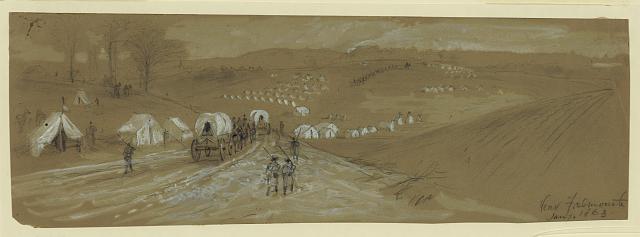
Near Falmouth, Jany. 1863 (by Alfred R. waud,  1863 January; LOC: LC-DIG-ppmsca-21063)

What will the next plan be?

From a Seneca County, New York newspaper on January 3, 1863:

CONFIDENCE IN THE ARMY OF M’CLELLAN. –

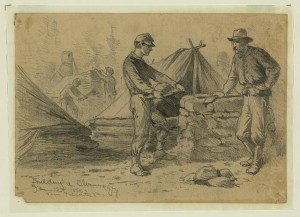
Building a chimney (by Edwin Forbes, near Falmouth, 1863 Jan. 15; LOC: LC-DIG-ppmsca-20525)

making camp warmer

S.P. Allen, Esq. editor of the Rochester Democrat, on a visit to the Army of the Potomac, at Fredericksburg, writes that paper an account of what he saw and heard. Mr A. has never been partial to McClellan, but he is forced to say:

“Sleeping being out of the question, I crept out quietly before daylight, and mingled with the soldiers around their little fires. It was very cold and they found it difficult to keep themselves warm. The war was the general theme. The late repulse was invariably followed by something about Burnside and McClellan, and the merits of this and that plan. There is no feeling against Burnside, but on the contrary one of kindness; but it is nevertheless true that those who have served under McClellan have great confidence in him.

All other things being equal, it is a great point to secure a leader in whom the soldiers have confidence. It is the duty of the Administration to thoroughly weigh all the legitimate considerations in the case, and decide the question without a thought to anything else but the cause of the country, and its speedy triumph. If the soldiers are right, and the Administration after a fair trial are satisfied that McClellan is our military leader, for one I say let him be restored to the command.”

But President Lincoln and his administration didn’t have confidence in General McClellan.

According to The story of the Thirty-third N.Y.S. vols.; or, two years campaigning in Virginia and Maryland (by David W. Judd (page 255)) the men in the Army of the Potomac had supposed that the Lincoln Administration ordered Burnside to attack at Fredericksburg, but then they learned that Burnside took full responsibility: “From that time forward, the army questioned his [Burnside’s] military capacity, but could not refrain from admiring his qualities as a man.”

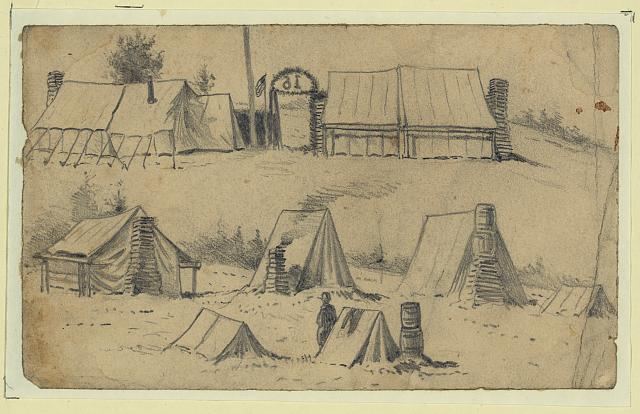
Winter camp of the 16th Michigan (by Edwin Forbes, nrear falmouth, 1863 Jan. 10; LOC: LC-DIG-ppmsca-20677)

16th Michigan camp near Falmouth, January 1863

Posted in 150 Years Ago This Week, Battle of Fredericksburg, Military Matters, Northern Society | Tagged , , , , | Leave a comment

Jubilee

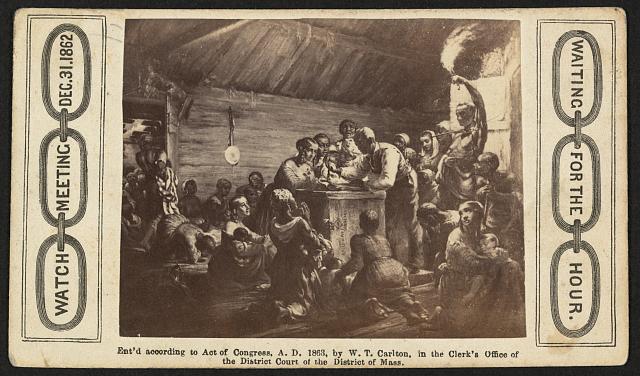
Watch meeting, Dec. 31, 1862--Waiting for the hour (Heard & Moseley, c.1863; LOC:  LC-DIG-ppmsca-10980)

Watching the watch in more places than just Shiloh Presbyterian

From The New-York Times January 1, 1863:

GRAND EMANCIPATION JUBILEE.; A Night-watch of Freedom at Shiloh Church Great Excitement and Rejoicing Among the Colored People Prayers, Speeches, Songs, Dirges and Shouts. The Chimes at Trinity. RINGING THE OLD YEAR OUT AND THE NEW YEAR IN. …

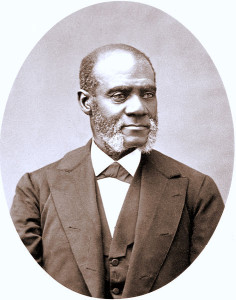
In anticipation of the Emancipation Proclamation which the President is expected to issue to-day, the colored people of this City held a grand jubilee last night at Shiloh Presbyterian Church, corner of Prince and Marion streets. By 9 o’clock in the evening the church was filled to overflowing, nearly one-third of the audience being white. Rev. HENRY HIGHLAND GARNET, pastor of Shiloh Church presided, and among the speakers were Rev. S.C. JOCELYN, C.C. LEIGH, EDWARD GILBERT, JUNIUS C. MORELL, and others.

Henry Highland Garnet (from Smithsonian Institute)

Shiloh’s pastor presided at the Great Emancipation Jubilee

The ceremonies were opened at 10 o’clock by prayer from Rev. DANL. H. VANDEWOORT, colored. After this came a hymn, and the Chairman then introduced Rev. G.S. JOCELYN, who spoke of the progress of Emancipation throughout the world, instancing England, Turkey, Russia, the District of Columbia, &c. The most loyal people in this country he said were the blacks, and if the President’s Emancipation Proclamation had been issued on the firing of the first gun at Fort Sumter the nation would have been saved the deluge of blood that had since flowed throughout the land. [Applause.] The next speaker was Hon. C.C. LEIGH who recounted the meritorious deeds of the black men in past ages, and exhorted his hearers to emulate their example, and show themselves worthy of the position among the races which they aspired to reach. Turning to the institution of Slavery in this country, he spoke in severe terms of the support it had received from a corrupt and hireling clergy. No vile debauchee, he said, had ever lived, no bold blasphemer, no scoffer from the purlieus of vice, up to the polished HUME or the wit VOLTAIRE, had ever inflicted such stabs upon our holy religion as these hireling priests, who make the Word of God speak in favor of that “sum of all villainies,” American Slavery. [Great applause.] The speaker closed by exposing the love and veneration he had always entertained for the old flag of his country, which, now that it was about to be unfurled in the cause of universal freedom, was still more dear to his heart than ever before.

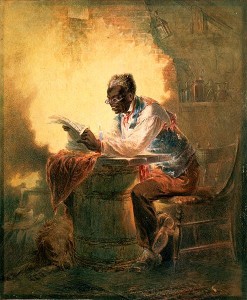
 Black man reading newspaper by candlelight  Man reading a newspaper with headline, "Presidential Proclamation, Slavery," which refers to the Jan. 1863 Emancipation Proclamation (by Henry Louis Stephens, ca. 1863; LOC: CaLC-USZC4-2442)

Man reading a newspaper with headline, “Presidential Proclamation, Slavery”

Mr. JULIUS C. MORELL was then introduced as a native of North Carolina, and said that, though he was born in the Old North State, he felt no particular pride in it, for he had seen many other places which he would have preferred to be born in. North Carolina, he said, was a very good place to be born in, and a most excellent place to get out of. [Laughter and applause.] The speaker recounted many of the barbarities of Slavery that had come under his observation when a boy, and said that the present rebellion would have broken out long ago had it not been for the much reviled Abolitionists. The black men of the South were long ago maturing plans of a general uprising, which would have deluged the South in blood, but about that time the anti-Slavery societies of the North sprung up, and, through their preaching and promises, the slaves were induced to keep quiet. He, however, saw the finger of God in this delay. It was His design to chastise the nation for the great sin of Slavery ere the bond of the slave were broken. This was now being done by civil war, when almost every home throughout the land was filled with lamentation and mourning.

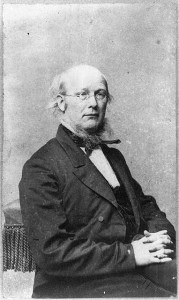
Horace Greeley 1811-1872 (no date recorded on caption card; LOC: LC-USZ62-47450)

phantom sighting of of one who had “done more to destroy this vile institution of Slavery than any man in the country”

At the close of Mr. MORELL’s remarks, the Chairman, Mr. GARNET arose and said that he perceived a person in the audience who, if he should die in the next five minutes, would have done more to destroy this vile institution of Slavery than any man in the country — he referred to HORACE GREELEY. [Loud cheers for HORACE GREELEY, and cries of “GREELEY,” “GREELEY.”] When the tumult following the announcement of Mr. GREELEY’s name had subsided, Mr. GARNET stated to the audience that he should be obliged to take it all back; he was mistaken in the man; it was nor Mr. GREELEY after all. [Great laughter.] He hoped the gentleman would not take it as an offence to be mistaken for Mr. GREELEY, for nobody would be ashamed to look like him.

A VOICE — Some of the most eminent writers have called Mr. GREELY handsome. [Great laughter.]

Mr. GARNET here announced that it lacked only 15 minutes of 12 o’clock, and at 5 minutes before 12 the audience would unite in silent prayer. Meantime, Mr. GILBERT would address the audience.

Mr. GILBERT commenced speaking, but had not gone far before he was requested to stop, as the time for prayer had arrived.

A solemn dirge was then played on the organ. At the close of which the whole audience knelt for five minutes in silent prayer.

At the expiration of that time the choir sang the hymn commencing, “Blow, ye trumpets blow, the year of jubilee has come;” in which the audience joined.

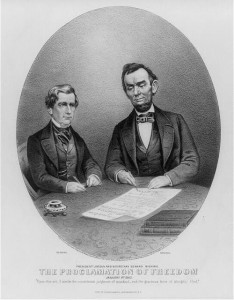
President Lincoln and Secretary Seward signing the Proclamation of Freedom: January 1st. 1863 (Published by Currier & Ives, c1865; LOC: LC-USZ62-40350)

“three cheers for ABRAHAM LINCOLN, three cheers for freedom”

The Chairman then read a dispatch from Washington, saying that President LINCOLN would issue the Emancipation Proclamation at 12 o’clock M., to-day.

This anouncement was greeted with the most tumultuous cheers, which lasted some minutes, and were followed by three cheers for ABRAHAM LINCOLN, three cheers for freedom, &c., &c. Mr. GILBERT then resumed his speaking, and threw a damper on the enthusiasm of the audience by commencing to grumble and find fault because the Proclamation was to be “issued as a military necessity, and not as an act of justice.” His audience did not appear to sympathize with his troubles in that line, and he soon dried up.

Other speakers followed, and the jubilee was kept up to a late hour in the evening, the audience singing “Old John Brown” and other similar songs, shouting, praying and rejoicing.

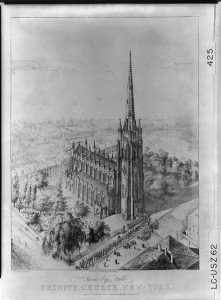
Birds-eye view of Trinity Church, New York ( c1846 Jan. 26; LOC: LC-DIG-pga-03727)

Chimes toll ‘Yankee Doodle’

Everybody down town last night who had nothing to do, and a great many who make a special point of hearing the Chimes toll a requiem to the Old Year, and a welcome to the New, crowded the sidewalks of Broadway and Wall-street to hear Mr. JAS. E. AYLIFFE ring his accustomed changes on the bells of Trinity. At about a quarter to twelve the programme was commenced with variations on the full complement of eight bells; then followed the favorite tunes of “Hail Columbia,” “Yankee Doodle,” “Old Dog Tray,” a grand medley, arranged by Mr. GEORGE F. BRISTOW, “Evening Bells,” “Last Rose of Summer,” “Columbia the Gem of the Ocean” and “Yankee Doodle;” the listening public being finally played to their several domicile to the plaintiv-melody of “Home, Sweet Home.” The sky was clear overhead, and the gusts of wind that blew fitfully through the night made the pealing voices of the chimes surge, now mournfully, now merrily, over the lower part of the City. There ought to be a peal of bells up-town, to keep the chimes of Trinity in countenance. …

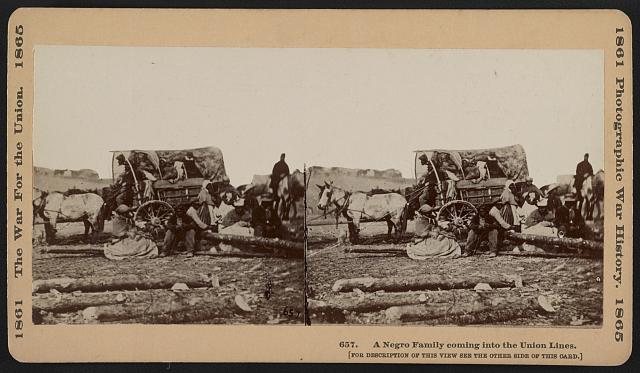
A Negro family coming into the Union lines (1863 Jan. 1, (printed later); LOC: LC-DIG-stereo-1s02761)

“An arrival in Camp–under the Proclamation of Emancipation”

Henry Highland Garnet was involved in creating black army units for the Union.

Horace Greeley published his The Prayer of the Twenty Millions on August 19, 1862.

Posted in 150 Years Ago This Week, Lincoln Administration, Northern Society | Tagged , , , | Leave a comment

Chaplain’s Last Fight

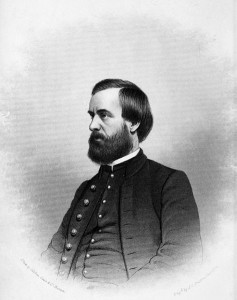
Arthur Buckminster Fuller (Richard Frederick Fuller, Chaplain Fuller, Being a Life Sketch of a New England Clergyman and Army Chaplain   , 1864, frontispiece.)

Arthur Buckminster Fuller

News of a Christmas eve burial via Richmond.

From the Richmond Daily Dispatch January 2, 1863:

Death of a fighting Chaplain.

Rev. Arthur B. Fuller, Chaplain of a Massachusetts regiment, who was killed at Fredericksburg, was buried at Boston on Christmas eve. The Boston Journal says:

There has been a singular fatality attached to the family of the lamented Chaplain Fuller. Three of the family have perished by untimely deaths. Eugene Fuller, one of the sons, was drowned on the voyage from New York to New Orleans in 1859, the same year that the mother died. Margaret Fuller, Countess of Cossoll, perished by shipwreck, on Fire Island, near New York, in 1850. She was returning, from Italy to her native land, from which she had long been absent. Her husband and child were lost with her. And now Arthur B. Fuller has been killed in battle. In every instance the surviving members of the family received the sad tidings by telegraph.

A proponent of temperance and abolition Arthur Buckminster Fuller was a Unitarian clergyman who served as Chaplain of the 16th Massachusetts during the Civil War:

He was honorably discharged on 10 December 1862, on account of failing health. On the day following his discharge, being present at the Battle of Fredericksburg, he volunteered to join a detachment in crossing the Rappahannock River, and fell while attempting to drive the Confederate sharpshooters out of the city.

You can read a fuller account of Reverend Fuller’s life at the site of the Unitarian Universalist Association, which includes this description of Reverend Fuller’s death on December 11, 1862 :

…On December 10, Fuller was honorably discharged.

The following morning Fuller still lingered with his regiment, which was preparing to assault the city of Fredericksburg. Army engineers constructing pontoon bridges to cross the Rappahannock River came under heavy fire from Confederate sharpshooters. A call went out for volunteers to man boats for an assault on the enemy.

Fuller did not hesitate. Although no longer officially part of the Army, the frail, forty-one-year-old civilian climbed aboard a boat for the hazardous crossing of the river. Reaching the shore, he found himself with the Nineteenth Massachusetts Regiment, which was preparing to advance on the city. Captain Moncena Dunn of the Nineteenth later reported what happened to Fuller that day. “I saw him for the first time in the streets of Fredericksburg,” Dunn recounted. Fuller asked permission to join his unit. The captain replied that “there never was a better time than the present.” He ordered the chaplain to fill a place on the left of the skirmish line. “I have seldom seen a person on the field so calm and mild in his demeanor, evidently not acting from impulse of martial rage,” Dunn recalled. “His position was directly in front of a grocery store. He fell in five minutes after he took it, having fired [his rifle] once or twice.” Fuller had been killed instantly. …

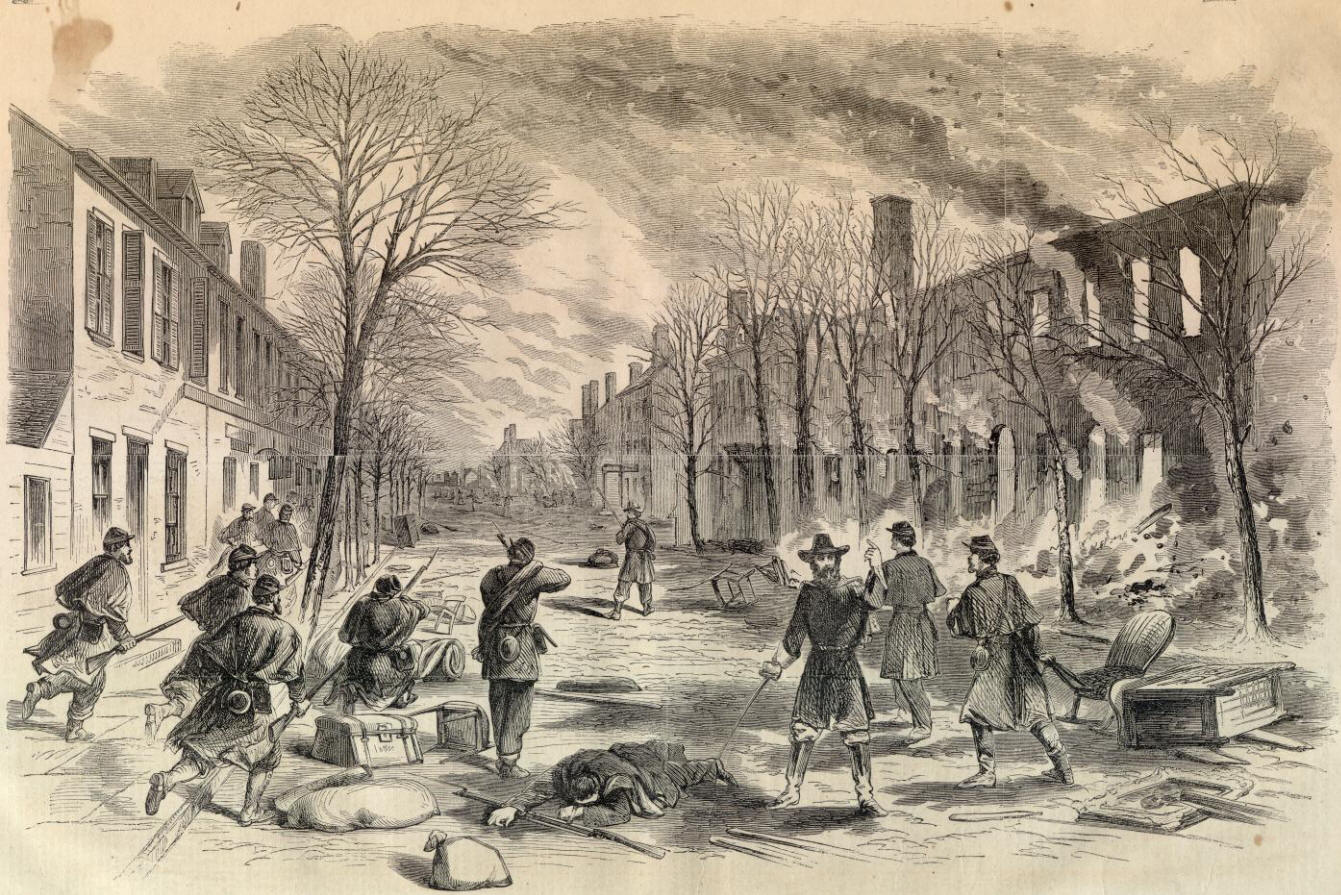
fighting-in-fredericksburg (http://www.sonofthesouth.net/leefoundation/civil-war/1863/january/fighting-fredericksburg.htm; Harper's Weekly, January 3, 1863)

Chaplain’s last earthly act -helping clear rebel snipers from Fredericksburg

The above image is from the January 3, 1863 issue of Harper’s Weekly and is hosted at Son of the South.

Posted in 150 Years Ago This Week, Battle of Fredericksburg, Military Matters | Tagged , , , | Leave a comment

Beware the Spinmeisters

As a new year began journalists North and South discredited each other and saw good things for 1863 if their respective peoples persevered in the war efforts. Here’s a couple excerpts.

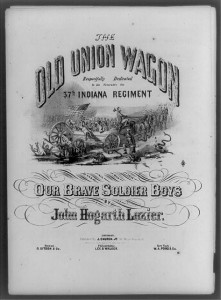
The old Union wagon ( Cincinnati : Published by J. Church. Jr., 1863; LOC: LC-USZ62-92047)

Driver Abe, lead us with “strenuous, unremitting war” until weaker party is disabled

From The New-York Times January 1, 1863:

The New Year and the War.

In our review, yesterday, of our military successes during the year that has closed, it was made very apparent that the rebellion could not survive another twelvemonth of similar experience. It was shown that the reduction of a like amount of territory to the old flag in 1863, as in 1862, would literally wipe the Confederacy from the face of the earth. Considering the present magnitude and splendid condition of our army, and the superb fleet of gunboats just completed — which will not only be able to gain possession of the three remaining Southern ports, but to ascend the Southern rivers far into the interior — it is certainly not unreasonable to believe that the restoration of the National authority can proceed, to say the least, as rapidly hereafter as it has heretofore.

We are too apt to estimate the prospects of the rebellion, not by its actual fortunes, but by the loud tone of its leaders and organs. The rebel Government, and all the newspapers, are protesting with greater vehemence than ever, that submission to “the old concern” is a thing utterly impossible; that the last dollar of property and the last drop of blood shall first be spent. This kind of talk is rather imposing, but, allowing it to be ever so earnest, it really deserves no more heed than the wind. Nothing is more common than for men to protest, even when nearly exhausted, more loudly than ever that they will die sooner than give in. …

We may allow the spirit of the South to be ever so resolute, yet it is no index whatever of what is to be the length of the war. This is not a question of disposition or of purpose, but a question of resource and of ability. We may rely upon it that the rebel leaders will maintain the conflict just as long as they have it in their power to deal a blow. When the people behind them are once thoroughly penetrated with the conviction that further resistance is absolutely ruining them, and not until then, shall we hear them solicit peace. It takes time to produce the results which are to work this conviction; but the conviction itself, when it once fairly comes home, will be sudden in its manifestation and speedy in its effects. We shall probably see the rebellion one month all defiance, the next all submission. We are to judge of its duration by the effective causes at work against it, not by its present temper; by the superiority of our armies in numbers and equipment — by the impossibility, that the rebels can raise another army, when their present one is destroyed — by the power of injury possessed by the naval expeditions — by the hardships inflicted by the blockade — by the constantly increasing financial straits — and not by any tone however lofty, or any spirit however obstinate.

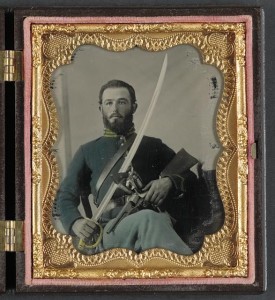
Unidentified soldier in Union uniform with stocked Colt pistol, Remington, and cavalry saber (V; LOC:  LC-DIG-ppmsca-32685)

“superiority of our armies in numbers and equipment”


We may take it for granted that this war, like others, will run to its legitimate termination — the disablement of the weaker party — and will then stop. When that point is once reached, the Southern people, as every other people under like circumstances have done, will acknowledge and act upon the necessities of the case. The final pacification will be the less difficult, because it will involve no humiliating terms, such as the worsted belligerent usually has to accept. Nothing more can be required than a renewed acceptance of the Constitution of our fathers — devotion to which is a glory, not a shame. Yet we don’t pretend this resumption of allegiance will be altogether easy. A certain sullenness must continue for months, perhaps for years. We shall never look for such a display of jubilation at the South over the restored Union as that which signalized the return of the Stuarts to the English throne …

But it is useless to speculate about these sequels. It is enough to know that the business of the present year is strenuous, unremitting war. There are the strongest reasons for believing that if the Government, the army and the now loyal people are faithful in this, the old flag will wave triumphantly in every State and County in the land before the year closes. But if instead of faith and harmony and tireless energy, we are to have despondency, distraction and delay, there is no depth of discomfiture and shame to which the year may not reduce us.

From the Richmond Daily Dispatch January 1, 1863:

Beware of false confidence.

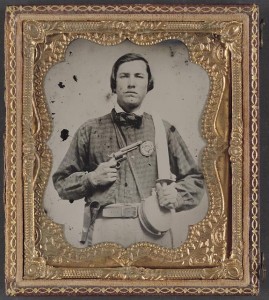
Private David C. Colbert of Company C, 46th Virginia Infantry Regiment, with secession badge, canteen, pistol, and Bowie knife (between 1861 and 1865; LOC: LC-DIG-ppmsca-32064)

beware false security: keep that Bowie knife ready

The people of the Confederate States are buoyant with the hopes excited by the late great victory at Fredericksburg, and the stunning effect which it evidently produced upon the entire Yankee nation. Already we see signs of returning to that condition of false security which proved so nearly fatal after Manassas, and which has on other occasions so materially injured the cause. If we could hope to be heard in quarters where our counsel would be of avail, we would protest against in such feelings agreeable as they doubtless are and tempting as they must be, to men whose have been so long wound up to the utmost degree of ten[s]ion. It is persisely [precisely] from this disposition to relax that the greatest danger is to be apprehended. It is exactly in the very moment of victory that the danger in question is most apt to us. Let us, then, still keep on the alert. Let us exert our energies to their utmost, precisely as though we had been defeated in every engagement, and had the foe thundering at the very doors of our Capital as we had him last summer. The Yankees were stunned, dispirited, overwhelmed for the moment by the [?] at Fredericksburg, but already they begin to recover, and cry for another “On to Richmond” We published an article yesterday from the Philadelphia Press.– paper — in which a new route is mapped off for the advance in which the possiblity of defeat forms not the smallest item of the calculation. In which the capture of Richmond and the “suppression of the reb[e]llion” are spoken of as future events with as much confidence as though the Yankee forces had never met with a check in attempting it. Burnside has already made half a dozen reports, in the last of which he cuts down the number of his killed to 1,152, and his wounded to about 9,000. He is endeavoring, at the instance no doubt of his employers, to raise the Yankee mind from the aby[s]s of despair into which it seems to have fallen, and to prepare it for new enterprises.

We may be assured that the whole Yankee press will join in this endeavor, and that it will be successful. In a fortnight universal Yankeedom will believe that the defeat at Fredericksburg, like the defeat at Sharpsburg, was a great triumph …

James Alexander Seddon

draft, draft, draft

We are, at present, pressed nowhere but in the Southwest. The enemy evidently will not make another attempt to take Richmond winter. We have three whole months at least ress the conscription. If fully carried out it will give us — with the army now in the field–700,000 men for our operations in the spring, all of them between the ages of 18 and 40. … Let our authorities do their utmost to bring it all out and, depend upon it they will bring out enough to insure peace, and a glorious peace, before the end of the summer. They will bring out enough to render all the Yankee expenditure abortive; and when this levy shall have been battled they will never be able to raise another. We have a Secretary of War who brings with him a high reputation — no doubt well deserved — for talents, and business qualifications. His advent to office has been most suspicious. It has already been marked by the greatest battle and the most signal triumph of the whole war. Let us hope that his administration will be as fortunate to the end as it has been in the commencement, and — that it may be so — that he will devote all the energies of his mind to the organization of the conscription, and the rendering it efficient. But to this end something more is requisite than even the acknowledged abilities of the Secretary. A should be established in connection with and under the control of his office, to be devoted especially to this one object and it should be filled by the ablest man it is possible to find. He should have no other business but that connected with the conscription. The Governors of the States, and all magistrates and civil officers of every description, should be appealed to in the most earnest terms to lend all the assistance which their offices enable them to lend. Thus only can we raise a force to encounter the million of men about to be hurled against us. Thus only can we render this last gigantic effort abortive. Thus only can we an honorable, a beneficial and a lasting peace. That peace, if these conditions be observed, is right at hand; if they be not observed, it is infinitely distant.

The photo of James Alexander Seddon is licensed by Creative Commons.

As you can tell by the description at the Library of Congress the sheet music was probably published sometime in 1863 after Joseph Hooker was promoted to lead the Army of the Potomac.

Posted in 150 Years Ago This Week, Confederate States of America, Northern Society, Southern Society | Tagged , | Leave a comment

Fireworks for the New Year

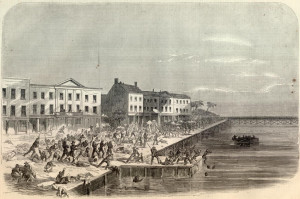
galveston (Harper's Weekly, January 31, 1863)

REBEL ATTACK UPON THE FORTY-THIRD MASSACHUSETTS VOLUNTEERS AT GALVESTON, TEXAS.

Why it’s good to keep your pilot on board ship.

In the very early hours of 1863 a combined Confederate force under John Bankhead Magruder attacked the Union occupiers of Galveston, Texas. During the Battle of Galveston (or the Second Battle of Galveston) Southern infantry assaulted the small detachment from the 43rd Massachusetts in the city. Two Confederate cottonclads took on the Union ships in the harbor. One Northern ship was captured; another destroyed to prevent capture. John Arnett, a ship’s mate on the blown up Westfield, described his experience in a letter home to his father in Seneca Falls, New York.

From a Seneca County, New York newspaper in January, 1863:

Letter from John Arnett.

NEW ORLEANS, January 6, 1863.

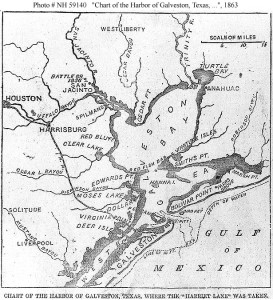
"Chart of the Harbor of Galveston, Texas, where the 'Harriet Lane' was Taken." (U.S. Naval Historical Center Photograph; http://www.history.navy.mil/photos/sh-usn/usnsh-h/har-ln-k.htm)

charting the harbor

Dear Father: – I arrived here three days ago in the transport M.L. Boardman, from Gavelston. You have probably heard ere this about our fight at Gavelston, and the blowing up of our vessel, (the Westfield) to prevent her falling into the hands of the enemy.

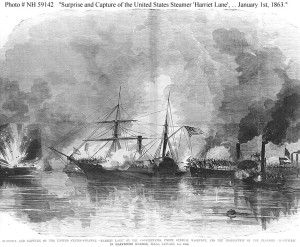
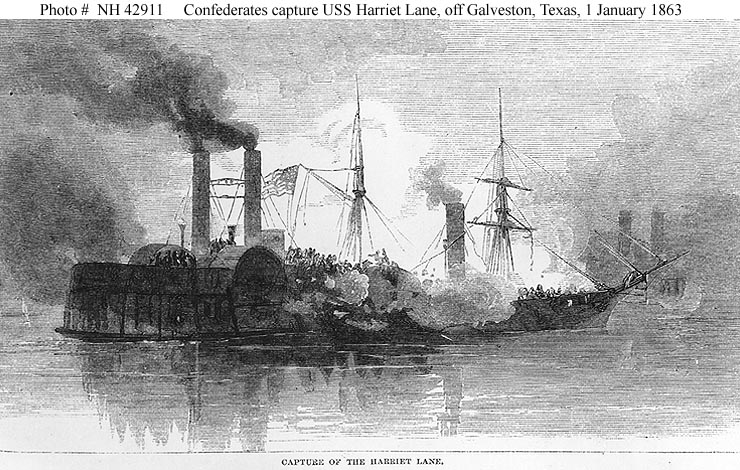
At about two o’clock, New Year’s morning, a large force of rebels came into the City by land, blockading the channel. – The Harriet Lane, Clifton, and Owasco were anchored close into the city. The Harriet Lane was boarded by two rebel steamers running alongside, when one of the most terrible hand-to-hand conflicts ensued, the Texans using their Bowies and the sailors the boarding pike. But unfortunately the odds were so heavy against us, in spite of our efforts, the Harriet Lane was captured, and the Secesh flag now waves over the hansomest vessel of the U.S.N. We beat to quarters immediately after the signal was made from the Harriet Lane that the enemy were approaching, and got under way to go to the head of the line, to give and receive the first fire; but our pilot being on board a transport which had arrived the day before, the vessel got ashore, and then we used every exertion to get her afloat without any avail, as we got on at high water and the tide leaving us high and dry.

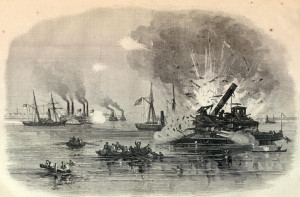
ATTACK OF THE REBELS UPON OUR GUN-BOAT FLOTILLA AT GALVESTON, TEXAS, JANUARY 1, 1863. (Harper's Weekly, January 31, 1863)

John and rest of crew “pulled for a Transport steamer” as Westfield exploded

The fighting was hard on both sides and loss heavy. The rebels got up in the windows of the houses overlooking the wharf, and kept up such a well directed and brisk fire on the Harriet Lane as to sweep her decks, besides the many field pieces they brought to bear on the vessels from the wharf. You cannot imagine how we felt. There we were ashore, and could not render any assistance to the other vessels, when we could see the flashes of the fire, and hear loud cannonading on both sides, and when daylight dawned to see two rebel steamers, one on each side of the Harriet lane, and then we knew she was captured. Com. Renshaw then gave orders for all hands to leave the ship, as he was going to destroy her. The enemy’s steamers were approaching, and we got into the boats and pulled for a Transport steamer. I was in the last boat that left the ship. The fire communicated with the magazine before we expected, and several of our crew were blown up with the vessel, including the Commodore, W.B. Renshaw, our 1st Lieuten[t], C.W. Zimmerman, and Chief Engineer W.R. Green.

"Surprise and Capture of the United States Steamer 'Harriet Lane', by the Confederates, under General Magruder, and the Destruction of the Flagship 'Westfield' in Galveston Harbor, Texas, January 1st, 1863." (U.S. Naval Historical Center Photograph; http://www.history.navy.mil/photos/sh-usn/usnsh-h/har-ln-k.htm)

making old tars shed tears

It is hard to make an old sailor shed tears, but when we saw the explosion, knowing that the 1st Lieutenant was on board, whom every one of us loved so well, I really cannot find words to express my feelings at the time,only to say that it was the most sad scene that it has been my lot to witness in a long time. The old “tars” shed tears, and seemed as if they wanted to be blown up with him. For one I should have been willing to have gone up with her, sooner than to see her fall into the enemy’s hands.

The fight lasted about five hours and was a very hard one. Not over ten were left alive out of the Harriet Lane. Her Commander, Capt. Wainwright, Lieut. Lee [Lea?] and most of her officers were killed. I do not know how many were killed or wounded on the Owasco, but I think not many.

We had to leave the harbor then with the remaining vessels. There were 250 Union soldiers there. These 250 were all killed or taken prisoners.

I must close, as my time is up, and I have to report on some vessel, but I do not know which one as yet. My health is good. – I lost part of my clothes when the old Westfield went, but I am thankful that I did not lose my head.

Hastily, your affectionate son,

JOHN.

Capture of USS Harriet Lane, 1 January 1863 (U.S. Naval Historical Center Photograph; http://www.history.navy.mil/photos/sh-usn/usnsh-h/har-ln-k.htm)

Capture of USS Harriet Lane, 1 January 1863

A poignant moment from the battle:

When a Confederate major [Albert Miller Lea] involved in the action arrived on the deck of the ship [the Harriet Lane], he found his son, a lieutenant in the Union navy, lying mortally wounded.[1]

According to the Wikipedia link on the battle, The Confederate Congress thanked “Prince John” Magruder and the entire Confederate force:

The bold, intrepid, and gallant conduct of Maj. Gen. J. Bankhead Magruder, Col. Thomas Green, Maj. Leon Smith and other officers, and of the Texan Rangers and soldiers engaged in the attack on, and victory achieved over, the land and naval forces of the enemy at Galveston, on the 1st of January, 1863, eminently entitle them to the thanks of Congress and the country… This brilliant achievement, resulting, under the providence of God, in the capture of the war steamer Harriet Lane and the defeat and ignominious flight of the hostile fleet from the harbor, the recapture of the city and the raising of the blockade of the port of Galveston, signally evinces that superior force may be overcome by skillful conception and daring courage.

As a result of the battle the South would control Galveston for the rest of the war, but actually the Union navy was able to maintain a blockade of the harbor.

The first and third images in this post are from the January 31, 1863 issue of Harper’s Weekly hosted at Son of the South, where you can also read an account of the battle.

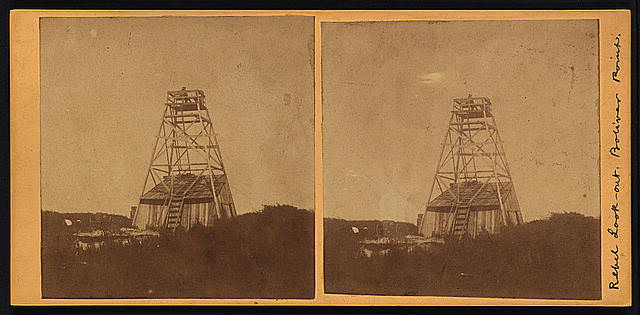
Rebel look-out, Bolivar Point ( between 1863 and 1864; LOC: LC-DIG-stereo-1s01419)

watching for Yankees from Bolivar Point

               _______________

1863 calendars

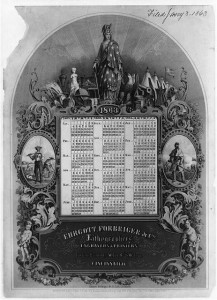
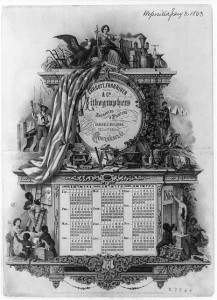
Here’s a couple calendars for 1863 (and then some). You can read the descriptions of the two calendars (left and right) at the Library of Congress. The one on the right anticipated Abraham Lincoln’s January 1, 1863 Emancipation Proclamation.

Calendar for 1863 (1862; LOC: LC-USZ62-90748)

Might this war be over in a year and a half?

Calendar for 1863 (1862; LOC: LC-USZ62-90749)

An emancipating year


_______________

  1. [1]Catton, Bruce. The American Heritage New History of the Civil War. Ed. James McPherson. New York: Viking, 1996. Print. page 182
Posted in 150 Years Ago This Week, Military Matters, Naval Matters | Tagged , , , , , , , | Leave a comment

Lots of Riding … and Writing

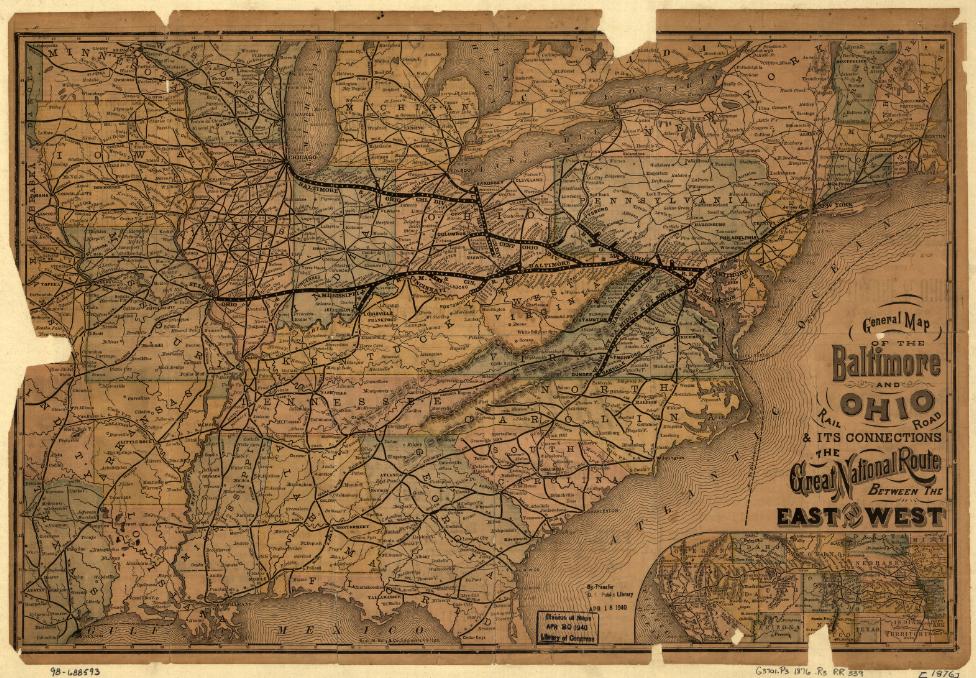
Baltimore & Ohio 1876 (Rand McNally, 1876;  LOC: g3701p rr003390 http://hdl.loc.gov/loc.gmd/g3701p.rr003390)

The 1st NY Cavalry helped defend the B&O in western Virginia (1876 map)

In the fall of 1862 the 1st New York Cavalry Regiment operated in northwest Virginia. One of its main jobs was apparently protecting the Baltimore and Ohio Railroad from rebel raiders in the soon-to-be 35th state in the federal Union. Here a cavalryman recounts his regiment’s autumnal adventures for the benefit of his (presumably) hometown paper.

From a Seneca County, New York newspaper in December 1862:

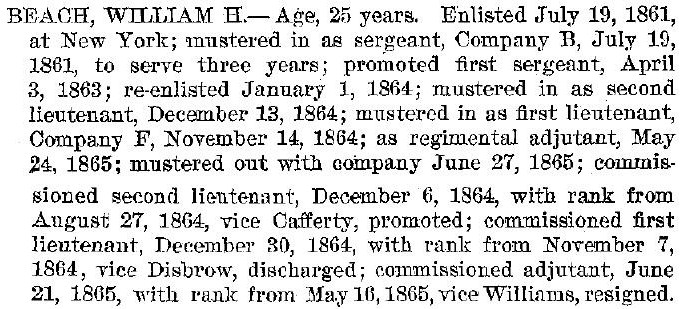
FROM W.H. BEACH.
CAMP of 1st N.Y. CAVALRY,
North Mt. Station, Va., Dec. 17, 1862.

ED. COURIER. – When the army left Maryland after the battle of Antietam, the 4th Cavalry brigade, of which this regiment is a part, with several new infantry regiments, was sent to increase the force for the protection of the Baltimore & Ohio Railroad in Northern Virginia, and to guard against rebel raids in that direction. Our march over the mountains was on the turnpike which at Cumberland becomes the old national road.

Gen. [B. F. ?] Kelly (between 1855 and 1865; LOC: LC-DIG-cwpbh-01158)

led assault on Imboden’s camp

The portion of the Mountain Department to which we belonged was under the command of Brig. Gen. Kelley whose headquarters were at Cumberland. Squadrons or battalions of Cavalry were posted at different places among the mountains. The 2nd battalion was stationed at Springfield, an old town mostly of log houses in Hampshire Co.

On our scouts we made ourselves familiar with the valleys of Patterson’s Creek, the South Branch and Great Capon Rivers. – While the Indian Summer days lasted, along these rivers as they rushed swiftly over their rocky beds and under great hanging rocks, or widening, lingered in more peaceful places, the gray, rugged rocks and many-colored woods of the mountains were mingled in scenery of wild and charming beauty. – The arable land lies in the narrow bottoms along the rivers. It is very fertile but there is little of it. The mountains were full of deers, wild turkeys, wild cats, &c., to afford us amusement when rebel hunting would no longer furnish us excitement.

The region through Hampshire and adjoining counties is full of places of deep historical interest. The roads and other land-marks are for the most part still as they were left by Washington, who when a boy, surveyed the tract for Lord Fairfax. Many places were scenes of fierce conflicts with the Indians in the early history of the country. – Great Capon, or Cacahepon Springs, a noted watering place, and Ice Mountain, among whose rocks ice is formed throughout the summer, were places of much attraction in times of peace. There is reason to believe that the Virginian Alleghanies, as well as the same mountains in Maryland and Pennsylvania, are rich in mines of iron ore and coal, though they have been but little developed, notwithstanding the ease of access to eastern cities by the Balt. & O.R.R. It is to be hoped that this war will end the day, when home interests must be sacrificed at the bidding of a single imperious interest.

Portrait of Brig. Gen. John D. Imboden, officer of the Confederate Army (between 1860 and 1865; LOC: LC-DIG-cwpb-06349)

‘obtain’ a horse, serve as cavalry

Our campaign among the mountains was full of exciting adventures. Col. Imboden, a bold rebel chief, long lay in the country about Moorefield, and his scouting parties, at home in the country and possessing perfect knowledge of the roads and trails on the mountains, were often a source of annoyance. They could always find active friends among the rebel citizens. Many of the women were especially relentless in their hatred of the Yankees and their zeal to trouble them.

Lively skirmishes were of frequent occurrence. On one occasion a small reconnoitering party some miles beyond Romney fell in with a party of rebel cavalry, and chased them several miles through a deep narrow gap, when a large body of fresh cavalry turned upon the pursuers. Only three of the Union party had horses fresh enough to bring them safely out of the furious chase of ten miles that succeeded. the captain of Co. B, who commanded the party, was taken prisoner. Of fourteen whose horses failed, all but four escaped by turning aside in the rocks and woods, amid volleys from the pursuing rebels.

Imboden would give his infantry leave to furnish themselves with horses in any way they chose and serve as cavalry. A party of them were long prowling upon the mountains about Springfield attacking our pickets night after night in succession, and ready to capture a wagon whenever one was sent out by day without a guard. In spite of the ceaseless vigilance of the pickets, the constant readiness of a strong reserve, and many well laid plans to entrap them, the horse thieves generally escaped. Occasional brisk skirmishes taught them to avoid us in daylight. A party of four of Co. B, sent on a daring reconnoissance of four days, evading the rebel pickets and scouting parties, found Imboden’s camp. A few days afterwards Gen. Kell[e]y with about a thousand cavalry, a few companies of infantry and a battery of artillery, went out to capture the rebel force. The infantry rode in wagons that they might be fresh for a fight at the end of the march. It was a snowy morning when we started. – All day and all the squally night following, we pressed rapidly forward, over the rocky roads, fording the swift rivers, and through the dark pine woods on the mountain sides, that were darker and gloomier under the weight of damp snow that loaded them down. So [?] after daylight we had driven in the pickets, and were before the rebel stronghold in the deep, narrow valley of the South Fork, eighteen miles from Moorefield and sixty from our starting place. The ground was so chosen that it was impossible to gain the rear or to make an attack on either flank. The cavalry dashed impetuously into the camp, when the frightened rebels fled to the mountain, climbing like cats up among the rocks. The artillery from admirable positions on either side of the valley speedily shelled many of them down, when they fell into the clutches of the cavalry, who stood eagerly waiting to pounce upon them. At every discharge of the cannon the sound echoed and re-echoed from one mountain to the other until it rolled in a continued roar away down the valley. After burning the camp the expedition returned, with many prisoners and large droves of fat cattle and hogs that had been collected by the rebel army.

When the rebels again became particularly troublesome one of Company B, at the request of Gen. Kelley, volunteered to learn their new position. Perfectly disguised, and with a well contrived story of a peaceful farmer living across the Potomac, he rode away. He had partially succeeded in his object when he was arrested, charged with being a spy, robbed of his horse, pocketbook and everything but the clothing he wore, and threatened with immediate hanging. An officer who heard him tell his story and assert his innocence, ordered to be kept under a close guard for a few days when he would attend to him further. He had good reasons to expect hanging if he staid, and therefore thought best to get away. One night he silently escaped out of a window while his guard was asleep, and finally arrived, foot-sore and weary, at his Company’s quarters.

Upon the withdrawal of Jackson with the greater portion of his army from Winchester, we were ordered further east. A two days’ march brought us here by way of Bloomer’s Gap. It was a mild, bright afternoon when we crossed the last ridge of the Alleghanies, and before us lay the broad, laughing valley of the Shenandoah, with its wide, well-fenced farms, fine, large houses, and great barns. It was a pleasant relief to our eyes, whose vision had long been circumscribed by dark, rugged mountains.

The railroad had been destroyed as completely as possible, but is now being rapidly relaid. The rebels had done much other mischief; but there is not in this section that complete desolation that marks the path of a great army. Martinsburg has for some time been free from rebel soldiers, but they are still in some force this side of Winchester.

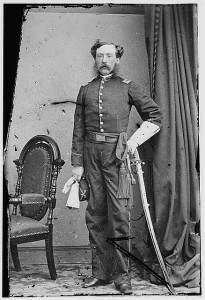
Capt. R.G. Prendergast, 1st New York Cavalry (between 1860 and 1870; LOC: LC-DIG-cwpb-05054)

his men recaptured Casey’s horse – without orders

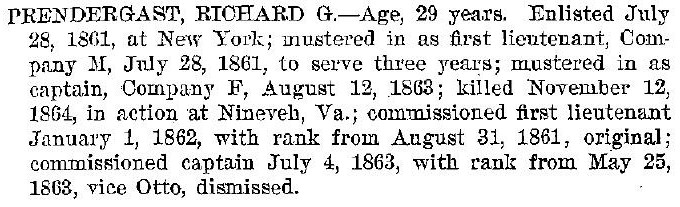
The day after our arrival here, which was a week ago, a scouting party of twenty-five from Cos. B and M, under Lieut. Prendergast, on the Winchester road beyond Martinsburg came upon a rebel picket, which rallied on a reserve, in all about forty of the 7th Va. cavalry. They were disposed to make a stand; but our men were eager for a fight, and charged upon them so impetuously that they broke and fled. A most exciting chase followed; our men shouting close on the heels of the rebels who were urging their horses to their utmost speed. One after another, losing ground a little, would reel under a sturdy sabre blow from some one who had gained his side, and fall back. After a chase of several miles a halt was ordered for fear we would run into a large force near Bunker’s Hill. One man, mistaking some rebels with Union coats for our men, rode up to them and was taken prisoner, but suffered to go when they had taken his horse, which is one of the finest in the regiment, and we have all learned to feel the warmest friendship for a good horse – a cavalry soldier’s best friend. When we had ceased to follow, the rebels formed across the road. But as our comrade came back crying frantically that the rebels had his horse, the boys, not waiting for an officer, with one accord gave a shout to charge “once more for Casey’s horse!” and the rebels broke and fled again. Another hot pursuit, and we came back with thirteen prisoners and the recaptured horse – the best prize of all.

1stCavPersonPeterson (http://dmna.ny.gov/historic/reghist/civil/cavalry/1stCav/1stCavPersonPeterson.htm)

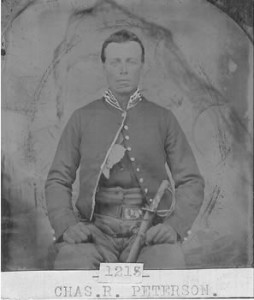
brave and true from Seneca County: Corporal Charles R. Peterson

I believe that if anything akin to the emotion of sublimity is ever experienced in war it is in a bold cavalry charge; and bolder, more successful little dashes than that which our men made do not often occur. Not a man of our party was injured, though at times the rebels fired back continuous volleys. It is reported by citizens along the road that twelve rebels were wounded – four mortally. Several of the prisoners were also dangerously wounded.

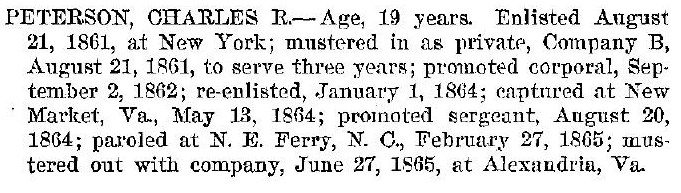
Among the most eager of the pursuers was Corporal Peterson, of Canoga, than whom Seneca County has not sent a braver, or truer boy to the wars.

News does not reach us very regularly. We are all looking eagerly toward Richmond. We have many reports, but do not know what ones to believe. Our rough life has many enjoyments, but we are watching anxiously for the coming of the day that shall bring peace to the re-united country.

W.H.B.

You can read Lieutenant Prendergast’s report on the December 11, 1862 Skirmish at Darkesville at the West Virginia Division of Culture and History.

John Daniel Imboden was promoted to brigadier general in January 1863.. He was involved a great deal in various attacks to destroy parts of the Baltimore & Ohio Railroad.

Brigadier General Benjamin Franklin Kelley is mentioned in the story I linked to at Seven Score and Ten – he ordered the firing of a 35 gun salute from a captured cannon on news that West Virginia would be admitted to the Union.

Members of 1st NY Cavalry in our story.

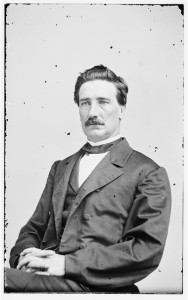
Richard G Prendergast

killed at Nineveh in 1864

Charles R Peterson

Canoga’s own

William H Beach

our correspondent finds a good cavalry charge sublime

Posted in 150 Years Ago This Month, Military Matters | Tagged , , , , | Leave a comment