Licensed to Sell?

Alabama corn price controls

From the Richmond Daily Dispatch December 29, 1862:

Cor[n] law i[n] Alabama.

–The Legislature of Alabama has passed a bill requiring that no person, except the producer and miller, shall sell corn without first obtaining a license from the Judge of Probate of the county in which the corn is to be sold, and the party so licensed is not allowed to sell corn at a greater profit than 20 per cent. on the price paid to the producer and charges, exclusive of the fees and taxes on the license, and no miller is allowed to sell corn except that which be receives as toll for grinding or which he produces himself. Heavy densities [penalties?] are fixed to the violation of this law; and the exportation of c[o]rn from the State is forbidden; except by permission of the Commissioners Court of the county from which the corn is to be exported, and excepting, also corn belonging to the Confederate Government or to any of the Confederate State. This law has been approved by the Governor.

Posted in 150 Years Ago This Month, Confederate States of America, Southern Society | Tagged , , , | Leave a comment

South Carolina Succession!

About two years after the secession of South Carolina from the United States the Palmetto state changed governors: Milledge Luke Bonham replaced Francis Wilkinson Pickens. It certainly wasn’t an election in the current American sense. According to Wikipedia, “On December 17, 1862, the South Carolina General Assembly elected Bonham as governor by secret ballot.”

From the Richmond Daily Dispatch December 29, 1862:

Inauguration of the Governor of South Carolina.

Gen. Bonham, the Governor elect of South Carolina, was inaugurated at Columbia, on the 18th inst. Governor [P]ickens, in his retiring address said:

… I hand the State over to my [dis]tinguished successor, and here proudly say that, through her whole career up to this day, [n]o stain [r]ests upon a single feather in the plum[e] that waves over her brow.

Amid the great [ev]ents around us, my acts now pass into history. I have done what I have done I court scrutiny into those acts, and ask no favor from any earthly tribunal save my country and posterity. I now pass the insignia of office into your hands, and may God, in His mercy, bless you and my beloved State.

The Governor elect, thus introduced, spoke as follows:

Gentlemen of the Senate and House of Representatives: To be the chief Magistrate of South Carolina is, at any time, a flattering distinction; but especially is it so when the Confederacy is in the throne of a mighty revolution inaugurated by that State herself.

With much distrust of my own abilities I assumes this responsibility, but with the aid of the patriotic citizens composing your bodies, and with a firm reliance upon the great Ruler of events, I shall devote myself to the duties assigned me, discharging them fairly and impartially and leave it to posterity to judge of their attitude of my conduct.

A fearful war has for near two years been waged against us by a fierce and unrelenting foe. Already has it cost the State many of her noblest sons. The friend of my youth — my comrade in arms — has just yielded up his life a willing scarifies for our Independence. Our entire state is now paying homage to his memory and his Roman virtues. The success of our cause will much depend upon the harmony of the Confederate States and State Governments, and whilst we must never loss sight of the rights of the State, wisdom and patriotism alike dictate that in every legitimate way we should sustain the Confederate authorities to whom the conduct of the war has been manly confided.

Upon my humble efforts to carry the State successfully through the trails that await her during my term of office, I invoke the blessing of Almighty God. And now, sir, I am prepared to take the oath of office.

The Hon. A. P. Aldrich, Speaker, then administered the oath to Gov. Ronham, and to Lieut. Gov. Western. The President of the Senate then requested the Senators to return to their Chamber where he would deliver commissions to the Governor and Lieut-Governor. This having been done the Sheriff proclaimed, the eastern porch, the fact that Gov. M. L. Bonham had been inaugurated as Commander in Chief of South Carolina.

Bonham’s comrade in arms, South Carolina General Maxcy Gregg was mortally wounded at the December 13, 1862 Battle of Fredericksburg.

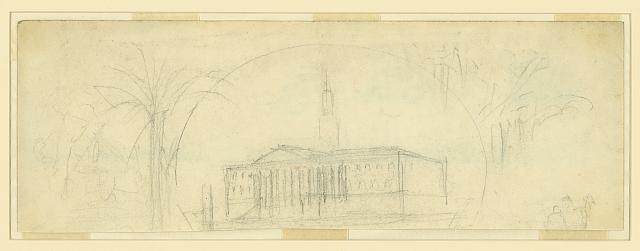
State House, Columbia, South Carolina (by Alfred R. Waud, between 1860 and 1865; LOC: LC-DIG-ppmsca-21601)

State House in Columbia, South Carolina

Posted in 150 Years Ago This Month, Confederate States of America, Southern Society | Tagged , , , , | Leave a comment

Christmas Thank-offering

Fredericksburg refugees caught between plundering Yankee army of he North and the spirit of extortion in the Southern Yankee businessmen.

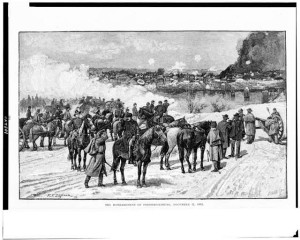
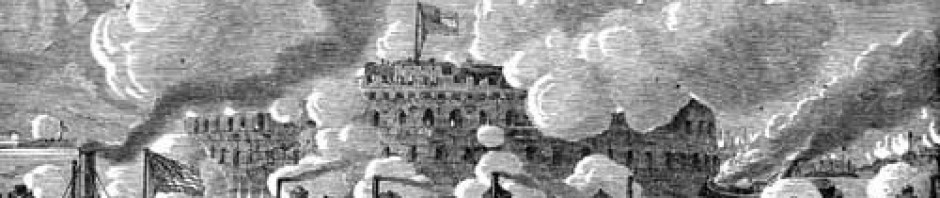
The Bombardment of Fredericksburg, December 11, 1862 (Battles and leaders of the Civil War. New York : The Century Co., c1884, c1888, vol. 3, p. 112; LOC: LC-USZ62-108240)

Not Santa down their chimneys: early Christmas gifts from the Yankees

From the Richmond Daily Dispatch December 25, 1862:

Appeal for Fredericksburg.

The citizens of Fredericksburg have been great sufferers by the horrid devastation inflicted upon that town by the Yankees. Not only have their dwellings been destroyed, or rendered uninhabitable, but, in almost every instance, their furniture, clothing, and personal effects of every kind, have been torn to pieces or stolen, so that a community in which such a thing as poverty was once unknown is now homeless, comfortless, and, in the case of many of its inhabitants, actually requiring the assistance of others for food and lodging. The rich inhabitants, though much impoverished, may not be thus destitute; but the rich are but a small minority of any community. The great mass of them who have been dispossessed of their habitations and homes by the sudden convulsion which, like an earthquake, has swallowed up Fredericksburg, have no surplus means to provide against such an exigency, and must, therefore, either perish for want of the absolute means of subsistence, or be relieved;–we will not say by the charity — but by the justice and humanity of their fellow-citizens.

Night. The sacking of Fredericksburg-- & biovace[sic]of Union troops (by Arthur Lumley, 1862 December 12; LOC: LC-DIG-ppmsca-20787)

” their furniture, clothing, and personal effects of every kind, have been torn to pieces or stolen”

That which adds immensely to the distress of a people thus ejected from their homes is the famine prices at which all articles, whether of necessity or comfort, are now held. If the last year, instead of being productive, had been a year of dearth, prices could scarcely range higher than they do now. How can those who have lost their furniture replace it, or even their clothing, at present prices? If they try to obtain board, forty and sixty dollars a month in the moderate demand for each individual. Nor is the spirit of extortion confined to the cities. It is just as rampant in the country. We have heard that in some localities in the which have themselves escaped the scourge of war, the most intense greed of gold pervades the people, and that refugees whose pockets are not well lined are objects, if not of their contempt, of cold indifference. The unfortunate refugees are between two fires, with Yankees behind them and Yankees before them; for, of all contemptible Yankees in the world, the most contemptible are those who, professing to hold Yankee av[a]rice and meanness in the most sublime scorn, are themselves the meanest and most avaricious of mankind.

Halt of Wilcox's Troops in Caroline street prevous[sic] to going in to battle--; Troops lounging on furniture and debris in foreground, battered dwellings in background (by Arthur Lumley, 1862 December 13; LOC: LC-DIG-ppmsca-20791)

“sudden convulsion” of ‘Northern’ Yankees

We invoke all just and humans [humane?] people to contribute every dollar they can spare, and all the influence they possess, to the relief of the community of Fredericksburg. On this Christmas day, what better Christmas gift can we lay upon the altar of Almighty God, what better thank- offering for the great deliverance which He has just effected for us at this same Fredericksburg and by which we ourselves, perhaps, have been saved from being rendered houseless and homeless, than a literal and universal donation in all the churches to the relief of the Fredericksburg people?

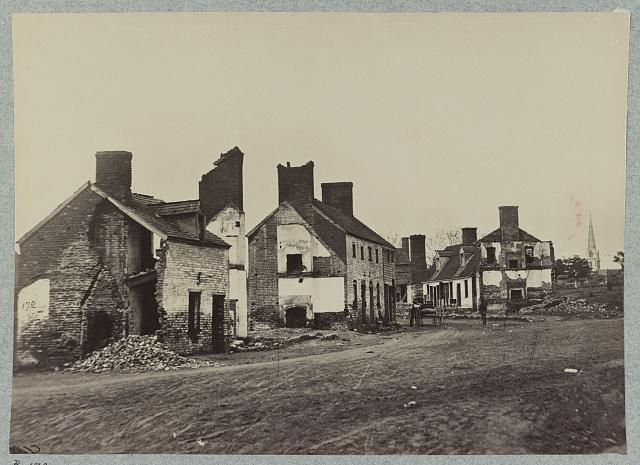
Street in Fredericksburg, Va., showing houses destroyed by bombardment in December, 1862 (photographed 1862, (printed between 1880 and 1889); LOC: LC-DIG-ppmsca-32890 )

in lieu of Richmond?

Posted in 150 Years Ago This Week, Battle of Fredericksburg, Southern Society | Tagged , , | Leave a comment

Pine Grove Christmas

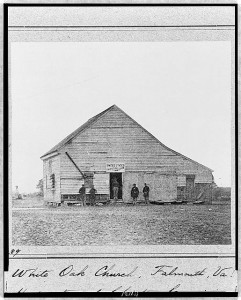
White Oak Church, Falmouth, Va.--Headquarters of Christian Commission (photographed between 1861 and 1865, printed later; LOC: LC-USZ62-119121)

putting the church in White Oak Church

From a Seneca County, New York newspaper in January 1863:

The 33d Regiment.

A correspondent of the Rochester Union in the 33d regiment, thus writes of a pleasant affair which occurred at Col. TAYLOR’s head quarters on Christmas day:

Col. R. F. Taylor very generously gave a hansome dinner to his staff and line officers, which was one of the most pleasant occasions we have met in camp. Though attended with many inconveniences, being camped in the woods and far from market, yet he spared no pains to make the occasion agreeable and inviting. The table, neatly spread beneath a large fine tent in the midst of a beautiful pine grove, was abundantly supplied with beef, potatoes, bread, butter, pie, cake, turkey, chicken, &c. In fine health and still finer spirits, the officers gathered around this festive board, forgetting the sober realities of war, heartily engaged in the merits of a Christmas dinner as in times of peace in days gone by.

The occasion was marked by a civil, dignified and gentlemanly deportment which in every respect became officers of their rank.

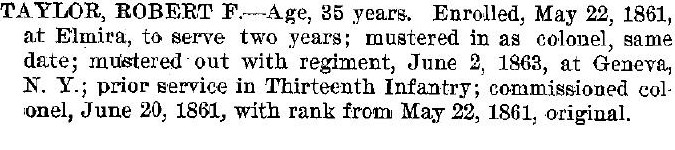
Robert F. Taylor (http://dmna.ny.gov/historic/reghist/civil/rosters/Infantry/33rd_Infantry_CW_Roster.pdf)

Colonel Taylor, Christmas host

After the battle of Fredericksburg, the 33rd, as part of the XI Corps, recrossed the Rappahannock with the rest of the Army of the Potomac on the night of December 15th. According to The story of the Thirty-third N.Y.S. vols.; or, two years campaigning in Virginia and Maryland (by David W. Judd (page 256)):

You can read about White Oak Church at The Historical
Marker Database
:

With the arrival of the Army of the Potomac in November 1862, White Oak Church instantly became the center of one of the largest communities in Virginia. For seven months, 20,000 soldiers of the VI Corps camped in the immediate area. During that time the church served alternately as a military hospital, a United States Christian Commission station, and as a photographic studio. Fifty-two soldiers who died during the encampment were buried on the church grounds. Their bodies were later moved to Fredericksburg National Cemetery.

               _______________

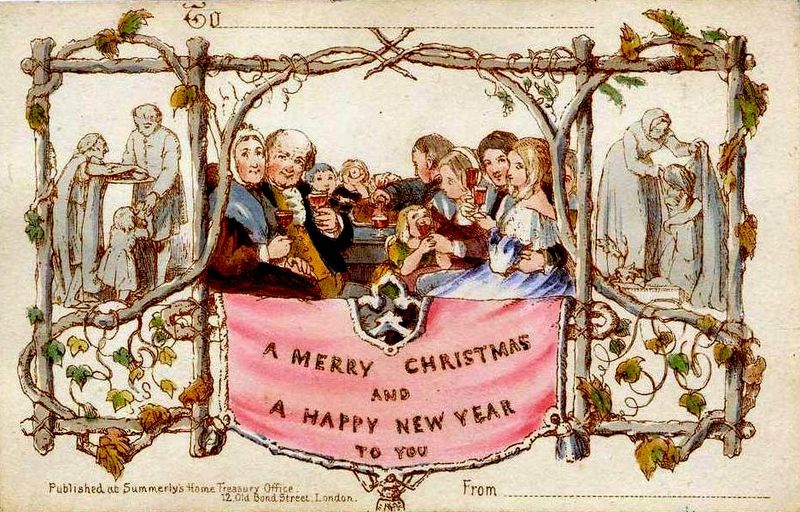
The world's first commercially produced Christmas card, designed by John Callcott Horsley for Henry Cole (1846)

‘mirth and hilarity’ to y’all!
From. … Sumpter

Posted in 150 Years Ago This Week, Military Matters | Tagged , , , | Leave a comment

When?

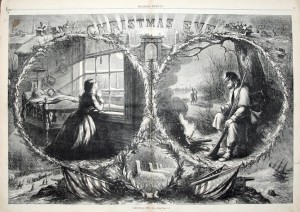
Christmas Eve, 1862 by Thomas nast (Harper's Weekly, January 3, 1862)

good question

From a Seneca County, New York newspaper in December 1862:

“When Shall We Have Peace.”

The Portland Advertiser, the leading Republican paper in Maine, asks the important and interesting question and answers it. We commend the answer to the careful attention of those who are so free with their charges of treason against every Democrat who speaks of peace:

We answer: – When Congress shall be persuaded that reason, not force, is THE DIVINITY of the age in which we live. When Congress shall be persuaded that history furnishes no example of six millions of people educated free and independent, being subjugated to captivity and ruled against their consent. When Congress shall be persuaded that no nation on earth has proved themselves powerful enough in arms, or in wealth to establish and maintain indefinitely, a military despotism over six millions of white men accustomed to freedom and to a representative Government. – When Congress shall be persuaded that every bayonet that carries a demand for obedience to law and to the Federal Government, should also carry the announcement of a religious respect for the political rights out of which the war has arisen, and a willingness to confer amicably upon the terms of a readjustment of those rights.
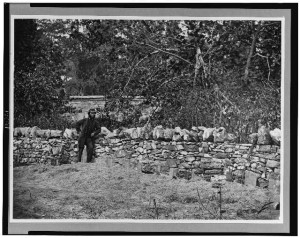
Soldier standing at graves of Federal soldiers, along stone fence, at Burnside Bridge, Antietam, Maryland (by Alexander Gardner, photographed 1862, printed later; LOC:  LC-USZ62-116321)

Viewing Moloch’s work: Union graves at Burnside Bridge, Antietam

Fight on ye men of the north, and, fight on, will be the cry of the men of the South until, substantially, these conditions we have named shall come to pass; but fewer of each side shall live to enjoy the results, as day by day passes away, and all of each will be poorer in purse, until the result that gives peace shall be attained.

Peace is the child of reason and reciprocal interest. War is the heathen and soulless Moloch that devours without remorse, every life and every interest that stands in the way of its imagined proclaimed necessities. Cold, pitiless, inhuman is war in its best aspect. It makes children fatherless, wives widows, the rich poor, the poor miserable, the powerful feeble, the feeble despairing, and the world itself everything which it ought not to be, to every citizen and to every interest.
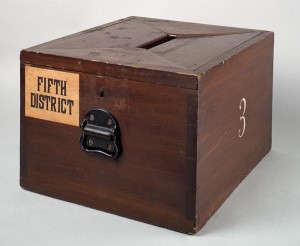
A wooden ballot box used in the northeastern United States circa 1870. (Smithsonian Institute)

The star of our show

But fight on, fight, will be the impulsed cry of politicians, or aspirants to office, of government jobbers and contractors, and of fanatic one idea men, both at the North and the South. Fight on will be the cry of standard loyalty, until the still small, and yet sublime voice of the BALLOT-BOX shall bid battl[e]s to cease, and reason, not madness, to resume its sway over the councils of the nation.

          __________

The telegraph states that on Monday [December 15th], the pickets of the contending armies [at Fredericksburg], fronting the left wing, mutually agreed upon an “armistice” among themselves, and freely intermingled with each other, exchanging their dead friends and comrades who lay on “neutral ground.”

During this time a General of our army rode by and put an end to these proceedings. The result was that both parties commenced firing, when nine of our men were killed.

After the general had left, the friendly demonstrations of our pickets were renewed, and butternut and blue uniforms freely mingled.

About this time General Franklin despatched a flag of truce, which the enemy immediately recognized, and the exchange of dead bodies was resumed and continued until completed.

Yesterday General Lee sent a flag of truce to General Burnside, asking him to detail men to bury his dead in front of Gen. Sumner’s gra[n]d division. This was done.
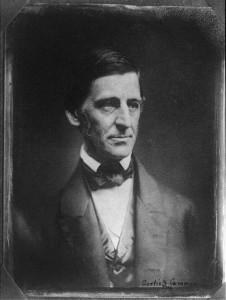
Portrait photograph of Ralph Waldo Emerson, head-and-shoulders, facing slightly right. ( c1911 February 7; LOC: LC-USZ62-10611)

Have yourself a reasoned little Christmas

The wounded, with the exception of those whom the enemy obtained, have all been brought to this side of the Rappahannock, and as rapidly as possible are being sent to Washington.

The Portland Advertiser seems to be using some Transcendentalist philosophy, although its use of reason might be different than the way Ralph Waldo Emerson, a leader in transcendentalism, meant it. Emerson considered reason to be “the intuitive awareness of eternal truth”[1] and distinguished it from the sensible, material world. Reason was the way to understand the divine and live one’s life accordingly. That did not mean peace at any price. From the Wikipedia link: “These essays [The Conduct of Life] also find Emerson strongly embracing the idea of war as a means of national rebirth: ‘Civil war, national bankruptcy, or revolution, [are] more rich in the central tones than languid years of prosperity,’ Emerson writes.”

              ________________

Star-spangled Santa
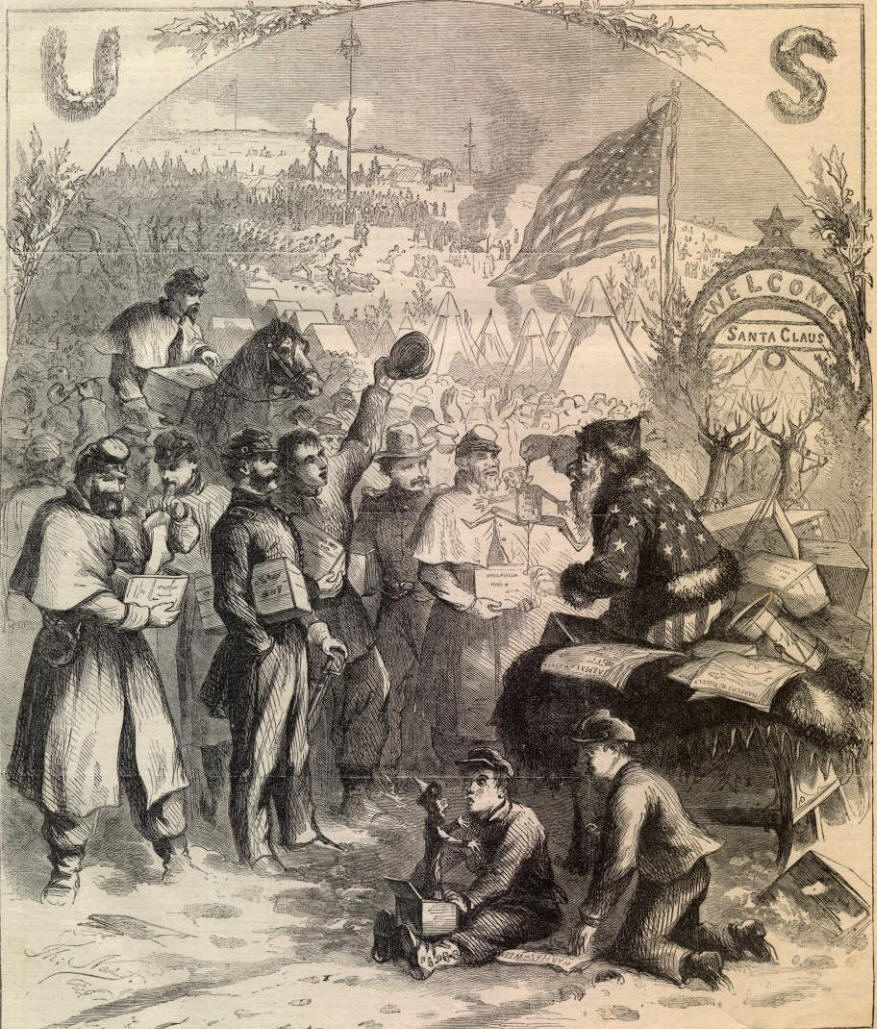
SANTA CLAUS IN CAMP (by Thomas Nast, Harper's Weekly, January 3, 1863)

Santa says, “G’lang!” ???

The two Christmas drawings are by Thomas Nast from the January 3, 1862 issue of Harper’s Weekly hosted at Son of the South, where you can read about the Battle of Fredericksburg and Santa’s visits to the Union camps.
  1. [1]Encyclopedia Britannica, The 100 Most Influential Americans, London: Constable & Robinson Ltd, 2008. Print. page 108.
Posted in 150 Years Ago This Month, American Culture, Battle of Fredericksburg, Northern Politics During War, Northern Society | Tagged , , , , | Leave a comment

Accidents Happen

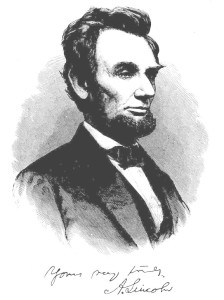
frontispiece from The Life Of Abraham Lincoln, by Ward H. Lamon at http://www.gutenberg.org/files/40977/40977-h/40977-h.htm

From Project Gutenberg (Volume VI):

CONGRATULATIONS TO THE ARMY OF THE POTOMAC
EXECUTIVE MANSION, WASHINGTON,

December 22, 1862.
TO THE ARMY OF THE POTOMAC:

I have just read your general’s report of the battle of Fredericksburg. Although you were not successful, the attempt was not an error, nor the failure other than accident. The courage with which you, in an open field, maintained the contest against an intrenched foe, and the consummate skill and success with which you crossed and recrossed the river in the face of the enemy, show that you possess all the qualities of a great army, which will yet give victory to the cause of the country and of popular government.

Condoling with the mourners for the dead, and sympathizing with the severely wounded, I congratulate you that the number of both is comparatively so small.

I tender to you, officers and soldiers, the thanks of the nation.
A. LINCOLN.

You can read General Burnside’s account of the battle in the January 3, 1863 issue of Harper’s Weekly hosted at Son of the South. Of the approximately 9,000 Union wounded, “The surgeons report a much larger proportion of slight wounds than usual, 1632 only being treated in hospitals.”

Posted in 150 Years Ago This Week, Battle of Fredericksburg, Lincoln Administration | Tagged , , | Leave a comment

“needlessly, wickedly sacrificed”

fredericksburg-cartoon Harper's Weekly, January 3, 1863

COLUMBIA. “Where are my 15,000 Sons—murdered at Fredericksburg?” LINCOLN. “This reminds me of a little Joke—” COLUMBIA. “Go tell your Joke AT SPRINGFIELD!!”

From a Seneca County, New York newspaper in December 1862:

Again Defeated.

Bringing the wounded into Fredericksburg in the afternoon--of Saturday (by Arthur Lumley,  1862 ca. December; LOC: LC-DIG-ppmsca-20785)

wetting Virginia with their blood

What is to be said in this week of the nation’s agony? What word is sufficient in these days red with battle and hot with the flush of conflicting passions? Our arms have sustained another defeat, – more disastrous and ignominious than any which we have heretofore suffered.

The Grand Army under BURNSIDE in its triumphal march across the Rappahannock were but marching into the very jaws of death, as the sequel has most clearly demonstrated. The conspiracy which might have been crushed a twelve-month ago has now grown into proportions which overshadow the continent and threaten to destroy the nation. – And this because incapacity, treachery and weakness rule at Washington.

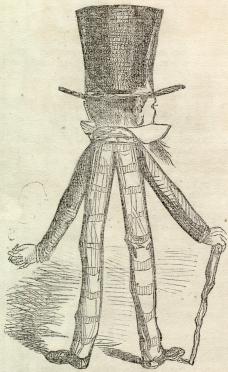
abraham-lincoln-cartoon harper's Weekly, January 3, 1863


THOSE GUILLOTINES.—A LITTLE INCIDENT AT THE WHITE HOUSE. SERVANT. “If ye plase, Sir, them Gilliteens has arove.”
MR. LINCOLN. “All right, MICHAEL.—NOW, Gentlemen, will you be kind enough to step out in the Back Yard?”

The magnitude of the defeat on the heights of Fredericksburg cannot be fully comprehended, and it is sickening to contemplate the horrors of that terrible struggle. From an early hour until nightfall the slaughter went on without cessation, until the ruin of the Grand Army was complete, and well nigh twenty thousand brave and noble souls wet the hill sides of Virginia with their blood. Never was heroism more sublimely displayed, – never an army more needlessly, wickedly sacrificed. The blundering strategy and the incompetent generalship that hurled our forces against the impregnable intrenchments of the enemy should be characterized and denounced as indiscriminate murder slaughter, and the authors, whoever they may be, execrated and driven from the presence of God and man. We have no patience to speak in milder terms. Too many of the noblest and bravest of the land have already been slaughtered in this wicked and unrighteous war; and too many, alas, have perished through the combined stupidity and criminal incapacity of ABRAHAM LINCOLN, HENRY W. HALLECK and EDWIN M. STANTON. They have too long trifled with the very existence of the nation. When the rebellion was about to be crushed they interposed, defeated the plans of the Generals in the field, and blasted the hopes and expectations of a loyal people. Through their intrigue and imbecility the disaster under POPE and the slaughter at Antietam were brought upon us. And now the fruitless butchery on the heights of Fredericksburg is the last drop in the bitter cup of anguish and despair. A whole nation is in mourning over the awful scenes of desolation and death that come to us from the battle field, and God alone can wipe away the twenty thousand fireside tears that to-day are being shed throughout the length and breadth of this once happy country. Is there no hope for a suffering people? Must this dreadful war go on until the whole nation is in mourning? The public patience is exhausted. We see the prodigious resources of the nation exhausted, the lives of our relatives and friends inhumanly sacrificed, the voice of the people stifled, the administration deaf to the appeals of the people, and yet the end does not come.

nobody (Harper's Weekly, January 3, 1863)

MR. NOBODY, the party really responsible for the
Fredericksburg disaster.

Never was a nation or a cause more humiliated by its rulers and defenders. Incapacity, corruption and despotism rule, and the people mourn. How long, O, how long is this to endure!

          __________

The McDowell Court of Enquiry.

The McDowell Court of Enquiry has brought to light some strange revelations. – The documents put in evidence by Gen. MCDOWELL, together with Gen. MCCLELLAN’s testimony, are well calculated to open the eyes of the American people to the gigantic blunders of the authorities at Washington, who assumed the control of the campaign, thwarted and defeated the plans and operations of Gen. MCCLELLAN. The evidence vindicates MCDOWELL from any complicity in the blunders and schemes of President LINCOLN and Secretary STANTON. He, it would seem, made every effort to co-operate with MCCLELLAN in the reduction of Richmond and the defeat of the rebel army. The opprobrium and disgrace that was heaped upon MCDOWELL during the apparent idleness and inefficiency of his grand army at Fredericksburg, was undeserved, as the evidence and documents before the Court of Enquiry most clearly prove. From the letters which we publish on the first side of to-days paper, it will be seen that he most solemnly protested against the withdrawal from co-operating with MCCLELLAN in the march against Richmond. The administration alone is responsible for the inefficiency of MCDOWELL’s army, and the disaster of the Peninsula campaign, and the people should hold it a rigid account for the immense sacrifice of life and treasure which followed the footsteps of that once grand and heroic army.

The editorial fits the template of the Democrat newspaper in the Democrat Seneca County of 1862: The Republican party co-opted the Aboltionist movement for the party’s own narrow political ends; the Lincoln administration is at best incompetent; the best hope the people had to keep the country from being torn apart was General McClellan (a Democrat).

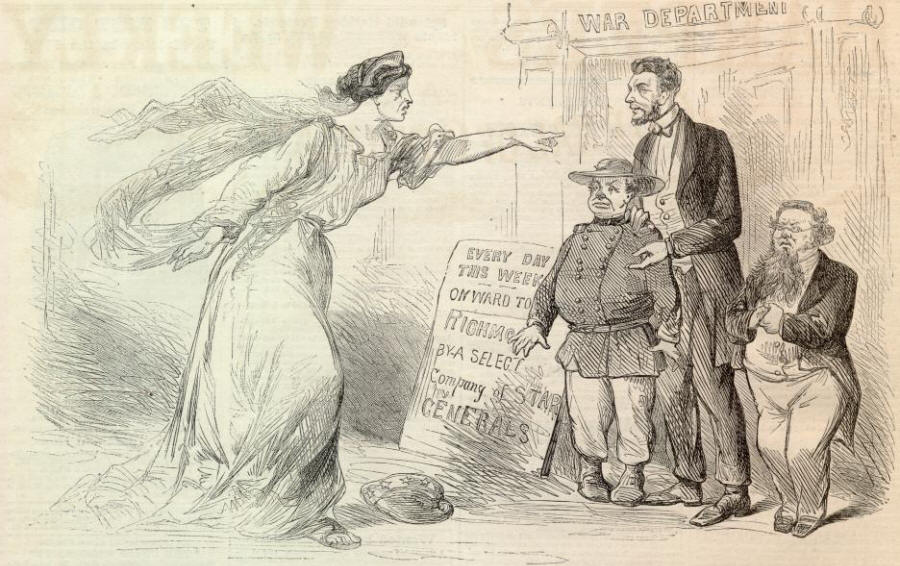
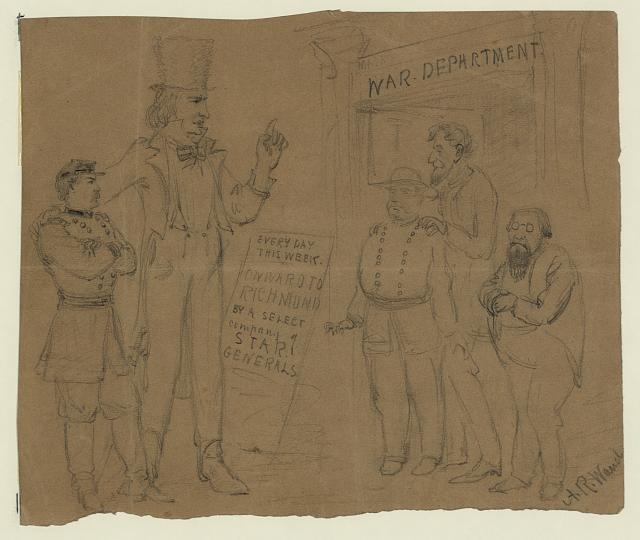
All three political cartoons are from the January 3, 1863 issue of Harper’s Weekly hosted at Son of the South. Harper’s had been more moderate and less critical of the Lincoln administration than the Seneca County paper. Fredericksburg seems to have changed that some. The first cartoon is a harsher redo of this one from sometime after Edwin Stanton became Secretary of War in January, 1862:

Cartoon showing Uncle Sam and General McClellan standing before a playbill which reads: Every day this week onward to Richmond by a select company of star generals (by Alfred R. waud, between 1861 and 1862 Winter; LOC: LC-DIG-ppmsca-20874)

In the aftermath of the Seven Days’ battles in which the Army of the Potomac was driven back from within a few miles of Richmond Harper’s wondered, “Who Did It? and editorialized that was no one was to blame:

INEVITABLY, after such severe work as our soldiers have seen before Richmond, every body raises his head from the details, and asks, Who did it? Who is responsible for it? Who shall be the scapegoat?

We are all responsible. It is very easy, after any event has occurred, to see and to say how a different combination might have produced different results. Suppose a storm had not scattered the Spanish armada. …

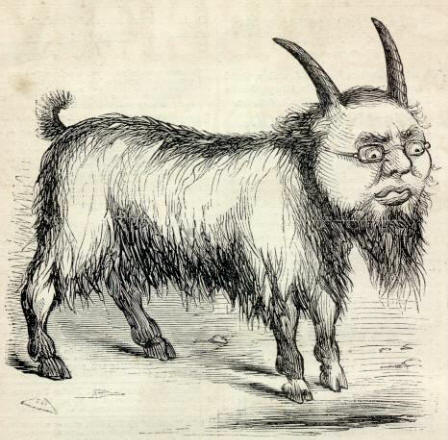
The following cartoon was in the same issue and suggests that Secretary Stanton was the biggest scapegoat:

scapegoat (Harper's Weekly, July 19, 1862)

THE SCAPE-GOAT NOW ON EXHIBITION IN WASHINGTON

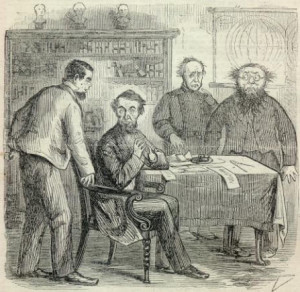
This contrasts with the cartoon of the backside of Lincoln from January 3, 1863: the commander-in-chief is ultimately responsible?

Lincoln understood that someone had to be accountable and eventually replaced McClellan, as he would later accept Burnside’s resignation in early 1863.

The McDowell Court of Inquiry was set up as part of the effort to assign blame for the Union defeat at Second Bull Run. It is said that McDowell “escaped culpability by testifying against Maj. Gen. Fitz John Porter” who was court-martialed for his alleged insubordination.

Posted in 150 Years Ago This Month, Battle of Fredericksburg, Lincoln Administration, Northern Politics During War, Northern Society | Tagged , , , , | Leave a comment

Crestfallen?

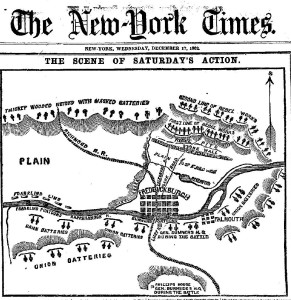
Battle of Fredericksburg, NY Times, 12-17-1862

unattainable crest

From The New-York Times December 18, 1862:

GEN. BURNSIDE’S SUNDAY DISPATCH.

The following is a copy of a dispatch from Gen. BURNSIDE to the President, sent and received on Sunday morning last, concerning the precise import and phraseology of which there has been some disputation in the newspapers:

HEADQUARTERS ARMY POTOMAC

Four o’clock A.M., 14th December.

THE PRESIDENT: I have just returned from the field. Our troops are all over the river, and hold the first ridge outside the town and three miles below. We hope to carry the crest to-day. Our loss is heavy–say five thousand. A.E. BURNSIDE,

Major-General Commanding.

Thankfully, General Burnside was dissuaded.

Posted in 150 Years Ago This Week, Battle of Fredericksburg, Military Matters | Tagged , , | Leave a comment

Anaconda’s coil broken – again

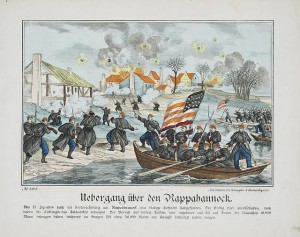
Uebergang über den Rappahannock (Neu Ruppin : bei Oehmigke & Riemschneider ; [between 1863 and 1870?; LOC: LC-DIG-ds-00299)

It’s German to me

Here’s some Southern rhetoric about the Confederacy’s great victory at Fredericksburg, which this editorial views as another failure of the North’s Anaconda Plan.

From the Richmond Daily Dispatch December 18, 1862:

Burnside’s Whereabouts.

At the time of writing this article, nothing has been heard of Burnside. …

The prisoners say the Confederates have no idea of the extent of their success. We believe it. We know that we have gained another great and glorious victory; but we believe it is far greater and far more glorious than the most sanguine among us imagine. We shall never get at the truth, for Burnside will never tell it, and we have no means of ascertaining it independently of him. Our General is not like McClellan, who always knows to an eye and a log what his enemy has lost, but can never find out what he has lost himself. But it will be Judged by its effects. It has again broken the coil of the anaconda for the fifth or sixth time. It has stopped the latest “on to Richmond.” It has demonstrated what, indeed required no farther demonstration than it had already received, that this war, pursued for an object which can never be obtained, is a sheer piece of wickedness and folly on a stupendous scale.

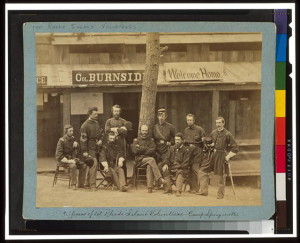
Officers of lst Rhode Island Volunteers - Camp Sprague, 1861 (photographed 1861, printed later; LOC: LC-USZC4-6316)

the ‘late’ Ambrose Burnside in 1861

The late Burnside.

The inhabitants of Yankeedom, having had their fill of glory over the occupation of Fredericksburg, are now doubtless prepared to felicitate themselves upon its evacuation. Next to an “onward movement,” nothing exalts them so much as a “change of base.” The first illustrates their superhuman valor; the last, their unapproachable generalship. Burnside has gratified them in both particulars. He came thundering down upon Fredericksburg like a thousand locomotives; he departed like a dog with his tail cut off. A dog with his tail cut off affords a literal exemplification of that famous Yankee operation, a change of base. The creature’s base is changed, but not his baseness. He will bite again at the first opportunity; and cutting off his tail does not improve his habits; nothing but the loss of his head will ever improve his heart.

We are curious to see what will now be the fate of Burnside. The Fredericksburg route to Richmond was his pet scheme, and in this he had the emphatic approval of the Yankee Commander in Chief, Gen. Halleck. His career has been a short one; brief and inglorious as that of the robber, Pope. The inscription upon his tombstone should be:
“If so soon he’s done for,
Wonder what he was begun for.”

The manes of McClellan are now avenged. He was decapitated for not moving; Burnside avoided that error, and behold the result. The unfortunate Yankee Generals are between Seylla and Charybdis. If they stand still their own Government destroys them; if they don’t stand still, they are destroyed by the Confederates. Burnside’s next “onward movement” may be to New Jersey, that Botuny Bay [Botony Bay] of unfortunate Federal Generals. He said he was going to [e]nd the war on the Rappahannock, but the Rappahannock has proved as intractable as the Chickahominy. Instead of ending the war, he has only put an end to himself.

A National song.

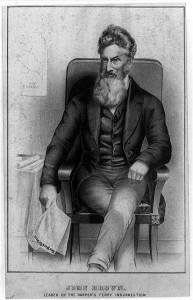
John Brown, three-quarter length portrait, facing left, holding New York Tribune (1859?; LOC: LC-USZ62-89569)

‘fanatic, a horse thief, and murderer’

It appears that the Republicans have adopted the famous “John Brown’s Soul’s a Marching On” as a national song, and no one can dispute the propriety of the selection. It is impossible to imagine anything more atrocious than the poetry except it sentiments, nor more abominable than the subject except the people. A more faithful type of the Puritan race than John Brown could not be found. A fanatic, a horse thief, and murderer, no one can dispute his claims to be the patron saint of the rogues and ruffians who are “marching on.” stealing and butchering as they go.

The French have the “Marsellaise,” the Britons “God Save the Queen,” the United States once had “Hail Columbia,” and the Yankees “Yankee Doodle”–an appropriate air for them in their days of simplicity — but “John Brown” is the melody of all others suited to their course and full-blown depravity. It is redolent of all the peculiar characteristics of that peculiar people. The horse thief, murderer, and insurrectionist, was the true representative of the spirit and character of this whole invasion, and his ignominious end of the destiny which awaits it.

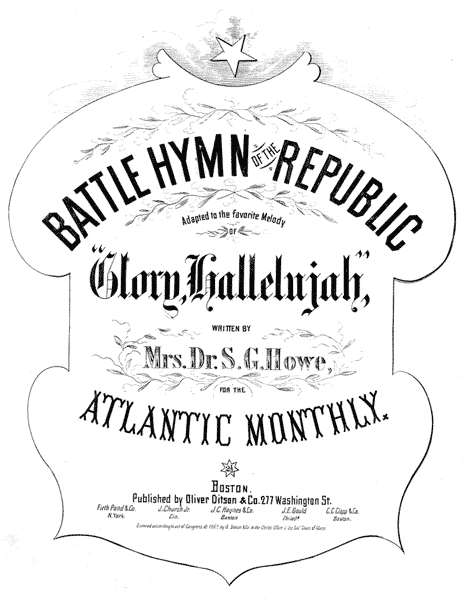
“It has again broken the coil of the anaconda for the fifth or sixth time.” That might be one way to sum up the war because the blustering, blundering Yankees had the resources (and enough political will) to keep on squeezing. “The Battle Hymn of the Republic” probably did help keep up a persevering spirit in a part of the Northern public.

The_Battle_Hymn_of_the_Republic_-_Project_Gutenberg_eText_21566

inspiring the ‘rogues and ruffians” to keep on marching

Posted in 150 Years Ago This Week, Battle of Fredericksburg | Tagged , , , | Leave a comment

Need to know

A Seneca County, New York newspaper in December 1862 reprinted more feedback on the Union debacle at Fredericksburg. Facts, speculation, opinion, and politics all seem to be mixed together as the northern press was trying to get to the bottom of what happened:

The Losses at Fredericksburg.

Halt of Wilcox's Troops in Caroline street prevous[sic] to going in to battle-- (by Arthur Lumley, New York Illustrated News, 10 January, 1863, p. 148; LOC: LC-DIG-ppmsca-20791)

well, usually well-organized

Four days have elapsed since the fight at Fredericksburg and the country is kept in painful suspense with regard to the loss of the federal army. It is even given out in a dispatch from Washington that the figures cannot be definitely ascertained for several days to come.There is really no obstacle in the way of giving within a day or two of an engagement such as that of Saturday, a complete report of the killed, wounded and missing. The organization of an army like that under Burnside is so perfect that in a few hours after being required full reports might be obtained from every regiment and division of troops. Gen. Burnside probably has the reports – for he must know the condition of his army to act understandingly – and it is likely that they are kept back from the public by the strategists of the war office who are so inscrutably wise in all their movements. – Rochester Union.

     _________

A Washington correspondent wrote us, Monday night –

“OUR LOSSES ARE 20,000.”

We did not credit him, and, in an excess of prudence, threw his manuscript aside, – but we fear he was too near the truth.

A letter, we copy from an edition of the Tribune, puts down – Loss.

                                                         Couch’s Corps ………………….10,000
                        Reynolds’ Corps of Franklin’s Division …………….4,000

These do not include Wilcox’s Corps, or Hooker’s Grand Division.

Hooker went in last, and suffered least – but his losses must have been great. – N.Y. Express.

     __________

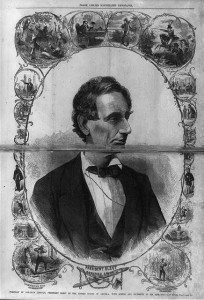
President elect, Abraham Lincoln Portrait of Abraham Lincoln, President Elect of the United States of America, with scenes and incidents in his life -- phot. by P. Butler, Springfield, Ill. (Frank Leslie's illustrated newspaper, v. 11 (1861 March 9), pp. 248-49;LOC: LC-USZ62-6868 )

Barnacle Abe, the failer?

The New York Express in view of the overwhelming defeat of the Federal army, and the terrible slaughter which followed, says, “it is evident, now, – either the Administration must die, or the Government must die. The Administration and the Government can no longer live together. One or the other must perish. Which shall it be? Never, never, the Government. – long live the Government! – and, oh, ye Republicans – responsible for this Administration – change or abolish your Administration. As Mr. Lincoln must be kept – the Barnacle of the Constitution – let Republican Congressmen create for him an able, discreet Adminisration.

     _________

The New York World in speaking of the battle of Fredicksburg says positively that [Gen.?] Burnside acted under strict orders; he was compelled to move upon Fredericksburg by preamptory directions from Washington, which domineered over his judgment and extorted his obedience. When he was ordered to Fredericksburg he had the promise of Gen. Halleck that his pontoons should meet him there. Gen. Halleck forgot to give the order! – and they were delayed so long that the enemy occupied the heights. In this emergency a council of war was held; all the corps commanders opposed an advance; but Burnside said, in conclusion, that he was compelled to advance by orders from Washington.”

     _________

rastus Brooks, head-and-shoulders portrait, three-quarters to the right (between 1844 and 1860; LOC: LC-USZ62-109972)

inquiring mind from NY Express

HON. ERASTUS BROOKS writes the New york Express from Washington that the battle at and near Fredericksburg was fought by the President of the United States and by Gen. Halleck, (by the latter especially), against the judgment and remonstrance of General Burnside and of General Sumner, and perhaps of other officers associated with them, in command of the Army. These two names are given, – and the facts can all be furnished to Congress, if an inquiry is ordered. This inquiry ought to be pressed at once for several important reasons.

Erastus Brooks was born in 1815 in the Maine District of Massachusetts (Portland). He was a New York politician and worked as a journalist in New York and Maine, including a stint editing the Portland Advertiser, a Whig paper.

At it turned out, total Union casualties were about 12,600 dead, wounded, prisoners, and missing.

Posted in 150 Years Ago This Month, Military Matters, Northern Politics During War | Tagged , , | Leave a comment