Branded with a ‘D’

From the Richmond Daily Dispatch November 20, 1862:

A soldier branded for desertion.

–The court-martial now in session recently sentenced Corporal Richard R. Poore, of company A, 15th Virginia cavalry battalion, for desertion, to be reduced to the ranks, forfeit all pay and allowances now due him, to be branded on the right hip with the letter D, one and a quarter inch long, have his head shaved, and be drummed out of the service. The branding, drumming out, and head shaving was performed at the Military Station of the Eastern District yesterday at 3½ o’clock, in presence of Bossieux’s Guard and the President’s Guard. A couple of lifers and the drum corps were brought into service to beat after the retiring culprit the rogue’s march. After the ceremonies incident to such an occasion had been gone through with Poore was returned to prison to be sent to his own company and again drummed. There are a large number in the prison whose sentences by court-martial are not yet executed.

Branding and the rogue’s march are among the punishments listed at “THE PROVOST MARSHAL’S OFFICE” at THE BLUE RIDGE GRAYS.

Posted in 150 Years Ago This Week, Confederate States of America, Southern Society | Tagged | 2 Comments

Little Mac in Big Apple

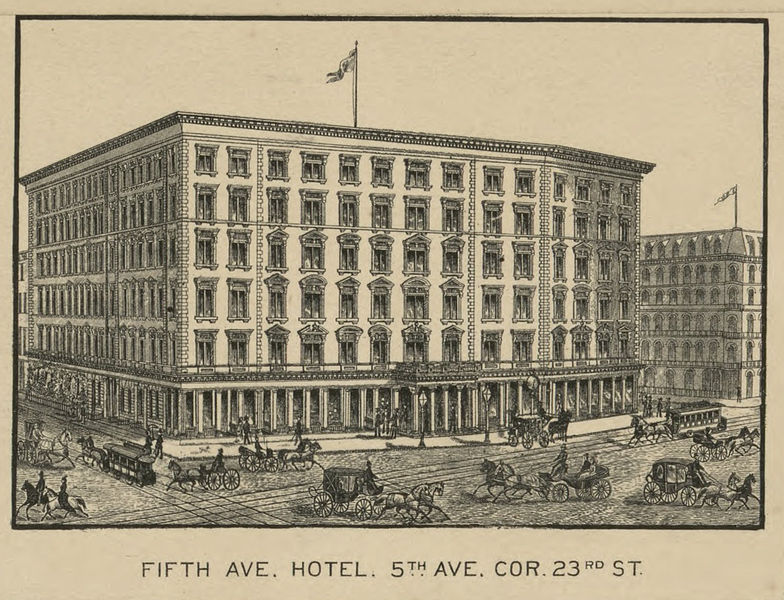
Fifth Avenue Hotel (by Will Taylor, 1879; http://hdl.loc.gov/loc.gmd/g3804n.pm005990)

fine place for a serenade

150 years ago today recently ousted General George McClellan spoke to adoring crowds in New York City. Apparently he held off on dissing the Lincoln administration and seems to be genuinely appreciative of all New Yorkers had contributed to the war cause and the Army of the Potomac.

From The New-York Times November 21, 1862:

Gen. McClellan at the Fifth-avenue Hotel.; SERENADE BY THE YOUNG MEN’S DEMOCRACTIC ASSOCIATION–SPEECH OF THE GENERAL, ETC.

When it became generally known yesterday that Gen. McCLELLAN had left Trenton, in the State of New-Jersey, and had arrived at the Fifth-avenue Hotel, quite a number of his personal friends and admirers called to see him at his rooms. Many of them, however, were disappointed, for the General left the hotel at 10 A.M. and did not return until 2 P.M. The fact that he was not at his published headquarters, created some doubt as to whether he was really in the City, and, consequently, there were but few callers until evening, when, as had been publicly announced, he was to be serenaded by the Young Men’s Democratic Association. The time stated for the commencement of the serenade was 10 P.M., but as early as 9 o’clock there were several hundred people present. … He had gone out, so it was said, to visit some friends, and of course, was not in the hotel. Here was another disappointment; but as some members of the Seventh Regiment band appeared, it was taken for granted that the serenade would be given, and they all remained.

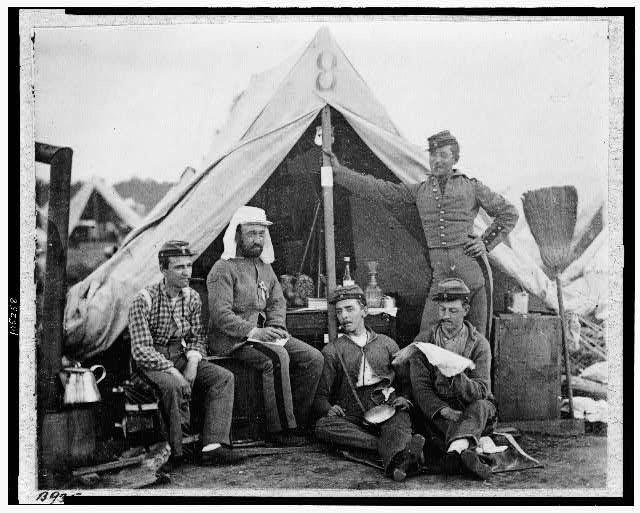
7th New York State Militia, Camp Cameron, D.C. (photographed 1861, printed later; LOC: LC-USZ62-105258)

‘prompt in responding to the appeal of the Government for aid’


At 20 minutes of 11 o’clock the Young Men’s Democratic Association appeared in front of the hotel, with Capt. RYNDERS’ gun, and band and gun began to play. With them there came several hundred citizens, who enlivened the occasion by cheers for Gen. MCCLELLAN and reseated groans for Gen. FREMONT and Mr. GREELEY. There was a call for three cheers for Gen. BURNSIDE, which was responded to with one faint cheer, and a die-away.

At length the General appeared, accompanied by Mr. LUKE COZZENS, President of the Young Men’s Democratic Association, and the assemblage gave cheer after cheer, lasting for fully a minute. The President of the Association made several attempts to introduce the General, and was as often interrupted by cheers for the late Commander of the Army of the Potomac. Finally, he succeeded in introducing him, and when the renewed cheering had ceased, the General spoke as follows:

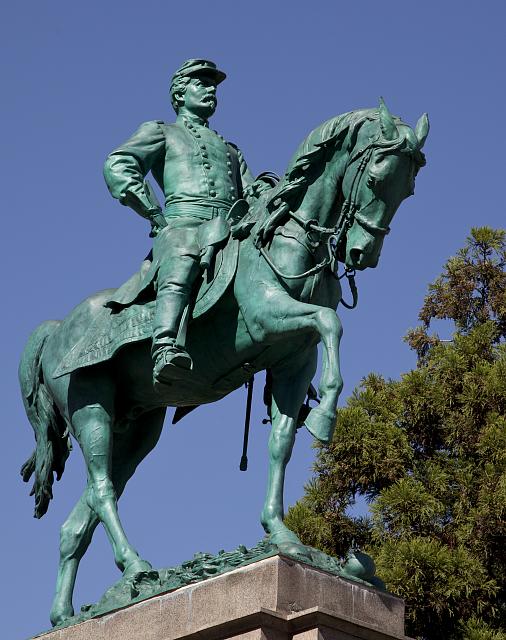
Bronze equestrian statue of Major General George Brinton McClellan located in the triangular traffic island formed by the intersection of Connecticut Ave., Columbia Road, and California St., NW, Washington, D.C. (by Carol M. Highsmith, 2010; LOC: LC-DIG-highsm-09482)

‘I am still a soldier’

GEN. M’CLELLAN’S SPEECH.

MY FRIENDS: I thank you, cordially, for this spontaneous tribute of regard. I accept it not for myself, but for the Army of the Potomac, which I once commanded, [cheers,] and in which you are so deeply interested. Every battle, from Yorktown to Antietam, has added new proofs of the courage and devotion of the citizen soldiers of New-York, and has increased the debt of gratitude to them. No portion of the Republic has more liberally given its millions of money and thousands of men to the cause than this great Metropolis. At the commencement of the struggle no community was more prompt in responding to the appeal of the Government for aid. No community has a greater stake in the success of our cause than this-none more closely bound by the ties of kindred to the army with which I have been so long associated. I, therefore, and my former comrades with me, will feel doubly honored by the occasion this evening. And it is with a heart full to overflowing with gratitude, that I again thank you for your presence to-night. You know that I am still a soldier, and you will not expect a speech from me; and you will, therefore, allow me to bid you good night.

The General retired amid renewed cheering, and soon afterward all was quiet in front of the Fifth-avenue Hotel.

I’m not sure about his gun, but Isaiah Rynders was a Democrat and “political organizer for Tammany Hall”. He and his gang opposed abolitionists:

By the end of the decade, he was considered to be the de facto leader of the Five Points street gangs and was often requested by authorities to use his influence to cease rioting and gang-related violence which the police were unable to stop. He was a particularly important figure in civil disturbances against abolitionists during the period encountering such people as Frederick Douglass and Abby Gibbons. On one occasion, Wendell Phillips was stopped from speaking at the Broadway Tabernacle when Rynders publicly threatened that he and his men would “wreck the building and mob the audience”. Henry Ward Beecher invited Phillips to speak at Plymouth Church and, when a mob led by Rynders followed Phillips, he and his followers were met by a group of well-armed men who defended the building. It was during this meeting that Phillips not only spoke out against slavery but also of the corruption of Tammany Hall.

Harpweek discusses some of the activities of the Democratic Young Men’s Association, which:

organized rallies and meetings, where they denounced the war, emancipation, blacks, Lincoln, and the Republicans in terms of class and race warfare. They warned that the Lincoln “dictatorship” was undermining civil liberties, and that the freed slaves would move to New York to take the jobs of white working-class men and marry their daughters.

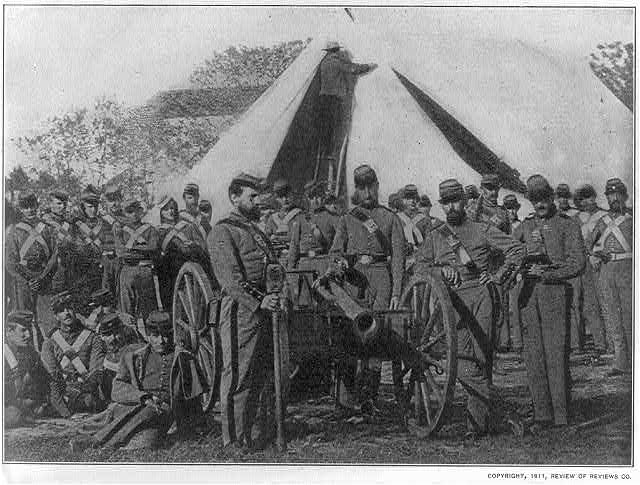
The Seventh Regiment band might be from the 7th New York Militia, which mustered in for several short stints from 1861 through 1863. A pre-war militia, the 7th was one of the first units to get to Washington, D.C. after Fort Sumter fell to the rebels.

The famous New York Seventh, just after reaching Washington in April 1861 (c1911; LOC: LC-USZ62-76425)

sans band – the 7th NY militia in D.C., April 1861

Posted in 150 Years Ago This Week, Military Matters, Northern Politics During War | Tagged , , , | Leave a comment

Good Fences …

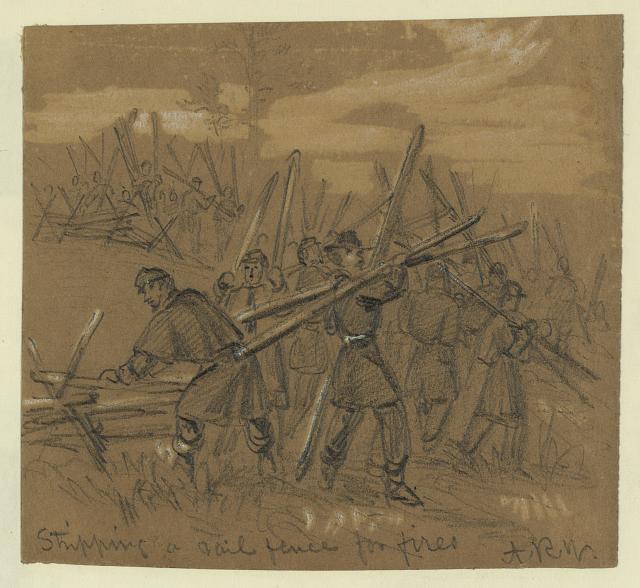
Stripping a rail fence for fires (by Alfred R. Waud, between 1860 and 1865; LOC: LC-DIG-ppmsca-21020)

bane to animal husbandry

would make good neighbors – if the Yankees hadn’t destroyed them, too.

From the Richmond Daily Dispatch November 15, 1862:

The fence law.

The last Legislature of Virginia, in view of the savages of the enemy rendering it impossible for farmers to keep up their fences, repealed the fence law as it existed in the statutes of Virginia, and passed another act, which we publish below:

1. Be it therefore enacted by the General Assembly of Virginia, That the 1st section of the 99th chapter of the Code of Virginia, so far as it applies to the counties of Hanover, Henrico, New Kent, Charles City, James City, York, Warwick, Elizabeth City, Alexandria, Fairfax, Fauquier, Stafford, and King George, be, and the same is hereby, repealed.
2. Be it further enacted, That the County Courts of the counties of Augusta, Frederick, Clarke, Warren, Rappahannock, Norfolk, Princess Anne, Mercer, Shenandoah, Page, Prince William, Spotsylvania. Hampshire, Berkeley, Caroline, and Nansemond, shall have power (all the Justices having been summoned, and a majority thereof being present.) to dispense with the existing law in regard to enclosures, so far as their respective counties may be concerned, or such parts thereof, to be described by metes and bounds, as in their discretion they may deem it expedient to exempt from the operation of such law.
3. If any horses, mules, cattle, hogs, sheep or goats, or any animal of either of the preceding classes, shall enter into any grounds in the counties enumerated in the first section of this act, in which the existing law of enclosures has been repealed, or into the grounds of any other county or counties or parts of counties in which the courts thereof shall repeal the existing law of enclosures, after such repeal, the owner or manager of any such animal shall be liable to the owner or occupier of such grounds for any damages arising from such entry; for every succeeding trespass by such animal, the owner thereof shall be liable for double damages; and after having given at least five days notice to the owner or manager of such animal of two previous trespasses, the owner or occupier of such grounds shall be entitled to such animal, if it be found again trespassing on said grounds.
4. provided, however, that this act shall apply to, and be in force in, the counties of Elizabeth City, York and Warwick only for the period of three years, dating from the declaration of peace between the Confederate States and the United States.
5. This act shall be in force from its passage.

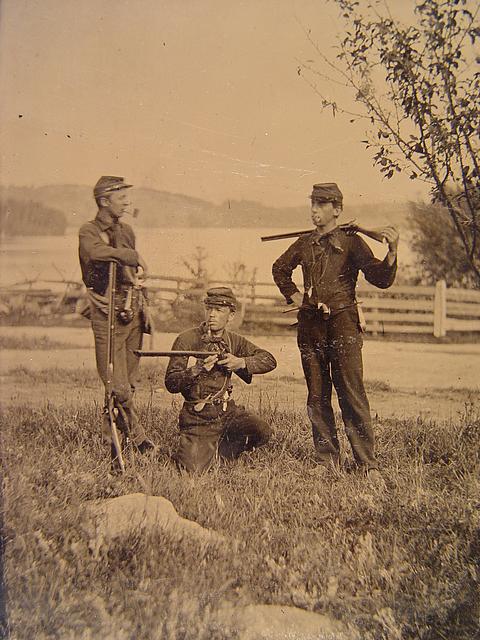
Three unidentified young soldiers in uniforms with shotguns, musket, and pipes in a field with a fence in the background (between 1861 and 1865; LOC: LC-DIG-ppmsca-27555)

fence intact

Posted in 150 Years Ago This Week, Confederate States of America, Southern Society | Tagged , , | Leave a comment

All Liquored Up

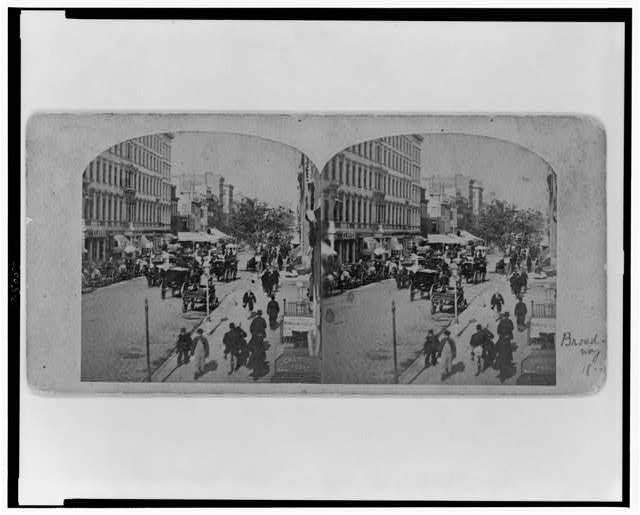
Busy street scene on Broadway, New York City (ca. 1862; LOC: LC-USZ62-125057)

NY City: where the 160th got mustered in

New recruits from Buffalo cause havoc on a troop train; another member of an “old’ regiments dies by disease.

These two quick articles were printed consecutively in the same column in a Seneca County, New York newspaper in November 1862:

Departure of the Auburn Regiment.

The 160th Regiment, Col. DWIGHT, left Auburn on Tuesday afternoon for New York, where it will be attached to Gen. BANK’s command. Previous to the departure of the Regiment considerable dfficulty broke out among the men in the Buffalo company. On the way to [S]yracuse one of the men assaulted a Lieutenant, who drew his revolver and shot the soldier in the side. His wound is not considered dangerous. Many of the men were in a beastly state of intoxication upon the departure of the Regiment.

Lieut. JAMES GRAY and the men he recruited here are attached to Col. DWIGHT’s Regiment.

____________________________________________

Death of Thomas Murphy.

We regret to be under the necessity of stating that Thomas Murphy, a member of the Waterloo Company in the 33d Regiment, died about a week since. His connections here do not know what his disease was, but from several circumstances, know that his illness must have been brief. Mr. Murphy leaves a wife and six small children, to whom his death is a serious loss. Almost every dollar of his pay was devoted to his family.

The evils of war are terrible enough when they remove from us our young unmarried men, but they are greatly aggravated when they remove the parent of a numerous family.

Waterloo Observer.

Thomas Murphy (http://dmna.ny.gov/historic/reghist/civil/rosters/Infantry/33rd_Infantry_CW_Roster.pdf)

Thomas Murphy

_____________________________________________________

The 160th New York Infantry Regiment was mustered in at New York City on November 21, 1862. Its first assignment was with Nathaniel Banks’ army in the Department of the Gulf:

In November 1862 he was asked to organize a force of thirty thousand new recruits, drawn from New York and New England. As a former governor of Massachusetts, he was politically connected to the governors of these states, and the recruitment effort was successful. In December he sailed from New York with a this large force of raw recruits to replace Maj. Gen. Benjamin Butler at New Orleans, Louisiana, as commander of the Department of the Gulf.

Charles Chauncey Dwight was a New York State judge after the war.

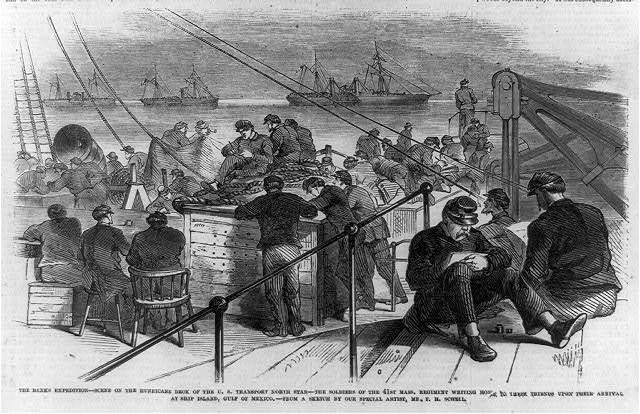
The Banks expedition--scene on the hurricane deck of the U.S. transport North Star--the soldiers of the 41st Mass. Regiment writing home to their friends upon their arrival at Ship Island, Gulf of Mexico (by F.H. Schell, Frank Leslie's illustrated newspaper, 1863 Jan. 17, p. 257, bottom half; LOC: LC-USZ62-98002)

41st Mass also headed to the Gulf

Posted in 150 Years Ago This Month, Military Matters | Tagged , , , , | Leave a comment

Keystone Cops

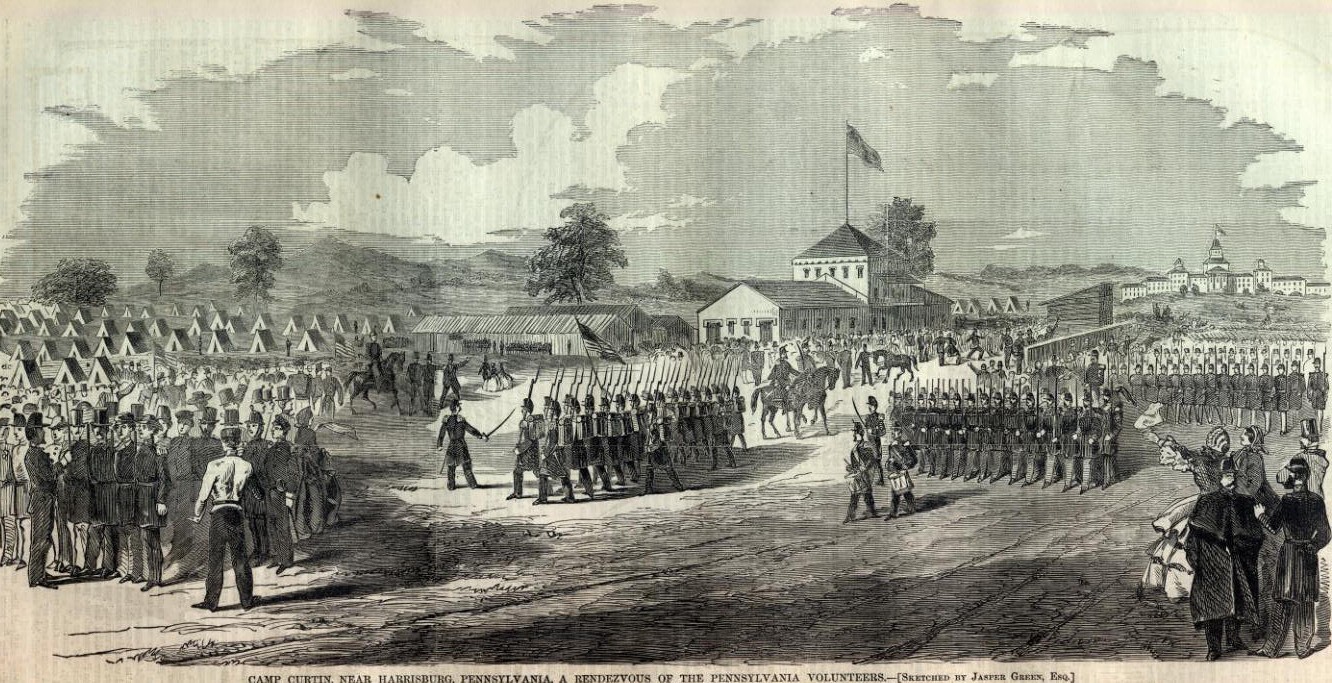
Camp Curtin (Harper's Weekly May 11, 1861)

Camp Curtin with patriotic volunteers (May 1861)

Provost Guard has its work cut out for it at Camp Curtin.

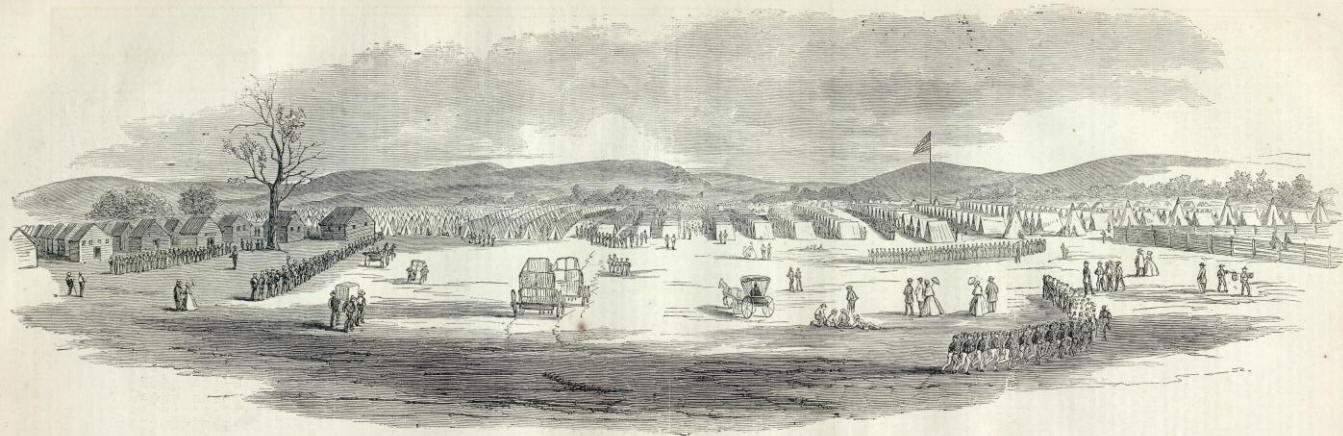
Richmond’s Daily Dispatch says the removal of native Pennsylvanian George McClellan as commander of the Army of the Potomac has caused an increase in the turbulence at Camp Curtin, the training camp for recruits near Harrisburg. One of the underlying issues appears to be the drafted men’s resistance to breaking up the new regiments they joined, so that they could be made to fill up the old regiments.

From the Richmond Daily Dispatch November 15, 1862:

Pennsylvania Obstinate — Apprehended Difficulties between the drafted men and the Provost Guard.

The removal of McClellan has brought things to a fever heat in Pennsylvania. The Philadelphia Inquirer, of the 12th, alluding to the precarious state of affairs at Camp Curtin, the principal camp of the drafted men of the “Keystone” State, says:

The State of feeling at Camp Curtin is unsettled, so far as the drafted men are concerned. The objections to going into the old regiments are persisted in, while the idea of giving up their company organizations is regarded as an act of tyranny. It is in contemplation to test the matter legally. The purpose is to bring a case before a court, and test whether the men drafted can claim the provision and protection of the State law under which they were called into service, or whether the officers now in the service can force the drafted men in the old regiments. This would be the proper and the safe means of settling what is really a grave difference,

Camp Curtin (Harper's Weekly, September 13, 1862)

The camp in September 1862 – just before stone throwers and deserters?

The duty of the Provost guard at present is of a character at once onerous and dangerous. They occupy a position which is not fairly understood by the men in Camp Curtin, with whom a difficulty exists as to their disposal in companies and regiments. The Provost guard are bound to execute their orders. They are soldiers who know nothing but obedience, and it is to be hoped that the drafted men will not tempt the Provost guard into what might seem to be, if not actually become, bloody force. On the night of the 5th, the guard, while on duty, were very badly treated by the men in Camp Curtin. They were assailed with stones, thrown by men concealed behind tents, and otherwise rudely attacked by the drafted men. Insubordination of this kind is disgraceful to the guilty.

Since the differences and dissatisfactions among the drafted men, large numbers have deserted, and the purpose to do so is also avowed by still larger numbers of the men now in Camp Curtin. Every hour adds to the embarrassment. On the 6th inst., one of the men, in attempting to break the guard, was shot in the leg, and severely if not dangerously wounded.

And, as The American Civil War points out, there was a lot of resistance to the 1862 draft in Pennsylvania even before the men got to camp:

On Oct. 16, the draft began in every county in Pennsylvania except Philadelphia. The nation’s most serious resistance to conscription broke out Oct. 17, in Berkley, Luzerne County, where the military fired on a mob of rioters and killed 4 or 5 of them. Resistance also flared in Carbondale, Scranton, and other regions in the coal country, mostly among the Irish.

Gov. Curtin wrote to Secretary of War Stanton on Oct. 22: “The draft is being resisted in several counties of the State. In Schuylkill County I am just informed that 1,000 armed men are assembled, and will not suffer the train to move with the drafted men to this place. I wish ample authority to use my troops in the State, and particularly the regulars and Anderson Cavalry at Carlisle, to crush this effort instantly. We will thus enforce the law, and effectually, if successful, prevent the like occurring in other parts of the State.”

Camp Curtin Historical Society and Civil War Roundtable publishes periodic newsletters; it’s most recent features a biography of McClellan, including the flag system he developed to improve communication in his army.

The first image of Camp Curtin along with a couple paragraphs about the early patriotic fervor in Pennsylvania can be found at Son of the South. Drill-sergeants at Camp Curtin drill cheerful volunteers from “daylight till dark.” The second image from September 1862 is found at the same site.

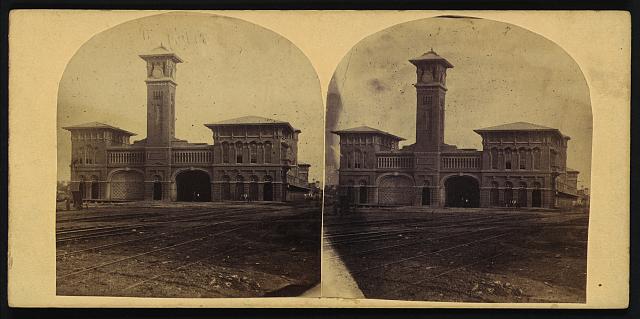
Penna. R.R. depot., Harrisburg, Pa. (ca. 1861; LOC: LC-DIG-stereo-1s01504)

Deserters probably didn’t catch a train home

Posted in 150 Years Ago This Week, Military Matters, Northern Society | Tagged , , , , | Leave a comment

Hyde Parked – for good!

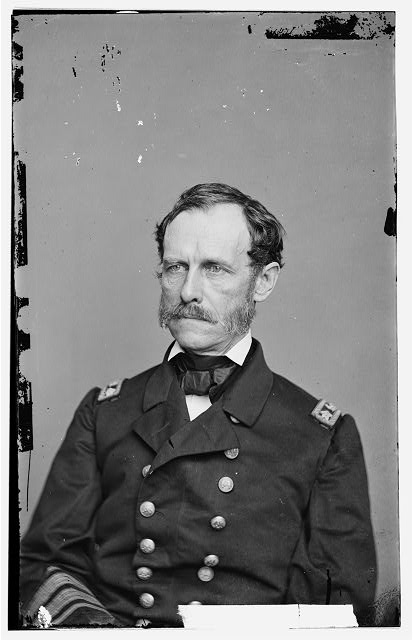
Portrait of Rear Adm. John A. Dahlgren, officer of the Federal Navy (Between 1860 and 1865; LOC: LC-DIG-cwpb-05803)

woops

Civil War Interactive used to have a great paragraph about 150 years ago today – the gadget loving President Lincoln visited the Washington Navy Yard with Secretaries Seward and Chase to watch Captain John A.B. Dahlgren test a device called the Hyde rocket. The rocket exploded prematurely and the resulting fragmentation nearly hit the dignitaries. Dahlgren cancelled further development.

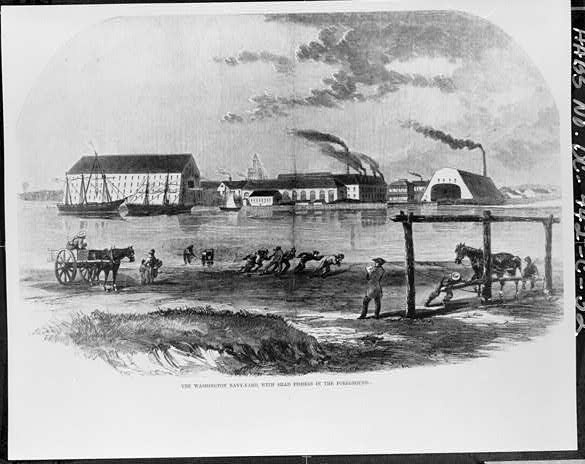
The April 20, 1861 issue of Harper’s Weekly describes the beginning of the war at Fort Sumter, but it also has articles about Dahlgren and the Washington Navy Yard. The following picture is described by the editors:

… the shad-fishers in the fore-ground pursuing their peaceful calling, and the engines of dread war in the whole back-ground of the picture.

Photographic copy of a view of the Navy Yard published in Harper's Weekly, April 20, 1861 (From the Navy Yard Historical Center). VIEW LOOKING NORTH. BUILDING 36 IS LOCATED IN THE CENTER OF THE PHOTOGRAPH. - Navy Yard, Ordnance Building, Intersection of Paulding & Kennon Streets, Washington, District of Columbia, DC (Harper's Weekly 4-20-1861; LOC: HABS DC,WASH,74-F--32)

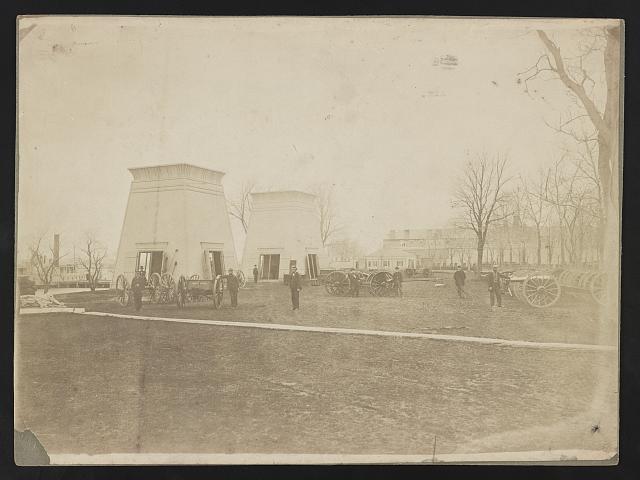
Washington Navy Yard, Washington, D.C. (between 1861 and 1865; LOC: LC-DIG-ppmsca-33403)

a more serene Navy Yard

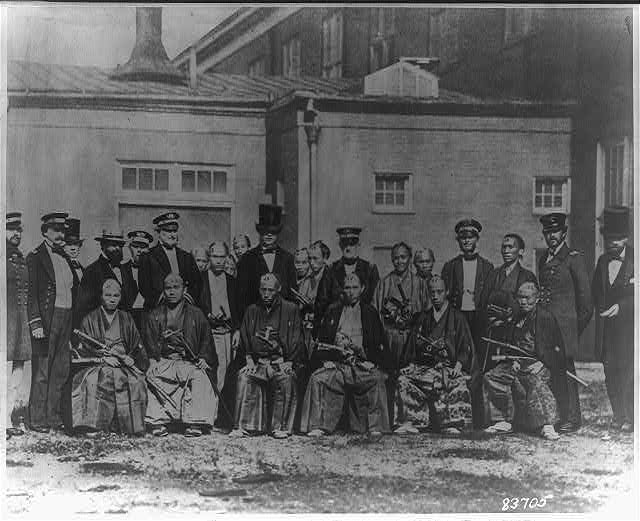
Washington, D. C. Washington Navy Yard. First Japanese treaty commission to the U. S., 1860 (1860; LOC: LC-USZ62-19411)

thankfully this Japanese delegation visited in 1860

Posted in 150 Years Ago This Week, Lincoln Administration, Military Matters, Naval Matters | Tagged , , , | Leave a comment

“more indignation and alarm”

No surprise here. A Seneca County newspaper that was strongly oriented in favor of the Democratic Party is unhappy with President Lincoln and his administration for the removal of George McClellan as commander of the Army of the Potomac. This editorial realizes that the timing of the change of command shortly after the November 4, 1862 elections in many states (including New York – the biggest) was politically motivated. The newspaper foresees another sanguinary battle in the near future and prays that God will spare the Northern army from disaster and defeat.

From a Seneca County, New York newspaper in 1862:

Retreat of the Army of the Rappahannock, commanded by Genl. Pope through the town of Centreville. After the battle of second Bull Run

same idea disastrous 3 months ago

The Removal of Gen. McClellan.

The last crowning act of perfidy on the part of the President, and his intriguing, treasonable Abolition advisers, is the removal of the brave and gifted MCCLELLAN, from the command of the Army of the Potomac. No event since the inauguration of ABRAHAM LINCOLN has caused more indignation and alarm. The manner of his removal is unworthy of a great occasion like the present, and unworthy of the President of the United States, but, withal, characteristic of the present weak and vascillating incumbent of that once high and honorable office. The result of the late elections, may have had, and doubtless did have, much to do with Gen. MCCLELLAN’s removal. It was demanded by the Abolitionists of the country, and agreed upon soon after the October elections, but delayed until the present time, lest it should injure the chances of the candidates placed in nomination by the Republican party. The enemies of Gen. MCCLELLAN may rejoice at the triumph which they have temporarily achieved over the gallant Chieftain, but the thousands throughout the loyal North, who have sons and brothers in the Army of the Potomac, will bow their heads in sorrow in view of the awful responsibility which the President assumed in his removal. Thousands and tens of thousands of the bravest and best in the land have been wickedly slaughtered to appease the infernal spirit of Abolitionism. MCCLELLAN was once before stripped of his command, and POPE placed in his stead. We all know the terrible result. And now, when the army is about to engage the enemy in another and sanguinary conflict, and when the plans of the General in command are matured for a brilliant victory, he is again disgraced and removed from his high office. May God spare the Army from disaster and defeat in the coming conflict.

When the history of this war shall have been written, it will be found that the intrigues and machinations against MCCLELLAN, in the cabinet and out, are more damnable and disgraceful than any that ever characterized the annals of civilization. – That he will survive the calumnies of his enemies, we do not for a moment doubt. – His day is coming, as sure as the sun rises and sets in the heavens. The day of retribution will not long be delayed. Then his accusers, from the President down, will be brought to an account before the bar of an outraged and indignant People.

Posted in 150 Years Ago This Week, Military Matters, Northern Politics During War | Tagged , | Leave a comment

Mac Heads North

General McClellan accompanied by General Burnside taking leave of the Army of the Potomac (by Alfred R. Waud, [1862 November 10]; LOC: LC-DIG-ppmsca-22477)

General McClellan and his successor Burnside on November 10th
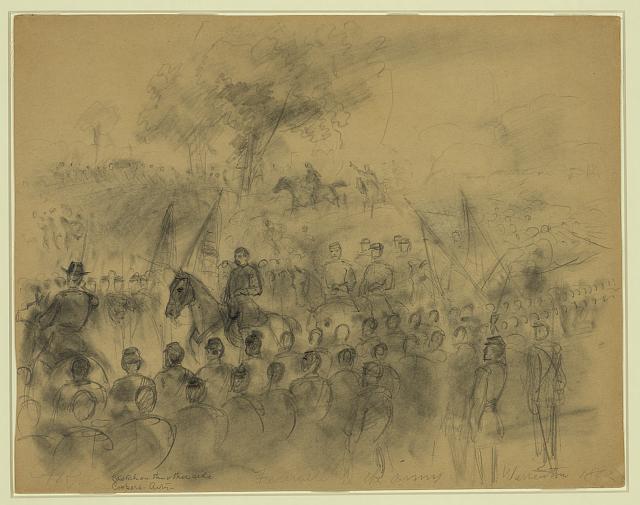
Farewell to the Army. Warrenton, 1862 (by Alfred R. Waud, 1862, November 10; LOC: LC-DIG-ppmsca-20975)

Cheers for Mac on November 10th

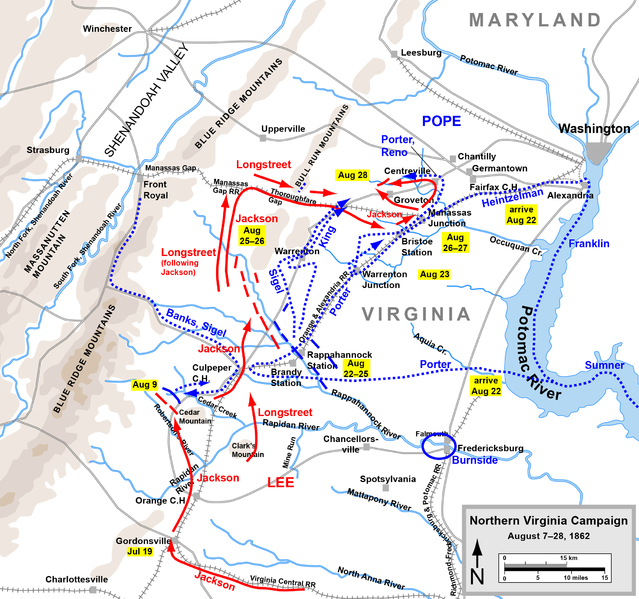
Seneca County in upstate New York voted mostly for the Democratic party in 1862. In late September a group of men in the town of Seneca Falls named a political club after George B. McClellan, the commander of the Army of the Potomac and fledgling Democrat. However, on November 7th McClellan was notifiedthat he had been relieved of command and ordered to Trenton, New Jersey to await further instructions. Here’s a report on all the cheers the general received on his journey North. I think the Wednesday (the 12th) mentioned in this report is wrong. There is evidence that the train trip was on the 11th. Based on the Seneca County article, the first leg of the journey was on the Orange and Alexandria Railroad.

From a Seneca County, New York newspaper in November 1862:
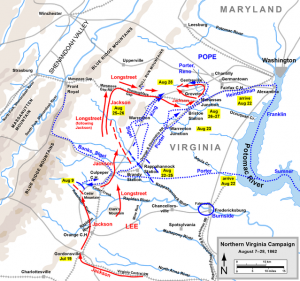
Map of the Northern Virginia Campaign of the American Civil War. Drawn by Hal Jespersen in Adobe Illustrator CS5. Graphic source file is available at http://www.posix.com/CWmaps/

looks like Mac took the Orange and Alexandra out of Warrenton Junction

Honors to Gen. McClellan.

The telegraph reports that when Gen. MCCLELLAN and staff reached Warrenton Junction, on Wednesday, a salute was fired. The troops which had been drawn up in line, afterward broke rank, when the soldiers crowded around him, and many eagerly called for a few parting words.

He said in response, while on the platform of the Railroad depot:

“I wish you to stand by Burnside as you have stood by me, and all will be well. – Good bye.”

To this there was spontaneous and enthusiastic response.
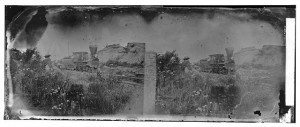
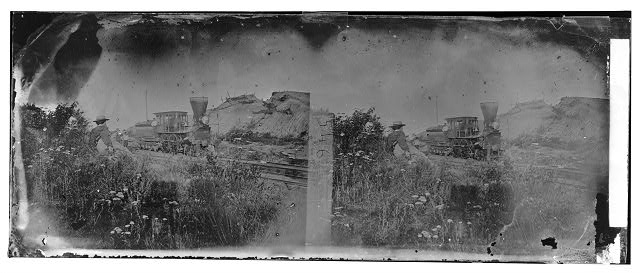
Virginia. Locomotive on the Orange & Alexandria Railroad (1862 August; LOC: LC-DIG-cwpb-00236)

locomotive on Orange and Alexandria in August 1862

The troops were also drawn up in line at Bristow Station and Manassas Junction, where salutes were fired, and where Gen. gen. McClellan was complimented with enthusiastic cheers.

The cars being detained owing to some impediment on the track, general McClellan was recognized by the many soldiers quartered in that vicinity, when he was greeted with enthusiastic cheers.

At Philadelphia Gen. MCCLELLAN met with a most enthusiastic reception. The train arrived shortly after midnight and was hailed with most boisterous cheers and with music from the band.

In response, General McClellan made his appearance upon the platform, and after the subsidence of the cheers said:

Fellow citizens of Philadelphia, I thank you for your kindness. I have just parted with your brothers and sons in the Army of the Potomac too recently to make a speech. Our parting was too sad. I can say nothing more to you, and I do not think you should expect a speech from me.

The Young Napoleon was only slightly less laconic 150 years ago today in a frenzied Trenton, New Jersey. From The New-York Times November 14, 1862:

GEN. McCLELLAN AT TRENTON; A Serenade and a Speech

TRENTON, N.J., Thursday, Nov. 13.

The citizens of Trenton are perfecting their arrangements for a grand serenade to Gen. McCLELLAN and his Staff officers to-night.
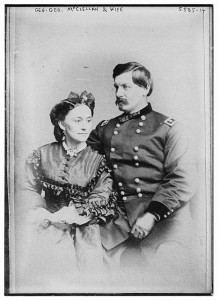
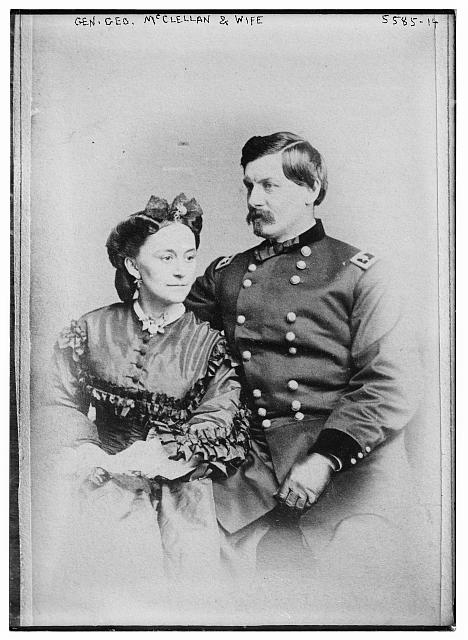
Gen. Geo. McClellan and wife (Bain News Service, no date recorded on caption card; LOC: LC-DIG-ggbain-33334 )

carriage ride in Trenton

The General and his wife rode out together this morning in a private carriage, for the first time since his arrival here.

Large numbers of visitors are arriving here from Washington, Philadelphia, New-York, and other places, all anxious to pay their respects to the recent Commander of the Army of the Potomac, who expresses an earnest desire to remain perfectly quiet.

Reporters for the Press from New-York, Philadelphia and Washington, are also flocking here in considerable numbers.

An incredible number of letters arrive with every mail, directed to the General.

TRENTON, Thursday, Nov. 13-11 P.M.

A delegation from Newark, New-Brunswick and other places, waited upon Gen. MCCLELLAN to-day. They invited him to visit their cities, but received no satisfactory answer. Immense crowds of people assembled in State-street, in front of Gen. MCCLELLAN’s quarters at 9 o’clock.

The Trenton Cornet Band was present and playing a few airs. Gen. MCCLELLAN appeared at the door of the hotel, where he was addressed on the part of the citizens by ANDREW DUTCHER, Esq. Gen. MCCLELLAN replied as follows:
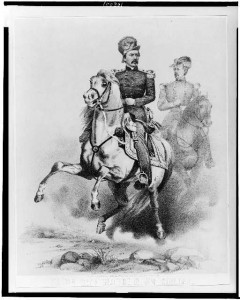
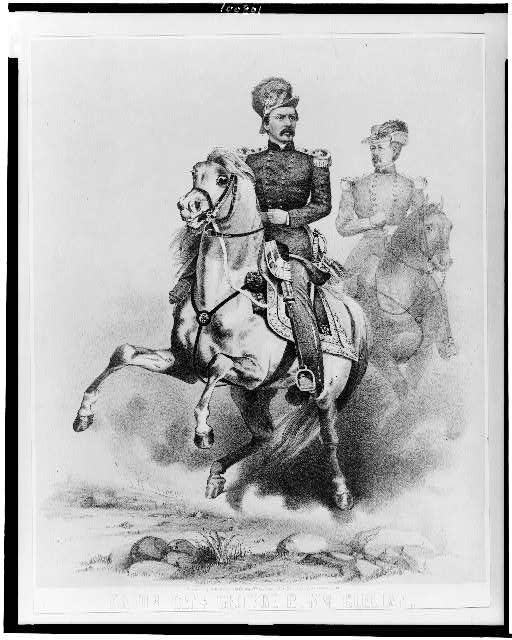
Major Genl. George B. McClellan, Commander of the U.S. Army (by D. J. Byrnes. c.1861; LOC: LC-USZ62-100801)

“I stand before you, not as a maker of speeeches, not as a politician, but as a soldier”

“My friends — for I feel that you are all my friends — I stand before you, not as a maker of speeeches, not as a politician, but as a soldier. I came among you to seek quiet and repose; and from the moment I came among you, I have received nothing but kindness; and although I came among you a stranger, I am well acquainted with your history. From the moment I took command, your gallant sons were with me. From the seige of Yorktown to the battle of Antietam, I was with them and witnessed their bravery.”

[Here the cheers were loud and long.]

“And that of the ever faithful and ever true TAYLOR; the intrepid and dashing KEARNY. One word more. While the army is fighting, you, as citizens, see that the war is prosecuted for the preservation of the Union and the Constitution, for your nationality and rights as citizens.”

It was almost impossible for the General to proceed in consequence of the dense crowd and the immense and prolonged cheering.

After [h]e had retired, he was called out and simply thanked the crowd from the window, and bade them good night.

According to Civil War Home, General McClellan “repaired to his Trenton, New Jersey, home to await new directives destined never to arrive.”
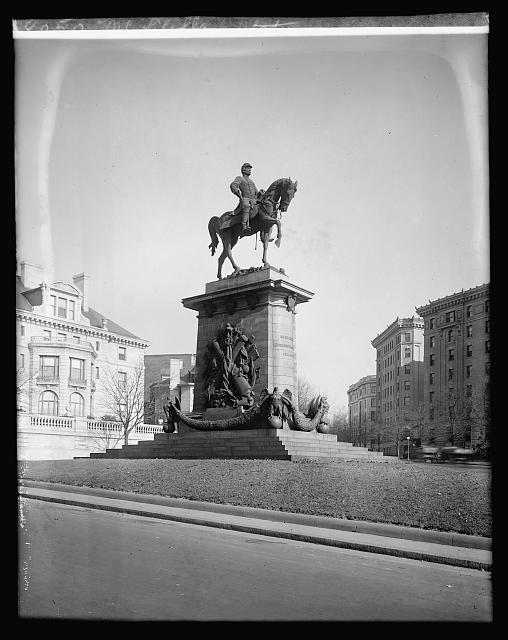
McClellan Statue, Connecticut Ave. and Columbia Rd., NW, Washington, D.C. (between 1921 and 1922; LOC: LC-DIG-npcc-30413)

“see that the war is prosecuted for the preservation of the Union and the Constitution, for your nationality and rights as citizens.”

The map of Northern Virginia by Hal Jespersen is licensed by Creative Commons
Posted in 150 Years Ago This Week, Military Matters | Tagged , , , , | Leave a comment

Be like Zach

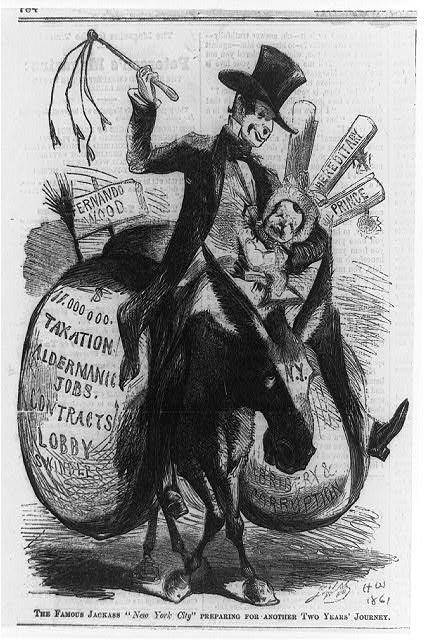
The Famous jackass "New York City" preparing for another two years' journey (Harper's weekly, 1861, p. 104; LOC: LC-USZ62-93741)

Mr. Wood goes to Washington (two years after this image)

Democrats throughout the North had a good deal of success in the 1862 midterm elections. The Democrats picked up 28 seats in the U.S. House of Representatives (although Republicans were still able to control the House thanks to the support of 25 Unionists). One new Democrat representative was New York City mayor Fernando Wood. In an editorial 150 years ago this week the Republican-leaning New York Times seems to be concerned that the wily Wood might get the best of “Honest Abe” and influence the president to compromise on his principles. After all, in January 1861 Mayor Wood had suggested to the Common Council that New york City should consider secedeing from the United States. In 1850 President Taylor had offered a good example of how to deal with disunionists.

From The New-York Times November 8, 1862:

Let the President Stand Firm.

Nobody who knows the vaulting audacity of the man FERNANDO WOOD, can doubt, now that he is elected, that he will make good his promise to his liegemen, to “go to the President and tell him that without we have a change of measures, so help me God! we will make a change of men.” The President may as well make up his mind at once to be soon bullied and brow-beaten in a style that he has never before seen or heard of; — that is to say, if he does not “put his foot down” at the first rampant word. Of course FERNANDO does not intend to operate slope. He will choose unto himself seven other spirits as presumptuous as himself, and with them he will assume to speak in the name of the triumphant Democratic Party. Not entirely without reason, either. Every reader of history understands that in revolutionary times. It is almost invariably the [b]oldest and the most violent who lead; and really if the Democratic Party, as revived, is to have any leadership in Washington, we know of nobody so likely to succeed to it as FERNANDO WOOD. At all events, whatever the power behind him, this man will attempt to use against the Presdent all the airs of authority and all the arts of intimidation, of which his long discipline in the democratic politics of this city — the most mephistophilian school extant — has made him the complete master.

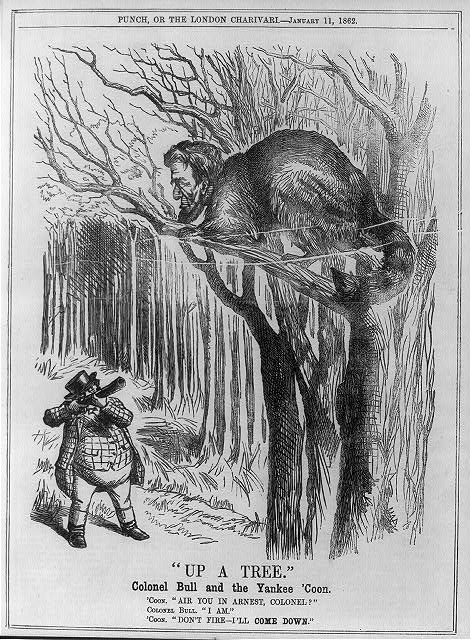
"Up a tree" (Caricature of Abraham Lincoln at tree as racoon threatened by 'Colonel Bull' with gun, Punch, 1-11-1862; LOC: LC-USZ62-48737)

Abe’s evolved since January?

With bald impertinence, if it [b]e offered, of course the President will know how to deal. But FERNANDO has acquired some knowledge of the usages of society, and will probably take care to phrase himself in a manner that shall secure him from being shown the door. Notwithstanding the coarseness of his manifesto here, he will, most likely, when it comes to the [c]ase in hand, make a special effort to pitch his dictation in as respectful a key as possible. We trust, however, that the President will abide dictation from FERNANDO WOOD in no way. He should meet the very first approach to it peremptorily, with the same spirit as that with which his predecessor. Old ZACHARY TAYLOR, silenced a correspondent, and, in many respects, a counterpart of this same WOOD, ROBERT TOOMES, when engaged on a similar errand. Of course, it is fit for the President to receive suggestions, and even advice, from any intelligent citizen, whether in or out of public life. But he degrades himself and his high office, if he endures the first word of either behest or menace, from any quarter whatsoever.

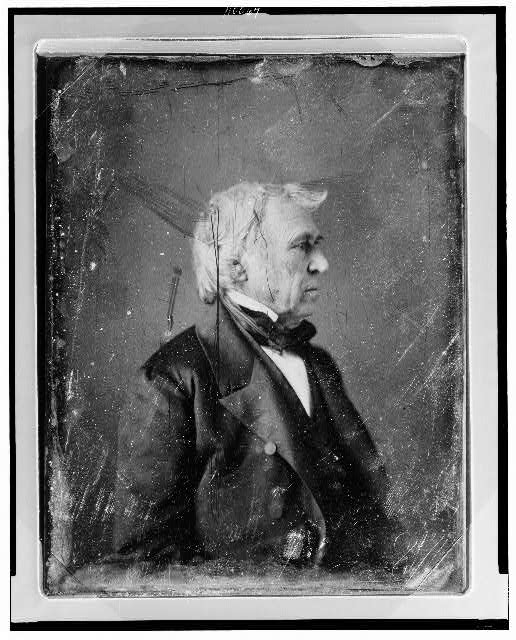
Zachary Taylor, half-length portrait, head in profile to the right (between 1844 and 1849; LOC: LC-USZ62-110067)

was ‘rough and ready’ for Toombs and Stephens

Unquestionably, in consequence of the late elections, every influence, proper and improper will be brought to bear upon President LINCOLN to obtain his committal to some compromising policy. Let him see to it that he stands firm. The determination he has so often expressed to uphold the Federal authority in all its breadth must be kept to unflinchingly. Nothing is so demoralizing as vascillation. Of all forms of weakness, this is the most mischievous –the one most sure to invite disasters and contempt. Human nature looks with involuntary respect, and a certain fear, upon those who choose their course with clear and deliberate foresight, and pursue it, when chosen, with unswerving resolution; who form their decisions cautiously and considerately, but refuse to reconsider them in difficult conjunctures, or to abandon them before unforeseen obstacles. There is an instinctive feeling that such men have within them the qualities which command success. They challenge confidence and support in advance. The President has been crossed in a way he hardly looked for — has experienced a defection that may well occasion anxiety; but there must be no irresolution that sways backward and forward with the fortunes of the day; no undervaluing for a moment of the great cause of the Constitution to which he has, committed himself; no misgiving lest right, if he sustains it faithfully, should, in the end, not triumph. The President has no alternative but to go straight on, consistently and persistently, to the end. It was long ago decided that the rebels, of their own motive, had cut short all forbearance and blocked up all accommodation. The whole guilt of this conflict rests with them; and not for an instant can the Government falter until its authority is vindicated, and the submission complete.

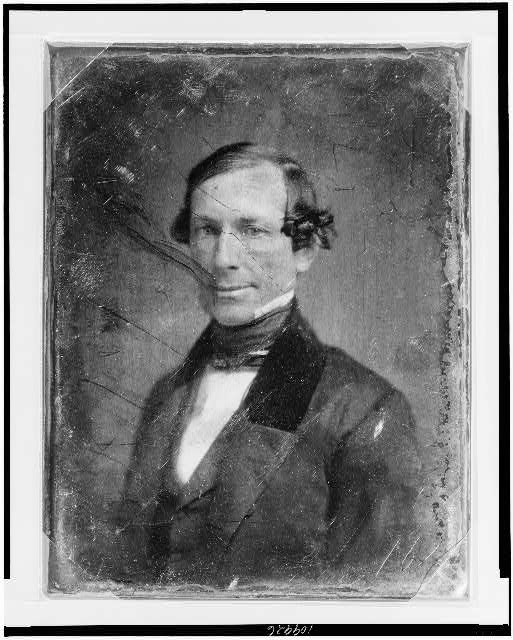
Fernando Wood, head-and-shoulders portrait, three-quarters to left, eyes front (ca. 1855; LOC: LC-USZ62-109926)

bully and brow-beater

The legitimate influence of the late elections is directly the reverse of what the FERNANDO WOOD type of politicians will endeavor to make it. Instead of encouraging conciliation, it urges intenser hostility. It is not the olive branch the people mean, but the more trenchant sword. The loyal States are more impatient this day than ever for swift, sweeping war — the summary extermination of the rebellion by terrific battle. If President LINCOLN will only see that this cry is answered, the great-souled people will stand by him more devotedly than ever; and the insolent pack which now threatens him will make haste to hide their heads.

The Times might be spinning the election results a bit. Most Northeners would probably like the war to be over as soon as possible, but Democrats might be opposed to a vigorous prosecution that involved more martial law arrests and suspension of habeas corpus. – not to mention abolition.

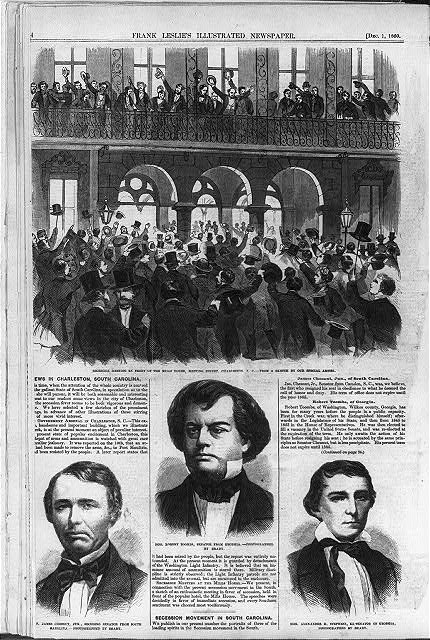
Secession meeting in front of the Mills House, Meeting Street, Charleston, S.C. [with portraits of Hon. James Chesnut, Jr., seceding Senator from South Carolina; Hon.Robert Toombs, Senator from Georgia; and Hon. Alexander H. Stephens, Ex-Senator of Georgia (Frank Leslie's illustrated newspaper, vol. 11, no. 262 (1860 Dec. 1), p. 24; LOC: LC-USZ62-62195)

Toombs and friends: secession was reality a decade after meeting with President Taylor

The Aztec Club biography of Zachary Taylor alludes to the meeting with Toombs. In 1850 Taylor urged the admission of California and New Mexico as free states. Alexander Stephens led a filibuster in the U.S. House of Representatives to prevent a vote on California’s admission.

In April, delegates from a Southern caucus called upon the President to warn him of the loss of Southern Whig support if he persisted on his plan to admit California and New Mexico as states and continued his hostile attitude toward Texas. Stephens and Robert Toombs called on him in July, as they had earlier, and threatened secession. Taylor was obstinate …

In describing the political cartoon showing President Lincoln as a treed raccoon History Gallery points out the wisdom of Lincoln’s diplomatic response to the Mason and Slidell affair with Britain.

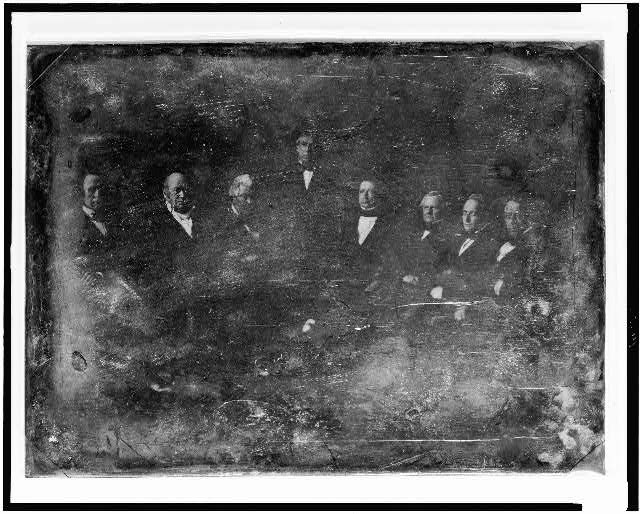
Zachary Taylor and his cabinet, all seated except President Taylor (1849;LC-USZ62-110152)

Zach with cabinet

Posted in 150 Years Ago This Week, Northern Politics During War | Tagged , , , , | Leave a comment

Smugglers Foiled

Detectives from the Richmond Military District apprehend smugglers trying to get some tobacco North.

From the Richmond Daily Dispatch November 11, 1862:

Tobacco captured.

–On Sunday the detectives of Major Griswold’s office captured 26 boxes of tobacco, while en route, as it is supposed, for the enemy. The tobacco was marked “Superior pound lumps, Danville, Va., P. R., 103.” The seizure was made a few miles beyond the Old Church, in Hanover county, Va. The tobacco was contained in two four-horse wagons, driven by a white man named Patrick Reardon, and a negro. The negro and teams were left at the Government yards, (Bacon’s Quarter Branch,) and Reardon was lodged in Castle Thunder. In the wagons, beside the tobacco, was a large bag of cotton and a boat sail. The tobacco, by the bill of lading, appeared to be consigned to Wm. R. Polk of Westmoreland county. It is supposed that the sail was intended to be used on the boat engaged to put the tobacco across the Potomac. After the above seizure, (which was made on information received from Danville,) the detective police took in possession another lot of 26 boxes of tobacco found in Richmond, and also owned by Polk. It was carried to Major Griswold’s office.

You can read about tobacco and the Civil War at Civil War Home. The North could get tobacco from the Border States. Southern governments tried to discourage farmers from growing the stuff so that food could be planted instead, but that was largely ignored. Danville actually produced more:

The tobacco town of Danville, Virginia, however, took advantage of the vicissitudes of war. In the late 1850s its tobacco industry was in decline, and the community was reluctant to answer the call to arms in 1861. Nevertheless, Danville prospered during the war. Located safely behind enemy lines along a major railroad to Richmond, Danville became a lucrative place for the activities of merchants and manufacturers. Through their investments, the town and the surrounding county saw a revival in the tobacco industry. As a result of its returning prosperity, Danville citizens opposed attempts by Confederate soldiers to destroy the rail connection with Richmond in order to stop the Union advance.

Nevertheless, it is said that six tobacco warehouses were converted to prisons for captured Union soldiers.

Posted in 150 Years Ago This Week, Confederate States of America, Southern Society | Tagged , | Leave a comment