Sorry, folks – Sumpter called in tired this morning; hopefully he’ll be recuperated by tomorrow.
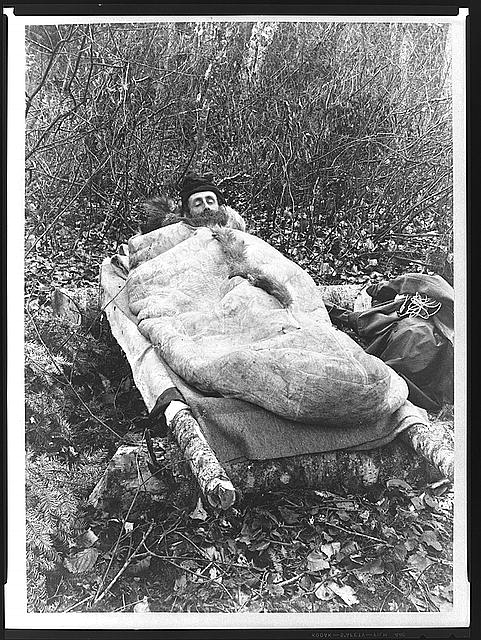
found his perfect sleep number
Sorry, folks – Sumpter called in tired this morning; hopefully he’ll be recuperated by tomorrow.
found his perfect sleep number
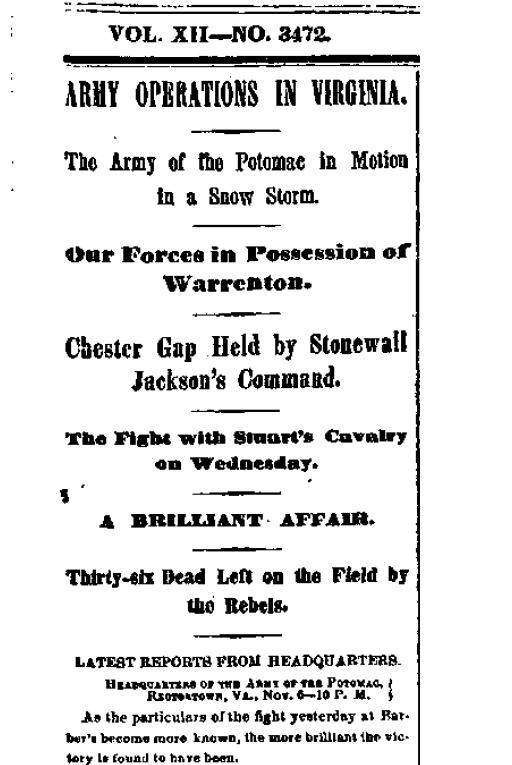
The New-York Times was published on this date 150 years ago before word got back North that General McClellan had been relieved of command. It seems ironic that for all the general’s dilly-dallying (from President Lincoln’s perspective), the lead headline of the November 8, 1862 Times pointed out that the Army of the Potomac was indeed moving – in a snowstorm:
moving headline
Reading Snowflakes?
The storm was apparently a Nor’easter that hit the big city itself on the 7th and was especially rough on the street people whose bedroom was the ‘ash-barrel’.
From The New-York Times November 8, 1862:
THE STORM.; The First Installment of Winter in this City. THE STEAMSHIP SCOTIA DETAINED OUTSIDE. THE STORM ELSEWHERE. AT BALTIMORE. The weather last night was very cold. AT BOSTON. THE WEATHER AT BUFFALO.
John Frost, Esq., a lineal descendant of Haste T. Winter, in the most daring defiance of public desire, flouted fiercely through our streets all day yesterday. What, in the name of all precedent, this ferocious incoming of wintry blasts indicates we know not. Suffice it to say, that argument on its propriety, suggestion as to its desirability, theorizing as to its cause, are of no avail. It came and it conquered.
At 7 o’clock on Friday morning “weather and things” were in a most orderly and serene condition, and the day promised to be a pleasant one. At 10 minutes past 7 the wind whistled fiercely up and down the streets, heavy clouds dashed over the heavens, the sky became darkened, the waters looked like ink, and, like a fretful child, the humor of the day was changed. The snow came thick and fast. It blinded [???] clerks on the way to the store, astonished peaceful milkmen on their “dairy round,” caused the ferry-boat pilots to swear great oaths, nipped the noses of the omnibus drivers, and sent the newsboys’ market away below par.
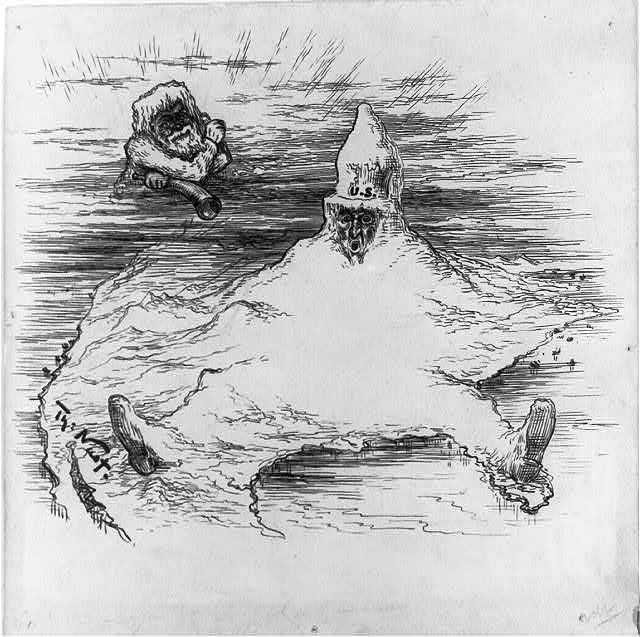
Still at work in 1886 – John Frost, Esq., (and Thomas Nast)
Lazy risers, who had gone to bed the night before prophesying, from the exquisite coloring of the clear horizon, a perfect day, were astounded by the chilly atmosphere of the morning, amazed at the snowy whirlwind, and dumbfounded by the repeated applications of boys who wanted the job of cleaning off the snow.
The bay and rivers were powerfully agitated all day. The swell was heavy, and the rolling of the ferry-boats made passengers stretch apart their legs, turn pale and sigh for the omnibus or car. The wind had one kind feature, it blew toward the ocean rather than landward.
At noon the gale was at its height. The wind swept vigorously everything and body before it. Umbrellas were turned inside but momentarily; elderly ladies and elderly men were seen to waltz briskly as they approached break corners; people of all sorts and conditions measured their stiffened length upon the icy pavement; overcoats, rubber-shoes, “U.S.C. boots,” furs and uppets, made their appearance; everybody out of doors was cross, and everybody indoors was chilly; chimneys whistled wierd melodies and weathercocks spun unceasingly.
At 6 o’clock P.M., there was a momentary lull — just long enough for the factories, the workshops and stores to disgorge their hands, and then, whew! how the wind came up, how the clothes flew up, how the hats tripped far away from their owners, how red noses became, how blue the air was with curses, and how black, dreary and confoundedly unpleasant the entire metropolis became.
Ten o’clock saw no change, and at midnight the keen cutting of the frosty blast stiffened the limbs of many a wanderer, and chilled the life-blood of many a poor devi[l] whose home is the street, his bedroom the ash-barrel, his pillow the cinder. So absolute a storm has not been known in years. It was north by northeast, and east by northnorth, and if it will only be kind enough to go away, and stay away, and never come back, it will gratify thousands of benumbed citizens, and possibly may be forgiven for its outrageous violation of propriety yesterday.
But it won’t. This is the first installment of Winter. We must now prepare for cold days, deep snows, skating, sleigh-riding, and Winter quarters. The boys of the City are undoubtedly happy, and certain tradesmen very likely keep themselves warm and cheerful by the constant iteration of the adage about the “ill wind,” but it is nevertheless a fact, that such a day as yesterday renders everybody miserable, and everything thoroughly unpleasant.
We learn from our Ship News reporter that the Scotia, which is outside, has not yet made her appearance at Quarantine, and that as the gale does not abate, there is no likelihood of her coming in before early this morning. …
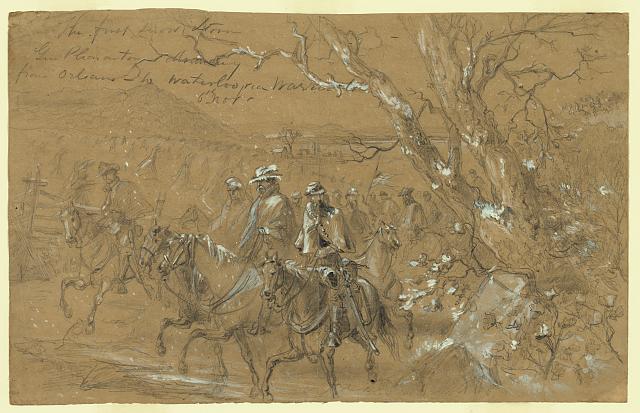
snow march
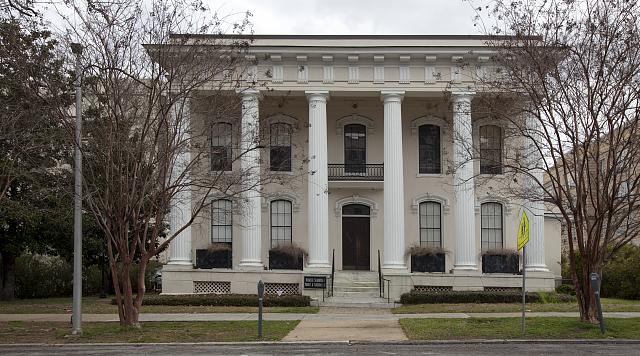
Governor Shorter’s digs in Montgomery
War crisis requires more state power
150 years yesterday a Richmond newspaper reported on a message Alabama’s governor gave to the state legislature. The main points were 1) impress slave labor to fortify the state boundaries 2) the state government should develop and control Alabama’s salt resources, but allow other Confederate states to invest capital and labor in Alabama salt not on state reservations 3) money should be transferred to families of soldiers 4) some grain should be set aside for the production of medicinal alcohol 5) the Confederate government has the power to draft soldiers 6) the state militia should include all males between 16 and 60 not in the Confederate army.
From the Richmond Daily Dispatch November 6, 1862:
Message of the Governor of Alabama.
The Governor of Alabama, in his message to the extraordinary session of the Legislature of his State, in view of the exposed condition of some portions of the State, recommends such legislation as shall enable the State authorities to control the slave labor of the State for the purpose of constructing fortifications and other means of defence on the rivers and bays. He also recommends ample appropriations from the treasury to be made, in order to cover liabilities which may be incurred thereby, and all other outlays which may be deemed needful for the better protection and security of the State.
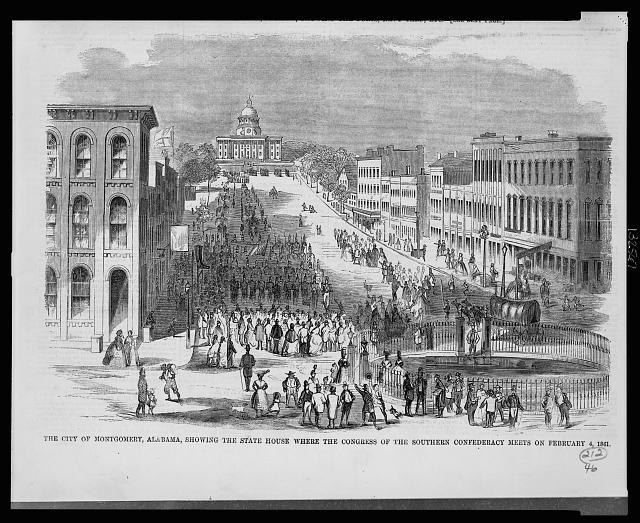
Montgomery also served as CSA capital for a few months in 1861
The Governor considers the question of supplying the people with salt one of very great importance, and recommends the appointment of a joint commission, empowered to visit the salt land, and examine the condition of the works and the conduct of those engaged, and all points connected with the business, necessary to enable the Legislature to approximate the cost at which salt can be made, and to as certain the best mode for developing the supply.
The prise of salt, he says, should be made uniform, if possible, and that if private parties are unwilling to accept reasonable profits upon their capital and labor thus employed, he would recommend, as the true policy, that the State take possession of all the works, with authority to press laborers and everything needed, and operate them under a regulated system for the common benefit of the people. In speaking of allowing the citizens of other States to manufacture salt for their own use at any of the works, except those on the State reservations, the Governor says:”United as are these Confederate States, in a common destiny, and mutually dependent, as they are, upon each other, I trust that the General Assembly of Alabama will concur in the expediency and propriety of inviting the citizens of other States to the salt supply which they may obtain within our limits by devoting their own labor and capital to its development.”
In behalf of the indigent families of absent soldiers a liberal appropriation is recommended, which should be disbursed without any invidious distinction among the needy families of absent soldiers, whether volunteers or conscripts.
On the subject of distilleries and the retailing of spirits, the Governor says:
“I recommend that authority be given for distillation of alcohol or spirits, which may be needful for medical uses within the State, and also, for whatever reasonable amount may be found to be the just proportion of Alabama, for a like purpose in the Confederate army. By confining the distilleries to localities where grain is abundant; fixing a reasonable price for the spirits; restraining by adequate penalties the parties engaged in the business, and those who may purchase from them for medical supplies, it is believed this object may be obtained without serious diminution of the supply of grain. And I recommend that the retailing of spirituous liquors in any city, town, or neighborhood, where State or Confederate troops may be stationed or rendezvoused, be prohibited during their sojourn, and that stringent regulations be adopted to accomplish this result.”
On the subjects of the Conscript law and the State militia, he says:
“But whatever doubts may have arisen as to the powers of Congress, all agree that the public exigency demanded the adoption of the most stringent measures to preserve the efficiency and increase the strength of the army.”
A reorganization of the State militia is considered indispensable, and a change in the military code is recommended, by which it will be made to embrace as militia all able-bodied male citizens of the State, above the age of sixteen and under the age of sixty years, who may not be actually engaged in the Confederate service.
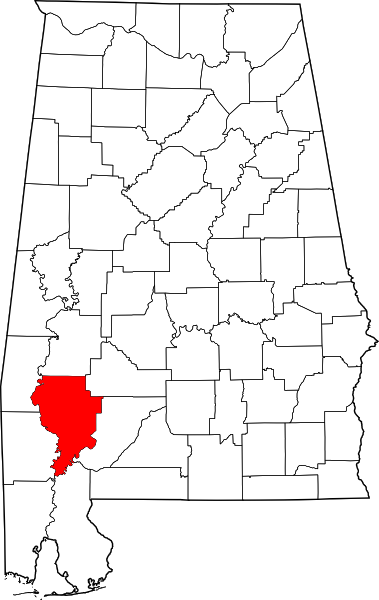
Salty Clarke County – just north of Mobile
I’m all ears when I hear anyone described as a disciple of fire-eater William Lowndes Yancey . In an excellent short bio of John Gill Shorter the Encyclopedia of Alabama points out that the governor (1861-1863) was elected on a platform of limited government, but the exigencies of the war made him pursue a much more active government. He was defeated for re-election. All of the concerns mentioned in his address are repeated in the encyclopedia.
Alabama’s Clarke County “was home to three of the most important salt works used during the Confederacy.” Salt prices rose so much during the war that the salt workers were paid in salt. When Mobile was rumored to have been captured, the workers fled; major salt production stopped.
A Mobile newspaper published some advice for self-help as the South was trying to deal with the economic issues caused by secession, the blockade, and the huge demands of the army for men and material.
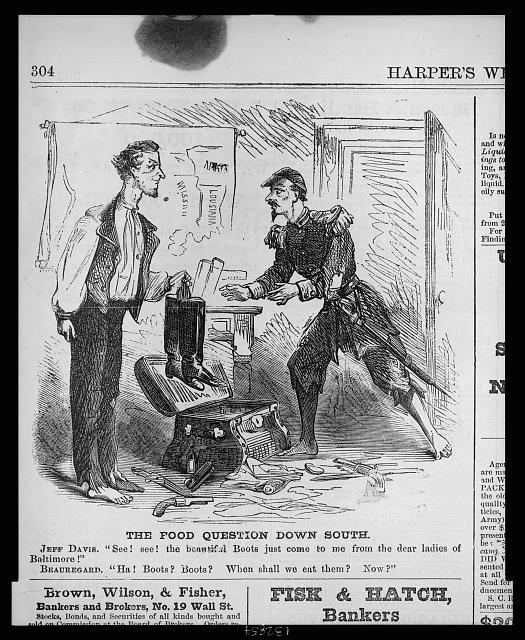
similar issue in ’63
From the Richmond Daily Dispatch November 6, 1862:
A substitute for shoes.
–An experienced citizen has called our attention to the subject of the use of cowhide moccasins as a substitute for shoes. He states that when he moved to the Mississippi, fifty years ago, no shoes were to be had for the negroes, and they made their own out of this material, which answered the purpose as well as the more elaborately made article, and in some respects better. The process is simple take a green cowhide, or one well soaked, with the hair on, (which is to go next to the foot,) “put the foot down firmly” upon it, and cut out the pattern desired, make the necessary holes along the edges, and lace it with a thong of the same material at the heel and up the instep.
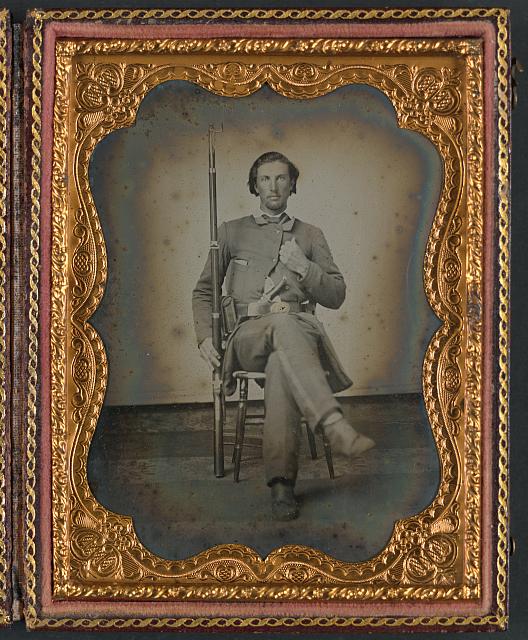
nice shoes – at first
Let it dry upon the foot, and it accommodates itself perfectly to the shape of the latter, while it is sufficiently substantial for all kinds of traveling, and its elasticity is preserved by use. Socks should be put on when it is made, though it can be worn without, and such allowance be made for shrinking so as to avoid too tight a fit. The moccasin, it is scarcely necessary to observe, adapts itself to the shape of the foot, and the fit is perfect. It outwears leather, and is not hard, as some might suppose, but quite the reverse. If desired, it can be half-soled with the same material.
The hair lining gives the advantage of warmth, so that socks (when not to be had) can be better dispensed with when moccasins are used than if shoes were worn.
The gentleman to whom we are indebted for this suggestion says that he has mentioned the subject to soldiers, who are very much pleased with it, and say there is no reason why soldiers should go barefoot while so many hides are thrown away in camps.–Mobile Register.
Get the gun out!
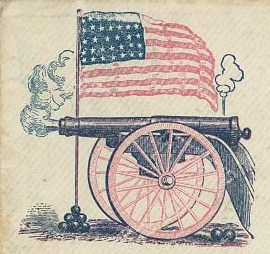
On November 4, 1862, election day in many states, the Democrat party enjoyed good results in New York state, most notably with the election of Horatio Seymour as governor. Here’s a couple clippings from one or two [1]Democrat-oriented newspapers in Seneca County, New York from 1862. The first is a headline that includes an image of a firing cannon and a U.S. (20 star?) flag:
Victory! Victory!
Bring out the Gun!
______________________________________
_____________________________________________
NEW YORK REDEEMED!
Horatio Seymour Elected Governor!
Entire Democratic State Ticket Elected.
The Assembly Democratic
A Majority of the Congressmen Democratic.
Wadsworth Still Governor – – of
Washington.[2]
ALL HAIL, NEW YORK!
Here’s a second clipping that indulges in a bit of triumphal sarcasm; we might call it “spiking the football”:
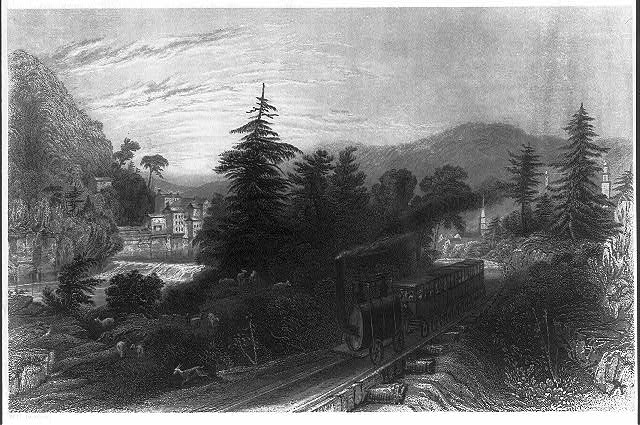
in the Valley of the Mohawk
Gen. James S. Wadsworth.
Gen. WADSWORTH in his speech at Cooper Institute, a few days before the election used these truthful and prophetic words:
Wait till you hear from the hills of St. Lawrence in the north; wait till you hear from the hills of the Alleghany on the South; wait till you hear from the Valley of the Mohawk and the Onondaga; wait till you hear from them, gentlemen, and you will hear a voice which will bring joy and glad tidings to every loyal heart in the land (Great Cheering) and make it cry out, The country is safe! (Renewed Cheering.)
Has Gen. WADSWORTH heard the news? Has he heard the “voice which brought joy and glad tidings, to every loyal heart?” How truthful were his predictions. HORATIO SEYMOUR, not Gen. JAMES S. WADSWORTH, was elected Governor and all the people say Amen.
The full image of the envelope with the image of cannon and flag can be viewed at the Library of Congress.
Seneca Falls was known to fire off cannon salutes to honor Washington’s birthday.
I think one of the themes of this Sesquicentennial is technology. The image of the train in Little Falls is said to be from around 1838 – “only” 13 years after the completion of the original Erie Canal.
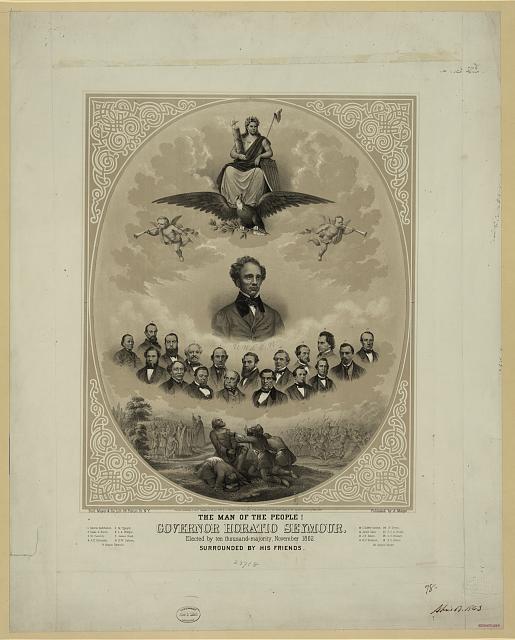
‘and all the people say Amen’
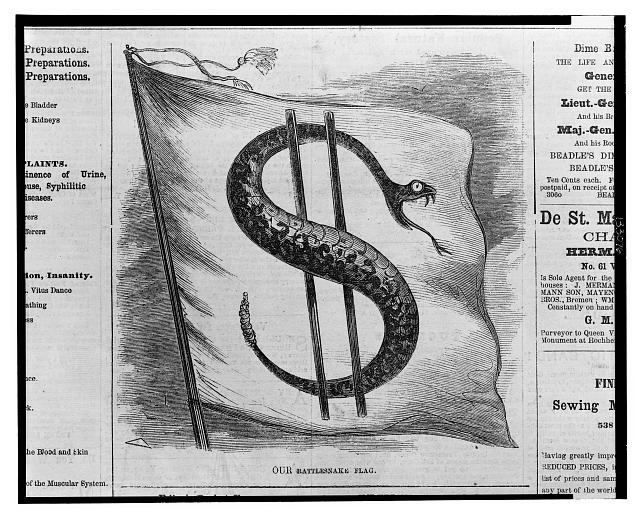
Frank Leslie’s agreeing with the Dispatch?
From the Richmond Daily Dispatch November 4, 1862:
Deifying the Dollar.
The Union is only another name with the North for the Dollar. It is the Almighty Dollar which they worship, and the Union is only its [o]utward symbol and expression. We do not speak of the deluded masses, who have no doubt a highly intelligent notion that the United States of America are the chosen people of Heaven, and called into being for the express purpose of enlightening and regenerating the of [?] …The political and commercial leaders, however, understond the subject better. The Union with them means Cotton, Commerce, Manufacturer, Trade, S[u]gar, and Tobacco. That is the “glorious Union” they shout hosannahs to, and are endeavoring to preserve by the wholesale butchery of our people. Does any one suppose that, if “the Union” would not “pay,” they would ever take one feeble hurrah for it or that they would even permit it to exist? There is not a case of garroting in Richmond which swings from more mercenary motives than the wholesale garroting of the Southern people which the North is attempting in this war. With their deadly grip around the thr[o]at of their victim, these Federal garroters cry out, “All ha[i]l, the glorious Union!” And they express their amazement that the garroted are not equally in ecstacies with the operation.
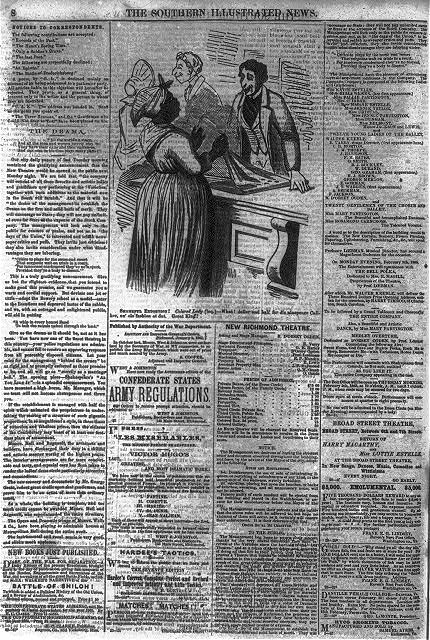
Cartoon showing African American examining yardgoods and saying to clerk, “What! Dollar and half fer dis ninepence caliker, an’ ole fashion at dat! Great King!”.
Well has the voice of Inspiration declared that “the love of money is the root of all evil.” In one or other of its multitudiuous forms, it is the prolific sour[ce] of national and individual crimes, and of most of the wars and bloodshed that have converted the earth at times into a hell. We are sorry to see within our own limits a spirit of greed and covetousness entirely foreign to the character of our people, and which is doing more to paralyze our struggles for independence than all the arms of our enemies. The speculators and extortioners in the South are likely to cause more distress and suffering than all the hordes of Yankeedom. We see no difference between them and the Yankees. Both are acting from the same love of money, and laboring for the same end. Those ravenous wretches who see[m] to convert the Temple of Liberty into a den of thieves, deserve to be scourged with a lash of scorpions from the s[a]cred precincts which they are def[y]ing and, as far as in them lies, bringing into contempt.
The cartoon of the black woman commenting about the extortionary prices was published in The Southern Illustrated News, which was published in Richmond from 1862-65 to be like a Confederate Harper’s Weekly. This particular link points out “eerie coincidences” in the December 5, 1863 issue.
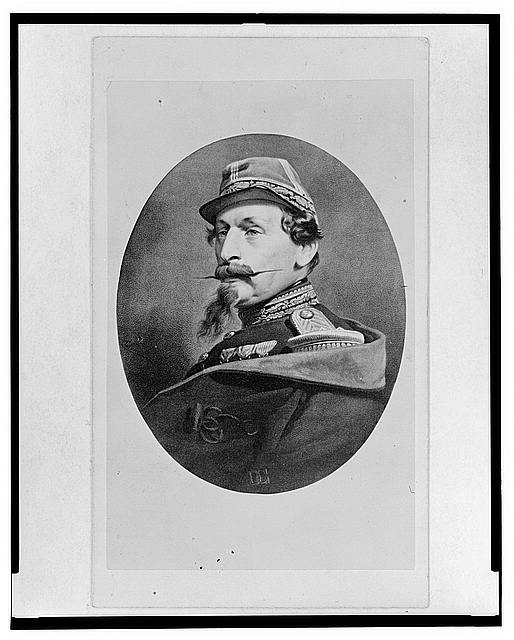
Invisible until proven otherwise
Richmond Rhetoric: don’t have false confidence in foreign intervention
Recently The Civil War 150th Blog posted that in October 1862 France’s Napoleon III proposed that European powers intervene in the Civil War with diplomacy – getting both North and South to agree to an armistice and mediation. Here a Richmond editorial responds to the intervention rumors by saying, “Don’t count on it.” Its idea of “negotiations” seems to be to take a French and English fleet to New Orleans in order to string up Ben Butler. From the Richmond Daily Dispatch November 1, 1862:
The intervention rumors.
The rumors of an approaching proposition for an armistice and negotiations, alluded to by us yesterday, seem more plausible than any that have yet reached us. The New York Herald evidently thinks there is something in them, from the bitterness with which it assails the Express for publishing them. A strange state of society it must be in which a man cannot even state what he hears is going on in England without running the risk of being clapped into jail as a traitor. And this is the boasted Republic — this the “best Government the world ever saw” for not appreciating the merits of which the people of the Confederate States have been turned over to pillage and murder!
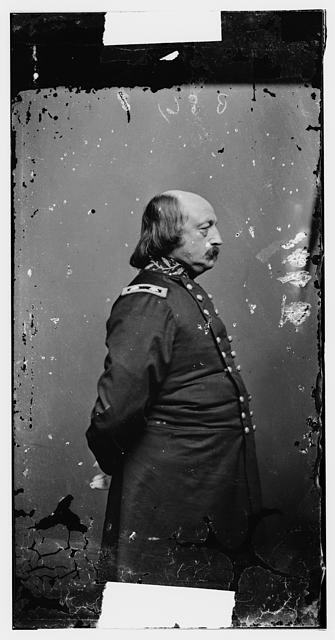
sticking his neck out in New Orleans
With regard to this subject the Enquirer does not seem to understand us. We are not of that class that entertain no hope. On the contrary, our hopes are as sanguine as it is possible for human hopes to be. There is a vast difference, however, between hope and false confidence. Our hope is in God and our own strength, and on these two exclusively. If foreign assistance come, we shall be as happy as the Enquirer to see it; but we wish not to be influenced in our action by any such expectation in the slightest degree. Our opinion is, that the Government should proceed precisely as though there were no other people on earth save ourselves and the Yankees. Let not the hope of foreign aid enter as an element into any calculation we may make, or any enterprise we may engage in. Let us act as Wellington said he meant to act after the shameful failure of the Spanish authorities to render him the proper assistance in the campaign of Talavers. “I will,” said he, “engage in no enterprise into which Spanish assistance enters as a portion of my means to prosecute it.” or words to that effect. And Wellington kept his resolution. If he thought himself able, with his English and Portuguese troops, to effect a particular object, he would undertake it; but if it was necessary to rely on the Spaniards as a portion of his force, he would abandon it. He kept them with him, but he expected nothing from them.
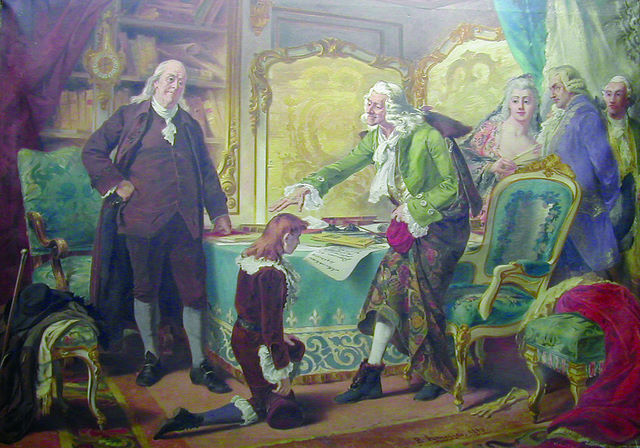
French Blessing
At the same time we are as much alive as anybody can be, to the immense advantage we should derive from the presence of an English and French fleet of Ironsides. Had we possessed such a fleet last summer, we could have captured McClellan and his thieves at Berkeley. Had we such an one this winter, we could take Butler and string him upon the spot he hung Mumford. We could destroy the Yankee fleet at Charleston and Mobile, and take all the scoundrels they are preparing to land there. It would, indeed, be of inestimable advantage to us. But as we have it not, let us not shape our course as though we had it. When in forming his combinations, Napoleon had not heard from a particular corps, he always acted as though it did not exist. Let us copy the example.
It looks like Voltaire blessed Franklin’s grandson in 1778.
_______________________________________
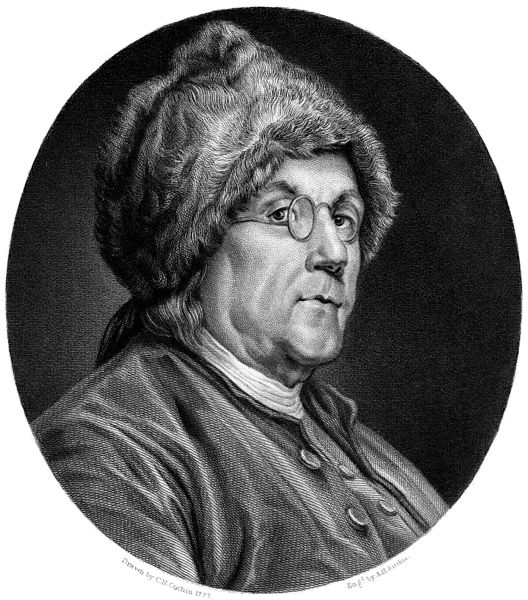
Butler’s namesake was American Ambassador to France (1776-1785)
A laconic Edward Everett?
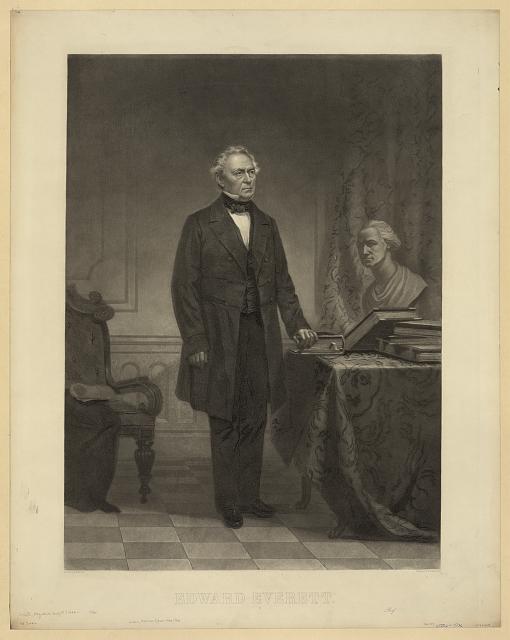
will ‘stand aloof’ to serve ‘holy cause’
From the Richmond Daily Dispatch November 1, 1862:
Edward Everett.
–Edward Everett having been requested to accept the Republican nomination in the Third Congressional District of Massachusetts, has replied in the following letter:
“Summer Street, Oct. 9, 1862.”
“My Dear Mr. Whiting:”
“I fear you will think I have too long delayed an answer to your most obliging communication. After giving to the subject the most anxious and respectful consideration, I have come to the conclusion that I can best serve the country and its holy cause by not going into Congress. I shall continue, to the best of my ability, to support the President, and to do everything in my power to promote the vigorous prosecution of the war. But I feel confident that what little influence I might otherwise have would be impaired by my becoming a candidate, especially at a moment when we are threatened with a new struggle of parties, from which I am determined to stand aloof.”
“I remain, my dear Mr. Whiting, with great regard sincerely yours,”
“Edward Everett.”
Politician, diplomat, professor, president of Harvard (1846-49), and famous orator, Edward Everett was strongly pro-Union, and after the war broke out, “He devoted his efforts to raising support for the Union cause through public speaking.” He had been John Bell’s running mate on the Constitutional Union Party ticket in 1860.
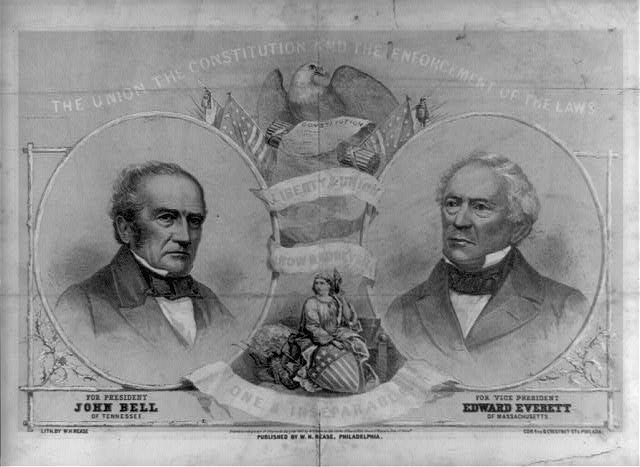
1860 VP candidate
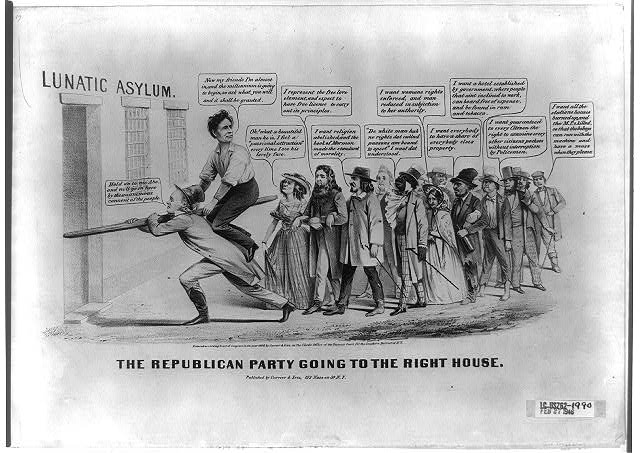
when the trouble started
November 4, 1862 was election day in New York State. Here a Democrat-oriented newspaper is firing up its readers for the final few days of the campaign.
From a Seneca County, New York newspaper in 1862:
Onward! Right Onward!
FELLOW CITIZENS OF SENECA COUNTY! The contest is upon us. – The tide of events under the sway of the party in power has conducted us to the most unhappy and perilous point in American history. The measures inaugurated by a Republican Administration and a Republican Congress are now oppressing the people as no people were ever before oppressed. The people are being plundered and robbed and imprisoned by the hirelings of a weak, imbecile and despotic Administration. Contractors and spoilsmen are fattening upon the very life of the nation, and the public treasury is plundered by the most reckless horde of politicians that ever disgraced the annals of civilization. The laboring poor are groaning under the enormous and unprecedented burdens imposed upon them for the actual necessaries of life; and the little property accumulated by a life of industry will soon melt away under the oppressive taxation now necessary to sustain the party in power.
How long are these things to continue? Until the people rise up and demand a change of rulers; and the time has now come for this auspicious event. Already the People of Pennsylvania and the Great West have spoken. The Administration has been rebuked for its corruption, its weakness and its imbecility. A change of policy is demanded or the Government must go down in bankruptcy and disaster.
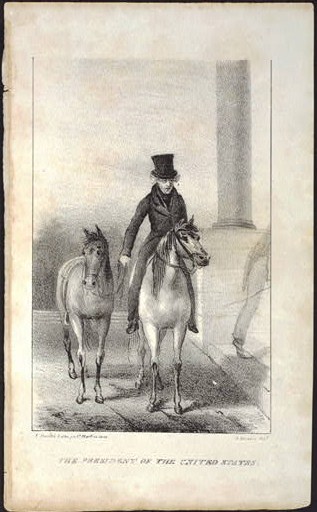
“beaten paths which our fathers trod” – Andrew Jackson (really!) arriving at White House in 1829
The time has come for the people to arouse themselves to the true issues of the contest. Under Democratic rule we were a prosperous, united and happy people. In an evil hour the control of the Government passed into hostile hands. From that hour confusion, misrule and civil war have marked the progress of events. Let us return to the sound principles of Democracy and to the beaten paths which our fathers trod, and all will be well.
FELLOW DEMOCRATS! There is a work for us to perform, a constitution for us to protect and a country for us to save. Arouse then to the exigency of the hour! Come up bravely and fearlessly to the good work. The signs of the times indicate success on Tuesday next, and if we but do our whole duty a glorious victory awaits us. From this time until the setting of the sun on election day, we must struggle and labor. Every voter must be at the polls, and every vote polled for HORATIO SEYMOUR and the whole Democratic ticket. – LET NO MAN FALTER NOW! PATRIOTS OF SENECA! DEMOCRATS! remember that eternal vigilance is the price of liberty! Push on the victorious column! Onward! Right Onward!
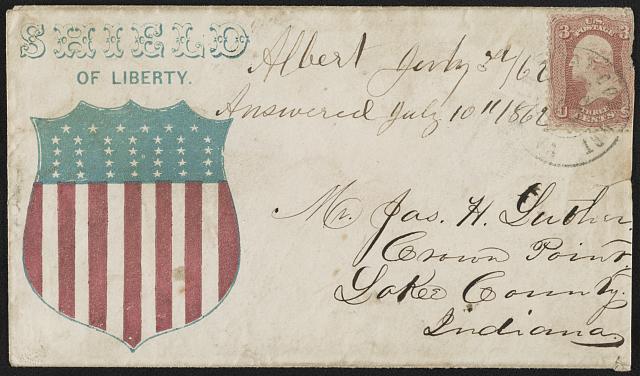
“eternal vigilance is the price of liberty!”
Son of the South provides an excellent service by hosting the digitized Harper’s Weekly from 1861-65. Here’s a couple political cartoons published in the October 25, 1862 issue. They comment on the upcoming election for New York State governor on November 4th. Horatio Seymour was the Democrat party candidate. (In case it’s hard to make out, the foot being kissed is labeled “South”.)
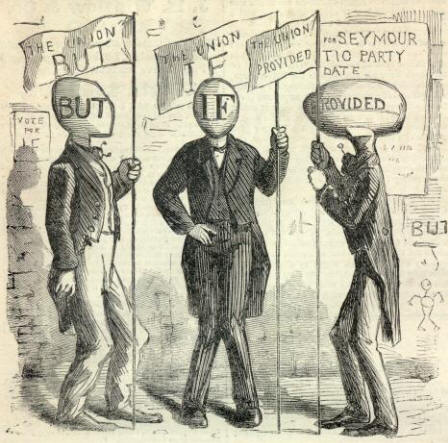
“WHAT THE SEYMOUR PARTY SAY. “
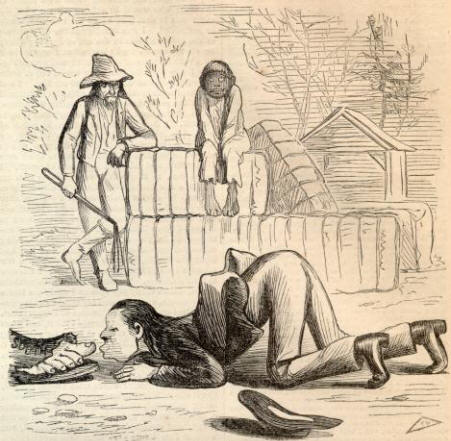
“WHAT THE SEYMOUR PARTY MEAN. “
