Evaluating Ullman

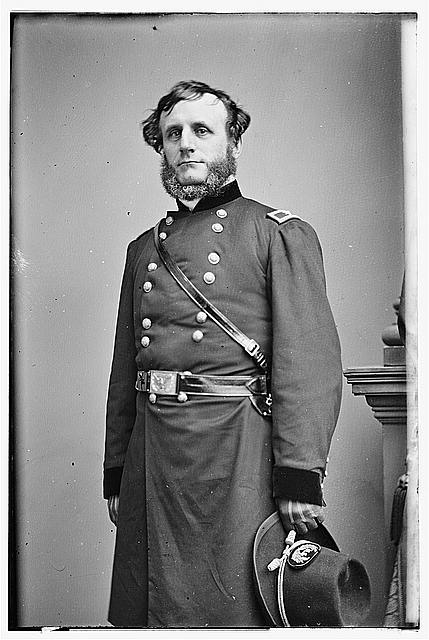
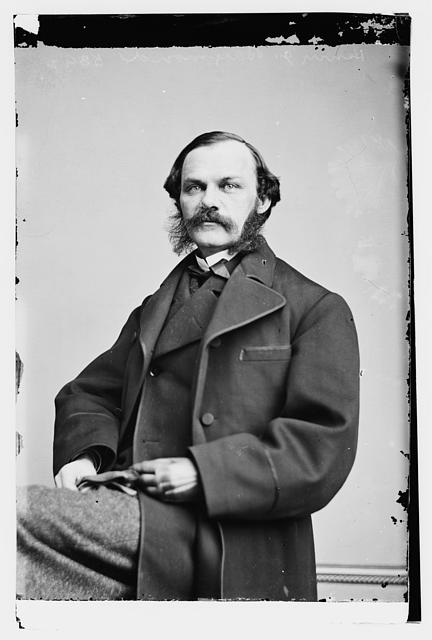
Gen. Daniel Ullman of N.Y. (between 1860 and 1870; LOC: LC-DIG-cwpb-05139)

‘a desponding and downcast look’

From the Richmond Daily Dispatch October 4 (or 3), 1862:

A military Politician.

–Among the latest arrivals of Yankee officers is Daniel Ullman, formerly the great gun of the Know Nothings of New York. He was operating on the line of the Rappahannock as Colonel of the 78th regiment New York volunteers, when, on the 28th of August, he had the misfortune to fall into the hands of our troops. Ullman’s personal appearance is insignificant; as a prisoner he has a desponding and downcast look. He will be sent home with his brother officers.

Maybe he was brooding on his revenge. According to the aboveWikipedia link, after his parole from the Richmond prison, Ullman approached President Lincoln about enlisting black soldiers. In January 1863 Ullman went to Louisiana and helped form the United States Colored Troops

Posted in 150 Years Ago This Week, Lincoln Administration, Military Matters | Tagged , | Leave a comment

At Club Mac

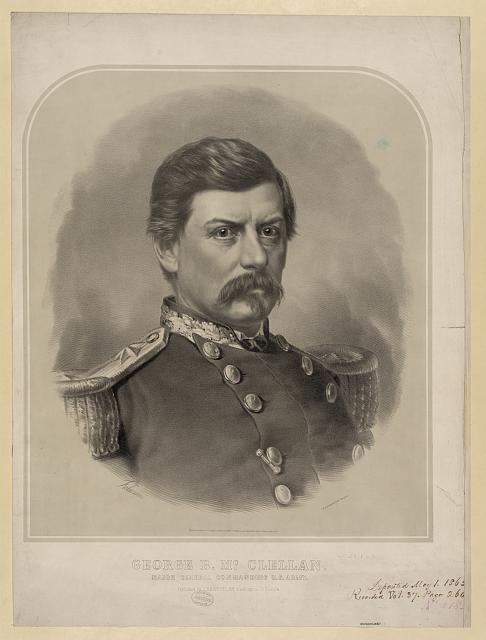
George B. McClellan. Major General commanding U.S. Army (Boston : Published by J.H. Bufford, c1862; LOC: LC-DIG-pga-00378)

Club’s namesake: ‘statesmanly and soldierly ability’

On September 29, 1862 a group of men in Seneca Falls, New York held an organizational meeting of a McClellan Club. Here’s a report from a Seneca County, New York newspaper in 1862:

Organization of a McClellan Club.

A large number of our citizens responded to the call, published in the last issue of this paper, and convened at Concert Hall, on Monday evening last, for the purpose of organizing a “McClellan Club.” The meeting was organized by the appointment of GEO. PONTIUS as Chairman, and D.H. WILSON and JEREMIAH TRANT as Secretaries. The object of the meeting being stated, on motion, a committee, consisting of Peter H. Van Auken, Aaron Baldwin, John S. Murphy and James D. Pollard, was appointed to draft and submit to the meeting a series of resolutions expressive of the sentiments of those present.
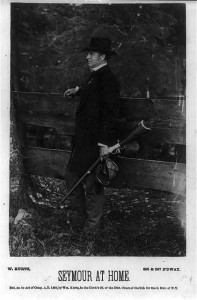
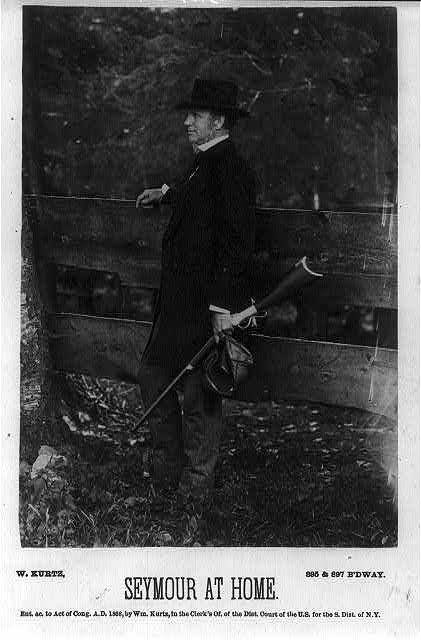
Horatio Seymour, 1810-1886 "Seymour at home", full length portrait, standing, left profile, carrying rifle, American politician (c1868; LOC: LC-USZ62-53047)

Hooray for Horatio!

The following resolutions were read and submitted to the meeting by the chairman of the committee:

Resolved, That, as a mark of our respect for the heroic General at the head of the Union Army, this Club shall be known as “The McClellan Club of Seneca Falls,” and its organization shall be maintained until the present rebellion shall be suppressed, its guilty authors punished, and the soldiers of the Union properly rewarded.

Resolved, That the loyal people of this State have entire confidence in the statesmanly and soldierly ability, and exalted patriotism of Generals Halleck and McClellan, and the officers and soldiers co-operating with them; and that we regard all attempts of abolition disunionists or others to embarrass the action of the Generals in command, or to undermine their influence and popularity with the army or the people, as scarcely less atrocious than the rebellion itself.
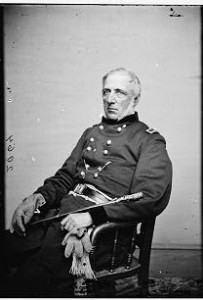
Portrait of Brig. Gen. James S. Wadsworth, officer of the Federal Army (Between 1860 and 1864; LOC: LC-DIG-cwpb-04579)

’embittered and factious hostility’

Resolved, That in view of the distinguished services and responsible position of General McClellan, we indignanily [as printed] deprecate the nomination and election of Governor of this State of the malignant Wadsworth, a man whose principal claim to notoriety consists of his uniform embittered and factious hostility to General McClellan, his superior officer. His nomination, with that of Lyman Tremaine, whose sudden conversion from extreme “dough-faceism” to radical abolitionism reflects alike upon his sincerity and integrity, cannot but be regarded as an intended insult to every democrat and every whig who prizes the Union and the Constitution.

Resolved, That this Club will unanimously support Horatio Seymour and his associates on the Democratic Constitutional Union Ticket at the ensuing election.
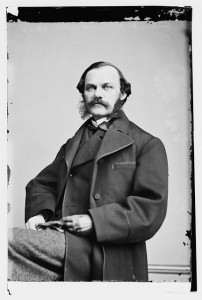
Hon. Henry Jarvis Raymond of N.Y. (between 1855 and 1865; LOC: LC-DIG-cwpbh-03070)

‘little villain’ presides at Syracuse

Resolved, That the present danger and difficulties which hang over this Republic may, in a great measure be justly attributed to the New York Tribune, and papers and politicians of that stripe and character. – That the speeches of the “little villain” of the New York Times, and his associates in the recent Republican State Convention imputing treasonable sentiments to their political opponents were infamously false and insulting to at least one half of the people of the Northern states, and that taken in connection with the arbitrary arrests and imprisonments of loyal citizens, and the suppression of independent newspapers, have a direct tendency to divide and distract the north, and to discourage enlistments, if not to encourage mutiny and breaches of the public peace, and that in consequence all such disloyal practices ought to stop.

Resolved, That a loyal and constitutional party is at all times promotive of the public good; and that such a party was never more required than when the enormous expenditure of public money tends to fill every department of the government with men intent upon speculation and plunder.

The reading of the resolutions was frequently interrupted by the applause of the audience, and they were unanimously adopted as the sentiments of the meeting, Before their adoption, however, J.T.MILLER, Esq., made a brief and telling speech upon the questions that are now agitating the public mind.

On motion, the Chair was empowered to select a committee of two from each ward to report permanent officers of the Club at Concert Hall, on Wednesday evening, October 8th. The following are the several members of the committee thus appointed: Henry Stowell, P.H. Van Auken, G. Wilcoxen, James D. Pollard, John S. Murphy, L.T. Moore, J. Newbolt.

The Club adjourned to meet at Concert Hall, on Wednesday next, to perfect its organization. The public generally are invited to attend.
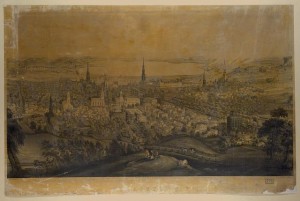
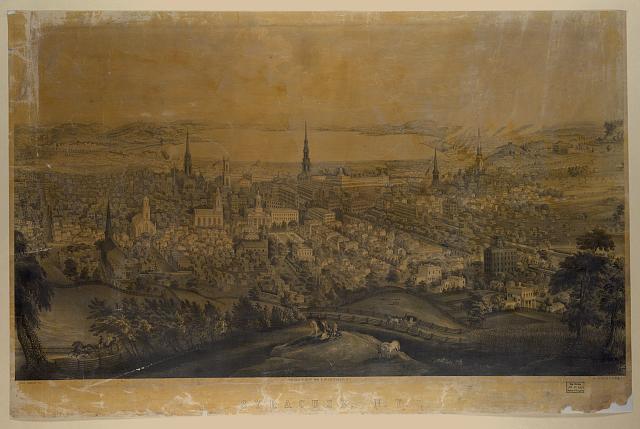
Syracuse, N.Y. (N.Y. : Published by Smith Bros. & Co., 225 Fulton St., 185-?); LOC: LC-DIG-pga-02219)

Republicans met at Syracuse

The resolutions aim a good deal at the approaching state election. The Constitutional Unionists joined the Democrat convention on September 10, 1862 where Horatio Seymour was nominated for governor.

The Republicans met in Syracuse on September 24th. Henry Jarvis Raymond, the founder of The New-York Times, presided. James Samuel Wadsworth, the gubernatorial nominee, was a political general in charge of the defenses of Washington, D.C. from March until September 1862. President Lincoln sided with Wadsworth at the start of general McClellan’s peninsula campaign and ordered that more troops stay to defend the capital. McClellan had even less soldiers than he would have liked to start an offensive. Lyman Tremain, the Democrat state attorney general as late as 1859, ran for Lieutenant Governor as a Republican.

Breaking that "backbone" (Pub'd. by Currier & Ives, Nassau St., N.Y. [1862 or 1863]; LOC: LC-USZ62-42560)

SF Dems love Old Brains and Young Napoleon

You can read about the political cartoon at the Library of Congress
Posted in 150 Years Ago This Month, 150 Years Ago This Week, Northern Politics During War | Tagged , , , , , , , , | Leave a comment

Friendly Fire

More posing for the camera.

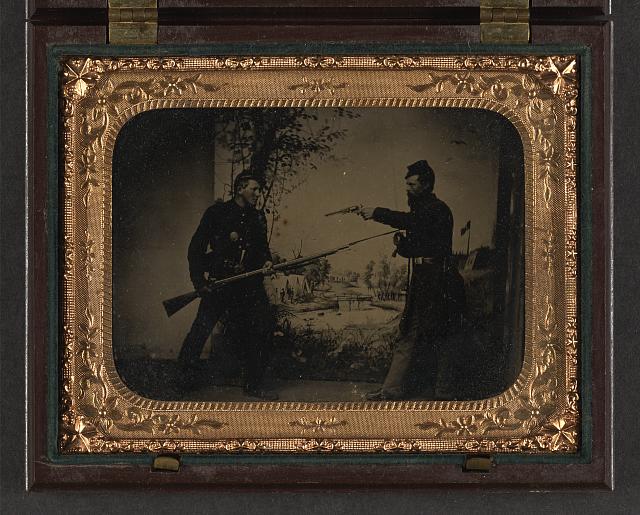
Two unidentified soldiers in Union uniforms posing with bayoneted Springfield Model 1861 rifled musket with attached bayonet, knife, and Colt Model 1851 Navy revolver in front of painted backdrop showing landscape with camp (between 1861 and 1865; LOC: LC-DIG-ppmsca-37138)

Democrat v. Republican?

Posted in Military Matters | Tagged | Leave a comment

The mask laid aside

Proclamation of emancipation (no date recorded on shelflist card; LOC: LC-DIG-pga-02130)

Kickin’ around that ‘ridiculous old Constitution’

A southern editorial on Abraham Lincoln’s September 22, 1862 Proclamation of Emancipation.

From the Richmond Daily Dispatch September 30, 1862:

Lincoln’s proclamation.

The Yankee Government has at last laid aside all disguise. Lincoln openly proclaims the abolition of slavery throughout the entire South, wherever a slave is held. The time for issuing this proclamation has been singularly well chosen. It is when the discharge of Pope’s last officer has left our Government, for the present, entirely without the means of retaliation. It is singularly consistent with the behavior of Lincoln when Pope’s infamous proclamation was issued. That document was not sent forth until Lincoln had assured himself that the cartel either had been or would be signed.

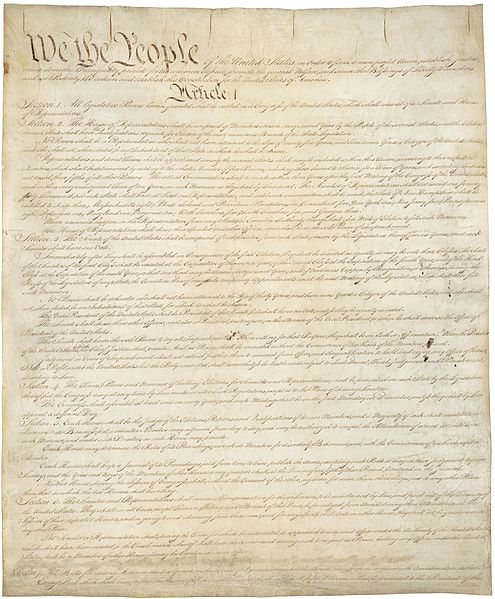
Constitution of the United States,page1

‘the bulwark of our liberties’ – disregarded by the strong

For the proclamation itself, it does not in the least alter the character of the war. It has been an abolition contest from the beginning, and is no more an abolition contest now than it was at first. The Yankees have stolen and set free all the negroes who were willing to go, wherever their soldiers have had possession of the country. It is best for us, indeed, that the mask should be entirely laid aside, since our people, no longer deluded into the belief that their slave property will be respected, will be careful hereafter to remove it beyond the reach of danger.–This document is merely curious, from the clear demonstration which it affords, of the entire possession which the abolition party has taken of the Federal Government, and the utter prostration of the last remnant of what used with so much unction to be termed by the canting knaves of New England”the bulwark of our liberties” –we mean that ridiculous old Constitution of the United States, which no party ever paid any attention to when they were strong enough to disregard it, and from which no party too weak to justify its position with the sword ever received the slightest protection. That the whole North will acquiesce in this last kick at the expiring Constitution, cannot be doubted. Experience has proved that we have nothing to hope from any party in that quarter. Eager as they may be to cut each others throats, they are still more eager to cut ours, and to that pious work, we may be assured, they will devote themselves with all their energy. They are already calling for a million more of men, and the probability is that they will have them long before Christmas. We must make up our minds to meet these men, and to beat them, as we both can and will if they come here.

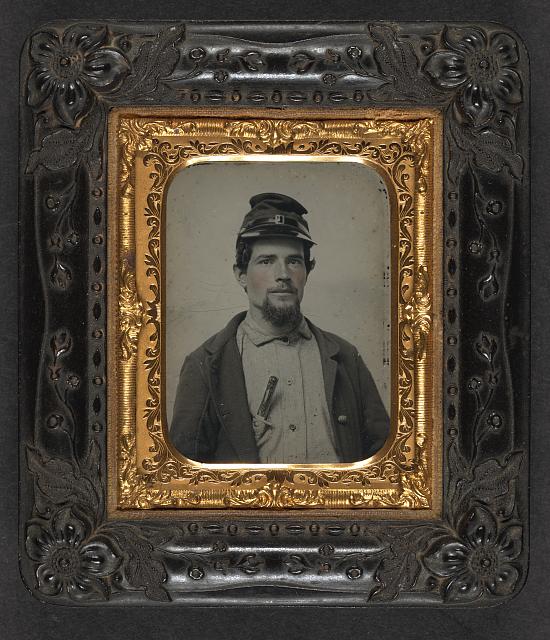
Unidentified soldier in Union uniform with forage cap carrying a bone handle knife in breast pocket (between 1861 and 1865; LOC: LC-DIG-ppmsca-37143)

ready to cut some rebel throat

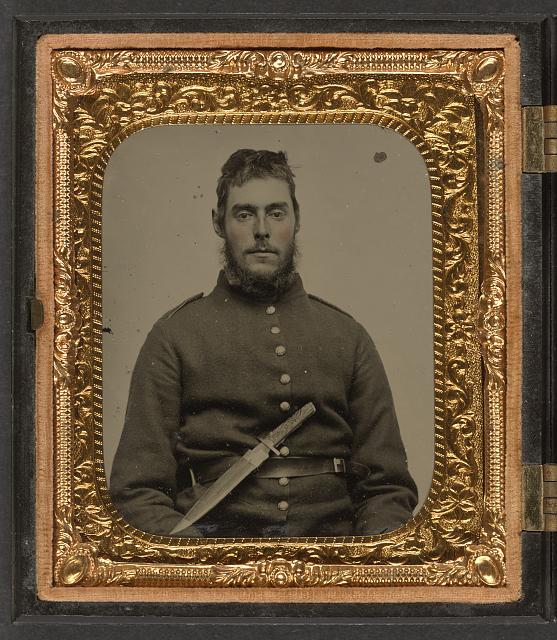
Unidentified soldier in Union uniform with large Bowie knife on belt (between 1861 and 1865; LOC: LC-DIG-ppmsca-36872)

typical Yankee?

Posted in 150 Years Ago This Month, 150 Years Ago This Week, Confederate States of America, Lincoln Administration, Southern Society | Tagged , | Leave a comment

“breath alone kills no rebels”

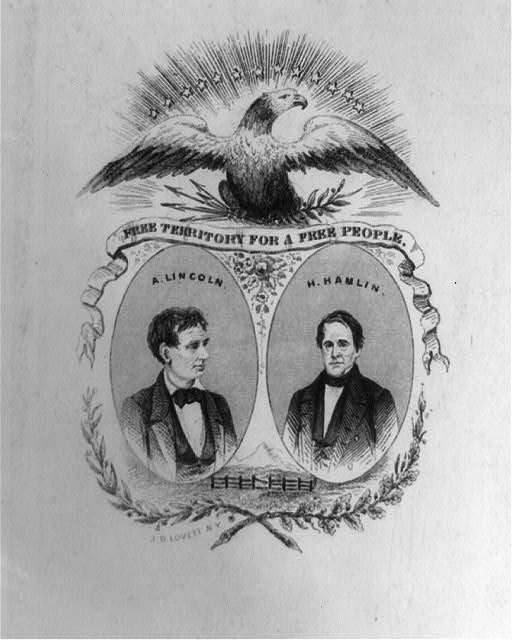
Free territory for a free people (1860; LOC: LC-USZ62-90709)

Free is the word

As a congressman and senator from Maine Hannibal Hamlin consistently opposed the extension of slavery. According to The life and times of Hannibal Hamlin by Charles Eugene Hamlin, Hannibal’s grandson, Hamlin continued his opposition to slavery as Lincoln’s vice-president. The day after the Union loss at First Bull Run (fought July 21, 1861) Vice-president Hamlin and Senators Chandler and Sumner called on President Lincoln to urge him to free and arm the slaves (p. 423). According to Hamlin’s biography at the United States Senate site:

Hamlin, for instance, was among those who pressed Lincoln hard to issue an emancipation proclamation. Fearing at first that such a measure would divide the North, Lincoln resisted until he believed he could use the issue as a military advantage, to give a nobler purpose to the war. When Lincoln first drafted a proclamation, he invited Hamlin to dinner and let him be the first to see the document, asking for his suggestions. Hamlin later described Lincoln as “much moved at the step he was taking.”

The vice-president must have been overjoyed by the Emancipation Proclamation of September 22, 1862 and apparently wrote President Lincoln a congratulatory letter. 150 years ago today Lincoln replied to Hamlin. The president is sticking to his approach that everything he did was first and foremost to put down the rebellion and save the Union. (Republican) sentiments might be up, but stock prices and troop levels are down.

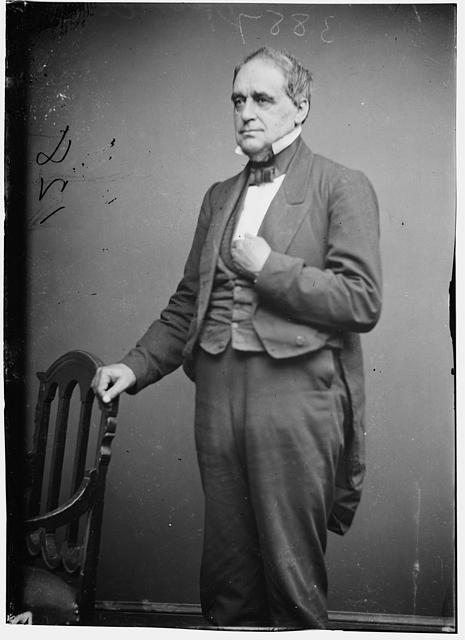
Hannibal Hamlin (between 1855 and 1865; LOC: LC-DIG-cwpbh-00990)

Hamlin to Lincoln on the Emancipation Proclamation?: “This is a big [Bidenspeak] deal.”

From Abraham Lincoln’s Writings at Project Gutenberg:

TO HANNIBAL HAMLIN.
(Strictly private.)
EXECUTIVE MANSION, WASHINGTON,

September 28, 1862.
HON. HANNIBAL HAMLIN.

MY DEAR SIR: Your kind letter of the 25th is just received. It is known to some that, while I hope something from the proclamation, my expectations are not as sanguine as are those of some friends. The time for its effect southward has not come; but northward the effect should be instantaneous. It is six days old, and, while commendation in newspapers and by distinguished individuals is all that a vain man could wish, the stocks have declined, and troops come forward more slowly than ever. This, looked soberly in the face, is not very satisfactory. We have fewer troops in the field at the end of the six days than we had at the beginning—the attrition among the old outnumbering the addition by the new. The North responds to the proclamation sufficiently in breath; but breath alone kills no rebels.

I wish I could write more cheerfully; nor do I thank you the less for the kindness of your letter.

Yours very truly,
A. LINCOLN.

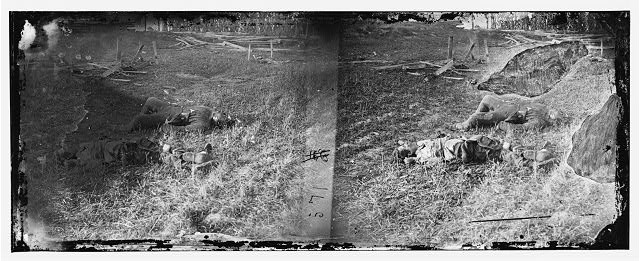
Antietam, Maryland. Battlefield near Sherrick's house where the 79th N.Y. Vols. fought after they crossed the creek. Group of dead Confederates (by Alexander gardner, 1862 Sept; LOC: LC-DIG-cwpb-00242)

killed rebels

Bidenspeak

Posted in 150 Years Ago This Week, Lincoln Administration, Northern Politics During War, Northern Society | Tagged , , , | Leave a comment

First Louisiana Native Guard

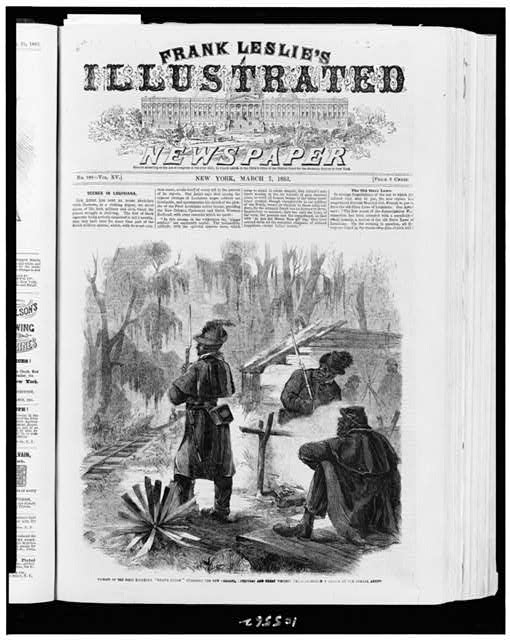
According to Historynet, 150 years ago today the 1st Louisiana Native Guard became the first African-American regiment accepted into United States service. It was organized by Ben Butler during his military supervision of New Orleans.

Pickets of the First Louisiana "Native Guard" guarding the New Orleans, Opelousas and Great Western Railroad (Frank Leslie's illustrated newspaper, 1863 March 7, p. 369; LOC: LC-USZ62-105562)

1st Louisiana Native Guard guarding a railroad

You can see more images and read about this regiment in the February 28, 1863 edition of Harper’s Weekly at Son of the South.

Posted in 150 Years Ago This Week, Military Matters, Northern Society | Tagged , , | Leave a comment

The Week+ in Review

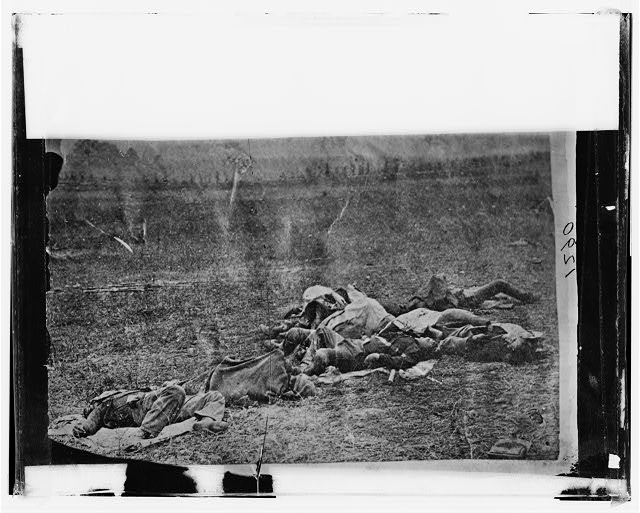
Antietam, Maryland. Dead on battlefield (1862 Sept; LOC: LC-DIG-cwpb-01435)

‘sanguinary conflict … for mutual slaughter’

Here a Democrat newspaper from upstate New York in a single column comments on three events on eight days in September: The Battle of Antietam on the 17th, President Lincoln’s Emancipation Proclamation of the 22nd, and the president’s order subjecting those who discouraged enlistment to martial law and denying the writ of habeas corpus to those same people (24th).

You can browse to Civil War Daily Gazette for those dates and get a good report on these issues. One of the things I did not realize is that the timing of the Emancipation Proclamation was tied to Mr. Lincoln’s warning to the southern states on July 25th that if they were still in rebellion in sixty days all property would be subject to confiscation. That would seem to be an important factor because as late as September 13th the president wrote that emancipation at that time would be unenforceable. The following editorial would agree that it still is unenforceable.

From a Seneca County, New York newspaper in 1862:

The Battle of Sharpsburg.

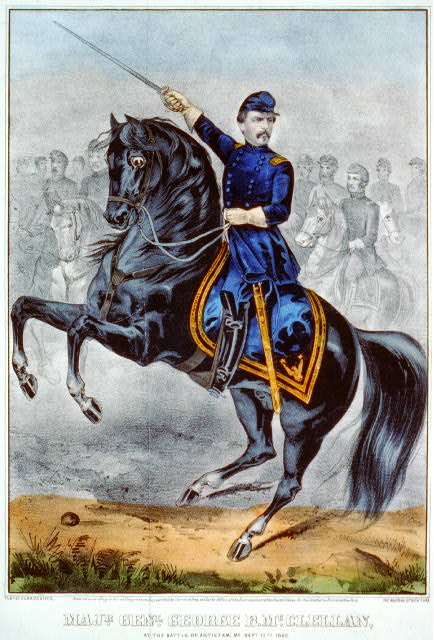
Majr. Genl. George B. McClellan: at the Battle of Antietam, Md. Sept. 17th 1862 (New York : Published by Currier & Ives, c1862.; LOC: LC-USZC2-2804)

gallant, invincible, omnipresent at Sharpsburg

We offer no apology for publishing the thrilling narrative of the Battle of Sharpsburg, found on the first page of to-day’s paper. It was by far the bloodiest, and most fiercely contested engagement of the war. Both armies fought with a desperate valor, and an unflinching heroism, which were never surpassed on any of the historical battle-fields of the old world, – but as it was only men of the same lineage and race, trying to vanquish each other, one need not be surprised that after the day’s slaughter, it was difficult to determine which was the winner. Subsequent events, however, have demonstrated that the enemy were unwilling to renew the contest, hence their retreat on the following day, while their dead and wounded were being cared for. The Generalship displayed on both sides was of the most brilliant character. – there were no retreats, or panics in that dreadful days work, but every officer, high and low, were prompt to obey orders – supported by the rank and file – who resisted the rebel legions that were furiously hurled against them, in quick succession. The presence of the commanding officer – the gallant and invincible MCCLELLAN – on all parts of the battlefield, inspired our troops with renewed courage, and a fierce determination to conquer or die. Never did men fight more determinedly, more heroically. And yet, when one peruses the thrilling detail of this terrible struggle, the heart sickens at the thought that a people, only a few days since so prosperous and happy – men of the same lineage, and with a common destiny, should so soon array themselves in sanguinary conflict and for mutual slaughter. The thought is terrible, and the progress of events since President LINCOLN’s Inauguration seem like a horrid dream. Verily, is not this the bloodiest and most unnatural war of modern times?

_____________________________________

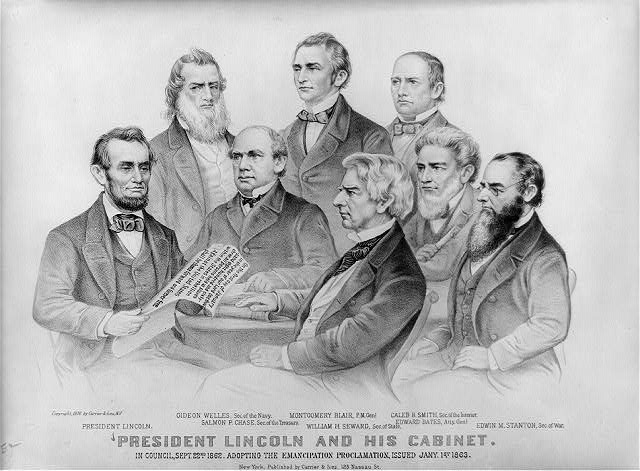
President Lincoln and his cabinet: in council, Sept. 22nd 1862. adopting the Emancipation Proclamation, issued Jany. 1st 1863 (New York : Published by Currier & Ives, c1876; LOC: LC-USZ62-7275)

‘If he has the Constitutional authority to free negroes, he has a corresponding Constitutional authority to enslave them’

Proclamation of Emancipation.

President LINCOLN has finally yielded to the Abolition pressure, and issued a Proclamation, declaring all slaves free in States which shall be in rebellion on the 1st of January next. The President ought to issue another Proclamation declairing the rebel army disbanded, and then he would reach the climax of Abolition folly and madness. It remains to be seen what effect this Proclamation will have towards liberating the four millions of slaves in the Southern States. We do not believe that it will in any way disturb the status of slavery. Proclamations against slavery, and those in arms against the Government, amount to nothing unless we have the power to enforce them. So far we have made poor headway towards subduing the rebel army, or penetrating the enemy’s country. The whole world will laugh at the impotence of this mere Paper Proclamation.It will not add to our strength, but on the other hand, and under existing circumstances, it will strengthen the rebellion three fold, and prolong almost indefinitely the horrors and miseries of this most wicked war.

The President has no power or authority for issuing a Proclamation of this character. The Constitution does not give him the power, – it is usurpation. If he has the Constitutional authority to free negroes, he has a corresponding Constitutional authority to enslave them. If not, why not? President LINCOLN we fear is fast assuming the power of an usurper, and unless the people arouse themselves to the dangers by which we are threatened, all hopes of a free people will be blasted and withered, and we soon numbered among the nations that have gone down in blood and disaster.

_______________________________

THE President has issued a proclamation against discouraging volunteer enlistments and prohibiting other disloyal practices. – The writ of habeas corpus is suspended in regard to all persons arrested, and confined in military prisons. What next, Mr. President?

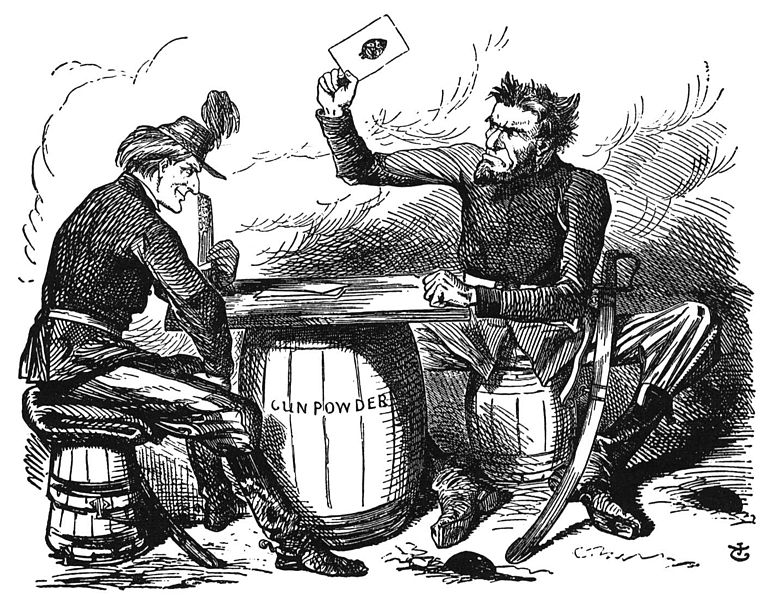
"Abe Lincoln's Last Card; Or, Rouge-et-Noir (Red and Black)"; Punch, Volume 43, October 18, 1862, p. 161.— a cartoon by the Englishman John Tenniel, after the Times insinuated that freeing the slaves was Lincoln's "desperate last-trump card"; Lincoln has the horns of a devil. The cartoon was often reprinted in the Copperhead press.

‘What next, Mr. President?’

This image is used at Wikipedia’s article on the Emancipation Proclamation in the section on “Political Impact” – where you can read more about Democrat party reaction.

Posted in 150 Years Ago This Month, 150 Years Ago This Week, Lincoln Administration, Military Matters, Northern Politics During War | Tagged , , , , | Leave a comment

Care Packages Get the Thumbs Down

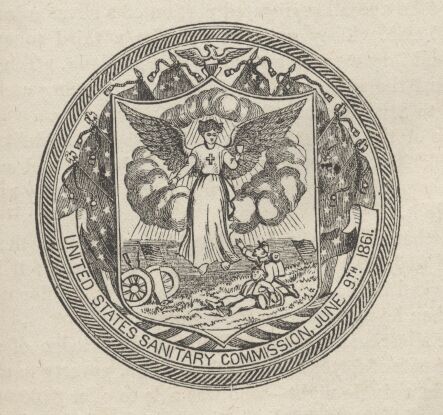
Seal of the United States Sanitary Commission from Roughing It, 1872 by True Williams

Angel knows best

Hundreds of Tons Warehoused

From The New-York Times September 26, 1862:

Protest Against Sending Presents to Soldiers.

CENTRAL OFFICE, SANITARY COMMISSION,

WASHINGTON, Sept. 20, 1862.

The Sanitary Commission, at the request of Gen. HALLECK, Commanding in Chief the Armies of the United States, most earnestry advises against the practice of sending presents to soldiers of articles which it is supposed will add to the conveniences of their camp life. To the knowledge of the Commission, many hundred tons of such presents are now piled uselessly in store-houses and yards, and upon old camp-grounds; while thousands have probably been destroyed to prevent their falling into the hands of the enemy, and but a small part of all that have been received by those to whom they were addressed have been of the smallest value to them, except as tokens of the affectionate interest of their friends. For this purpose, letters and such other small and light articles as can be transmitted by mall would have been much better. Larger gifts occasion serious practical mischief -men and officers being [???] averse to throwing them away — they add to the incumbrances, which are a chief cause of the excessive fatigue, and thus of the sickness of the soldier. …

FRED. LAW [???] [Olmsted], General Secretary.

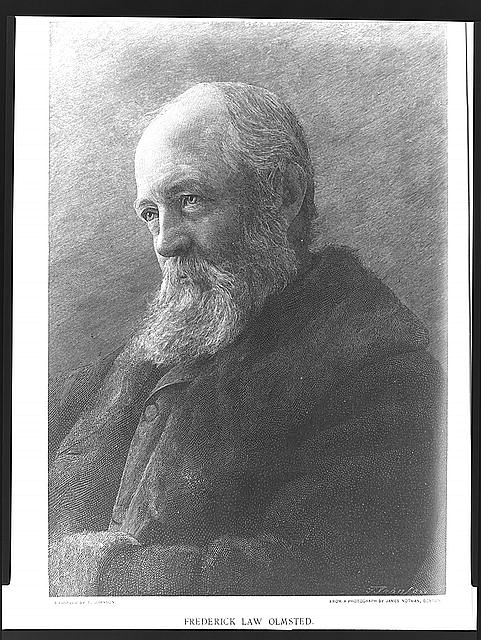
Frederick Law Olmsted was a landscape architect (New York City’s Central Park, for example) who did serve as General Secretary of the U.S. Sanitary Commission during the war. He also helped found the Union League Club of New York in 1863. And he achieved a lot more during his long career.

Frederick Law Olmsted (engraved by T. Johnson ; from a photograph by James Notman. Oct. 1893; LOC: LC-USZ62-36895)

Frederick Law Olmsted

Posted in 150 Years Ago This Week, Military Matters, Northern Society | Tagged , | Leave a comment

Hey Junius

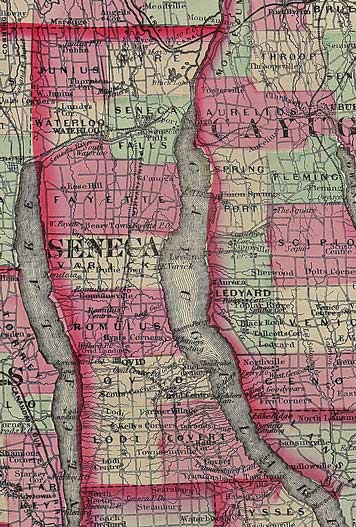
Seneca-County 1871

Town of Tyre in deficit

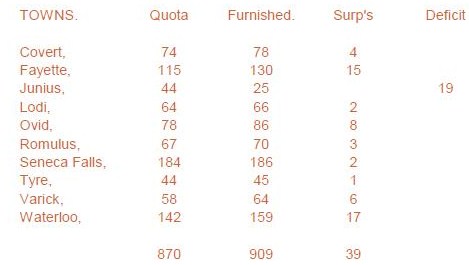
A Democrat newspaper found a graphic way of illustrating Democrat support for the Civil War by using a table of enlistment results – its majority Democrat county easily reached its quota of volunteers under the federal administration’s call for 600,000 recruits in the summer of 1862. The only laggard town? The county’s most Republican town. The last part of this article apparently shows a creditor giving a recruit a $100 break on his mortgage.

From a Seneca County, New york newspaper in 1862:

Quota for Seneca County.

The following statement shows the quota of each town in this county towards the 600,000 volunteers called for since July 2, 1862:

quota2

It is gratifying that this, the only Democratic county in Western New York, should have so promptly furnished her quota of the 600,000 men called for, and that every democratic town in the county has a surplus, and that the surplus is somewhat in proportion to the democratic majorities. Junius, the strongest Abolition Republican town in the county, is the only one that has not furnished her quota of men.

Of these 909 men furnished from this county, we have no doubt, from all we can learn, over 500 are Democrats.

Are Democrats opposed to the vigorous prosecution of the war? — Observer.

When it is remembered that, on the breaking out of the rebellion, the town of Seneca Falls promptly furnished over five hundred volunteers; and that, during the past year, Lieutenant J. MARSHALL GUION and others recruited here for the old regiments, about one hundred and fifty more, (for all of which the town gets no credit in the above estimate,) the surplus furnished by Seneca Falls will be readily appreciated. Waterloo, Fayette, and other Democratic towns, have also done well. The cost to individuals, and to the towns, of these recruits, has been enormous, and we think we ask nothing unfair, when we claim that Republican Junius, and other laggard towns, should at least pay a proportion of the public bounties, that would tend somewhat to equalize their contributions to the war.

The following receipt, endorsed on a mortgage given for the purchase money of property over two years ago, has just been shown us, by one of the volunteers from this town in Col. JOHNSON’s Regiment, will serve to illustrate the cost to individuals (this being in addition to all other bounties) of getting up the recent quota:

“In consideration of LEONARD MAURER enlisting as a private in the service of the United States, for three years or during the war now existing, and of his being mustered into the service, I do hereby acknowledge payment of One Hundred Dollars upon his bond and mortgage, dated September 1, 1860.

“Seneca Falls, Sept. 17, 1862.

“JOSIAH T. MILLER.

“In presence of H.A. PALMER.”

Leonard Maurer

40 year old recruit got break on mortgage

A different newspaper clipping allows a response from Junius (the clipping was beat up).

Defence of Junius against the Seneca Observer.

JUNIUS, August 18, 1862.

Friend Fuller – DEAR SIR: – I ask for a corner in the COURIER to expose a few of the false hoods of the last Observer.

In its article headed, Democrats opposed to the war,” it takes particular pains to single out Junius as a Republican town and as doing as near nothing [?] … We plead g[uilty to]not doing as much as larger towns [?] … people of Junius are nearly all farmers, who need to hire two rather than spare one.

I will give you an account of what they have done and are still doing in this town. 13 have enlisted with Mr. Munson, been examined and mustered in. 5 went with the Waterloo Company last Wednesday from Waterloo, all mustered in. We have raised a fund by subscription of $500 or $600; give to each man that goes from town $10 (unless he received that when he enlisted), let him go into any Company he chooses, if in this District, the balance of the fund to be used for the benefit of the families of those who may need help.

According to an 1862 directory Josiah T. Miller was a partner in a firm of attorneys, insurance agents, and “AGENTS TO LOAN MONEY”. As it turns out Mr. Miller is going to be involved with Seneca Fall’s McClellan Club; the 1862 midterm elections are approaching.

The map is at Harvest of History

Posted in 150 Years Ago This Month, 150 Years Ago This Week, Military Matters, Northern Politics During War, Northern Society | Tagged , , , , | Leave a comment

New Club in Town

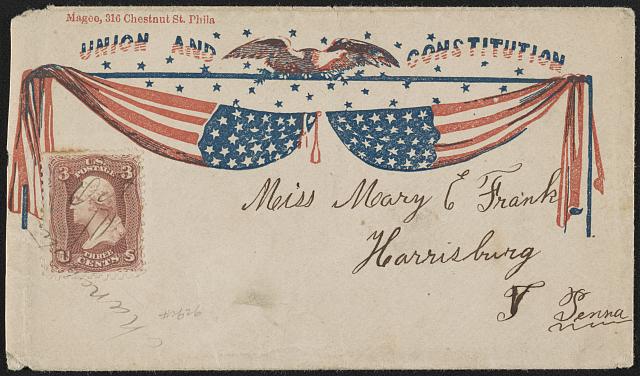
Civil War envelope showing American flags with eagle and stars above with message "Union and Constitution" (Phil'a. : Magee, 316 Chestnut Street, (between 1861 and 1865); LOC: LC-DIG-ppmsca-31983)

new club would agree

From a Seneca County, New York newspaper in September 1862:

McClellan Club.

The undersigned hereby form themselves into a Club, to be known as the “McClellan Club of Seneca Falls,” to [be] organized to support “the Constitutio[n,] the Union, and the enforcement of t[he] Laws.”

The first meeting of the Club will be at Concert Hall, on the 29th of September, 1862, at 7 1-2 o’clock P.M.

[the names of 61 men.]

It is said that George B. McClellan supported Democrat Stephen A. Douglas in the 1860 presidential campaign. It would not surprise me if some of the 61 members who were organizing the club were involved with The Little Giants during the 1860 campaign.

Posted in 150 Years Ago This Month, Northern Politics During War, Northern Society | Tagged , , , | Leave a comment