No Bragg, Just Fact

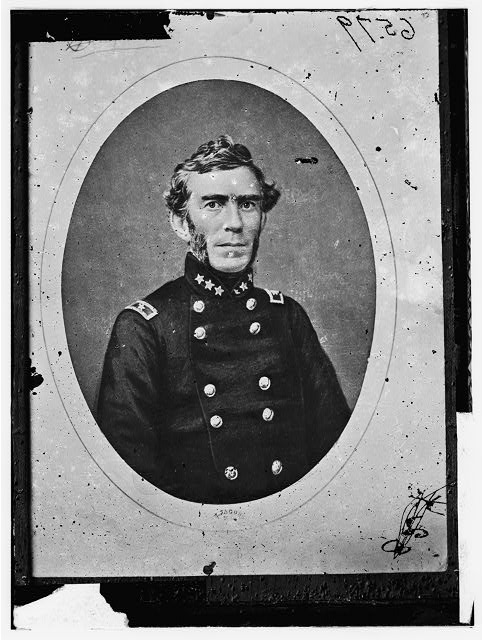
Braxton Bragg, CSA (between 1860 and 1870; LOC: LC-DIG-cwpb-07427)

Southern women will thank him

General Bragg works to prevent the corruption of his troops.

Seven Score and Ten points out that 150 years ago the Union high command was quite concerned about where Braxton Bragg was aiming his army as the Confederates were continuing their offensives. Here’s a snippet that shows General Bragg’s concern about army discipline.

From the Richmond Daily Dispatch September 10, 1862:

From the South.

Gen. Bragg has written a letter to a friend, which is published. We make the following extract:

No man in power can expect to do his duty and escape detraction. All mortals are fallible, and I have no doubt my errors are many and great.–With a conscientious conviction, however, that my course is right, I shall pursue it; and if at the end of this war, when our independence, is secured, an enlightened public judgment shall condemn me, after hearing the testimony of those who are now with me, gallantly and nobly defending their colors, as well as of those who have basely deserted to their homes to slander and revile their officers, in justification of their dishonor, I shall utter no murmur, but endeavor in silence to repent of my errors. In any event, I shall enjoy the consolation of having done something to prevent the moral degradation of our armies and our society.

Had not the reformation of grog-shops, gambling-houses, &c., commenced by me at Pensacola and Mobile, been approved and enforced by the Government, we should now be a degraded and enslaved people. No armies could have existed under such practices. In this I know the thanks of the mothers, wives, daughters, and sweethearts of the country will be mine. The gallant men they have sent me shall return to them uncorrupted.

Similarly, from the same Dispatch issue:

Trial of Liquor Sellers.

–The Court Martial now in session here have been engaged most of the week in trying the cases of parties arrested for violating that part of the proclamation of martial law forbidding the sale of whiskey. A number were mulcted in fines of considerable amount.

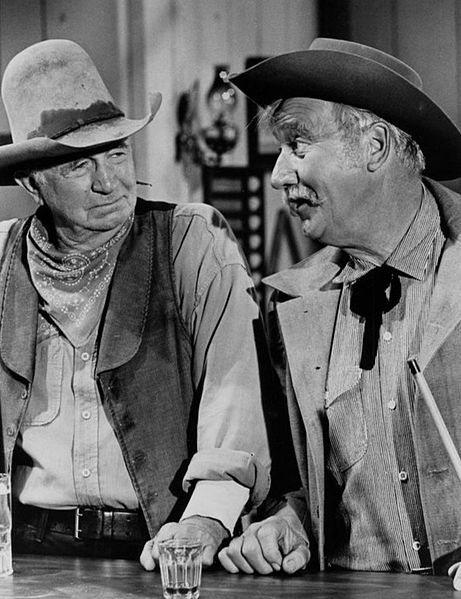
Walter Brennan and Edward Andrews from the television program The Guns of Will Sonnett. (1968

‘no brag, just fact’


A faint memory

Posted in 150 Years Ago This Week, Confederate States of America, Military Matters | Tagged | Leave a comment

A Noble Canandaiguan

From a Seneca County, New York newspaper in September 1862:

The Right Kind of Volunteer.

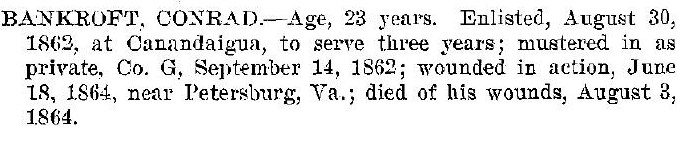
CONRAD BANCROFT, of the town of Canandaigua, has enlisted as a private in the company of Capt. Griswold, in Col. Johnson’s regiment, now being formed in Geneva.

Mr. Bancroft is a single man. He invests all his bounty and seven hundred dollars additional in the town bonds for a war fund, and has made a will by which, in case he does not return, all his property is to be distributed among the widows and orphan children of the volunteers from Canandaigua.

Such patriotism as this deserves notice. – There are some people in Canandaigua who can learn a lesson from such an example. –

Canandaigua Messenger.

Conrad Bancroft

His will benefited widows and orphans of volunteers

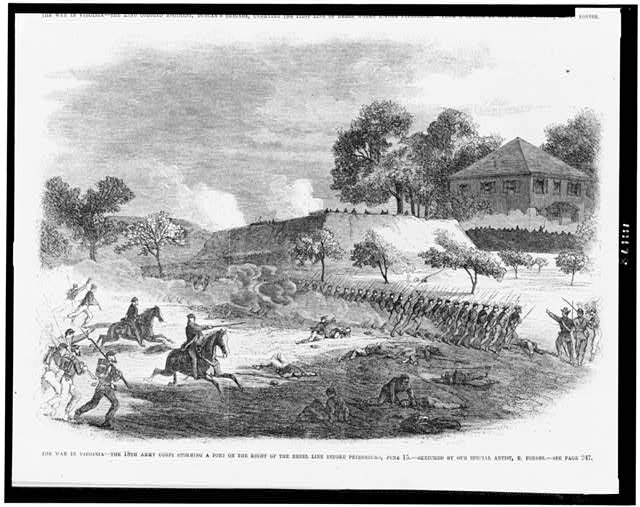
The New York State 148th site reproduces letters from Chaplain Ferris to the Seneca County Courier – he indicated that the 148th was part of the XVIII Corps’ drive toward Petersburg on June 15, 1864.

The war in Virginia - the 18th Army Corps storming a fort on the right of the Rebel line before Petersburg, June 15 (by Edwin Forbes, Frank Leslie's illustrated newspaper, 1864 July 9, p. 244; LOC: LC-USZ62-111178)

XVIII Corps – June 15, 1864

Posted in 150 Years Ago This Month, Military Matters, Northern Society | Tagged , , , | Leave a comment

Enforcing the Monster’s Orders

Edwin S. [i.e. M.] Stanton, Lincoln's Secretary of War (Hartford, Conn. : The War Photograph & Exhibition Co., No. 21 Linden Place, (between 1861 and 1865); LOC: vLC-DIG-stereo-1s02864)

Two-headed monster?

Southern Pennsylvania and Dubuque, Iowa

The first part of the following article is mostly an editorial in a southern Pennsylvania Democrat newspaper. Its opposition to the Lincoln administration’s orders against the discouragement of enlistment are very similar to an editorial in a Democrat paper in rural New York state. Both papers are concerned about the authorities punishing on the basis of allegations unproven in a court of law. This Pennsylvania editorial adds an interesting question: is the enforcement of the orders against discouraging enlistment actually discouraging enlistment?

From the Richmond Daily Dispatch September 6, 1862:

Northern Tyranny.

Dr. O[ld]s, a respectable gentleman of the interior of Pennsylvania, has been seized and sent to Fort Lafayette for the crime of frankly expressing his opinions of Lincoln’s administration, and thus throwing obstacles in the way of the recruiting service. He is of the Democratic persuasion, and, of course, hostile to Mr. L’s party. The Lancaster (Penn.)Eagle, of the 14th ult, thus alludes to the subject:
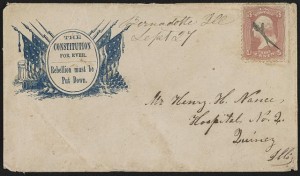
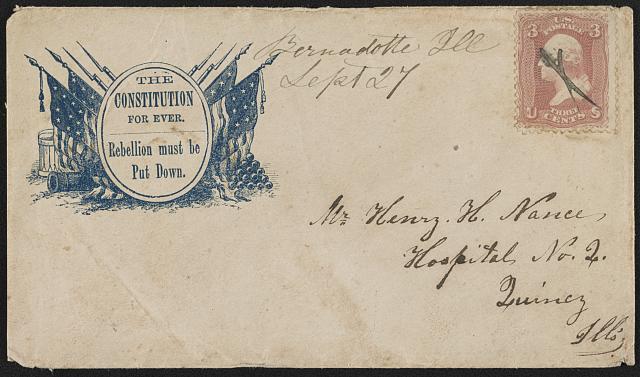
Civil War envelope showing American flags, cannon, and drum with message "The Constitution for ever. Rebellion must be put down" (1862 September; LOC: LC-DIG-ppmsca-31959)

A question of interpretation?

Dr. Olds was dragged from his bed and the bosom of his family at half past 10 o’clock on Tuesday night, by Wm. Scott and other hired tools of the Lincoln unscrupulous and despotic administration. This high handed usurpation of power, “might against right,” cannot but arouse the indignation of all who are capable of appreciating its enormity. When the provisions of the Constitution and the laws made in pursuance thereof were the “supreme law of the land,” then it was the pride and glory of the freeman in this once happy land to cry aloud, no matter when or where, “I am an American citizen!” But how is it now, under the Lincoln dynasty? An American citizen is arrested at the mid hour of the night, the time at which all, or most all dark and damnable deeds are committed; and his appeal for his rights under the Constitution as an American citizen is treated with derision. All that is wanted to secure the arrest and incarceration of any citizen, is the lying affidavit of some slimy, foul-mouthed, cowardly hypocrite. Is this great wrong, this madness to continue? The kidnappers knocked at the front door and were admitted by Mr. Smith, Dr. Old[]s son in law. They insisted upon seeing Dr. Olds, when Mr. Smith remarked that he would notify him; they refused to await this decent and usual process, but rushed up stairs to his room and unceremoniously burst open the door. This procedure aroused the doctor, and he, probably thinking them assassins or robbers, made at them with the tongs, and finally clinched and floored one of them.

A large majority of the volunteers from this county now in the field are Democrats, and the same is true of the companies now being raised. And now we would ask the Republicans here — those who caused his arrest and those who applauded the out-rage — whether they are not in fact chargeable with, if not talking, at least with acting detrimental to the recruiting cause? If there is any force or virtue in Stanton’s late order upon this subject, should it not be enforced against such discouragers of volunteering, for discouraging they are, and they will not volunteer and fall into the ranks themselves.

The Democracy of Fairfield will be called upon to meet in mass meeting in this city at an early day to give expression in this matter. Bills will be circulated, and we hope that every Democrat will turn out.
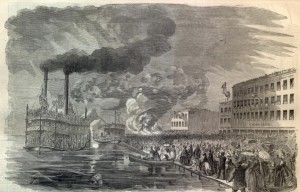
dubuque-iowaDEPARTURE OF VOLUNTEERS FROM DUBUQUE, IOWA, APRIL 22, 1861. (Harper's Weekly, May 25, 1861)

Dubuque volunteering for the Union, April 1861

An editor in the West, of the Dubuque Herald, has undergone a similar process. The following is his address to his readers:

Dubuque, Aug. 14, 1862.

Readers of the Herald, and Fellow-Citizens of Iowa:

I have been arrested this morning by an arbitrary order from the War Department, on what grounds. I know not, except it be for the expression of my sentiments through the Herald–sentiments which, as true as God lives, I believe to be loyal to the Constitution of my country. I have only to commend my wife and children to your care and protection.

Your friend and fellow-citizen,

D. A. Mahoney.

Dennis A. Mahony was released from Washington D.C.’s Old Capitol Prison on November 11, 1862 after he swore allegiance to federal government and the Constitution. His The Prisoner of State was published in 1862 and dedicated to Secretary of War Stanton, the greatest of “the monsters which have been begotten by the demon of fanaticism which is causing our country to be desolated …”

The image of Dubuque from the May 25, 1861 issue of Harper’s Weekly is hosted at Son of the South
Posted in 150 Years Ago This Week, Lincoln Administration, Military Matters, Northern Politics During War, Northern Society | Tagged , , , , , , , , | Leave a comment

Melonicious

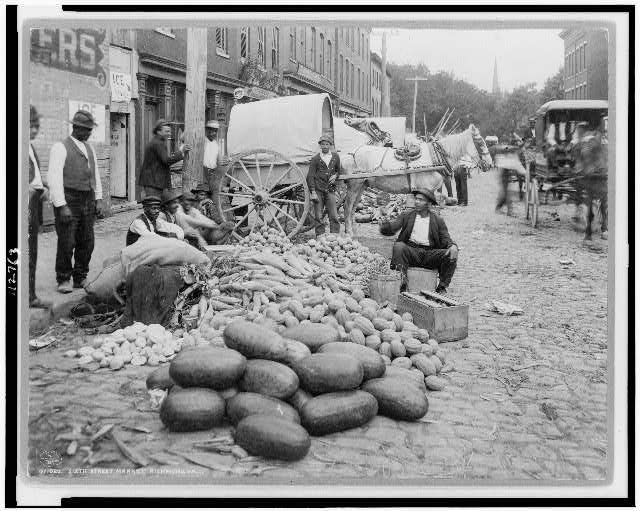
Having a little trouble getting my notes together again today. … (And besides this produce looks delectable!) Here’s a market scene (at least its in Richmond) from about 1908:

melons, corn, and squash!

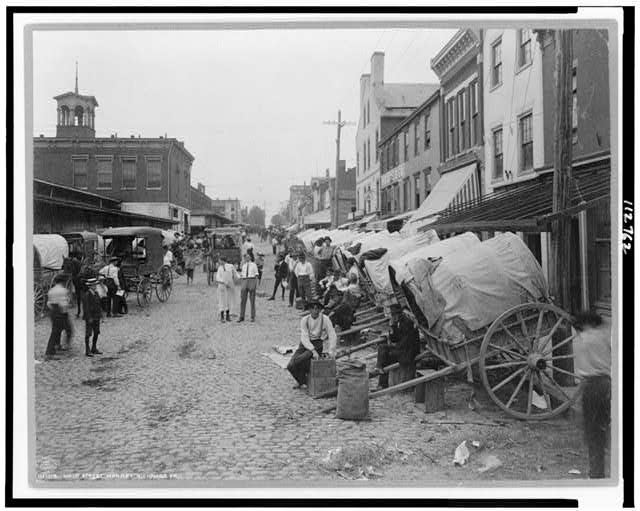
Here’s another view:

Sixth Street market, Richmond, Va. (c1908; LOC: LC-USZ62-112762)

Sixth Street market

\

Posted in Uncategorized | Tagged | Leave a comment

Florence Nightingales

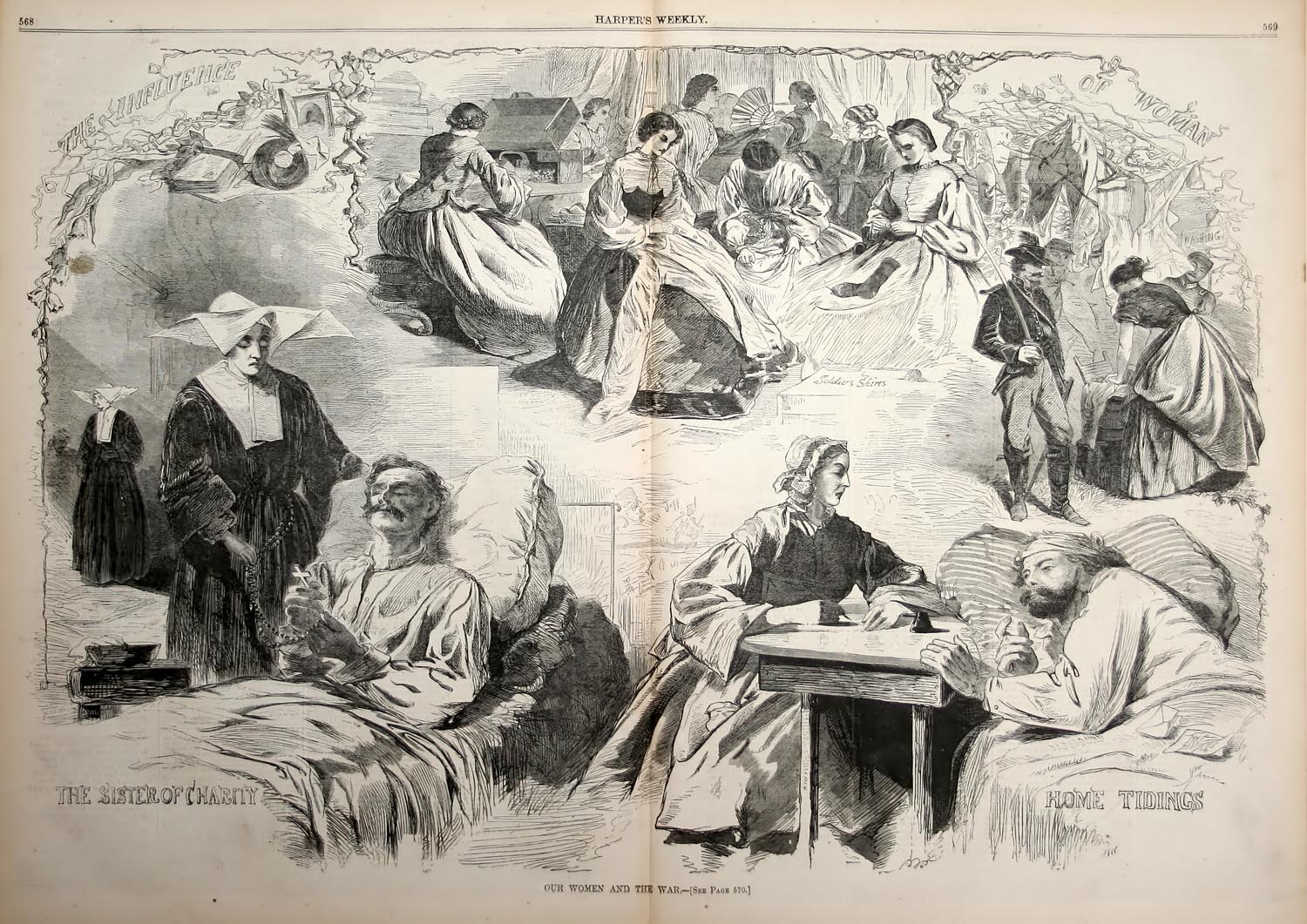
150 years ago this week Harper’s Weekly published the following image of women at work helping the Union war effort:

Our Women and the War. (Harper's Weekly. 9-61862)

‘honest Biddy’ is doing the wash

Son of the South also has the accompanying article: The war has produced scores of Florence Nightingales.

Posted in 150 Years Ago This Month, Northern Society | Tagged | Leave a comment

Belle & the Boys Released

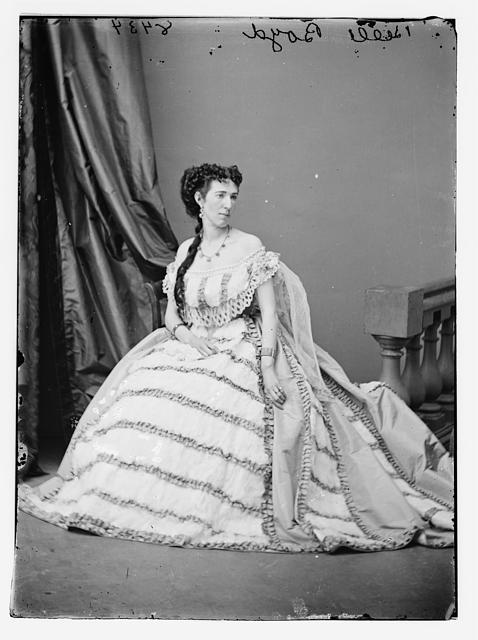
Belle Boyd (between 1855 and 1865; LOC: LC-DIG-cwpbh-01988)

Departing from old Capitol prison

The Dix–Hill Cartel of July 22, 1862 regulated the exchange of Union and Confederate prisoners. Aiken’s Landing on the James River became a major exchange location. The following letter seems to describe the the Dix-Hill cartel at work. Confederate spy Belle Boyd, however, apparently opted to be set free at Fortress Monroe. I’m not certain the letter writer and his fellow soldiers made it as far as Aiken’s Landing, but there is evidence that prisoner swaps had already started there.

From the Richmond Daily Dispatch September 4, 1862:

[Correspondence of the Richmond Dispatch.]
exchange of prisoners–Gay Times in a Federal prison.

On Board Flag of Truce Boat Juniata, September 1, 1862.

On last Thursday the prisoners of war (about 200) confined in the old Capitol prison were notified that in a few days we should be sent South (via Fortress Monroe) for exchange. Such a shout of heartfelt joy as then sounded through that old building was, perhaps, never heard before. Knowing how soon we would be in Dixie, and once more have a chance to cross sabres with the enemy for liberty or death, we took all the advantage of our situation we could — officers defied, guards cut down generally–we took complete possession of the second floor. There was but little sleeping done that night. Our merry laughs, loud huzzas, and snatches of home songs were heard during this time. All was not allowed to go on as we would have it.–Corporals, Sergeants, and officers were called for by the sentinels; but what cared we? We knew that soon we were to breathe the fresh and pure air of our native land once more. About 3 o’clock, however, Mr. Wood, the Superintendent of the prison, came and told us all to be ready to leave at 6 P. M. 29th. Another wild shout of joy and we are off with a hearty good bye for the kind treatment of us by Mr. Wood, which, by the way, none of us will soon forget, nor also, the kindness of Drs. Hall and Johnson, who, by the special permission granted them by Secretary Stanton, almost daily visited us, and furnished us with clothes, pipes, tobacco, and any other luxuries (sabres, pistols, and other contrabands excepted,) which the mind might fancy and the purse pay for. All thanks to them for their kindness, but confusion to Old Abe. Only one regret we felt at leaving , which was the unseasonable hour chosen, it being 8 P. M. We had all looked forward to the pleasure of showing off near 200 fine looking fellows, with their pet, Miss Belle Boyd, the rebel spy. I can assure you we had all of us rather spent one more night in prison, and had daylight for our start, than to be slid off in that quiet way. But I suppose they were afraid to have so many fine- looking gray jackets appear on the streets at such a time. Jackson so near, all would know us as reinforcements for that glorious, good soldier, who is an honor to his country and a terror to his foes.

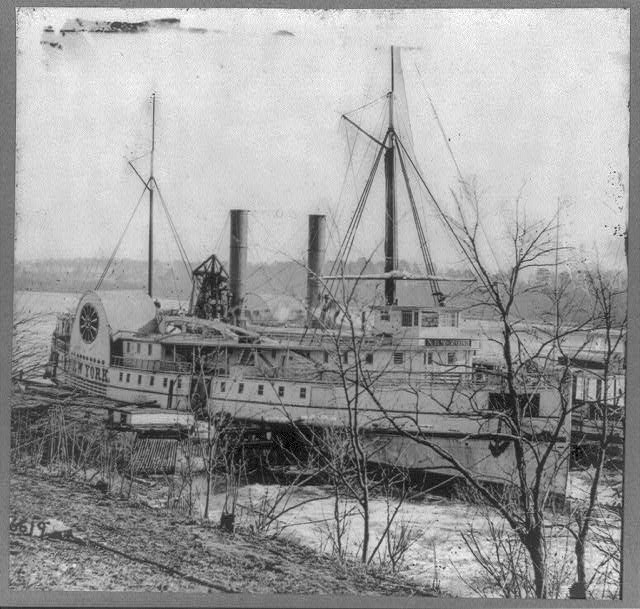
Federal flag-of-truce boat NEW YORK, at Aikens Landing, waiting for exchanged prisoners (photographed between 1860 and 1865, printed later; LOC: LC-USZ62-49361)

Juaniata’s kin waiting at Aiken’s for exchanged troops

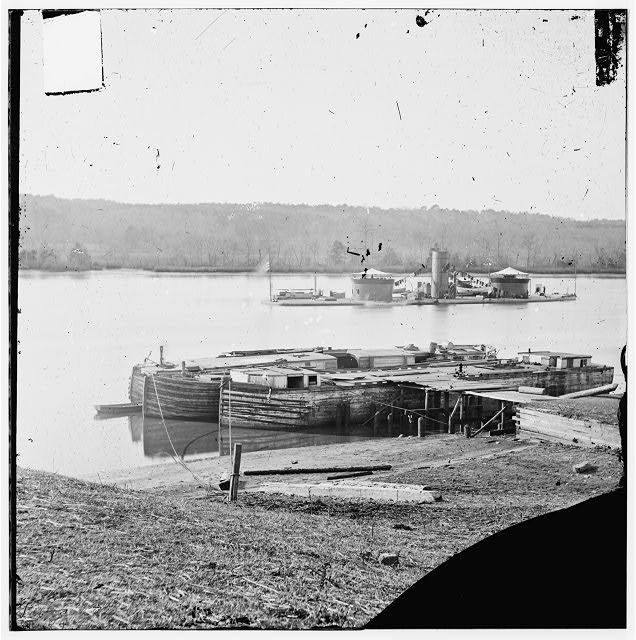
Aiken's Landing, Va. Double-turreted monitor U.S.S. Onondaga on the James (1864; LOC: LC-DIG-cwpb-10910)

Aiken’s landing in 1864 with U.S.S. Onondaga (a double-turreted monitor) in river

Here we are, at last, on the noble James, and we are “almost home.” While I write this two of their black, ugly looking, but no longer dreaded, gunboats, go puffing down stream, most likely on their way to Richmond (?), their black iron sides presenting somewhat the appearance of a badly-punched pepper-box top. I wonder if Stuart’s swimming artillery did that Speaking of Stuart, puts me in mind that he is all the go. Nothing can resist him. He is evidently going it strong upon the rule of “wherever you see a head try to hit it. ” He is an elegant “bush whacker.”

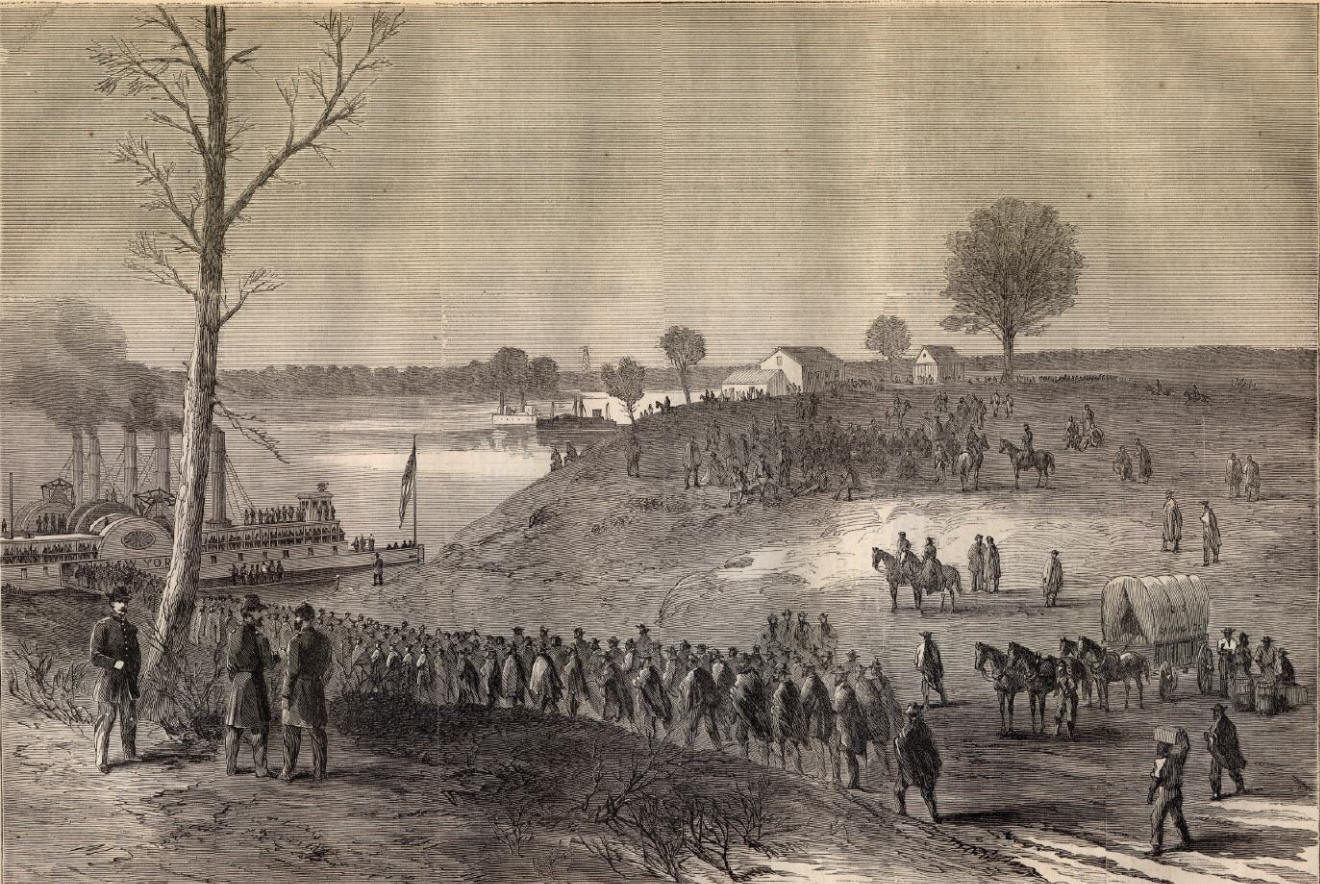
Civil War Home discusses prisoner exchange during the war. You can also read the Dix-Hill agreement. As you can see from this image at Son of the South Aiken’s Landing was still being used as an exchange site in 1865:

EMBARKATION OF EXCHANGED UNION PRISONERS AT AIKEN'S LANDING, FEBRUARY 21, 1865.-SKETCHED BY J. R. HAMILTON. (Harper's Weekly, March 18, 1865)

At the Landing, Aiken’s Landing

How times have changed! In 1862 doctors who supplied tobacco and pipes were considered benevolent.

Posted in 150 Years Ago This Month, Civil War prisons, Military Matters | Tagged , , , , , | Leave a comment

Stonewall Drafted?

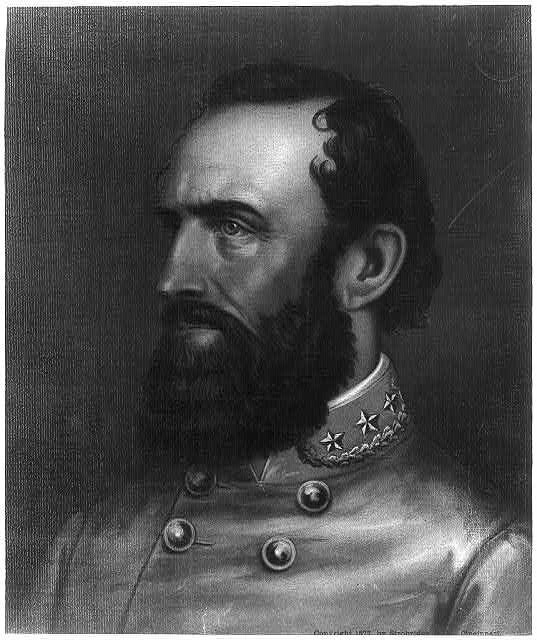
Untitled. Stonewall Jackson (c1877 Oct. 12; LOC: LC-USZ62-17661)

New director of an infant bible society

From The New-York Times August 31, 1862:

GEN. JACKSON.

“Stonewall” JACKSON replied as follows to a notification that he had been made a Life Director of the Confederate States Bible Society:

HEADQUARTERS VALLEY DISTRICT,

VIRGINIA, July 21, 1862.

Rev. E.A. Bolles, General Agent Bible Society of Confederate States of America:

DEAR SIR: I gratefully acknowledge the honor conferred upon me by a portion of God’s people, in constituting me a Li[f]e Director of the Bible Society of the Confederate States of America.

It is a cause in which I feel a deep interest, and my earnest prayer is that God will make this infant Bible Society the means not only of giving His blessed Word to our own people, but of sending it freely to the remotest nations of the earth.

Inclosed is a check for $150. Please acknowledge its reception; and believe me to be, very truly, your friend and brother in Christ, T.J. JACKSON.

______________________________________

Talk about reconstruction. By mid-July 1865 the American Bible Society had appointed Reverend Edwin A. Bolles as its agent in South Carolina and Georgia as it began to resume its work in the South.

Posted in 150 Years Ago This Week, Confederate States of America, Southern Society | Tagged , , , | Leave a comment

The Four Percent

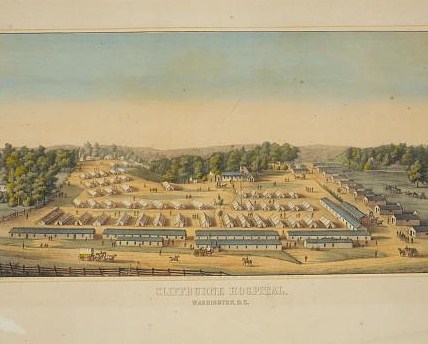
Cliffburne Hospital, Washington, D.C. (Published by Charles Magnus, 12 Frankfort St., N.Y. c1862; LOC: LC-USZC4-13346)

A military hospital at Union capital


Two from Seneca County, New York newspapers in August 1862:

In all the Government hospitals in the United States there are now 28,000 patients, or about four per cent. of the soldiers who have been mustered into the United States service. This is considered a small per centage, and speaks well for the health of the Union armies.

_____________________________________

Dr. WELLES at Home.

Dr. SAMUEL R. WELLES, of Waterloo, returned home on Tuesday morning, receiving a hearty welcome from his fellow-citizens. He was in Richmond nineteen days, and during that time was engaged in taking care of our sick and wounded, who had fallen prisoners during the series of battles before that city. – The Doctor’s friends will be glad to hear that he is in good health, and that his loyalty, and devotion to the Old Flag has suffered no abatement from his brief sojourn in the rebel capitol. He will not again return to the army.

We notice that a public meeting has been called at Columbian Hall in that village for Tuesday evening next, upon which occasion Dr. WELLES will give a narration of his adventures since leaving home.

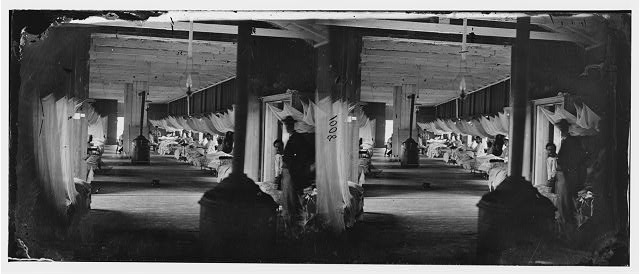
Washington, D.C. Patients in ward of Harewood Hospital; mosquito nets over beds (1864; LOC: LC-DIG-cwpb-00486)

D.C.’s Harewood Hospital 1864

Posted in 150 Years Ago This Month, Military Matters | Tagged , , | Leave a comment

Quota for “imperishable honor”

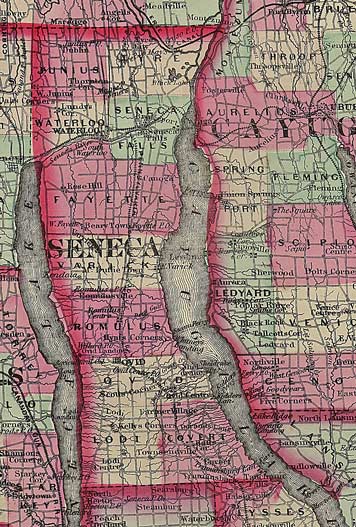
Here’s a local take on the call for Union troops during the summer of 1862. The numbers for the county and its towns are precise. The stigma of possibly needing to resort to a draft to supply the quota is apparent. From a Seneca County, New York newspaper in August 1862:

Seneca-County map 1871

looking for 870

The Quota for our County.

The quota of men to be raised in this County under the two separate calls of the President for 600,000 men is apportioned to the several towns as follows:

Covert, ……. 75     Romulus, ……. 67
Fayette, …..116     Seneca Falls, …184
Junius, ……. 41     Tyre, ………. 44
Lodi, ……… 64     Varick, …….. 59
Ovid, ……… 78     Waterloo, ….. 142

Total, ……………870

About one half of this number has already been raised, and with the proper effort on the part of each individual, the balance can be raised in time to avoid the draft. – Every one has a personal interest in this matter. To raise the requisite number of volunteers for Col. JOHNSON’s regiment is now the duty of all. A proper response to the call of the President would make the draft unnecessary, and reflect imperishable honor on our county. Shall we have the volunteers?

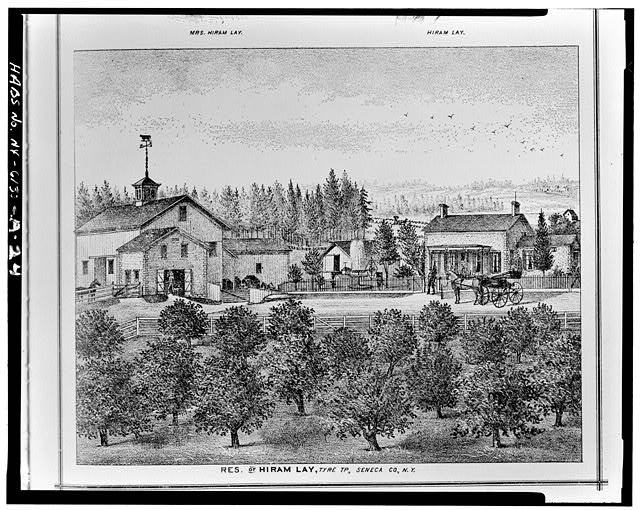
24. Photographic copy of engraving (from History of Seneca County, New York, Everts, Ensign, and Everts, Philadelphia, 1876, p. 128) CARRIAGE HOUSE, BARN, PADDOCK, PIGGERY, AND FARM HOUSE - Hiram Lay Carriage House, Mays Point Road, Tyre, Seneca County, NY (LOC: HABS NY,50-TYRE,1A--24)

A farm in the town of Tyre

I got the image of the map from the Harvest of History

Posted in 150 Years Ago This Month, Northern Society | Tagged , , , , | Leave a comment

Fallen

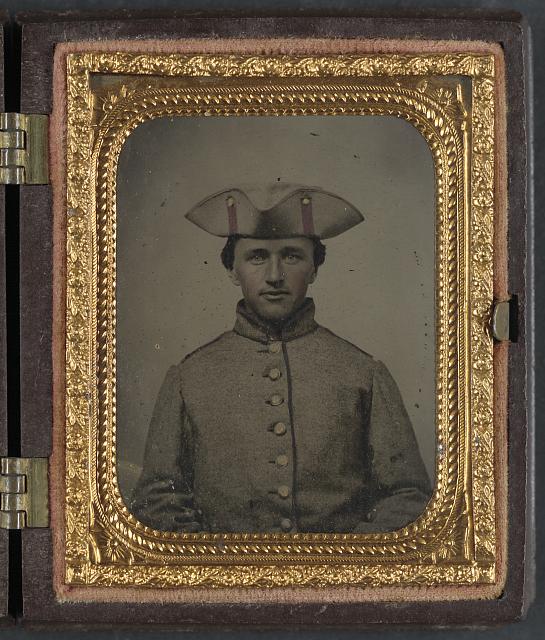
I was drawn to the following photograph because I did not realize that tricorn hats were worn by Civil War soldiers. As it turns out, Private Thomas Green was killed 150 years ago today at the Second Battle of Bull Run.

Private Thomas Green of Co. B, 11th Massachusetts Infantry Regiment in uniform (1861 April 22 by Fancy & Shurtleff; LOC: LC-DIG-ppmsca-33339)

Private Thomas Green from the 11th Massachusetts

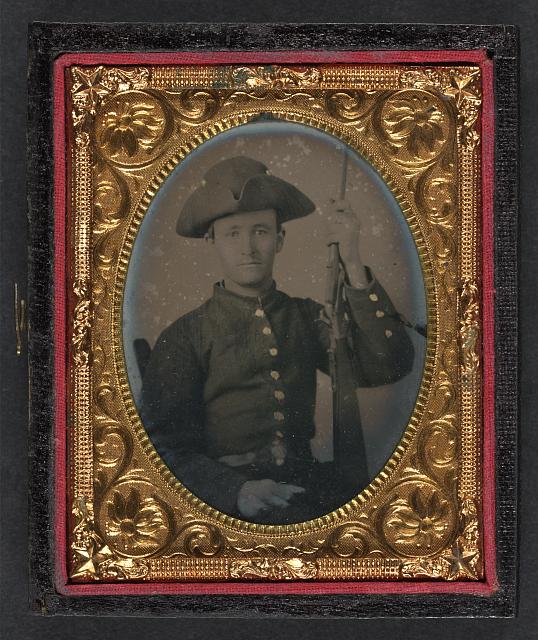
Some Confederates also wore tricorns, which were associated with their country’s first fight for independence:

Unidentified soldier in Confederate shell jacket and tricorn hat with first model Maynard carbine (between 1861 and 1865; LOC: LC-DIG-ppmsca-37183)

unidentified Confederate

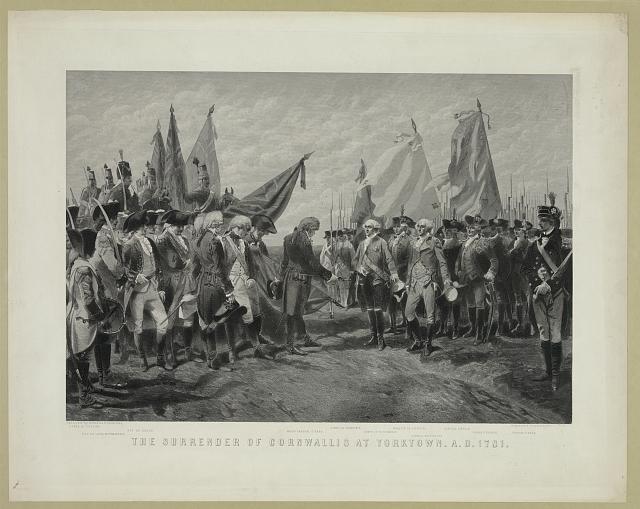
The surrender of Cornwallis at Yorktown A.D. 1781 (ca. 1870; LOC: LC-DIG-pga-01668)

General Washington removes his tricorn as British surrender at Yorktown

Posted in 150 Years Ago This Month, Military Matters | Tagged | Leave a comment