The dangers of annoying speech

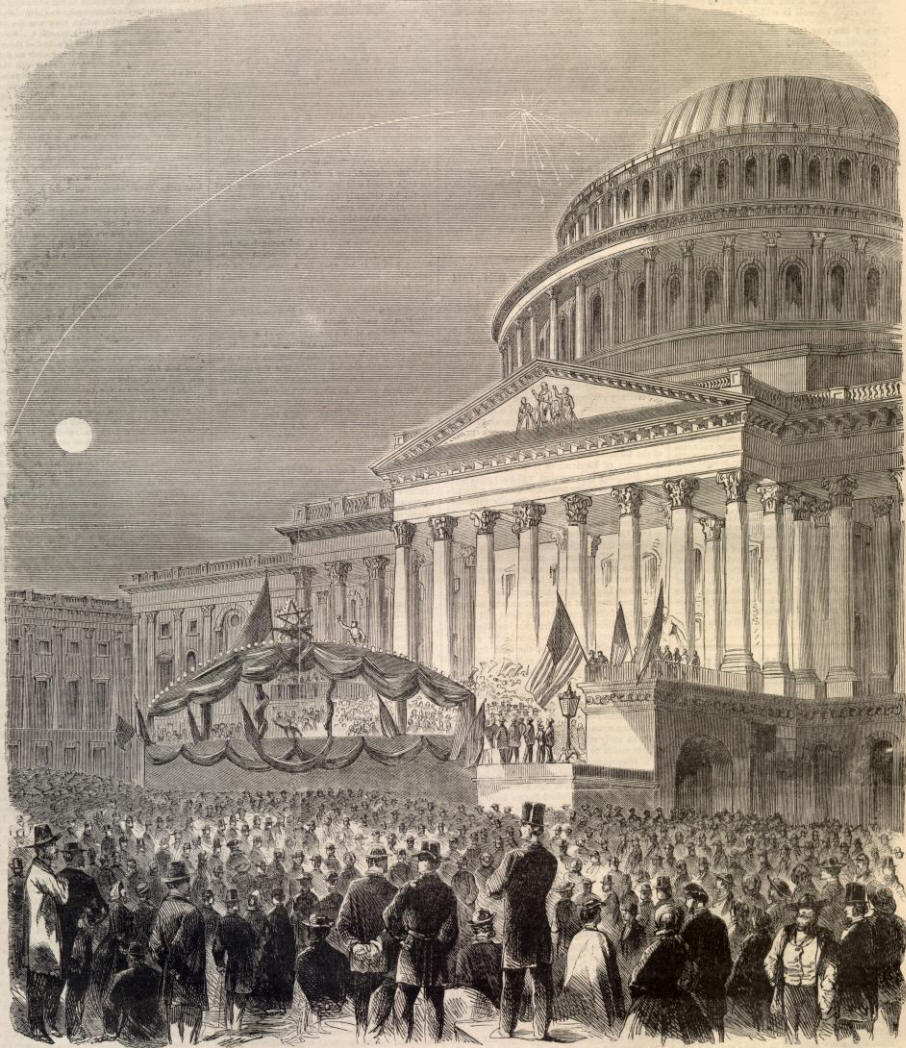
GREAT WAR MEETING. AT WASHINGTON, DISTRICT OF COLUMBIA, AUGUST 6, 1862 (Harper's Weekly August 23, 1862)

nary a dissident among them?

Gutsy Lady

From the Richmond Daily Dispatch August 15, 1862:

Arrest of a female in Washington.

During the progress of the late Union demonstration at Washington, it is stated that–

A lady in the crowd was arrested for “speaking in a manner which annoyed loyal persons around her.” After being taken by the provost guard to the guard-house, and an examination made, she was allowed to go on parole, the testimony to be submitted to the Provost Marshal in the meantime. Her friends, she said, were in Richmond, but her husband in the Federal army.

This image and an article about the pro-war meeting in Washington, D.C. on August 6. 1862 was published in the August 23, 1862 issue of Harper’s Weekly and is hosted at Son of the South. The article mostly reports President Lincoln’s remarks. He basically said that everything was hunky-dory between General McClellan and his administration. An example:

General McClellan’s attitude is such that in the very selfishness of his nature he can not but wish to be successful —and I hope he will—and the Secretary of War is precisely in the same situation.

Posted in 150 Years Ago This Week, Lincoln Administration, Northern Politics During War | Tagged , , , | Leave a comment

Crystal Ball: Rebels Against the Despot

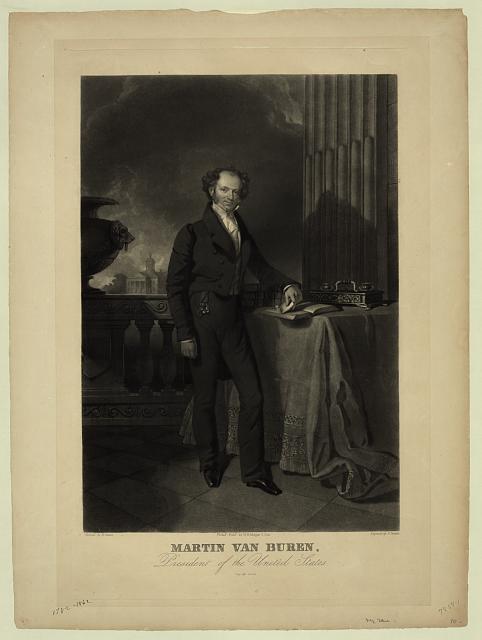
Martin Van Buren, president of the United States (between 1839 and 1841by John Sartain; LOC: LC-DIG-pga-02634)

the Despot

Political Science Fiction?

A prescient book is reprinted and recommended for the well-stocked Confederate bookshelf:

From the Richmond Daily Dispatch August 14, 1862:

A Prophetic book.

Those indefatigable publishers. West & Johnston, have reproduced another book, which is having a great run, and, what is better, deserves to have it, “The [Partisan] Leader,” that celebrated novel published by the late Judge Beverly Tucker in 1826 [1836?] and which so marvelously applies to current events that some persons, not acquainted with its have seemed to suspect that it must have been gotten up since the beginning of the present war. It is a shrilling [thrilling?] and powerful narrative, but most wonderful in its character as “a tale of the future,” new literally fulfilled. The present edition,” is edited by Rev. Thos. A. Ware. For sale by West & Johnson.

The Partisan Leader (1836) was the best-known book by Nathaniel Beverley Tucker (1784-1851). Set in 1849 it depicts Virginia guerrillas fighting against Union forces so that Virginia can join the independent Confederacy already in existence. The Union is led by president-turned-dictator Martin Van Buren.

Posted in 150 Years Ago This Week, Confederate States of America, Southern Society | Tagged , , , , | Leave a comment

Got Doctor’s Note?

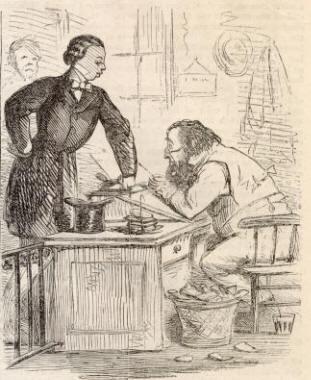
draft cartoon Harper's Weekly August 23, 1862

ABUNDANT DISQUALIFICATION.
“Ugh! How d’you make out that you are exempt, eh?”
“I’m over age, I am a Negro, a Minister, a Cripple, a British Subject, and an Habitual Drunkard.”

Don’t Matter

From the Richmond Daily Dispatch August 12, 1862:

Doctors’ certificates of no avail.

The Albany Evening Journal says:

We are requested by the Surgeon General to state, “that doctors’ certificates of disability will be of no earthly avail except for mere State service.–Under the order from the War Department, everybody within certain ages — without reference to his physical condition — will be subject to draft. If after they have been drafted they are found to be disabled, they will be exempted. People, therefore, who run to their physicians to get certificates of physical unfitness to ‘shoulder arms,’ waste their time and breath in vain.”

The American Civil War does a great job clearing up some of my confusion about Union recruiting in 1862. To supplement the early July call for 300,000 three-year volunteers, the Lincoln administration issued an order on August 4, 1862 that called for a draft of 300,000 more men for nine months. (This order seems to have flowed from a law President Lincoln signed into law on July 17th). You can read the August 4th order at Son of the South. The article at The American Civil War says that the draft law was meant to encourage volunteering. In addition to men trying to get exempted by doctor’s note, other responses to the summer’s demand for more soldiers included taking trips to Canada and self-mutilation. Having a finger cut off or your teeth knocked out would make a (possibly bogus) note unnecessary.

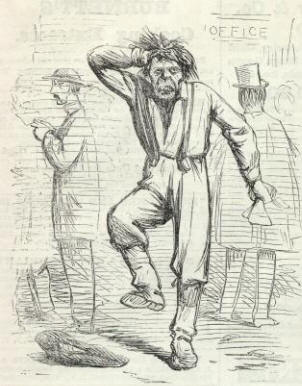
draft cartoon Harper's Weekly August 23, 1862

THE DRAFT. “Och! bald luck to it thin. I’ve got drafted, and niver a cint for it; and tin days ago I might have volunteered, and got me Ninety Dollars just as aisy as snap yer fingers.”

These cartoons from Harper’s Weekly are hosted at Son of the South.

Posted in 150 Years Ago This Week, Lincoln Administration, Northern Society | Tagged , , , | Leave a comment

I made a mistake

I made a couple changes on yesterday’s post because I got the date of the newspaper article wrong. The handwritten date on the clipping at the Seneca Falls library said August 1862, not August 6, so it is very possible that Colonel Segoine thought he was acting within the orders of Secretary Stanton. I am sorry about that.

Posted in Uncategorized | Leave a comment

Popinjay Power

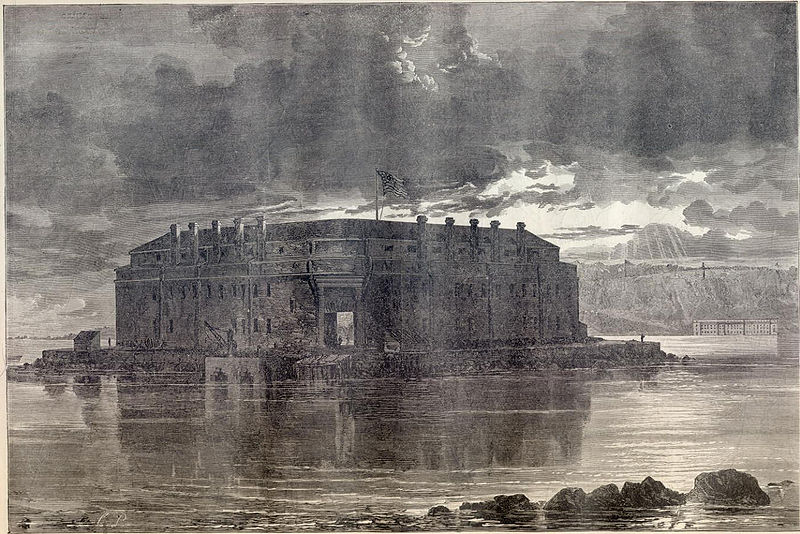
Fort Lafayette (Harper's Weekly Septmber 7, 1861)

Paying a price for political incorrectness in 1862

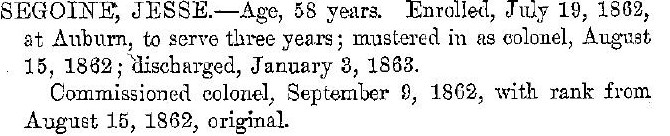
In response to President Lincoln’s July, 1862 call for 300,000 more volunteers, a 58 year old patriot from Auburn, New York recruited a regiment. Here’s an editorial arguing against that patriot’s reported decision (and apparent power) to imprison a citizen who verbally discouraged enlistment.

From a Seneca County, New York newspaper August 1862:

Sent to Fort Lafayette.

We see it stated that a citizen of Troopsville, named WILLIAMS has been arrested by Col. SEGOINE of Auburn, and sent to Fort Lafayette, for trying to prevent a young man from enlisting. There may or may not be any truth in the assertion that WILLIAMS is guilty of the charge of which he stands accused, and for which he has been incarcerated. Suppose he really did advise the young man not to enlist [?] what of it? He is not guilty of any violation of the law in so doing. It may be, and undoubtedly is, wrong and impolitic at this time to discourage enlisting, still it is not unlawful. We would earnestly advise against any such course, believing as we do that it is the duty of all to contribute unsparingly in the defence of the Government in putting down the rebellion. But we do insist that the arrest and imprisonment of any one upon the pretext that they have discouraged enlisting, is a gross and unpardonable outrage.

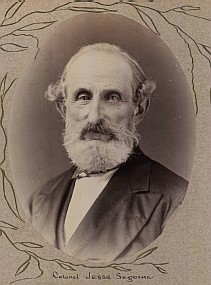
Jesse Segoine (http://localhistory.morrisville.edu/sites/unitinfo/segoine-111.html)

A man with the Union to help preserve

The whole system of arrests on suspicion in loyal states, compares badly with the meanest disposition that ever cursed Naples, or exercised by the Venetian “Council of Ten.” The idea that any popinjay with shoulder straps, at the instance of any canting hypocrite who professes loyalty and chooses to act the part of perjurer, may immure men upon any and every pretext, is monstrous, and should not for a moment be entertained. That the idea is entertained only shows to what condition of vassalage our people have been reduced by the despotism of the party in power. Such arrests, whether eminating from Col. SEGOINE or from any other source, ought to be resisted to the bitter end, let the consequences be what they may.

Colonel Segoine seems to be acting on Secretary of War Stanton’s August 8th orders directing federal marshals and local police to imprison those who discourage volunteer enlistments and suspending the writ of habeas corpus in those cases. Apparently, he somehow got the local or federal authorities involved.

It seems ironic that within a couple months of this story Colonel Segoine and his entire regiment were themselves in a Union prison. The green 111th New York Infantry Regiment was one of several Union regiments captured en masse at the mid-September Battle of Harpers Ferry. The 111th was imprisoned at Camp Douglass in Chicago until exchanged in November 1862. The Historical Marker Database has a good page about the 111th at Harper’s Ferry.

The 111th New York Volunteer Infantry: A Civil War History by Martin W. Husk is a modern (2010) book that was reviewed at Civil War News.

Jesse Segoine left the army in January 1863 because of ill health and age. The photo of him I’m using comes from a page at SUNY Morrisville that indicates Segoine lived to the age of 91.

Colonel Jesse Segoine

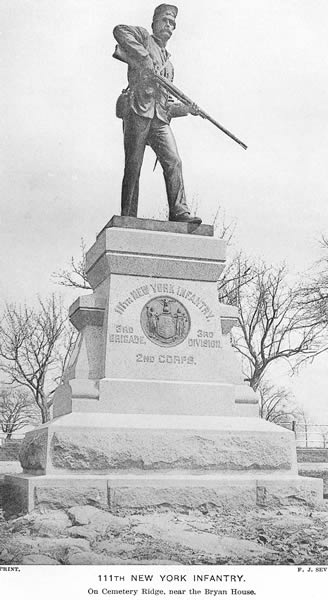
The 111th redeemed itself in July, 1863.

111thInfMonument (http://dmna.ny.gov/historic/reghist/civil/infantry/111thInf/111thInfMonument.htm)

Commemorated at Gettysburg

Posted in 150 Years Ago This Week, Military Matters, Northern Politics During War, Northern Society | Tagged , , , | Leave a comment

“question of pure brute force”

A newspaper from Albany, New York says it’s time for the North to get tougher.

From the Richmond Daily Dispatch August 9, 1862:

A Blast from Seward’s organ — Lesson for the War.

The Albany Evening Journal (Seward’s organ) thinks “the war has been a stern schoolmaster to the people of the loyal States.” It says:

We have learned the folly of underrating our enemies. We have learned that they are equally brave, equally hardy, equally quick-witted, equally endowed with martial qualities with ourselves. We have learned that they are terribly in earnest in their efforts to achieve their ends; that they are desperate in their resolve to divorce themselves from us; that they are determined to resist our efforts to conquer them to the bitter end. We have learned that they are as wary at they are unscrupulous, that they are as cunning as they are depraved, that they are as quick to take advantage of our weakness, our blunders, and our indecision.–We have learned that they are fully our peers in military capacity, and that, as soldiers, they make up in dash what they lack in solid hardihood. We have learned that the very despotism that exists among them gives them a compactness and unity which we do not and cannot possess.

We have learned how little active co-operation we are to expect from the “Union element” of the extreme South. We have learned that [the ele?]ment, even where most prevalent, is timid, torpid, doubtful, negative; that it “needs watchers” to sit by and nurse it; that it is often treacherous and counterfeit; that in many instances it is rather a stumbling block in our way than a prop and ary[?] We have learned that little by little, the poison of secession has spread among the people — that little by little it has possessed and crazed them, until public sentiment has in many sections become almost a unit.

We have learned the folly of expecting sympathy from foreign Governments and foreign peoples. We have learned that we are hated most cordially where we had reason to look for moral support; that we stand to-day apart and isolated, without a friend or backer in any power on earth. We have learned that we must not only fight the good fight unassisted, but under the shadow of the frowns of Europe.

We have learned that slavery, instead of being an element of weakness, is an element of strength to the rebels. We have learned that it is one of their chief props and staffs of support; that the four million of blacks held in bondage are used as effective weapons with which to fight and oppose us. We have learned that we cannot successfully fight the enemy and protect “the institution” at the same time; and that if we ever hope to succeed we must leave the latter to its fate.

We have learned that the contest between us and the Confederates is reduced to a question of pure brute force. We have learned that the arm that can strike hardest, and the foot that can stand firmest, and the brain that can plot spent [best?], will win the day. We have learned that it will no longer do to “play war;” that it will no longer do to administer emollients; that the disease is of that virulent nature that it demands the most active remedies. We have learned that there is middle ground — no half way house — between absolute triumph and absolute vassalage.

Posted in 150 Years Ago This Week, Northern Politics During War, Northern Society | Tagged , | Leave a comment

“casting about” for substitutes

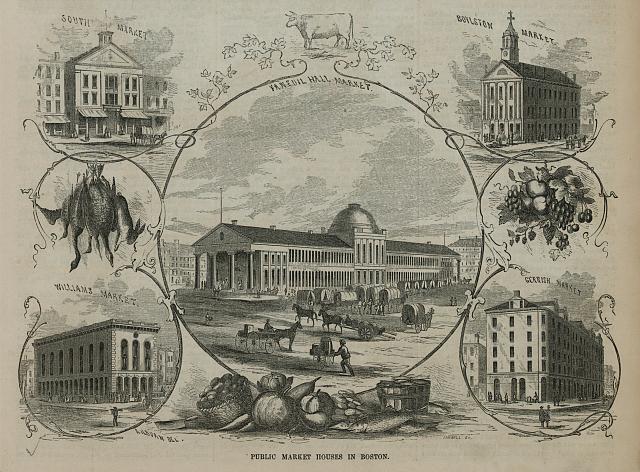
Public market houses in Boston (1855; LOC: LC-DIG-ppmsca-12640)

currently a market for substitutes

An editorial in the Boston Journal via the Richmond Daily Dispatch of August 8, 1862 encourages Boston’s more successful men to volunteer instead of paying for substitutes:

Leading men wanted in the Federal army.

The Bottom [Boston] Journal has an editorial on volunteering which will be very unpalatable to the “solid men” of that city. It thinks the large bounties and subscriptions by citizens haven’t done much for the cause, and says:

It becomes us to inquire whether additional means are not necessary to secure us against the risks of failure. Instead, then, of every man of means and influence in the community casting about to see how he can induce somebody else to go to the war, would it not be advisable to consider, first, why he should not go himself? The army is suffering for want of the leading men of the North in its ranks — recruiting is suffering for the same reason — and so, too, is the public sentiment of the North. We all see it, and why should we not mention it?

By leading men, we simply mean the more favored and influential section of every community — active business men in every vocation, employers, men who rely on their skill and capital rather than manual labor, professional men, &c. These are the men who have the greatest stake in the salvation of their country. They ought to be fully represented in the army. Are they? Do we see them contributing their share — not of money, for they are nobly doing that, but of men — to the new enlistments? We fear not; and yet, what an impulse they might give, far beyond the most liberal bounties yet offered ! Suppose that out of this great city only ten or twelve of such young or middle-aged men as we have indicated should to- day offer themselves to the ranks, trusting to their own buoyant merit to settle their position hereafter, would not hundreds be brought ought by their example? And in what other way could they do so much good, even if Providence should protract their lives to the utmost limits, amid all the conceivable privileges won by the bravery and the blood of others? How, also, could they better build up sterling characters for themselves, or found more precious attachment in the hearts that are near and dear to them?

We are told that our women are keeping back volunteers, and we are pointed to the devotion, however mistaken, of the women of the South,–The trouble is not here. Woman is ever but the depository and exponent of the dominant feeling of the community — and man is the pioneer. If he has not entered into the field of active patriotism, she will linger. Have we, then, who pretend to represent the intelligence and the activity of the North, have we done our duty in this respect? Have we, in our daily lives, in the presence of our families and friends, given the impression that our love of country is real, vital, something for which we are willing to live or die, as the good of the country shall require? We feel profoundly thankful that so goodly a representation of the talent and influence and moral worth of the North is now in the loyal army — but we want more. Of all times, too, we want it now.

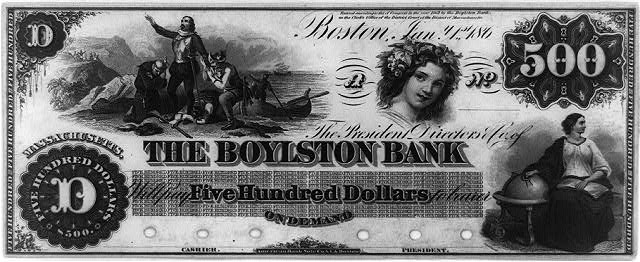
Banknote for $500 from the Boylston Bank, Boston, Massachusetts (c1862; LOC: LC-USZ62-94196 )

good example talks louder?

Posted in 150 Years Ago This Week, Military Matters, Northern Society | Tagged , , | Leave a comment

Sent express to Rip Raps

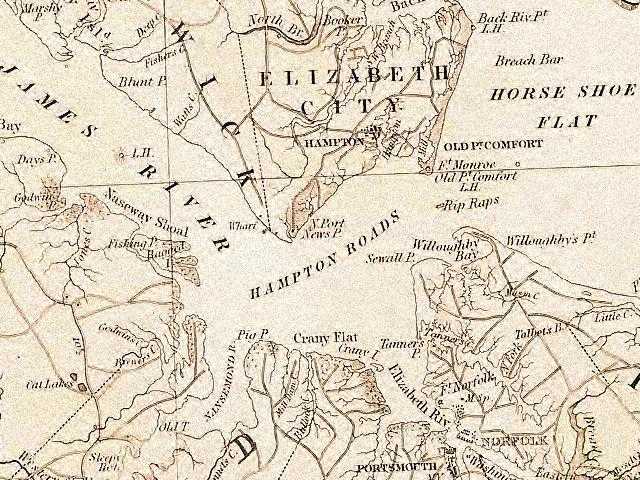
Hampton Roads, Virginia - from official state map published in 1859

Rip Raps in the channel

From the Richmond Daily Dispatch August 7, 1862:

In the hands of the Lincolnites.

–James Clarke, the money clerk of the Southern Express Company, started from Richmond several weeks since, to visit his parents in Baltimore. He was met on his arrival and placed in jail, and was informed by the officer making the arrest that he had been expecting him to arrive for two weeks before that. Mr. Clarke is now at the Rip Raps.

Rip Raps is an artificial island built in 1817 across the channel from Old Point Comfort. Fort Calhoun (name changed to Fort Wool during the Civil War) was built on the island to complement Fort Monroe (on Old Point Comfort) in defending Hampton Roads.It also housed prisoners.

The Southern Express Company took over from The Adams Express Company on May 1, 1861.

FORT WOOL (RIP RAPS), HAMPTON ROADS.-SKETCHED BY JOHN EVERDING (Harper's Weekly December 17, 1864

Fort Wool 1864

The image of Fort Wool from the December 17, 1862 issue of Harper’s Weekly is hosted at Son of the South

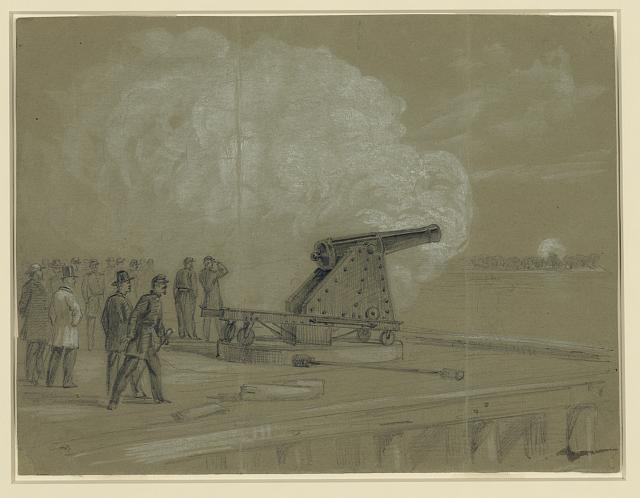
Scene on the dock at the Rip Raps. Testing the Sawyer gun and projectile, a shell bursting on the rebel batteries at Sewells Point (1861 August? by Alfred R. Waud; LOC: LC-DIG-ppmsca-21206)

At Rip Raps 1861

Posted in 150 Years Ago This Week, Military Matters | Tagged , , , | Leave a comment

Counterfeit

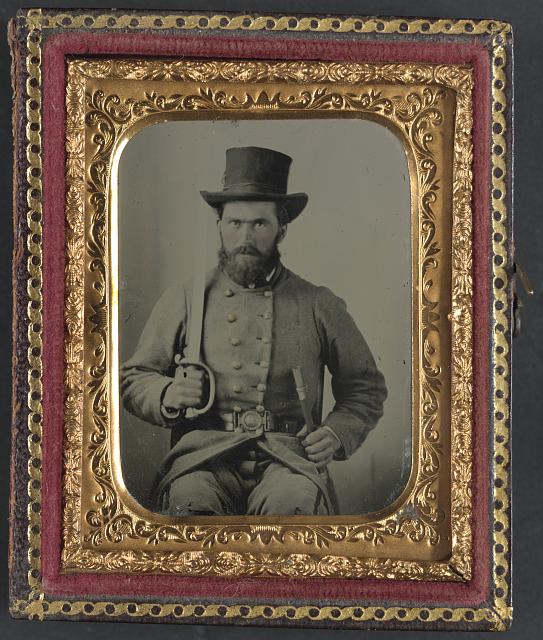
Private Luther Hart Clapp of Company C, 37th Virginia Infantry Regiment, in uniform and two-piece Virginia state seal buckle with Boyle and Gamble sword (between 1861 and 1862; LOC: LC-DIG-ppmsca-32598)

Authentic member of 37th Virginia

Beet vendors beware

Before the Civil War banks could issue their own notes redeemable in specie. The National Banking Acts of 1863 and 1864 in the North changed that. One of the legislation’s goals was to create a national, less able-to-be counterfeited currency.

Confederate national currency was first issued in April 1861, but, as can be seen, people in Lynchburg were still taking notes issued by individual banks 150 years ago this summer.

From the Richmond Daily Dispatch August 2, 1862:

Prepared for swindling.

–Two men named John Jefferson and James Coley, who say they are from Washington county, and members of the 37th Va. regiment, were arrested yesterday with a large amount of bogus shinplasters in their possession, which they were endeavoring to pass. They had two sets of notes, one dated Petersburg, Va., signed “Jefferson & Daniel,” promising to pay bearer in currant funds two dollars, when presented in sums of ten dollars and another dated Wytheville, signed “Banking Company,” of the denomination of one and two dollars. They succeeded in passing six dollars of the Petersburg issue at the Cabell House, and one dollar at the Norvell House, and when arrested, were attempting to pass upon a negro market man a two dollar note in the payment for a bunch of beets, for which the negro would have given them good money in change. These notes were dated Petersburg and Wytheville, July 21, but were printed in this city. A search of their persons and baggage showed the fact that they were going into the swindling operation upon an extensive scale, having about $2,000 of the bogus money in their possession. They were committed to jail for trial this morning.–Lynchburg (Va.) Republican, 23rd.

From the Richmond Daily Dispatch August 1, 1862:

In the Wrong clothes.

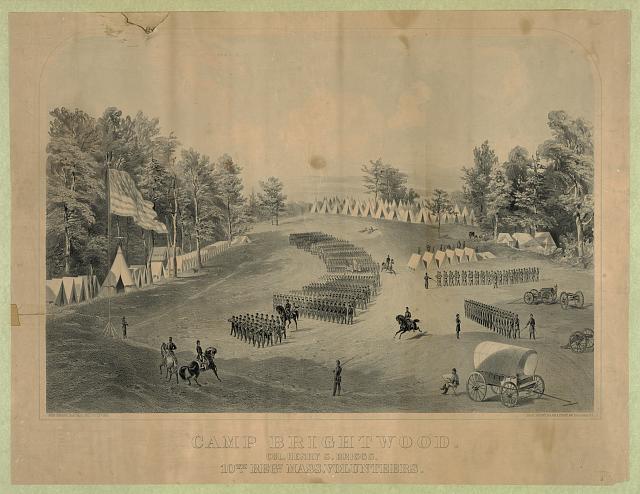
–Detective J. W. Goodrick arrested yesterday, on Main street, a man clothed in a complete Yankee uniform, the knapsack denoting the fact that the owner belonged to the “10th Mass. Vols.” On being accosted, the man pulled out a passport, by which it appeared he was a member of a Georgia regiment, in search of the Transportation office. He said he had captured the clothes in battle, and being better than his own, he had put them on. The officer let him go, but advised him to procure another suit as soon as possible.

After a shoddy start the North’s manufacturing prowess appears to be taking hold (and the North’s blockade of the South is inhibiting the South’s ability to trade for the goods it needs).

Camp Brightwood. Col. Henry S. Briggs. 10th Regt. Mass. Volunteers (no date recorded on shelflist card; LOC: LC-DIG-pga-02609)

Authentic 10th Mass. before departing for Peninsula

The 37th Virginia Volunteers Infantry Regiment served the CSA from July 1861 until the end of the war: “Two officers and 39 men surrendered in Appomattox in April, 1865.” Desertions were probably part of the loss. Looking through the regiment’s roster I noticed a couple possibilities for James Coley, but I did not see any Jeffersons.

You can read about the 10th Massachusetts Volunteer Infantry, which served three years and was mustered out after the Overland Campaign.

Posted in 150 Years Ago This Week, Confederate States of America, Southern Society | Tagged , , , , , | Leave a comment

“grayish beard … all over his face”

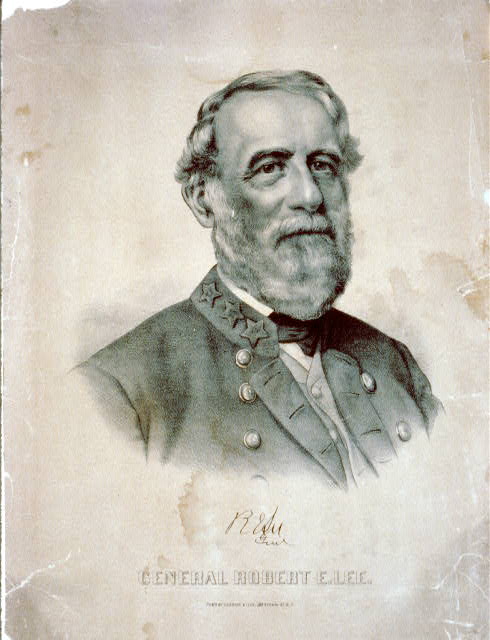
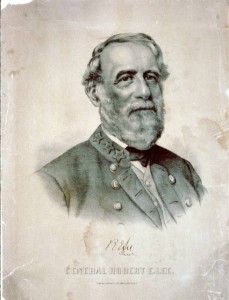
General Robert E. Lee (Currier & Ives, (between 1860 and 1870); LOC: LC-USZC2-2409)

‘self-possessed, controlling and earnest being’ – with or without the new whiskers

Sketching some CSA leaders

From the Richmond Daily Dispatch August 1, 1862:

Camp Notes.

–A letter from near Richmond to a Southern paper says:

We saw Gen. Lee on the field, the 27th June. We have hitherto spoken of the personnel of the General. He seems a little older than when we saw him at Coosawhatchia. Then he had a moustache alone; now he has, in addition, grayish beard a month old, all over his face. Seated on a log in a slight shade, having a map upon his knees, plainly dressed in uniform, with only one Aid at hand, he looked the same self-possessed, controlling and earnest being we noted before — great then in the execution of his masterly and gigantic scheme of the greatest battle of modern times.

We saw Stonewall Jackson during the same day. He is, perhaps, forty years old, six feet high, medium size, and somewhat angular in person. Has yellowish grey eyes, a Roman nose, sharp; a thin, forward chin, angular brow, a close mouth, and light brown hair. Has a sullen, unsocial, and to some extent, unhappy look. He is impassive, silent, emphatic, and we venture, obstinate. His dress is official, but very plain, his cap-front resting nearly on his nose. His tall horse diminishes the effect of his size, so that when mounted he appears less in person than he really is.
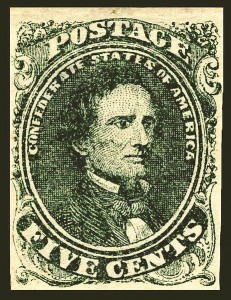
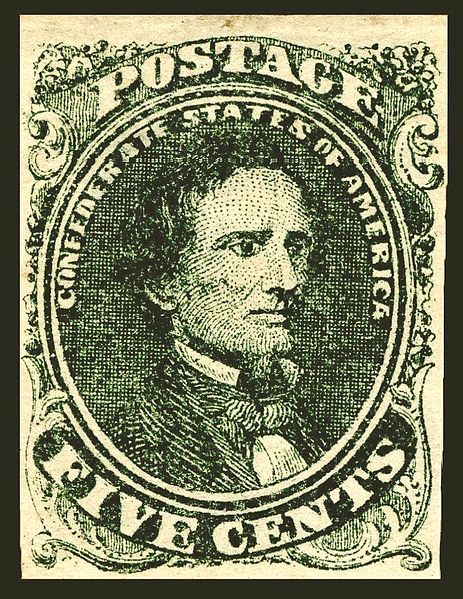
First Confederate Postage stamp, Jefferson Davis, 1861 issue, 5c, green (Smithsonian national Postal Museum)

dead ringer for Jeff. Davis

President Davis was also on the field. His plain suit of brown and citizen’s outfit generally screened him from much observation. The postage stamps give a very good idea of his face.

Gen. Longstreet, while on a march one day, inquired of us the whereabouts of our Division General; and, while we were answering his inquiries, we had an opportunity of observing one of the handsomest Generals in the Confederate army.–His full American whiskers, long, brown, and beat; his steady, genial, and earnest eye; his fine and full forehead; his Gr[eco] Roman nose, and regular mouth; all these present a lost ensemble rarely equalled in manly symmetry and chastened energy.

Gen. Magruder is one of the hardest men to describe that we have encountered lately. He impresses one as gruff, abrupt, in a way jocular, decidedly headstrong, rudely kind, and brusque. We saw him first on his way to superintend the storming of the fifty-gun battery on the Malvern Hill — the strongest position on this peninsula.

Battle of Malvern hills fou[ght] on Tuesday July 1st in which the federal forces gained a complete victory over the rebel army, led by Genl's Magruder and Jackson (1862 July 1 by Alfred R. Waud; LOC: LC-DIG-ppmsca-22451)

Battle of Malvern Hill – where Magruder attacked
Posted in 150 Years Ago This Week, Confederate States of America, Military Matters | Tagged , , , , , | Leave a comment