From lager beer and dog-fights …

To oppressing the good people of Norfolk

I really can’t believe everything I read in the newspaper anymore: apparently there was not as much Union sentiment in Norfolk as a previous article indicated.

From the Richmond Daily Dispatch July 31, 1862:

From Norfolk.

We have advices from Norfolk as late as Saturday last, but the general news possesses very little interest to the public. A considerable portion of Burnside’s force was quartered in the neighborhood, and officers were frequently heard to say that they were going to join McClellan. The negroes are rapidly disappearing, and the inhabitants are in many ways made to experience the terrors of despotism under the name of “liberty.” They still remain firm in their attachment to the South, and some who were originally inclined to Unionism are thoroughly disgusted with the Abolition Government. A few citizens in the vicinity have taken the oath, in order to secure the privilege of selling their farm and garden products in the market, Tea and salt can only be purchased in very small quantities, the Federal authorities being apprehensive that these articles will be smuggled into the Confederate lines. The Provost Marshal is a German named Christensen, who formerly kept a lager beer saloon and dog-fighting establishment in New York. He omits no opportunity of oppressing the people. A party of soldiers were lately passing a house where a young lady displayed an apron made of the Confederate colors, and the Valliant warriors at once threatened to fire into the dwelling unless the offensive garment was surrendered. The lady had no alternative but to throw it from a window, and they bore it off with loud shouts of triumph. Our readers will remember that we recently published, from a Yankee newspaper, and account of a “gross outrage” perpetrated upon an imported newsboy, by a young gentleman named G. R. I. Taney.–This “outrage” was an exceedingly trivial affair, but Mr. Taney was arrested by the provost guard and thrown into jail, the authorities refusing to admit him to bail, though it was offered by prominent citizens. They finally offered him the alternative of taking the oath or going to the Rip Rap.’ and he asked a week to consider the proposition.–Being then put upon his parole, he succeeded in escaping from the city, and arrived in Richmond yesterday morning. The provost guard is no better than a gang of thieves; and though Gen. Viele, the military governor, is said to possess some of the instincts of a gentleman, Christensen and his men are allowed to go on pretty much as they please,–The people of Norfolk would welcome the protection of the Confederate Government with unbounded joy.

When General Wool moved from the Norfolk area to take command of the Department of the East in January 1863 he issued orders that included naming C.T. Christensen as an Aide-de-Camp and Acting Assistant Adjutant-General. The orders also included rounding up deserters. By March 1865 C.T. Christensen was issuing orders as Assistant Adjutant-General for General Canby in New Orleans. One of the orders prohibited selling intoxicating liquors (including lager) to Union troops.
Posted in 150 Years Ago This Week, Confederate States of America, Military Matters, Southern Society | Tagged , , | Leave a comment

“bodies … become offensive”

Wait for cold weather, please

From the Richmond Daily Dispatch July 31, 1862:

Disinterment of dead bodies.

We daily observe at the railway stations boxes containing the bodies of deceased soldiers, which have been disinterred by their friends, under the belief that they can be sent off without delay, either by mail train or express. This, however, is an error. Freight trains only carry them, and the detention frequently causes the bodies to become offensive, when their immediate burial by the way side is a matter of necessity. It would be better to postpone disinterment until cold weather, when it can be accomplished with less trouble and more certainty of getting the remains of the departed to their destination. Metallic coffins are difficult to obtain, and wooden ones can only be procured by the payment of a large sum. In these the dead bodies are packed with sawdust, and in warm weather their transportation to a distant point is uncertain, if not absolutely impossible.

Apparently some people were able to get corpses home, even during the busy and hot summer.

From the same issue of the Dispatch:

A day of Gloom.

–The bodies of J. Lawrence Meem, Adjutant of General Garland’s Brigade, of privates Samuel B. Tyree, E. H. Elliot, Charles Terry, J. A. Reid, and A. W. Cross, all slain in the battle of Seven Pines, were brought to this city last night. The remains of the first named four will be interred in the Presbyterian cemetery. The bodies of Messrs. Cross and Reid will be interred as spring Hill cemetery to-morrow afternoon.–Lynchburg Virginian.

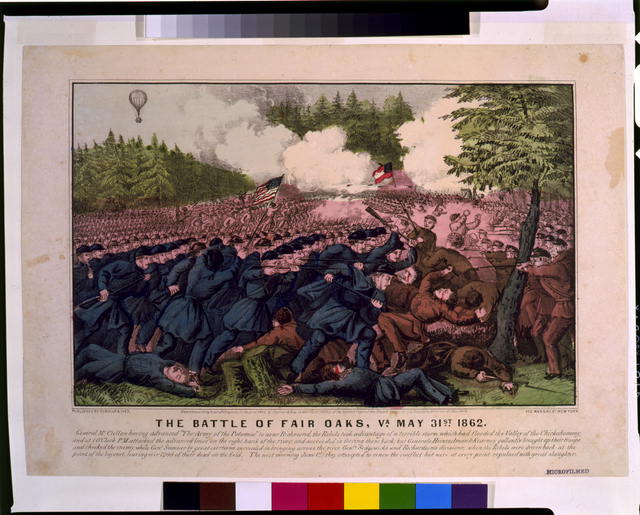
The Battle of Fair Oaks, Va. May 31st, 1862 (Published by Currier & Ives, c1862; LOC: LC-USZC4-2725)

Fair Oaks (Seven Pines)

Posted in 150 Years Ago This Week, Confederate States of America, Southern Society | Tagged | Leave a comment

TYPO from Bachelor’s Creek

Union “soldier mob” demolishes rebel shooter buildings; detachment sent to clean out guerrilla band.

The 19th New York Volunteer Infantry completed its conversion to the 3rd New York Artillery and arrived in North Carolina in the spring of 1862. Here’s a letter home from a member of Battery (née Company) C.

From a Seneca County, New York newspaper in 1862:

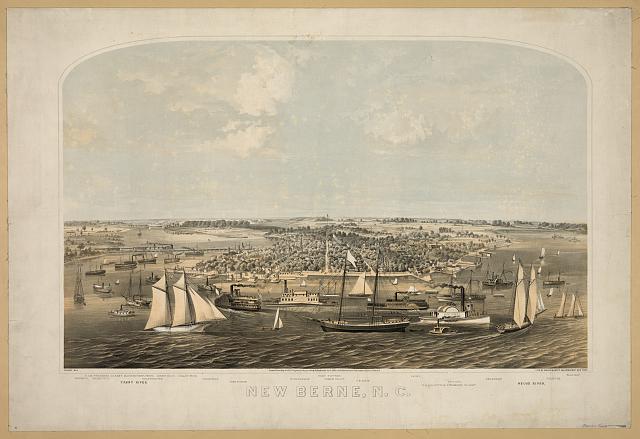
New Berne, N.C. (no date recorded on shelflist card; LOC: LC-DIG-pga-02087)

“beautiful appearance” … if you ignore the ruins of war

From North Carolina.

BACHELOR’S CREEK, N.C.

July, 30, 1862.

During the past week many incidents both pleasant and exciting, have occurred to break the dull monotony of camp life. – Newbern presents a beautiful appearance with her innumerable shade trees and beautiful gardens; and, indeed, were it not for the ugly ruins and war like defences of the place one would hardly know that the devastations of war had been visited upon her.

Citizens are every day returning – many of whom I fear without the most honorable intentions, as late developments will show.

A few nights since, the guard stationed in that position of the city most inhabited by fisherman and the poorer classes, was fired upon and severely wounded. The house was immediately surrounded, and its inmates, (seven men,) arrested and lodged in jail. The following day a strict search was instituted, which resulted in finding in it, and the adjoining houses, a quantity of fire arms, and a keg of powder. The buildings were soon demolished by the soldier mob. Since then all suspicious houses, have been searched, and over one hundred different styles of fire arms, found. One of the men arrested, acknowledges he fired the shot and has been recognized as a paroled soldier taken at Roanoke. Rumor says he is to be hung.

Gen. John G. Foster, U.S.A. Capt U.S. Engineers in 1861(between 1860 and 1870; LOC: LC-DIG-cwpb-06721)

clean them out

For a long time a roving band of guerrillas have been prowling about the country in the vicinity of our camp. (Bachelor’s Creek, seven miles west of Newbern, on the lines of the A.A.N.C.R.R.) and committing lawless depredations on the property of men known Union proclivities. The commanding officer of the post, after making several applications to Gen. FOSTER, received an order to “clean them out.” On Sunday after noon it was rumored around the camp, that a scouting expedition was on foot, and great was the speculation as to when it was to start. But we were not kept long in suspense; soon the order came to be in readiness to march the next morning at 3 o’clock, which time found us a mile on our road. Our force was about 70 men, all told and consisted of 15 3d N.Y. Cavalry; 1st section of Battery C. 3d N.Y. Artillery, and detachments of Co. D and H. of the 27th Mass. taking an N.-W. course we struck the road running from Newbern to Kingston, commonly called the Neuse, about 4 o’clock, and six miles from camp. We were now in the vicinity of the “Rebs,” and much caution was necessary. We had not proceeded far, when turning a short bend in the road, we came suddenly upon the post of the outer piquet. He was a brave fellow, and very cooly aimed his carbine at the Cavalry Sergeant, but the cap snapped without igniting the powder; putting on a fresh cap, he tried again, but with no better success – throwing away his carbine he fled for the woods.The house near by – the reported headquarters of the band – was surrounded and searched, but the bird had flown. An old man, however, was taken, who informed us that at the house of one French, a notorious rebel, two miles further up the road, were quartered a detachment of the 2d N.C. Cavalry. Thither we bent our steps, but had not gone far, when we ran upon another nest of the day-farmers and midnight marauders. From very superior use of their limbs they escaped, but not until a volley had been fire after them. Again we took up our lines of march at a rapid rout step, until within one hundred rods of the house, when Lieut. RANDOLPH, commanding the artillerymen, (then acting as infantry,) proceeded to the rear, while the cavalry and remaining infantry took the front.The attack was admirably planned, and reflects credit upon the officer in command. I venture to say men were never more surprised then were they when our cavalry and infantry came down upon them with one of those “awful yells,” at a double quick. A few rods in rear of house grew a thick clump of bushes, into which several of them rushed. But their movements had been anticipated and they soon found themselves subject to the tender mercies of the “jayhawkers,” better known as the “old nineteenth.” Others seeing this dodge was played out, made for the woods; but as a large field was to be crossed, many of them were run down by our cavalry, while the most obstinate ones were either killed, or wounded, but few escaping unharmed. The rout was complete as appearances at the house would indicate. – Clothing, or rather rags, were thrown hither and thither in promiscuous confusion; some had left their breakfast (hoecake and bacon,) half eaten, while others were preparing it. The morning work resulted nearly as follows: killed, 2; wounded, 1; captured, 12; others that were known to be wounded escaped. Their whole force consisted of twenty men and a Lieutenant. – the horses secured, twenty in number, were all fine animals and well trained to the saddle. They were armed principally with the old breech loading carbines, horse pistols and rusty sabres, all of which were secured by the boys as trophies. The buildings were all fired, and we were in camp before 10 o’clock, having traveled a distance of nearly 18 miles. This is what I call doing a day’s work before breakfast.

The prisoners taken are withal, well informed men, and expressed no little surprise at the kind treatment they received at our hands. They are now in jail, and have, I understand, declined taking the oath of allegiance.

TYPO.

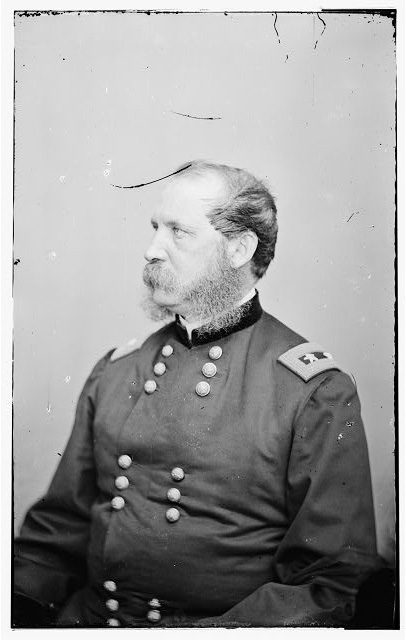
John Gray Foster assumed command of the Department of North Carolina on July 6, 1862 after General Burnside transferred to Virginia.

Posted in 150 Years Ago This Week, Military Matters | Tagged , , , , , , | Leave a comment

Hanging Professor

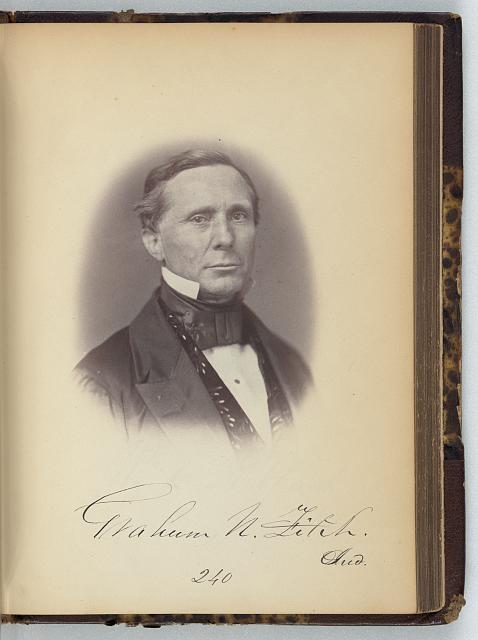
Graham N. Fitch, Senator from Indiana, Thirty-fifth Congress, half-length portrait (1859; LOC: LC-DIG-ppmsca-26779)

guerrilla deterrent?

From the Richmond Daily Dispatch July 28, 1862:

Guerrillas hung

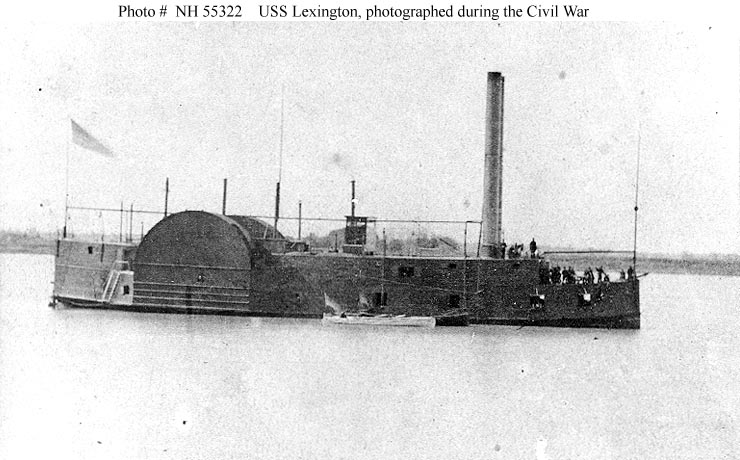
–General Fitch, late Senator from Indian[a], now leading a brigade at St. Charles, in Arkansas, has just hung two guerrillas, in pursuance of pledges to do so in case of the murder of any of his men. The first engineer of the Lexington was shot while sitting at a port- hole–General [F]itch immediately took two of the citizens of St. Charles and hung them in a public place in the town.

Graham Newell Fitch was doctor and professor of anatomy. He represented Indiana in the U.S. House and Senate and raised the 46th Regiment Indiana Infantry after the war started. The Federals occupied St Charles after the June 17th battle.

USS Lexington (1861-1865)  Photographed on the Western Rivers during the Civil War.

Dangerous port hole

Posted in 150 Years Ago This Week, Military Matters | Tagged , , , , , | Leave a comment

Methodist Parson Takes Command

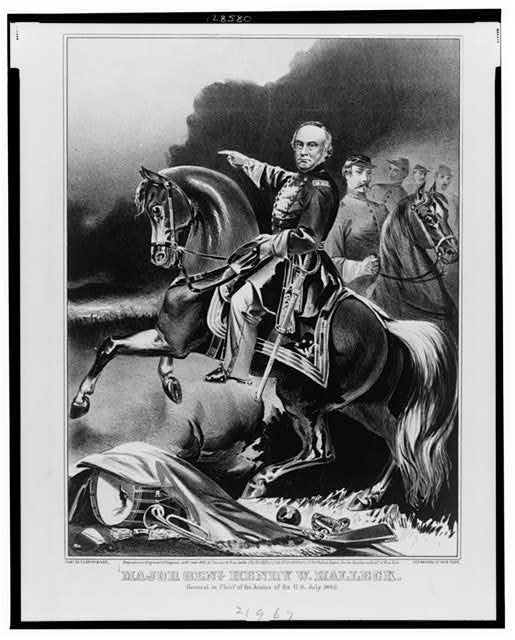
Major Genl. Henry W. Halleck General in chief of the armies of the U.S. July 1862. (Pubd. by Currier & Ives, c1862; LOC: LC-USZ62-128580)

prominent Wesleyan character

150 years ago this week the Dispatch printed a bio of the new Union general-in-chief.

From the Richmond Daily Dispatch July 28, 1862:

The New Federal Commander-in-chief.

Henry Wager Halleck is one the four Major-Generals who were first appointed in 1861 to that rank in the United States army. Gen. Halleck is about forty-two years of age, and was born in Weston, Oneida county, N. Y., where his grand-father–one hundred years old, and hale and hearty — lately resided. General Halleck’s father was the Hon. Joseph Halleck, who died about three years since. General Halleck entered the Military Academy as a West Point cadet in 1835, stood third in the class, and was brevetted second lieutenant of engineers July 1, 1839. He was Acting Assistant Professor of Engineering at the Military Academy from July, 1839, to June, 1840. In 1811 he was the author of a military work on “Bitumen and it’s Uses,” &c. In January, 1845, he was appointed first lieutenant, and during the year he was selected by the Committee of the Lowell Institute, at Boston, to deliver one of the regular course of lectures, the subject being “Military Science and Art.” These lectures he compiled in a neat volume during the following year, adding thereto a lengthy introduction on the “Justifiableness of War.” The work contains much valuable elementary instruction, as well as abundance of historical illustration, and is written with ability. In 1847 he was brevetted Captain for gallant conduct in affairs with the enemy on the 19th and 20th days of November, 1847, and for meritorious service in California. He was Secretary of State of the Territory of California under the military governments of Generals Kearney, Mason, and Riley, from 1847 to the end of 1849. He was chief of the staff of Commodore Shubrick, in the naval and military operations on the Pacific coast in 1847 and 1848, and was a member of the convention in 1849 to form, and of the committee to draft, the Constitution of the State of California. In July, 1853, he was appointed Captain of engineers, and resigned August 1, 1834.

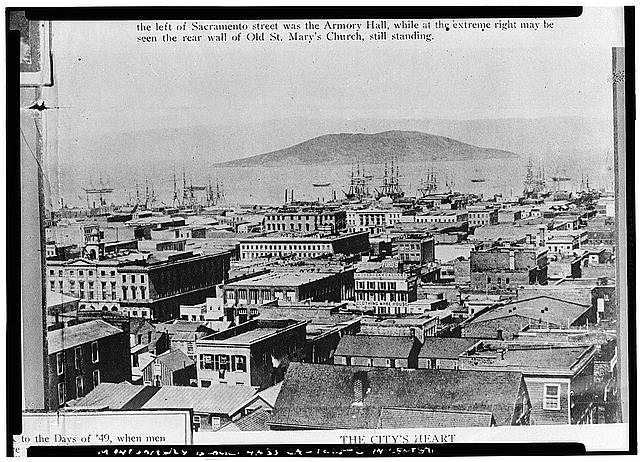
1. San Francisco Chronicle Library Photo Ca. 1860 Rephoto 1938 GENERAL VIEW - MONTGOMERY BLOCK, CENTER - Montgomery Block, 28 Montgomery Street, San Francisco, San Francisco County, CA (LOC: HABS CAL,38-SANFRA,6--1)

San Francisco view, about 1860

Gen. Halleck was appointed a Major General in the United States Army in August last, at the instance of Lieut.-Gen. Scott, then about to retire from active service. His commission bears date the 19th of August, 1861. At the time of his appointment, Gen. Halleck was the leading member of a most prominent law firm in San Francisco.

Major Gen. Halleck, in personal appearance, is below the medium height, straight, active, and well formed and has a brisk, energetic gait, significant of his firm and decisive character. His nose is delicate and well formed, his forehead ample, and his mouth by no means devoid of humor. His eye is of a hazel color, clear as a morning star, and of intense brilliancy. He bears a most striking resemblance to some oleaginous Methodist parson dressed in regimentals, with a wide, stiff-rimmed black felt hat sticking on the back of his head, at an acute angle with the ground. His demeanor in front of his tent is very simple and business-like.–No pomp, no unusual ceremony, and no lack of order. When on horseback his Wesleyan character is more and more prominent. He neither looks like a soldier, rides like one, nor does he carry the state of a Major General in the field, but is the impersonation of the man of peace.

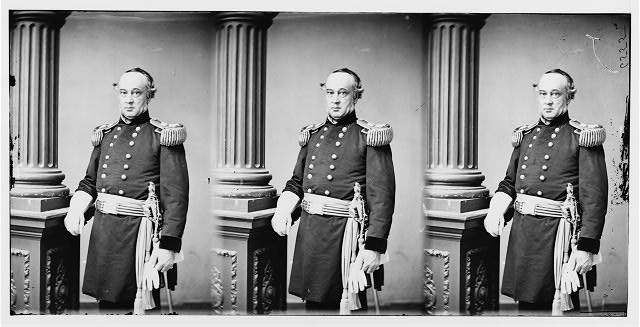
Gen. Henry W. Halleck (between 1860 and 1870; LOC: LC-DIG-cwpb-04718)

impersonating a man of peace?

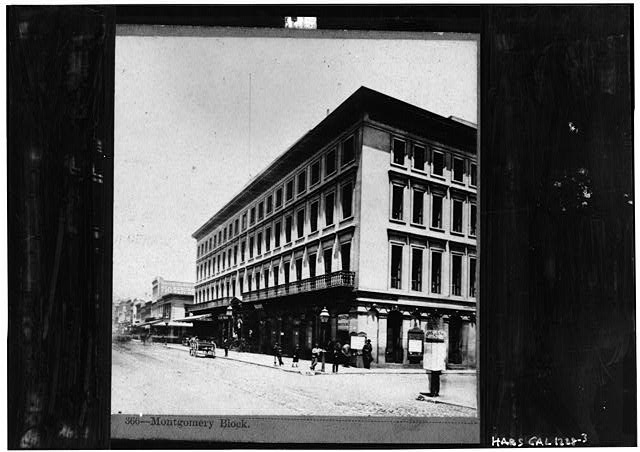
Henry Wager Halleck was trained at West Point as an engineer had a very accomplished career. In 1853 he built the Montgomery Block, San Francisco’s first fireproof and earthquake resistant building.

3. Historic American Buildings Survey Muybridge Photo Ca. 1860 S.F. College for Women, Collection Rephoto 1938 VIEW FROM SOUTHWEST - Montgomery Block, 28 Montgomery Street, San Francisco, San Francisco County, CA (LOC: HABS CAL,38-SANFRA,6--3)

The block that Halleck built

Posted in 150 Years Ago This Week, Military Matters | Tagged , | Leave a comment

Government Stimulus

Talk about Big Sibling … here a newspaper seems to have a real good idea of exactly how much money is being sent home by local soldiers in the 33rd New York Volunteers.

From a Seneca Falls, New York newspaper in July 1862:

Money from the Thirty-Third.

During the past week there has been a large amount of money received in this village from the volunteers in the Thirty-Third. Capt. GUION’S Company has sent home over $1700, and Capt. MCGRAW’S Company an equal if not larger amount. The Regiment was paid off to the first of May.

The Civil War created economic winners and losers. In Seneca Falls the Knitting Mills Company was going full bore thanks to government contracts to supply socks for the troops. Overall things weren’t going that great. According to a local directory published about March 1862 (page 29): “Manufacturing and business is checked for the time being, in consequence of the terrible Civil War which is now devastating a portion of our country; yet the recent victories of the Federal Army encourage us with the hope of a return of that Peace and Prosperity which smiled so auspiciously upon us in days gone by.” The remittances from the soldiers undoubtedly helped.

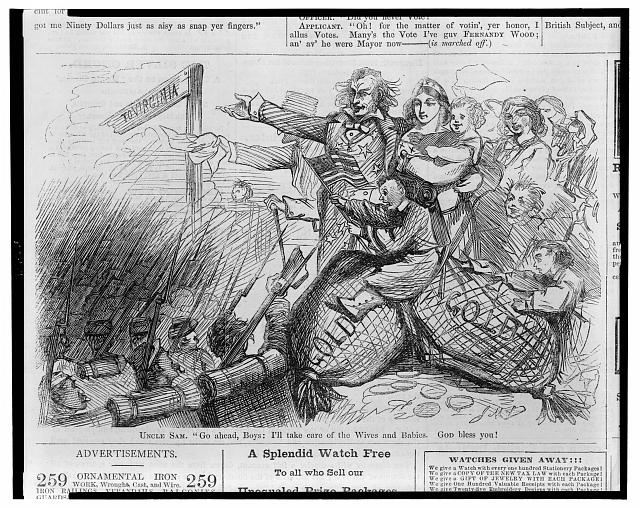
Uncle Sam giveth and Uncle Sam taketh away.

Uncle Sam, "Go ahead, boys, I'll take care of the wives and babies - God bless you!" (Harper's weekly, v. 6, no. 296 (1862 August 23), p. 544; LOC: LC-USZ62-134228)

Leave it to Uncle

Posted in 150 Years Ago This Week, Military Matters, Northern Society | Tagged , , , | Leave a comment

Death of a Free Soiler

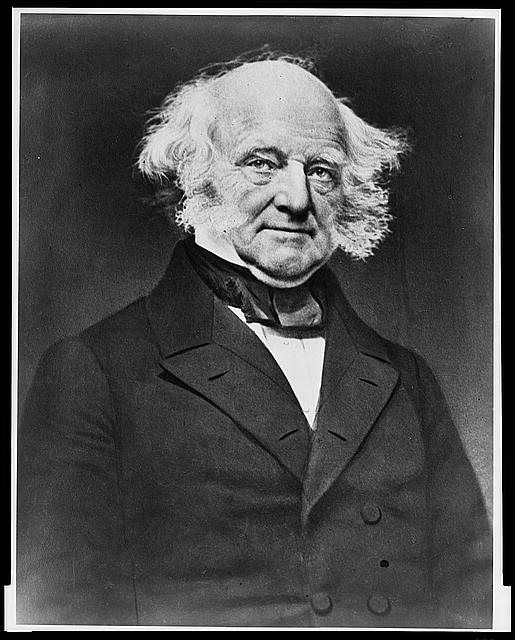
Former President Martin Van Buren, half-length portrait, facing right (photographed between 1840 and 1862, printed later; LOC: LC-USZ62-13008)

crush the rebellion

150 years ago yesterday Martin Van Buren died at the age of 79. He was the first president who was not born a British subject. He began his political career as a Democrat and served in Andrew Jackson’s administration as vice president. He was elected president in 1836 but failed to win reelection. He split with the Democratic party because of his opposition to the expansion of slavery and ran as the Free Soil party’s first presidential candidate in 1848. According to the following, in his last days, as he was in and out of lucidity, Mr. Van Buren was interested in the Northern effort to put down the rebellion and re-establish the Union.

From the Richmond Daily Dispatch July 26, 1862:

Ex-President Van-Buren,

A dispatch from Kinderhook, dated July 19th, says ex-President Martin Van-Buren was then in sensible and dying. He was in the 81st year of his age. A letter to the New York Tribune says:

Grand democratic free soil banner (ith. & pub. by N[athaniel] Currier, 152 Nassau St., cor[ner] of Spruce, N.Y., c1848; LOC: LC-USZC2-2465)

from Democrat to Free Soil

Previous to the wandering of his mind, and once or twice since, when reason returned, Mr. Van Buren has evinced the most lively and patriotic interest in the affairs of the country. No longer since than Tuesday, when the day before he was hardly expected to survive, he inquired of Dr. Pruyn how the good work of crushing the rebellion was going on, and was very particular to learn if the public confidence in the President and Gen. McClellan was yet firm and unshaken, as he thought it should be.–He appeared much gratified when answered in the affirmative. He has continually denounced the course of Buchanan’s administration from the first, but has expressed the utmost confidence in that of Mr. Lincoln. The war, he thinks, is justly and as vigorously as possible carried on — the rebels brought it upon themselves and they should be severely punished. He has all faith in the ultimate triumph of our arms and cause, but not without great expenditures of blood and treasure, as events have thus far demonstrated. He has the utmost confidence in the military ability of General McClellan, of whom he is an old and warm personal friend, and if he is sustained and aided by all loyal people, the flag, our country, the Constitution, and the great principles of American liberty will be thoroughly and permanently re-established throughout the rebellious States.

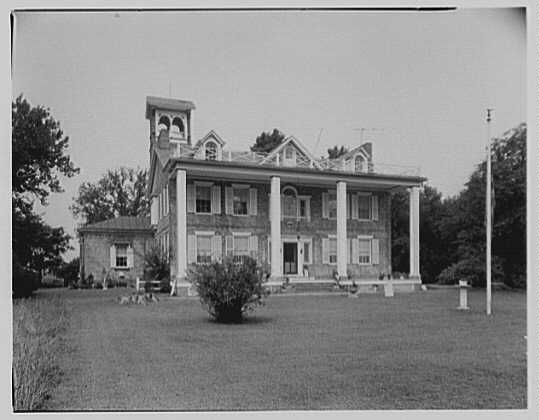
Martin Van Buren, residence in Kinderhook, New York. General view, close-up (1961 Aug. 31; LOC: LC-G613-77295)

at Kinderhook

Posted in 150 Years Ago This Week, American Culture, American History | Tagged , , | Leave a comment

A Banner Day

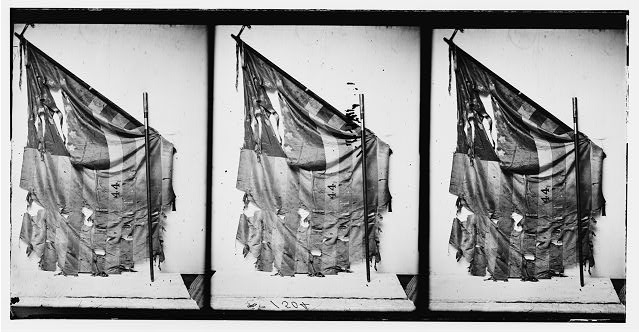
Flag of Regt., 44th N.Y. Inf. (between 1860 and 1870; LOC: LC-DIG-cwpb-04467)

44th’s “bullet-riddled flag”

It is written that James B. Hitchcock had enrolled in Company K of the 44th New York Volunteer Infantry. He performed heroically during an unspecified battle during the Seven Days.

From a Seneca Falls, New York newspaper in 1862:

A Brave and Daring Soldier.

Mr. EDITOR: – Thinking it may not prove objectionable to you, and will be gratifying perhaps to many of your readers, I send you an extract of a letter from Lieut. Mundy, written since the terrible conflict, or series of conflicts with the Rebel Army near Richmond, during the change of McClellan’s base of operations, recently made. The letter is a lengthy one, but without troubling you with many of the details which it furnishes, I simply desire your publication of that part of it which refers to the conduct of James Hitchcock, on of the young men in his Regiment who went from our village. He says:

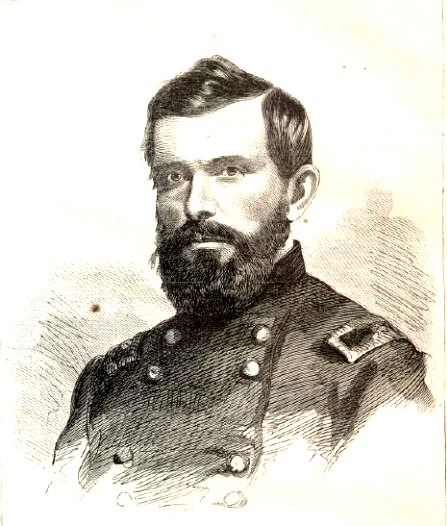
JamesCRice-1864(Harper's Weekly May 28,1864)

James C. Rice led “brave and most desperate charge”

“I must allude to the splendid and noble behavior of James Hitchcock, of Seneca Falls. He displayed as much courage, noble daring and heroism as any man possibly could throughout the fight, until he was severely wounded. The old bullet-riddled flag which had been so gallantly defended by our brave and noble boys, fell to the ground. The Ensign was instantly killed. Two others who had volunteered to carry the old emblem had fallen; Hitchcock rushed forward as we were exposed to a most galling and murderous fire and raised the flag, asking Col. Rice, who was leading the Regiment forward in a brave and most desperate charge, if he would permit him to take charge of that old banner? With his consent, he rushed forward in advance of his Regiment, and while waving it in the face of the enemy, was struck by a musket ball in the leg inflicting a severe wound, though not so serious as to make amputation necessary. Holding on to the flag-staff and waving the flag as he went limping along on his wounded limb toward Col. Rice, refusing to deliver it to any one save the Colonel himself. He resigned it into his hands, amidst the praises of every officer and man in the Regiment. He was complimented by the Colonel commanding, and promoted on the spot to Sergeant in his Company. Col. Rice alluded to his conduct as a model for every soldier.”

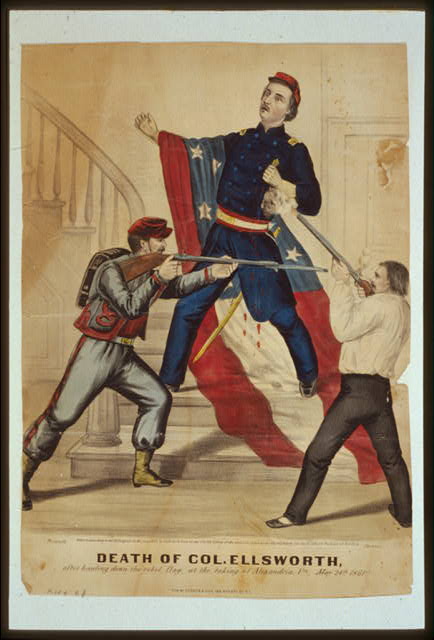
Death of Col. Ellsworth After hauling down the rebel flag, at the taking of Alexandria, Va., May 24th 1861 (Pub. by Currier & Ives, c1861; LOC: LC-USZC2-223)

More than a year ago already: Ellsworth inspires Hitchcock, et alia

It seems appropriate that this story involves the 44th New York Infantry Regiment, also known as Ellsworth Avengers or the People’s Ellsworth Regiment. The regiment was raised in the fall of 1861 to honor the memory of Elmer Ellsworth, who was killed in Alexandria, Virginia in May 1862 after he took down a secession flag flying from a hotel. The “bullet-riddled flag” mentioned in this letter does not seem to be an exaggeration: at the May 27, 1862 Battle of Hanover Court House “The 44th New York suffered 25% casualties and its battle flag received 44 bullet holes.” During the Seven days the regiment was mostly in the fights at Gaines’ Mill and Malvern Hill.

You can see the 44th’s second National Color at the New York State Military Museum.

By October 1862 there were only 200 men left in the regiment. The Albany Normal School Company was formed to help replenish the ranks. This site also has a photo of a memorial to Ellsworth.

Apparently James Clay Rice was officially promoted to Colonel on July 4, 1862. In 1864 General Rice was killed at Spotsylvania. According to his obituary at Harper’s Weekly, six bullets passed through his clothing at Malvern Hill.

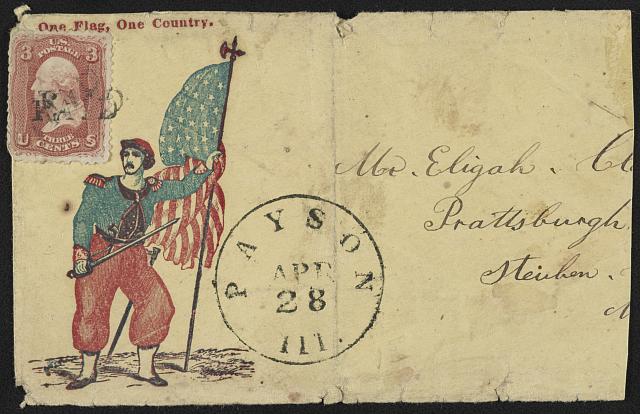
Civil War envelope showing Elmer Ellsworth with sword, pistol, and American flag with message "One flag, one country (between 1861 and 1865; LOC: LC-DIG-ppmsca-31963)

Elmer Ellsworth with the old banner

Posted in Military Matters, Peninsula campaign 1862 | Tagged , , , , , | 1 Comment

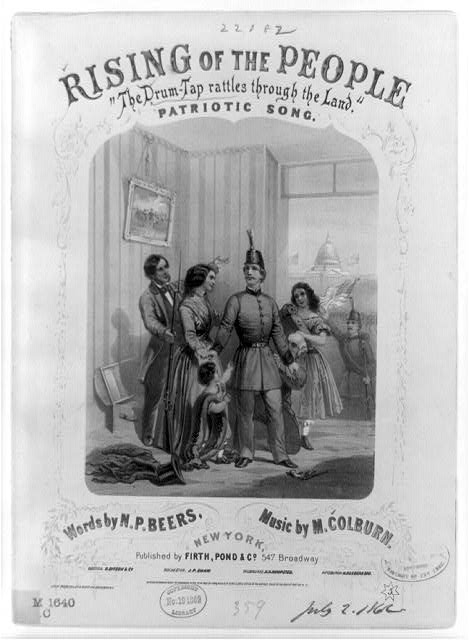
War of and by the People?

Rising of the people. "The drum-tap rattles through the land" (N.Y. : Published by Firth, Pond & Co., 1862; LOC: LC-USZ62-91843)

covering patriotism

From the Library of Congress

Posted in Military Matters, Northern Society | Tagged , , | Leave a comment

Pristine Farm Stands Out Like Sore Thumb

Well, Mr. Dudley can’t sell liquor anymore.

From the Richmond Daily Dispatch July 21, 1862:

A Richmond merchant arrested for alleged disloyalty.

–Mr. T. Dudley, Jr., the well known liquor merchant, who formerly did business on the North side of Main street, was arrested at his farm in Hanover county, on Saturday, by detectives Folkes and Caphart, and brought to this city and lodged in Castle Godwin, on the charge of disloyalty. Some rumors to the latter effect caused inquiries to be instituted by the military police in regard to the status of Mr. Dudley. On repairing to his farm they found everything in excellent order, and nothing disturbed, though neighboring houses had been devastated and the country laid waste by the Yankees. It appeared that McClellan and his cronies had paid Mr. Dudley a visit, and the latter confessed that he had taken the oath to save himself and property, and that in consequence a guard was stationed, who prevented all depredation on the part of the Yankees. It also appeared that Mr. D. sold to Gen McClellan a fine field of clover for the use of his horses, for $800 in gold. Mr. Dudley is a native of Massachusetts. The above facts were derived from those officially cognizant of the matters stated. The amount of guilt or innocence of the party will no doubt be the subject of inquiry before the court-martial now in session here.

Posted in 150 Years Ago This Week, Confederate States of America, Peninsula campaign 1862, Southern Society | Tagged , , , | Leave a comment