Can’t bomb them into submission

Thomas H. Seymour

beware the ‘monstrous fallacy’

From the Richmond Daily Dispatch July 21, 1862:

Ex-Governor Seymour, of Connecticut, Opposed to a war of subjugation.

Ex-Governor Seymour, of Connecticut, has written a remarkable letter to the Hartford Times condemning the use of his name as a Vice President of the late war meeting in that city. He goes on to say that–

“If it is necessary to be more explicit, I beg leave to state that, knowing what the meeting would be beforehand, I could not have been induced to attend it, or take a part in its doings — and that, having glanced at the speeches and the proceedings generally of that meeting, I particularly desire to clear myself from any participation, directly or indirectly, in what took place there.–The meeting, if I have not misunderstood its general bearing, is one which ignores peaceful remedies of any sort as a means of restoring the Union, and calls loudly for men and means to aid in the subjugation and consequent degradation and overthrow of the South. I follow, gentlemen, in no such crusade, neither will I contribute, in any way, to the accomplishment of such a bloody purpose. The monstrous fallacy of the present day, that the Union can be re-established by destroying any part of the South, is one which will burst with the shells that are thrown into its defenceless cities, and leave the condition of this country, after its treasures are exhausted, and its brave men on both sides consigned to hospitals and graves, a spectacle for reproach or commiseration of the civilized world.”

Thomas Hart Seymour served as governor of Connecticut from 1850-1853. He would challenge George B. McClellan in 1864 for the Democrat nomination for U.S. President.

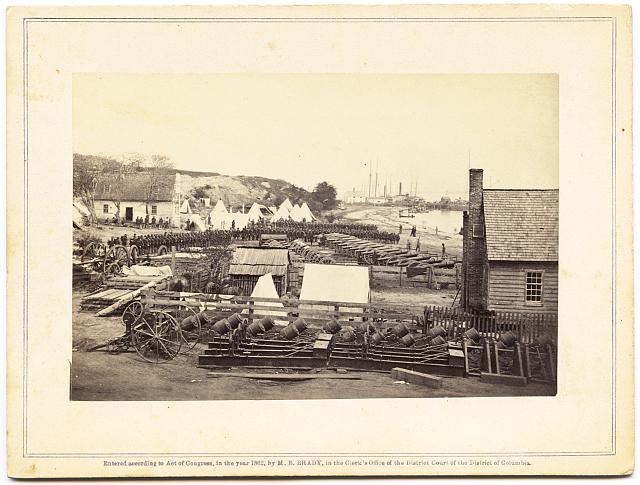
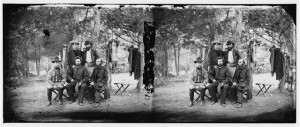
1st Connecticut artillery park encamped at the former quarters of the Louisiana Tigers. (c1862 May. at Yorktown; LOC: LC-DIG-ppmsca-31498)

getting ready to bomb them into submission?

Posted in 150 Years Ago This Week, Northern Politics During War, Northern Society | Tagged , , | Leave a comment

The Taxmen Searcheth

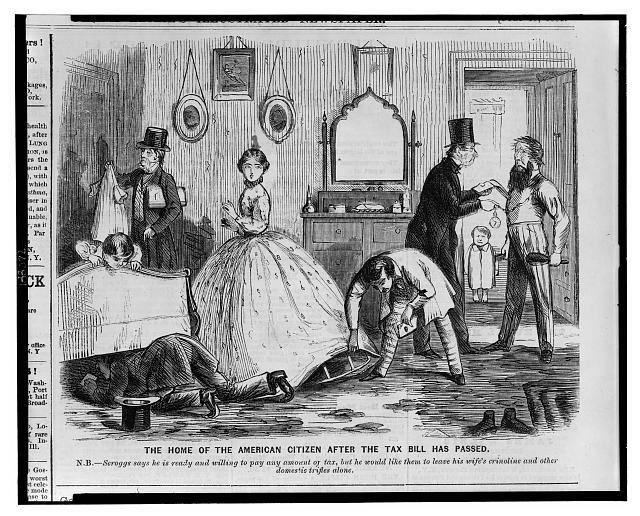
The home of the American citizen after the tax bill has passed (Frank Leslie's illustrated newspaper, v. 14, no. 355 (1862 July 19), p. 272; LOC: LC-USZ62-133072)

‘Scroggs says he is ready and willing to pay any amount of tax, but he would like them to leave his wife’s crinoline and other domestic trifles alone.’

This cartoon, which you can read more about at the Library of Congress, was published in Frank Leslie’s Illustrated Newspaper on July 19, 1862. It referred to the Tax Act of July 1862.

From the National Archives:

To fund the Civil War, a direct tax on property and an income tax were levied by an act of August 5, 1861 (12 Stat. 292), which also provided for a Commissioner of the Revenue and district collectors and assessors. These taxes were repealed by the Tax Act (12 Stat. 432), July 1, 1862, which created the basis of the modern internal revenue system, with an income tax and taxes on various commodities, businesses, products, and services. Income tax and all other internal revenue measures, except those imposed on tobacco and alcohol, and on dealers in those products, were repealed by an act of March 3, 1883 (22 Stat. 488).

Posted in 150 Years Ago This Week, American Culture, Northern Society | Tagged , | Leave a comment

Intervene for “Southern Freedom”

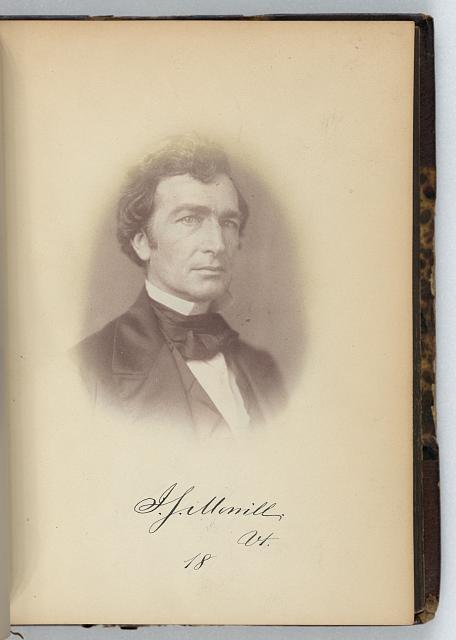
Justin S. Morrill, Representative from Vermont, Thirty-fifth Congress, half-length portrait (1859; LOC: LC-DIG-ppmsca-26557)

Justin S. Morrill

And to end Europe’s cotton famine

A couple posts ago a member of the 50th New York Engineers worried about foreign intervention in America’s Civil War. He urged men to volunteer right away so the rebellion could be put down before England and France intervened and made it a much bigger fight for the Union. According to the Richmond Daily Dispatch on July 17, 1862 an English newspaper was editorializing for that very intervention:

The English Press on intervention.

–The London Herald has a very strong article on the war in America. We give its conclusion.

How long, then, are England and France to tolerate a war waged, utterly in vain, for an object whose attainment would confer no benefit on those who seek it, and would be an unmarred misfortune to the rest of the world? How long are we to suffer, while the North strains its powers to the uttermost to restore a Union, which, while it existed, was the common enemy of Europe, and, to an especial sense, the enemy of England? How much shall we suffer for the Morrill tariff, the destruction of the industry on which our cotton supply depends, and the prospect of an eventual war for Canada? If the contest had lasted only a short time we might have suffered patiently rather than be involved in a quarrel which is not ours. If we did not suffer, we should not be disposed to meddle, should the struggle continue for years to come. But the war has lasted a year, and may last for many years, and it inflicts on England sufferings already cruel, and increasing with each succeeding month that brings no hope of peace. If the cause of the North were a good or a holy one, England might be content to suffer long and severely for conscience sake; but we are not willing to see our countrymen starve that Northern lust of empire may be gratified by the sacrifice of Southern freedom, or that Massachusetts may grow rich on subsidies wrung by a protective tariff from Georgia and Alabama. It is time that some decided action should be taken by France and England on behalf of justice and humanity, as well as foe,[for?] the protection of their half ruined manufacturers and hungry operatives. Such action must be taken at last; it is impossible that things can be long allowed to remain as at present, and most improbable that any change in the aspect of American affairs will bring us any relief; and if we are to act after all, it is a saving of needless misery to act at once, with gentleness and courtesy, but with immovable firmness of purpose. The war in America, the cotton famine in Europe, must be terminated; when this resolution is once announced by the two great Powers, neither the patient sufferers here nor the exhausted combatants beyond the Atlantic will have long to wait for relief.

Posted in 150 Years Ago This Week, Foreign Relations | Tagged , , | Leave a comment

Jailers sure must be exempt

From the Richmond Daily Dispatch July 17, 1862:

Show Your passes.

–Citizens as well as soldiers must now show their passes, if they wish to avoid getting into trouble. Squads detailed for the purpose are patrolling the streets daily to intercept straggling soldiers and examine exemption papers. Parties who cannot show cause why they are not in the army, or with their regiments, will be arrested and put in prison.

You can read a good overview of Confederate conscription at The American Civil War. The article makes the point that exemptions are a rational way to allocate human resources during a war. They were abused in the Civil War.

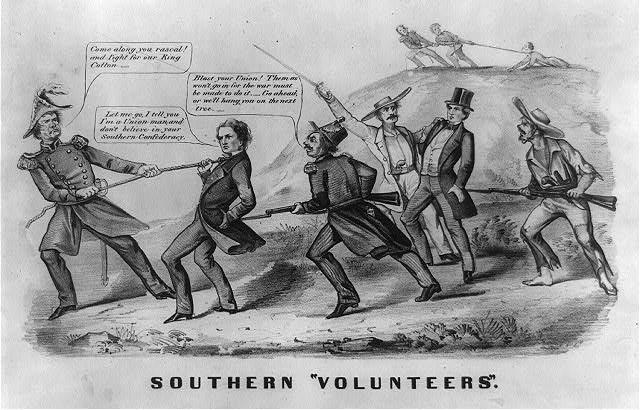
You can read the details about the following political cartoon at the Library of Congress.

Southern "volunteers" (Published by Currier & Ives, (1862?); LOC: LC-USZ62-9636)

Currier and Ives’ poke fun

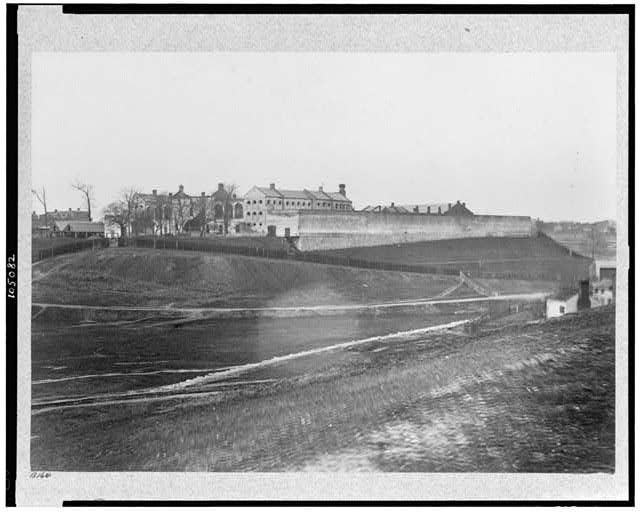
The State Penitentiary, Richmond, Va (photographed 1865, printed later; LOC: LC-USZ62-105082)

State Pen in Richmond

Posted in 150 Years Ago This Week, Confederate States of America, Military Matters, Southern Society | Tagged , , | Leave a comment

Separated State Trumps Church

Sorry – you’re a United States Presbyterian

A little news from Charlotte, North Carolina. Things are going pretty well a good distance away from the Federral incursion. Similar to Wall Street in the North, cotton prices are tracking Confederate military fortunes. Refugees from the Virginia coast are finding plenty of CSA government employment (apparently, not only in the army).

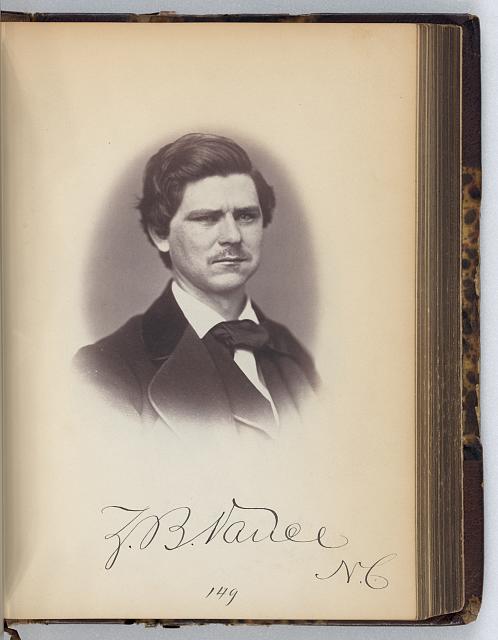
Zebulon B. Vance, Representative from North Carolina, Thirty-fifth Congress, half-length1859; LOC: LC-DIG-ppmsca-26688)

Colonel of the 26th North Carolina has hat in ring

From the Richmond Daily Dispatch July 14, 1862:

correspondence of the Richmond Dispatch.

things in the old North State–Crops — Cotton in Distend — refugees — the Wives of our Generals, &c., &c.,

Charlotte, N. C., July 9, 1862.

The approaching election of Governor is exciting much interest, and much feeling is manifested by the friends of the candidates–Col. Vance and Col. Johnson. The papers throughout the State are much exercised on the subject, and it is impossible to say what will be the result. It is confessed, however, that both of the distinguished candidates are good and true men.

Corn looks well, and with a favorable season, an immense crop will be realized. Cotton is commanding large prices, though the planters will hardly sell at all now. Large quantities of this staple are stored away in this portion of the State, Since the great victory at Richmond, cotton can’t be bought for less than from 15 to 20 cents per pound, and not much could be bought even at that, There is a belief now that a good time is coming,” and that King Cotton is about to resume his reign.

Charlotte is filled up with refugees. There are several hundred here from Norfolk and Portsmouth, Government factories are being established, and every one can find employment.

Daniel_Harvey_Hill

(Southern) Presbyterian elder and Confederate general

This is the home of Major General D. H. Hill, For years he has been Professor in the Military Institutes here. Mrs. Stone wall Jackson is here on a visit to her sister, Mrs. General Hill. When Gen. Hill was Professor in Washington College, Lexington, Va., his wife’s sister paid his family a visit, and General Stonewall, then Professor in the Military Institute there, formed her acquaintance. Thus it happens that these two brave men are brothers in law. Their father in law is a Presbyterian clergyman, and lives near this place. By the way, both General Jackson and General Hill are elders in the Presbyterian church. Gen. Hill’s influence here is unbounded.

Among the Yankee prisoners at Salisbury is a chaplain, who was taken by General D. H. Hill. –He says that, having heard of what a pions [pious?] man the General was, and belonging to the same church with him, he expected to be treated with some consideration by that officer; but that, upon asking sundry favors, he found that his ecclesiastical relation was of little service, and that he is inclined to think that the General has a small opinion even of a preacher who comes to aid in subduing the South.

Charlotte, North Carolina “is traditionally considered the home of Southern Presbyterianism …”

Zebulon Baird Vance would serve as a fairly independent-minded governor. Vance raised the 26th North Carolina Infantry in 1861.The regiment, which fought throughout the war is “famous for being the regiment with the largest number of casualties on both sides during the war.”

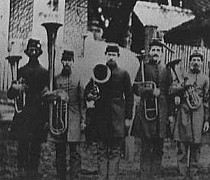
26th_North_Carolina_Infantry_Band

26th North Carolina Infantry Band

Posted in 150 Years Ago This Week, Confederate States of America, Southern Society | Tagged , , , , , | Leave a comment

“we must be driven into the river”

This is basically a recruiting letter from a member of the 50th New York Engineers. No one seems to doubt that the Union Army of the Potomac is outnumbered by General Lee’s army. Another reason for the writer’s sense of urgency is that it is still possible that France and England would intervene on the side of the Confederacy.

From a Seneca Falls, New York newspaper in 1862:

From the Fiftieth Regiment

HARRISON’S LANDING,
JAMES RIVER, Va., July 9th, 1862.

Plan shewing [sic] entrenched position of Union army at Westover or Harrison's Landing, James River, Va., July and August 1862 by Rober Knox Sneden (gvhs01 vhs00218 http://hdl.loc.gov/loc.ndlpcoop/gvhs01.vhs00218)

Streets to grade, a river to avoid

Since we were forced to retreat and fall back to James River, there has not been much done except to lay out our new camp and grade the streets. Col. Stuart has been sick for a few days, but I think he is getting better. I suppose recruiting is going on with rapidity at the North. It is the duty of every one to interest themselves in this matter, and get the 300,000 men called for by the President. If we are not reinforced within a short time, it is useless to contend against the enemy here. All we can do now is to hold our position; if we can’t do that we must be driven into the river. We had a week of the most desperate fighting that this world has ever witnessed. During the series of engagements the rebels lost thirty thousand men, and our loss cannot be much less. Our Regiment had 46 taken prisoners, but none killed. The weather is extremely hot here, almost unendurable.

I had some hopes at one time that this war would come to an end by the time cold weather set in, but now think it will require another Summer campaign to end it, if France and England do not sooner interfere. If such should really be the case a big row would be the result, and every man in the North would be compelled to take up arms. The best service our friends at home can render, is to push forward the recruiting as fast as possible. The Rebels fight terribly, and we need every man that can be got into the field. Every man counts one. If our people at home were as fully impressed with the magnitude of this war as we are here, it don’t seem possible that they would longer hesitate to furnish the number of troops which the exigency of the case demands. S. J.

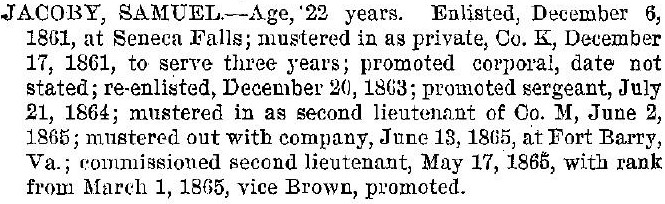
The letter writer is probably Samuel Jacoby:

Samuel Jacoby

Samuel Jacoby

Posted in 150 Years Ago This Week, Military Matters, Peninsula campaign 1862 | Tagged , , , | Leave a comment

A Stickin’ Surgeon?

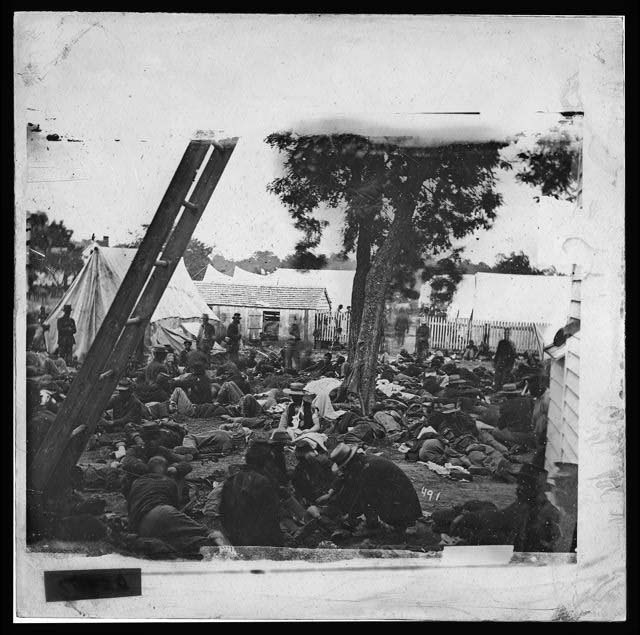
Savage Station, Va. Field hospital after the battle of June 27(1862 June 30 by James F. Gibson; LOC: LC-DIG-cwpb-01063)

Union field hospital at Savage’s Station

From A Seneca Falls, New York newspaper in July, 1862:

Dr S.R. Wells a Prisoner

Intelligence has been received at Waterloo, from Washington, stating that Dr. SAMUEL R. WELLES, of that place, is a prisoner in the Confederate ranks. The Doctor is attached to the 61st New York Regiment, and as we learn was in the Hospital in the rear of Gen. MCCLELLAN’S army when it was surrounded by the Confederate forces. Surgeons are not now detained by either side, and Dr. WELLES is doubtless at liberty to leave when he chooses, but the probability is that he will remain with our sick and wounded until they are provided for by the military authorities.

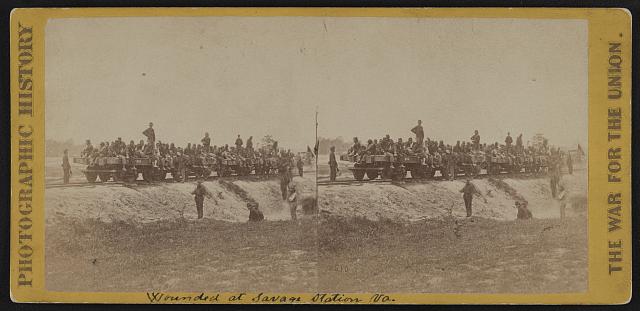
It seems to make sense, if one of the reasons for allowing surgeons to go free was so they could care for the sick and wounded – there were plenty of those right in the Confederate prison. Yesterday’s letter referred to a field hospital left behind by the retreating Federals at Savage’s Station.

The 61st New York Infantry Regiment was formed in New York City in the fall of 1861 as a three-year regiment.

Posted in 150 Years Ago This Week, Civil War prisons, Military Matters, Peninsula campaign 1862 | Tagged , , , , , | Leave a comment

A Masterly Retreat

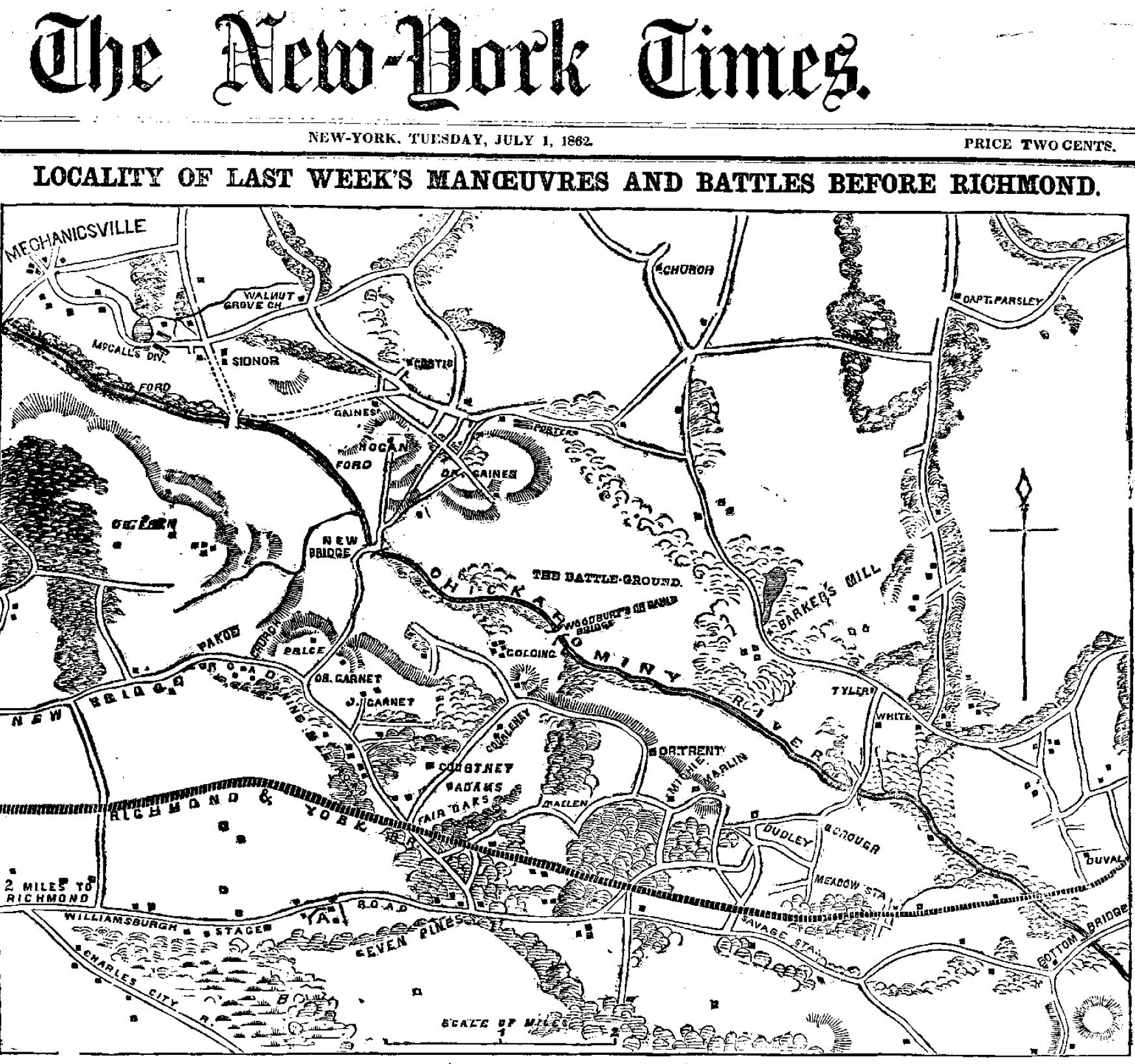
Curran retreated through Bottom’s Bridge (at lower right)

Here’s a long letter home from 150 years ago this week that talks mostly about the Seven Days’ Battles. The 33rd New York Volunteer Infantry Regiment’s main fight was the relatively minor Battle of Garnett’s & Golding’s Farm – the 33rd and other elements of General Davidson’s brigade were on picket duty on June 28th while the bulk of the Union army began its retreat. They fought off a Confederate attack and then joined in the backup.

From A Seneca County, New York newspaper in 1862:

From the Thirty-Third Regiment.

CAMP NEAR CITY POINT, Va.,
July 6th, 1862.

It becomes my painful duty to communicate a brief account of the series of bloody conflicts which we have experienced for the last eight days. No one can comprehend the magnitude and extent of the terrible struggle which our army has passed through since the siege of Richmond commenced. Each day some division or corps of our lines was engaged in the work of death. We were generally victorious, but, alas, at the cost of many of our bravest patriots and soldiers. It became evident to all when the attack commenced that the rebels outnumbered us two-to-one, but we defeated them at every point, notwithstanding we fell back to a new and different base of operations, which is near City Point on the James River. That the retreat was a masterly one and conducted in the best order, no one can deny. The rebels now occupy our former camps and all the grounds between here and Richmond, the White House and Railroad included. In the retreat we had at least five battles, and during each one the rebels were slaughtered on a grand scale. In the first day’s retreat, the 33d Regiment achieved further honors in the cause in which we are all engaged. It was on Saturday, and as the artillery and the greater part of our forces were falling back, the regiment, together with several companies from other Regiments, were sent out on picket, where they kept the enemy in check until all the plans were matured for a change of operations. Our picket line was across a ravine and on the skirts of a wheat field, which divided us from the rebels. Some of our Regiment was on the picket line, some in the ravine, and the balance was down on the flats of the Chickahominy. In the course of the day the enemy opened on our picket and camp with with shot and shell with remarkable accuracy, still I am surprised that the damage was so slight. After a half hour of the most terrific roar of artillery, there was quietness for a moment, when a whole rebel Brigade came across the wheat field, one Regiment after another in line of battle, and attacked our pickets, who poured a volley on their closed ranks with fatal effect. They gradually pressed the pickets on our right until they came around almost in our rear. This move we could not see owing to the thick underbrush and woods in the ravine. Their object was to capture all of us in the ravine consisting in all of four or five companies, but while they were closing around us we anticipated their movements and “skedadled” in a different direction for our rifle pits. We then formed along the whole length of the pit, unnoticed by the rebels, as they supposed they were going to make a big haul in the aforesaid ravine. On they came, however, towards us, and when within a short distance we poured a deadly fire into their ranks. They faced us for half an hour, and we all the time pouring the balls into their ranks, with fearful effect. They came up several times but were as often driven back. At last their lines broke and away they went. After the firing ceased we discovered a white flag behind an earthwork, and upon sending out to meet it, ascertained that it was being borne by nine rebels who came in under its protection. Some of our men went over the field and captured a Lieut. Colonel and some privates, and also a Colonel who was wounded. The rebels had no artillery in the engagement. I went out on the field and counted 27 dead rebels all lying on the ground within a short distance of one another. Some were shot through the head, others through the breast, while others lay mangled in all shapes. I saw one poor fellow with half of his head shot off, and still alive. The ravine was covered with their dead and dying, as was also the wheat field where they first made the attack. They sent in flag of truce and were permitted to bury their dead, which consumed the remainder of the day, and gave our troops a chance to complete our retreat. We kept a picket there during the night. Our loss was about fourteen killed, wounded and missing. MICHAEL BOYLE and WM. GEE in our Company, were taken prisoners. Three in Co. B, were killed; one in Co. A; one in Co. F, and one in Co. D. Lieut. CHURCH, of Geneseo, in Co. E, was also killed. Several others were wounded.
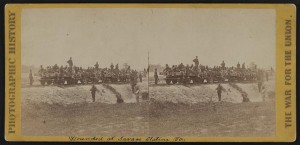
Wounded at Savage Station, Virginia (E. & H.T. Anthony, 1862; LOC: LC-DIG-stereo-1s02812)

Left behind?

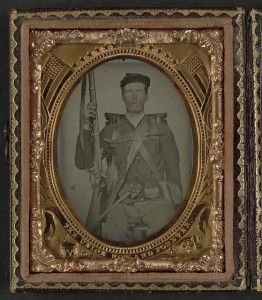
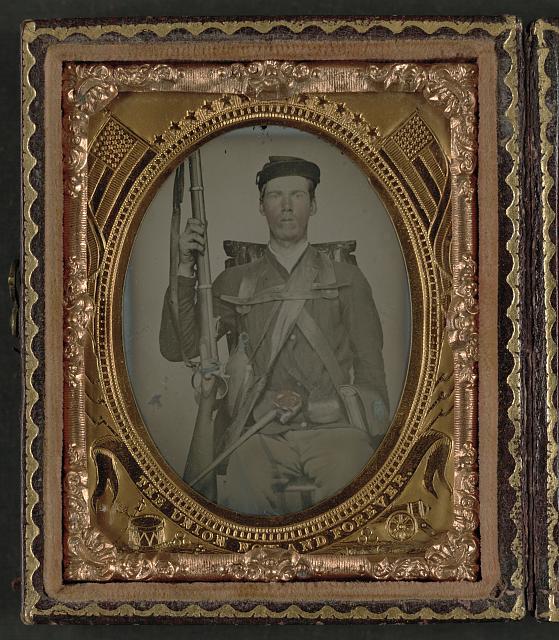
Unidentified infantry soldier in Union uniform in full marching order with musket, canteen, cartridge box, cap box, and knapsack (between 1861 and 1865; LOC: LC-DIG-ppmsca-30993)

modeling some of James Curran’s impedimenta when he crashed

The next day we marched to Savage’s Station, and in the evening the enemy overtook us and offered battle. We accepted the challenge and cut to pieces all that came up to the work. In this battle the 2d or Vermont Brigade in our Division, was engaged and suffered considerable. During which we fell back to Bottom’s Bridge, or Ceder Creek as it is called, leaving all of our wounded behind in some empty houses in charge of a Physician of the 49th Pa., having no means of bringing them on. I remained at the Hospital until our rear guard came up, and on the way sank upon the ground from sheer exhaustion, where I remained in a profound sleep with knapsack, haversack, canteen, cartridge box and all buckled on, until daylight. When I got up I discovered many in the same fix in which I had been, and therefore had plenty of company to the Bridge.

Before the rebels came up to the Bridge, it was cut away, our division in the meantime remaining until the enemy arrived and opened on us with artillery. Their shot and shell was poured into our ranks with dreadful fury. We fell back to a better position, and formed a line of battle in the edge of the woods a mile in length, while another Division at our left was fighting terribly to keep the enemy from flanking us. In this engagement the Irish Brigade, under the daring MEAGHER, did great execution, driving the rebels before them like sheep. About 10 o’clock P.M., we again resumed our march and at daylight arrived at the James River, where the entire army and its equipments were collected.
Harrison's Landing, Va. Group of the Irish Brigade (1862 July by Alexander Gardner; LOC: LC-DIG-cwpb-00280)

Members of Irish Brigade back at Harrison’s Landing

We were sent out on picket here while the greater portion of the army were engaged in another severe battle, in which the rebels were totally routed and defeated. Our men captured a number of their batteries. The retreat of the army was masterly and complete, and the entire trains and supplies safely landed at our present camp. I think that the retreat of so large an army, right under the eyes of an enemy double its number, and defeating him wherever attacked, is one of the grandest military achievements of the age. We left nothing of any use to the enemy; and though our fighting and marching put the endurance of our brave army to a hard test, still we are in good spirits and ready for the rebels at any time.

Since we arrived here Shields’ Division has joined us, and other reinforcements are expected every day. What the various movements mean I cannot of course say. We have suffered much from exposure and fatigue, our Regiment being always on the move. Our Company has had 7 wounded and 1 killed since we first began the march. Daniel Murphy was killed at Mechanicsville, and James McGraw and John Cullen, wounded in the arm and shoulder. Barney Smith was shot in the arm, Thos. Clancy through the hand, and Frank Alman through the foot. Michael C. Murphy and Jas. Haze were accidently injured by the falling of trees. Otherwise our Company has been comparatively fortunate.

Yours, &c., JAS. CURRAN.

James Curran 33d NYSV

Sergeant Curran of Company K

According to The story of the Thirty-third N.Y.S. vols.; or, two years campaigning in Virginia and Maryland by David W. Judd members of the 33rd were up four straight days, so I can understand why James Curran would have crashed to sleep right where he was walking.

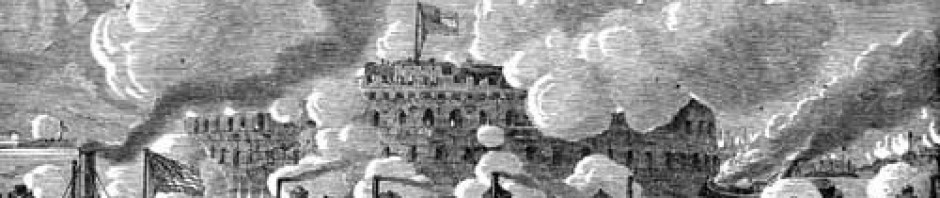
Even the Richmond Daily Dispatch credits the Union army doing a great job evacuating its position near Richmond:”The enemy’s retreat was certainly managed with coolness and generalship. This meed of praise is due him.” However, in an editorial that aims to cheer up Confederate citizens who wanted to capture McClellan’s army the Dispatch points out that driving the Yankees all the way back to Harrison’s Landing was a victory.
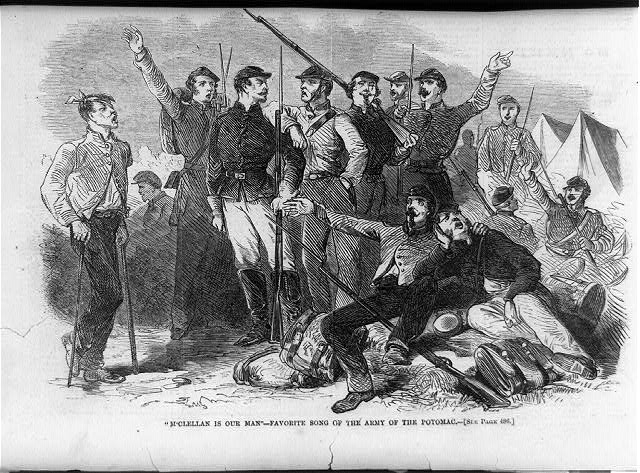
McClellan is our man - favorite song of the Army of the Potomac (Harper's Weekly, 1862 Aug. 2, p. 492; LOC: LC-USZ61-1896)

“… though our fighting and marching put the endurance of our brave army to a hard test, still we are in good spirits and ready for the rebels at any time.”
Posted in 150 Years Ago This Week, Military Matters, Peninsula campaign 1862 | Tagged , , , , , , | Leave a comment

Richmond Rose?

Some kind of propaganda seems to be going on here.

From the Richmond Daily Dispatch July 11, 1862:

Yankee Trick.

A soldier from Georgia picked up on the battlefield, a Yankee “Richmond Dispatch,” which had been dropped by some dead Yankee. We have not yet seen it, but persons who have, say it is a curi It is exactly like this paper. The size, paper, advertisements and all are precisely the same. The only difference is in the editorials. The Yankee concern is full of desponding and despairing editorials, which pronounce our cause desperate and say that McClellan is obliged to take the city. These counterfeits are no doubt sent North, and used in keeping up the popular delusion there. –Possibly, other Southern papers may be counterfeited too. Was there ever a nation so thoroughly hear?

Posted in 150 Years Ago This Week, Southern Society | Tagged | Leave a comment

Goddess of Liberty on parade in Norfolk

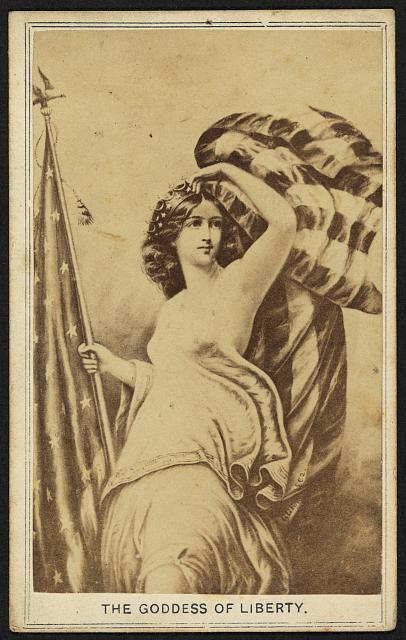
The Goddess of Liberty (between 1860 and 1865; LOC: LC-DIG-ppmsca-10982)

template for Norfolk?

This article makes it seem like there was quite a bit of genuine Union sentiment in Norfolk, Virginia in 1862.

From the Richmond Daily Dispatch July 10, 1862:

The Yankees Celebrating the Fourth of July in Norfolk.

–The Yankees had a celebration of the 4th of July in Norfolk. A paragraph from the Norfolk Union, of the 5th will show how a part of it was done:

Next came the Union car, most beautifully decorated, drawn by eight of the finest dark bay horses that were ever put in harness, and driven by a driver (we could not learn his name) whose tact and masterly manÅuvring through the streets, entitled him to the hand of the most beautiful young lady on the wheel car. On the car was seated a blooming young lady, representing the Goddess of Liberty, supported by two little sailor boys, and supported by 34 young ladies, representing all the States of the Union. Each had a flag in her hand, as did the miniature sailors, the Goddess wearing the cap of Liberty, and waving over the whole were two large and beautiful American flags. This was truly a gorgeous spectacle, and many were the impressions upon the street that it was the grandest display they ever saw. Next to the car was a carriage, drawn by a noble span of fine black horses, and in it were the clergyman and editor of the Union, and a noble old patriot, now counting nearly 80 years, who believed that to be the last celebration of independence Day that his eyes would ever be permitted to behold.

After the exhibition of the gay equipage to the “indulging thousands,” all hands repaired to the Opera House, where “Gov.-Gen.Viele” made a short speech. Several other individuals connected with the Hessian army made speeches, after which the assemblage desperate. [departed?]

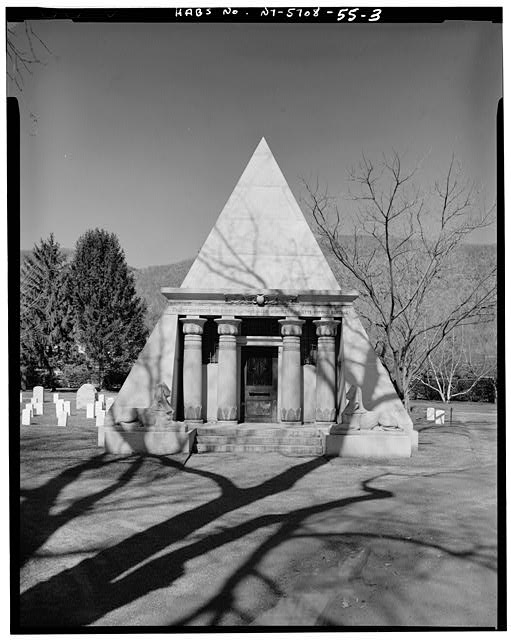
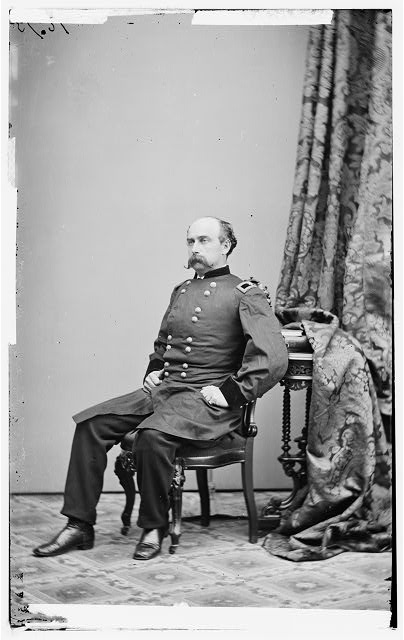
Egbert Ludovicus Viele was military governor of Norfolk in 1862. He returned to civil engineering in 1863. He was buried at West Point after his death in 1902.

VIEW OF VIELE MONUMENT - U. S. Military Academy, Cemetery, West Point, Orange County, NY (LOC: HABS NY,36-WEPO,1/55--3)

Viele’s classically engineered monument at West Point

Gen. Egbert L. Viele (between 1860 and 1870; LOC:LC-DIG-cwpb-05491)

a little speech from the military governor

Posted in 150 Years Ago This Week, Military Matters, Southern Society | Tagged , | Leave a comment