According to this image by Alfred R. Waud, 150 years ago this week some Virginia farmers were taking their shots at Union troops on the James:
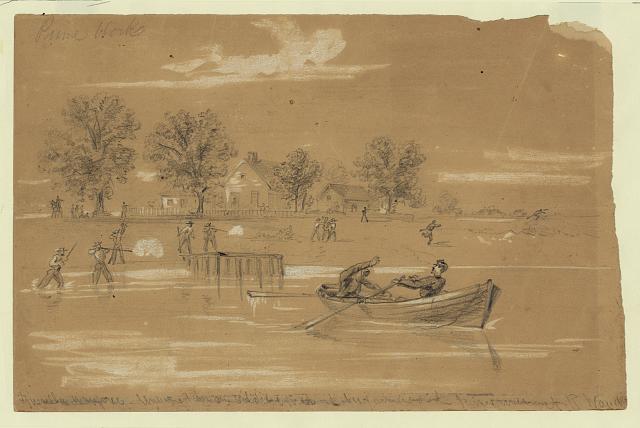
not so safe and sound
According to this image by Alfred R. Waud, 150 years ago this week some Virginia farmers were taking their shots at Union troops on the James:
not so safe and sound

Union Jack
Well, leastways over one of its houses
From the Richmond Daily Dispatch July 7, 1862:
Seward Backed out again.
–In Fredericksburg the British flag was pulled down by Lincoln’s soldiers in front of the British Vice consul’s door. The Consul, Mr. Peter Goolrick, protested, but his property was seized. He demanded to be sent to Washington, where on making complaint the flag and his property were restored, and Seward wrote a letter of explanation and apology. The miscreants should have been required to restore the flag to its position and salute it.
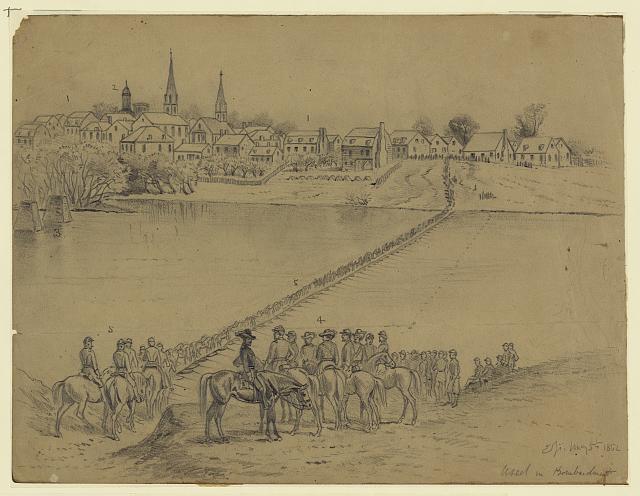
Hide the silver! The Yankees are coming! The Yankees are coming!
Mysteries and Conundrums, a site devoted to Fredericksburg and Spotsylvania, has a great article that tells much more of the story, but here’s a quick summary. Irish-born Peter Goolrick was a British vice-consul with few apparent responsibilities. When Union troops arrived in the Fredericksburg area in April 1862 Goolrich put the Union Jack over his house in the hopes that it would give him some immunity from the booty-loving, Hessian-like Yankees. At first this seemed to work, so other citizens stored valuables like silver in Goolrich’s house. When the Union army heard that Goolrich was also storing 1,000 barrels of flour, soldiers under Abner Doubleday searched the house and took the British flag. Goolrich was arrested and detained for a while.
After investigation and negotiation, Goolrich got his flag back, but the British diplomat in Washington agreed to close the Fredericksburg consulate.
![Fredericksburg Court House now occupied by our troops as a barracks and by the [signal corps] (1862 May 15. by Edwin Forbes; LOC: LC-DIG-ppmsca-20490)](https://www.bluegrayreview.com/wp-content/uploads/2012/07/20490r.jpg "Fredericksburg Court House now occupied by our troops as a barracks and by the [signal corps] (1862 May 15. by Edwin Forbes; LOC: LC-DIG-ppmsca-20490)")
Union troops at the courthouse
A little break for the war-weary, SUMPTER included. This big, old northern would sure like to stick my head in here a few times this summer.
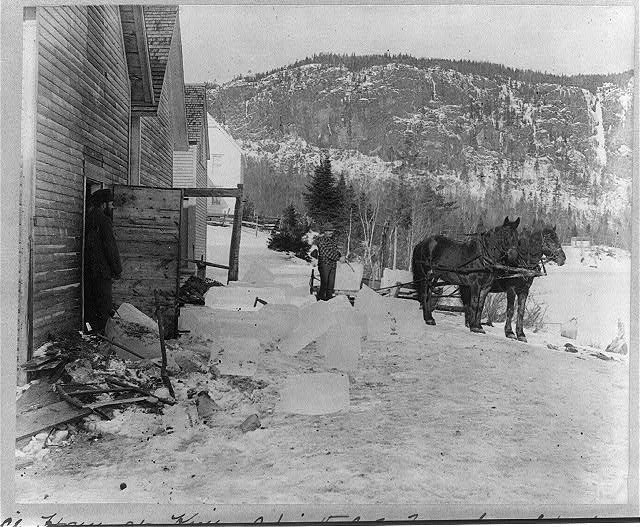
Like an ice cube for your lemonade?
![Map showing the Chicahominy [sic] and James rivers and from Richmond to Harrison's Landing, Va. From the official map made for Genl. Heintzelman by R.K. Sneden, Topgr. (gvhs01 vhs00007 http://hdl.loc.gov/loc.ndlpcoop/gvhs01.vhs00007)](https://www.bluegrayreview.com/wp-content/uploads/2012/07/Retreat.jpg "Map showing the Chicahominy [sic] and James rivers and from Richmond to Harrison's Landing, Va. From the official map made for Genl. Heintzelman by R.K. Sneden, Topgr. (gvhs01 vhs00007 http://hdl.loc.gov/loc.ndlpcoop/gvhs01.vhs00007)")
Ground over which the 33d retreated
From a Seneca County, New York newspaper in 1862:
Letter from Col. Taylor.
The Rochester Democrat of Monday publishes the following extract from a letter written by Col. TAYLOR, of the 33d Regiment, to his wife, in that city:
HARRISON’S LANDING,
JAMES RIVER, July 4th, 1862.
I am here safe, after a long and tedious march, with six days’ hard fighting. thank God I am unhurt, but worn out with fatigue. We expect a few day’s rest. The 33d has done honor to itself and honer to me. They sustained an attack of two regiments, and repulsed them with terrible loss on their side, and very small on our side. The only officer killed, was a Lieut. Church, of Geneseo. He was killed at camp Lincoln. I have lost several prisoners, among whom, are the assistant Surgeon, Dickerson, and Capt. Hamilton, of Co. G. Please have the names put in the paper. Will write in a few days again, must close this now. Don’t fee Camp Lincoln – near where Moses Church was killed.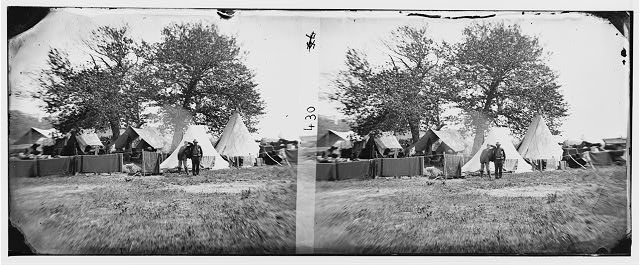
According to The story of the Thirty-third N.Y.S. vols.; or, two years campaigning in Virginia and Maryland by David W. Judd (page 130), Lieut. Church left the comparative safety of the earthworks and fired at the approaching enemy until he was “pierced through the head with a minie ball.”

Moses Church jumped out from behind the earthworks to take it to the rebels
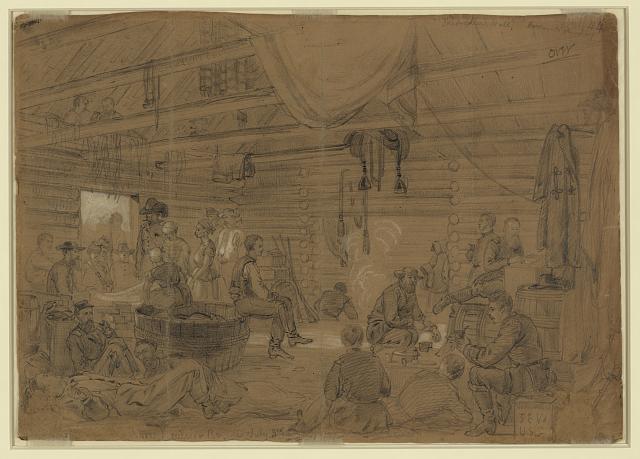
Recuperating at Skedaddlers’ Hall, Harrison’s Landing
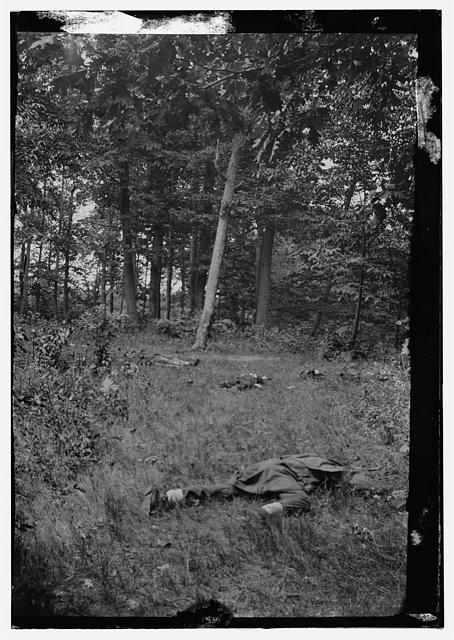
stricken down in cruel and unnatural war
unHappy Fourth of July!
Yesterday the Republican-leaning New-York Times reflected on General McClellan’s retreat from near Richmond and got more fired up for the North to do whatever it took to put down the rebellion. In this editorial a Democrat-leaning paper from upstate New York looks at the general state of affairs in the country four score and six years after the signing of the Declaration of Independence and hopes everything could just be put back to the status quo ante.
From a Seneca County, New York newspaper in 1862:
Our National Anniversary.
The recurrence of the birthday of our National Independence has heretofore been the occasion for universal congratulation and rejoicing. How different the scene in 1862! Instead of Peace, Union, and Prosperity, we have Civil War, Disunion and all their concomitant evils. Instead of National rejoicing, the land is filled with mourning. Upon every breeze is borne the the sad, silent messenger of death. Hearts are bleeding all over the land at the loss of loved ones, stricken down in this most cruel and unnatural, war. What a day for rejoicing! And for what can we rejoice? Our common interests are gone, sacrificed for the sake of our jealousies and passions. Fanaticism and madness rule the hour, and our beloved country seems to be fast drifting toward anarchy and ruin.
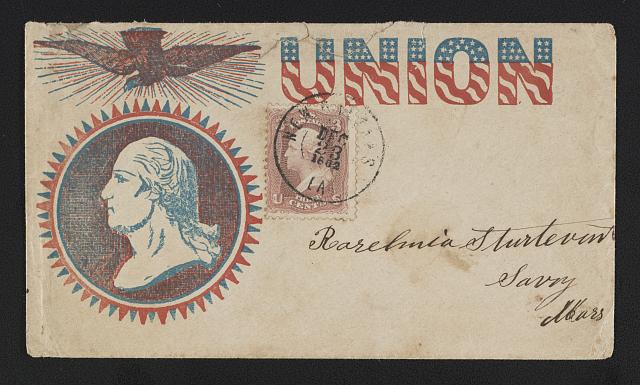
Counsels Union over sectionalism
Our people must be humiliated, and made to feel their sins and transgressions or all is lost. We are a guilty nation, proud, wicked, and vain-glorious. If we have not sought war, we are at least guilty of hastening it upon our fellow-countrymen. To avoid all of its horrors we should acknowledge our wrongs and retrace our steps. Our common history must be read and studied anew, and we must again dwell on the glorious deeds of a common ancestry, while a thick and oblivious veil must be drawn over the awful and tragic events of our recent history. The blessings and glories of the past must be rehearsed. We must dwell upon the counsels of Washington and diligently fan the flame of fraternal love between the children of the Father of his Country. We must anticipate, with the uplifted eye of faith and hope, the glories of our united nationality in the future ages; and we must gaze on the splendid vision with united purposes and aspirations for our country’s glory and welfare. One hope – one heart – one future – one magnificent destiny! Inspired by these feelings and actuated by these sentiments only, can Peace be restored and our People again made happy and prosperous. Until then all national rejoicing is mere mockery.
But unfortunately it doesn’t seem like the issue of slavery was ever going to go away peacefully.
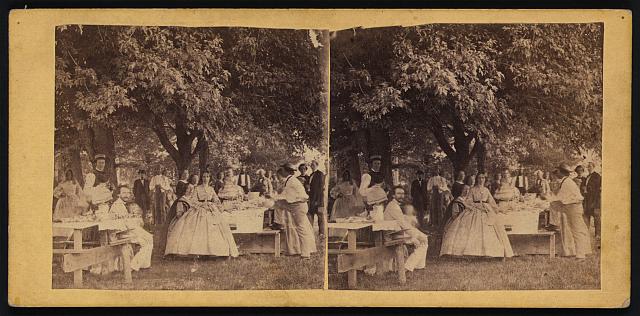
hold the fireworks?
The Richmond Daily Dispatch (July 4, 1862) appears to have moved beyond “our common history”:
The Fourth of July.
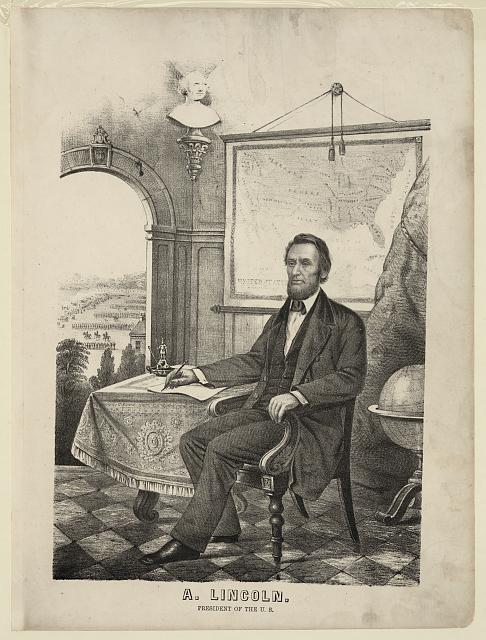
South thwarts his “magnificent” plans for the Fourth
The Yankee Congress, a week or two ago, objected to adjourning, because McClellan would probably be in Richmond by the Fourth of July, and they wished to be in readiness to enact any legislation which that event might require. They are a grand people for dramatic effects. On the last Fourth of July there was to have been, according to the orders of that magnificent ass, Abraham Lincoln, and a flaming programme in the New York Herald, a general, combined, simultaneous march of the universal Yankee columns, East and West, upon the strongholds of the Southern Rebellion, which were to be chewed up and exterminated without farther delay. But the North was not able to celebrate its Fourth of July in this manner, and the South put off its celebration till the Twenty-first! It will hardly be able to celebrate its next Fourth in Richmond. What it wants to celebrate it for at all, having sacrificed all the principles which it was designed to commemorate, is beyond our comprehension.
As the Harper’s Weekly (hosted at Son of the South) from June 28, 1862 shows, the North was making some progress in capturing rebel territory:
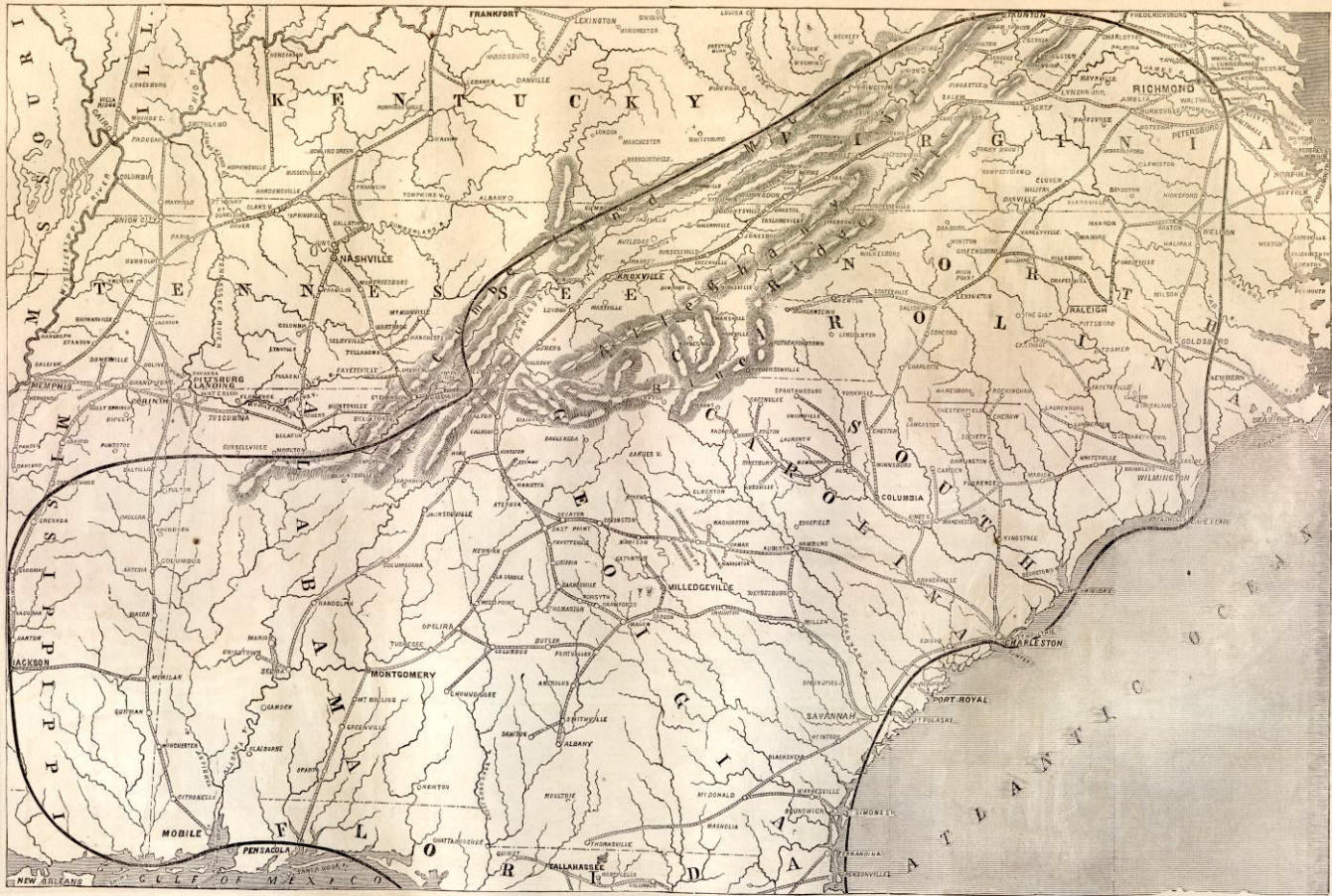
Southern perspective – that choking feeling?
![The manner in which the American colonies declared themselves independant [sic] of the King of England, throughout the different provinces, on July 4, 1776 (1783?; LOC: LC-USZ62-11336)](https://www.bluegrayreview.com/wp-content/uploads/2012/07/3a13731r.jpg "The manner in which the American colonies declared themselves independant [sic] of the King of England, throughout the different provinces, on July 4, 1776 (1783?; LOC: LC-USZ62-11336)")
July 4, 1776
Remembering a brother killed at Savage’s Station
… depends on crushing the rebellion
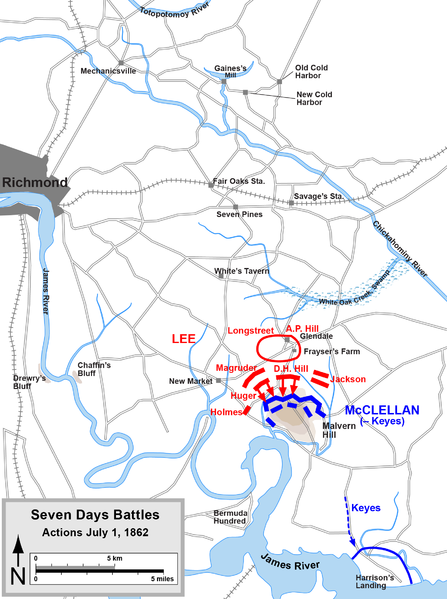
Blue lines headed for Harrison’s Landing
150 years ago today the editors at The New-York Times came to grips with the fact that the Union Army of the Potomac was not going to be capturing Richmond any time soon. In fact, the army was considerably farther from Richmond than before the “Week of Battles”. (By the time this was published the army had backed up even more to Harrison’s Landing) The editors urged the citizenry to become even more resolute in defeating the rebels.
From The New-York Times July 3, 1862:
The News from Richmond The New Call for Volunteers.
We have at last full reports of recent movements in front of Richmond. We are sorry to say that they do not fully sustain the encouraging interpretation which the public sought to put upon the brief announcement, that our right wing had been attacked and had withdrawn to the other side of the Chickahominy. We have now no room to doubt that our army has met with a very serious reverse, and that it is in a condition of peril, which, if not imminent, at least calls for the instant and energetic efforts of the Government and the country.
Two of the regular corps of the TIMES Reporters left Gen. MCCLELLAN’s headquarters, which are now on the James River, on Monday afternoon, and reached this City last evening. They were spectators of the events which they describe, and although their reports are of necessity written in haste, and may, therefore, err in matters of detail, there is no reason whatever to doubt the entire accuracy of the narrative they give of the principal movements of the opposing forces. …
Our whole army, therefore, now lies upon the James River, at a point called Turkey Bend, within reach, and under cover of our gunboats. Supplies will speedily reach it from Fortress Monroe, and it seems, indeed, to have withdrawn its stores in good order and without serious loss.
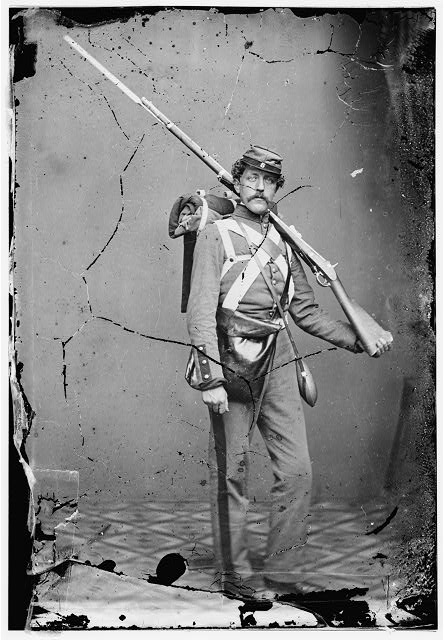
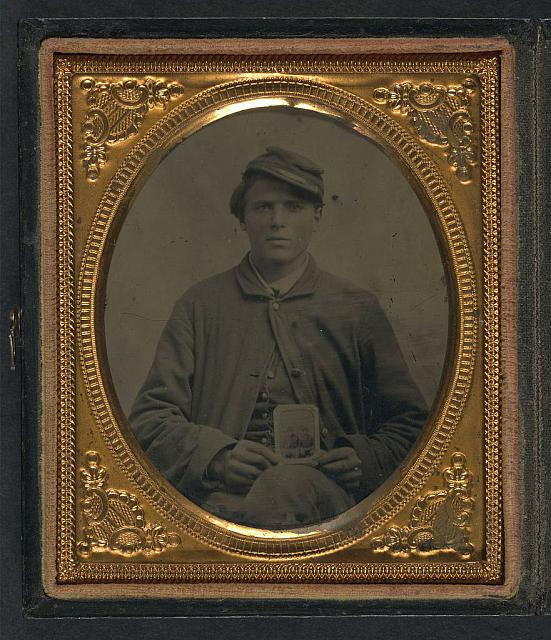
Many more needed – Union volunteer in photographer’s studio
Beyond all question, this intelligence will fall with heavy weight upon the public heart. It is entirely unexpected, and shatters the high hope which the whole country has of late indulged, that, with the fall of Richmond, the end of the rebellion was close at hand. But this depressing effect will be temporary. A day’s reflection will rouse the whole country to the necessity of another effort to crush the rebellion. However we may regret the necessity for further sacrifices, there is no alternative. “We have no election, even if we were base enough to desire one.” We cannot yield to the rebels in arms without absolute and permanent disgrace, — without complete ruin to all our hopes of national renown, without the loss of everything that makes our country great, prosperous and free.
The Government will meet this crisis with an intrepid spirit and a determined purpose, — and it must be met by the country in the same temper and with equal courage. The President, as if in anticipation of such a contingency, has already called for 300,000 additional volunteers. Every man of them ought to be enrolled within a fortnight. We shall have, we hope, no wranglings in the Press or elsewhere over the past, — no criminations or hostile criticisms, — no attempts to screen demerit or exaggerate defeat. The country needs the best service of all her sons. Let the only contest be for precedence in the race for her rescue!
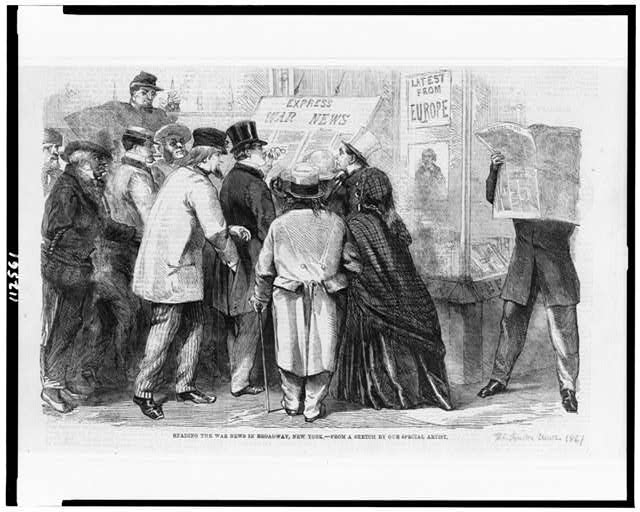
Times: Union-lovers have “no election” – read it and weep … and then fight harder
Hal Jespersen’s map is licensed by Creative Commons.
![The heart of the rebellion: scene of the late Seven Days battles near Richmond; new base of operations of the Army of the [P]otomac. (Philadelphi Inquirer,1862; LOC: g3884r cw0650200 http://hdl.loc.gov/loc.gmd/g3884r.cw0650200)](https://www.bluegrayreview.com/wp-content/uploads/2012/07/PetersburgRichmond1862.jpg "The heart of the rebellion: scene of the late Seven Days battles near Richmond; new base of operations of the Army of the [P]otomac. (Philadelphi Inquirer,1862; LOC: g3884r cw0650200 http://hdl.loc.gov/loc.gmd/g3884r.cw0650200)")
Sister cities filling up with the wounded
used to transport the wounded in Petersburg
The Seven Days’ Battles were bloody; some of the Confederate wounded were being sent to Petersburg
From the Richmond Daily Dispatch July 2, 1862:
The old adage
of the right thing in the right place was exemplified on yesterday in the appearance here of the two immense omnibuses used between the railroad depots in our sister city of Petersburg. They were in charge of a committee appointed to bring in the wounded from the battle field; and to those who know the character of the people of the Cockade city, it is needless to say they did good service.
The Battle of White Oak Swamp was fought 150 years ago today. William Farrar Smith was promoted for his “gallantry” during the battle. The following image is from U.S. History Images:
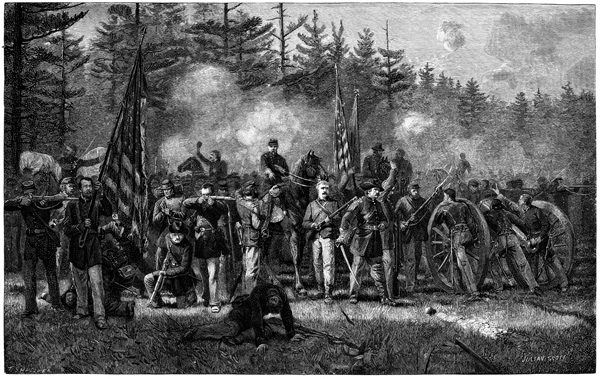
Smith’s rear guard at White Oak Swamp
Robert Knox Sneden mapped the June 30th troop positions:
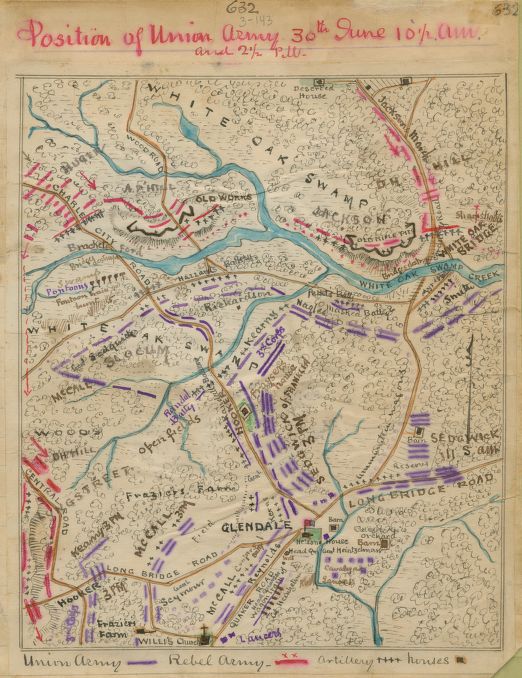
Smith on the Union right
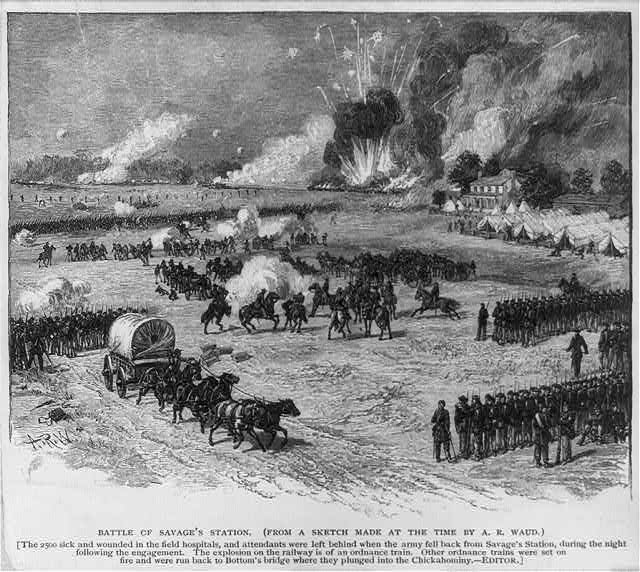
Battle of Savage’s Station
Both The New-York Times and the Richmond Daily Dispatch 150 years ago were having trouble keeping up with all the battles and troop movements during the Seven Days’ Battles, including the June 29th Battle of Savage’s Station. (In fact, the Times is still reporting Richmond’s imminent fall)
From the Richmond Daily Dispatch July 1, 1862:
The great battle.Continuation of the fight.successful Engagement of Magruder.Sunday’s operations.the enemy still retreating.incidents.&c., &c., &c.
The intelligent reader will understand, and perhaps appreciate, the difficulties attending an accurate compilation of all the incidents connected with the operations of the armies around Richmond for the past five days. It is almost impossible to afford in detail descriptions of the several engagements which have shed such imperishable lustre upon the arms of the Confederacy, and which have finally resulted in the overthrow, complete and disgraceful, of the hosts marshaled under the banner of subjugation.
Of the important results which must inevitably flow from our successes, and the discomfiture of the Northern army under McClellan, it is needless at this time to speculate. Suffice it to say that from the opening of the grand ball on Thursday afternoon down to the hour which witnessed the enemy in full retreat, the efforts of our forces were attended with unbroken success, and at no time did the brave men upon whom hung the hopes and the confidence of the country, falter or waver in their determination to make the victory decisive. Battery after battery was stormed with the most daring disregard of human life, and the apparently impregnable positions of the enemy were carried at the point of the bayonet with the most impetuous ardor. Never did men fight more bravely, and never was valor more surely and signally rewarded.
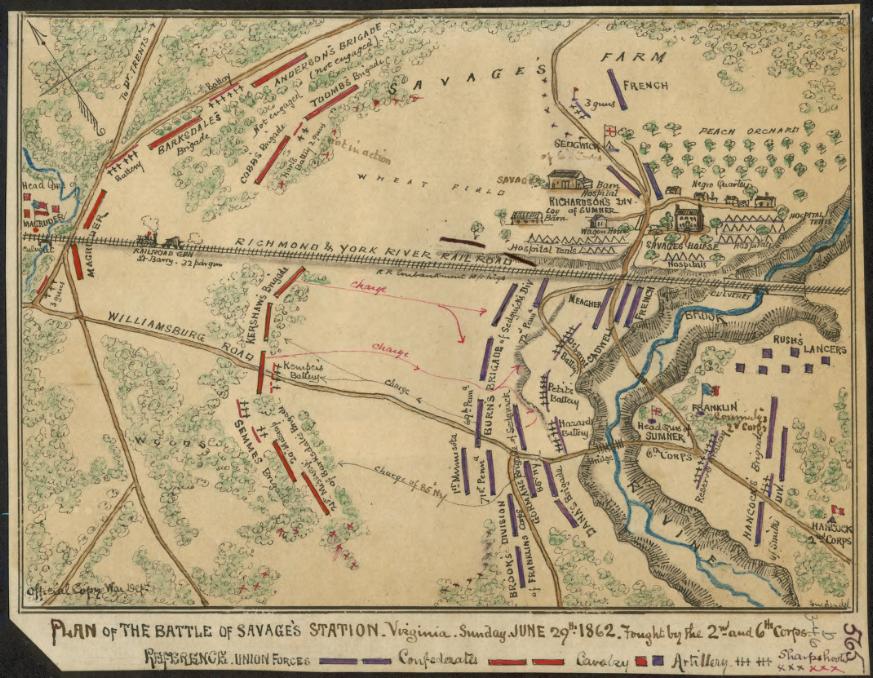
Crimson lines pour out the crimson tide
Our loss is heavy, both in officers and men. The soil of Virginia, the grand old mother of States is enriched with the best blood of her suffering Southern sisters, and from every State of the Confederacy the martyrs of liberty have united in pouring out the crimson tide as a rich and imperishable libation upon the altar of the one great common cause.–There is no discrimination to be made between the gallant men who constitute the most magnificent army that was ever arrayed in combat. As sons of the Confederacy they fought, and as sons of the Confederacy they conquered. If one corps distinguished itself more than another in this, the greatest battle ever fought on this continent, it was on account of its position on the field.
Our reports thus far published are up to Saturday evening. Sunday skirmishing began at an early hour and continued through the day at different points along the line. The great battle of the day, however, took place in the evening near the York River railroad, some three miles from the battle field of the “Seven Pines.”Gen. Magruder conmmenced the attack about four o’clock, by advancing upon the Yankee entrenchments. The first line was taken after a sharp conflict and the enemy driven to another. Waiting only long enough to get the artillery in position this also was stormed, and so on until seven forts had been occupied, the Yankees fleeing from each in wild confusion. The firing continued until 10 o’clock in the night, when the battle ceased. In this brilliant fight the men of Gen. Magruder’s division won great honor and maintained the fighting reputation given them on the Peninsula. The Yankees fought desperately and contested the ground closely, but they could not stand the fierce charges made upon them. The loss was heavy to the enemy, one hundred and seventy-five Yankees were laid dead upon the field, and eight hundred prisoners were taken. Our loss was not heavy, although many a good man was injured.
The advance of our men upon the enemy is described by an eye-witness as exciting in the extreme. From one fortification to another they rushed with an impetuosity that could not be checked. In their advance several magazines were exploded and an immense quantity of stores destroyed. Arms, baggage, overcoats, knapsacks, caps, and h cks, were scattered along the route in profusion. The latest accounts of yesterday represent the Yankee army cut in twain and trying to escape towards the James. …
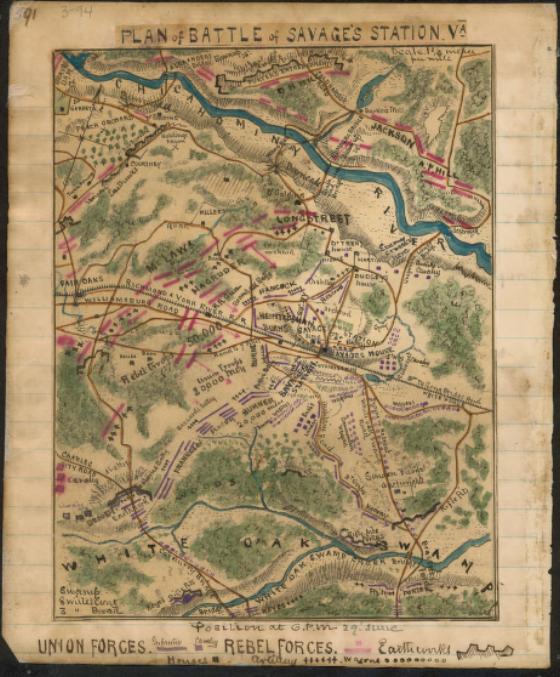
Sneden maps the situation at 6 PM on the 29th
Captured surgeons free to leave.
Southern comity with Uncle Sam
From the Richmond Daily Dispatch June 28, 1862:
War Department, Adj’t Inspector General’s office, Richmond, June 26, 1862.
General Orders, No. 45.
I. A General Intelligence Office, to enable the friends of the sick and wounded to find them out, to facilitate communication with the army, is hereby established. Military Commanders and Surgeons will afford all the means in their power to promote the ends of its establishment.
II. Medical officers taken prisoners of war by the armies of the Confederate States will be immediately and unconditionally discharged.
III. The Government of the United States having recognized the principle that medical officers should not be held prisoners of war, and having ordered the immediate and unconditional release of all medical officers so held, all medical officers of the Confederate States, now on parole, are hereby discharged from their parole.
By command of the
Secretary of War.
Adj’t and Inspector General,
George Wythe Randolph served as Confederate Secretary of War from March – November 1862.

