Toddy Mixer Locked Up!

Mint juleps only a memory under Richmond’s martial law?

From the Richmond Daily Dispatch June 17 (or 16), 1862:

Provost guard.

–Capt. Bossieux’s company is doing provost guard duty in the Eastern District, and have proved themselves energetic in the performance of duty. They arrested on Saturday more than fifty deserters, and captured seventy gallons of terrible whiskey.

Also from the same issue:

In Limbo.

–Jim Cook, the celebrated toddy mixer, (in the days of mint juleps,) was put in Castle Godwin yesterday, on suspicion of dispensing the ardent contrary to the provisions of the proclamation declaring martial law in Richmond. Jim solemnly asseverated his entire innocence of the charge.

A couple days earlier the editors at the Dispatch thought that the prohibition on alcohol should not be applied to soldiers doing their duty in terrible conditions and used Stonewall’s growing renown to make up their point. From the Richmond Daily Dispatch June 14, 1862:

Spirit rations for the army.

We were surprised to hear a few days ago from an old soldier that spirit rations are not served out to the men in our army. In our opinion, this accounts in some measure for the ravages of disease and of death in our rank. A small quantity of whiskey twice a day is almost essential to the health of men who undergo such exposures and hardships as those of the soldier. Especially is this the case where the men are unable to procure coffee. Coffee is a great stimulant and invigorator. In the French army it is greatly in use, and perhaps deserves no little credit for some great victories. In the Yankee army the men have regular spirit and coffee rations. It is rather hard that our brave fellows should have neither, and be obliged to contend against superior numbers besides. This great omission ought at once to be rectified. There ought to be whiskey enough in the country to supply an army as large as that of Xerxes for a year. We had supposed when the sale of whiskey was prohibited to citizens and to soldiers in cities, one object was to preserve the supply, which, in moderate quantities, is highly important for the fighting man. It was right and proper to keep whiskey out of the hands of those who would use it for evil purposes, and to prevent soldiers who are off duty from drinking to excess; but a wine glass full twice a day to a man who is digging ditches from sunrise till sunset, and sleeping on the wet ground at night, or standing guard in the winter snows till his feet are frozen to the ground — as repeatedly happened to our sentries last winter — is a very different matter. It is a thing, under such circumstances, of almost absolute necessity, and the quality being regulated by army rules, excess is impossible. We have heard that old Stonewall says that, though he never drinks himself, nothing does him more good than to see his men refreshing themselves with the modest allowance which is contained in the spirit ration. This snows the practical good sense and discrimination of this valuable officer. He does not tickle his own palate with wines, and then withhold whiskey rations from his soldiers; but, on the contrary, whilst he denies himself, has no desire to make his own abstinence a rule for everybody else. Nothing can be more horrible and disgusting than intemperance, and an army of drunkards would make short work with any cause committed to their hands. We should be glad indeed if whiskey were put out of the reach of every man, citizen or soldier, who has not the virtue of self control, but that should not lead us to deprive men of a prescribed moderate quantity, who are performing such extraordinary labors as those required of the soldier.
Posted in 150 Years Ago This Week, Confederate States of America, Southern Society | Tagged , | Leave a comment

Poetic Pelican

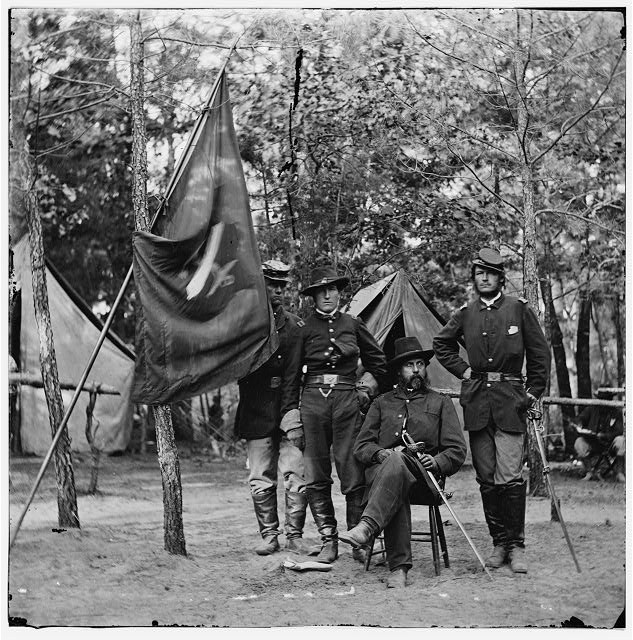
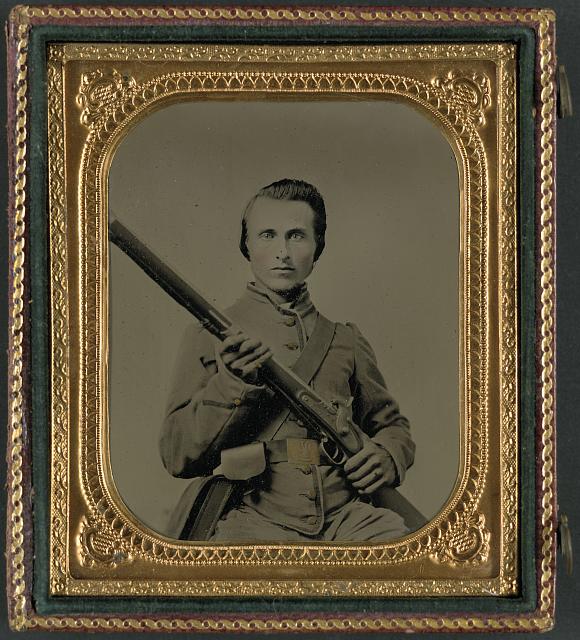
Unidentified soldier in Confederate uniform and Louisiana state seal belt buckle with musket (between 1861 and 1865; LOC: LC-DIG-ppmsca-31314)

Wears pelican on his belt buckle?

Defending hearth and home still a great motivator.

From the Richmond Daily Dispatch June 14 1862:

Impromptu.
by a soldier.

Through this deserted cottage now
No gentle footsteps fall;
These silent walls, they echo not
with childhood’s merry call!
Where are the hearts so light and gay–
The loved ones fond and true–
Who sought to fill each passing day
with brighter hopes anew?
Fled, as wintering exiles, now,
Who sad and silent roam–
Fled from all that life holds dear–
A peaceful; happy home!
Oh, God! is this their gloomy fate?
Shall this, their native land,
Be given to a plundering horde?–
A vile and ruthless band?
No! Thou art a god of justice still !
We trust alone in Thee,
To save our brave and Valliant sons,
Now struggling to be free!
We feel that o’er our fallen foes.
Our banners yet shall wave–
That Peace and Plenty soon shall crown
The noble, true, and brave!
The wandering exiles shall return
To hail their homes with joy,
Nor fear again the ruthless horde
Who seek but to destroy!
Yes, fires shall brightly burn again
On this deserted hearth–
These silent walls echo the strain
Of childhood’s welcome mirth.

“Pelican.”

Second Reg’t La. Vols., June 8th, 1862.

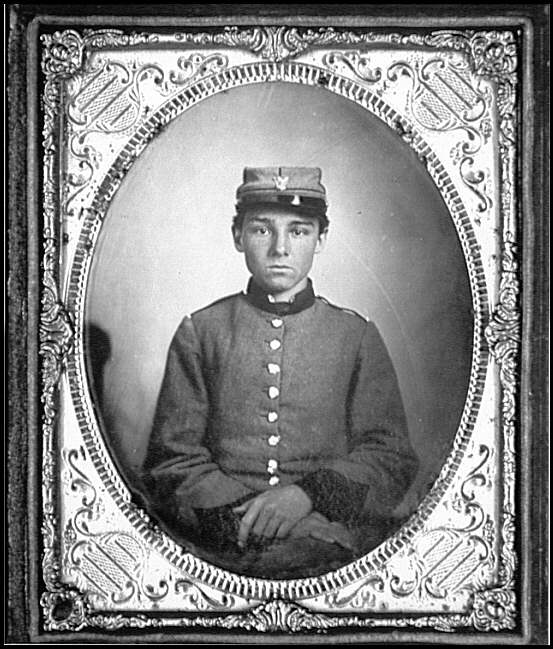
Portrait of Pvt. Edwin Francis Jemison, 2nd Louisiana Regiment, C.S.A. (between 1860 and 1862, re-photographed 1961; LOC: LC-B8184-10037)

LOC: Although previously identified as Private Edwin Francis Jennison, Georgia Regiment, C.S.A., recent research has established that this photograph is of Private Edwin Francis Jemison, 2nd Louisiana Regiment. He served in the Peninsula campaign under General J.B. Magruder and was killed in the battle of Malvern Hill, July, 1862.

Posted in 150 Years Ago This Week, Confederate States of America, Southern Society | Tagged , | Leave a comment

“lurking about his wife”

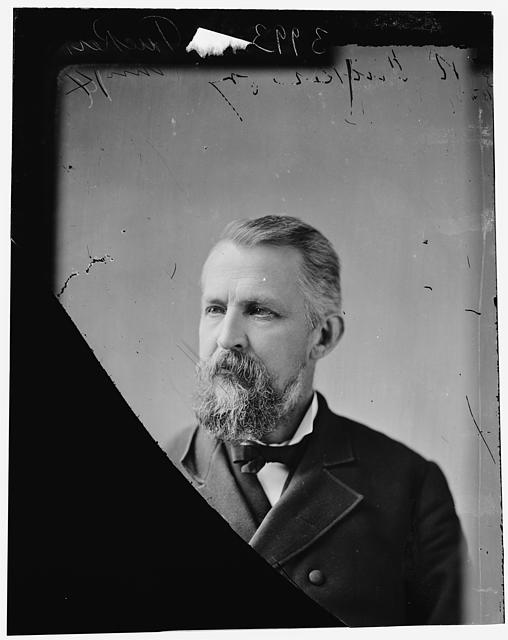
Hon. John Randolph Tucker of VA (between 1870 and 1880; LOC: LC-DIG-cwpbh-03932)

Tucker owned and hired out Nat's wife

From the Richmond Daily Dispatch June 13, 1862:

Look out, police and city Guards.

–$20 dollars reward will be paid for the recovery of my boy Nat, to whom I gave a pass to visit his wife, near the New Fair Grounds, while at the American Hotel, on the night of the 8th inst., to return next morning. Said boy was raised in Richmond by Mr. Kent, of the firm of Kent, Palne & Co. He is about 27 or 28 years old, 5 feet 3 or four inches high, weighs about 135 pounds, of dark brown color, and had on a cap and a cloth coat, with the skirts off, when he left. His wife belongs to the Hon. J. Randolph Tucker, and is hired by some maiden lady or widow near said Fair Grounds. The above reward will be paid by me if lodged where I can get him. He is thoroughly acquainted with the city, and will probably keep secluded in the day time, but no doubt will be lurking about his wife.

Jas. C. Beyan, A. C. S.,

je 12–5t* 6th Alabama Regiment.

James C. Bryan is listed as an Assistant Commissary Sergeant with the 6th Alabama at least for part of the early part of the war.

John Randolph Tucker served as Virginia’s Attorney General during the war.

Posted in 150 Years Ago This Week, Confederate States of America, Southern Society | Tagged , , , , , | Leave a comment

Be careful what you pray for

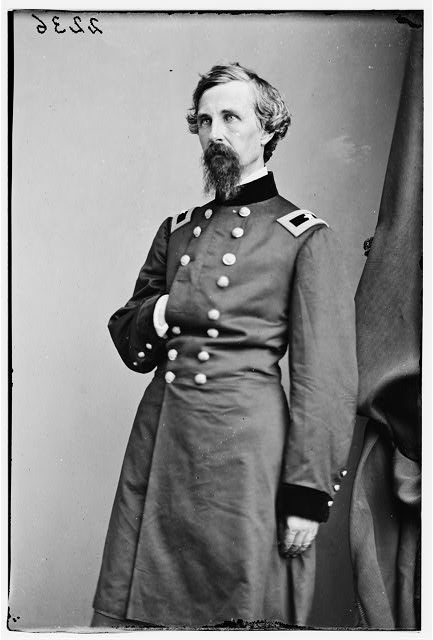
Geo. F. Shepley, Col. 12th Maine (between 1860 and 1870; LOC: LC-DIG-cwpb-06481)

Treason perverts church service

From the Richmond Daily Dispatch June 12, 1862:

How the people are to pray.

Usurping the prerogative of the Almighty, as will be seen by the following order, our enemies have undertaken to prescribe the from and the substantiae of the people’s prayers. They are required to pray for the success of those who have invaded their homes, insulted their wives and daughters, and attempted to arm their slaves and incite them to insurrection — or, which is the same thing, they are forbidden to invoke the blessings of Heaven upon a gallant army in expelling such a foe from their midst. In forbidding us to pray for the success of our, cause, they require us to pray for the success of theirs.

Office Mil’y Comm’dt of New Orleans.

City Hall, May28, 1862.

hereafter, in the churches in the city of New Orleans, prayers will not be offered up for the destruction of the Union or Constitution of the United States, for the success of the rebel armies, for the Confederate States, so called, or any officers of the same, civil or military, in their official capacity.

While protection will be afforded to all churches, religious houses and establishments, and religious “services are to be had as in times of profound peace,” this protection will not be allowed to be perverted to the upholding of treason or advocacy of it in any form. Where thus perverted, it will be withdrawn. G. F. Shepley,

Military Commandant.

A lawyer from Maine, George Foster Shepley began his Civil War career as the colonel of the 12th Maine Volunteer Infantry Regiment. He served as military governor of Louisiana from 1862-1864. He later ran Richmond from mid-April into June 1865.

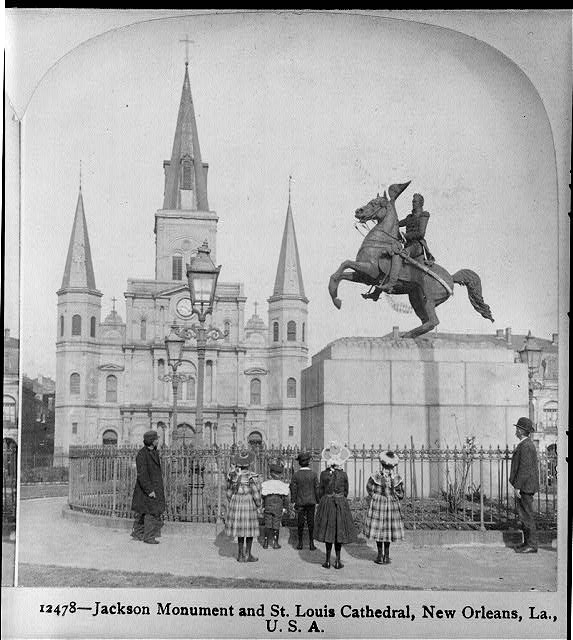
Jackson Monument and St. Louis Cathedral, New Orleans, La. (c1902; LOC: LC-USZ62-65453)

Our federal Union must be preserved, by Gum!

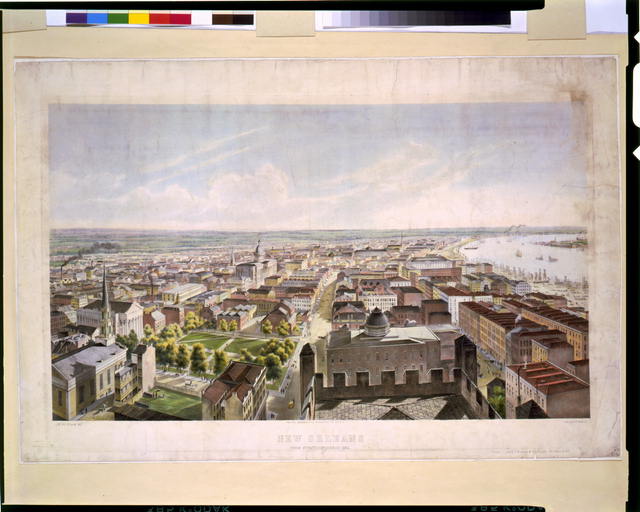
New Orleans from St. Patrick's Church 1852 (Published by Smith Brothers & Co., 1852; LOC: LC-DIG-ppmsca-09333)

From St. Patrick's, New Orleans 1852

Posted in 150 Years Ago This Week, Confederate States of America, Military Matters | Tagged , , , | Leave a comment

Market Watch

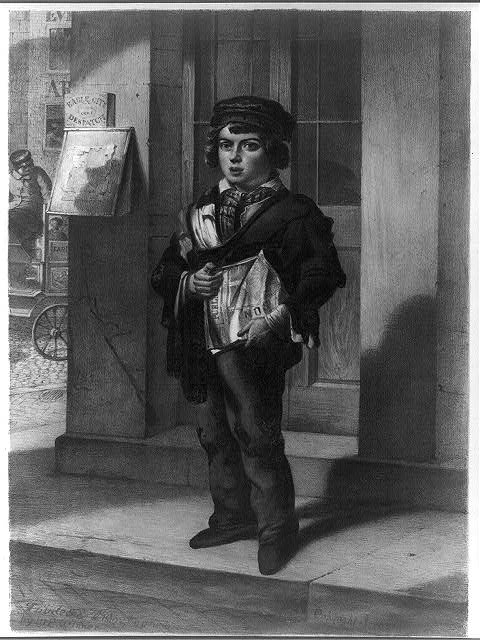
The newsboy (c1853 Feb. 26; LOC: LC-USZ62-19182)

Driving a hard bargain

Richmond Newsboys Overcharging; Scarcity at the Produce Markets

From the Richmond Daily Dispatch June 11, 1862:

Flotation of Newspaper boys.

The practice among newsboys of overcharging strangers and residents in the city for the Dispatch having become so common, we earnestly request that any carrier or newsboy detected in charging more than five cents for the Dispatch may be handed over to the Provost guard and his papers taken from him.–A few arrests of this kind will put a stop to the shameful impositions perpetrated by paper venders on the public.

A subscriber could get the Dispatch for 6 and 1/4 cents per week.

The editors sound hungry for a good meal. Also from the Richmond Daily Dispatch June 11, 1862:

The markets.

–The supplies of country produce, or indeed of any kind of produce, are getting much smaller than we think is warranted by the state of affairs by which we are surrounded. A person having anything for sale at the markets can get what he chooses to demand for it, and now-a- days, if ever, is realized the old saying that an article is worth just what it will bring. Of varieties in vegetables there are but few, and the same thing may be said of meat. The odor of savory viands delighted the nostrils; while the sight of fat capons, canvas backs, juice sirloins, portentous roasts, luscious bivalves, and all the good things, the thought whereof maketh the mouth water, exercises a wonderful influence on the gastric regions, and causeth one to obey the Scriptural injunction, “sit down and eat,” with unusual alacrity, when he can get near a table whereon they lie; but at this particular juncture, and in this latitude, such dishes are rare.

Posted in 150 Years Ago This Week, Confederate States of America, Southern Society | Tagged , , , | Leave a comment

Died of a Wounded Knee

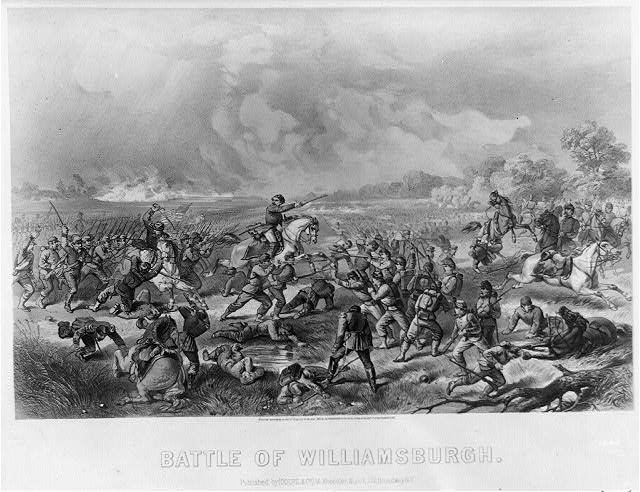
Battle of Williamsburgh (c1862 June 6; LOC: LC-USZ62-1263)

Williamsburgh

A Lingering Death

Apparently this wounded soldier thought he had a better chance trying to get his own medical help than relying on the army.

From a Seneca Falls, New York newspaper in 1862:

Death and Burial of a Soldier

The last tribute of respect to a wounded and deceased soldier was paid on Tuesday evening [June 10, probably], in consigning to the grave the remains of CHARLES MENSCH. Deceased was a son of C. Mensch, proprietor of the Mansion House. He was a member of Co. H. 33d N.Y. Vol., and shared with that Regiment the glories and victory of the battle of Williamsburgh. He however received a severe wound in the knee, in the engagement, and essayed to get home, but came no farther than New York. On the 31st of May his leg was amputated, but he kept gradually growing worse, and died on the 8th. The corpse arrived here on Tuesday morning. The funeral was attended by several of his returned comrades, who were taken prisoners in the battle, but released by the enemy on parole. Also by the Fire Department, of which deceased was a respected member, and by a large number of citizens. His parents have the genuine sympathy of our community in their loss- They have the consolation that their son died in a good cause – the cause of upholding our common government and country.-

Geneva Gazette.

Mensch

Posted in 150 Years Ago This Week, Military Matters, Northern Society | Tagged , , , , , | Leave a comment

General Hospital (#1)

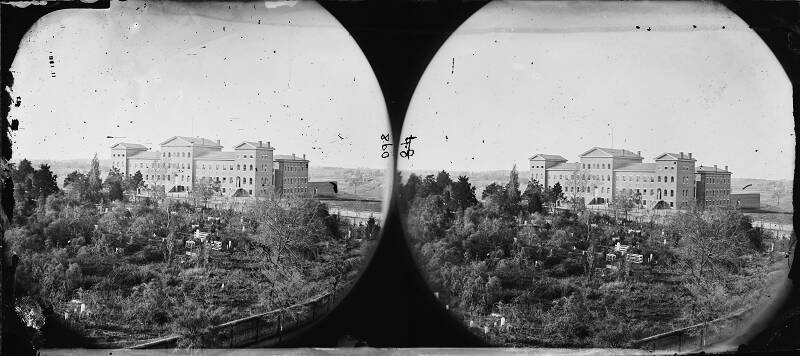
Alms House, General Hospital #1, Richmond Va.; Shockoe Cemetery in foreground - Gardner Stereo #860 Alexander Gardner - photographer. Negative at Library of Congress (LC-B815-0860)

General Hospital #1 and Shockoe Cemetery

Nursing opportunities in Black and White as war progresses

From the Richmond Daily Dispatch June 9, 1862:

Wanted — Nurses.

–Wanted immediately, at the General Hospital, twenty men, white or black, to act as Nurses. I will give twenty dollars a month and provide their meals. Apply to me, at the Hospital, between 9 A. M. and 6 P. M., every day.

Charles Bell Gibson,

Surg. P. A. C. S.,
in charge Gen. Hospital.
printrunje 6–1w*

You can read a good biography of Dr Charles Bell Gibson at Find A Grave. Among the Union wounded Dr. Gibson treated after First Bull Run was Orlando B. Willcox, who praised the good doctor for his skill and caring: “his visits brot sunshine into the wards”. Dr. Gibson’s death in April 1865 eventually opened up a post-bellum opportunity for Stonewall’s Surgeon, Dr. Hunter McGuire, who in November 1865 took Gibson’s place as chair of surgery at Richmond’s Medical College of Virginia.

Civil War Richmond provides information about General Hospital #1 (including the above photo). There is a link to a Dispatch notice from June 1862 in which Dr. Gibson is advertising for washerwomen at $1 per day.

Petersburg, Va. Gen. Orlando B. Willcox and staff, 3d Division, 9th Corps (1864; LOC: LC-DIG-cwpb-01713)

Orlando Willcox healed to fight another day

Posted in 150 Years Ago This Week, Confederate States of America, Peninsula campaign 1862, Southern Society | Tagged , , , , | Leave a comment

Amusements South and North

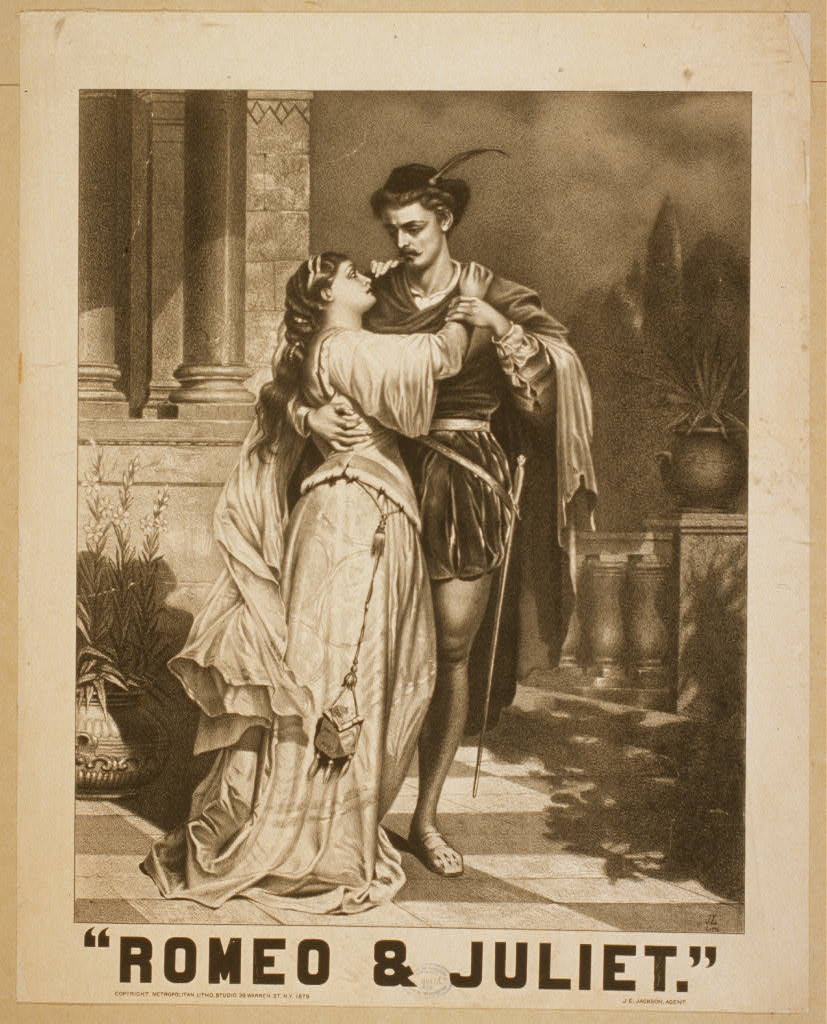
Romeo & Juliet (N.Y. : Metropolitan Litho. Studio, c1879; LOC: C-USZ62-132746)

Resuming Monday in Richmond

In early June 1862 Richmond was hard pressed by the huge Union army a few miles to the north, but despite the “general gloom” there was still some entertainment advertised. From the Richmond Daily Dispatch Saturday, June 7, 1862:

The Varieties.

–We learn that this place of amusement will be reopened on Monday evening. An impression has got out that Franklin Hall, now the Varieties, had been taken for a hospital. Such is not the fact, as the building was found unsuited for such a purpose when inspected. Out of respect to the dying and wounded soldiers, and the general gloom which pervades our city, there has been no performance during this week — a fact which speaks loudly for the humanity of those in charge. “Romeo and Juliet” will be played Monday night.

Although New York City wasn’t threatened by rebel hordes, the Times was, of course, dominated by war news 150 years ago today, but there were also articles about a regatta at the Yacht Club and horse-racing. Base ball was still being played.

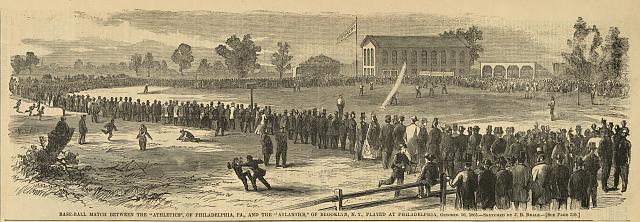
Base-ball match between the "Athletics", of Philadelphia, Pa., and the "Atlantics", of Brooklyn, N.Y., played at Philadelphia, October 30, 1865 (1865 November 18;LOC: LC-DIG-ppmsca-17532)

At Philly in October 1865

From The New-York Times June 7, 1862:

Base Ball Philadelphia vs. Brooklyn.

The Philadelphia base ball players played their second game Thursday afternoon, at Bedford, L.I., their competitors being a nine selected from the following clubs of the Western District, viz; Enterprise, Atlantic, Excelsior and Exercise.

The game was won handsomely by the Brooklyn nine, who, one and all, played their respective positions in a splendid manner. The Philadelphians also played in good style, some of their positions being extremely well filled, of which we would name ANSPACH, who fielded and batted finely; the bases were well attended to by MOORE, JOHNSTON and PAUL; their pitcher, catcher, and short-stop elicited praise for good general playing.

By far the largest assemblage which has gathered upon any base ball ground during this season, were spectators of this game, including an unusual proportion of ladies. The best of feeling was exhibited, and the Philadelphians were treated to frequent and enthusiastic applause. At the conclusion of the game a generous entertainment was provided for them at Wild’s Hotel. To-day they play a nine selected from the Eckford, Putnam and Constellation clubs, on the new Union grounds, Brooklyn:

PHILADELPHIA. BROOKLYN.

Players. Out. Runs. Players. Out. Runs.

Johnston, 3d b…….5 0 Chapman, c…….4 3

Bomeisler, c……….4 1 Morris, r. f………..2 5

Paul, 2d b…………2 1 Creighton, p……….2 4

Wilkins, s. s……….4 1 Peter O’Brien, l. f…3 4

Anspach, c. f………1 3 Crane, 2d b………..4 3

Moore, 1st b………..2 2 Smith, 3d b……….3 4

Corosdale, r. f……..3 1 Calpin, c. f………..0 3

Lowery, l. f……….2 1 Flanby, s. s………..5 1

Pratt, p……………4 0 Massey, 1st b………4 0

Total……………….10 Total………………27

SCORER — For Philadelphia, C.K. Shantz.

SCORER — For Brooklyn, C. Morris.

UMPIRE — Masten, of the Putnam Club.

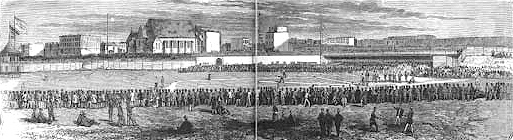
Union_grounds_Brooklyn_1865

1865 view of Union Baseball Grounds: where there's a fence, there's a fee

The second game with Brooklyn was played yesterday afternoon, on the new Union Base Ball grounds, in Williamsburgh. The Brooklynites were selected from the Eckford, Putnam and Constellation clubs — organizations which are well known to fame for their first-class players. The game was won by Brooklyn, whose score was 23 to Philadelphia’s 16 runs.

A large number of spectators were in attendance, comprising the representatives of our New-York and Brooklyn clubs, as well as members of the fraternity from Boston, Philadelphia, Albany, Troy and many other places. The game excited especial interest in Brooklyn, whose residents rallied in scores to enjoy it.

Of the Philadelphians, it is superfluous to make any further particular comment, as in the several games which they have played while with us, they have shown themselves to be good and experienced players; some of their positions, such as pitcher and catcher, for instance, are especially well filled.

The Philadelphians express themselves as having experienced an extremely “good time” during the past six days. They will return to Philadelphia to-day. We append the score of yesterday’s game:

PHILADELPHIA. BROOKLYN.

Out. Runs Out. Runs.

Paul, 2d b………..4 1 Burr, e. f…………2 4

C. Bomeisler, 3d b..4 2 Reach, s. s……….2 5

Hayhurst, c. f…….5 0 Smith, 2d b………3 3

Pratt, s. s………..2 2 Mills, p…………..3 2

Anspack, 1st b…….4 2 Masten, 3d b……..4 3

T. Bomeisler, c……0 5 Rodgers, 1. f……..3 1

Croasdale, p………2 3 Bliss, 1st b……….3 1

Loughery, l. f……3 1 Beach, c………….3 3

Moore, r. f……….3 0 Thomas, r. f………4 1

16 23

RUNS IN PACH INNINGS.

1st 2d 3d 4th 5th 6th 7th 8th 9th

Philadelphia……0 3 4 0 1 2 2 4 0

Brooklyn………4 3 1 3 2 7 2 1 0

Scorer Philadelphia, C.R. Shantz.

Scorer for Brooklyn, D.J. McAuslan.

Umpire, John Grum, of the Eckford.

Baseball Library mentions the opening of the Brooklyn Union Grounds and the two all-star games reported in the Times.

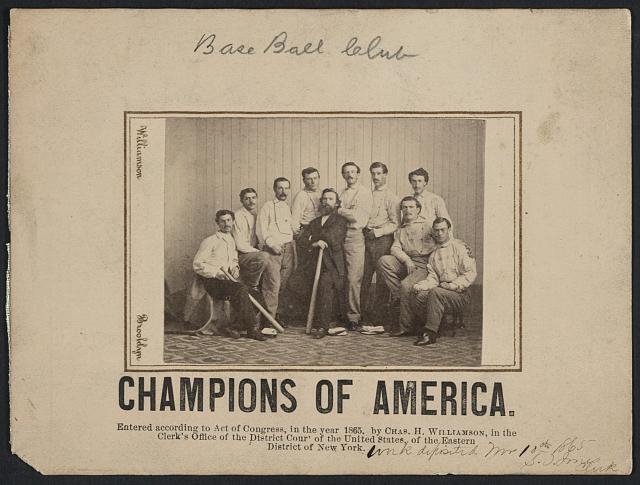
Champions of America (Brooklyn, (New York) : c1865; LOC: LC-DIG-ppmsca-09310)

1865 Champions

Posted in 150 Years Ago This Week, American Culture, Northern Society, Southern Society | Tagged | Leave a comment

Union Hasn’t Forgotten Charleston

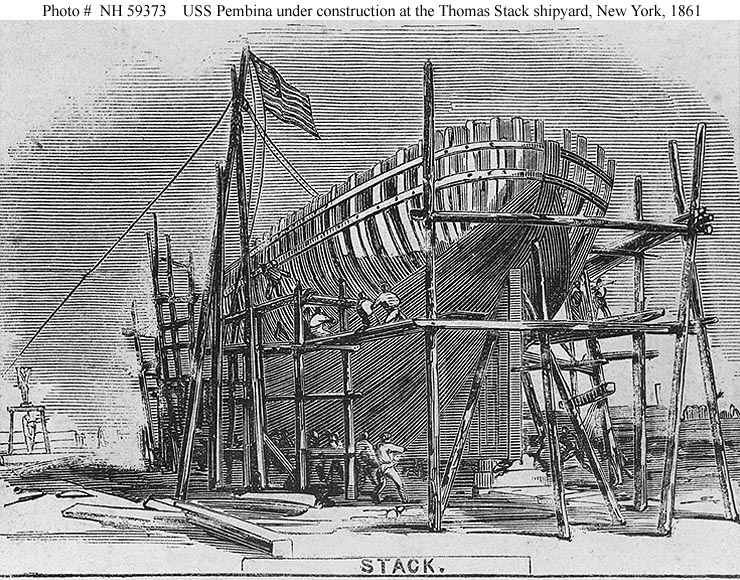
USS Pembina (1861-1865)  Line engraving published in "Harper's Weekly", July-December 1861, depicting the ship under construction at the Thomas Stack shipyard, New York City. Pembina was launched on 28 August 1861.  U.S. Naval Historical Center Photograph.

Fleshing out a skeletal Pembina

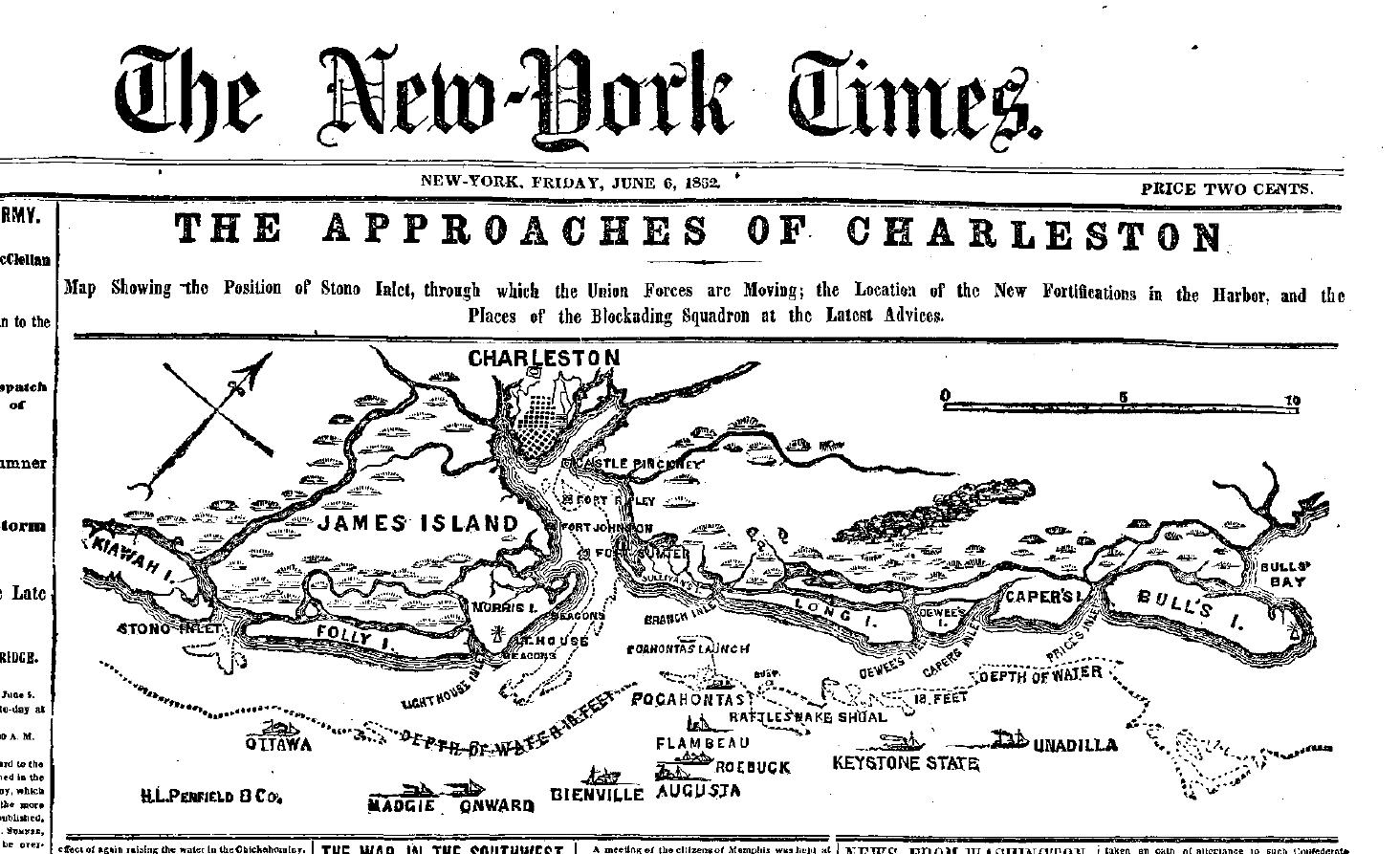
It is said that 150 years ago today the USS Pembina captured the schooner Rowena in the Stono River near Charleston. The southern press was also noticing increased Union military activity in the area. From the Richmond Daily Dispatch June 6, 1862:

The enemy a movements in Stone [Stono?] river.

The Charleston Mercury, of Tuesday last [June 3], says:

Yesterday morning the enemy’s gunboats began a vigorous and indiscriminate shelling of the neighborhood of Secessionville. The firing continued with greater or less rapidly during the forenoon but did not result in any particular damage on our side. During the afternoon the firing ceased, but the number of the enemy’s gunboats was increased, eight having anchored in Stone river, while thirteen others were reported to be outside the bar. To-day will probably develop the meaning of proximity of this unusually large flotilla to James Island.

Last night the town was full of rumors, of various degrees of possibility; but as we could trace none of them to authentic sources, we confine ourselves to the facts we have ascertained and given above.

Also on June 6, 1862 The New-York Times mapped the harbor (and got Sumter spelled right):

CharlestonJune1862NYT (New York Times 6-6-1862)

Trying to get at Charleston

Posted in 150 Years Ago This Week, Military Matters | Tagged , , , , , | Leave a comment

Dewey Beats Truman

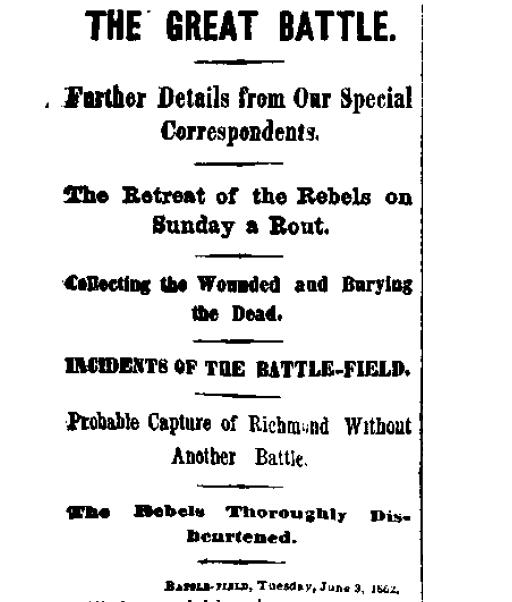
150 years ago today The New-York Times. devoted its front page to the Battle of Seven Pines. The paper’s battlefield correspondent made the following statement in his report: “The fall of Richmond will take place without another battle.

The editors hedged their bets a bit in the headline:

headline New York Times 6-5-1862

Richmond is (pretty much) ours

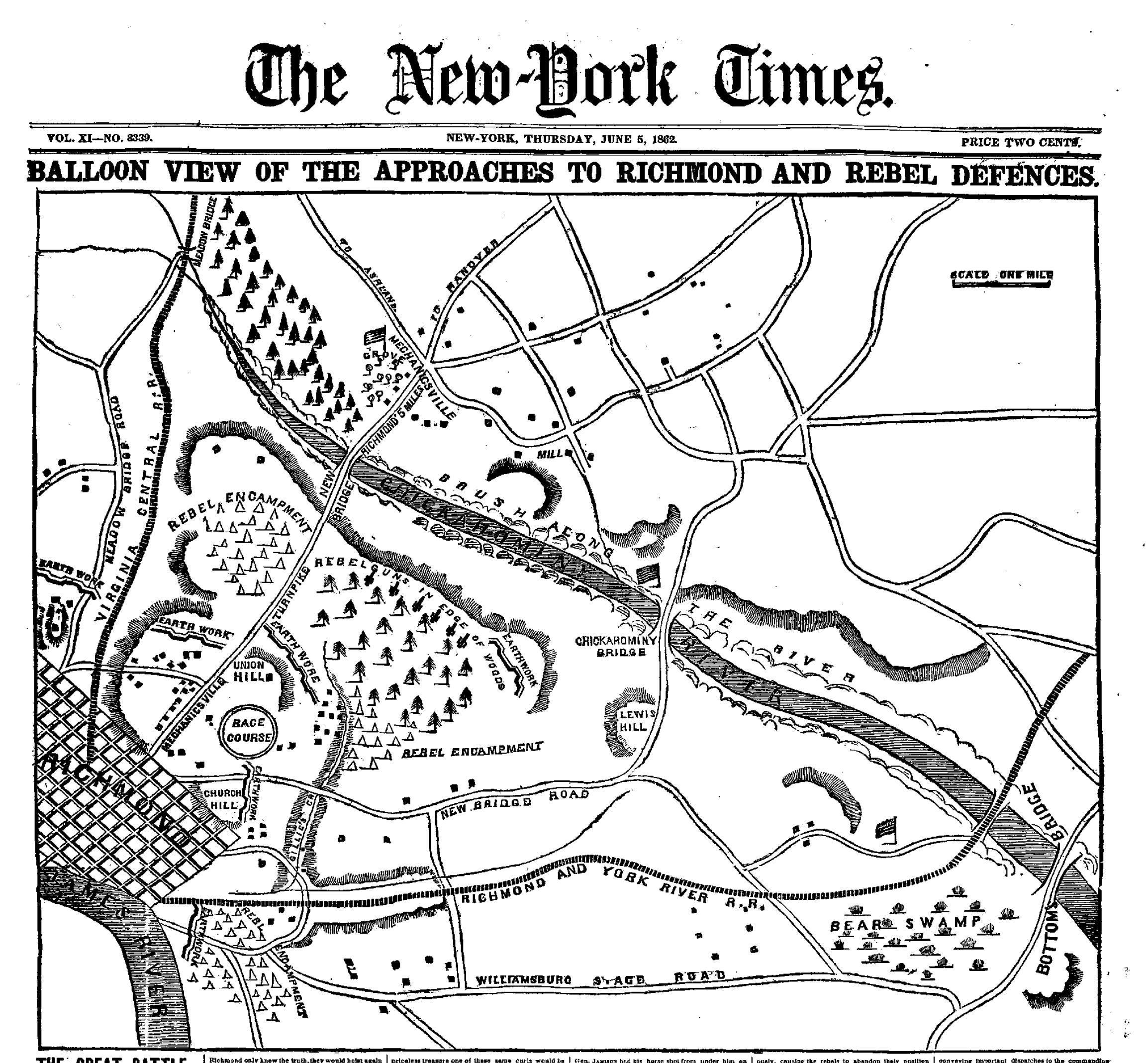
The main part of the front page was devoted to a “balloon view” of the approaches to the Confederate capital:

Balloon View - Richmond and approaches, New York Times 6-5-1862

Seeing our way clear to victory

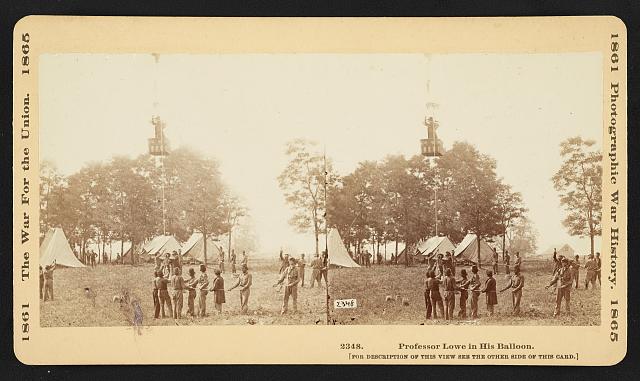
Professor Lowe in his balloon (The War Photograph & Exhibition Co., No. 21 Linden Place, 1862 May 31; LOC: LC-DIG-stereo-1s02744)

Balloon rising over Fair Oaks

Posted in 150 Years Ago This Week, Military Matters | Tagged , , , | Leave a comment