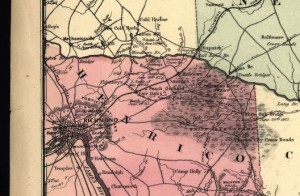
Scalped?

“Beauty and Booty”, “ruthless tyrant’s march”, “Hessians”. So far the South has found lots of ways to put down the North and strike a little extra fear into the hearts of Southerners as the Union army invades.

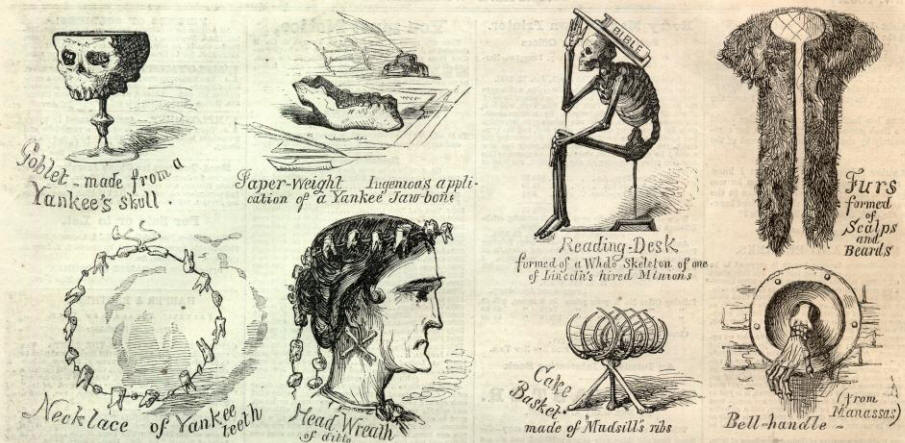
150 years ago this week Harper’s Weekly (June 7, 1862) published this cartoon, which makes out the “Secesh” minions to be savages. As I was looking at this at Son of the South, it struck me that there was a parallel between the cartoon’s point and the stories we were told about the Plains Indians using every last bit of the buffalo they killed.

secesh-cartoon Harper's Weekly June 7, 1862

Some Specimens of 'Secesh' Industry—intended for the London Exhibition of 1862, but unfortunately intercepted by the 'Paper Blockade.'

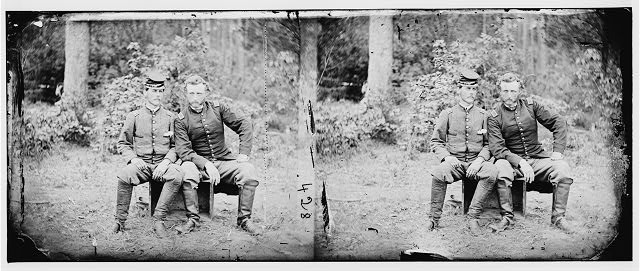
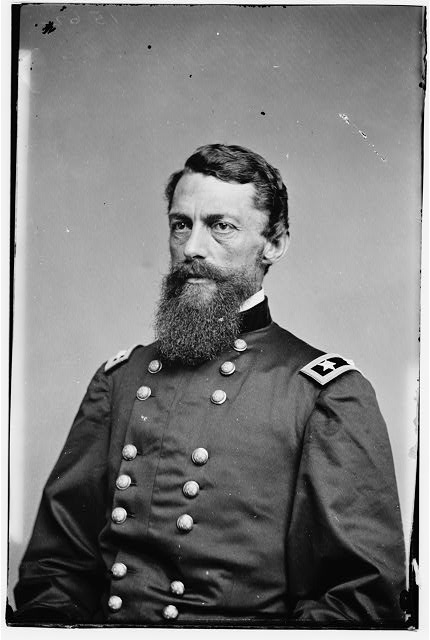
George Custer doesn’t look too scared of a rebel prisoner bagged at Fair Oaks.

Fair Oaks, Va. Lt. James B. Washington, a Confederate prisoner, with Capt. George A. Custer of the 5th Cavalry, U.S.A. (1862 May 31; LOC: LC-DIG-cwpb-00156)

Custer poses with 'the enemy'

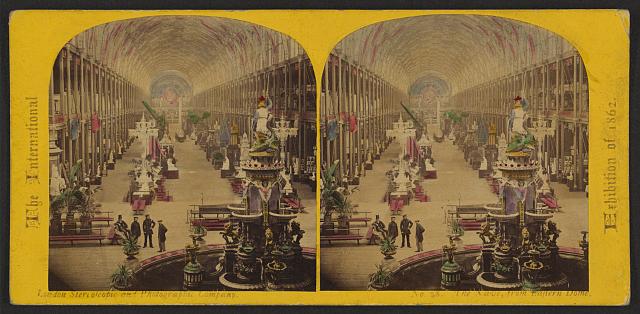
Here’s a view of London’s International Exhibition of 1862:

The International Exhibition of 1862 The nave, from eastern dome. (London Stereoscopic and Photographic Company ; 1862; LOC: LC-DIG-stereo-1s02412)

Blockade does its work? no Yankee jaw-bone paperweights on view

Posted in 150 Years Ago This Week, Military Matters, Northern Society, Peninsula campaign 1862 | Tagged , , , , | Leave a comment

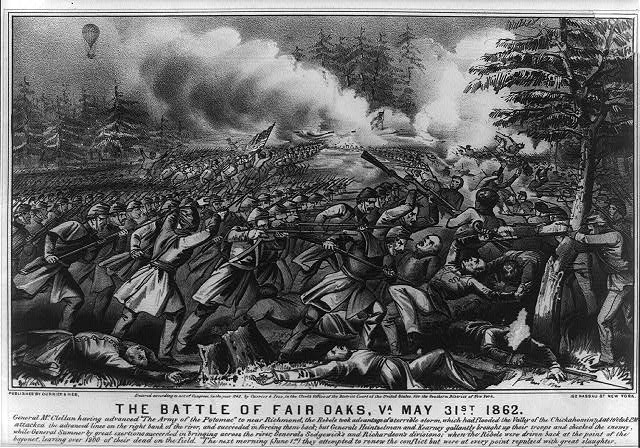
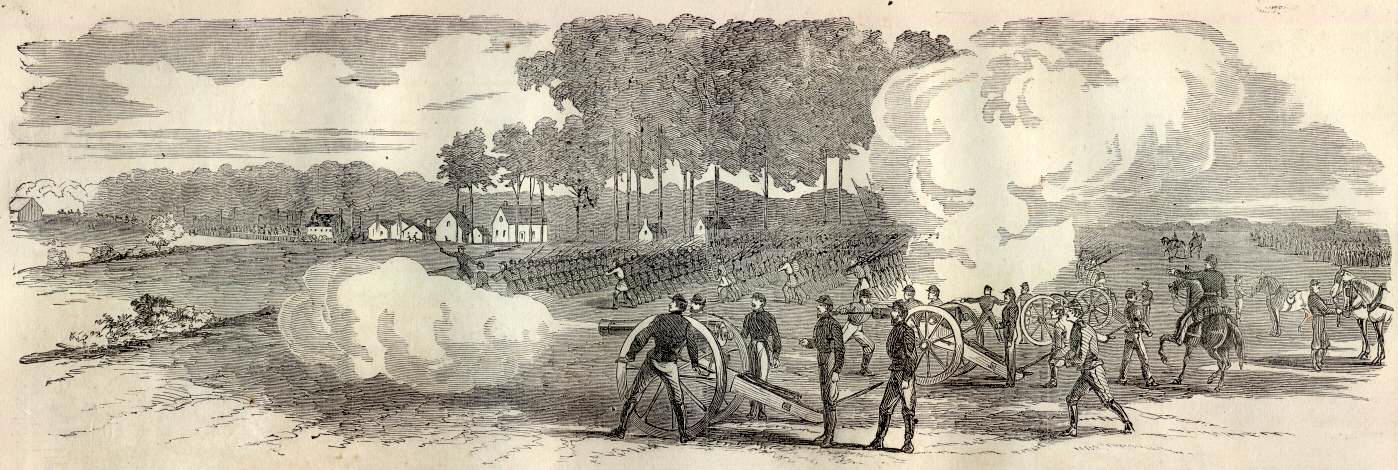
“nobly fought and fallen”

Battle of Fair Oaks, Va. May 31st 1862 (Currier & Ives, 1862;LOC: Currier & Ives, 1862)

'battle's carnage'

Apparently many Richmond civilians witnessed the Battle of Seven Pines (Fair Oaks). They returned to the Confederate capital with a “thousand extravagant stories”. Many wounded soldiers were brought to the city.

From the Richmond Daily Dispatch June 2, 1862:

The Scenes in Richmond — the wounded.

–On yesterday and the ever before our city presented one of those grand spectacles which it is not often the province of man to witness. Richmond, environed by a hostile foe, whose thunder of artillery belched death amid our ranks, sweeping like “chaff before the wind.” our fathers, friends, brothers, husbands — yet there was no yielding heart, no quivering life, no drooping eye, even amid the thousand extravagant stories told by returning civilians, whose eyes are unaccustomed to the sight of battle’s carnage; but every face wore that expression of intense anxiety which betokened an iron determination to resist the ruthless tyrant’s march, even till the last life shall be sacrificed upon the altar of our country’s liberty.

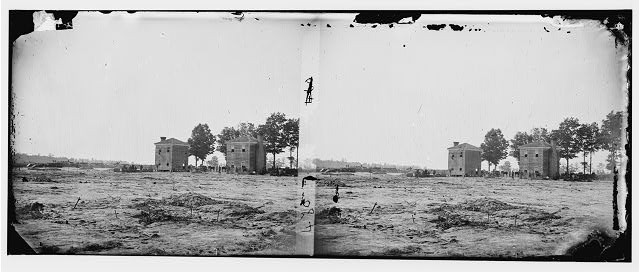
Fair Oaks, Virginia. Rear view of old frame house, orchard, and well at Seven Pines. Over 400 soldiers were buried here after the battle of Fair Oaks (1862 June; LOC: LC-DIG-cwpb-00189)

Burying Ground

During the day, large numbers of gallant wounded were brought in and assigned to the various hospitals, and with mingled pride and pleasure we witnessed the kind attention shown them by our citizens — some dressing wounds, some feeding the hungry, some with soothing cordials cooling parched lips, whilst ever present were those angel female forms, who, with saddened hearts but cheerful words, administered those little delicacies which revived in the soldier’s breast that hopeful remembrance of their homes, in whose defence they have nobly fought and fallen. We would earnestly ask every mother and sister of Richmond to contribute their aid in alleviating the distress of our wounded, by contributions of cordials bandages, cooked provisions. coffee, tea, lint. &c., which can be sent to Messrs. Meade to Baker’s, or to the receiving hospital, at Seabrooks Warehouse where they will be much needed. We know the appeal will not be in vain but let no one wail [wait?] for her neighbor.

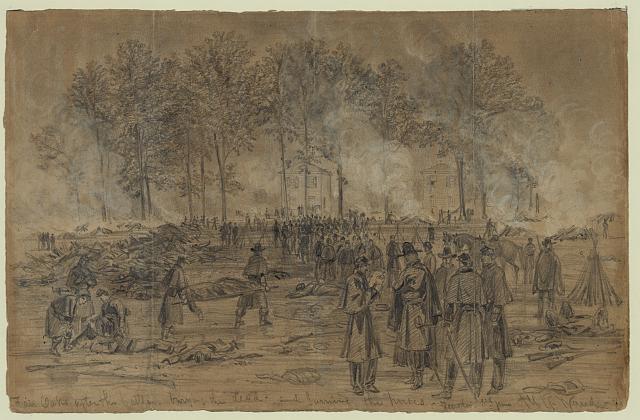
After the battle the Yankees had to bury the dead and burn the horses:

Fair Oaks after the battle, burying the dead--and burning the horses. Tuesday 3rd June (by Alfred R. Waud, 1862 June 3, published in the July 19, 1862 issue of Harper's Weekly; LOC: LC-DIG-ppmsca-21381)

Yankees dealing with the battle's aftermath

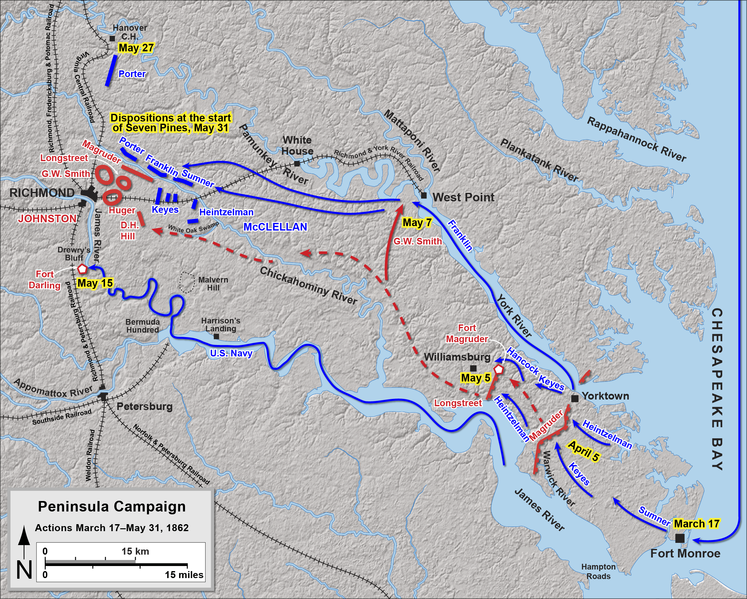
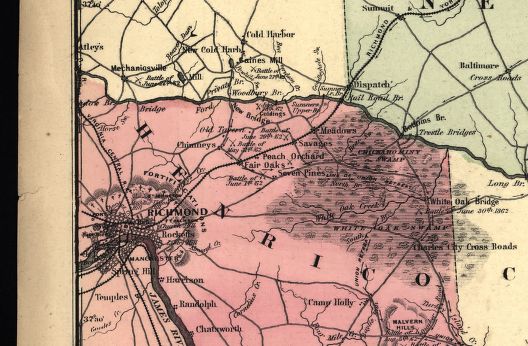
The following map by Hal Jespersen (and licensed by Creative Commons) shows the Union army divided by the Chickahominy. This gave the Confederates their opportunity to attack the Union corps on the Richmond side of the river.

Peninsula_Campaign_March_17_-_May_31,_1862 by Hal Jespersen

Union army astride the Chickahominy

Posted in 150 Years Ago This Week, Military Matters, Peninsula campaign 1862 | Tagged , , | Leave a comment

Bedroom Politics

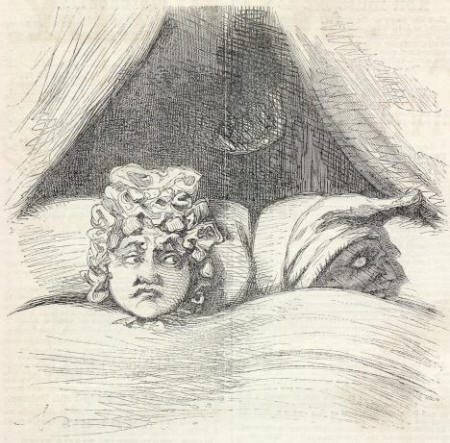
jefferson-davis-cartoon Harper's Weekly 5-31-1862

CAUDLE LECTURE. (Recently delivered at Richmond, Va., and to be repeated at Danville, N. C.) MRS. JEFF DAVIS CAUDLE (loq.) "No, MR. D—, I'll not 'go to sleep, like a good soul!' Where's the Trip to Washington promised me? And where's the NICE WHITE HOUSE I was to have?"

This cartoon was published in the May 31, 1862 issue of Harper’s Weekly, which you can read at Son of the South. I think the cartoonist might be lampooning Confederate politicians for thinking about fleeing Virginia as the Union armies approached Richmond in the spring of 1862.

Eventually Mr. and Mrs. Davis made it back to Beauvoir, their home in Biloxi, Mississippi:

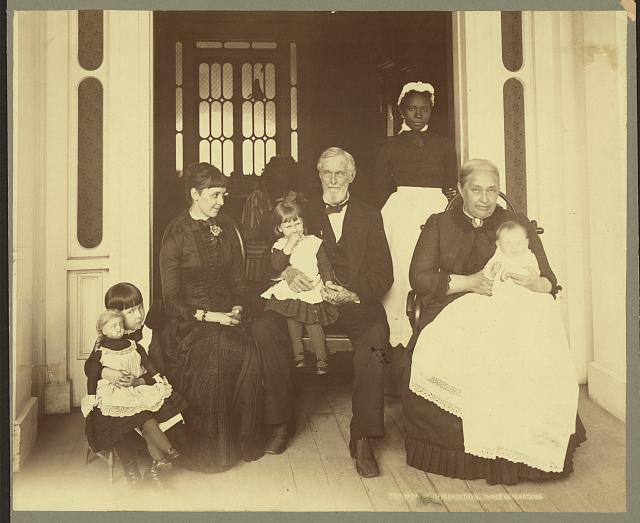
Home of Jefferson Davis, three generations (c1885; LOC: LC-DIG-ppmsca-23869)

Life goes on at Beauvoir c.1885

Sons of Confederate Veterans publish a site about Beauvoir.

Posted in 150 Years Ago This Week, Northern Society | Tagged , , , , | Leave a comment

With a Determination Like Julius Caesar’s

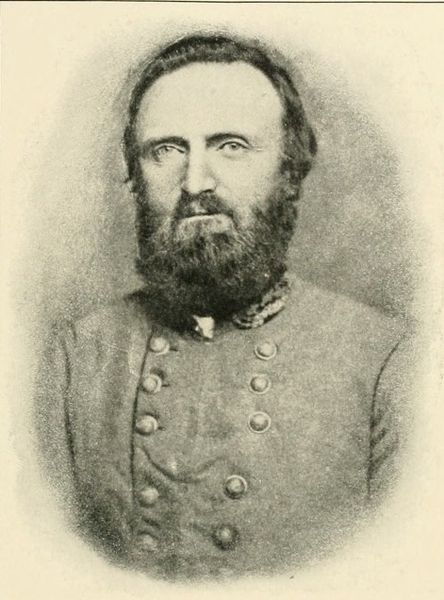
: Confederate Lt. Gen. Thomas "Stonewall" Jackson photographed at Winchester, Virginia 1862. (File from The Photographic History of The Civil War in Ten Volumes: Volume One, The Opening Battles  . The Review of Reviews Co., New York. 1911. p. 305.)

'calm in the midst of a hurricane of bullets'

And a fatalism like Napoleon’s

On May 25, 1862 Stonewall Jackson’s Confederate army won the First Battle of Winchester. As The Civil War 150th Blog points out Jackson had “had become a national hero”. Here’s some evidence for that from the Richmond Daily Dispatch May 31, 1862:

Memoir of Gen. T. J. Jackson.

A friend of this illustrious warrior, whose deeds are now resounding from one end of the Confederate States to the other, has enabled us to give the following sketch of his life, previously to his acceptance of a command in the Confederate army. Since that time it has become a part of the history of the country.

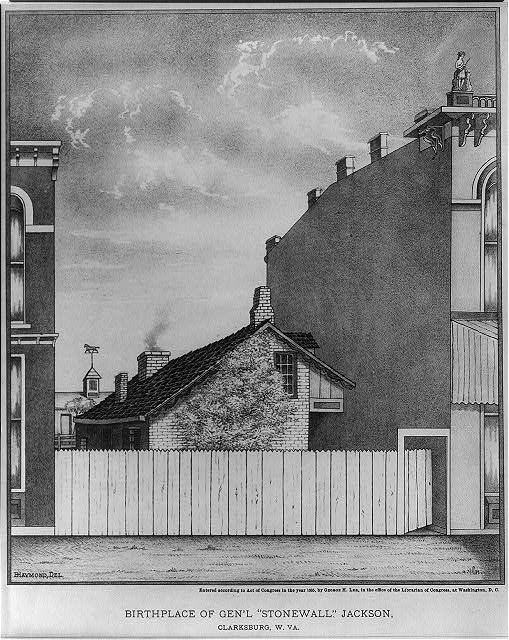
Birthplace of Gen'l "Stonewall" Jackson (c1885 Apr. 18; LOC: LC-USZ62-17660)

Jackson's birthplace in Clarksburg

He was born in Clarksburg, in the county of Lewis, in the year 1862, of highly respectable parents, both of whom died during his infancy, leaving him without a cent in the world. During his early childhood he resided with an uncle, whose name we did not hear and at the age of sixteen he had conducted himself so well, and produced such a favorable impression of his energy and integrity that he was chosen constable of the county. In the year 1842 a cadet had been appointed from his district to West Point, who declined to go. Jackson immediately conceived the idea of filling the place he had left vacant. Our informant says, that one day. while it was raining exceedingly hard. he burst suddenly into his office, the rain streaming from his clothes, and told him that he must give him a letter to Mr. Hayes, at that time representative in Congress from the Lewis district. Upon being asked what he wanted with such a letter, he replied he wished to go to West Point. His friend pointed out to him what he regarded as the absurdity of such a scheme, seeing that he was very deficient in education, and would, therefore, probably not be able to stand the preliminary examination. He acknowledged the alleged deficiency, but said he was sure he had the perseverance to make it up. He obtained the letter without further difficulty, and that very evening borrowed a horse, under promise to send him back by a boy whom he carried with him, and rode to Clarksburg to take the stage. It had been raining for weeks as it can only rain in that country, the roads were muddy as they are muddy nowhere else that ever we heard of Jackson arrived in time; but on account of the muddy roads, the Postmaster had furnished the mail an hour before time, and the stage was already gone. With characteristic fidelity to his promise, Jackson sent the horse back, instead of riding him on in pursuit of the stage, and took it on foot through the mud. After a run of thirteen miles, he overtook the stage, jumped in, went to Washington all muddy as he was, presented his letter to Mr. Hayes, and was by him, intern, presented to the Secretary of War, who gave him the coveted warrant. At West Point he severely felt the want of early education, but his indomitable spirit overcame every obstacle. He was never marked for a demerit during his four years, and graduated with the class of 1846, the same in which McClellan graduated.

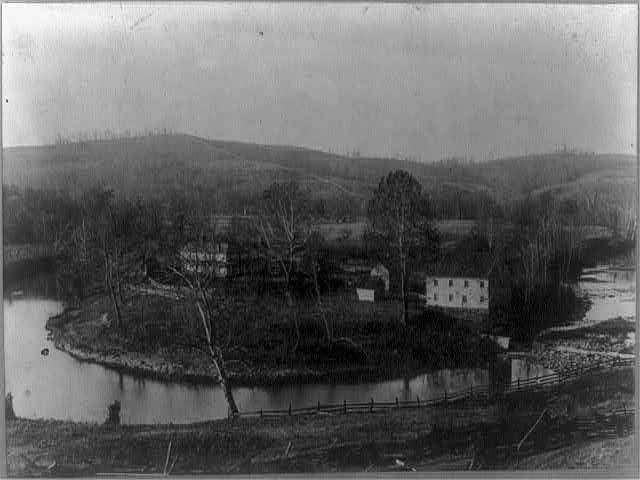
General Stonewall Jackson's boyhood home near Weston, West Virginia (1909 Feb. 25; LOC: LC-USZ62-83515)

Lived as a boy for a time with Uncle Cummins near Weston

The young graduate was ordered off immediately, with the rank of Second Lieutenant, to join General Taylor’s army in the Valley of the Rio Grande. He arrived after the battles of Palo Alto, Resaca de la Palma, and Monterey, and before that of Buena Vista was ordered to join General Scott before Vera Cruz. At the siege of this latter place he commanded a battery, and attracted attention by his coolness and the judgment with which he worked his guns, and was promoted First Lieutenant. For his conduct at Cerro Gordo, he was brevetted Captain. He was in all Scott’s battles to the city of Mexico, and behaved so well that he was brevetted Major for his services. On one occasion he commanded a battery upon which the fire of the enemy was so severe that more than half his troops, who were raw, incontinently ran. Jackson was advised to retreat; but he said if he could get a reinforcement of fifty regulars, he would take the enemy’s battery opposed to him, instead of abandoning his own. He sent for the named reinforcement, but, before it came, he had already stormed the obnoxious battery.

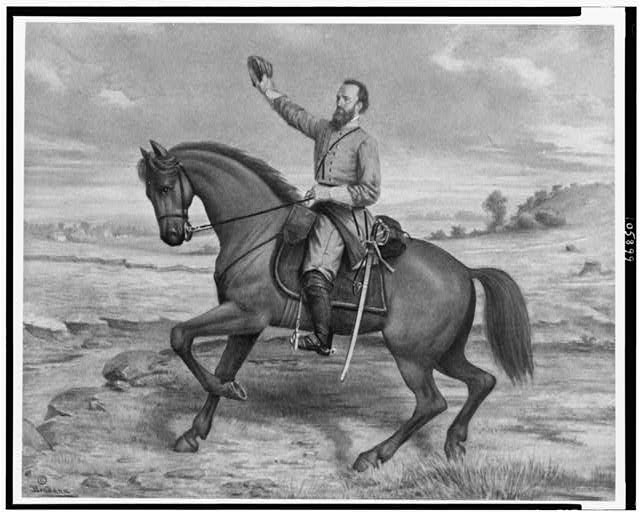
Thomas Jonathan Jackson, full-length portrait, on horseback, facing left, holding up hat in his right hand (c1913; LOC: LC-USZC4-4990)

'all most superhuman endurance'

Jackson’s health was so much shattered by this campaign that he was compelled to resign. He accepted a professorship at the Military Institute, where he continued until the secession of Virginia. In height, he is about six feet, with a weight of about one hundred and eighty. He is quite as remarkable for his moral as he has proved himself to be for his fighting qualities — being a perfectly conscientious man, just in all his ways, and irreproachable in his dealings with his fellow men. It is said he is a fatalist, as Napoleon was, and has no fear that he can be killed before his time comes. He is as calm in the midst of a hurricane of bullets as he was in the pew of his church at Lexington, when he was professor of the Institute. He appears to be a man of all most superhuman endurance. Neither heat nor cold makes the slightest impression upon him. He cares nothing for good quarters and dainty fare. Wrapped in his blanket, he throws himself down on the ground anywhere, and sleeps as soundly as though he were in a palace. He lives as the soldiers live, and endures all the fatigue and all the suffering that they endure. His vigilance is something marvelous. He never seems to sleep, and lets nothing pass without his personal scrutiny. He can neither be caught napping nor whipped when he is wide awake. The rapidity of his marches is something portentous. He is heard of by the enemy at one point, and before they can make up their minds to follow him he is off at another. His men have little baggage, and he moves, as nearly as he can, without encumbrance. He keeps so constantly in motion that he never has a sick list, and no need of hospitals. In these habits, and in a will as determined as that of Julius Caesar, are read the secret of his great success. His men adore him, because he requires them to do nothing which he does not do himself, because he constantly leads them to victory, and because they see he is a great soldier.

I don’t think The Dispatch article is 100% factual, but Jackson’s willpower and opportunism are displayed. For example, one way or another, he found a way to get to West Point when he saw his chance.

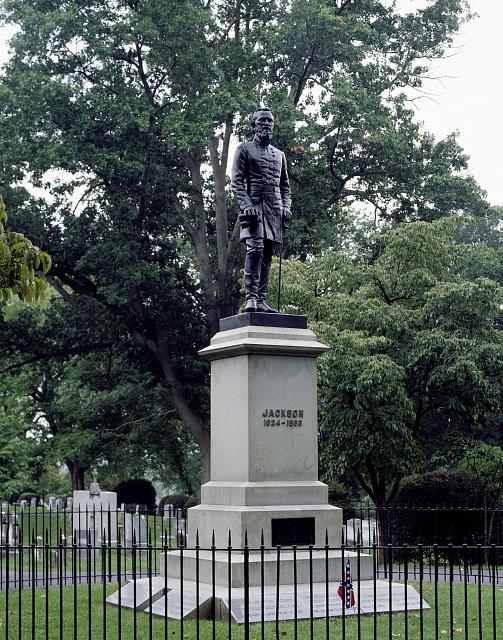
Statue of Confederate General Thomas "Stonewall" Jackson in the Stonewall Jackson Memorial Cemetery, Lexington, Virginia (between 1980 and 2006; LOC: LC-DIG-highsm-15102)

legendary

Posted in 150 Years Ago This Week, Confederate States of America, Military Matters, Southern Society | Tagged , , | Leave a comment

Blowing Bubbles

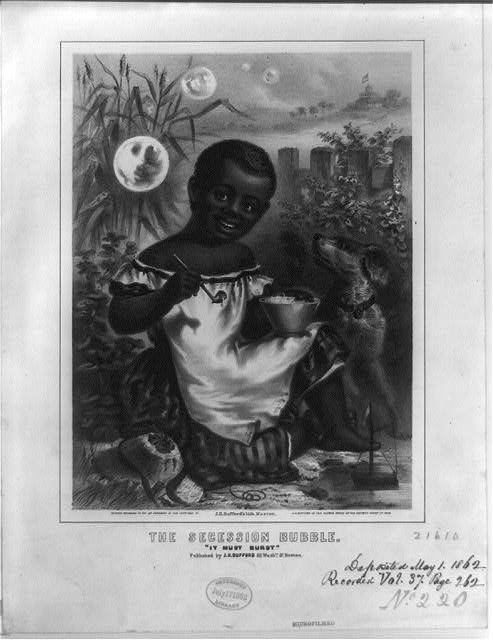
The secession bubble. "It must burst" (by Dominique C. Fabronius, Published by J.H. Bufford, 313 Washtn. St., Boston, c1862; LOC: LC-USZ62-89744)

A fleeting secession?

People have been blowing bubbles a long time, apparently. You can read a description of the picture’s elements at the Library of Congress

Posted in Confederate States of America, Northern Society, Southern Society | Tagged , | Leave a comment

“impatiently awaiting the order for the final attack”

LOC: g3882v cw0602200 http://hdl.loc.gov/loc.gmd/g3882v.cw0602200

Mechanicsville just a bit northeast of Richmond

So near and yet so far

We haven’t heard from George M. Guion, the captain of Company A, 33rd New York Volunteers, since last December. In this letter he uses the first paragraph to review the engagement near Mechanicsville. Without a segue, Captain Guion started writing about May 5th’s Battle of Willaimsburg in the second paragraph. That was a big day for him – three companies from the 33rd attached their bayonets and counterattacked a much larger Confederate force. At some point other union regiments also took part in the charges that drove the rebel units back. Captain Guion says that the 33rd was temporarily in Hancock’s brigade during the fight – that is a reason for some of the confusion in the Northern press. The New-York Times also reported that the 33rd was operating as part of Hancock’s brigade during the fight.

From a Seneca County, New York newspaper in 1862:

Letter from Capt. Guion.

BEFORE RICHMOND, May 28th, 1862.
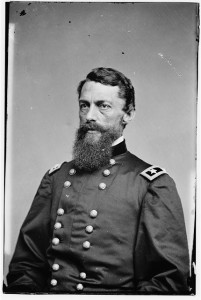
Portrait of Maj. Gen. George Stoneman, officer of the Federal Army (Between 1860 and 1865; LOC: v)

George Stoneman's cavalry destroys railroad bridge

After gradually moving to the front, being kept almost constantly in the advance, we encountered the enemy on Friday last, and immediately engaged him, endeavoring to feel his strength and expose his position. The engagement commenced about four o’clock, and ceased for the night at dark. At daylight on Saturday, the 3d Brigade, with Wheeler’s battery, and the 2d R.I. Vols. and 98th Pa., moved forward to the attack. All day long the battle raged with more or less violence, and before night we succeeded in driving the rebels back, and occupying Mechanicsville, a small village, only five miles from the city. The enemy retreated in haste, leaving their wounded and dead upon the field. Meantime, Stoneman succeeded in destroying a portion of the a portion of the Virginia Central Railroad, thus cutting off all communication with Richmond by that route. Our brigade acted in a very gallant manner throughout the entire battle, and won for itself fresh laurels. All day Saturday the rain fell in torrents, and as we had neither overcoats or blankets, the effect was notparticularly agreeable I can assure you. At one time, while the 33d was supporting a battery, I stood talking with Major Platner, separated from him only about a foot, when a six inch round shell, came “buzzing by” passing between us, and crashing through a fence in our rear – pretty close call, that. At another time while we were lying on our faces, directly in the line of the fire, the wheat tops were literally mowed off, by the shower of grape that was passing over us. Fortunately I lost none in killed. On Sunday we had some artillery skirmishing, and on Monday moved to our present position, where we are now impatiently awaiting the order for the final attack. The country around here is most delightful. It is in fact the garden of Virginia and well worthy the name. My health continues excellent, and Marshall is improving rapidly.

At the time of the battle, Companies K, G, and B, were left in the rear, to guard a fort which we had captured – J, C, H, E, were thrown to the right into some woods, as skirmishers – A, F, D, were alone left on the field, in the second fort that we had captured. The 7th Maine were drawn up in line on the right of the fort, and the 5th Wisconsin on the left, when the rebels advanced for the purpose for the purpose of driving us off, and capturing our batteries. The 7th Maine fell back to the edge of the woods, and I found our three Companies on their left – between them and the fort. After the rebels had advanced within range we opened a rapid fire upon them, and as they still kept advancing, notwithstanding the terrible destructive fire from our rifles, the order was given to “fix bayonets and forward,” when the 33d started on the double quick, with a shout that sounded far and wide, and as the enemy saw us coming, supposing we were in much larger numbers than was actually the case, they broke and run in the greatest disorder. At this point, and not before, the Maine 7th came down the hill on a charge, but the victory was already decided, and by the coolness and bravery of three companies. As the [rebels?] retreated, we poured volley after volley after them, and seeing that their case was hopeless, large numbers surrendered. Meantime our skirmishers on the right had their hands full, for as the rebels broke for the woods they were met by our line, and surrendered in squads of two’s and three’s. Capt. Drake, however, who was on the extreme front of the line, with a party of his men, were carried off prisoners of war. After the engagement I took charge of 156 prisoners, and marched them to McClellaa’s [as printed in newspaper] Head Quarters, guarded by my Co. I had a long interview with the General, and received his thanks for what it had been my good fortune to accomplish during the day. None of my men were killed, and very few wounded – and those not seriously. It seemed almost a miracle that half of us were not killed, for when I sprang to the front to lead my men forward in the charge, and saw the long line of the enemy in our front, and heard the perfect shower of bullets whistling past, I felt, that we were almost surely doomed to total destruction, but every one felt that a charge alone could save the day, and nerved himself to the duty before him. But thank God we were successful and victory was ours.

During the battle of Williamsburg, we were temporarily under Hancock’s command, Gen’l Davidson being absent – hence, we got so mixed up with Hancock in the newspaper reports.

The 50th came up last evening, and are encamped close by. All of the Seneca Falls boys are well.

Yours affectionately, G.M.G.
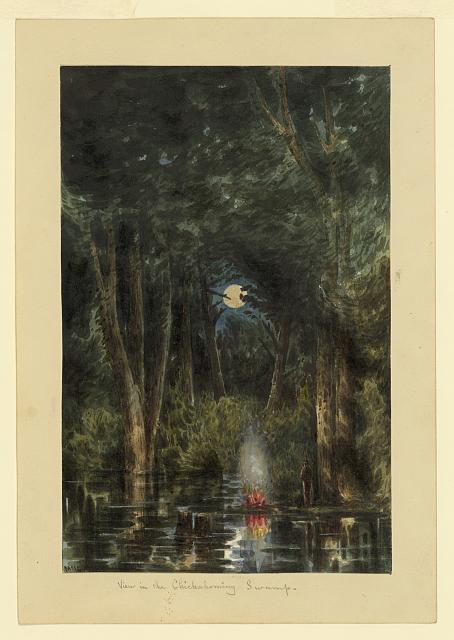
View in the Chickahominy Swamp (by William McIlvaine 1862; LOC: LC-DIG-ppmsca-20017)

Moon over Chickahominy swamp
Posted in 150 Years Ago This Week, Military Matters | Tagged , , , , , | Leave a comment

Trying to avoid being “sent to our long home”

There was a fight near Mechanicsville, Virginia on May 23-24, 1862. It involved the Union brigade led by General John W. Davidson. The 33rd New York Infantry Regiment took part. Apparently a member of the band wrote the following letter home. It was not a big fight, but there were a couple Union deaths and some close calls (even for a horse).

Published in a Seneca County, New York newspaper in 1862:

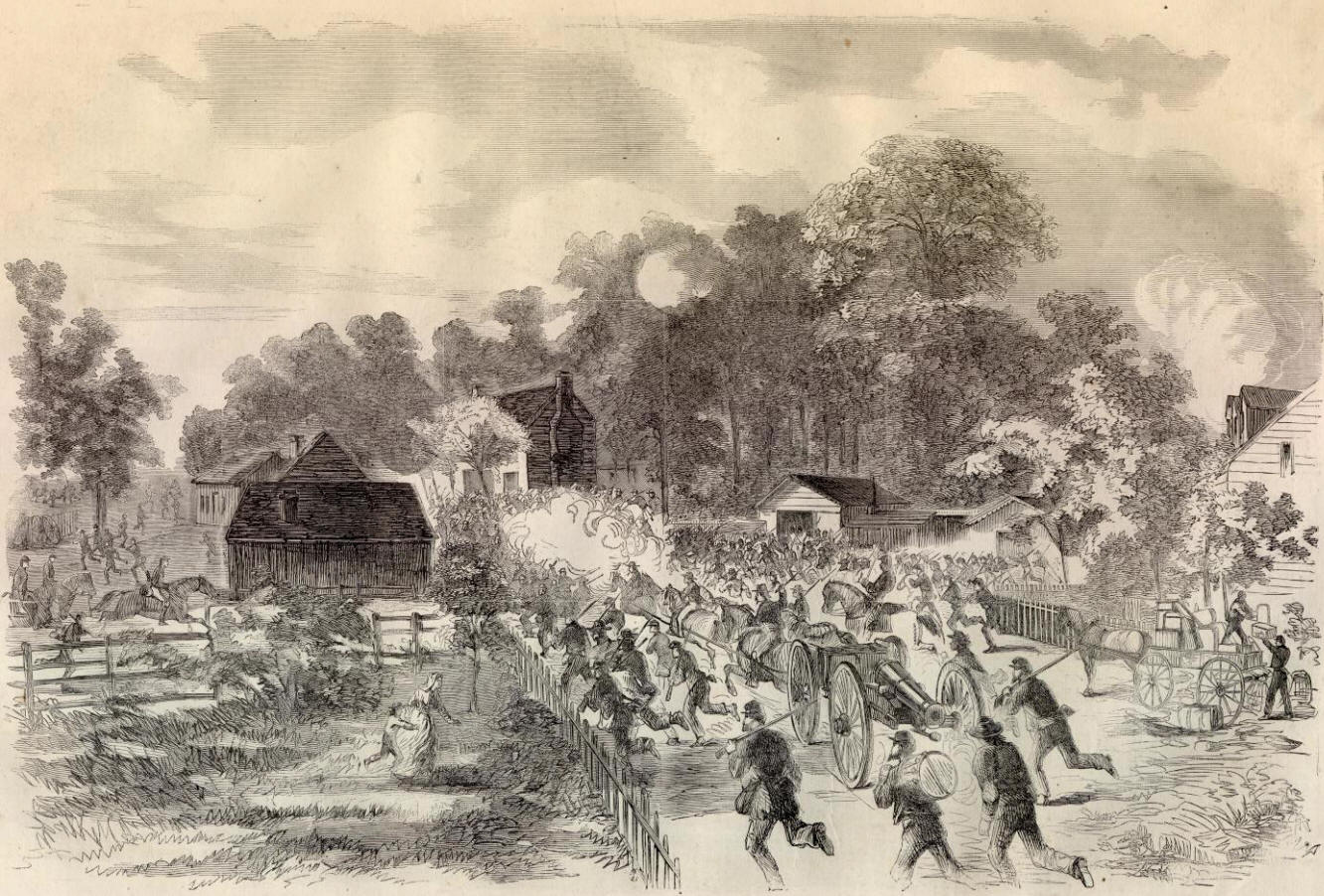
THE ARMY OF THE POTOMAC—GENERAL DAVIDSON'S BRIGADE TAKING POSSESSION OF MECHANICSVILLE, NEAR RICHMOND, VIRGINIA, MAY 24, 1862.—SKETCHED BY MR. MEAD. (Harper's Weekly, 6 - 21-1862)

General Davidson's brigade moves on Mechanicsville


From the Thirty-Third Regiment.

CAMP IN THE WOODS, FIVE MILES FROM RICHMOND, Va.,

May 27th, 1862.

I have just been out to the edge of the woods, to take a peep at the rebels, through a glass. They are about a mile distant on the opposite hill, with a small creek between us. Last Friday afternoon we went out with our brigade, consisting of the 33d, 49th, and 77th, New York regiments, the 7th Maine, one squadron of Cavalry and one battery of Artillery to have a little brush with the rebels, who occupied a small town called Andover, about two miles to our right, and five miles directly north of the far-famed city of Richmond. We came up within range of the enemy’s guns at about three o’clock in the afternoon, when they opened on us with three pieces of artillery, which we promptly responded to by our guns, and kept up until almost sundown, when they undertook to outflank us on the left. Gen. DAVIDSON sent the cavalry around to head them off, which they did in good style, without losing a man. About dusk the men fell down upon their arms and slept until morning. Early in the morning we were all up and under motion. Companies K., G. and B. of our regiment were thrown out as skirmishers, and we moved up to within five hundred yards of the enemy’s lines, where they again opened on us. Our artillery got a position where they could get a range on their battery from three different points, and soon drove them from the field; their men were hid in the houses, and fired with their muskets at our skirmishers, killing DANIEL MURPHY, of Company K. As soon as we found where the rebels were secreted, the artillery directed their fire upon the houses, and “of all the running,” I ever saw, I think this was a little the best. Our men took possession of the town, and destroyed the bridge across the creek. We found five or six wounded rebels they had left in their hurry to get away. An old darkey who came in shortly after, said they carried four wagon loads of dead and wounded off with them, while we had only two killed and three wounded. Col. MASON, of the 7th Maine, was riding along across the field, when a cannon ball passed under his horse, and the shock was so great that he fell as quick as though it had passed through his heart. The horse fell on the Colonel and injured him quite severely. I saw a ball knock a blanket off the back part of one of the cavalry men’s saddle, but it was so nearly spent that it did not hurt him. Two balls were fired at our regiment as we moved up in line of battle; one of them came directly over our (the band) heads, so near to me that I could feel the wind from it quite sensibly. We staid out there until yesterday forenoon, and then moved back to this point, leaving the cavalry to guard the place. We are under orders to keep three days rations in our haversacks, and the men to keep sixty rounds of cartridges with them all the time, and when the order comes to move we are to go “light,” (that is without knapsacks or blankets,) and to be prepared for a “big fight” or a “big run” as that will be altogether owing to how the rebels stand the shock. We are forbidden to write anything about the position of our troops, size and number of our guns &c., &c., but I will say that no doubts are entertained as to the final result of the contest when it does come. All the boys are in excellent spirits and eager for the ball to open. Perhaps ere this reaches you many of us will be sent to our long home. No one can tell who it may be, but each feels quite confident that it will not be himself.

Ever Yours,

W.M.S.

I’m guessing that W.M.S. is the following William M. Smith. Could he have deserted?

William M. Smith - NY 33rd Regiment

Mystery band man alive as of 5-27-1862

Son of the South publishes the June 21, 1862 issue of Harper’s Weekly issue that reported on and illustrated the fight. The story of the Thirty-third N.Y.S. vols.; or, two years campaigning in Virginia and Maryland, by David W. Judd reported on Mechanicsville and backed up some of Smith’s facts. David W. Judd, the author, believed the Union army could have taken Richmond if Davidson’s brigade had been reinforced right after the rebels fled.

THE ARMY OF THE POTOMAC-THE REBELS EVACUATING MECHANICSVILLE UNDER THE FIRE OF UNION BATTERIES.-SKETCHED BY MR. A. R. WAUD (Harper's Weekly 6 - 21- 1962

Rebels flee at Mechanicsville

Posted in 150 Years Ago This Week, Military Matters, Peninsula campaign 1862 | Tagged , , , | Leave a comment

Street People

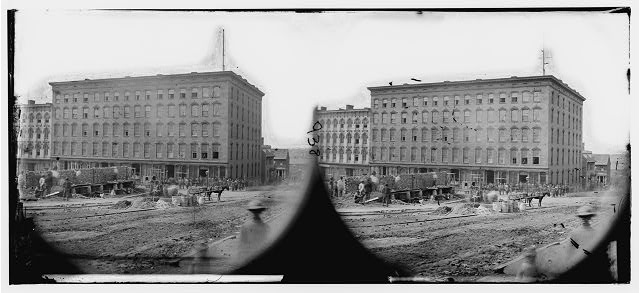
Richmond, Virginia. Spotswood hotel. (Main Street) (1865 Apr; LOC: LC-DIG-cwpb-00458)

At the Spotswood in April 1865

There’s no room at the inns of Richmond for transient Confederate soldiers. A newspaper thinks that situation could easily be corrected.

From the Richmond Daily Dispatch May 24, 1862:

Neglected soldiers.

–Attention has been frequently called to the fact, that inadequate preparations, if any at all, are made to provide for soldiers who are forced to remain over night in the city. It is painful to pass through the street at night, and see young men, many of them probably having luxurious homes in the South, stretched upon the hard sidewalk, utterly unable to find lodgings in the hotels or even a shelter to cover their heads. Last night, several members of Hampton’s Legion arrived in the city at a late hour, and were unable to proceed further without a pass from the Provost Marabel [Marshall?], which could not be obtained until morning. For several hours they went from house to house in search of a bed, but failed to find one, and were forced at last to wonder [wander?] through the weary hours of night, or else couch themselves upon the pavement. This is but one example of a thousand of daily occurrence. Every night one sees soldiers stretched out at every corner, while the stone front, and even the steps of the larger hotels are crowded with them. It seems strange that those who have so nobly volunteered to fight the battles of our country should be thus neglected, when proper barracks could be fired [fixed?] up at so little coat [cost?]. If any eight [sight?] will touch the heart of the [?] it is that which meets his eye in a mid-night walk down the Main street of our city.

The editors should check out a battlefield.

Posted in 150 Years Ago This Week, Confederate States of America, Military Matters | Tagged | Leave a comment

Stars and Stripes “Over” Richmond

Or, at least its northern suburbs

From the Richmond Daily Dispatch May 24, 1862:

Yankee Devices

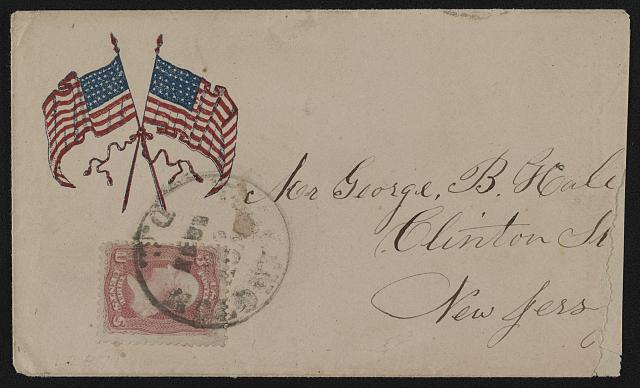
–Our Northern brethren are now engaged in an assiduous endeavor to restore the Union and set the Stars and Stripes afloat in Richmond, by laying plans to murder and rob all of our people who may wish to prevent the consummation of their dearly-cherished project. For several days past they have cavorted around the suburbs in sufficient numbers to pillage with impunity, but not to meet any respectable force,–on whose appearance they would fly like frightened sheep. Yesterday, with characteristic caution, they sent up Prof. Lowe in his famous balloon to observe the motions of the rebels. The machine, which was distinctly observed by a large number of spectators in this city, was embellished with two United States flags, and ascended about four miles from the city in a northeast direction. No doubt the observations of the Yankee Åronant were satisfactory, as by 3 o’clock a fight was reported in progress between the Abolition and Southern forces at the head of the Mechanicville turnpike.

Civil War envelope showing two American flags tied with a ribbon (between 1861 and 1865; LOC: v)

Yankee devices about 4 miles northeast of Richmond

Posted in 150 Years Ago This Week, Military Matters, Peninsula campaign 1862 | Tagged , , | Leave a comment

Fiat Money in Memphis

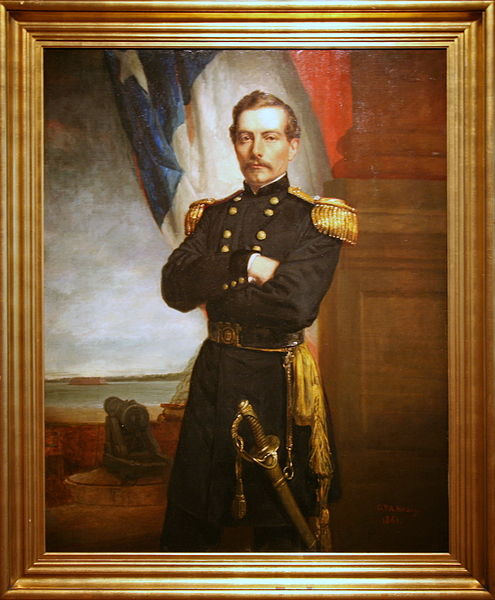
Pierre Gustave Toutant Beauregard, Oil on canvas by George Peter Alexander Healy 1861 painting) Portrait of General Beauregard in uniform, his arms folded across his chest, standing at Fort Moultrie in front of the flag of the Confederate States. In the background is the cannon from which the first shot was fired at the "Star of the West."

Memphians, you will accept CSA money - or else

P.G.T. Beauregard’s Fiat: Accept Confederate Money or Get Arrested

From the Richmond Daily Dispatch May 22, 1862:

Confederate Monkey [Money] at Memphis.

–General Beauregard has taken the Confederate credit in hand at Memphis. as will be seen by the following order. It is an example which, we hope, will be followed everywhere:

Headquarters, Memphis,may 10.

The following order, in compliance with orders from Gen Beauregard, is published for the information of the public:

1. The Civil Governor and Provost Marshal will arrest all parsons [persons] who refuse to take Confederate money in all ordinary business transaction. No mere subterfuge on the part of the person or persons refusing will suffice to screen the offender from the penalties of this order.
2. Banks, banking-houses, and all incorporated companies are hereby required to take Confederate notes as currency in the transaction of their business.
3. All persons will distinctly understand, that nothing in the least degree calculated to discredit the operations of the Government will be tolerated, or treated as anything else than what it is disloyalty.
4. A rigid commence with the order is expected, and it will be vigilantly and promptly executed.

By order of

Thos D. Rosser.

Colonel Commanding Post.

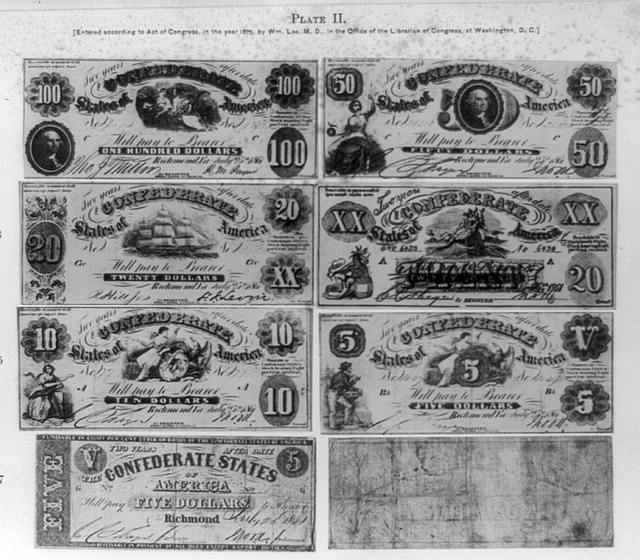
Eight Confederate bills ranging in value from five to one hundred dollars (c.1875; LOC: LC-USZ62-98122)

Confederate paper

The Memphis Appeal says:

The South has two kinds of enemies–first, those who come from the North as open foes, with guns in their hands to subjugate us, Solidly proclaiming their mission. Secondly, those in our own mids, who lake sucking assassins, blatant with wordy professions of loyally and devotion, strike at one cause by refusing to receive Confederate money.

Keep your eye upon the misereres who refuse Confederate money. They will be the first among us to take the oath of allegiance to Lincolns Government to save their property.

The Provost Marshal has received instructions from the military authorities to require the Banks at Memphis to take “Confederate notes as currency in the transactions of their business, and to arrest as disloyal all persons who refuse Confederate money in ordinary business transactions.” These instructions the Provost Marshal will vigilantly and rigidly enforce.

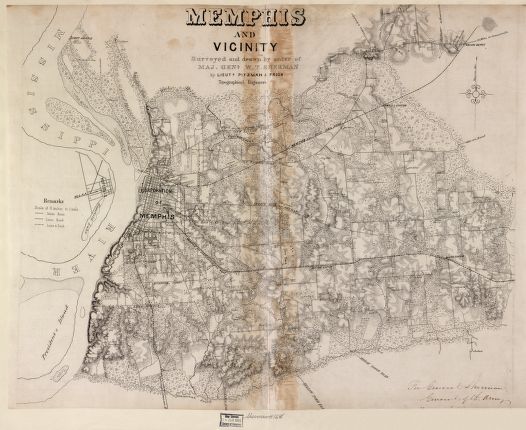
Memphis and vicinity / surveyed and drawn by order of Maj. Genl. W. T. Sherman, by Lieuts. Pitzman & Frick, Topographical Engineers. (186-; http://hdl.loc.gov/loc.gmd/g3964m.cws00168)

Memphis in 1860's

As Wikipedia points out, Confederate currency was issued with a redemption date set at a certain number of years after a peace treaty with the Union.

The photo of George Peter Alexander Healy’s painting of General Beauregard is licensed by Creative Commons.

Posted in 150 Years Ago This Week, Confederate States of America, Southern Society | Tagged , , , | Leave a comment