Appealing for Press Freedom

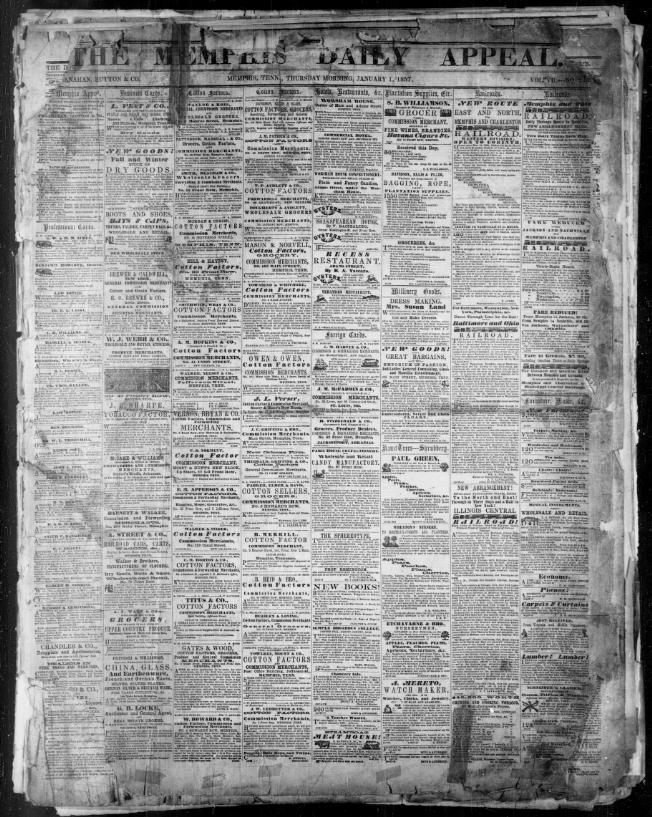
Memphis daily appeal. (Memphis, Tenn.) 1847-1886, January 01, 1857, Image 1(LOC)

Appeal 1-1-1857

It is said that, unlike the Lincoln administration, the CSA never suppressed dissenting opinions. The Memphis Daily Appeal says that being able to state military facts is necessary to back up its opinions and hold the Confederate leadership accountable.

From The New-York Times February 2, 1862:

NOTICING MILITARY MOVEMENTS.

The Memphis Appeal bitterly assails the proposed law to prohibit the newspapers from publishing military information. The Appeal says” it is palpably unnecessary and unconstitutional, dangerous and despotic.” Also:

“It is the indirect effect, it [if] it is not the concealed purpose of this measure, to restrain the free expression of journalistic opinion upon the conduct of the war, inasmuch as the idea of criticism involves the necessity very frequently of alluding to the movements of the army, as in the case of the campaign in Missouri and Western Virginia. In such a light we must regard the movement as an attempt to abridge freedom of opinion and of the Press, under the same specious apology of self-preservation which, dictates the vile censorship over newspapers in France and Austria, and which was urged to justify the suspension of the writ of habeas corpus, and the indiscriminate incarceration of mere political offenders throughout the dominions of ABRAHAM LINCOLN.”

It is another thing entirely to decide upon the propriety public journals ereticizing [criticizing] the means of prosecuting the war, but the right to do so is undoubted. There has been times since the commencement of this conflict, and they will repeat themselves many times more before it is closed, when “the numbers, disposition and movements” of our forces ought to be made known to the people, by way of exposing facts, in most cases known to the enemy, and tending to show where rests the responsibility for imbecility, negligence and disaster. The Administration, wrapt up in the army operations on the Potomac, may see fit to neglect the war in Missouri, and allow a gallant people to go on in a struggle, fruitless unless aided, and yet the Press, as the potent voice of the people, be forbidden to mention the mere retreat of Gen. PRICE to Springfield, or to proclaim the necessity of his having reinforcements.

The image above is from the Library of Congress, where you can read a brief history of The Memphis Daily Appeal. The newspaper refused to be silenced during the Union occupation of Memphis and became the “Moving Appeal” as it kept trying to stay ahead of the advancing federal armies.

Posted in 150 Years Ago This Week, Confederate States of America, Southern Society | Tagged , , , | Leave a comment

The West Is the Best …

… Target for the Union

The editors at The New-York Times have been discussing war strategy with a top man in the Union military, who does not agree with the “On to Richmond” sentiment. This authority believes that a force of 50,000 could defend Washington, D.C. If the rest of the Union troops along the Potomac marched west, a force of 300,000 could capture Nashville and then advance to Northeastern Alabama. The South would be divided. The North could deal with each Confederate army in detail.

From The New-York Times February 1, 1862:

An Important Strategical Plan.

An eminent military authority of this country, has recently prepared some carefully considered strategical views of the campaign, which have been laid before members of Congress, and, we believe, also before the War Department. This gentleman, in opposition to the received opinion, takes the ground, not only that no “Advance from Washington” is intended; but that none ought to be made, if it were practicable. The only results, he states, of Gen. McCELLAN’s forcing the rebels from their intrenchmenls, would be the occupation of Richmond — a barren and unimportant triumph — and the retreat of the Confederate forces by various roads to the South and Southwest; they at the same time, destroying bridges and railroads behind them and sweeping the country clear of forage and supplies. All that the South would lose by the retreat would be the ground of Virginia, while our armies could not pursue the retreating enemy. Their military power would be unimpraired, and they could soon collect a new army from the heart of their territory. Washington, therefore, he considers the worst feasible base of military operations against the South. “The true military principle,” he says, ” requires that a base of operations be selected as near as possible to the heart of the enemy’s country, and from which the lines of movements upon the decisive points shall be as short as possible.” …

This strategical position our authority (a very high one) thinks must strike every military man as the only one which promises success and a speedy close of the campaign. To secure it, he advises at once withdrawing the greater part of the army before Washington, leaving say a garrison of 50,000 men in the intrenchments and on the river, and at once throwing 150,000 drilled and disciplined troops into Kentucky to unite with the armies of Gen. HALLECK and Gen. BUELL for a march upon Nashville. We should then have 300,000 men rapidly advancing on Nashville and North Alabama. Such a force would be irresistible, and Mississippi. Louisiana and Alabama would at once fall into our hands. …

With this plan our authority believes that the rebellion could in effect be broken down in two months, and the turning point in the military campaign be reached. From any “forward movement” from Washington he has no hopes of any decisive result. If Gen. McCLELLAN is forced into it by popular impatience, he believes the effects will be either unimportant or disastrous. The battle which shall put down the rebellion,” he forcibly says, ” is to be fought in the West.” …
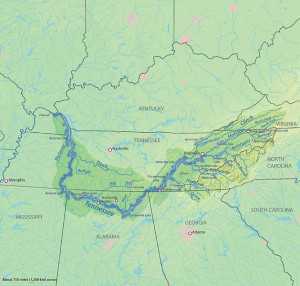
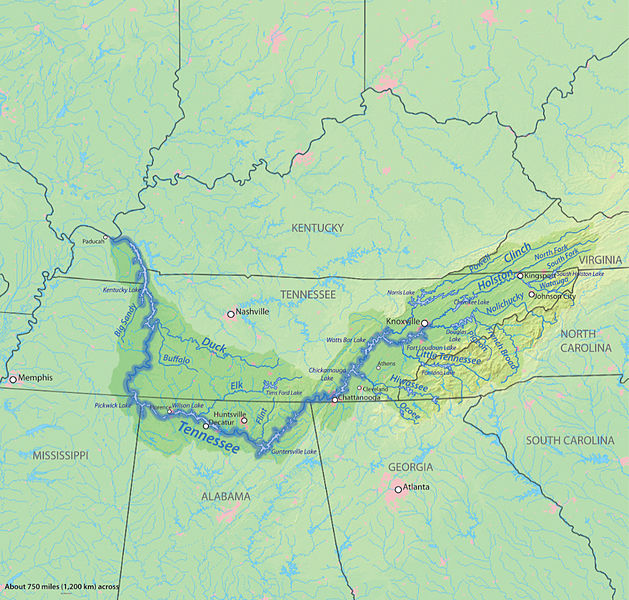
Map showing the Tennessee River with tributaries lakes and cities (30 December 2011)

The Tennessee - a highway through the South

We are happy that these views — the results of a long military experience and much study n the science of strategy — coincide with the plan of campaign which this journal has always urged. Such a plan seems peculiarly to suit the present unfortunate state of the roads and the unfavorable weather we are likely to meet with. It is exceedingly doubtful whether heavy artillery — such as would be necessary in the advance from the Potomac — can be dragged through the horrible roads in Virginia before April. In Kentucky, on the other hand, and Tennessee, much of the advance can be made by rivers — the Tennessee and Cumberland; and the roads, according to all accounts, do not seem such a bottomless pit of mire and slime as in the moist climate near the coast. There, too, we have no long-fortified fortifications to assail — for Manassas may be a second Sebastopol now — and the strong positions of Columbus and Bowling Green can be turned. The rebels, in dispatching their two best Generals to Kentucky, evidently feel that the theatre of the war has changed. Shall we be less slow to see it? It must be remembered also by our military leaders, that we have not an unlimited time to wait for a slowly-developing plan of campaign. There are political and sanitary questiions affecting this campaign, as well as military.

The constantly-threatening danger of the recognition of the Confederacy by foreign powers, and the interruption of the blockade, are conditions of the problem; and, furthermore, the malaria of the coasts of the Carolinas and Louisiana.

We do not speak of the fearful expense of the War; but Europe and the Southern fevers leave us but a short time in which to do our vast work. We must strike soon, if we ever mean to strike home. Any plan which seems to promise a speedier conclusion of the campaign, certainly deserves the careful consideration of the War Department and the Commander-in-Chief.

Seven Score and Ten has an excellent post about the importance of the Union controlling the Cumberland and Tennessee rivers. As The Times editors point out those rivers are like a highway into the South and a way to divide it.

The map of the Tennessee is licensed by Creative Commons
Posted in 150 Years Ago This Week, Military Matters | Tagged , , | Leave a comment

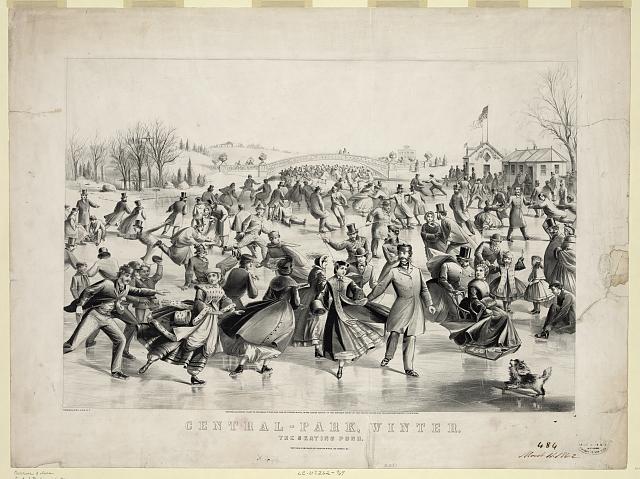
Skating

Central Park, Winter: The skating pond (Currier & Ives, 1862; LOC: LC-DIG-pga-00646)

A long way from the front

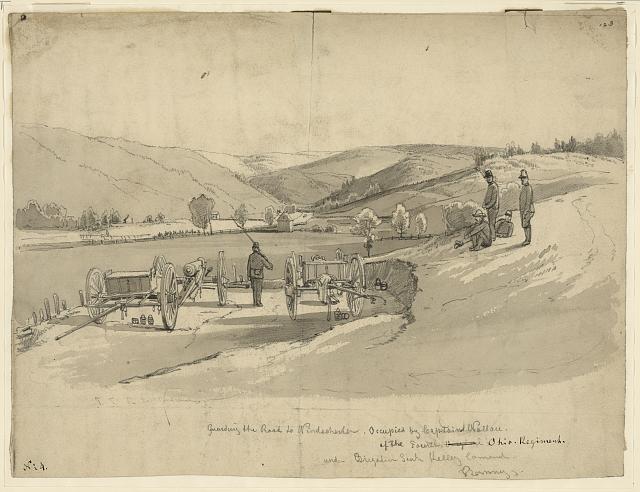
I’d honestly rather be skating (if I could), but there sure were some contrasts in the winter of 1862. Central Park and places like Hancock or Romney seem like different worlds.

Guarding the Road to Windschester [sic (1862 January; LOC: LC-DIG-ppmsca-22598)

'Capt. Wallace's Battery of the 4th Ohio Regiment, near Romney, Guarding the Road to Winchester.'

Posted in American Culture, Military Matters, Northern Society | Tagged , , , | Leave a comment

St. Benedict (Arnold)

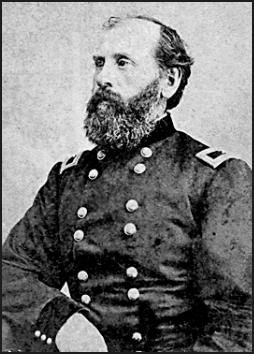
Brigadier General Albin F. Schoepf

uppity (German) Polish porter

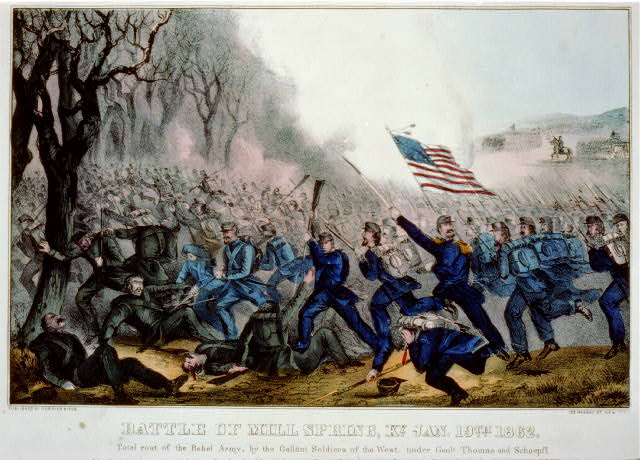
I don’t want to minimize the Civil War, but this story reminds me of modern sports fans trying to come to grips with losses by their favorite sports teams. How could it be? Here a southern newspaper deals with the undoubted federal victory at Mill Springs by placing the blame on foreigners and a southern traitor.

From the Richmond Daily Dispatch January 30, 1862:

Renegade Southerners.

The Federal press announce that one of the successful Federal Generals at Somerset, Thomas, is a Virginian, and the other, SchÅpff [Schoepf], a foreigner, who came to this country as a porter, and has had the good luck to rise to his present position.

Battle of Mill Spring, Ky. Jan 19th 1862 (Currier & Ives, (1862?); LOC: LC-USZC2-1959)

Thomas (or Schoepf) on his high horse?

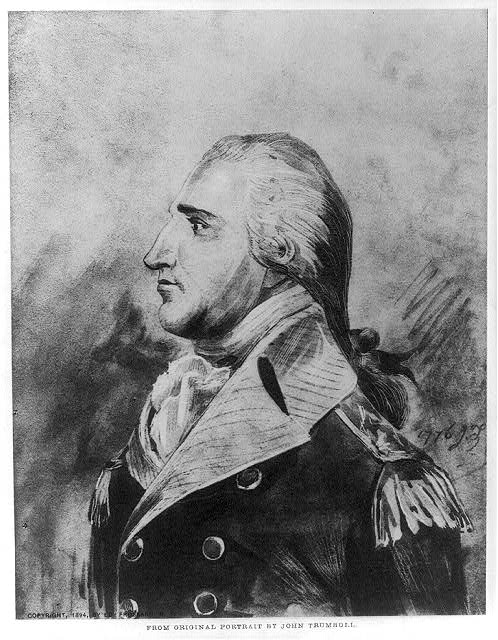
So far as Thomas is concerned, if he be a Virginia, he is not the only renegade from this Commonwealth who has stained his hands in the blood of her children, but we marvel that the Yankees should take pride in having such allies. It ought to be far more gratifying to their national ambition to gain successes — if they can — by Yankee leadership. Their expectations, however, in that line, have not as yet been eminently fortunate. There are plenty of Southern traitors, according to their own accounts, in their camps, who however false to their native land, will fight at any rate, and all the harder perhaps because they are fighting against their own kindred, and naturally hates a land which gave birth to such monsters as themselves. The man in the North who sympathizes with the South may still be faithful to his own section, and is probably its most intelligent friend. It is not his home that is invaded, nor any of his interests that are assailed. But we have no words to express our detestation and scorn of the Southern citizen who can side with the North against his own section in a war upon the land which gave him birth, upon its firesides and altars, upon its women and children. Must not the blood that is shed, the blood of his brethren and countrymen, stain his guilty soul and haunt his evil imagination like the blood of murder! Out upon the wretches! We have never heard even of Yankees, in the whole career of their baseness, joining an invading army, for the desolation and defilement of their own homes, with the single exception of Benedict Arnold, who was a prodigy of virtue in comparison with these Southern traitors.

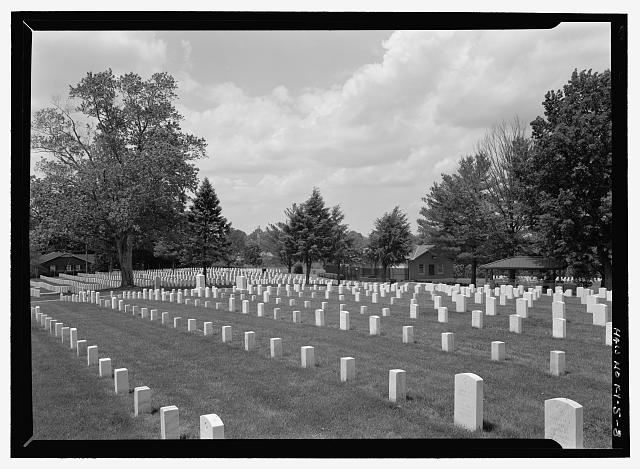
VIEW CAPTURING OLD AND NEW SECTIONS OF CEMETERY. VIEW TO NORTH. - Mill Springs National Cemetery, 9044 West Highway 80, Nancy, Pulaski County, KY (2005; LOC: HALS KY-5-8

Mill Springd aftermath

As for the foreign General, with the unpronounceable name, who was associated with Thomas at Somerset, and who is said to have risen from the position of porter to that of General, we consider it very doubtful whether any such exchange of avocations can be properly designated as promotion. An honest German porter at a hotel is a much more respectable character than a Yankee General of an invading army, especially an army of Ohioan, who, according to Judge Tucker, have nothing beneath them on the face of the earth but their own swine. It is of such materials, however, that the great bulk of the invading army is composed. At least two hundred thousand foreigners are arrayed under the banner of Lincoln, and endeavoring to subjugate a country which gave them refuge from despotism, and to enslave a people who were their best friends.

According to Wikipedia Albin Francisco Schoepf was already a military officer by the time he emigrated to the United States.

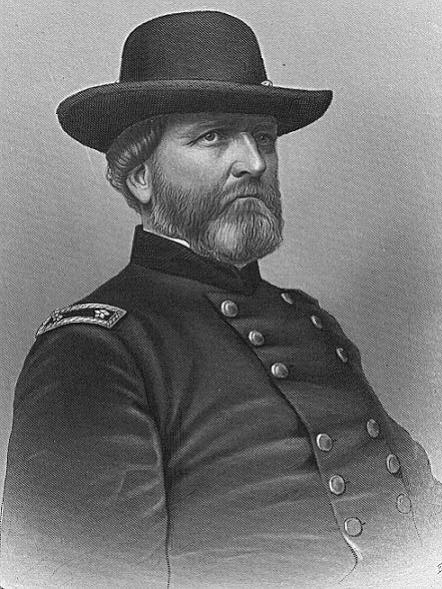
George Henry Thomas (Lillian C. Buttre portrait 1877)

(un)true in blue?

Benedict Arnold, 1741-1801 (Repro. of painting by John Trumbull c1894; LOC: LC-USZ62-68483)

benign Benedict (compared to Thomas)

Posted in 150 Years Ago This Week, Confederate States of America, Military Matters, Southern Society | Tagged , , , | Leave a comment

(Get) Working on the Railroad

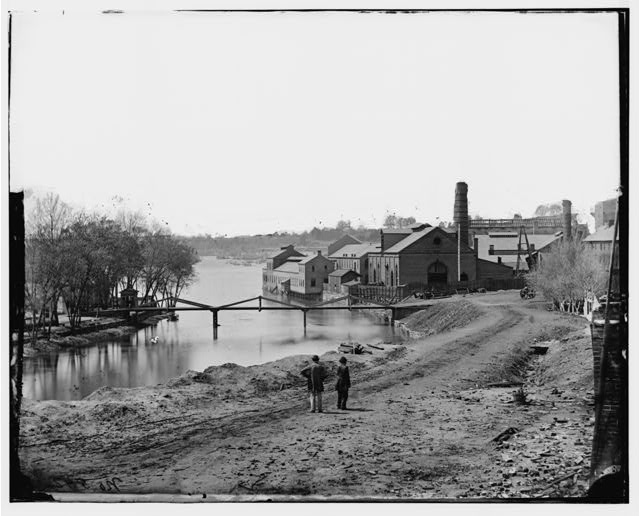
Richmond, Va. View of the Tredegar Iron Works, with footbridge to Neilson's Island (1865 April; LOC: LC-DIG-cwpb-04035 )

Tredegar Iron Works

From the Richmond Daily Dispatch January 27, 1862:

An important Enterprize of the Railroad companies.

We are gratified to learn that a well concerted movement is on foot for a general meeting of railroad officers in Richmond on the 5th of February next, to devise measures for the manufacture of railroad iron and such other articles of indispensable necessity as have hitherto been procured from countries outside of the limits of the Confederate States. To keep up a perfect railroad communication throughout the South, requires an occasional renewal of material; and if the approaching meeting can suggest a plan by which the South can place herself on an independent basis in this respect, it will have done as much towards solving the great problem of national freedom, as any class of individuals have done since the breaking up of the old Union. We therefore hope that a large number of practical minds will be brought together in Richmond on the day designated, and that a combined and well considered project will then be sent forth to the people.

The editors were right to be concerned about the Confederacy’s rail network. According to James M. McPherson the South’s transport network started breaking down soon after the war started because of a lack of replacement capacity. Almost all rails had come from the North or Britain [1].

Check out Confederate Railroads for a wealth of information on the subject. Apparently Richmond’s Tredegar Iron Works did produce some rails but there were many other demands on its capacity (including some plating for ironclads).

  1. [1]Battle Cry of Freedom Ballantine Books, New York, 1989 pp.318-319
Posted in 150 Years Ago This Week, Confederate States of America, Southern Society | Tagged , | Leave a comment

Missed Photo Op

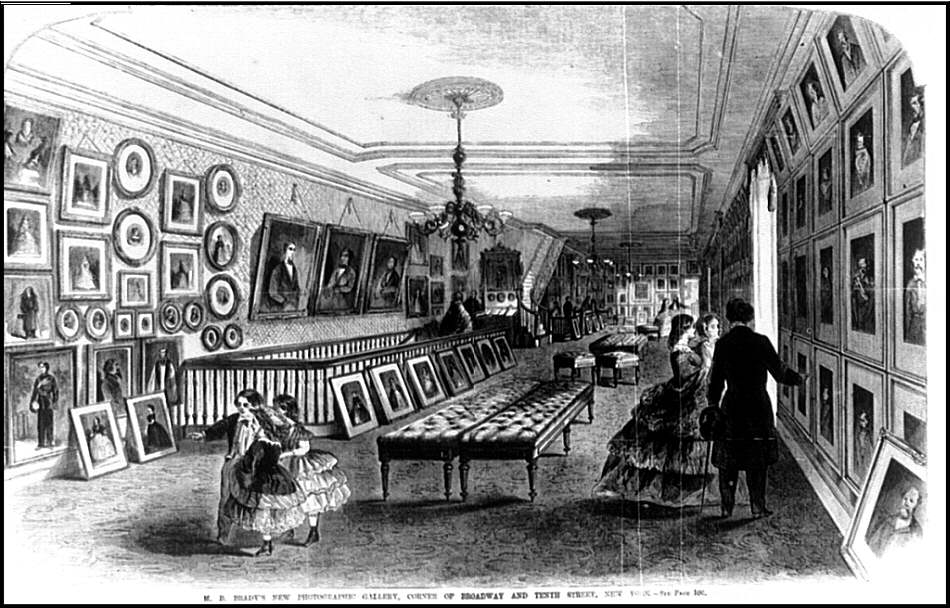
[M.B. Brady's new photographic gallery, corner of Broadway and Tenth Street, New York (1861 January 5;Illus. in: Frank Leslie's illustrated newspaper, 1867, p. 108; LOC: LC-USZ62-39409)

Brady's Gallery at Tenth and Broadway

If a picture’s worth a thousand words, this must be like War and Peace. I wish I knew about this image back in August. I copied an article from The New-York Times about Matthew Brady’s return from the Battle of First Bull Run with many photographs of the battle and of camp scenes from the northern Virginia seat of war. This is a view of his New York gallery mentioned in The Times.

Posted in American Culture, American History | Tagged | Leave a comment

Killing Themselves Warmly

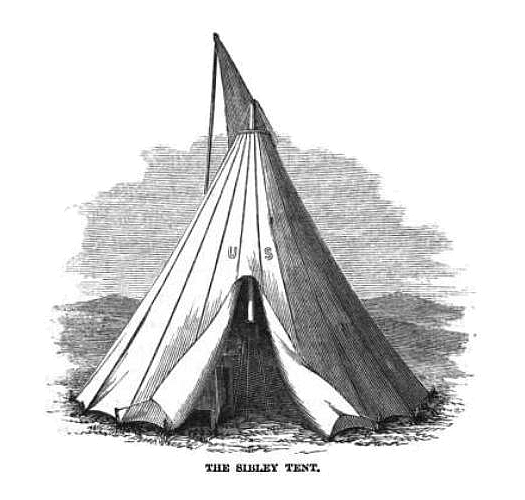
Sibley Tent (The Prairie Traveler: A Hand-Book for Overland Expeditions. New York: Harper & Brothers, Publishers.1859 by Randolph B. Marcy)

Works in snow, too

Early in January 1862 the 19th NY Volunteer Infantry endured a painfully cold march from Frederick to to Hancock, Maryland. In Hancock the men were dying in unventilated “public buildings”. 150 years ago today the acting commander, Lieut.-Col. Charles H. Stewart took action to change the situation:

The 19th did heavy guard and picket duty at Hancock, sending out details of from thirty-five to sixty men daily to the Potomac, besides escorting parties repairing telegraph lines, and doing provost and engineer duties. The pickets were armed with 100 rounds of ammunition apiece, but were greatly disappointed at not being allowed to fire on the rebel pickets who were in plain sight on the other side.

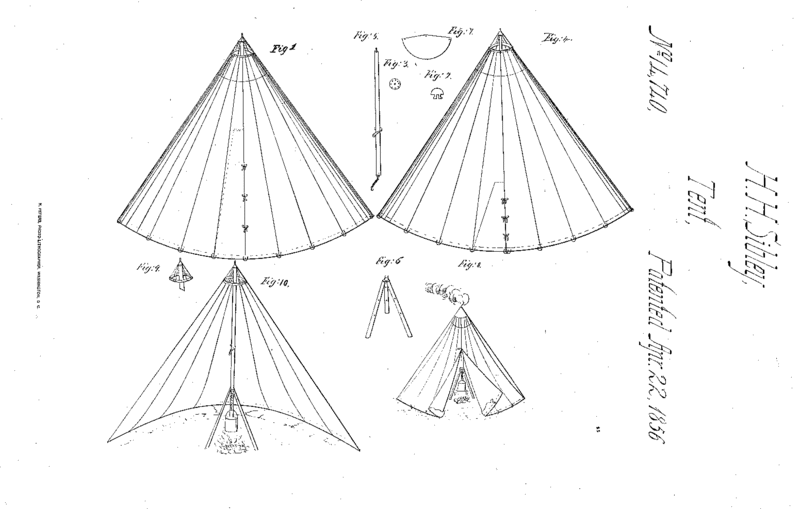
Patent #14740 of the United States Patent Office, April 22, 1856

Sibley's 1856 patent

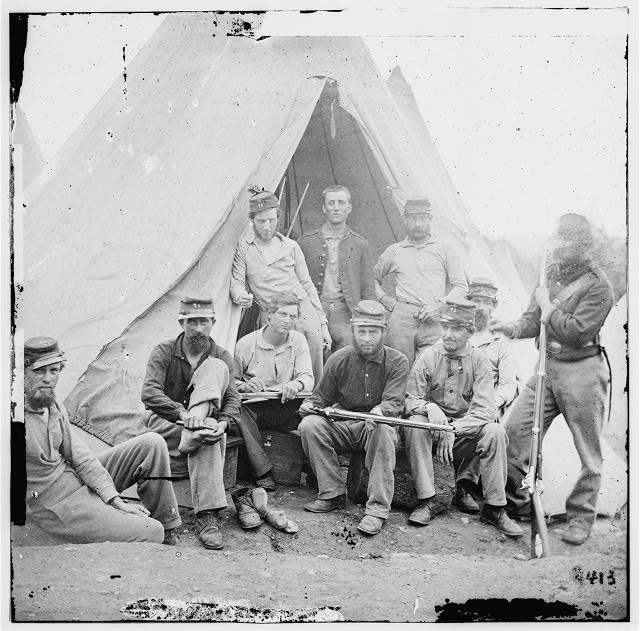
The mortality in the 19th at this place was very great. The village was one execrable mud hole and what with fatigue and picket duties, colds and fevers began to abound. The unconquerable disposition of the soldiers to shut themselves up close in their quarters, without ventilation, made the evil a hundred fold worse. Dr. Dimon more than once broke out panes in the windows to purify the quarters, but they were repaired as soon as he was gone. Typhus fever, the pest of armies, raged and many deaths occurred. Responsible for the lives of his men, Lieut.-Col. Stewart resolved to encamp in the field. Sibley tents, shaped like wigwams, holding fifteen men each, were obtained. One day’s rations were issued, and on January 25th, the regiment, ignorant of the object of the movement, was marched out of town to a favorable hill side and halted. “By right of companies, to the rear into column; march.” “Stack arms.” “Prepare to form camp.” These orders informed the men of their commander’s resolve. They camped right there in the snow, and in the bleak fields spent the rest of their stay in Hancock. The Sibley tents, warmed with the “stove pipe” Sibley stoves, were well ventilated and a subsidence of fevers in the regiment was soon reported, though it was a sacrifice of comfort to exchange thick walls for canvass tents for quarters. Many a severe cold night, the men sat up all night around the fires smoking and telling stories unable to sleep from the cold.[1]

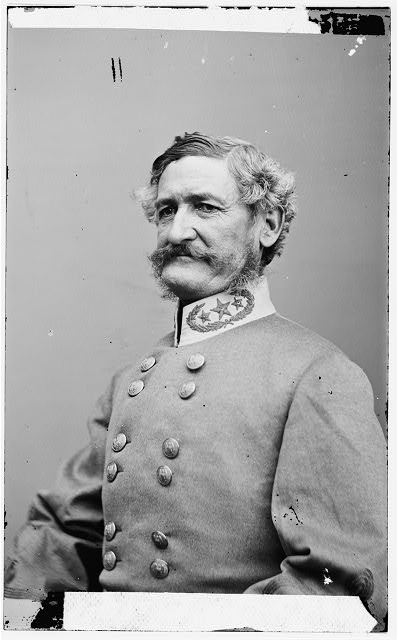
Henry Hopkins Sibley was granted a patent for his Sibley tent in 1856. Henry Sibley was descended from Massachusetts Bay Colony settlers and born in Louisiana. He was a West Point graduate who served in the U.S. army until the Civil War. During that war he commanded Confederate forces in the West.

Group of soldiers of Company G, 71st New York Vols. In front of 'Sibley" tent (1861; LOC: LC-DIG-cwpb-01675 )

Be it ever so humble ... a Sibley tent in warmer weather

Portrait of Brig. Gen. Henry H. Sibley, officer of the Confederate Army (between 1860 and 1865; LOC: LC-DIG-cwpb-05992)

His tent innovation saves Yankee lives

__________________________________________________

  1. [1]Cayuga in the Field, Henry Hall, Auburn, NY, 1873 pp. 87-88
Posted in 150 Years Ago This Week, Military Matters | Tagged , , , | 1 Comment

Fifth Time’s a Charm

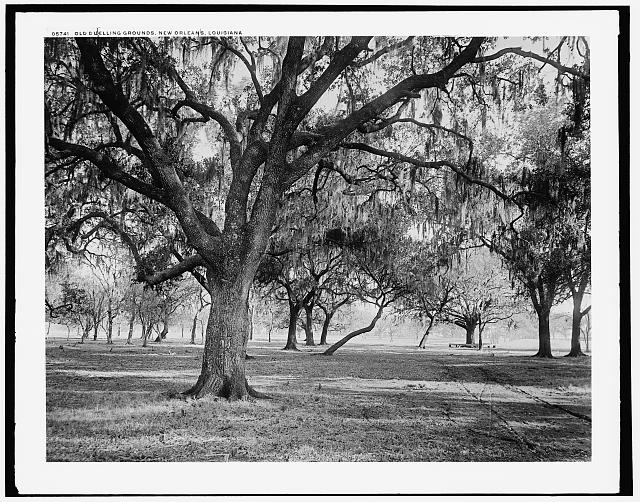
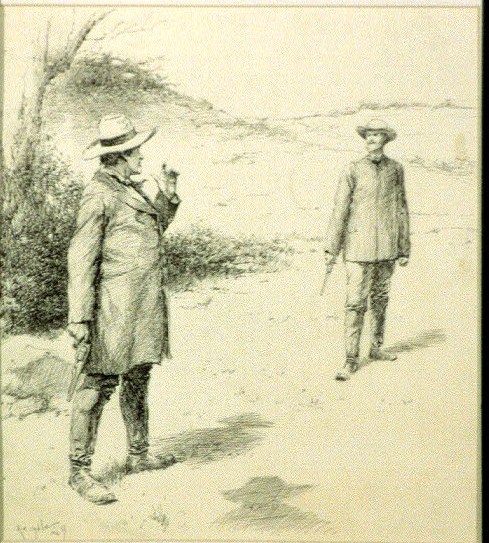
Old duelling grounds, New Orleans, Louisiana (c1900; LOC: LC-DIG-det-4a05039)

Nice spot for a duel

A bit of a break from the Civil War.

From the Richmond Daily Dispatch January 24, 1862:

Serious duel

–A duel was fought near New Orleans on Tuesday evening, the 14th inst., by two French gentlemen, which resulted very seriously to one of them, who, it is feared, cannot recover from his wound.–The weapons were shot guns, loaded with ball. At the first fire the challenged party did not shoot, owing to his using the wrong trigger. A second and a third fire resulted harmlessly. At the fourth fire the challenging party did not shoot, by accident. A fifth fire was then called for, when both guns were discharged simultaneously and both parties were struck. The challenged party received his opponent’s [b]all through both arms, fracturing the lesser bone of the left arm. The challenging party received the other’s ball through the left arm, breaking both bones. The ball then passed into his body, coursing around near the back and entering the right lung.

The duel (1887; LOC: LC-USZ62-134752)

Some do it with shotguns

___________________________________

Freeloading (although punctual) Goat

From the Richmond Daily Dispatch January 24, 1862:

A smart goat.

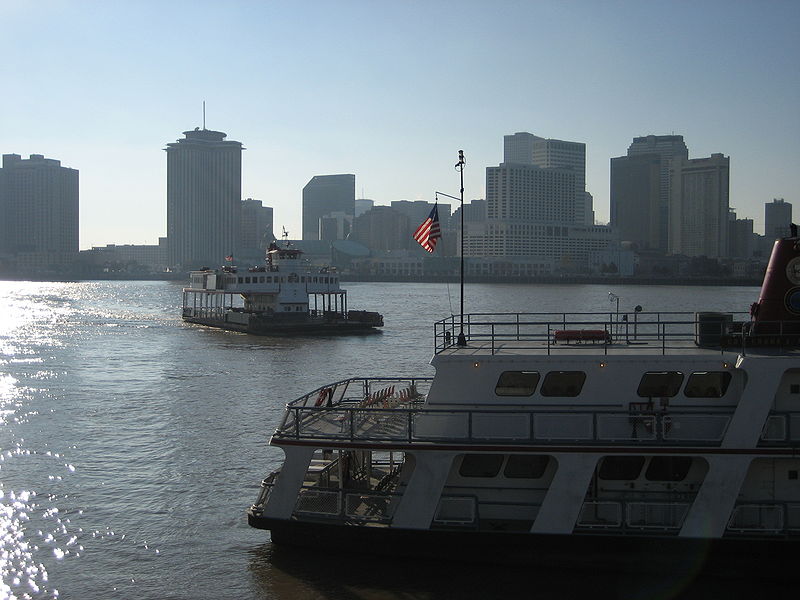
–Among the promptest patrons of the Canal street ferry boat for some time pastis a goat of unusual sagacity, whose reputation has become so extensive that a great many persons go down to see him. Invariably as the ferry is about to start from Algiers on its eleven o’clock trip, his caprid highness walks on board, and without offering to settle for the heavy bill of fare he has run up, he jumps off on the city side and starts upon his rambles under the wharf. Just as punctually to three o’clock as though he carried a chronometer watch, Mr. Goat re- appears at the levee, having dined sumptuously, and returns to his native place. He is a smart goat, Billy, and knows where to find the best living and how to get to it.–N. O. TrustDelta.

The Algiers/Canal Street Ferry across the Mississippi River, New Orleans.

Ferry (apparently goatless) still crosses the Mississippi in 2007

The 2007 photo of the ferry is licensed by Crreative Commons

Posted in 150 Years Ago This Week, American Culture, Southern Society | Leave a comment

Fire as Cold Comfort

January 1862 was very cold. The 19th NY Volunteer Infantry suffered on its march from Frederick to Hancock, Md. Here a Seneca County newspaper paraphrases a letter from James Ashcroft, the captain of the 19th’s Company C. Ashcroft or the editors rather euphemistically describe the freezing march as “extraordinary”. Also, picket duty was undoubtedly freezing, but there were good reasons not to light a warming fire.

From a Seneca County, New York newspaper in February 1862:

From Capt. Ashcroft.

Capt. ASHCROFT writes us from Hancock, Md., under date of Jan. 23d. He says the 3d Brigade, Gen. Williams, is quartered in that village. The Federal pickets are on the North side and the Rebels are on the south side of the Potomac. Five hundred Virginia militia are at Bath, six miles distant, and this is the nearest the enemy approach in force. One of the Federal pickets was shot a few nights since; contrary to orders he built a fire, and suffered the consequences. Capt. Ashcroft says, our march from Frederick to Hancock was considered extraordinary; may the Nineteenth never be tried so severely again. Nothing of interest occurs at this point, and the telegraph will inform you that “all is quiet on the Upper Potomac.”

I know I’m probably being silly, but I keep asking myself: was the picket shot by rebels across the Potomac or by federal authorities maintaining discipline?

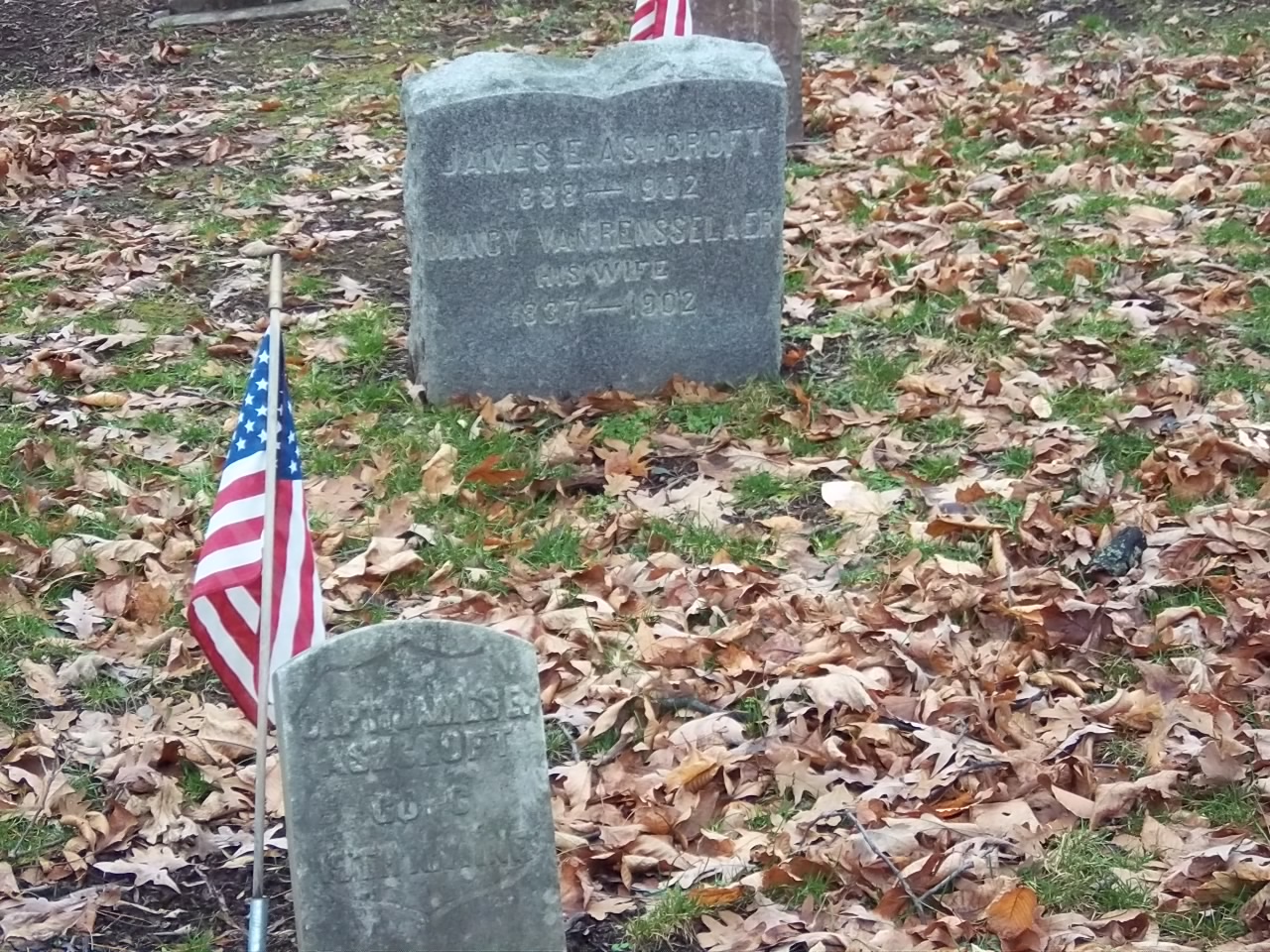
Before the war James Ashcroft, a dentist, “commanded a celebrated independent Zouave organization in [Seneca Falls], of such remarkable proficiency in the light infantry tactics, that it was accustomed to give public exhibitions of its skill.” [1] (And the newspaper clippings from 1860 and 1861 in the Seneca Falls library support this statement) Immediately after Fort Sumter he raised a company for the 19th.

Captain James E. Ashcroft, Restvale Cemetery, Seneca Falls, NY 12-26-2011

Captain Ashcroft's grave

___________________________________________

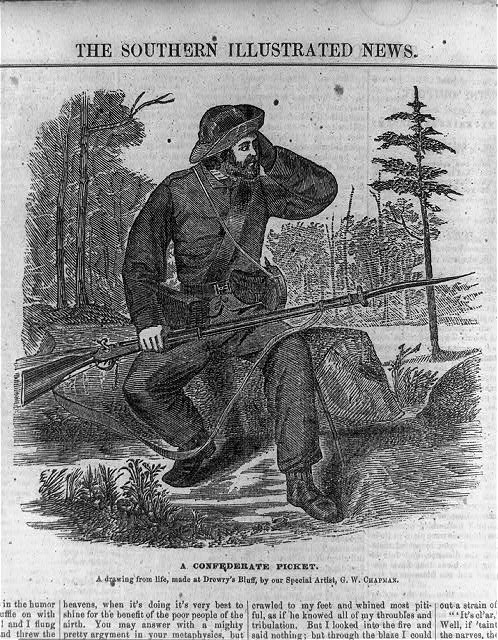
Apparently there weren’t many blogging platforms available during the Civil war years. So far I’ve seen many examples of poems individuals submit to their local newspapers. The poems seem to be good outlets for people’s creativity and a good way for people to support ideas they are passionate about. In this poem a southerner is grateful for the rebel pickets.

From the Richmond Daily Dispatch January 21, 1862:

The Sentinel.
When the curtains are drawn, and the candles are lit,
And easy and warm by the fire-side I sit,
My thoughts wander off from the thames [themes?]I like most
To the cold, lonely sentinel on his dark post.
When cold blows the wintry wind ever the plain,
And cheerlessly driveth the philos rain,
I start from my warm bed and pillow of down
To think of the sentinel walking his round.
For faithful he stands, in the sunshine or storm,
Through the darkness of night, in the brightness of moon;
All unsheltered from wind, or from rain, or from snow,
In silence and solitudes watching the foe.
And though marshalled strong in embattled array,
Our foes wait the moment to spring on their prey,
Yet our army and nation may sleep without fear,
For his signal will warn when their cohorts draw near.
Ere again unto slumber my eyelids are given,
My heart and my lips frame petitions to Heaven,
That the angels of God might the sentinel keep
Who painfully watches while we sweetly sleep.
O. Thou. whom the winds and the waters obey,”
I pray, “full the storm, drive the dark clouds away.
And to brighten his watch, and his lone hours beguite [beguile?],
Send the stars with their light and the moon with her smile.”
“And his spirit to cheer, and his become to warm,
Give him memories dear, and sweet thoughts of home;
And may hope paint the future in colors so bight
As to lighten about him the darkness of night.”

Hanover county, Va, Jan. 1, 1862.

A Confederate picket (1862 Sept. 13; LOC: LC-USZ62-90959)

'In silence and solitudes watching the foe. '

_______________________________

  1. [1]Cayuga in the Field, Henry Hall, James Hall, Auburn, NY,1873 p.20
Posted in 150 Years Ago This Week, Military Matters | Tagged , , , , | Leave a comment

The Reception Was Excellent

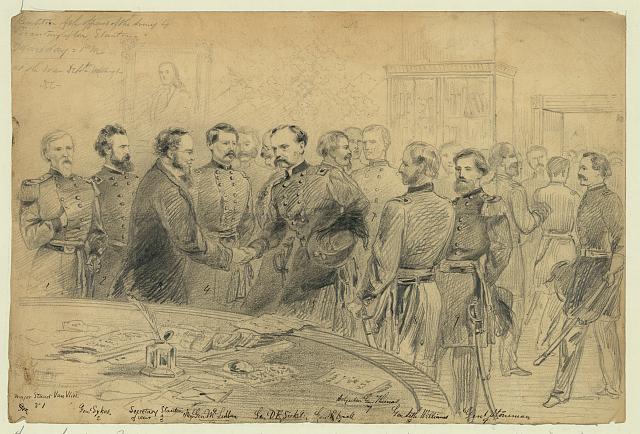
Reception of the officers of the Army by Secretary of War Stanton. Monday = PM. at the War Dept. Washington D.C. (Arthur Lumley 1862 January 20;LOC: LC-DIG-ppmsca-20778)

Secretary Stanton meets the brass

According to the Library of Congress this drawing illustrates a reception given by Edwin Stanton, the new Secretary of War, at the War Department. General McClellan, is dutifully at Stanton’s side.

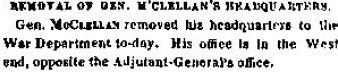
According to The New-York Times of January 22, 1862 McClellan moved his headquarters to the War Department the next day. This piece is part of an article with a Washington January 21, 1862 dateline:

General McClellan moves

General McClellan moves

Posted in 150 Years Ago This Week, Lincoln Administration, Military Matters | Tagged , | Leave a comment