Glorious News for the Federals

Battle of Mill Springs

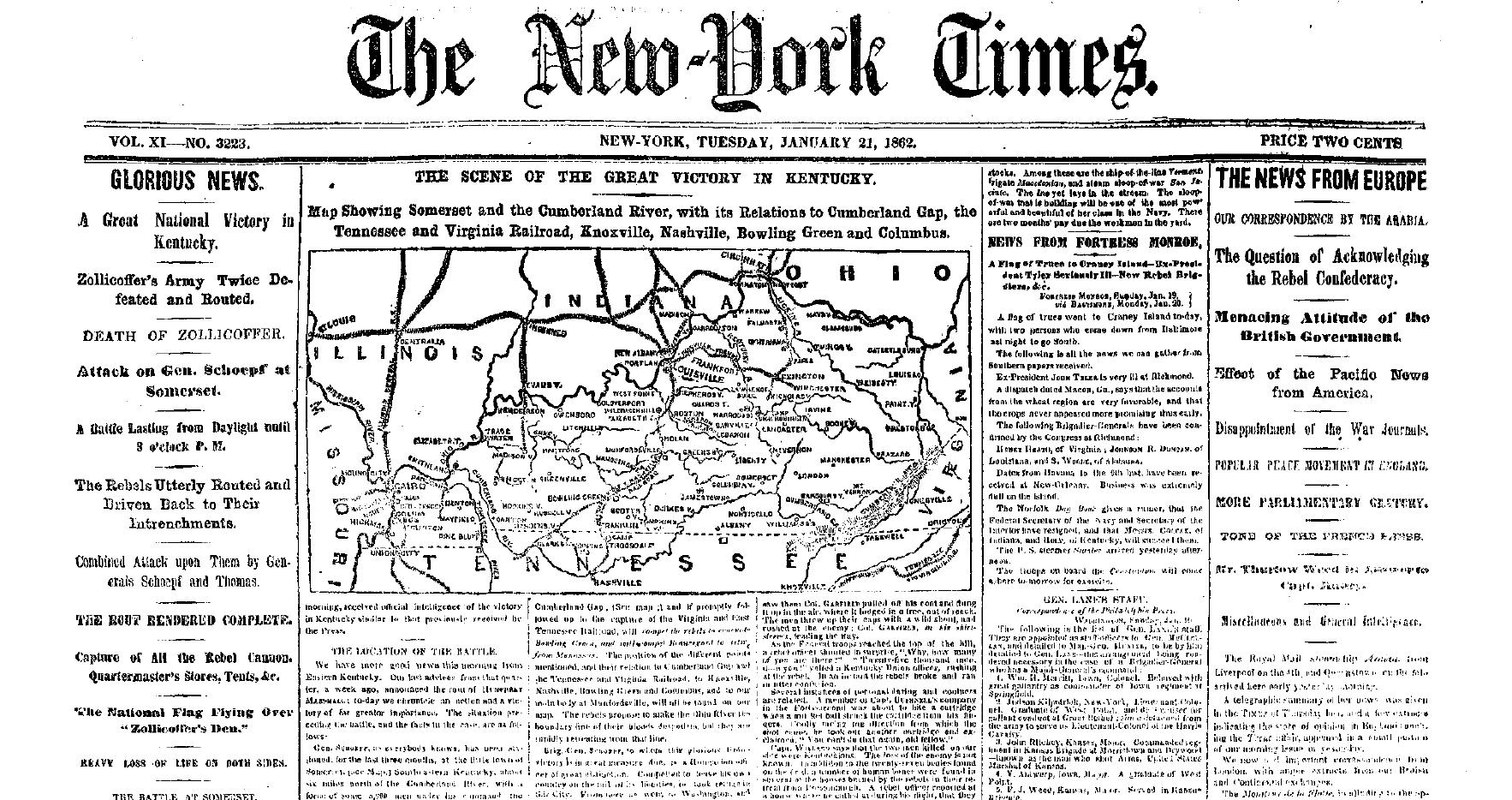
National Flag flies over 'Zollicoffer's Den'

Civil War Daily Gazette publishes an excellent account of the Battle of Mill Springs that occurred on January 19, 1862. The story in The New-York Times of January 21, 1862 trumpeted the Union victory for northerners who were looking for some positive news from at least one of the “seats of war”. One of the subtitles in The Times mentions a “heavy loss of life on both sides”. As Civil War 150th Anniversary mentions in another outstanding report, the casualties weren’t that heavy from the perspective of all the bloodshed that was to come over the next three years.

Posted in 150 Years Ago This Week, Military Matters | Tagged , | 1 Comment

“He fell with harness on”

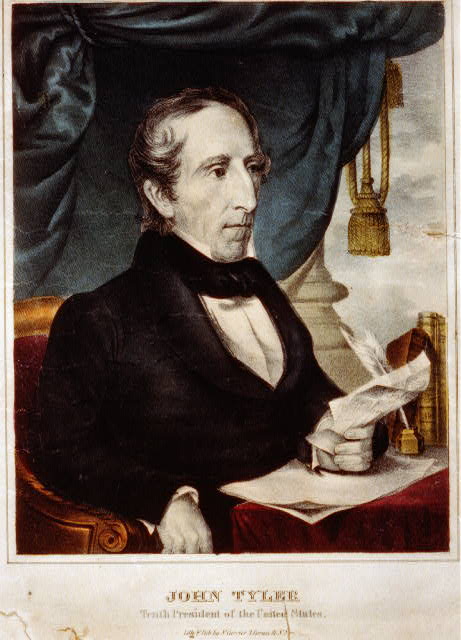
John Tyler: tenth president of the United States (between 1835 and 1856; LOC: LC-USZC2-2715)

Represented Richmond in CSA Congress as a representative of 'by-gone generation'

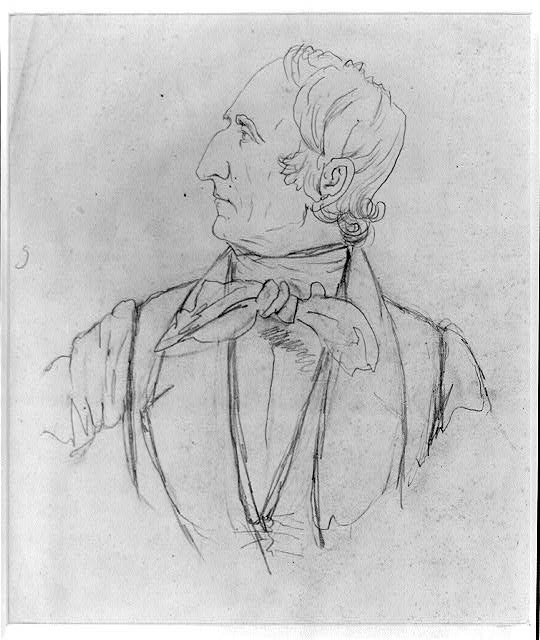
150 years ago today John Tyler, the tenth president of the United States died in Richmond. Although approaching his 72nd birthday, he was still working as a representative from Virginia in the Confederate Congress. The obituary in the Richmond Daily Dispatch of January 20, 1862 focused on Tyler’s devotion to States’ Rights:

Death of John Tyler.

Saturday’s telegraph heralded through the South the most afflicting intelligence it has borne since the birth of our new Republic. It announced the demise of a great and good man, whom our people loved, venerated, and trusted, probably to an extent greater than any of her statesmen. If ever a country or cause could boast its “representative man,” surely here was the person to whom the South could point as here, not only as presenting an admirable type of the Southern gentleman in all the domestic and social relations of that beautiful character, but as a statesman so imbued with the instincts and principles of Southern politics, that none ever could or ever did doubt for a moment, in any public emergency or at any crisis, where John Tyler stood.

Long connected with public affairs, and mingling in the strifes of parties and the contentions of men, he never lost his character or incurred an instant’s suspicion as a State-Rights man. His father before him, one of the wisest and most honored of the Revolutionary sages, had signalized his devotion to State independence by voting in the Virginia Convention of 17SS [1788] with that large, that immortal majority, which resisted the ratification of the Federal Constitution — not that he opposed the scheme of Union, but that he distrusted the nationalism which lay covert in that instrument, and which, as we have since found, by its silent machinations, has undermined the power of more than half the States, and now, throwing off all disguise, is with terrible bloodthirstiness seeking, by armies and confiscations, to subjugate the rest. …

John Tyler (no date; LOC: LC-USZ62-58513)

States' Rights was in his blood

We come down to the crisis which has sundered the Union and enveloped the South in the perils and horrors of war. Had there been any return from that bourne which is entered through the portals of the grave, what a host of the great Southern dead would have rushed back to take part for their country in the bloody drama now transpiring, and which many of them so vividly foresaw! There was one man belonging to a by-gone generation who had not yet passed the inexorable portals, and whom these solemn events startled from his retirement. Though past the allotted three score years and ten, Mr. Tyler again appeared upon the stage of public affairs in February last as a member of the Virginia Convention. His course in that body and in the Peace Congress convened at Washington in the same month, is familiar to the people of the South. It was marked by the same fidelity to the creed of State-Rights and State sovereignty which had signalized his previous career, and by that brilliancy of intellect which great occasions seemed always to evoke from him.

His celebrated speech in answer to, and in exposure and annihilation of, George W. Summers, was probably one of the ablest of his life, as it was one of the most powerful of the many which the present times have called forth. His election to Congress last November in the district embracing the Capital of the Confederacy, over competitors of conceded talents and popularity, attested the high appreciation in which the people held his last services to his country.

He died last Saturday morning, at his rooms in the Ballard House. He had been suddenly stricken down by disease on the Sunday morning before, while sitting at the public breakfast table, surrounded by his charming and affectionate family. He had reached the age of seventy-one years, ten months and nineteen days, having been born on the 29th March, 1790. He fell with harness on, at the post of duty, in the midst of arduous service full of honors and full of years. But for his extreme age, he was endowed with precisely the qualities of heart, of head and of principle, which must have secured for their possessor the supreme honors of the new Confederacy.

Posted in 150 Years Ago This Week, Confederate States of America, Southern Society | Tagged , | Leave a comment

Lectures for the Troops

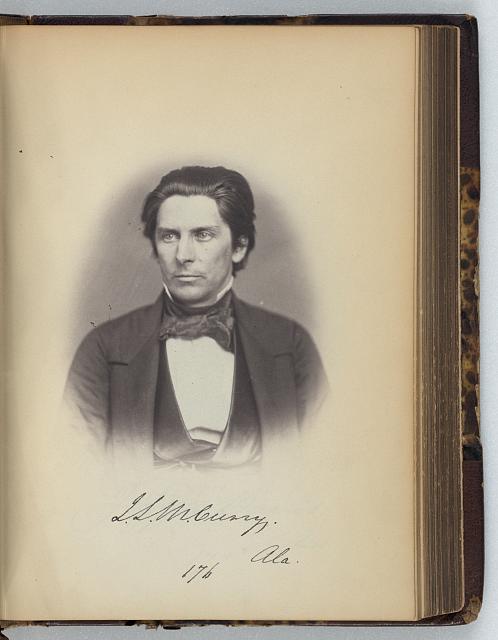
[Jabez L.M. Curry, Representative from Alabama, Thirty-fifth Congress, half-length portrait (1859; LOC: LC-DIG-ppmsca-26715)

A passion for education - and lectures

From the Richmond Daily Dispatch January 17, 1862:

Lectures.

The Hon. J. L. M. Curry, and other members of congress, are preparing a series of lectures on various subjects of interest, which will soon be delivered for the benefit of Hampton’s legion, and other troops in ready circumstances. We are informed that they are nearly greatly [ready?] to enter upon the patriotic work.

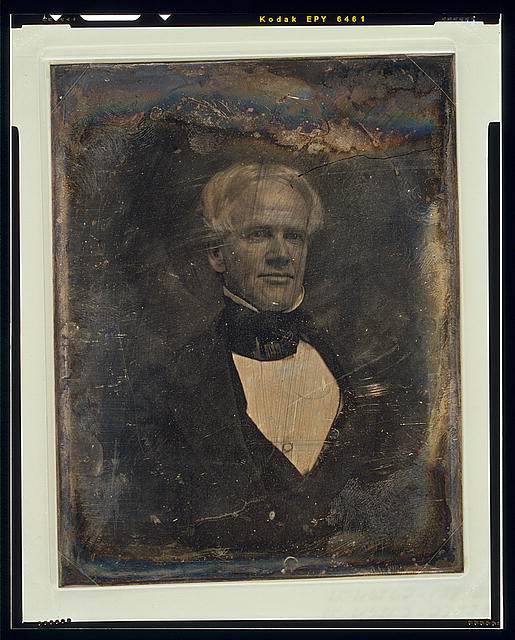
Jabez Lamar Monroe Curry had a long and varied career. His roots were in Georgia and Alabama; while studying at Harvard Law School he “was inspired by the lectures of Horace Mann and became an advocate of free universal education.” During the Civil War he did serve in the Confederate Congress and was a staff aide to two generals named Joe – Johnston and Wheeler.

After the war he studied for the ministry and became a preacher, but the focus of his work was free education in the South. He traveled and lectured in support of state normal schools, adequate rural schools, and a system of graded public schools. He was president of Howard College, Alabama, and a professor at Richmond College, Virginia. From 1881 until his death he was agent for the Peabody and Slater Funds to aide schools in the South and was instrumental in the founding of the Southern Education Board. The Curry School of Education at the University of Virginia is named for him.

One of Curry’s books is his 1895 Difficulties, complications, and limitations connected with the education of the negro. Thirty-three years earlier Frederick Douglass made his case for how to deal with freed slaves in general. You can read his editorial at Seven Score and Ten.

The J. L. M. Curry House near Talladega, Alabama is a National Historic Landmark.

Horace Mann, head-and-shoulders portrait, three-quarters to right (between 1844 and 1859; LOC: LC-USZC4-7396)

Horace Mann - an inspiration for Curry

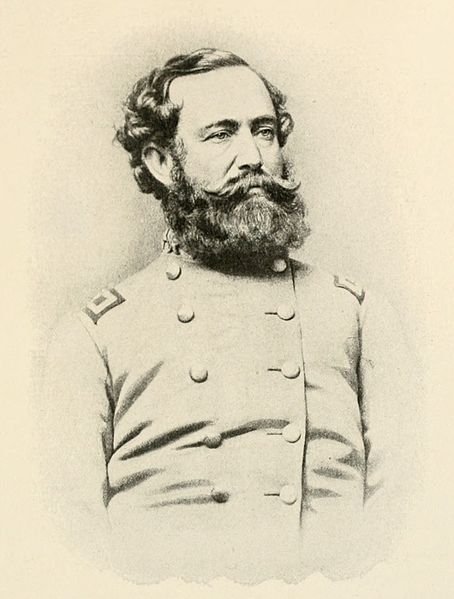
WadeHampton (Published in 1911;The Photographic History of The Civil War in Ten Volumes: Volume Four, The Cavalry p 274)

Wade Hampton's legion a targeted audience

Posted in 150 Years Ago This Week, Confederate States of America, Military Matters, Southern Society | Tagged , , , | Leave a comment

Talking a Good Game

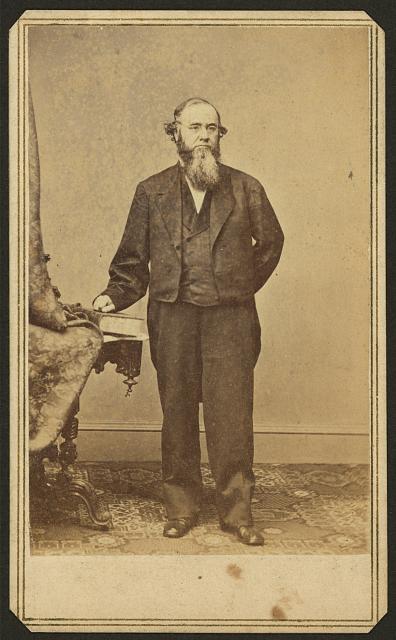
Stanton (New York : Published by E. & H.T. Anthony, (ca. 1860); LOC: LC-DIG-ppmsca-19671)

His work cut out for him

George McClellan his own spin doctor?

150 years ago yesterday, the U.S. senate confirmed Edwin M. Stanton as Secretary of War to replace Simon Cameron. General McClellan appeared before the Joint Committee on the Conduct of the War as part of the administration’s strategy of “popularizing” the army.

From The New-York Times January 16, 1862:

IMPORTANT FROM WASHINGTON.; The Nomination of Mr. Stanton as Secretary of War Unanimously Confirmed. Mr. Cameron’s Nomination to Russia Held Over for Consideration. Gen. McClellan Before the Joint Committees on the War. His Faith in an Early and Utter Overthrow of the Rebels. A Three-hours’ Statement of His Experience and Policy. … THE ARMY TO BE POPULARIZED….

OUR SPECIAL WASHINGTON DISPATCHES.

WASHINGTON, Wednesday, Jan. 15.

The Senate in Executive session to-day, unanimously confirmed the nomination of Mr. STANTON as Secretary of War. He will enter upon the discharge of his duties on Saturday.

The President stated to-day that Gen. MCCLELLAN knew nothing of STANTON’s appointment till it was made.

The nomination of Mr. CAMERON as Minister to Russia was not confirmed, but laid over for further consideration. …

It is the purpose of the President and Gen. MCCLELLAN to popularize the army, and challenge the nation’s confidence by adopting salutary improvements in its organization.

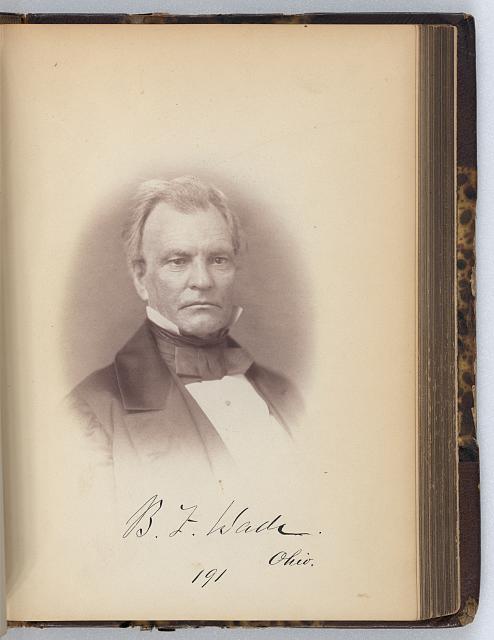
Benjamin F. Wade, Senator from Ohio, Thirty-fifth Congress, half-length portrait (1859; LOC: LC-DIG-ppmsca-26730)

Chairman of Joint Committee on Conduct of the War - B.F. Wade

Gen. MCCLELLAN was, to-day, before the Joint Committee on the conduct of the war. For three hours, they listened to a patient and candid account of his operations in the responsible office to which he was so suddenly, and without his knowledge or procurement, summoned by the President and by the nation’s voice. The difficulties of his position; the embarrassments of questions arising; the amount of labor to be done; the ferocity and strength of the rebellion he has to vanquish — were grouped together in a manner so effective, as to win a sympathy from members who had imbibed prejudices against him; and the modest and steady assurance he manifested of an early and utter overthrow of the rebels gave confidence in his capacity and generalship, that had not before existed.

Gen. BUTLER was also before the Committee to-day.

Secretary WELLES sent to the Senate to-day a defence of himself in the matter of charges preferred against him. …

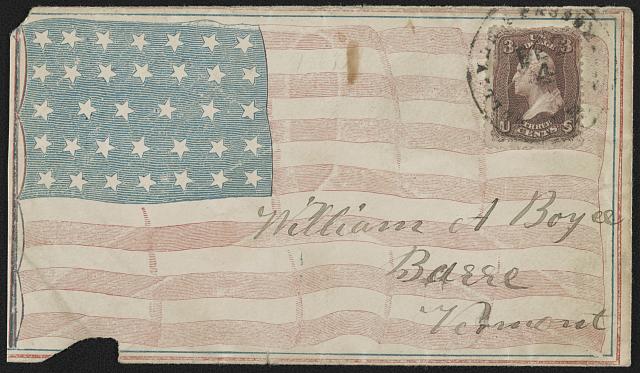
Civil War envelope showing 34-star American flag (between 1861 and 1863; LOC: LC-DIG-ppmsca-31962)

34 star envelope

The snow that fell yesterday has been iced over to-day by a freezing rain, and camp life in Virginia is giving Southern Hotspurs rougher usage than their whole lives have furnished before. …

The Post-office Committee of the Senate will not report favorably the House bill abolishing the franking privilege. They favor reforms, but not the total abolition of the privilege.

The Postmaster-General to-day advertises for the furnishing of stamped envelopes, letter sheets and envelopes combined, and newspaper wrappers, required by his Department for the next four years. Propositions for new devices of stamps are asked for. …

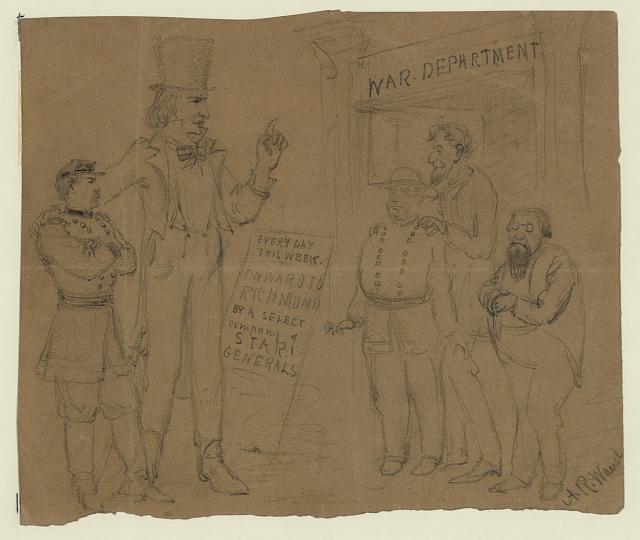
Cartoon showing Uncle Sam and General McClellan standing before a playbill which reads: Every day this week onward to Richmond by a select company of star generals (Alfred R. Waud between 1861 and 1862 Winter; LOC: LC-DIG-ppmsca-20874)

Going to his head?

You can read a description of this image at the Library of Congress.

Posted in 150 Years Ago This Week, Lincoln Administration, Military Matters | Tagged , , , , | Leave a comment

New Prison in the Bay

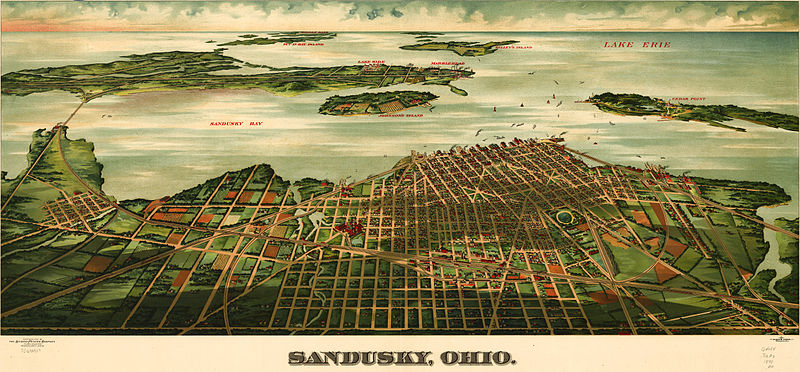
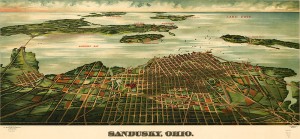
Sandusky,_Ohio_birdseye_map_(1898)._loc_call_no_g4084s-pm007070

Sandusky 1898 - Johnson's (Bull's) Island in the bay

From The New-York Times January 14, 1862:

THE NEW DEPOT FOR PRISONERS OF WAR.

The depot erecting by the Government on Lake Erie for the reception of prisoners of war, is thus described by a Sandusky correspondent of the Cleveland Herald:

“Yesterday morning I made a water excursion over to Bull’s Island, to see the buildings now in process of erection for the prisoners’ depot, and having a thought with reference to its sanitary position, I give you the results of my observations.

Bull’s Island lies within Sandusky Bay, about a mile from its mouth, and about two miles from Sandusky, (Ohio) with easy access by a ferry. It contains about three hundred acres, with a prominent limestone ridge in the centre, with a gentle descent in each direction to the water edge, and with no marsh or swampy ground within its borders. Sixty acres have been leased by the Government for the purpose of a prisoners’ depot, in which to place the captured rebels for safe keeping, and which will be ready for their occupation by the first of February next, and which will be guarded by two companies of soldiers. The buildings now erected comprise a storehouse, three houses for officers’ quarters, a soldiers’ barracks — each are large and roomy — a hospital building, in dimensions 100 feet long by 24 feet wide; a long one-story house, in the rear of the others and somewhat relived, and immediately under the limestone bluff, sheltering it from the northerly and westerly winds, with doors and windows opposite each other, affording free draft and ventilation — a nice and comfortable tenement for those poor customers consigned to the [t]ender mercies of the doctors and surgeons.
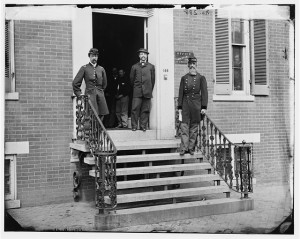
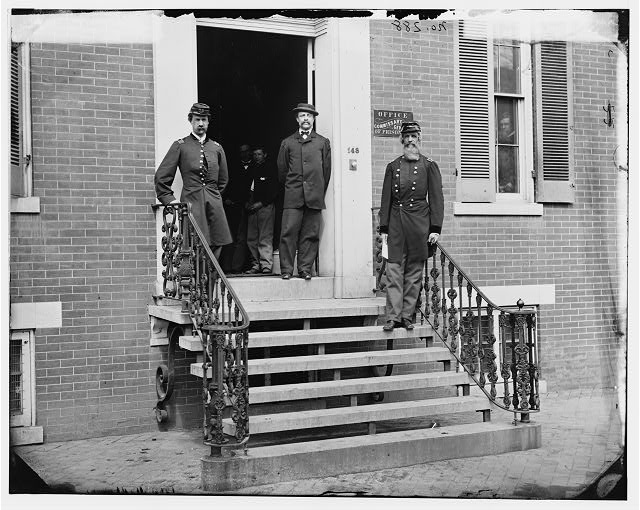
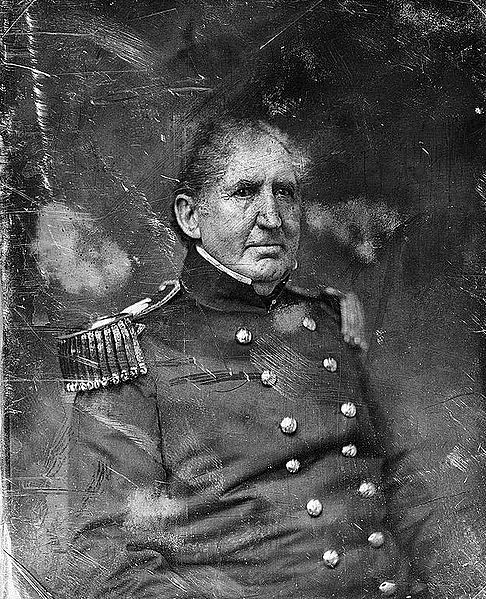
Washington, D.C. Gen. William Hoffman, Commissary General of Prisoners (at right) and staff on steps of office, F. St. at 20th NW (1865; LOC: LC-DIG-cwpb-03953)

William Hoffman (on the right) - from POW to Prisons' Boss

Further to the east of these buildings is the inclosure for the prisoners, of some fifteen acres, a stout plank-board fence, eight feet high, with sentry boxes and sentry walks; within are eight large two-story structures, substantially built, airy and spacious, and contrast favorably with the narrow, crowded, unhealthy jail accommodations of the South, into which our prisoners are cast. There is ample room for the erection of other buildings to any extent, if the numbers of the prisoners should demand. Large room is allowed within the inclosure for exercise and games upon a fine plateau of ground — which, by-the-by, should have a few blind drains constructed to carry off the more readily superfluous moisture, and render the whole the more dry.

The position of the depot is a fortunate selection, and does credit to the judgment of Col. HOFFMAN. It is safe, from its isolated island position, easily supplied with all the necessities of subsistence, with an easterly and southern exposure, having the grateful, health-bearing winds of Lake Erie full in their front, an abundance of soft lake water — a matter of much importance in a sanitary point of view — and altogether a charming spot.

Much yet remains to be done, as but the outside of most of the inclosures are finished. Eighty mechanics, however, make rapid progress. As yet nothing is done in the construction of out-houses, ice-cellars, wells, cisterns, drains, &c., of which all will come around in due time.”
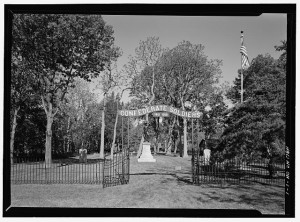
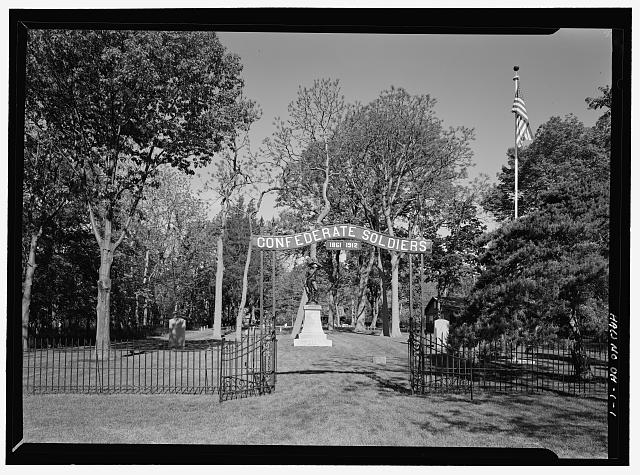
VIEW OF ENTRANCE WITH FENCE, ARCHWAY, AND FLAGPOLE. VIEW TO WEST. - Confederate Stockade Cemetery, Johnson's Island, Sandusky, Erie County, OH (2006; LOC: HALS OH-1-1)

Confederate cemetery on Johnson's Island

You can read a good overview (with photos) of the POW Depot on Johnson’s Island at this site. There is a bit of mystery/discrepancy about William Hoffman, who was the Commissary-General of Prisoners during the Civil War. The sources used at Wikipedia say he was a prisoner from February 1861 until August 1862. The Times article and the Johnson’s Island site I just linked to make it seem he was out before that.

Civil War Bookmarks has a post quoting Henry Kyd Douglas from his I Rode With Stonewall describing the freezing winter conditions at the Johnson’s Island prison depot. It got down to 28 below at one time.
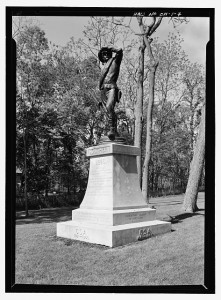
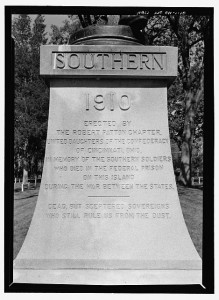
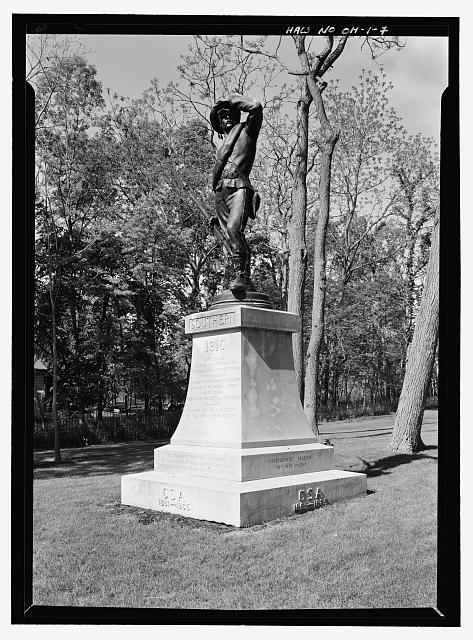
CONFEDERATE SOLDIER MONUMENT, "THE LOOKOUT," FRONT AND SIDE ELEVATIONS. VIEW TO SOUTHWEST. - Confederate Stockade Cemetery, Johnson's Island, Sandusky, Erie County, OH (2006; LOC: HALS OH-1-7)

'How can I get out of here?'

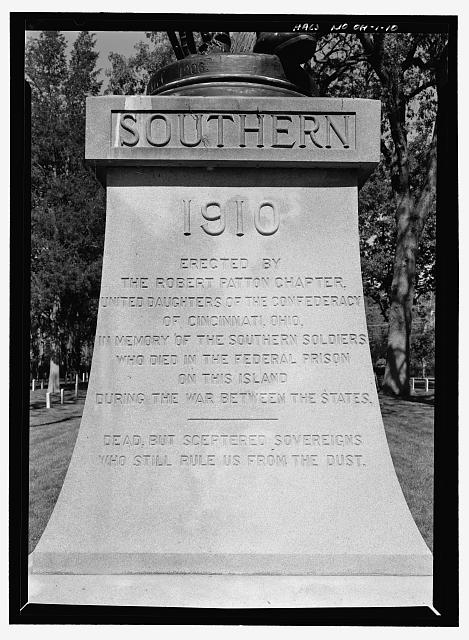
DETAIL OF INSCRIPTION ON CONFEDERATE SOLDIER MONUMENT, "THE LOOKOUT." VIEW TO WEST. - Confederate Stockade Cemetery, Johnson's Island, Sandusky, Erie County, OH (2006; LOC: HALS OH-1-10)

Sceptered sovereigns rule Daughters of the Confederacy from the dust
Posted in 150 Years Ago This Week, Military Matters | Tagged , , , | Leave a comment

Celebrity Endorsement?

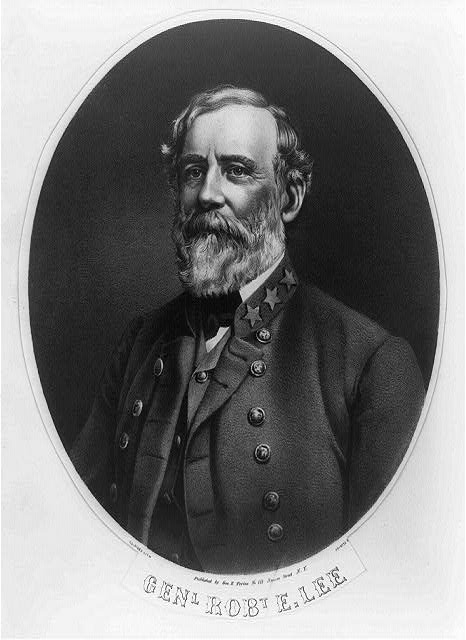
Genl. Robt. E. Lee (New York : Geo. E. Perine, between 1860 and 1900; LOC: LC-USZ62-93022)

A genteman and his thank-you note

From the Richmond Daily Dispatch January 13, 1862:

Letter from Gen. Lee.

Charleston. S. C., Dec. 16, 1861.

Mr. G. B. Stacy, Richmond.–Dear Sir:

I received your Mattress just as I was leaving Richmond, and have not yet had an opportunity of testing it in field, but from its convenient construction, economy of space, &c., I have no doubt but that it will be found a valuable article of camp equipage. Begging your acceptance of my thanks,

I am reply, your obd’t serv’t,

ja 11–1w* R. E. Lee

After an inauspicious beginning during the war Robert E. Lee was

… sent to organize the coastal defenses along the Carolina and Georgia seaboard, appointed commander, “Department of South Carolina, Georgia and Florida” on November 5, 1861. Between then and the fall of Fort Pulaski, April 11, 1862, he put in place a defense of Savannah that proved successful in blocking Federal advance on Savannah. Confederate fort and naval gunnery dictated night time movement and construction by the besiegers. Federal preparations required four months. In those four months, Lee developed a defense in depth. Behind Fort Pulaski on the Savannah River, Fort Jackson was improved, and two additional batteries covered river approaches. In the face of the Union superiority in naval, artillery and infantry deployment, Lee was able to block any Federal advance on Savannah, and at the same time, well-trained Georgia troops were released in time to meet McClellan’s Peninsula Campaign. The City of Savannah would not fall until Sherman’s approach from the interior at the end of 1864.

Posted in 150 Years Ago This Week, Confederate States of America, Military Matters, Southern Society | Tagged | Leave a comment

Loose Lips Help Sink a Bishop’s Career

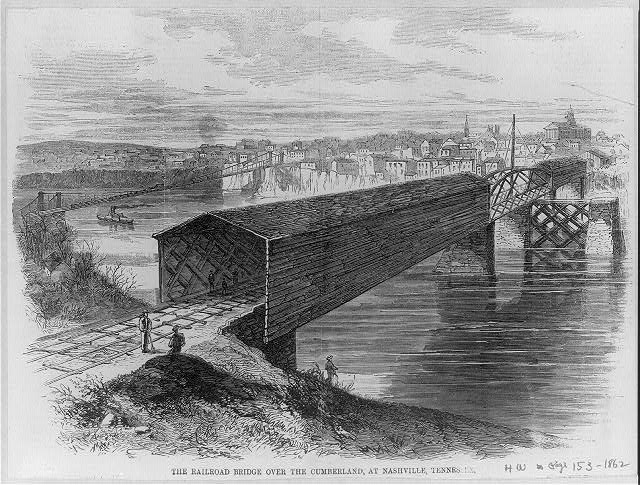
Tenn. - Nashville - "the railroad bridge over the Cumberland..." (Illus. in: Harper's Weekly, 1862; LOC: LC-USZ62-46163

Bishop's home - Nashville, 1862

From The New-York TimesFrom The New-York Times January 12, 1862:

THE DEFENCES OF COLUMBUS.

Correspondence of the Cincinnati Commercial.

LOUSVILLE, Tuesday, Jan. 7, 1861.

The Catholic Bishop of Nashville has arrived here.

He states that drafting in Tennessee proved a partial failure. Union men are numerous in that city. They are not outspoken, but often indulge in ridicule of the Confederate Government, and use language which indicates their feeling. The rebel army is a greater terror, even to Secessionists, than the Union army. If Bowling Green falls, Nashville will be destroyed. Forts are being built near the city, one is situated two miles north of the city on the Gallatin turnpike, and others east and west of the city.

The Bishop came by way of Bowling Green and Munfordsville. He knows nothing of the force at Bowling Green. No reinforcements had arrived from Columbus. He saw at Glasgow Junction the remains of the splendid tunnel at that point, destroyed on the 5th by rebels. The railroad from that point north has been entirely destroyed — even rails taken away. The turnpike has been obstructed by felled trees. The rebels are endeavoring to draw Union men on Bowling Green. He says the approach to Columbus, Kentucky, is splendidly defended by numerous batteries, chains and torpedoes obstructing the river, and thinks it an utter impossibility for gunboats to live in the water at that point. Gen. ZOLLICOFFER has thrown three regiments of rebels in Jimtown, to keep the rear open and to guard.

Born in Kilkenny, Ireland, James Whelan became the second Catholic Bishop of Nashville in 1860.

As a border state, Tennessee was the scene of some of the most severe battles during the Civil War (1861–1865). While passing through the lines after a visit with Bishop Martin John Spalding at Louisville, Whelan was accused of making remarks within Union lines which the Confederates thought had influenced the movements of the Union Army. These reproaches, combined with the sufferings, struggles, and sorrows of war, proved too much for Whelan, who resigned as Bishop on February 12, 1864; he was immediately named Titular Bishop of Diocletianopolis in Palaestina.

As The National cyclopaedia of American biography, Volume 12 says, Bishop Whelan was a southern sympathizer. This source basically backs up the Wikipedia article, although it has Whelan resigning in 1863.

It is said that in early January 1862 Felix Zollicoffer had his troops positioned at Mill Springs, Kentucky.

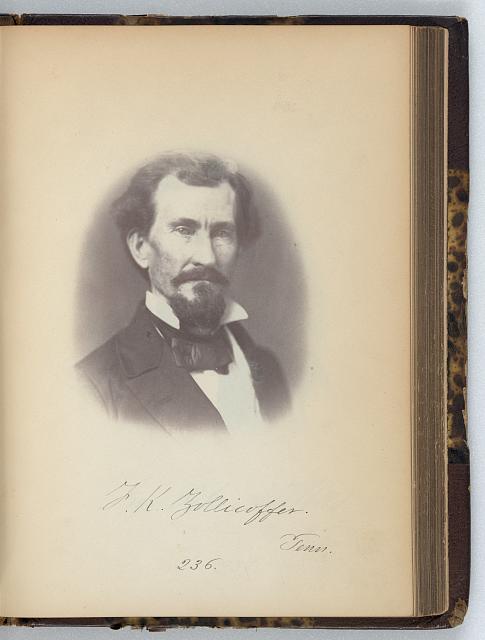
Felix K. Zollicoffer, Representative from Tennessee, Thirty-fifth Congress, half-length portrait (1859; LOC: LC-DIG-ppmsca-26775 )

Rebel general as US Congressman - 1859

Posted in 150 Years Ago This Week, Military Matters, Southern Society | Tagged , | Leave a comment

Bennett and Brannan

No, not a Law Firm

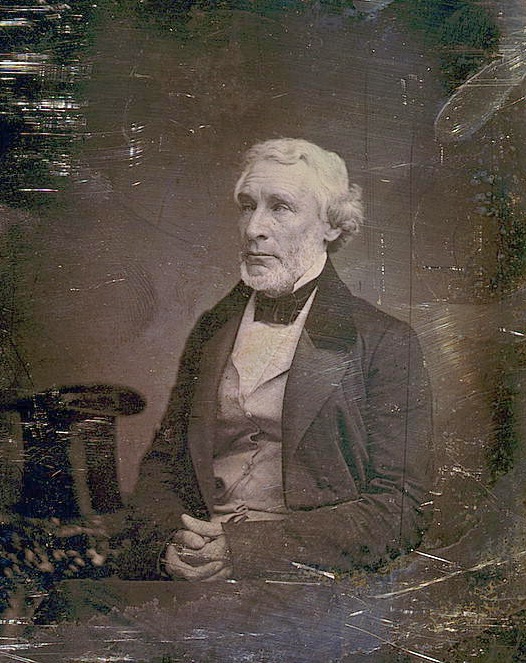
James Gordon Bennett, three-quarter length portrait, three-quarters to the left, seated, hands folded in lap, seated beside a small table with tablecloth on which rests a tall hat (between 1851 and 1852; LOC: LC-USZC4-4150)

Bennett says McClellan throttling the CSA?

In a war of words with James Gordon Bennett, Sr. and his New York Herald even the Richmond Dispatch is giving Union General-in Chief McClellan some guff about the apparent inactivity of the U.S. Army of the Potomac.

From the Richmond Daily Dispatch January 11, 1862:

His hand upon our throat.

–The voracious and modest Bennett avers that General McClellan has his hand upon the throat of the South, and can choke us all to death whenever it suits his good pleasure. His figure of speech describes accurately the temper and purpose of the Lincoln Administration, which may be compared to a highwayman, seizing an innocent traveler by the throat with one hand, and with a loaded pistol in the other, bidding him deliver or die. This is precisely what the North means by this war — nothing more, nothing less — deliver us your cotton, rice, tobacco, naval stores, and trade and commerce generally, or die. But the traveler in this case happens to be armed, and is in no humor to deliver up a dime upon compulsion. If the highwayman can choke him to death when he pleases, he has been a long time in doing it. We were to have been crushed in April, according to the vicious Herald. That paper declared that we should not be permitted to vote upon the Ordinance of Secession. Then it was merciful enough to postpone our fate till the pleasant month of June, and gave us a still farther respite till the 20th of July, when our Congress was to meet, and which Bennett declared old Scott would disperse at the point of the bayonet. Certain events on the 21st induced the Herald to change its opinion, and it instantly became as vociferous in magnifying the military prowess of the Southern Confederacy as it had previously been in deriding and running it down. It has now returned to its old game of brag and bluster, and audacity. McClellan is throttling and choking us, but he is doing it so gently that the subject of it is not aware of the experiment. Shut up in Washington, blockaded in his own capital, and unable or unwilling to make a sortie in its defence, he has his hand upon our throat and is choking us to death ! If Bennett’s readers are capable of believing such nonsense, he would despise himself if he could give it credit.

_____________________________________________________

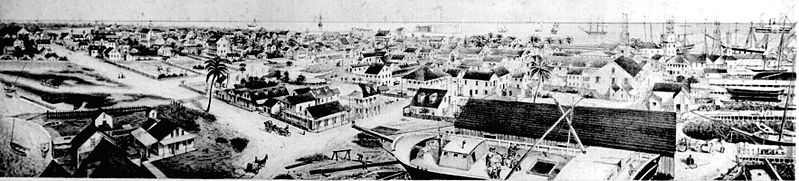
Key_west_1856

Key West, ca. 1856

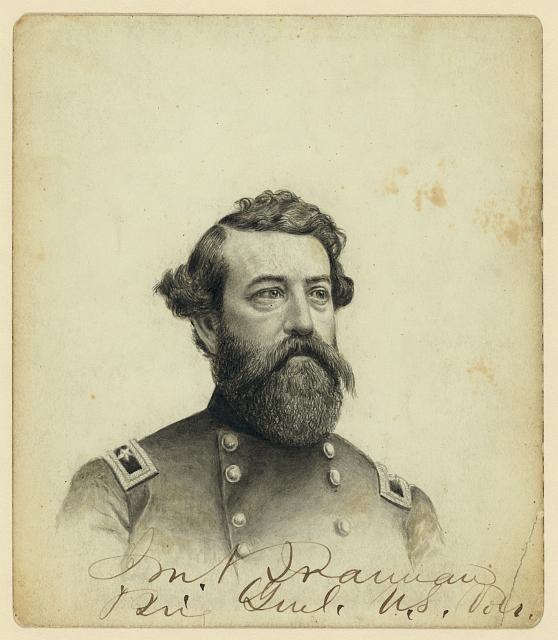
It is said that 150 years ago today the U.S. Department of Key West was constituted with John Milton Brannan as its commander. Brannan was a graduate of West Point and a career army officer who would serve throughout the Civil War. His first wife died mysteriously; she was the daughter of Ichabod Crane. And I admit it, I never knew there was a real Ichabod Crane.

Jont. Brannan, Brig Genl. U.S. Vols. (etween 1862 and 1865; LOC: LC-DIG-ppmsca-22330)

John M. Brannan

Ichabod_B_Crane (LOC: cph 3c10023)

Ichabod B. Crane

Posted in 150 Years Ago This Week, Military Matters, Southern Society | Tagged , , , , | Leave a comment

St. Louis Blues v. Grays

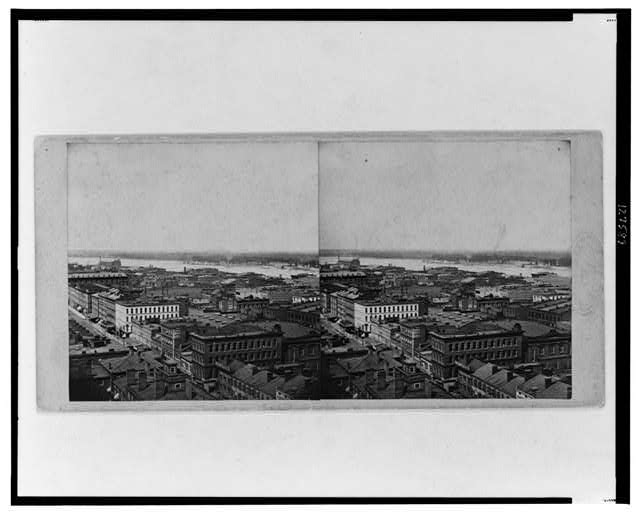
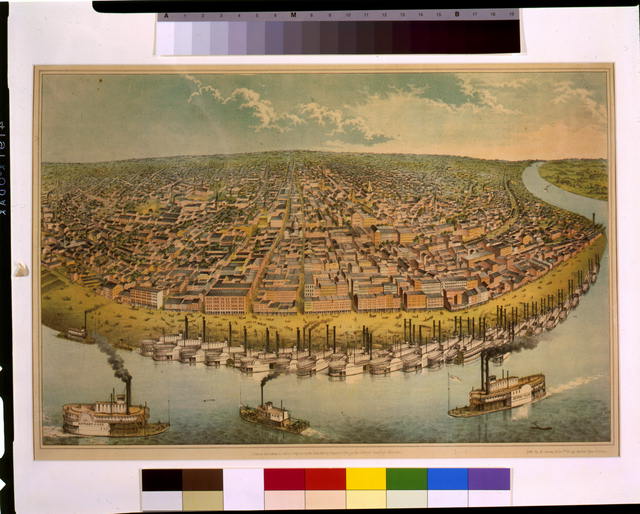
Aerial view of commercial district of St. Louis, Missouri (between 1862 and 1868; LOC: LC-USZ62-127589)

St. Louis commercial district (a view for each chamber of commerce)

Isn’t the telegraph great?. People in New York can read news from St. Louis as quickly as from Gotham itself. Missouri, a border state, is more divided than other states. The Union Provost-Marshall General wants to monitor newspapers throughout the state. The Baptist and Methodist churches split up long before the Civil War over the question of slavery. Here even the St. Louis Chamber of Commerce is splitting up.

From The New-York Times January 10, 1862:

IMPORTANT FROM MISSOURI.; Copies of all Newspapers Published in the State to be sent to the Provost Marshal General-Disruption of the St. Louis Chamber of Commerce.

ST. LOUIS, Thursday, Jan. 9.

The Provost-Marshal General has issued an order requiring all publishers of newspapers in the State of Missouri, St. Louis city papers excepted, to furnish him a copy of each issue for inspection; a failure with which order will render the paper liable to suppression.

Great excitement occurred in the Chamber of Commerce this afternoon, on the occasion of the election of officers, which resulted in the disruption of the Chamber, by the withdrawal of the Union members, who subsequently established a Union Chamber of Commerce, which will be immediately carried out. The trouble occurred in consequence of the secession members refusing, by their votes, to admit a number of Union applicants for membership.

As you can read at Ozarks Civil War Bernard G. Farrar was aide-de-camp to Nathaniel Lyon. On August 10, 1861 Farrar

… was appointed provost-marshal-general of the Department of the Missouri.

As provost-marshal-general, Farrar was responsible for ensuring that military orders were executed and handled legal matters pertaining to the army. On August 7, 1862, General Henry Halleck extended Farrar’s authority to include the states of Illinois and Iowa.

In December 1862 Farrar left his job as Provost Marshal General and became commander of the 13th Missouri Infantry. He took part in the siege of Vicksburg and served throughout the Civil War.

Our city, (St. Louis, Mo.) (by Hagen & Pfau at the Anzeiger des Westens, c1859.; LOC: LC-USZC4-3168)

'Our City' - c.1859

Posted in 150 Years Ago This Week, American Society, Military Matters, Northern Politics During War | Tagged , , , , | Leave a comment

Battle of New Orleans

Midshipman Farragut reports for duty (1811?) (no date recorded on caption card; LOC: LC-USZ62-68317)

Young Farragut at start of long career

From the Richmond Daily Dispatch January 9, 1862:

Eighth of January.

–The anniversary of the battle of New Orleans passed by without special observance. It was the custom when all the soldier boys were at home to have some kind of a frolic, but the war has put an end to all festivities of that sort. Let us hope that another twelve-month will bring about a happy restoration of the fashions of “auld lang syne.”

150 years ago the January 8, 1815 Battle of New Orleans was very much still in the American consciousness, but at least in Richmond it was not much celebrated in 1862 because of the Civil War.

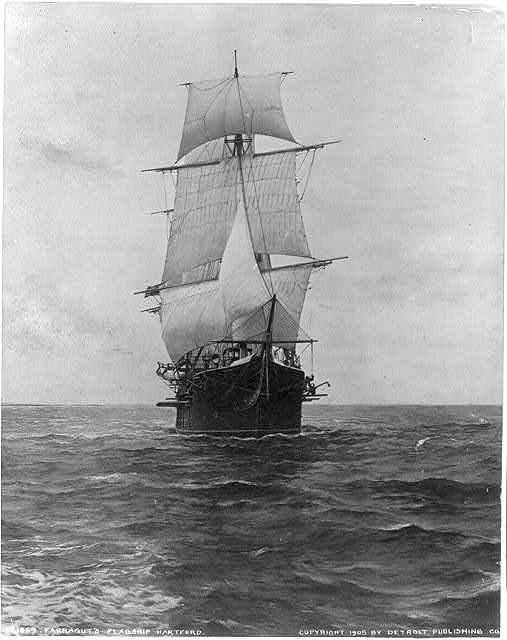
As Civil War 150th Anniversary has reported, 150 years ago today David Farragut was appointed commander of the Western Gulf Blockading Squadron. One of his major responsibilities would be to try to capture New Orleans for the Union.

Born in 1801 David Farragut became a midshipman at age 9 and fought during the War of 1812 (although not at New Orleans).

Farragut's flagship HARTFORD (c1905; LOC: LC-USZ62-79293)

USS Hartford - Faragut's ride to the Gulf (in its later life)

Posted in 150 Years Ago This Week, Military Matters, Southern Society | Tagged , , | Leave a comment