Send Us Your Negroes

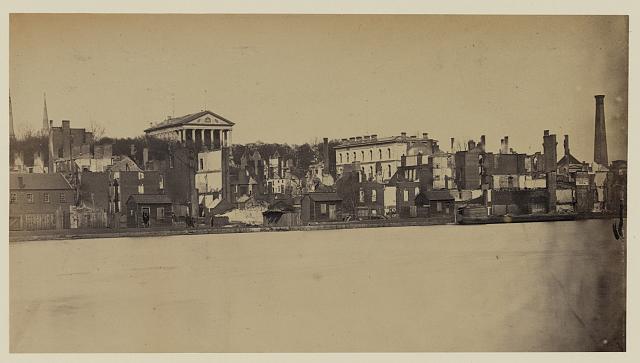
Richmond, looking across canal basin, Capitol and Custom House in distance (1865 April; LOC: LC-DIG-ppmsca-08227)

A view of Richmond - April 1865

It’s the time of year when many agents are trying to drum up business for the new year. The following is the lead notice of several that are advertising the hiring out of negroes. I’m guessing, but apparently these agents are like brokers who get a cut if they can find work for the slaves. Perhaps a business model sort of like a consignment shop; or a temporary employment agency – except, of course, that the fruit of the slaves’ labor goes to the masters, not the negroes.

From the Richmond Daily Dispatch December 27, 1861:

Negro Hiring.
Negro Hiring for 1862.

The subscribers have associated themselves together to conduct a

General Agency business.

In the city of Richmond, embracing the Hiring out of Negroes, Renting out Houses, Selling Real and Personal Estate, &c.

Their special attention will be given to Hiring out Negroes; and from the long experience which each have had feel confident that they will be able to procure fair prices and good homes for all negroes entrusted to their care. They solicit a continuance of that liberal patronage heretofore bestowed upon each of them. They have made ample arrangements to have negroes cared for till hired out; and in cases of sickness will give our personal attention.

We earnestly request our friends to send their negroes to us by the 1st of January. Better prices and better homes can be obtained by sending them in early. E. A. J. Clopton,

Ro. B. Lyne

Office corner of Franklin and Wall streets. opposite Dickerson & Hill. up stairs. …

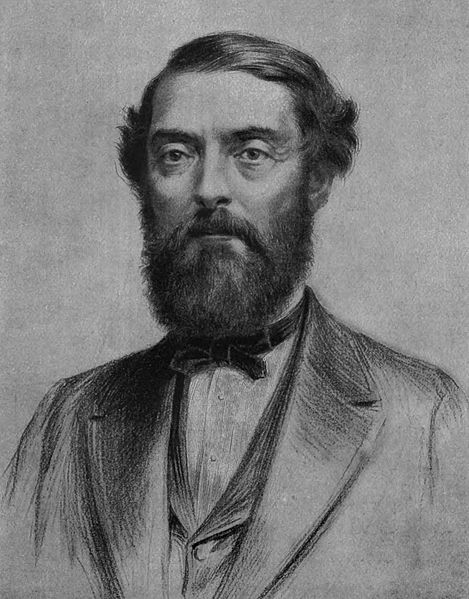
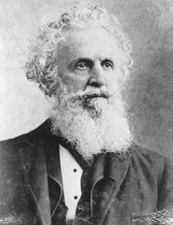
There’s a bit about Edward Andrew Jackson Clopton at RootsWeb in an article that describes Clopton’s actions during the fall of Richmond in April, 1865. You can see a photo of him. There is also a reproduction of his obituary: Clopton lived until 1879; he is described as an ardent Confederate who did not fight, but who had one of his sons mortally wounded during the war; his real estate business is mentioned.

Posted in 150 Years Ago This Week, Southern Society | Tagged | Leave a comment

Using Oil As a Weapon

Edwin Drake

Edwin Drake - oil driller

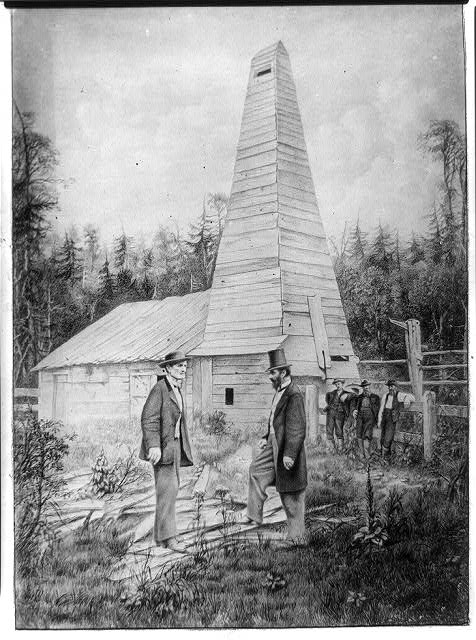
It didn’t take long. In 1859 Edwin Laurentine Drake successfully drilled for oil in Titusville, Pennsylvania. 150 years ago this week there was at least speculation about possible destructive uses of the material that was becoming more and more available. This story was written while war with Britain was a reasonable possibility because of the Trent Affair. The Lincoln administration decided to release Mason and Slidell on December 26th.

From The New-York Times December 28, 1861:

OUR WASHINGTON CORRESPONDENCE…. A New and Destructive Shell …

WASHINGTON, Tuesday, Dec. 24, 1861. …

The first oil well (Reproduction, copyrighted in 1890, of a retouched photograph showing Edwin L. Drake, to the right, and the Drake Well in the background, in Titusville, Pennsylvania, where the first commercial well was drilled in 1859 to find oil; LOC: LC-USZ62-11724)

First oil well - 1859

A new and most efficient element of warfare — or rather an old one revived — seems to have been suppled by that wonderful natural product of the earth in Western Pennsylvania — the petroleum or rock oil. Unless the story is a canard, put forth by the speculators in that article, it will prove equally terrible as the old Greek fire, which carried destruction to every combustible substance where it fell.

A fire-shell is said to have been invented, inclosing a small quantity of oil, which, as the shell explodes, is scattered in drops and streams of flame in all directions; and such is the fearful inflammability of the substance that it is inextinguishable by water, and can only be smothered by the complete exclusion of the air. The advantage which such a missile would give us in combats at sea would go far to neutralize the naval power of Great Britain in case of a war. … W.

_____________________________________________

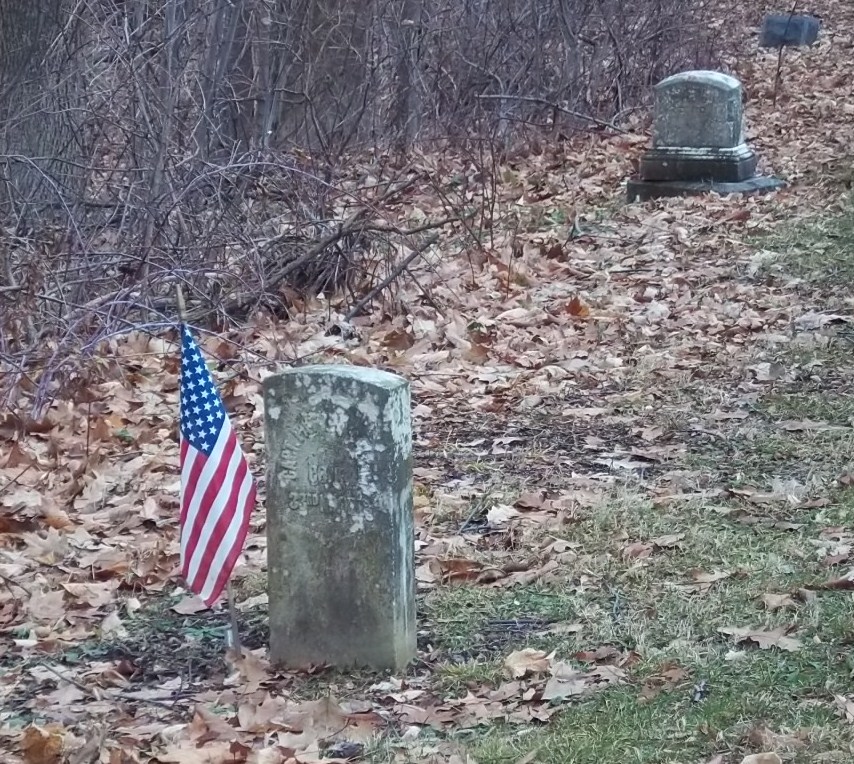
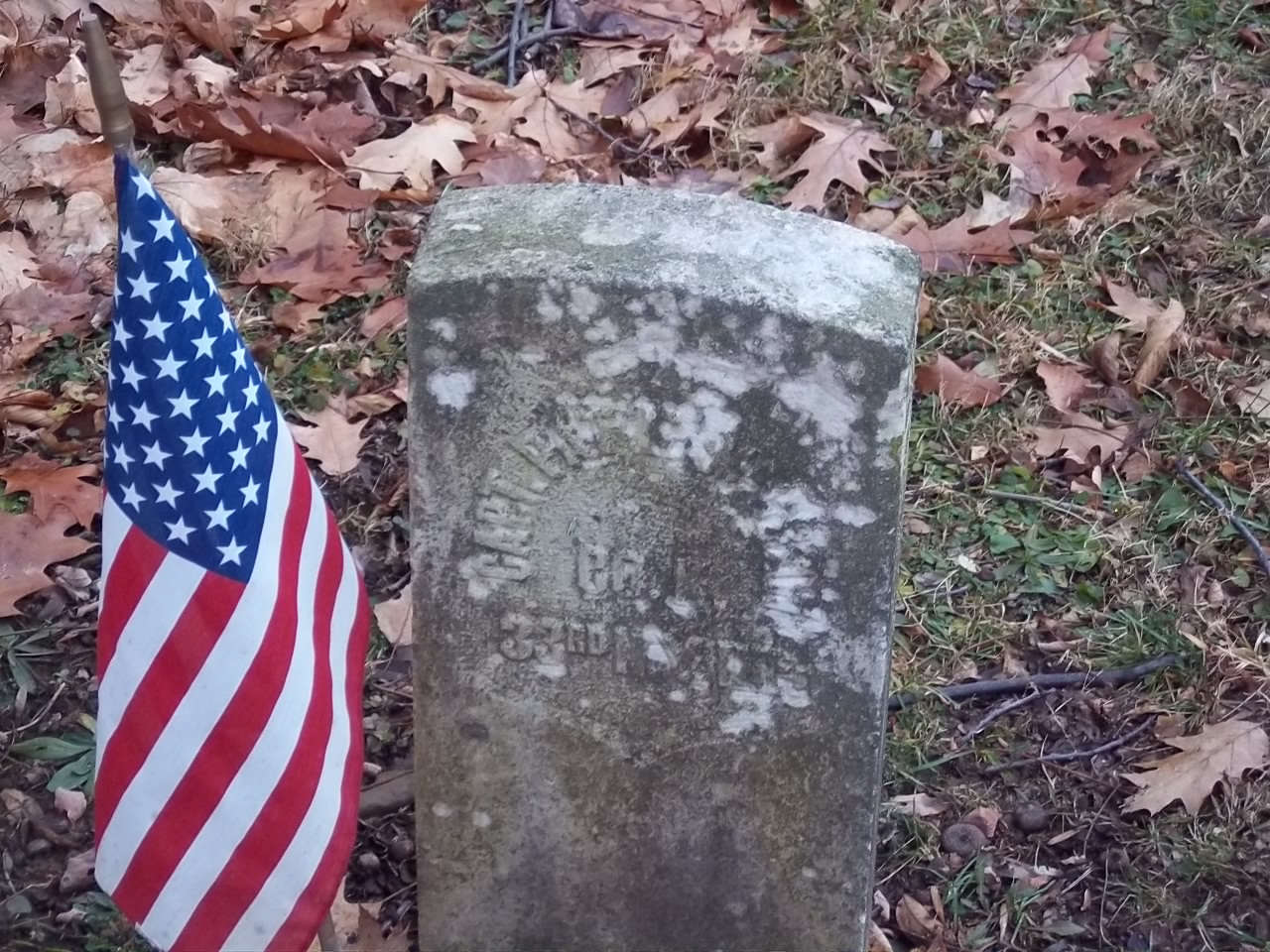
Yesterday I ended up in Restvale on a pleasant walk as I was trying to clear a bit of the holiday haze. I knew that the cemetery in Seneca Falls, New York had a lot of gravestones of Civil War troops, but so far I had not seen any that I recognized. Yesterday I found the marker for Patrick McGraw, the captain of Company K, NY 33rd Volunteer Infantry. He was the captain alluded to in yesterday’s post.
If you have to end up in Restvale, McGraw’s got a pretty good place on kind of a bluff overlooking the Seneca River (Cayuga – Seneca Canal).

pmcgraw

Captain McGraw's gravestone

Captain McGraw's gravestone

Another view

Another view

________________________

I was excited about the good coincidence. But I was also reminded about a t-shirt/sweatshirt I saw advertised in a seasonal catalog. It was inscribed like this:

History Buff: I’d find you more interesting if you were dead.

Posted in 150 Years Ago This Week, Military Matters | Tagged , , , , | Leave a comment

No Wake for Finegan?

from www.wpclipart.com

A Christmas Killing

A Seneca County, New York newspaper in January, 1862 included this Boxing Day letter home:

From the Thirty-Third Regiment

CAMP GRIFFIN, 33D REGIMENT, Co. K.

Dec. 26, 1861.

I improve the opportunity of writing you this morning. Yesterday being Christmas, of course, our friends at home enjoyed themselves with their accustomed hilarity. Not so here. We had no roast turkey or goose, the only luxury being a taste of a little Old Rye sent from home to Sergeant Martin. – All in all it was a sad Christmas for our Company, in consequence of an unfortunate and fatal occurrence that took place in our camp. It seems that on the night before Christmas a private named Joseph Finegan and Corporal John Tobin got into a dispute in regard to their tents. So after this Finegan attempted to extinguish a fire in a sort of ravine near the fire place itself, and in doing this it happened accidentally that some dirt was thrown into Tobin’s coffee, who was sitting nearby, eating his supper. He then applied some harsh epithet to Finegan at the same time arresting the shovel from his hand, which had been used in throwing dirt on the fire, pushed him into the tent and struck him a violent blow on the head. The blow produced an ugly wound, and The Surgeon was immediately called to dress it; some two hours after the occurrence the physician was again sent for to stop if possible, the profuse bleeding of the wounded soldier. An effort was made to get him into The Hospital, but that institution was so full that it was deemed best not to send him there. He was then taken to the Captain’s tent, and about 6 o’clock in the morning the Captain told me to procure a light for he thought Finegan was dead. – Upon an examination it proved too true, he was dead! Tobin was placed under arrest, to await the results of the investigation now going on. We wish to ascertain whether Finegan has any relations in Seneca Falls or vicinity. The Captain has $33 of his money, and there is now due him two months wages from the Government, which they should receive,

Yours, &c.

M.

jfinegan

Result of getting dirt in corporal's coffee

Apparently the investigation into Corporal Tobin’s conduct did not find any wrongdoing:

I’m not sure whether or not Camp Griffin had any activities like football and chasing a greased pig to help the troops blow off some steam. Being away from family and friends, the lack of decisive action had to be getting on people’s nerves. Apparently the Old Rye wasn’t enough.

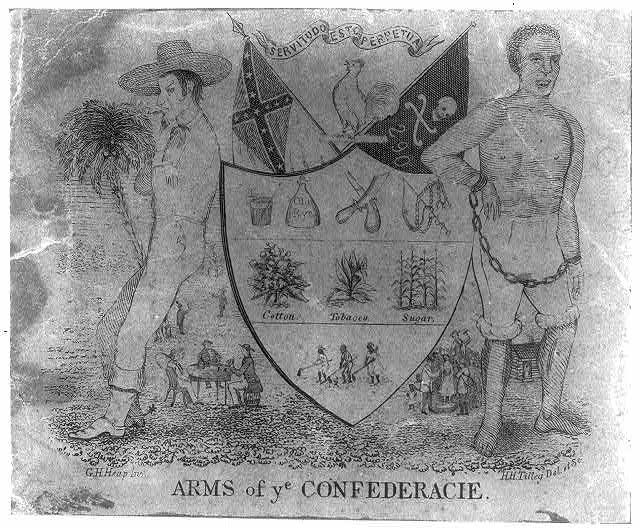
Not too many images of Old Rye out there. The following uses the bottle as part of an indictment of the Confederacy. Certainly northern troops liked whiskey, too. If you click on the image you can check out the description of all the image elements at the Library of Congress.

Arms of ye Confederacie (1862; LOC: LC-USZ62-305)

Old Rye used in CSA, too (click for details)

Joseph Finegan was also the name of a Confederate general from Florida.

Posted in 150 Years Ago This Week, Military Matters | Tagged , , , | 1 Comment

Talking Strategy for Christmas

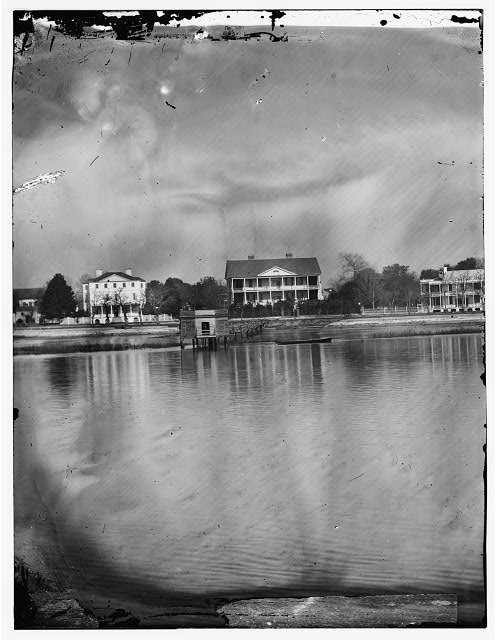
Beaufort, South Carolina. View of Beaufort from the waterfront. Fuller's House (1861 Dec; LOC: LC-DIG-cwpb-00753)

Beaufort waterfront - December 1861

A Seneca County, New York newspaper in January, 1862 included this Christmas Day letter home:

From South Carolina

A letter from Beaufort, S.C., dated the 25th ultimo, and written by a brother of one of the editors of this paper, says: The rebels are just across the river from us, but Gen. STEVENS dares not send our forces to meet them, from the simple fact that they out number us two to one. This should not be so. If we had at least thirty thousand men, we could march from one end of South Carolina to the other, with hardly an interruption. Now everything seems to be at a stand still, with little prospect of a change. troops should be sent to this place with all possible dispatch, that the work of subduing the rebels might go bravely on. With a sufficient force we could advance on main land, destroy their Railroads, burn their bridges, and teach them to respect the Stars and Stripes. South Carolina ought to be overrun without delay and the State under our control before the approach of warm weather. It is no worse to to fight now than by-and-by. It has got to be done, and the sacrifice might as well be made now as a year from now.

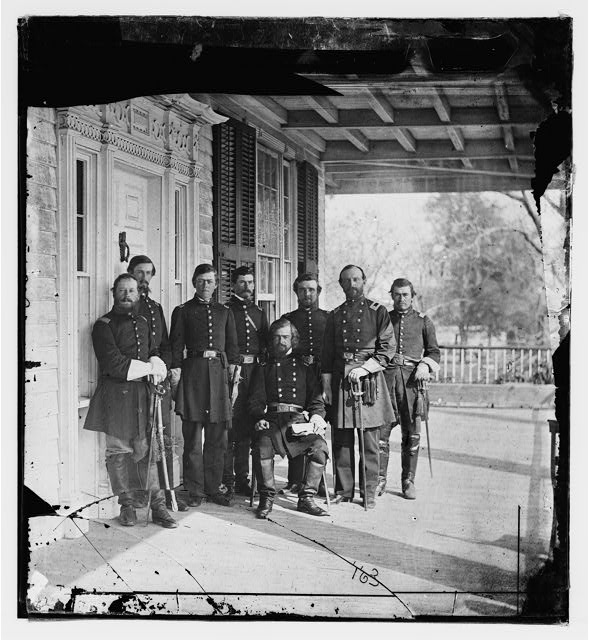
Beaufort, S.C. Gen. Isaac I. Stevens (seated) and staff on porch of a house (1862 March; LOC: LC-DIG-cwpb-00755)

General Stevens and staff on a Beaufort porch

But to drop the subject of war, I must say that no country can surpass this. It is Christmas day and the roses are in full bloom, the weather is warm and May like. – This is something I before saw, and it contrasts strangely with what we usually experience in the Northern States about Christmas time.

There are some beautiful residences in this vicinity, now almost entirely deserted. The greater part of the furniture remains unmolested, and is of the most exquisite design and finish. A piano adorns almost every residence, and the grounds about are well decorated by the orange tree. One is almost led to wonder how the inhabitants of this beautiful country could have been induced to absolve themselves from the Union, and to take up arms against a common country. But they have struck the fatal blow, and can only be regarded as rebels and traitors, and treated accordingly.

Before the war Isaac Ingalls Stevens was governor and congressman from Washington territory.

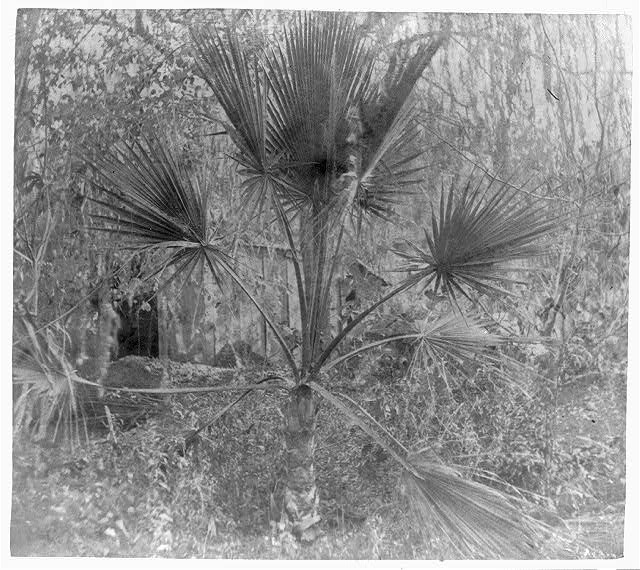
The palmetto tree (published 1866; LOC: LC-USZ62-27033)

Palmetto tree for Christmas

Posted in 150 Years Ago This Week, Military Matters | Tagged , | Leave a comment

At Camp Near Bladensburg

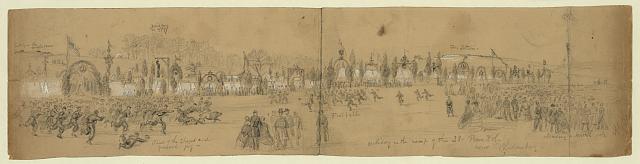
Christmas Festivities: Chasing a pig … and a pigskin?

Holiday in the camp of the 23 Penn. Vol. near Bladensburg (1861 ca. December 25 by Alfred R. Waud; LOC: LC-DIG-ppmsca-22441)

Catch that "shaved and greased pig"

Through the haze of 150 years it’s kind of hard to make everything out. You can read the description at the Library of Congress. There’s information here that Camp Union was the name of the camp near Bladensburg.

Posted in 150 Years Ago This Week, Military Matters | Tagged , , | Leave a comment

It’s Beginning to Look A Lot Like …

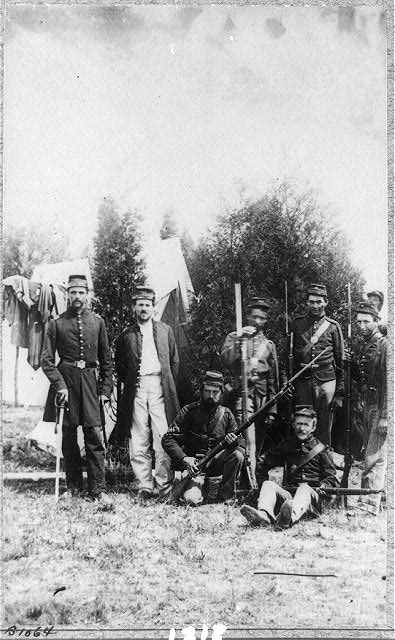
33rd New York Infantry (between 1861 and 1865; LOC: LC-USZ61-2121)

Members of 33rd NY Infantry

Plenty of Time to Decorate Camp In Lieu of General Advance South

Captain Guion of Company A, New York 33rd Infantry Regiment describes his quarters, the regiment’s decorating mission, the 25 mile front, and the regiment’s non-fighting role during the Battle of Dranesville. He also has an interesting prediction for postbellum Virginia – not exactly northern carpetbaggers, but industrious northern farmers moving south to till Virginia’s rich soil. His description of the Old Dominion’s road system has the Battle of the Wilderness written all over it, I think.

Letter from Capt. Guion

CAMP GRIFFIN, VIRGINIA

Dec. 21st, 1861.

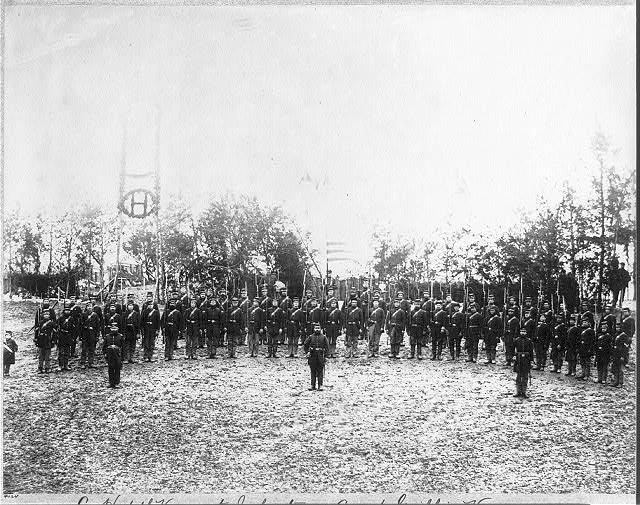
Dear Reveille: – A “seven by nine” cellar, three foot deep, “logged up” on top, and covered by a tent, makes a very comfortable habitation for the time being. And so, in the absence of any orders to advance, or go into Winter quarters the Grand Army, has made itself as comfortable as possible after the above plan. One day last week, our regiment was excused from the usual routine of duty, for the purpose of decorating the camp. Immediately the boys went to work, and before night its whole appearance was changed as if by magic. What before had been a bare hill, was become a forest of evergreens, and the white tents of the troops were almost hidden among the the heavy branches of the pine and cedar. A great deal of taste was displayed by the different companies in the decoration of their tents. Over the entrance of each, a handsome arch, surmounted by the letter of the company, and ornamented in various ways, was erected – all of which gave the camp a very beautiful and comfortable appearance.
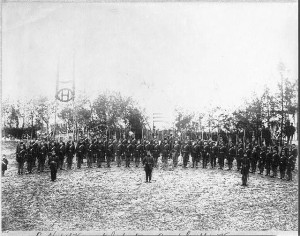
Co. H, 6th Vermont Infantry, Camp Griffin, VA. (between 1861 and 1869, printed later; LOC: LC-USZ62-6414)

6th Vermont with its decorated Company H arch

How long we are to remain here is of course impossible to state. A general impression prevails, that an advance will be made about the first of January. There may be some truth in this, for unless an onward movement is made soon, it must be deferred until settled summer weather comes again. At present the roads are in excellent condition, and probably will remain so, while this splendid weather lasts. The troops are ready and anxious for battle, are as perfectly drilled as is necessary, and are in an excellent state of discipline. The health of the army never was so good as at present. About the first of February the “rainy season” commences, and then the roads will be impassable for Artillery or Transportation Waggons.

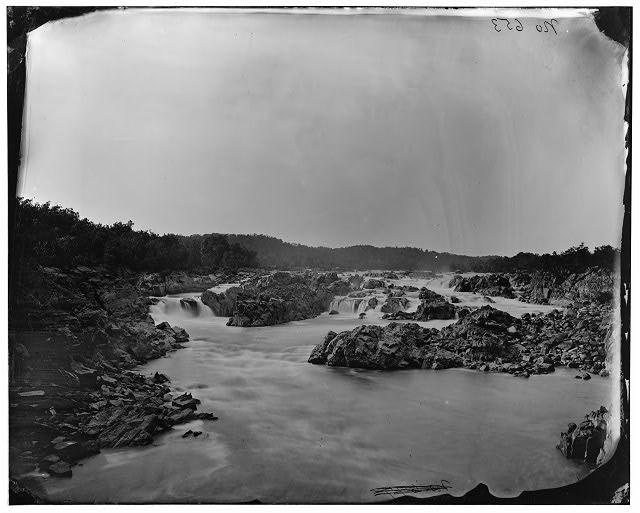
Our picket line has gradually advanced, and now extends from Great Falls on the Upper Potomac to Mt. Vernon on the lower, a distance of about twenty-five miles, requiring a force of over five thousand men to guard it. The system of picketing now adopted is so perfect in all its details, that it would be impossible for a person to cross the line at any point, without being detected.
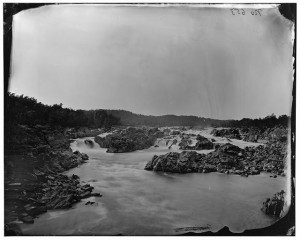
Washington, District of Columbia (vicinity). Great Falls, Potomac River (between 1862 and 1865; LOC: LC-DIG-cwpb-04110)

Great Falls on the Potomac

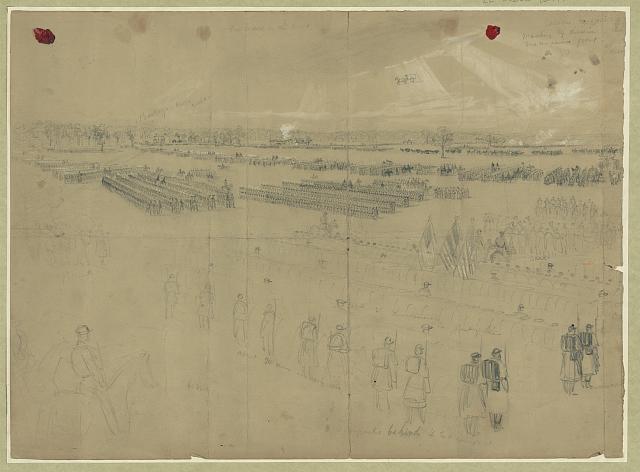
The country about here is much wilder than I expected to find it in any part of the Old Dominion. Very little of the land is cultivated, – although the soil is excellent and capable of amply repaying the labor of an active, energetic farmer. Heavy forest of Oak, Chestnut, and Pine, covering thousands of acres, have been cleared off by by the advancing army. Military roads have have been built in all directions and a rich section of country opened to the enterprise of our northern farmers, who will undoubtedly occupy it, after we shall have conquered a peace, with its former owners. One great peculiarity of Virginia, is its roads. The State has built splendid turnpikes, and that is all. In the absence of crossroads, the whole country is cut up by innumerable lanes and bridle paths, leading in every imaginable direction, so that if one is not thoroughly posted, he is sure to be lost in their innumerable twistings and turnings. As for the people I can not say much about them. All the better class of Virginians have left their homes since the war broke out, leaving the most shiftless and lazy set of beings here that I have ever met. Lewinsville, and Falls Church, places that you so often see mentioned in the papers, are mere hamlets, unworthy the name of villages. – The first, three miles this side of Vienna, contains eight dwelling houses, a store, two churches and a blacksmith shop – all of which are entirely deserted. Falls Church, three miles south, on the Leesburg pike, consists of about a dozen houses, one or two shops, a store, and the church which gives the place its name. The latter is a very large edifice, built in the New England style and with its tall white spire is visible for miles around. It was for a time used as a barracks by the rebels, and but little of its interior arrangement remains. Six miles west of this, over the lines stands the church built by Lord Fairfax in 1632. In this edifice WASHINGTON was married. But little of the altar at which the ceremony, took place remains, the greater portion having been carried off by relic seekers. One mile below Falls Church stands Taylor’s Tavern, the headquarters of the 35th N.Y. Just below this stands a large fort, one of the forty-eight erected for the defense of Washington. From here you obtain a good view of Munson’s and Upton’s Hill a mile away, one in front, and the other off to the left, each crowned with an immense fort, protected by ditch and abbatis, from the embrasures of which long rows of sullen cannon looks frowningly toward Secessia, ready at any moment to belch forth their iron hail of shot and shell. A short distance below there is Bailey’s Cross Roads, the scene of the recent grand review. Six miles further on lies Alexandria and seven more brings you to Mt. Vernon.
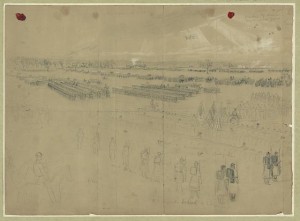
McClellan reviewing his troops near Baileys Cross Roads (1861 November; LOC: LC-DIG-ppmsca-22577)

General McClellan has got the grand review down (at Baileys Cross Roads 11-1861)

Yesterday, just as we were ready for dinner the startling beat of the long roll sounded through the camp.Instantly all was excitement. Dinner was forgotten, and in a very few minutes, the whole regiment was formed in line of battle on the parade ground, ready for action. We immediately moved off in double quick time, which was kept up at intervals until we had advanced to Vienna, (6 miles). Here we halted and our brigade took up its position, on a rising ground overlooking the village. The Artillery was placed in position, long lines of cavalry were drawn up ready to move at a moments notice, and everything arranged for an encounter with the enemy who were momentarily expected, while all this was being done, heavy cannonading on our right announced the opening of the fight. Soon a courier arrived with the intelligence that Gen. McCall had engaged the enemy in strong force. For a time all was excitement. Our men chafed at the thought of remaining idle while a battle was going on so near them, and were impatient to be led on. But the order to move did not come, and after standing under arms for nearly four hours, the cannonading having meantime entirely ceased, we were ordered back to our quarters. The 33d remaining some distance in the rear, to cover the retreat, arriving finally in camp about nine o’clock, sadly disappointed in not having met the enemy. During the whole time we were out, the men acted with a steadiness, and prompt attention to orders, deserving of commendation, and could they have met the enemy, would have fought with a bravery and coolness, that must have ensured success. To day we received a general report of the affair, and learn that our troops were victorious, killing some sixty, and wounding a large number of the rebels, besides taking many prisoners, and a large amount of stores and arms.

Wishing you and your numerous readers a Merry Christmas, and a happy New Year, I will close, with the hope, that in my next, I may be enabled to give you an account of the coming “great battle,” and that it may result in a victory to our arms.

Ever yours,

GEO. M. GUION
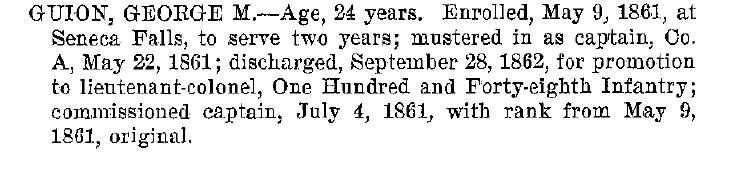
GMGuion

Our correspondent was a young captain

For a ton of information about Camp Griffin check out All Not So Quiet Along the Potomac . Camp Griffin is one of the DC Lawyer’s tags on the left of the page.

George Murray Guion served with 33rd New York Infantry Regiment until 1862 when the 148th New York Infantry Regiment was formed. Guion served that regiment as a colonel.

Check out more about the 33rd NY at this site, which includes a photo of the regiment’s flag that had a hole blown through it at Chancellorsville.

You can see a photo of Colonel Guion from later in life at the 148th New York Volunteer Infantry. Cowan’s Auctions displays some George M. Guion memorabilia.
Posted in 150 Years Ago This Week, Military Matters, Northern Society | Tagged , , , , , | Leave a comment

Confederate Air Force?

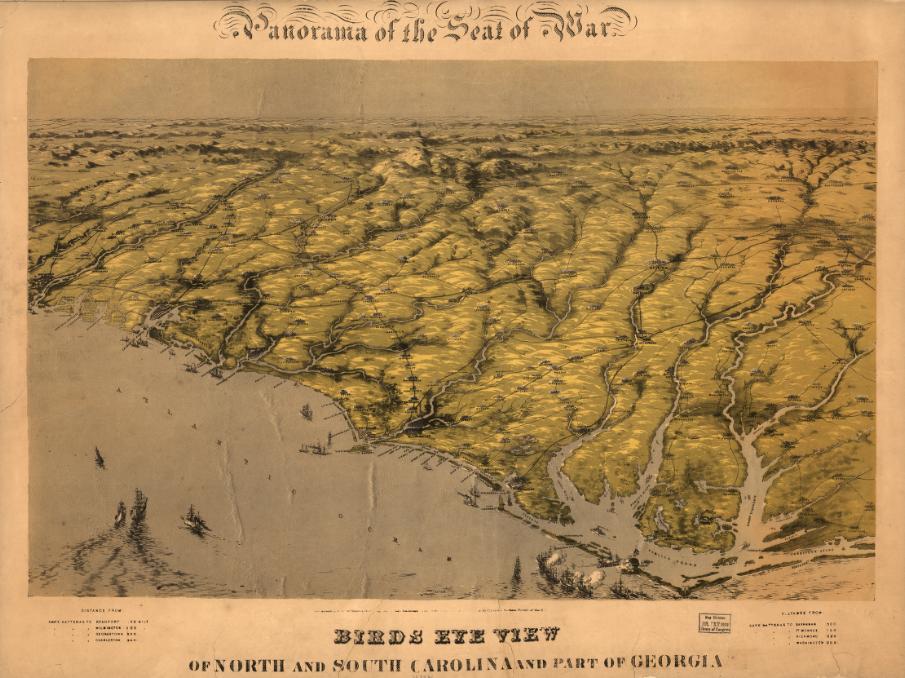
Birds eye view of North and South Carolina and part of Georgia. (by John Bachmann; LOC - http://hdl.loc.gov/loc.gmd/g3871a.cw0304500 )

Bombing Union Ships become Confederate Balloon Targets

Nascent B-52

About 12 and a half years ago I took a boat tour in Chattanooga. The guide said that the blue herons on the Tennessee River were referred to as the “Confederate Air Force”. Whoever came up with the following idea beat the birds to it. Professor Lowe might be impressed.

From the Richmond Daily Dispatch December 23, 1861:

“Squelching” the Blockaders

–An Original Idea.–A correspondent from Jeffries Creek sends us the following suggestion, which certainly possesses the merit of intense originality:

“Among the many projects for destroying the blockade, the following plan seems to me to combine less risk of life than would attend any other with an equal chance of success; Prepare a number of large iron shells, loaded with 100 lbs. of powder, and a due proportion of destructive missiles. Let the shells be heavier on one side, and let this side be fitted with nipples for percussion caps, communicating with the charge. Take these shells up in balloons, and when at a convenient altitude above the blockading squadron allow them to descend upon the enemy’s decks. The shells should be of sufficient weight to penetrate the deck of any vessel upon which they might be dropped. Even if this plan were impracticable upon the seas, it might serve to clear our harbors, such as Tybee and Port Royal.”–Mercury.

Posted in 150 Years Ago This Week, Confederate States of America, Southern Society | Tagged | Leave a comment

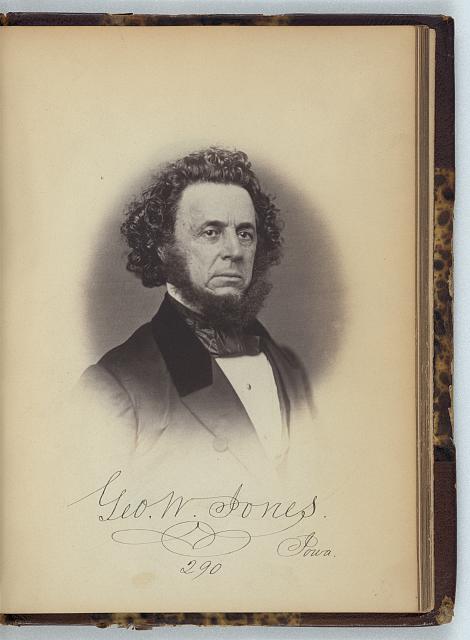
George Jones Locked Up!

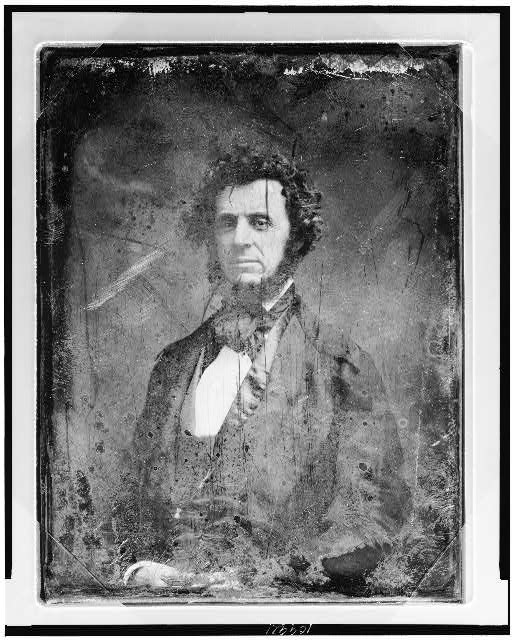
George Wallace Jones, half-length portrait, three-quarters to left, eyes front, with beard (between 1844 and 1860; LOC: LC-USZ62-109921)

Writing letters to Jeff Davis a no-no! per Secretary Seward

From The New-York Times December 21, 1861:

ARREST OF SENATOR JONES.; HE IS SENT TO FOR LAFAYETTE.

Detective FARLEY yesterday arrested Mr. GEORGE W. JONES, formerly a Senator of the United States, from the State of Iowa. During the Administration of Mr. BUCHANAN he was the United States Minister to Bogota, South America, where he has resided for the last three or four years. He has recently left the latter place and come on to Washington to settle up his business with the Government. He had a protracted interview with Secretary SEWARD on Thursday, and left Washington on the afternoon train of that day for New-York.

George W. Jones, Senator from Iowa, Thirty-fifth Congress, half-length portrait (1859; LOC: LC-DIG-ppmsca-26829)

1859 - right before mission to Bogota

At a late hour on Thursday night, Superintendent KENNEDY received a telegram from the State Department at Washington, stating in substance that Mr. JONES had taken leave of Washington, and was on his way to New-York; that he would probably arrive at Jersey City at 5 o’clock yesterday morning. The dispatch further stated that Mr. JONES was believed to be in communication with the authorities of the Southern Confederacy, and that it was thought best that he should be arrested without delay. The Superintendent was therefore requested to dispatch a sufficient number of officers to Jersey City, in order to take the accused into custody upon his arrival there. …

The rest of the story goes into detail about Jones’ arrest and how surprised Jones was that Seward would have him arrested after he had just concluded a cordial conversation with him. George Wallace Jones was one of Iowa’s first two U.S. senators. Apparently Seward wanted him arrested because of correspondence with Jefferson Davis. President Lincoln had him released after 34 days.

G W Jones - he lived until 1896

Yes, Virginia, ...

Posted in 150 Years Ago This Week, Lincoln Administration, Northern Politics During War | Tagged , , | Leave a comment

Must Read Literature

President Abraham Lincoln, seated next to small table, in a reflective pose, May 16, 1861, with his hat visible on the table (between 1885 and 1911, from photo taken on 1861 May 16; LOC: LC-USZ62-15178)

Received letters from The Southern Spy

(Apparently some issues digitizing the following, but I think the main ideas come through.)

From the Richmond Daily Dispatch December 19, 1861:

Southern literature.

We learn that the new book–The Southern Spy–by Mr. E. A. Pollard, lately published by Messrs. West & Johnston, of this city, is having a most rapid sale, the first large edition being nearly sold out. The work has a ar interest for the times in being an of Washington politics and the intention of the Lincoln war; but, apart from particular interest, the favor with which has met evinces a welcome disposite- the part of the reading public of the to sustain their own library enter- and to take an interest in the evident beginnings of an independent Southern literature.

The Southern Spy is a series of anonymous letters written to Northern leaders such as Lincoln, Seward, and General Scott between April and July 1861. Since Edward Alfred Pollard “was clerk of the United States House Committee on the Judiciary” between 1857 and 1861, I guess he was in a good position to sign those letters as “The Southern Spy”.

Pollard was also known for 1859’s Black Diamonds Gathered in the Darkey Homes of the South, another series of letters, which among other things calls for the re-opening of the slave trade. After the war Pollard wrote The Lost Cause Regained.

bookshelf

The Dispatch hails the birth of Confederate literature

Posted in 150 Years Ago This Week, Confederate States of America, Southern Society | Tagged | Leave a comment

Generosity for Charleston

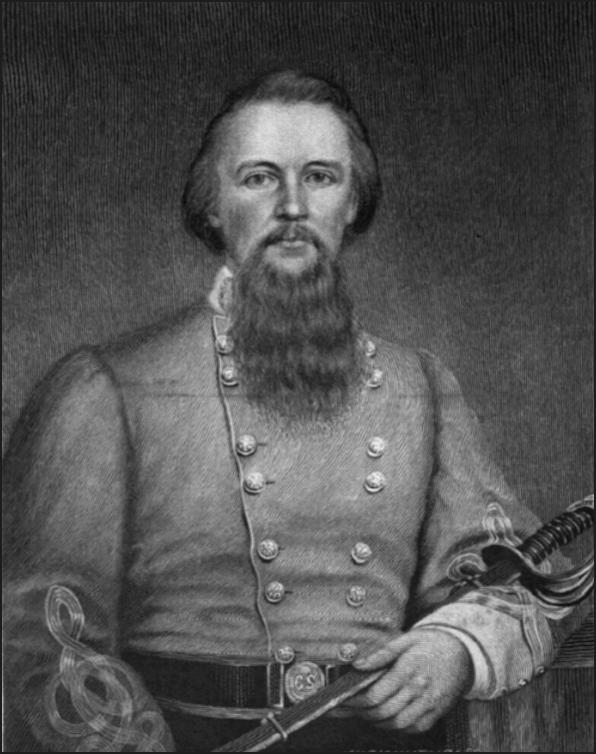
George Burgwyn Anderson

George Burgwyn Anderson - changed to gray

About a week ago a fire raged through part of Charleston. The catastrophe inspired a generous response from a non- South Carolina regiment

From the Richmond Daily Dispatch December 19, 1861:

Liberal Contribution.

–We learn, from able authority, that the 4th North Caro-Virginia State troops, (Col. Anderson’s Regiment,) have subscribed onwards of $1,000 for the relief of the sufferers of the Charleston conflagration.

One of the good things about this 150 year old sentence is that caused me to find out about Civil War Generals in black and white with over 11,000 images.

George Burgwyn Anderson was career U.S. army until North Carolina seceded. He would be mortally wounded at Antietam.

Posted in 150 Years Ago This Week, Confederate States of America, Southern Society | Tagged , | Leave a comment