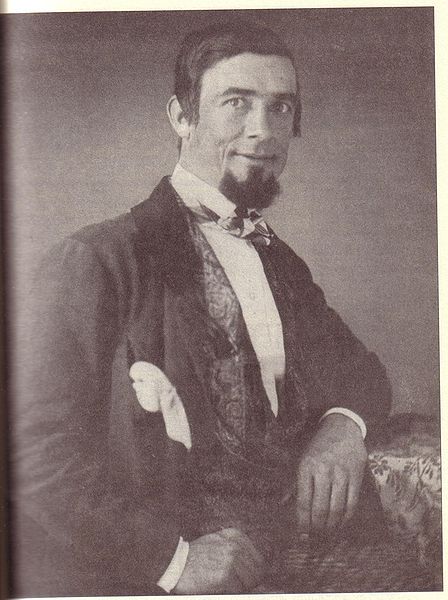
Sumpter Returns

From The New-York Times September 16, 1861:

RETURN OF THE AFRICAN SQUADRON.

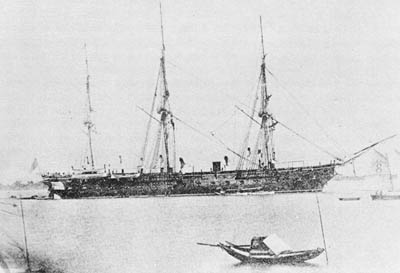
The United States steam gun-boat Sumter arrived in this port yesterday morning, from St. Paul de Loando, Africa. She is the avant-courier of the African squadron, the whole of which has been summoned home. Seven other vessels composing the squadron had sailed, or were about to sail, so that the Navy Department will soon have an effective force of eight vessels to add to the blockading force, or to cooperate in offensive operations along the Southern coast. The oath of allegiance will no doubt be immediately administered to the officers and crews of these ships, and their services be put in prompt use.

The returning officers report a couple of years of very active coast cruising after slavers. Indeed, the English have recently been felicitating themselves on the unwonted activity and vigilance of the American squadron. But we have now other pirates to look after, and the British Government may receive recompense for its sympathy with the Slave rebellion by having itself the whole slave coast to guard.

There is evidence that the USS Sumpter did return from the Africa Squadron on September 15th. It had an active part in the blockade until about mid-1863. I don’t think all eight ships that the article refers to actually bolstered the blockade of the South.

Posted in 150 Years Ago This Week, Military Matters | Tagged , , | Leave a comment

Judah Sunk

Nps_pensacola_bay_sketch

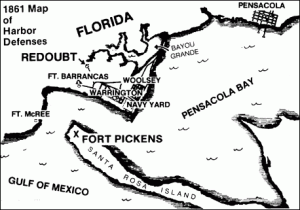
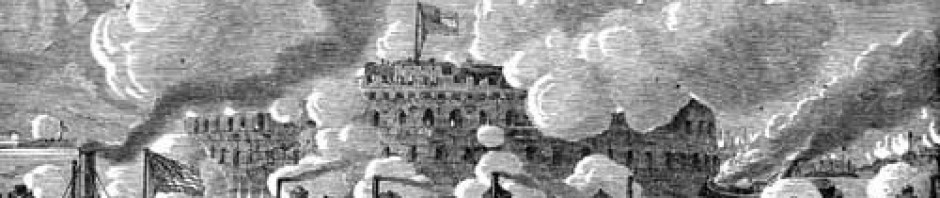
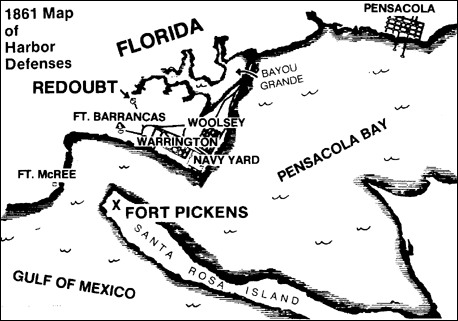
150 years ago today early in the AM Union forces from the USS Colorado off Pensacola boarded the suspected privateer Judah at Confederate-held the Navy yard. The Confederates on Judah fought the Federals, but the ship was successfully set
afire and cut loose. It eventually sunk off Fort Barrancas.

From The New-York Times October 20, 1861:

THE DESTRUCTION OF THE JUDAH.; OFFICIAL REPORT OF THE RECENT NAVAL EXPLOIT AT PENSACOLA. COMPLIMENTARY LETTER OF THE SECRETARY OF THE NAVY. PROMOTION OF LIEUT. RUSSELL.

Flag Officer MERVINE has made the subjoined official report to Mr. WELLES, Secretary of the Navy:

UNITED STATES FLAGSHIP COLORADO, OFF FORT PICKENS, Sept. 15,1861.

SIR: I have the honor to inform you that a boat expedition was fitted out from this ship on the night of the 13th instant, consisting of the first launch, and first, second and third cutters, under the commands of Lieuts. RUSSELL, SPROSTON, BLAKE, and Midshipman STEECE, respectively, assisted by Capt. REYNOLDS, of the Marines, Assistant Surgeon KENNEDY, Assistant Engineer WHITE, Gunner HORTON, and Midshipmen FORREST and HIGGINSON. The whole force detailed consisted of about one hundred men, officers, sailors and marines. The object of the expedition was the destruction of a schooner which lay off the Pensacola Navy-yard, supposed to be fitting out as a privateer, and the spiking of a gun, in battery, at the southeast end of the yard.

The movements of the schooner had been assiduously watched for several days and nights, and I deemed it so morally certain that she was intended for a privateer that I determined the attempt should be made to destroy her, even in the face of the fearful odds which would have to be encountered. Lieut. RUSSELL had charge of the expedition, and, with Lieut. BLAKE, was to attack the vessel, while Lieut. SPROSTON and Midshipman STEECE spiked the guns.

The attack was made on the morning of the 14th inst., at 3 1/2 o’clock. The schooner, named the Judah, was found moored to the wharf, under the protection of a battery and field-piece, and to be armed with a pivot and four broadside guns. Her crew were on her, and prepared to receive our forces, pouring in a volley of musketry as the boat neared the vessel. A desperate resistance was made from the decks of the schooner, but the men were driven off on to the wharf by our boarders, where they rallied and were joined by the guard, and kept up a continued fire upon our men.

In the meantime the vessel was set on fire in several places. That which finally consumed her was lighted in the cabin by Assistant Engineer WHITE and a coal-heaver, PATRICK DRISCOLL, who went as a volunteer. She burned to the water’s edge, and has since, while burning, been set free from her moorings, and has drifted down opposite Fort Barrancas, where she sunk.
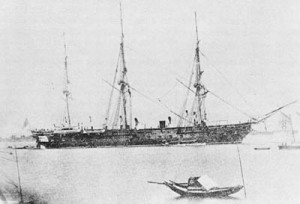
USS_Colorado,_1871

USS Colorado, 1871 photo

Of the party assigned to the spiking of the gun, only Lieut. SPROSTON and Gunner HORTON were able, after considerable search, to find it, the party becoming separated in the darkness. No opposition was made to their landing; Midshipman STEECE, with his command, had gone to the aid of those on the schooner, where he performed valuable service. Very fortunately, only one man was found in charge of the gun, and he immediately leveled his piece at Lieut. SPROSTON, but was shot down by Gunner HORTON before he could obtain certain aim. Both pieces exploded simultaneously. The gun, which was found to be a 10-inch columbiad, was immediately spiked, and. bringing off its tompion, these two officers returned to their boat.

The work proposed having thus been well and thoroughly done in the short space of fifteen minutes, and the whole force of the enemy in the yard — reported by deserters as over one thousand strong — being aroused, our boats pulled away, and rallying at a short distance from the shore, fired six charges of canister from their howitzer into the yard, with what result it is impossible to say. Three of the enemy are known to have been killed, and our officers are confident the number is much larger. The boats then returned to the ship, arriving there about daylight.

But, Sir, I am grieved to report that this brilliant affair was not unattended with loss on our side. I have to report as killed by shots from the crosstrees of the schooner, while the boats were approaching, Boatswain’s Mate, CHARLES H. LAMPHERE, and JOHN R. HERRING, seaman and captain of the howitzer –two of the best men in our ship — and marine JOHN SMITH — the first man to board the schooner, and who behaved most gallantly — who was by a sad mistake, having lost his distinguishing mark, killed by one of our own men. We have wounded, probably mortally, seamen R. CLARK and E.K. OSBORN; severely, nine other seamen. Capt. REYNOLDS received a severe contusion on his shoulder, and Midshipman HIGGINSON had the end of his thumb cut off. Lieutenants RUSSELL and BLAKE had narrow escapes, the flesh of each being grazed by one or more musket balls.

It is not an easy task to select individual instances of bravery or daring where all behaved so gallantly. The officers unite in giving great credit to the coolness and bravery with which they were supported by the men, and the latter have learned to look with new pride and confidence on the former. The marines, especially seem to have sustained the reputation borne by their branch of the service, as they receive encomiums from all sides. Assistant-Surgeon KENNEDY rendered valuable assistance in the care of the wounded. Assistant-Engineer WHITE brought down from the cross-trees of the schooner a man who had been seen to fire upon the boats, killing him instantly. I inclose herewith a complete list of all engaged in the affair, with the names of the killed and wounded in each boat.

I have the honor to be, very respectfully, your obedient servant, WM. MERVINE,Flag-officer commanding Gulf Blockading Squadron.

P.S. — By a strange inadvertency, my mind being so much engrossed with the expedition itself, I omitted to give credit to Capt. BAILEY, of this ship, for Maturing the plan and taking charge of fitting out the expedition to the minutest details. It is to his thoughtfulness that a great portion of its success must be ascribed. …

Later in the article The Times reproduces a letter from the U.S. secretary of the Navy, Gideon Welles, promoting John Henry Russell.
Posted in 150 Years Ago This Week, Military Matters | Tagged , , , | Leave a comment

Keeping Calm in the East Indies

It apparently took about a couple months for news to get from the East India Squadron to New York.

Cornelius Stribling

Cornelius Stribling

From The New-York Times September 13, 1861:

THE EAST INDIA SQUADRON.

The following general order which has been issued by the East India Squadron by Flag-Officer C.K. STRIB LING, has just reached us: JUNE 30, 1861.

The Commander-in-Chief feels called upon at this time to address those under his command upon the condition of our country.

By the last mail we have authentic accounts of the commencement of “civil war” in the United States, by the attack and capture of Fort Sumter by the forces of the Confederate States.

It is not my purpose to discuss the merits of the cause or causes which have resulted in plunging our country into all the horrors of a “civil war,” but to remind those under my command of their obligations now to a faithful and zealous performance of every duty.

Coming as we do from the various sections of the country, unanimity of opinion on this subject cannot be expected, and I would urge upon all the necessity of abstaining from all angry and inflammatory language upon the causes of the present slate [state?] of things in the United States, and to recollect that here we have nothing to do but to perform the duty of our respective stations, and to obey the orders of our superiors in authority; to this we are bound by the solemn obligations of our oath.

I charge all Commanders and other officers to show in themselves a good example of virtue, honor, patriotism and subordination, and to be vigilant in inspecting the conduct of all such as are placed under their command.

The honor of the nation, of the flag, under which many of us have served from boyhood, our own honor and good name require us now, if over [ever?], that we suffer. No blot upon the character of our country while the flag of the Union is in our keeping.

(Signed) C.K. STRIBLING, Flag-Officer.

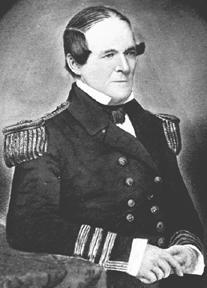
As The Times points out in its editorial, Cornelius Stribling was a native South Carolinian. At 15 Stribling joined the US Navy and participated in the War of 1812. His long naval career included a stint as Superintendent of the United States Naval Academy from 1851-53. Stribling remained loyal to the Union and served throughout the war.

Posted in 150 Years Ago This Week, Military Matters | Tagged , | Leave a comment

Torture on Governors Island?

Fort Jay's East sallyport 1934 photo (LOC - HABS NY,31-GOVI,1-)

Ear plug concession needed


Apparently, conditions on New York’s Governors Island are nearly intolerable for Confederate officers captured during the recent Cape Hatteras operation.

From The New-York Times September 12, 1861:

Americans who do not Delight in Yankee Doodle.

To the Editor of the New-York Times:

I find in your paper of this morning the following about the prisoners on Governor’s Island:

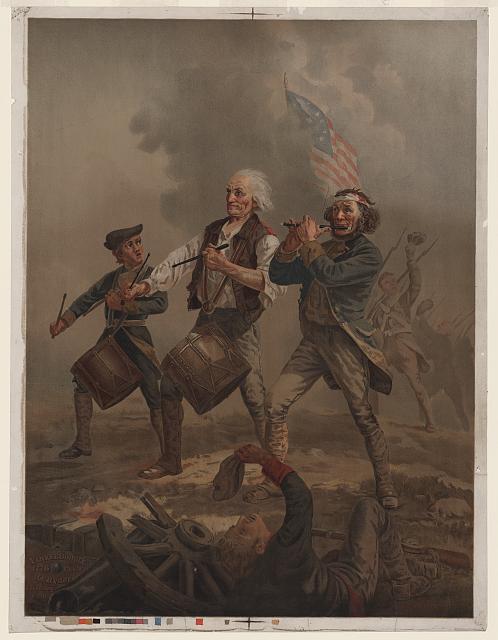
“The other evening the captured officers were on the parade ground listening to the band, which plays for an hour every night, before the commanding officer’s quarters. Suddenly the band struck up “Yankee Doodle;” the Southerners immediately turned on their heels and walked off in great disgust. No offence to them was premeditated, as the band was in the habit of playing this National air long before the presence of Southern prisoners was dreamed of.”

Yankee doodle 1776 by Archibald M. Willard (LOC - LC-DIG-pga-03609)

Painful to Confederate ears

What I object to was the apology made in saying that no offence was premeditated. Now I should like to know if these fellows are to be treated as if they were decent enemies, when they are nothing but scoundrelly traitors, who should have been hung at the yard-arm of the Minnesota, and not brought here. It is a pretty thing, to be sure, if all their little whims are to be attended to in this way. No, Sir! Wake them up to the tune of “Yankee Doodle.” Drum it into them when they breakfast, dine and sup, and send them to bed to the same tune; let them hear it at every turn, at every corner, and if they don’t like it, drum all the louder.

ONE OF THE YANKEE DOODLES.

SEPT. 10, 1861.

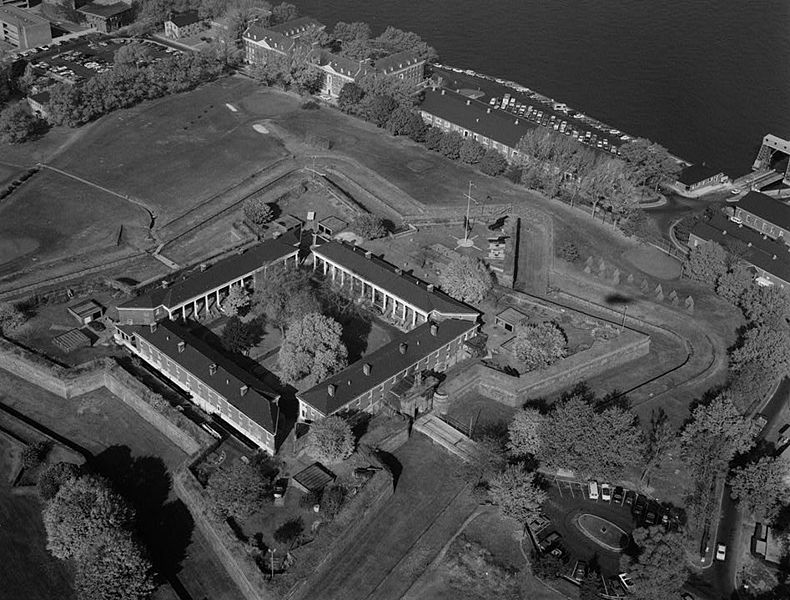
It is said that Fort Jay (Columbus) was the military installation (there were at least two) on Governors Island that was used to house Confederate officers during the Civil War.

Fort Jay 1934 photo (LOC - HABS_NY,31-GOVI,1-11)

Posted in 150 Years Ago This Week, Military Matters | Tagged , | Leave a comment

Clemency, This Time

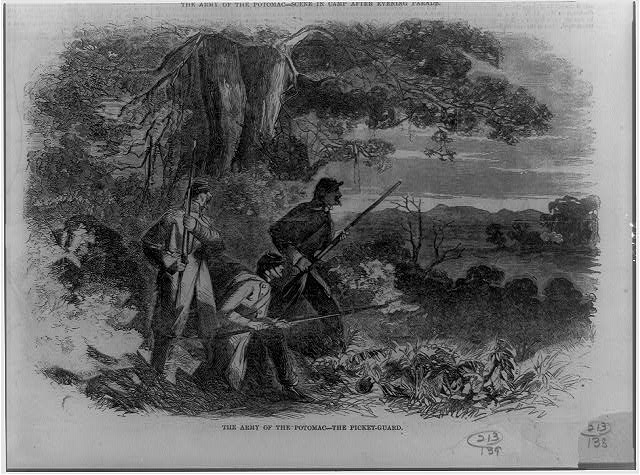
The Army of the Potomac--the picket-guard (Harper's weekly, 1861, Nov. 2; LOC - LC-USZ62-96101)

Staying awake

From The New-York Times September 10, 1861:

THE GREAT REBELLION.; …
SPECIAL DISPATCH FR0M WASHINGTON. …

WASHINGTON, Monday, Sept. 9. …

DISPATCH TO THE ASSOCIATED PRESS.

WASHINGTON, Monday, Sept. 9.

Major-General MCCLELLAN has issued the following order:

HEAD-QUARTERS OF THE ARMY OF THE POTOMAC,

WASHINGTON, Sept. 8, 1861.

Private WM. SCOTT, of Company K, of the Third Regiment of Vermont Volunteers, having been found guilty by Court-martial of sleeping on his post while a sentinel on picket guard, has been sentenced to be shot, and the sentence has been approved and ordered to be executed. The commanding officers of the brigade, the regiment and the company of the condemned, together with many other officers and privates of his regiment, have earnestly appealed to the Major-General Commanding to spare the life of the offender, and the President of the United States has expressed a wish that as this is the first condemnation to death in this Army for this crime mercy may be extended to the criminal. This fact, viewed in connection with the inexperience of the condemned as a soldier, his previous good conduct and general good character, and the urgent entreaties made in his behalf, have determined the Major-General Commanding to grant the pardon so earnestly prayed for. This act of clemency must not be understood as affording a precedent for any future case. The duty of a sentinel is of such a nature that its neglect by sleeping upon or deserting his post may endanger the safety of a command or even of the whole Army, and all nations affix to the offence the penalty of death.

Private WILLIAM SCOTT, of Company K, of the Third Regiment of Vermont Volunteers, will be released from confinement and returned to duty.

By command of Major-Gen. McCLELLAN.

S. WILLIAMS, Assistant Adjutant-General.

The pardon was read to the regiment, which heartily expressed their appreciation of this act of Executive clemency. …

You can read more about Private William Scott and see a photo at the Vermont Historical Society. He was mortally wounded at Warwick Creek, Virginia in April 1862.

General McClellan seems to be going along with President Lincoln’s wishes this time.

Vermont Flag 1837-1923

Vermont Flag 1837-1923

I’ve put up some posts about the Lincoln administration suppressing newspapers and ignoring habeas corpus. The same issue of The New-York Times contains a letter to the editor explaining why the President has the authority to declare martial law, suspend habeas corpus, free rebel-owned slaves, etc.

Posted in 150 Years Ago This Week, Military Matters | Tagged , , , , | Leave a comment

“this war must go on”

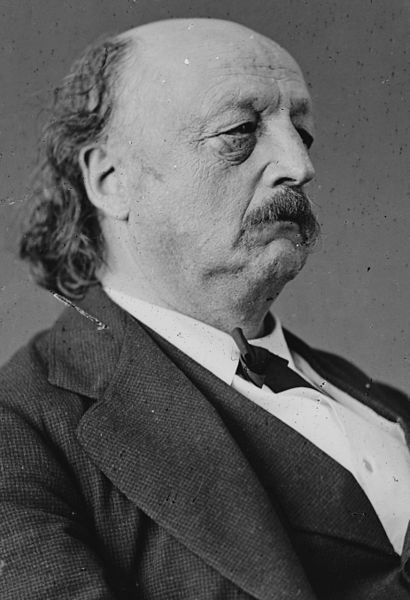
Benjamin Franklin Butler (circa 1870-1880)

Benjamin F. Butler: Peace Now = Perpetual War

It’s election season once again. In this letter, General Benjamin F. Butler, during the Union combined navy-army operation against Cape Hatteras, responds to those who want to know if he is interested in opposing the Republican Massachusetts Governor John Andrew in the upcoming election.

From The New-York Times September 9, 1861:

LETTER FROM MAJOR-GEN. BUTLER.

UNITED STATES STEAM-FRIGATE MINNESOTA, OFF CAPE HATTERAS, Aug. 27, 1861.

The Lowell (Mass.) Advertiser publishes the following letter from Major-Gen. BUTLER upon the condition of the country and the coming State election:

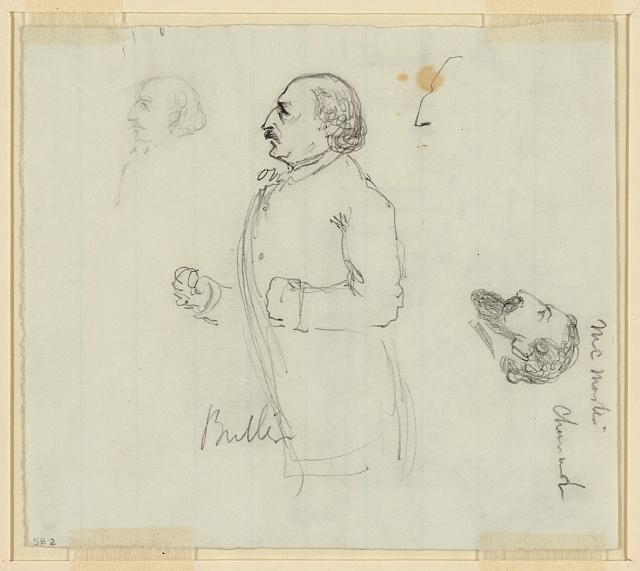
Benjamin Butler by Alfred Waud ca. 1860-1865 (LOC - LC-DIG-ppmsca-20072)

"there can be no peace" until authority of National Government recognized

MY DEAR FRIEND: I have received your note, as well as those of many others of my true friends in Massachusetts, asking my opinion about political questions, and some kindly suggesting my name as a candidate for Governor at the ensuing election. I reply to you as representing them all, because our intimacy will permit more frankness than would seem meet toward those less closely connected. As I have stated to you, and as I have publicly repeated, when I left home I left all politics, in a party sense of the term, behind me, and I now know no politics in any sense, save as represented by the question — How best to preserve the Union and restore the country in its integrity? Peace is desirable to all, and to none more so than to the soldier who has left his friends and his home to do his duty to his country. But however desirable, it is not to be purchased upon any terms, save the recognition of the authority of the National Government over every inch of territory which ever belonged to it. Upon no condition whatever, other than this, would I consent to peace. A peace involving the disintegration of the Union, or until the supremacy of the Government is forever established, would be simply a declaration of perpetual war of sections. Were the Southern Confederacy to-day acknowledged in the fullness of good faith, two months would not elapse before causes of war would arise, sufficient not only to justify, but to demand, a renewal of the conflict. No two months have passed, in the last ten years at least, in which outrages have not been committed upon Northern men in the South, which, had they been perpetrated by a foreign nation, would have demanded a redress of grievances, under pain of a suspension of diplomatic relations. But we have borne these outragec because there was no tribunal to the arbitrament of which we could submit them, and it was against the genius of our people to appeal to arms. Therefore I see with pain, upon the part of some of those with whom I have acted in political organizations, a disposition to advocate peaceful sentiments wherein there can be no peace. Therefore this war must go on, not for the purpose of subjugation; but if those who have commenced it bring upon themselves that condition as an incident, it will only be another illustration of the fruit of sowing the wind. Besides these there are no other politics.

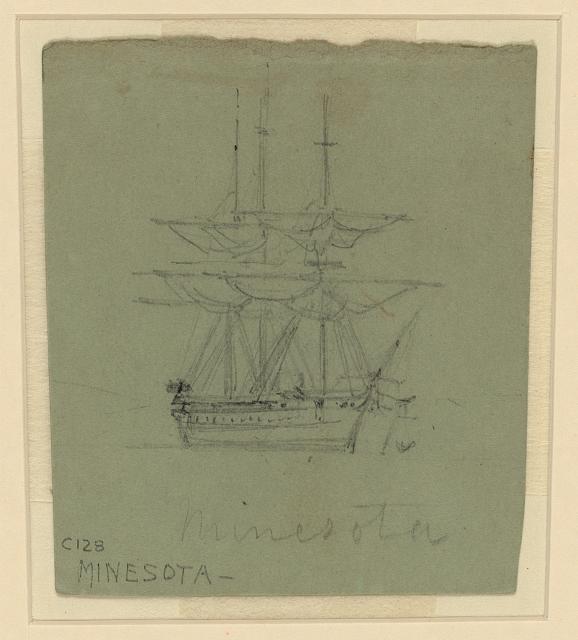
The Minnesota by Alfred Waud (ca. 1860-1865) LOC - LC-DIG-ppmsca-20437)

The Minnesota

On the matter of the nomination, I cannot consent that my name shall be used by any party. While on some things, as you are aware, I do not agree with the principles upon which both the State and the National Administrations were inaugurated, yet we are a long way past that. The Republican Party, having won a political victory, both in the State and in the nation, is entitled to the patriotic endeavor of every man to give it a fair trial in the administration of the Government, and in that it should, as it does, take the lead in official positions. And now there is left nothing for us to contend against, save any corruption, inefficiency or impropriety of administration, which I doubt not would at once be rebuked as well by Republicans as by Democrats. But as far as regards the personnel of administration, in the State, I believe Gov. ANDREW has endeavored faithfully, zealously and efficiently to put our Commonwealth on the side of the nation and to sustain the Union, I, therefore, for one, would not desire to see a change in the Executive, although I doubt not people will demand changes in some of the minor offices. I do not say that I would vote for Gov. ANDREW, but were I at home I would not vote against him. Let it be understood, that without distinction of party and without raising party issues, all men who love the Union are determined to stand by it and the country until this rebellion shall be quelled, and then we may hereafter divide as we please upon the minor differences of administration of Government.

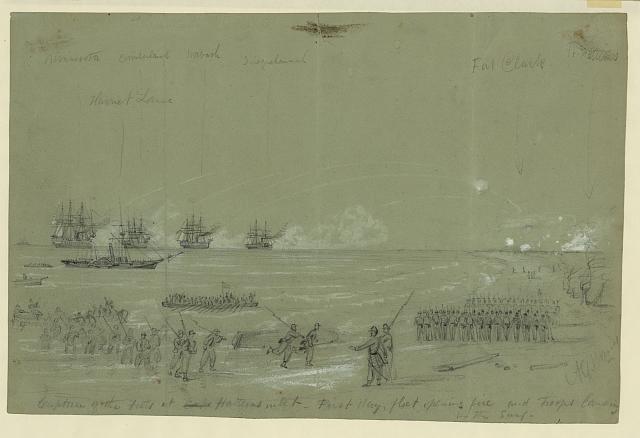
Capture of the Forts at Cape Hatteras inlet-First day, fleet opening fire and troops landing in the surf

Operation at Cape Hatteras (LOC - LC-DIG-ppmsca-21467)

To you, my dear friend, I need urge no justification for this course. You will appreciate it, for you are aware of the sacrifice, both of feeling and of position, I made a year ago, in the earnest endeavor to save the country from this calamity, which I then partly foresaw, and acting in the best light, I had endeavored to prevent. And I am ready to make a like sacrifice now to repel that which I then sought to avert. I need to thank you and others of my friends for this, among many other kindnesses you have shown me. Very truly, yours,

BENJ. F. BUTLER.

F.A. HILDRETH, Esq.

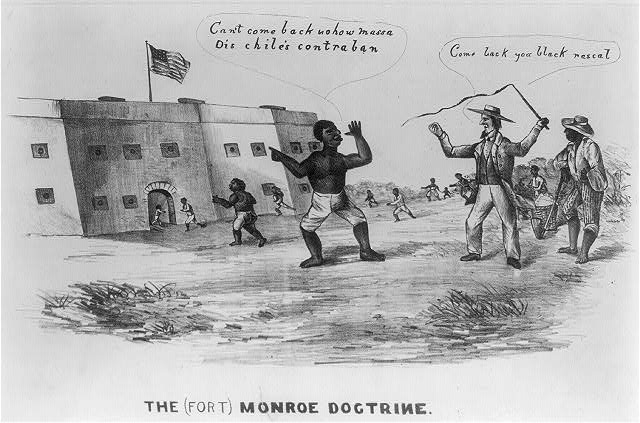
I guess general Butler really was a political general – he made time to write during a major military operation. Another political aspect of his military leadership was his refusal at Fort(ress) Monroe to return escaped slaves on the grounds that they were contrabands of war.

“Peace is desirable to all, and to none more so than to the soldier who has left his friends and his home to do his duty to his country.” For a look at the more tender side of Butler I recommend a piece at Civil War Daily Gazette.

The (Fort) Monroe Doctrine (LOC - LC-USZ62-36161)

The (Fort) Monroe Doctrine (LOC - LC-USZ62-36161)

Posted in 150 Years Ago This Week, Military Matters, Northern Politics During War | Tagged | Leave a comment

Rhino on the Loose

A Little Civil War Break

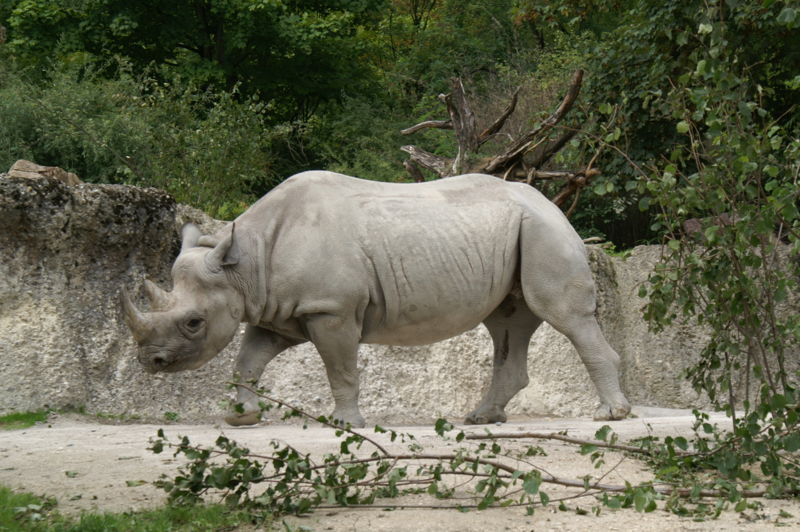
Black Rhinoceros

Loose on the (northern) Mississippi

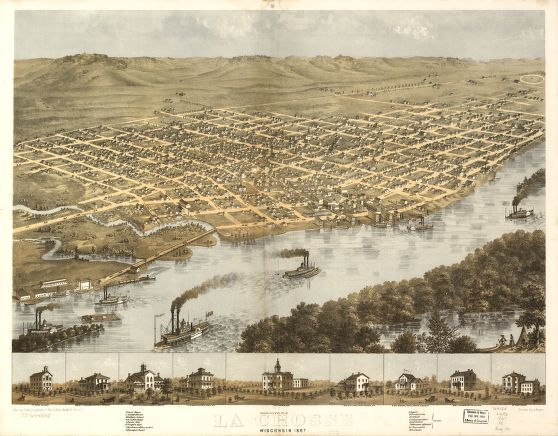
I’m assuming this story takes place around LaCrosse, Wisconsin. The Richmond Daily Dispatch published it 150 years ago yesterday.

From the Richmond Daily Dispatch September 7, 1861:

A rhinoceros at large.

–He Attacks a Man. On the 19th of August the shipsteamer Key City, bound down the Mississippi, collided with the shipsteamer Luzerne, having on board Dan Rice’s circus troupe, trained animals, &c. The cage containing the trained rhinoceros, weighing over four thousand pounds, which was on the barge alongside, was knocked into the river. The door of the cage was open, the animal-being tied to the front end of it by a chain which was fastened to a ring in the monster’s nose. When morning came no signs of him could be seen. The La Crosse Democrat, however, of the 27th, says:

LaCrosse, Wisconsin - Bird's eye view, 1867

LaCrosse, WI on the (rhino inhabited?) Mississippi (1867 image - LOC)

Sunday afternoon, Charles Wrightston, F. W. Brown and Robt. Eggleston, while reasting [roasting?] green corn, on the bank of the slough, five miles below here, were half scared to death by hearing a heavy tramp, and in a few moments the rhinoceros, as he appeared here on the occasion of his first visit, in July, minus the blanket and chain in his nose, rushed upon them with a terrible bellow, catching Eggleston on his shout [snout?], and throwing him as he says at least fifty feet over and back of him, breaking one arm and two ribs in the fail [fall?]. The monster plunged into the river, and the other two persons, badly scared, but not hurt, procured a buggy, took the seat out, lifted the box with grass and a blanket, and brought Eggleston to his home in this city, where he is now in the care of Dr. Cameron. The ribs were evidently broken by the shout [snout?] of the animal, as the flesh was badly torn.

Dan Rice circa 1840s

Dan Rice (photo circa 1840s)

The “slough” in which the animal doubtless is at present, is about five miles below here, very deep, with muddy bottom, and, though it is just such a place as he was captured from in the East, there is no telling how long he may remain quiet without taking a notion to prowl around the country in search of better fare. This forenoon several of our sportsmen went down to the spot to make arrangements for his capture, when, if successful, they can start a show of their own.

The Wikipedia article on Dan Rice references a 2001 biography by David Carlyon with the title, Dan Rice: The Most Famous Man You’ve Never Heard Of. I had never heard of him, but he had a huge influence on popular American culture beginning in the 1840s. As an example, the expression, “jumping on the bandwagon” began when Rice let Zachary Taylor and local politicians ride on his circus bandwagon during Taylor’s 1848 presidential campaign.

Dan Rice

Dan Rice as clown (LOC - LC-USZ62-54650)

The Clown Ministry mentions a rhinoceros:

Dan Rice was an accomplished animal trainer. He specialized in pigs and mules, which he trained and sold to other clowns. He also presented an act with a trained rhinoceros and is the only person in circus history to present a tightrope walking elephant.

Rice was an early Pat Paulsen because he ran for several political offices, including U.S. president in 1868 (he always dropped out).

Well, that was a nice Civil War break. According to that Clown Ministry link:

By 1862 he was earning $1,000.00 a week, twice as much as President Lincoln. He and President Lincoln were good friends, as were Dan and Jefferson Davis. He was called the President’s court jester. He was well-known for his Shakespearean quips, as well as for a biting tongue. A philanthropist he gave generously to many charities and erected the first monument to soldiers killed during the Civil War.

You can read an interesting piece about Marcus “Brick” Pomeroy, who owned the La Crosse Democrat during the war at Wisconsin Stories. Pomeroy began to oppose the war as it dragged on. He thought the western states had more in common with the South than with the union and thought slavery should be allowed in the territories. In August 1864 Pomeroy published a cartoon referring to Lincoln as “The Widow Maker of the 19th Century”. Apparently Pomeroy suggested someone should knife Lincoln to prevent his reelection. After Lincoln was assassinated a crowd formed to burn the paper’s offices and lynch Pomeroy. The publisher armed his place of business; the crowd eventually departed.

Circus

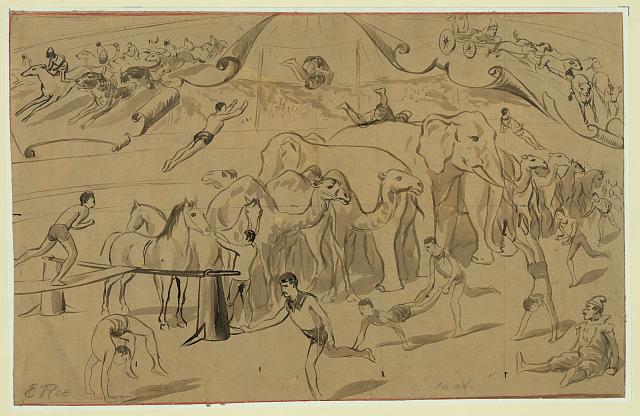
LOC - LC-DIG-ppmsca-23081

Posted in 150 Years Ago This Week, American Culture, Northern Society | Tagged , , | Leave a comment

Pro-Union Flag Day, 1861

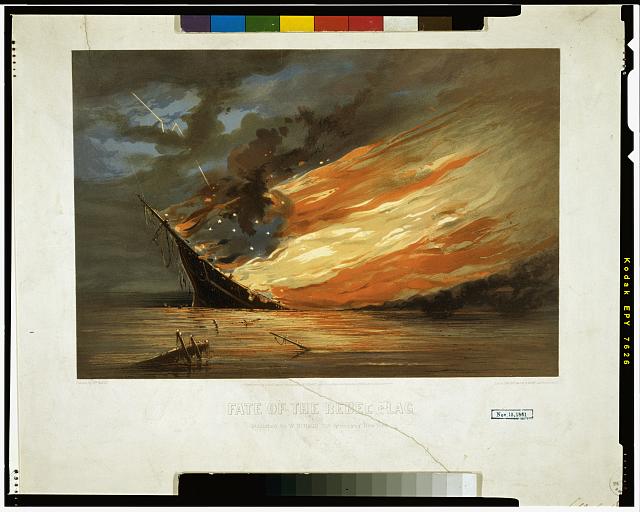
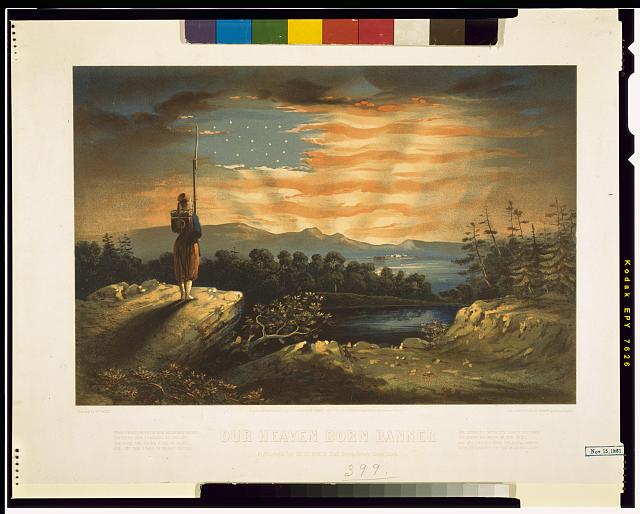
According to the Library of Congress these are a couple prints based on paintings by William Bauly. The Union flag painting could be based on a post-Sumter painting by Frederic Edwin Church. Both works were deposited for copyright on September 6, 1861. There’s something about them that made me consider putting them up for September 11th.

Fate of the rebel flag

Fate of the rebel flag (LOC - LC-USZC4-12419)

Our heaven born banner

Our heaven born banner (LOC - LC-USZC4-12417)

Posted in 150 Years Ago This Week, Northern Politics During War, Northern Society | Leave a comment

Rebel Flags at Half-Mast?

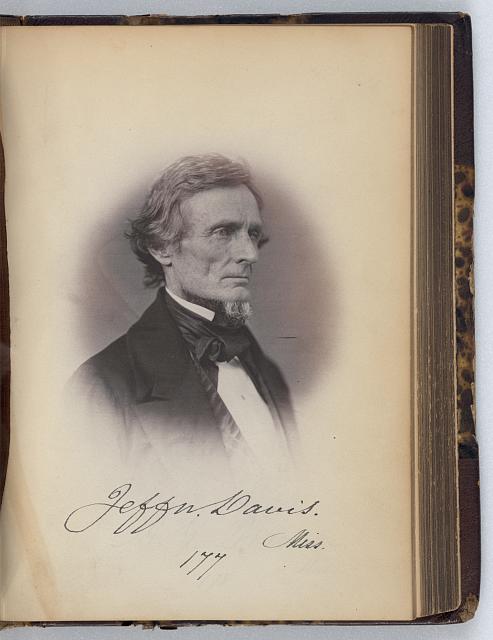
Jefferson Davis, Senator from Mississippi, Thirty-fifth Congress

No longer among the living? (1859 photo; LOC - LC-DIG-ppmsca-26716)

From From The New-York Times September 6, 1861:

THE DEATH OF JEFF. DAVIS REAFFIRMED.

LOUISVILLE, Thursday, Sept. 5.

A gentleman just from Richmond, who passed through this city this morning, says that on Saturday evening the serious illness of JEFF. DAVIS was freely canvassed on the street, and little hope was entertained of his recovery. The probable changes which would ensue on his death were freely mentioned.

On the gentleman’s arrival at Nashville he learned that the rebel Congress, which had adjourned at midnight on Saturday, has been called together by ALEXANDER H. STEPHENS, the serious illness of DAVIS being the ostensible cause. My informant considers the flags at half-mast, as reported, indicative of his death.

Positive assurances are said to have been received this morning by a prominent Secessionist and ex-Mayor of this city, of the death of JEFF. DAVIS.

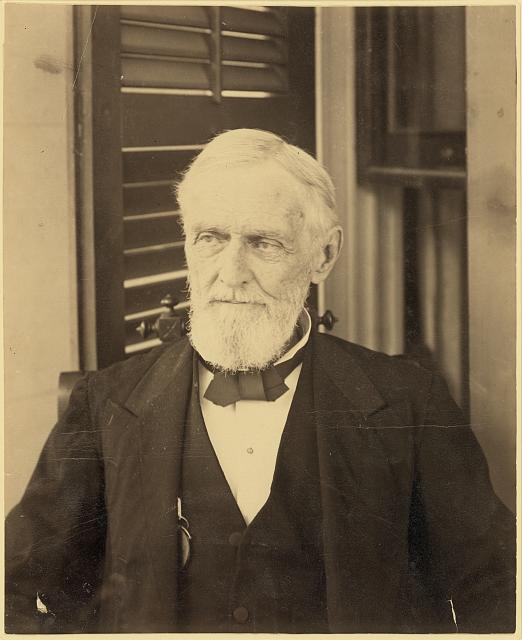
Jefferson Davis, seated, facing front, during portrait session at Davis' home Beauvoir, near Biloxi, Mississippi

At home in Mississippi c 1885 (LOC - LC-DIG-ppmsca-23865)

Posted in 150 Years Ago This Week, Confederate States of America | Tagged , | Leave a comment

NYPD: Sedition Squad

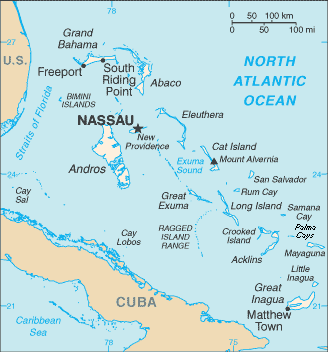
Map of Bahamas

Cannon source?

As early as May, 1861 pro-Union Americans in Europe sent a battery of cannon to the U.S. government. Among the several alleged anti-Union acts detailed here, a British subject living in New York City is trying to induce a ship’s captain to transport cannon from Nassau in the West Indies to North Carolina for use by the CSA.

From The New-York Times September 4, 1861:

MORE ARRESTS OF ALLEGED TRAITORS.

JOHN C. RAHMING, a merchant of this City, was arrested on Monday night at the instance of the Secretary of State, and confined with the rebels, traitors, and other enemies of the Government, at Fort Lafayette. He is charged with having held out inducements to the Captain of the schooner called the Arctic, to take a trip to Nassau, N.P., and convey thence a number of cannon to Wilmington, N.C., for the use of the Secessionists. The Captain having a fear that he should be unable to run the blockade, withstood Mr. RAHMING’s offer, which was of a tempting character, and the cannon, as far as is known to the contrary, are still at the Bahamas. The prisoner is a West Indian by birth, and carried on business at No. 36 South-street.

John Alexander Kennedy by Brady

NYC Police Superintendent Kennedy (LOC - LC-USZ62-109831)

On Monday, a merchant named DANIEL CONNELL was arrested by Detective EUSTACE for using seditious language toward the Government. He gave utterance to his treasonable sentiments while addressing a few individuals in front of the Park Barracks. Superintendent KENNEDY did not regard the evidence sufficient to warrant his detention, and he was discharged.

Mr. CHARLES BUTTERFIELD, also a merchant, was arrested by Officer LEWIS, of the Fifteenth Ward, on suspicion of holding treasonable communication with the rebels. In this case also the testimony did not sustain the allegation, and the accused was dismissed from custody.

Yesterday afternoon, Detective ROACH and Officer RILEY, of the Sixteenth Ward, found a man in the Park actively engaged in dissuading men from enlisting at the recruiting tents. His arguments against the Government were, that it was bankrupt, and that the war was unholy — a crusade against our own kindred. In one instance he deterred a man from joining the Sixty-ninth Regiment, and as he appeared to be doing much mischief with his artful tongue, the officers led him to Police Head-quarters. He is now confined there, pending an examination. He is an Englishman, of considerable intelligence, about 30 years of age, JOHN CASSIDY by name, and says that he lives in Middletown, N.J.

Yesterday, United States Marshal MURRAY arrested the editor of the Greenport (L.I.) Republican, in this City, and sent him immediately to Fort Lafayette. Some days ago, the Marshal received several copies of the paper from parties in Greenport, accompanied by an inquiry as to whether the United States Government ought not to arrest the editor. The copies were sent on to Washington, and soon afterward the Marshal received an order for his arrest. He was seized just as he was getting on board the cars, on his way to the Democratic State Convention.

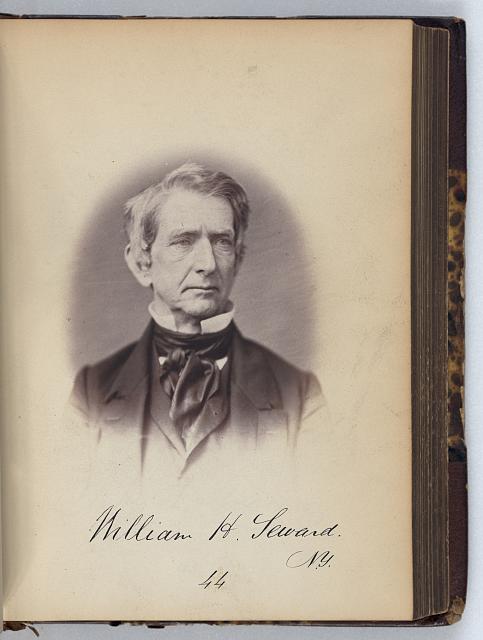
William H. Seward, 1859

Seward: send him to Fort Lafayette! (1859 photo; LOC - LC-DIG-ppmsca-26583)

Fort Lafayette sure is getting used a lot.

John Alexander Kennedy became New York City police superintendent in 1860. He was severely beaten by a mob during the July, 1863 draft riots.

Even today The Bahamas is a British Commonwealth. From Wikipedia:

After American independence, some 7,300 Loyalists and their slaves moved to The Bahamas from New York, Florida, and The Carolinas. These Loyalists established plantations on several islands and became a political force in the capital. The small population became mostly African from this point on.

The British abolished the slave trade in 1807, which led to the forced settlement on Bahamian islands of thousands of Africans liberated from slave ships by the Royal Navy. Slavery itself was finally abolished in the British Empire on August 1.1834.

You can read more about the case of JOHN C. RAHMING at Simmons Games, which reproduces The Official Records of the war. Seward ordered Rahming released on September 14, 1861 if Rahming posted a bond with a $2500 penalty and promised to do nothing else hostile to the United States while living here.

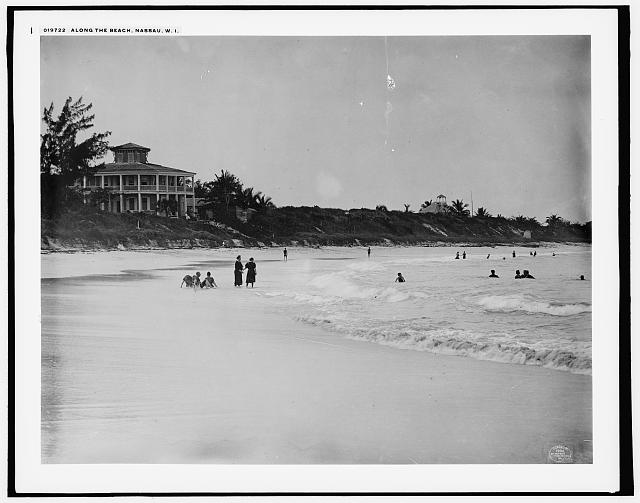
Along the beach, Nassau, W.I.

Along the beach, Nassau, W.I. (1906 photo; LOC - LC-D4-19722)

The Official records include correspondence between Secretary Seward and Richard Lyons, 1st Viscount Lyons, the British envoy in Washington. On October 14, 1861 Lyons wrote Seward a letter in which he expressed concern that the American constitutional guarantee of habeas corpus was not being followed:

WASHINGTON, October 14, 1861.

Hon. WILLIAM H. SEWARD, &c.

SIR: Her Majesty’s Government were much concerned to find that two British subjects, Mr. Patrick and Mr. Rahming, had been subjected to arbitrary arrest, and although they had learned from a telegraphic dispatch from me that Mr. Patrick had been released they could not but regard the matter as one requiring their very serious consideration. Her Majesty’s Government perceive that when British subjects as well as American citizens are arrested they are immediately transferred to a military prison and that the military authorities refuse to pay obedience to a writ of habeas corpus. Her Majesty’s Government conceive that this practice is directly opposed to the maxim of the Constitution of the United States that no person shall be deprived of life, liberty or property without due process of law.

Richard Bickerton Pemell Lyons - Brady-Handy

Ambassador Lyons - a little thing called "habeas corpus" (LOC - LC-DIG-cwpbh-03534)

Her Majesty’s Government are willing, however, to make every allowance for the hard necessities of a time of internal trouble, and they would not have been surprised if the ordinary securities of personal liberty had been temporarily suspended nor would they have complained if British subjects falling under suspicion had suffered from the consequences of that suspension. But it does not appear that Congress has sanctioned in this respect any departure from the due course of law, and it is in these circumstances that the law officers of the Crown have advised Her Majesty’s Government that the arbitrary arrests of British subjects are illegal.

So far as it appears to Her Majesty’s Government the Secretary of State of the United States exercises upon the reports of spies and informers the power of depriving British subjects of their liberty, of retaining them in prison or liberating them by his own will and pleasure. Her Majesty’s Government cannot but regard this despotic and arbitrary power as inconsistent with the Constitution of the United States; as at variance with the treaties of amity subsisting between the two nations and as tending to prevent the resort of British subjects to the United States for purposes of trade and industry.

Her Majesty’s Government have therefore felt bound to instruct me to remonstrate against such irregular proceedings and to say that in their opinion the authority of Congress is necessary in order to justify the arbitrary arrest and imprisonment of British subjects.
I have the honor to be, sir, with the highest consideration, your most obedient, humble servant,

LYONS.

Finally, there is some evidence that the Arctic ran aground with a load of peas at Montreal in November 1861. Some of the captain’s crew might have preferred risking the blockade.

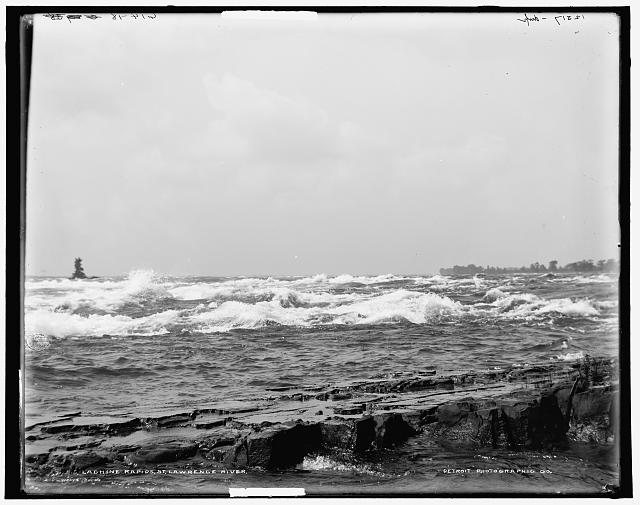
Lachine rapids, St. Lawrence River

Lachine rapids, St. Lawrence River near Montreal (1901 photo; LOC - LC-D4-12517)

Posted in 150 Years Ago This Week, Northern Politics During War, Northern Society | Tagged , , , , | Leave a comment