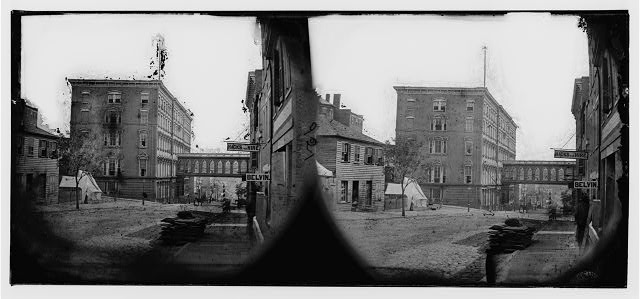
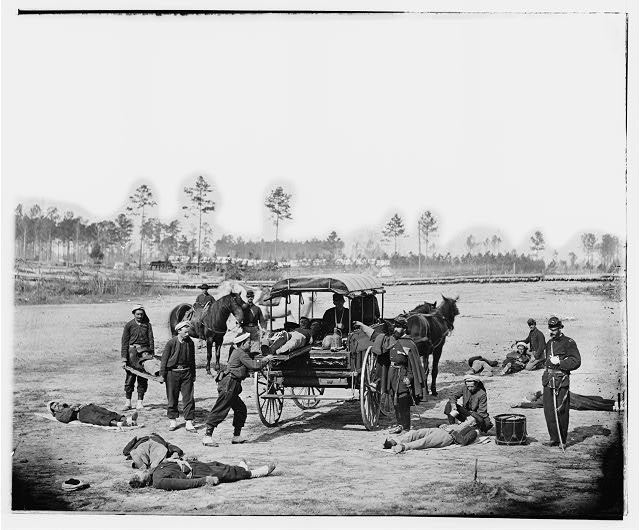
View from a Richmond Hospital

Unknown location. Zouave ambulance crew demonstrating removal of wounded soldiers from the field

Didn't happen for this letter-writer: Zouaves demonstrating removal of the wounded (LOC - LC-DIG-cwpb-03950)

Although The New-York Times is a pro-Republican paper,
it isn’t afraid to publish a letter critical of Lincoln and Scott, which is interesting considering all the violence and suppression aimed at pro-Southern newspapers in the North at about this time.

From The New York Times September 3, 1861:

A SOLDIER OF THE SIXTY-NINTH.

The Augusta (Ga.) Constitutionalist publishes the following letter, which an Irishman in that city received from, his brother, a member of the Sixty-ninth, held as a prisoner of war at Richmond:

NEW-ALMS HOSPITAL, RICHMOND, Va., Tuesday, July 30, 1861.
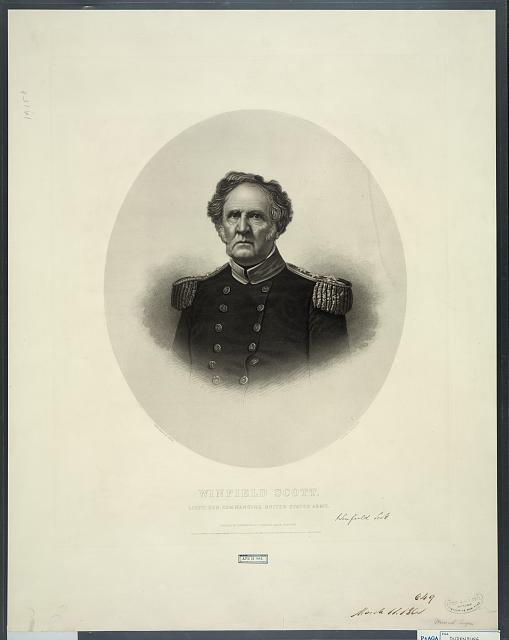
Winfield Scott c1861 Mar. 11.

Wouldn't let the 69th go home - Winfield Scott (c1861 Mar. 11; LOC - LC-DIG-pga-03666)

DEAR PAT: I wrote you a few lines last week, which a gentleman either posted or took on with him, as he resided near Augusta. I know you were surprised to hear that I was in Richmond, wounded; but if we had got our rights I would have been in New-York the day the battle was fought, [???] term of service having expired the day before, but Old ABE or SCOTT would not let the regiment go home. Well, it served us right, when we were fools enough to fight in such a cause; but I hope the time will come when Irishmen will mind their own business.

Early in the fight, I got a bell [ball?] in the thigh, which broke the bone. I lay on the field thirty-five hours, a rain falling most of the time, and might have laid there since, if it was not for the kindness of the Southerners — enemies, I cannot call them, for they have treated us more like brothers than anything else. I got a hard shaking on the railroad; but now, thank God, I am very comfortable here. I expect to have my leg set to-day. If it is, I hope to recover soon, when I will be a much wiser man.

Owing to the great number of wounded, I could not be attended sooner; besides the doctor was afraid of mortification; but I think I am now safe, and that with God’s help, I will have the use of my leg.
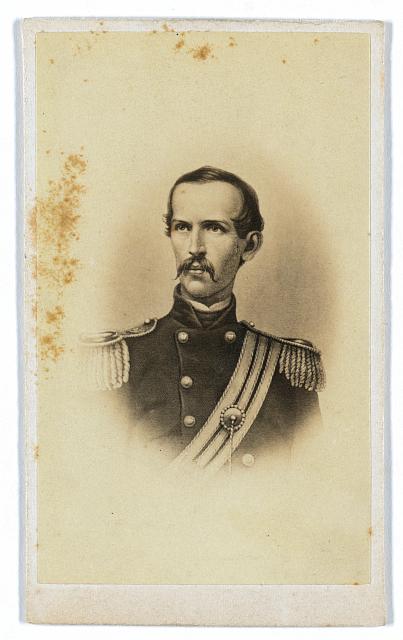
Col. Corcoran, prisoner at Richmond ca.1861

Hero or Culprit: Col. Corcoran, prisoner at Richmond (ca.1861; LOC - LC-DIG-ppmsca-08358)

Dear Pat, you could not believe the way our soldiers were treated by SCOTT. There were eight regiments on the field whose time was up, but could not get home. But worse than all, they left the dead and wounded on the field, and never sent a flag of truce in to know how or what would become of us. It is Col. CORCORAN I blame for keeping us; he is now a prisoner here. Many is the heavy curse he got from wounded and dying men. I wish you could send a letter to my wife; poor creature, probably she thinks me dead. She lives at No. 212 West Twenty-sixth-street. Direct, care of THOS. KIERNAN. Tell her I hope to be with her soon; also, that I am well treated, get meal three times a day, and splendid soup at dinner time. I remain, dear Pat, your affectionate brother. B.R.

When I read this letter I think of the American prisoners in North Vietnam reading their lines to the camera, although I’m not saying that this writer was tortured. But the Augusta paper must have loved being able to print it.
Posted in 150 Years Ago This Week, Military Matters | Tagged , , | Leave a comment

Backwards

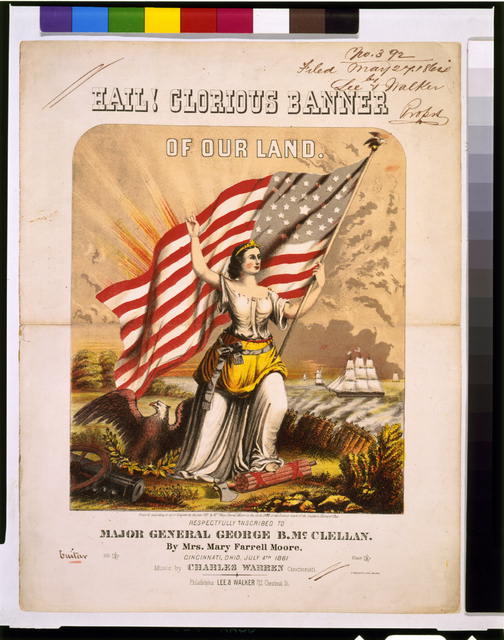
Here’s a little unadulterated Union patriotism from 2 months ago (in 150 year ago time) as Labor day weekend gets underway:

Hail! Glorious banner of our land Respectfully inscribed to Major General George B. McClellan - By Mrs. Mary Farrell Moore, Cincinnati, Ohio, July 4th 1861

Inscribed to General McClellan 7-4-1861 (LOC - LC-USZC4-1739)

Posted in Northern Society | Tagged | Leave a comment

Long War a Boon to South

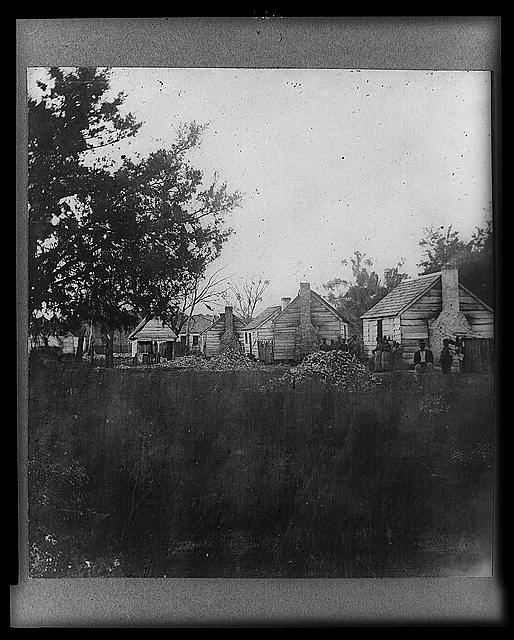
Port Royal, South Carolina. Slaves quarters April 1862

Basis for southern financial strength? Slave Quarters, Port Royal, SC (photo 1862; LOC - LC-B811- 211)

From the Richmond Daily Dispatch August 31, 1861:

A long war has its advantages.

Many in the South desire a long war. They will hardly be gratified by the Yankees, who do not desire any prolongation of a condition of things so disastrous to trade as the war. The South cannot suffer a tithe as much as the North from a long war; on the contrary, such a war will benefit her interest in many respects. They may be enumerated as follows: 1st. It weans the South from Northern supplies and relationship. 2d. It begets an independent manufacturing spirit among us. 3d. It employs our abundant supplies of food and means for carrying on war. 4th. It cultivates our military spirit, rendering our arms a terror to foes for all time to come. 5th. It will beget peace with less actual conflict in arms, as no sooner than the next presidential campaign opens at the North two parties will arise to crush each other — the Democratic or Peace party, and Lincoln’s or the Abolition party. It need surprise no one if this precious conflict opens with such men as ex-President Pierce and Vallandigham, on one side, for peace and recognition; and on the other, Lincoln, or McClellan, or Seward, with some deep-dyed individual as Vice President. Already a peace party is forming there, and if the campaign was nearer we should have but little to do South but to keep our army in the field and await the natural result of party spirit. 6th. Every one knows the quick subsidence of any feeling among the Northern people, especially in the large cities. They must have novelty upon novelty. The war has already been a long war with them. Hence the first volunteers are escaping homeward We may expect that the recruits will scarcely overbalance the returning soldiery, and that they have as large an army as they can collect. 7th. The Yankee money, though plentiful in times of peace and prosperity, is scarce in war; and for several reasons–first, a $50,000 capitalist in New York, Boston, &c., has his funds somewhat in this condition: $15,000 in a suburban villa, yielding no per cent.; $15,000 in city realty; $20,000 in bonds of various kinds — the two last paying scarcely any dividends just now. So you will perceive he can command no money for the war, if so disposed. His situation compares badly with that of a Southern farmer who owns the like amount, his being in land and negroes, say $40,000, balance in notes, all realizing even now a good profit, and enabling him to contribute to the war, by taxation or donation thousands of dollars.

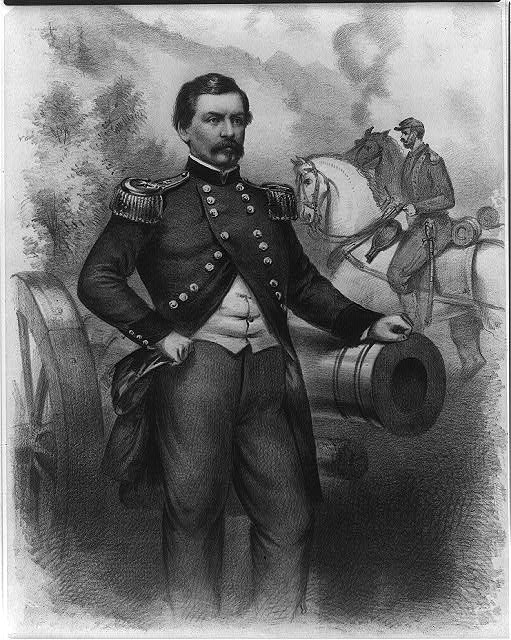
George B. McClellan 10-8-1861 image

Future Commander-in-Chief? McClellan 10-8-1861 (LOC - LC-USZ62-16405)

A long war, therefore, will bring ruin to the North; and, should England refuse to recognize, let her so refuse, and get up a war at home. We can fight it out, if need be, without thanks to any earthly power.

I’m not an economist, but I’m not seeing how a plantation owner has more liquid assets than a northern capitalist. Maybe it is because the bond market was weak, so it would be hard to sell.

I was amazed that four years before the next U.S. presidential campaign this editorial saw McClellan as a candidate, although for the wrong party. And that seems to be part of the story. McClellan’s beliefs and conduct possibly helped make the war longer, although maybe it would have been just as long no matter who was running the Army of the Potomac. Maybe it just had to gradually dawn on people that the effort was going to have to be more of a total war.

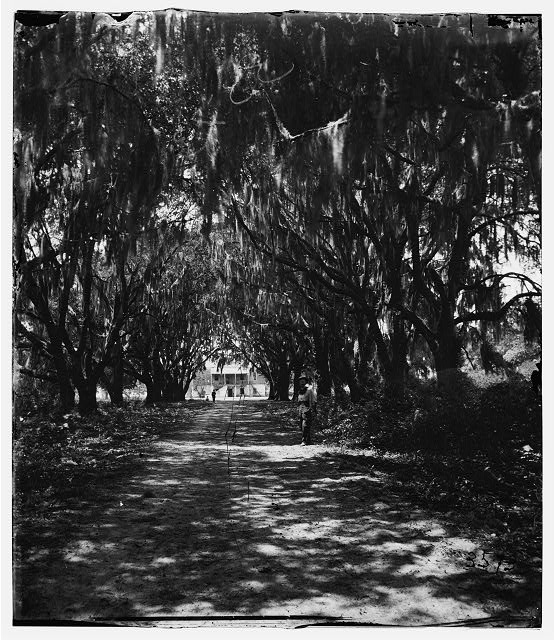
Beaufort, Port Royal Island, South Carolina. Live oak avenue Robert B. Rhett's plantation 1865

Fire-eater can support CSA - Robert B. Rhett plantation - Beaufort, Port Royal Island, SC (1865 photo; LOC - LC-DIG-cwpb-0329)

“3d. It employs our abundant supplies of food and means for carrying on war.” Per Allen’s recommendation at Seven Score and Ten I am reading Confederate Reckoning by Stephanie McCurry. As is my wont, I’m kind of tip-toeing through the book as I read what I can during lunch breaks. (Must because I’m a Yankee and “must have novelty upon novelty”) Coincidentally, I’m at the point where, as early as 1862 into 1863, extreme scarcity and dire hardship are causing some women in some Confederate states to act out in political and/or violent ways. Of course this is well before the autumn of 1864 when Sheridan and Sherman were destroying large parts of the South and McClellan was running against Lincoln for president.

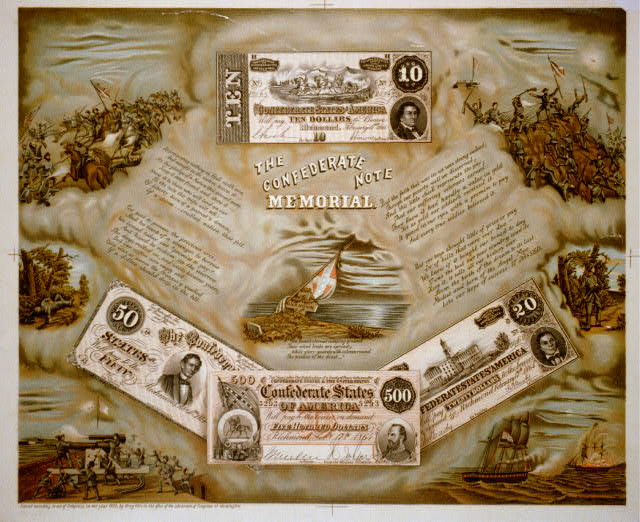
The confederate note memorial

Notes for the CSA (LOC - LC-USZC4-1522)

Posted in 150 Years Ago This Week, Confederate States of America, Southern Society | Tagged , , , , | 1 Comment

“Angel to the South”

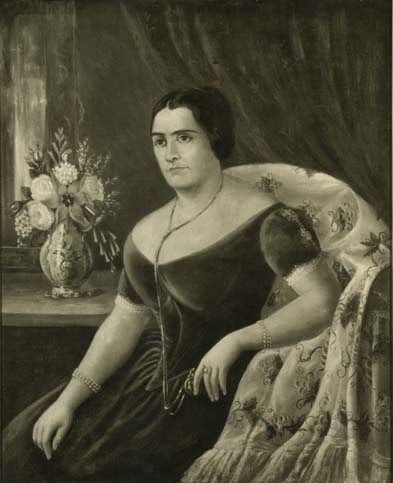
Juliet Opie Hopkins

Florence Nightingale of the South - Juliet Opie Hopkins (ca. 1840-1859*)

From the Richmond Daily Dispatch August 31, 1861:

Meeting of Alabamians.

At a meeting of the citizens of Alabama, held at the Ballard House in the city of Richmond, Va., on Wednesday evening, Aug. 28, to take into consideration some plan for organizing and adopting means to take care of the sick and wounded soldiers from the State of Alabama on service in Virginia, on motion of Col. Edmund, Harrison of Montgomery, Hon. W. P. Chilton was chosen Chairman. Mr. Chilton took the chair and explained the objects of the meeting in a short and patriotic speech, H. C. Jones was appointed Secretary, on motion of R N. Johnson.

Hon. John Gril Shorter then read the following letter from Mrs. Arthur F. Hopkins, asking for aid in her work of providing for the sick and wounded soldiers, and moved that a committee of seven be appointed to draft resolutions for the action of the meeting:

Ballard House, Richmond 1865

Where the Alabamians met - Ballard House, Richmond (1865; LOC - LC-DIG-cwpb-00445)

Richmond Aug.26, 1861.

Messrs. Chilton, Smith, Harrison and Shorter:

Gentlemen:

You are aware that I have been for nearly three months actively engaged in ministering to the wants and comforts of our sick and suffering soldiers wherever and whenever I could reach them; and, although I am still deeply interested in the cause, yet I feel that I can neither do justice to those who have confided to me this sacred trust with the means of relieving the soldiers, nor of the soldiers themselves. You will, therefore, pardon the call I have made upon you to take this matter under consideration, and form such an hospital association as, in your judgment, may be most conducive to the accomplishment of the great object of restoring and improving the health of our soldiers.

I hope you may find it practicable to organize, on your plan of proceeding, a moveable hospital to each regiment, somewhat in imitation of the plan adopted in the Crimean war. A cook and steward, furnished by your association, placed under the direction of the surgeon, would add greatly to the comfort and convenience of the regiment. I am gratified to learn that the Surgeon General has approved, the plan of furnishing a portable cooking-stove to each regiment. The Secretary and Treasurer would greatly relieve and enable me to give more attention to other departments of no less importance.

Until the establishment of the Alabama Hospital, on the 1st of August, my attention was directed to all the hospitals, and even now all calls made upon me for aid, where the necessities are great, are immediately responded to, regardless of the States of which the sufferers are citizens.

May God’s blessing rest upon your efforts.

Very respectfully,

Mrs. A. F. Hopkins. …

The rest of the article describes the parliamentary proceedings of officially thanking Mrs. Hopkins and setting up committees to organize and fund care for the wounded from Alabama.

Juliet Opie Hopkins was inducted into the Alabama Women’s Hall of Fame in 1999 for her hard work and leadership in caring for the sick and wounded during the Civil War. She established three hospitals in Richmond for the care of Alabamians. Hopkins closed these hospitals in 1863 because of shortages and the consolidation of services into the Confederate Medical Department. She went home to Alabama to work in hospitals in the state until the close of the war.

You can read about Mrs. Hopkins at Civil War Women Blog. According to Alabama Pioneers Hopkins was shot in the leg twice during the Battle of Seven Pines. The surgeons had to remove bone – she was lame for the rest of her life.

Juliet Opie Hopkins was buried at Arlington National cemetery and was honored during the war by being featured on an Alabama twenty-five cent note.

*Alabama Digital Archives

Posted in 150 Years Ago This Week, Confederate States of America, Southern Society | Tagged , , , | Leave a comment

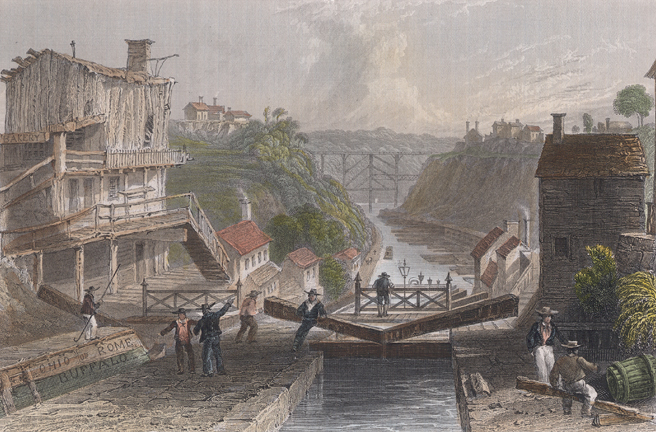
Peace Petitions from the Cataract County

Lockport NY 1839 by W.H. Bartlett

Peace lovers in Lockport?

Peace or Maybe Treason Depending on Your Perspective

From The New-York Times August 31, 1861:

THE TRAITORS IN NIAGARA COUNTY.

he Baltimore Exchange is happy in being permitted to copy the following letter, which has been addressed to Hon. J.C. BRECKINRIDGE, inclosing a peace petition:

LOCKPORT, NIAGARA Co., N.Y., Aug. 1, 1861.

To Hon. John C. Breckinridge:

DEAR SIR: Within a few days past the inclosed petition has been circulated in three or four towns of our County, in one of which, where there are less than 600 voters, 200 of the very first men of the town readily signed the petition. Some of these petitioners are, or were, Republicans, and when remember, that our country is so strongly Republican, and that two of our newspapers warned the people against signing such a petition, we are surprised that so many are signing it. There are over 600 names upon the inclosed, and as many more have not yet been sent in. As we have no Senator from our State who would present such a petition, and believing that you represent the conservative men North and South, we take the liberty to forward you the petition, in order that the voice of the Cataract County may be heard. If the other petitious should be sent to us soon we may forward them. Very respecfully yours,

JOHN T. MURRAY

WM. S. fARWELL,

GAYLORD J. CLARK.

It was probably a good bet that the petitions would not get a warm reception from New York’s senators, Ira Harris and Preston King, both of whom were Republicans. In fact,

King is generally considered as the principal founder of both the Free Soil and Free Soil Democratic Parties, which ran creditable third party national candidates, and one of the two main organizers of the successor Republican Party.

On the other hand, John C. Breckinridge, a U.S. senator from Kentucky, opposed the Lincoln administration and its war policy.

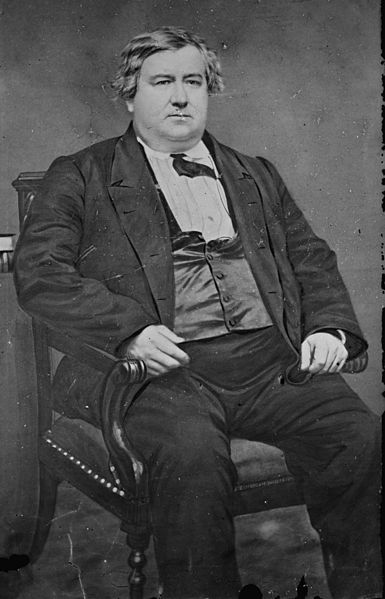
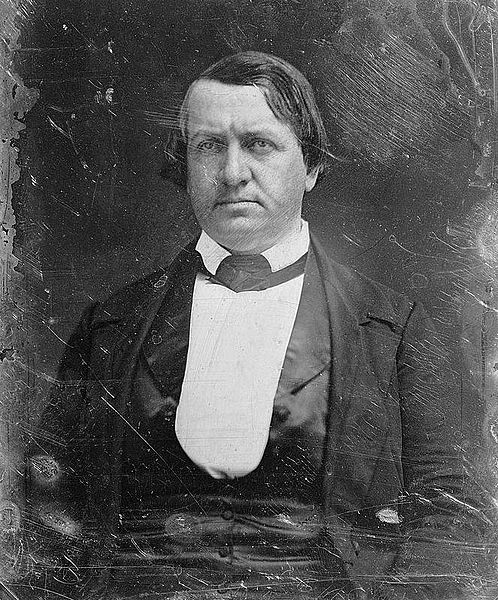
Preston King

Preston King (LOC - LC-BH82- 5373 B )

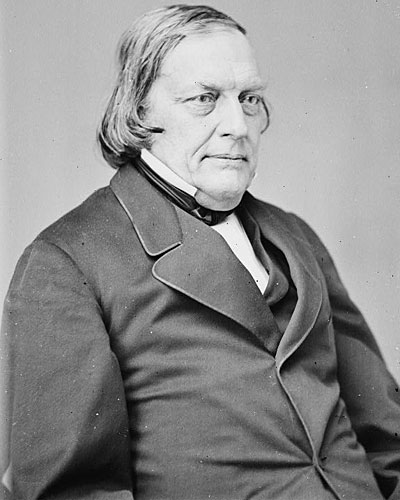
Ira Harris

Ira Harris LOC - LC-BH82- 4773 B)

Posted in 150 Years Ago This Week, Northern Society | Tagged , , , | Leave a comment

Military – Hosierial Complex

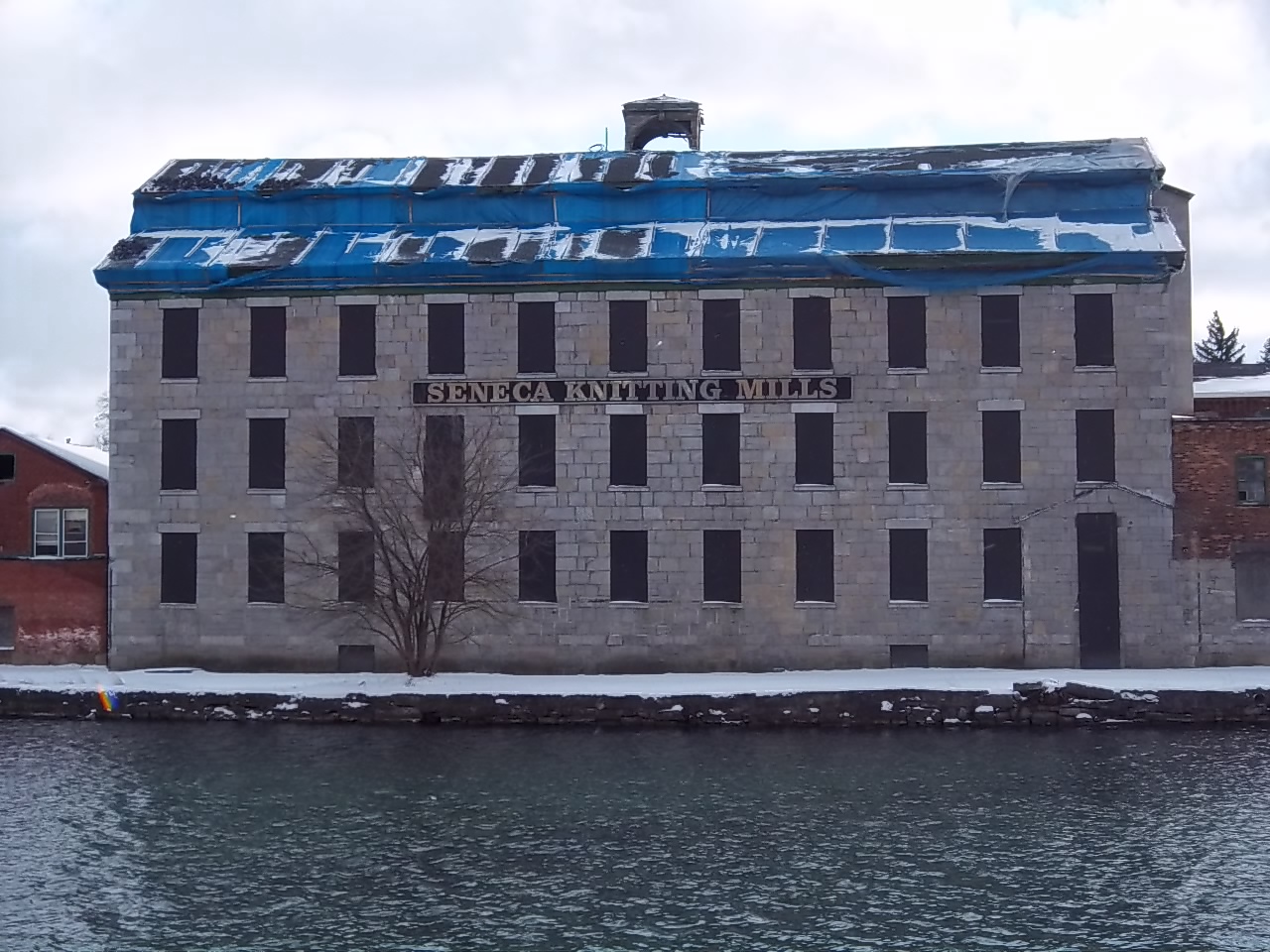
Seneca Falls, NY 1-1-2011

Seneca Knit still stands - albeit sockless

I’m not sure what trouble the intoxicated man was referring to when he assaulted John P. Hale, but there is evidence that he could, at least in part, have been to referring to unemployment caused by the secession crisis and the war. Nevertheless, that same war was boon to some industries.

From a Seneca Falls, New York newspaper August 17, 1861:

A Good Business.

In the almost universal prostration of all manufacturing pursuits, which particularly is affecting our village, we are glad to notice that one branch of industry at least is not touched by the general paralysis, but flourishes with a vigor and prosperity much beyond that which witnessed it when the country was in a condition of peace. We allude to the manufacture of Stockings as carried on by the Seneca Falls Knitting Mills Company. The large State and Government contracts which have been awarded them, together with an increased demand by the trade, have enabled the managers of this establishment not only to carry on a successful business, but so urgent are the demands for their manufactured articles as to make necessary the employment of a double sett [sic] of hands to meet the obligations of their contracts. The advantages which our laboring population will derive from this establishment during the coming winter are beyond calculation. That it will be a means of support to a large number of our inhabitants and that it will keep want from the door of many a household, no one can doubt. It is now giving employment to between eight and nine hundred men and women, a large number recent employees, mostly all of whom were thrown out of employment by the recent suspension of opperations [sic] in other establishments. The government contract of two hundred thousand pairs of army half-hose, will undoubtedly be followed by other contracts from the same source, while the orders from private parties are of themselves of sufficient magnitude to warrant the belief that they alone would be sufficient to keep the Mills in operation during the coming winter. Connected with the Knitting Mills and enjoying the same prosperity is the Co’s establishment for the manufacture of the machines used in the factory. They are of the celebrated Goff patent, and their construction is looked to by Mr. A.J. GOFFE the inventor, who is also Superintendent of the Mills. They command a ready sale and are undoubtedly best Machine for the purpose yet invented.

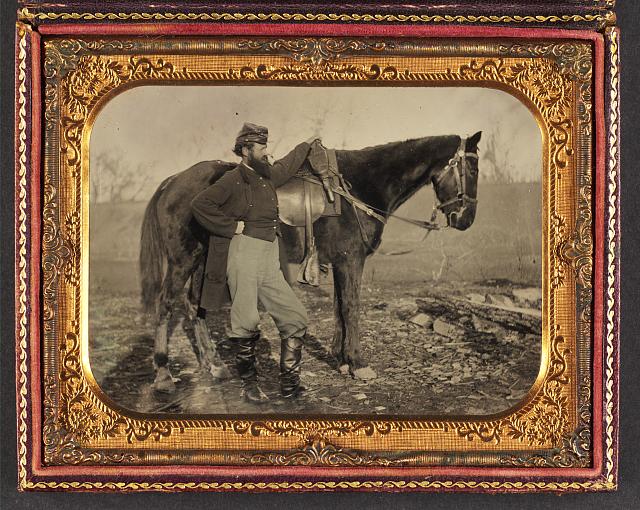
John E. Cummins - Ohio Infantryman

Wearing a pair of Seneca Knit socks? Colonel John E. Cummins (LOC - LC-DIG-ppmsca-37549)

We are glad that this important branch of our manufactures has survived the catastrophy [sic] which has silenced the hum of industry in most of the large workshops of our village. We are glad of it also, because of those who otherwise might suffer for those necessities which its employment enables them to obtain.

There were a couple other related clippings from 1861 in the Seneca Falls library. One mentioned that a local company was doing well at least in part to a contract to supply blankets to the U.S. Navy. Another article had even more people working at the Mills, even employing folks from neighboring communities.

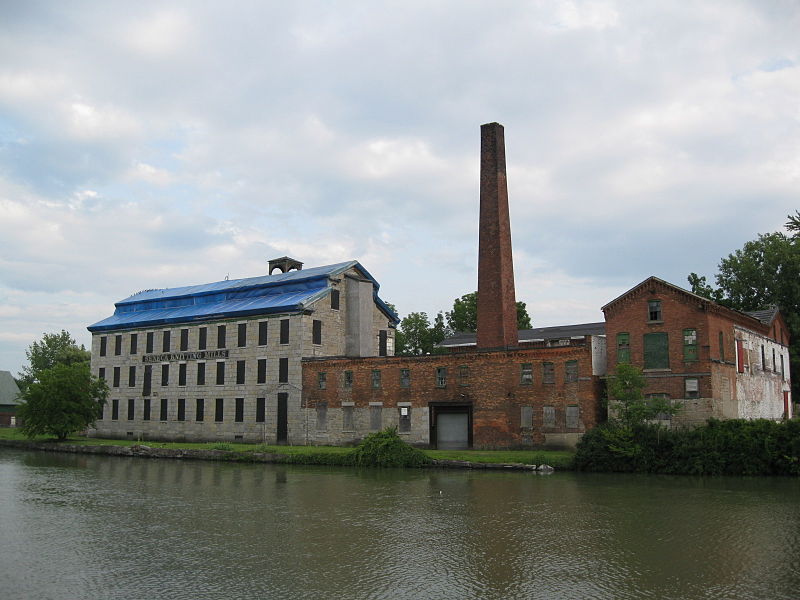
The mill manufactured socks until it shut down about ten tears ago.

Seneca_Knitting_Mills_Aug_09

Nary a single pair of military half-hose to be found*

*Doug Kerr’s photo is licensed by Creative Commons.

Posted in Northern Society | Tagged , , | Leave a comment

Assault on an Abolitionist

More Violence in New Hampshire

John P. Hale

Hale Storm and Free Soil - John P. Hale (LOC - cph.3c09934)

From The New-York Times August 28, 1861:

ASSAULT UPON HON. JOHN P. HALE.

— On Saturday afternoon, upon the arrival of Hon. JOHN P. HALE at the depot in Dover, N.H. (the place of his residence.) a man, apparently intoxicated to whom an acquaintance had pointed our Mr. HALE as an “Abolitionist.” stepped up to Mr. HALE, and with the remark, “You are one of the men who have brought all this trouble upon us,” struck him in the face, knocking off his hat. Mr. HALE, seeing the condition of the man, replied, “Get out of my way,” when the drunken fellow struck him again. Mr. HALE did not return the blow, but walked quietly away. The depot-master and others interfered to prevent any further assault. The attack did not appear to be premeditated, and the affair was over in a few minutes. Boston Traveller, Aug. 26.

John P. Hale was indeed an abolitionist. He was elected to the U.S. House in 1842 as a Democrat. Hale was kicked out of the Democrat party in 1845 because he opposed Texas annexation (on anti-slavery grounds). From Wikipedia:

In the face of an apparently invincible Democratic majority, Hale set out to win New Hampshire over to the anti-slavery cause. He addressed meetings in every town and village in the state, carrying on a remarkable campaign known as the “Hale Storm of 1845.” At a North Church meeting in Concord on 5 June 1845, there was a noted debate between Hale and [Franklin] Pierce. Hale was rewarded on 10 March 1846 with seeing the state choose a legislature in which the Whigs and Independent Democrats had a majority of the votes. A Whig governor, Anthony Colby, was also chosen. Hale wound up elected to the lower house of the legislature, and was chosen speaker.

He was later elected as a Free Soil candidate to the United States Senate in 1846 and served from March 4, 1847, to March 4, 1853. He was among the strongest opponents of the Mexican-American War in the Senate and is considered “the first U.S. Senator with an openly anti-slavery (or abolitionist) platform”. He alone refused to vote in favor of the resolution tendering the thanks of Congress to Winfield Scott and Zachary Taylor for their victories in the Mexican-American War. In 1849 he was joined in the Senate by co-advocates of the anti-slavery cause Salmon P. Chase and William H. Seward, and in 1851 he was joined by Charles Sumner. …

Hale was an unsuccessful candidate for President of the United States on the Free Soil ticket in 1852, losing to Democrat Franklin Pierce, a staunch political enemy of Hale’s …

At the time of this story Hale was again serving as a U.S. senator – by now as a Republican.

It’s kind of interesting that Hale’s assailant is described as being intoxicated – as chairman of the Senate Committee on Naval Affairs, Hale worked for the July 14, 1862 law abolishing the daily spirit ration on navy ships, but sailors did get a nickel per day as compensation for their loss.

Posted in 150 Years Ago This Week, Northern Society | Tagged , , | 1 Comment

An Important Sentence

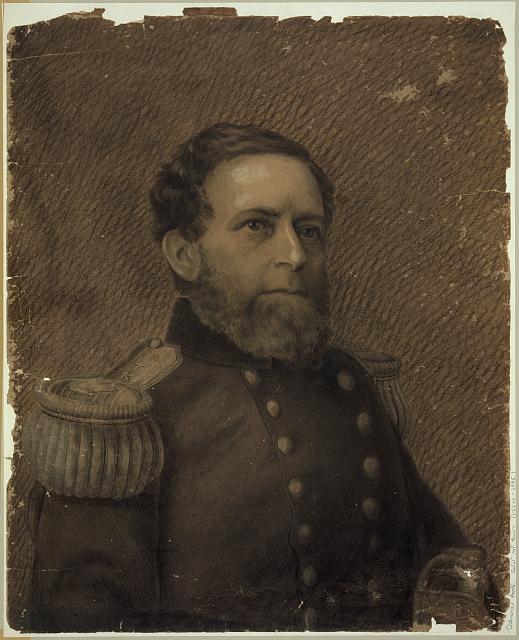
Andrew Hull Foote

Andrew Hull Foote (LOC - LC-DIG-ppmsca-23164)

From The New-York Times August 27, 1861:

The Great Rebellion …


DISPATCH TO THE ASSOCIATED PRESS.

WASHINGTON, Monday, Aug. 26. …

Capt. FOOTE has been ordered to the command of the United States naval forces on the Western waters — namely, the Mississippi, Missouri and Ohio Rivers. …

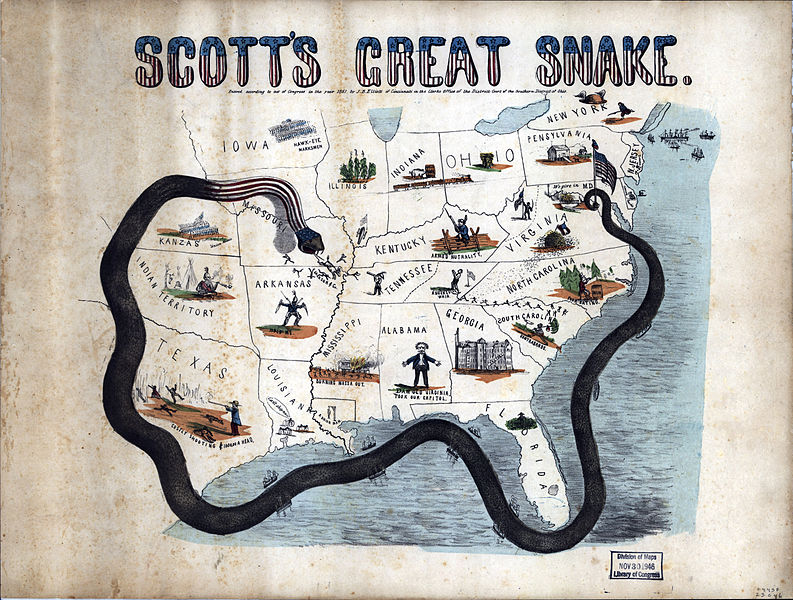
Andrew Hull Foote is taking on a job that would seem to have big implications for the success of General Winfield Scott’s Anaconda Plan.

Scott's Anaconda

Scott's Anaconda (LOC - g3701s cw0011000)

Posted in 150 Years Ago This Week, Military Matters | Tagged , , | Leave a comment

Shovel Manufacturer Does His Part

To Aid Secession’s Cause

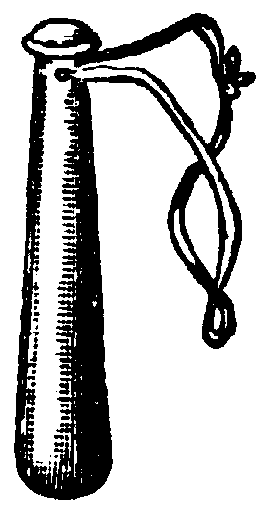
Billy Club

"Semper Paratus"

You can read a good account of the pro-Union attack on the Bridgeport Advertiser & Farmer at the Civil War Daily Gazette. The northern loyalists found some interesting items while ransacking the newspapers offices.

From The New-York Times August 26, 1861:

THE REBEL ALLIES IN CONNECTICUT.

BRIDGEPORT, Sunday, Aug. 25.

In cleaning out the Farmer and Advertiser office last night, a United States mail-bag was found filled with papers addressed to leading Secessionists in Alabama, Georgia, and other Southern States, also some two hundred wooden billies, turned and furnished with strings for the wrists. These clubs were made from shovelhandles, and were probably furnished by a secession shovel-manufacturer in Bridgeport. Some curious letters were also discovered, exposing the treason of politicians in Hartford and elsewhere. One of the editors of the Farmer has gone to New-Haven, threatening to issue his paper from the Register office to-morrow.

At first I assumed that since the clubs were mentioned along with the southern-addressed letters they were intended for secessionists down South. The southern rebels could use them to suppress whites with unionist sentiments or to help control the slave population. However, considering what happened to the Advertiser & Farmer, maybe they were intended to help the pro-secession people in Bridgeport protect themselves.

The Barnum Museum reproduces part of a May 22, 1861 editorial which says, “The truth is that it is the South that is resisting a rebellion; one initiated by the Abolitionists and Republicans of the North!” The Republicans via Lincoln are plotting to pack the Supreme Court to overrule Dred Scott.

While at the museum you can check out its Virtual Exhibits, including one on Bridgeport in the Civil War.

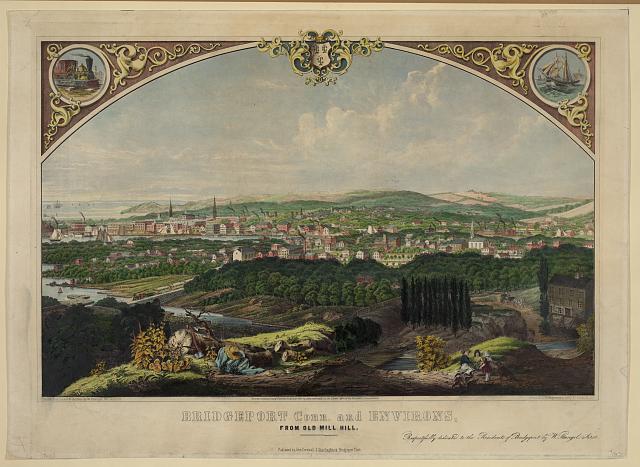
Bridgeport, Connecticut  c1857

Shovel Manufacturer's home - Bridgeport, Connecticut c1857 (LOC - LC-DIG-pga-03337)

Posted in 150 Years Ago This Week, Northern Politics During War, Northern Society | Tagged , , , | 1 Comment

Wheat and Locomotives

George H. Gordon

George H. Gordon - secures Rebel wheat, disables mill (LOC - LC-DIG-cwpb-05794)

From The New-York Times August 25, 1861:

IMPORTANT FROM BALTIMORE.; CAPTURE OF LARGE QUANTITIES OF FLOUR AND WHEAT.

BALTIMORE, Friday. Aug. 24.

The agent of the Associated Press. with, the Army, sends the following from Hyattstown:

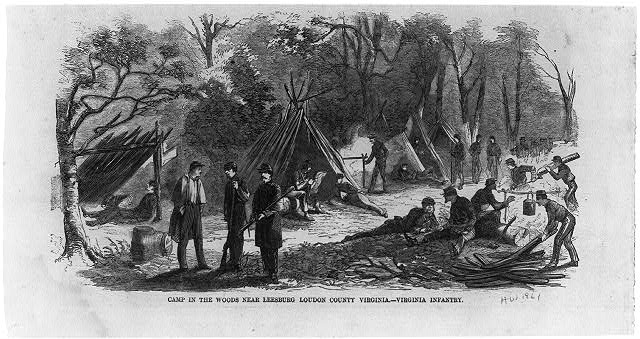
Gentlemen from Harper’s Ferry state that our troops, under Col. GORDON, have secured large quantities of flour and unground wheat, including five hundred bushels belonging to the secession Army, at a mill owned by HERR A. WELSCH. They also disabled the mill from grinding for several months to come. There were no rebel troops at the Ferry, but their pickets frequently come in. There were supposed to be about five hundred rebel troops at Charlestown. Our Army is now resting, where the climate is salubrious, and the water excellent. Intelligence from the other side of the Potomac shows that the rebels have drawn to Leesburgh all their regular forces from Charlestown, Winchester and other points above, and concentrated them at Leesburgh, where their Army numbers from 11,000 to 12,000 men. Capt. HENDERSON’s Home Guard alone remains in Jefferson County. The rebels have taken to pieces at Martinsburgh five locomotives belonging to the Baltimore and Ohio railroad, and were to make the attempt yesterday to transport them to Strasburgh, or some other point on the Manassas road.

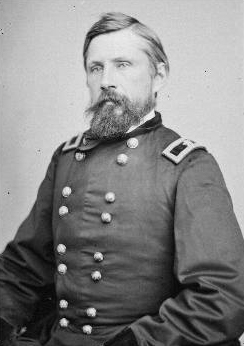
Having graduated from west Point in 1846, George Henry Gordon “served under Lt. Gen. Winfield Scott in the Mexican-American War, earning the brevet of first lieutenant for gallantry at Cerro Gordo.” When the Civil War began Gordon organized and led the 2nd Regiment Massachusetts Volunteer Infantry.

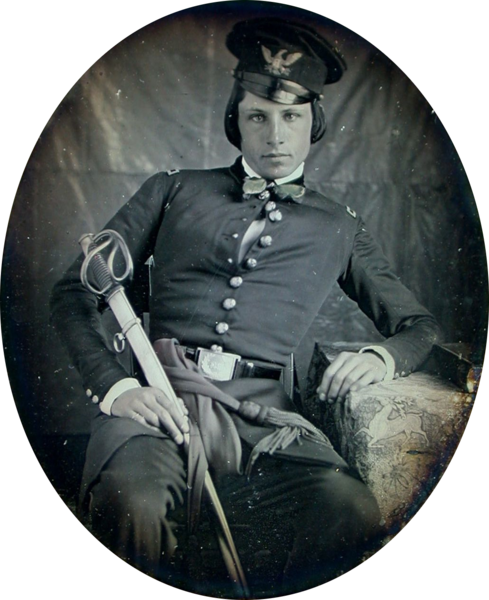
George H. Gordon c1846

Headed for Mexico - George H. Gordon c1846

Rebels near Leesburg, 1861

Concentrating: Rebels near Leesburg, 1861 (LOC - LC-USZ62-56940)

Posted in 150 Years Ago This Week, Military Matters | Tagged , , , | Leave a comment