American Bastille?

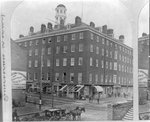
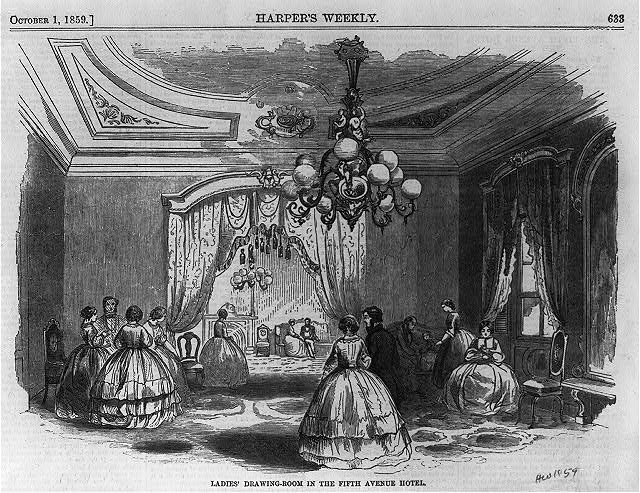
Ladies' Drawing Room -Fifth Avenue Hotel 1859

Nice Digs - Fifth Avenue Hotel (1859; LOC - LC-USZ62-73675)

From The New-York Times August 24, 1861:

IMPORTANT ARRESTS.; OVER $200,000 SEIZED BY THE POLICE.

A day or two ago, information was received at Police Head-quarters, that a wealthy merchant and tobacco manufacturer, residing at Petersburgh, Va., was in the City, engaged in making collections for himself and other Southern merchants, from their creditors in this City. Sergeant YOUNG, of the Detective force, and Detective King, were accordingly deputed to make search for him, with a view to his arrest. After much time spent in fruitless search, they at last became satisfied that the offender they sought was stopping at the Fifth-avenue Hotel. Thither they went, and found him just on the point of taking his departure for the South, he having concluded his business an hour or two previously. He was taken to the Police Head-quarters, and there searched. Upon his person was found about $200,000 in Virginia, Tennessee and Georgia six per cent. bonds, about $1,000 in gold, over $100 in Virginia bank-notes, and a large number of drafts, acceptance, certificates of deposit, &c., the amount of which is at present unknown. Also, a large number of letters from men in this City and Boston, to merchants in the rebel States. The Southerner’s name is JOHN GARNETT GUTHERIE, an extensive tobacco-planter, manufacturer and merchant, and is reputed very wealthy, owning three large tobacco plantations in Virginia, and carrying on a large manufactory in Petersburgh.

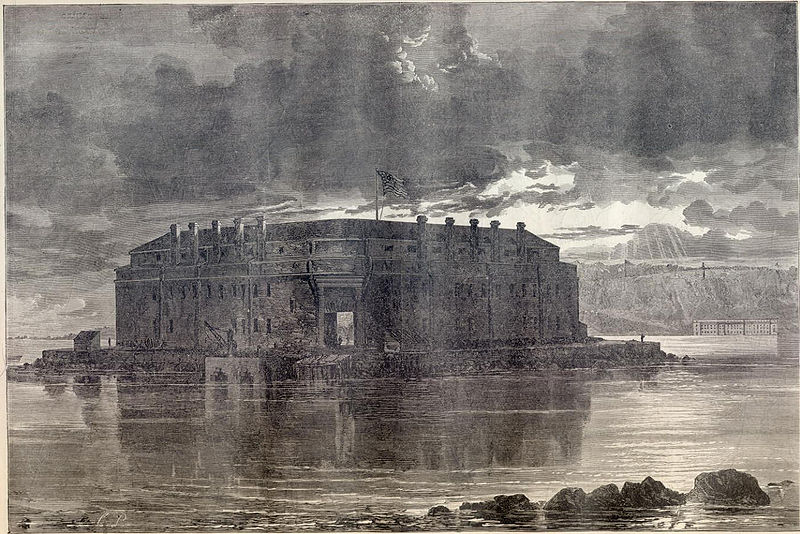
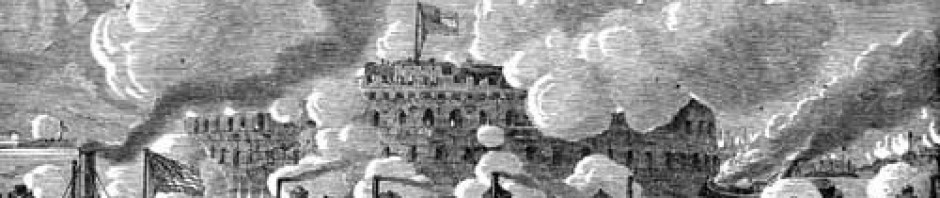
Fort Layafette - 1861

New Digs - Fort Layafette (Harper's Bazaar 9-7-1861)

At about the same time, another merchant, named GEORGE MILES, from Richmond, Va., and who is said to be connected in some way with GUTHERIE, having often been seen his company within the last few days, in this City, was arrested by the detectives at the Metropolitan Hotel, and, upon being searched at Police Head-quarters, there were found upon his person important papers and letters, showing him to be a rabid Secessionist, and in connection with GUTHERIE, engaged in selling tobacco in this City, and collecting from their customers here, and also in Boston and Philadelphia. About $800 in money was found upon MILES, also drafts, notes, checks, &c. The money and papers found upon both of these Southern gentlemen were taken into the custody of the proper authorities, to the end that they may be used in the future investigation of their case. A telegram was immediately, sent to the authorities at Washington asking for direction in the matter. Last Thursday evening a reply was received ordering their imprisonment for the present at Fort Lafayette, whither they were sent this morning. The Police authorities regarded it unsafe to allow the publication of these arrests at the time they were made, which was on Wednesday evening.

According to a September article in The Times Miles and Guthrie were still imprisoned at Fort Lafayette as of September 24, 1861. Also, from that September article,

Fort Lafayette named by some the American Bastile, is not a Bastile at all, in fact the fort is more like a hotel than anything else, where the proprietor is rather strict and has a wholesome dread of fire, insisting upon all lights being out at 9 o’clock. Beyond that, the fare is excellent, and the view of the ocean extensive. …

Fort Lafayette housed Confederate prisoners of war and political opponents of the administration throughout the war. It sounds like the editors at The Times have no intention of ending up there as prisoners.

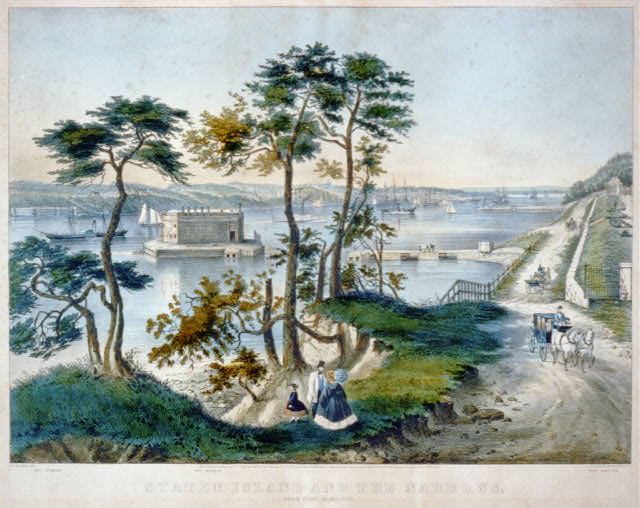
Narrows from Brooklyn

Another view - gotta love that fresh sea air (Currier and Ives c1861; LOC - LC-USZC2-590)

Posted in 150 Years Ago This Week, Lincoln Administration | Tagged | Leave a comment

Surrounded at Hyattstown

The last we saw of the 19th NY Volunteer Infantry it was encamped at Pleasant Valley, Maryland as part of General Banks’ army. During the month of August there was some grumbling in the 19th. Initially they had assumed that their federal service would end on August 22, 1861 because they were mustered in for three months. However, on August 12th the regiment’s colonel told his men that the President required the regiment for all of its two year state service. This did not go down well with a lot of the troops, who didn’t know that was a possibility when they signed up in April.

On August 21 the regiment reached Hyattstown, Maryland near the headquarters of General Banks.

From Cayuga in the Field by Henry Hall and James Hall:

August 16th, Col. Thomas received orders to move his brigade from Pleasant Valley to the valley of the Monocacy and encamp, at the village of Hyattstown, 10 miles south of Frederick. The 19th struck camp next day and with the whole brigade moved by short, though toilsome marches, over slippery, saturated roads, to the designated point, camping on the way at Jefferson and Buckeystown. On the evening of the 21st, the regiment pitched tents at Hyattstown on the slope of a verdant hill, in the midst of the camps of the brigade and army, which filled this beautiful portion of the valley. Near the hill was the headquarters of Gen. Banks. News reached the men here that the people of Auburn thought they ought to remain in the service and “show their manhood by fighting the thing through.” The regiment thought that people did not understand the question very well at home. It proposed, however, to stay and fight it through, quite unanimously. Some grumbled, but the subject was pretty thoroughly canvassed that night and the majority resolved to bury the remembrance of their wrongs and do whatever the Government ordered. Little speeches by some of the
Captains to their commands helped determine them.

At 9 A. M., August 22d, the drum corps beat the signal for dress parade. Curiosity brought every man out on the green, where, in a few moments, Adjutant Stone had the line formed, and reported the same to Major Ledlie, commanding in the absence of Lieut. Col. Seward. By the Major’s direction, the right wing then faced to the right, and countermarched, which brought the two wings in parallel lines facing inwards. While this was being done, what was the astonishment, not to say mortification and anger, of the 19th, to perceive the 21st Pennsylvania, Col. Biddle commanding, come up the hill on a run, bristling with steel, and wheel round into line on the right of the 19th, but facing it. Col.Thomas’s 2d Cavalry, dismounted, approached briskly to a similar position on the left, with carbines capped and loaded. And what lay there on the crest of the hill? Not thirty rods away, a battery of Parrot cannon, Perkins’s Rhode Island, unlimbered, pointed its black, angry muzzles threateningly on our position, the artillerists lying or sitting on the ground in their places, ready to spring up and blow the regiment to atoms on a second’s warning. Other regiments were under arms in camps around the hill. In line of the lane between the two wings of the 19th, stood Col. Thomas, stern, impassive, with folded arms, keenly watching the deportment of the terrible, but now wounded and mortified warriors from the peaceful hills and vales of far away Central New York, for whom all this muster of forces had been made. By him were his staff, Col. Clark, and several reporters.

The meaning of all this was only too obvious, and many a brave man’s eyes filled with tears in the regiment at the unmerited insult, as in silence all awaited what was coming next.

Major Ledlie, attended by his staff, now came between the
wings of the regiment, and addressed the men as follows: —

Soldiers of the 19th Regiment, New York Volunteers:

“This is the 22d of August, the day on which your term of three months expires. But the President has made requisition for the further services of the 19th regiment, and the Governor has transferred you to the United States for the remainder of the term of two years, for which you enlisted into the State service, which will be one year and eight months.”

Adjutant Stone then read Special Order No. 323, and one or two Articles of War apropos to the occasion. The men, then stacking arms, marched a few paces to the rear and again faced inwards. No attempt was made to explain the matter to the men, nor was there any proffer of a new muster. Major Ledlie commanded all who were loyal to advance and take their guns. Every officer in the regiment stepped forward at the word. Kennedy’s and Stewart’s companies, B and G, were not a moment behind. Smothering their feelings, they marched squarely up to the stacked arms. One man in Stewart’s company only lingered behind. Companies C, H and K also moved up all but unanimously. The larger part of the other companies, however, resenting the fresh insult of the day, stood fast in their places. Their officers remonstrated without avail. Two hundred and eighty refused to serve a day longer. They declared that their time was out. It speaks well for the character of the 19th regiment that, under the circumstances, more of it did not refuse. In Gavigan’s company, one man only took his gun, and he did so because, having enlisted at Elmira specifically as a three months’ man, his time would expire any way in a short time. Col. Clark came down and reasoned with Gavigan’s men against standing out, but failed to shake their resolution. “Well, they show their true Irish grit,” he said, as he turned away and left them.
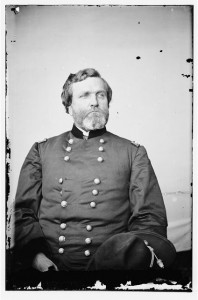
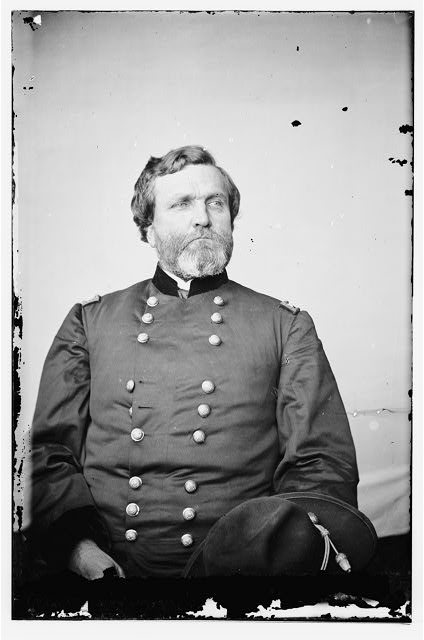
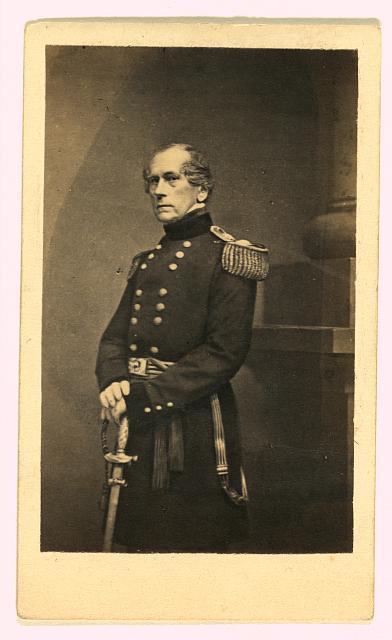
George H. Thomas

Arrest the recusants - George H. Thomas (LOC - LC-DIG-cwpb-07196)

Col. Thomas at length put an end to the exciting scene by ordering the recusants under arrest. Capt. Stewart’s company was ordered to guard them till he could bring up the cavalry. One of the company rebelled at this and threw down his gun, refusing to stand over his own comrades. The rest complied quietly but gravely. The cavalry then came up. The recruits hung their equipments on their guns and marched down hill to the camp of Col. Biddle’s Bucktails, where they were quartered in the edge of a grove in the old “cow-pen.”

After the parade, the residue of the regiment returned to camp. The morale of the 19th never fully recovered from the wrongs of that bitter day. It was little consolation to learn from the Rhode Island boys, that had they been ordered to fire on the regiment, they would have put their cartridges shot first into their cannon. Our boys did not fear cannon shot. What they did feel was the moral wounds inflicted on them that day by distrusting their loyalty, and the brutal use of arbitrary power in place of reason and an appeal to pride. These gave them the keenest pangs.

Col. Thomas sent for Capt. Kennedy and Capt. Stewart, during the day, to congratulate them separately on the conduct of their respective commands, and to ask them about the motives which had actuated those who stood out To Capt. Stewart he said, when he had heard the whole story of the regiment’s hardships, “There is something wrong here. Captain. These men are not to blame. They have not been treated right.” Stewart alluded to Thomas having placed him as guard over the recusants, and said it was “the hardest thing he had ever done in his life.” Thomas replied, he “only did it to try his pluck.”
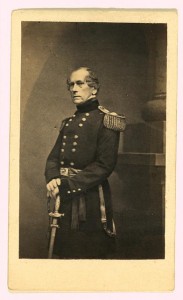
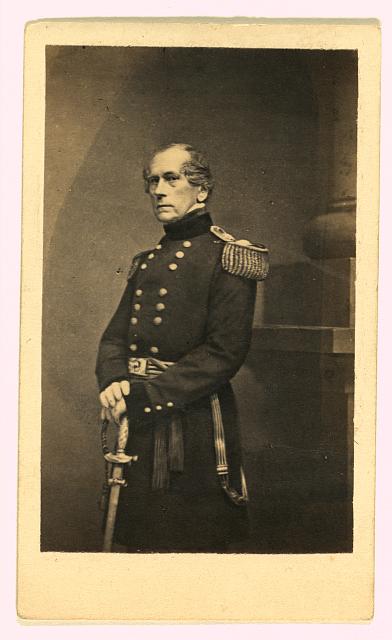
John Ellis Wool

Mercy at Fortress Monroe - if the recusants sign back up (LOC - LC-DIG-ppmsca-08354)

Gen. Banks treated the recusants considerately. He gave them plenty of time to reconsider their action. … But twenty-three held out to the end. Nothing could move them. Even Father Creedon lavished argument on them in vain. They were retained in Col. Biddle’s camp, under guard, until the latter part of September, when they were sent to Fortress Monroe, court martialed, and sentenced to hard labor for two years on the fortifications of the United States. At this place, through the agency of Gen. Wool, they were pardoned, in Special Order No. 107, Nov. 21, 1861, “on condition of serving out the time for which they were enlisted, honestly and faithfully,” in the 2d New York Volunteers, Col. Carr commanding, then at Newport News. The men accepted and went into the 2d Cavalry, and made a good reputation there as soldiers. …

After the 22d of August, camp was changed to the banks of
Seneca creek, south of Hyattstown. On the 28th, Col. Thomas, being called to an important command in the West, relinquished
the 1st Brigade to Col. Biddle, to the very general regret of the
brigade.
Posted in 150 Years Ago This Week, Military Matters | Tagged , , , | 1 Comment

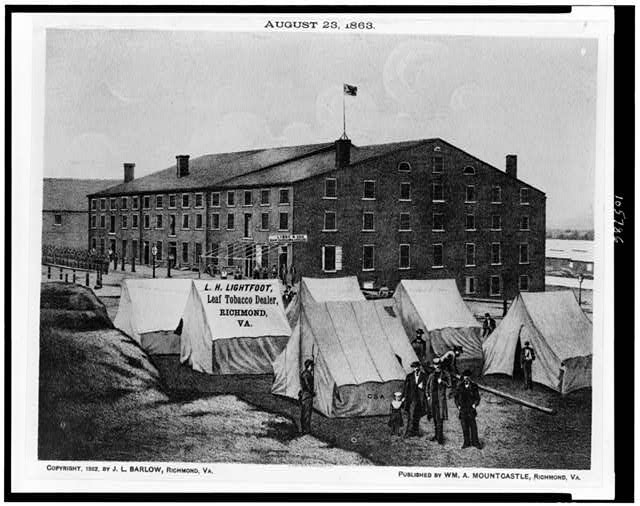
Going to Market in Richmond

8-24-2013: I found out yesterday I made a mistake in this post by implying that Alfred Ely was imprisoned at Libby. I believe he spent most of his prison time at Liggons Tobacco Warehouse. I apologize.

Richmond's Libby Prison - 1863 (LOC - LC-USZ62-105786)

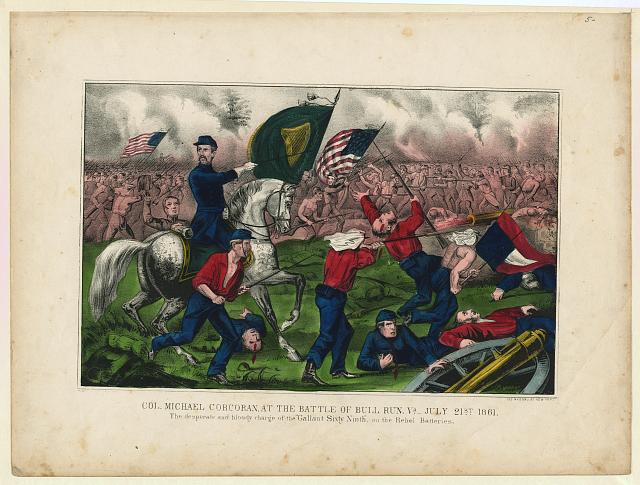
The 69th New York State Infantry fought hard at First Bull Run and helped cover the retreating Federal forces. Several members of the 69th were captured and sent to prison in Richmond. Here’s a letter home.

From The New-York Times August 20, 1861:

THE SIXTY-NINTH.; LETTER FROM LIEUT. EDMUND CONNELLY, OF THE SIXTY-NINTH, TO HIS BROTHER.

RICHMOND PRISON. Wednesday, Aug. 7, 1861.

DEAR BROTHER: I have written two letters home since my arrest, giving a brief account of how and when I was taken prisoner, which I think must have reached you, as the officers of the Confederate Army who have charge of us here assured us that they should be forwarded without delay per Adams’ Express. I have not very much news of importance to communicate to you, as I have no opportunity of going out of this establishment and can learn but little inside. It is true that the authorities here are kind enough to allow us to buy and read the papers, and also the privilege of having one of our party go out to market every morning. By this means we can have plenty of vegetables, &c., every day. We take turns at this business, which is quite agreeable to us all, although always accompanied by a guard. When I go home I will be quite posted in domestic affairs in general.

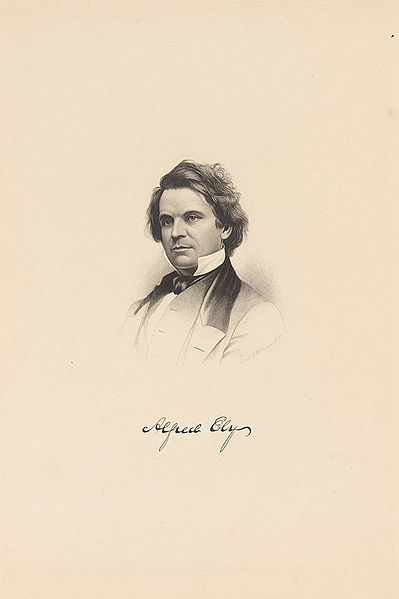
Alfred Ely

Helping with the dishes - Congressman Alfred Ely

There are a dozen of us in company in our mess, and about four such messes in this room, which is about as large as half the first floor of our new barrel shop, and just such a building in appearance, and is well adapted to the purpose for which it is now used. There are several such buildings here. They were originally built and used as tobacco factories, but since the war set in, they have been closed until now that they are used as temporary jails. There are in all about forty-two officers of us on this floor. This is the number that have been arrested so far from the last battle, and amongst them there are some doctors. We are now quite comfortable here. Yesterday we purchased a cot for each one of us in our mess, and for the first time but once since I left home I had a comfortable sleep from off the bare floor, having been accustomed for some time before we came to Richmond to sleep on the soft grass. The Georgia pine, of which this floor of our prison is made, is almost too hard for our iron sides, but now, thank God, we are delivered from it, at least for the present; but if we happened to be removed, I suppose we would have to leave our cots behind, or take up our bed and walk. Either would suit us, if allowed to select our own course on the journey. The kitchen work is done by us all in turn, and to see colonels and members of Congress washing dishes is really amusing. Why, then, should I complain when I witness all this? Why, Sir, I had a member of Congress take his turn with me in doing those things. His name is Mr. ELY, from Rochester, New-York. There are two other officers from our regiment here, who have been captured, on Monday, at Centreville, and in all, four, namely: Capt. McIvoR, Lieut. BAGLEY, Lieut. GANNON and myself. There are thirty-four men who were taken prisoners, and about fifteen wounded, whose names I will send you with this. If you will call to see Capt. KIRKER, of Broadway, you can get a great deal of information from him, as Col. CORCORAN has written several letters to him, giving him pretty fully the particulars of the battle of the 21st. The Colonel is a noble and chivalrous soldier, and that was the day to test every man’s bravery and competency to fill his position, and manfully did he fill his, as did also his Lieutenant-Colonel (HAGGERTY,) who fell gloriously in the heat of the action. I was in the hospital on Sunday and yesterday, to see the wounded. The Colonel is very kind to them all. Tell Major MEAGHER that all his boys will recover. One was shot through the arm, which was broken; the same ball entered his side and came out again near his stomach. I brought him a chicken, yesterday, which was sent to the Colonel by a friend, with some peaches, oranges, &c. I would give anything to receive a few lines from home. Many letters go from this place, but it is a rare thing to hear an answer to any of them. I hope my family will not feel uneasy in regard to me; they ought to rejoice I came off so well, as many a ball came whistling within an inch of my body. I consider I had a most miraculous escape. My old friend, WM. JOICE, has a nephew who was in the battle; and well may he feel proud of him, for a braver and better young man I never knew. My love to all. Your affectionate brother, EDMUND CONNOLLY.

Colonel Michael Corcoran leads 69th at First Bull Run

Colonel Michael Corcoran leads 69th at First Bull Run (LOC - LC-DIG-ppmsca-08407)

The names of the wounded members of the Sixty-ninth, who are now in Richmond Hospital, are as follow: T. Montgomery, Company A; P. Murphy, Company B; Patrick Brennan, Company D; James Collins, Company D; John Jackson, Company D; Owen Donohue, Company F; John Moran, Company II; Peter Kelly, Company J; Edward Shaughnesy, Company K; Thos. K. Hughes, Company K; Mich. Brennan, Company G; Michael Keating, Company E; P. McGill, Company G; J. McTague, Company B. The following are in the hospital at Manassas: Thomas Munson; G.E. Bolton; Edward Dalton, Company K, (I think;) Thomas Martin.

N.B. — We hope our Government will take some steps towards liberating us from here. We are of opinion they ought. E.C.

Congressman Alfred Ely was captured as one of the Union onlookers during the Battle of First Bull Run. He was released in December 1861. His Journal of Alfred Ely, a prisoner of war in Richmond was published in 1862. It sounds as if conditions in Libby Prison got worse as the war dragged on. Prisoners on both sides were just trying to survive.

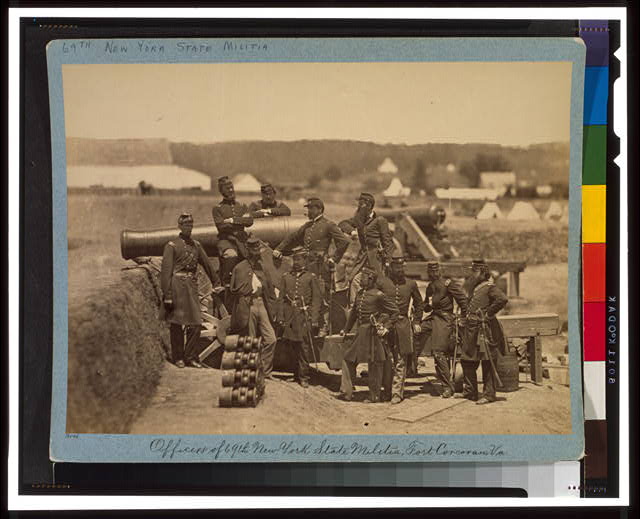
69th New York State Militia - Fort Corcoran, VA 1861

Before Bull Run - 69th New York State Militia - Fort Corcoran, VA 1861 Colonel Corcoran on left (LOC - LC-USZC4-6733)

Posted in 150 Years Ago This Week, Military Matters | Tagged , , , , | Leave a comment

Back to Work

General John Ellis Wool

Back in action - General Wool (ca.1861 LOC - LC-DIG-ppmsca-08354)

From The New-York Times August 20, 1861:

GEN. WOOL AT FORTRESS MONROE.

FORTRESS MONROE, Sunday, Aug. 18, via BALTIMORE, Monday, Aug. 19.

Gen. WOOL assumed command at Old Point this morning. Lieut. C.C. CHURCH is acting as AdjutantGeneral. The presence of Gen. WOOL is already having a good effect upon the troops.

The volunteer regiments are fast receiving their new uniforms, and their condition is in every respect improving.

Heavy firing was heard this morning at Willoughby Point. The Confederates are probably trying the range of their batteries.

Capt. WALES’ company of New-York light cavalry is already well organized, and it is hoped that the regiment of which it is a part will soon be completed.

The editors at The New-York Times sure were fired up by John E. Wool’s arrival at Fortress Monroe. They had the 77 year old career army man leading 30,000 troops in an armada against Charleston.

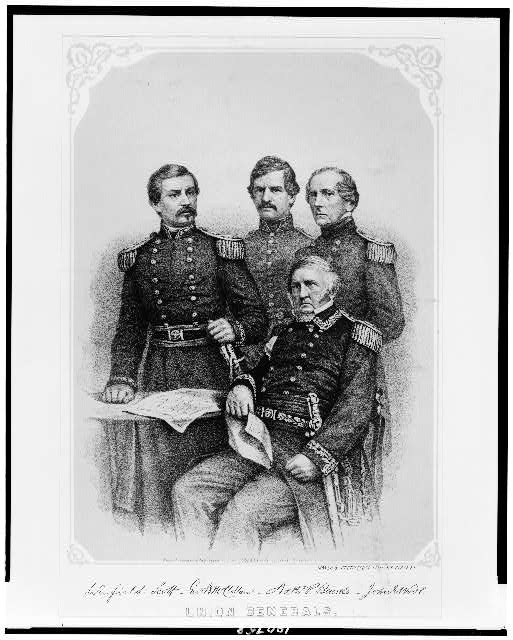
Four Generals to Save the Union - 1861

Wool with McClellan, Banks, and Scott (ca. 1861 LOC - LC-USZ62-100758)

Posted in 150 Years Ago This Week, Military Matters | Tagged , | Leave a comment

Dangling: Reasons to Head North

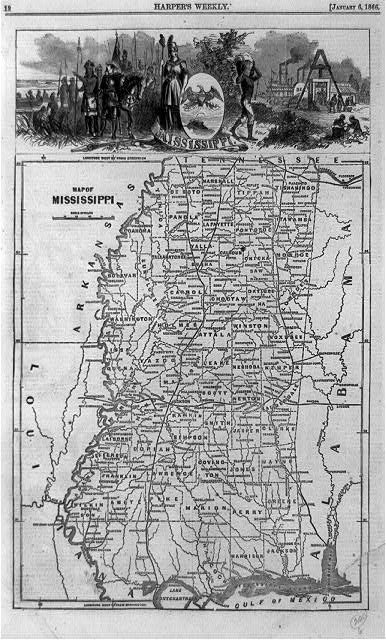
Mississippi map 1866

Home no more (Mississippi map 1866; LOC - LC-USZ62-98259)

This story is said to be from the Cincinnati Gazette of August 8, 1861. It was published in The New-York TimesAugust 18, 1861:

A NEW-YORKER’S EXPERIENCE IN MISSISSIPPI.

LORENZO D. PATRICK, Esq., arrived in this city on Monday last, from Pike County, Miss., whither he was driven on account of his devotion to the Union.

Mr. PATRICK is a native of New-York State. He removed to Mississippi in 1858, and bought 640 acres of timbered land. A short time after his settlement in his new home, he bought a steam saw-mill, which he worked regularly and profitably for more than three years.

On the evening of July 13, while attending to his business in the mill, he was waited upon by a crowd of armed ruffians who demanded him as a prisoner, and took him a short distance to where a “trial” was instituted. The “jury” returned a verdict that he should leave the Southern Confederacy “inside of twenty-four hours.” This he positively refused to do, unless he received in money the value of his property. Finding that he persisted in treating their verdict with contempt, a number of the chivalrous sons of the South waited upon Mr. PATRICK and told him that they would hang him unless he consented to remove. The valiant New-Yorker still held out, and told the waiting committee that he would not leave. The threat to hang him was then ordered to be put into execution. He was taken to the woods and actually hung by the neck with a rope from the limb of a tree, ten feet high. Fortunately, the cowardly vagabonds who desired and attempted his suspension did not know how to adjust the noose, and after letting him hang for three minutes, they concluded he was not going to die, that way, and cut him down. Though much exhausted, Mr. PATRICK was still sensible.

His would-be assassins again gave him a chance to save his life by leaving the Confederacy. Being full sure by this time that they would put their threat into execution, he accepted their offer, and quickly departed for a more congenial clime, leaving his property, valued at $11,000, in charge of a friend. With a great deal of difficulty — undergoing searches and examinations at every stopping place — he found his way to the North, and now stops at the Galt House, in this city. His first act on arriving here was to volunteer his services in a company of cavalry now being raised here. He is determined to fight the enemies of his country, and will make an excellent soldier, being a stalwart six-footer. He will leave the city with his company in a few days. We recommend all persons who are in favor of peace and compromise to him for his opinion in the premises. He never interfered in politics in his life, and especially never avowed sentiments unfavorable to Slavery while he lived in the South.

You can see an image of Cincinnati’s Galt House at University of Cincinnati Digital Press.

The same issue of The New-York Times detailed the more voluntary northward migration of one southern family:

A STEADFAST UNION MAN.

From the Detroit Free Press, Aug. 7.

A span of horses, drawing a somewhat dilapidated looking wagon covered with cotton cloth, made its appearance in the streets yesterday. The singular appearance of the vehicle attracted the attention of the passers and when the driver drew rein and halted on Jefferson-avenue, a crowd quickly gathered around. On inquiry they learned that the name of the owner of the establishment was FRANK NAPIER, a former resident of Shreveport. La. On the culmination of the National difficulties, NAPIER, being a strong Union man, perceived that his residence was too far South to permit him to live on peaceable and quiet terms with his neighbors, and, packing up what portion of his goods he could carry, and taking his wife and three daughters, he left for a more congenial clime. He set out the 25th day of April last, and during the journey himself and family have slept every night in the wagon. He has made his way to this State after the long and tedious journey, in hopes of finding a home among our people, where, by tilling the soil, he can earn an honest livelihood and maintain, unmolested, his loyalty to the Stars and Stripes.

Posted in 150 Years Ago This Week, Southern Society | Tagged | 1 Comment

War Photos

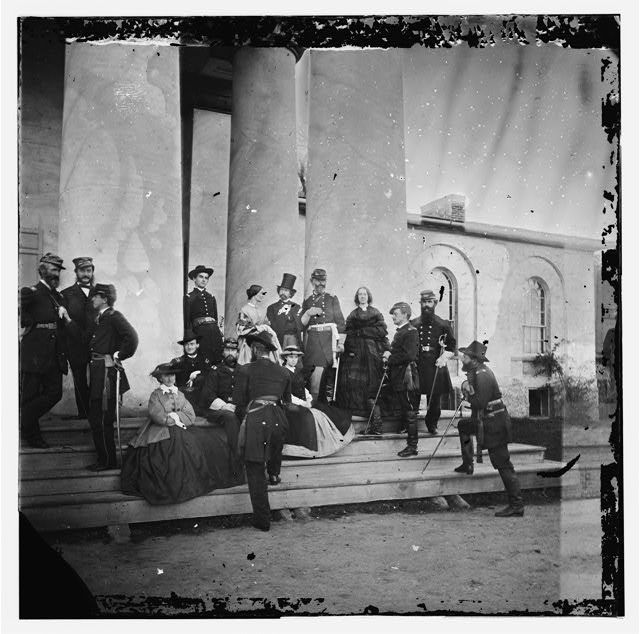
Heintzelman and staff at Arlington house; Mathew B. Brady, the photographer is shown in a top hat

Brady in top hat with Heintzelman and staff at Arlington House

From The New-York Times August 17, 1861:

Photographs of the War.

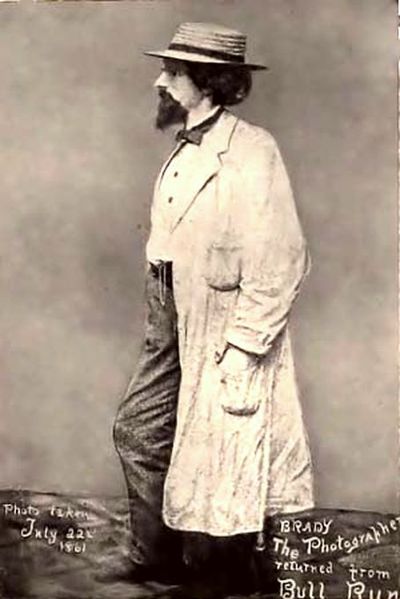
Mr. BRADY, the Photographer, has just returned from Washington with the magnificent series of views of scenes, groups and incidents of the war which he has been making for the last two months. Mr. BRADY, after visiting all the camps in the vicinity of Washington, and taking views of all the most striking scenes, accompanied the Army in its advance into Virginia. He had a full corps of artists and workmen, and embraced every opportunity to add to his collection of illustrative views. He went upon the field of battle at Bull Run, — accompanied HEINTZELMAN’s column into the action, and was caught in the whirl and panic which accompanied the retreat of our Army. We saw him constantly, at every point, before and after the fight, neglecting no opportunity and sparing no labor in the pursuit of his professional object. As the result of his arduous and perilous toil, he has brought back a very large collection of pictures which will do more than the most elaborate description to perpetuate the scenes of that brief campaign. Mr. BRADY was the only photographer on the field, and is entitled to the highest credit for the energy and enterprise which he displayed. This series of pictures has been added to the magnificent collection at his Photographic Gallery, corner of Tenth-street and Broadway.

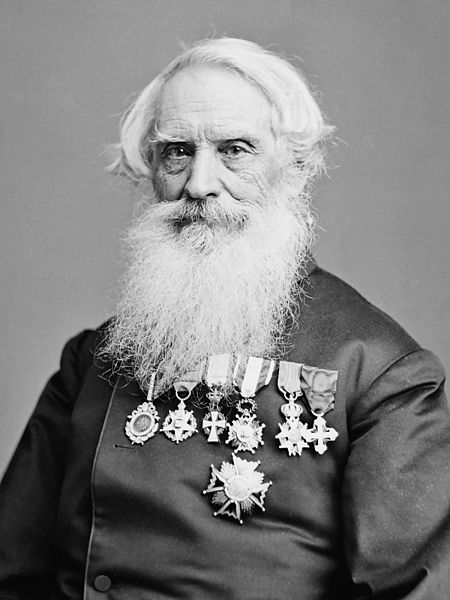
Early in his career Mathew Brady worked with a man from yesterday’s story. “Beginning in 1841, Brady’s artistic aptitude allowed him to study under the skilled daguerreotypist Samuel F. B. Morse.”

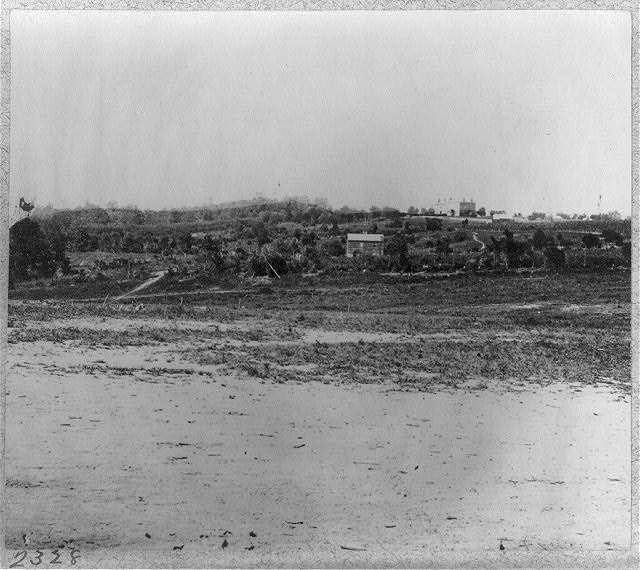
Bull Run Battlefield

Bull Run Battlefield (LOC - LC-USZ62-57821)

Mathew Brady 1861

Brady Back from Bull Run

Posted in 150 Years Ago This Week | Tagged , | 1 Comment

No longer awed?

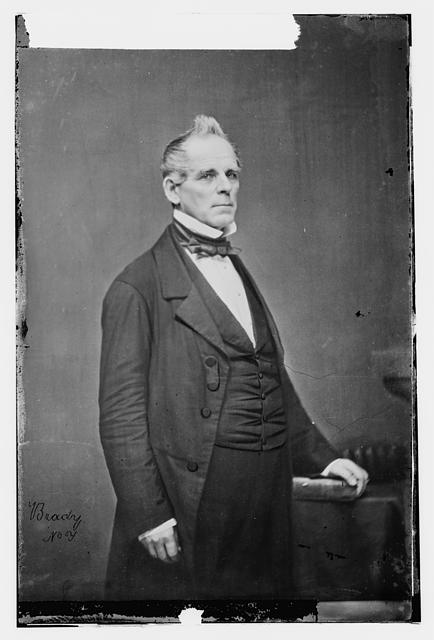
Gerard Hallock

Gerard Hallock: editor Journal of Commerce (LOC - LC-DIG-cwpbh-03072)

Southern newspapers were finding lots to like in some northern publications.

From the Richmond Daily Dispatch August 15, 1861:

Peace meetings.

A correspondent of the New York Journal of Commerce writes:

The great number of peace meetings now being held all over the country are most significant; and the studied efforts of the ultra war journalists to suppress all information concerning them, evinces a wholesome dread of their influence. The people are waking up. The reign of terror no longer awes them into silence. It is becoming very evident that the voice of the farmers, mechanics and merchants of the rural districts is not for a vindictive or abolition war. They have no profits to make from contracts with Government, and seek no share in the unclean drippings of public plunder. These peace meetings are of course quite alarming to those who are accumulating magnificent fortunes as jobbers, contractors, antlers and camp followers. Peace will put an end to the selling of old vessels shoddy clothing, wooden soled shoes, tainted pork, beef, &c., to the Government, at three, four, or five times their value. Then there will be no longer an inviting field for agents and middle-men, who divide the spoils with the contractors and jobbers, or shave the soldiers of a percentage on their rations and wages. If we have peace, these worn out party hacks and soldiers of fortune, who continue to put themselves prominently forward on every committee which has the handling of large sums of money, will lose their golden opportunities for amassing fortunes. Such may well threaten to hang those who favor peace. For, to them, when war ceases, “Othello’s occupation’s gone.”

Montgomery Blair

Montgomery Blair - Journal can't use US mail (LOC - LC-DIG-cwpbh-02637)

The Journal of Commerce is still in existence today. According to Wikipedia:

In 1827 Arthur Tappan and Samuel Morse decided that New York needed another newspaper. The Journal of Commerce operated two deepwater schooners to intercept incoming vessels and get stories ahead of the competition. Following Morse’s invention of the telegraph, the JoC was a founding member of the Associated Press, now the world’s largest news-gathering organization.

Publications in the 19th century took positions on political issues and were rarely concerned with being impartial. The JoC weighed in on the biggest issue of the day — slavery. Gerard Hallock and David Hale, partners in the JoC, were fervent abolitionists, but also decried the tactics of the war wing of the Republican Party. After the American Civil War broke out in 1861, the postmaster general suspended the paper’s mail privileges, effectively interrupting its publication, on grounds of “disloyalty.” Three years later, President Abraham Lincoln ordered the JoC closed after it was among New York papers victimized by a bogus story quoting the president as calling for 400,000 more volunteers.

Life of Gerard Hallock: editor of the New York Journal of commerce by William H. Hallock includes Gerard’s final editorial for the Journal of Commerce on August 31, 1861. In August 1861 a federal Grand Jury convened in New York City to investigate the Journal and other newspapers said to be treasonous. Shortly after that Postmaster General Montgomery Blair disallowed the Journal the use of the mails to distribute the paper. Hallock sold his interest to spare his partners the financial consequences.

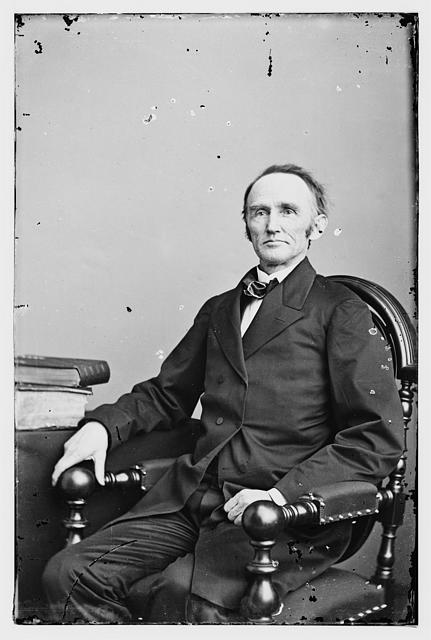
Samuel F.B. Morse

A founder of the Journal of Commerce - Samuel F.B. Morse (LOC - LC-DIG-cwpbh-00852)

Posted in 150 Years Ago This Week, Northern Politics During War, Northern Society | Tagged , , | 1 Comment

“Unholy War”

Them’s Fightin’ Words in Bangor, Maine

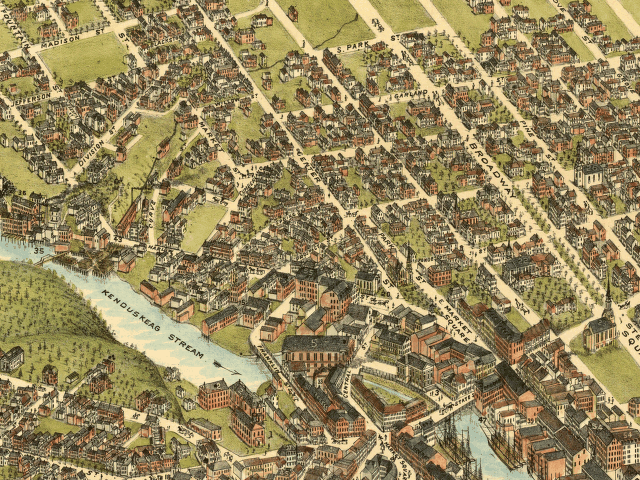
Bangor 1875

Bangor 1875

From The New-York Times August 13, 1861:

BANGOR DEMOCRAT OFFICE DESTROYED

BANGOR, Me., Monday, Aug. 12.

At 1 o’clock this afternoon the Bangor Democrat, a secession sheet, was “cleaned out” by a large number of people. During an alarm of fire a crowd entered the office, cleared it of everything it possessed, and burned the contents in the street. Mr. EMERY, the editor of the paper, escaped unharmed. A man named JONES, who made some demonstrations in opposition to the acts of the mob, was badly used, but was finally rescued and put in jail.

From The New-York Times August 16, 1861:

SUPPRESSION OF THE BANGOR DEMOCRAT.

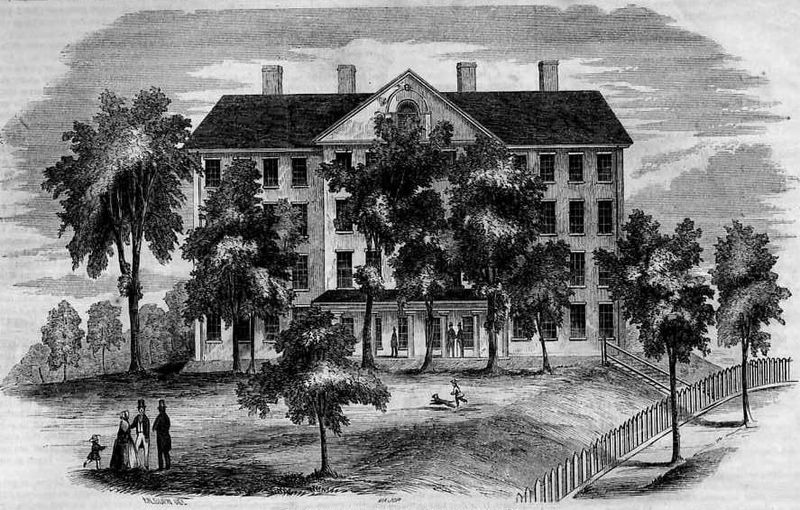
Theological Seminary, at Bangor, Maine 1853

Theological Seminary, at Bangor, Maine 1853

From the Bangor (Me.) Whig, Aug. 14. At a quarter before one, yesterday, an alarm of fire was given, and the engines passed up State-street. No fire was found; but upon the return of the people, a crowd was found gathered in West Marketsquare, and a large number of persons in the office of the Bangor Democrat, throwing the materials out of the windows. The office was completely gutted, and the stands, cases, and newspapers afterward burned in the Square. The crowd subsequently cleaned out the barber’s-shop of J. JONES, on Kenduskeag Bridge, — the cause of which, we understand, was a personal attack made by JONES upon Mr. JOHN WYMAN, for remarks that he had made in relation to the secession editors of the Democrat. JONES met WYMAN on the street, and invited him to step into his office. MR. WYMAN complied, and after reaching the barber’s shop, JONES asked him what he meant by the remarks he made. Mr. W. responded to the effect that he was not responsible to him (JONES) for what he said. After some further remarks, JONES made an attack upon WYMAN, striking him in the face, which was returned by Mr. WYMAN. The excited crowd, hearing of the collision, went into the shop and threw the furniture into the street. From the commencement of this unfortunate civil war, we have uniformly deprecated any resort to violence towards the office of the Bangor Democrat, and have used our personal influence to prevent any attack upon it. Months ago we knew of an intention to destroy the office, and in conjunction with others, persuaded those engaged in it from carrying out their intentions. Since that time, we have uniformly counseled forbearance and moderation. But all has been in vain. The people have determined that a secession organ should not exist in our city. The editors and managers of that paper have been deaf to all expostulation, all entreaty, all representations of the danger to which they subjected themselves. They have persisted in endeavoring to inflame the public mind against what they called this “unholy war” — they have continued to publish articles full of ill-concealed exultation at the repulse of our troops at the battle of Bull Run, and of the slaughter of our brave volunteers in that action — have uniformly favored the cause of rebellion against that of the Union — and in so doing, have but brought upon themselves the irrepressible indignation of the people. We have carefully abstained from any comments which might instigate violence against the establishment, although many facts have come to our knowledge showing the deleterious influence of the paper. No longer ago than last week, a young lady just from the South, informed us that the day before she left a Southern State, a gentleman called upon her and said he had understood she was going to Bangor. She replied that she was. ‘Then,’ said he, ‘I desire you, as soon as you arrive, to seek out the editor of the Bangor Democrat and shake hands with him for me, and in my name and that of the citizens of this place thank him for his fearless advocacy, of the Southern cause, and for the encouragement which his paper has given us.’ And the lady says that in consequence of the representations of the Bangor Democrat, which is read or quoted throughout the Southern States, the people there believe that the people of Maine have held great ‘Peace Conventions,’ and are prepared to oppose the ‘unholy war,’ and yield to the demands of the South. The effect of such facts upon the public mind hero can well be conjectured. It has been found impossible to prevent an outbreak of public sentiment, deplore it as we may.”

Partly due to the influence of Bangor Theological Seminary, Bangor was a center of anti-slavery sentiment.

There is an interesting overview of Maine in the Civil war at DownEast.com. Marcellus Emery was the editor of the Bangor Democrat. Maine’s support of the war was against its economic interests. According to DownEast.com:

Sumter electrified Maine. Actor John Wilkes Booth — southern sympathizer and future assassin — was completing a run of Richard III in Portland when the news arrived; assessing the mood, he wisely, quickly skipped town, not pausing to pay his bills.

Posted in 150 Years Ago This Week, Northern Politics During War, Northern Society | Tagged , , | Leave a comment

Concord?

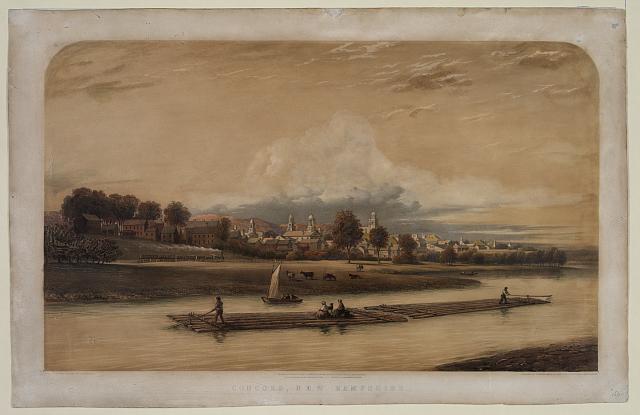
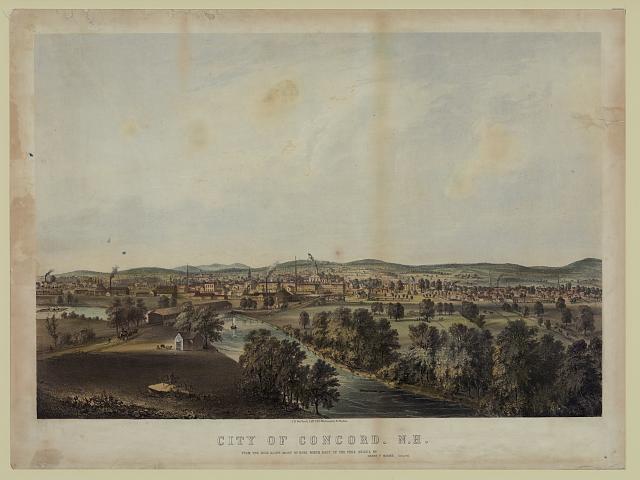
Concord, New Hampshire

Concord on the Merrimack (LOC - LC-DIG-pga-01462)

There was a riot in Concord, New Hampshire on August 8, 1861. Here are a couple of views.

From the Richmond Daily Dispatch August 15, 1861:

The riot at Concord, N. H.

The telegraph yesterday announced the destruction of the office of the N. H. Democratic Standard by a mob. The following statement is furnished by the New York Post:

The riot at Concord, New Hampshire, on Thursday, briefly reported by telegraph, was a serious affair. The returned soldiers of the First New Hampshire Regiment took offence at certain expressions in the editorial columns of the Democratic Standard, a paper which has steadfastly opposed the Government and denounced the war. A company of the soldiers procured copies of the paper, read extracts to an excited crowd, and presently a revolver was fired, the ball passing into the building occupied by the Standard, narrowly escaping some women employed in a sewing machine shop on the second floor. The publishers of the Standard, four in number, thereupon appeared at the windows, armed with revolvers, guns and axes. One of them very imprudently reached forth a Colt’s revolver, shook it, and told the crowd they were well prepared, and should defend themselves to the last extremity. Those who composed the mob answered with ejaculations like the following: “Fire, you traitor”–“you rebel and secessionist”–“fire, if you dare.”

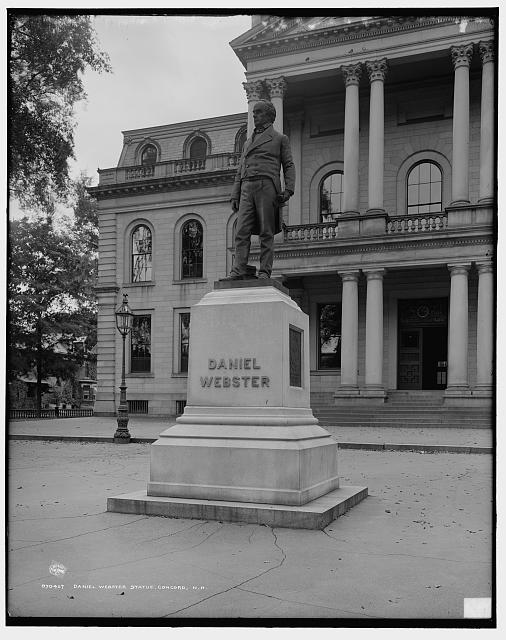
Daniel Webster statue in Concord, New Hampshire

Daniel Webster statue in Concord, New Hampshire (LOC - LC-D4-70407)

At this time the City Marshal appeared and read the riot act, and with great difficulty prevented the soldiers from ascending the stairway. John M. Hill, Esq., and several prominent citizens endeavored to calm the excited populace, but with no effect; they then went up to the office and told the publishers that if they would give up their arms they would endeavor to protect their persons and property. They agreed to this; but, before anything could be done, the soldiers were at the head of the stairs, and all parleying was at an end. The rioters attempted to enter, but the door was bolted, and they commenced staving out the panels; fire arms were then freely used inside, and several of the crowd were wounded–one in the arm, another in the hand — while bullets passed through the clothes of a number. The firing was distinctly heard in the street, and thousands filled the way to a long distance above and below the building.

The publishers escaped into the attic by a ladder, and the rioters took possession. The work of demolition was now commenced in good earnest; types, desks, paper of all kinds, and in fact everything which is used about a printing office, came tumbling down on the side walk in a fearful manner. Bonfires were immediately kiddied, and the relics of the Secession press were thrown upon the burning prier, while the soldiers gathered around the smoldering ruins and gave vent to their joy in the wildest acclamations. After the fires had somewhat abated, and nearly everything had been consumed, the City Marshal went into the office and pervaded upon the rioters to go into the street.

From The New-York Times August 12, 1861:

THE CONCORD RIOT.

We have, says the Boston Journal, a letter from another correspondent, giving an account of the destruction of the office of the Democratic Standard, in Concord, N.H., on Thursday afternoon. It gives the main features of the riot, as they have been previously stated, and adds:

Concord (c.1851-55)

Concord (c.1851-55) (LOC - LC-DIG-pga-00365)

“It is stated that letters were found in the office from Union men in Virginia, ‘asking them why they published such articles, and even that in that country such a paper could not live,’ &c.

Papers in abundance were found fixing unmistakably the editorialship of the obnoxious paper on EDMUND BURKE of Newport. It has always been surmised that such was the fact, but now it is conclusively shown by abundant proof. A letter was found from the editors of the New-York Day Book, asking for a list of the Democratic papers in this State, and information as to which of these papers ‘are for war, which anti-war, and which on the fence.’ These questions certainly signify something yet to be explained, but certainly no not seem to indicate on the part of the Day Book a very strong devotion to the Union. This affair has had a good effect on other parties who have openly expressed sympathy with the ‘seceshers,’ and many are ‘mum’ as can be. The Patriot came out in a bulletin stating ‘that the people were justified, in their opinion, in destroying the office of the Standard, that it ought to have been done long ago,’ &c., &c. A prominent Democrat, and one who has talked secession more or less, said it only served them right, and others say the same thing.”

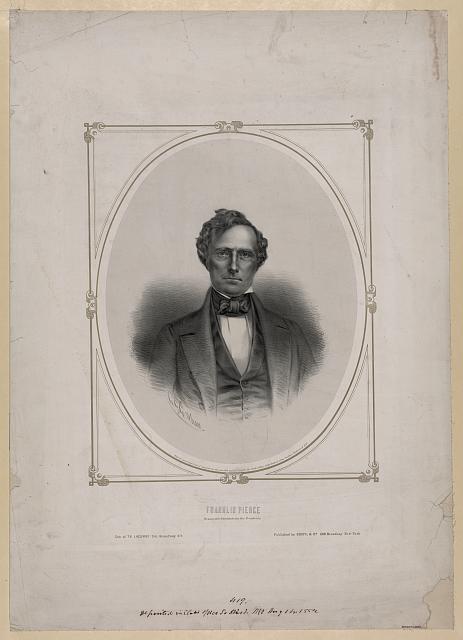
President Pierce (c.1854)

President Pierce (c.1854) (LOC - LC-DIG-pga-00570)

The 1st New Hampshire Volunteer Infantry was a three month regiment that enlisted right after President Lincoln’s initial call for troops. It spent time with General Patterson’s army. It never got into a battle and felt the same sense of discouragement that the New York 19th felt at doing nothing to stop Joe Johnston’s rebel army from reinforcing the Confederates at Manassas. When the unit’s time was up on August 2nd, they headed back to Concord. Another account of the Concord riot is reproduced in The First Regiment New Hampshire Volunteers in the Great Rebellion by Stephen G. Abbott starting on page 172. The point of view of this account is that things only got out of hand when the people in the newspaper office started shooting.

I didn’t realize things were so violent in New Hampshire. NewHampshire.com tells of an historical marker in Fremont, which you can see at NHLiving.com:

In 1928, the Exeter News-Letter printed an eye-witness account of Fremont’s July 4, 1861 Civil War riot, written by 77-year-old Alden F. Sanborn. After Fremont’s loyal citizens raised a 150-foot ‘liberty pole’ at nearby Liberty Square and had run up the Union flag, a southern sympathizer moved to put a bullet through it. Someone immediately moved to put a bullet through that man. (A small riot ensued) which was then squelched with the aid of the brave boys in blue, one of whom remarked “If we were going to fight the rebels…we had as soon commence here as anywhere.”

Ex-President Pierce, a well-known Doughface (Southern sympathizer) lived in Concord. I wonder if he was getting a little nervous when he heard about the riot?

The paper’s editor could have been possibly named after the 19th century Irish statesman, Edmund Burke. Here’s Winston Churchill on Burke:

His soul revolted against tyranny, whether it appeared in the aspect of a domineering Monarch and a corrupt Court and Parliamentary system, or whether, mouthing the watch-words of a non-existent liberty, it towered up against him in the dictation of a brutal mob and wicked sect. No one can read the Burke of Liberty and the Burke of Authority without feeling that here was the same man pursuing the same ends, seeking the same ideals of society and Government, and defending them from assaults, now from one extreme, now from the other.

I noticed the statue of Daniel Webster in Concord. I double-checked his quote about Liberty and Union being one and inseparable and noticed another that seems somehow applicable to the Concord riot:

Liberty exists in proportion to wholesome restraint.

Posted in 150 Years Ago This Week, Northern Politics During War, Northern Society | Tagged , , | Comments Off on Concord?

Blues’ Band in Baltimore

Serenading Breckinridge and Vallandigham

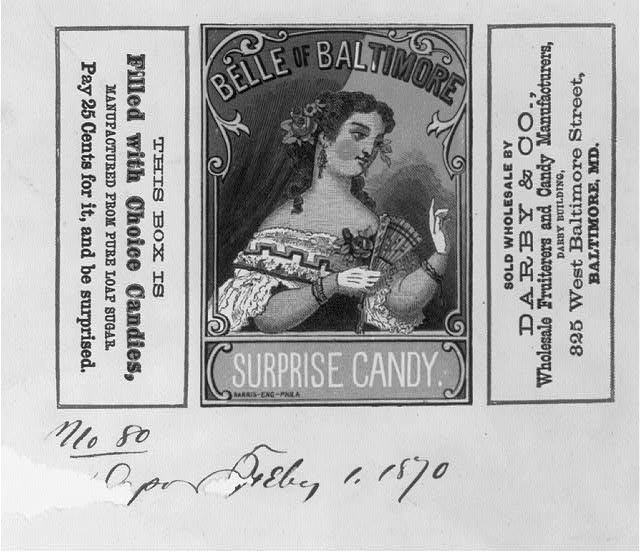
Belle of Baltimore Surprise Candy

Never sure what you're going to get in Baltimore (c.1870 LOC - LC-USZ62-65658)

From The New-York Times August 10, 1861:

LIVELY TIME IN BALTIMORE.; MR. BRECKINRIDGE NOT ALLOWED TO SPEAK.

BALTIMORE, Thursday, Aug. 8.

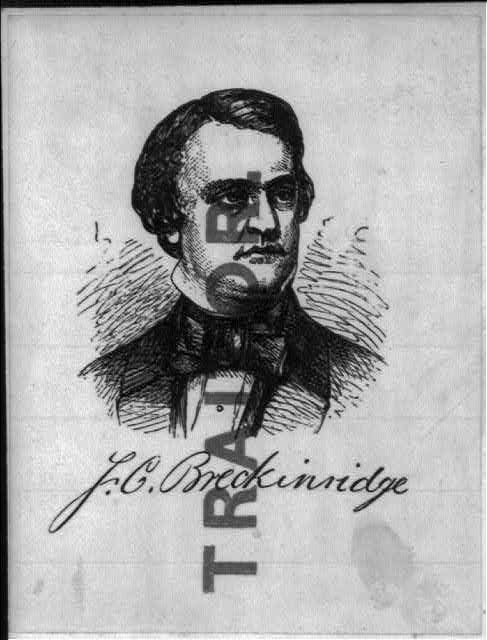
Messrs. BRECKINRIDGE and VALLANDIGHAM partook of a grand dinner at the Eutaw House last evening, given by Baltimore Secessionists. At 11 o’clock they were serenaded by the Blues’ Band. Mr. BRECKINRIDGE attempted to speak, but was constantly interrupted by cheers for CRITTENDEN, Gen. SCOTT, the Kentucky election, and for the Union. It was impossible to hear what he was endeavoring to say. There were several thousand persons present, a majority of whom were Union men. They called on the band for the “Star Spangled Banner,” “Yankee Doodle,” &c., but could get nothing from them but “Dixie” and the “Marsellaise.” All attempts to quiet the people were responded to by the cries of “Remember the 19th of April.” “Remember the week of terror.”

Eutaw House, Baltimore

Eutaw House, Baltimore

Several fights took place, and some of the Secessionists were roughly handled. Mr. BRECKINRIDGE was finally compelled to retire without speaking, and the cheers of his friends were deafened amid the groans and hisses. Mr. VALLANDIGHAM did not attempt to speak, and the crowd dispersed with cheers for the Union and groans for JEFF. DAVIS, interrupted by counter cheers and hisses.

The New-York Times also produced a fuller account of the proceedings from The Baltimore American, which you can read here. It was a rough time. Breckinridge came up with a very noble sounding idea as he was trying to get his speech started:

Illustrated Civil War "Union Envelopes": portrait of John Cabell Breckinridge labelled "Traitor

Baltimore crowd: "Oh, dry up, you traitor" (LOC - LC-USZ62-53598)

Amid frequent interruptions, the speaker proceeded to say that since the time when Constitutions had been designed as limits to despotic power, nothing so outrageous as those enacted by the Administration had over occurred. Liberty, he said, existed before the Constitution was formed, and whenever the issue is presented between that on the one hand, and a mere form of Government on the other, the form would perish, but the principles would survive. [Cheers. A number of men were again beaten and borne off.]

At this time John C. Breckinridge was still representing Kentucky in the U.S. Senate.

Clement Vallandigham was an antiwar Democrat. He represented Ohio in the U.S. House until 1863.

Posted in 150 Years Ago This Week, Northern Politics During War | Tagged , , | 2 Comments