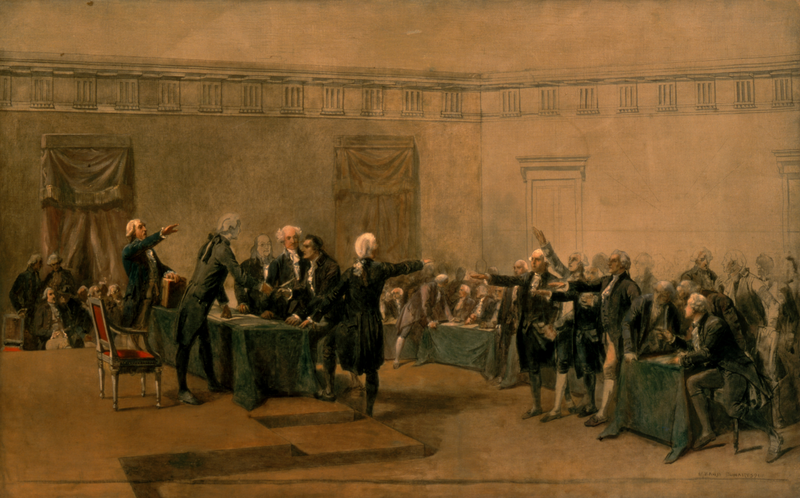
“without even one decenting Colony”

800px-Signing_of_Declaration_of_Independence_by_Armand-Dumaresq,_c1873

The Signing of the Declaration of Independence by Armand-Dumaresq c1873

235 years ago today Delaware’s Caesar Rodney wrote to his younger bother, Thomas:

Philadelphia, July the 4th, 1776
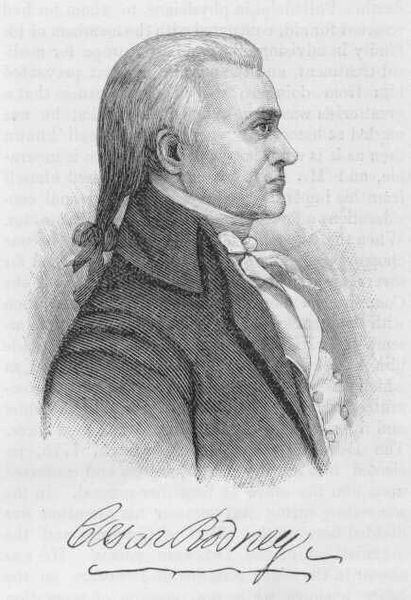
Armand-Dumaresq

Hail, Caesar! - Rodney a signer for Delaware

Sir:

I arrived in Congress (tho detained by thunder and rain) time enough to give my voice in the matter of Independence. It is determined by the Thirteen United Colonies, without even one decenting Colony. We have now got through with the whole of the declaration, and ordered it to be printed, so that you will soon have the pleasure of seeing it. Hand-bills of it will be printed, and sent to the armies, cities, county towns, etc. To be published or rather proclaimed in form. Don’t neglect to attend closely and carefully to my harvest and you’l oblige Yours, etc.

CAESAR RODNEY
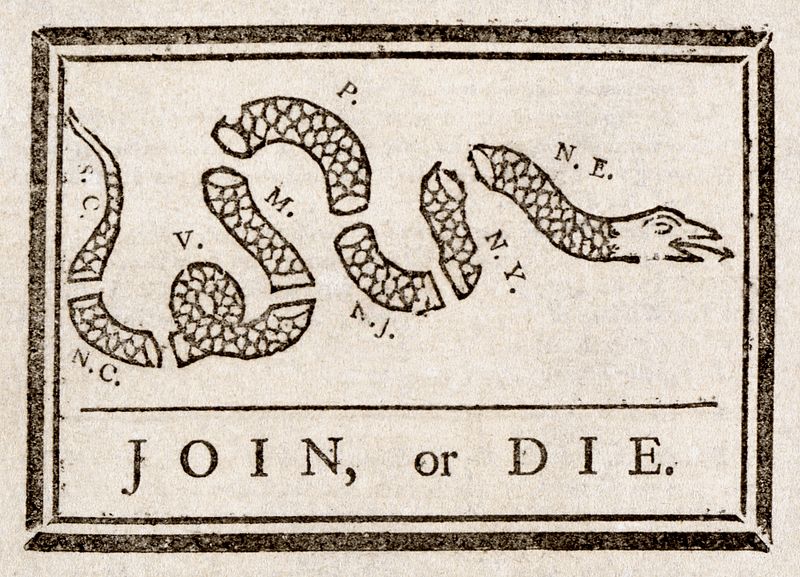

800px-Benjamin_Franklin_-_Join_or_Die

Good Advice from Ben Franklin

All the colonies apparently agreed with Ben Franklin that if they were going to secure their Independence and enjoy a greater Liberty they were going to have to unite. Thankfully, there was dissent throughout the years, but the idea of Liberty depending on the federal Union always carried the day. Of course, that all changed in late 1860 when South Carolina and other southern states opted for disunion. By 150 years ago today there were eleven states in a new Southern Union:

From the Richmond Daily Dispatch July 4, 1861:

Fourth of July.

This national anniversary will pass by under circumstances novel and strange. It cannot be celebrated in the usual style. The condition of the country does not admit of that. We have a war, in which the very people who asserted their independence on this day, eighty-five years ago, are struggling, the one for the maintenance of the principles of that independence, the other for crushing them to death. The day is still to us a day memorable for the assertion of principles we revere, and mean to defend with our lives and the last drop of our blood, while to them it should be a day of mourning for the liberties which it proclaimed, but which they have lost, probably forever, in order to force the yoke of tyranny upon the South.
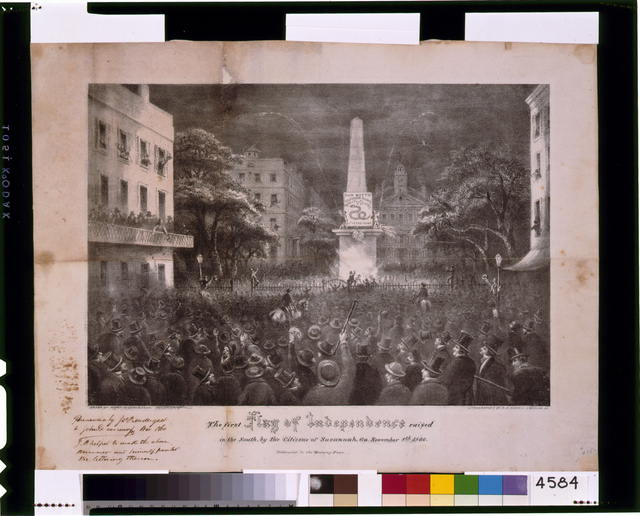
Savannah, Georgia November 8, 1861

Snake redux - Savannah, Georgia November 1860 (LOC - LC-USZC4-4584)

It is to be regretted that one of the incidents of the present struggle is the inability of our people to celebrate this day according to usage — indeed it would be inappropriate at such a time to undertake to observe it in that manner. But it is a sufficient tribute to it that we are engaged in the maintenance of the principles of human rights and liberty it announced, and that we are ready to sacrifice our lives and all we have in the effort. Could the departed sages of ’76 behold the scenes of today, they could desire no better evidence of devotion to their acts and principles than is displayed by the people of the South. Today, when the North meets in Congress to approve tyranny, to sanction usurpation, and sustain a war of oppression and desolation, we are at our guns ready to resist that war, and to triumph or perish in the struggle for the principles of the unanimous declaration of the immortal Congress of 4th July, 1776.

It was a great day for a (military) parade in Washington D.C. From Cayuga in the Field by Henry Hall and James Hall:

Fourth of July was celebrated in and around Washington joyously. The grand feature of the day was the review of the New York troops, then under the command of Gen. Sandford, who had obtained permission to receive a marching salute from the twenty-three regiments of his division and had issued orders accordingly.
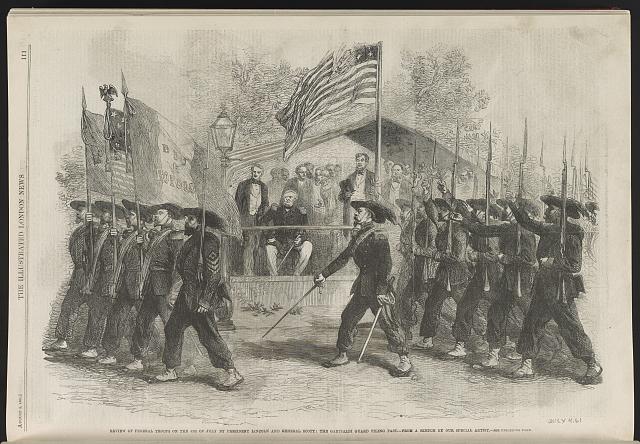
Garibaldi Guard July 4, 1861

July 4, 1861: Garibaldi Guard before "men who held the destinies of America in their hands" (LOC - LC-DIG-ppmsca-31563)

At 7 A. M., the 19th, with full canteens, fell into line, and marched to Washington. Regiments simultaneously pressed in from every direction, their rifle barrels flashing in the bright sunlight and colors proudly floating on the morning air. All gathered on the great Pennsylvania Avenue leading up to the Executive Mansion and formed into a column of great length. Other shoddy uniforms were there, besides those of the 19th, that day, and Gen. Sandford had the rare privilege of calling the attention of the men who held the destinies of America in their hands, to the manner in which the opulent commonwealth of New York clad her volunteers. Near the White House, stood a beautiful pavilion, sheltering from the overpowering heat of the sun, the President and his family, Gen. Scott, Secretaries Seward, Cameron and Smith, Gens. Dix, Mansfield, Sandford, and other high dignitaries and commanders. Past this point, the column was finally put in motion. It was an hour and a half in passing.
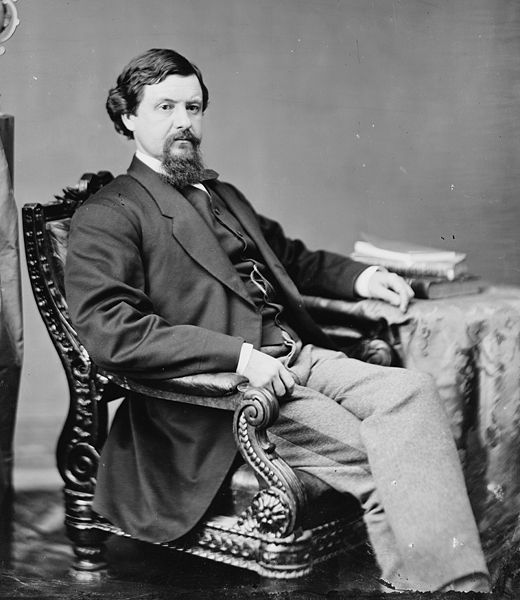
520px-Theodore_Medad_Pomeroy_-_Brady-Handy

Entertaining the Troops: Theodore M. Pomeroy (LOC - LC-DIG-cwpbh-00296)

The 19th marched, in its proper place in column, from Connecticut Avenue to 6th street, and then turned off and returned to camp, devoting the rest of the day to high festivity. In the evening, the officers of the regiment collected, by invitation, in the street of Company B, which was decorated with greens for the occasion, where they spent the evening in speech-making and feasting. Speeches were made by Col. Clark, Lieut.-Col. Seward, Capt. Kennedy, Capt. Stephens, Hon. Theo. M. Pomeroy, M. C, and others. Fireworks and bonfires illuminated the scene, and the band of Col. Ernstein’s Philadelphia regiment was present with inspiring music. Some of the men engaged in dancing, and there were games and general merriment and hilarity throughout the camp.

Notes
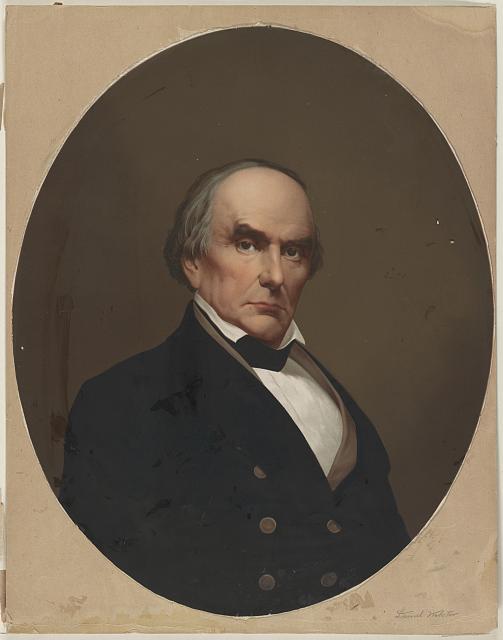
Daniel Webster

Daniel Webster: "Liberty and Union, now and forever, one and inseparable! "

1) Henry Hall remembered the Fourth in Washington as much more joyous than the Richmond editorial is making it seem for the Southern Union. It seems a much more somber tone than the scene from Savannah in November 1860.

2) I got the Caesar Rodney letter from The Spirit of Seventy-Six edited by Henry Steele Commager and Richard B.Morris, New York 1967, which they got from Edmund C. Burnett, ed., Letters of Members of the Continental Congress, Washington D.C., 1921-1936. Commager and Morris mention that New York abstained in the vote for the Declaration, but 4 of 5 members of the New York delegation signed it. By 1861 New York’s troops were in full march for the Washington dignitaries.
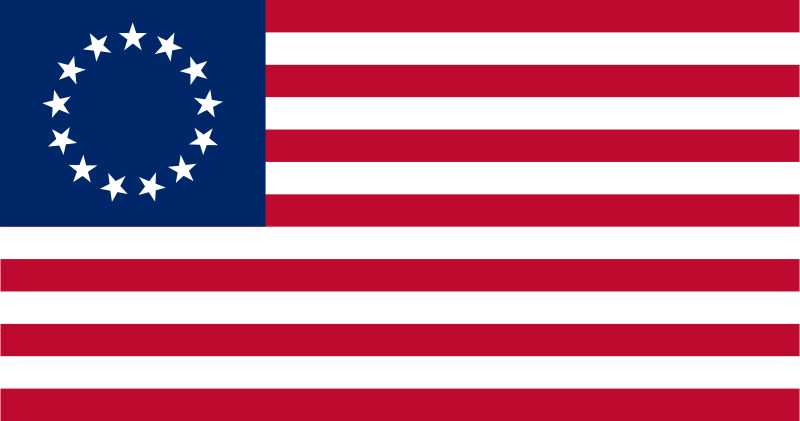
800px-US_flag_13_stars_–_Betsy_Ross.svg

Flag of the original Union

3) Thanks to Seven Score and Ten for listing the Richmond Daily Dispatch as a link and to the University of Richmond for hosting it.

4) People sure seemed to enjoy the giving and receiving of speeches in the 1800’s. Theodore Medad Pomeroy was a Republican Congressman from Cayuga County, New York.

5) To be honest, the first thing I thought of when I saw that painting of the Signing was the Third Reich.

6) Caesar Rodney made it just in time to Philadelphia (from Wikipedia link):

Meanwhile, Rodney served in the Continental Congress along with Thomas McKean and George Read from 1774 through 1776. Rodney was in Dover attending to Loyalist activity in Sussex County when he received word from Thomas McKean that he and George Read were deadlocked on the vote for independence. To break that deadlock, Rodney rode eighty miles through a thunderstorm on the night of July 1, 1776, dramatically arriving in Philadelphia “in his boots and spurs” on July 2, just as the voting was beginning. At least part of Rodney’s famous ride was probably made in a carriage. He voted with McKean and thereby allowed Delaware to join eleven other states in voting in favor of the resolution of independence. The wording of the Declaration of Independence was approved two days later, and Rodney signed the famous parchment copy on August 2. A conservative backlash in Delaware led to Rodney’s electoral defeat in Kent County for a seat in the upcoming Delaware Constitutional Convention and the new Delaware General Assembly.

7) Thomas Rodney would move South. In 1803

President Jefferson appointed him as the chief justice for the Mississippi Territory. He bought land in what was then Jefferson County, Mississippi and moved to Natchez to assume his new duties as the senior federal judge for the Mississippi Territory from 1803 to 1811.

800px-CSA_Flag_2.7.1861-28.11.1861.svg

Flag over Richmond - July 2, 1861 – November 28, 1861

Posted in 150 Years Ago This Week, After Fort Sumter, Confederate States of America | Tagged , , , , | 1 Comment

Happy Independence Day, Americans!

Posted in Uncategorized | Leave a comment

Three Months About Half Up

Wiling Away the Time at Kalorama

The regiment began to watch about this time the rapid wearing away of the three months, for which it had taken the oath of service, with no little anxiety. The men unanimously regarded the prospect of carrying their banners back to Cayuga county, unbaptized in the smoke of the battlefield, with dismay. One day, there came to camp two important rumors.

Visitors at headquarters brought the first unofficially from Washington. It was said that the State of New York had turned the regiment over to the United States Government for the whole period of its original two years’ enlistment. It impugns neither the courage nor loyalty of the Cayuga boys to say that some were disconcerted by this quite positively unexpected intelligence. They supposed as a matter of course they were going home at the end of the three months. The Government had not in any manner intimated a desire for their services longer than that time. They knew nothing of the official correspondence between the Governor and the War Department. They had not been consulted about staying beyond the term for which they had mustered in, and many had already laid out plans for fall and winter work, in anticipation of going home on the 22d of August.

The rumor of being held for two years, naturally created a lively sensation. Col. Clark was appealed to for his opinion of the matter. He replied that he had no official information on the subject His individual opinion, based on the needs of Government and the probabilities of protracted war, was that the Government would demand the full two years’ service of all three months regiments, and would be entitled to receive it. The men were inclined to be rather indignant at what they considered, if the rumor was true, the treacherous and unwarrantably arbitrary treatment of them by the authorities.

Many of them, doubtless, regarded a long service with pleasure, and all would, had it not been for the infamous shoddy uniforms. At home, the men had dressed in comfort and elegance. Now, they were clad in insufferable rags. Scarce a uniform in the regiment was without patches. And this disgrace existed in the midst of a splendidly equipped army. It mortified the pride and wounded the esprit du corps of the regiment more than words can tell. The feeling was, as a natural consequence, that the Empire State manifested a disposition to sacrifice and degrade her sons, and if it did not cease at once they should desire to quit her service.

These thoughts, entertained in a vague sort of way, vanished, however, for a while, in the excitement caused by the second rumor, above alluded to, which was that the regiment had at last been ordered to engage in active operations. There was no repining at Kalorama after that Leaving the term of service question to be settled by time, all thoughts were bent towards preparation for the march.

From Cayuga in the Field by Henry Hall and James Hall.

Posted in 150 Years Ago This Week, After Fort Sumter, Military Matters | Tagged , | Leave a comment

From Just South of the Border

200px-T_A_Davies_UA_ACW

from near the banks of the St. Lawrence - Thomas Alfred Davies

The Canadian Border, That Is

From The New-York Times June 30, 1861:


WASHINGTON, Saturday, June 29. …

EFFECTS OF PAYING THE TROOPS.

C. ULLMAN, of the New-York Eighth, was placed in jail here yesterday, having been sentenced by court-martial to thirty days’ imprisonment, for drunkenness , insubordination, and threats to desert to the enemy.
A City Military Day Patrol has been ordered here, and they are now posted around our streets to keep in check the lawlessness of the troops, who incline to mischief since they were begun to be paid off. This proves a timely and judicious arrangement.

ARRIVALS OF TROOPS.

Eight regiments from the North, including three from New-Jersey and three from New-York State, have arrived in this city within the past twenty-four hours.
The Garibaldi Guard are quietly encamped where they have been some weeks, just north of the city. They have not been ordered across Into Virginia yet, as was reported yesterday. They are
very anxious to move forward, however, and declare that they came here for business.
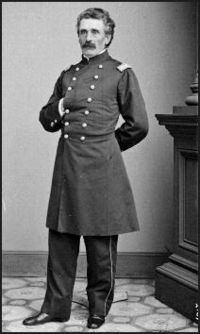
The Sixteenth New-York Regiment, sharpshooters, from St. Lawrence County, eight hundred and thirty men, arrived to-day, in command of Col. J. A. DAVIES, a graduate of West Point. They attracted attention by their fine appearance and style of marching.

LEO

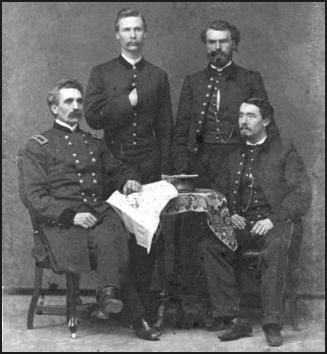
T_A_Davies_Staff_UA_ACW

Davies with staff 1862 or later

I’m pretty sure LEO means to say Thomas Alfred Davies was commanding the 16th New York Infantry. According to Wikipedia Davies graduated 25th at West Point in the class of 1829. “Future high-ranking Confederates in the class of 1829 were Robert E. Lee, Joseph E. Johnston, and Theophilus H. Holmes.” Davies commanded a brigade at First Bull Run. he stayed in the Union army throughout the war, gradually moving west.

You can read about the history of the New York 39th Infantry, also known as The Garibaldi Guard at its site and also at the New York State Military Museum.

Posted in 150 Years Ago This Week, After Fort Sumter, Military Matters | Tagged , , | Leave a comment

On the Prowl

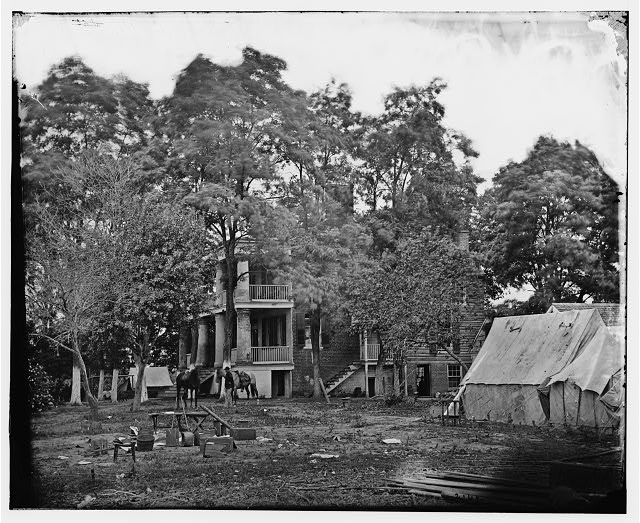
Fairfax Court House, Va. House used as a headquarters by Gen. G. B. McClellan and Gen. P. G. T. Beauregard

Fairfax Court House, Va. House used as a headquarters by Beauregard/McClellan (1863 LOC - LC-DIG-cwpb-03879)

From The New-York Times June 30, 1861:

WASHINGTON, Saturday, June 29.

THE REBEL FORCES.
Gen. BEAUREGARD’ S forces have been heard from again at Cloud’s Mills, at Springfield, and this side of Fairfax. His advance guard prowl about in squads of fifty to a hundred, who keep our pickets on the alert. It is reported to-day that there are four thousand rebels at Fairfax Court-house, but the general belief is that this number is twice as many as are there. They continue to fell trees for the purpose of blockading the road, and fortifications are still going up on their line at various points.
Lieut . H. H. DUTTON, of Mississippi, has resigned his commission in the navy, and his name has been stricken from the list. …

LEO

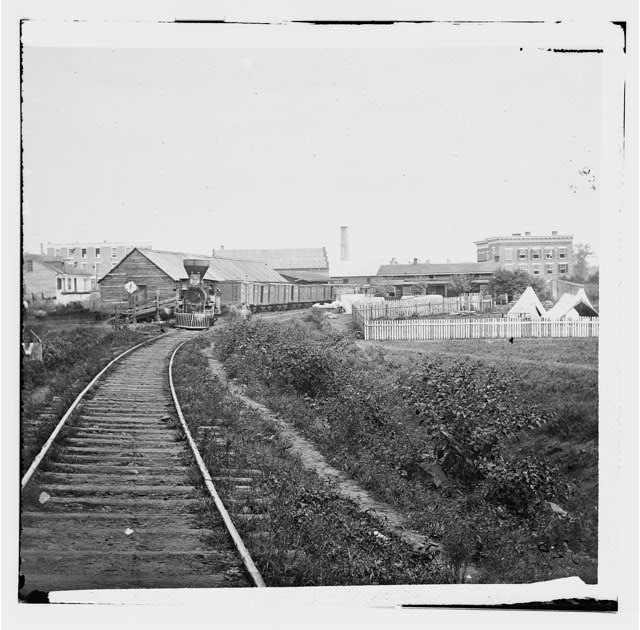
Springfileld “… was founded as a station of the Orange and Alexandria Railroad in 1847.” Kinda reminds me of the towns that sprung up because of the Erie Canal in my neck of the woods.

Orange and Alexandria Railroad through Culpeper Court House (1862 LOC - LC-DIG-cwpb-01078)

Orange and Alexandria Railroad through Culpeper Court House (1862 LOC - LC-DIG-cwpb-01078)

Orange and Alexandria Railroad “was strategically important during the Civil War (1861–65) and was arguably the most fought over railroad in Virginia.”

Barricades_on_duke_street Alexandria 1861

"Barricades on Duke Street, Erected to Protect the Orange and Alexandria Railroad from Confederate Cavalry - Alexandria, VA, 1861"

Posted in 150 Years Ago This Week, After Fort Sumter, Military Matters | Tagged , , | Leave a comment

Cat Stevens Could Relate

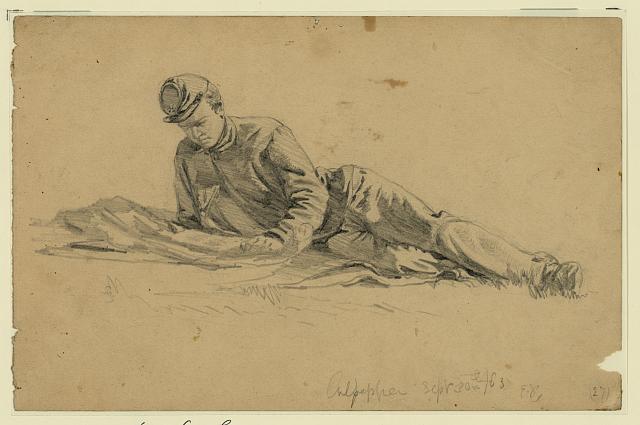
Soldier reading 1863 (by Edwin Forbes - LOC - LC-DIG-ppmsca-20648)

1863 near Culpepper Courthouse (by Edwin Forbes - LOC - LC-DIG-ppmsca-20648)

A hot day in June. What a great time to get out of your tent and walk to the shade and relative coolness of a peaceful woods in the District of Columbia (?) and write a long letter home.

From The Courier, Seneca County, New York newspaper June 27, 1861:

LETTERS FROM VOLUNTEERS
FROM THE 19th REGIMENT.
CAMP CAYUGA, CALARAMA HEIGHTS,
NEAR WASHINGTON, JUNE 24, 1861

FRIEND FULLER:- The weather being excessively warm, I have just left my tent, and sought shade-trees of the woods, under whose branches I can count some thirty or forty seated upon the ground to write, like myself, with books, boards, sticks of wood, and almost everything else with a flat side to it, for a table. This has been my first “living in the woods,” and I think it a decidedly healthy as well as romantic life – for here we breathe nature’s atmosphere pure from the verdant forests around us, and drink the cool, wholesome water just as it runs from the surrounding banks. In fact, we possess the best camping-ground in the District, and the novelty of it, compared with “city-life,” makes it worthy of putting up with its disadvantages and hardships. Six from each company are allowed a “pass” each day to go to Washington, but there is little disposition to exhibit our very nice (?) clothes, for fear of captivating some of the city belles, and there is also great danger of our being captured as escaped convicts, or being laughed at for wearing “the old man’s breeches.” If the Government ever sends us home in this plight, we hope, like strangers, to be “taken in” but not in the style that the clothes and the contractors have done.

We are daily visited by public benefactors, in the shape of negroes and poor white men, (Jeff D. thinks the former the most consequence, but will change his mind ere long,) who sell us lemonade at 5 cents a glass, sour and musty pies at 20 cents a piece, bellona sausages for 25 cents, crackers one cent a piece and other luxuries in proportion. The little negro boys and girls pay us visits daily, going through lots of funny performances, such as singing “Dixie’s Land,” and other songs, dancing, running races, jumping, turning somersets (the boys I mean) and various other ludicrous manoevers.

The 26th Philadelphia Regiment is encamped close by us. It has a splendid brass band, which serenaded us night before last, winding up with the “Star Spangled Banner” and “Yankee Doodle.” As our Regiment does not possess a brass band, it was duly appreciated and cheered. We had a visit from President Lincoln last Sunday, and the boys, one after another, walked up and shook hands with him, keeping both of Honest Abe’s hands in good exercise for some time. Some of the “shortys” of our Regiment looked of little consequence before him, but he paid just as much attention to them as to the tallest. He looks healthy, rugged, and, notwithstanding the pressure of circumstances, in good spirits.

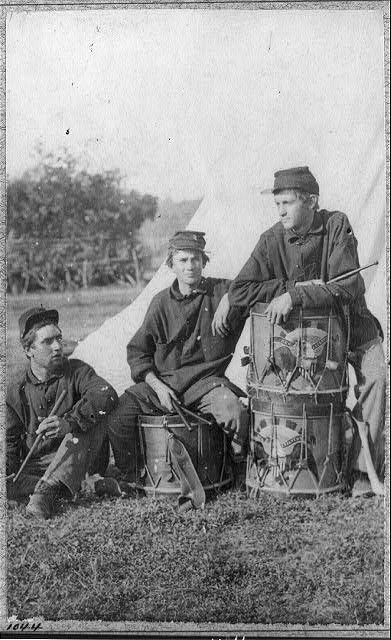
2nd Rhode Island Infantry and drums

To beat the band - 2nd Rhode Island drummers (LOC - LC-USZ62-99871)

There has some unusual excitement prevailed in camp caused by a rumor that Gen. Beauregard’s forces were on their march toward Washington, and were going to attack us night before last. It was not generally believed that he would be so foolish to attempt it, but the troops did not know what the rebels, maddened by defeat and despondency might do to revive their spirits. Accordingly, those on the Virginia side slept on their arms, and a good many of our boys slept with “one eye open.” It is not believed that Gen. Beauregard’s forces between here and Culpepper Court House amounts to more than 20,000, and these poorly armed and disciplined, while there are nearly double that number well armed within two hours’ call of Gen. Scott.

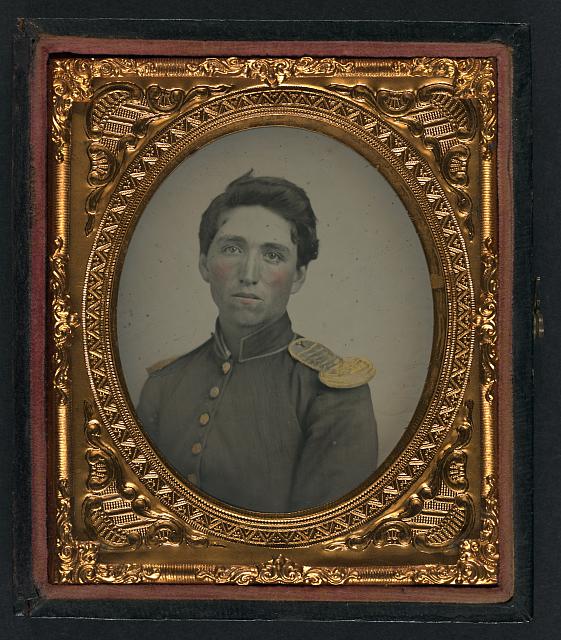
Private John Ryan, 2nd Rhode Island Infantry Regiment

Private John Ryan, 2nd Rhode Island Infantry Regiment (LOC - LC-DIG-ppmsca-30605)

The average number of passenger cars arriving daily is about 200.- The Second RI Regiment arrived last night occupied fifty cars.

The disunionists under Beauregard, encamped about Germantown and Fairfax Courthouse, it is reliably stated, number quite ten thousand strong. Provisions for the past three days have been very scarce among them, and his soldiers are swearing terribly about their poor usage, and because Gen. McDowell does not attack them, and Beauregard won’t attack him. The Thirty-first Regiment (Col. Pratt,) and the Thirty-seventh (Col. McGunn) arrived here last night. The Eighteenth N.Y. Regiment went into camp on Friday night, in the direction of Arlington. The Twelfth N.Y. Regiment was sent over to the Virginia side the same night, for the purpose of guarding the immediate approaches of the Long Bridge. They returned to their quarters yesterday morning.

There are but 150 cases of sickness at Georgetown military hospital, which is very few considering the great amount of troops stationed in the vicinity. None are seriously ill in Capt. Ashcroft’s Company, though a few are troubled with diarrhoea and slight colds. Our boys stand it as well as any in the regiment. Some complaint is made in other Companies, and not without good cause, of the incompetency of officers. We hear of nothing of the kind in our Company, for we have undoubtedly the most efficient commissioned officers in the Regiment. We are getting tired of inactivity, and want to see an engagement to ascertain what we are made of. If we do not have some action before the three months expire, there will few of see any, as not a very many of our Regiment will be apt to take the oath for three years – not that they are not as patriotic and brave as ever, but they think that three years is rather too long, considering the impositions already practiced upon them by unscrupulous speculators. If some of us could get hold of some of these rascals, they would stand as poor a chance as Jeff Davis or Beauregard.

Yours truly,

O W Langford

According to the Muster Roll in Cayuga in the Field an Oscar Langford did serve as a private in Captain Ashcroft’s Company C in the 19th NY Volunteer Infantry.

I know I’m doing what Arkansas Senator Robert Ward Johnson warned about by singing psalms to dead horses, but the shabby gray uniforms of the 19th and other New York regiments keeps coming up again and again. I thought of the Cat Stevens song when I first read this letter. Mr. Langford is using sarcasm, but I can see how these soldiers far from home would want to use their pass to go to Washington and meet some women – but they’re kind of embarrassed to parade their uniforms that are falling off in front of the belles of D.C. (how many movies have I seen where troops in their shiny uniforms hit the town for some fun?) It is interesting that it seems that Langford is using the shoddy treatment as a possible excuse for not serving beyond the three-month commitment.

The 2nd Rhode Island Infantry

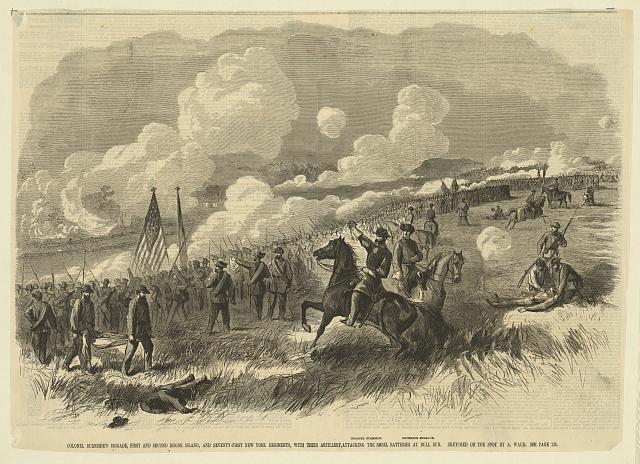
… was Rhode Island’s fighting regiment. It fired the opening volley at First Bull Run, and was in line at the final scenes of Appomattox. It arrived at Washington, June 22, 1861, and after a few weeks encampment there, marched to the field of First Bull Run. It was then in Burnside’s Brigade, of Hunter’s Division. Burnside opened that fight with the First Rhode Island deployed as skirmishers, and the Second advancing in line of battle. Its casualties in that engagement aggregated 98 in killed, wounded and missing; among the killed were Colonel Slocum, Major Sullivan Ballou, and two captains.

Pennsylvania Volunteers of the Civil War lists the many engagements in which the 26th Infantry Regiment participated. Of the 222 deaths in the regiment almost exactly two-thirds were from combat, one-third from disease. I found out that the 26th PA had a Medal of Honor recipient – George W. Roosevelt, who was cited for his courage at 2nd Bull Run and Gettysburg. You can see a photo and read more about him at Home of Heroes. It is said he was a cousin of the Roosevelt presidents.

2nd Rhode Island in Burnside's Brigade 1st Bull Run

Into the fire - 2nd Rhode Island in Burnside's Brigade 1st Bull Run (LOC - LC-DIG-ppmsca-22443)

Posted in 150 Years Ago This Week, After Fort Sumter, Military Matters | Tagged , , , , | 1 Comment

Put Money Where Mouth Was

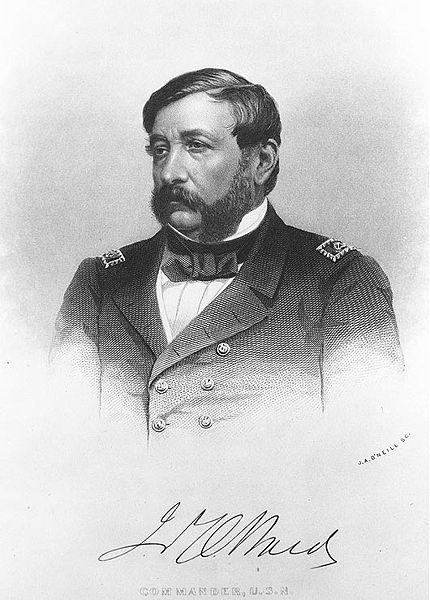
430px-James_Harman_Ward

Captain James H. Ward, United States Navy

Civil War Daily Gazette has the story of the failed Union effort to take Mathias Point, Virginia on this date 150 years ago. During the engagement James Harmon Ward was mortally wounded, becoming “the first officer of the United States Navy killed during the American Civil War.”

Ward began his naval career as a midshipman in 1823. Throughout his career he served in a variety of jobs – including as a teacher at the Naval Academy. When southern states seceded, Ward wanted to take it to the rebels. According to Wikipedia:

Ward pressed for front line service, proposing that a “flying squadron” be established in the Chesapeake Bay for use against Confederate naval and land forces threatening that area south of the Union capital. The idea was acceptable, and the squadron took shape. With the steamer Thomas Freeborn serving as Ward’s flagship, the steamers Freelance, Alliance plus three coastal survey ships made up his flotilla.

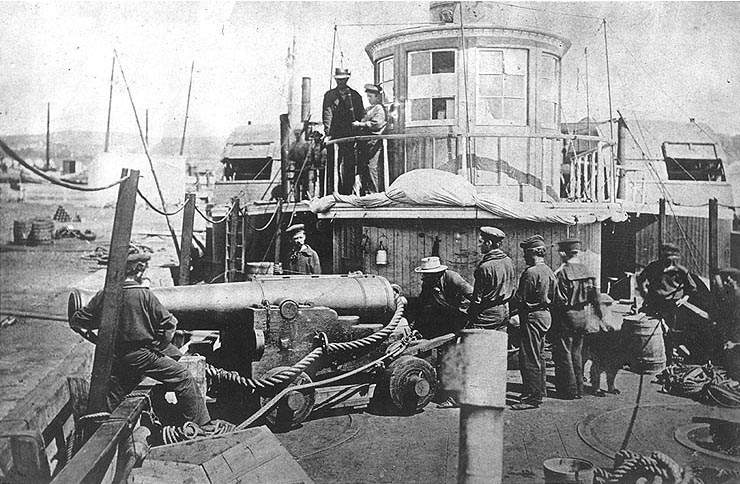
The USS Thomas Freeborn “was a steam tug acquired by the Union Navy during the American Civil War.” The photo below is said to be

The steam tug USS Thomas Freeborn in 1861. The photo shows some of the ship’s officers and men demonstrating how her late commanding officer, Commander James H. Ward, was sighting her bow gun when he was mortally wounded on 27 June 1861, during an action with Confederate forces at Mathias Point, Virginia.

The gun is a 32 pounder smoothbore, of 60 hundredweight, on a “Novelty Carriage”. This mounting was developed by Commander Ward before the Civil War.
Location appears to be the Washington Navy Yard, D.C.

SS_Thomas_Freeborn,_1861

re-enacting Ward's courage aboard the Thomas Freeborn 1861

Posted in 150 Years Ago This Week, After Fort Sumter, Military Matters | Tagged , , , | Leave a comment

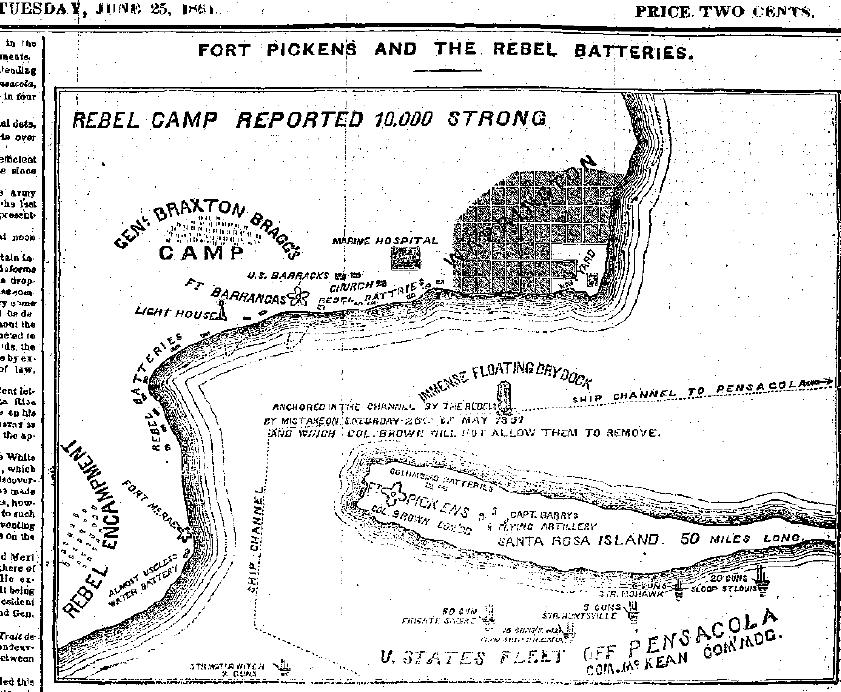
Immense Floating Dry Dock

Pensacola

The New-York Times June 25, 1861

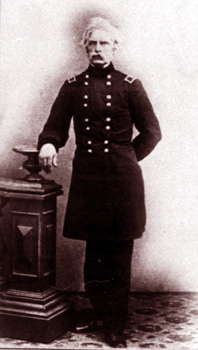
On June 25, 1861 The New-York Times published a map of the Pensacola area, where federal occupied Fort Pickens on Santa Rosa Island opposed the Confederate forces under Braxton Bragg. By this time Harvey Brown commanded the Union force at Fort Pickens and, as you might be able to see from the map, William McKean was commanding the blockading squadron.

Harvey_Brown

Harvey Brown: Beware the Dry Dock

One thing that caught my eye in the map was the “Immense Floating Dry Dock”. Here’s the story according to a document about Barancas National Cemetery at the Veterans Administration site:

A number of actions took place in and around Pensacola Bay before the Confederates evacuated the area. While Confederates were moving a large floating drydock from the Navy Yard to Pensacola in May 1861, the towline broke and the dock drifted close to Fort Pickens near Batteries Lincoln and Cameron. Colonel Brown, commanding officer of Fort Pickens, sus­pected the dry dock would be used as a floating battery. He prepared to fire upon it. However, before Brown could take any action, the Confederates scuttled the dry dock. Because of Confederate endeavors to refloat the dry dock during the summer, the Federals sent a small detach­ment from Fort Pickens during the evening of September 2 and destroyed by fire all that remained of the dry dock above the waterline.

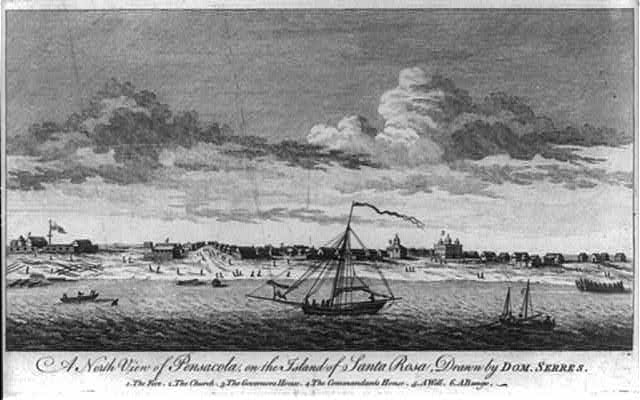
Pensacola 1768

Pensacola 1768 (LOC - LC-USZ62-46099)

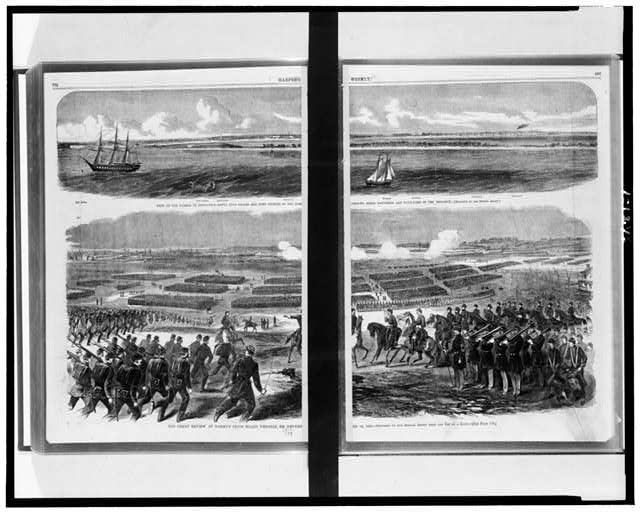
Pensacola in Harper's December 7, 1861 (LOC - LC-USZ62-101246)

Pensacola in Harper's December 7, 1861 (LOC - LC-USZ62-101246)

I thought about four score years after the Harper’s issue

Posted in 150 Years Ago This Week, After Fort Sumter, Military Matters | Tagged , , , | Leave a comment

Reviewed at Boston Common

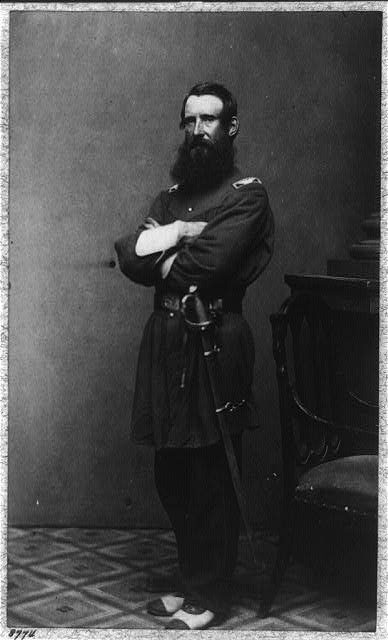
Colonel Thomas Cass

Colonel Thomas Cass (LOC - LC-USZ62-90484)

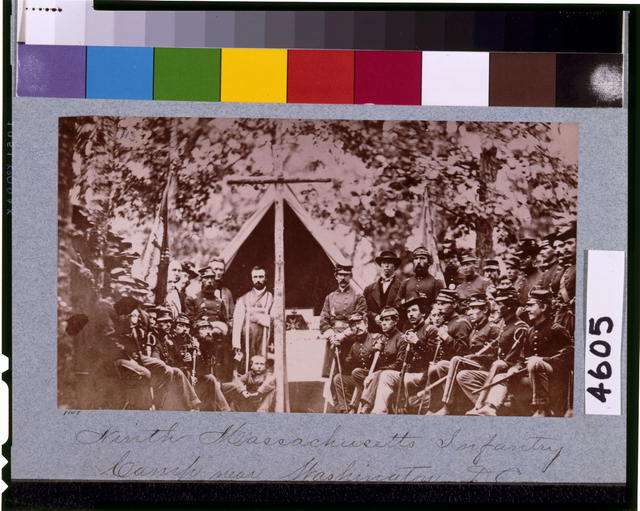
On June 24, 1861 The New-York Times reported about 9th Regiment Massachusetts Volunteer Infantry, which, it was reported, was composed chiefly of Irishmen. It’s commander was Colonel Thomas Cass. The regiment trained on Long Island in Boston Harbor. After a collation provided by the city of Boston, the regiment was going to be reviewed on the Common. The Times reported that the regiment was going to depart for Fortress Monroe. At some point it ended up at Camp Cass around Arlington.

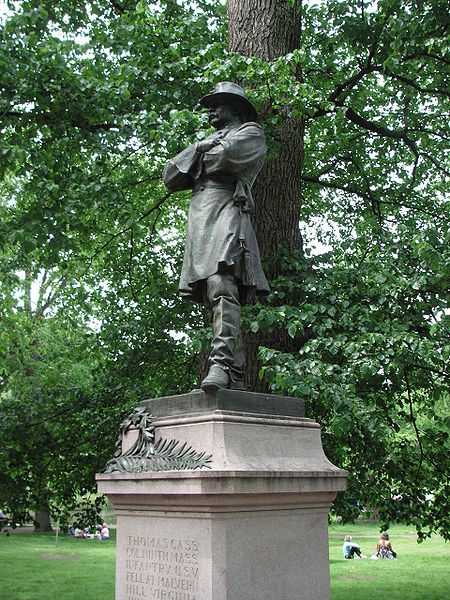
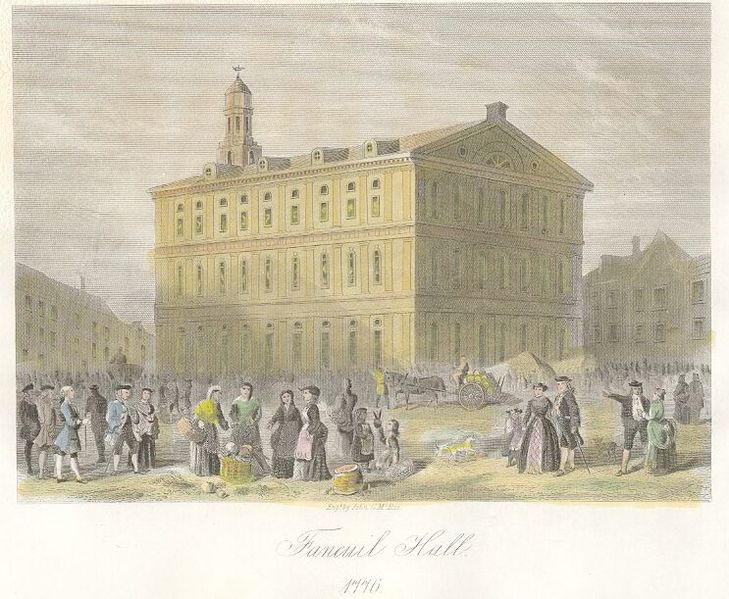
According the Wikipedia link the Ninth originally bivouacked at Boston’s Faneuil Hall. Colonel, who was born in Ireland, died from wounds received at Malvern Hill in July 1862.

_________________________________

Ninth Massachusetts before mass at Camp Cass 1861

Ninth Massachusetts before mass at Camp Cass (1861 LOC - LC-USZC4-4605)

450px-Statue_of_Colonel_Thomas_Cass,_Commander_of_the_Ninth_Regiment_Massachusetts_Volunteers

Colonel Cass statue - Boston Public Garden

That drummer boy/altar boy looks so young.

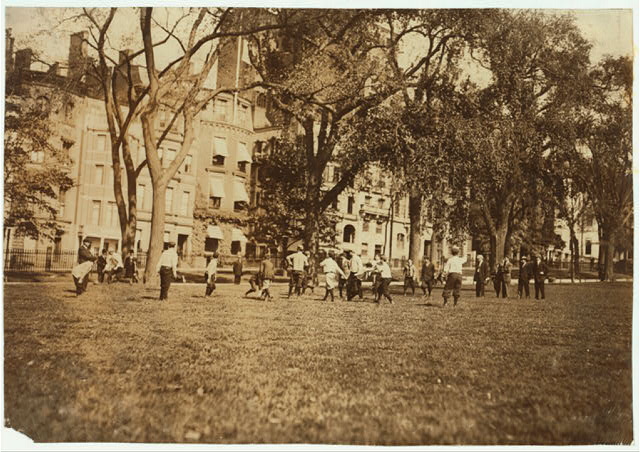
1909 - football on Boston Common

1909 - football on Boston Common (LOC - LC-DIG-nclc-04559)

729px-Faneuilhall104

Ninth's first quarters - Faneuil Hall in 1776

Posted in 150 Years Ago This Week, After Fort Sumter, Military Matters | Tagged , | Leave a comment

Fall River Line Transports Troops

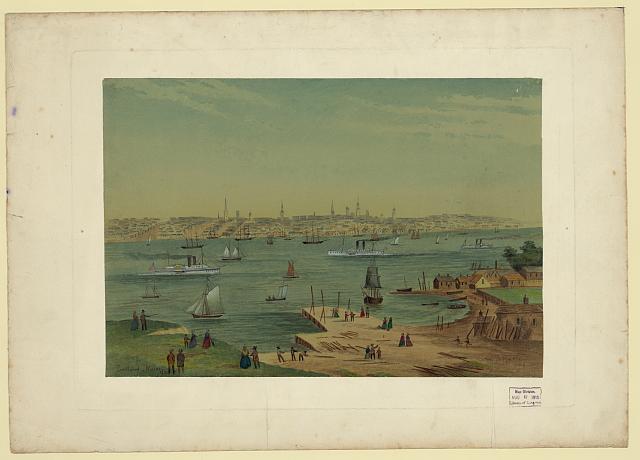
Portland, Maine 1854 (W.S. Hatton)

Yankee Source - Portland, Maine 1854 (W.S. Hatton) (LOC - LC-DIG-ppmsca-23065)

From The New-York Times June 23, 1861:

BOSTON ITEMS.

BOSTON, Saturday, June 22.

The Fifth Regiment of Maine will leave Portland for New-York on Wednesday next, via the Fall River Line from Boston. Extra trains and boats, as with all regiments going by this Line, will be provided, obviating any interference with passengers on the regular boat of that day.

iew_of_Bay,_Fall_River,_MA

Catching the boat for New York - Fall River, Mass - 1905

The frigate Santee, Commander EAGLE, sailed from Portsmouth yesterday. She carries 50 guns, with officers and crew numbering 500.

The Vincennes, at the Charlestown Navy-yard, will be commissioned Monday and probably sail Tuesday.

The Preble is ready to sail.

You can read the history of the 5th Maine at its museum site. It sure was a three year regiment with 22 battles from First Bull Run through Petersburg. The regiment’s colonel was Clark S. Edwards.

The Fall River Line operated between 1847 and 1937. A passenger took the train from Boston to Fall River and then hopped a boat for Manhattan.

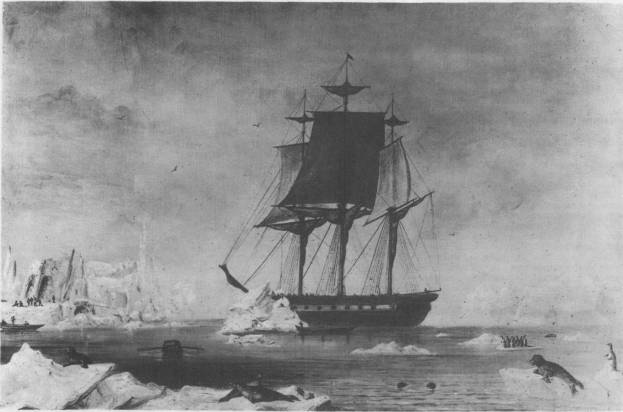
The USS Vincennes had a long career, including stints to Antarctica and Japan. It was the first U.S. warship to circumnavigate the world. It spent the Civil Ware in the Gulf of Mexico. You can get more info and photos at Naval History & Heritage Command.

The USS Santee also participated in the federal blockade.

Vincennes

Vincennes off Antarctica 1840

Posted in 150 Years Ago This Week, After Fort Sumter, Military Matters | Tagged , , , , , | Leave a comment