With Bonham’s Brigade

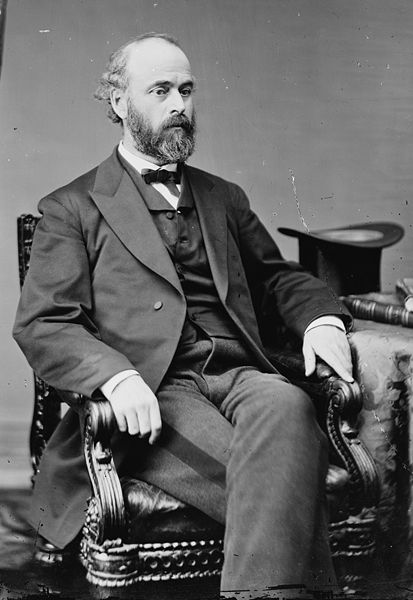
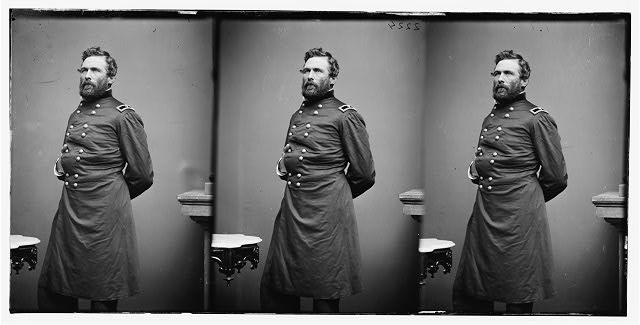
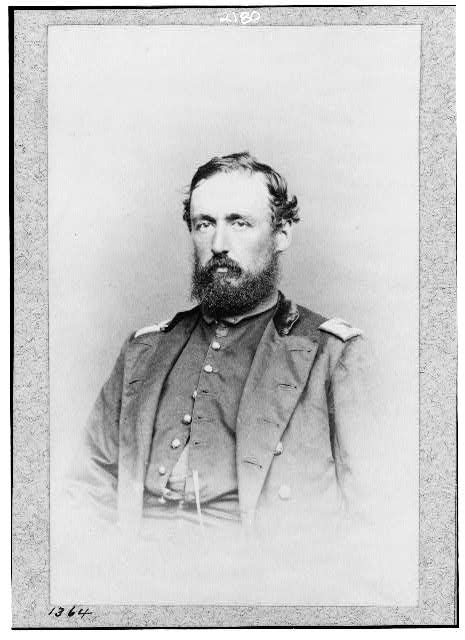
Milledge Luke Bonham

Milledge Luke Bonham: U.S. Congressman to Confedrate General (LOC - LC-DIG-ppmsca-26694)

Rebel = Traitor = Death by Hanging

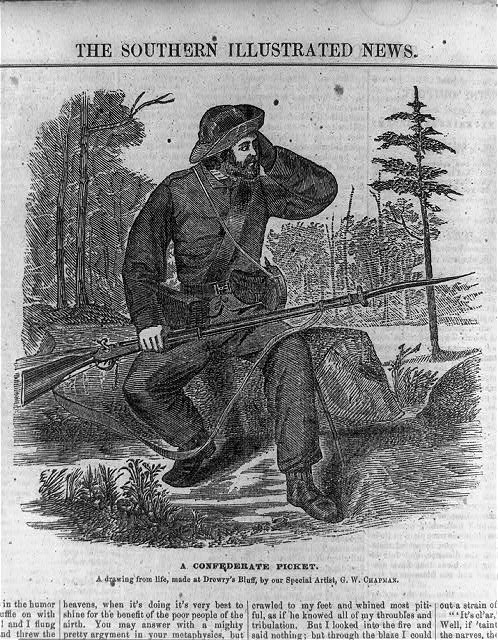
I first became aware of D. Augustus Rickert and his book in A Rising Thunder by Joseph Wheeler. Rickert describes his work as a 16 year old volunteer with blistered and bloodied hands as he helped build embrasures for the South Carolina forts opposed to Fort Sumter in Charleston harbor. After traveling north by train with his unit (to the enthusiastic show of support by Confederate citizens along the way) Dickert and company joined up with Bonham’s brigade (under P.G.T. Beauregard’s overall command). By June1861 they were somewhere between Fairfax courthouse and Bull Run. Rickert was still 16 at the time. Here he describes his first picket duty.

From History of Kershaw’s Brigade by
D. Augustus Dickert:

The duties of picketing were the first features of our army life that
looked really like war. The soldiers had become accustomed to guard
duty, but to be placed out on picket or vidette posts alone, or in
company with a comrade, to stand all day and during the dead hours of
the night, expecting some lurking foe every moment to shoot you in
the back, or from behind some bush to shoot your head off, was quite
another matter. As a guard, we watched over our friends; as a picket,
we watched for our foe. For a long time, being no nearer the enemy
than the hearing of their drums, the soldiers had grown somewhat
careless. But there was an uncanny feeling in standing alone in the
still hours of the night, in a strange country, watching, waiting
for an enemy to crawl up and shoot you unawares. … Up to this
time there had been no prisoners captured on either side, and it was
uncertain as to what would be the fate of any who would fall in the
enemy’s hands. As we were considered traitors and rebels, the penalty
for that crime was, as we all knew, death. The Northern press had kept
up quite a howl, picturing the long rows of traitors that would be
hung side by side as soon as they had captured the Confederate Army.
That there was a good deal of “squeamishness” felt at the idea of
being captured, cannot be doubted. So videttes were stationed several
hundred yards down the road with a picket post of four men, between
the outside sentinels and the company, as reserve.

From what I understand hanging might have been preferable to life (and quite possibly death) in a Civil War prison camp.

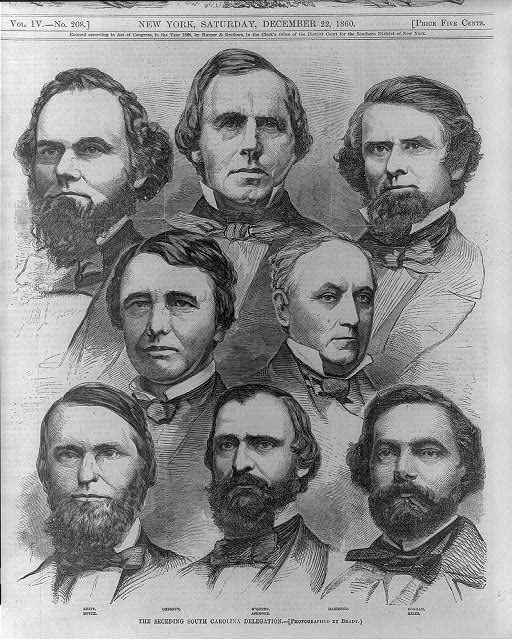
Milledge Luke Bonham fought in the Mexican-American war. He served in the U.S. House of Representatives from 1857 until December 21, 1860 – the day after South Carolina seceded. He gave up being a general in 1862 so he could serve in the Confederate Congress.

Confederate Picket 1862

Confederate Picket 1862 (LOC - LC-USZ62-9095)

SC Congressional delegation December 1860

We're out of here! SC Congressmen December 1860 (LOC - LC-USZ62-45722)

Posted in 150 Years Ago This Week, After Fort Sumter, First Manassas - Bull Run, Military Matters | Tagged , | Leave a comment

Ferry Takes Command

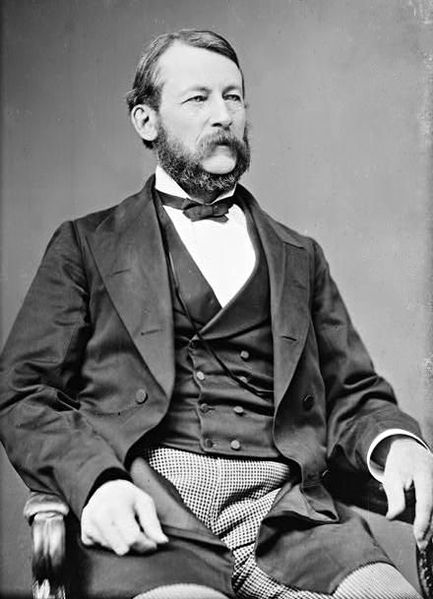
Orris_S._Ferry

Orris S. Ferry: It's all Calhoun's fault

From The New-York Times June 21, 1861:

COL. COLT’S REGIMENT.

HARTFORD, Thursday, June 20.

Col. COLT’s Regiment, which was intended for the regular United States service, has to-day been reorganized and enlisted for the war. The State will at once fill up and equip the regiment ready for active service. Hon. O.S. FERRY has accepted the Colonelship of the regiment, which is the fifth volunteer regiment from Connecticut.

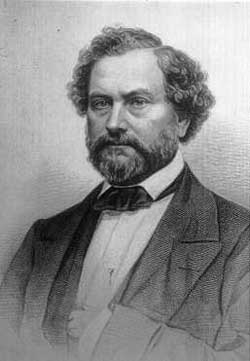
SamuelColt

Samuel Colt - didn't work out

Samuel Colt originally intended to command a Connecticut regiment armed with Colt Revolving Rifles. He was discharged on June 20, 1861 and died in 1862.

After graduating from Yale, Orris Sanford Ferry worked a lawyer and was elected to the U.S. House in 1859 as a Republican. He served on the Committee of Thirty-Three that unsuccessfully tried to patch over the North-South differences after the election of Lincoln. You can read a speech he gave in the House on January 24, 1861 at Internet Archive. I glanced through it this morning. It seems like it’s a good example of the Republican position. He seems to pinpoint John C. Calhoun as the source of the 1861 secession crisis:

Disunion, in its present shape, is of thirty years’ growth, although, until the 6th of November last, it expanded in the dark. It may be traced to the workings of a single mind, disappointed of a cherished ambition — when John C. Calhoun lost the.hope of being the successor of Andrew Jackson.

The first part of his speech is devoted to rebutting the Southern complaints. here’s an example:

But we are told that the number of the free States is increasing more rapidly than that of the slave States; that, in process of time, the former will compose three-fourths of all the
members of the Union, and will then so amend the Constitution as to secure the abolition of slavery. What if liberty is outstripping slavery in the march of empire? Will you fetter the indomitable energies of freedom, till it shall limp and halt along at the slow pace of bondage ?

Ferry would end up brevetted as a Major General for Civil war service.

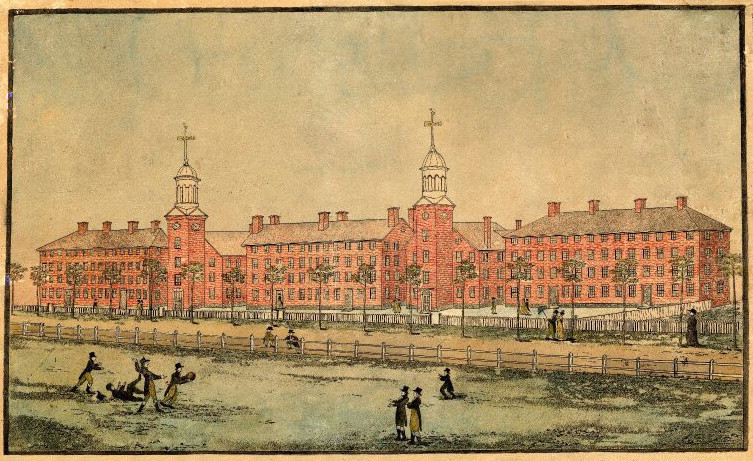
And speaking of Yale – from the same issue of The Times:

YALE COLLEGE.;…

Correspondence of the New-York Times.

YALE COLLEGE, Wednesday, June 19, 1861. …

The “war feeling” to some extent has taken possession of the minds of the students of Yale. Several have enlisted, and probably many of the Senior Class will immediately offer their services to the Government. Three students have joined the First Connecticut Regiment, and a few belong to Col. DURYER’S Zouaves. One, who was recently a member of the Sophomore Class, holds an important position in FLETCHER WEBSTER’S Regiment. Among the students there are four companies organized for the purpose of perfecting themselves in drill, so that they may be prepared for any emergency. The Faculty have formed themselves into a Home Guard, and drill every afternoon. …

413px-Orris_S._Ferry_-_Brady-Handy

Ferry: South can't stop "indomitable energies of freedom" (LOC - LC-BH83- 156 )

A_View_of_the_Buildings_of_Yale_College_at_New_Haven_1807

Yale College 1807 (A. Doolittle & Son, College Street, New Haven, Connecticut)

Posted in 150 Years Ago This Week, After Fort Sumter, Military Matters | Tagged , , , , | Leave a comment

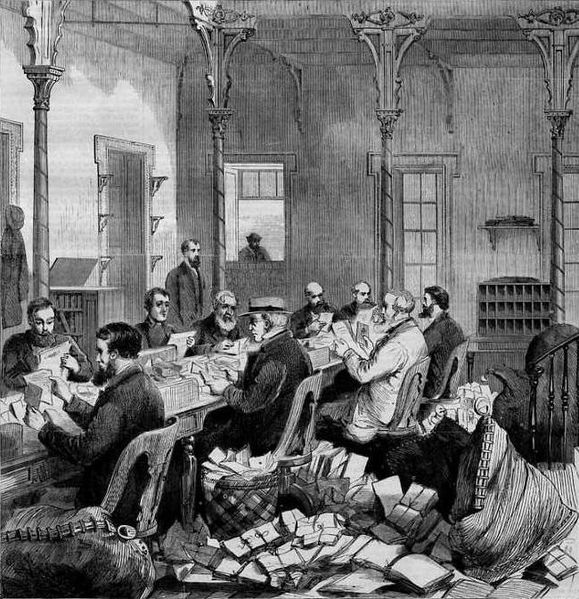
Things Are Hopping at the Dead-Letter Office

Reiterating Mail Suspension To and From Rebel States

John A. Kasson

Suspending the mail where it can't "be safely continued": John A. Kasson (LOC - LC-DIG-cwpbh-04066)

From The New-York Times June 20, 1861:

THE SUSPENDED MAIL SERVICE.; EXPLANATORY CIRCULAR FROM THE POST-OFFICE DEPARTMENT.

The following official document from the Post-office Department explains the orders for the suspension of mail service in the rebellious States:

APPOINTMENT OFFICE, June 14, 1861.

SIR: Numerous inquiries are made at this Department respecting the late orders of the Postmaster-General. It was not doubted that the wide publicity given to those orders through the public Press would furnish ample notice to all Postmasters. For further certainty they are again published, as follows:

1. The Postmaster-General issued his order of the 27th of May, under act of Congress approved Feb. 28, 1861, suspending the entire mail service, post routes and post-offices in the States where “the postal service could not be safely continued,” namely: the States of North and South Carolina, Florida, Georgia, Alabama, Mississippi, Louisiana, Texas, Arkansas and in Virginia, except the western portion thereof, in which the mails were still transported safely.

2. This order rendered it necessary to transmit to the Dead-Letter Office all mail matter directed to any post office thus discontinued; and such order was accordingly issued, that valuable letters might be returned to their writers.

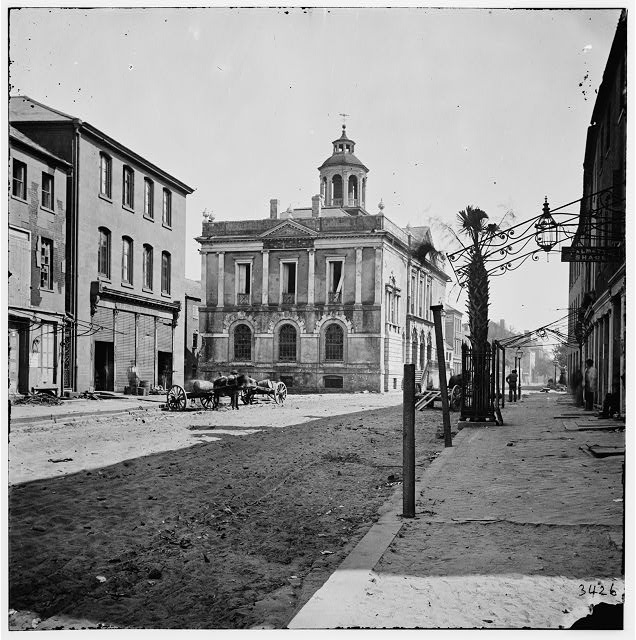
Charleston, S.C. Post Office 1865

Den of embezzlers? Charleston Post Office 1865 (LOC - LC-DIG-cwpb-03006)

3. The use of United States stamps and stamped envelopes by the discontinued postmasters, is nothing less than embezzlement, and cannot be recognized by any postmaster as payment for United States postage. All postmasters are, therefore, immediately upon the receipt of any letter mailed from the abovementioned States, coming through or to their Post-offices, and whether appearing to be prepaid or not, to hold it for postage and transmit it directly to the Dead-Letter-Office to be disposed of according to law, but if letters actually arrive at the office of delivery, they may be delivered upon payment of postage as upon letters wholly unpaid.

4. The same order will be applied, without further notice, to all letters mailed (prepaid or not) at any discontinued post office, whether hereafter discontinued by special order or by general discontinuance of service in the district or State.

5. No letter or package can be forwarded to its address through the United States mails, except from foreign countries with which this Government has postal treaties, unless regularly mailed at one of the established post-offices of the United States, and postage there regularly prepaid. All matter not thus mailed must be forwarded, without delay, to the Dead-Letter Office at Washington.

6. No mail-pouch, sack, or lock can be sent by any Postmaster to any point or place where such service has been discontinued. All pouches, sacks and locks coming to a Post office from such discontinued offices and routes will be retained and sent to the proper depositing offices.

The postal service will be restored on such discontinued routes as early as practicable, of which notice will be duly given.

By order of the Postmaster-General,

JOHN A. KASSON,

First-Assistant Postmaster-General.

John A. Kasson was a delegate from Iowa to the 1860 Republican convention, where he had a major role in making the party’s platform. His long career included elective politics and diplomacy. In 1863 he got to go to Paris for the International Postal Congress.

579px-The_Dead_Letter_Office_at_Washington

The Dead Letter Office, Washington, D.C. 1868

Posted in 150 Years Ago This Week, After Fort Sumter, Lincoln Administration | Tagged , | Leave a comment

No Saloons In Sight

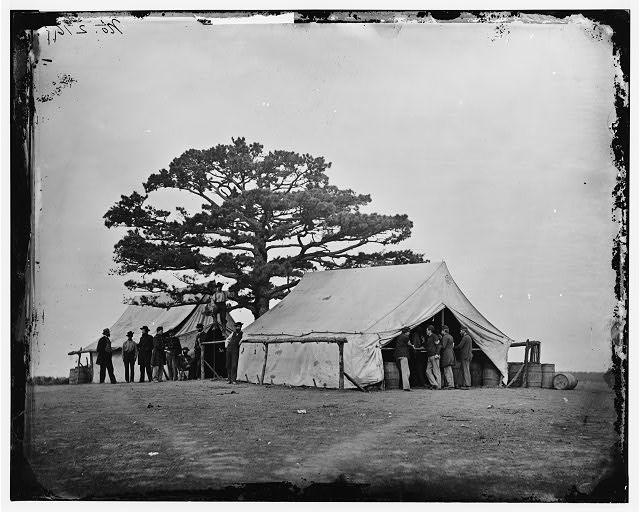
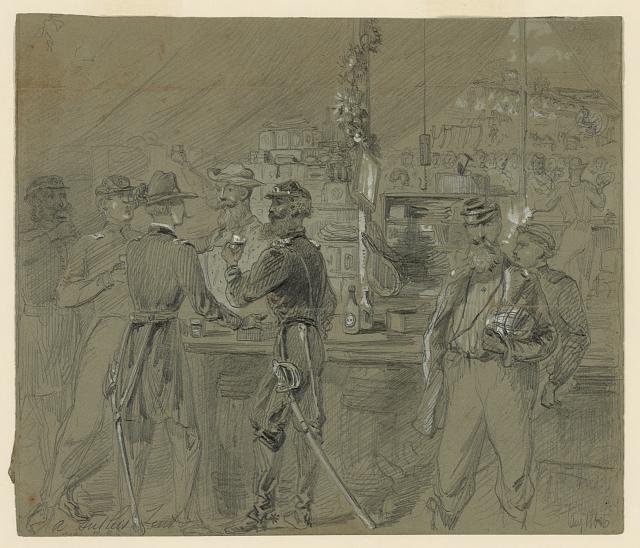
1863 - Bealeton, Va. Sutler's tent at Army of the Potomac headquarters

1863 - Bealeton, Va. Sutler's tent at Army of the Potomac headquarters

Sorry About That, Allen

From Cayuga In The Field by Henry Hall and James Hall:

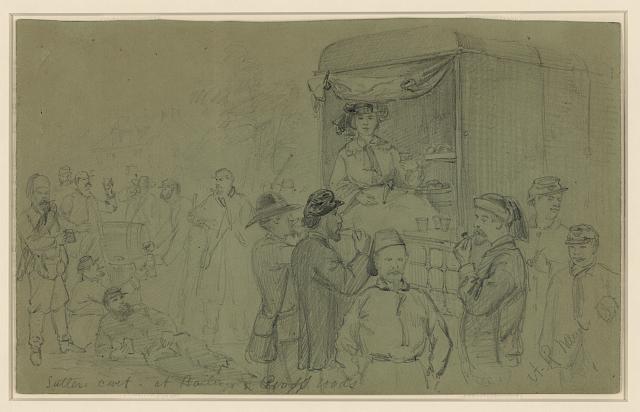
June 18th [1861], a very important event occured. The Pay Master arrived to pay off the men. Privates received $5.50 a piece. Nothing creates more excitement in camp than the coming of the Pay Master. When paid off, the men first lay something aside to send home, and then rush for the tent of the camp sutler where goodies, tobacco and luxuries of every description are eagerly bought, and outstanding accounts are squared up. The commanding officers in Camp Cayuga made no objection to the men indulging in these luxuries if they chose to. They only required that the men abstain from beer and wine. Rules against intoxication and liquor selling were strict. Col. Clark, in orders, prohibited them positively. A vigorous attempt was made to enforce the rule, and once, when Capt. Kennedy was Officer of the Day, that officer caused the camp sutler’s shanty to be torn down for violating it Unfortunately, these practices could not be and never were entirely broken up.

The 19th sure isn’t afraid to take direct action. If they get a bad meal, they attack the cook house. Here they tear down the sutler’s shanty for violating Colonel Clark’s prohibition rules.

Sutler's cart at Bailey's Crossroads 1861

Sutler's cart at Bailey's Crossroads 1861 (LOC - LC-DIG-ppmsca-21475)

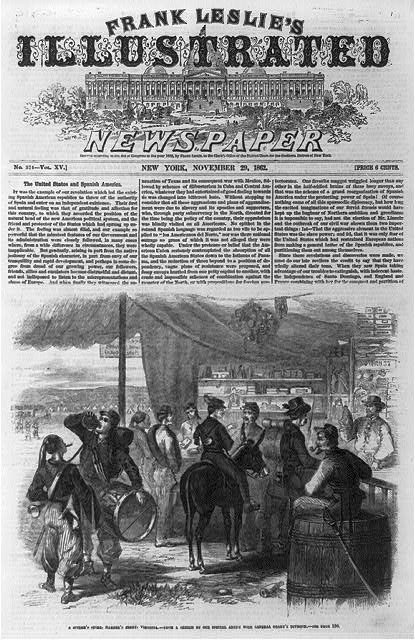
1862 sutler's store

1862 sutler's store at Harper's Ferry (LOC - LC-USZ62-85175)

Sutler's Tent 1862

Good Luck with Prohibition, Colonel Clark (Sutler's tent 1862 LOC - LC-DIG-ppmsca-20779)

Posted in 150 Years Ago This Week, After Fort Sumter, Military Matters | Tagged , , | Leave a comment

Three Year Trek from Rockland

Hiram G. Berry

Hiram G. Berry (LOC - LC-DIG-cwpb-04623)

From The New-York Times June 18, 1861:

THE FOURTH REGIMENT OF MAINE.

ROCKLAND, Me., Monday, June 17.

The Maine Fourth Regiment, Col. BERRY, 1,100 men left for the seat of war as 11 A.M. to-day, in the steamer Daniel Webster. They will remain in Portland to-night, and to-morrow will proceed on their way.

Hiram Gregory Berry was promoted to Major General in November 1862. In May 1863 he was killed at Chancellorsville.

4th Maine Volunteer Infantry Regiment fought with The Army of the Potomac from First Bull Run through Cold Harbor, when its three year term ended. According to Wikipedia:

The 4th Maine enrolled 1,440 men during its existence. 170 men were killed in action or died of wounds received in battle, with another 443 wounded.[1] An additional 137 men died of disease, and 40 men died in Confederate prisons.

I found a tie-in for Bunker Hill Day. Henry Knox served at Bunker Hill. He retired to Thomaston, Maine, which would be in the general vicinity of Rockland, where Berry was born and where The Times piece was written. Moreover, Daniel Webster gave the address when Lafayette laid the cornerstone for the Bunker Hill monument on June 17, 1825.

Montpelier, the old home of General Knox, Thomaston, Maine

Montpelier, the old home of General Knox, Thomaston, Maine (LOC - LC-USZ62-48589)

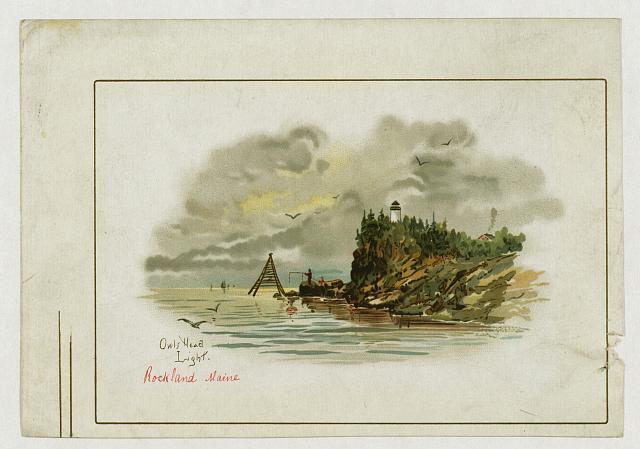
Owl's Head Light, Rockland, Maine (ca.1870 LOC - LC-DIG-ppmsca-09017)

Owl's Head Light, Rockland, Maine (ca.1870 LOC - LC-DIG-ppmsca-09017)

Posted in 150 Years Ago This Week, After Fort Sumter, Military Matters | Tagged , , , | Leave a comment

Pioneers in Jersey City

More Union Troops in Gray
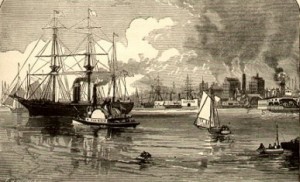
HudsonRiverJerseyCity1890

Welcoming the Massachusetts troops - Jersey City (1890)

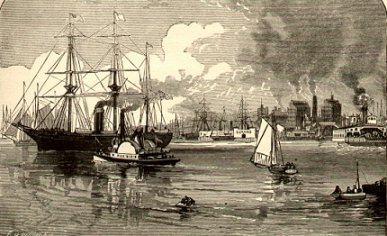
On May 3, 1861 President Lincoln called for 42,000 extra army volunteers for a three year enlistment. (On April 15th the president had requested 75,000 army volunteers for a three month term of service.) 150 years ago today one of the first three year regiments docked in Jersey City on its way to “the seat of war”. The 1st Massachusetts had to persevere through some challenges before it left Boston harbor. From The New-York Times:

ARRIVAL OF THE FIRST REGIMENT MASSACHUSETTS VOLUNTEERS.(2); RECEPTION BY THE SONS OF MASSACHUSETTS FROM NEW-YORK, AT THE NEW-JERSEY RAILROAD DEPOT SPEECHES AND A COLLATION, &C. WELCOMING ADDRESS OF MR. WARREN. REPLY OF COL. COWDIN. THE GREAT INSURRECTION.

The First Regiment Massachusetts Volunteers — the pioneers of the three years’ enlistments — arrived at Jersey City yesterday afternoon, en route for the seat of war.

The sons of Massachusetts resident in New-York had made every preparation for the reception of their friends. They met at the Astor House at 9 A.M., and, to the number of at least five hundred, marched to the Jersey City Ferry, and crossed to await the arrival of their expected guests. They were destined to be disappointed, however, for two hours passed without a sign of the steamer Commonwealth, on which the volunteers were to arrive. At 11 o’clock a dispatch was received to the effect that the regiment would reach Jersey City at 1 P.M., so that the Committee and their friends were obliged to while away two more hours, and then another hour besides, until 2 P.M., before the long-looked-for boat hove in sight.
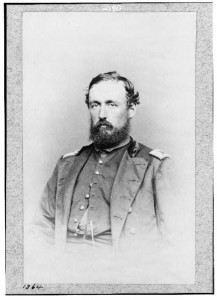
George D Wells

George D Wells - his horse jumped from train (LOC - LC-USZ61-2180)

But the scene was worth almost all the delay. Almost every portion of the boat was covered with gray uniforms and glistening bayonets, while from myriad flag-staffs national ensigns fluttered gaily in the breeze. Cheer upon cheer greeted the men as they neared the dock, while hundreds of instances of individual recognition took place. Before the regiment disembarked, Mr. FRANK E. HOWE, who had been deputed as a special messenger to Boston, to telegraph the probable hour of arrival, jumped ashore, and informed the Committee of the cause of delay. It appears to have been the result of a series of mishaps. First, the Lieutenant Colonel’s horse jumped from the train, out of the car door; next, a private, DANIEL MILLER, of Roxbury, Company D, felt from the train, and was run over, being instantly killed. Then, when they arrived at the boat, it was found that there was no entrance large enough to admit of the huge army wagons, fifteen of which and sixty horses compose part of the regimental equipment. Yankee ingenuity was not at fault, however, for, although it necessarily occasioned several hours’ delay, the tops were finally taken off, and the wagons neatly stowed. And, as if to cap the climax, just as the steamer touched the pier, a terrific shower broke out, driving soldiers under cover, and their friends to such shelter as the dilapidated sheds in the vicinity afforded.

At length the shower lulled, the boat was made fast, and the Committee of New-Yorkers, headed by Mr. RICHARD WARREN, were escorted to the upper forward saloon, where all were introduced, consecutively, to Col. COWDIN and Gen. STONE. Mr. WARREN then welcomed the regiment as follows:
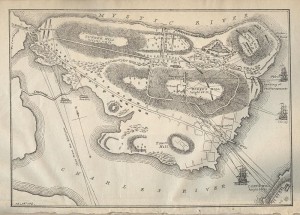
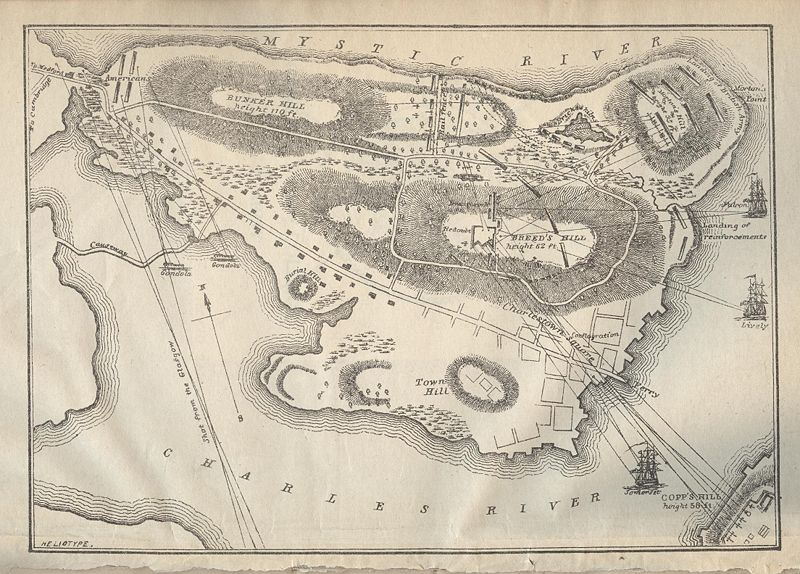
800px-Map_of_the_Battle_of_Bunker_Hill_area

Bunker Hill

Col. COWDIN: A delegation of some six hundred sons of Massachusetts, resident in New-York have come here to meet you as you journey on your glorious errand to protect our country, its laws and its freedom. We meet you, Sir, here as brethren. We desired to welcome you to our own City of New-York, but you would not allow us. We would have shown you what a glorious reception New-York would have given to the sons of Massachusetts, as they passed through our City. But you have deprived us of that pleasure, and the only thing that we can do for you, is to come to you, and give you a simple cordial welcome in the place nearest to our great City. Massachusetts, Sir, needs no enconium; she has always spoken for herself. The badge that we wear, bears the inscription, “1775, Massachusetts, 1861,” but that is the history of the country from its commencement down to the present time. [Applause.] If you had chanced to pass through our City to-morrow, we should have memorized the 17th of June, or on another occasion we might have put on our badges the 19th of April, 1775, and 1861. [Applause.] We welcome you, Sir, and your command to a collation — all that you would take from us. We desired to give you more, but you would not accept it. Last night, after retiring, I received a dispatch from the Secretary of War, giving you permission to stop in New York, but it was too late. We welcome you, Sir, and trust you will bear the escutcheon of Massachusetts high, and although there rests a little blemish upon it at present, that you will rub it out and raise that standard higher than it has ever been. [Applause.]

Col. COWDIN replied:

MR. CHAIRMAN, AND GENTLEMEN OF THE COMMITTEE:

Some of the faces I have been acquainted with before, and one I remember as an officer who served with me in the Massachusetts Volunteer Militia, with credit to himself. I thank you, Sir, from the bottom of my heart for this welcome; but I am not a man of speeches, but of work. Rather than bring disgrace upon our flag, Sir, I and my command would rather meet our graves. We have volunteered for three years, or for the war, and we intend to go through and fight for freedom or death. We intend that our cause shall succeed, or our remains be left upon the battle field. [Applause.] Allow me again, Sir, to thank you for this cordial reception.
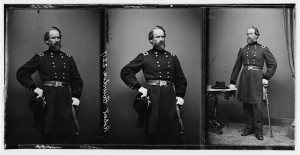
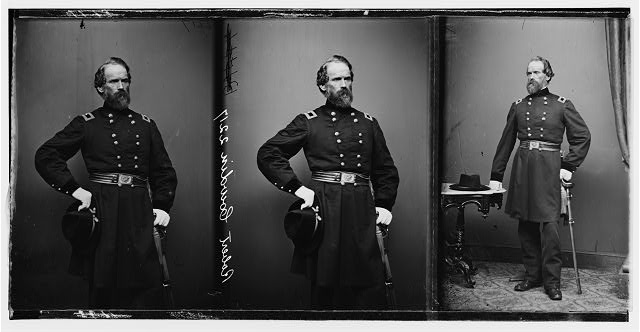
Robert Cowdin

Robert Cowdin - willing for "remains be left upon the battle field" (LOC - LC-DIG-cwpb-04619)

MR. WARREN — We now desire Sir, that your regiment should march through the line of citizen sons of Massachusetts, and partake of a collation in the depot.

The regiment then formed by company, and marched into the depot adjoining, where mountains of crackers and cheese and sandwiches, and barrels of coffee and ice water were disposed on the platforms. In an incredibly short space of time a large portion of the same was deposited safely beneath the uniform of the Massachusetts Volunteers.

The regiment numbers 1,050 men, and is fully provided with camp equipage — Siblee and Wall tents, army wagons, &c. The uniform is the standard gray, furnished by the State — the muskets the Springfield rifle. The following are the officers:

Colonel, Robert Cowdin; Lieutenant-Colonel, George D. Wells; …

One company consists almost entirely of caulkers. All the men look hearty and stalwart. The health of the regiment is excellent.

As each company marched into the depot, it was received with cheers, and after the process of deglution and degurgation had fairly commenced, crowds were admitted to welcome old relations and acquaintances.

It was understood, when our reporter left, that as soon as the regimental baggage could be transferred, the regiment would take the cars and proceed to Philadelphia, and thence according to future orders.

The officers were dined by the Committee at an adjoining restaurant.

Apparently the regiment arrived at Camp Banks in Georgetown on June 17th.

Suffolk County, Massachusetts still commemorates June 17 as Bunker Hill Day.

It’s kind of ironic that Robert Cowdin, after having been promoted in 1862, was relieved of duty on March 30, 1863 – well before the three years were up.

From browsing the Internet this morning it looks like George D Wells was eventually promoted to full colonel in the 34th Massachusetts. He was killed during the Battle of Cedar Creek in 1864.
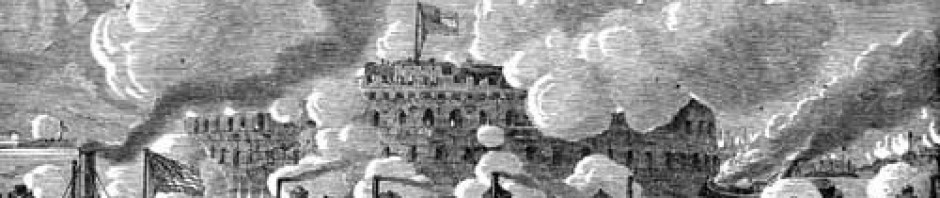
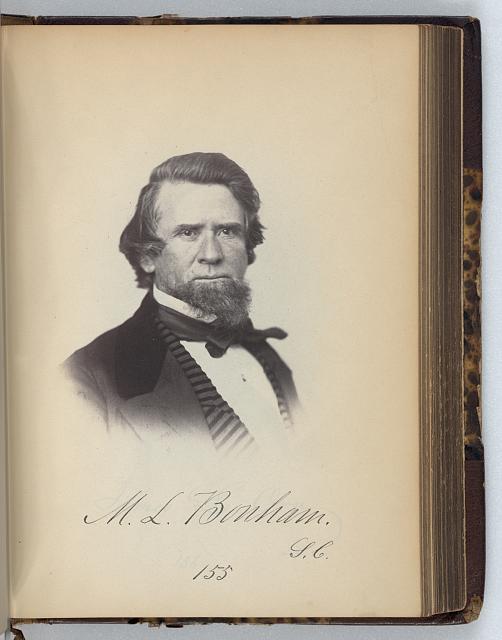
Posted in 150 Years Ago This Week, After Fort Sumter, Military Matters | Tagged , | Leave a comment

Not Ready for Prime Time

Washington, D.C. 1860
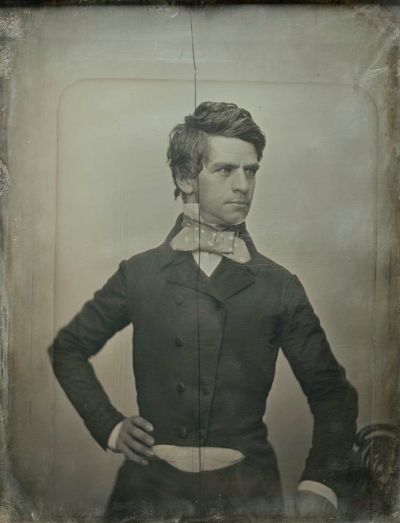
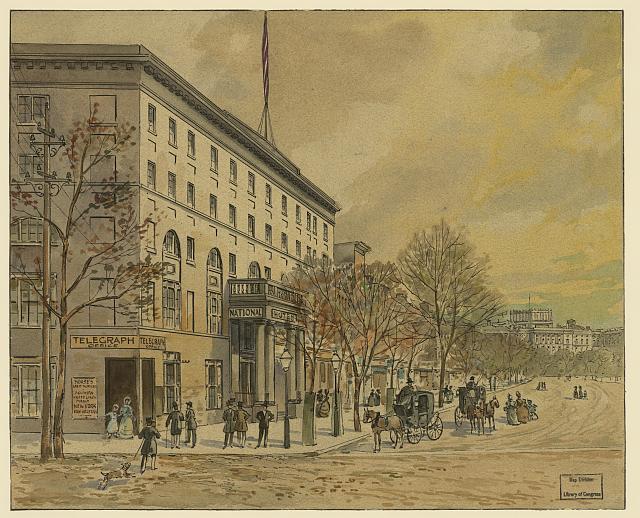
City of Magnificent Distances with Telegraph Office! 1860 (LOC - LC-DIG-ppmsca-23071)

Drilling for War at Idyllic Kalorama

Having enlisted during the first great wave of patriotic fervor after Lincoln’s post-Sumter call for volunteers and having drilled in Elmira, New York for over a month, the 19th New York Volunteer Infantry Regiment arrived Washington, D.C. on June 7, 1861, undoubtedly eager to defend the nation’s capital and put down some rebel traitors. Unfortunately,

In view of the undisciplined state of the command, it was ordered into camp of instruction instead, and, pending the selection of camping ground, it was thought best to quarter it in the city.

So after reaching Washington the 19th’s first move was – north:

White House Plan 1807

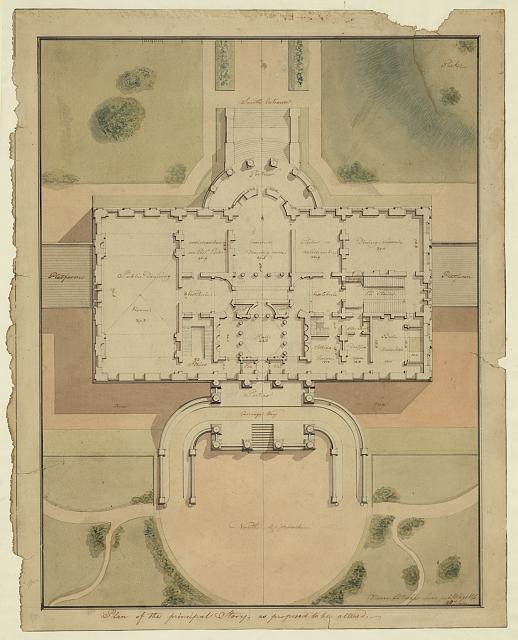
Plan of "The President's House" 1807 (LOC - LC-DIG-ppmsca-23759)

North of Washington, within two or three miles of the heart of the city, a range of verdant hills 200 feet in height bounds the plain on which it stands. Further on, the surface swells into hills of greater elevation, on which, afterwards the northern fortifications of the city were located. On the crests of the first range of hills, were built many a number of fine mansions, surrounded by elegant and extensive grounds. Just back of Georgetown, on the eastern bank of Rock Creek, stood the loveliest of these places, once the home of the poet and patriot, Joel Barlow, author of the “Columbiad” and “Hasty Pudding,” named by him Kalorama. In 1861, its occupant, a true patriot, had tendered it to the Government for a camp without cost. To this spot, on the 10th of June, a warm, genial summer’s day, the favored 19th had been ordered to proceed.

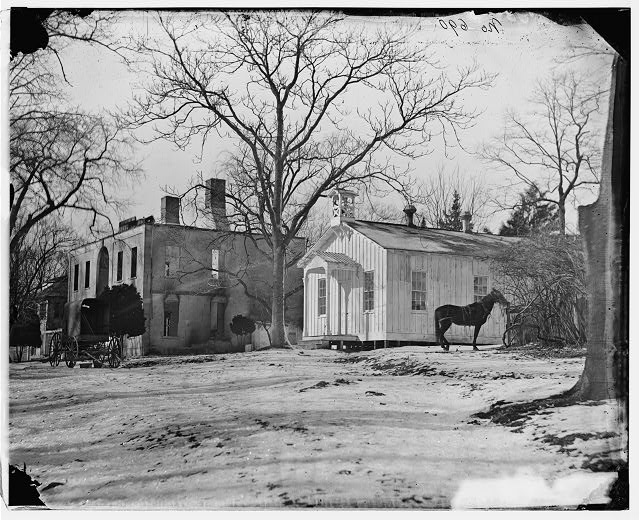
Kalorama Hospital in ruins 1865

Kalorama Hospital in ruins 1865 (LOC - LC-DIG-cwpb-04141)

The regiment left the City of Magnificent Distances in the afternoon, passing the President’s House and other noted edifices, and reached the heights at 8 p.m. Leaving the main road, it turned to the left into the fields, and marched to a meadow, nine acres in area, in a retired situation, on the top of the banks of the romantic and richly wooded glen of Rock Creek. Glen and woods surrounded the field on three sides. On the fourth, the old mansion stood, now used as a hospital. It was too late and too dark to pitch camp. So the men stacked arms, and bivouacked on the ground under the open stars, some sleeping on boards and all either softening the asperities of their bed with their blankets or using that article as a pillow. The lovely night invested their first taste of genuine campaigning with an air of romance. Sleeping on the ground was a novelty that all relished then.

The 19th settled into camp routine:

Hard study and training then began and continued without remission for a month. The 19th was in Maj.-Gen. Charles W. Sandford’s division of New York troops. It resolved to be the best disciplined regiment in it.

Joseph_K_Mansfield

(02-08-2014 -not the real General Mansfield, sorry) Joseph K. Mansfield sends 19th much-needed drill instructors

The camp awoke daily at break of day, or 5 a. m.; the drum corps beating the reveille on the parade ground. All aroused thereat from morning dreams, dressed and washed. The companies then formed for roll call. At 5 1-2 a. m. company drill took place. The duties of the day began thus early to avoid the excessive heat of the middle of the day. This early drill often, and at first generally, took place under West Point cadets, three of whom — Lieuts. Barlow, Redding and Meagher — were sent up by Gen. Mansfield from Washington to teach the manual of arms and the company tactics. At 6 A.M. breakfast was served, consisting of salt pork, salt beef, bread, crackers, potatoes and coffee, varied sometimes with mush and beans. …

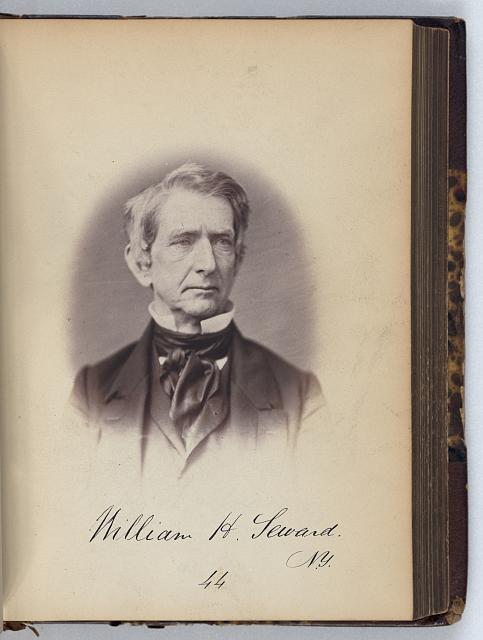
William H. Seward

W.H. Seward (1859) - cordial handshake for the troops (LOC - LC-DIG-ppmsca-26583)

... battalion drill at 6. … in the cool edge of the evening, sometimes taking place under the soft moonlight, was the most agreeable of the day. Muskets and equipments were highly polished for it, and every uniform was required to look its best. Visitors were always present to witness it There was a talismanic influence in that title of “The Seward Regiment.” It brought out to Kalorama Heights Senators, Congressmen and distinguished people generally. The President, also, and Secretary Seward came several times. Mr. Seward had always a cordial smile and a cordial grasp of the hand which endeared him to all.

150 years ago today, while Union troops under General Patterson moved into Maryland with the aim of attacking some rebels near Harper’s Ferry, the 19th walked back to D.C.:

June 15th, the regiment marched to Washington and exchanged “those trusty muskets” for Harper’s Ferry smooth bores. They were a better arm than the old ones. Great pride was taken in them, the old ones having been so rickety, that, after firing a volley with them, a basket full of locks and pieces might be picked up in the grass, blown off by the discharge.

Wow, maybe it’s a good thing the 19th didn’t rush off to battle – at least not until they got more reliable weapons.

Text taken from Cayuga in the Field by Henry Hall and James Hall.

Charles W. Sandford had a long career in the New York militia. He was involved with quelling domestic disturbances, including the 1863 New York City draft riots.

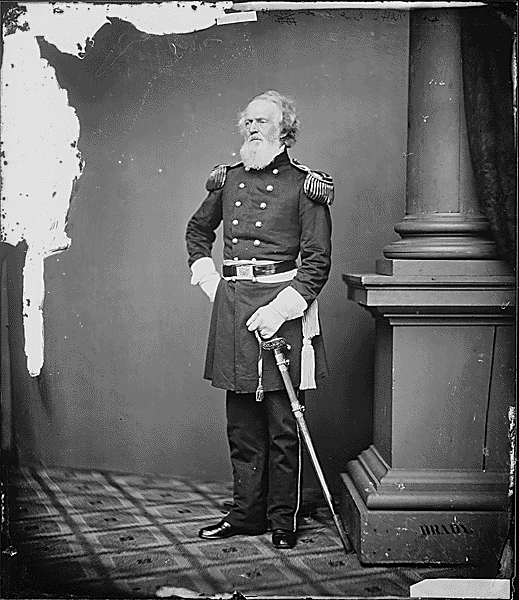
Joseph K. Mansfield had a 40 year career in the U.S. army.

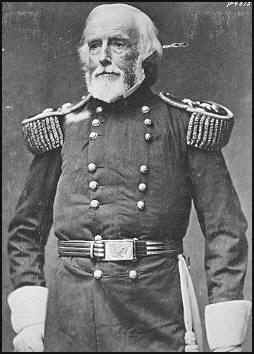
Joseph King Fenno Mansfield  (by Matthew Brady; at National Archives)

the real General Mansfield

Posted in 150 Years Ago This Week, After Fort Sumter, Military Matters | Tagged , , , | 2 Comments

Holt Resists “Arsonists and Mutilators”

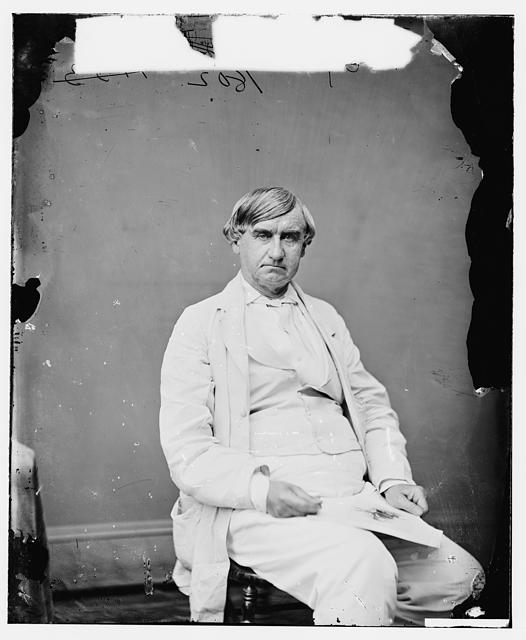
Joseph Holt

Twainesque Joseph Holt using extremely picturesque imagery (LOC - LC-DIG-cwpbh-00547)

No Neutrality for This Kentuckian

On June 13, 1861 The New-York Times published a very long letter from Joseph Holt, a Kentuckian who had most recently served as President Buchanan’s Secretary of War during the last couple months of that administration. Here’s a couple excerpts:

A LOYAL VOICE FROM KENTUCKY.; Noble Letter of Ex-Postmaster General Holt. NEUTRALITY SUICIDAL. THE POLICY OF PRESIDENT LINCOLN DEFENDED.

WASHINGTON, Friday, May 31, 1861.

J.F. SPEED, Esq. — My Dear Sir: The recent overwhelming vote in favor of the Union in Kentucky has afforded upspeakable gratification to all true men throughout the country. …

The Legislature, it seems, has determined by resolution that the State, pending the present unhappy war, shall occupy neutral ground. I must say, in all frankness, and without desiring to reflect upon the course or sentiments of any, that, in this struggle for the existence of our Government, I can neither practice nor profess nor feel neutrality. I would as soon think of being neutral in a contest between an officer of justice and an incendiary arrested in an attempt to fire the dwelling over my head; for the Government whose overthrow is sought is for me the shelter not only of home, kindred, and friends, but of every earthly blessing which I can hope to enjoy on this side of the grave. If, however, from a natural horror of fratricidal strife, or from her intimate social and business relations with the South, Kentucky shall determine to maintain the neutral attitude assumed for her by her Legislature, her position will still be an honorable one, though falling far short of that full measure of loyalty which her history has so constantly illustrated. Her Executive, ignoring, as I am happy to believe, alike the popular and legislative sentiment of the State, has, by proclamation, forbidden the Government of the United States from marching troops across her territory. This is in no sense a neutral step, but one of aggressive hostility. The troops of the Federal Government have as clear a constitutional right to pass over the soil of Kentucky as they have to march along the streets of Washington; and could this prohibition be effective, it would not only be a violation of the fundamental law, but would, in all its tendencies, be directly in advancement of the revolution, and might, in an emergency easily imagined, compromise the highest national interests. I was rejoiced that the Legislature so promptly refused to indorse this proclamation as expressive of the true policy of the State. But I turn away from even this to the ballot-box, and find an abounding consolation in the conviction it inspires, that the popular heart of Kentucky, in its devotion to the Union, is far in advance alike of legislative resolve and of Executive proclamation.

Equally vain is it for them to declare that they only wish “to be let alone,” and that, in establishing the independence of the seceded States, they do those which remain in the old Confederacy no harm. The Free States, if allowed the opportunity of doing so, will undoubtedly concede every guarantee needed to afford complete protection to the institutions of the South, and to furnish assurances of her perfect equality in the Union; but all such guarantees and assurances are now openly spurned, and the only Southern right now insisted on is that of dismembering the Republic. It is perfectly certain that in the attempted exercise of this right neither States nor statesmen will be “let alone.” Should a ruffian meet me in the streets, and seek with his ax to hew an arm and a leg from my body, I would not the less resist him because, as a dishonored and helpless trunk, I might perchance survive the mutilation. It is easy to perceive what fatal results to the old Confederacy would follow should the blow now struck at its integrity ultimately triumph. We can well understand what degradation it would bring to it abroad, and what weakness at home; what exhaustion from incessant war and standing armies, and from the erection of fortifications along the thousands of miles of new frontier; what embarrassments to commerce from having its natural channels encumbered or cut off; what elements of disintegration and revolution would be introduced from the pernicious example; and, above all, what humiliation would cover the whole American people for having failed in their great mission to demonstrate before the world the capacity of our race for self-government.

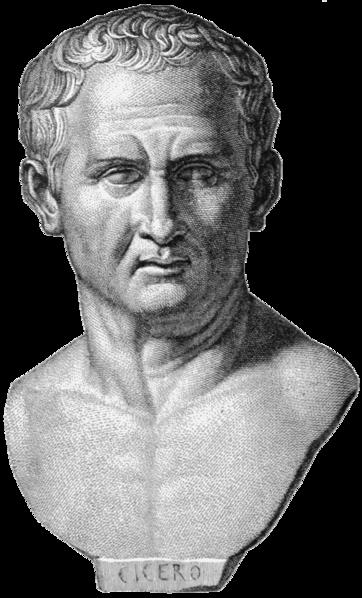
362px-Cicero

Cicero: would-be Lincoln admirer

While a far more fearful responsibility has fallen upon President Lincoln than upon any of his predecessors, it must be admitted that he has met it with promptitude and fearlessness. CICERO, in one of his orations against CATALINE, speaking of the credit due himself for having suppressed the conspiracy of that archtraitor, said, “If the glory of him who founded Rome was great, how much greater should be that of him who had saved it from overthrow, after it had grown to be mistress of the world?” So may it be said of the glory of that statesman or chieftain who shall snatch this Republic from the vortex of revolution, now that it has expanded from ocean to ocean, has become the admiration of the world, and has rendered the fountains of the lives of thirty millions of people fountains of happiness. …

And Speaking of Strong Unionists

GEN. SCOTT’S BIRTHDAY.

BUFFALO, Thursday, June 13.

A salute of seventy-five guns was fired by the citizens of Buffalo this noon in honor of the birthday of the veteran soldier, Gen. SCOTT.

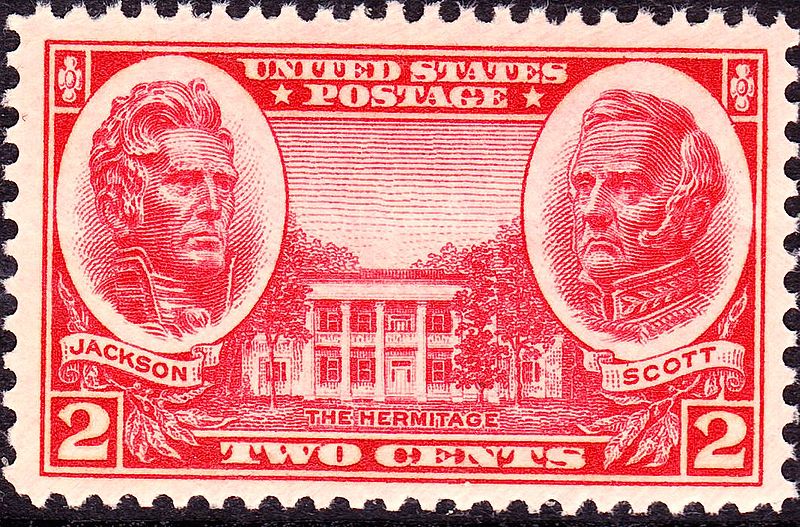
800px-Jackson_Scott_1937_Issue-2c

Union Heavy Hitters - Scott with Jackson


_________________________________
According to Wikipedia Joseph Holt:

joined the Army as a colonel in 1862 and was appointed by President Abraham Lincoln to be the Judge Advocate General of the Union Army; two years later, he was promoted to brigadier general. He was the first Judge Advocate General to hold general’s rank.

Posted in 150 Years Ago This Week, After Fort Sumter | Tagged , , | Leave a comment

Pygmy Squadron Blocking Crescent City

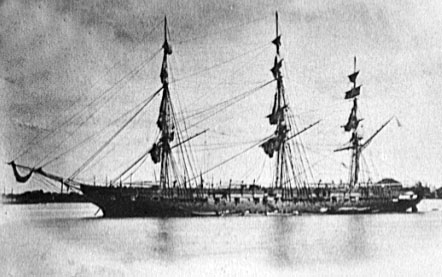
USS_Brooklyn_1858

Most irksome Pygmy - USS Brooklyn (1858)

Apparently the federal blockade of southern ports is having some effect. From The New-York Times June 13, 1861:

Tantalizing.

The people of Louisiana are particularly enraged about the blockade. That “LINCOLN, SEWARD & CO.’s pigmy squadron” should flout the Star-spangled Banner right at the Balize[?], and almost within sight of the Crescent City, is most intolerable, and not to be endured — if, indeed, they could only help it. The New-Orleans Crescent of the 5th inst. gives vent to its feelings. It is wroth because the “Commander of the Brooklyn has been graciously pleased to allow” but very limited water privilege to the buccaneers of the Gulf; and is grievously mortified at the thought that “one solitary steamer can dictate terms to the Southern Confederacy; but finally consoles its readers with the cheerful thought that “there ought to have been a sufficient force within the Military Department of Louisiana to have blown this Brooklyn out of the water on her first appearance.”

It is no wonder that the Orleanians are mad about it. That a city boasting of a hundred and fifty thousand souls, and a sovereign State inhabited by nearly three-quarters of a million chivalry and chattels, should be shut in, locked up and blockaded in this way, is really disgusting, tantalizing, infuriating, — in short, rather a bad thing, — especially when it is considered that that State lately rushed headlong out of the American Union, and headlong into JEFF. DAVIS’ bogus concern, in order that it might the more perfectly maintain and enjoy its sovereign independence. But still, what can we, the Orleanians do about it? Why, we can howl, scowl, grimace, grin and bear it, till John Bull or John Chinaman, or the King of the Cannibals, or perhaps Honest Old ABE himself, kindly raises the blockade.

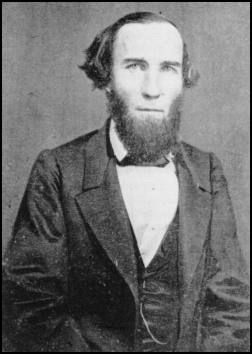
Walker,_Leroy_Pope_1

CSA Secretary of War, LeRoy Pope Walker

One point, however, is not very clear — why the Confederate Government should make the melancholy confession that it cannot itself relieve its citizens in duress. Has not the Honorable Confederate Secretary of War lately given to the world a semi-official manifesto of the naval forces of the Confederation — with the number of men-of-war, their power, their crew, the weight of metal they carry, and what not? Have we not all heard of the stolen United States revenue cutters Lewis Cass, McClelland, Aiken, Washington and Dodge, and how the first-named carries a 64-pounder gun, and the others 42-pounders, 32-pounders, and so on? Does not everybody know all about the Lady Davis, with her five big guns and crews, 100 men — of the steamers Everglade, Fulton, James Gray, and Star of the West, ([???] Sumter), with them 6-inch columbiads, and other heavy guns -of the Bonita, the James, and the innumerable brigs, barks, and scows which, have been captured by the Gulf pirates, and are now impressed into the Confederate navy?

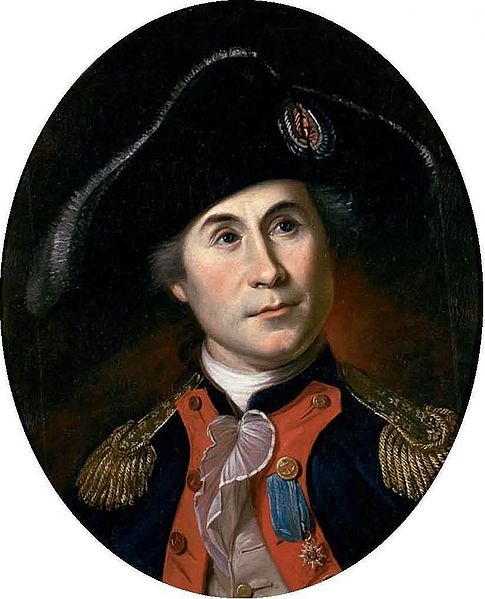
485px-John_Paul_Jones_by_Charles_Wilson_Peale,_c1781

Did a lot with a little - John Paul Jones (by Charles Wilson Peale, c1781)

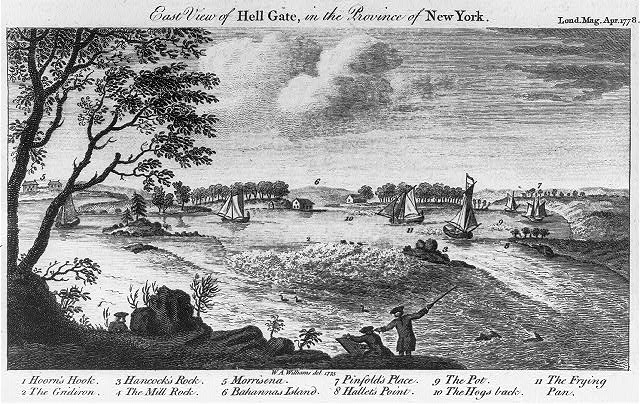
Why, we were actually afraid, when we Remembered what PAUL JONES and his boys did with his old tub eighty years ago, and what the Yankee boys did with a few poor ships fifty years ago, that the Confederate fleet would sweep our commerce from the seas, that New-York and Jersey City would be bombarded, and that we should soon see the three-barred bunting floating above the floods of Hell Gate! But alas! we fear that the rhetoric which described the glorious capture of these splendid ships was far grander than the ships themselves, and far more, dreadful than even their columbiads and crews. For, according to the Crescent, the Brooklyn shuts out from the world Louisiana and all its pirates, and dictates terms to the Southern Confederacy. The only hope now is that the gigantic floating battery, which the telegraph this morning announces is to be sent in pursuit of the Brooklyn, may achieve as brilliant a success as the floating battery at Charleston did in the immortal assault upon Fort Sumter. But even that won’t raise the blockade.

Hell Gate, New York c. 1775

Three Stripes over Hell Gate? (Hell Gate, New York c. 1775)

Wpdms_terra_hell_gate

Satellite view of New York's Hell Gate - in red

Satellite view of Hell Gate licensed by Creative Commons

Posted in 150 Years Ago This Week, After Fort Sumter, Military Matters | Tagged , , | Leave a comment

Aiming His Guns at Baltimore

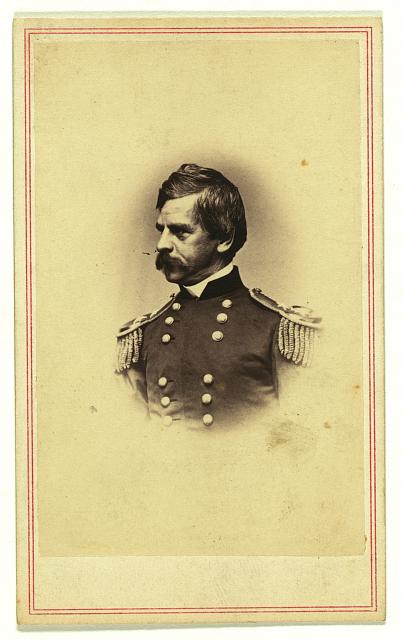
Nathaniel P. Banks 1861

Not going to "let the Union slide." Nathaniel P. Banks 1861 (LOC - LC-DIG-ppmsca-08366)

From the June 12, 1861 edition of The New-York Times:

GEN. BANKS AT BALTIMORE.

BALTIMORE, Monday, June 10.

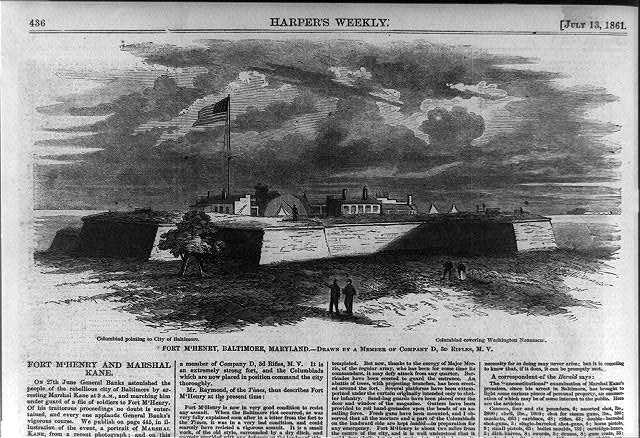
Maj. Gen. BANK was at Fort McHenry this afternoon. He assumes command of this military district to-morrow, making the fort his head-quarters.

Gen. CADWALLADER leaves to assume important duties southward.

Gen. BANKS will cordially cooperate with the civil authorities for the preservation of order. Columbiads and 42-pounders are being brought to bear on the city from Fort McHenry. The populace are irritated by the presence of Northern troops, but the conciliatory programme enunciated by Gen. BANKS removed all apprehensions.

Gen. BANKS indorses the recommendation for an appropriation of seven hundred and fifty millions of dollars for the prosecution of the war.

Fort McHenry (Harper's 7-13-1861; LOC - LC-USZ62-87800)

Fort McHenry (Harper's 7-13-1861; LOC - LC-USZ62-87800)

Also from the same issue of The Times:

AIDING THE ENEMY.

The Albany Atlas and Argus is one of the few Northern journals which from force of habit cannot elevate itself above partisan association. Its issue of yesterday contains a characteristic attack upon Gov. BANKS, based upon the oft-refuted falsehood, that he on one occasion declared his willingness to “let the Union slide.” While Gov. BANKS has always been a steadfast friend of the Union, as a civilian and a statesman, and while he will be as a General in the field, the Atlas and Argus must not forget that itself was an influential ally of the Southern conspirators, and only disowned their service when the masses of the Democratic Party compelled it, most reluctantly, to wheel into the patriot ranks

Nathaniel P. Banks was a political general:

As the Civil War became imminent, President Abraham Lincoln considered Banks for a cabinet post, and eventually chose him as one of the first major generals of volunteers, appointing him on May 16, 1861. Perceptions that the Massachusetts militia was well organized and armed at the beginning of the Civil War likely played a role in the appointment decision, as Banks had also been considered for quartermaster general. He was initially resented by many of the generals who had graduated from the United States Military Academy, but Banks brought political benefits to the administration, including the ability to attract recruits and money for the Federal cause.

Nathaniel_Prentice_Banks_-_Southworth_and_Hawes

Young and dapper Banks (photographed by Southworth and Hawes)

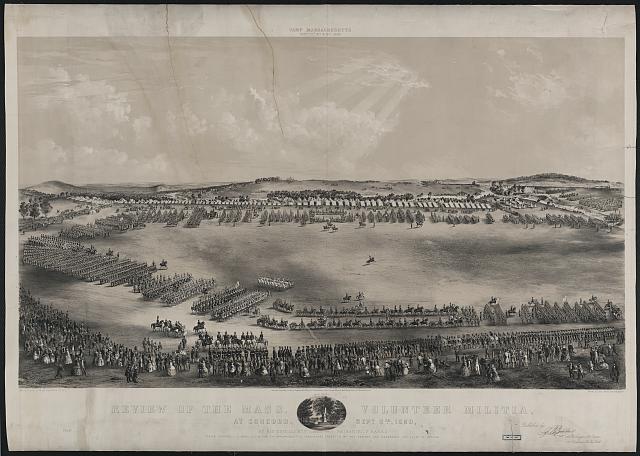
Gov. Banks reviewing Mass. militia in Concord 9-9-1859 (LOC - LC-DIG-ppmsca-08984)

He's done this before: Gov. Banks reviews militia in Concord 9-9-1859 (LOC - LC-DIG-ppmsca-08984)

Posted in 150 Years Ago This Week, After Fort Sumter, Military Matters | Tagged , , | 1 Comment