Perpetual Union

Perpetual Does Not = 1778-1860

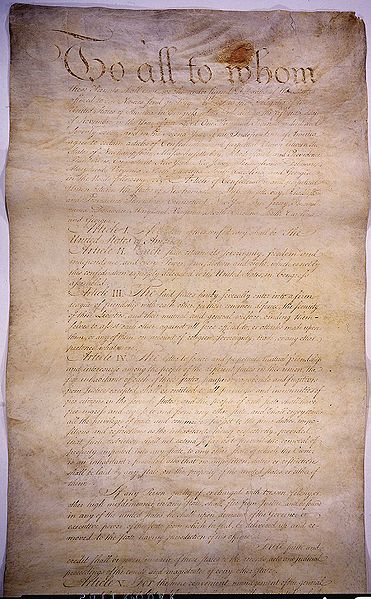
Articles of Confederation - page 1

Articles of Confederation and Perpetual Union (page 1)

From The New-York Times June 10 1861

The Union not a League.

To the Editor of the New-York Times:

SIR: Allow me to throw out this idea on the subject of Secession. Perhaps it is not original with me. When our war of Independence broke out, the colonies held an united allegiance to one Power, Great Britain. They enjoyed no sovereignty, either separate or confederate. They acted in concert in resisting the armies of the mother country, and formed a single Government, which took outward and executive form in the “Continental Congress,” made up of Representatives from them all. Under the name of the “United States of America,” as one people, they fought the war of the Revolution. They gained their independence as a single nation, and that independence was acknowledged to them as a nation, one and indivisible, by the one Power that had exercised an undivided sovereignty over them. The independence or sovereignty of each State was not acknowledged, but of all united, and by a single, treaty. Moreover, during the war in 1778, Articles of Confederation were entered into by all the States, in which it was declared “the Union shall be perpetual.” These Articles were in undisputed force til 1787, when “the people of the United States, in order to form a more perfect union,” ordained and established the present “Constitution of the United States.” The idea I wish to set forth is this: that no one of the States of this Government ever did possess separate sovereignty and independence, and that therefore it is absurd for any of them to pretend to resume or reclaim what they never possessed. South Carolina, like each of the other original States, was a dependency or vice-royalty of Great Britain, up to the very moment that she became a constituent portion of the republic of the United States; and when since has she possessed individual sovereignty? The Constitution, of course, itself, makes no one nation; but we always were one nation ever since, as colonies, we passed from under the dominion of England. A.H.C.

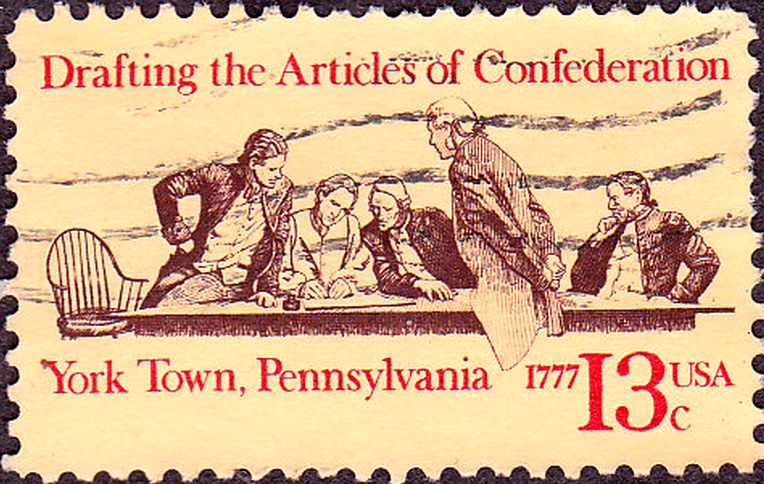
Articles_of_Confederation_1977_Issue-13c

Appropriately 13 cents

Sometimes I think we all go back and forth between the letter of the law and equity depending on what we think is in our interests or what is in our heart.

The Articles of Confederation was not officially ratified until 1781. South Carolina ratified the Articles on February 5, 1778.

Posted in 150 Years Ago This Week, After Fort Sumter | Tagged , , | Leave a comment

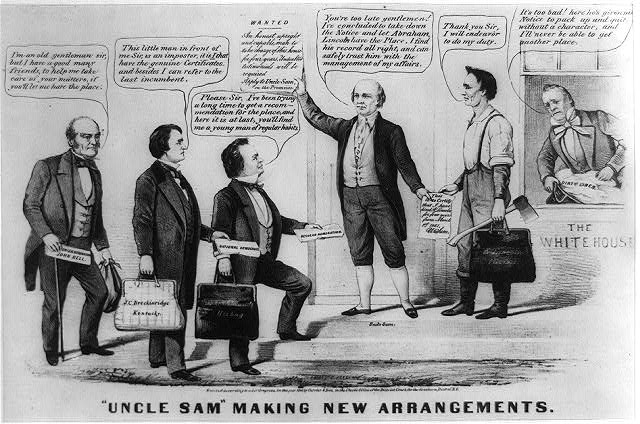
John Bell, Martyr, Mercury, Spy

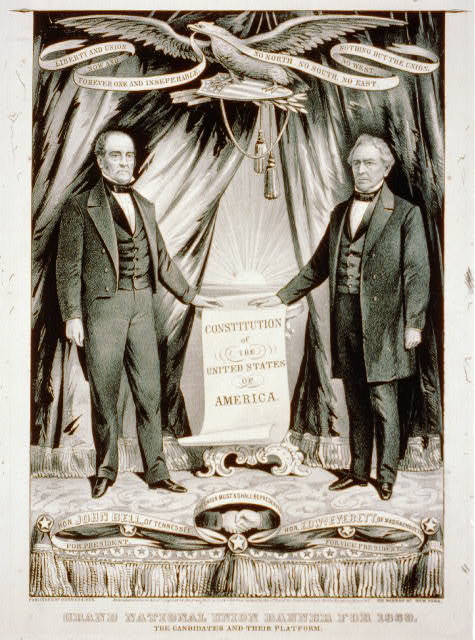
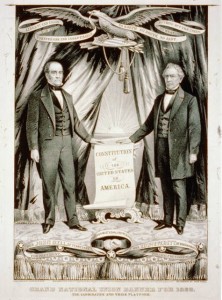
Bell and Everett 1860

1860 John Bell: no North, no South, ... nothing but Union (LOC - LC-USZC2-2491 )

Four quick takes – all from the June 9, 1861 edition of The New-York Times:

1. The Times castigates the 1860 nominee of the Constitutional Union Party for not supporting said Union:

Where is John Bell?

During the Presidential campaign of last Fall, were presented to the American people, as candidates for the two highest offices in their gift, the names of JOHN BELL, of Tennessee, and EDWARD EVERETT, of Massachusetts. These candidates, it was claimed, should be supported, irrespective of party organizations, as the peculiar friends and upholders of the Union as it is. Their banner was the Stars and Stripes simply, and around it were invited to rally all who loved their country, all who regarded this great Republic, reaching from ocean to ocean, and from the lakes to the gulf, as a solid indivisible whole, who were against the madness of Southern secession, and what they were pleased to term the sectionalism of the North; who were willing to cut loose from the corruptions of old political organizations on the hunt for spoils, and of forming anew into one great political brotherhood, of which JOHN BELL was to be the head, and whose watchword was the Union, in its integrity, against all assailants from whatever quarter. …

We know where his deceived and betrayed followers are to be found. We know the patriotic position of his associate in the canvass, and we know the position of the young and generous hearts, the conservative thousands who stood, as they supposed, between the Pro-Slavery fanaticism of the South and the Anti-Slavery fanaticism of the North, sacrificing all political affinities and party associations for what they regarded as their country’sgood. Some are among the loyal forces with arms in their hands, defending with their lives the Union they professed to love, proving the sincerity of their devotion by the peril they are ready to encounter for its salvation. Others are aiding by their eloquence, their influence and their money the cause of their country, and all are busy in its defence; but where is JOHN BELL? …

Wikipedia found him:

Initially opposed to secession, he travelled to Washington, D.C. to meet with President Lincoln. Bell was initially successful in helping hold Tennessee in the Union after states in the Deep South seceded. However, after the secessionist firing on Fort Sumter in South Carolina and Lincoln’s call up of troops in response to this attack, Bell reluctantly accepted Tennessee’s subsequent secession and retired from politics, his spirit broken and in ill health. He joined a group of investors in saltworks and ironworks, purchasing a shared interest in the Cumberland Furnace near Charlotte, Tennessee. However, most of his businesses were severely damaged or ruined during the Civil War.

Like General Lee and others he appears to have accepted his state’s decision.
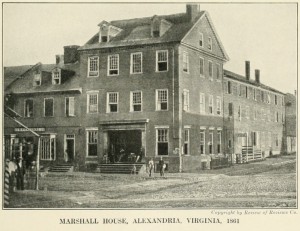
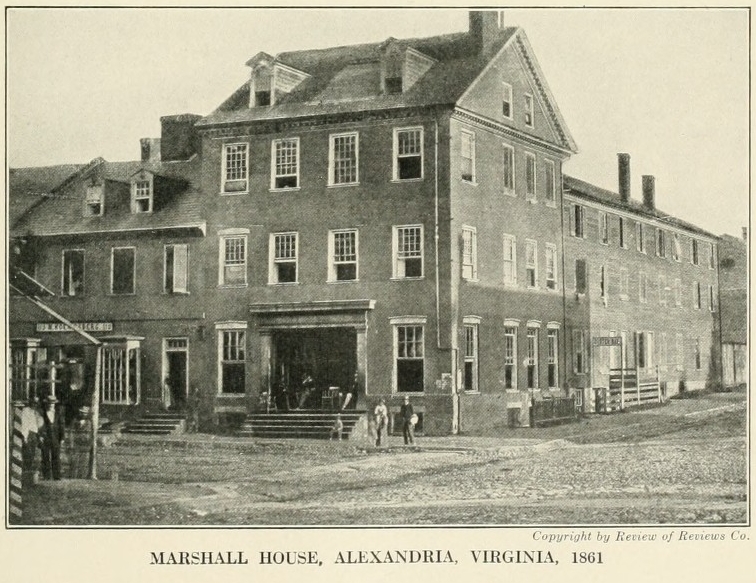
MarshallHouse1861

Marshall House 1861 - where Jackson slew Ellsworth


2) New Orleans appreciates James W. Jackson, the slayer of Elmer Ellsworth:

THE MARTYR.

Dr. GEO. W. CARTER writes to the New-Orleans Delta:

“I knew Mr. JACKSON personally, and was a guest at his hotel only a few days since. In killing ELLSWORTH he only executed a purpose previously formed, to wit: to defend with his life the flag which floated over his house.

When I expressed a fear lest his flag might be taken down by the Federal forces who soon proposed to occupy Alexandria, he very quietly replied that it should never come down while he lived, and that he would kill the man who attempted it, though he was backed by all the Black Republicans in Washington.

JACKSON was a generous, fearless man, and deserves a monument. His widow and four children are in necessitous circumstances, and the fund proposed will not only be timely, but worthily bestowed. I hope the citizens of New-Orleans will come forward with their accustomed liberality. It may be well to add that Mr. MOORE, who was originally from the neighborhood of Alexandria, and knew Mr. JACKSON and his friends, is in all respects the person to undertake the matter.”

The Delta adds:

“We learn that the subscriptions for the family of JACKSON, the slayer of ELLSWORTH, proceeds very briskly. One gentleman yesterday collected $150 from a few friends. Those liberal and generous gentlemen, MORSE & MOORE, of the City Hotel, have opened lists at their hotels, the City and St. James’ Hotel. It is hoped that all who can spare a dime or a dollar will contribute to this noble object.

We heard yesterday that a wealthy and liberal merchant of this city, who left for Virginia in the same train with the Washington Artillery, stated that one of his objects was to take charge of the family of JACKSON, and see that they were comfortably provided for, and in case they consented, to bring them to Louisiana, and secure them in comfort for the rest of their lives.
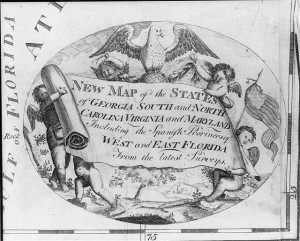
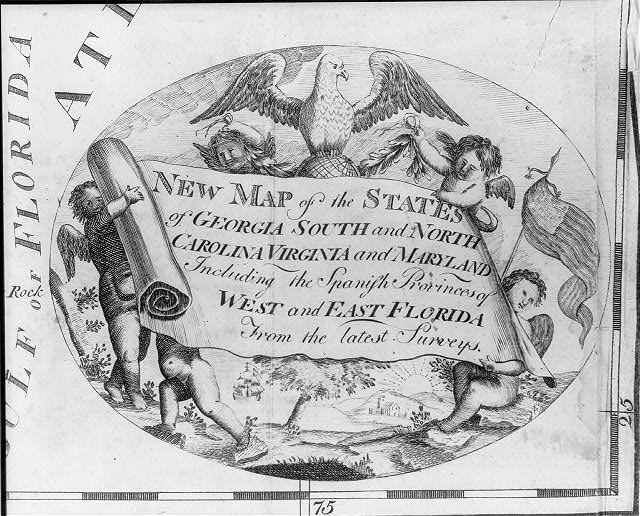
Southern mapping 1789

Southern mapping 1789 (LOC - LC-USZ62-45569 )

3. The fire-eating Charleston Mercury as prudently warning?

BEGINNING TO COMPREHEND.

From the Charleston Mercury, May 31.

Night and day, for the last two months, has the Northern Government been making herculean efforts in its Department of War. Preparation on the most gigantic scale has gone on steadily and unflagging under the intelligent and able superintendence and direction of Gen. SCOTT. An immense body of volunteers have been thrown into camp, and are drilling eight hours a day under competent officers of West Point training. …

In all this the military proceedings of the North, since the fall of Sumter, have been eminently wise. For the purpose of overpowering, disheartening and gaining the first advantages, which, both at home and abroad, are of immense importance, the concentration of all the forces available as promptly as possible, has been clearly the course of generalship and true economy. The first blow is said to be often half the battle. The war policy of SCOTT and the Northern Government has all the effect of the first blow. The final result we cannot, in the slightest degree, doubt. The immediate signal will depend, in a great measure, upon the number of troops now got ready, and the efficiency of the preparation made for them by the Confederate Government during the same period SCOTT has been at work. Let us not commit the mistake of underrating our enemy, or of supposing that, in modern warfare, it is only the courage of a people and the relative military talent of their field officers that decide the issues of war. Ability in combinations and bravery in executing them, may fail of success where the material is wanting or deficient. An hour’s delay of a corps of reserve lost the battle of Waterloo; and NAPOLEON fought the battle with the best troops in the world. They were cut to pieces.”
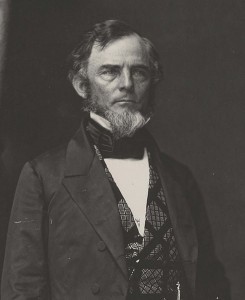
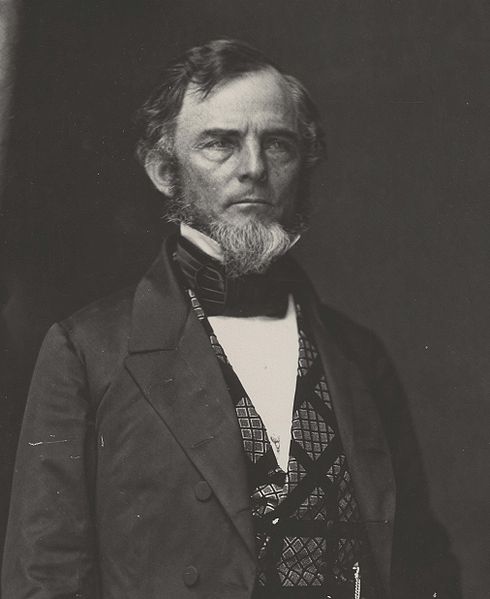
490px-General_Gideon_Johnson_Pillow

Pillow Talk: that man really is General Beauregard! (photo of Gideon Johnson Pillow)

4. The furtive P.G.T. Beauregard sure has been in the news a lot lately:

THE REBELS ARREST BEAUREGARD AS A SPY.

The Louisville Journal says:

“A gentleman from Memphis informs us that Gen. BEAUREGARD arrived there a few days since, and used great endeavors to keep his movements secret. Being a stranger, and somewhat observant, he attracted the attention of the Vigilance Committee, who arrested him as a spy and suspected person. The generalissimo of the Confederate forces had to send for Gen. PILLOW to identify him, and the hero of Camargo soon convinced the Vigilants that they had dug their ditch on the wrong side of the rampant of Memphian defence, whereupon BEAUREGARD was discharged with apologies.”
Posted in 150 Years Ago This Week, After Fort Sumter | Tagged , , , , , | Leave a comment

Patriotic Expatriate

Patriotic, but hopes both sides “will pause and reflect ere they enter directly into the contest.”

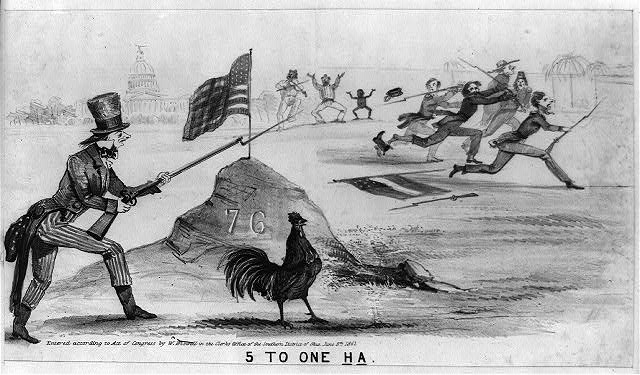
6-8-1861 northern political cartoon

Cocky North - rebels sure would stand and fight (6-8-1861 LOC - LC-USZ62-4834)

From The New-York Times June 9, 1861:

THE FEELING ABROAD.

The following is an extract from a letter received in this City from a gentleman now in Europe:

“I shall leave my family and go temporarily to the United States, or what is left of those once United, and take my place in the ranks of the defenders of the Union, the Constitution and Federal Government. On this point, since we have received the news of actual hostilities, my mind was at once made up. If war be regularly waged between the North and South, armies be marched to meet one another in the field, armaments and preparations be generally made, and there is every indication of a severe and protracted struggle, Deo volente, I shall most certainly return to my distracted country, and do the little in my power to aid and extricate her from embarrassment. When the Federal Capital, Government forces and officers are threatened by a section, and an armed invasion of the North and its territory openly advocated and boasted of, I deem it the duty of all good citizens to put aside political and other differences, and to respond with arm and purse to the call of the national and honestly elected Administration. The history of the world can hardly produce a parallel to such arrogance, treachery and disregard for all human and divine laws as are exhibited by the military oligarchy of the South.

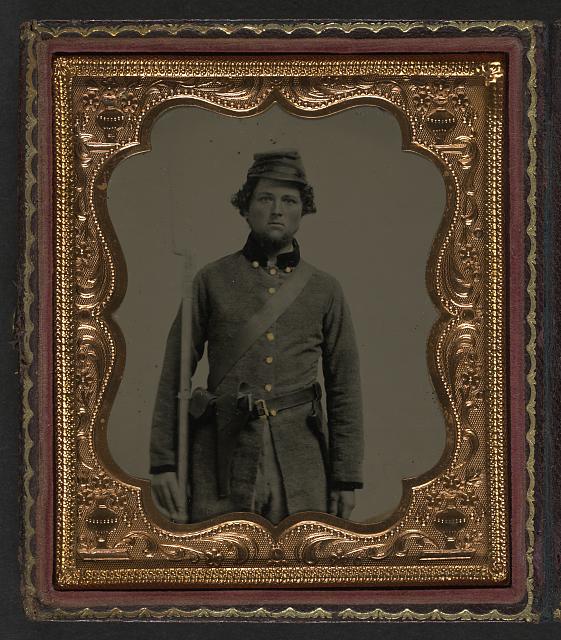
Unidentified Confederate soldier

Expat's opponent - Southern blood aroused too (LOC - LC-DIG-ppmsca-37155)

I trust sincerely that the hostile forces once brought face to face, will pause and reflect ere they enter directly into the contest. The result must be fatal to the South, as Northern blood once aroused will not be cooled without the infliction of a severe and perhaps salutary lesson. It has borne long enough the taunts and encroachments of a party prone to underrate and speak contemptuously of its qualities. The trial had to come, sooner or later, and the quicker the climax is reached the better for the present and succeeding generations.

My strong hopes are that the difficulty will be of short duration, and will be terminated either by a severe check given to the Secessionists at all points, or by the effect upon them of the great and united Northern demonstration and consequent pause and negotiation.

My mind, as you may well imagine, is much excited by the news of the attack upon the Massachusetts troops in Baltimore, the burning of the Government Navy-yard and vessels at Norfolk, and the expected seizure of Washington. May the Seventh and other New-Yorkers give a good account of themselves. Yours, &c., J.K.R.

Posted in 150 Years Ago This Week, After Fort Sumter | Tagged , | Leave a comment

With Bayonets Fixed!

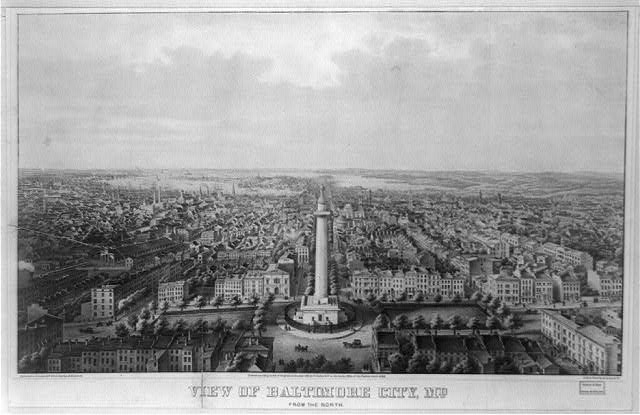
Baltimore  c.1862

Baltimore c.1862

Deja Vu All Over Again?*

150 years ago today the 19th New York Volunteers traveled from Harrisburg to Washington, D.C. by rail. At least, by rail most of the way. In order to change trains in Baltimore the regiment had to march through part of the city – a scenario similar to the April 19th events during the Pratt Street Riot. From Cayuga in the Field by Henry Hall and James Hall:

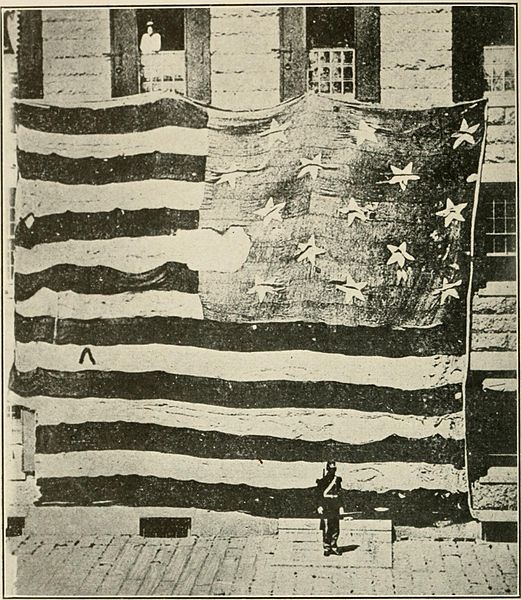
Glimpses of the destruction of war became visible at daylight. Blackened ruins of noble bridges encountered the eye, betokening the presence of bands of armed rebels. Soldiers with cannon now guarded the crossings at every stream. To witness these things, the volunteers crowded car doors and windows. From a passing train, word came that the regiment’s first baptism of fire was probably near at hand. Baltimore, the northern outpost of rebellion, was in a state of riotous disquietude. The city lay under the guns of Fort McHenry, on Federal Hill, where in 1814, floated the first original ” Star Spangled Banner,” concerning which the song was written. Yet, danger existed that an attack might be made on the regiment in marching through, just as, on April 19th, there had been on the 6th Massachusetts. The tidings were received with joy. Though rather deficient in such matters as street firing and battalion drill, the Cayuga boys felt their souls burn with valor and they ardently longed for an attack. They only wanted the proper provocation to clear the city at the point of the bayonet of every traitor that dwelt therein, and avenge the recent insults offered there to our flag. The Quarter-Master distributed three rounds of cartridges, each carrying an ounce ball and three buckshot Every musket received one in readiness for the expected fray.

521px-Fort_McHenry_flag

Fort McHenry's 1814 flag

Debarking from the cars at the head of Eutaw street, the regiment formed in column by half companies. While this was being done, disorderly crowds gathered around in the street, composed of ugly looking desperadoes, some of whom had countenances that would have made the fortune of an African gorilla.

“D —— those infernal Yankees!” “Hurrah for Jeff. Davis!”

and similar remarks were shouted on all sides. Everything looked ripe for a first-class disturbance. Before starting, Col. Clark gave the order “Fix Bayonets!” With a loud clash, 730 gleaming points of steel sprang to their places. The decidedly business-like air of this proceeding, and the wicked looking eyes of the Cayuga boys rather staggered the Baltimorean nerve, and when, with a squad of policemen in the advance, and with colors proudly flying, the regiment took up the line of march for the Washington depot at the foot of the street, the crowd gave way for it respectfully. Soon, however, the roughs grew bolder, and renewed their profanity and evil remarks, and jostled the regiment continually. Richly dressed beauties came out upon balconies and waved little secession flags and hissed as the command marched by, as though to urge on the excited populace to riot. But it did not work. The manifest coolness and determination of the regiment and its capped muskets, bluffed the turbulent element completely, checking every violent demonstration. The steadiness and nerve of the 19th was commented on admiringly by the police, who said that it saved the volunteers from the home of Seward from an attack.

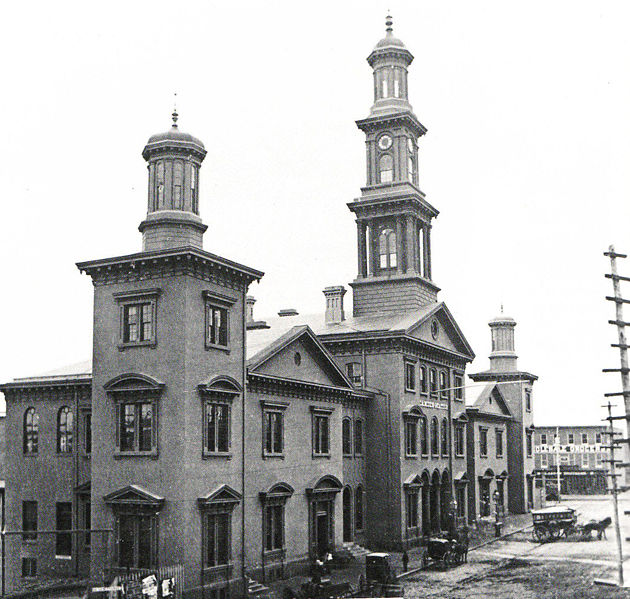
630px-Camden_Station_in_1865

Where the 19th caught the train for D.C. Camden station 1865 (after some additions completed)

Passing the Eutaw House, the regiment halted to give three tremendous cheers at the sight of a large National banner flying over it. Reaching the Washington depot a train came up after a short halt. By noon, the men were aboard and rattling over the rail to the Capital.

Camps and detachments of artillery and picket guards were passed, strewn numerously along the way, guarding .the road, every rail of which between Washington and Baltimore was precious beyond computation to the Government at this time, and was protected by either a musket or a cannon the whole distance. A few miles from Washington the loaded pieces of the regiment were discharged. The firing created a panic in the locality. Pickets, scattered through the field, thought there was a descent by the enemy and came running in. An alarm was sounded in some of the camps. The commotion partly arose from the recollection of a recent attempt on the railroad
at this point.

Washington was reached at 3 p. m. The regiment was full of enthusiasm. It had reached the National army and was now among the defenders of the Capital. The general hope was that orders to go across the Potomac at once and encamp on the sacred soil of the Old Dominion would be received. In view of the undisciplined state of the command, it was ordered into camp of instruction instead, and, pending the selection of camping ground, it was thought best to quarter it in the city. The 8th and 9th of June were accordingly spent in a tall brick building on Pennsylvania Avenue, within a few blocks of the President’s house, known as Woodard’s Hall. Seven rooms were occupied. They were unclean apartments and the regiment was glad, when, on the evening of the 10th, the command came to vacate them and go into camp.

Those 1840 muskets with bayonets that the 19th received on June 5th seem to have come in handy two days later as a deterrent.

Camden Station was a very important place because “[d]uring the four-year conflict, the B&O’s line between Baltimore and Washington, D.C. was the sole rail link between the Federal capitol and the North, resulting in a vital role for Camden Station as B&O’s Baltimore terminal.” I guess that’s another reason why Baltimore itself was so important.

* Yogi Berra

800px-CSA_Flag_21.5.1861-2.7.1861.svg

Waved by hissing beauties on Baltimore's balconies

May 1861 euphoria

May 1861 Union euphoria (LOC - LC-USZ62-91516)

Posted in 150 Years Ago This Week, After Fort Sumter, Military Matters | Tagged , | Leave a comment

“With Pockets Crammed”

Williamsport, Pa – Wonderful Break from Mush and Machine Made Hash

1840 Springfield musket - first waepons for the 19th

1840 Springfield musket - first weapons for the 19th

Since the end of April the 19th NY Volunteer Infantry has been organizing and drilling in Elmira, NY. There have been some challenges, but things are starting to look up. They are going to be moving more south soon, although there is confusion over whether they are going to Washington, D.C. or Chambersburg, Pa, where General Patterson was assembling a force.

On June 4th the “Seward Regiment” received its battle flags and on the 5th the “regiment drew muskets, old flint locks, model of 1840, altered and supplied with percussion locks. Also “A” tents, knapsacks, canteens and camp equipage”. The volunteers didn’t have much time to practice with their “new” weapons in Elmira – they took off the next day. From Cayuga in the Field by Henry Hall and James Hall:

The Cayuga volunteers left Elmira for Washington, Thursday, the 6th of June, 739 strong. A special train of twenty-one freight cars, drawn by two engines, was furnished them for transportation. Into four cars was loaded the baggage and camp equipage, which was bulky and weighed over 25,000 lbs. The regiment stowed itself away, on rough board seats, in the other cars. At 11 A.M., the train moved off with shriek of whistle and clang of bell, running as a special. Thousands of citizens and several companies of soldiers, gathered at the depot and at Barracks No. One, gave hearty hurrahs at parting.

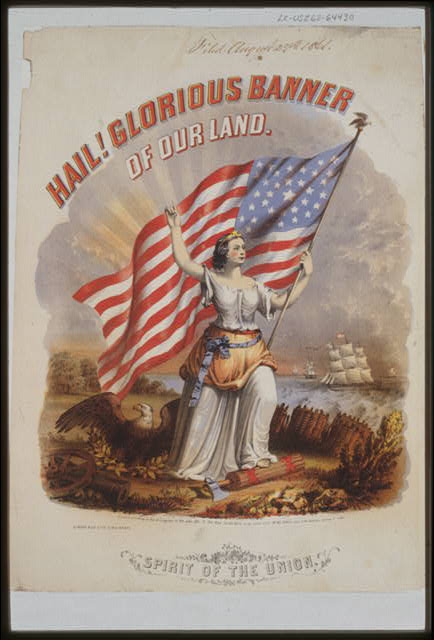
Hail! Glorious banner of our land. Spirit of the Union

Pennsylvanians in June 1861 sure are with her! (LOC - LC-USZC2-3768)

At Williamsport, Pa., which we reached at 2 P.M., patriotic citizens had spread a substantial dinner for the refreshment of the hungry men. On halting, the cars were emptied in a moment Speeches of welcome were made and the volunteers received an invitation to fall on and make a dinner, which they did. Hunger staying ham, biscuits, cheese and sandwiches of dainty preparation burdened long tables in profusion, and pretty maidens brought to all generous cups of the good cheer a soldier loves, rich, pure coffee. Cakes, pies, and fragrant Havana cigars also proved abundant. After a huge repast, the lads in gray grew surfeited and, with pockets crammed, they climbed back to their board benches, to resume the journey, smoke their cigars and bless with heartfelt unction the kindly ladies of Williamsport.

The whole ride through Pennsylvania was exceedingly gratfying to the feelings of the volunteers. Attentions were lavished upon them at every station. Crowds gathered everywhere to cheer them, while ploughmen in the fields and farmers on the cross roads paused to swing their hats as the train flew by. In the evening, bonfires blazed in their honor in the villages. These things and the enchanting scenery of the region through which the railroad ran made a deep impression on the minds of the volunteers, and their patriotism and enthusiasm in the cause of their country were deepened by it, and their rough jolting
and shaking up in the freight cars it made them forget.

The train thundered into Harrisburgh about midnight. Here
a dispatch was handed to Col. Clark, reading as follows :

“Chambersburgh, June 6, 1861.
To the officer commanding the troops from Elmira, N. Y.

By command of Lieut.-Gen. Scott, you have been placed under
my orders. Proceed at once to Chambersburgh.

R. Patterson, Major-General,
Commanding Department Pennsylvania.”

Col. Clark hesitated to obey this order. He had other plans.
Detaining the train, he telegraphed both to Gen. Patterson and
Gen. Scott for further information. Gen. Scott answered
quickly :

” Col. John S. Clark, 19th N. Y. Infantry :

Come to Washington. Winfield Scott.”

Gen. Patterson replied : —
“Col. John S. Clark :

Gen. Patterson was ordered to turn the first Elmira regiment
to this place. Has received no countermanding orders. If
you have been ordered to Washington, since you were first
ordered here, go there.

Fitz John Porter, A. A. G.
Chambersburg, June 6th, 1861.”

A council of officers assembled to consider the matter. It
was decided to go to Washington. After a two hours’ delay, the
complication being solved, the train was ordered on and sped out
of Harrisburgh for Baltimore. Patterson remembered Clark’s
reluctance on this occasion to join him. It was afterwards a
source of trouble.

General Robert Patterson

General Robert Patterson wants 19th in Chambersburgh (LOC - LC-DIG-cwpb-07077)

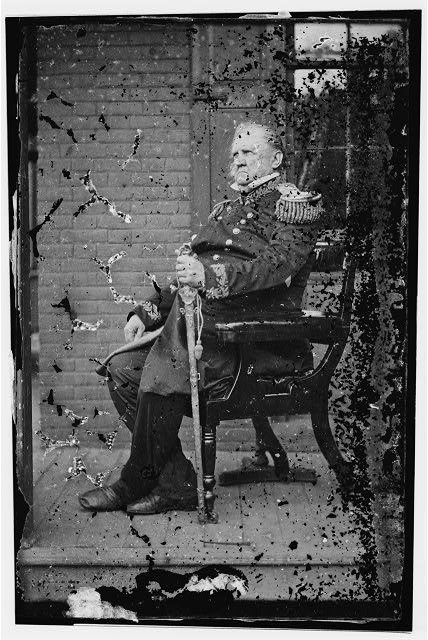
General Winfield Scott 1861

General Winfield Scott wants 19th in D.C. (1861 LOC - LC-DIG-cwpb-04768)

______________________________________________

So the telegraph makes communication faster, but it doesn’t necessarily reduce confusion, mix-ups, and hurt feelings. The telegraph from Fitz John Porter sure would have made me scratch my head.

Wikipedia substantiates what Henry Hall is saying about the 1840 muskets.

Posted in 150 Years Ago This Week, After Fort Sumter, Military Matters | Tagged , , , , , , | 1 Comment

Beauty and Booty

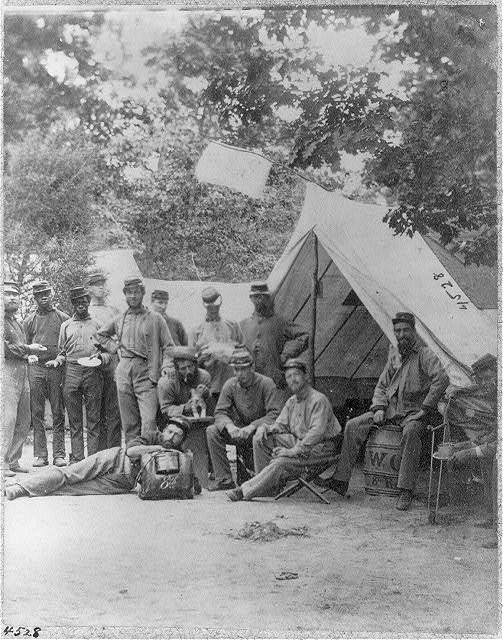
Group of 8th New York State Militia in front of tent, Arlington, Virginia, June 1861

Ready for some plunder? (members of 8th NY Militia - Arlington, VA, June 1861 LOC - LC-USZ62-4841)

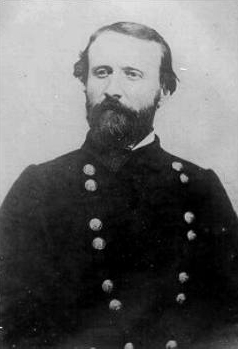
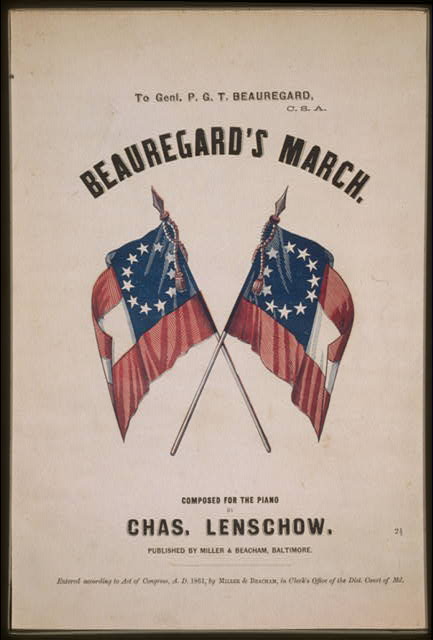
Ah, June in Northern Virginia, and a young Yankee’s fancy turns to “beauty and booty” – at least that’s what General P.G.T. Beauregard is selling. After having forced the North to surrender Fort Sumter in April, Beauregard has recently (and miraculously?) been put in charge of the Confederate troops at Manassas Junction. On June 18, 1861 The New-York Times reproduced Beauregard’s early June proclamation to the Virginia citizens in his area of command:

GEN. BEAUREGARD’S PROCLAMATION.

The following proclamation was briefly referred to a few days ago:

HEAD-QUARTERS, DEPARTMENT OF ALEXANDRIA,

CAMP PICKENS, June 5, 1861.

To the good people of the Counties of Loudon, Fairfax and Prince William:

A reckless and unprincipled tyrant has invaded your soil ABRAHAM LINCOLN, regardless of all moral, legal and constitutional restraints, has thrown his Abolitionists among you, who are murdering and imprisoning your citizens, confiscating and destroying your property, and committing other acts of violence and outrage too shocking and revolting to humanity to be enumerated. All rules of civilized warfare are abandoned, and they proclaim by their acts, if not on their banners, that their war-cry is “beauty and booty.” All that is dear to man — your honor, and that of your wives and daughters, your fortunes and your lives, are involved in this momentous contest.

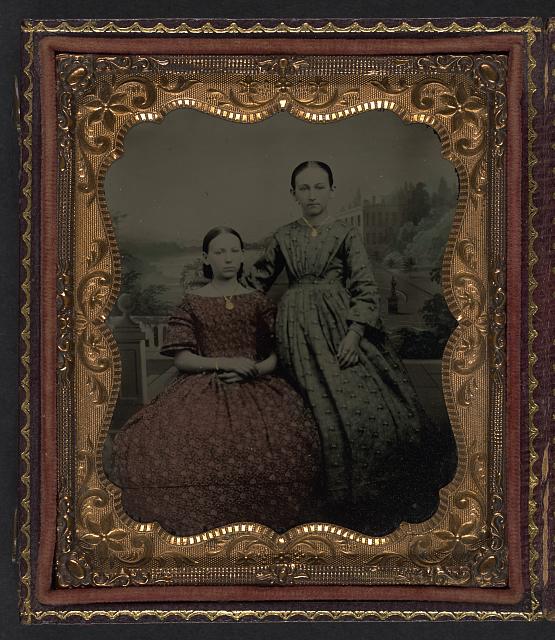
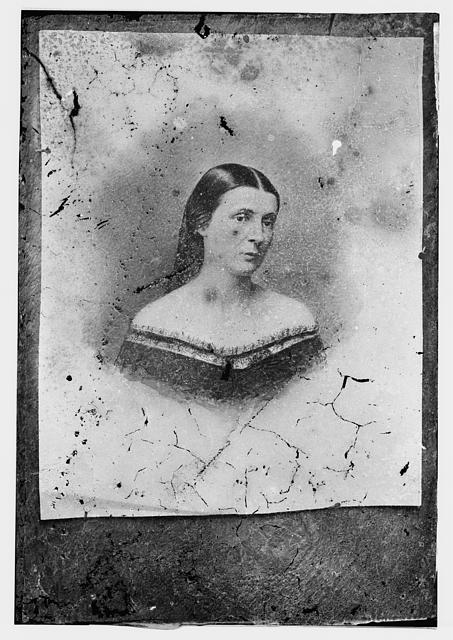
Southern women c.1860-1870

Southern Beauty at risk per Beauregard (LOC - LC-DIG-ppmsca-37178)

In the name, therefore of the constituted authorities of the Confederate States — in the sacred cause of constitutional liberty and self-government, for which we are contending — in behalf of civilization and humanity itself. I, G.T. BEAUREGARD, Brigadier-General of the Confederate States, commanding at Camp Pickens, Manassas Junction, do make this my proclamation, and invite and enjoin you, by every consideration dear to the hearts of freemen and patriots, by the name and memory of your revolutionary fathers, and by the purity and sanctity of your domestic firesides, to rally to the standard of your State and country, and by every means in your power, compatible with honorable warfare, to drive back and expel the invaders from your land. I conjure you to be true and loyal to your country, and her legal and constitutional authorities, and especially to be vigilant of the movements and acts of the enemy, so as to enable you to give the earliest authentic information to those head-quarters, or to the officers under my command.

I desire to assure you that the utmost protection in my power will be extended to you all.

G.T. BEAUREGARD,

Brig.-Gen. Commanding.

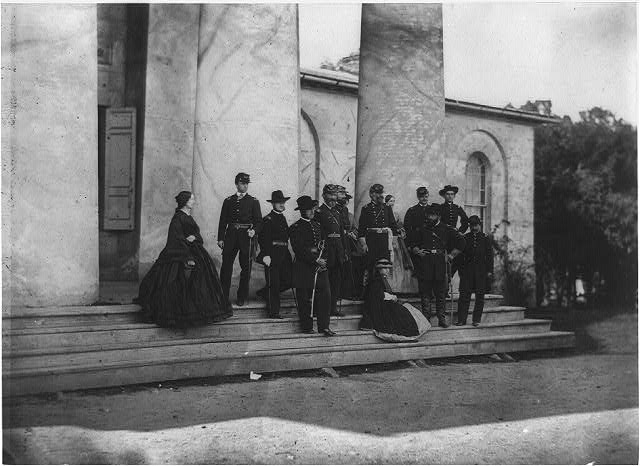
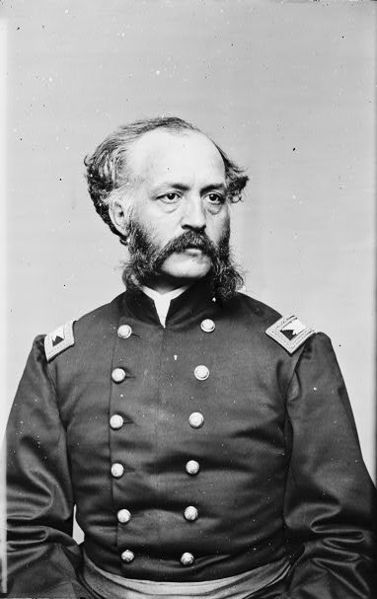
Gen. Samuel P. Heintzelman and staff with their families at Robert E. Lee's home, Arlington House, Virginia

Gen. Samuel P. Heintzelman, et.al. occupying The Lees' Arlington House

When I first read this I couldn’t believe that Beauregard would write such blatant propaganda to try and rouse up the people. Of course, southerners had referred to Lincoln as a “Black Republican” for a long time. Moreover, as it turns out, even early in the war there was some truth to what the general was saying. Here’s an example dealing with Arlington House, the residence of Robert Lee and his wife:

Federal forces occupied the Lee’s property just over a month after Fort Sumter and used it as a headquarters for officers supervising some of the forts that were part of the newly constructed defenses of Washington. Many of the George Washington heirlooms saved and collected by G.W.P. Custis were eventually moved to the Patent Office for safekeeping. Some items, however, including a few of the Mount Vernon heirlooms, were looted and scattered by Union soldiers living in the house.

_______________________________________

Thomas Jordan

Thomas Jordan: lots of opportunity in the new CSA army

One of the Seneca County, New York newspapers in 1861 also reproduced the proclamation. It gave the date of Beauregard’s announcement as June 1. It also appended the following after the general’s “signature”:

Official – THOMAS JORDAN
Acting Assistant Adj’t General.

Having graduated from West Point in 1840, Thomas Jordan was a career United States officer, but by 1860:

he secretly began a pro-Southern spy network in Washington, D.C., that was particularly active in the period immediately after secession. In early 1861, Jordan passed control of the espionage network to Rose O’Neal Greenhow, however, he continued to receive and evaluate her reports even when she was imprisoned.

On May 22, 1861, Jordan resigned from the U.S. Army and was commissioned as a captain in the fledgling Confederate army. Promotion came rapidly, and by June 1861, he had become a lieutenant colonel and a staff officer, seeing duty at the First Battle of Manassas as a full colonel and chief of staff under P.G.T. Beauregard. He also was the army’s adjutant general and accompanied President Jefferson Davis on a post-battle tour of the field.

You can read also read about Rose O’Neal Greenhow at Wikipedia.

Rose O'Neal Greenhow

Spying for the CSA - Rose O'Neal Greenhow (loc - LC-DIG-cwpbh-01247)

Posted in 150 Years Ago This Week, First Manassas - Bull Run, Military Matters | Tagged , , , | Leave a comment

Death of a (Union) Patriot

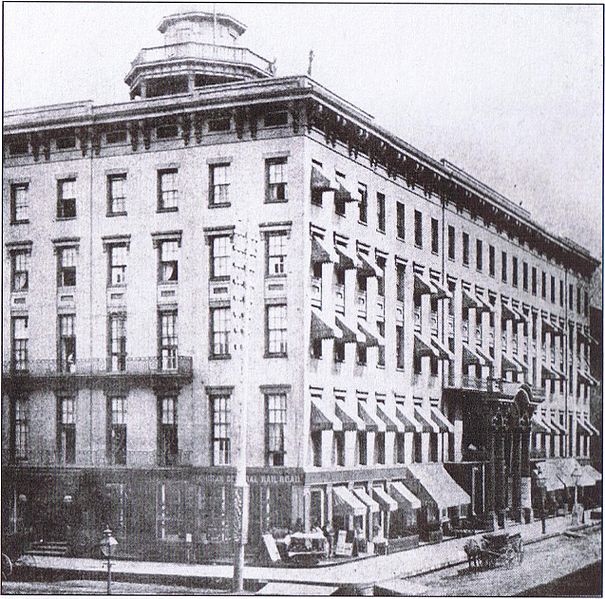
605px-Tremont_House

Chicago's Tremont House - where Douglas died

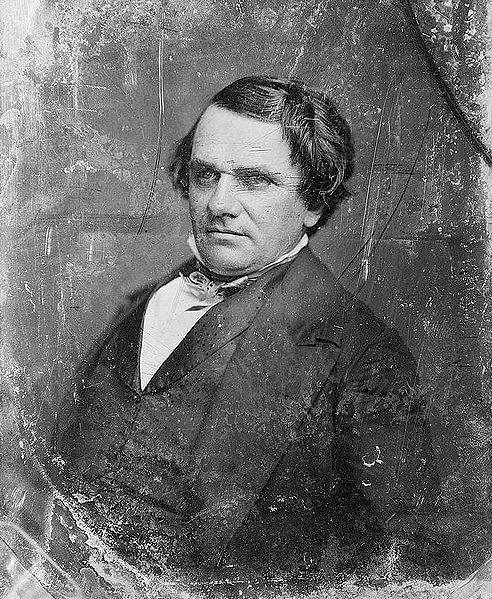
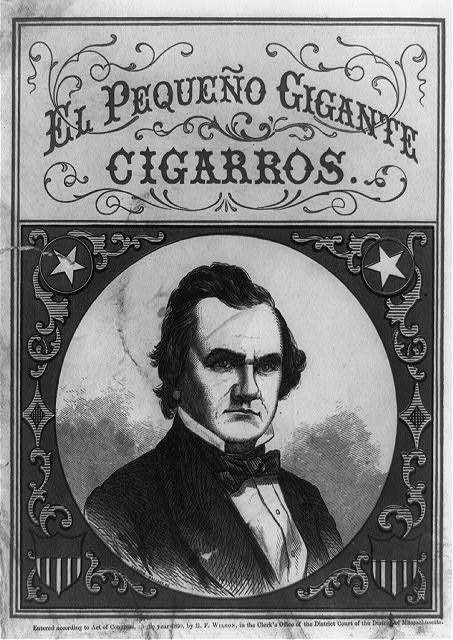
The Little Giant Has Died

From The New-York Times June 4, 1861:

DEATH OF SENATOR DOUGLAS.; His Remains to be taken to Washington. THE NEWS IN CANAIDAGUA. THE NEWS IN ALBANY. THIS NEWS IN POUGHKEEPSIE. …

CHICAGO, Monday, June 3.

Senator DOUGLAS died at ten minutes past 9 o’clock this morning. Those in attendance at the time were Mrs. DOUGLAS, Dr. MILLER, Mrs. CUTTS; J. MADISON CUTTS, Jr., of Washington; D.P. RHODES of Cleveland; Dr. McVICKAR, SPENCER C. BENHAM, and Dr. HAY, of Chicago. His remains will be taken from here on Wednesday, to Washington.

492px-SADouglas

The Little Giant (LOC - LC-USZ62-110141)

CANANDAIGUA, Monday, June 3

Tidings of the death of Judge DOUGLAS fills the hearts of our citizens with sorrow. Our bells are tolling and the flags at half-mast, draped in mourning.

A splendid flagstaff was raised in front of the Town House amid the cheers of the people, to day, and it now bears a flag in mourning, at half-mast, out of respect to Judge DOUGLAS. He (DOUGLAS) was educated here, and is remembered by many of our citizens. A fine portrait of him occupies a prominent position in our County Court room.

Mrs. J.N. GRANGER, the only sister of Judge DOUGLAS, while on her way to the depot at Clifton Springs, to take the train for Chicago on Saturday last, was thrown from her carriage, and was injured, and barely escaped with her life.

The mother of Judge DOUGLAS, who resides at Clifton Springs, is overwhelmed with grief at the death of her only son.

ALBANY, Monday, June 3.

The intelligence of the death of Senator DOUGLAS causes deep grief here. Flags are flying from the Capitol and other places, at half mast, as a mark of respect to his memory.

POUGHKEEPSIE, Monday, June 3.

On the publication of the news of the death of Senator DOUGLAS most of the flags throughout the city were lowered to half mast and the bells tolled. …

The editors of The New-York Times disliked most of Douglas’ Democrat policies, but respected his support for the Union as the secession bandwagon began:

The Death of Senator Douglas.

Had we the power to choose when men should die, we might uncharitably hurry a host to their fate, while others we should earnestly grasp and retain. The present is not the time for the nation to lose Mr. DOUGLAS, At a moment when the entire fabric of our institutions is shaken to its base, and men of character, energy and executive ability, and possessed of the popular confidence, are demanded to lead the great movement for the redemption of our national unity, Mr. DOUGLAS was not to be spared; and our private reasons for lamenting the death of the individual are aggravated immeasurably by the untimely death of an invaluable popular leader. It was just at the moment that the politician was lost in the patriot, and it had become possible for the errors of a political career to be nobly atoned, that the opportunity was torn away.

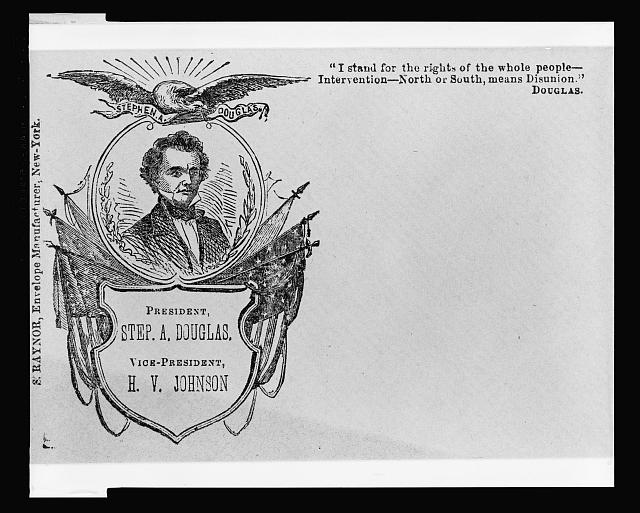
Douglas 1860 campaign

Non-coercive 1860 campaign envelope (LOC - LC-USZ6-693)

The character of Mr. DOUGLAS, as the type of a class of men peculiar to this country, is deserving of careful study. Entirely self-dependent and self-made, his way through the world was forced by dint of sturdy shouldering and incessant blows. His energy, directed by a mind singularly prompt and subtle, and by a courage which nothing of opposition and personal hostility could daunt, was sufficient for every emergency of his public life; indeed, its excess rather carried him beyond the limits which a prudent consultation of self-interest would have marked. …

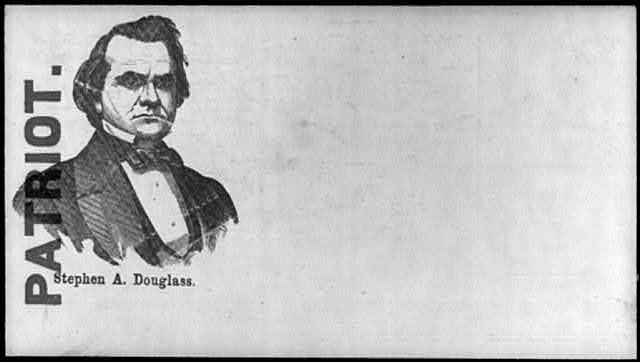
It is agreeable to pass from this page of biography to a later and more honorable chapter. Mr. DOUGLAS lent invaluable aid to Mr. LINCOLN’s Administration by his prompt renunciation of party ties, and his earnest cooperation in the measures necessary for the conquest of the rebels, long before the attack on Fort Sumter had produced a corresponding change in the Democratic sentiment of the North. From that moment he labored with characteristic industry in strengthening the patriotic resolutions of the Western people; and was about to accept rank as Major-General in the army, very properly tendered him by the President, when prostrated by this mortal sickness. If, resuming our partisan uniforms, we find much to censure and object to in the political career of Mr. DOUGLAS, we can safely permit the purer light which gilded his latter days, to fall upon, and mellow, and atone for the past.

Douglas Civil War envelope

Stamped 'Patriot' - Civil War union envelope (LOC - LC-USZ62-53591)

In private life, and especially in social intercourse, Mr. DOUGLAS was unusually attractive. His vigorous, acute, creative intellect stimulated other minds in contact with it to abnormal activity, and his wealth of anecdote, observation and reading, rendered his conversation as amusing as it was suggestive and instructive. In his domestic relations he was peculiarly happy. A warmly affectionate nature prepared him to enjoy the society and intimacy of his children, whom he was never willing to spare from his side. The frank and confidential character of the relations between him and his amiable wife have, in the publicity of his career during the last year or two, been matters of popular remark and admiration. In every relation indeed, whether as a statesman, a citizen, a father, or a husband, the loss of Judge DOUGLAS is an incalculable one; and one the entire people will unite in deploring.

S A Douglas

The Little Giant (LOC - LC-USZ62-90675)

1860 presidential campaign

S. A. didn't win 1860 election (LOC - LC-USZ62-12424)

Posted in 150 Years Ago This Week | Tagged | Leave a comment

Calling All Marksmen!

Pro-Union Marksmen, That Is

377px-Hiramberdan

Eagle-eye: Hiram Berdan (LOC - LC-DIG-cwpb-07360)

From The New-York Times June 2, 1861:

THE SHARP-SHOOTERS.

As will be seen from the following card, Mr. H. BERDEN, who has made the best rifle shot on record, so far as can be ascertained, has contented to take command of the Regiment of Sharp-Shooters, which is now organizing:

FIFTH-AVENUE HOTEL, NEW-YOKK, May 30, 1861.

To the Sharp-Shooters in the Loyal States:

GENTLEMEN: Many of you are undoubtedly aware that an effort is making to get up a regiment to be composed entirely of first-class rifle-shots at long distances, and that in consequence of my having myself done something in this way of rifle-shooting, suggestions have been made in the public press that I should aid in this effort. I am, moreover, receiving almost daily applications, by letter and in person, to the same effect, and I see so clearly the great importance of the object in view, that I do not feel at liberty to refrain from doing what I can to further it.

With this view I propose that all such gentlemen that have made themselves good shots at long distances, who are willing to place their skill in this way at the service of our country, in this her great struggle, should send their names to me, with an affidavit, showing the best shooting they have done at two hundred yards, or more.

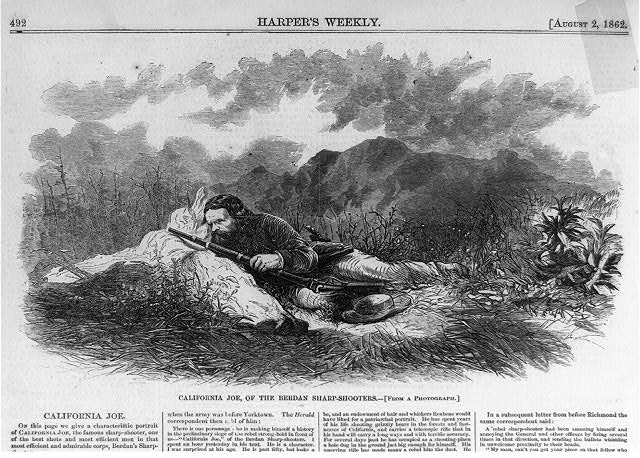
California Joe of Berdan Sharpshooters

California Joe of Berdan Sharpshooters (Harper's 8-2-1862 LOC - LC-USZ61-1895)

As soon as the necessary arrangements are made for equipment, &c., notice will be given to all these whose applications are approved.

No application will be considered in which the average of ten consecutive shots exceeds five inches from centre of target to the centre of the ball at two hundred yards.

The prodigious efficiency of detachments of such Sharp-Shooters, armed with our Northern Patent Target Rifles, needs only to be alluded to to be recognized at once by all who have any knowledge of this subject.

Need I add one word to enforce the duty of our amateur target-shots to make their peculiar skill useful to our country at this time of trial? That skill — the offspring of a manly Northern sport — can be converted into a powerful military instrument so readily, I feel confident the subject need only to be suggested to insure its being fully and promptly attended to.

Very respectfully, your obedient servant,

H. BERDAN.

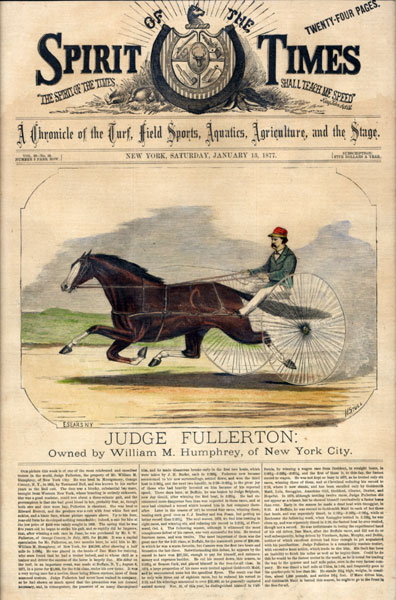
141_Spirit_Of_The_Times_Judge_Fullerton

"Spirit of the Times" 1877

The Spirit of the Times, a few days ago, published a record of forty of the best shots which have been made in this country, and it is a remarkable fact that but one of these was credited to a resident of the Slave States; thus demonstrating that in rifle shooting the North is superior to the South.

A Regiment such as is now organizing, could do immense service in the field. The main difficulty in the way of filling it immediately is the trouble and expense of gathering the best shots from the different towns and cities through the country where they reside. Money is needed, not only for the equipment of the Regiment, but for the collection of it. Those who feel disposed to aid in this patriotic movement will be able to learn all the particulars of it from Mr. BERDAN

In addition to being a “world renowned marksman” Hiram Berdan invented many weapons.

You can see the green uniform of the Sharpshooters at the Smithsonian.

Capt. C. A. Stevens wrote Berdan’s United States sharpshooters in the Army of the Potomac, 1861-1865 (1892).

The Spirit of the Times was a magazine for sportsmen.

[The sharp-shooters' carnival]

The sharp-shooters' carnival 1868 (LOC - LC-USZ62-134450)

Posted in 150 Years Ago This Week, After Fort Sumter, Military Matters | Tagged , | 2 Comments

Bright Light On the Point

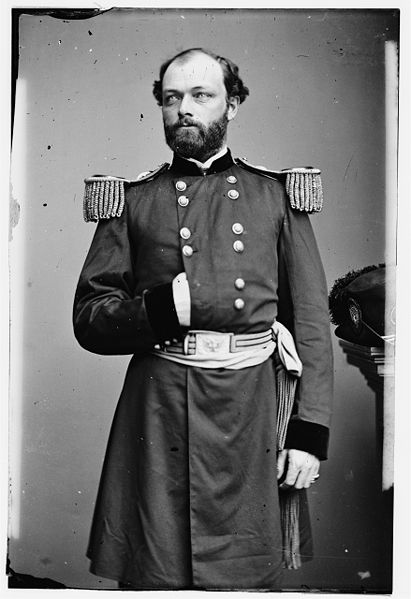
411px-Quincy_Adams_Gillmore

A bright idea: Q.A. Gillmore (LOC - LC-B813-2239)

From The New-York Times June 1, 1861:

THE CALCIUM LIGHT.

This powerful light, now on trial at Old Point Comfort, is an improvement on the old Drummond light. It is produced by the combustion of pure lime — oxyde of calcium — in the flame of the oxy-hydrogen blow-pipe. When this combustion takes place in the focus of a reflector of parabolic form, a cylinder of intensely illuminated rays is projected along the axis of the paraboloid. A cone of rays of any required degree of divergency, is produced at pleasure, by moving the flame in either direction along the axis.

This light was officially recommended to the War Department about a month since, by Lieut. GILLMORE, Corps of Engineers U.S.A., as an efficient method of illuminating everything within effective gun-range, in our fortified channels and roadsteads. The Department promptly acted on Lieut. GILLMORE’S suggestion that a thorough trial of the light should at once be made as Fortress Monroe, Virginia. The Union Defence Committee furnished the means required for this purpose. The proprietor of the light is now at Fortress Monroe.

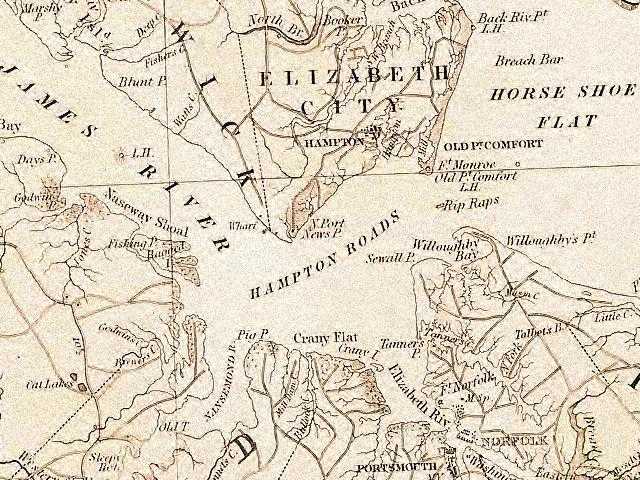
Hampton_Roads_1859

In the limelight - Old Point Comfort and vicinity map c. 1859 (Library of Virginia)

Quincy Adams Gillmore graduated first in his class at West Point in 1849 and served in the army as an engineer. “From 1849 until 1852, he was engaged in constructing the fortifications at Hampton Roads in coastal Virginia.” He had a big role in the Civil War.

Calcium Light (also known as limelight was mostly used for stage lighting. You can see a Recruiting Broadside for the Calcium Light Regiment at Weehawkenhistory.

Once again the Union Defence Committee is helping out Uncle Sam.

Posted in 150 Years Ago This Week, After Fort Sumter, Military Matters | Tagged , , , | Leave a comment

Drinking Swamp-Water at the Race Track

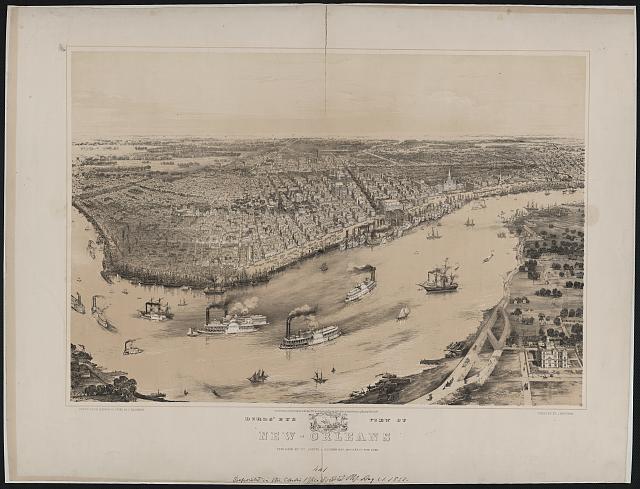
New Orleans 1851

New Orleans 1851

On May 31, 1861 The New-York Times reported on the observations of RICHARD FAIRCHILD, a British subject who had lived for several years in St. Mary’s Parish, Louisiana. Because he was British Louisiana authorities allowed him to leave the Bayou State for New York City:

IMPORTANT FROM LOUISIANA.; Condition of Affairs in the State The Military Excitement Morale of the Troops Bad Commissariat Fears of Slave Insurrection Matters Along the Mississippi, &c.

… Mr. FAIRCHILD states that throughout Louisiana an intense excitement existed among the people. The news of the united sentiment of the North, and the extensive preparations making to maintain the power of the Government, had intensified the hostility of public feeling against the Government, and the determination was expressed to submit to the United States only when they were killed. The soldiery and masses of the people expressed confidence in their success, and the stupid bragadocio of the South, that “one Southerner was a match for five Yankees,” was often repeated and used to stimulate others to enroll themselves in the rebel ranks. The leaders who control the movements did not fully share in this confidence when conversing with one another, and some even admitted the possibility of the Government accomplishing its purposes, but contending they could only do so by effecting the annihilation of the Southern people.

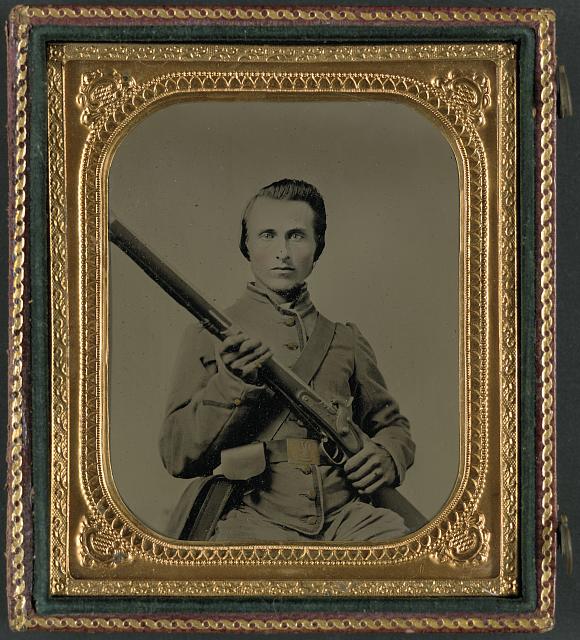
Confederate soldier with Lousiana belt buckle

Didn't drink the water?Confederate soldier with Lousiana belt buckle (LOC - LC-DIG-ppmsca-31314)

Previous to his departure, Mr. FAIRCHILD visited the rebel camp on the Metaire Race Course, near New-Orleans. Eight thousand troops were there quartered, of whom he thought five thousand were well armed and fairly equipped. The remainder were indifferently supplied with arms and equipments. Much disturbance and dissatisfaction existed among them, owing to the inferior food supplied them, and the limited quantities and irregular manner in which it was dealt out. The want of proper clothing and blankets was also a great source of complaint. The camp is situated in the midst of a swamp, from which they were supplied with water. The means were not forthcoming, and did not exist, to properly equip and supply a large force; what means was obtained came reluctantly, and of course it could not be expected that the soldiers could get their pay.

Their rations consisted only of pork, beans, bread and coffee, and these often of the most inferior quality. Mr. F. was informed by the soldiers that they had several times been three or four days at a time without any beverage but swamp-water.

As a class the soldiers are inefficient, except those from New-Orleans, they being largely composed of mechanics and working-men.

Many companies of these are well drilled, and present a very soldier-like appearance. But the troops from the parishes present a sad spectacle. They are mostly planter’s sons, unused to toil of any kind, reared in indolence, often dissipated and physically weak. An ordinary Northern militia muster in the country in times of peace, would furnish better material for immediate service than the mass of the rebel troops that have come from the Louisiana parishes. In many instances the soldiers brought negro servants with them, but greatly to their “young masters'” grief, they were sent back — the Commissariat bring too low to admit of the luxury of privates in the ranks being furnished with servants. …

The women of Louisiana share in the prevalent feeling. Even before sunrise Mr. F. had seen them industriously at work, and continuing their exertions until dark, in making clothing for the troops. …

Well, I have heard that about two-thirds of all Civil War casualties were caused By non-battle-related disease.

THE METAIRIE RACE TRACK became the Metairie Cemetery in 1872.

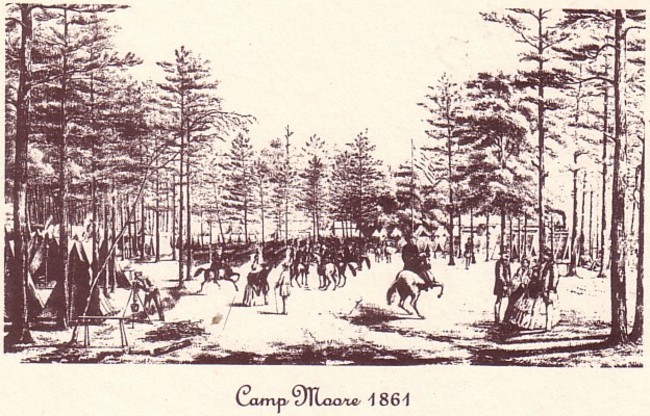
CampMoore-1861

Camp Moore-1861


Camp Moore was built near the Mississippi border and seems to have been a healthier environment: “The location of the camp was chosen due to its relatively high ground elevation, abundance of fresh drinking water, and being adjacent to the then New Orleans, Jackson & Great Northern Railroad line.”

___________________

The rest of the article is quite interesting and included topics like a group of about 1500 blacks who are organizing to defend Louisiana:

A novel feature in the military movements of the State was a body of 1500 free negroes, who were armed, and were daily drilling in New-Orleans. Mr. FAIRCHILD witnessed one of their parades. He states that they exhibit a fair proficiency in their evolutions. The non-commissioned officers were selected from the negroes themselves, but they were commanded by whites. The whole body had enlisted for general service, and were subject to be ordered to any point, at the option of the authorities.

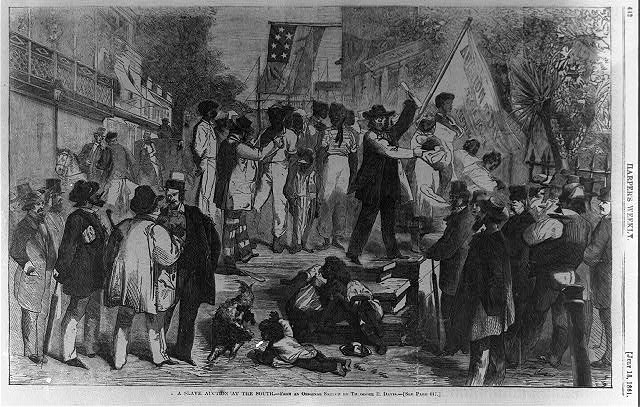
Also, slave owners are afraid of slave insurrections because their slaves had heard that the federal government is going to free them.

Slave Auction 1861

On its last legs? (Harper's 7-13-1861 LOC - LC-USZ62-2582)

Posted in 150 Years Ago This Week, After Fort Sumter, Military Matters | Tagged , , , , | Leave a comment