Fighting Words On A Cake

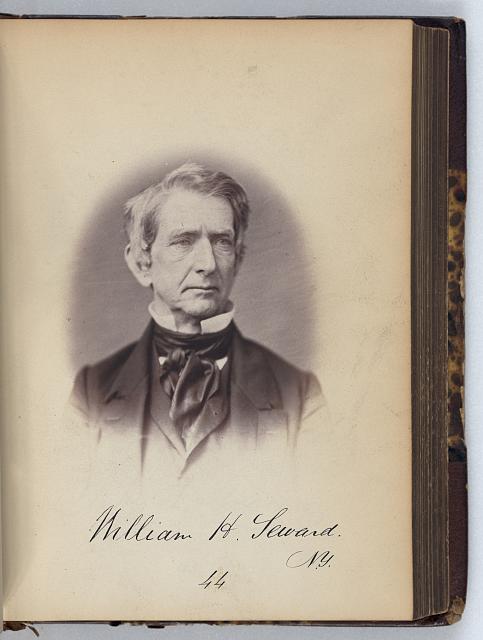
William H Seward, 1859

William H Seward, 1859

We’ve been following the 19th New York Volunteer Infantry as it drills in Elmira, New York. The regiment has had to persevere through some difficult circumstances, but things aren’t all bad. For example, the volunteers believed they had the support of Secretary of State, William H. Seward, because Seward’s permanent residence was in Auburn, Cayuga County, where the bulk of the regiment came from (Cayuga in the Field):

With field and staff thus constituted, the regiment felt a great and general satisfaction. Nearly all were novices in war; but the men felt safe and strong in the leadership of officers of such known ability and intellect, especially since it was generally believed that Secretary Seward approved the choice made and would do all he could to help the regiment commanded by them. The 19th at once dubbed itself “The Seward Regiment,” and resumed its work of training.

Unfortunately, Seward’s alleged patronage didn’t help much with the food and uniforms provided the regiment.

Thankfully, there were care packages from home:

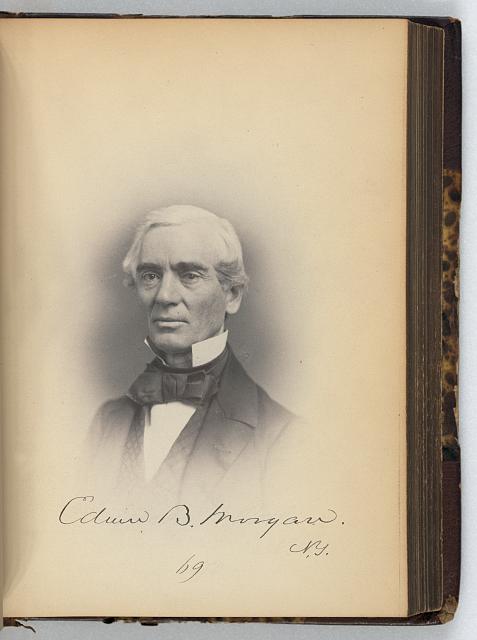
Edwin B. Morgan 1859

Some dough for the boys: Edwin B. Morgan 1859 (LOC - LC-DIG-ppmsca-26608)

The deprivations of camp life in the ration department were sometimes relieved from home. Barrels of goodies came sometimes from Auburn. Once there came a plum pudding, aromatic with spices, which created a sensation. Huge cakes came now and then. One royal specimen was inscribed “If any man attempts to haul down the American flag, shoot him on the spot.” Sums of money, the gifts of patriotic friends, aided to replenish a poor larder and provide comforts. Dr. Willard gave the soldiers $50 ; Theo. P. Case and Clarence Seward each $100 ; E. B. Morgan sent $500. The thankfulness of the men found expression, as gifts were announced, in hearty hurrahs, and resolutions of thanks.

Edwin B. Morgan was the first president of Wells Fargo and served as a U.S. House Representative during the 1850’s. “During the American Civil War, Morgan was active in raising and equipping regiments from New York, for which he received the title of colonel.”

At age seven Clarence Seward became an orphan. His uncle William H. Seward helped take care of him.

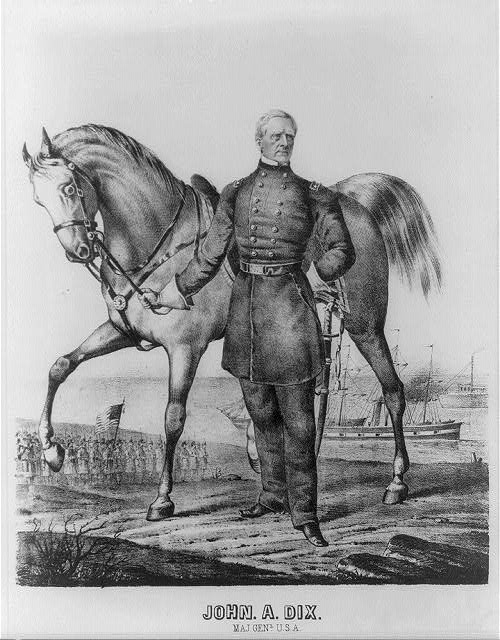
John Adams Dix wrote his fighting words on January 29, 1861:

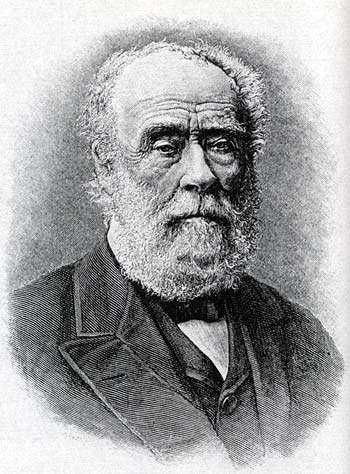
Dix was appointed United States Secretary of the Treasury by President James Buchanan in 1861. At the outbreak of the Civil War, he sent a telegram to the Treasury agents in New Orleans ordering that: “If any one attempts to haul down the American flag, shoot him on the spot.” Although the telegram was intercepted by Confederates, and was never delivered to the Treasury agents, the text found its way to the press, and Dix became one of the first heroes of the North during the Civil War. The saying is found on many Civil War tokens minted during the war, although the wording is slightly modified.

A Civil War token apparently honored Dix’ famous words. So far I have not seen any cake examples – I’m sure the Cayuga boys quickly digested theirs.

John A. Dix, hero

John A. Dix, Union hero (LOC - LC-USZ62-35087)

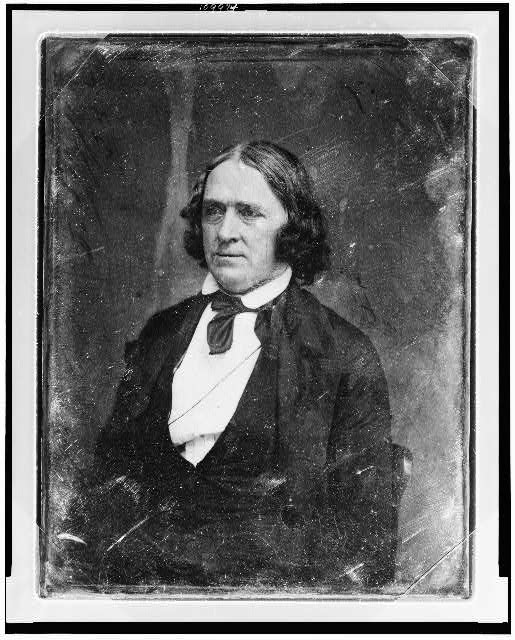
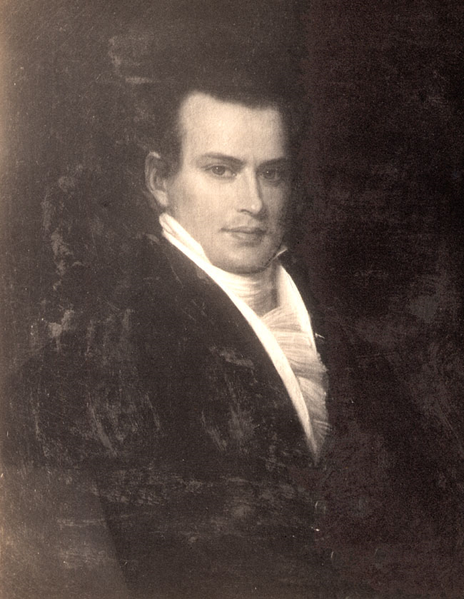
John A. Dix (probably 1840s)

young Dix (possibly as U.S. senator in 1840s) (LOC - LC-USZ62-109924)

Posted in 150 Years Ago This Week, After Fort Sumter, Military Matters | Tagged , , , , , | Leave a comment

A Professor Goes to War

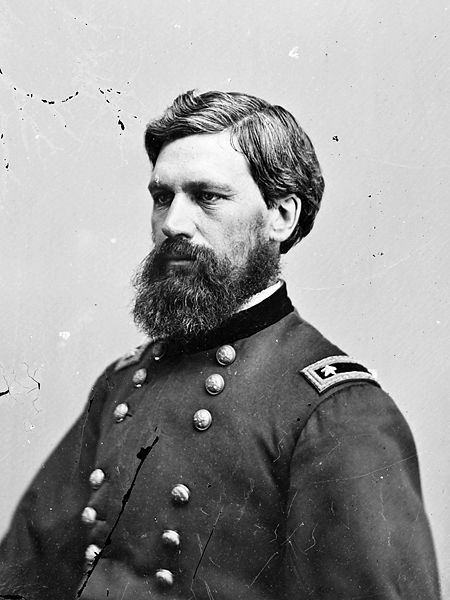
450px-Oliver_Otis_Howard

O. O. Howard: mathematics professor no more (LOC - LC-DIG-cwpbh-00893)

From The New-York Times May 29, 1861:

ELECTION OF COLONEL.

AUGUSTA, Me., Tuesday, May 28.

Lieutenant OLIVER O. HOWARD, of the regular army, now one of the Professors at West Point, was to-day elected Colonel of the Third Regiment of Maine Volunteers.

An 1854 West Point graduate, Oliver Otis Howard fought in Florida in 1857 during the Third Seminole War:

It was in Florida that he experienced a conversion to evangelical Christianity and considered resigning from the Army to become a minister. His religious proclivities would later earn him the nickname “the Christian general.” Howard returned to West Point in September 1857 to become an instructor of mathematics and the following year he was promoted to first lieutenant. As the Civil War began with the surrender of Fort Sumter, thoughts of the Ministry were put aside and he decided to remain in the service of his country.

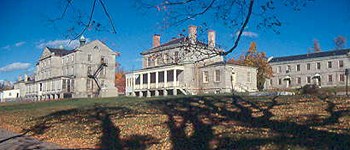
Kennebec_Arsenal,_August_(Kennebec_County,_Maine)

Kennebec Arsenal, Augusta Maine - where O.O. served after graduating from West Point

Fort Sumter changed a lot.

Posted in 150 Years Ago This Week, After Fort Sumter, Military Matters | Tagged | Leave a comment

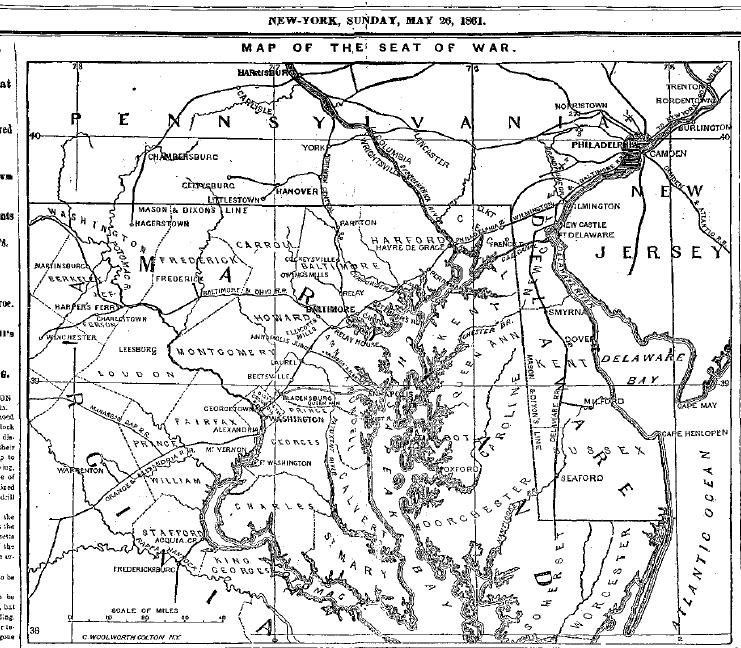
Seat of War

Best wishes to everyone for a great weekend and a good Memorial Day.

Here’s a map of the Seat of War from the May 26, 1861 issue of The New-York Times

Seat of War

Seat of War

Posted in 150 Years Ago This Week, After Fort Sumter, Military Matters | Tagged | Leave a comment

Europe Chimes In

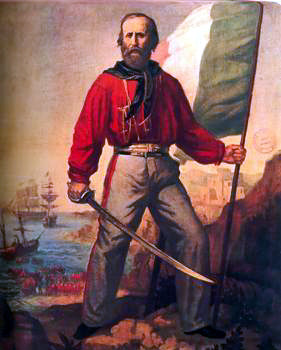
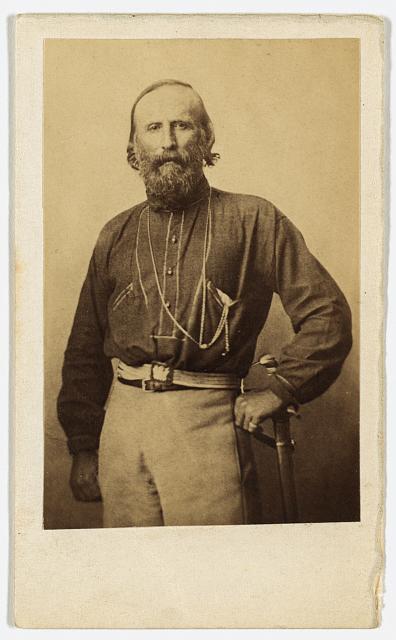
Risorgimento,_Giuseppe_Garibaldi

Garibaldi: dissolution will bring "universal evil"

Garibaldi Weighs In

FromThe New-York Times May 27, 1861:

GARIBALDI ON ITALY AND AMERICA.

From the Louisville Democrat.

A friend sends us the following from the hero of Italy:

ISLAND DE CAPRERA, Italy, May 6, 1861.

MY DEAR OLD FRIEND: I shall never forget my happy sojourn in your great country, while an exile from my own, nor the many friends I made there while in humble retirement. After centuries of already[?] troubles and disunion, Italy is again almost entirely reunited, and soon will be entirety so. In the mean time it pains my heart to see that you are dissolving your great nation into fragments and initiating civil war. May God save you from such a calamity. You may rely on it no good, but universal evil will come of the dissolution of your Union. If I can aid you in any way my agent in New-York, Col. ——, is instructed to take and execute your orders.

Faithfully and forever your friend.

GARIBALDI.

Garibaldi

Abe out of a job? Garibaldi would serve only as commander-in-chief (ca.1861 LOC - LC-DIG-ppmsca-08351)

According to Wikipedia Giuseppe Garibaldi did offer his services to the Union:

At the outbreak of the American Civil War (in 1861), Garibaldi volunteered his services to President Abraham Lincoln. Garibaldi was offered a Major General’s commission in the U. S. Army through the letter from Secretary of State William H. Seward to H. S. Sanford, the U. S. Minister at Brussels, July 17, 1861. On September 18, 1861, Sanford sent the following reply to Seward:

He [Garibaldi] said that the only way in which he could render service, as he ardently desired to do, to the cause of the United States, was as Commander-in-chief of its forces, that he would only go as such, and with the additional contingent power—to be governed by events—of declaring the abolition of slavery; that he would be of little use without the first, and without the second it would appear like a civil war in which the world at large could have little interest or sympathy.

_______________________________________

The Uprising of a Great People
The same issue of The Times reviewed a new book by Frenchman Agénor de GasparinUn grand peuple qui se relève (THE UPRISING OF A GREAT PEOPLE.). From the Introduction:

The title of this work will produce the effect of a paradox. The general opinion is that the United States continued to pursue an upward course until the election of Mr. Lincoln, and that since then they have been declining. It is not difficult, and it is very necessary, to show that this opinion is absolutely false. Before the recent victory of the adversaries of slavery, the American Confederation, in spite of its external progress and its apparent prosperity, was suffering from a fearful malady which had well-nigh proved mortal; now, an operation has taken place, the sufferings have increased, the gravity of the situation is revealed for the first time, perhaps, to inattentive eyes. Does this mean that the situation was not grave when it did not appear so? Does this mean that we must deplore a violent crisis which alone can bring the cure?

Garibaldi and de Gasparin seem to agree that Alexander Stephens’ Cornerstone is really more of a millstone around America’s neck – it must be removed.

Posted in 150 Years Ago This Week, After Fort Sumter | Tagged , | Leave a comment

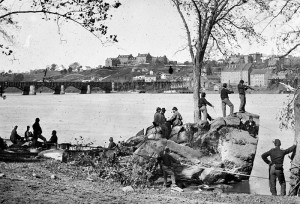
Invading Virginia’s “Sacred Soil”

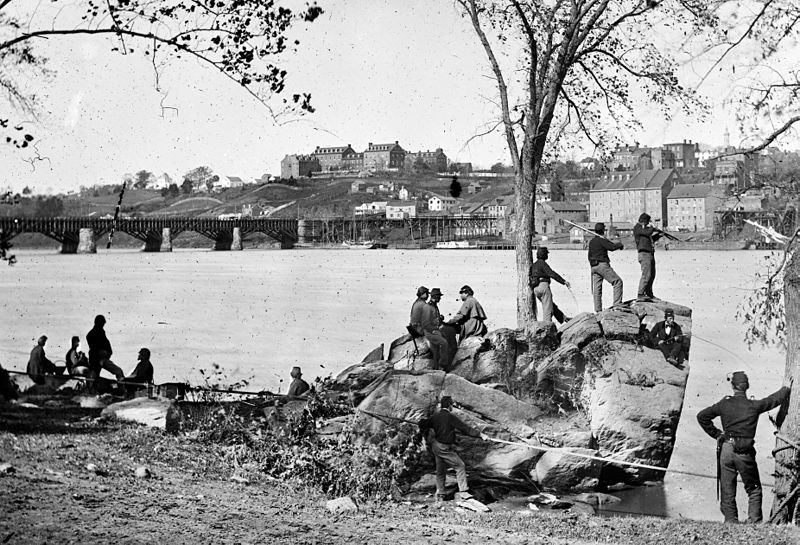
800px-Georgetown_1861

A view of Georgetown U. and aqueduct from Virginia soil (1861 LOC - LC-DIG-cwpb-00928)

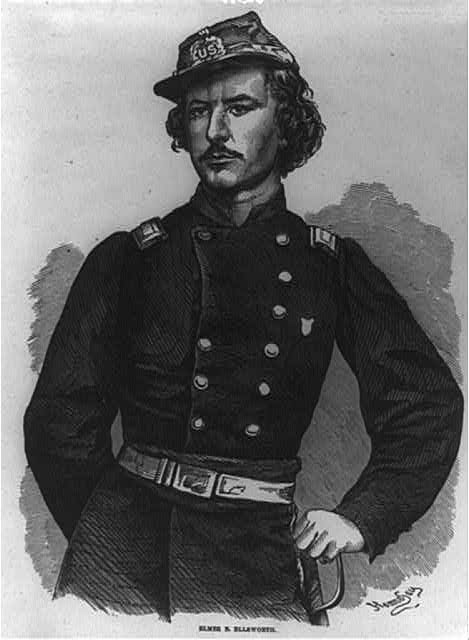
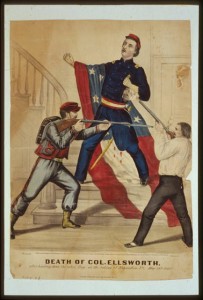
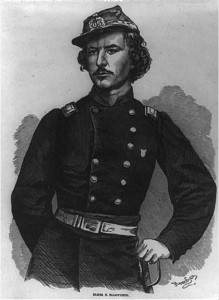
Civil War Daily Gazette has reported on the Union capture of Alexandria and the death and martyrdom of Elmer Ellsworth. The Union advance brings back memories of Virginia Governor John Letcher’s message on January 7, 1861 that Virginia would not be a corridor for the North to invade the seceded southern states. Four and a half months later Virginia has seceded and the North is moving on Virginia itself.

On May 26, 1861 The New-York Times published a report by its correspondent who accompanied the Union advance on Alexandria. Here’s some excerpts:

OUR WAR CORRESPONDENCE.; The March into Virginia–The Fifth, Twenty-eighth and Sixty-ninth– New-York State Militia–First Night’s Campaigning.

IN CAMP, ARLINGTON HEIGHTS, a.,

Friday, May 24, 1861

Last night that event so threateningly denounced by Gov. LETCHER took place. The “sacred soil” of Virginia received the imprint of thirteen thousand feet on march to the vindication of the Union.

Visiting the [sixty-ninth] Regiment in their quarters in the Catholic College, on Georgetown Heights. last evening, the scene was strange and impressive in the highest degree. The men had no idea they were about to start for Virginia, but knew that a move in some direction was contemplated, though few of them thought the line of march would be given until the beginning of next week.

Nevertheless, the main halls and corridors of the college presented a bustling and busy scene, the Commissary. Quartermaster and Adjutant superintending the distribution of vast quantities of clothing — red flannel shirts, woolen socks, heavy marching shoes, blankets and general equipments.

Moving through the companies of men led up by their officers to receive these supplies, the dark robed figures of the Holy Fathers of the College presented a striking contrast. Calm, pale, clad in long black robes reaching to the ground, and wearing the peculiar black cap of their order, the ministers of religion formed a stern background to the brilliancy of uniforms, the glitter of arms and the glare of light which made up the scene on entering.

Passing out into the moonlight, we could see, from the brow of the hill on which the college is built, the leafy Heights of Arlington across the river; the long aqueduct, which also serves as a bridge and is guarded at either and by Uncle Sam’s artillerymen; the City of Alexandria in the distance, across the water; and the beautiful tree-crowded islands lying between this point and that city. Before us, the calm of Nature seemed unbroken; not a breath of wind stirring, and the shadow of the smallest branch being reflected in the water.

Turning round, however, the two vast piles of red brick buildings which form the main portion of the College, were all slight with excitement — save in that wing of one of them still occupied by the of y or sixty students who remain, out of the three hundred lately gathered at this seat of learning. More than forty of the elder students, hailing from the South, are now, it is said, lieutenants in the Confederate Army. The peace of the Academy has given place to the clang of arms; and the Holy Fathers have only to fear that the regiment which succeeds the Sixty-ninth may not be to amenable to the mild discipline of religion and persuasion. …

By two o’clock last night everything was in readiness for the road, the men still believing that they were not to start until to-day, and executing every moment to be dismissed and sent to their quarters. At half past two, however, the orders were given to take up the line of march; and by three o’clock this morning the head of the Sixty-Ninth could be seen winding over the narrow pathway on one site of the aqueduct, while the rear guard were still defining through the main gate of their quarters, and stretching in tenuous curves through all the intervening streets. …

Over the aqueduct marched the troops — their shadows, forty feet below, on the calm surface of the Potomac, advancing steadily alone the water in fantastic procession. Suddenly, at the end of the bridge, the line wheeled upon the road for Alexandria — not a bugle sounding, not a drum beating; the deep silence of the trees on each side and overhead being utterly unbroken: every eye straining through the little patches of moonlight shimmering down through the leaves, to catch sight of any lurking foe; and every ear alert for the sharpening that was to announce another officer picked off by some assassin marksman.
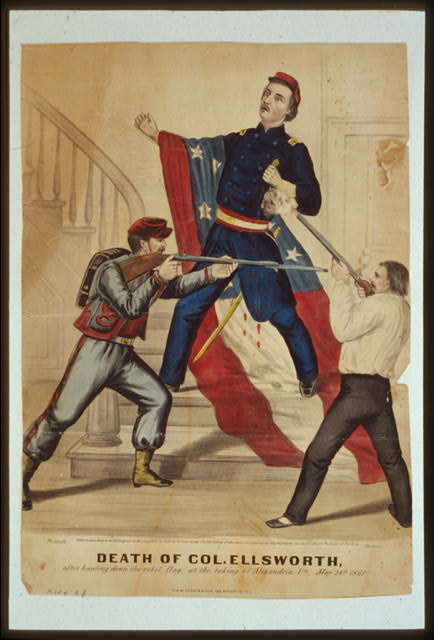
Ellsworth's death

Ellsworth's and Jackson's deaths (Currier and Ives LOC - LC-USZC2-2231)

Then out into the broad moonlight, and over long patches of meadow land and grassy uplands — again plunging into the woods and again reappearing in open country. Here and there were beautiful mansions embosomed in trees, their white walls and green verandahs wearing none the less an air of comfort for the heavy dews that were falling; the weariness of the men under the novel weight of their full accoutrements and ammunition; the undulating character of the country, and the very doubtful prospect looming up in the immediate future of a nap or two hours on the wet grass, and then to work at entrenchments with the first daylight. Let the owners of those mansions sleep peacefully in their beds while they may! It is not forever that such acts as the murder of Col. ELLSWORTH, of which we have only this moment heard, can fail to draw down a frightful retribution alike on the just and the unjust.

Arriving at a distance of about four miles from Georgetown, the Fifth and Twenty eighth were posted for camp duty, first breaking down the bridges in advance of them, to prevent a sudden attack by the Secessionists. …
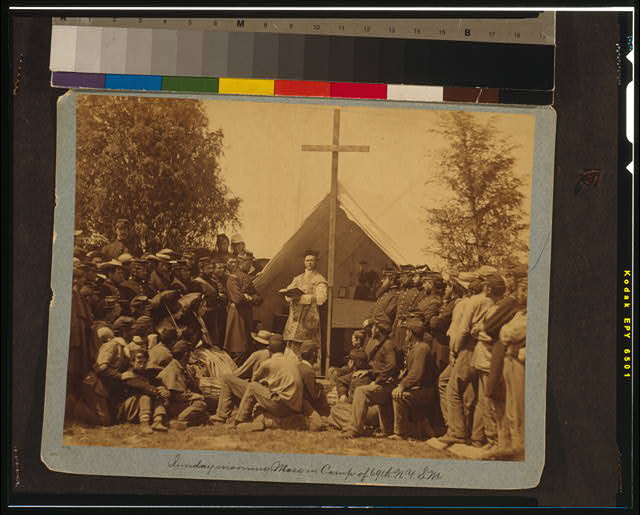
Father Thomas Mooney and Sunday mass

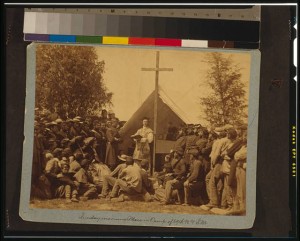
Father Mooney offers Sunday mass for the 69th (1861 LOC - LC-USZC4-7964)

As for the Sixty-ninth, they turned out more than twelve hundred muskets, leaving yet another hundred — the newly-arrived Zouaves — in their late headquarters at the College. This Regiment has grown into great fever in Washington — not a single one of its members ever having become amenable to the police authorities in any way; and its discipline and efficiency having frequently been made the subject of complimentary notice by Gens SCOTT and MANSFIELD. For very much of the good order and moral restraint existing in the ranks, it is doubtless indebted to the ceaseless and zealous exertions of Father THOMAS MOONEY, an admirable specimen-priest of the true high type, who, if he were not chaplain, would certainly be a candidate for Colonel — fate and a sanguine temper giving him equal adaptation to the sword of the spirit and the “regulation sword” — a veritable son of the church-militant. But this again is a degression.

The Fifth and Twenty-eighth being posted in a position which, to describe, must be seen by daylight the Sixty-ninth then wheeled back, four of its companies being stationed on a hill about half way between the aqueduct and the advance, to keep open communication, three companies being detailed under orders of an engineer officer of the United States, to throw up fortifications and entrenchments for a camp, to be occupied by the regiment; and the balance having their post of duty assigned on a narrow trip of land, sloping down from the Aqueduct canal to the shore of that arm of the Potomac which runs up past Georgetown, where they are to keep open and protect a military ferry that has been established between the District of Columbia and Virginia — this ferry having its Virginian terminus exactly at the foot of the road to Alexandria. It is not difficult to conjecture what this means, and the less so as rafts laden with horses and boats carrying field pieces, are already passing over. … H


_______________________________________________
Elmer Ellsworth

"engaged in the performance of a sacred duty" (Ellsworth LOC - LC-USZ62-62594)

From one of the newspapers published in Seneca County, New York (sometime in 1861):

The following is a copy of the last letter written by the gallant Col. Ellsworth, except one to his affianced bride, written at the same time, just before moving on Alexandria:

Headquarters 1st Zouaves Camp Lincoln,
Washington, D.C. May23, 1861

My Dear Father and Mother:— The regiment is ordered to move across the river tonight. We have no means of knowing what reception we are to meet with. I am inclined to the opinion that our entrance to the city of Alexandria will be hotly contested, as I am informed a large force have arrived there to-day. Should this happen, my dear parents, it may be my lot to be injured in some manner. Whatever may happen, cherish the consolation that I was engaged in the performance of a sacred duty; and to-night, thinking over the probabilities of the morrow and the occurrences of the past, I am perfectly content to accept whatever my fortune may be, confident that He who noteth even the fall of a sparrow, will have some purpose, even in the fate of one like me.

My darling and ever-loved parents, good bye; God bless, protect, and care for you.

ELMER

____________________________________________

Ellsworth’s letter reminds me of a recent article in Disunion about a Hamilton College student who fought and died for the Union. His early letters were marked by the same sense of self-sacrifice for a higher purpose.

We’ve seen quite a bit about New York’s 69th regiment since March.
Posted in 150 Years Ago This Week, After Fort Sumter, Military Matters | Tagged , , , , | 2 Comments

“Shabby Gray” Gray Review?

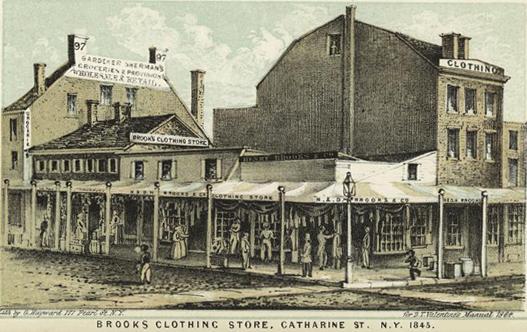
Brooks_Clothing_Store,_Catharine_St._N.Y._1845

Shoddy source? - Brooks store 1845 - before brothers took over

Having enlisted shortly after President Lincoln’s first call for Volunteers on April 15, 1861, the 19th New York Volunteer Infantry Regiment has had a few challenges since it arrived in Elmira, NY on April 29th: Cold, dreary weather; constant marching and drilling without uniforms or weapons; the incessant racket of trains rumbling, brass bands playing, and the round-the-clock clatter of the hash machine; and the questionable food produced by said hash machine . But things are looking up! 150 years ago today the regiment received its long-awaited uniforms:

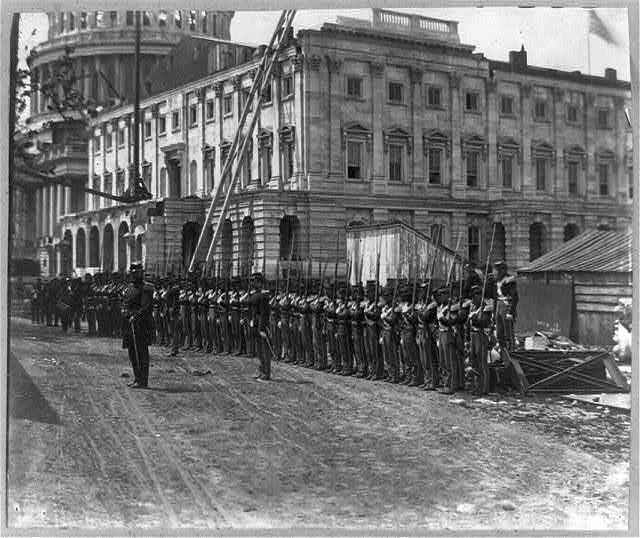
Uniforms were issued, Friday May 24th. It was a day of excitement A neat uniform is the pride of a good soldier. The men were eager to don the army blue. They were furthermore suffering for warm and comfortable clothing. When the boxes, containing the suits, were delivered at the barracks, the joy of the regiment knew no bounds. That feeling suffered an early demise. There was tossed out to each volunteer a cap, jacket, pair of pants and overcoat. They were not of army blue. The great Empire State had seen fit to clothe the 19th regiment in a shabby gray. The brave fellows, however, anxious to get suits of any description, donned them good naturedly. Then came out the whole truth. The uniforms had been made of a coarse, fluffy, flimsy material, called shoddy, full of fine flocking, which on shaking sifted out, filling the eyes, irritating the skin, and covering the floor with refuse. A heartless fraud had been perpetrated.

Union troops at Capitol May 1861

Envy of Elmira - Union troops in uniforms that fit by Capitol 5-13-1861 (LOC - LC-USZ62-86311)

On the 23d of April, the Military Board at Albany advertised for proposals for 12,000 uniforms. In response, Mr. F. L. Griswold, an honorable and esteemed merchant of Auburn, proposed to furnish those required by the Cayuga regiment, in furtherance of the plan for equipping and training that command at Auburn. He sent a sample suit of his make, the cloth being purposely better even than the State required. State Treasurer Dorsheimer raised the quibble that the color of the jacket varied a shade from regulation blue, and also objected that the suits could not be made in time in Auburn. A contract was refused Mr. Griswold. The whole 12,000 suits were awarded to be contracted for by Brooks Bro’s of New York city. The senior Brooks assured the State, positively, that he could furnish the whole number of regular army blue cloth within the specified time. A few days after the contract was signed, he cooly notified the Military Board that his firm could not comply therewith unless permitted to use cloth other than agreed upon. Interviews and consultations followed. At last, so urgent were the necessities of the hour, the contractors carried their point and were authorized to substitute “gray cadet mixed satinet” for army blue for 7,500 uniforms. These were promptly furnished, most of them being sent to Elmira.

How thoroughly ” mixed ” the goods were, the Cayuga volunteers can testify. Stripes of dark gray ran through them, with streaks of butternut intermingled. Patches of green, spots of brown, and splashes of other colors, dotted their surface, and no less than eighteen different hues were counted in them by an inquiring volunteer. Shabby in color, uncomfortable from the gritty dust in them, flabby in texture, they were also ungainly in cut. Few were able to get a suit that fitted them. Nearly all of them were too large. Two men could button around them one overcoat. Many men could button up their folded overcoats in their pants.

These outrageous uniforms were issued to the 12th, 13th and 26th regiments also. They had a most depressing effect on all. Men, wanting furloughs to go home to bid farewell to dear ones, before marching to the seat of war, were ashamed to show themselves and went to the front without seeing the friends they so longingly desired to.

From Cayuga in the Field by Henry Hall and James Hall.

______________________________________

On September 6, 1861 The New-York Times published the report of New York State’s investigation into the uniforms provided by Brooks Brothers. The report backed up Henry Hall’s take on the uniforms.

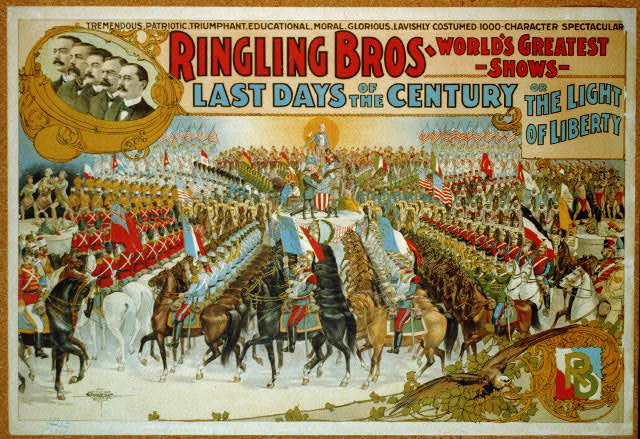
In Battle Cry of Freedom (pages 323-324) James M. McPherson writes about contractors providing “shoddy” products and about the un-uniform ways states outfitted their first volunteers. Different states used different colors for their uniforms. Throw in the gaudy Zouave threads and “the Union forces gathering in Washington looked like a circus on parade.” That impression must have been strengthened by the troops from Elmira with uniforms falling apart, of 18 different hues, and sometimes double the necessary size.

Circus on Parade

Circus on Parade 1899 (LOC - LC-USZC4-916)

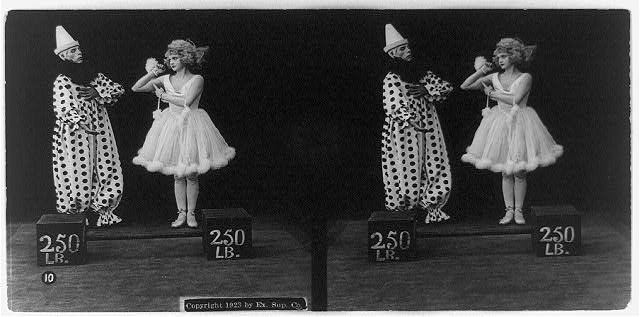
3b41191r

Plenty of room in clown's uniform, too (1923 LOC - LC-USZ62-95025)

Posted in 150 Years Ago This Week, After Fort Sumter, Military Matters | Tagged , , , | 3 Comments

More Self-Help – from Across The Pond

“From loyal Americans in Europe to the United States Government, 1861.”

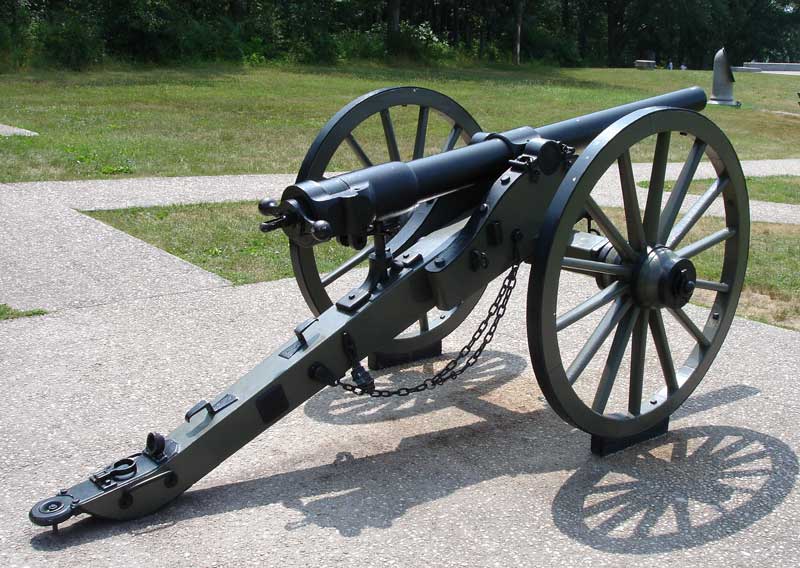
CW_Arty_Whitworth

This Whitworth 12-pounder is at Gettysburg

From The New-York Times May 24, 1861:

PATRIOTIC AMERICANS ABROAD.; A BATTERY OF WHITWORTH GUNS PRESENTED TO THE GOVERNMENT.

A battery of the celebrated Whitworth guns, twelve-pounders, with ammunition and carriages complete, has just arrived in this City, as a present to the Government from patriotic Americans abroad. The battery is consigned to HENRY F. SPAULDING, SAMUEL D. BABCOCK, and HENRY A. SMYTHE, who have already informed Secretary CAMERON of its arrival, and that it is at the disposition of the Government. Each one of the guns bears the following inscription:

“From loyal Americans in Europe to the United States Government, 1861.”

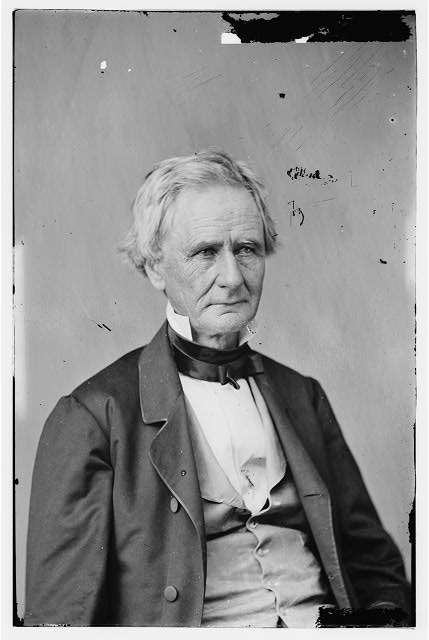
Simon Cameron

Secretary of War Cameron: thanks for the Whitworths (LOC - LC-DIG-cwpb-05309)

Our countryman, Mr. R.G. MOULTON, at present residing in Manchester, deserves great credit for his energetic efforts in raising funds for the purchase of this battery. We understand that prompt action can secure a monopoly of the manufacture of the Whitworth guns to our Government. Would it not be well for the Union Defense Committee to make immediate inquiries into the expediency of taking some action towards this end.

Joseph Whitworth was a very successful and innovative British engineer. The CSA used some Whitworth rifles during the Civil War, when they were referred to as Whitworth Sharpshooters.

You can read a good summary of New York City’s Union Defense Committee at Suite 101.

I thought the term The Pond was a cool, modern expression for the Atlantic Ocean, but according to Wikipedia the expression has its origins in the mid-17th century. One of the terms used was “the herring-pond”.

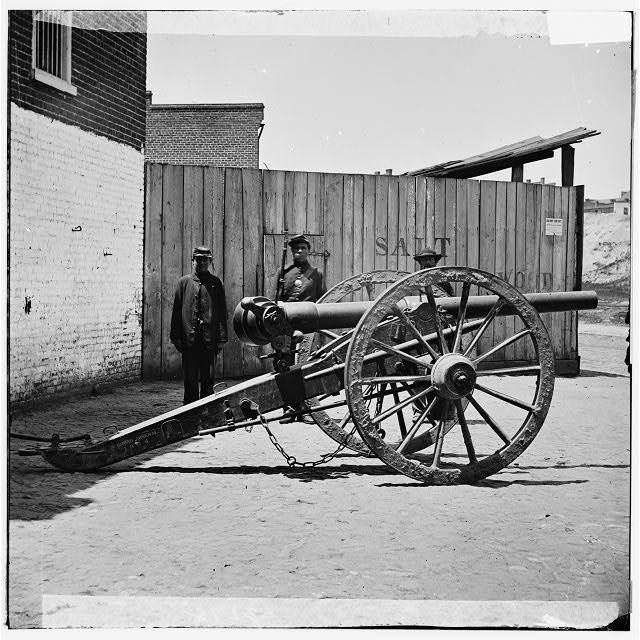
Whitworth gun

Whitworth gun at wharf in Richmond April 1865 (LOC - LC-DIG-cwpb-02744)

Joseph_whitworth

Sir Joseph Whitworth - across the herring-pond

Posted in 150 Years Ago This Week, After Fort Sumter, Military Matters | Tagged , , , | Leave a comment

Now Varina Can Get to Work

Making Nice With Virginia and Vice Versa

Varina Davis

First Lady praises Virginia's accession to CSA galaxy (LOC - LC-DIG-ppmsca-07786)

From The New-York Times May 21, 1861:

WHAT MRS. DAVIS HAS TO SAY ABOUT IT.

The following letter from Mrs. JEFFERSON DAVIS was written in acknowledgment of the receipt of a beautiful work-box, manufactured and presented to her by several patriotic ladies of Richmond:

MONTGOMERY, Ala., April 29, 1861.

MY DEAR YOUNG LADIES: Permit me before thanking you for your kind present and wishes for my husband’s welfare, to congratulate you upon the secession of Virginia — the birth place of my mother, as well as yours.

The elder and honored sister of the Southern States is received with tearful joy among us, and many hands will fashion stars with which to mark this brilliant accession to our galaxy.

The possession of a work-box manufactured by little Southern girls, so industrious, so enthusiastic and so patriotic, will be much prized by me, and I will leave it to my daughter, with the note which precedes it, as a precious legacy.

Long ere you reach the responsibility of a useful womanhood, may we have united peace to independence in our Southern Confederacy.

Wishing you, my dear young friends, a long, a happy life, I have the honor to be.

Very gratefully and sincerely, Your friend, VARINA DAVIS.
__________________________________

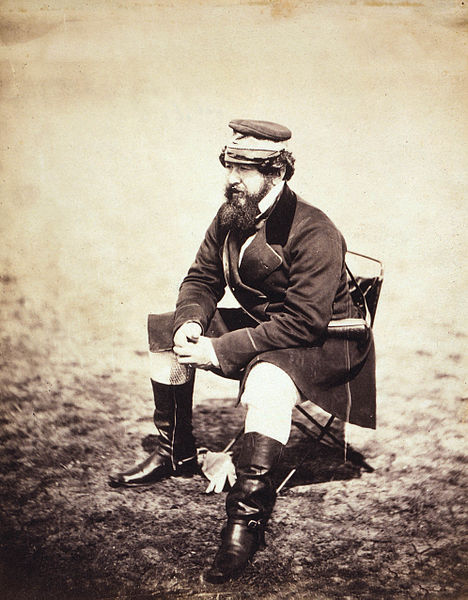
468px-Williamhowardrussell

London Times' Russell: Things going swimmingly in fledgling nation (LOC - LC-USZC4-9183)

Varina’s Husband Confident in Virginia’s General Lee
FROM MONTGOMERY.

The Macon (Ga.) Telegraph says: “From a party in a position to know we learn that the military plans of President DAVIS are but very partially disclosed even to Congress itself. The President reposes perfect confidence in the capacity and qualifications of Gen. LEE. Men are proffered in abundance; of money there is enough for the present, and if the war should be protracted, which it is believed will be the case, favorable prospects are opening for the future. The utmost confidence exists of maintaining Southern honor and independence. Mr. RUSSELL, the special correspondent of the London Times, left Montgomery amply satisfied on these points: First — The order, docility and loyalty of our servile population. Second — The substantial unity of our people in this struggle for independence. Third — The utter impossibility of reconstruction ”

______________________________________

Virginia Does Not Have to be Brightest Star on Varina’s New Flag

464px-WilliamCRives

William C Rives - Virginia will follow Georgia's lead (University of Virginia)


A RECREANT UNION LOVER.

Hon. W.C. RIVES, who was firm for the Union until he received the appointment of Commissioner of Virginia to the C.S.A., made the following speech at Atlanta, Ga., on May 14:

I feel highly complimented by this call from the citizens of Georgia to say a few words. I suppose you do not want to hear a speech from me, but that you do want to hear from Virginia. [“That’s it,” and cheers from the crowd.] She is all right, I am most happy to inform you. She is heart and hand with Georgia in this struggle, and will faithfully do her part. You have been accustomed, in political matters, in time past, to follow our lead; but now we will follow your lead in this great movement for the maintenance of the rights and independence of the South and her institutions. Our rights and liberties are assailed, and must be defended. Our cause is a just one, and brave hearts are rushing to uphold it. In the meantime, you may rely upon old Virginia. Whether she is to lead or to follow, she will be along and give a good account of herself. …

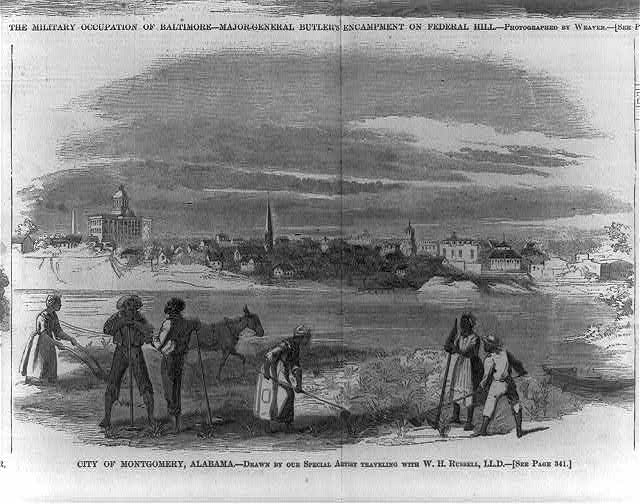
Montgomery, Alabama 1861

Where Varina wrote thank you note - Montgomery 1861 (Harper's June 1861 LOC - LC-USZ62-85968)

William Howard Russell earlier covered the Charge of the Light Brigade during the Crimean War.

William Cabell Rives served as Minister to France during Andrew Jackson’s administration.

Varina Davis, who was pregnant with her fifth child at the time of the thank you note, finished her husband’s memoirs after his death in 1889.

Posted in 150 Years Ago This Week, After Fort Sumter | Tagged , , , , , | Leave a comment

Food Fight

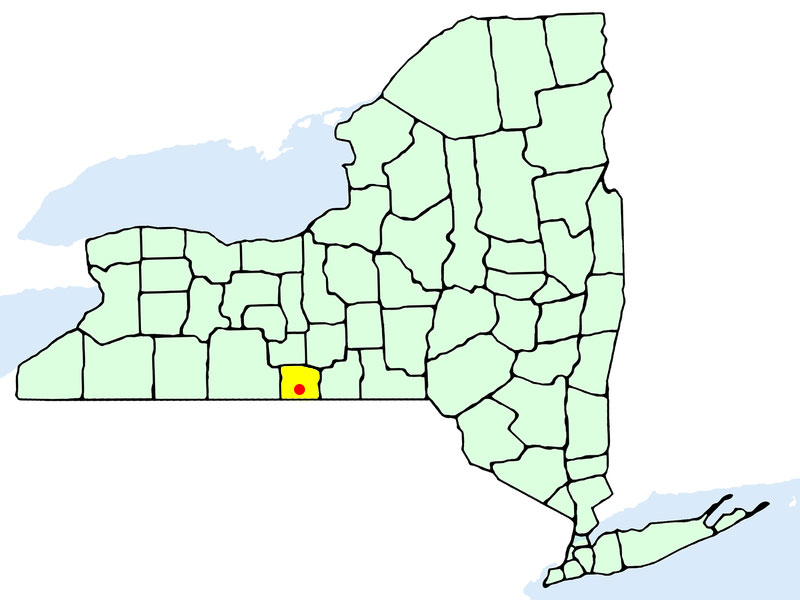
Elmiranymap

Dot marks the spot - mustering, drilling, and machine-made hash

Last month Seven Score and Ten posted a humorous story about Confederate troops near Pensacola having a funeral procession and ceremony to bury some bad beef. I respected the equanimity of the Confederate troops and their ability to make lemonade out of the lemons in their menu. On the other hand, Northerners from my neck of the woods could be downright surly when it came to the food they were being served.

[On May 14, 1861 the group of volunteers (predominantly from Cayuga County, New York) that we’ve been following officially became the 19th Regiment of New York Volunteers and elected officers. On May 22nd the regiment was mustered into service for the United States. The drilling was dreary work because early May was “cold, raw, rainy, and muddy” and there were still no proper uniforms. There was little relief at mealtime.]

800px-Army_and_Navy_hard_tack

Are these hard-tack re-enactors "inhabited"?

While the Cayuga men bore mud, bad weather and thin clothing without a murmur, one item in their experience they revolted at. Fresh from comfortable homes and tables spread with the snowiest of linen, bountifully supplied with appetizingly cooked meats and vegetables and fragrant decoctions of Java and Young Hyson, with cream and a more or less wide array of delicacies, the volunteers found the transition to corned beef, salt pork, boiled potatoes, soft bread, mush, clear coffee and machine made hash, which formed their soldier’s ration, rather severe. It was a forty-five cent ration, too, — a princely one for soldiers. Many a time afterwards were the men thankful to stay raging hunger with even a five cent handful of inhabited hard-tack. But in
Elmira they were slow in getting used to it, even with appetites
sharpened by long drills.

Hash was one of the staple articles of food. It was prepared in the shanty in the corner of the Barrack yard, used as a cook house by the contractor. What old 19th boy does not remember the hash machine? That devourer of scraps was going, with noisy clatter, day and night; trains would thunder by on the railroad with a roar ; brass bands would fill the air with martial strains ; the cheers of the soldiery would shake the ancient buildings ; but nothing would ever drown the steady music of the hash machine.

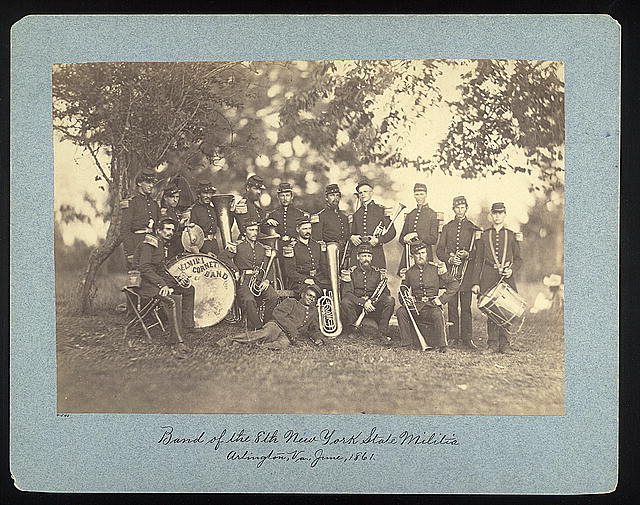
Elmira Cornet Band

Even band couln't drown out noise of hash machine (Arlington,VA June 1861 LOC - LC-DIG-ppmsc-02779)

For some days the meat, and occasionally the hash, had been of a character to excite the alarm of olfactories. The hash was sometimes burnt. One day a volunteer discovered in his ration something which he swore was the end of a dog’s tail, the fur still on. Waving the obnoxious chunk aloft on his fork, he went down the mess room showing it to his comrades. The yard, soon after, was full of excited soldiers. Several circumstances occurred to fan the rising flame of discontent against the contractor. A moment more and there was a terrific shout. The cook house was tumultuously invaded. An avalanche of men sprang in through the delivery windows, amongst the cheers of a crowd outside, driving out the occupants pell mell. The
hash machine was banged and smashed to flinders, and then there followed a general raid on the whole establishment. Stumbling, as he came in through the window, one volunteer plunged feet first into a barrel of eggs. Covered with yolk to his ears, he emerged a fearful looking apparition, but, undaunted, made for three other barrels of the same commodity. These also he overturned and smashed. A huge darkey stuck his head in the door. A volley of eggs and chunks of meat saluted him; he retreated precipitately. Two barrels of soft soap were
tipped over, and beans, mush, hash, potatoes and meat flew in every direction. The establishment was completely turned topsy-turvy and the volunteers returned to their quarters. Some of the men were sent to the guard house for this affair; but the regiment had better rations after it.

From Cayuga in the Field by Henry Hall and James Hall.

Well, there was allegedly a furry dog tail in the hash.

You gotta be kiddin’ me!

Wikipedia offers a possible explanation of what Henry Hall meant by “inhabited hard-tack”:

During the American Civil War, 3-inch by 3-inch hardtack was shipped out from Union and Confederate storehouses. Some of this hardtack had been stored from the 1846–8 Mexican-American War. With insect infestation common in improperly stored provisions, soldiers would break up the hardtack and drop it into their morning coffee. This would not only soften the hardtack but the insects, mostly weevil larvae, would float to the top and the soldiers could skim off the insects and resume consumption. Another way of removing weevils was to heat it at a fire, which would drive them out. Those troops too impatient to wait would simply eat it in the dark so they wouldn’t have to see what they were consuming.[

The Pensacola beef was buried; the hard-tack weevils rose again.

A description of the hard-tack photo is here.

Posted in 150 Years Ago This Week, After Fort Sumter, Military Matters | Tagged , , , | 2 Comments

Off Cape Henry

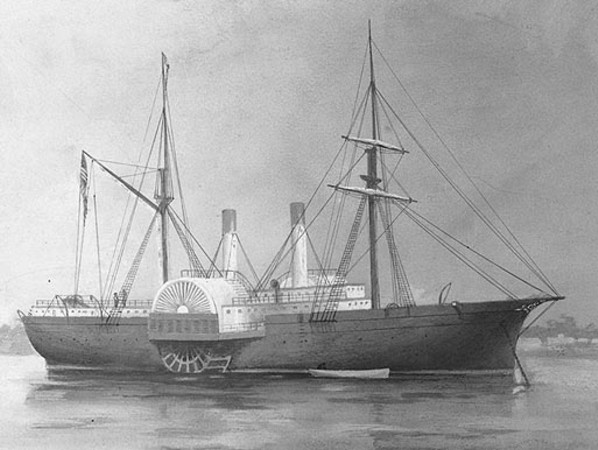
USS_Quaker_City

Brotherly (Tough) Love - USS Quaker City

From The New-York Times May 19, 1861:

LETTER FROM ON BOARD THE QUAKER CITY.

The following letter from a person on board the Quaker City, has been handed to us for publication:

UNITED STATES STEAMSHIP QUAKER CITY, OFF CAPE HENRY, Wednesday, May 15, 1861.

DEAR —–: Having a few moments leisure, I thought I would send you a few words from the “seat of war,” just to show you that although we are going it strong for “Uncle Sam and glory,” and seeking that bauble, reputation,” at the mouth of a great many cannon, yet we do not forget “old folks at home.”

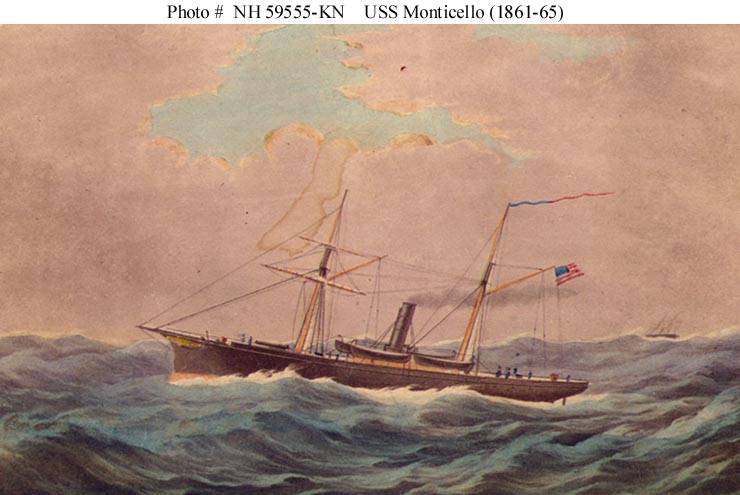
We left New-York, as you are aware, on Sunday evening, the 28th ult., and have been occupied nearly all the time since in cruising off Cape Henry overhauling every vessel bound in or out of the Chesapeake. In doing so, we ascertain their nationality and locality, and then warn them not to enter any port of Virginia, nor any port of the United States to the south of it, and indorse the whole of this on their register. Occasionally we are relieved by the gunboat Monticello, and sent to guard the mouth of the James River.

USS Monticello

USS Monticello - helping blockade Jefferson's state

On this station we have to watch the movements of the rebels ashore to prevent any communication between the opposite shore of Hampton Roads, and especially guard against being surprised during the night. We can see the fellows at work like beavers in the old Norfolk Navy-yard. When that Yard was destroyed, there were about 2,000 cannons there, almost all of large calibre. These were nearly all spiked, but being done in a hurry, were, I suspect, also imperfectly done, and they have since been engaged in drilling them out. They are removing those cannon as far as possible, and all them enacting formidable batteries on the Elizabeth, James and York Rivers. We can frequently hear them trying their ranges after having mounted them. When on any of those out-stations, we have to be very vigilant, as the enemy are very bitter against us, calling us Goths, Vandals, barbarians[?] , &c., &c.

670px-Flag_of_Virginia.svg

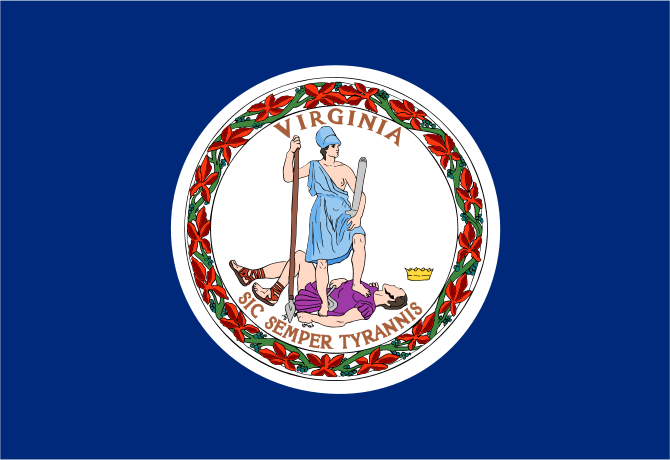
Virginia state flag flies on ship reclaiming the runaways

On the 8th inst., we captured six runaway negroes in a boat, was stated that they belonged to the Virginia south shore; that the people had a very “peculiar flag’ that they wished them to fight for, and threatened to whip and imprison them if they did not. We kept them on board until the 11th, when we returned to the flag-ship off Old Point Comfort. Soon after our arrival there, a small, high pressure steam-tug was seen coming out of Norfolk, with a large white flag at her fore, and a Virginia State flag at her main, and it proceeded to the symbol flag-ship. In a little time a boat pulled a [???] the Quaker City, and your friend Capt. HUNTER, formerly of the Ariel and North Star, came on board, characterized by a profusion of hair down his back, mustache, &c., and brought as an order for the delivery of the negroes and boat for restoration to their owners. The poor darkies did not seem to relish their return to that “peculiar flag,” but we are glad to get rid of them, for, although they were ready to fight, bleed and die for the flag of the Union, we don’t wish to be stigmatised as negro stealers.

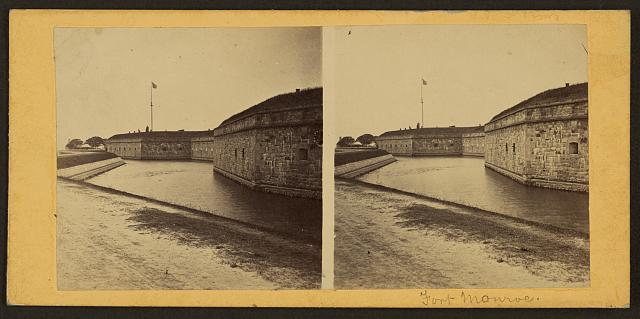
South Side Fort Monroe 1861

South Side Fortress Monroe 1861

Fortress Monroe is a magnificent fortification, covering about 15 acres[?], surrounded by an impregnable wall, and [???]. I visited it twice and found the Massachusetts brigade lying off there in fine style, literally in clover. Hundreds of them were suffering severely” by lying on the grass under the fine shade trees, while hundreds of others were being drilled in the fine parade ground, with the magnificent band praying meanwhile. It was instead a very fine sight. There were several companies of regulars from the First, Second and Third Artillery who keep guard at the strangers, and help drill and instruct the volunteers in handling the heavy guns.

The Minnesota arrived the other morning, and is anchored off the fortress. The Harriet Lane is guarding the month of the James River, and Capt. FAUNCE is [???] to get a shot at the scoundrels.

We are well armed for a vessel of our description, having two long 32-pounders, of 5,732 lbs. each, and plenty of SHARP’s rifles, boarding pikes, howitzers and other destructive arms for the entertainment of any refractory cases we happen to meet with. The ship is very fast, is well manned and capable of managing anything in a small way which may come along,

CANNISTER.

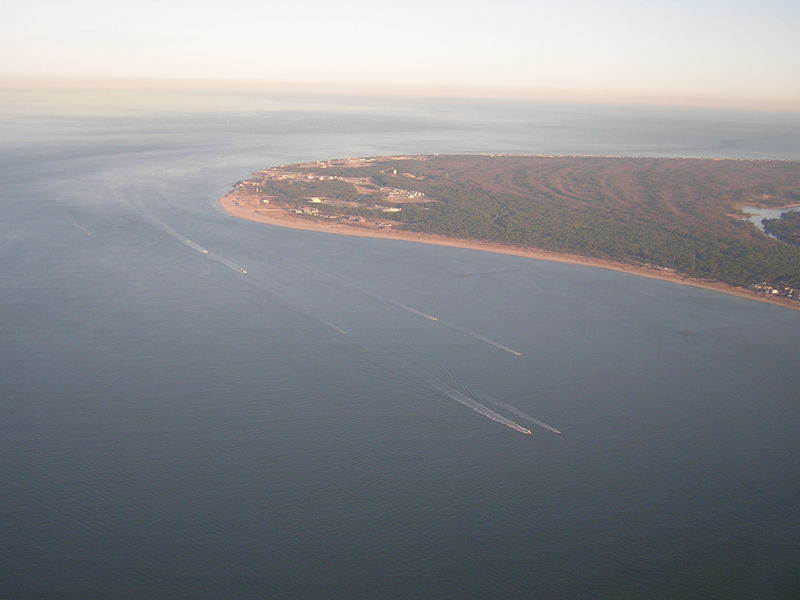
800px-CapeHenry

Cape Henry looking east-southeast

The USS Quaker City is said to have been an active and effective blockade ship.

Gabor Eszes’ photo of Cape Henry is licensed by Creative Commons.

Posted in 150 Years Ago This Week, After Fort Sumter, Military Matters | Tagged , , , , | Leave a comment