“Blood Is Thicker Than Water”

Josiah_Tattnall

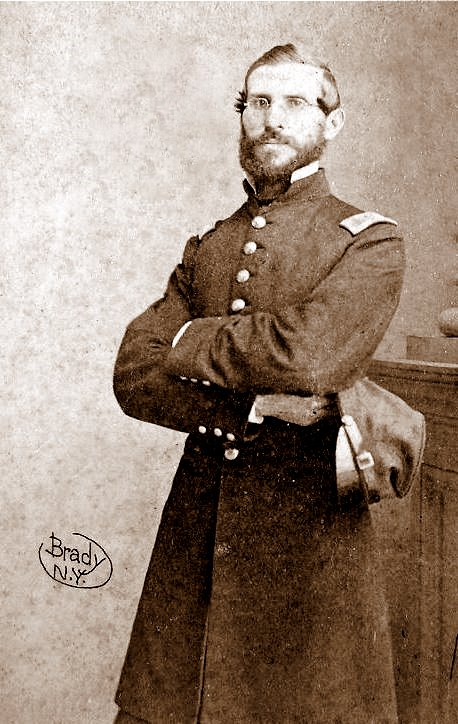
Josiah Tattnall: Georgian Blood Thicker than US Constitution

On March 11, 1861 The New-York Times published a letter to the editor that dealt with the resignation of Commodore Josiah Tattnall from the US Navy and his acceptance of a commission in the Navy of Georgia. The letter responds to a public defense of Tattnall by Tattnall’s son (The New York Times Archive):

Loyaity in the Navy– The Conduct of Com. Tatnall.

To the Editor of the New-York Times:

In the Journal of Commerce of Saturday is published an article, copied from the Rochester Union, in defence of Commodore TATNALL, by his son, vindicating the course of his father in accepting a commission from the authorities of Georgia.

The least unpleasant feature of said defence is, that it is undertaken by a son, who may be excused for indulging in a very commendable anxiety that his father should appear well before the country, even though he may feel, in his own heart, that the act, to say the least of it, was unwise and unnecessary.

But the position assumed by Mr. TATNALL is entirely untenable. He says:

“If the Republic of America is a thing of the past, with its Government a corpse, as I believe, then it may be claimed that all officers at present serving under the Stars and Stripes, unless they renew their old oaths of allegiance under a different form, do so not from duty, but their own free pleasure. They are de facto free to give their swords to whatever Government they choose, and are surely not to be blamed if they accept service under that of the land which gave them birth, and has furnished them a home for life.”
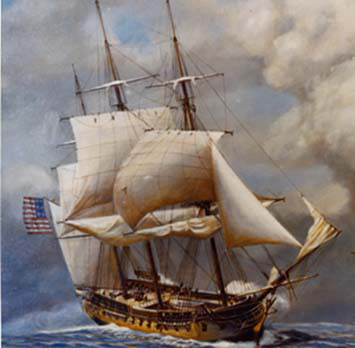
USSConstellationCropped

USS Constellation - Josiah Tattnall's first ship in 1812

Had Mr. TATNALL any knowledge, while making the defence, of the fact that Congress was in session, performing their functions as a part of the Government of these United States — enacting laws, appropriating moneys, (a portion of which was intended for the support of his father. Commodore TATNALL?) That the different Executive Departments of the Government, (now partially purged,) were in the full exercise of their appropriate duties, in directing the movements of the Army and Navy, and all other matters comprehended in the machinery of the Government? That a President and Vice-President had been elected for a term of four years, and are, at this very moment, on this very day, being inaugurated, at the seat of the Federal Government, with all the pomp and circumstance usual on such occasions? Does the gentleman see anything in all this to warrant the assertion of his belief that the “Government is a corpse,” and the Republic of America “a thing of the past!”

Although Mr. TATNALL says, “It is not for me to sound the praises of my own parent” — yet he proceeds to recapitulate the services and rewards of his father “during a career of 45 years in the American Navy;” during which his father “never once swerved from his duty to the Government, viz.: At Bladensburgh; in the Algerine war; against the Spanish pirates; in the Mexican war; and lately in the East Indies as Flag-officer, commanding the U.S. Naval forces — during which period he did good service: received a service of plate from the merchants of Baltimore; was mentioned most honorably by his superior; was wounded; received a gratifying acknowledgment in the shape of a sword presented by his native State of Georgia — and a silver vase by the citizens of Savannah,” &c., &c.

There are, probably, very few, if any, officers of the Navy who have ever, or do now, doubt the valor or abilities of Com. TATNALL; or who, up to this period, would have indulged in any suspicion of his want of patriotism and fidelity.

If Mr. TATNALL ever saw the form of the commission under which his father held his office under the Republic of the United States, he must be aware that that commission was granted by the Government in virtue of a special trust and confidence in all those qualities.

Again, if Mr. TATNALL will examine the oath taken by his father before he was allowed to perform any of the functions of his office in the Navy, he will see that he bound himself thereby to support the Constitution of the United States.

Again, if Mr. TATNALL will refer to the 10th section of the 1st article of the Constitution, he will see that Georgia, the native State of his father, has violated the Constitution, and is in a state of open rebellion against the authorities and the supreme law of the land.

And lastly, if he will now refer to the 3d section of the 3d article of the Constitution of the United States, he will see, in very plain and unmistakable language, what constitutes treason. Nor can he find anything in the Constitution granting power to any one or more States to withdraw from the Confederacy, and to be a separate Government, until legally recognized as such by the remaining States.

That several officers of the Army and Navy have followed the same course as Commander TATNALL can be in no sense a palliation — most of them are young and inexperienced, and probably acting thoughtlessly and under improper influences. Such cannot be the case with Commander TATNALL, whose age, experience and known abilities preclude any such supposition.

The very services he has performed, the trust reposed in him, and the reward allotted to him for his brilliant acts, should have, independent of his oath of allegiance, in honor deferred him from joining in the rebellion against his country.
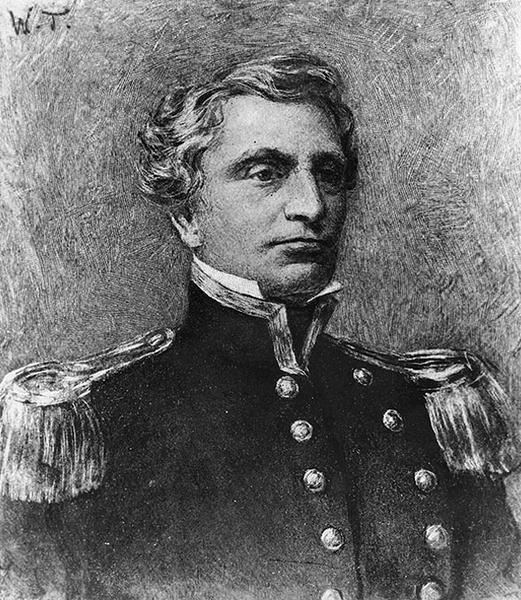
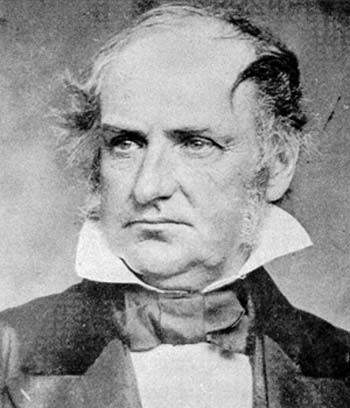
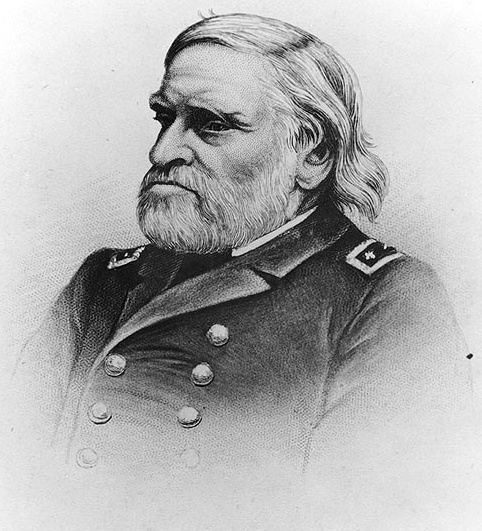
521px-Josiah_Tattnall,_pre-Civil_War

A Young Josiah Tattnall: still pro-United States

Even in these perilous times, when every officer of the Federal Government in imperatively bound, by every sentiment of honor and fidelity, to stand ready at a moment’s call for any service to the country,Commodore TATNALL might have resigned his commission, and no one would have cared to express any opinion in the matter, as his place could have been very readily supplied; but to do so for the express purpose of joining in a rebellion, even with his native State, against the Constitution of the Republic, which he had taken an oath to support, and in which service he had enjoyed a liberal support, had conferred upon him distinguished rank and gratifying honors, is, to say the very least, most inexcusable.

It is hardly necessary to refer to the assumption of Mr. TATNALL that his father cannot be blamed for accepting office under the Government of his native State; or to the term gridiron as applied to that flag under which his father has served for 45 years, and under which he obtained all that he has of position. Whatever the sentiments of Mr. TATNALL may be in that or any other particular, that flag, the emblem of our nationality, still floats, and will continue to float — by the blessings of Almighty God — over a Republic of honest and patriotic citizens, beloved and respected at home and throughout the world as the flag of a free and enlightened country; and how many so ever may prove themselves, in this hour of peril, recreant to their trust and faithless to their obligations, there will still remain, in faithful and earnest allegiance to that glorious old flag, a band of honest men quite ready and competent to sustain it in any and every emergency.

AN OFFICER OF THE U.S. NAVY.

Tattnall’s decision reminds me of the decision Robert E. Lee had to make when Virginia seceded. Lee did not want to fight against his people from Virginia.

Josiah Tattnall did have a very long military career from the War of 1812 until he was paroled on May 9, 1865. He was captured by the North when Savannah was captured in late 1864.

The Wikipedia article says that Tatnall violated American neutrality in the Far East in the late 1850’s:

During his two years in the Far East, Commodore Tattnall violated American neutrality while commanding the chartered steamer Toey-Wan, when he came to the assistance of a British and French squadron under fire from the Taku Forts at the mouth of the Pei Ho or Hai River. His explanation of his action, “Blood is thicker than water”, subsequently became a famous slogan. On his return voyage early in 1860, carried the first diplomatic embassy from Tokugawa Japan to the United States.


The letter writer’s constitutional arguments would probably be pretty irrelevant to Tattnall.

Blood is thicker than water: Tattnall’s son defends him; Tatnall is going to help defend his home state of Georgia.
Posted in 150 Years Ago This Week, Secession and the Interregnum | Tagged , , | 1 Comment

Dog Tax

Well, Somebody’s Got to Pay for the Dahlgren Guns

From The New York Times Archive (published March 5, 1861):

… Correspondence of the New-York Times.

CHARLESTON, C.S.A., Friday, March 1, 1861.

While waiting for Mr. LINCOLN to show his hands, we do nothing but anticipate the worst. The famous Dahlgren guns, which were specially ordered by Gov. PICKENS, have arrived from Richmond. They are of the heaviest calibre. The necessities of the public service will not permit me to tell you where we shall place them; in other words, I cannot violate private confidence. We persist in thinking that coercion is intended, and therefore we are unwilling to “let on” about those ugly fellows that are intended charitably to blow you up, if you ever come near enough to them.

This morning the Northeastern Railroad brought in twelve ten-inch mortars and fifty thousand more pounds of powder. We have now ready for the expected emergency four hundred and eighty-seven thousand pounds of powder. When the Star of the West was fired into, there was barely enough powder to charge the guns at Morris Island. Ah, you threw away a magnificent chance then, if you really mean to do anything, which some of us, the more temperate, begin really to doubt. …

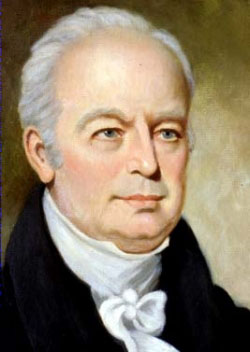
John_Rutledge

John Rutledge - elected President of South Carolina in 1776

Have you ever heard of Secessionville? It is a famous place just now. The political virus of secession was planted there long before the disease broke out here. It is right back of Fort Johnson, and occupies historic ground. As we never had a Peter Parley, very few people in your part of the world, or here either, are aware that on that spot the Charlestonians seized a ship from England, loaded with teas, and brought the boxes up to town, where it laid and rotted. It was done, too, in broad daylight, without any Indian disguise, like the Boston fellows, right in face of the guns of Johnson, where there is now an immensely strong battery frowning upon Sumter, a mile and a hall distant. Here, top, the stamps were seized in an equally bold way, by the order of JOHN RUTLEDGE, who was proclaimed Governor in the very teeth of the British authorities. This was in March, 1776. If we are “Rebels” now, we were taught the lessons a good many years since. …

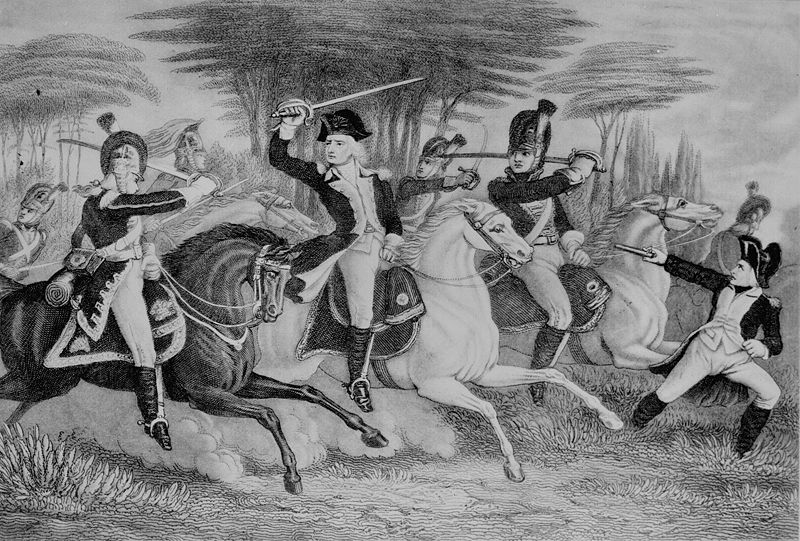
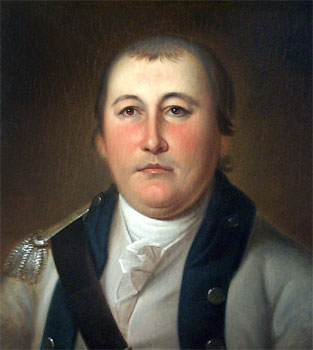
WilliamWashington

William Washington - married flag maker

I was yesterday introduced to one of the lieutenants of the Regular Army of South Carolina, who is a lineal descendant of WILLIAM WASHINGTON, the brother of the “Father of his Country. MCPHERSON WASHINGTON owns that celebrated “crimson flag of Eutaw,” which was carried at that famous fight, as well as at Cowpens. There is a story connected with that famous piece of cloth that deserves narration. Just before the battle of Eutaw, WILLIAM WASHINGTON called upon a lady and asked her for something red, to inspire the boys in the coming light. She withdrew, and returned with the desired color, carefully wrapped up. Our Revolutionary mothers wore red petticoats in those days, and not being able to obtain anything else, she sacrificed her crimson jupe on the altar of her country. The jupe was carried into many a hotly contested field, and wherever it was seen, the boys thought of their sweethearts and wives at home, and struck for freedom with terrific force. That little flag is still borne by the Palmetto soldiers, being in the present custody of the Washington Light Infantry.

800px-William_Washington_at_Battle_of_Cowpens

Washington (William) at Cowpens

The old Norfolk tug, the James Grey, has been selected to propel the Iron-plated Floating Battery. The Grey was purchased in Norfolk recently for $38,000, paid in cash in good coin that passes, anomalously enough, as well in Palmettodom as in Boston. After she has performed this duty she will be stationed as a gunboat, being now pierced for the requisite gumber of guns. …

We have a tax on dogs, which you might imitate with advantage. I recommend it to the Booles, Bradys, &c. The slaves are taxed $1 for every canine owned by them, which their masters have to pay. Free negroes are required-to pay $2. The tax-gatherers evidently do not appreciate the “free gemmen.”

Our doctors seem to think that they ought to be exempt from the taxation on horses and vehicles and they have recently prayed for a “let up” on that head. Our Mayor, with the mighty name, MACBETH, has refused to grant the doctorial prayer. The medicos are getting to be as bad as the divines, who seem to think (very many of them) that their cloth should exempt them from paying for anything — free railroad passes, free newspapers, and freedom to speak in the pulpit of what does not belong to that holy place. …

South Carolina continues to prepare for war and there is a tax on dogs to help pay for it. Doctors and clerics want to be exempt from some taxes. South Carolinians were rebels long before 1860.

You can view the “crimson flag of Eutaw” at CRW Flags. Jasper, The Times’ correspondent, says the fabric for the flag came from Jane Elliott’s petticoat; CRW Flags saysit was cut from a curtain.

John Rutledge was elected President of South Carolina in 1776.I think Jasper got his facts wrong about when the Palmetto citizens destroyed the stamps – according to Wikipedia it happened in 1765. So there is no way Rutledge was governor when this happened. Rutledge ordered the construction of Fort Sullivan (now Fort Moultrie) in 1776. Toward the end of his career John Rutledge served as second Chief Justice of the U.S. Supreme Court.

There was a Battle of Secessionville (or First Battle of James Island) in 1862.

The Wikipedia article about William Washington discusses his role in the Battles of Cowpens and Eutaw Springs and his marriage to Jane Elliott.

Posted in 150 Years Ago This Week, Secession and the Interregnum | Tagged , , , , , | Leave a comment

Mr. Seymour, Black Slave Owner

On March 4, 1861 The New-York Times published a report by JASPER, the Charleston correspondent for The Times Here’s an excerpt (The New York Times Archive):

CHARLESTON, C.S.A., Tuesday, Feb. 26, 1861. …

There is a famous old darkey here, or, to speak more respectably, a venerable colored gentleman, of a very delicate brown complexion, whose card lies before me. WM. W. SEYMOUR writes a hand that a bank clerk might envy. He is only sixty-five, yet he is as active as an early cricket. SEYMOUR keeps a hotel, and has been worth, in his day, a cool $50,000, and has held, and still holds slaves. He thinks this condition is decidedly the best for the mass of the niggers; and certainly he ought to know. In the war of 1812 he commanded, so I have heard, a regiment of his own color, and says he is ready now to march at the head of an equal number, “if the d — n Yankees come down here to interfere with our institutions.” It is amusing to see the fire in the old man’s eyes when he talks on this subject. SEYMOUR is the crack cook of Charleston, and is in great demand for private suppers, etc. His place in State-street is well known to all lovers of good living and good drinking. He is the very personification of the fine old gentleman, courtly and suave, and would make a splendid study for an artist like your ELLIOT. I frequently see the first men in town shaking hands with the old man. In fact, he enjoys the respect of all, and bids fair to last at least twenty more years. …

Jasper does not mention if the election of a “Black Republican” as U.S. president made Mr. Seymor frightened of a slave insurrection. Although he was a War of 1812 veteran who was willing to fight the Yankees to defend the institution of slavery.

Larry Koger in Black Slaveowners: free Black slave masters in South Carolina, 1790-1860
says there was almost an economic necessity for black business owners to buy slaves if they wanted to expand their businesses. Free whites would not want to work for a black person. Free blacks would rather start their own businesses. Therefore, the only available labor supply was slaves.

Posted in 150 Years Ago This Week, Secession and the Interregnum | Tagged , , | Leave a comment

Denouement: The Final Vacillation?

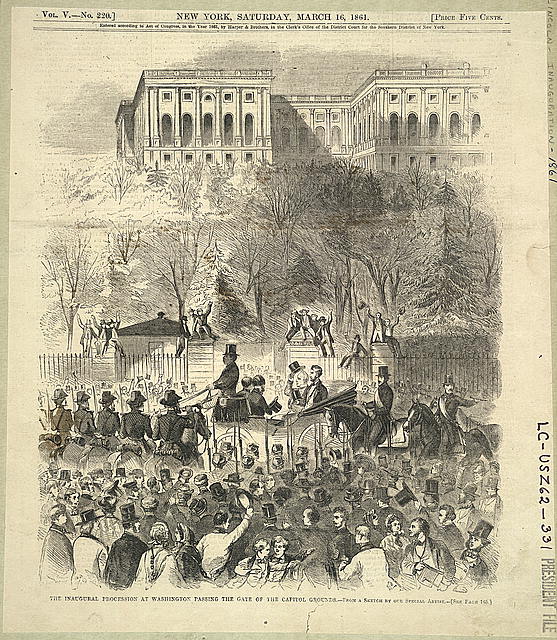
Buchanan and Lincoln on way to the Capitol

"Buck" in seat of honor on way to the Capitol (Courtesy Library of Congress LC-USZ62-331)

Wrapping It Up With The Old Public Functionary

The Procession to the Inauguration

150 years ago today the Lincoln administration was taking over in Washington, D.C. Here’s a bit more about outgoing President James Buchanan from The New-York Times March 6, 1861 (The New York Times Archive):

From Our Special Correspondent.

NATIONAL HOTEL, WASHINGTON, Tuesday, March 5, 1861 — 3 o’clock A.M.

Though the streets of the city are deserted, and no noise, save that of the occasional rapping of the watchman’s club, is heard, the busy feet of the merry dancers still trip gaily on the floor of the Inauguration ball-room. Monday was, as you may imagine, an exciting day, and as well an interesting one…

A brief resume of what has fallen under the eye of your correspondent may be of interest to the readers of the TIMES, who have not found all that they require under the telegraphic announcement of this evening. …

After breakfast I sauntered up towards Willard’s…

Soon the sound of brass and leather announced that President BUCHANAN was approaching, and sure enough, looking from the window, we saw the old man in his barouche, surrounded by soldiers of a sanguinary appearance. In a few moments Mr. LINCOLN was with him, promptness and exact obedience to engagement being with him imperative rules of life. As he took his seat in the barouche, Mr. BUCHANAN occupying the seat of honor, Mr. LINCOLN was saluted with cheers of the most enthusiastic nature, which were continued the whole ride from the hotel to the Capitol.

The procession was like all other similar performances, gotten up for the delectation of some grand or chief marshal, and the prospective tickling of an indefinite number of assistant marshals and aids, and so on. There was a good band, a car-load of pretty girls, thirty-four in all, each one of whom personated a State; militia-men, who walked like country paupers on a semi-diluted spree, and that climax of absurdities, “citizens in carriages.” However, the road was lined with people, was crowded with people, and every place was occupied by some man more or less distinguished in the world of science, politics, learning, or nothing. The brass band exhausted its capabilities and the endurance of the throats of the musicians. Patriotic airs were generally played, though I noticed that “Way down South in Dixie” was a great favorite with anybody who knew what a good tune was, and, as slowly the procession moved on, the President elect was obliged, in response to repeated calls, to rise and bow with hat in hand.

“Buck” Changes Mind One Last Time

A couple days ago we noted that President Buchanan had decided to court-martial Captain John Pope for insubordination. There’s been an update in the March 6th issue of The Times (The New York Times Archive):

WASHINGTON, Tuesday, March 5. …

Mr. BUCHANAN, yesterday, ordered the proceedings for the Court-martial of Capt. POPE to be discontinued. The reason he assigns for so doing is that he don’t think the Captain’s reflections upon him in the Cincinnati lecture did him any harm. That is pretty good. …

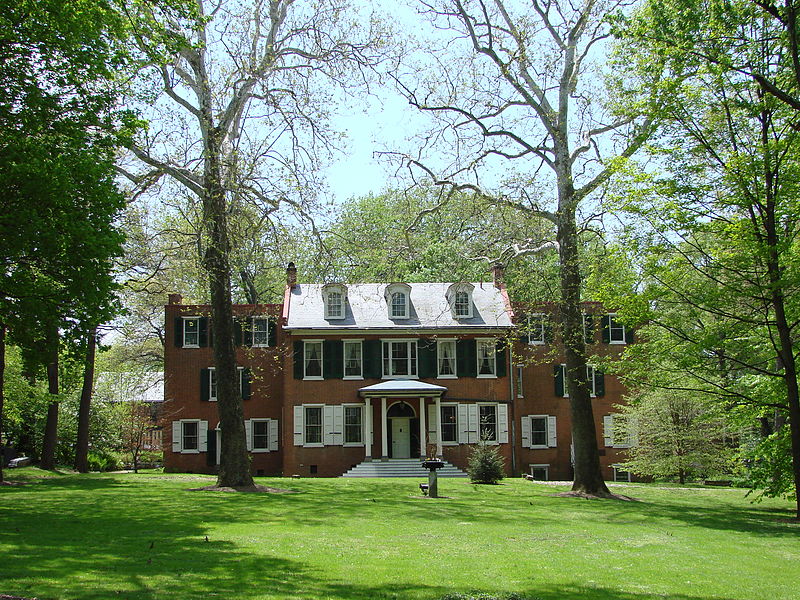
800px-2008-05-04_Amish_Country_033_Lancaster_City,_Wheatland

Wheatland - Place where Old Public Functionary retired

WASHINGTON, Monday, March 4. …

Ex-President BUCHANAN departed on his journey to Wheatland this afternoon. He was escorted to the railroad station by two mounted and two infantry companies, together with the Committee from that locality and prominent citizens of Washington. He exchanged many farewell hand-shakings, appearing to be deeply affected by the manifestations of friendship; and when be bowed adieu to the large crowds, as the train was about to start, they further testified their respect by vigorous cheers.

At least during the secession crisis President Buchanan seemed very indecisive.

For a balanced view of Buchanan during the secession crisis check out Disunion

Wheatland was inherited by Harriet Lane. Harriet sold it in 1881.

The photo of Wheatland is licensed under Creative Commons

Posted in 150 Years Ago This Week | Tagged , , , | Leave a comment

Extra! Extra! Lincoln’s Inaugural Address!

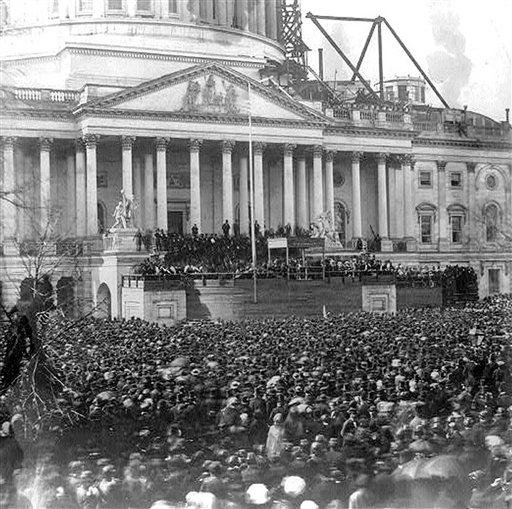
Abraham_lincoln_inauguration_1861

March 4, 1861 in Washington, D.C. - thanks to the telegraph New Yorkers were (almost) there

Abraham Lincoln was inaugurated on March 4, 1861. Here’s an article from the March 5, 1861 issue of The New-York Times describing how modern technology was used to report the words of Lincoln’s Inaugural address (The New York Times Archive):

The manner in which President LINCOLN’S Inaugural was transmitted by telegraph is deserving of especial commendation. The American Telegraph Company, under the able management of E.S. SAN- FORD, Esq., its President, placed at the disposal of the Associated Press three wires between Washington and this City. The delivery of the Inaugural commenced at 1 1/2 o’clock, Washington time, and the telegraphers promptly to the minute, began its transmission to New-York. The first words of the Message were received by the Agent of the Press at 1 3/4 o’clock, and the last about 3 1/2 o’clock, while the entire document was furnished to the different newspers by 4 o’clock. Such rapidity in telegraphic communication has never before been reached in this country, and it should be a source of pride to the American Company, its President and accomplished operators, that so notable an act has been accomplished. To Mr. SANDFORD are the thanks of the Press and the public especially due for the kind manner in which he placed the line under his charge at the disposal of the Press.

We understand that a lengthy synopsis of the Inaugural was yesterday evening transmitted to St. Johns, N.F., thence to be forwarded by steam-tug to intercept the steamship Fulton, bound to Europe, off Cape Race.

The same issue of The Times described how the new was received in New York City (The New York Times Archive):

People of all parties in this City, as elsewhere, were on tip-toe all day to know what was going on at Washington, and especially to hear what President LINCOLN would say in his Inaugural. … So, as the hours wore on the people began to congregate in and about the newspaper offices — the faucets whence the stream of the desired information, brought through wire conduits from the Capital, was to flow forth.

Edward_Dickinson_Baker

Senator Baker - introduces Lincoln for Inaugural Address

All the afternoon they waited, increasing in numbers, famishing for the news, their appetites whetted from time to time, by the meagre accounts of the progress of the procession at Washington, which were published in the earlier afternoon editions. …

It was nearly 5 o’clock when the eloquence of these worthies was suddenly quenched as by a wet blanket, and the wet sheets of the latest edition, with the President’s Inaugural in black and white, leaped forth from the presses into the hands of all who could get copies. Then there was wild scrambling around the counters in publication offices, a laying down of pennies and a rape of newspapers, and the crowds began to disperse, each man hastening to some place remote from public haunt, where he might peruse the document in peace. The newsboys rushed through the City crying with stentorian lungs “The President’s Message!” LINCOLN’s speech!” “Ex-tray TIMES! got LINCOLN’s Inau-gu-ra-a-a-il!” And an hour later everybody had read the Message and everybody was talking about it. …

The new Administration rode the nightmare of countless retiring officers of the old regime and brightened the rosy slumbers of hundreds of hopeful office-seekers. The career of ABRAHAM LINCOLN, born in poverty and hewing his own way through adverse circumstances to the proudest position on earth that his countrymen recognize, inspired the dreams of honorable ambition that last night visited the pallets of the honest poor.

Edward Dickinson Baker was a friend of Lincoln’s from Illinois who moved to California. Later he was elected U.S. senator from Oregon.. Seven and a half months after the inauguration Baker died during the Battle of Ball’s Bluff.

***03-09/11: I made a mistake. Originally I said Baker was California’s U.S. senator. He was Oregon’s U.S. senator. I adjusted the text.

Posted in 150 Years Ago This Week, Secession and the Interregnum | Tagged , , | 2 Comments

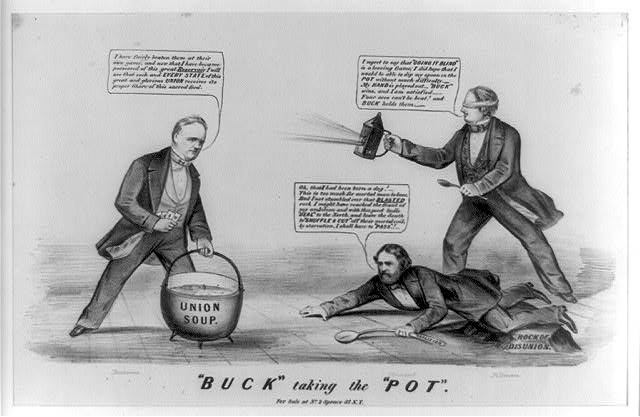
“Old Buck” – Union Soup Not Enough

1856_cartoon_union_soup

Pro-Buchanan political cartoon - from 1856, of course (Library of Congress)

I thought it was kind of ironic that Buchanan was dishing out the Union soup in this 1856 cartoon.

You can read all the words in this political cartoon at Wikimedia. Buchanan says:

I have fairly beaten them at their own game, and now that I have became possessed of this great “Reservoir” I will see that each and Every State of this great and glorious Union receives its proper Share of this sacred food.

Ladling out the federal goodies wasn’t enough to keep seven states (so far) in the Union.

________________________________

Checks and Balances Still in Play

Two days before he finishes up President Buchanan is required to send Congress an explanation of why he brought so many troops to Washington D.C. From The New-York Times March 4, 1861:

MESSAGE FROM PRESIDENT BUCHANAN.; REASONS FOR THE COLLECTING OF TROOPS AT THE FEDERAL CAPITAL.

WASHINGTON, Saturday, March 2.

The President sent a message to the House, in compliance with a resolution heretofore adopted, as to the reasons which induced him to assemble so large a number of troops in Washington. He submits that the force is not so large as the resolution presupposes, its total amount being six hundred and fifty-three, exclusive of the marines, who are of course at the Navyyard, as their appropriate station. These troops were ordered here to act as a posse comitatus, in strict accordance to the civil authority, for the purpose of preserving peace and order in Washington, should this become necessary, before or at the period of the inauguration of the President elect. What was the duty of the President at the time the troops were ordered to the city? Ought he to have waited before this precautionary measure was adopted, until he could obtain proof that a secret conspiracy existed to seize the Capitol. In the language of the Select Committee, this was “in a time of high excitement, consequent upon revolutionary events transpiring all around us. The very air was filled with rumors, and individuals indulged in the most extravagant expressions of fears and “threats”. Under these circumstances, which the President says he need not detail, as they appear in the testimony of the Select Committee, he was convinced that he ought to act. The safety of the immense amount of public property in this city, and that of the archives of the Government, in which all the States, and especially the new States, in which the public lands are situated, have a deep interest — the peace and order of the city itself, and the security of the inauguration of the President elect were objects of such vast importance to the whole country, that I could not hesitate to adopt precautionary and defensive measures. At the present moment, when all is quiet, it is difficult to realize the state of alarm which prevailed when the troops were first ordered to this city. This almost instantly subsided after the arrival of the first company, and a feeling of comparative peace and security has since existed both in Washington and throughout the country. Had I refused to adopt this precautionary measure, and evil consequences, which many good men at the time apprehended, had followed, I should never have forgiven myself.

JAMES BUCHANAN.

Posted in 150 Years Ago This Week, Secession and the Interregnum | Tagged , | Leave a comment

Presidential Decisiveness in the Waning Days

Court-martial Pope!

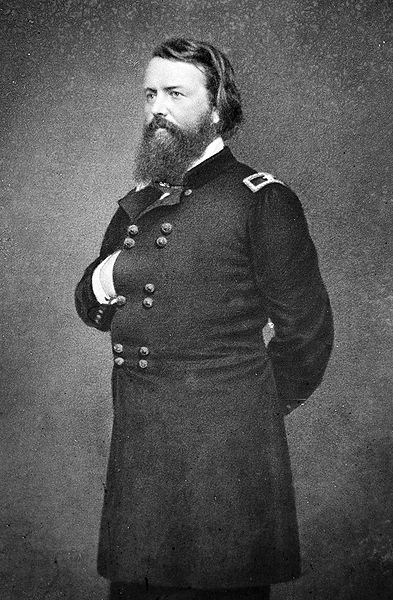
393px-GenJohnPope

Pope as General - still brash

As one of his last acts as Commander-in-Chief, James Buchanan decided to court-martial Captain John Pope for insubordinate remarks he made during a lecture in Cincinnati. In an editorial on the subject The New-York Times agrees that it was wrong for a military man to make disparaging remarks about the president, but that in pushing for the trial to be on March 4th, Inauguration Day, President Buchanan came across as vindictive. The Times also implies that Pope might have felt a little more brash because he was one of the four military men assigned to accompany President-elect Lincoln on his train trip from Springfield to Washington. Here’s some excerpts from the editorial in The New-York Times March 2, 1861:

The Sin of Capt. Pope.

Whatever agreeable reminiscences of the outgoing administration may be treasured by those departments of the public service who are busily paying their adieux to the Old Public Functionary, it is safe to say the military arm is not likely to tender him any very regretful embrace. Throughout these hapless four years the army has indeed fared badly. …

But the proper time has not yet arrived for this military review, as Capt. POPE has reason already to know. The fact was illustrated by the lecture we have referred to. Permitting himself on that occasion to forget the soldier in the lecturer, the Captain indulged in well-merited censure of the President’s course in view of the Southern revolution, speaking, in fact, of that venerable man, very much in the way that all men, who do not wear epaulettes and aquiline buttons, agree in speaking. Whether any aggravation of this error lay in the fact of his having subsequently joined the suite of the President elect, and in that guise traveled to Washington, we are not informed; but for those injudicious words Capt. POPE is to be tried by Court-martial at Newport, Ky., and, that he may not go strengthened to the trial by a previous vision of Mr. LINCOLN’S inauguration, the tribunal will meet on Monday next. And to complete the summary and energetic character of these proceedings, two of the Captain’s military companions in the late pilgrimage, are to hasten with him to Kentucky, in order to act as his Judges.

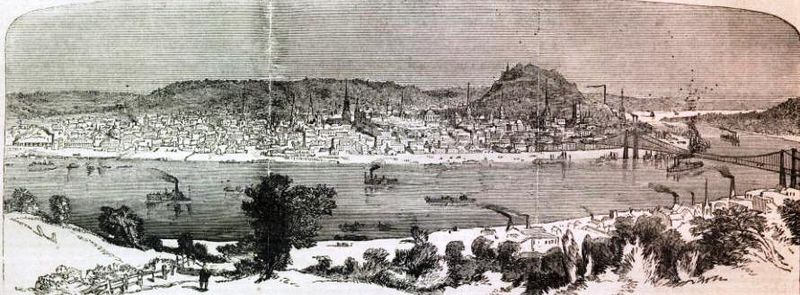
800px-Cincinnati-civilwar

Rash Words on the banks of the Ohio: Cincinnati 1862

The verdict can be of but one description. Capt. POPE in assuming arms as a profession, laid down various privileges belonging to the civilian, among them that of discussing political questions with unlicensed freedom, and of publishing his opinions of the Administration which he is employed to serve. …

But, on the other hand, it is impossible to conceive of a spectacle more pitiable than that of the departing President thus urging a sort of posthumous vengeance against an offender, at a period when a self-depreciatory charity with all men would much more become and dignify his retreat. It seems as if Mr. BUCHANAN were resolute to leave no day without its censurable act; no hour of his career, not even those final moments which are usually purged of passionate and evil influences, without some draft upon the contempt and indignation of posterity. Had the fault of Capt. POPE been at all singular; had the one voice of condemnation been a unit among applauding millions, the selection of the single culprit would have been less distinctly indicative of the malignant humor which prompts the Old Functionary. But Capt. POPE was simply singular in being the only one out of condemning millions whom the vindictive wrath of the President could reach, and even pursue beyond the official term; and hence his sacrificial and expiatory character as he goes forth into the western wilderness, the scapegoat of an offending nation. While, therefore, the technical crime will in all likelihood be proved against the Captain, the sympathy and regard of the people will attend him, while the judgment will be unanimously rendered against his prosecutor; a result which will insure the utmostpossible justice to all parties concerned. Let the trial therefore proceed.

Cincinnati Civil War Round Table quotes a bit of Pope’s Cincinnati address:

It is impossible to control the astonishment and indignation which every American must feel when he considers in what a position a few months of the administration of a bad or weak man have placed this great and prosperous country. If we overcome this damage, it will at least serve as a warning, and a most impressive one, to the American people, to be careful for the future in the selection of a chief magistrate.

John Pope graduated from West Point as an Engineer and made the military his career until 1886. He could be rash and brash.

You can read the entire editorial at The New York Times Archive

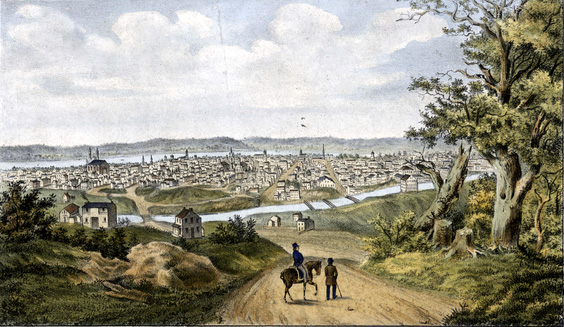
Cincinnati-in-1841

Cincinnati-in-1841

Posted in 150 Years Ago This Week, Secession and the Interregnum | Tagged , , | 1 Comment

Pensacola Pachyderm

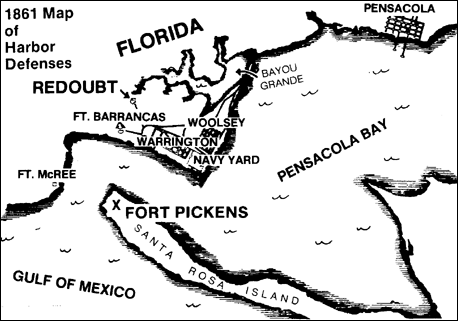
Nps_pensacola_bay_sketch

Pensacola Bay, 1861: Secessionists want to 'see the elephant'

March 1st – a day of lions and/or lambs. On March 1, 1861 The New-York Times editorialized about a different member of the animal kingdom:

SEEING THE ELEPHANT

— We have all our little troubles in this life, and for those who are not too proud, to use a popular phrase, it may be added that we have all our elephants to see. It is narrated of a certain farmer that his life’s desire was to behold this largest of quadrupeds, until the yearning became well nigh a mania. He finally met one of the largest size traveling in the van of a menagerie. His horse was frightened, his wagon smashed, his eggs and poultry ruined. But he rose from the wreck radiant and in triumph. “A fig for the damage,” quoth he, “for I have seen the elephant!”

A gallant fire-eater, now among the besiegers at Pensacola, appears to have his desire as yet ungratified. Somewhat apprehensive, yet “bound to see it out,” he writes:

“If Pickens opens fire upon us, with her tremendous batteries, we shall see the largest kind of an elephant.”

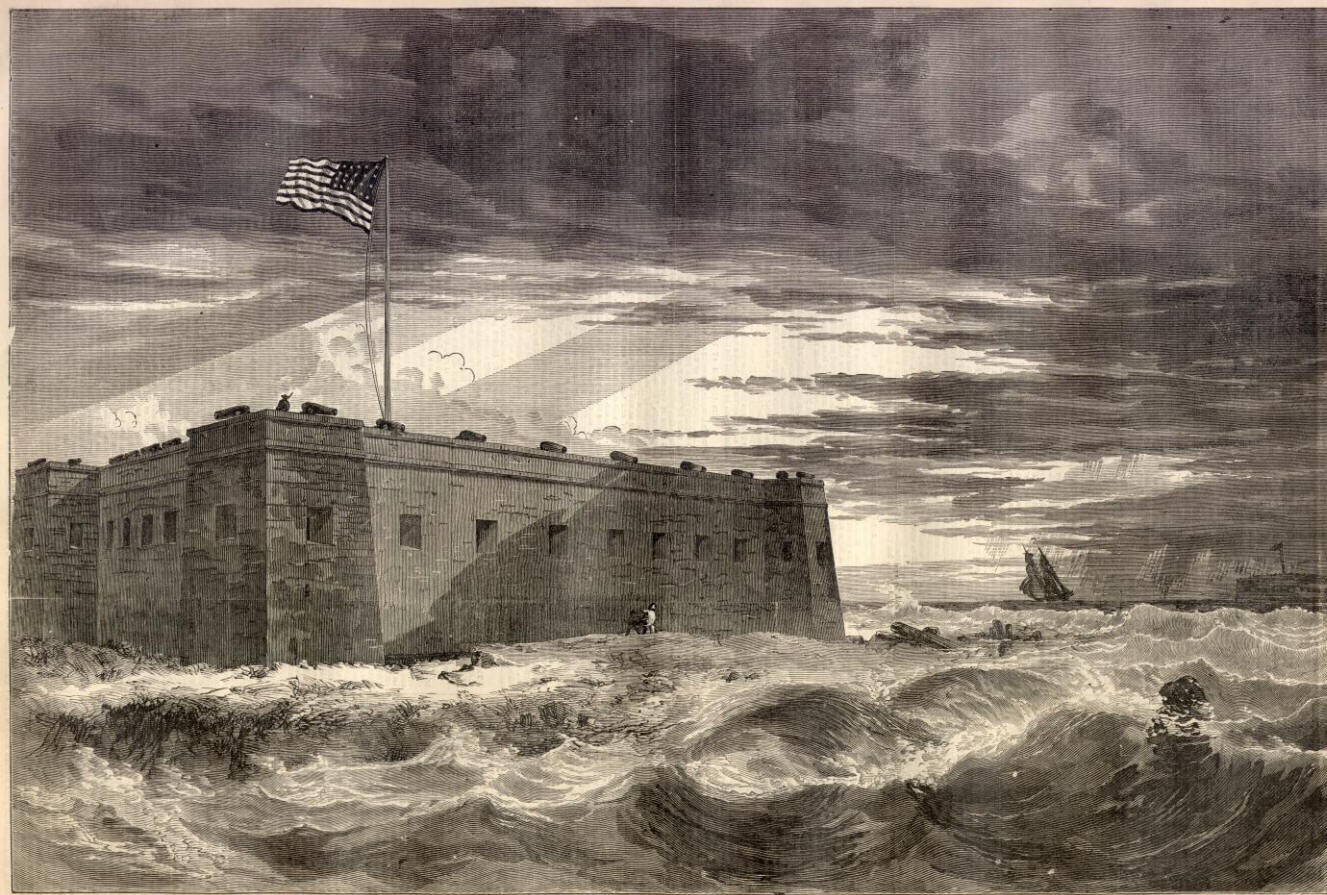
Fort-pickens

Fort Pickens: potential elephant source

Let us trust that he may be disappointed. He wants, of course, to see the animal — to have his little experiences in war — to tell his story; — but it would be much better for him to try the experiment on a smaller scale at first. So with the gallant men of Charleston. The fact is, that the whole Secession party presents the spectacle of a body of impulsive gentlemen who are extremely desirous of seeing an elephant, and who, could they once feel him kick, or get a moderate toss from his trunk, would go home perfectly satisfied. Some of them have already had quite a satisfactory peep at the animal; others, in one form or the other, will undoubtedly soon get one. It is not positively an eternal Gun-Cotton-dom which they crave, but simply to see the elephant — to have a great time, and retire. Now that some of them have seceded, and done enough to talk about, let them come back. They have smashed their eggs quite sufficiently, and no one will deny them the glory of having seen the elephant.

1) WesClark has a history of the phrase “seeing the elephant” reproduced from Civil War Times Illustrated. California Gold Rush tells the story of the farmer who lost his goods in the wagon but saw the elephant. The Nebraska State Historical Society discusses the phrase in the context of the Gold Rush of 1849.

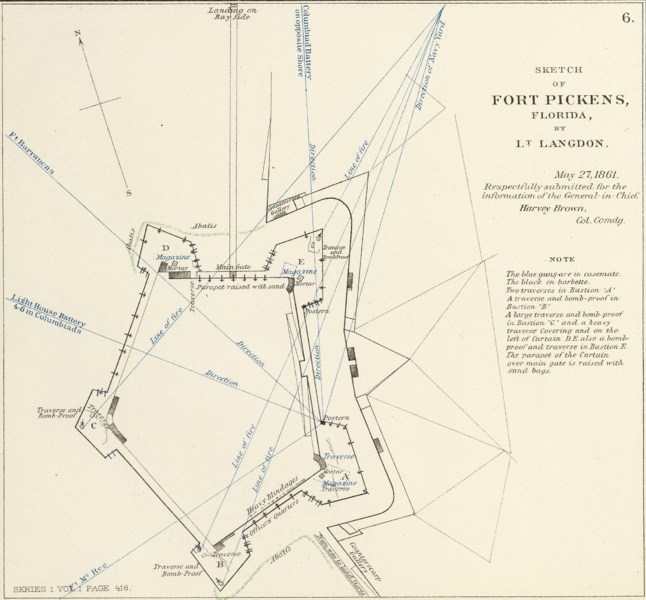
646px-Fort_Pickens_map_1861

Sketch of Fort Pickens, Florida, by Lt. Langdon, 1861.

2) This editorial reminded me of a comment Allen from Seven Score and Ten made about a post on southern conditions and attitudes in the aftermath of Lincoln’s election. Allen said, “The illusory invincibility of youth is always a key factor in getting a war started.”

I guess the editorialist is assuming that many of the men who voluntarily joined the secessionists want to defend southern honor and get a little taste of battle and a taste of glory, but might not be ready for a long dragged out war. Apparently no one was – Lincoln’s initial request for militia was for 90 day sign ups.

Things obviously changed.

3) You can read more about Fort Pickens at Wikipedia:

Construction on Fort Pickens lasted from 1829 to 1834, with 21.5 million bricks being used to build the fort. Much of the construction was done by slave labor.

Posted in 150 Years Ago This Week, Secession and the Interregnum | Tagged , , , | Leave a comment

At Ryan’s Mart

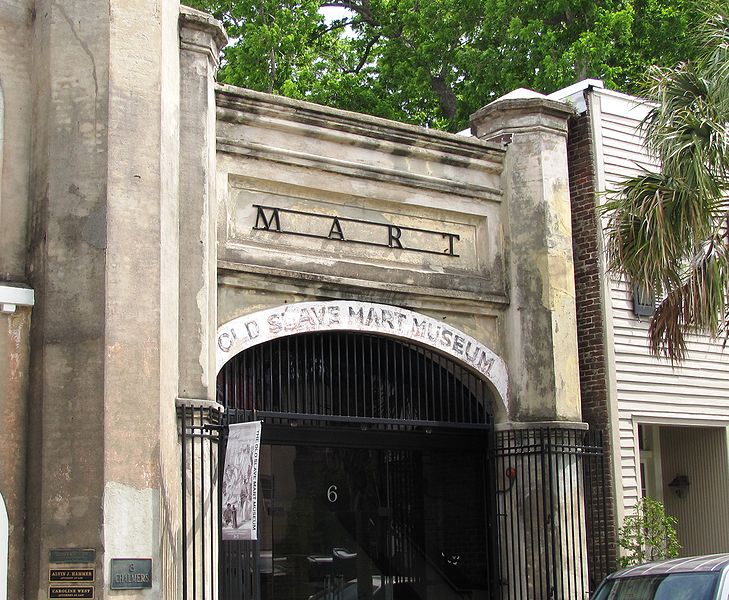
729px-Old-slave-mart-facade-sc1

Ryan's Mart: present day facade

On February 26, 1861 The New-York Times published an article by JASPER, a Charleston, South Carolina correspondent. Here’s an excerpt:

There is a place in Chalmers-street, with a neat iron open-work railing, protecting quite a graceful looking building. There was once — so I am told — an American flag waving from the roof. I have seen the Palmetto banner flaunting there in the incipient days of secession in November; then there was an emblematic Palmetto tree, which withered, and is now a dead stump. No matter. Everybody knows the place, the “Mart” of Charleston, where slaves are sold. This morning, at eleven, I called on THOMAS RYAN & SON, who wished to dispose of “Joe, 23 years old, a very likely negro man, good coachman and general house servant — sold for no fault — sale positive — cash, and purchaser to pay for bill of sale.” “Gentlemen,” said Mr. RYAN, “here is Joe; you observe he is sound, pleasant-faced, intelligent, and he is fully warranted. What will you give; $1,500, $1,400, $1,000. Why, gentlemen, you can examine for yourselves; Joe, step around. $900 is bid; ruinously cheap; $910, $20, $25, $30, $40, going, going, last call; gone at $940. Joe, there is your new master,” and Joe walked away, apparently quite content to bring $940. Mr. RYAN made a polite bow to myself and friends, and walked off the platform. I turned and saw in one corner a gentle-faced negro woman of a rich brown hue; she had wrapped in a shawl a wee babe, and clustered around her were two boys, one taller than herself, and a little girl, lighter than the mother. In fact, all the children were of different shades, which can be accounted for on physiological principles, apparent to all who choose to see; Mr. JAMES TUPPER, master in equity, toted these forth, terms cash. “Gentlemen,” blandly observed Mr. TUPPER, a mild-looking personage, “I offer to you five valuable slaves: BETSY ANN, the mother, a likely woman of thirty, her oldest son, JACK, sixteen, (BETSY ANN married young,) a good field hand; SAM, ten, a promising lad, good at horses and running errands; ARAMINTA, three, will make a nice lady’s maid, and the infant in arms, fat and healthy; I sell the lot together, you understand. Is $600 bid? a long pause; $500, thank you.” “I bid $400;” “Well, $400 it is.” So it went on in little sums, the mother “cuddling” her infant the while, and evidently ashamed to have it cry, so she suffocated it with shawls as negroes are apt to do. Finally, they were knocked down at $490 — $2,450 for the lot. BETSY ANN gave her babe another pat, and the family group, after bidding “old massa” good bye, made up to the new one. PRINCE, who was anything but a prince in appearance, was next offered. This fellow belonged to the genus blubber lip, a mere animal field hand. He had also lost three fingers in some negro shindy, so that although he was cracked up as a good workman, obliging, and only 27, he did not take, and was finally knocked down at $550, to some one who took pity on him. PRINCE shuffled off, evidently crest-fallen, and the crowd dispersed to talk cotton, secession, DAVIS, LINCOLN, the big raft, and Major ANDERSON’S death, a villainous hoax which many believed.

The photo is licensed under Creative Commons

You can read the entire article at The New York Times Archive. Jasper also writes about making cannonballs at Cameron’s:

Hundreds of swarthy sons of Vulcan, white as well as black, are turning out red-hot balls every second, and rolling them in the sand with their long iron forks as though they were so many marbles. Each ball has to pass through some ten pairs of hands before it can pass inspection, and as many more before it can do its murderous work.
 

You can read more about the Old Slave Mart née Ryan’s Mart at the National Park Service and at the City of Charleston. Apparently places like Ryan’s Mart became necessary after a citywide ban on public slave auctions in 1856.

If slavery was such a wonderful, if “peculiar”, institution, then why was there a ban on public auctions?

Posted in 150 Years Ago This Week | Tagged , , , , | Leave a comment

“It Makes Our Very Blood Boil”

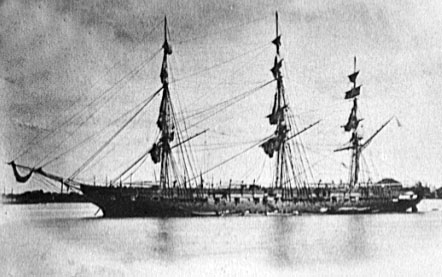
USS_Brooklyn_1858

USS Brooklyn: watching and waiting and being blown about by gales

From The New-York Times February 27, 1861:

INTERESTING FROM PENSACOLA.; LETTER FROM ON BOARD THE BROOKLYN. THE FARCE OF SECESSION IN FLORIDA– CHARACTER OF THE TROOPS IN POSSESSION OF THE GOVERNMENT PROPERTY– OUTRAGES UPON UNION MEN, ETC. AFFAIRS OF THE NATION.

Correspondence of the New-York Times:

UNITED STATES STEAM-SLOOP BROOKLYN, Off Pensacola Harbor.

TUESDAY, Feb. 12, 1861. …

The town of Pensacola is held in possession by a mob of about 400 persons, 300 of these being from Alabama; those from Mississippi that were recently here, have decamped to their homes. They came here with the avowed intention of assisting the undisciplined gang, called soldiers, that were here before them, but it would seem their only purpose in visiting this section was, of eating and drinking everything there was to be obtained, either by fair or foul means, and then evacuating; in this they were eminently successful, and when they had accomplished it, shook off the dust of their feet against the city.

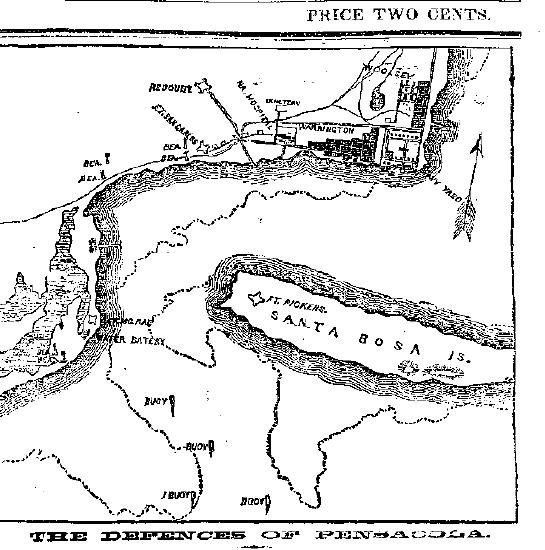
pensacolamap2

Pensacola Harbor and Defenses (NY Times 2-1-1861)

The citizens that have visited our vessel inform us that the condition of these so-called soldiers is miserable beyond description; they possess no money, clothes or provisions — in fact, it is nothing more than a drunkenable, being such a terror to the whole neighboring country, that the establishment of a guard has been necessary to protect the wives and families of certain citizens. These outlaws have, in their drunken expeditions, entered houses when the male members were absent, and with pistols presented at the heads of the female members thereof, demanded all the provisions the house contained; in case of refusal, as has occurred in one instance, insult upon insult was heaped upon the heads of the unprotected females. Their sole occupation is nothing less than robbery, and every chance that is given is availed of by them.

As you are well aware, they have possession of Forts McRea and Barrancas, and they have erected a few six pounders along the beach. This seems, as far as my observation extends, to be everything of note or importance accomplished by them. Discipline and order are unknown within their ranks.

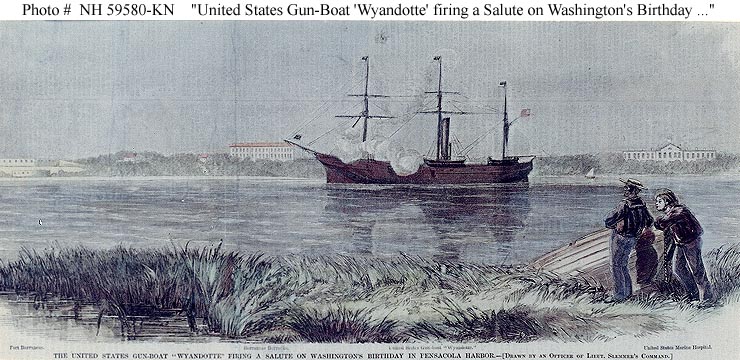
USS Wyandotte

USS Wyandotte: no white flag while firing salute for Washington's Birthday 2-22-1861 (drawing by officer of Lieutenant Slemmer's command)

I have to inform you that the United States steamer Wyandotte enters and departs from the port with a flag of truce flying at her mast head; it makes our very blood boil to witness this humiliating spectacle, and the bowing of the knee by the President of our country to these highwaymen of the deepest cast. We have thought how truly lamentable it is, that such inefficiency and weakness as has recently been observed by us, should have characterized the Administration of our Executive head. …

I would not have you to understand that all the men under arms here are such deeply-dyed characters as those alluded to — who, for personal emolument, would stoop to any act, however base and atrocious it may be; not by any means, as I truly believe that some among them, unconnected with these base acts, are perfectly sincere in their actions, and think that the taking-up of arms is justifiable; these misguided men are those whom we should pity — they will soon discern the error of their ways. On the contrary, there are others who do not at all sympathize with them, but for sake of their lives are really compelled to join the rebel band, and assent to every proposition advanced by them. In connection with this, I have to tell you that an old grey-headed man, whose Winters have numbered seventy or more, and who had resided in Pensacola for twenty years, was driven from the place a short time since; he was given but four hours’ notice by the leaders to leave — and was told that if after the expiration of that period he remained they would not answer for his personal safety. The tottering old man, upon the verge of the grave, and one whom a savage would not harm, was driven from friends and home simply because he had avowed he still loved the glorious Union. He is now living aboard the Wyandotte, where no harm can come to him. I narrate this to reveal how far their espionage extends.

The only one thing desired by us is to receive orders from Washington to retake the Government property here. We could disperse the parties that now have possession of it in two hours, and hold it with our soldiers and sailors against any odds.

It is becoming perfectly outrageous that we should be stationed here, subject to merciless gales, and the sight of such contemptible actions as are daily occurring, and still be unable to raise a dissenting voice or deprecating hand.

Adam_Jacoby_Slemmer_by_Brady,_1864

Adam J. Slemmer (1864 photograph)

Again, we could, without any trouble whatever, land our troops at Fort Pickens, but no, we cannot; unless orders arrive we are powerless. It is a burning shame that the brave and gallant Lieut. SLEMMER, who sadly needs reinforcements, should not have the troops we have on board, and which were originally intended for him. This officer is a fitting coequal with Major ANDERSON, and deserves much credit for his conduct upon many trying occasions. It is the opinion of many, that were it not for our presence, Fort Pickens would have been attacked several days since. As it is, our large guns are a terror to them, they knowing full well that in case of necessity we would use them, and that in a manner to do terrible execution.

The frigate Sabine and sloop-of-war St. Louis are lying alongside of us; the Macedonian left us on Saturday for Vera Cruz. [A recent gale drifted us 70 miles to leeward.]

We are totally in the dark as to how affairs are pro grossing at the North. The one thing we care and hope for is, that an immediate settlement one way or the other may be consummated.

1) The Naval Historical Center displays several photos of the USS Wyandotte.

2) The USS Brooklyn was commissioned in 1859. Captain David G. Farragut was its first commander.

3) Adam J. Slemmer taught at West Point from 1855-1859. He died in 1868 “from lingering effects of typhoid fever that he had contracted during the Civil War.”

4) More disparaging images of President Buchanan. In yesterday’s post Major Anderson’s brother is implying that the president is keeping Major Anderson locked up on Fort Sumter as a prisoner of war. Now we read that Buchanan is bowing/kneeling to “highwaymen” – the rebels at Pensacola.

5) You can read the entire article at The New York Times Archive

6) The South has been talking a lot about federal coercion. On the other hand, it seems that in Pensacola, as in Charleston, the secessionists are coercing inhabitants to join the rebel forces – or else.

Posted in 150 Years Ago This Week, Secession and the Interregnum | Tagged , , , , , | Leave a comment