Harriet Lane Gets Makeover

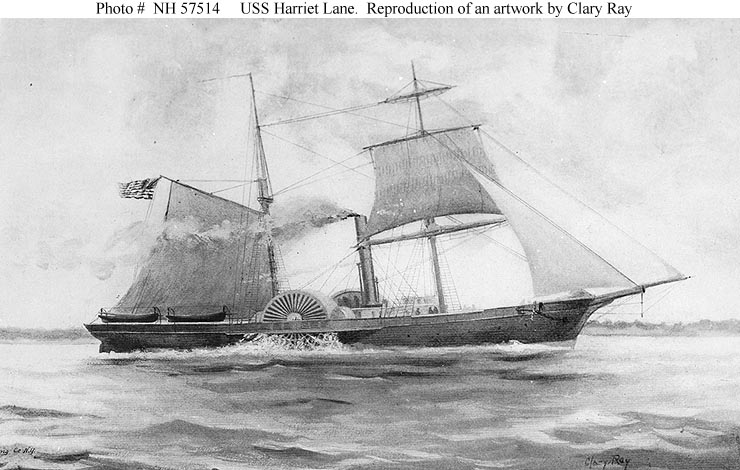
USS_Harriet_Lane

The Harriet Lane: gets potentially more coercive at Brooklyn Navy Yard
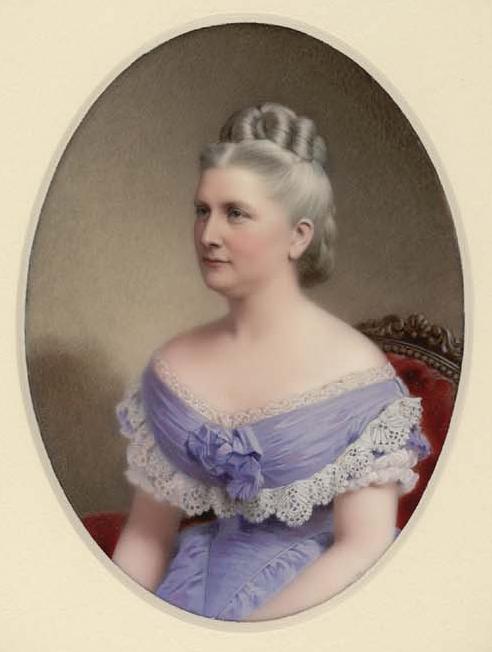
Harriet_Lane_by_John_Henry_Brown

Ship's Namesake: served as First Lady for Uncle James

__________________________

The February 14, 1861 issue of The New-York Times included an overview of recent military events (The New York Times Archive):

IMPORTANT MILITARY AND NAVAL INTELLIGENCE.

The United States revenue cutter Harriet Lane is to be temporarily converted into a man-of war. She went over, yesterday, to the Brooklyn Navy-yard to receive a new and formidable armament. Four thirty-three hundred weight guns, one 12-pound howitzer, and a quantity of shot and shell will be put on board. It is said that a marine guard is to be detailed for her immediately.
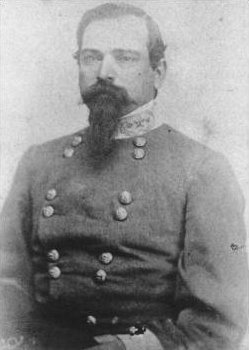
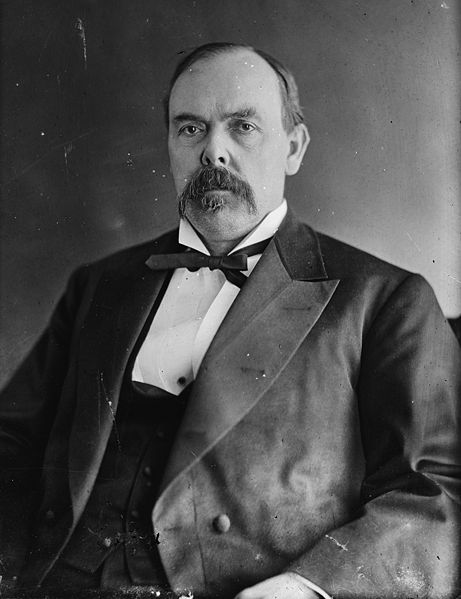
William_W._Kirkland

Kirkland: Georgia will at least match Uncle Sam on pay and benefits

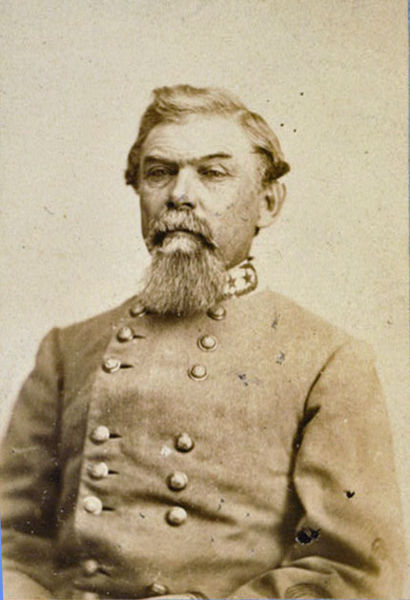
We are in a position to state that officers who have resigned in the United States service, are endeavoring to obtain men for the secession armies and navies from Northern arsenals and navy-yards. Lieut. KIRKLAND, late of the marine corps, has written to a marine at this place, asking him to influence “all soldiers who have put up their time in Uncle Sam’s service,” to enter the Georgian army, where they will receive all the extra pay and emoluments that reenlistment in the Federal forces would entitle them to. Lieut. KIRKLAND is a native of North Carolina, and is married to a daughter or niece of Col. HARDEE. His offer will have little effect on the United States troops.

Matters are getting brisk at the Norfolk Navy-yard. The Portsmouth and Germantown are being rapidly prepared for commission. The premises are literally filled with coal; which seems to make the Virginian people expect that Gosport will soon become a great coaling place for United States steamers.

The United States steam gunboat Mohawk, which arrived here a few days since, has been hauled alongside the wharf at the Navy-yard, and will be overhauled at once. Her present officers and crew, it is said, are not to be detached.
410px-William_J._Hardee

Hardee: Old Reliable is another ex-federal employee

In obedience to orders from Washington, the United States ship Supply is not to be put out of commission, as was expected, but will be immediately filled with stores and provisions for the squadron now cruising off Florida. As every exertion is being made to expedite her outfit, she will be ready in a few days. Letters for the Brooklyn, Macedonian, Wyandotte, St. Louis and Sabine, will be forwarded by her, if left at the Brooklyn Naval Lyceum, without expense.

Those sailors and marines whom circumstances render it necessary to retain in the service beyond the specified time, will receive one-fourth their usual pay, in addition to their present wages. The act of Congress which provides for this, expressly reserves, on the part of the Government, the right to hold enlisted men as long as “the interests of the country demand it,” on the condition aforesaid.

Things are ratcheting up. The U.S. military seems to be preparing for some kind of possible military action.

1) William Whedbee Kirkland is said to be “the only former US Marine to serve as a Confederate general”.

2)William Joseph Hardee was career U.S. Army until his home state of Georgia seceded. Hardee’s Tactics was “the best-known drill manual of the Civil War”.

3) Son of the South has a very interesting section on the development of Uncle Sam as a symbol for the United States. During the Civil War Uncle Sam replaced Brother Jonathan as the more widely used character to represent the U.S.A.
414px-Harriet_Lane

Happy Valentine's Day, Harriet!

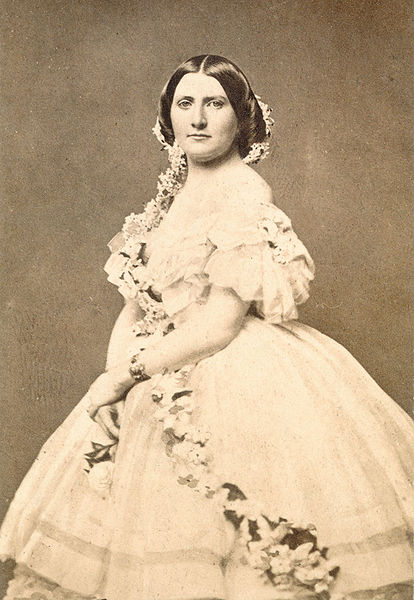
4) The USRC Harriet Lane was built to be a revenue cutter for the U.S. It saw military action throughout the American Civil War, apparently as the USS Hariet Lane.

5) It seems a poignant coincidence that this story was published 150 years ago today, Valentine’s Day. Harriet Lane was an orphan. She requested that James Buchanan be named her legal guardian. During President Buchanan’s administration she played the role of First Lady for her bachelor uncle. From Wikipedia:

From her teenage years, the popular Miss Lane flirted happily with numerous beaux, calling them “pleasant but dreadfully troublesome.” Buchanan often warned her against “rushing precipitately into matrimonial connexions,” and she waited until she was almost 36 to marry. She chose, with her uncle’s approval, Henry Elliott Johnston, a Baltimore banker. Within the next 18 years she lost her uncle, both her two young sons, and her husband.

President Buchanan counseling caution? – What a surprise!

Posted in 150 Years Ago This Week, Secession and the Interregnum | Tagged , , , , , , , | Leave a comment

New Flag Flies

800px-Louisiana_Feb_11_1861.svg

Unfurled Over New Orleans: Influenced by Spanish, French, and the original 13

From The New-York Times February 13, 1861:

THE NEW FLAG OF LOUISIANA.

NEW-ORLEANS, Tuesday, Feb. 12.

The new flag of the sovereign State of Louisiana was unfurled to-day from the top of the City Hall, amidst the firing of cannon, ringing of bells, and cheers from the populace. …

You can get more information about Louisiana’s various flags at Flags of the World, Louisiana 101, and at Wikipedia. The information among the three sites does not line up 100%.

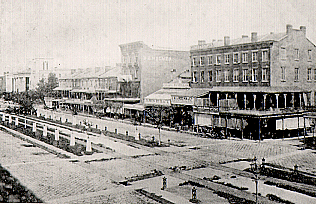
CanalStWDMcPherson1860Holmes

Canal Street, New Orleans 1860

Posted in 150 Years Ago This Week, Secession and the Interregnum | Tagged , , | Leave a comment

“Coercion” – Another Take

461px-Oliver_Hazard_Perry_Morton_-_Brady-Handy

Governor Morton: Four white horses and a pageant for Lincoln

As the Civil War Daily Gazette reports President-elect Abraham Lincoln Departed Springfield, Illinois 150 years ago today on his journey to Washington, D.C., where he will be inaugurated on March 4th. Lincoln stayed the first night in Indianapolis. The Civil War Daily Gazette piqued my interest my saying that a speech Lincoln gave that night would turn out to roil the South. Until now Lincoln has tried to say as little as possible, it seems, referring inquirers to the Republican Party platform and his own previous speeches. Here’s some more about Lincoln in Indianapolis.

From The New-York Times February 12, 1861:

ARRIVAL AND RECEPTION AT INDIANAPOLIS.; SPEECH OF MR. LINCOLN.

INDIANAPOLIS, Monday, Feb. 11.

The firing of thirty four guns announced the approaching train, bearing the President elect and party. The President was received and welcomed by Gov. MORTON, and escorted to a carriage with four white horses, when a procession was formed into, a pageant seldom if ever witnessed here. The procession was composed of both Houses of the Legislature, the public officers, the municipal authorities, military and firemen. Great enthusiasm was manifested along the line of march. The President stood in his carriage, acknowledging the welcome of the surrounding thousands. …

On reaching the Bates House the procession halted and Mr. Lincoln was escorted to the balcony, when he said: He came here to thank them for the support given by Indianapolis to a true and just cause. Coercion and invasion are terms much [met?] now with temper and not blood. Let us not misunderstand their meaning nor the meaning of who use them. Let us get their meaning from men who deprecate the things which they would represent by their use. What is the meaning of these words? Would marching an army into South Carolina with hostile intent be an invasion? I think it would, and it would be coercion also if South Carolinians were forced to submit. But if the United States should merely hold and retake its own forts, collect duties or withhold the mails, where they were habitually violated, would any or all of these things be invasion or coercion? Do professional Union lovers, resolved to resist coercion, understand such things there on the part of the United States to be coercion or invasion? If they do, their idea of preservation is exceedingly thin and airy. In their view the Union as a family relation would seem to be no regular marriage, but a sort of free-love arrangement, to be maintained by personal attraction. …….. By what rightful principle may a State, being not more than one fiftieth part of the nation, in sort and population, break up the nation, and the coerce a larger division of itself? What mysterious right to play the tyrant is conferred on a district of country with its people by merely calling it a State?

Mr. LINCOLN, in conclusion, said he was not asserting anything, but asking questions for them to consider and decide in their own minds what was right and what was wrong. …

The crowd swaying to and fro forget all etiquette, and each seem to outdo his elbow companion …

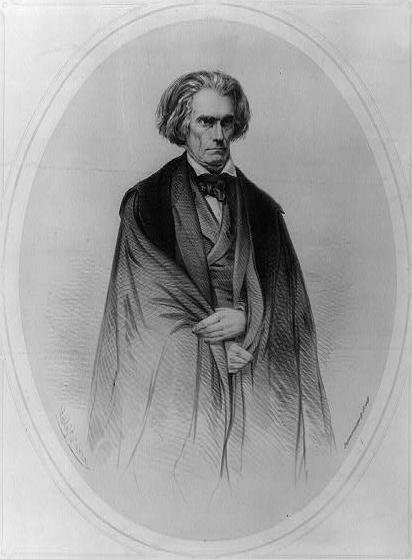
Sket-Calhoun

John C. Calhoun:godfather of those seeing Union as free-love arrangement?

Free-love and people swaying to and fro – kind of reminds me of Woodstock, although probably a few differences between Winter of 1861 and Summer of 1969.

As you can imagine Oliver Hazard Perry Morton was a stalwart Republican.

Posted in 150 Years Ago This Week, Secession and the Interregnum | Tagged , , , | 1 Comment

Three Options

744px-Flag_of_South_Carolina.svg

1861: People are fleeing the Palmetto State!

From The New-York Times February 11, 1861:

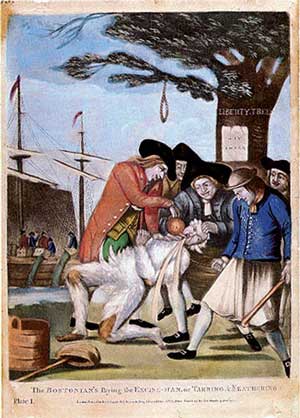
EDWARD MANCHESTER, formerly of Bennington, Vt., arrived home from the Palmetto State a few days since. He says he had a choice between three things — to leave the State, to remain and join the rebels, or don a coat of tar and feathers. He chose the former, and withdrew in the night, leaving his trunk behind, and an unsettled account with his employer, who was owing him quite a sum. Two other Bennington comrades, JEROME SEYMOUR and ALBERT CUSHMAN, were not so lucky, but, as MANCHESTER says, were impressed into the service of South Carolina. He believes they will never fight against the Union.


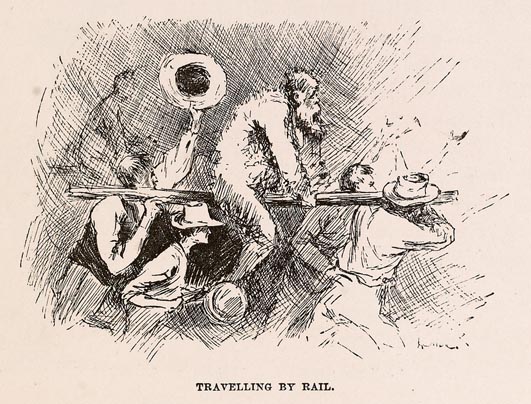
Huck_Finn_Travelling_by_Rail

Tar and Feather: Hucklebarry Finn illustration

1774_lynching

Patriots abuse British Customs Collector (British view)

_______________________________

More Emigrants from South Carolina

From The New-York Times February 9, 1861:

WASHINGTON, Friday, Feb. 8.

During the month past many families, whom the troubles in Charleston have driven away, have arrived in this City, some of them in very destitute circumstances, and whose troubles are greatly enhanced by the prevailing cold weather, so unlike the mild climate from which they have come. Among the most necessitous cases which have been brought to light is that of Mr. BOYCE, wife and two children, who came away from Charleston about two weeks since. They found temporary lodgings at No. 29 Greenwich-street, where, on account of their great destitution, and the absence of fire and food, the wife and children were soon taken sick. Dr. ANDREWS, Police Surgeon for the lower districts, learned their situation, and has attended the family. Mr. BARTLETT, proprietor of the Washington Hotel, sent them a stove and some fuel, and has been kind to them. The wife still continues dangerously ill.

Yesterday an old lady, of 60 years and upwards, appeared at the Eighteenth Ward station house for relief. Her daughter, who had lost her husband in Charleston, fearing that her two children would starve there, had sent the little ones to her to be cared for. She was very poor, having to rely wholly upon what she could earn by doing occasional work at service. The policemen verified the truth of her story, and gave her temporary relief. These cases appeal strongly to he humane.

Check out The National Park Service for information about the Sesquicentennial of the South Carolina Flag. You can see a drawing of the flag adopted on January 28, 1861 (the orientation of the crescent moon changed in 1910). And yes, the choice of the 1861 flag involved a prior event in Charleston harbor.

Posted in 150 Years Ago This Week, Secession and the Interregnum | Tagged , | Leave a comment

Tears at the Peace Conference

413px-James_Alexander_Seddon_1

James Seddon: "very extreme man" from Virginia

From The New-York Times February 9, 1861:

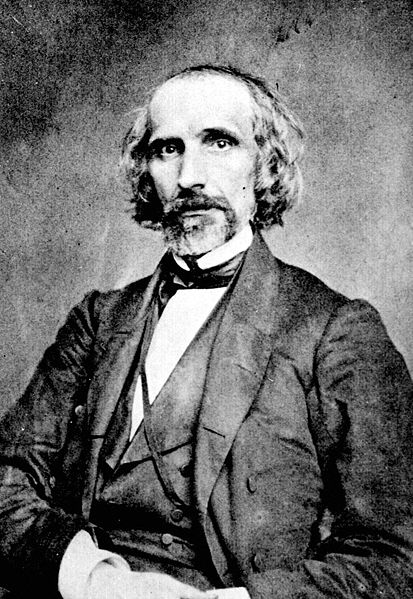
“Occasional,” in a letter from Washington to the Philadelphia Press, gives an incident which transpired during the sessions of the Peace Convention at Washington on Feb. 6. Mr. SEDDEN, of Virginia, a very extreme man, and little disposed to lead the way to conciliation, having made some objectionable remarks, the Chief Justice of North Carolina, Mr. RUFFIN, who is now over eighty years of age, and the idol of the people among whom he lives, alike because of his spotless character as his gigantic intellect, rose to his feet, and pronounced one of the most inspiring and affecting appeals for the Union. He melted the hearts of even the most ultra of his colleagues, and Ex Gov. MOOREHEAD, of North Carolina, himself a remarkable man, and only second to the aged Chief Justice in the love of the people of the old North State, burst into a flood of tears, which he could not restrain.

Thomas_Ruffin

Thomas Ruffin: pro-Union speech makes John Morehead cry

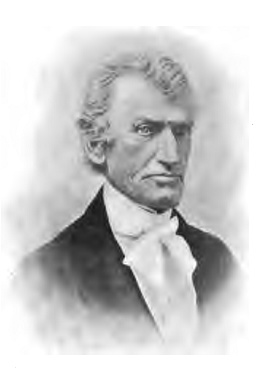
NCG-JohnMorehead

ex-Governor Morehead: a John Boehner-like response to Ruffin's speech?

___________________

Apparently, Thomas Ruffin was only about 73 during the Peace Conference. John Motley Morehead is known as “the Father of Modern North Carolina.”

James Seddon would seem to be an interesting choice to be one of Virginia’s representatives to the Peace Conference. His biography at The Confederate War Department differs in some ways from the Wikipedia bio.

The entire article is at The New York Times Archive.

Posted in 150 Years Ago This Week, Secession and the Interregnum | Tagged , , , , , | Leave a comment

Bouligny Marches to Different Drum Beat

345px-John_Edward_Bouligny_-_Brady-Handy

Representative Bouligny: Forever a Unionman

By Staying Put

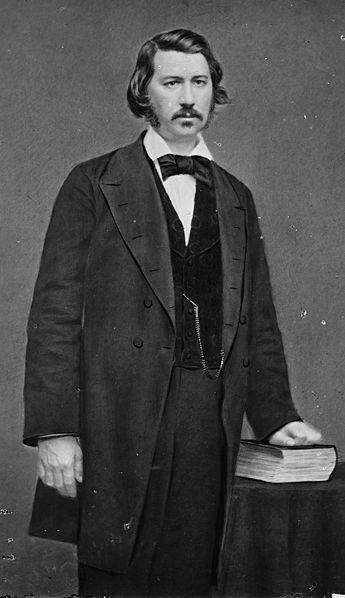
One of the 150th themes that I think is interesting is the diverse political opinion on both sides of the Mason-Dixon Line. After Louisiana seceded from the Union all of its U.S. senators and representatives left Congress except for one. In the House on February 5, 1861 Miles Taylor delivered his departure address. Afterwards Lousiana Representative John Edward Bouligny took the House floor to explain that he was not going to follow his Fellow Louisianans out of Congress:

From The New-York Times February 6, 1861:

HOUSE OF REPRESENTATIVES.

WASHINGTON, Tuesday, Feb. 5. …

Mr. BOULIGNY said that until a few minutes ago he was in a similar position with his colleague. He had received no official information that an ordinance of secession had been passed by Louisiana. As to the Convention, he was not elected by them, and had nothing to do with their action. He should not, therefore, obey their instructions. Some of the gentlemen of that body were his personal and intimate friends. He thought discourtesy had been exercised towards him, in not sending him a copy of the ordinance. He would therefore pay no attention to it until he received official notice of its passage. Another reason compelled him to differ with the Senators and Representatives from that State. He was the only member of Congress elected therefrom as an American Unionman and to this principle he should stand forever. [Applause.] When I came here, he added, I took an oath to maintain the Constitution of the United States. What does that mean? Does it not mean the union of the States? It does, if I understand it right. By that oath I shall stand. Whenever instructed by my immediate constituents and asked by them to withdraw myself from this House, their wishes shall be complied with as soon as I receive the information. I shall, however, not only withdraw, but resign my seat. After I do so, I shall continue to be a Unionman, and stand under the flag of the country that gave me birth. [Long continued applause on the floor and in the galleries intermingled with cries of “Good”].

You can read all the House proceedings for that day at The New York Times Archive.

Posted in 150 Years Ago This Week, Secession and the Interregnum | Tagged , , , | Leave a comment

Savior

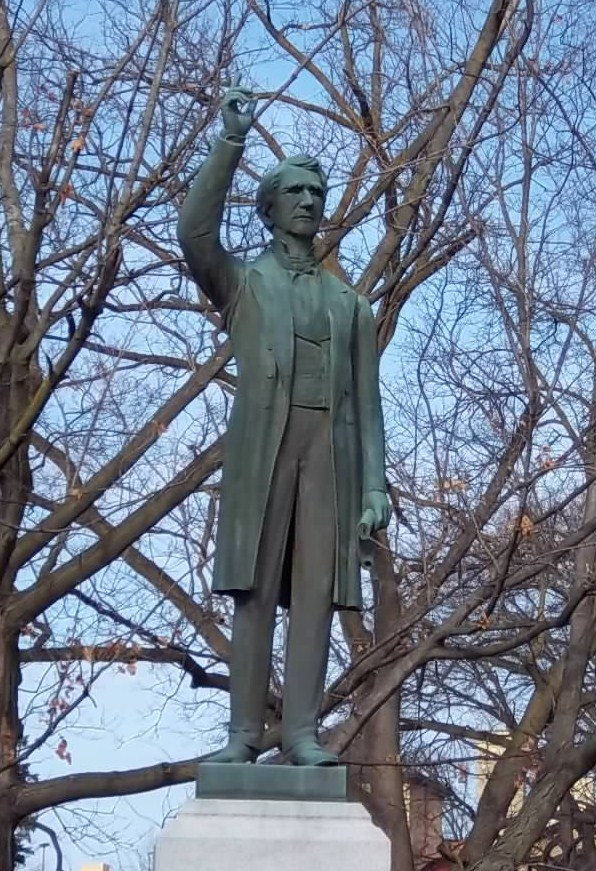
William Seward

"... let me save the Union in my own way" (statue in Auburn, NY)

From The New-York Times February 6, 1861:

GOV. SEWARD’S VIEWS ON SAVING THE UNION.

— The Washington correspondent of the Boston Advertiser gives the following reply of Gov. SEWARD, to the urgent requests that he would assent to measures of compromise:

“The pressure has been very strong on the Republicans to yield to something like Mr. CRITTENDEN’s measures, but it is of no use. When people press Gov. SEWARD to yield to this, in order to save the country, he replies: ‘Gentlemen, you think I can save the country by sacrificing myself. Suppose I were to save the country as you wish, I should have put an end to my power for good or evil forever. I shall have to go back to Auburn and amuse myself with writing history for the rest of my life. I am not so blind to experience as to suppose that I can both sacrifice myself and remain leader at the same time. Now, do you want me to retire from public life?’ The answer is of course, ‘No, Governor; we can’t do without you.’ ‘Then,’ returns he, ‘you must let me save the Union in my own way.'”

If is a defect, perhaps, in political communities, and especially in our political parties, to place too little confidence in the wisdom and fidelity of those whom they have chosen to be their representatives. One would suppose that if there is any such thing as proved fidelity, Gov. SEWARD had made good his title to the confidence of those who deprecate and resist the extension of Slavery. He may fairly claim the right to exercise his own judgment, as to the best means of attaining this result, without subjecting himself to the suspicion of disloyalty to his principles or unfaithfulness to his friends. Yet he is denounced by the Tribune as ready to abandon both, because he intimates a desire to preserve the Union even at the sacrifice of some points upon which, under other circumstances, he would insist. We think Mr. SEWARD may fairly claim the right to be allowed to “save the Union in his own way.”

Oh, so that’s the definition of “hubris”.

I guess the Unionists of Bunker Hill were not the only ones who considered Seward the premier of the Lincoln administration. James McPherson in Battle Cry of Freedom (p.260 in Ballantine Books 1989 edition) supports the idea that Seward, at least initially, considered himself the premier.

You can find this article about William H. Seward at The New York Times Archive.

Posted in 150 Years Ago This Week, Secession and the Interregnum | Tagged , , | Leave a comment

Senator Johnson Takes Aim

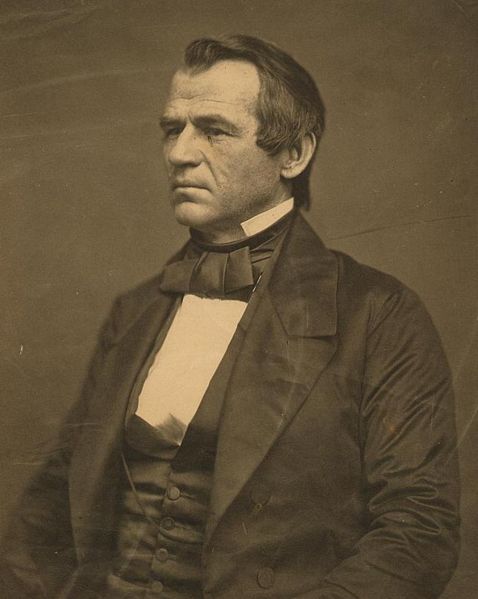
Younger_Andrew_Johnson

Senator Johnson rebuffs Benjamin, et al: To the sea, S.C. and Mass!

150 years ago today Senator Andrew Johnson from Tennessee made a fired-up speech in the U.S. Senate. His jumping off point was a response to Louisiana Senator Benjamin’s departing words as he left the Senate as a result of Louisiana’s ordinance of secession.

From The New-York Times February 6 1861:

CONGRESSIONAL PROCEEDINGS.; SENATE. IMPORTANT FROM WASHINGTON.
WASHINGTON, Tuesday, Feb. 5. …

Mr. JOHNSON, of Tennessee, (Dem.,) said that in a former speech he had placed himself on the Constitution with the fathers, and against the doctrine of nullification and secession, which he considered to be a national heresy. As far back as 1833, he had planted himself on the same principles, and believed the doctrine of secession to be an enemy which, if sustained, would lead to the destruction of the Government; and he opposed this doctrine today, for the same reasons. He believed it would be the destruction, also, of any Government which might be formed subsequently. …

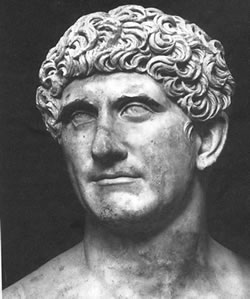
MarkAntony1

Marc Anthony like Judah Benjamin

On yesterday we had quite a scene — a piece well played, gotten up to order, and the pieces well memorized — whether anxious mourners were prepared for the occasion, he could not say. The Senator from Louisiana (Mr. BENJAMIN) had argued that his State had violated no obligation, as she was not bought for a price, but had her sovereignty simply handed over in trust. He (Mr. JOHNTON) then read from the first article of the treaty of cession of Louisiana, claiming that it was explicit, that by the conveyance of absolute jurisdiction and control to the United States of the property and sovereignty, both were conveyed to the people of the United States. It was not, as represented by the Senator of Louisiana, any good will of the French, but the United States bought this property and sovereignty for so many million dollars. Then the Senator from Louisiana portrayed the enormity of the wrongs done to Louisiana, till he (Mr. JOHNSON) almost thought MARC ANTHONY came back, and expected to hear the Senator exclaim: “If you have tears to shed, prepare to shed them now.” What are these dreadful wrongs? The United States bought her, paid for her sixty millions francs, and then admitted her to the Union. Was any oppression and wrong there? Was there any wrong, when, at the battle of New-Orleans, Kentucky, who thanks to God stands firm to-day, and Tennessee, who he hoped will stand with Kentucky, went to the help and saved that city from Packenham? How much protection has she had for sugar? Is this another wrong? Then where are the wrongs which justify Louisiana to-day in leaving the Government, in violation of the rights of all the States of the Union? Without consulting even Kentucky and Tennessee, who defended her, she has taken the forts, arsenals and mint of the United States. …

He argued at some length the question of coercion, claiming a great difference between the enforcement of the laws, and what was called coercion of States. He quoted the Richmond Enquirer of 1814, referring to the Hartford Convention, and saying that no State had a right to withdraw from the Union, and that resistance against the law was treason, calling on the Government to arrest the traitors, for the Union, must be saved at all hazards. …

He said that South Carolina early had a prejudice against a Government by the people, and that secession was no new thing in that State. He referred to the early history of South Carolina, who proclaimed at one time that they were ready to go back under the dominion of King GEORGE. He read an address of the people of Charleston to King GEORGE, in 1780, saying that they never intended to dissolve that union; lamenting the struggle for Independence, professing affection for the Government, the King, &c., &c. He then referred to the attempt to break up the Government in 1833, by South Carolina. Then they were restrained and their pride humiliated…

What does South Carolina propose to give to Kentucky and Tennessee? All South Carolina wants of Kentucky and Tennessee, and the other States of the northern portion of the South, is to furnish men and money. When we find her prosecuting a contest for Mexico or elsewhere, Tennesseeans and Kentuckians will be very desirable to help in the battles. What protection can South Carolina give Tennessee and Kentucky, if her negro property needs protection? We have got the men, and we will have to pay for it, and not South Carolina, which has been an apple of discord in this Confederacy from my earliest recollection to this time, complaining of everything and satisfied with nothing. I think sometimes it would almost be a godsend if Massachusetts and South Carolina could be joined together, like the Siamese twins, and separated from the Government, and taken off into some remote, some excluded part of the ocean and fastened there, to be washed by the waves, and cooled by the winds, and after they had been there a sufficient length of time, the remainder of the people of the United States might entertain a proposition for taking them back. [Laughter.] For they seem to have been a source of dissatisfaction pretty much ever since the Confederacy was formed, and some operation or experiment of this kind, I think, would have a beneficial effect on them. …

You can read the rest of Andrew Johnson’s speech at The New York Times Archive

Andrew Johnson knows South Carolina (and the rest of the fledgling Confederacy) needs the resources of Tennessee, Virginia, etc.

Posted in 150 Years Ago This Week, Secession and the Interregnum | Tagged , , , , | Leave a comment

utroque arbitro parati

John Slidell

ex-U.S. Senator John Slidell

February 4, 1861 was an important day. As Civil War Daily Gazette reports, the peace convention convened in Washington, D.C. while the confederacy convention of seceding states had its first meeting in Montgomery, Alabama. Also, the two U.S. senators from seceded Louisiana, Judah Benjamin and John Slidell, took leave of their fellow senators. Here’s some excerpts from Slidell’s parting words.

From The New-York Times February 5, 1861:

Mr. SLIDELL — Mr. President: The document which the Secretary has just read, and which places on the files of the Senate official information that Louisiana has ceased to be a component part of these once United States, terminates the connection of my colleague and myself with this body. The occasion, however, justifies, if it does not call for, some parting words to those whom we leave behind — some, forever — others, we trust, to meet again, to participate with them in the noble work of constructing and defending a new Confederacy …

We must be prepared to resist coercion, whether attempted by avowed enemies, or by a hand heretofore supposed friendly, — by open war or under the more insidious, and, therefore, the more dangerous pretext of enforcing the laws, protecting public property, or collecting the revenue. We shall not cavil about words or discuss legal and technical distinctions. We shall consider the one as equivalent to the other, and shall be prepared to act accordingly, — utroque arbitro parati, you will find us ready to meet you with the outstretched hand of fellowship, or in the mailed panoply of war, as you may will it. Elect between these alternatives. …

We have no idea that you will ever attempt to invade our soil with your armies. But we acknowledge your superiority on the sea at present, in some degree accidental, but in the main natural and permanent, until we shall have acquired better ports for our marine. You may, if you so will it, persist in considering us bound to you during your good pleasure. You may deny the sacred and indefeasible right, we will not say of secession, but of revolution, aye, of rebellion, if you choose thus to style our action — the right of every people to establish for itself that form of government which it may, even in its folly, if such you deem it, consider best calculated to secure its safety and promote its welfare. You may ignore the principles of our immortal Declaration of Independence. You may attempt to reduce us to subjection, or you may, under color of enforcing your laws or collecting your revenue, blockade our ports. This will be war, and we shall meet it with different but equally deficient[sic?] weapons. We will not permit the consumption or introduction of any of your manufactures. Every sea will swarm with our volunteer militia of the ocean, with the striped bunting floating over their heads, for we do not mean to give up that flag without a bloody struggle. It is ours as much as yours, and although for a time more stars may shine on your banner our children, if not we, will rally under a constellation more numerous and more resplendent than yours. You may smile at this, as an important boast, at least for the present, if not for the future. …

478px-Maurice_de_Saxe_(1696-1750)

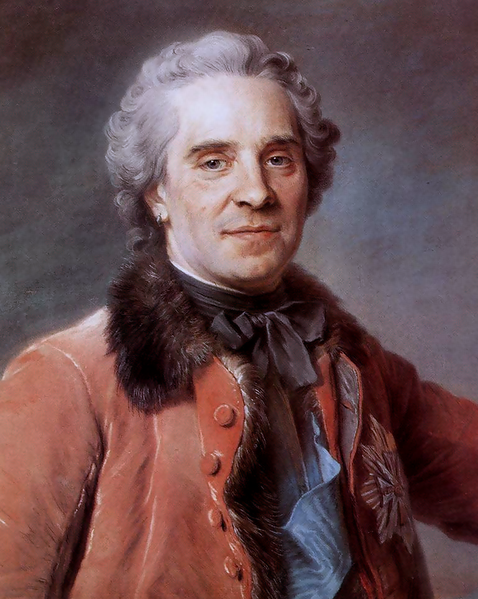
Marshal Saxe: inspiration for victims of coercion

But enough, perhaps somewhat too much, of this. We desire not to speak to you in terms of bravado or menace. Let us treat each other as men who are determined to break off unpleasant, incompatible and unprofitable relations. Cease to bandy words, and mutually leave each other to determine whether their differences shall be decided by blows, or by the code which some of us still recognize as that of honor. We shall do with you as the French Guards did with the English at the battle of Fontenoy. In a preliminary skirmish the French and English guards met face to face. The English Guards courteously saluted their adversaries by taking off their hats. The French returned the salute with equal courtesy. Lord HAY, of the English Guard, cried out in a loud voice, “Gentlemen of the French Guard, fire!” Count D. ACTEROCHE replied in the same tone, “Gentlemen, we never fire first.” The English took them at their word, and did fire first. Being at close quarters, the effect was very destructive, and the French for a time were thrown into some disorder, but the fortunes of the day were soon restored by the skill and courage of Marshal SAXE, and the English, under the Duke of Cumberland, suffered one of the most disastrous defeats which their military annals record. Gentlemen, we will not fire first. …

We have often seen it charged that the present movement of the Southern States is merely the consummation of a fixed purpose long entertained by a few intriguers for the selfish object of personal aggrandisement. There never was a greater error. If we were not about to part, we should say a grosser or more atrocious calumny. Do not deceive yourselves. This is not the work of political managers, but of the people. As a general rule, the instincts of the masses, and the sagacity of those who in private life had larger opportunities for observation and reflection, had satisfied them of the necessity of separation long before their accustomed party leaders were prepared to propose it. We appeal to every Southern Senator yet remaining here whether such be not the case in his own State. Of its truth I can give no stronger illustration than the vote in the Louisiana Convention of 130 members, every delegate being in his seat, voted for immediate secession; and of the seventeen who voted against it, there were not more than four or five who did not admit the necessity of separation, and only differed as to the time and mode of its accomplishment. Nor is the mere election, by the forms of the Constitution, of a President distasteful to us the cause, as is so often and so confidently asserted, of our action. It is this: We all consider the election of Mr. LINCOLN, with his well-known antecedents and avowed principles and purposes, by a decided majority over all other candidates combined in every Free State on this side of the Pacific slope — noble gallant New-Jersey excepted — was conclusive evidence of the determined hostility of the Northern masses to our institutions. We believe that he conscientiously entertains the opinions which he has so often and so explicitly declared, and that having been elected on the issues thus presented, he will honestly endeavor to carry them into execution. While now we have no fears of servile insurrection, even of a partial character, we know that his inauguration as President of the United States would have been considered by many of our slaves as the day of their emancipation, and that the 4th of March would have witnessed in various quarters outbreaks which, although they would have been promptly suppressed, would have carried ruin and devastation to many a Southern home, and have cost the lives of hundreds of the misguided victims of Northern negrophilism. …

More of Slidell’s and Benjamin’s February 4th speeches are at The New York Times Archive

You can read more about John Slidell and Maurice de Saxe at Wikipedia.

Posted in 150 Years Ago This Week, Secession and the Interregnum | Tagged , , , | Leave a comment

Convention Eve

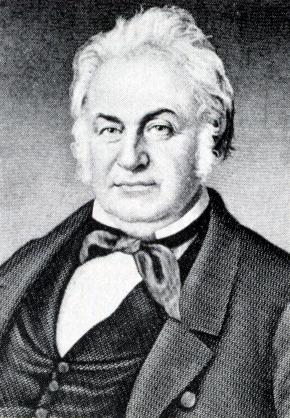
JamesGuthrie

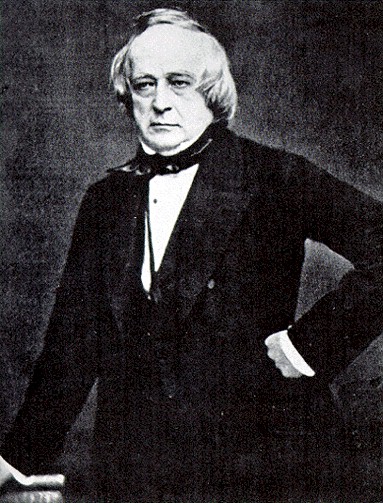
James Guthrie - nice dream


On February 4, 1861 Virginia was sponsoring a peace convention in Washington, D.C.

From The New York Times Archive:

WASHINGTON, Sunday, Feb. 3.

… The Virginia Commissioners are holding a Caucus at the Tyler Rooms to-night, and, rumor says, will offer the first thing to-morrow, a resolution ignoring the use of force towards the seceding States. If this be voted down, the Southern Commissioners will retire. Mr. GUTHRIE says Kentucky demands a full and final settlement, now and forever. The impression seems to be that Virginia will control matters so far as the South is concerned. It is said the Southern Commissioners will demand the withdrawal of the troops from Washington before any negotiations are had, but this wants confirmation. …

The President has again countermanded the orders of Gen. SCOTT for additional troops for this city.

John_Tyler_by_George_P._A._Healy

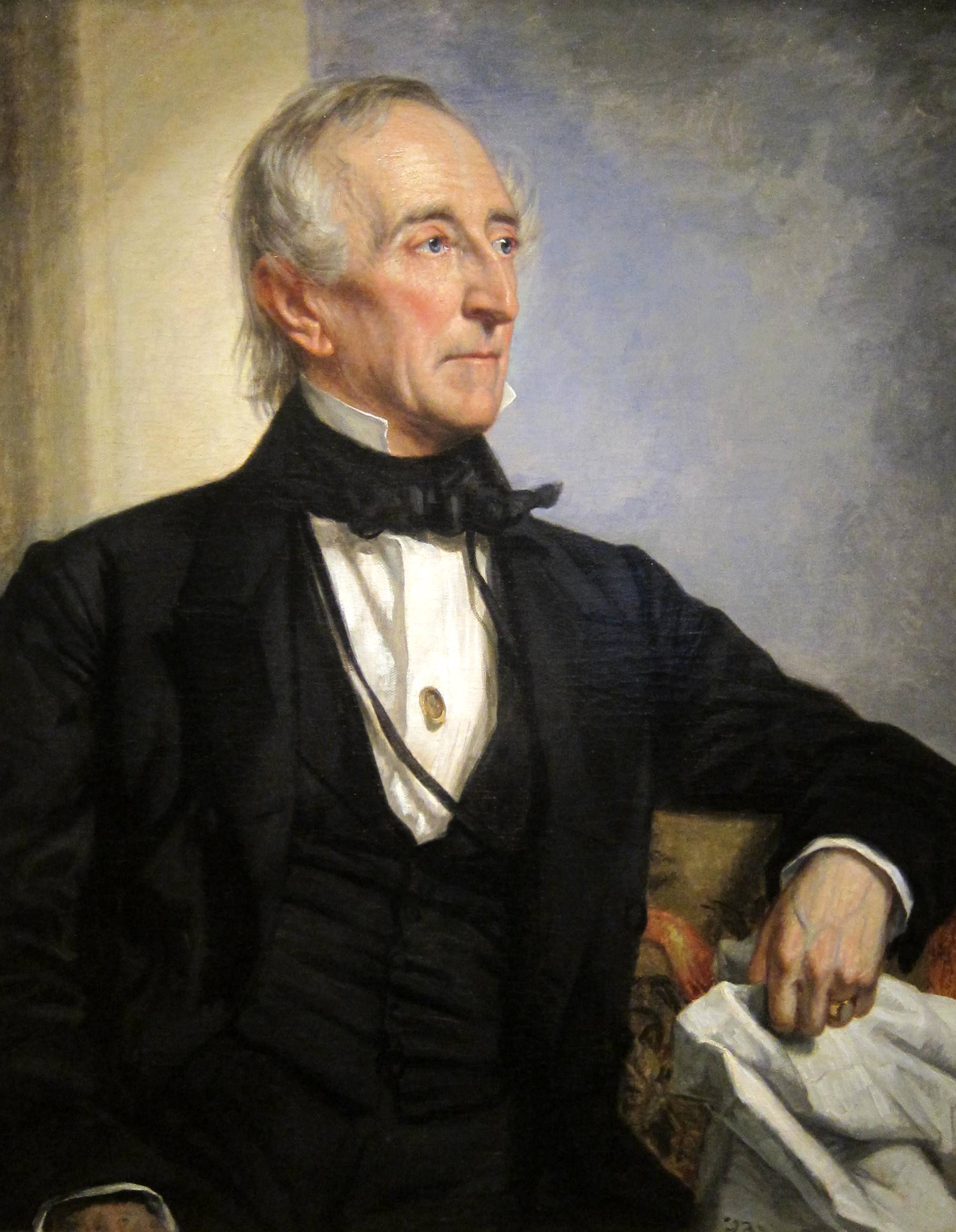
John Tyler's Virginia is belle of the ball - in both D.C. and Montgomery (Portrait by George P.A. Healy)

Is this a comedy routine? On January 29th The New-York Times reported that President Buchanan had changed his mind twice about whether or not to reinforce Washington, D.C. In today’s report the president once again countermanded General Scott’s orders. Notice: only 28 waffling days left before Inauguration.

It seems that Buchanan’s solicitude of Virginia is understandable given the Old Dominion’s geographic, demographic, and economic importance. My understanding is that the meeting of the seceding states in Montgomery, Alabama (also scheduled to begin on February 4th) tried to put a moderate spin on its proceedings in the hope of enticing states like Virginia and Kentucky. If Rhett and Yancey* are willing to tone it down for Virginia, Buchanan’s indecision makes more sense.

The New York Times Archive published a letter from Tyler to Virginia’s governor John Letcher going over his interactions with Buchanan during Tyler’s January visit to Washington.

James Guthrie was
Secretary of the Treasury during the Pierce administration.

* 2-4-2011 update: I found out that Alabama’s William L. Yancey was not a delegate to the Montgomery convention, although “he delivered the address of welcome to Jefferson Davis, selected as provisional President, on his arrival at Montgomery. While many of the fire-eaters were opposed to the selection of a relative moderate like Davis, Yancey accepted him as a good choice”.

Posted in 150 Years Ago This Week, Secession and the Interregnum | Tagged , , , | Leave a comment