Bunker Hill Meeting for Union and Crittenden’s

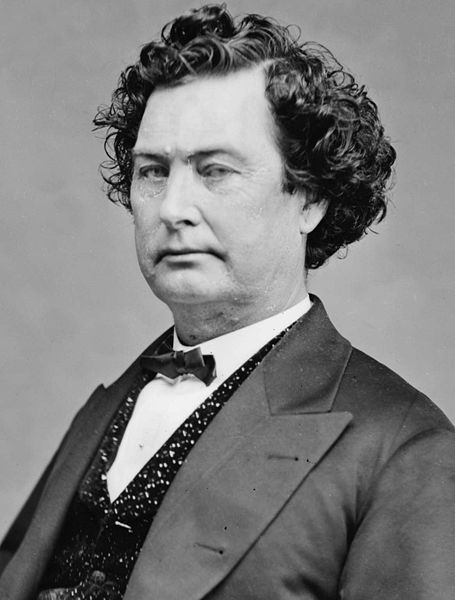
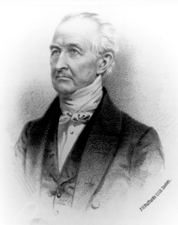
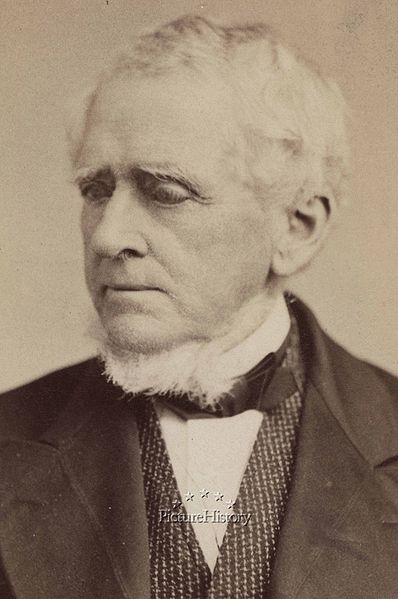
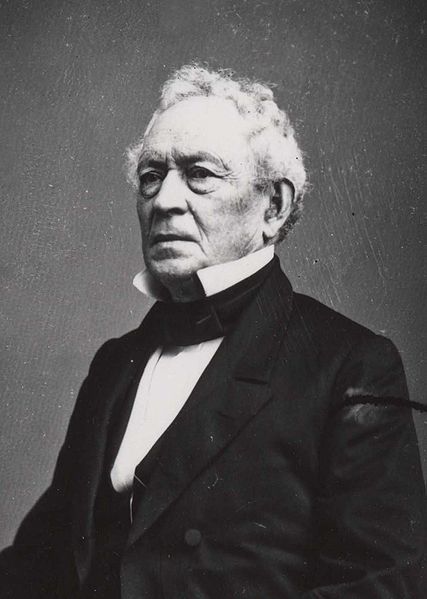
427px-Edward_Everett_-_Brady

Edward Everett for Union and an amended Constitution

From The New-York Times February 4, 1861:

UNION MEETING IN CHARLESTOWN, MASS.

BOSTON, Saturday, Feb. 2.

A great and enthusiastic meeting was held last evening in the City Hall at Charlestown, over which Hon. B.R. THOMPSON presided.

The speakers included Messrs. EVERETT, SALSTONSTALL, JAMES DANA and RICHARD FROTHINGHAM, Jr.

The following resolutions were adopted:

Resolved, That this meeting concurs most heartily in the sentiment of the distinguished Republican leader and Premier of the incoming Administration, WILLIAM H. SEWARD, viz: That the question of Slavery is not now to be taken into account: that “We are to save the Union, and then that we save all that is worth saving.”

Resolved, That we earnestly hope that the proposition of Hon. JOHN J. CRITTENDEN, of Kentucky will be adopted as a basis of settlement for the impending perils of the United States, it being the only practicable plan that all sections may fairly and honorably adopt, and which is all that human wisdom has been able to offer to our distracted country.

Resolved, That the proceedings of this meeting be forwarded to Hon. JOHN J. CRITTENDEN, with a request that he will present them to the Senate of the United States as the voice of the Union men of Bunker Hill.

A call has been issued for a mass Union meeting of the people of Massachusetts in Faneuil Hall, on Tuesday night next.

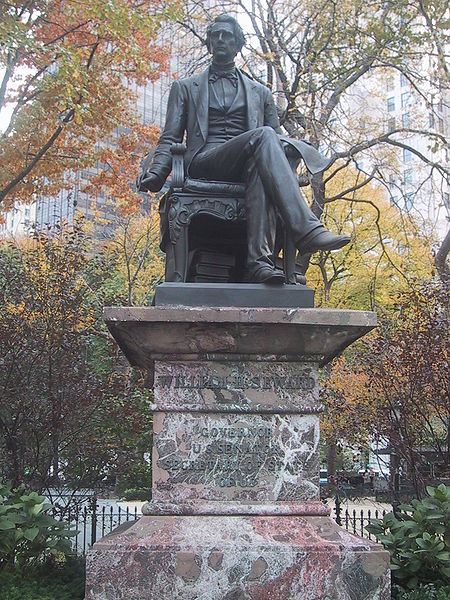
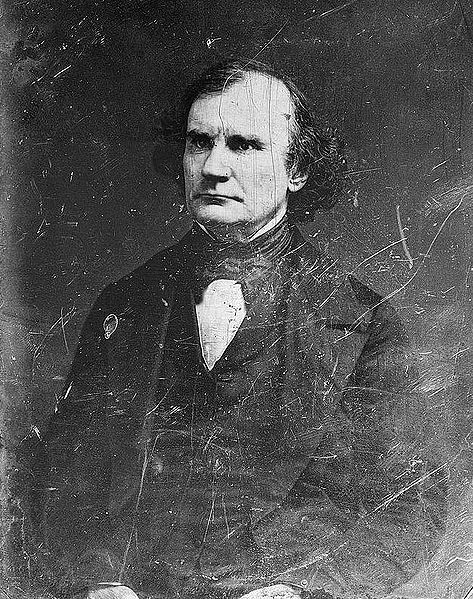
450px-WilliamHSeward

Premier Seward would override Republican platform?

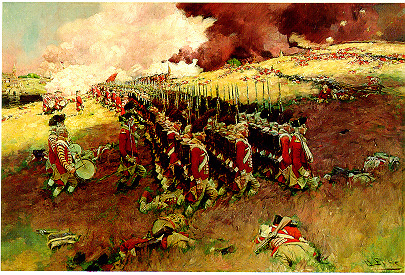
Bunker_Hill_by_Pyle

Battle of Bunker Hill - painting by Howard Pyle

__________________________________

1) Edward Everett had a long political career. In the 1860 U.S. presidential election he was presidential candidate John Bell’s running mate on the Constitutional Union ticket.

2) The Crittenden Compromise would have allowed slavery in the U.S. territories south of the Missouri Compromise line. The Republican platform opposed any expansion of slavery in the territories.

3) The photo of Seward’s statue in New York City’s Madison Square is under the Creative Commons license

4) The reproduced article is from The New York Times Archive

Posted in 150 Years Ago This Week, Secession and the Interregnum | Tagged , , , , , , | 1 Comment

Lincoln: “Black Republican” and/or Clay-like Whig

EdwinWaller

Edwin Waller: signer of Texas' original Declaration of Independence

As Civil War Daily Gazette has reported Texas delegates signed the ordinance of secession on February 1, 1861. Edwin Waller, the only signer of the Texan Declaration of Independence (1836) who was a delegate to the secession convention, was honored “by permission to sign the ordinance of secession next after
the President, and that he be invited to a seat by the side of the President of the Convention during this evening’s session.”

During the February 1 session John McQueen, the South Carolina Commissioner, addressed the Texas convention. He tendered the South Carolina ordinance of secession and invited Texas to send delegates to the meeting of seceded states in Montgomery, Alabama on February 4. He reviewed the Palmetto State’s reasons for secession, including the impact of the election of Lincoln:

whose platform was that of the Black Republican
party and whose policy was to be the abolition of slavery upon this
continent and the elevation of our own slaves to an equality with
ourselves and our children, and coupled with all this was the fact
that, from our friends in our sister Southern States, we were urged
in the most earnest terms to secede at once

He then went on to praise (and maybe frighten) Texas:

”We are not unmindful of your illustrious history when fresh
from the fields of victory and glory in which you established your
own independence you presented a spectacle unexampled in the his-
tory of the world. With a territory sufficiently extensive for
empires, with a soil rich in the production of everything necessary
for the happiness of man, and with a climate as lovely as can be found
on any spot of the habitable globe, without money and without price,
you united your destiny with a sisterhood, whose duty it was to
foster and protect you, and yet from our common enemy you received
in return but neglect and insult, and even arson and poison, that your
hearthstones might be violated and your wives and little ones tor-
tured and murdered.

The information and excerpts can be is from Journal of the Secession convention of Texas, 1861 (1912) found at Internet Archive

______________________________________

The February 4, 1861 issue of The New-York Times reported on events from Lincoln’s home of Springfield, Illinois under the dates of February 1 and February 2.

A bronze medal with the head of HENRY CLAY has been sent by DANIEL ULLMAN to Mr. LINCOLN, with a letter stating the gift was intended for the first President that represented the views of the great Whig leader.

The discussion of the proposition to send Commissioners to the Washington Convention, was brought to a head to-day in the Legislature by the passage of the following resolutions. They are understood to be prepared under Mr. LINCOLN’s supervision …

The Peace Convention in Washington on February 4 was sponsored by Virginia. On February 2 Illinois governor, Richard Yates appointed the Illinois representatives to the convention.

The information and excerpts are from The New York Times Archive

____________________________________

1) Whether or not Lincoln started out as a “Black Republican”,during the Civil War Daniel Ullman urged Lincoln to use black soldiers and formed the Corps D’Afrique in Louisiana in 1863.

2) It seems like different people are seeing or hoping to see different things in Lincoln

3) The wonder of technology. Thanks to railroads Texas and Illinois can apparently get the representatives to the February 4 conventions in a couple days.

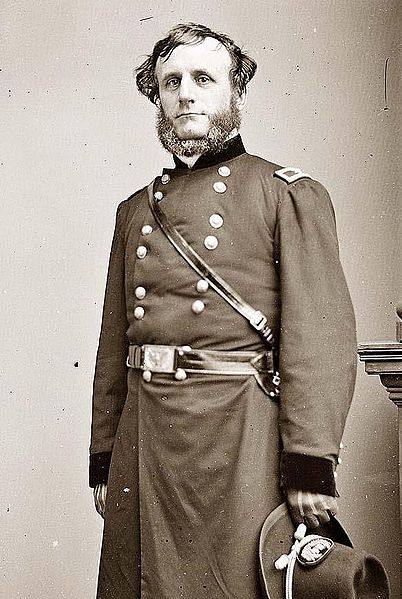
402px-General_Daniel_Ullman

Big Lincoln fan: Daniel Ullman

455px-Richard_Yates_Governor_LOC

Illinois Governor Richard Yates

Posted in 150 Years Ago This Week, Secession and the Interregnum | Tagged , , , , , , , | 1 Comment

Letter from Houston

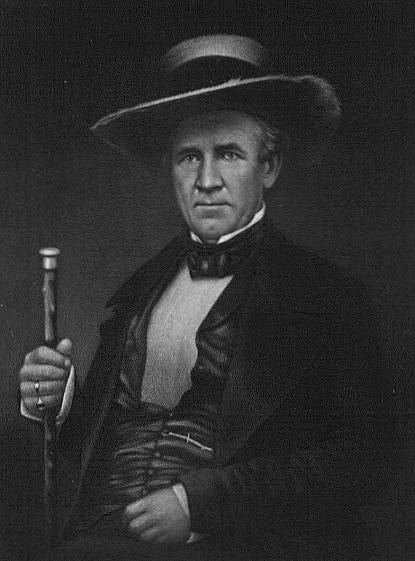
Samuel_houston

Governor Houston: Obeisance to the will of the people

150 years ago today the Texas secession convention was still meeting in Austin. The committee appointed to communicate with Governor Sam Houston received this letter from the governor:

Executive Department
Austin Texas, Jany. 31st/61.
To Mesrs. Reagan, Gray, Rogers, Stell and Devine.

Committee of the Convention.
Gentlemen,

The Executive has had the honor to learn at your hands of the
passage of a resolution by the Convention assembled expressing a
desire on the part of that body “to act in harmony with the differentdepartments of the State government” upon matters touching our federal relation.

Through the action of the Legislature of the State of Texas, a co-
ordinate department of the government, the Executive has received
official information that the Convention assembled has been recog-
nized as possessing powers within the scope of the call under which
its delegates were elected, the same to be submitted to a vote of the
people at the ballot box for their ratification or rejection; not only
does this action on the part of the Legislature commend the Conven-
tion io my consideration, but the high character and respectability of
the delegates composing it, commands my respect.

I can assure you, gentlemen, that whatever will conduce to the wel-
fare of our people will have my warmest and most fervent wishes,
and when the voice of the people of Texas has been declared through
the ballot box, no citizen will be more ready to yield obedience to its
will or risk his all in its defence than myself. Their fate is my fate.
Their fortune is my fortune. Their destiny my destiny, be it pros-
perity or gloom, as of old I am with my country.

For the courtesy paid me by the Convention and for the kind senti-
ments expressed by the committee receive my thanks, and you can
assure the Convention of the readiness of the Executive to act in har-
mony with the Convention in securing an expression of the popular
will in the matter ‘touching our federal relations and that he will
cheerfully confer with any committee appointed for that purpose

Very respectfully

Sam Houston.

This letter can be found as part of Journal of the Secession convention of Texas, 1861 (1912) found at Internet Archive. I highly commend this to anyone interested in reading the ins and outs of parliamentary procedure. But I understand why it’s important to document that Texas followed proper procedures as the convention worked to abrogate the U.S. Constitution.

Governor Houston seems to be agreeing with Oran Roberts, the president of the secession convention, that the will of the people is paramount. And it actually seems that Texas (unlike other seceding states) actually plans on submitting the convention results to a vote of the people.

A few other notes from the convention over the past couple days:

1) Four women from Austin wanted to present a special banner to the convention when the ordinance of secession would be passed. (Everyone knew it was going to happen)

2) In the brotherly relations department, the convention knew about the meeting on February 4th of the seceding states in Montgomery, Alabama and were preparing to send representatives. Also, a representative from South Carolina attended the Texas convention. Seven Score and Ten has reported on South Carolina “Commissioners” meeting with President Buchanan. One of these commissioners, John McQueen, is representing the Palmetto State in Austin.

3) On January 30th there was a resolution with some color:

Mr. Rogers of Harris offered the following resolution.
”Resolved that such of the soldiers of the Revolution of Texas as
are in this city be invited to seats within the bar of the House, pro-
vided they are in favor of another revolution”.

On motion of Mr. Green the resolution was laid on the table.

Posted in 150 Years Ago This Week, Secession and the Interregnum | Tagged , , , , | Leave a comment

Buchanan Vacillates While Wise Burns

575px-Joseph_Holt

Joseph Holt: Secretary of War just trying to do his job

From The New-York Times January 30, 1861:

WASHINGTON, Tuesday, Jan. 29.

The joint application of Gen. SCOTT and Secretary HOLT to the President, to permit three additional companies of artillery to be ordered to this city, was granted, but before the orders could be made out and forwarded, the permission was withdrawn. So indecisive appears the President on all matters of public importance, that the belief is that his Cabinet generally act without his knowledge.

Gen. SCOTT is said to be very indignant at the vacillating course of Mr. BUCHANAN.

LATER. — It is now understood that the President has receded from his refusal to allow Gen. SCOTT to order more troops here, and that three additional companies will now come.

Ex-President TYLER left this morning, having, however, addressed a note to the President, asking if it was true that guns were being mounted at Fort Monroe and pointing “inland.” The President replied that he would make the necessary inquiries to obtain the information sought, and communicate the same. Mr. TYLER considered the act as inconsistent with the high compliment paid to the loyalty of Virginia in the President’s late special message. …

401px-Henry_A_Wise_CDV

Virginia's ex-governor: aggression upon the capital or public property

The Intentions of Gov. Wise.

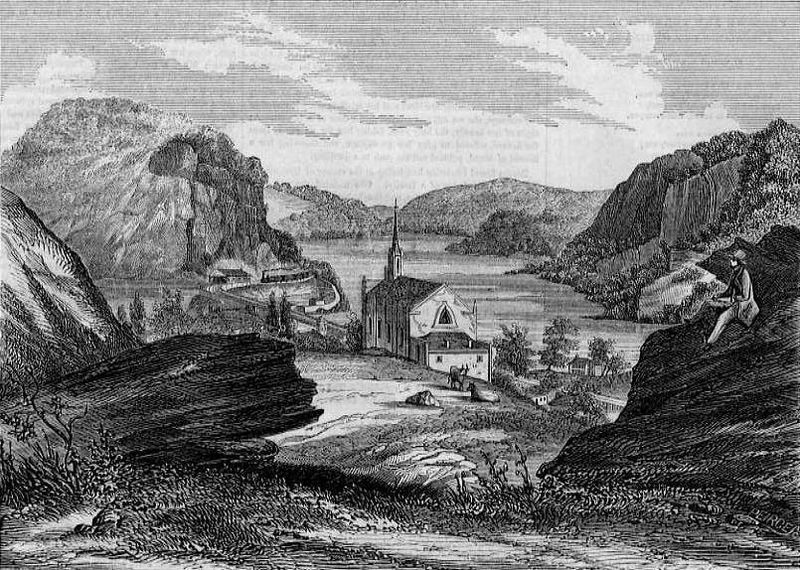
A letter from HENRY A. WISE to a gentleman of this city, announces that Virginia has one hundred and twenty-five thousand men equipped and ready to bear arms. Of these, however, there are many well known to be strong in Union sentiments, who will never join a rebel force to overturn the Constitution and the Government. This boastful letter from Gov. WISE, just at this time, is regarded as indicative of a disposition on his part and those who follow his lead, to engage in any enterprise of aggression upon the capital or public property which the secession leaders may suggest as good policy. It should be borne in mind that Harper’s Ferry is in that State, and is familiar to Gov. WISE as a field of military operations. The fact, then, assumes importance, that the Arsenal at that place is protected by only a single company, and is under the command of Capt. BARBOUR, who is committed to the fortunes of Virginia, and who, on a recent visit to Washington, as the Administration knows, openly stated to certain Secessionists that the defences at Harper’s Ferry would not be at all in their way; and yet the Administration retains BARBOUR in command.

800px-View_from_Jefferson_Rock

View of Harpers Ferry in 1854: Captain Barbour says its Virginia's for the taking

1) Joseph Holt became Secretary of War on January 18, 1861 after his predecessor, John B. Floyd was forced to resign.

2) Henry A. Wise was Virginia’s governor in 1859 when John Brown raided Harpers Ferry. Wise signed Brown’s death warrant. Alfred Madison Barbour was in charge of Harpers Ferry Armory during Brown’s raid.

3) President Buchanan’s got a tough job during this crisis. I think even Abraham Lincoln is going to have to grapple with whether to use force, or at least how much force to use and when to use it. Buchanan sure comes across as wishy-washy and just trying to put out fires in this story. He can’t decide whether to reinforce Washington D.C.; he’s got to mollify his fellow doughface, ex-President John Tyler, a Virginian, by figuring out which way the guns are pointing at Fort Monroe. All the while other Virginians like Henry Wise just want to get Virginia to secede. And people like Captain Barbour are ready to let the secessionists have federal property.

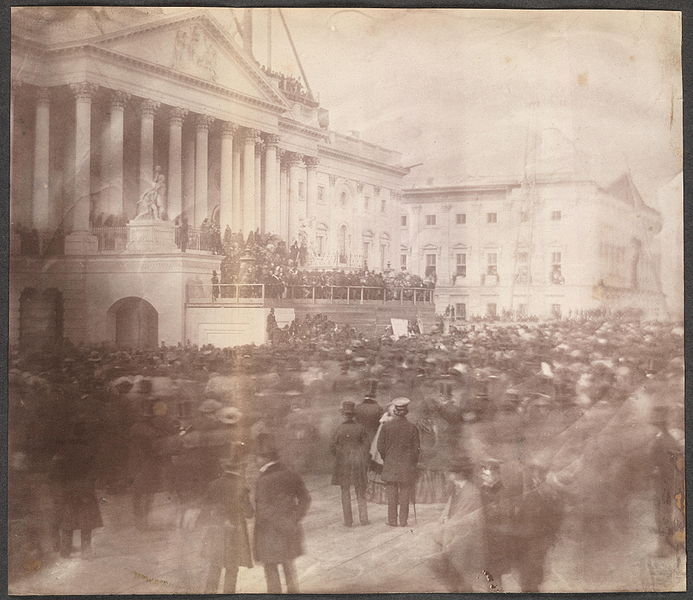
693px-2003001r

Inauguration of James Buchanan, March 4, 1857: did he have any idea what he was getting into?

Posted in 150 Years Ago This Week, Secession and the Interregnum | Tagged , , , , , , , , | 1 Comment

A Lone Again?

Oran_roberts

O.M. Roberts invokes forefathers of '76

150 years ago today the Texas secession convention assembled in Austin. The delegates elected Oran M. Roberts as convention president.

On taking the chair, the President remarked, “I bow to the sovereignty of the people of my state“. All political power is inherent in the people. That power, I assert, you now represent. We have been congregated in obedience to the public will, by the spontaneous and voluntary concert of the people of this State, to consider and dispose of questions equally as momentous and more varied than those that were solved by our revolutionary forefathers of ’76! The crisis upon us involves not only the right of self government, but the maintenance of a great principle in the law of nations – the immemorial recognition of the institution of slavery wherever it is not locally prohibited – and also the true theory of our general government as an association of sovereignties, and not a blended mass of people in one social compact. However grave the issues presented may be, I trust this body will be fully adequate to their solution, in such manner as to preserve the rights of the state. …

You can read the entire Journal of the Secession convention of Texas, 1861 (1912) at Internet Archive. This includes the above quote from Mr. Roberts.

800px-Flag_of_Texas.svg

Alone again? (if only temporarily)

Posted in 150 Years Ago This Week, Secession and the Interregnum | Tagged , , , , , | 1 Comment

Down East and D.C.

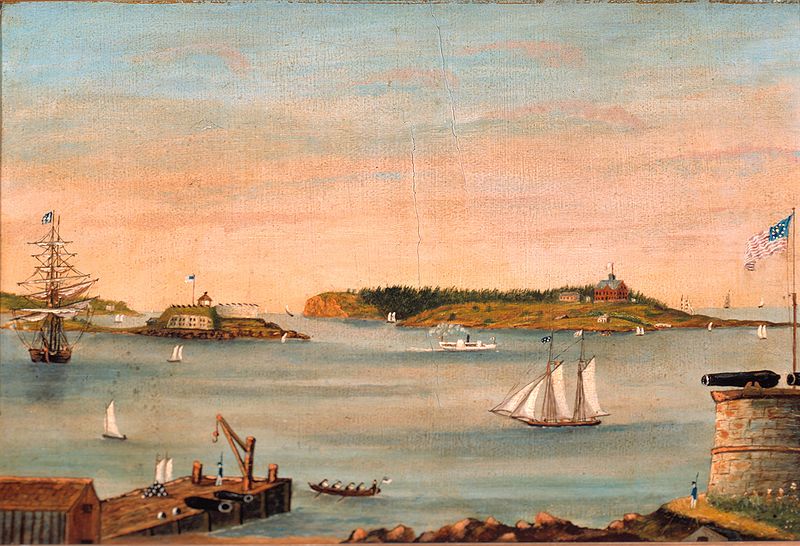
800px-Portland_harbor_1853

Portland harbor (ca.1853?) What about that flag?

Portland Maine Promotes Union (and an Olive Branch of Sorts)

From The New-York Times January 28, 1861:

UNION MEETING AT PORTLAND, ME.

PORTLAND, Me., Saturday, Jan. 26.

An immense Union mass meeting was held at the City Hall here this evening. ETHER SHEPLEY, ExChief Justice, presided. The meeting was addressed by some of our ablest speakers of all parties.

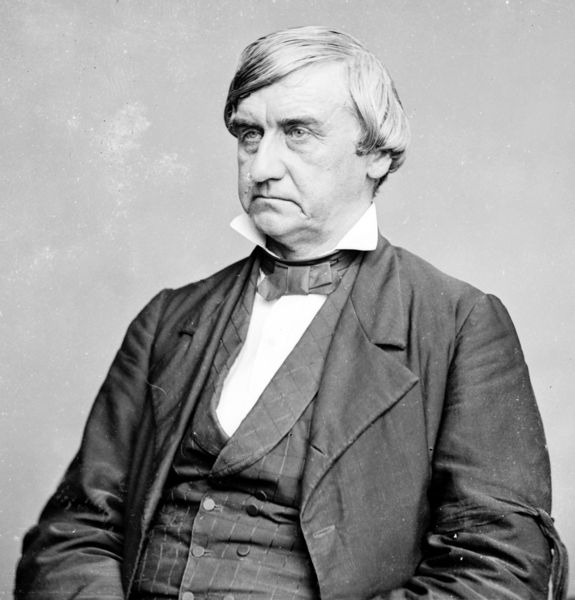
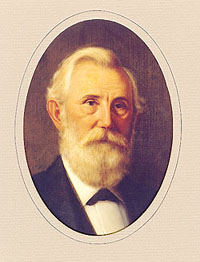
Ether_Shepley

Ether Shepley

Resolutions were passed nearly unanimously “That the destruction of the Union was the greatest calamity that could befall the nation; that we are indebted to it for our prosperity; that it is the duty of each State to avoid all just causes of complaint respecting the affairs of other States not coming with in the jurisdiction of the United States; that we desire to perform faithfully all the obligations imposed upon us by the Constitution and laws of the country, and expect others to do the same; that no State has a right to secede; that forcible opposition of constitutional law is criminal, and must meet our disapprobation and resistance; that it is the duty of the Government to cause the forts and other public property to be protected, the revenue laws enforced, and this State should be ready to aid the Government; that it is our duty and purpose to cultivate a friendly spirit towards all our countrymen; that we will tender every suitable measure of conciliation to meet the present difficulties, and give the most attentive consideration to every favorable proposition from any section of our country, and that it is expedient to repeal the Personal Liberty bills.”

Two Vignettes from the “Nation’s Capital”

From the New-York Times January 28, 1861:

WASHINGTON, Sunday, Jan. 27.

CASSIUS M. CLAY had a rousing audience to hear him last night. He made a bold, earnest, Anti-Slavery Extension speech, which was vociferously cheered. Fifteen years ago such a speech here, would have endangered his life. The world moves. …

The Boston Committee of Union men have met a very cool reception. Mr. WINTHROP called on Senator MASON, and, referring to his former visit to Massachusetts, remarked in the blandest tones, “I hope, Mr. MASON, we shall see you again at Bunker Hill.” To which the Senator stiffly jerked out the response — “Not unless I come as an Ambassador, Sir.” WINTHROP wilted.

473px-JMMason

Senator Mason - soon to be Ambassador (how'd he know that?)

454px-Cassius_Marcellus_Clay_abolitionist_-_Brady-Handy

Cassius Marcellus Clay: Kentucky Abolitionist not lynched for speech

_____________________________________________________
Notes

1) Cassius Marcellus Clay and James Murray Mason will both be heading overseas this year (1861).

2) The Portland meeting seems like a pretty straight-forward pro-Union meeting, but they do favor repealing Maine’s Personal Liberty laws as a concrete gesture of conciliation. Given the fact that several states had already seceded, was this perhaps an effort from keeping the upper South from also following South Carolina out of the Union? Virginia will be tough if Senator Mason has anything to say about it. As Seven Score and Ten reported Rhode Island has officially repealed its Personal Liberty law.

3) I thought the article on Portland was kind of coincidental given that one of the big news stories this week is Louisiana’s secession. Ether Shepley had a son who would play a role in Louisiana’s Civil War history.

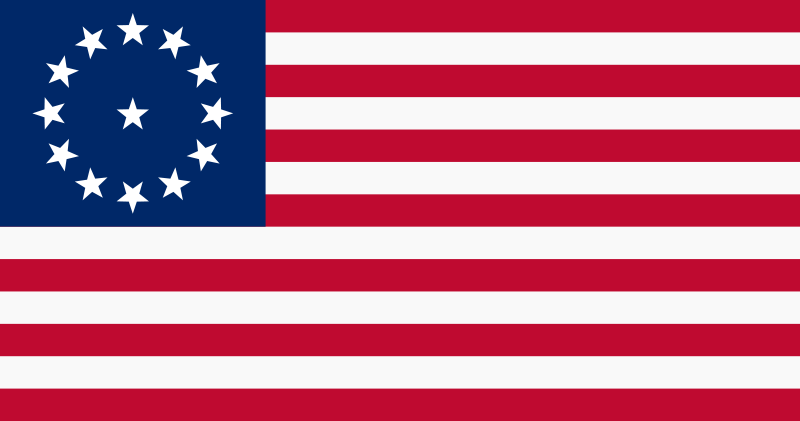
4) According to Wikipedia the painting is from 1853. The flag on the fort looks like a 13-star flag, which was supposedly used during the Battle of Cowpens. If anyone has an explanation I’d like to hear it.

800px-Cowpens_Flag.svg

Posted in 150 Years Ago This Week, Secession and the Interregnum | Tagged , , , , | Leave a comment

Revolutionary

Louisiana Joins the Revolutionary Crowd and Evicts Some Sick People

As Civil War Daily Gazette has reported, 150 years ago today Louisiana officially seceded from the United States. A motion to let the people vote on secession was voted down. Here’s The Times take on the convention and an action by Louisiana state troops on January 11th that seems a bit brutal.

From The New-York Times January 28, 1861:

The Louisiana State Convention, on Saturday, passed the ordinance of secession, in the same terms in which it was originally reported from the Special Committee of Fifteen, to whom the duty of preparing it had been intrusted. The vote on its passage stood, 113 for to 17 against it. A delay ordinance, proposed to be substituted for the Committee’s report, was voted down on Friday by a large majority. It was the evident intention of the leaders in the Convention to discountenance delay in every possible manner, and the final action was pressed with almost indecent haste. As an evidence of a determination to disregard even the wishes of the people of the State, it is only necessary to say that a proposition to submit the ordinance to the popular vote was voted down, 84 to 45. The resolution accompanying the ordinance, declaring the right of free navigation of the Mississippi and its tributaries by all “friendly powers,” was passed unanimously. The Convention then adjourned to meet again in New-Orleans on the 29th. Six States have now declared their connection with the Union dissevered — South Carolina on the 20th of December, Mississippi on the 9th of January, Florida and Alabama on the 11th, Georgia on the 19th, and Louisiana on the 26th.

398px-JADix-Sarony

A little toughness in D.C. - Dix

The most unfeeling outrage which has yet been perpetrated by the Disunionists was committed at New-Orleans on the 11th inst. A party of Louisiana State troops under command of Capt. BRADFORD, took possession of the United States Marine Hospital about two miles below the city. The patients in the Hospital, numbering two hundred and sixteen, were ordered to be removed, — those who were convalescent, immediately, and those who were confined to their beds, as soon as possible. The reason assigned for this inhuman action was that the authorities wanted the quarters for their own troops.

Relating to the First American Revolution

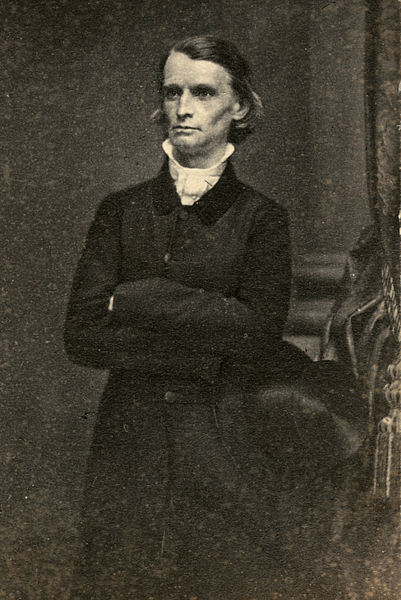
Theodore_Parker_BPL_c1855-crop

Theodore Parker

From The New-York Times January 28, 1861:

Revolutionary Musket Presentation.

BOSTON, Saturday, Jan. 26.

The presentation of the Revolutionary musket bequeathed by the late THEODORE PARKER to the Commonwealth, took place to-day at the State House. The members of both Houses were in attendance, and also a large number of citizens. The musket, with its accoutrements, is an old King’s arm, and was taken by the late Capt. PARKER from a wounded British soldier during the retreat of the British force from Concord and Lexington. Gov. ANDREW, in an impressive and eloquent speech, presented the weapon, which will be placed in the State Chamber, with the other Revolutionary relics.

1) More news about Louisiana’s secession and the action at the Marine Hospital can be found at Son of the South. This includes information about Treasury Secretary John Dix trying to get to the bottom of the matter. In a letter to the Collector of New Orleans he explained that he (Dix) contacted Louisiana’s governor to “remonstrate with him against the inhumanity of Captain Bradford’s order, and to ask him to revoke it.” Dix threatened to cut off funding to repair a revenue ship unless Dix could be sure the revenue cutter would not be seized by the state when repairs done.

2) Theodore Parker was a famous abolitionist and grandson of John Parker, who led Americans at the Battle of Lexington. Theodore Parker worked to oppose enforcement of the 1850 Fugitive Slave Law in Boston.

3) Liberty: A Lexington minuteman, an abolitionist, and the seceders (including some new-style minute-men).

The action at the Marine hospital seems tame by what I’ve heard is going to happen in the prison camps North and South.

Posted in 150 Years Ago This Week, Secession and the Interregnum | Tagged , , , , , | Leave a comment

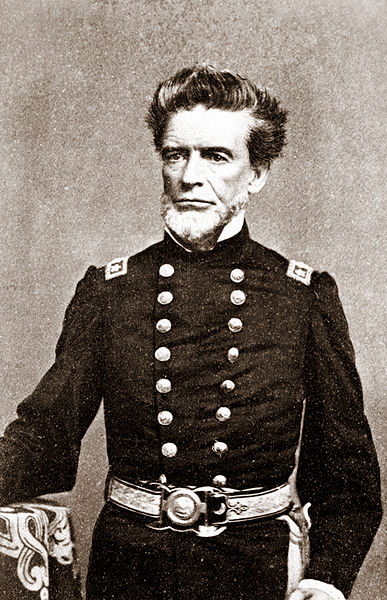
Fire-eater and Firepower

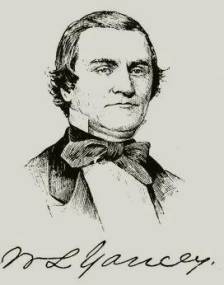
WilliamLowndesYancey

Who's smiling now? W.L. Yancey

150 years ago this week The New-York Times BRECKINRIDGE correspondent commented on affairs in the newly independent Alabama. Here are some excerpts (The New-York Times January 26, 1861):

THE DISUNION QUESTION.; SOUTHERN CORRESPONDENCE. FROM ALABAMA. HOW IT SEEMS TO BE “OUT OF THE UNION” CONTEMPT FOR CONCILIATION AIMS OF THE SECESSION LEADERS THE FEAR OF WAR, ETC.

REPUBLIC OF ALABAMA,

MONTGOMERY, Saturday, Jan. 19, 1861.

The news that Georgia had passed the secession ordinance was received here this afternoon, and immediately announced to the home-abiding citizens by what the Press, in their highly figurative phrase, are accustomed to call a hundred guns; — a calculating mind would observe, however, that by some singular acoustic freak, not a quarter of this number of reports came to the ear for enumeration, which only shows that figures are not as infallible as some are apt to believe. The news, though calculated by its unexpected majority to create a good deal of enthusiasm, was received with a singular apathy.

Since the passage of the ordinance which places us out of the Union, we seem to have fallen on days of quiescence — of peace so unexpected and grateful that the near prospect of a war in Florida, as all look at it, can scarcely disturb its luxury. The Secessionists are now satisfied that they have placed the State where it cannot retreat, or at least will not, while the conservative part of community accept the decision of the Convention, and glad of something settled, are now most anxious to preserve peace with the Federal Government. Thus in the benignant glow of this momentary repose these two irreconcilable parties stand side by side. Still the peace, unless cemented by a common danger, is but a truce, and may at any time be broken up. It is privately whispered, though with what foundation it is impossible to say, that many of the delegates to the Convention from the northern part of the State absolutely refuse to sign the ordinance, and even threaten that that portion of the State will go with Tennessee. It is this, it is thought, which is prolonging the session of the Convention, which some days ago declared itself ready to close as soon as the ordinance was signed.

I can scarcely hope that any plan of reconciliation proposed by Congress will produce any immediate results.The difficulty is, it cannot be brought to touch the people. The politicians will never let the decision of this question, in whatever form presented, go directly to to the people so long as they hold the authority, as they now do, in their own hands. I have found few that doubt that if the question of the secession of this State had been permitted to return to the people for their sanction, it never would have passed. The Secessionists were afraid to let the question go before the people. The men who hold the authority are crafty and ambitious, and represent now the popular, in the sense of enthusiastic, sentiment, and we can look for no voluntary surrendering of power. …

… Perhaps the most contented man in our city now is Mr. YANCEY. Long the arch apostle of this movement, he is now reaping the golden fruit of his labors. From being the most unpopular man in the State, he is fast becoming a man of ten thousand partisans, and I notice, as I pass him in the street, that a smile of almost genial satisfaction is rapidly pushing out the expression of bitterness which had become, habitual to his countenance. He is very far yet from being a popular man, but the new Confederacy owes him a high office, and the labors of his lifetime will not have been in vain.

The Legislature which has been in session this week has done little, but in its action and in the message of the Governor we catch a glimpse of the bill which before many months will be offered to the taxpayers of the State, for the purpose of putting the State on a war footing. The Governor advises a loan of two million of dollars, one million of which is to be procured from the State Banks; he further advises an addition of thirteen thousand to the contingent fund, and a suitable sum for the payment of the State troops now doing duty at Pensacola.

In view of the sufferings anticipated among the poor, each county is advised to appoint a Commissioner who shall, if necessary, before the collection of taxes, pledge the public property by mortgage, and thus supply the wants of the suffering. For the payment of the delegates to the Convention the Legislature have voted the sum of $100,000. …

The fear of a war is now the great dread of all, notwithstanding the fact that there are very few who do not believe that one Southron can drive before him five Yankees. …  I cannot close without a word in reference to the really delicate question of coercion.

Though I do not for a moment hesitate to say that if the word were carried out in its full and offensive significancy — if a real coercive war was undertaken — such a course would do much to render even a future reconciliation of the sections a matter of question’ still daily observation convinces me that the present, firm, and dignified course of the Government, accompanied as it is with the conciliating spirit of the North, is doing good. The fact is, the North cannot sufficiently rely on the ultimate conservative strength of all these seceding States. In the excitement of the present moment, when politicians are in authority, and all the people seem passion-struck, this element is lost from view, and seems not to exist, but there is only needed a firm, conciliatory, and patient spirit on the part of the North, to bring this force to realize its strength and assert its authority. It is a time for manliness and sacrifices, which given, nothing is to be despaired of. BRECKINRIDGE.

Breckinridge seems to approve of the Buchanan administration’s policy during this crisis.


__________________________________________________

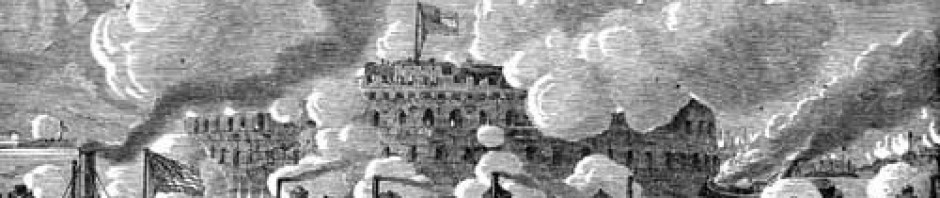
Another source of weapons for the South

From The New-York Times January 26, 1861:

BLOCKADE OF THE MISSISSIPPI.

The Memphis (Tenn.) Avalanche of the 21st gives the following particulars of an affair to which the telegraph has made reference:

“The Minute Men have had tendered to them 16 32-pound cannon by Maj. A.H. DOUGLASS, who became the purchaser when the Federal Government disposed of the Navy-yard of the city. These guns are, we learn, in good condition, and will immediately be put in working order. A Committee, consisting of Capt. James Hamilton, Col. Wm. R. Hunt, D.B. Malloy, Anthony Street and C. Deloach, having been appointed to take the business in charge, and proceed at once to carry out the purposes of the association.

It is the purpose of the Committee, we learn, to apply to the City Council for the privilege of erecting the battery at such points as may be selected, as well as for an appropriation commensurate with the plan proposed.

The presence of these cannon seems almost providential, and it behooves us, occupying the position that Memphis does, to avail ourselves of every means to repel an attack, and ensure safety, should actual hostilities, of which now there seems little doubt, occur. …

You can read the entire articles at The New York Times Archive. Alabama is here; The Mississippi article is here.

The “arch apostle” of secession, William L. Yancey was a well-known fire-eater.

I cut material from the two articles that relate to the theme of the developing military cooperation among the southern states.
Posted in 150 Years Ago This Week, Secession and the Interregnum | Tagged , , , , , , , , | Leave a comment

More State Action South and North

LAsecessionFlag

Used for secession conventon?

Secession Convention on the Bayou

From The New-York Times January 25, 1861:

IMPORTANT FROM LOUISIANA.; PROCEEDINGS OF THE STATE CONVENTION.

BATON ROUGE, Wednesday, Jan. 23.

The Louisiana State Convention met to-day.

A flag with fifteen stars upon it floats over the Capitol.

After a fervent prayer had been offered up, the Convention organized by electing Ex-Gov. MOUTON President, by a viva voce vote of 81 to 41.

Mr. MOUTON was conducted to the Chair, and made a speech, thanking the Convention for the distinction conferred upon him, and advising the utmost calmness and firmness in all their deliberations.

Alexandermouton

ex-Governor Alexandre Mouton: calm and firm deliberations(while 15 star flag already waves over capital)

Resolutions were adopted for the appointment of a Committee of Fifteen, to report articles of secession of Louisiana from the Federal Union.

Several plans were here offered.

A resolution was adopted to invite the Commissioners from Alabama and South Carolina to seats on the floor.

The Chairman then named the Committee of Fifteen to report the Ordinance of Secession. The Committee will make their report to-morrow. …


NEW-ORLEANS, Thursday, Jan. 24.

The Committee of Fifteen reported, to-day, an ordinance of secession, and resolutions regarding the navigation of the Mississippi River. Both were ordered to be printed.

The Committee then asked for a postponement of discussion until 12 o’clock to-morrow.

Several substitutes to the report were offered as a settlement for the present difficulties, which were also ordered to be printed to-morrow.

The Commissioners from Alabama and South Carolina were then welcomed to the Convention.

The Nutmeg State Prepares “Coercive” Force

419px-William_Alfred_Buckingham_-_Brady-Handy

Commander-in-Chief Buckingham preps his militia

From The New-York Times January 24, 1861:

CONNECTICUT.

Gov. BUCKINGHAM, of Connecticut, has issued the following general orders:

ADJUTANT-GENERAL OFFICE,

HARTFORD, Jan. 17, 1861.

General Orders — No. 227.

A spirit of disloyalty to our National Union has manifested itself ill a determination to decide up an consitutional rights without resorting to judicial tribunals; in resolutions of State Legislatures and State Conventions which deny that allegiance is due the Federal Government from citizens of those States; in an attack upon a vessel sailing with United States troops under the flag of our country; in seizing and holding custom houses, arsenals and forts; and in a spirit which dictates the course to be pursued by Federal officers, and justifies resistance to their authority.

When there is evidence design to subvert the Government; when reason gives way to passion, and order yields to anarchy, the civil power must fall back upon the military for support, and rest upon the arm of national defence for aid in protecting the property and person of the citizen, in enforcing the laws, and in maintaining the public peace.

As the active services of the military may soon be required for the purpose above indicated, the Commander-in-Chief would call their attention to the importance of filling up their ranks by enlistments, of a careful inspection of their arms and equipments, of perfecting themselves in drill and discipline, and of being ready to render such service as any exigency may demand.

Major-Gen. THOMAS GUYER will promulgate these orders in the Division. By order of

WILLIAM A. BUCKINGHAM,

Commander-in-Chief.

JOSEPH D. WILLIAMS, Adjutant-General.


1) Alexandre Mouton was governor of Louisiana from 1843-1846.

2) William Alfred Buckingham had an active business and political career.

3) Apparently several different flags were in use in Louisiana in early 1861. You can see a possible 15 star flag here.

4) The Connecticut State Library discusses Connecticut’s nicknames. One possible explanation for “Nutmeg State” involves a sort of manipulation of unwary southern nutmeg buyers. More coercive Yankeedom – actually bad business. Today nutmeg producers would probably give away nutmeg cookbooks with proper nutmeg preparation instructions. Develop thy market!

5) Entire Lousiana article can be read at New York Times Archive. Connecticut article is also at New York Times Archive

Posted in 150 Years Ago This Week, Secession and the Interregnum | Tagged , , , , , | Leave a comment

Louisiana Governor: It’s Hopeless

387px-Thomas_Overton_Moore,_CDV,_c1860s

Governor Moore: Let's settle the conflict now

From The New-York Times January 24, 1861:

THE LOUISIANA LEGISLATURE.; UNCOMPROMISING MESSAGE FROM THE GOVERNOR.

BATON ROUGE, Tuesday, Jan. 22.

In the Legislature to-day the Governor’s Message was read.

He says our enemies will find that throughout Louisiana we are one people, one in heart, one in mind, and are not to be cajoled into an abandonment of our rights, and not to be subdued. All hopes are at an end that the dissensions between the North and South can be healed. All the propositions of moderate men have been contemptuously rejected, and the cry of the North is for coercion. There is no longer a doubt of the wisdom of the policy which demands that the conflict shall come and be settled now.

The tone of the Message is uncompromising.

The Louisiana secession convention is, or soon will be, meeting. As Civil War Online reported, Louisiana forces, by order of Governor Moore, captured federal installations earlier in January. You could say that Louisiana and its governor Thomas Overton Moore have some part in making matters hopeless.

Once again coercion seems a hot button that stirs up the South.

Posted in 150 Years Ago This Week, Secession and the Interregnum | Tagged , , , | Leave a comment