New-York: Brashly Intimidating?

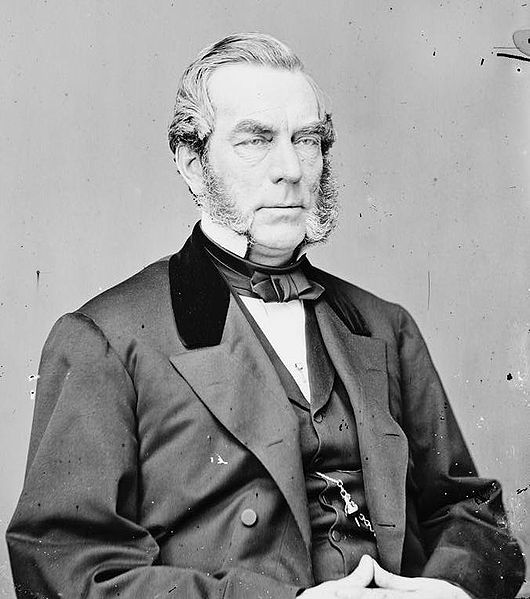
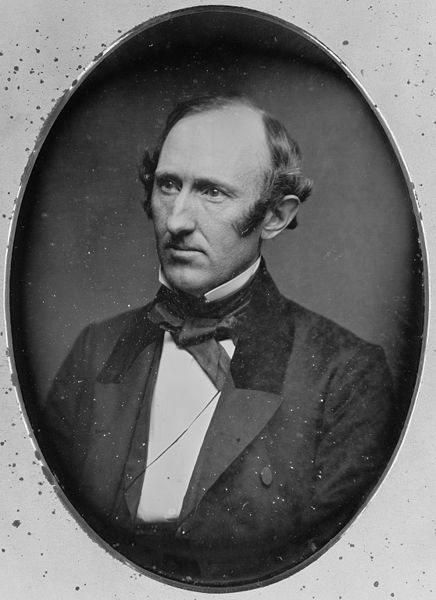
530px-EDMorgan

Edwin D. Morgan rebuked (nice ganmors(?), Governor)

From The New-York Times January 22, 1861:

THE LEGISLATURES OF NEW-YORK AND VIRGINIA.; GOV. LETCHER ON THE NEW-YORK RESOLVES–THE HOUSE OF DELEGATES VOTES TO RETURN THEM TO GOV. MORGAN. Gov. LETCHER, of Virginia, sent the following message to the Legislature on Jan. 17:

EXECUTIVE DEPARTMENT

RICHMOND, Jan. 17, 1861.

Gentlemen of the Senate and House of Delegates:

I have received a communication from His Excellency, EDWIN D. MORGAN, Governor of New-York, inclosing a preamble and resolutions adopted by that State.

The first resolution declares “that the Legislature of New-York tender to the President of the United States whatever aid, in men and money, he may require to enable him to enforce the laws and uphold the authority of the Federal Government.”

This I understand to be a declaration of their readiness and willingness to sacrifice the men and money of that State, in the effort to coerce the Slaveholding States into submission to Federal authority.

The Governor and Legislature of New-York ought to know that the sword has never reconciled differences of opinion. Military coercion can never perpetuate the existence of this Union.

When the affections of the people are withdrawn from the Government, an attempt at coercion can have no other effect than to exasperate the people threatened to be coerced. Blood shed in civil strife can only enrich the soil that must speedily produce “a harvest of woe.”

I cannot suppose, from what has occurred, that the President of the United States would be inclined to adopt a policy, which he must see and know could not fail to result in bloodshed.

I am satisfied that prudence and patriotism would induce him to reject all counsels and measures which would be calculated to bring about so great a calamity.

I have no idea, therefore, that he will accept the tender which has been to inopportunely and so ostentatiously paraded before the country.

Nothing that has occurred in the progress of this controversy has been worse timed and less excusable. If the Governor and Legislature of New-York desire to preserve the Union, a tender of men and money under the promptings of passion, prejudice and excitement will not produce the result

At a time like this, when the horizon is overcast with clouds, when darkness and gloom are gathering close around us, and when we behold nothing but danger on all sides, some little wisdom, discretion and prudence are expected from the representatives of the people. They ought, at least, to refrain from adding fuel to the flame that burns with the utmost intensity now. It would have been far better that these resolutions had never been adopted.

In 1798 and 1799, the action of Virginia was marked by calmness, dignity and an earnest desire to preserve the Union, without prejudice to the rights of the States. No feeling of resentment towards the other States was manifested by those great man in that day of peril and trial. No effort was made to produce estrangement between the different sections of the country, or to inflame popular prejudice. Their example is worthy of imitation when events are hurrying us on so rapidly into the dangers of civil strife.

Nothing but a sense of duty has induced me to transmit this preamble and resolutions to the two Houses of the General Assembly. The threat which is conveyed in them can inspire no terror with freemen.

JOHN LETCHER.

The message and accompanying documents were laid upon the table and ordered to be printed, after the manifestation of opposition to printing the New-York resolutions. …

During consideration of the New-York resolutions and Governor Letcher’s message in the Virginia House of delegates:

Mr. ANDERSON did not know how to characterize these resolutions or the insolence of the Governor of New-York in sending them here. They have seen the action of this Legislature to resist any attempt at coercion with all the power of the State, and yet, in the face of that action, New-York thinks proper to pledge herself to the Federal Government to supply all the men and money they can raise for the purpose of subduing the Southern States. Why is such language used, but to intimidate Virginia? …

After debate and parliamentary maneuverings a motion by a Mr. ANDERSON was passed:

Mr. ANDERSON submitted a motion that the Executive return the New York resolutions to the Governor of that State, with the request that no such resolutions be sent to this State in future. …

1) The entire article is at The New York Times Archive

2) We’ve posted previously about how touchy Virginia and its governor, John Letcher are about the idea of the North coercing southern states that decide to secede. My question about New-York’s action: is it just New-York trying to push its weight around or more a concern with the extremely restrained “action” of the Buchanan administration, or both? I obviously don’t know the answer. Once again it seems the nature of our federal system is producing interesting actions and reactions
Posted in 150 Years Ago This Week, Secession and the Interregnum | Tagged , , , , | Leave a comment

Let Them Go!

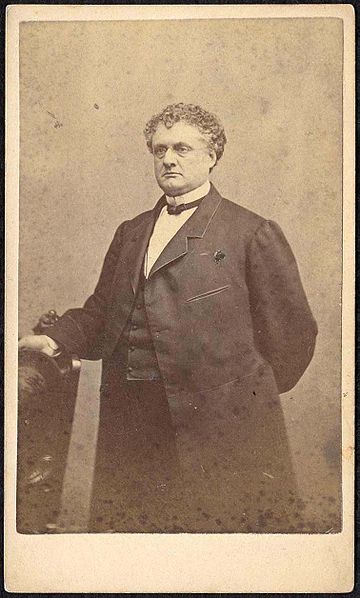
436px-Wendell_Phillips_by_Brady

Wendell Phillips

More Evidence of Dis-united North

A month after South Carolina officially seceded from the Union Wendell Phillips, a well-known abolitionist, gave a speech in Boston. The main idea: if a state wants to secede, let it.

From The New-York Times January 21, 1861:

THE ABOLITIONISTS IN BOSTON. ADDRESS BY WENDELL PHILLIPS AT MUSIC HALL.

BOSTON, Saturday, Jan. 19.

WENDELL PHILLIPS is announced to speak here to-morrow evening. The Anti-Slavery Society asked the protection of Mayor WIGHTMAN, who refused to protect PHILLIPS, but assured the Society that the peace of the city should be maintained.

The society then sought the protection of Gov. ANDREW, who sent his aids to see what the Mayor proposed to do. The Mayor replied to them that he would maintain the peace of the city; that if a disturbance took place in the hall it would be cleared, and that if there were indications of a row before the hall doors were opened he would have the hall closed. Protection has been asked for the annual Anti Slavery meeting to be held next week, but it was refused.

BOSTON, Sunday, Jan. 20.

WENDELL PHILLIPS addressed the Twenty-eighth Congressional Society in Music Hall this afternoon on the state of the crisis. He declared himself to be a disunion man, and was glad to see South Carolina and other Southern Slave States had practically initiated a disunion movement. He hoped that all the Slave States would leave the Union and not stand upon the order of their going, but go at once. He denounced the compromise spirit manifested by Mr. SEWARD and CHARLES FRANCIS ADAMS with much seventy of language, and there was an occasional stamping of feet and hissing, but no outbreak.

Mr. PHILLIPS was escorted home by a few policemen and a great crowd pushing about him. The audience in the Hall was composed mainly of those regularly attending services there.

360px-JohnAAndrew_byJWBlack

Governor John A. Andrew

John Albion Andrew became governor of Massachusetts on January 2, 1861. According to Wikipedia he immediately started preparing the state militia for
war.

Seven Score and Ten reported on Seward’s speech in the senate. I’m pretty sure Seward’s more moderate speech is what Phillips finds objective.

Phillips’ January 20 speech was published together with a speech on February 17, 1861. You can read the resulting book at Google Books.

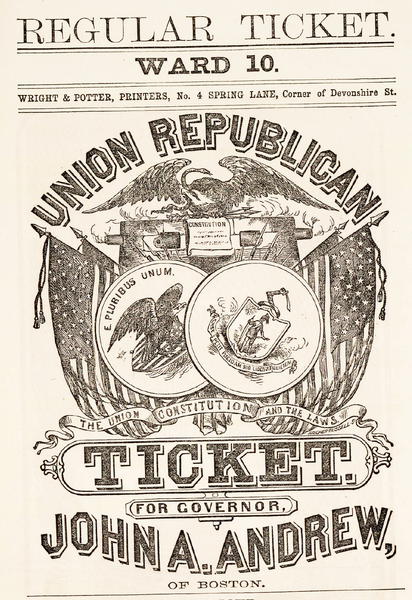
412px-Johnaandrew-governorelectionticket-historical

Andrew Campaign Poster: And Mr. Phillips would be a Disunion Republican

The article I copied is at The New York Times Archive

Posted in 150 Years Ago This Week, Secession and the Interregnum | Tagged , , , , , | Leave a comment

Stoical in Springfield

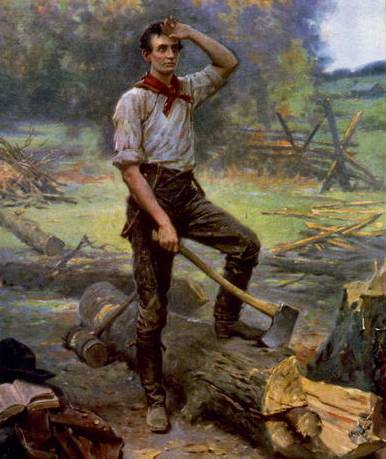
aa_lincoln_youth_2_e

Young Abe, Rail Splitter: Where were those law books of mine? (Library of Congress)

I. 150 years ago this week there was news from Springfield, Illinois about President-elect Abraham Lincoln. He entertained some visitors:

SPRINGFIELD, Ill., Sunday, Jan. 13. …

Mr. LINCOLN was presented this forenoon with a gold-headed rosewood cane, valued at $250, by Messrs. JAMES CHURCHMAN and SAMUEL GAMAGE, of San Francisco, in the name of C.W. YOUNG, of Nevada City.

W. JONES, an Indiana farmer, for whom Mr. LINCOLN split rails thirty years ago, is here on a visit to his former hired hand. (New York Times Archive)

II. A reporter for the Missouri Democrat also visited Lincoln. From The New-York Times January 14, 1861:

Another-Interview with Mr. Lincoln.; HIS OPINION OF COMPROMISES.

A correspondent of the Missouri Democrat gives the following particulars of a visit to Mr. LINCOLN:

“We found Mr. LINCOLN in his parlor surrounded by some six or eight gentlemen, who all proved to be temporary visitors like ourselves. Mr. LINCOLN met us with a frank welcome, shaking hands with us, and at once by his words and his manner, making us feel that our call was no intrusion; and on his invitation, we were soon seated with the circle of gentlemen who occupied his parlor. The subject of conversation was politics, and Mr. LINCOLN expressed himself upon every topic which was brought up with entire freedom. He said, at one period in the conversation, ‘he hoped gentlemen would bear in mind that he was not speaking as President, or for the President, but only exercising the privilege of talking which belonged to him in common with private citizens.’

I chose rather to be a listener than a talker, and paid careful attention both to Mr. LINCOLN’s matter and manner, and although he seemed to talk without regard to the fact of his being the President elect, yet it was discoverable that he chose his words and framed his sentences with deliberation, and with a discretion becoming his high position.

He was asked, ‘Do you think the Missouri Compromise line ought to be restored?’ He replied that although the recent Presidential election was a verdict of the people in favor of freedom upon all the Territories, yet personally he would be willing, for the sake of the Union, to divide the Territory we now own by that line, if in the judgment of the nation it would save the Union and restore harmony. But whether the acquisition of Territory hereafter would not reopen the question and renew the strife, was a question to be thought of and in some way provided against.

He had been inquired of whether he intended to recommend the repeal of the anti-Fugitive Slave laws of the States? He replied that he had never read one of them, but that if they were of the character ascribed to them by Southern men, they certainly ought to be repealed. Whether as President of the United States he ought to interfere with State legislation by Presidential recommendation, required more thought than he had yet given the subject. He had also been asked if he intended to interfere or recommend an interference with Slavery or the right of holding slaves in the dock yards and arsenals of the United States? His reply was. ‘Indeed, Sir, the subject has not entered my mind.’ He was inquired of whether he intended to recommend the abolition of Slavery in the District of Columbia? to which he replied, ‘Upon my word I have not given the subject a thought.’ A gentleman present said to him, ‘Well, Mr. LINCOLN, suppose these difficulties should not be settled before you are inaugurated, what will you do?’ He replied with a smile, ‘Well, I suppose I will have to run the machine as I find it.’

In speaking on the subject of a compromise, he said: It was sometimes better for a man to pay a debt he old not owe, or to lose a demand which was a just one, than to go to law about it; but then, in compromising our difficulties, he would regret to see the victors put in the attitude of the vanquished, and the vanquished in the place of the victors.’ He would not contribute to any such compromise as that.

It was discernible in the course of Mr. L.’s conversation that he duly appreciates the difficulties which threaten his in-coming Administration; also, that he regarded himself as grossly misrepresented and misunderstood at the South; nor did he conceal what was manifestly an invincible conviction of his honest and intelligent mind, that if the South would only give him a fair trial, they would find their constitutional rights as safe under his Administration as they had ever been under the Administration of any President.” (Entire article at The New York Times Archive)

III. I’d be interested in what other readers of the above article think. At first read I was not too impressed. It kind of left me cold – Lincoln, as a coy politician, seemed to be saying nothing. He seems to be presaging Muhammad Ali in “dancing like a butterfly” – I guess we might have to wait awhile for the bee sting. He never read any of the Personal liberty laws, but, my goodness, if they are really that bad the northern states should repeal them. Of course, a U.S. president would have no right to meddle in state laws – at least not state laws of that nature.

The paragraph about compromise seemed a lot of lawyerly obfuscation at first. As I reread it, Lincoln seems to be saying that compromise might at times be a judicious course to follow, but since the Republicans won the election there is no way they are going to be doing all the giving in order to secure a compromise. I guess there is some bee in there after all.

I realize we’re only half way through the interregnum. There’s still almost two months before Lincoln’s inauguration. The Buchanan administration is running things (sort of). Lincoln has no power; Buchanan does not want to do too much because he’s almost done and because he has dough-face tendencies; and the country is falling apart.

A local, strongly pro-Democrat Party newspaper published an editorial in early January 1861 that one could read as merely a highly partisan harangue against the Republican party in general and Lincoln in particular. However, the nugget of truth that has survived is the policy vacuum between Washington, D.C. and Springfield, Illinois.

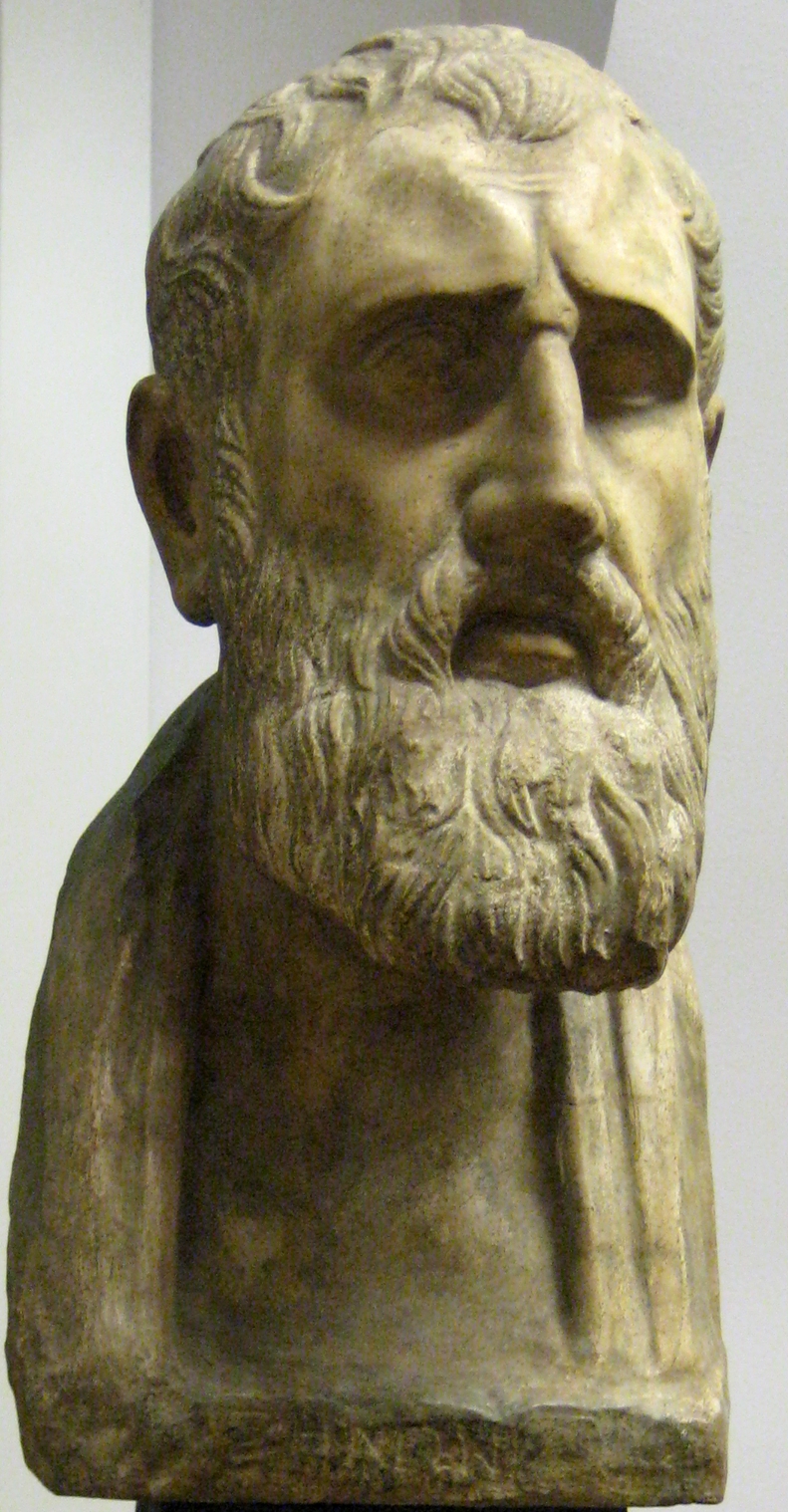
Zeno_of_Citium_pushkin

Zeno of Citium: Stoic predecessor of A. Lincoln?

From The Courier Seneca Falls, NY. January 5, 1861:

The Impending Revolution

The threatening aspect of our political affairs is well calculated to alarm the most conservative. …

[The Republican party’s] triumph has brought the country to the verge of revolution and civil war. Already the disintegration of the Republic has commenced, and the representatives of the party responsible for this state of things, refuses to abate one iota of their fanaticism to save the Union. Their [sic] is no safety for the Southern States, nor protection to their interests, if the more radical doctrines and views enunciated by the Republican party are carried into effect under the administration of ABRAHAM LINCOLN. The Southern States understand this, and the stoical indifference and silence of the President elect creates the most fearful apprehensions among those who would preserve the Confederacy. Mr. LINCOLN fails to comprehend the dangers and difficulties that environ the country. Unless the Republicans, by their acts in Congress and elsewhere, pursue a wise and conciliatory course, and convince the people that they do not desire the disruption of the Union, upon them must rest the responsibility of the impending revolution. It is certainly time for them to abandon their insane and revolutionary measures; to yield to the impulses of patriotism, and rise to the courage and responsibilities of the emergency.

It seems that the four month interregnum from November 1860 to March 1861 was way too long. Lincoln’s going to “run the machine” as he finds it. The wheels may have fallen off by then. But I’m not sure what else Lincoln could have legitimately done except bide his time.

Notes

1) The image of Zeno of Citium is under the Creative Commons License and more information can be found here.

2) The entire editorial in the Seneca Falls newspaper can be read here

3) Information about Nevada City, California (appropriately a Gold Rush town) is here

4) Regarding the W. Jones that hired Lincoln to split rails: suite101 has an article about the William Jones Home in Gentryville, Indiana. There’s evidence that Lincoln was a clerk in Jones’ store; since Jones also had a farm I would think it’s possible that Lincoln split rails for him. (The suite101 article also mentions that Jones was a Union soldier who died during the Battle of Atlanta when a cannonball blew his head off.) The Smithsonian has a page displaying actual wedges that Lincoln used to split rails.

5) The only extra information I find at America’s Library about the image of Lincoln splitting rails is that it was created c.1909.

6) The editorial from the Seneca Falls newspaper can be found at the Seneca Falls, New York public library at 47 Cayuga Street in a three-ring binder called Seneca Falls History and Events: Chronicles of Area News 1860-1869 Compiled by Village Historian Roberta Halden. (It can also be found in a similar binder about Civil War events in Seneca Falls). I have this image of the village historian patiently rescuing whatever clippings she can from old, beat up newspapers and preserving them for us. Cool stuff! The January 5th date is written in ink on the clipping.

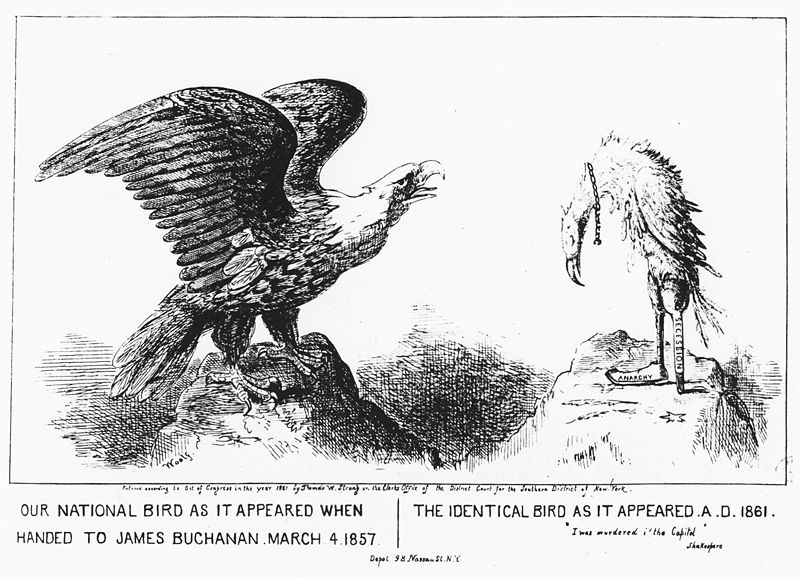
800px-Eagle

Republican propaganda: The Courier would probably agree with the 1861 condition but would definitely identify different culprit

Posted in 150 Years Ago This Week, Secession and the Interregnum | Tagged , , , , , , | 1 Comment

Fort Sumter: Cookin’ With Rubbish

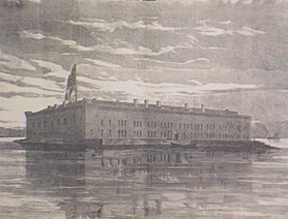
Sumter1

Fort Sumter: A whole lot of patience going on

Major Anderson “Patient” during Star of the West incident; South Carolina decides against Commandeering the Marion (After Starting to Saw It Up; but It Was Refurbished)

From The New-York Times January 19, 1861:

THE CONDITION OF FORT SUMTER.

The steamer Marion, Capt. ADKINS, vice Capt. SAM. WEITING [WHITING?], arrived at this port yesterday morning, from Charleston, S.C., with some 350 tierces of Rice and a quantity of Cotton. The Marion came out of Charleston Harbor through Maffit’s or Sullivan’s Island Channel, the approach to the main ship channel having been obstructed by the sinking of three or four vessels on the bar, to prevent the entrance of vessels.

Among the steerage passengers of the Marion were four laborers, who were discharged, with four others, from Fort Sumter, on the 11th inst. The other four remained in Charleston. One of those persons took passage yesterday eastward on one of the found boats, while the other three have scattered to parts unknown. From the limited information which can be obtained from these laborers, it appears there are still twenty-five workmen employed at Fort Sumter, and there are about eighty persons, officers and men all told, in Maj. ANDERSON’s present force, exclusive of the laborers.

There appears to be no lack of provisions — at least the workmen always obtained their full rations, but their impression is, that there is but a limited supply of fuel on hand, the rubbish of the fort supplying their present demands for cooking, etc. Owing to the prohibition of all intercourse with Charleston, salt provisions are the only kind which have been dispensed within the fort for about three weeks, but, with few exceptions, both the workmen and soldiers have endured their deprivation of fresh meat without complaint, considering their sufferings as a necessary incident of their position. The entire garrison were in the best of spirits, but a little impatient at the inaction to which they are subjected.

During the approach of the Star of the West, and the firing upon her from Morris Island, Maj. ANDERSON ordered the ports fronting Fort Moultrie and Morris Island to be opened, and the guns were unlimbered. As the firing continued, one of the Lieutenants who commanded a heavy gun entreated Maj. ANDERSON to let him “give ’em just one shot.” “Be patient,” was the only reply from the Commander, who remained in the look-out, with glass in hand, intently watching the approaching steamer.

How long Maj. ANDERSON had determined in his own mind to “be patient,” he alone can tell; but just at what appeared the critical juncture, when every instant the order to ” fire” was expected, the Star of the West was observed to suddenly port her helm, and swinging with her head seaward, doubled upon her track and proceeded out over the bar.

The rumor that there had been mutiny discovered within the fort is wholly denied by the workmen.

The Marion, during the twenty-four hours she was in the hands of the South Carolina authorities, was boarded by crowds of persons, who discussed her fitness for war purposes, there being a great variety of opinions as to how well she would stand the broadsides of an enemy’s ship, Twelve carpenters were set to work to remove the hurricane deck, the intention being to leave only the midship portion which protected the engine. The starboard side was sawed half across, just abaft the pilot-house, and augur holes were bored on the opposite side to introduce a saw to finish the work. The iron and brass which protected the forward hatchway were also removed, and the coverings were about being ripped up, preparatory to planking over the hatch to make a flush deck on which to work the guns. About half of the stateroom partitions in the after-house were taken down, with a view of removing all the after portion of the deck cabin, when word came to suspend operations.

Two hours later it was announced that the vessel had been returned to her owners, and under the direction of the “Lieutenant” the same mechanics proceeded to repair the mischief they had done. In justice to them it must be said that this work of restoring the vessel to her original state was accomplished in a creditable manner, and she does not appear any the worse for having fallen temporarily into the hands of the Philistines.

The Marion is to return to Charleston again on her regular day, though, owing to the great falling-off in the direct freighting business to that port, the expenses of the ship can hardly be paid.

The steamers to Savannah, on the contrary, are now going full of all kinds of merchandise, much of which is Intended for Charleston. Freights on the railroad are good, but prices in Charleston are “excelsior.”

The entire article is also at The New York Times Archive.

Captain Whiting has been in the news lately. South Carolina’s version of Big Brother had written him a letter asking him if the U.S. or South Carolina flag was flying when the Marion left port in late December. You can read the report and Captain Whiting’s reply here

Posted in 150 Years Ago This Week, Secession and the Interregnum | Tagged , , , , , , , | Leave a comment

Secession Logic: What Constitutional Convention?

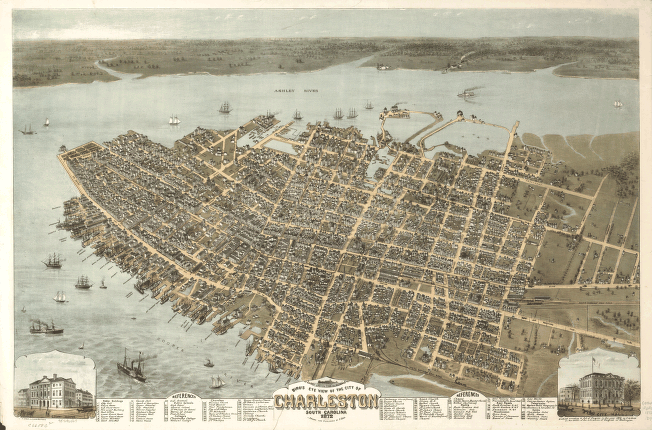
Charleston_South_Carolina_map_1872

Charleston, South Carolina (Birds-eye view in 1872)

85 Years of Sovereign Independence?

From The New-York Times January 18, 1861:

HOW VESSELS ARE CLEARED AT THE CHARLESTON CUSTOM-HOUSE.

Some curiosity exists as to the forms at present adopted at the Charleston Custom-House for clearing vessels. We have been shown the clearance papers of a vessel just arrived from Charleston, which throw some light upon this subject. The blank forms supplied by the Treasury Department to the Collectors at all ports of entry are still in use at Charleston, but the words, “in the eighty-fifth year of the independence of the United States of America” are struck out with a dash of the Collector’s pen, and in their place are interlined with a pen the ‘words “eighty-fifth year of the sovereignty and independence of the State of South Carolina!” The clearance papers are signed by W.F. COLCOCK, Collector, and JOHN LAURENS, Naval Officer.

Well, William F. Colcock was also a lawyer, so I’m sure the modification was absolutely legitimate.

Posted in 150 Years Ago This Week, Secession and the Interregnum | Tagged , , , | Leave a comment

Savannah’s “Rattlesnake Club”

From The New-York Times January 16, 1861:

AFFAIRS IN SAVANNAH.; TESTIMONY OF A N0RTHERN MECHANIC CONCERNING THINGS IN SAVANNAH. …

Our informant — who had engaged in a mechanical business — was warned out of the city by one of the Vigilance mob at brief notice. Of these functionaries there is a lower and a higher order. The latter, or minute men, assume to give the notices, and, in default of the suspected person’s absence, the former, or mob proper, may proceed to tar and feathers; but the higher order deal less in extreme violence, and give several days’ notice to quit. Several of these Vigilance men visiting our informant, and another in company with him, were filled with ire at finding their own office and province interfered with by an unauthorized notice from the meanor sort Ferreting out, therefore, the particular limb of the mob who had ventured to give such notice, and finding him to be a quondam Northern emigrant, they visited his usurpation upon himself by notifying him, also, to depart.

It is this kind of half regulated and systematized mob law which controls society. Property is not secure; but the “Rattlesnake Club” offer to protect holders who will see their members comfortably supplied and provided.

Our informant states that those slaves who enjoy the better sort of advantages, are more intelligent than the lower class of masters. They dress well in their religious assemblies — the women often sporting silks, and the men handsome canes and even valuable watches. They are as familiar with current events as the whites themselves, and really expect to be made free by the incoming Administration. It is not a secret to them that the whites are fearful of insurrection. Consequently, they have become impertinent and insubordinate, — so much so that the flogging-house is always full, and drives a thriving business. Twenty-five lashes is the penalty for very considerable crimes, such as stealing, carrying weapons, being on horseback without a master’s permit, or out after 9 o’clock Sunday evening. About 10 cents a lash is the flogging fee, and the lashes draw blood. Our informant, who witnessed the whipping performances, says that many negroes endure the twenty-five lashes with compression and biting of their lips, but without a murmur. Others beg piteously, and this is apt to moderate the severity. In case of a negro’s recovery after flight, the lashes are made sometimes to cut so severely that the flesh must be salted, and the negro laid up for two or three weeks. Desertions have become so common that negro hunting with hounds is a regular and money-making occupation. The negroes, in escaping to the woods, double in their track, and, with greased hands, (to obviate the cent,) throw themselves over fences, and thus put the hounds at fault for a time. For recovering slaves that have been missed for a week, the slave hunters charge from $50 to $100. …

What the planters want is not, as they say, “equal rights” in the Union, but “Southern rights.” Of the two hundred and fifty or three hundred young men who went to the assistance of Charleston many died of camp service and more were sickened by colds and fevers. The Governor has prohibited the departure of any more, as their services maybe required against insurrection or mob violence.

You can read the entire article at The New York Times Archive

The young men of Savannah weren’t the only people who wanted to help out South Carolina. Also from the January 16, 1861 issue of The New-York Times:

BOSTON, Tuesday, Jan. 15.

In the House of Representatives yesterday, Mr. TYLER, of Boston, introduced a resolution that in view of the great suffering in South Carolina, the immediate consequence of the citizens of that State acting under a mistaken idea of their rights and obligations; and in view of the prosperity and abundance of this Commonwealth, a sum be appropriated from the State Treasury, to be invested in provisions and stores for the relief of our suffering fellow-countrymen in that State.

Entire article is here

Another article from the same issue of The Times reported on a pro-secession meeting of laborers in New York City. The entire article is at The New York Times Archive. Here’s a paragraph:

Resolved, That we, the workingmen of New-York, hereby pledge ourselves to oppose this British Anti-Slavery Party in every legitimate way; that we feel, with sorrow, that Great Britain has conquered the North with the pen, having Abolitionized the Press and the pulpit, and while the heel of her oppression is upon white men in Ireland, England and Scotland, she tries to divert attention from her sins at home by false philanthropy for negroes in America; and believing our Southern brethren now engaged in the holy cause of American liberty, and trying to roll back this avalanche of Britishism, we extend to them our heartfelt sympathy, and when they shall need it to resist unjust oppression, we believe we shall not be found wanting in more effectual support.

Posted in 150 Years Ago This Week, Secession and the Interregnum | Tagged , , , | Leave a comment

The High Cost of Freedom

From The New-York Times January 15, 1861:

THE EXPENSES OF SECESSION.

— The Columbia South Carolinian publishes an ordinance just passed by the City Council “to raise supplies for the year 1861.” Besides a tax of 85 cents on every hundred dollars worth of real estate, and innumerable taxes on horses, wagons, places of amusement, &c., &c., it is ordained that

One dollar per head shall be paid on all slaves under sixty years of age, not liable to street duty; which said tax upon slaves shall be paid by the owner or person having charge and control thereof; one dollar each on every free negro, mulatto or mestizo, under the age of ten years; two dollars each on every free negro, mulatto or mestizo, over the age of ten and under sixteen years; ten dollars on every male free negro, mulatto or mestizo, over the age of sixteen and under sixty years; seven dollars on every female free negro, mulatto or mestizo over the age of sixteen and under fifty-five years, and twenty-five dollars on every male free negro, mulatto or mestizo, over the age of twenty-one and under the age of sixty years, exercising any mechanic art or trade within the limits of the said city.”

The heaviest part of the expense of secession is thus levied on those free negroes who have by industry and mechanic skill become able to maintain themselves. Besides a very heavy tax on each head of such family, every member of it, down to the child in arms, is subjected to an additional exaction. The result must be the speedy reduction of this class of persons to a condition of abject poverty, and then they will probably be sold into Slavery. The sale of free negroes will probably thus come to be the grand resort of the seceding States for money to defray the expenses of their rebellion. What a magnificent basis for a new Confederacy!

If you’re a free black working to support your family you get billed 25 times what your old master would have been charged (actually $25 plus the charge for your family members). I guess freedom really wasn’t free in the Columbia of 1861. And I wonder what bureaucrat gets to earn his pay by deciding whether someone is a mulatto or not.

________________________

Go North, Young Snowman!

From The New-York Times January 15, 1861:

Weather Reports.

RUTLAND, Vt., Monday, Jan. 14.

Yesterday morning at sunrise the thermometer here was 24° below zero. At Middlebury it was 29.

MONTREAL, Monday, Jan. 14.

Saturday was the coldest day of the season. The thermometer stood at 24° below zero. To-day it is 14° below. Weather clear.

Posted in 150 Years Ago This Week, Secession and the Interregnum | Tagged , , , | Leave a comment

More Treason: Georgetown, South Carolina

From The New-York Times January 14, 1861:

Disunion Leading the Way.

The following paragraph from the Charleston Mercury shows that the Disunionists in South Carolina neither halt nor hesitate in carrying their doctrines to their legitimate results:

ARREST FOR TREASON. — J.N. MERRIMAN, Collector of the port of Georgetown, S.C. was on Monday last arrested by the people of Georgetown on a charge of treason against the State. A letter was found written by him and addressed to Mr. BUCHANAN, stating that he (MERRIMAN) had just cleared vessels in the name of the United States, and that he would continue to do so. The letter calls upon the President to send a boat and men to collect the Federal revenue, and informs him of the progress made in the construction of the works near Georgetown, and promises to keep him posted from time to time in relation to the same. The letter is signed by his initials, J.N.M. When arrested, he acknowledged having written it. LOPSE, his deputy, was also arrested. He said he had been in the habit of writing out MERRIMAN’s letters, but had not done so in this case, as he considered it treason. Both have been committed for trial.

Officers of the Government of the United States have thus been arrested and committed to prison for obeying the laws of that Government. They are to be tried for treason against South Carolina. If convicted, they will either be executed or owe their lives to the clemency of the sham Government of that State.

It strikes us that the Administration at Washington cannot well avoid meeting the issue thus raised. No Government which has any self-respect, or any desire to preserve the respect of the world, can fail to protect its own officers in such a case.

I guess the treason depends on one’s view of the Constitution and the legitimacy of secession.

You can check out the Georgetown lighthouse and a paragraph of its Civil War history at Lighthouse Friends

Posted in 150 Years Ago This Week, Secession and the Interregnum | Tagged , , , , | Leave a comment

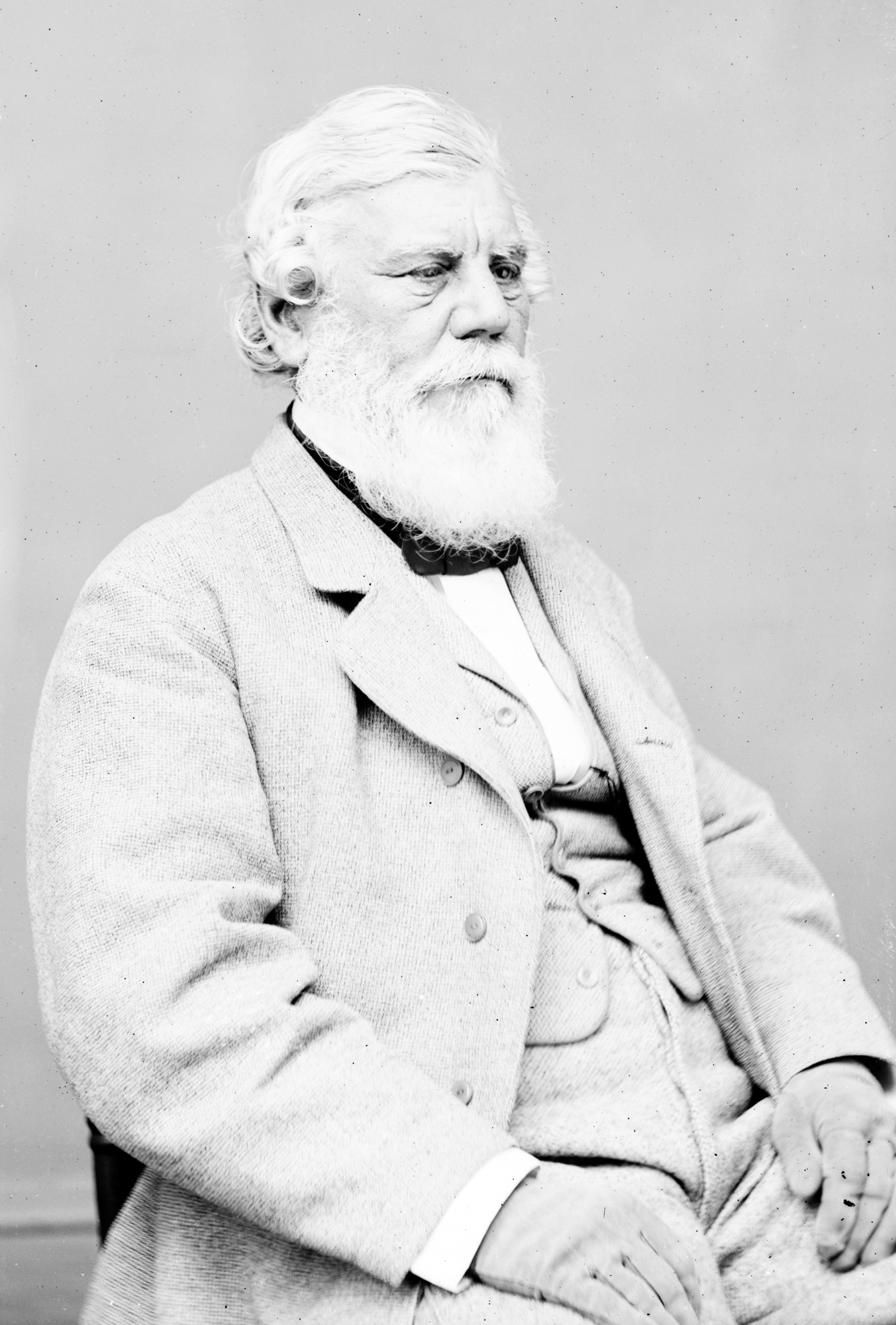
Virginian Would Sink U.S. Navy

RogerAPryor

A Scholarly Napoleon: Pryor would sink U.S. Navy to the "deepest abyss of the ocean"

The January 14, 1861 edition of The New-York Times included a report of proceedings in the U.S. House of Representatives. During debate on a naval appropriations bill Virginia Congressman Roger Atkinson Pryor made a statement (The Times January 14, 1861):

WASHINGTON, Saturday, Jan. 12.

Mr. PRYOR, of Virginia, (Dem.,) moved to strike out the appropriation of $4,438,000 for the pay of the officers and men of the navy. Sir, said Mr. PRYOR, so long as the navy was engaged in the laudable and beneficent enterprise of protecting the interests of the country, enlarging the bounds of discovery, and sustaining the honor of our flag against foreign attacks, I should have accorded it a generous support. But now, Sir, since it is to be employed for the humiliating purpose of subjugating Southern States, and imposing the yoke of a military despotism upon the people, who are guilty of no crime beyond that of presenting a gallant defence against oppression, I would sink it in the deepest abyss of the ocean before I would grant it one farthing. As the bulwark of national defence, it invokes a nation’s regard; the dread instrument of death and desolation in fratricidal strife, it deserves a nation’s execration. Sir, to my mind, the most distressing portent of these unhappy times is the obvious and absolute prevalence of military temper in the councils of the nation. What do we see? An imbecile Executive under the complete ascendancy of an ambitious and enterprising soldier; and the country, in the most critical period of her history, ruled by the Mayor of the Palace; the experience and good sense of the Administration no longer appealed to in the solution of its political difficulties, but the sword cast into the balance of sectional conflict. Instead of measures of conciliation to a malcontent people, the, Government dispatches men and munitions of war to control and subject them to an abject obedience to an obnoxious Government. Though no foreign foot treads the soil of America with hostile purpose, troops are distributed and concentrated as if to repel imminent invasion.

You can read the about the entire proceedings at The New York Times Archive, including fellow Virginian Sherrard Clemens’ request that Pryor tone it down. Maybe not coincidentally, Clemens was from Wheeling in modern day West Virginia.

I’ve heard that the Cotton States tried to put a fairly moderate spin on the Confederacy convention in Montgomery (February 1861) to help entice Virginia and other more moderate states to join up. It seems like there are quite a few fire-eating types in Virginia as it is. A lot of the rhetoric seems to be generated by the idea of the federal government coercing the South.

As always I’m interested in what you think.

Posted in 150 Years Ago This Week, Secession and the Interregnum | Tagged , , , | Leave a comment

Brooklyn Painters Impressed

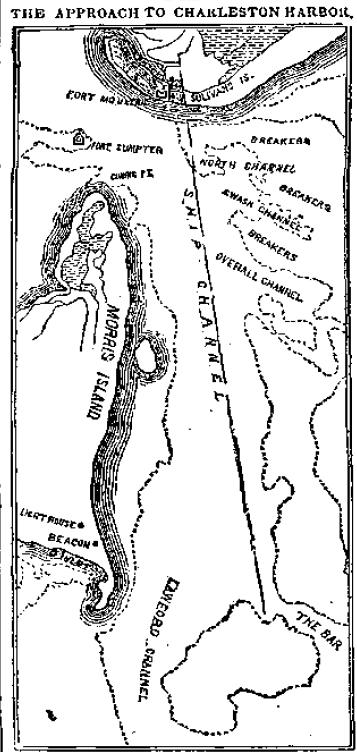
Approach to Charleston

Charleston Harbor: Coast Survey Chart

Into South Carolina’s Army

Folks, there is so much going on (150 years ago) – I’m glad the “Daily News” sites are teaching us so much about the events in January 1861.

From The New-York Times January 12, 1861:

EXPERIENCES OF A CHARLESTON SOLDIER.

BARNARD WHITE, WILLIAM BERKELEY and BENJAMIN GILCHRIST, of Brooklyn, returned from Charleston last Thursday, in the steamer Nashville, and have given our reporter some particulars of their experiences among the Secessionists of the Palmetto State.

IMPRESSMENT — HARD FARE — GAG LAW — TAR AND FEATHERING — SOUTH CAROLINA’S GREATEST ENEMIES — THE NEGROES — GARRISONS OF THE FORTS — EARTHWORKS ON MORRIS ISLAND.

The parties mentioned are painters, and have been engaged at their trade in the City of Charleston since August. On the 26th of December they were served with a military notice, of which the following is a copy:

CHARLESTON, Monday, Dec. 17, 1860.

Beat No. 1, 16th Regiment, Regimental Parade, Sir:

You are hereby summoned to be and appear at the Citadel Square, properly armed and accoutred, according to law, on Wednesday next, at 1 o’clock P.M., precisely. An inspection of arms will take place at each parade. If you appear in pantaloons, blue or black coat and black hat, arms and accoutrements in complete order will be furnished you at each parade on the ground; if not, the law compels you to furnish yourself with a musket, bayonet, cartridge box, bayonet-scabbard, with cross-belts, all in good order and fit for service, on $1 fine for each defect.

Every person subject to military duty in this regiment who removed from one beat to another is required to report himself to the captains of the beats from which and to which he has removed, or be fined $5, besides all fines for the non-performance of military duty in both beats.

Court martial held on defaulters at the Military Hall. Wentworth-street, on the third Monday of December, at 12 o’clock M. By order of Captain.

S. VALE MALLINS, Corporal.

The above notice was left at the lodgings of the parties mentioned, and they first saw it when they returned home in the evening. They resolved to obey the order to appear on parade, for they were told that in case of disobedience they would be heavily fined or imprisoned. BERKELEY and WHITE went regularly to parade twice a week during the daytime, and frequently at nights. Sometimes there were as many as three hundred men in their Company; and they estimate the total number of volunteer soldiery in Charleston at about 3,000. Most of the fire companies have soldiers. Messrs. WHITE and BERKELEY assert that they received no payment for being thus forced to leave their business and do military duty, and in this respect there was no distinction made between them and natives of the State. They were eminently dissatisfied at this arbitrary interference with their personal liberty, and their dissatisfaction was converted into alarm when they received notice that they would soon be drafted, with or without their consent, into the regular “army” of the State. One day, while the men were on the usual parade, the Captain asked whether any of them would like to join the regulars. About eighty out of the three hundred present stepped forth, and the Captain, addressing those who had declined the proffered honor, said with vexation, “I’ll have you all drafted to-morrow, and I’ll treat you worse than United States soldiers are treated!” This hint was not lost upon Messrs. WHITE and BERKELEY, and they resolved immediately to leave so dangerous a neighborhood. When they went to pay their money at the steamboat office for conveyance to New-York, they found they were closely watched, and one person remarked that “it was a pity such good-looking men should be allowed to leave, while soldiers were so much needed.” Further than this the men were not interfered with, and were allowed to take their departure.

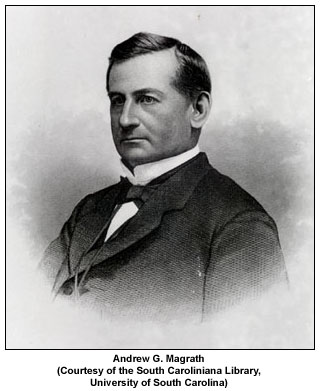
Andrew_Gordon_Magrath

Not digging trenches: Andrew Gordon Magrath

We have obtained from these parties some valuable information concerning the condition of affairs in Charleston, and, as their testimony is quite unbiased, it may be received as reliable as far as it goes. They all agree in stating that the number of men now under arms in Charleston and its forts reaches 3,000, and that additional troops are constantly pouring into the city. Most of these troops are Northern men, and they are, of course, dissatisfied with the system of forced enlistment and hard fare that has been adopted in the “South Carolina Army.” The enthusiasm of natives permits them to subsist upon biscuit and water; but Northern mechanics think that the State has no more right to drag them from their work, to dig entrenchments, than it would have to make RHETT or MAGRATH perform the same labor. Those who can, come away; but many, who have the means and the will to leave, cannot succeed in effecting their escape, so strict is the espionage upon their movements.

It seems to be very certain that, in the event of hostilities between South Carolina and the Federal Government, the former, in addition to a foe in the field, will find lively sources of trouble in her forced levies of Northern men, as well as in her slaves. The negroes, we are assured, understand perfectly well what is going on, and, if ever war should actually break out, they will seize such opportunities as may offer to befriend the North; for in the North their own wild hopes of liberty have long been centred. One of the party who has given us this information was lately accosted by a Charleston negro with “I’ll be as good as you is soon;” and this is the idea that seems to predominate in the minds of the whole colored population.

There is scarcely any business done in Charleston, and those stores which are not already closed will be soon shut up. Nearly all the male citizens capable of bearing arms are doing duty as soldiers. No person, of course, is permitted to express any opinion hostile to secession, on penalty of being tarred and feathered in the market-place of the city. A tyranny that far surpasses anything we have ever read of in Austria or Russia is exercised by the South Carolina authorities. Citizens have been driven from the place simply for writing unpalatable truths to their friends and relatives at the North. Several instances of this kind prove that private letters are opened at the Post office, and that other dishonorable means are used by the Secessionists to interfere with the rights and liberties of American citizens. One instance is mentioned of a dry-goods dealer being arrested for selling “Lincoln Shawls,” and similar acts of stupid and vindictive tyranny are of common occurrence.

William_Aiken

Ex-Governor Aiken: sending his negroes to Morris Island

Major ANDERSON, in Fort Sumter, keeps the strictest watch over the enemy’s movements, and will allow no vessel to approach the fortress. On her last trip the Nashville was unable to cross the bar, and had to wait some hours for the tide, but she was warned by a couple of blank shots not to anchor near Fort Sumter. Fort Moultrie is garrisoned by the Washington Artillery and Charleston Riflemen. Castle Pinckney is garrisoned by the Meagher Guards and Montgomery Guards. The Charlestonians have been at work on Morris Island for three weeks past throwing up entrenchments, and Gov. AIKEN had sent all his negroes to this island. Some very formidable earthworks have been raised here — sufficiently strong, it is supposed, to prevent a vessel-of-war from entering the harbor.

1) You can see a much better map of Charleston Harbor at Civil War Daily Gazette. However, I was interested in this map because it was said to be a copy of Coast Survey chart and because it is the first graphic I’ve seen in the body of The New-York Times. Also, I wanted to put a map on my site. The chart was published in the January 12, 1861 edition of The New-York Times.

2) William Aiken, Jr. at one point opposed secession (see Seven Score and Ten for the article about Aiken, aka Santa Claus). Apparently once the cat was out of the bag (and the Palmetto State actually seceded) he changed his tune. Of course, given the tone of this story, he might have been afraid of what would happen to him if he did not send his slaves to Morris Island to help with the earthworks or whatever else they were doing. “Sure, I’d be more than happy to contribute my slaves for Secession Nation.”

3) Andrew Gordon Magrath was involved with South Carolina’s secession convention and would become a governor of South Carolina.

4) I copied the whole article because I was so amazed by it, but you can also read it at The New York Times Archive.

Posted in 150 Years Ago This Week, Secession and the Interregnum | Tagged , , , , , , | 1 Comment