Three Cheers for Major Anderson

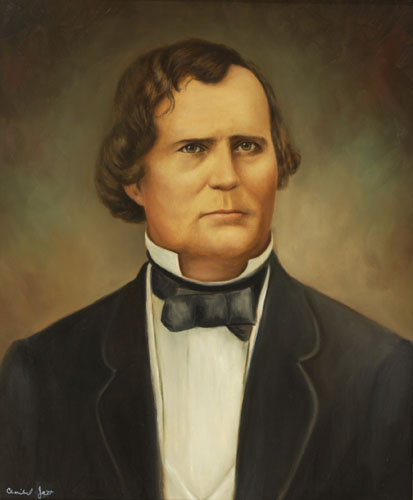
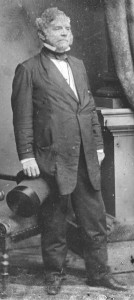
Major_Robert_Anderson

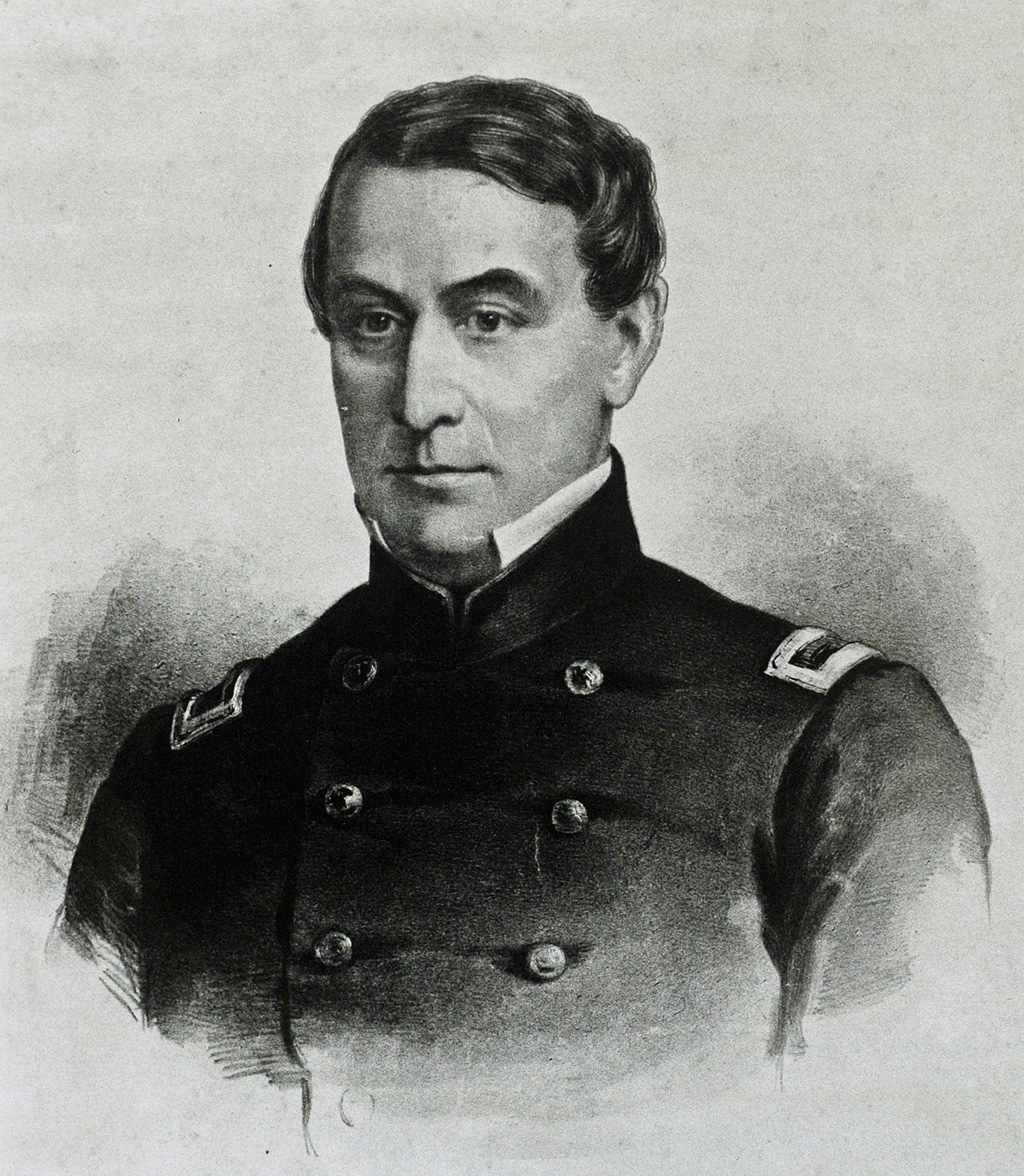
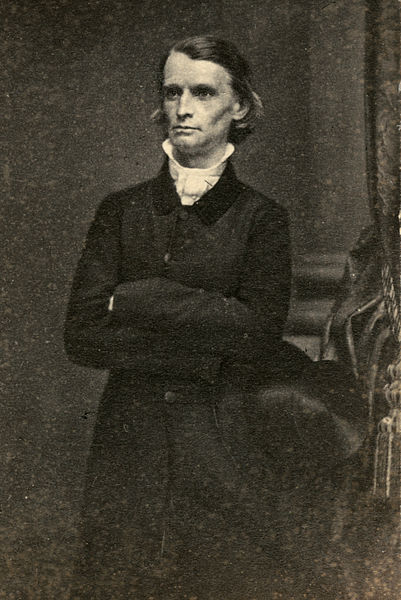
Major Robert Anderson: Saluted for retreating to Fort Sumter?

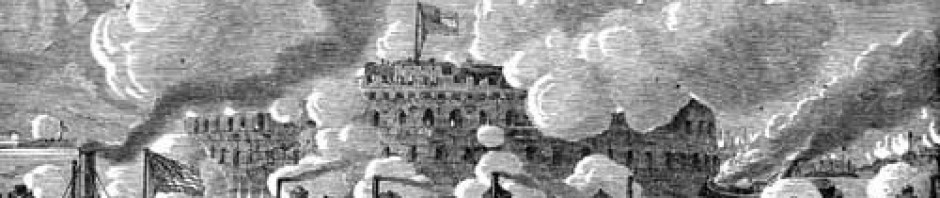
Some takes on Major Anderson removing his force from Fort Moultrie to Fort Sumter in Charleston’s harbor (from The New-York Times December 29, 1860):

WHAT IS THOUGHT OF MAJ. ANDERSON’S MOVEMENT.; A SALUTE IN WILMINGTON, DEL.

WILMINGTON, Friday, Dec. 28.

The citizens of Wilmington are firing a salute of twenty-one guns in honor of Maj. ANDERSON and his gallant band.

COMMENTS OF THE PRESS.

We give below extracts from various papers commenting upon the movement of Maj. ANDERSON:

From the Boston Courier.

We must own that the news of the transaction in Charleston harbor was learned by us yesterday with a prouder beating of the heart. We could not but feel once more that we had a country — a fact which has been to a certain degree in suspense for some weeks past. What is given up for the moment is of no consequence, provided the one point stands out clear, that the United States means to maintain its position where its rights exist, and that its officers, civil and military, intend to discharge their duty. The concentration of the disposable force in Charleston harbor in a defensible post is thus a bond of union. It is a decisive act, calculated to rally the national heart. * *

We are not disposed to allow the Union to be broken up for grievances of South Carolina, which might be settled within the Union; and if there is to be any fighting, we prefer it within, rather than without. The abandonment of Fort Moultrie was obviously a necessary act, in order to carry into effect the purpose contemplated with such an inferior force as that under the command of Maj. ANDERSON. …

You can read the opinions of other newspapers at The New York Times Archive

From the same issue of The New-York Times more evidence of Major Anderson not taking a wishy-washy approach:

DISCHARGE OF THE EMPLOYES AT FORT MOULTRIE.

BALTIMORE, Saturday, Dec. 29.

The Sun of this city has on its bulletin a special dispatch from Charleston saying that the carpenters and bricklayers from Baltimore, employed on Fort Sumter, having refused to bear arms against South Carolina, were discharged by Maj. ANDERSON this morning.


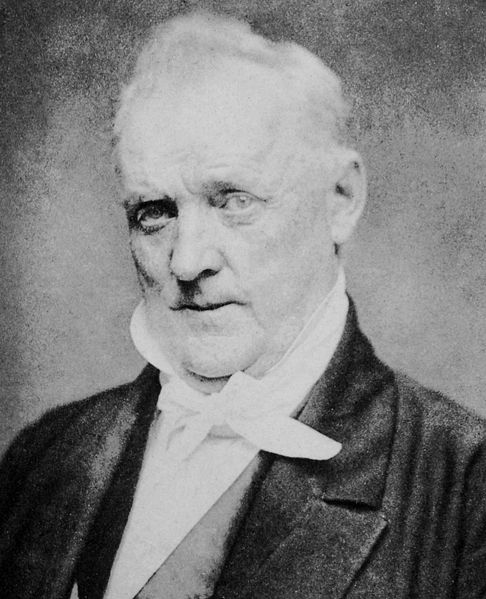
Some people in the North are looking for some type of decisive action (as opposed to The Old Public Functionary).

Posted in 150 Years Ago This Week, Secession and the Interregnum | Tagged , , , , , | Leave a comment

Convention Power

352px-Francis_Wilkinson_Pickens

Governor Pickens: Time to appoint some ambassadors and make some treaties

From The New-York Times December 29, 1860:

THE SECESSION MOVEMENT.; THE SOUTH CAROLINA CONVENTION.

CHARLESTON, Friday, Dec. 28.

An Ordinance entitled “An Ordinance to amend the Constitution of South Carolina in respect to the Executive Department,” was passed in the secret session of the Convention yesterday.

It provides as follows:

First — That the Governor have power to receive Ambassadors, Ministers, Consuls and agents of foreign Powers; to conduct negotiations with foreign Powers; to make treaties by and with the advice and consent of the Senate; to nominate all officers by and with the advice and consent of the Senate; to appoint Ambassadors, public Ministers and Consuls as the General Assembly may previously direct, and also all other officers whose appointment has not otherwise been provided for by law; to fill vacancies during the recess of the Senate by granting commissions which shall expire at the end of the next session of the Senate; to convene the Senate whenever he thinks it necessary; provided, nevertheless, during the existence of the Convention that all treaties, directions for the appointment of Ambassadors, Ministers, Consuls, etc., be subject to the advice and consent of the Convention.

Second — That the Governor immediately appoint four persons with the advise and consent of the Convention, who, with the Lieutenant-Governor, shall form a council to be called “the Executive Council,” whose duty it shall be to advise with him.

All obligations of secresy in regard to the above ordinance were withdrawn.

CHARLESTON, Friday, Dec. 28.

The Convention met at noon.

Mr. RHETT spoke of the report of the Committee who had had under consideration the address to the people of the Southern States, and also on the ordinance for the formation of a Southern Confederacy. He said the object was to insure a speedy organization for a permanent protection of our rights. Texas and Arkansas were at last active in favor of the proposition. He advocated the election of double the number of Representatives to the General Convention as were in the present Congress, and was in favor of the adoption of articles of Confederation for a Provisional Government.

CG Memminger

Christopher G. Memminger: We're looking for (white) citizens

In the secret session yesterday, Mr. MEMMINGER, to whom had been referred the resolutions of the Convention on citizenship, reported an ordinance, that every person residing in South Carolina at the time of its secession from the United States, whether a born resident or a naturalized citizen, shall continue until death a citizen of South Carolina, unless a foreign residence be established, or notice of intention be given of expatriation; also, that all free whites born within the territory of the State, or those born outside the territory, whose father was then a citizen, shall be deemed citizen; also, persons from any one of the United States, who, within twelve months from the secession of this State, shall reside within its territory, with the intention of remaining, shall, upon taking the oath of allegiance, be declared a citizen; also, that citizens of other States, coming here after the expiration of a year from the date of secession, and actually residing seven months, with the intention of remaining, shall become citizens upon taking the oath of allegiance; also, all free whites entering the military, naval or civil service of the State, shall become citizens upon taking the oath of allegiance.

1) The power of the Convention is interesting to me. The appointment of officials is subject to the advice and consent of the Senate – “provided, nevertheless, during the existence of the Convention that all treaties, directions for the appointment of Ambassadors, Ministers, Consuls, etc., be subject to the advice and consent of the Convention”. I guess this makes sense because the delegates to the Convention were elected to decide on secession and possibly create a new government. South Carolina is using the U.S. template. People elected delegates to the Constitutional Convention to decide whether or not to scrap the Articles of Confederation and possibly set up an alternative.

2) I goofed a couple days ago when I said that South Carolina had to be uncertain whether there would be a Southern Confederacy – there is a lot of evidence that many states were interested. However, even today I’m reading how South Carolina’s governor is going to be able to appoint and receive ambassadors – and to make treaties. But in a couple months there might be a new southern nation to override all that work.

Posted in 150 Years Ago This Week, Secession and the Interregnum | Tagged , , | Leave a comment

Political Economy: December 1860

Or, More Uncertainty and Its Effects

From The New-York Times December 25, 1860

THE SHOE TRADE IN MASSACHUSETTS.

The Boston Traveller has been investigating the effect which the political panic has had upon the shoe trade. At Natick the depression is most serious. 1,000 workmen, out of 1,200 have been discharged, and 600 of these remain at Natick doing nothing, while the rest have gone to their homes in different parts of New-England. In South Natick four manufacturing firms, S. WALCOTT & CO., D.D. MOODY & BROTHER, JOHN W. COTTON & CO., and CROSBY & WOODBURY, have all failed, their aggregate liabilities being nearly $300,000. These failures have all taken place within a few weeks, have thrown about 300 men out of employ, and stopped the manufacture of about 225 cases per week. Shoes which were made for 17 to 20 cents per pair are now made for 16 cents. In Lynn, where ladies’ and misses’ shoes are manufactured, of the 3,000 workmen employed in the busiest seasons 1,000 are out of employment altogether, while 1,200 are working only part of the time. At Marblehead, Danvers and Haverhill the same stagnation prevails. To speak generally of the trade in these prominent places, (says the Traveller,) we remark that orders from the South and West come in occasionally, but the manufacturers are generally afraid to fill them during the present crisis. There seems to be no disposition on the part of Southern customers to repudiate debts, though some have failed and others asked for extensions.

1) Ironically, The Lynn shoe strike of February 1860 won higher wages in Massachusetts shoe factories.

2) Apparently, the Army of Northern Virginia’s lack of shoes as a cause of the Battle of Gettysburg is overrated. Nevertheless, the South’s industrial base was nowhere near as strong as in the North. Over the course of a 4 year war that seems like it really mattered.

Posted in 150 Years Ago This Week, Secession and the Interregnum | Tagged , , , | Leave a comment

Merry Christmas from Limbo!

Greeting_Card_Christmas_c1860

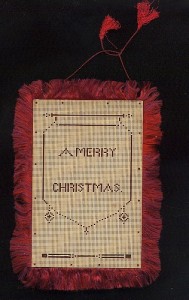
1860-style silk Christmas card

It would probably be a massive understatement to say that Christmas 1860 in The United States was a time of great uncertainty. That uncertainty has been a theme of the Daily News links listed over to the right on this site. South Carolina had just seceded five days ago. South Carolina is jubilant, but what does it all mean for that state and the rest of the country?

The Buchanan administration is, at best, full of Southern sympathizers. At worst, the administration contains traitors. President Buchanan is starting to get a bit tougher, but still, in general, he comes across as basically a doughface: he thinks it’s unfortunate that a state would leave the Union but does not believe he has any authority to stop secession.

Things also appear up in the air in the Palmetto state. It has seceded and has sort of started to develop an independent government. I’ve sarcastically referred to South Carolina as a new nation because its leaders know other Southern states are getting ready to hold secession conventions and possibly early in the new year there will be an opportunity to set up some sort of confederacy of slave-holding states. How much effort is South Carolina going to put into an independent government?

Moreover, the proximate cause of the secession is the election of that Black Republican, Abraham Lincoln. Lincoln’s been making conciliatory statements about the situation but has not publicly stated any specific policies of his administration. What’s worse, it is still more than two months before Lincoln’s inauguration.
268px-Thomas_Holliday_Hicks_-_photo_portrait_standing

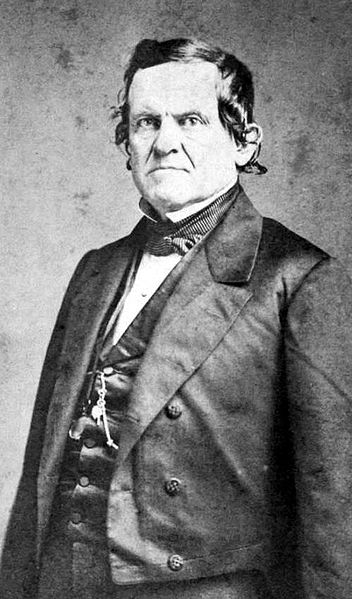
Governor Hicks to Mississippi: Not so fast! we're checking with other border states

A couple days ago we posted about Southern sentiment in Maryland. It would seem that Maryland’s position was very important. Washington D.C. was cut out of Maryland and Virginia land. If both states joined a slave-holding confederacy the federal capital would be surrounded by a foreign nation. What does the Maryland government think about disunion?

The December 25, 1860 issue of The New-York Times published a letter from Thomas Holliday Hicks to a “commissioner” from Mississippi:

THE POSITION OF MARYLAND.; REPLY OF THE GOVERNOR OF MARYLAND TO THE COMMISSIONER FROM MISSISSIPPI. STATE OF MARYLAND, EXECUTIVE CHAMBER,

ANNAPOLIS, Dec. 19, 1860.

SIR: Your letter of the 18th instant informs me that you have been appointed by the Governor of Mississippi, in pursuance of a resolution of her Legislature, a Commissioner to the State of Maryland, and that the occasion of your mission is “the present crisis in the national affairs of this country, and the danger which impends the safety and rights of the Southern States, by reason of the election of a sectional candidate to the office of President of the United States, and upon a platform of principles destructive of our constitutional rights, and which, in the opinion of the State of Mississippi, calls for prompt and decisive action, for the purpose of our protection and future security.”

You also inform me that Mississippi desires the cooperation of her sister States of the South in measures necessary to defend our rights, and to this end, you desire to know whether I will convene the Legislature of Maryland for the purpose of counseling with the constituted authorities of the State of Mississippi, and at what time it may be expected our General Assembly will be called for that purpose.

In the conversation I had with, you this morning, you were good enough to explain more fully the views and intentions of Mississippi in this matter — her desire that our Legislature should also appoint Commissioners to meet those of other Southern States; and that action at once be had by all the Southern States for the formation of a new Government among themselves.

The position of Maryland, as a small Southern Border State, renders the exercise of any power I may posses, for the purpose indicated by you, a matter of very grave importance.

Our State is unquestionably identified with the Southern States, in feeling and by the institutions and habits which prevail among us. But she is also conservative, and, above all things devoted to the Union of these States under the Constitution. Her people will use all honorable means to preserve and perpetuate these. I think I know the sentiments of her citizens in this matter, and that I am not mistaken when I say that, almost unanimously, they intend to uphold that Union and to maintain their rights under it — that they believe these last will yet be admitted and secured; and that not until it is certain they will be respected no longer — not until every honorable, Constitutional and lawful effort to secure them is exhausted — will they consent to any effort for its dissolution.

The people of Maryland are anxious that time be given and an opportunity afforded for a fair and honorable adjustment of the difficulties and grievances of which they, more than the people of any other Southern State, have a right to complain. And, in my opinion, if the people of this Union really desire its continuance and perpetuity such adjustment may be effected. I hope and believe it will be effected — and promptly. And until the effort is found to be in vain I cannot consent, by any precipitate or revolutionary action, to aid in the dismemberment of this Union.

When I shall see clearly that there is no hope of such adjustment, and am convinced that the power of the Federal Government is to be perverted to the destruction, instead of being used for the protection of our rights — then and not till then, can I consent so to exercise any power with which I am invested as to afford even the opportunity for such a proceeding.

Whatever powers I may have I shall use only after full consultation, and in fraternal concert with the other border States, since we, and they, in the event of any dismemberment of the Union, will suffer more than all others combined.

I am now in correspondence with the Governors of those States, and I await with solicitude for the indications of the course to be pursued by them. When this is made known to me, I shall be ready to take such steps as our duty and interest shall demand, and I do not doubt the people of Maryland are ready to go with the people of those States for weal or woe.

I fully agree with all that you have said as to the necessity for protection to the rights of the South; and my sympathies are entirely with the gallant people of Mississippi, who stand ready to resent any infringement of those rights. But I earnestly hope they will act with prudence as well as with courage.

Let us show moderation as well as firmness, and be unwilling to resort to extreme measures until necessity shall leave us no choice.

I am unable to inform you when the Legislature of this State will be called together, for until I can perceive the necessity for such a step I am not willing to awake the apprehension and excite the alarm which such a call at the present time could not fail to create.

I have the honor to be, with great respect, your obedient servant, THOS. H. HICKS.

Hon. A.H. HANDY, Commissioner of Mississippi.

1) Maryland’s wait and see approach seems appropriate for a border state that in the 1860 presidential election went for Breckinridge (the Southern Democrat candidate) over Bell (the Constitutional Union candidate) by .8% of the popular vote

2) Apostles of Disunion by Charles B. Dew discusses “Southern Secession Commissioners and the Causes of the Civil War”.

3) I heartily recommend the sites listed under my “Daily News” links for anyone that wants to learn about Civil War-related events on a day-by-day basis from 150 years ago. And I’m not uncertain about that!

4) The picture of the circa 1860 Christmas card if from Wikipedia’s article about Christmas in the American Civil War

5) Mississippi’s Commissioner Handy is reported as saying that the reason for secession is not to break up the Union put to obtain concessions from the North.

6) I just realized the coincidence of Governor Hicks’ middle name on this day.

Happy Hollidays!
Posted in 150 Years Ago This Week, Secession and the Interregnum | Tagged , , , , | Leave a comment

Still Hard At It in the New Nation

GovPerry

Florida's Governor Perry: foreign emissary?

From The New-York Times December 25, 1860:

THE SECESSION MOVEMENT.; THE SOUTH CAROLINA CONVENTION. EVENING SESSION.

CHARLESTON, Monday, Dec. 24.

After prayer, a resolution was adopted inviting Gov. PERRY, of Florida, now in the city, to a seat on the floor of the Convention.

Mr. MAGRATH introduced an ordinance that the Judges of the Courts take cognizance in cases in admiralty and maritime jurisdiction for all offences, as under the laws of the United States, hereafter. Referred to a Committee on a Constitution, with Judge MAGRATH added.

Mr. RHETT moved to take up the address to the people of the Southern States, as prepared by the Committee. It was taken up and several amendments proposed.

The declaration of causes which justify the secession of South Carolina from the Federal Union was made a special order. The whole address received innumerable alterations. After a lengthy and not generally interesting debate, the Convention took a recess till 7 o’clock.

Mr. DUNKIN moved to take up the special order, it being the ordinance to provide for a continuance of commercial affairs. He moved for a Secret Session, which was carried.

Information was given this morning in the Convention that several light-house keepers were about vacating their positions.

It is understood that the Secret Session is to confer with the Collector of the port.

The Convention adopted the declaration of immediate causes which induced and justified the secession of South Carolina from the Union.

Waiving the repetition of the causes in the past, she declares to the remaining States and Nations of the world the immediate causes which led to the act. The Declaration refers to the causes which led to the separation from England, and the declaration of the Colonies that they are free and independent States. In pursuance of this declaration thirteen States proceeded to exercise separate sovereignty. Subsequently they entered into a league by the Articles of Confederation, but retaining their sovereignty. Under this declaration the war of the Revolution was fought, at the close of which England acknowledged them free, sovereign and independent States. Subsequently the Union was formed, limited to the words of the grant. The Declaration declares that many of the States have violated the conpact in letter and spirit, and consequently absolves the rest from the obligations of the Union. It refers to the States which violated the fourth article of the Constitution, and says none of them have complied with the stipulations of the Constitution, consequently South Carolina is absolved from obligation.

After detailing the many causes, it then concludes:

“We, therefore, the people of South Carolina, being delegates to the Convention assembled, appealing to the Supreme Judge of the world for rectitude of intentions, have solemnly declared that the union heretofore existing between this State and the other States of North America is absolved, and the State of South Carolina has resumed her position among the nations of the world as a separate and independent State, with full power to levy war, conclude peace, contract alliances, establish commerce, and do other acts and things which independent States may of right do.”

There were many able and interesting speeches in the Convention to-day. Messrs. RHETT, SPRATT and others, in the course of discussion, declared the opinion that the Fugitive Slave law was unconstitutional; Judge WITHERS, in an able, logical speech, said it was constitutional.

Mr. MEMINGER declared the point legally embarrassing.

Fully two hours were consumed in verbal alterations of the address. The most rigid criticism was indulged in by both sides. It was finally adopted with but few dissenting votes.

United States Constitution

Article. IV. Section. 2. The Citizens of each State shall be entitled to all Privileges and Immunities of Citizens in the several States.

A Person charged in any State with Treason, Felony, or other Crime, who shall flee from Justice, and be found in another State, shall on Demand of the executive Authority of the State from which he fled, be delivered up, to be removed to the State having Jurisdiction of the Crime.

No Person held to Service or Labour in one State, under the Laws thereof, escaping into another, shall, in Consequence of any Law or Regulation therein, be discharged from such Service or Labour, but shall be delivered up on Claim of the Party to whom such Service or Labour may be due

Posted in 150 Years Ago This Week, Secession and the Interregnum | Tagged , | Leave a comment

Some Southern Reaction to South Carolina

John_Carroll_LeGrand,_unknown_date

Maryland's Chief Justice LeGrand: "strong Southern" speech in a border state

From The New-York Times December 24, 1860:

BALTIMORE, Sunday, Dec. 23.

An important meeting, attended by many prominent citizens, was held at the Universalist Church last night, to consider the national crisis. Chief Justice LEGRAND presided, and JNO. U.L. MCMAHAN was among the fifty Vice-Presidents.

Judge LEGRAND made a speech, taking strong Southern grounds.

Mr. RIAN, a prominent merchant, offered resolutions, asking the Governor immediately to convoke the Legislature.

COLEMAN YELLOTT, State Senator, and WILLIAM NORRIS, made speeches sustaining the resolutions, which were unanimously passed.

The speeches were all conservative, but were unmistakeable in urging determined action on the part of Maryland to meet the difficulties, and to place herself right — in the Union if possible, but at all hazards with a united South. Much dignity was preserved in the proceedings, and a strong sympathy for Southern cooperation manifested. South Carolina was frequently cheered.

The Tribune’s announcement of LINCOLN’s unwillingness to concede or compromise was indignantly commented upon. Maryland seems to be catching the Southern feeling rapidly.

A hundred guns were fired here on Saturday in honor of South Carolina, but the parties firing probably do not represent the general public.

MEMPHIS, Saturday, Dec. 22.

There was an enthusiastic meeting here last night to ratify the secession of South Carolina. Fifteen guns were fired, and the Avalanche newspaper office and other buildings illuminated.

PETERSBURG, Sunday, Dec. 23.

A secession pole, one hundred feet high, with the Palmetto flag, was hoisted on the most prominent street, yesterday morning, amid the cheers from a large crowd. The pole was sawed down this morning, just before the dawn of day, by an unknown party, and the flag carried off. Great excitement prevails, and a collision is feared.

John Carroll LeGrand would be defeated for re-election and die in 1861.

Posted in 150 Years Ago This Week, Secession and the Interregnum | Tagged , , , , , | Leave a comment

New Nation, New Committee Name

Governor-Francis-pickens

Governor (or President?) Pickens (from Harper's Weekly)

From The New-York Times December 22, 1860:

AFFAIRS IN CHARLESTON.; HOW SECESSION IS RECEIVED–GEN. CUSHING ON A SPECIAL MISSION.

CHARLESTON, Friday, Dec. 21.

There was a grand procession of Minute-men to-night, and several thousand citizens, strangers, firemen and military, were in line, with music, banners and transparencies, and reflectors. The procession formed in front of Secession Hall, and proceeded to the Mills House to serenade Gov. PICKENS, and subsequently to Wm.D. PORCHER’s, President of the Senate; Gen. SIMMONS, Speaker of House; Gen. JAMISON, President of the Convention; Mayor MACBETH, who acknowledged their thanks and compliments. The flag borne in front of the procession was that Capt. BERRY, of the steamer Columbia, hoisted off Governor’s Island. The city was alive with pleasurable excitement, and a number of residences, newspaper establishments and other public buildings, were illuminated.

388px-Caleb_Cushing

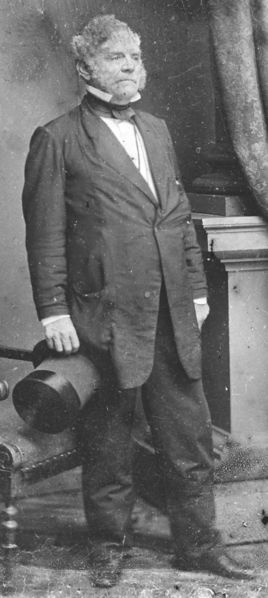
Caleb Cushing, President Buchanan's Confidential Commissioner

Mr. CUSHING arrived last night, and remained five hours, and departed for Washington. The rumors are various as to his mission here.

The Legislature to-day changed the name of the Committee of Federal to Foreign Relations, and also appointed a Committee to report a style of State flag.

1) You can read Francis Wilkinson Pickens’ Inaugural Message (as governor) here. Apparently the address was on December 18, 1860.

2) Caleb Cushing was a doughface Breckinridge supporter who ended up supporting the Union during the Civil War.

Posted in 150 Years Ago This Week, Secession and the Interregnum | Tagged , , , , , , | Leave a comment

Wise Idea: “Fight in the Union”

401px-Henry_A_Wise_CDV

War and Revolution in either event

South Carolina has voted for secession, but not all Southerners are certain to follow the Palmetto State’s lead. Henry A. Wise was Virginia’s governor from 1856 to 1860. Here the ex-governor explains his idea of fighting Black Republicanism within the Union. The Constitution already gives states the right to defend themselves when in imminent danger of being invaded.

From The New-York Times December 21, 1860:

SOUTHERN SENTIMENT; GOV. WISE INTENDS TO “FIGHT IN THE UNION.”

The Columbus (Georgia) Sun publishes the following letter from WISE. It gives the reasons for the Ex-Governor’s proposed fight “in the Union:”

ROLLISTON, hear Norfolk; Va.; Dec. 1, 1860.

DEAR SIR: Yours of the 22d was late coming to hand. (I now thank you for it. As to my doctrine of “fighting in the Union, it is one of true policy.

First — If a sovereign State is judge of the infraction as well as the mode and measure of redress, she may remain in the Union to resent or resist wrongs as well as do so out of the Union.

Second — If other States have infracted the Union, not she, the State wronged, is bound to defend the Constitution and Union against those who have infracted the one and threatened the other. Logically the Union belongs to those who have kept, not to those who have broken its covenants.

Third — The Union is not an abstraction, it is a real, substantial thing, embracing many essential and vital political rights and properties. It has nationality, lands, treasury, organization of army, navy, ships, dock-yards, arsenals, &c., &c., &c. Shall we renounce these rights and possessions, because wrongdoers attempt to deprive us of other rights? Is it not cowardly to renounce one right to save another? Are these lights not as precious as the mere right of properly in negroes? But

Fourth — If you secede you not only renounce the Union and its possessions, but you fail to unite your own people, because you do renounce these rights. Wake a man up to destroy the Union and the Constitution and he will stare at you and turn away. But tell him that the Constitution is infracted and the Union threatened by Black Republicans, and call him to aid you in defending both against those who would destroy both, and he will act heartily with you.

Fifth — Then how is this to be done? The third clause of tenth section of the first article of the Constitution of the United States permits a State to keep troops and ships of war in time of peace, and to engage in war, when actually invaded, or when in such imminent danger as will not admit of delay. Now, are we not actually invaded? Is our danger not imminent? Does it admit of delay? May not a sovereign State so decide?

Sixth — And what is the difference? Will it not be war and revolution, in either event?

I say, then, stick to all your rights; renounce none, fight for all, and save all!

Yours truly, &c, HENRY A. WISE.

To Dr. J.A. PLEASANTS, Columbus, Ga.

Is this like having your cake and eating it, too? Of course, you could say nullification in general is like that. It seems a broad interpretation of Article 1 Section 10, at any rate. – especially given the Buchanan administration’s stance.

Posted in 150 Years Ago This Week, Secession and the Interregnum | Tagged , , | 1 Comment

Oh, Those Were the Days!

225px-Robert_Barnwell_Rhett

Claudine's father: dreams do comes true!

Miss Claudine Rhett describes the glorious autumn of 1860 in Charleston, leading up to South Carolina’s declaration of independence.

I was In Charleston all through the autumn and winter of 1860-61, when so much agitation preceded secession. The very air seemed to be charged with electricity by the approaching storm of contest. You could not walk more than a few steps down any thoroughfare with- out meeting young men wearing conspicuously on their breasts blue cockades or strips of plaited palmetto fastened to their button-holes, which attested that they were “minute men,” all ready for duty. Flags fluttered in every direction, and the adjacent islands were converted into camping-grounds. Companies drilled and paraded daily on every open square in the city, and bands of music nightly serenaded distinguished men, and made the old houses echo back the strains of “Dixie” and the “Marseillaise.”

In December South Carolina seceded from the Union, and I shall never forget the evening that the Ordinance of Secession was signed, by the Delegates of each District of the State, at the large Institute Hall, on Meeting street, which was afterwards burnt in the great fire. The scene was one of extraordinary impressiveness. and the enthusiasm and excitement spirit-stirring. There was scarcely standing room in the big hall for the eager crowd of witnesses, and the galleries were packed with ladies. As the Districts were called out in turn by Mr. Jamison, the chairman of the convention, and the delegates one by one went up on the platform and signed the Ordinance, the cheering was vehement, and the ladies waved their handkerchiefs in token of approval.

Never was an act performed with more unanimity, and never did one meet with more general and hearty approbation. It has become the fashion now to say that none of us wished to secede, and that the State was made to withdraw from the Union by one or two politicians, without the knowledge or consent of the people. This statement is most assuredly an incorrect one, for not a member of the large convention refused his signature to the Ordinance, and no voice was raised that night, save in acclamation. No one living in Charleston, then, can say that he was ignorant of what took place and of the public acquiesence in the deed, unless he was blind and deaf and dumb.

1) This is from Claudine Rhett’s “Old Confederate Days” published in Our Women in the War, The News and Courier Book Presses, Charleston, S.C., 1885. Google has an online copy. I knew about this piece because I read it in Richard Wheeler’s A Rising Thunder, Castle Books, Edison, N.J. 2006 (pp. 23-24)

2) Seven Score and Ten has a good piece on the irony of South Carolinians singing the Marseillaise. You can listen to it at YouTube. I did not know which song it was – oh, it’s that song.

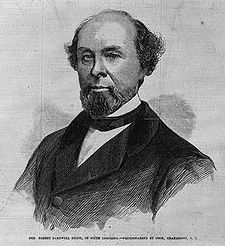
3) Claudine was the daughter of well-known fire-eater Robert Barnwell Rhett, Sr. There’s something about the Rhetts I kind of like. From the perspective of 150 years it’s easy to dislike their pro-slavery politics, but they weren’t afraid to wear their hearts and their politics (and maybe a blue cockade) on their sleeves. Claudine says don’t let anyone fool you – we were all for secession. Based on this biography of Rhett, Sr.I think Claudine would have been about 14 years old when she proudly watched her father sign the secession proclamation. As of 1897 Claudine was the historian of the Charleston chapter of the United Daughters of the Confederacy based on these minutes. Claudine’s brother, Robert, Jr. was editor of the Charleston Mercury, which seemed to be strongly pro-secession. You can read the Mercury’s coverage of the events of December 20, 1860 here

Posted in 150 Years Ago This Week, Secession and the Interregnum | Tagged , , , , , , , | 1 Comment

Mail Service in the New South Carolina

486px-James_Buchanan_in_1860_-_Meade_Brothers

The Old Public Functionary: we'll help with the mail, too! Neither rain nor ...

As South Carolina’s Secession Convention reconvenes in Charleston, The New-York Times (December 18, 1860) takes a sardonic view of South Carolina’s attempt to set up its own Post Office:

WAYS AND MEANS OF SECESSION.

A Joint Committee of the South Carolina Legislature has been discussing the best mode of supplying Postal facilities for the State after its secession. They object to employing ADAMS’ Express, as inadequate to the purpose, — and recommend the continuance of the present system. The Postmasters will of course resign, in order to be released from their oath to support the Federal Constitution; but they will immediately resume their functions and go on as if nothing had happened. The Committee state that they “have reason to believe the Federal Government will not be adverse to this plan.”

It is quite likely that if South Carolina can have the assistance of the Federal Government in her attempt at secession, she may succeed. And thus far, we are compelled to say, appearances indicate that she has good grounds for expecting it. Possibly a time may come when it will be withdrawn, and it will be well enough for them to be prepared for such a contingency.

From The New York Times Archive

Posted in 150 Years Ago This Week, Secession and the Interregnum | Tagged , , | Leave a comment