War in the Fourth Estate

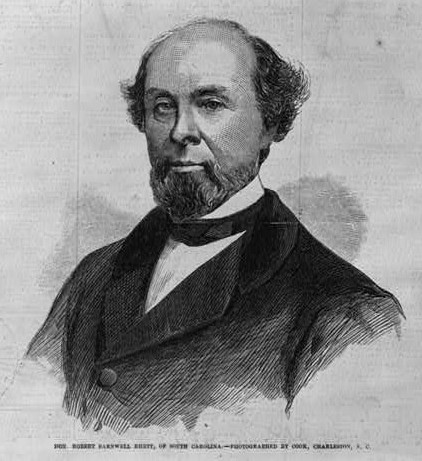
Robert_Barnwell_Rhett

Fire-eating Father: Rhett, Sr.

As the Daily News sites have noted the Charleston Mercury has been beating the drum for South Carolina’s secession, especially since Lincoln’s election.

The Mercury was edited by Robert Barnwell Rhett, Jr., whose father was a well-known fire-eater. Robert Barnwell Rhett, Sr. resigned from the U.S. Senate in 1852 but continued to push his strongly pro-secessionist beliefs through the Mercury.

Here The New-York Times editorializes on the Mercury’s continuing push for secession (December 6, 1860):

– The Charleston Mercury is becoming alarmed at the indications of delay in the secession movement. It is especially, afraid of the proposition to postpone action until Virginia and the other Southern States can be consulted. The refusal of the Old Dominion to meet South Carolina in conference, after the JOHN BROWN affair, is reproachfully called to mind, and her motive in now seeking such a conference is denounced as selfish and base:

“Virginia declined counseling with us,” says the Mercury, “because her views of her interests differed from ours. She set up an alienation and separation from us, against our most earnest remonstrances and efforts; and if she now seeks to be heard by us, what is her object? Is it to aid us in our views of policy –to preserve our rights or save our institutions? Not at all. It is to defeat our policy by a Southern Convention, and to drag us along in subserviency to her views of her border interests. If we respectfully decline to delay in our course, that she ‘may be heard,’ we only treat her, as she has previously treated us.”

The Mercury has no idea of being “dragged along” by what the Southern States may consider to be their common interest. It proposes that South Carolina shall plunge in alone, and then drag down all the other States by insisting on their coming to her rescue. This is the high-toned, magnanimous policy of the Palmetto State.

The Mercury proceeds to consider other reasons that are urged for delay, — first among them the prospect that the Northern States may repeal their Personal Liberty bills. And on this point the Mercury makes the following very frank admissions:

“So far as the Cotton States are concerned, these laws, excepting in the insult they convey to the South, and the faithlessness they indicate in the North, are not of the slightest consequence. Few or none of our slaves are lost, by being carried away and protected from recapture in the Northern States. Nor to the frontier States are they of much consequence. Their slaves are stolen and carried off — not by the agency of these Personal Liberty laws — but by the combination of individuals in the Northern States.”

This confirms what we have repeatedly urged, — that the clamor about these Personal Liberty bills is to a very great extent hollow and unmeaning. Unquestionably they afford a pretext for a good deal of the denunciation of the North which is so popular in the South just now, — and their repeal would strengthen the Union Party in that section. But they do not constitute the real motive for disunion anywhere.

From what I’ve read I am not sure that Southerners don’t care about the Personal Liberty laws. However, I can see how Rhett and the newspaper would not want anything to slow down the momentum building in South Carolina for secession – not the interests of the other southern states, not any possible repeal of the Personal Liberty laws.
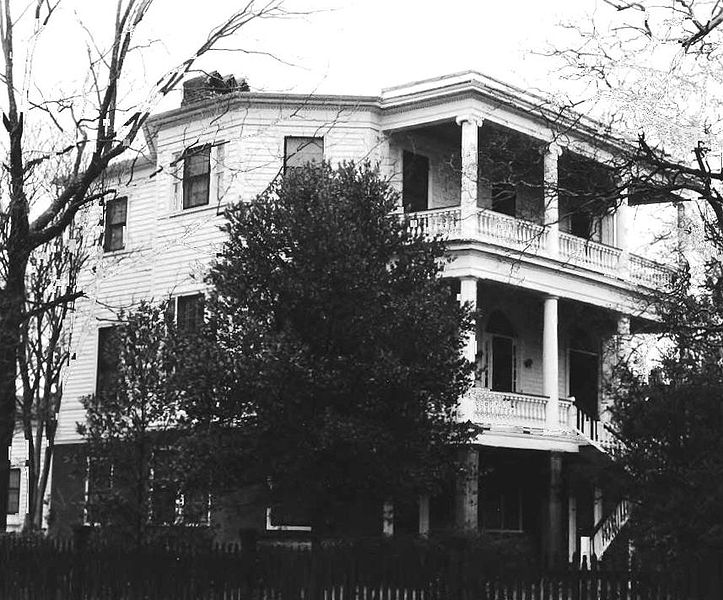
723px-Robert_Rhett_House_(Charleston,_South_Carolina)

Charleston Abode of Robert Rhett, Sr.
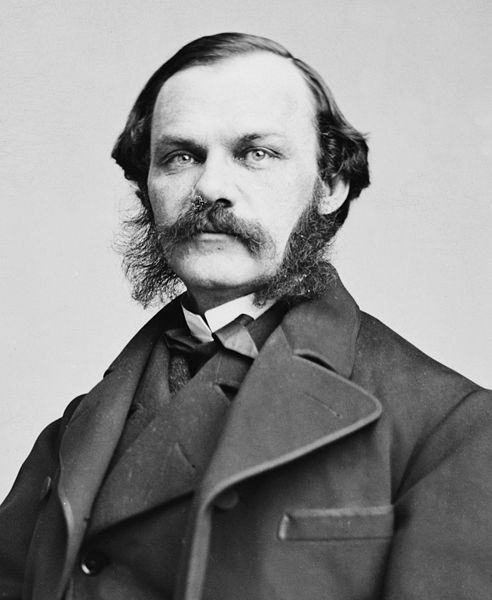
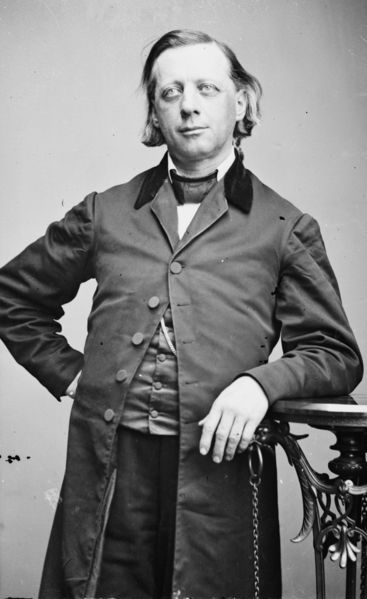
492px-HJRaymond

HJ Raymond: Opposing Fire-eaters with his newspaper

The Times editorial was not attributed to anyone; however, Henry Jarvis Raymond was a founder of The New-York Times and was its editor until he died.

Raymond was New York State’s Lieutenant Governor in 1855 and 1856 and was involved with Republican Party politics. In October and November of 1860 Raymond carried on a public exchange of letters with another fire-eater – William Yancey. You can read Raymond’s response to Yancey’s letter at The New-York Times Archive. It seems that Rhett and Raymond have at least something in common – they are both highly political and use the press to express their views. Of course, they’re diametrically opposed on issues like slavery and secession.
Posted in 150 Years Ago This Week, Secession and the Interregnum | Tagged , , , , , , | Leave a comment

From Canada

On December 4, 1860 President Buchanan issued his final State of the Union address. The “Daily News” links in the right-hand column do a great job covering the address.

Here’s a short story related to fugitive slaves and the Underground Railroad

From The New-York Times December 1, 1860:

The Canada Fugitive Slave Murder Case.

TORONTO, C.W., Friday, Nov. 30.

The decision in the extradition case of the fugitive slave and murderer, JONES, has been still further postponed for a few days. The court to-day was crowded, and much interest was manifested in the proceedings. Many colored people of both sexes assembled in and around the Court-house, ready to rescue the prisoner in case the Court decided to hand him over to the United States authorities.

This story caused me to think about the relationship of slaves to the legal rights and responsibilities we take for granted and made me curious about the facts of the murder Jones allegedly committed.

Posted in 150 Years Ago This Week | Tagged , , | Leave a comment

Ex-President Pierce: Doughface Perspective

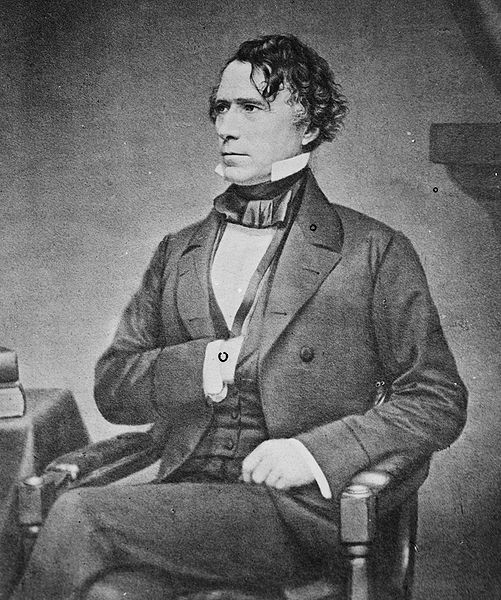
501px-Franklin_Pierce

He Feared Consequences of Northern Aggression

In the period leading up to the American Civil War “Doughface” was the disparaging term many Northerners used to describe Northerners who sympathized with the South and its interests. 150 years ago today Congress began its session in the midst of the secession crisis. The next day President James Buchanan, who was considered a doughface by many, would give his address to Congress.

Today we print a letter from Franklin Pierce, the man who preceded Buchanan as president and a fellow doughface.

From The New-York Times December 3, 1860:

EX-PRESIDENT PIERCE ON THE POLITICAL CRISIS.

From the Constitution.

LOWELL, Mass., Nov. 26, 1860.

MY DEAR SIR: Your letter was received at Concord on Saturday, and I should have answered it while there, if I could have found a little interval of leisure. I am here to-day on business, and can therefore do scarcely more than to thank you; but let so much, at least, be done.

The apprehensions which you so forcibly express did not increase mine. You know how sincerely and earnestly I have for years depreciated the causes which, if not removed, I foresaw must produce the fearful crisis which is now upon us; and I know how ineffectual, in this section, have been all warnings of patriotism and ordinary forecast. Now, for the first time, men are compelled to open their eyes, as if aroused from strange delusion, upon a full view of the nearness and magnitude of impending calamities. It is worse than idle — it is foolhardy — to discuss the question of probable relative suffering and loss in different sections of the Union. In case of disruption, we shall all be involved in common financial embarrassment and ruin, and I fear, in common destruction, so much more appalling than any attendant upon more sacrifice of property, that one involuntarily turns even from its contemplation. To my mind one thing is clear — no wise man can, under existing circumstances, dream of coercion. The first blow struck in that direction will be a blow fatal even to hope.

You have observed, of course, how seriously commercial confidence, and consequently the price of stocks, &c., have already been shaken at the North, and yet there is in the public mind a very imperfect apprehension of the real danger. Still there are indications of a disposition to repeal laws directed against the constitutional rights of the Southern States — such as “personal liberty bills,” etc. — and if we could gain a little time, there would seem to be ground of hope that these just causes of distrust and dissatisfaction may be removed.

I trust the South will make a large draft on their devotion to the Union, and be guided by the wise moderation which the exigency so urgently calls for. Can it be that this flag, with all the stars in their places, is no longer to float at home, abroad, and always as an emblem of our united power, common freedom, and unchallenged security? Can it be that it is to go down in darkness. If not in blood, before we have completed a single century of our independent national existence?

I agree with you that madness has ruled the hour in pushing forward a line of aggressions upon the South, but I will not despair of returning reason, and of a reawakened sense of constitutional right and duty. I will still look with earnest hope for the full and speedy vindication of the coequal rights and coequal obligations of these States, and for restored fraternity under the present Constitution — fraternity secured by following the example of the fathers of the Republic — fraternity based upon admission and cheerful maintenance of all the provisions and requirements of the sacred instrument under which they and their children have been so signally blessed. When that hope shall perish, if perish it must, life itself, my friend, will lose its value for you and me.

It is apparent that much will depend upon the views expressed and the tone and temper manifested during the early days of the session of Congress now near at hand. May the God of our fathers guide the counsels of those who in the different Departments of Government are invested in this critical epoch with responsibilities unknown since the sitting of the Convention which framed the Constitution.

Your friend, FRANKLIN PIERCE.

Posted in 150 Years Ago This Week, Secession and the Interregnum | Tagged , , , , , | 1 Comment

Yankee, (You Better) Go Home!

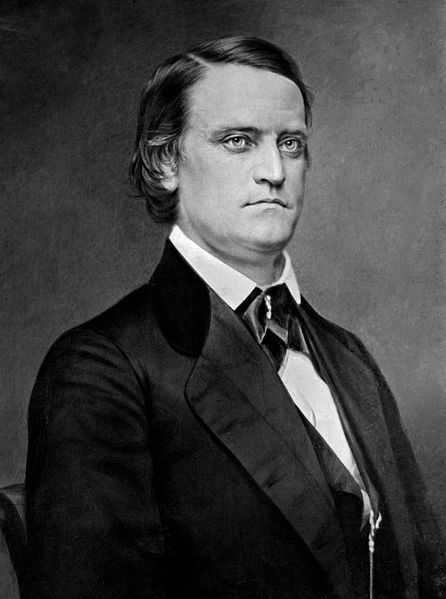
John Breckinridge

Vice-President and Senator-elect from Kentucky

December 2, 1860. Congressmen from around the United States are accumulating in Washington, D.C. as they await the reconvening of Congress tomorrow, December 3rd. Some southern senators, such as Breckinridge from Kentucky, are speaking words of moderation and conciliation. Congressmen from the Deep South are just as likely to assume secession is a forgone conclusion. All are awaiting President Buchanan’s message on December 4th – the crisis is not abating and the “Old Public Functionary” will be president for three more months.

A correspondent from The New-York Times toured Kentucky, Tennessee, and Georgia after Lincoln’s election and reported on the mood and activities of Southerners who were not politicians.

From The New-York Times December 1, 1860:

SAVANNAH, Ga., Friday, Nov. 23, 1860.

Since my last letter I have passed through most of the Southern States, and can give you, briefly, the results of my observation.

In Kentucky, I believe a great majority of her substantial citizens are in favor of sustaining the Union as it is rather than take part in any movement that would tend to its destruction. They are quite indignant in their denunciation of the acts known as the Personal Liberty bills, which have been passed of late years in many of the Eastern States; but even the passage of this law and the election of LINCOLN does not seem to justify, in their minds, secession. “Let us try him,” said a wealthy old Kentucky planter to me. “He may be a good deal better than we think he is, and he can’t be much worse than the President who is now at the head of the Government.” This last remark struck me as being very sensible, and well worthy the consideration of the most ultra secessionist.

As I passed from Kentucky toward Tennessee, I found by conversing with citizens whom I had the pleasure to meet, that, after all, the election of LINCOLN was not half so serious a consideration to the minds of the planters as were the Personal Liberty bills of the North. The immediate repeal of these bills, they thought, would restore peace and good will among the people of these United States. When applied to for an opinion as to the probable action of the people in the States where this to them objectionable law exists, I did not hesitate to assure them, as I believed, that in a few isolated instances the law might be repealed, but in a majority of the States where it existed, its abolishment was quite as impossible as was that of Slavery, by the people of the Southern States.

On reaching Nashville, I found the cockade fever quite prevalent, but confined to the younger portion of the community — lads of 18 or 20 summers, connected with the Medical College, Military Academy, stores, law offices, few of whom dreamed of or cared for the fatal consequences that must fall upon them, more especially in the event of a dissolution of this Union.

In Nashville, I found the older and more reliable members of society preparing themselves for what they termed a dreaded future. They had been taught to think by the more active workers in the late Presidential campaign, that upon JOHN BELL’s election rested the future permenancy of the Union. They entered the struggle against BRECKINRIDGE and DOUGLAS, with this belief impressed upon their minds. They came out of the battle as victors, but found to their sorrow that even with this triumph they were badly beaten by the “Rail splitter of Illinois.”

In Tennessee business is almost entirely suspended. On the principal thoroughfares of the capital it seemed to my eye as a Sabbath-day. The banks refuse accommodation to all alike; even the “shavers,’ of whom there is legion in Nashville, refuse to cash paper (first-class) at any kind of “shave.” In Memphis I found business about the same, but people much more of the fire-eating order than were those of Nashville. This can be readily, accounted for from the proximity of Memphis to the States of Arkansas, Mississippi and Louisiana.

From Memphis I proceeded via Chattanooga, Tenn., to Atlanta, Ga. I remained here but a brief period; long enough, however, to find that at the depot, hotel, and all the way stations toward Savannah, the Vigilantes and Minute-men had a strong delegation on hand to examine the faces, if not the pockets, of all who passed their way. I reached Macon about 8 o’clock, in the morning. During the night’s travel I had the pleasure of hearing one of a party of three ask a gentleman with whom I had been enjoying a lengthy conversation during the night, “Who is that?” pointing at me. He answered by telling them my name and place of residence — New-York City. One of the other blue cockades thereupon growled out, “There, what did I tell you? I knew he was a d — d Yankee!”

From Macon I passed to Savannah where, I think I found the hot bed of secession. So far as I was personally concerned I have no reason to find fault, but in saying this much I am well assured that I am solely indebted to a handful of noble men residing in Savannah who humanely and manfully watched over my safety.

In conclusion, permit me to impress upon my fellow-citizens of the Northeast and Northwest that, from a careful survey, I am well assured that no citizen not from a slaveholding State, is safe now at the South. The people are to a certain extent mad upon this Slavery question, and the recent election of the Republican nominees. They will neither listen to argument or reason. To learn that you are a citizen or resident of a non-slaveholding State, is to them sufficient grounds for suspicion and for summary punishment.

I enjoyed this story:

1) Proof that Southerners really did refer to Northerners as “d — d Yankees” – even in the Yankee’s presence

2) The business panic is making streets in Tennessee Sabbath Day like; banks and “shavers” are not redeeming paper money.

3) Minute Men and cockades spreading to Tennessee.

4) In Georgia Vigilantes and Minute men are scrutinizing all travelers and visitors.

5) Throughout the South there is still the deep resentment toward the Personal Liberty laws of northern states. Our correspondent nailed the nature of the “irrepressible conflict”:

I did not hesitate to assure them, as I believed, that in a few isolated instances the [Personal liberty] law might be repealed, but in a majority of the States where it existed, its abolishment was quite as impossible as was that of Slavery, by the people of the Southern States.

Thanks for your comments

Posted in 150 Years Ago This Week, Secession and the Interregnum, The election of 1860 | Tagged , , , , | 4 Comments

Pondering Economics of Secession: Stalwart Giant vs. Infant

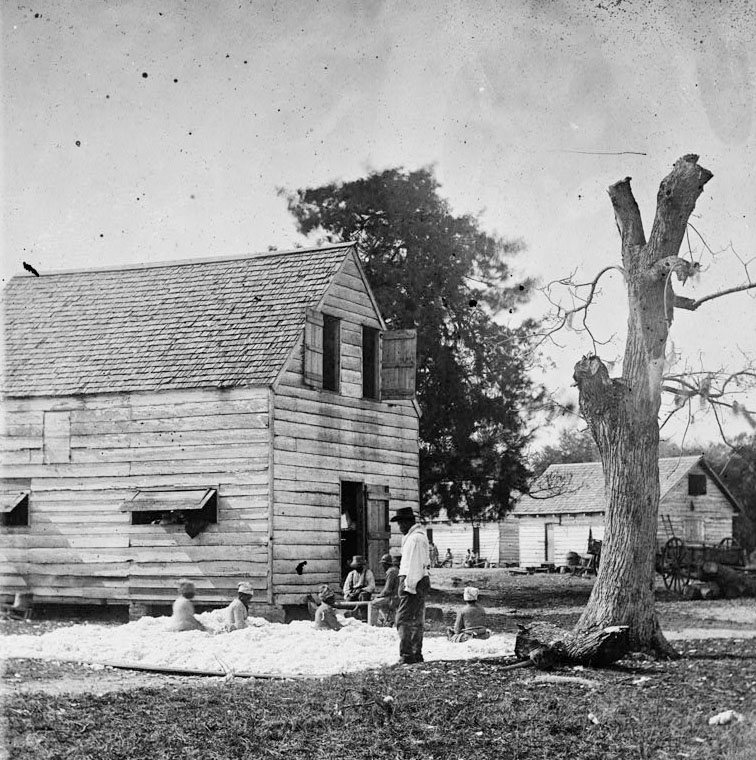
cotton-plantation

$2,000 fine per bale?

150 years ago today The New-York Times reacted to a bill in the Georgia Legislature that would place an extreme fine on commerce with the North. The editorial used the bill’s intent to predict the effect a hostile secession would have on the South’s economy.

The New-York Times ((December 1, 1860):

South and North Retaliatory Laws.

The Legislature of Georgia devoted its session, yesterday, to the consideration of a bill, attaching a fine of $2,000 to the sale of “a bale of cotton or a barrel of apples,” to anybody at the North. The proposition is reported to have occasioned a vehement debate, in which the line between the Secessionists and the Unionists was distinctly drawn.

We are glad to see the measure brought forward at this early stage of the disunion movement, and we should not be at all sorry to see it adopted. The Southern Secessionists rely, with great confidence, on their ability to coerce the North by non-intercourse, into acquiescence in their views and purposes. It will be much better for all parties that they make the experiment before secession, than after it, — for its consequences, if the experiment should unhappily fail, can be much more easily remedied. One of the best things that could possibly happen, — the best, perhaps, for both parties, — would, be a year’s trial of the non-intercourse, policy. If it succeeded, then the South could think of secession. If it failed, they would be more reconciled to their position within the Union.

But aside from this, such a policy as that proposed lacks all provocation on the part of the leading commercial centres at the North — upon which it would mainly take effect — and must therefore excite an indignation proportioned to its gross injustice. This feeling will in due time prompt retaliatory measures. Whatever may be said of the North as a whole, its great commercial cities have been in all extremities submissive even to the extra-constitutional demands of the Southern States, — and it can scarcely be expected that they will forever submit to these passionate and vindictive displays of inconsiderate feeling; or persist in refraining from legislation, the commercial results of which must be simply destructive to the South.

It is not easy to understand that state of mind which leads Southern men to suppose that they can possibly withhold from market, without injury and ruin to themselves, the great staple of their agriculture, on which they depend for everything necessary for their own consumption. Their necessity to sell is ten times as great as ours to buy, and if they were to accomplish, what seems to be the principal dream of their lives, — destruction of all trade with the North and the sale of their cotton to England alone, — they would simply place themselves at the mercy of a single purchaser, who, in the absence of competition, could, and of course would, dictate his own terms. It will indeed be a sad day for the planters when Manchester is rid of the company of Lowell and Philadelphia at the brokers’ table.

The same remark applies to other Southern staples. There is so little, in truth, which the South offers which is indispensable to the North, or which it cannot obtain in other quarters, that no positively hostile legislation is needed in the Northern States to rebut these explosions of Southern folly and malignity. But if the manifold products of Northern mines, forests and workshops were to be placed under restrictions and penalties similar to those proposed in this Georgian law, the condition of the seceding States would indeed be deplorable. They would find by sorry experience that sudden political independence does not necessarily carry with it sudden industrial and commercial independence; and that the currents of trade are not to be diverted with impunity by arbitrary legislation. A long period of helplessness at a time when, if ever, energetic competition with a progressive North would be demanded by sectional pride and interest, would be the inevitable result.

If, therefore, any portion of the South is bent upon disunion, every consideration of policy bids it abstain from all preliminary legislation of this vindictive and suicidal kind. It has everything to gain by maintaining amicable relations with the North; all manner of hazards to incur from provoking angry and resentful feelings. If at its exodus, it attempts to destroy Northern commerce, pursue and persecute Northern citizens, repudiate its debts to Northern traders, and discriminate generally to the disadvantage of Northern men and interests, it may provoke corresponding measures at a crisis when it is least able to contend with them.

It is not to be forgotten, that with the severance of the Union, the thousand inducements to political forbearance which have heretofore governed the great Northern majority must cease to exist. The South has only to destroy the additional inducements offered by commercial self-interest and commercial intercourse, to create a breach, which no subsequent penitence and attempted reparation can entirely close. And in the conflict between hostile legislation at the North and the South there is no occasion to question the issue. It will be a contest between an armed and stalwart giant, and an infant that has not yet learned to go alone.

From the perspective of 150 years later, The Times concern about the effects of non-intercourse seem highly reasonable, but apparently the South was not in the mood for thought experiments or even real experiments.

But non-intercourse raises a question: does anyone know how the North obtained cotton during the Civil War?

Thanks

Posted in 150 Years Ago This Week, Secession and the Interregnum, The election of 1860 | Tagged , , , , | Leave a comment

(Almost) Kissing Babies in Chicago

Lincoln’s quietness during the election and its immediate aftermath was usual in his day. Senator Douglas broke tradition during the 1860 presidential canvas by personally campaigning throughout the country, but the norm was for the candidate to remain at home and silent. A party’s platform and the candidate’s surrogates did the talking. Even after his victory Lincoln has said very little about his intended policies – instead he has referred questioners to his past speeches.

The Civil War Daily Gazette reported on Lincoln’s last day in Chicago on November 25, 1860. Lincoln visited Dwight Moody’s Sunday School. Mr. Moody got Lincoln to say a few words. Lincoln told the children that if they cooperated with their teachers they might grow up to be president.

The New-York Times (via the Chicago Tribune) reported on further details of Lincoln’s stay in Chicago (The New-York Times, November 29, 1860):

Mr. Lincoln at Chicago.

The Chicago Tribune relates some incidents of Mr. LINCOLN’S visit to that city. It says:

“Mr. LINCOLN returns to Springfield, and Mr. HAMLIN goes immediately East from this city. Several interesting incidents are related of the reception. Mr. LINCOLN being a very tall man, generally had to stoop some to reach the level of those who came to congratulate him, and saluting all, as he did, with both hands, the labor performed by the President elect much resembled the traditionary ‘man-a-mowing.’ At least, it was severe. In the crowd were several short persons. It was refreshing to observe the pleasure experienced by Mr. LINCOLN when he took a man by the hand somewhere nigh his own stature. One of these persons came after a long row of undersized ones. Mr. LINCOLN raised his hands in well-affected astonishment, and exclaimed: ‘You are up, some!” This was accompanied by a look that created much merriment. That tall man, for once in his life, was duly appreciated.

In the crowd was a little boy, some four years of age, and his mother. The child was boiling over with enthusiasm, his cheeks glowed with pride, and he could not contain his feelings, so he cried out, “Hurray for Uncle ABE!” Mr. LINCOLN heard it, and the youthful Republican was treated to a “tossing up” towards the ceiling, which tickled him and the visitors hugely, and will be remembered through life by the boy.

Lincoln’s still not saying much on policy, but we’re getting some glimpses of Lincoln as a politician mingling with people in his role as President-elect.

Posted in 150 Years Ago This Week, The election of 1860 | Tagged , , | Leave a comment

“You Must Take Sides”

367px-Henry_Ward_Beecher_-_Brady-Handy

Henry Ward Beecher

In 1860 several states, including New York, declared November 29th Thanksgiving Day. One of the ways people celebrated Thanksgiving Day back then was by going to church and listening to long sermons by their preachers. On November 30th The New-York Times published several of these sermons. People were interested in how ministers would use Thanksgiving Day to preach about the impending secession crisis.

The New-York Times reprinted several sermons from around the metropolitan area. Henry Ward Beecher spoke at his Plymouth Church in Brooklyn. From The New-York Times November 30, 1860:

“At an early hour the house was thronged by patient thousands, waiting for the service to commence, while hundreds had to leave or stay unaccommodated with seats.”

In Beecher’s long sermon he gave reasons for Thanksgiving and also pretty much identified Fernando Wood, New York City’s Democrat mayor, as Satan because of Wood’s dour Thanksgiving proclamation. Later on he got down to the issues of slavery and secession:

OURS IS A PIVOTAL PERIOD. The strife is between a dead past and a living future — between a wasting evil and a flourishing good — between Barbarism and Civilization. [Subdued applause.] You may not have asked for or desired this conflict. God has sent it to you. It has come, and you MUST TAKE SIDES.
Your only option is — which side? If you accept the radical ideas of the North you contest for civilization — if for those of the South you contest for barbarism. There is, there can be, no further compromise. There have been many things between us that were fair subjects for argumentation, and for honest difference of opinion, about which one side might claim with apparent equity, what the other side would with equal vehemence deny. But now they are all swept away — there’s a fair, free range from battery to battery — the guns are loaded and the match prepared — the conflict is coming, and you must take sides — away with compromises — and woe be to that luckless wight, who in the rage of battle is found midway between the two. He’s of no use to either, and a fair shot for both. At last the North has been called upon to stand up and fight. Not for Connecticut clocks, not for ear-rings or slave whips, not for cart-wheels or prints, or carriages or lines, but for principle and for God. God is worthy the occasion if you are not worthy of him. A nobler field was never found. A contest between Christian civilization and savage barbarism.
I do not pronounce the Southern people to be a barbarous people; I say nothing about them; I make no charge. If the things that are done there were done here, I should say they were barbarous. I may not know. I do, however, unhesitatingly say that the distinctive idea of the Free States is an element of Christian civilization, and that of the South is barbaric; and that the real conflict in this nation to-day is between Barbarism and Civilization. The one is like a pure white alabaster box, full of all purities and refinements — the other is like Pandora’s box, full of all evils and black, black wickedness. The conflict, then, has come; and it is my business to keep you in the ranks, and to see that you are inspired to fight with heroism. …

The Southern States have organized society around a rotten core — Slavery; the Northern States organized society about a vital heart — Liberty. At length both stand mature. There they are in contrast. God holds them up to the ages and nations, that men may see the difference.
And now there is a conflict — which is to yield?
Is Liberty to uncover her fair head? Shall she lay aside her opal-lined crown and her diamond-studded sceptre upon the altar of oppression? Shall she walk captive? Or shall black Slavery be discrowned and abased? The two Queens cannot reign in the same land. One must yield. Which shall it be? …

It is asked what we should do? Speak the truth. Permit no half-way measures or men. These half-way men are of no use — they can never get to Heaven — they are not known in hell, and are not wanted on earth. [Audible cachinatim.] We want no half-way. Let the South keep its institutions in her own territory — we don’t wish to touch them or injure them; they have already gotten the advantage of us. They shall have all that the Constitution has granted them — all that history has yielded them. But if they ask us to make the air of the North favorable for a slave’s breath, we won’t! We shall stand by our rights, even as they desire us to stand by their rights. …

So, we’ll waste no superfluous tears, we’ll trust in God and the spirit of Christianity among the people, believing that we shall endure for many years yet to come, and that the youngest member of this congregation shall, until his dying year, even when his hair shall be white like the snow, come up here to spend his annual Thanksgiving — a thanksgiving grounded upon the love of God — that God who has given us Liberty — Liberty, so precious for us and our children.

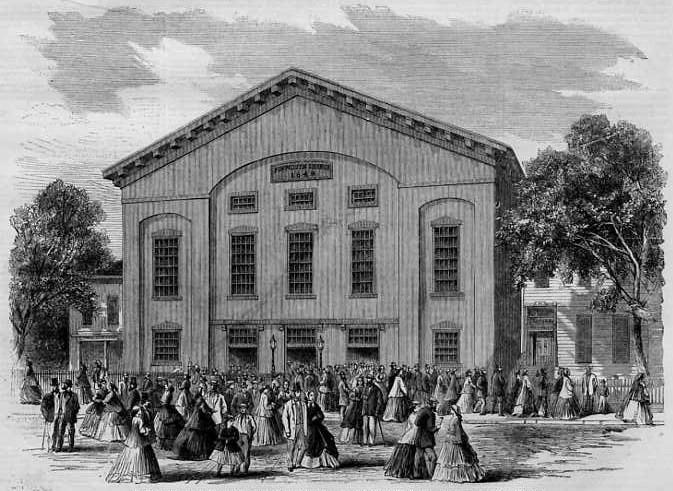
Plymouth_Church,_Brooklyn,_New_York

Plymouth Church, Brooklyn, NY 1866

There was much more in Beecher’s sermon. You can read much more of Beecher’s address and other sermons at The New York Times Archives

I was struck by Beecher’s strong and stark anti-slavery rhetoric; however, in Henry Ward Beecher: An American Portrait Paxton Hibben focuses on the more conciliatory parts of Beecher’s Thanksgiving address. Hibben says that Beecher was concerned about the financial impact a civil war would have on Beecher’s much-needed benefactors. Hibben says that Beecher was not involved with intense Wide-Awake activity during the 1860 campaign. In Sinclair Lewis’ foreward to Hibben’s book, Lewis says that Beecher was a “combination of St. Augustine, Barnum, and John Barrymore”. Maybe he was also a politician. Even Lincoln is sticking to his conciliatory words to the South while remaining firm in his opposition to the expansion of slavery.

I think Beecher really is being tough on the South – he says the North will abide by the Constitution but will continue to ignore the Fugitive Slave Law, or at least that the Fugitive Law is unenforceable:

My words are, I see, being reported, and in the papers they will go over the land, and as the papers even sometimes go South, perhaps they will get to Charleston. And I want to say to my Southern brothers we will remain faithful to our compact, we will be loyal to the Constitution, but we won’t lie to you. We will hunt or stop your slaves. It cannot be. So long as there is bread in the larder, and water in the cruise; so long as there are hills to hide among, and valleys through which to travel; so long as humanity and freedom reigns in the heart of the North — so long men must and will escape from Slavery, and fugitives will gain their freedom! …

Concerning the Compromise of 1850, you were fully advised. They promised finality. Did you get it? Yes, with the butt end of a club! They renewed their courage, and destroyed the Missouri Compromise — an evil only equaled by the enormity of the one which destroyed it, and what has been the result? Growing wickedness, excitements and turmoils beyond precedent.

Notes

1. Beecher was Harriet Beecher Stowe’s brother.

2. Henry Ward Beecher: An American Portrait, Paxton Hibben. The Readers Club, New York 1942

3. Hibben says there was enormous interest in the North on where non-Abolitionists stood on the impending secession crisis. That might be one reason for The Times reprinting so many of the sermons

As always, I’m interested in your views. Thank you.

Posted in 150 Years Ago This Week, Secession and the Interregnum, The election of 1860 | Tagged , , , | Leave a comment

Bye, Bye, Redcoats!

Well, I can chalk up another one under the category “1860 Headlines that have Bewildered Me”:

From The New-York Times November26, 1860:

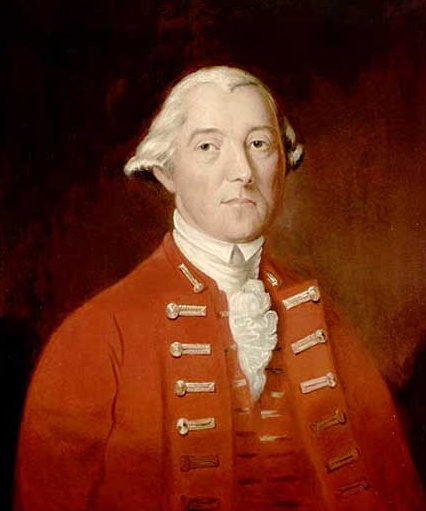
General-Sir-Guy-Carleton_2

Led British out of New York in 1783 (along with some Loyalists and freed slaves)

Evacuation Day.
Parade of the Military.

The First Brigade, under command of Gen. C.B. SPICER, consisting of the First Regiment, (cavalry,) Second Regiment, Col. TOMPKINS; Third Regiment, (hussars,) Col. S.B. POSTLEY; and the Seventy-first Regiment, Col. A.S. VOSBURGH — and the Fourth Brigade, Brig.-Gen. JOHN EWEN, consisting of the Eleventh Regiment, Col. HOEER BOSTWICK; the Sixty-ninth Regiment, Lieut.-Col. ROBERT NUGENT, the Seventy-ninth Regiment, Col. MCLEARY — and the Twenty second Regiment, Col. RAYNOR, will celebrate the Anniversary of Evacution Day to-day by a parade.

The Thirteenth Regiment, National Grays, of Brooklyn, will make a moonlight parade this evening. They form in the City Hall Park, Brooklyn, at 8 P.M., and crossing Fulton-ferry, will pass up Broadway to Union-square, and return by the same route to Brooklyn.

The New York Evacuation Day celebrates November 25, 1783 – the date that most British soldiers occupying New York City departed. Sir Guy Carleton left on December 4th.

When the British departed American patriots wanted to tear down the Union Jack in Battery Park and replace it with the Stars and Stripes. Apparently, the pole had been greased. “After a number of men attempted to tear down the British color – a symbol of tyranny for contemporary American Patriots – a veteran, John Van Arsdale, was able to ascend the pole with the use of climbing cleats used to scale masts on ships, remove the flag, and replace it with the Stars and Stripes before the British fleet had sailed out of sight. General George Washington led the Continental Army in a triumphal march down Broadway to The Battery immediately afterward.” [Wikipedia article linked to above]

While New Yorkers were commemorating the removal of the British and their Union Jack in 1783, people in South Carolina and throughout the South were viewing the Stars and Stripes as a new symbol of oppression and replacing it with the Palmetto flag.

Notes

1) Apparently the New York celebration in 1860 was delayed a day because the 25th fell on a Sunday.

2) The Boston area celebrates an Evacuation Day on March 17th to remember the day the British left Boston

3) I never knew: The Wikipedia article says more American soldiers and sailors died on British prison ships in New York Harbor (because of neglect) than died in all the battles of the Revolutionary War.

4) I think the regiments in the parade will soon be heading South. Presumably, the Brooklyn Grays started wearing blue in 1861. There was a baseball team by that name in the American Association in the 1880s

Posted in 150 Years Ago This Week | Tagged , | Leave a comment

Palmetto Flag Gets Hissed!

But Not in the Palmetto State

From The New-York Times November 27, 1860:

BALTIMORE, Md., Monday, Nov. 24.

An association calling themselves the “Southern Volunteers,” displayed the Palmetto flag from their place of meeting to-day. A large crowd was attracted by the novelty of the thing, and the flag was greeted with groans and hisses from the crowds and with plaudits from the Volunteers. Capt. JONES, of the bark Isabel, also displayed the Palmetto flag from the mast-head of his vessel this morning, when all the ships in the vicinity immediately ran up the stars and stripes.

This diversity of views seems to make sense given the results of the 1860 Presidential Election. The Southern Democrat Breckinridge won 45.9% of the vote; Bell, of the Constitutional Union Party, came very close at 45.1%.
Douglas (6.4%) and Lincoln (2.5%) were at least on the ballot in Maryland.

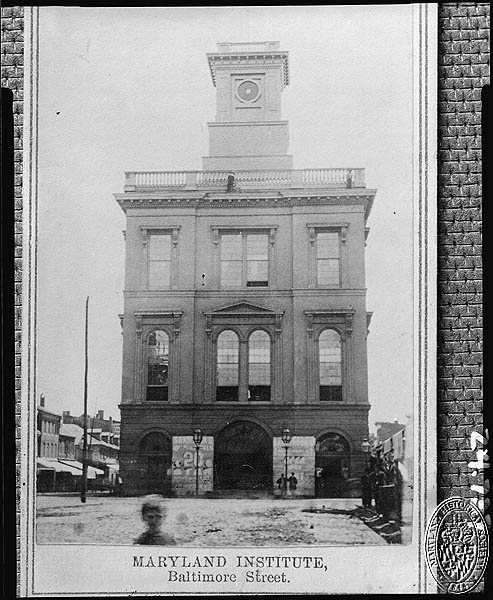
Baltimore's Maryland Institute where rebellious Democrats picked Breckinridge

Source for saying the Southern democrats picked Breckinridge at the Maryland Institute is New York Times Archives

Posted in 150 Years Ago This Week, Secession and the Interregnum, The election of 1860 | Tagged , , , , | Leave a comment

Thanksgiving Perseverance

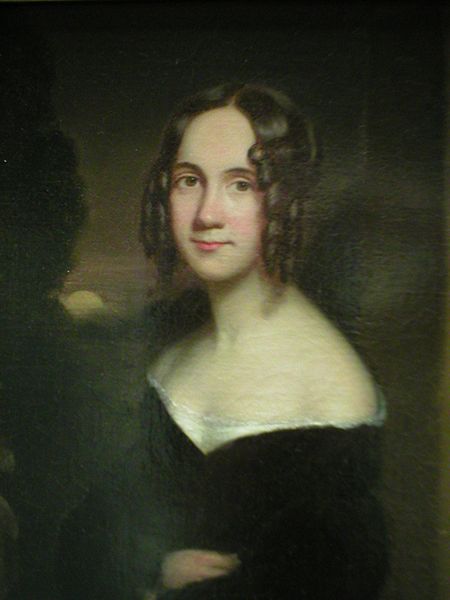
450px-Sarah_Hale_portrait

Sarah Hale

Yesterday morning I was reading a different genre (not the U.S. Civil War) and learned about Sarah Hale, who was a strong proponent of a national Thanksgiving Day.

In 1860 several northern states had picked November 29th as their Thanksgiving Day, but South Carolina opted for November 21st.

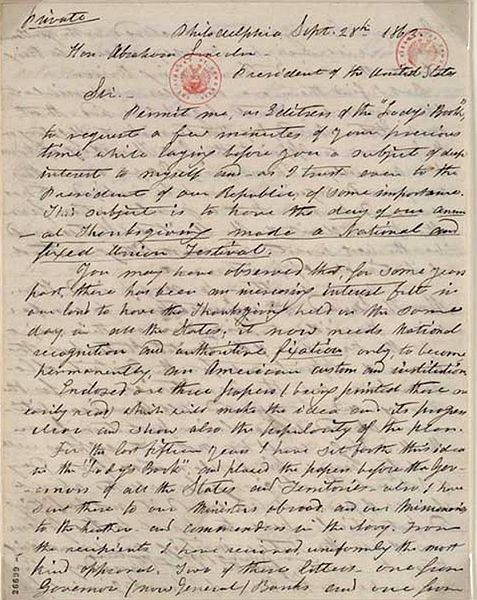
As I learned from the Wikipedia article I linked to, Sarah Hale, who was strongly opposed to slavery and in favor of the Union, had a very interesting career. One of her causes was the establishment of a national Thanksgiving Day. She wrote to every president from Taylor to Lincoln promoting her idea.

As I’m gazing into my crystal ball, I do believe her persistence will pay off in a few years.

477px-Letter-SarahHaletoLincoln

Letter to Lincoln

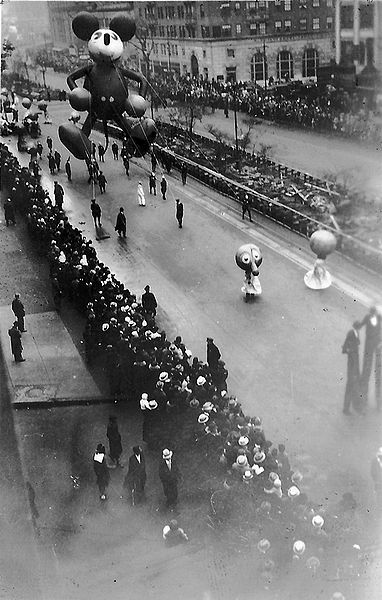
Thanks to her we can watch big Mickey Mouse balloons and the Detroit Lions on the fourth Thursday every November.

382px-Mickey-mouse-1934

Depression-era Mickey - Macy's Parade 1934

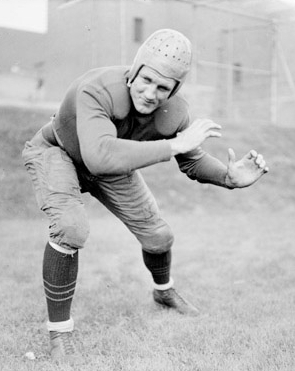
Bronco Nagurski

Bronco Nagurski: led Bears against Lions in 1930s (first Thanksgiving Lions game 1934 - lost to Bears)

Posted in Uncategorized | Tagged , , , , | Leave a comment