“Secession in New-York”

OK. I admit it – my eyes bulged out of my head when I read this headline from The New-York Times. The main idea was that Southern medical students met to decide whether, given Lincoln’s election and the secessionist activities in the South, they should return home and withdraw their patronage from Northern medical schools. Here are excerpts from the article (The New-York Times. November 10, 1860):

SECESSION IN NEW-YORK.
Meeting of Southern Medical Students-
Resolutions to Return Home adopted. …

In the papers of Friday morning, Nov. 9, a call
appeared for the Southern Medical Students attending
lectures in this City, to meet at the hall of the Medi-
cal College, on Fourteenth-street; to take action as to
their course in remaining here or going home, since
the result of the election of Tuesday. The Faculty,
however, being unwilling that the hall should be used
for political purposes, refused to open it for the meeting, and consequently the place of meeting was
changed to the Democratic Head-quarters on Broad-
way, opposite Astor-Place.
The room was nearly filled with Southerners from
nearly every State south of Mason & Dixon’s line. …

Hon. Mr . CLINTON, of Mississippi, was then intro-
duced to the meeting, who prefaced his remarks by
saying that he would say nothing to them, that he
would not say to his brother or his only son. He
stated that before last Tuesday he was a firm Union
man, and that for three months he had been traveling
through the North, at his own expense, striving to
open the eyes of the people of the North, and
to lead them to a right decision, but that
since the election of ABRAHAM LINCOLN to the
highest office in the gift of the people he
was for disunion, and the sooner the better. The
Union at first contained but one free State, and twelve
slave States, and the slave States had been yielding
to the demands of the free States till they exposed
themselves to ridicule by further concessions. He
was ready to make sacrifice of his property, prospects,
and even his wife and children for the sake of South-
ern honor. He closed by advising the young gentle-
men immediately to return to their Southern homes,
and withdraw their patronage from Northern institu-
tions. …

Dr. MARION SIMS, of this City, next was called for.
He assured the gentlemen that he had a right to speak
to them, as he was bound by the tenderest ties to
nearly every Southern State. He did not wish to
talk politics, but to address them a few words of ten-
derness. He counseled the students to remain
here, as the opportunities for learning from actual
observation were much greater than in any Southern
city. They were surrounded by friends, not enemies.
Most of the Medical Faculty were Southern men, or
men with Southern preferences. He advised the
young men to wait till their respective States seceded,
and then be ready to go to their assistance. …

Col. DICK, of Maryland, was next Introduced as
“the man who gave BROOKS the cane to whip SUMNER
with.” He said the young men should not wait for
their States to secede, but should go home and urge
them to secede. …

The Commitee on Resolutions then presented the
following report :
Whereas, The people of the North, by the election
of ABRAHAM LINCOLN as President and HANNIBAL HAM-
LIN as Vice-President of these United States, have
signified their hostility to the South in thus elevating
to office sectional candidates—
Resolved, 1. That we withdraw our patronage from
Northern institutions.
2. That we leave immediately for our Southern
homes.
3. That we thank the people of this City for the
stand they have taken for the Union and the Constitu-
tion, and shall always remember them with gratitude. …

There was debate over South Carolina had already seceded and parliamentary maneuvers, but some sort of resolution was eventually passed.

Throughout the meeting, the speakers who advo-
ated disunion and secession, were loudly applauded,
while those advocating moderation and deliberate ac-
ion, were hissed, and in every manner embarrassed
in their speaking.

Southern honor trumped the chance to attend superior medical schools.

More
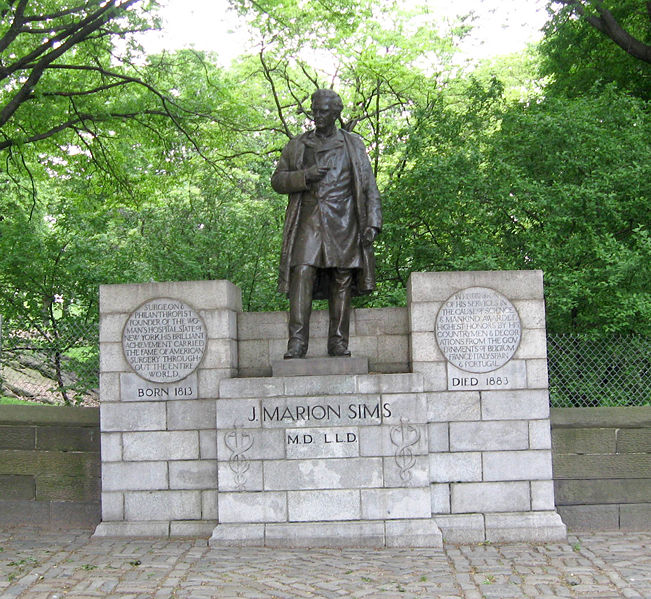
J. Marion Sims

J. Marion Sims - Central Park, New York

1) Apparently, the Dr. Marion Sims who advised the students to wait for actual secession was J. Marion Sims, who is considered the Father of American Gynecology. The Wikipedia article says Sims was born in South Carolina; also, “Sims used slaves as experimental subjects”.

2) As it turns out, the headline should not have surprised me as much as its timing. More New york secession in the future (in 1860s time, that is).

3) Trade is part of life. Nowadays foreign students attend universities all over the world. However, this story backs up the idea that the South was still mostly agricultural and not developing other parts of its economy as quickly as the North.
Posted in 150 Years Ago This Week, Secession and the Interregnum, The election of 1860, Uncategorized | Tagged , , , , | 2 Comments

Veteran’s Day 2010

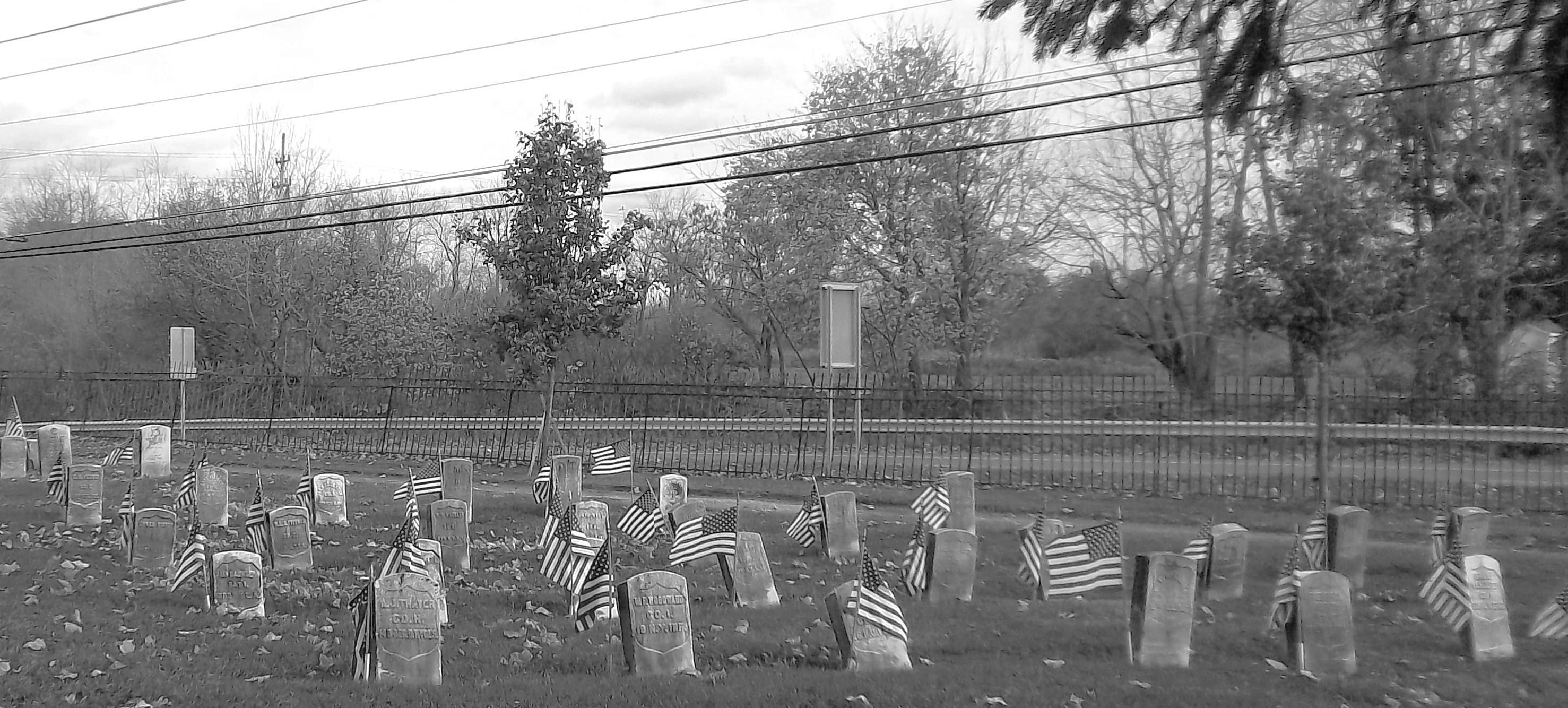
Grand Army of the Republic - Seneca Falls, NY 10.31.2010

Today I’d like to honor all our veterans from all our wars. I was never a member of our armed forces – I never laid it all on the line for our nation.

I respect all the men and women who have responded to their sense of duty and decided to serve their country.

The American Civil War is a good example of people who had respond to their sense of duty. They couldn’t temporize – they had to make a decision about where they stood on the issue of the southern secession. Nowadays Americans often act proud of their individual states, but in 1861 that feeling sure seemed more important, especially in the South. It was a historical thing. One theme in the Constitutional Convention of 1787 was how much state power to relinquish to the federal government.

George_Henry_Thomas

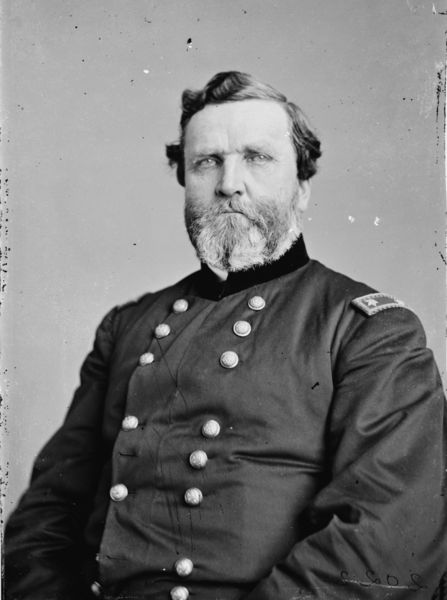
George Henry Thomas

Robert E. Lee and George Thomas were both Virginians who were also career U.S. Army – they both fought for the Americans in the Mexican War. As the Wikipedia article about Thomas points out (see above link), Lee and Thomas became close friends during the early 1850’s while they served at West Point.

When the war broke out they made different decisions. Thomas was excoriated for his decision to fight for the North. The Wikipedia article says that in response to Thomas’ decision, “his family turned his picture against the wall, destroyed his letters, and never spoke to him again”.

Lee’s decision was anguishing as shown by his resignation letter to Winfield Scott and a letter to his sister.

From Lee’s letter to his sister:

With all my devotion to the Union, and the feeling of loyalty and duty of an American citizen, I have not been able to make up my mind to raise my hand against my relative, my children, my home. I have, therefore, resigned my commission in the Army, and save in defense of my native State (with the sincere hope that my poor services may never be needed) I hope I may never be called upon to draw my sword. (as reproduced at The Civil War)

That seems so poignant to me. I’m no warrior, but I’d like to believe I’d defend my family and friends. From Lee’s perspective, if he remained in the U.S. Army he would have to attack his family and his State. I think of the Alabama Freemen who resisted a military tax before Alabama seceded, but guaranteed their fellow citizens they’d be in the fight if their state were threatened.

So, how to honor our veterans? I’ve learned more about the election of 1860. Citizens were highly engaged in the political process – there were Wide-Awakes and Little Giants. And Minute Men formed when their states seemed threatened.

For the most part I agree with U.S. Grant’s assertion in his report from Shiloh that the United States has “the best government ever devised”. I think citizen engagement is important for that to be true. It seems the blogosphere is helping with that.

I can try to listen to my sense of duty as a citizen; vote according to my knowledge and conscience.

I can breathe some pretty free air and appreciate today.

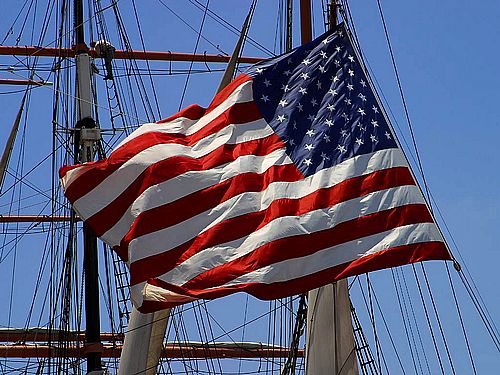
american-flag

Posted in Uncategorized | Tagged , , , , | Leave a comment

Possible Rebellion – Against Alabama

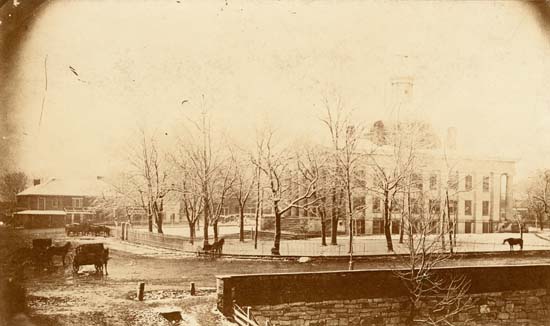
Old_Madison_County_Courthouse_1860

Madison County Courthouse 1860

According to The New-York Times the government of Alabama was making plans for a possible “Black Republican” victory in the 1860 presidential election at least 9 months earlier. Some freemen did not take kindly to what they viewed as unlawful taxation.

The New-York Times. November 9, 1860:

Taxation for Disunion Resisted in Alabama

Last Winter the Alabama Legislature passed a bill authorizing a tax of $200,000 to be raised to defray the expense of arming the State, and giving the Governor power to appoint two Commissioners from each county, with power to determine the course which the State should take in the event of the Lincoln election. The tax-gatherers of Alabama are now collecting this tax from the poor and rich alike in that State; and a portion of the citizens of Madison County, Ala., have assembled together, and solemnly resolved to resist its collection. Here are their resolutions:

Resolved, That we, as freemen, abhor the Military Law passed by our Legislature, and now, in this public manner, denounce the law as unconstitutional and subversive of our liberties as freemen.

Resolved, That we will resist this military tax by all lawful means, let it be attempted to be enforced in any manner or shape.

Resolved, That we recommend to all citizens and freemen of the State of Alabama to do as we have done — take in bold and legal stand against the enforcement of this Military law.

Resolved. That when our State requires our property and lives in defence of what we may consider her honor and the safety of her citizens and their property, we will freely give both; but we are not willing to surrender up our property, liberty and lives to an unconstitutional and intolerant act of our Legislature.


Sometimes I fall into the trap of thinking of the war as a unified South versus a unified North, even though this obviously wasn’t true. Ever since I was a little kid I knew the idea “brother fought brother”. There were draft riots in New York; McClellan ran against Lincoln in 1864.

Since I started working on this blog I’ve found out even more about how diverse opinion was in both sections. In the South there were the rabble-rousing fire-eaters and the plantation class with their vested interest in their black “property”; but there were also people like these freemen, who were not ready to jump on the secession bandwagon, especially if that meant giving in to what they considered an unconstitutional military law.

The first thing I thought about when I read this was the Shelby Foote YouTube video I learned about from other Civil War sites (I kind of jumped on that bandwagon) In that video Mr. Foote tells the story of the union army capturing an obviously poor rebel soldier who owned no slaves and who had no interest in great constitutional issues. When asked why he was in the Southern army, the rebel replied, “I’m fighting because you’re down here.”

I have not learned yet what happened with the Alabama Freemen’s protest, but based on their last resolution it would seem that when the war started and the Union army advanced they would have definitely been in the fight to protect their state.

As always, I’m interested in what you think. Thanks

Posted in 150 Years Ago This Week, The election of 1860, Uncategorized | Tagged , , , | 1 Comment

Wide-Awakes Celebrate; Minute Men Expand

I’ve definitely been learning about how many political organizations were extremely active throughout the country during the 1860 election. The Republican- supporting Wide-Awakes seem to have been everywhere in the North with torch-lit processions marching for their man Lincoln.

As the election of Lincoln became almost certain groups of Minute Men formed in South Carolina and throughout the South.

The activity certainly was not letting up at all after Lincoln’s victory. From The New-York Times. November 9, 1860:

Special Dispatch to the New-York Times.

HARTFORD, Thursday, Nov. 8.

At a large and enthusiastic meeting of the original Wide-Awakes, held this evening, it was decided to make the State demonstration on Wednesday evening, Nov. 14, to which every Wide-Awake Republican Club of the State is invited. Several companies from other States will also be present. H.

NEW-ORLEANS, Thursday, Nov. 8.

Placards are posted about the city calling a Convention of those favorable to the organization of a corps of “Minute Men.”

Posted in 150 Years Ago This Week, The election of 1860, Uncategorized | Tagged , | Leave a comment

Lincoln Pumps Fists in Victory? No

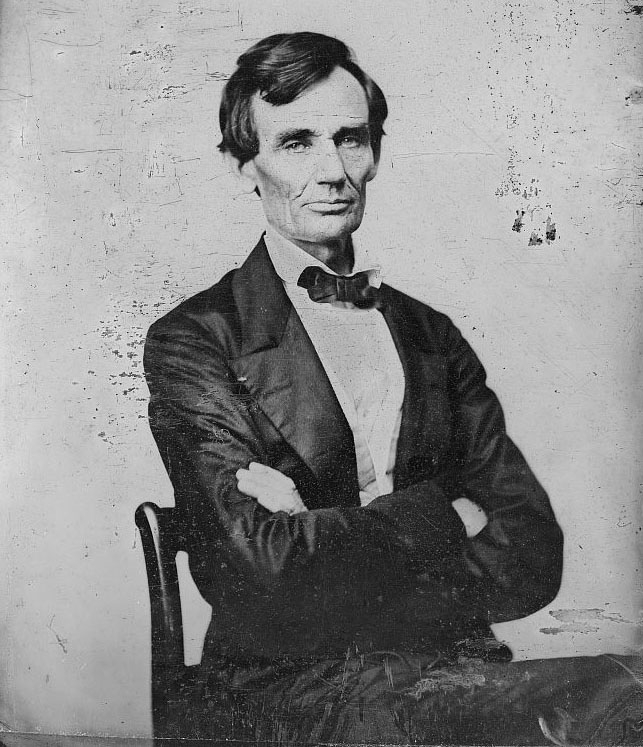
Abraham Lincoln

Not a Fire-Eater

Lincoln’s Reaction to His Election

As other Civil War sites have noted, there was the expected strong and negative reaction to Lincoln’s victory throughout the South. On November 8, 1860, The New-York Times. published a report from the President-elect’s home about how Lincoln spent the last couple days and to see if he had any words about future plans for his administration. Here are some excerpts:

Special Dispatch to the New-York Times.
SPRINGFIELD, Ill., Wednesday, Nov. 7—6 P.M.
Mr. LINCOLN has not yet given any public intimation as to the policy of his Administration. I have every reason to believe that he will not depart from the usual custom of newly-elected Presidents. In answer to all inquiries as to what will be his course, he asks, “Have you read my speeches?” If the question is still pressed, he quietly hands over one of the pamphlet publications of his speeches in the late controversy with Mr. DOUGLAS. …

That Mr. LINCOLN is a man of sufficient ability and nerve to meet any exigency, is conceded by all who know him. I believe, from what I see of him here, that he will prove a second JACKSON— only more so. When he thinks proper to make a pronunciamiento, you may depend upon it he will do so. …

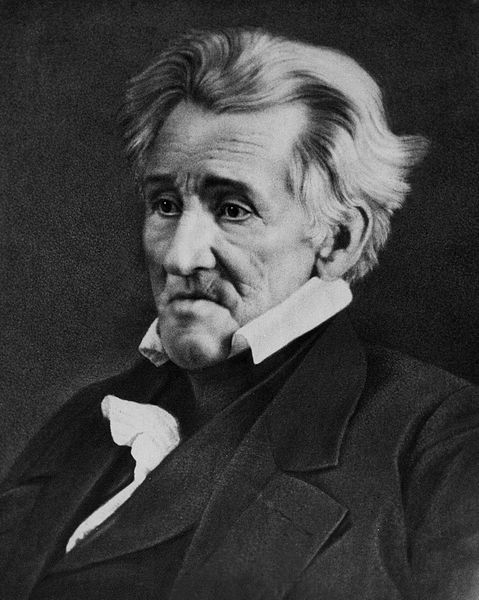
Andrew Jackson, 1845

The template

Mr. LINCOLN spent most of election-night in the Telegraph-office, where he heard returns and received private dispatches with a most marvelous equanimity. Those who saw him at the time say
it would have been impossible for a bystander to tell that that tall, lean, wiry, good-natured, easy-going gentleman, so anxiously inquiring about the success of the local candidates, was the choice of the
people to fill the most important office in the nation. Even during election day and night, Mr. LINCOLN was about town attending to his business as usual. Many of his Springfield acquaintances will long remember how he sat in a social circle at the Cheny House while the returns were coming in, and indulged alike in pleasant chat and his propensity for story-telling.

SPRINGFIELD, Ill., Wednesday, Nov. 7—P. M.
Mr. LINCOLN was this evening captured by a number of his friends who carried him to the Hall of the House of Representatives, where about three hundred citizens spontaneously collected and earnestly but vainly pressed him for a speech. They finally got him in the Speaker’ s chair …

Mr. LINCOLN finally, in a jocular way, took advantage of his position as Chairman, to say that it was customary for the presiding officer to call
some distinguished member to the Chair . He accordingly called Mr.KENT to take his place, and retired through a side door, in spite of vociferous calls for him to speak. O., JR .

So Mr. Lincoln exits stage left (or right). Thankfully he showed up in Washington the next March for his inauguration. For a good overview of why the four months between Lincoln’s election and his inauguration were dicey for the country check out The American Civil War and its article about the disunion sentiment in the Buchanan administration.

The word that sticks out for me in The Times report is equanimity. While people in the South were clamoring for war and some Northerners were proclaiming the Union saved (see “Raising the Red Flag” in Civil War Daily Gazette) Lincoln was quietly handing out his speeches to show his intentions. That also showed that Lincoln would live up to his words.

I was a bit surprised when The Times correspondent likened him to Jackson because I don’t think that Jackson was known for his equanimity. But I know the correspondent was talking about Lincoln being strong and decisive and speaking when it was necessary, in his opinion, for the good of the nation.

Can you imagine a victorious politician nowadays refusing to give the media a nice juicy soundbite? Instead, “here’s my speech from two years ago.” By the way, The Times did excerpt some of Lincoln’s speeches in the same November 8th issue.

Posted in 150 Years Ago This Week, The election of 1860, Uncategorized | Tagged , , | 3 Comments

Cotton Piled Up from Memphis to Vicksburg

In 1860 the presidential election was held on November 6th. One of the Headlines from The New-York Times. that day sure sounded ominous:

Immediate Secession Recommended by the Governor of South Carolina.

The Times carried a lot of news from around the South that day. Not by any means were all Southerners in favor of secession, but the fire-eaters were sure fired up. Here’s just one example (The New-York Times. November 6, 1860):

A letter written by Senator IVERSON, of Georgia, is being extensively circulated here and hereabouts. In
it he denies that he ever recommended the slaughter of every man who should accept office in the South under LINCOLN’S Administration, but explains that any Southern man who would accept office from a Repubican President would be no better than a Black Republican, and ought to be condemned and ostracised by universal public sentiment, C.M.

Earlier C.M. started his post his way:

JACKSON, Miss., Saturday, Oct. 27.
I write this in one of the high places of the fire- eaters; hear their boastings of independence in trade and commerce, and listen to their threats directed against the much-belied Northern States, and
yet, around us, while these very boasts are uttered and threats are fulminated, there are direct evidences in the want of pecuniary assistance, in the scarcity of food and in the low price of cotton and negroes, to the contrary of them all.

Business has already received a severe shock caused by the speculations of sharpers upon the exaggerated fears of their fellows. A majority of the banks of the South are now advancing upon cotton bills due North after the day of election. Cotton is piled up on the
river bank all the way from Memphis to Vicksburg. In some instances much cotton remains unpacked in the field, and this in a season of short crop, because the owners will not invest in more slaves than they now own. Add to all this the fact that in the gulf
States, as I am told, there is not enough corn or bacon for the slave population beyond March 1st. Then must be noticed the fact that the State government and the agricultural associations are the one by furnishing arms and the other by the offer of prizes, endeavoring
to excite the military spirit of the young men among country, and a still more disenheartening condition of things is presented.

This C.M. correspondent is basically previewing one of the major themes of the Civil War: Southerners were eager to defend their sense of honor and their states, but the underlying weakness in their economy eventually caught up with them. Maybe the cotton laying along the river was caused by the uncertainty over the election and its aftermath. Maybe once the Confederacy was established with its own currency things got better for awhile. I don’t know. It’s remarkable that the agricultural associations were offering prizes to excite the military spirit in young men if cotton was laying in the fields and along the river. You might think they needed to get the cotton to market.

Of course, we’ve got the advantage of 150 years worth of hindsight.

More

One of the things I learned at Seven Score and Ten is that political parties handed out election ballots before the 1880’s. The November 6, 1860 issue of The New-York Times. shows this was true for Northern Republicans:

The “night before election” was actively spent
at the Republican Central Campaign Head Quarters,
not in making or hearing Speeches, but in distributing
Tickets for deposition in the ballot boxes to-day.
From an early hour the crowds dropped in by scores,
fifties, and hundreds, procured their tickets and departed, and till about midnight, they still continued to call on the same great errand, as they esteemed it, for their country’s good.

Thanks for any comments.

Posted in 150 Years Ago This Week, The election of 1860, Uncategorized | Tagged , , | Leave a comment

Diogenes Campaigns for Lincoln?

The More things Change …

We have mentioned that on November 2, 1860 there was a huge Republican rally in New York City. William H. Seward was the main speaker. The Wide Awakes were understandably a big part of the event. It seems that one of the functions of these paramilitary organizations was to escort the candidates throughout their cities. For example, after Seward’s speech the Wide Awakes escorted Seward from the Palace Garden to the Astor House.

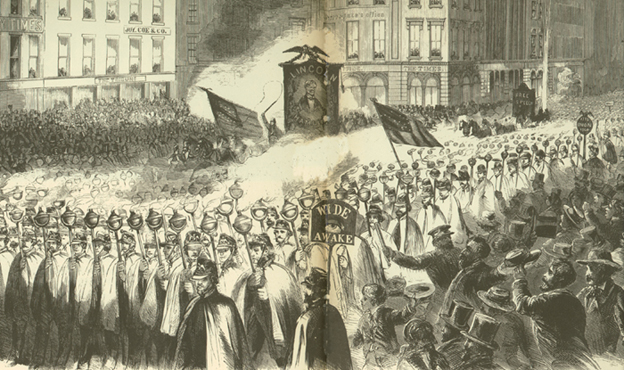
The Wide Awakes were all over the city on the night of Seward’s speech. The marched in Brooklyn; they were attacked by Fusion supporters in Manhattan. Here’s a part of the description of the Manhattan activity on November 2nd (from The New-York times. November 3, 1860):

THE TORCH-LIGHT DEMONSTRATION.
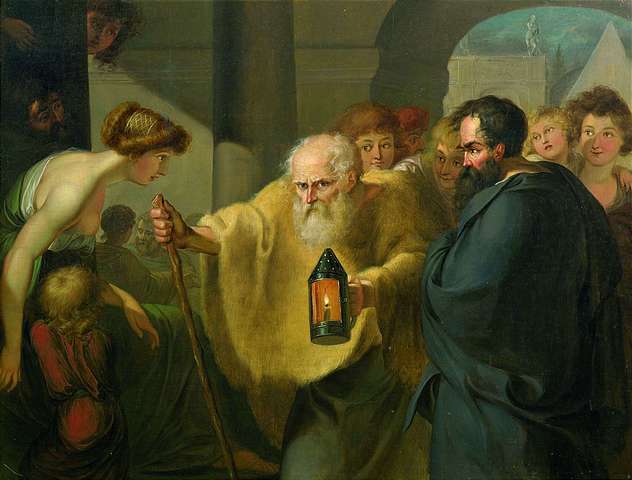
We are told that DIOGENES once indulged in a solus
search through the streets of Athens, with a lantern in
his hand, for an honest man. A resuscitated Greek
in our City last evening might have thought that
several thousand peripatetics had taken up the search
which the old Cynic abandoned in disgust. He would
have been fortified in this opinion by the fact that the
noctivigant gentlemen with torches confined their
guest to the upper part of the City, not looking in the
vicinity of the City Hall, nor approaching within
several Roman-candle shots the purlieus of
Wall-street . But the resuscitated Greek would
have been mistaken in his conclusions. The
illuminated gentlemen were simply vigilant Wide-
Awakes, desirous of proving that they were not
sleepy on the eve of election.

Diogenes looking for an honest man

Ahh, finally! Honest Abe!

Wide-Awakes Procession

Avoiding City Hall and Wall Street

Some things about the Civil War era seem so old-fashioned. How many modern journalists would allude to Diogenes in a report about an election campaign? (How many modern students learn about ancient Greece?) Then some things seem so strikingly modern. As far as I know, Tammany Hall no longer runs New York City, but it seems that many Americans are at least wary of government. There have been numerous government scandals throughout my lifetime that would make that wariness understandable. And certainly there has been dishonesty associated with Wall Street the past few years.

Thank you for your comments.

Update

I found out yesterday there actually is a painting of Diogenes and Lincoln. It was done by Solomon N. Carvalho in 1865. You can view it at Jewish-American History Foundation. It is part of the collection at The Rose Art Museum at Brandeis university

Posted in 150 Years Ago This Week, The election of 1860 | Tagged , | 1 Comment

800 Irish Laborers Disappear!

There is an interesting post at Seven Score and Ten about possible fraud in Louisiana during the 1860 presidential election. The fire-eating “Yanceyites” were apparently trying to to fake-out supporters of Bell, the candidate of the Constitutional Union party.

Similar concerns were expressed elsewhere in the country. In the November 1, 1860 issue of The New-York Times. the Washington correspondent is less concerned about fake ballots than with ballot stuffing. An excerpt:

The Republicans and Wide-Awakes of your City
should look out for an influx of squatters from all
quarters who will go to New-York to vote the Fusion
ticket. I am informed that some eight hundred Irish
patriots have suddenly disappeared from this city,
and there is every reason to believe that they have been
sent to New-York. Such a dearth of laborers at this
point was never known before. Look out for the most
unheard of frauds and perjuries. The Slavery propa-
gandists and their Northern menials are desperate,
and will scruple at no depth of corruption which may
be necessary to defeat LINCOLN in New-York. That
State is their last hope. They have the impudence to
say that the City may be carried by sixty thousand
majority, and I have no scruple in avowing the
shameless bribery by which the foul work is to be
accomplished.

During the first part of the 21st century there has been quite a lot of news about possible voting irregularities.

There were some allegations of voter fraud during this year’s election (2010). A woman in Nevada claimed that her ballot had been filled out ahead of time. The Nevada election official suggested that the issue was common but may more prevalent with senior citizens. That got my back up a bit – I had a problem voting this year, too. New York State recently went from a mechanical lever machine to a system in which the voter fills in circles (like standardized tests) on a ballot and then inserts the ballot into a reader. When I inserted my ballot Tuesday the reader spit it back out and it landed on the floor. My first thought was that Big Brother was dissatisfied with my choices. However, on the second try the ballot seemed to stay in the machine.

Also, I did not notice an influx of Irish laborers this year.

I’m not trying to downplay serious allegations of voting fraud, but I try to get a kick out of quirky things that happen to me.
I look forward to your comments. Thank you.

Posted in 150 Years Ago This Week, The election of 1860 | Tagged , | 1 Comment

Seward Refuses Obeisance to King Cotton

William_Henry_Seward_-_edited

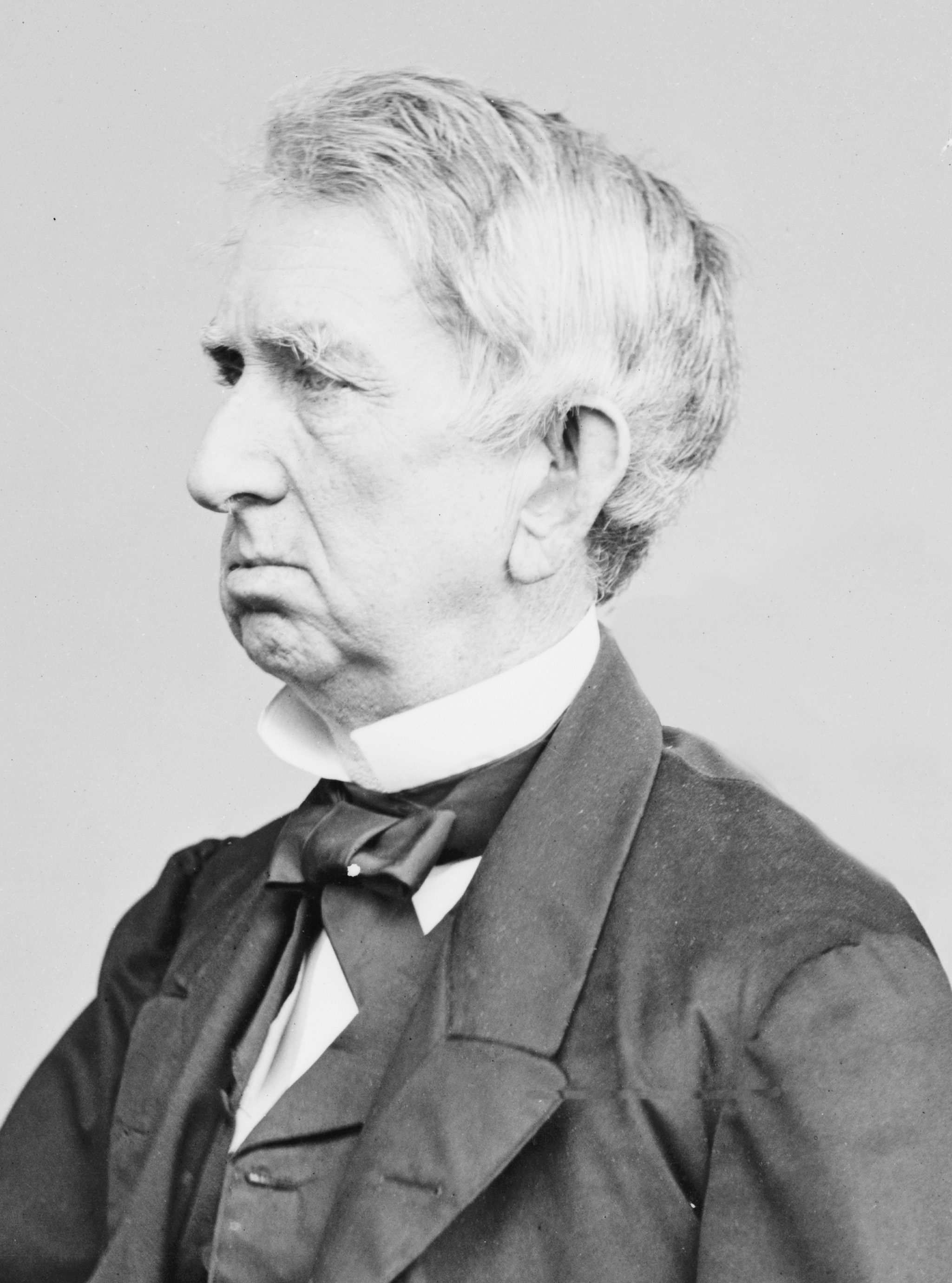
William H. Seward

William H. Seward, a Republican U.S. senator from New York, was hitting the campaign trail hard during the week before the presidential election of 1860. On October 30th he spoke before 15,000 people in Lyons, New York, a small town in Wayne County. The next day Seward spoke to another huge gathering (between 15,000 and 20,000 people) in Seneca Falls, New York. During his hour and a half speech he gave an overview of the slavery issue. Apparently there were too many Little Giants in Seneca County because toward the end of his speech Seward leaned on the audience to forgo its Democrat party tendencies as he ridiculed the split between the the Douglas and Breckinridge factions: “Where is your Democratic Party now? You had one a year ago, and then six months ago you had two.” [Loud cheers and laughter.] (The New-York Times. November 2, 1860)

On November 2nd Seward spoke at a huge event at the Palace Garden in New York City. There were so many people at the event that three stands were set up outside the main hall. Various substitute speakers spoke at these stands. Here’s an excerpt from Seward’s address from The New-York Times. November 3, 1860:

Then the Slave States, retaining their slave labor,
proceeded to build up a great interest on the growth
of cotton, and when they had grown cotton, and
made it a great material interest in the country, they
then fell down before it, and did homage to it. I do
not say they paid worship to it, but they anointed it
King [laughter,] and they pronounced allegiance to
cotton to be a political duty. Did anybody interfere
with that homage? Did anybody complain of it?
Never! They were men at liberty, like ourselves,
to raise a commercial and political king—a social
king—within the Republic. But they set up the
throne in our midst, and said that we must bend and
bow before it too. [Laughter.] But from that requirement we have modestly but firmly—not always very firmly, neither [laughter]—but with tolerable persistence, declined to comply. Now they find that their system does not build up
great States like New-York, but on the other
and that the six States which pursued
their system have remained stationary, or relatively
so. The greatest and finest site for commerce on this
continent is New-Orleans, and in early life I made a
pilgrimage there to see whether it was not true that
New-Orleans was to supercede and supplant New-
York, the capital of my native State, as the seat of
commerce on this continent . I found that whereas
there were some ten times the population in New-
York that there was in New-Orleans, that it was in-
creasing in a ratio of such magnitude that
when New-Orleans would have a quarter
of a million, New-York would have a
million and a half. Shall I tell you the
reason? I found it in the fact that when I went out
in the night in the City of New-York, I saw the cobbler’s light
twinkling in his window in the gray of the
morning or late at night. I saw everything made, as
well as sold, in New-York; but when I came to the
city of New-Orleans I found there that everything
was sold and nothing was made. …

Fellow-citizens, this is not a reproach. It is not spoken reproachfully, it would ill become me to so speak it.But it is their system. They employ slaves, and in New-York—I was going to say that we “employ,” but I think I will reverse it and say that freemen employ their masters, [cheers,] the manufacturers. This is but an illustration.

Notes

  • Seward stresses the great reliance the South had on agriculture in general and “King Cotton” in particular
  • He plays the politician by flattering his audience of freemen – they employ the manufacturers
  • And he plays to the pride of the New York City residents: I was surprised that Seward, a U.S. senator from New York and one-time governor, would declare that New York City was the state capital. Albany is the capital. In some ways, it does seem that New York is the de facto state capital. For example, this past Tuesday Andrew Cuomo celebrated his election as governor of the state in New York City.
  • Civil War Home has an interesting article that might indicate when Seward was first introduced to King Cotton.
  • For a brief history and picture of New York’s old Palace Garden check out Vintage World
  • The complete Seward speech in Seneca Falls is reproduced at The New York Times Archive
  • I just found another reference to the “Little Giants” during the 1860 campaign at The New York Times Archive. On September 20 the Little Giants in Buffalo were part of the welcoming committee when Douglas arrived from Niagara Falls. By the way, it’s interesting to me how short a period of time the Erie Canal was dominant. The locks of Lockport were a major engineering feat during the construction of the original Erie Canal (completed in 1825). According to The Times 2,000 people from Lockport arrived at Douglas’ Buffalo event by “special train”.

As always, I look forward to your comments. Thanks!

Posted in 150 Years Ago This Week, The election of 1860, Uncategorized | Tagged , , , | 1 Comment

Minute Men Proselytize Memphis

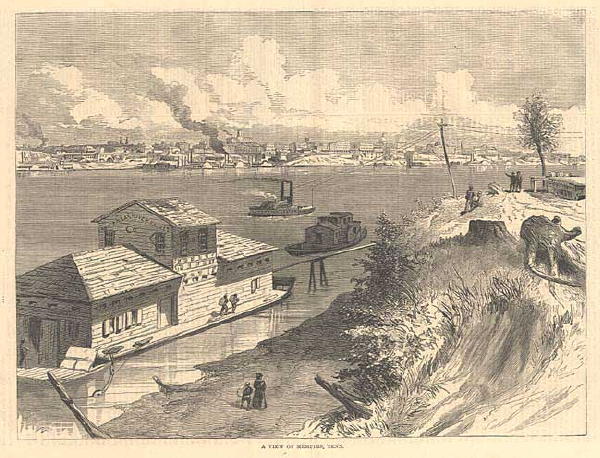
memphis1871 Harpers

Memphis 1871 from Harper's Magazine

I’ve been learning how political groups were formed during the highly contentious election of 1860. Wide-Awakes for Lincoln; Little Giants for Douglas. Recently I posted an excerpt from The New-York Times. that described South Carolina’s Minute Men, who organized to defend their state because of the impending election of a “Black Republican”. Apparently, even before the election, some Minute Men from South Carolina tried to encourage other Southerners to join the secessionist movement. On Election Day, November 6, 1860 The New-York Times. published this report:

FROM TENNESSEE .
Attempt to Create a Disunion Sentiment –
Opinion of the New-York Fusion.
Correspondence of the New York Times.

MEMPHIS, Tenn. , Tuesday, Oct. 30,1860.
We have some missionaries from South Carolina
among us, in the shape of a brace of “cockades.”
Two of her “minute-men” are here, trying to induce
the sober conservative sentiment of Memphis to belie
itself and join in a revolutionary movement, to be
started when the Disunionists of South Carolina shall
tap the drum. Last evening a meeting was held, when
about half a dozen infatuated individuals agreed to
join the treasonable organization. Upon the strength
of this, at least one of the representatives of Carolina
got “boozy,” and seeming to have money to spare, he
hired him a band of music and serenaded certain
Breckite politicians. The result was a number of
speeches, including three from a Mr. SHILMAN, or
HILMAN, who, being frequently interrupted on the oc-
casion of his last effort, by loud cries of “Hurrah for
Bell,” and ” Hurrah for Douglas,” thus expressed
himself:
” I hate JOHN BELL (uproar)—I despise JOHN BELL.
I despise DOUGLAS. (Uproar renewed.) I love JOHN C.
BRECKINRIDGE and Gen. LANE. They are the only
men in the country worth a cent.”
The noise here greatly increasing, he hallooed out:
“Band, for God’s sake, give us a tune—’Hail Co-
lumbia,’ ‘Yankee Doodle,’ ‘Dixie,’ or any other na-
tional air.”
The band played, poorly enough, “Dixie,” and the
crowd dispersed, leaving the worthy hater of JOHN
BELL discoursing learnedly upon ” constitutional
right.”
The New-York Fusion is everywhere spoken of as
he only hope of these Southern sectional agitators,
and yet their denunciations of it should warn Northern
men of the danger of entering into its support . No-
body here speaks of it with confidence in its result to
their benefit. All denounce the men who are engaged
in it as partners in an “unholy alliance.” They love
the treason, but the traitors they despise. …

Links and Thoughts

Blue Cockades

Wearing the Blue Cockade

For a very good overview of the use of cockades in the South after Lincoln’s election check out the article by Brian Koenig at CJ Daley eNews.

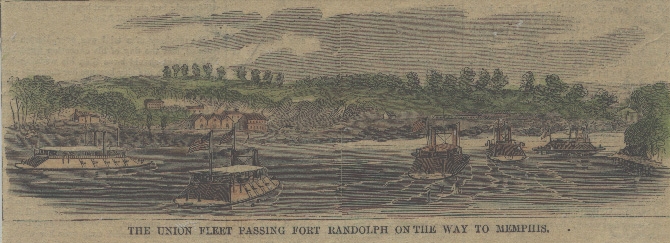
I got the Harper’s Magazine photo of Memphis (across the river) at TN History for Kids!. This is a great one-page review of Memphis history. Did you know that Randolph, Tennessee originally challenged Memphis as the most important Tennessee city on the Mississippi river? When Memphis got the railroad line, Tennessee farmers brought their cotton to Memphis, which then took off in its growth. Union troops destroyed most of Randolph during the Civil War. According to Wikipedia’s article on Randolph, TennesseeGeneral William T. Sherman ordered the place burned down the first time in 1862 in retaliation for a guerrilla attack.

Randolph_TN_Union_fleet_passing_Ft_Randolph

Union Fleet at Ft. Randolph

Memphis Memories has other historical photos of Memphis, including an 1895 postcard showing bales of cotton at the Public Landing.

It’s interesting that a South Carolina Minute Man on October 30, 1860 would consider “Hail Columbia”, “Yankee Doodle”, and “Dixie” national airs. Less than two months later South Carolina seceded. I’m not sure about “Hail Columbia”, but “Yankee Doodle” was probably an enemy air after that. I was not familiar with “Hail Columbia”, so I looked it up:

As always, I’d appreciate your comments. Thank you.

Posted in 150 Years Ago This Week, The election of 1860, Uncategorized | Tagged , , , , | Leave a comment