irrepressible

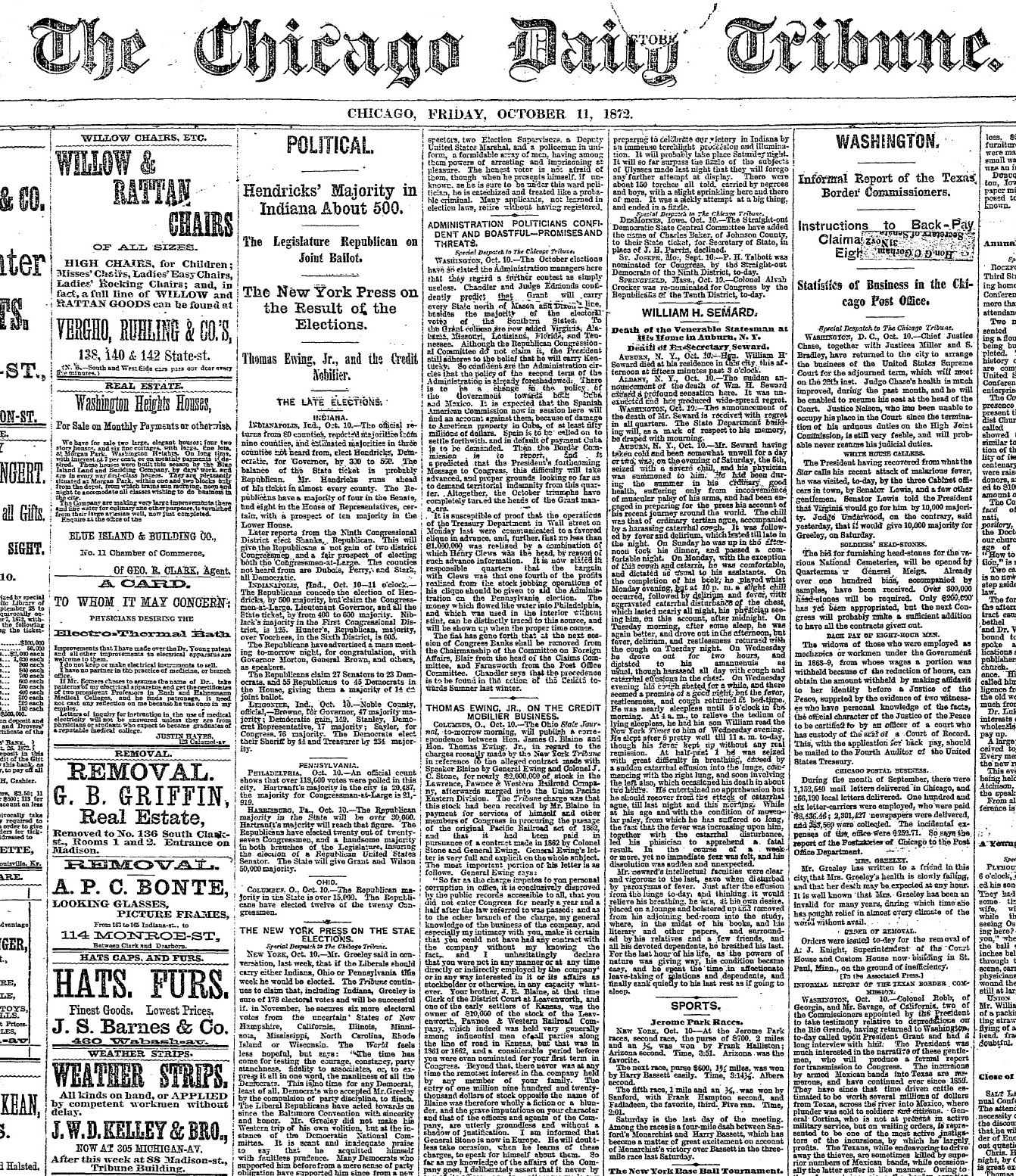
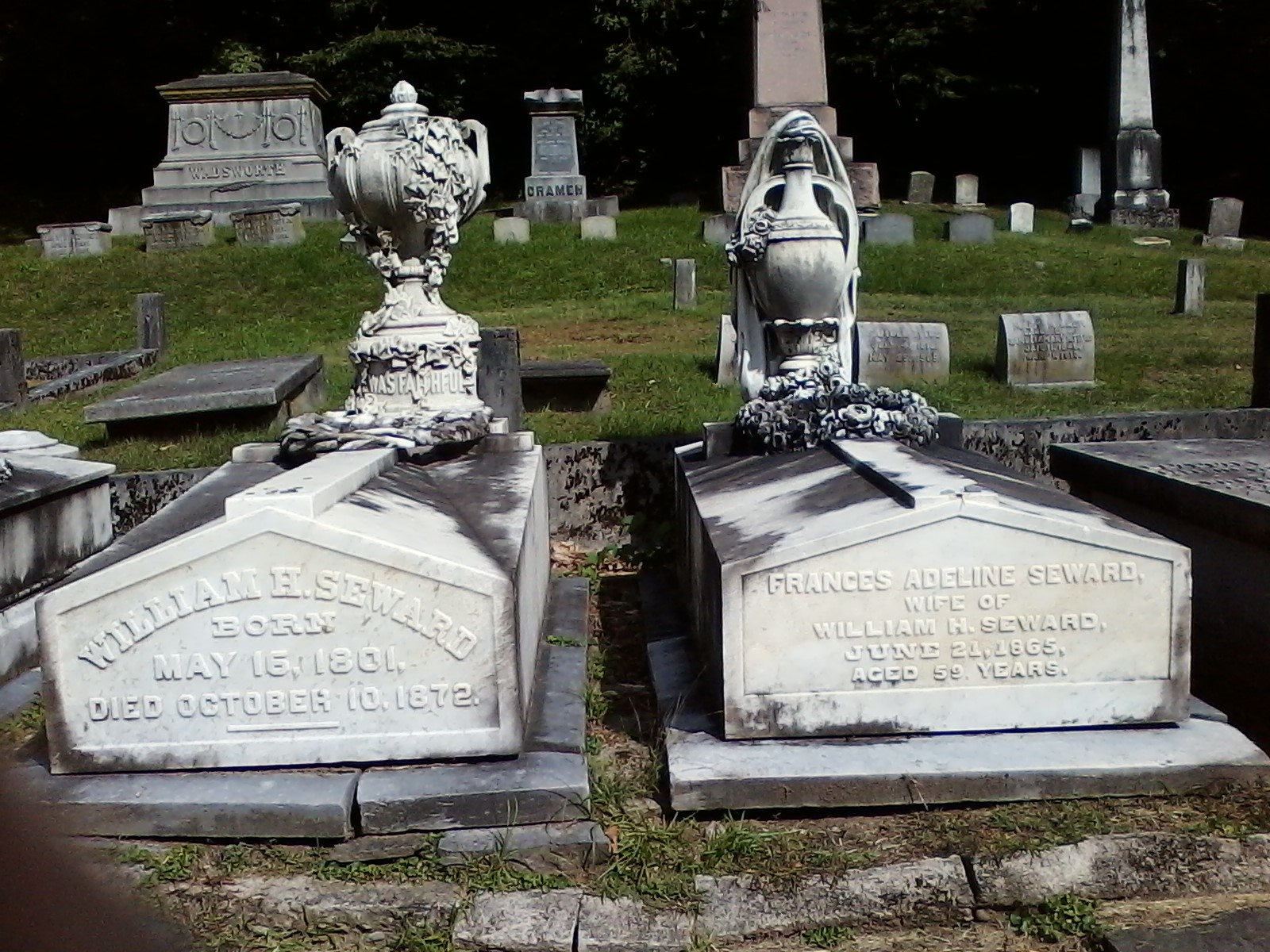
On October 10, 1872 former U.S. Secretary of State William H. Seward died at his home in Auburn, New York. People in the Midwest could read all about it the next day. From the October 11, 1872 issue of The Chicago Daily Tribune:

front page news

WILLIAM H. SEMARD. [SIC]

Death of the Venerable Statesman at
His Home in Auburn, N. Y.

Death of Ex-Secretary Seward.

AUBURN, N.Y., Oct. 10.-Hon. William H. Seward died at his residence in this city this afternoon at fifteen minutes past 3 o’clock.

ALBANY, N. Y., Oct. 10.—The sudden announcement of the death of Wm. H. Seward caused a profound sensation here. It was unexpected and has produced wide-spread regret.

WASHINGTON, Oct. 30.—The announcement of the death of Mr. Seward is received with regret in all quarters. The State Department building will, as a mark of respect to his memory, be draped with mourning.

AUBURN, N. Y., Oct. 10.—Mr. Seward having taken cold and been somewhat unwell for a day or two, was, on the evening of Saturday, the 5th, seized with a severe chill, and his physician was summoned to him. He had been during the summer in his ordinary good health, suffering only from inconvenience of muscular palsy of his arms, and had been engaged in preparing for the press his account of his recent journey around the world. The chill was that of ordinary tertian ague, accompanied by a harassing catarrhal cough, It was followed by fever and delirium, which lasted till late in the night. On Sunday he was up in the afternoon took his dinner, and passed a comfortable night. On Monday, with the exception of the cough and catarrh, he was comfortable, and dictated as usual to his assistants. On the completion of his book, he played whist Monday evening, but at 10 p.m. a slight chill occurred, followed by delirium and fever, with aggravated catarrhal disturbance of the chest, which lasted nearly all night, his physician seeing him, on this account, after midnight. On Tuesday morning, after some sleep, he was again better, and drove out in the afternoon, but fever, delirium, and restlessness returned with the cough on Tuesday night. On Wednesday he drove oat for two hours, and dictated to his amannenuis as usual, though harassed all day with cough and catarrhal effusions in the chest. On Wednesday evening cough abated for a while, and there seemed a promise of a good night, but the fever, restlessness, and cough returned at bed-time. He was nearly sleepless until 5 o’clock in the morning. At 4 a.m., to relieve the tedium of lying sleepless, he had his son William read the New York Times to him of Wednesday evening. He slept after 5 pretty well till 11 a. m. to-day, though his fever kept up without any real remission. At half-pest 1 he was seized with great difficulty in breathing, caused by a sudden catarrhal effusion into the lungs, commencing with the right lung, and soon involving the left also, which occasioned his death in about two hours. He entertained no apprehension but he should recover from the attack of catarrhal ague, till last night and this morning. While at his age and with the condition of muscular palsy, from which he has suffered so long, the fact that the fever was increasing upon him, together with the catarrhal disturbance, led his physician to apprehend a fatal result. In the course of a week or more, yet no immediate fear was felt, and his dissolution was sudden and unexpected.

Mr. Seward’s intellectual faculties were clear and vigorous to the last, save when disturbed by paroxysms of fever. Just after the effusion from the lungs to-day, and thinking it would relieve his breathing, he was, at his own desire, placed on a lounge and bolstered up and removed from his adjoining bed-room into the study, where, in the midst of his books, and his literary and other papers, and surrounded by his relatives and a few friends, and all his devoted dependents, he breathed his last. For the last hour of his life, as the powers of nature was giving way, his condition became easy, and he spent the time in affectionate leave-taking of relations and dependents, and finally sank quietly to his last rest as if going to sleep.
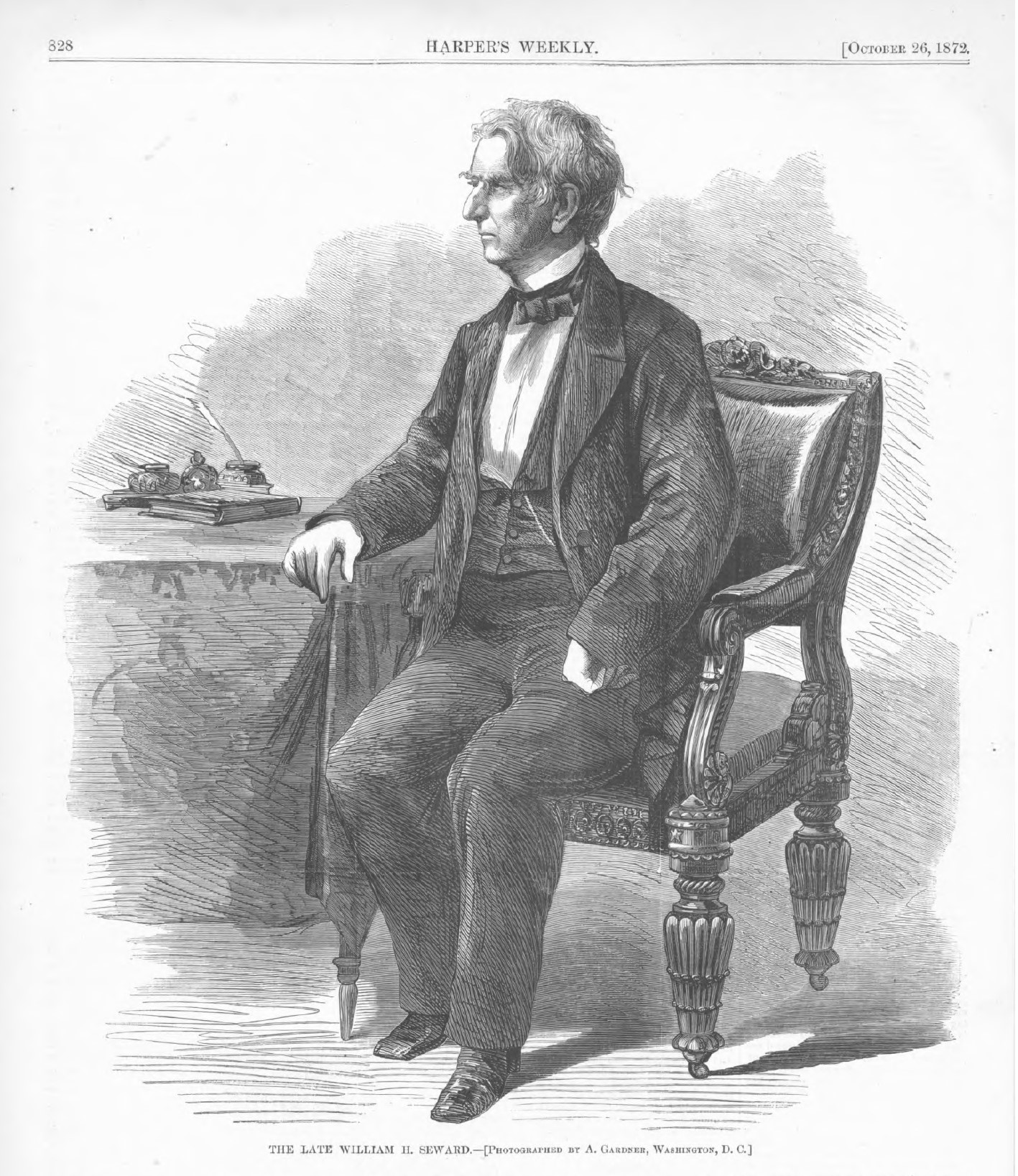
Harper’s Weekly provided two takes on Mr. Seward’s career in its October 26, 1872 issue.

Page 828:

WILLIAM HENRY SEWARD.

THE death of this venerable statesman, who passed away a few days since at his quiet country home, was an event for which the public had been for some time prepared, yet the announcement of his decease came at last like a sudden shock. Mr. SEWARD had lived so long in the public eye, his history was so interwoven with the great events of the last twenty years, that it seems hardly possible to realize the fact that he is gone from among us. He was not a very old man in years: but for physical infirmities, increased by long and arduous public service, and by the assassin’s attack which so nearly deprived us of his great services when we could least spare them, he might have lived many years in the honorable retirement which crowned a public career of nearly half a century, passed in the midst of great events, and devoted to the highest and truest interests of his country.
death of a diplomat

It were vain to attempt, in the meagre space of a single article, to give even an outline sketch of his public life. Nor is it necessary. Mr. SEWARD lived before the eyes of all his countrymen. From the opening of his career until its close he took a prominent part in all the great movements of the day. An early disciple of JEFFERSON and JOHN QUINCY ADAMS, always faithful to the fundamental American principle of equal rights before the law, his public life was conspicuous and illustrious. His trust in popular institutions, in their capacity to right all wrongs, to correct their own errors, to secure the increasing prosperity of a rapidly increasing people by making justice more and more appear to be good policy, was constant and sublime. At one time, indeed, his faith in popular institutions brought him under a cloud. He believed that no government was so strong and persistent as a popular government. He was sure that the American people would not submit to a dissolution of the Union. He believed with Mr. LINCOLN, in the earlier days of the secession movement, that the “irrepressible conflict” between slavery and freedom could be waged under the peaceful forms of law. In this he was mistaken; but his trust in the strength of a popular government, and in the determination of the people to maintain the Union, was fully justified; and the irrepressible conflict ended, as he foresaw it would end, in the triumph of liberty.

not quite

Mr. SEWARD’S temperament inclined him to conciliation, to the settlement of disputes by diplomacy. He was unwilling to draw the sword while a chance remained for securing a settlement without appealing to the stern arbitrament of war. This exposed him to the censure and taunts of others of more ardent and hasty temperament, who yet did not love their country and liberty more than he. His clear perception of the probable scope, duration, and uncertainty of a civil war led him to prefer every honorable means of conciliation to that terrible risk, until that risk was no longer to be averted. It was the fashion among those who differed from him on questions of policy to style him a “trimmer,” a “doctrinaire, ”a“ theorist.” But his great and successful career as Secretary of State during the most trying part of our national history forever set that criticism at rest. On all important points of domestic policy it is known that President LINCOLN agreed with him. That he managed our foreign relations with consummate skill is now universally admitted. The task was never more difficult and delicate; it was never more successfully performed. Now that the clouds of partisan animosity are lifted, and his name and career have become the common pride of Americans, it is clear that at a time of unexampled peril, when other nations would have gladly interfered, he held them aloof, and kept the war from assuming proportions and eventualities which the imagination shrinks from picturing.
It is pleasant to know that Mr. SEWARD lived to see his name and his career vindicated to the judgment of his countrymen. He was not compelled to leave his fame to the next ages. His noble and illustrious services as a public teacher, boldly asserting the original rights and the natural equality of man, at a time when few were ready to stand by his side, have been clearly recognized. His eminent services as a statesman have been fully acknowledged. Every cloud of distrust, of misappreciation, has been riven by the light of accomplished results; the erroneous judgments of impatience and imperfect knowledge have been reversed. In his quiet retirement at Auburn, where his last years were spent in writing the history of his life, he had the supreme satisfaction of knowing that the great work to which that life had been devoted was accomplished; that liberty had triumphed; that the integrity of the Union was assured forever; and he passed away in the happy consciousness of possessing the love and gratitude of his countrymen.
Page 826:

excellent anti-slavery speeches

MR. SEWARD.

“DEATH hath this also,” says BACON, “that it openeth the gate to good fame.” Mr. SEWARD had survived his active career long enough to allow his contemporaries to forecast the judgment of history upon his life and character. A man of great ability and of great sagacity, he lived during great events, and was a conspicuous actor among them. He was the political leader of a moral reform. By temperament an optimist and a doctrinaire, and always intimately associated with men, he won regard by unflagging sweetness and serenity, but he did not command by moral elevation. A statesman by taste and training and ambition, and thrown into the most stormy crisis of the national life, he did not comprehend nor control the deepest force of the situation. He was for many years the most eminent political representative of the anti-slavery movement; but he was drawn to it by personal sympathy and intellectual shrewdness rather than by moral perception or conviction.

A man of the utmost generosity and kindness of heart, the thought of suffering was painful to him—and his defense of the negro FREEMAN showed the depth and swiftness of his sympathy. But he was never technically an Abolitionist. He was a Whig until it was evident that the question of slavery was the really dividing issue, and then he became the advocate of the cause which his shrewd mind showed him must surely triumph. But his optimistic and doctrinaire tendency veiled from him the awful reality of the conflict which in the familiar phrase he described as “irrepressible.” His faith in our popular system was so profound that, with his temperament, he could not believe that it could be seriously assailed; and as he did not comprehend the terrible sincerity of the cause which he represented, he was equally unsuspicious of the grim earnestness of the opposition. In the midst of a speech in the Senate in which with relentless logic he foretold the inevitable disappearance of slavery in the conflict with freedom, he could not understand the faces or the minds of the slave-holders around him, and on one occasion abstractedly put out his hand to Senator BUTLER, of South Carolina, for a pinch of snuff. The Senator handed him his box, but turned away his head, and Mr. SEWARD calmly proceeded, not seeing in that little incident how much more than logic was involved in the debate.

He thought that slavery would be beaten at the polls, and so surrender and peacefully disappear. He smiled at the threats of secession, and believed them to be only moves in a lively political game. In December, 1860, at the New England dinner in New York, he said that the trouble would be over in sixty or ninety days, and he honestly believed it. In his hopeful mind no trouble could last more than ninety days. On the 22d of February, 1861, the flags were flying in Washington, and he said to a colleague, as they walked to the Capitol, “Look at those flags: yet they talk of secession!” And in the same session he believed that his speech would disperse all the lightning of rebellion. From the moment that the civil war began he was bewildered. It was illogical, incomprehensible, a mistake. He fatally misinterpreted its scope in his early instructions to our foreign ministers. But his buoyant temperament floated him above the uproar, and while he clung to M’CLELLAN and opposed the radical policy, he yet believed in success, and never desponded. When the war ended he held the doctrinaire view of the situation. The States had attempted secession. They had failed. Consequently they were as before, with the exception that the war had abolished slavery. Here again he failed to apprehend the fact in his satisfaction with the form. And here, of course, he separated from the party of the war, and his political career ended.

a life of service

His services to the country were very great, and will not be forgotten. His sagacity showed him when the moment had arrived in which the mass of the Whig party in New York would follow a trusted leader into the antislavery path. He seized the moment, and the Republican party presently appeared. From that time his speeches were the most popularly powerful and instructive and effective in the political anti-slavery propaganda. Calm, forcible, logical, clear, and free from vituperative rhetoric, they were a school in which the people gladly learned. After his bitter disappointment in the nomination of FREMONT in 1856 he made a speech at Detroit, which, in its detailed exposure of the manner in which slavery absolutely possessed the government, from every committee in Congress down to every little post-office in the land, was one of the most valuable speeches ever made in the country. And again, after his disappointment in the nomination of Mr. LINCOLN in 1860, his series of speeches in the West, for their variety, force, animation, and power, are entirely unrivaled in political history, except by the Illinois speeches of LINCOLN in his famous debate with DOUGLAS. To these may be added the California and Kansas speeches in the Senate: for the speeches of a statesman, in a free country, are among his most illustrious and valuable services.

two-term Secretary of State

As Secretary of State Mr. SEWARD’S policy was successful, and this fact has perhaps not been adequately recognized. It was an immense service to stay the hand of foreign intervention at that time; and the skillful and masterly correspondence which Mr. ADAMS conducted with Lord RUSSELL was in strict conformity to Mr.SEWARD’S instructions. The Secretary’s letter surrendering SLIDELL and MASON was extremely able. He saved without dispute the honor of his own country while he yielded to the demand of England. In reply to the question what he considered the darkest hour of the war, Mr. SEWARD once said, “That which elapsed between my sending the letter informally to Lord LYONS and hearing from him that it was satisfactory. For I knew that I had gone to the utmost limit that the country would approve, and that if the letter were unsatisfactory to England, we should be at war with her in a month.”

It was Mr. SEWARD’S curious fate to have no part in the crowning triumph of the principles which he had most warmly sustained. By position he was the radical chief before the war, but during its continuance and at its close he was unfriendly to the radical policy. But it is his glory that while WEBSTER and CLAY were strenuous for compromises which were necessarily fatal, SEWARD, remembering BURKE’S question, “Who would barter the immediate jewel of his soul?” nobly said, “I feel the sands of compromise sliding from beneath me, and my feet take hold of the rock of the Constitution.” He had not the weight of WEBSTER nor the grace of CLAY, but his national service was infinitely greater than theirs. He had not their personal magnetism, nor so fond a following; but those who most deeply influence our politics to-day are his pupils, and not theirs. Undaunted in spirit to the last, his life gently ended, and the grave closes over all bitterness of feeling toward him, leaving only the kindly remembrance of his great and patriotic service.

Fort Hill Cemetery in Auburn, New York

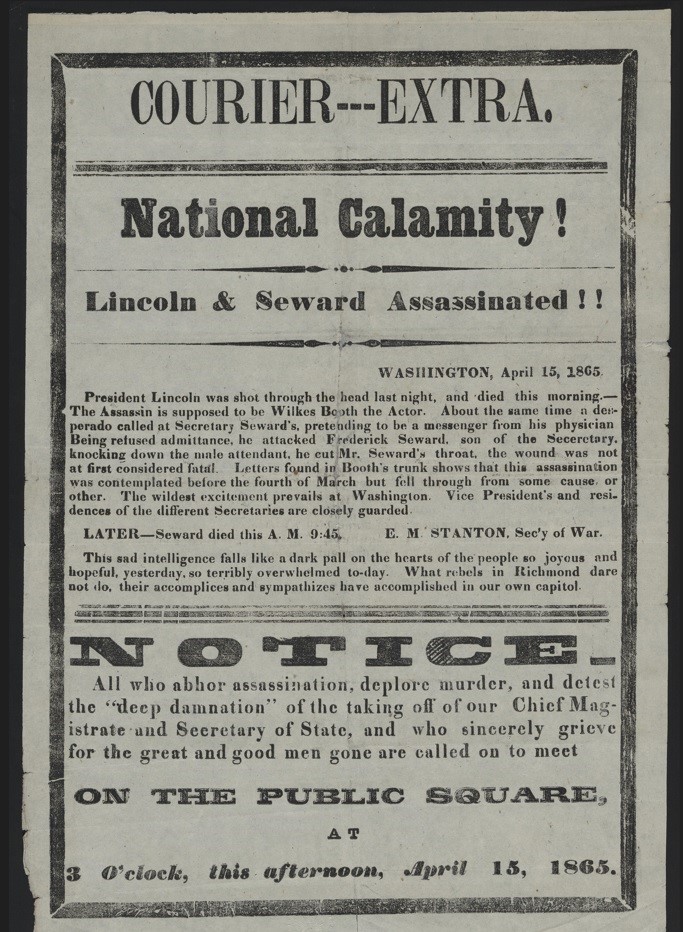
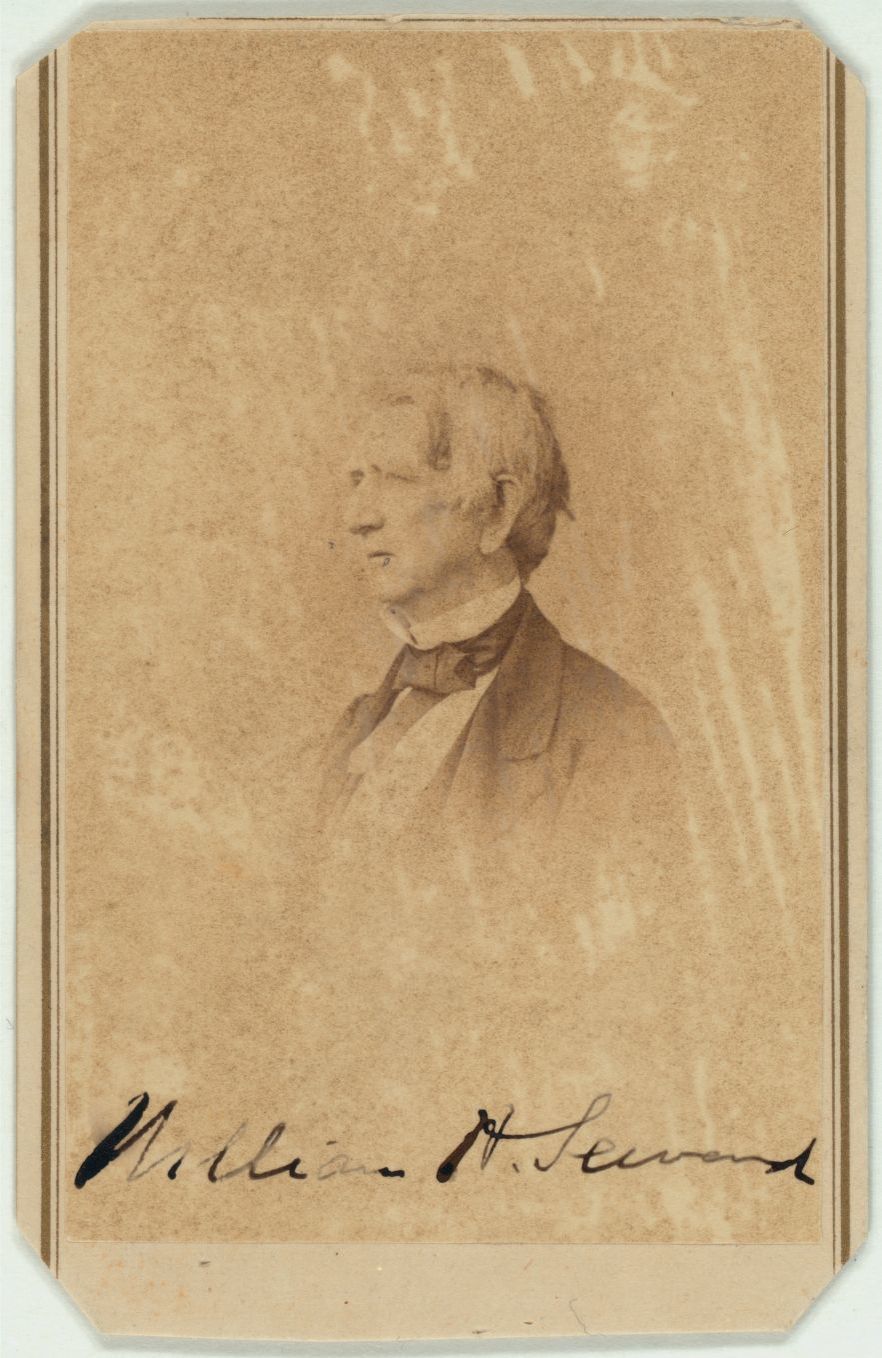
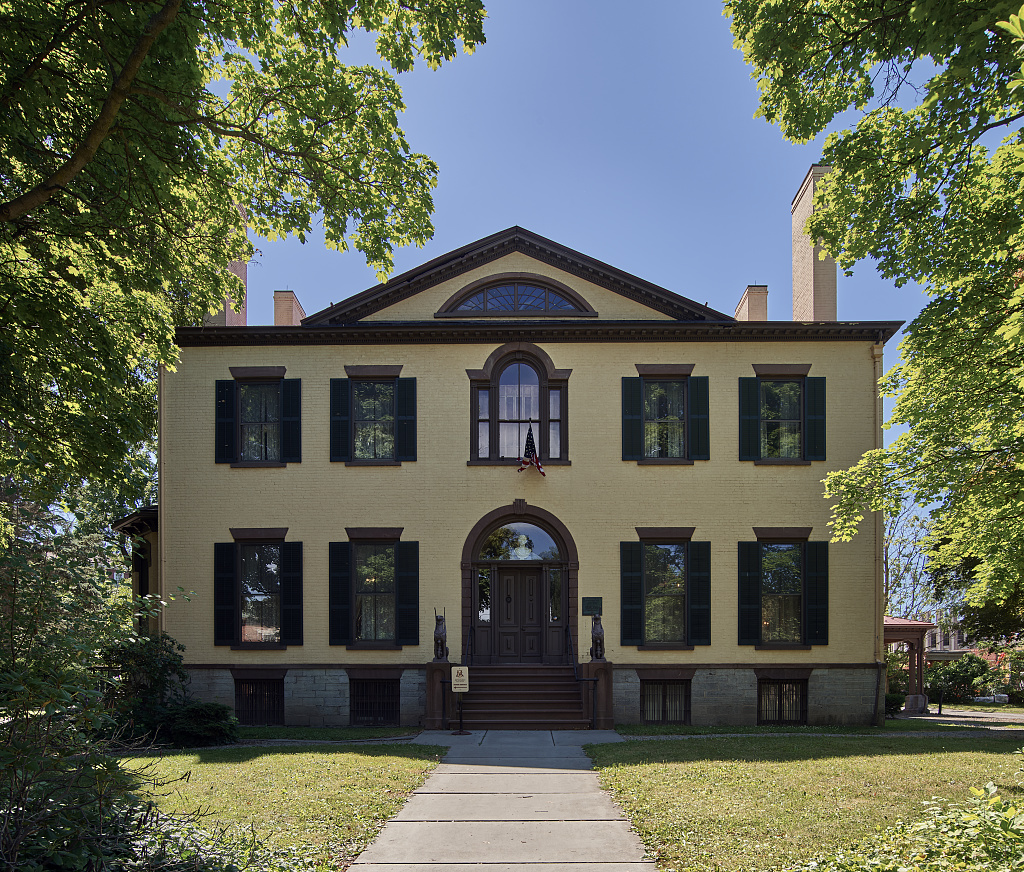
I have a vague memory that one year our elementary school class took a field trip to the Seward House Museum. For a good photograph of William Seward in his final years check out LincolnConspirators. You can read about “The Doctrine of the Irrepressible Conflict” at Accessible Archives.

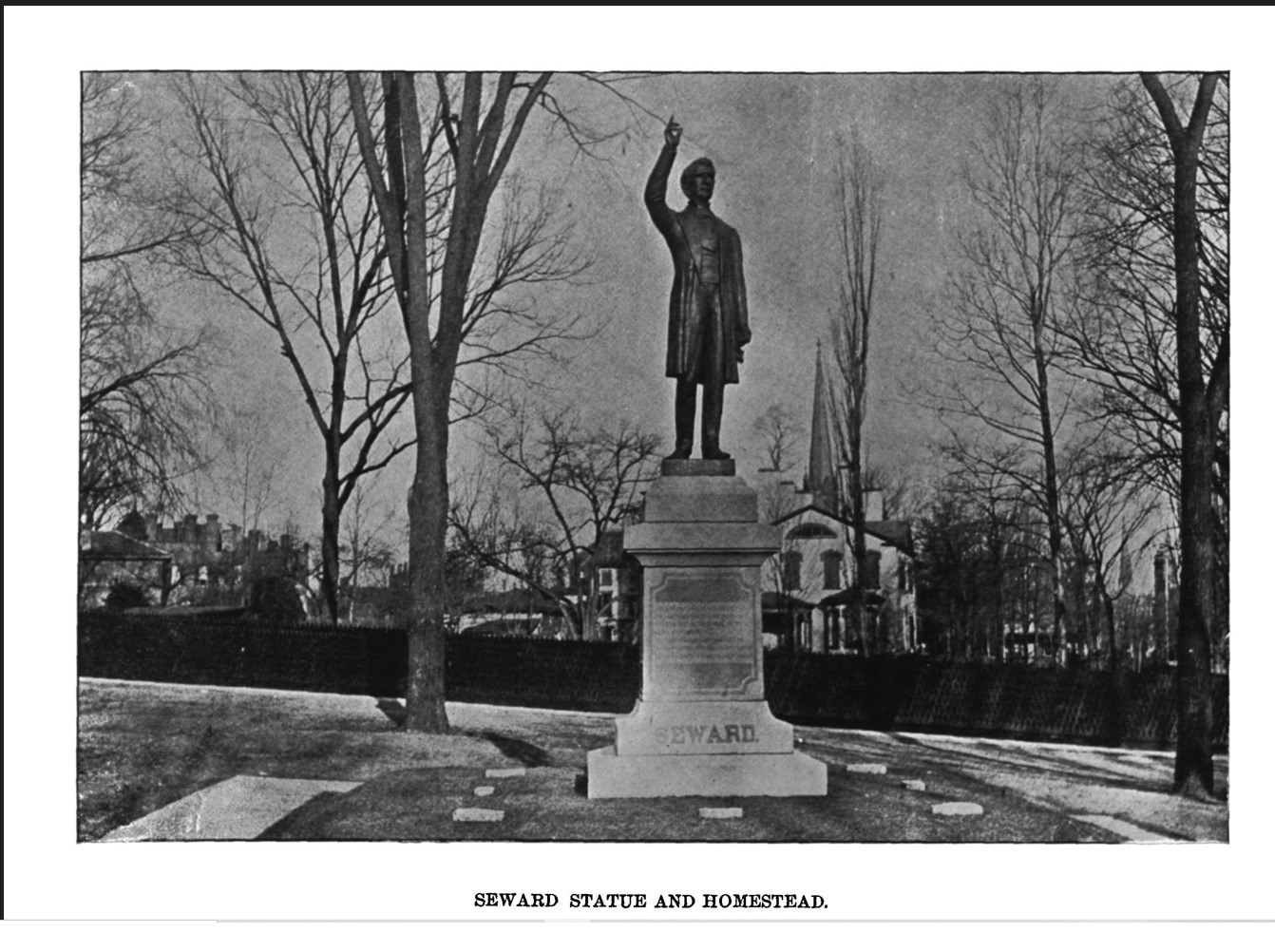
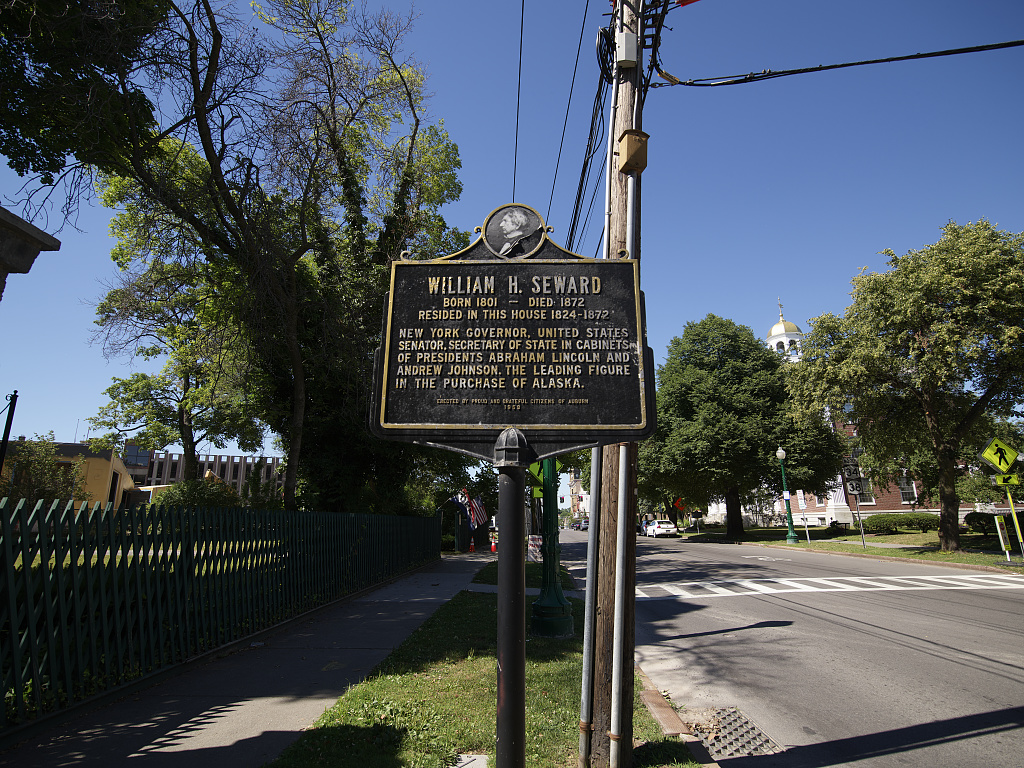
This time I got the Harper’s Weekly content from two sources: Hathi Trust and the Internet Archive. I took the picture of the Sewards’ graves on October 2, 2022. From the Library of Congress: The October 11, 1872 issue of The Chicago Daily Tribune; the Courier-Extra from April 15, 1865; the image of the Seward statue and homestead from A souvenir. City of Auburn in the state of New York 1900 image 32; Alexander Gardner’s carte d’ visite; Carol M. Highsmith’s July 19, 2018 photograph of Seward’s house and the accompanying historical marker

The Seward home,nowadays

Posted in 150 Years Ago This Week, Aftermath, American History, Lincoln Administration, Postbellum Society | Tagged , , , , , , , , | Leave a comment

three parties … two candidates

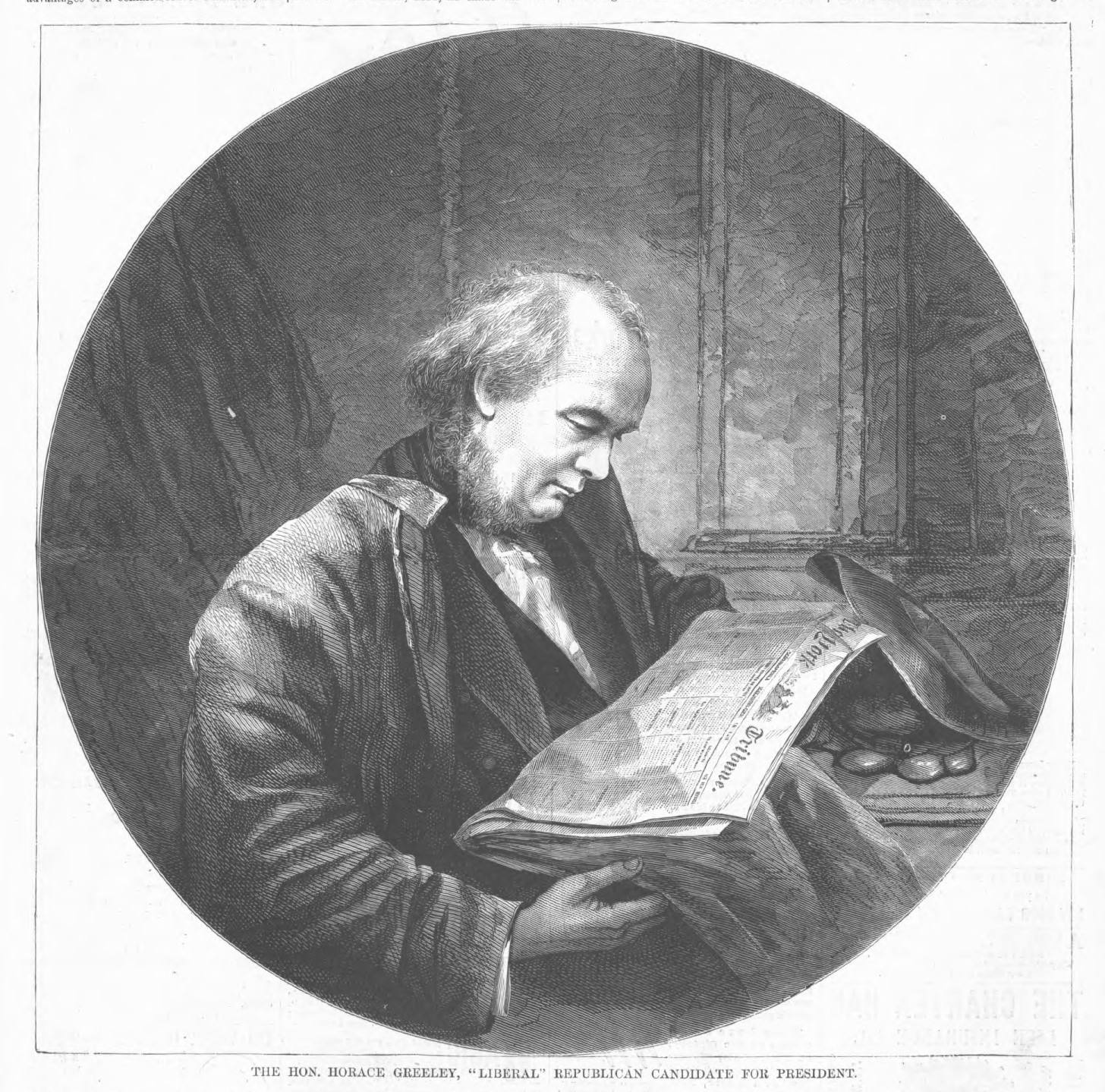
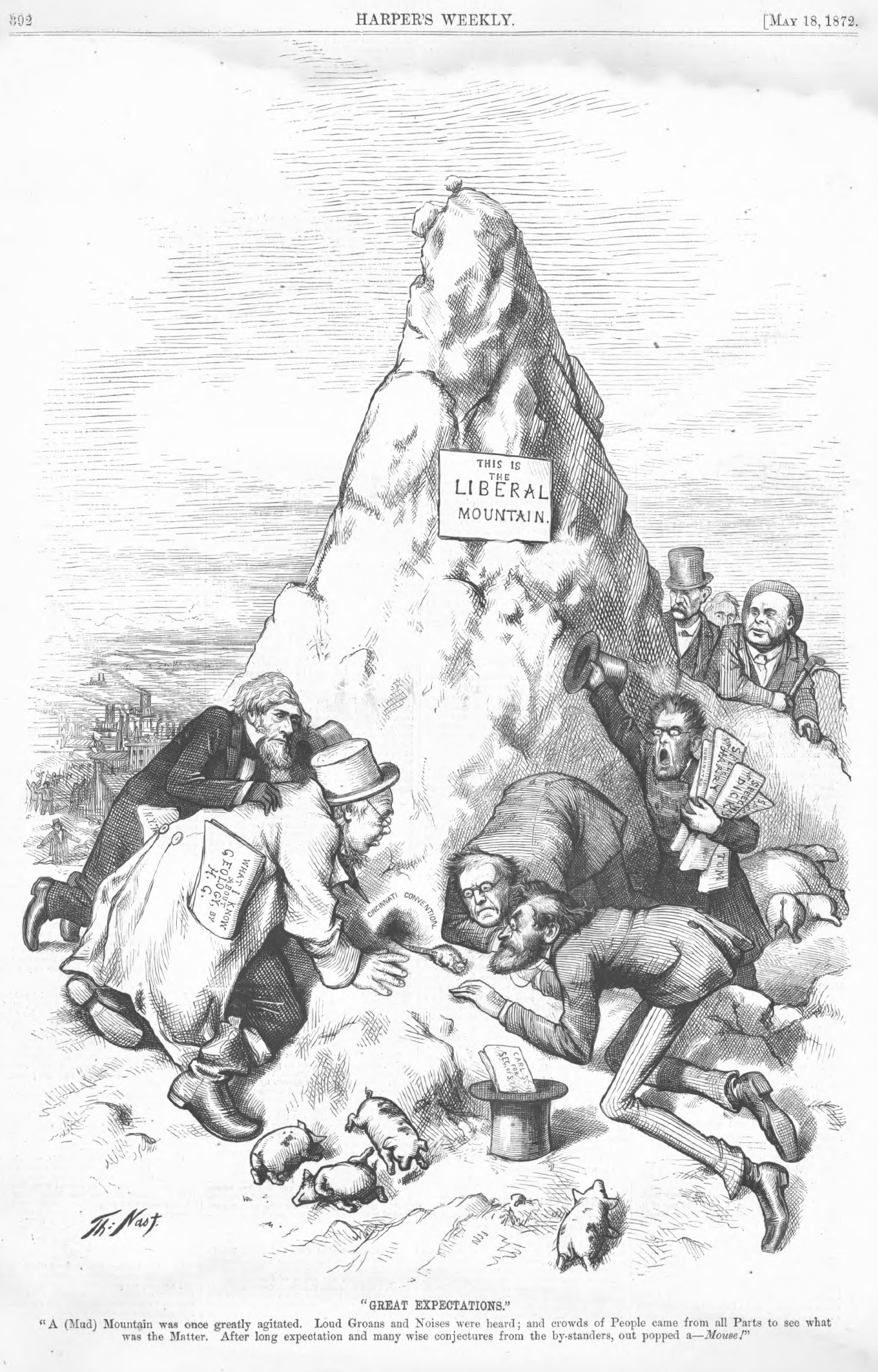
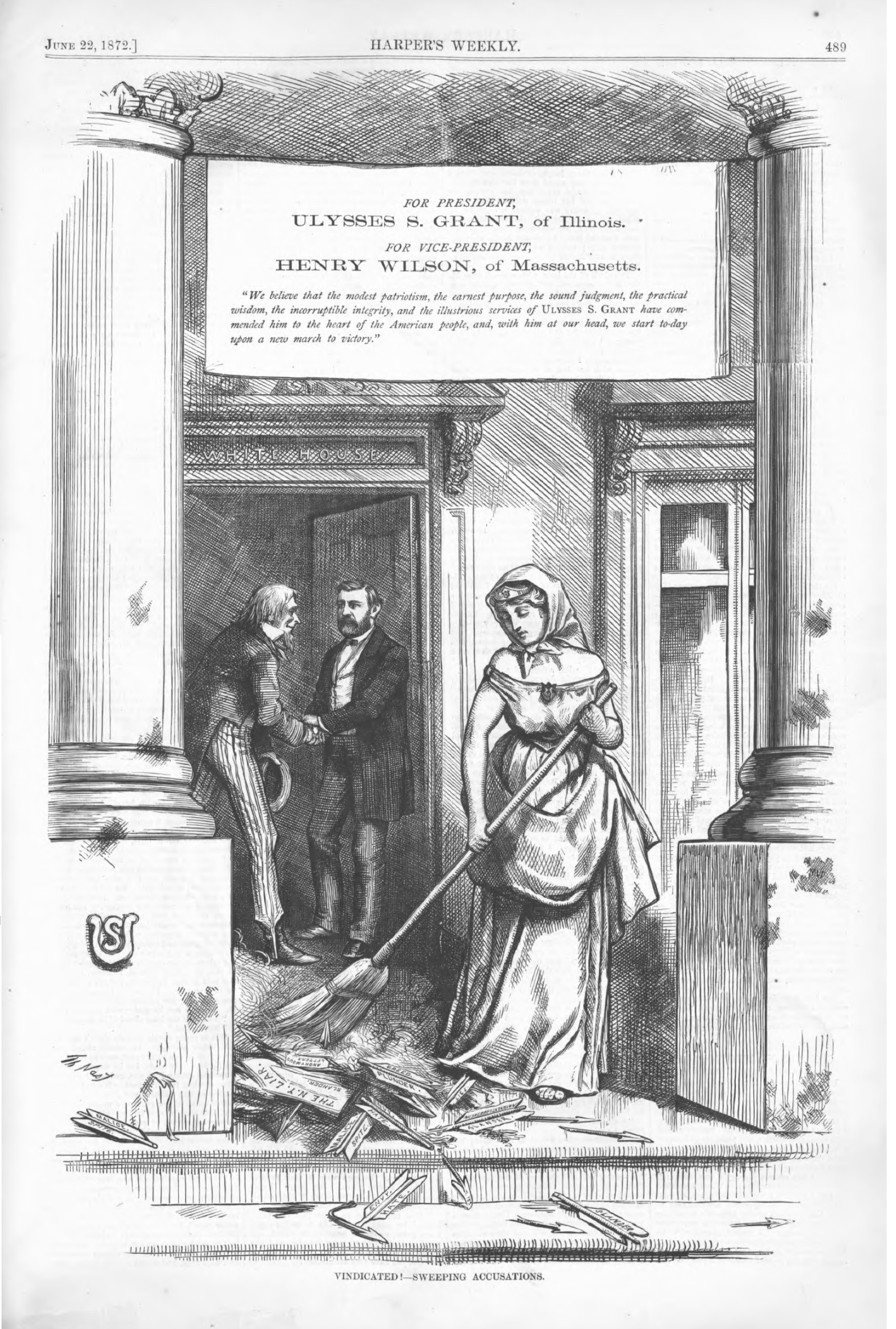
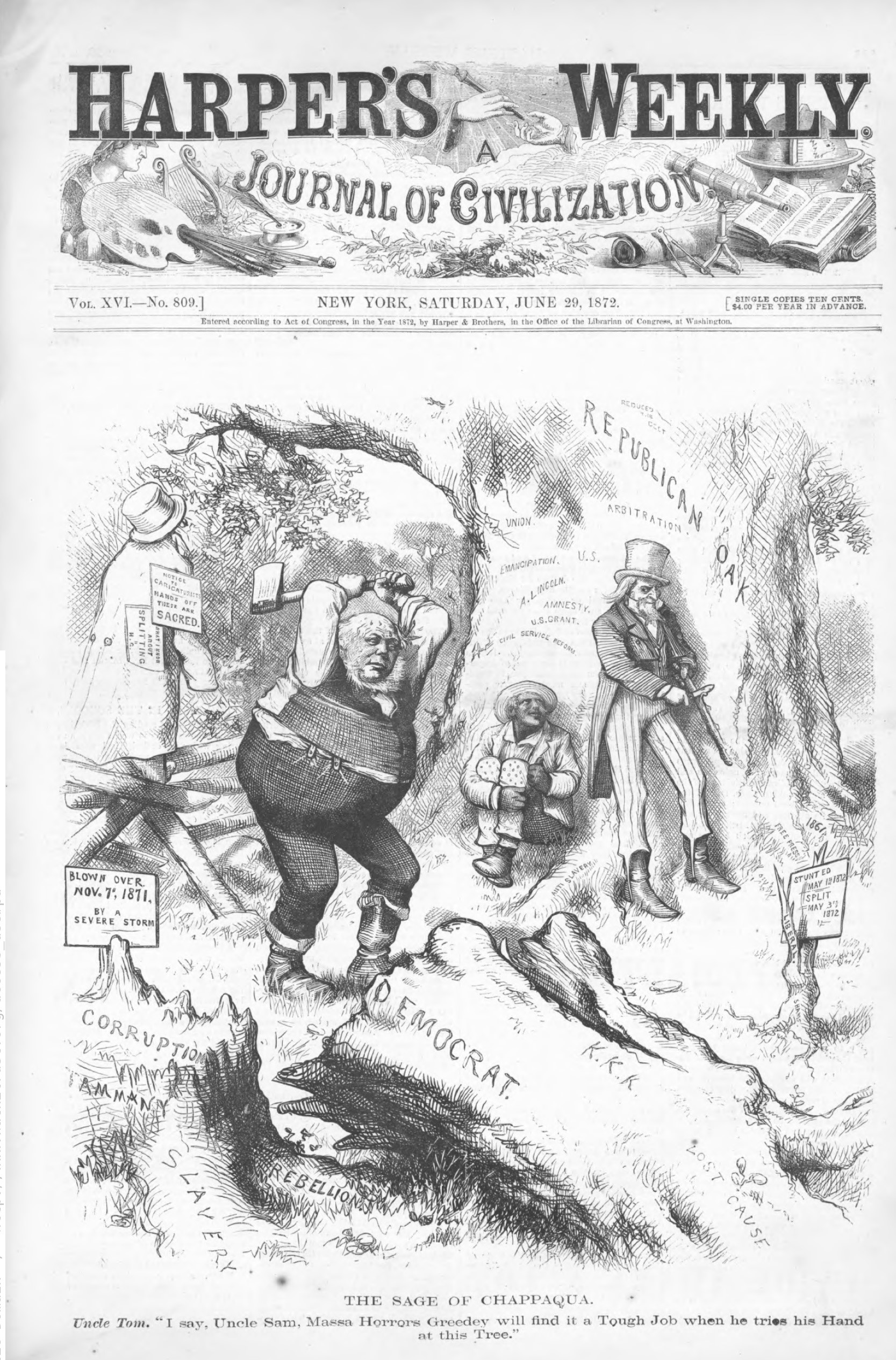
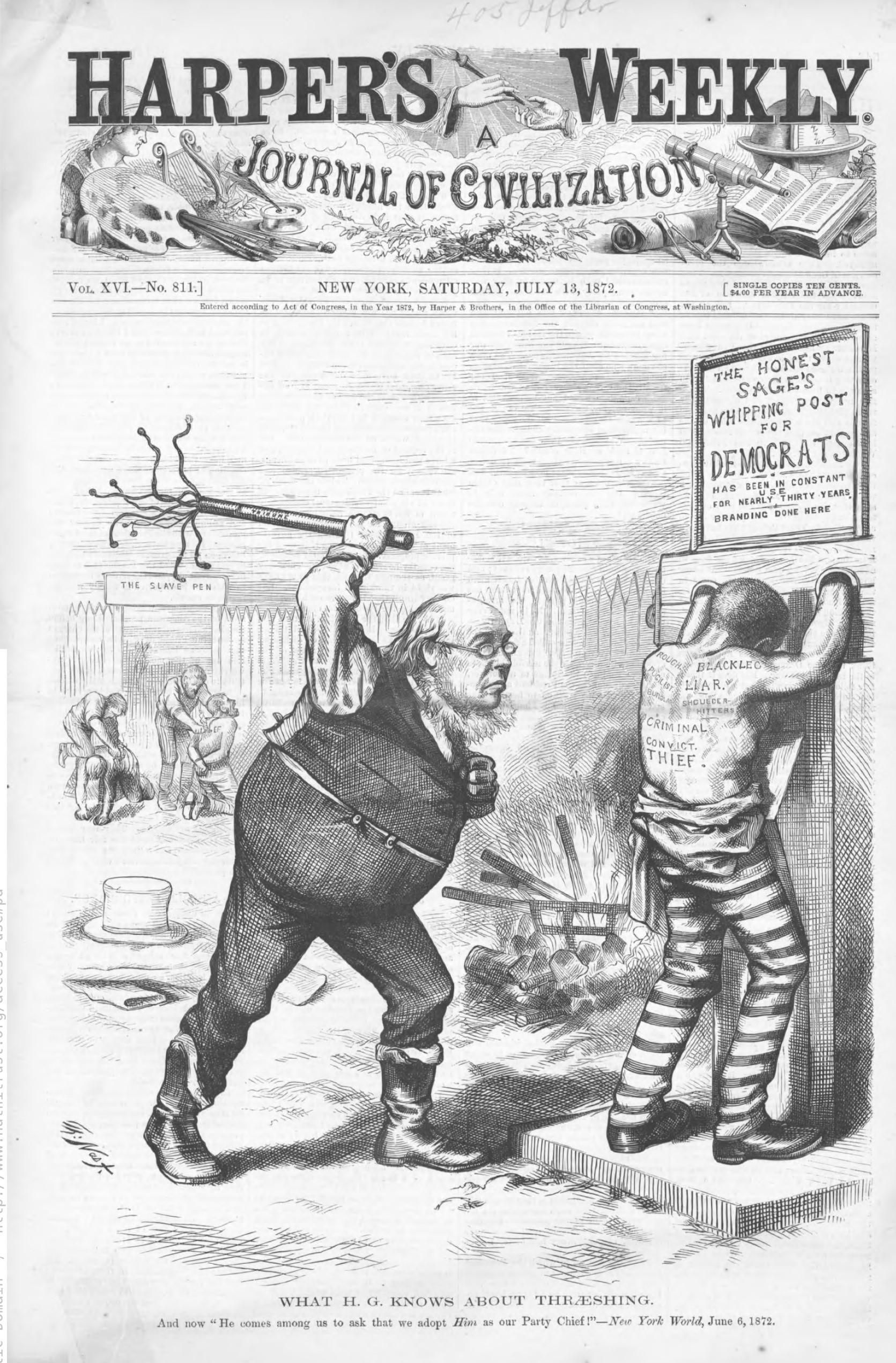
1872 was another presidential election year in the United States. Would the Republican incumbent, General Ulysses S. Grant be reelected? President Grant was popular, even though his Administration was involved in several scandals. One possible impediment to Grant’s reelection was that not all non-Democrats wanted a second term for the president. The Liberal Republican party was formed in 1870. At the party’s convention in Cincinnati in May 1872 the Liberal Republicans chose newspaper publisher Horace Greeley to be its nominee. Harper’s Weekly opposed the Liberal Republicans’ challenge to Grant, but it did give Horace Greeley his due as a self-made man.

candidate and his creation

From the May 18, 1872 edition of Harper’s Weekly:

HORACE GREELEY.

The man whom the “Liberal” Republicans at Cincinnati selected to be their standard-bearer in the ensuing political campaign is in every sense of the word “self-made.” His father, ZACCHEUS GREELEY, was a poor New Hampshire farmer, who was only able to give him the advantages of a common-school education, and very little of that. But his energy, ambition, and capacity supplied all deficiencies, and enabled him to push his way from obscurity to the prominent position he now occupies.

HORACE GREELEY was born at Amherst, New Hampshire, on the 3d of February, 1811. He was a rather feeble child, and for years suffered from want of physical strength rather than from any positive disease. He lived with his parents in New Hampshire until the 1st of February, 1821, going to school a little and working on the farm a great deal, when, in consequence of his father’s failure and the enforced sale of his farm, the whole family went to West Haven, Vermont. Here he was distinguished at school by the readiness with which he absorbed knowledge.

After about five years of farm experience in West Haven, where each season proved a worse failure than its predecessor, he became an apprentice in a newspaper office, The Northern Spectator, at East Poultney, Vermont.

Mr. GREELEY remained four years at East Poultney, doing the hard work of an apprentice with credit. He went thence to visit his father in Chautauqua County, New York, and subsequently worked at his trade in Jamestown, Lodi [now Gowanda], and Erie. But work in small towns was scarce, and, after vain searching for permanent employment, the young printer started for New York city. He went by canal-boat from Buffalo to Schenectady, and thence footing it over the old turnpike, he reached Albany, where he took passage in a tow-boat for New York. Here he landed August 17, 1831. Work was the thing first in order, and after a short search he found it with a printer in Chatham Street.

Mr. GREELEY made his first business venture in New York as a partner in a daily paper called the Morning Post, started January 1, 1833, by Dr. H.D. SHEPARD. The paper lived about a month. In March, 1834, he made his first visible mark in journalism by issuing the New Yorker, a large and handsome weekly paper devoted to literature and news. Here, for the first time, he began to use a pen as well as types, and in a short time became widely known as a writer. Two years after starting this paper Mr. GREELEY married. Five children have been born to him, of whom two boys and one girl died at early ages.

reading the ticker tape

While publishing the New Yorker Mr. GREELEY made his début as a political writer in 1838, on a small campaign paper called the Jeffersonian, and in the HARRISON campaign as the editor of the Log-Cabin. On the 10th of April, 1841, the day on which the people observed the funeral of President HARRISON, Mr. GREELEY, almost moneyless and unaided, issued the first number of the New York Tribune.

In 1848 Mr. GREELEY was elected to Congress to fill a vacancy, and served from December 1 of that year till March 4, 1849. His Congressional career was not a brilliant one, and was chiefly distinguished by his vigorous assault upon the mileage system. In 1850 he published a volume of political lectures and essays, under the title of “Hints toward Reform.” The following year he made a voyage to Europe, and during his visit to England served as a juryman at the Crystal Palace Exhibition. On his return he published a volume entitled “Glimpses at Europe.” His first important contribution to political literature was his “History of the Struggle for Slavery Extension and Restriction from 1787 to 1856,” the year of its publication. In 1859 Mr. GREELEY paid a visit to California, traveling overland across the plains.

During the political excitement which immediately preceded the outbreak of the Southern rebellion, Mr. GREELEY, in common with many prominent members of the Democratic party, took the ground that the disaffected States should be permitted to depart in peace, if a majority of their inhabitants desired the separation, and form a new government for themselves. On the actual occurrence of hostilities, however, he gave the national administration a warm support; though several times during the progress of the war, when disasters had overtaken the national forces in the field, and the issue of the campaign was wavering in the balance, he appeared to lose heart and to be ready to give up the contest on almost any terms that could be obtained. It is fortunate for the nation that his views were not shared by the dominant party at the North; and doubtless Mr. GREELEY himself is now well satisfied that his counsels were disregarded.

Mighty Mouse?

To comment at length upon Mr. GREELEY’S political career would be beyond the purpose of this sketch. Our readers can not fail to remember his famous tour through the Southern States a few months ago, when he shook hands with JEFFERSON DAVIS, and made conciliatory speeches to Southern people who have not become reconciled to the issue of the war nor to the amendments to the Constitution. The tour looked amazingly like a part of an electioneering programme, like Johnson’s famous “swinging round the circle,” or General Scott’s equally famous “military tour of inspection” in 1852.

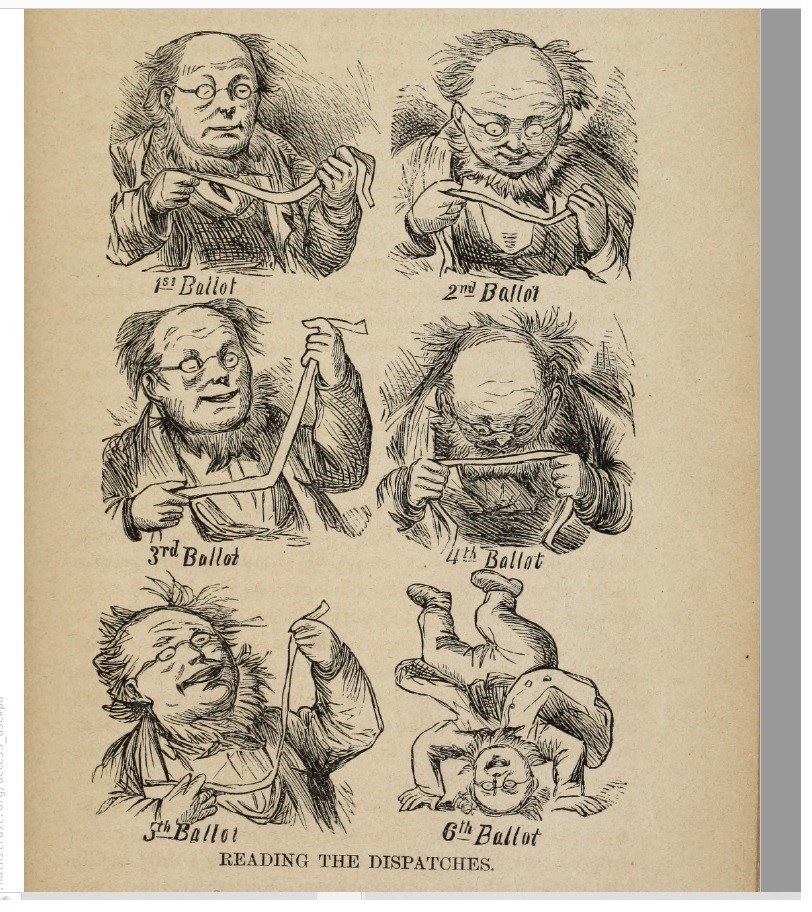
It was evident several weeks before the meeting of the Cincinnati Convention that Mr. GREELEY would be a candidate for nomination; but, though his strength and popularity with certain classes were allowed — and it was supposed he would receive a large complimentary vote — very few outside of the circle of his immediate friends and admirers supposed he would obtain the first place on the ticket. The Hon. CHARLES FRANCIS ADAMS was regarded as by far the strongest and most eligible man for the position; and this opinion remained unchanged until a short time before the balloting commenced. On the first five ballots Mr. ADAMS took the lead, but without securing the number of votes necessary to a choice. TRUMBULL and DAVIS were nowhere, from the start. The contest lay between ADAMS and GREELEY. At the
close of the sixth ballot the poll stood as follows:
Adams, …………… 324 Davis…………….6
Greeley……………. 332 Chase…………… 32
Trumbull…………. 19 Palmer…………..1
Before the result was announced, the Illinois delegation changed to GREELEY, with the exception of one member, who insisted that his vote should stand for TRUMBULL. Several other States followed the example of Illinois, and the final result was announced as follows:
Whole vote…………. 714 Adams…………… 187
Necessary to a choice. 358 Greeley…………. 482
A motion to make the nomination unanimous was lost. The Convention nominated Mr. GRATZ BROWN, of Missouri, for Vice-President on the second ballot, and then adjourned sine die.

The Liberal Republican platform called for civil service reform in its fifth plank, and that required a presidential term limit of one term:

“Fifth: The Civil Service of the Government has become a mere instrument of partisan tyranny and personal ambition and an object of selfish greed. It is a scandal and reproach upon free institutions and breeds a demoralization dangerous to the perpetuity of republican government. We therefore regard such thorough reforms of the Civil Service as one of the most pressing necessities of the hour; that honesty, capacity, and fidelity constitute the only valid claim to public employment; that the offices of the Government cease to be a matter of and patronage, and that public station become again a post of honor. To this end it is imperatively required that no President shall be a candidate for re-election.”

Uncle Sam approves

As expected, the Republicans nominated Ulysses S. Grant for a second term as president at the convention held in Philadelphia June 5th and 6th, although they replaced Schuyler Colfax with Senator Henry Wilson from Massachusetts.

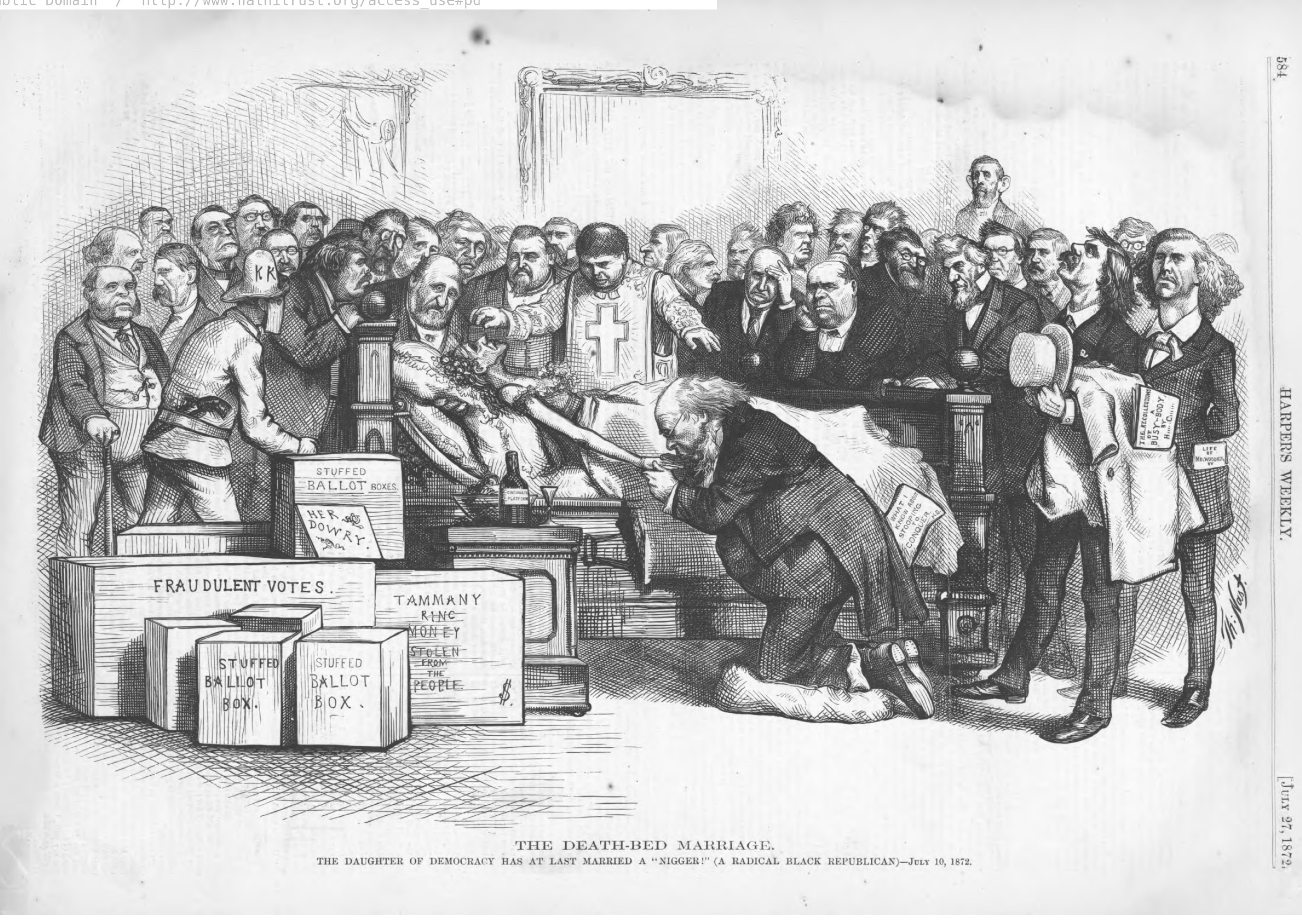
The majority of Democrat delegates opted for the anybody but Grant philosophy. At their convention in Baltimore July 9-10 they overwhelmingly chose Greeley and Gratz Brown as their nominees for president and vice-president and adopted the Liberal Republican platform. Wikipedia summarizes the strategy and the inherent tension:

“Accepting the Liberal platform meant the Democrats had accepted the New Departure strategy, which rejected the anti-Reconstruction platform of 1868. They realized that to win the election they had to look forward, and not try to re-fight the Civil War. They also realized that they would only split the anti-Grant vote if they nominated a candidate other than Greeley. However, Greeley’s long reputation as the most aggressive antagonist of the Democratic Party, its principles, its leadership, and its activists, cooled Democrats’ enthusiasm for the presidential nominee.

“Some Democrats were worried that backing Greeley would effectively bring the party to extinction, much like how the moribund Whig Party had been doomed by endorsing the Know Nothing candidacy of Millard Fillmore in 1856, though others felt that the Democrats were in a much stronger position on a regional level than the Whigs had been at the time of their demise, and predicted (correctly, as it turned out) that the Liberal Republicans would not be viable in the long-term due to their lack of distinctive positions compared to the main Republican Party. A sizable minority led by James A. Bayard sought to act independently of the Liberal Republican ticket, but the bulk of the party agreed to endorse Greeley’s candidacy. The convention, which lasted only six hours stretched over two days, is the shortest major political party convention in history.”

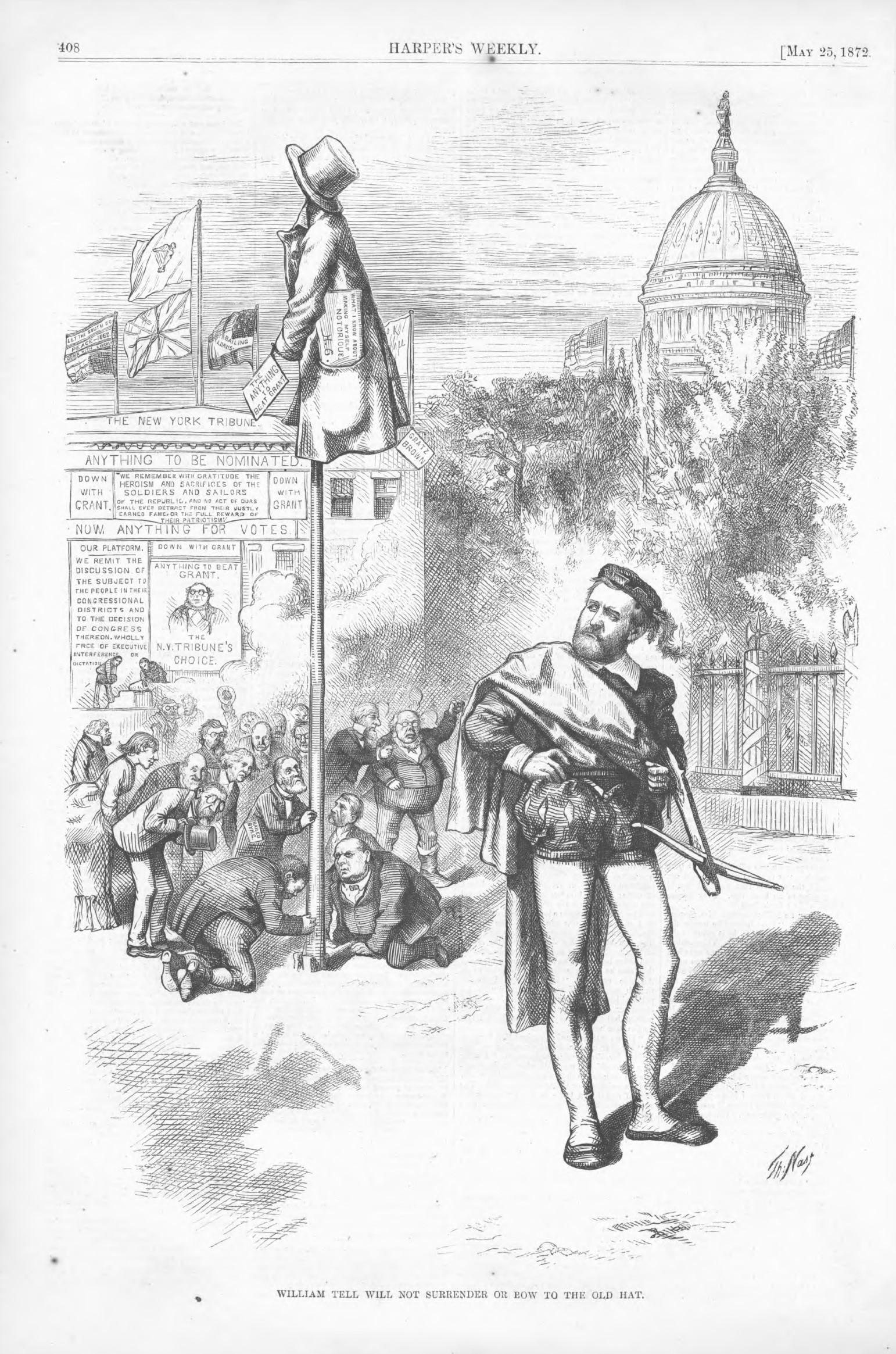
Harper’s Weekly and its cartoonists suggested uniting with Democrats meant uniting with The Ku Klux Klan and Tammany Hall.

marriage of convenience?

The image of Horace Greeley reading Cincinnati convention updates via the relatively new ticker tape was published in a humorous account of the convention that you can read at Hathi Trust. All the Harper’s Weekly 1872 content in this post is also from Hathi Trust. As you can see, Thomas Nast and the other cartoonists at Harper’s Weekly were having a field day attacking Mr. Greeley and the Liberal Republican – Democratic fusion. As we might see, there were a few small third parties for 1872.

Posted in 150 Years Ago, The Election of 1872 | Tagged , , , , , , , , | Leave a comment

hot time

free ice water

150 years ago this summer New York City suffered some very hot weather. From the July 27, 1872 issue of Harper’s Weekly:

THE HEATED TERM.

THE heated term which ended on the 6th inst, was not only the most protracted, but also the most severe, ever experienced in this section of the country. At no time did the thermometer run much below ninety degrees in the shade, and in the hotter portions of the day a hundred degrees was the mark in the least exposed places. Everybody who could afford it fled from the large cities, and sought relief among the mountains or by the sea-shore. But the masses were compelled to remain at home and endure the terrible affliction. Of course the death roll showed a large increase over former weeks, and was much larger than that of any corresponding week for many years. In this city alone nearly 1600 deaths occurred during seven days, of which number 983, or about 63 per cent., were of children under five years of age. The little ones were chiefly the children of the poor, who were crowded into the smallest rooms of our filthy tenement-houses, where a breath of pure air is never drawn by the miserable occupants. No wonder they died: the only thing to be wondered at is that they lived so long. But the mortality was not confined to the children. Strong men dropped in the streets while going about their work, and many, a poor fellow who had never known what a day of sickness was succumbed to the burning rays of the sun, and was carried home dead.

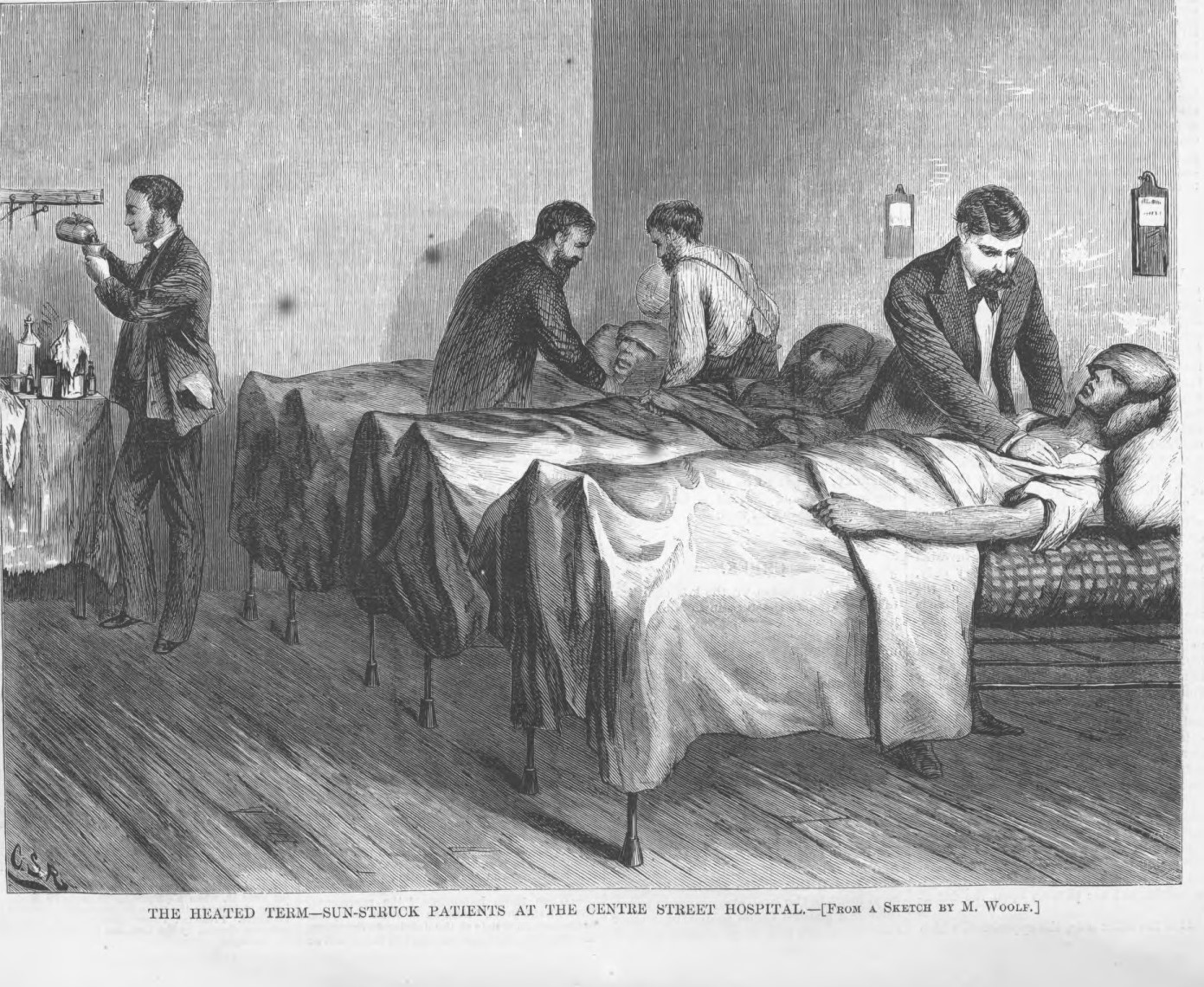
At such a time of peril it was fortunate indeed that hospitals were provided for the reception of the stricken ones. The ambulances were kept busy all the day long running hither and thither to bear the sufferers to a place of relief. Among the most useful of these establishments is the Centre Street Hospital, near Chambers Street. It is very convenient for the use of down-town patients, who, if they were compelled to wait for treatment until they could reach Bellevue, would surely die on the way. Our artist on this page gives a sketch of one of the wards of the hospital referred to, showing the preliminary treatment of sun-stroke cases. Bags of ice are placed on the heads and under the arms of the victims, after which the entire bodies are rubbed down with broken ice. When this has been done the patients are removed to another ward, where they are subjected to further treatment. During the hot spell House-Surgeon VANDEWATER and Warden BROWN, with their assistants, were kept very busy, as many as twenty-two cases demanding their attention in a single day. To the credit of the doctors it should be said that eight out of every twelve cases were saved.

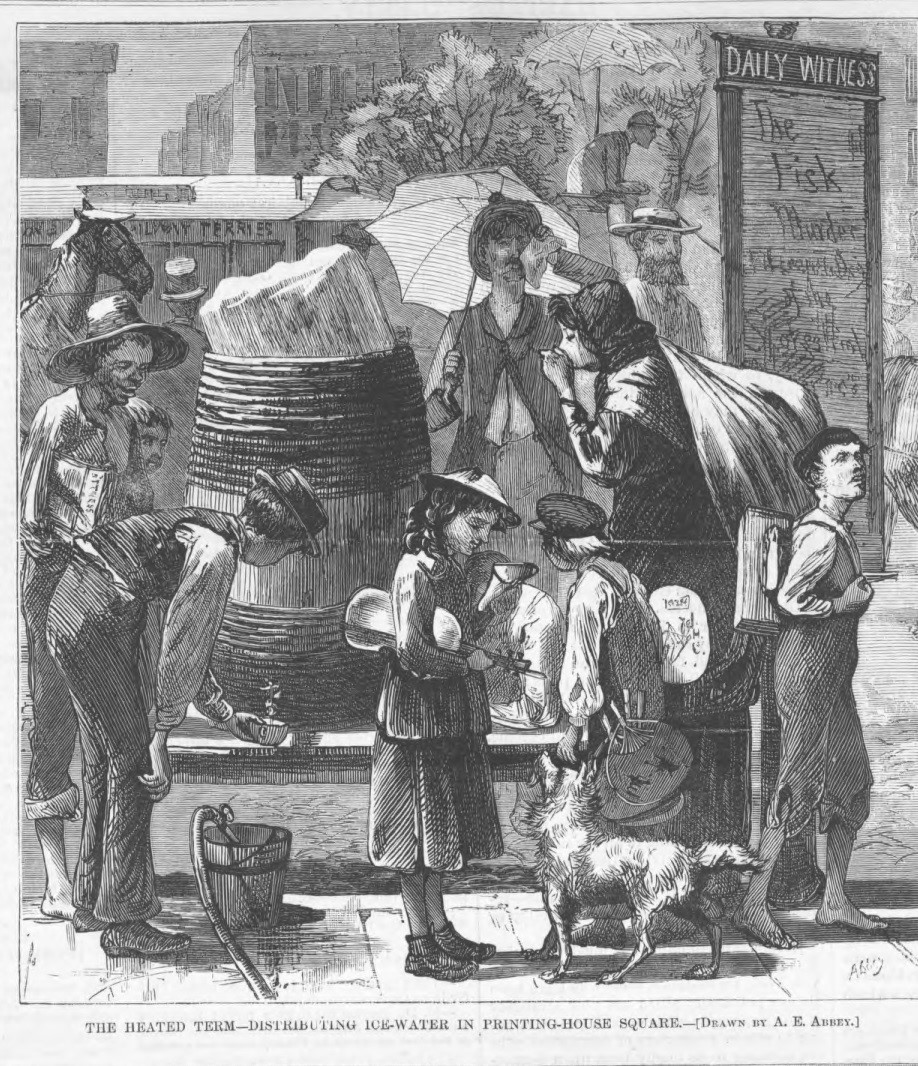
There is one feature of the sun-stroke that deserves to be kept well in mind — viz., that many of the cases are of men and women addicted to the excessive use of alcoholic liquors, and that the recovery of such is almost hopeless. To keep persons out of the dram-shops, particularly on very hot days, is therefore a good work. But how shall this be done? Men’s lips are parched with thirst – their throats burned dry: they must have drink. A humane individual has undertaken the practical solution of this question by placing barrels of ice-water in the streets of New York and Brooklyn for the free use of those who pass by. The upper sketch on this page shows the thirsty crowd refreshing itself from one of the barrels on Printing-house Square, opposite the City Hall. Metal drinking-cups are attached to the barrel, and thousands daily avail themselves of the grateful favor. Many of these are mechanics and artisans, or girls and boys employed in the factories, none of whom could afford to pay for a glass of soda-water or other cooling drink. The work of supplying cold water to the masses, free of charge, is worthy of imitation every where.

heated term

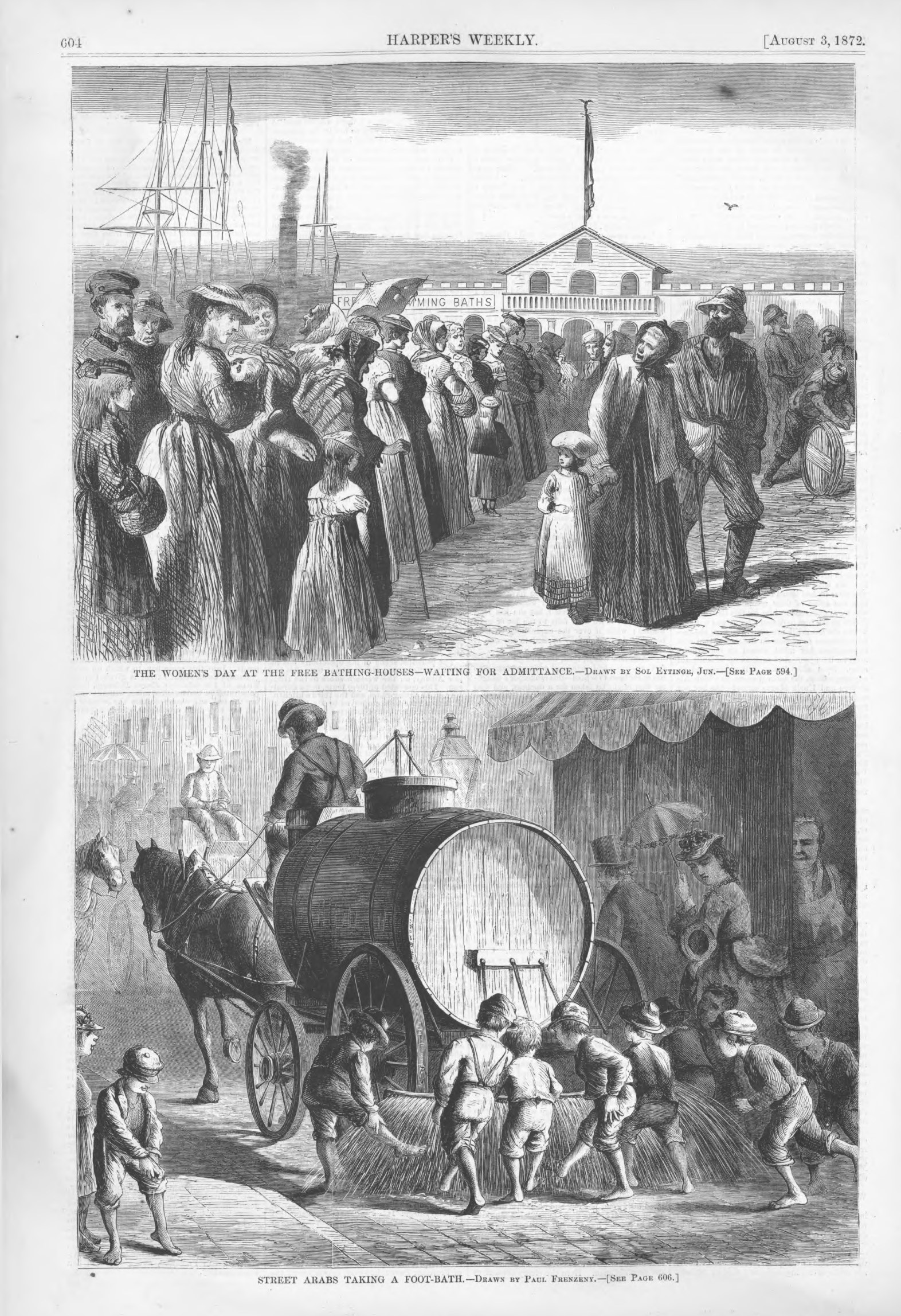
In its next issue Harper’s Weekly featured a couple more pictures related to the oppressive weather.

cleaner and cooler

WAITING TO BATHE.

THE upper sketch on page 604, representing a crowd of poor women waiting on a sultry day for admittance to one of the free bathing-houses established by the city last year, was drawn by Mr. SOL EYTINGE from an actual scene. These free bathing-houses are entirely inadequate to the necessities of the poor of the city during such a summer as this. Their number should be increased tenfold, in order that every man, woman, and child in the city could enjoy the healthful refreshment of a daily bath. Such facilities would undoubtedly decrease the average death rate of the “heated term,” and contribute greatly to the comfort of the thousands of poor people who can not leave the city, and to whom a sail even to the nearest bathing beach involves an expense beyond their means. With the present limited facilities alternate days have to be assigned to men and women at these establishments; and sometimes the crowd is so great, especially on the days assigned to women, that many of the poor creatures stand for hours in the heat awaiting their turn. We trust that before another hot season arrives the city will be so well supplied with free bathing-houses that no one who desires to take advantage of this means of cleanliness and health shall be debarred by lack of opportunity.

STREET ARABS TAKING A FOOT BATH.

A FEW days since Mr. PAUL FRENZENY, whose spirited illustrations often adorn the pages of the Weekly, witnessed the droll scene depicted in the lower sketch on page 604. In the rear of a large watering-cart, which lumbered slowly through the street, marched a squad of jolly urchins, their ragged trowsers turned up above the knee, bathing their naked legs in the mimic rain which spouted over the dusty cobble-stones. The thermometer stood among the nineties, but the boys seemed perfectly happy as they trudged along; and doubtless many of the amused lookers-on from the sidewalk would have been glad to take a foot-bath with them.

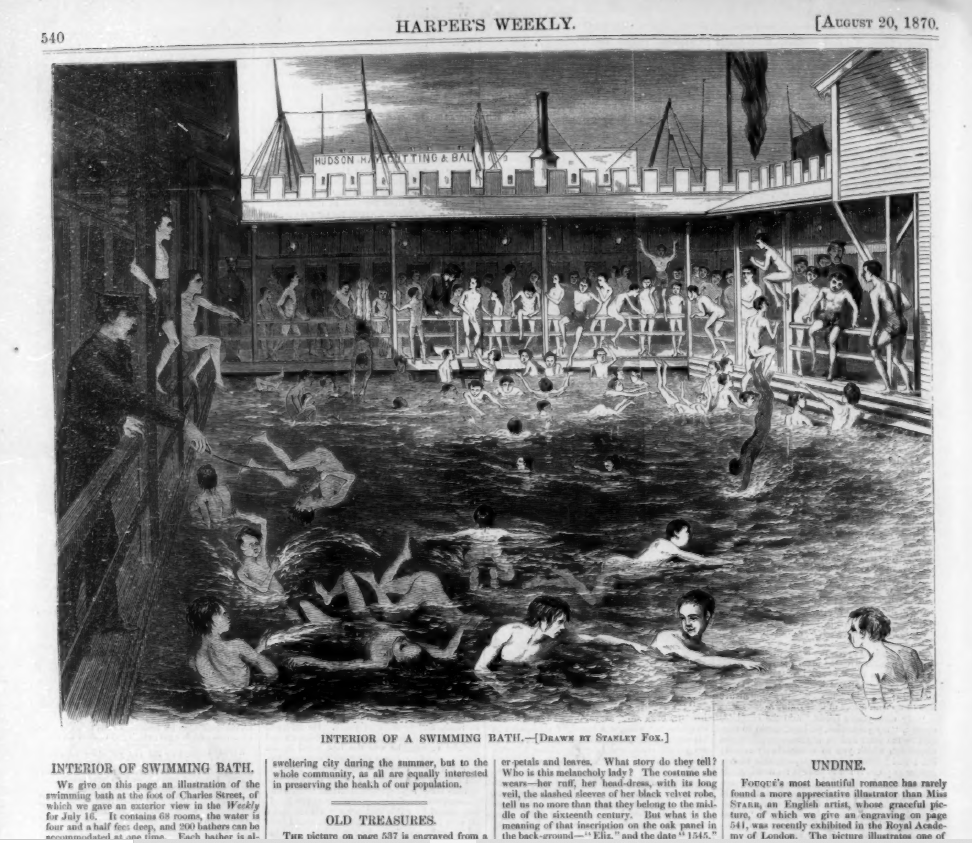
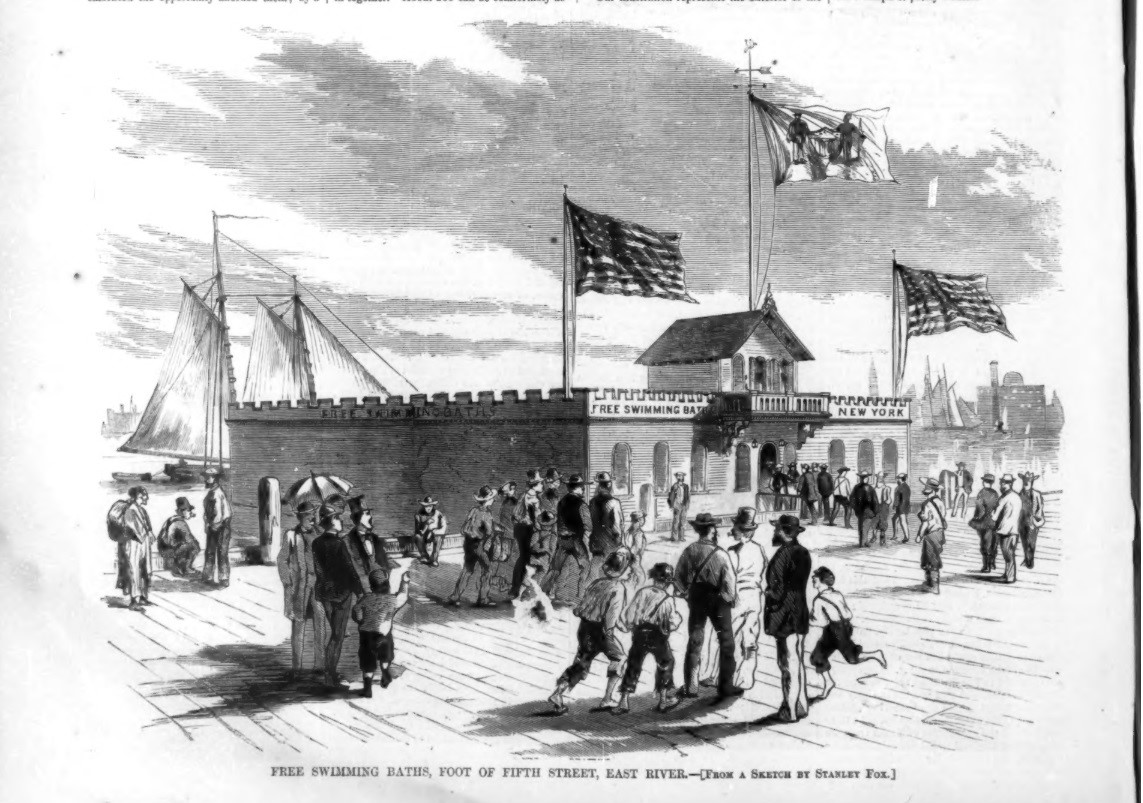
You can read about New York City’s Public Bathhouses at Curbed New York and The Bowery Boys, which indicates the city began experimenting with public bath houses at least as early as 1870. The article included an image from the August 20, 1870 issue of Harper’s Weekly.. It’s the interior of a building the paper pictured in it’s July 16th, 1870 edition.

30 minutes water time

free refreshment

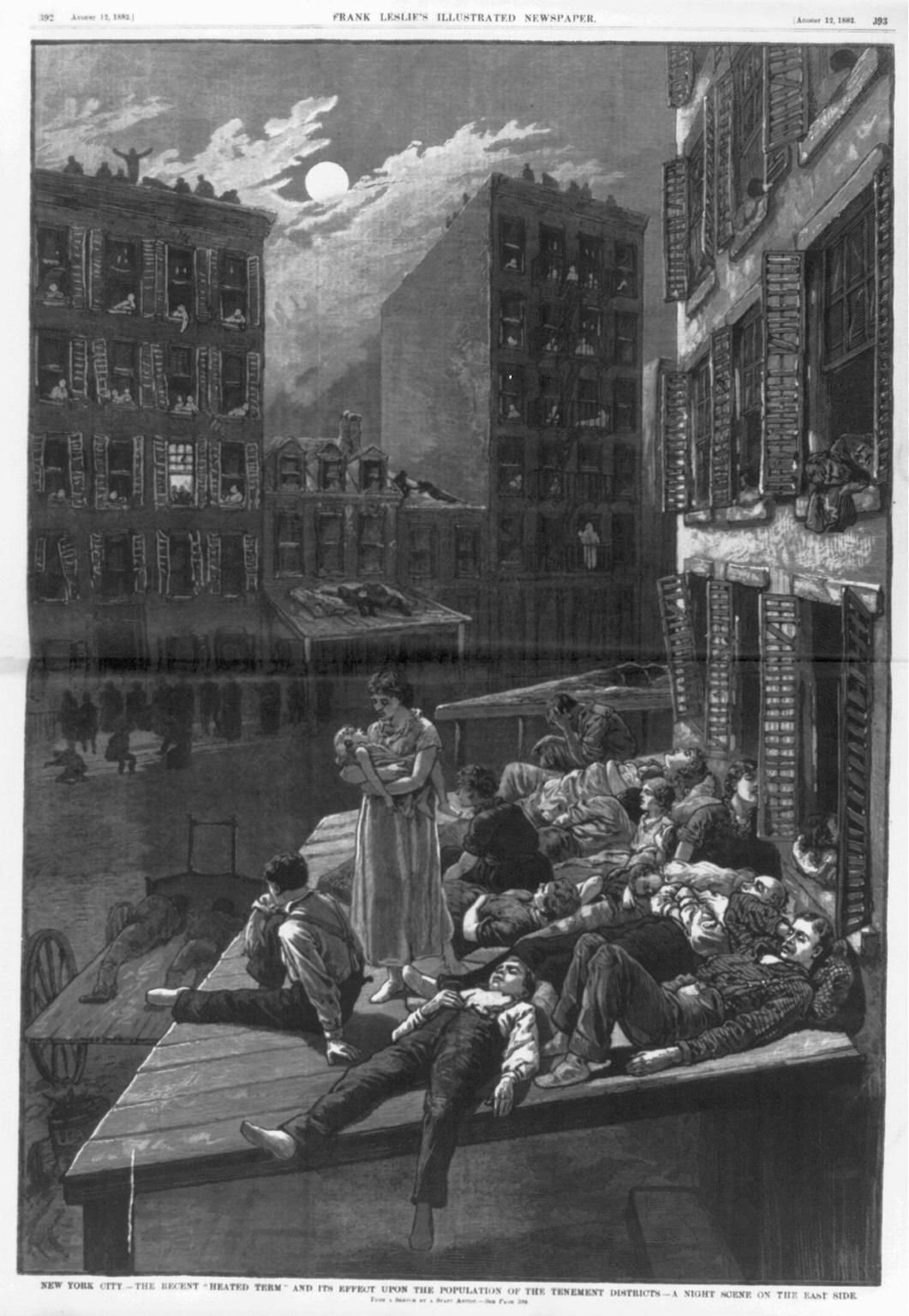
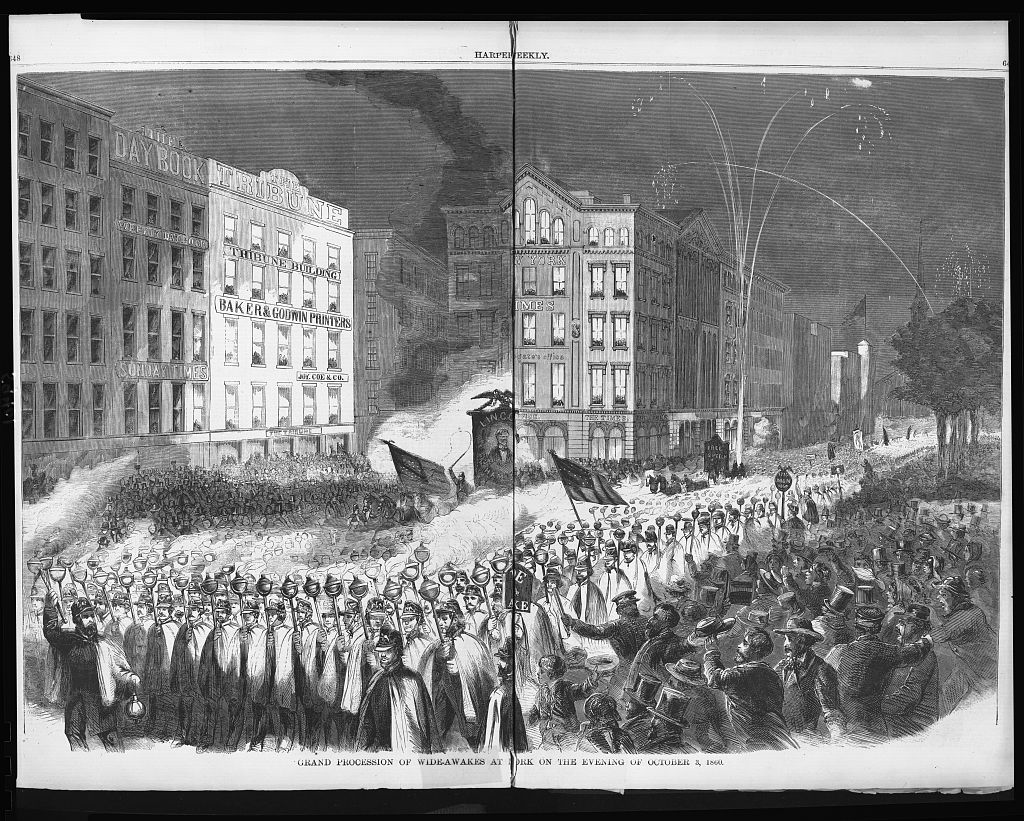
We’ve had lots of hot weather since 1872. I’m getting ahead of the story a little bit, but here’s an example from 1882, showing the “recent ‘heated term’ and its effect upon the population of the tenement districts A night scene on the East Side.” The top picture in this post was said to be at Printing House Square, where almost twelve years earlier “Wide-Awkes” marched to show their support for the Lincoln-Hamlin presidential ticket.

another hot night

You can find Harper’s Weekly for 1870 at the Internet Archive. I got the material from Harper’s Weekly 1872 at HathiTrust. From the Library of Congress: rooftop from Frank Leslie’s illustrated newspaper, Aug. 12, 1882, p. 393; procession of Wide-Awakes in October 1860 from the October 13, 1860 issue of Harper’s Weekly.

momentum for a momentous election

Posted in 150 Years Ago, Postbellum Society | Tagged , , , , | Leave a comment

dedicated

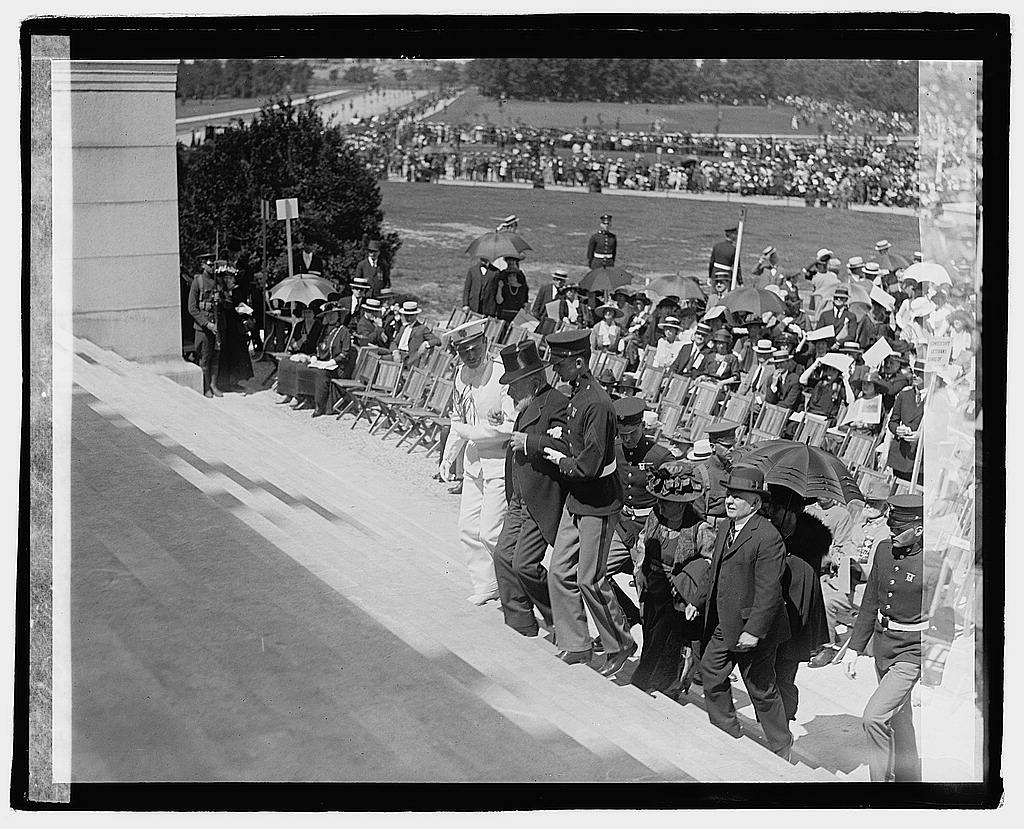
Lincoln Memorial dedication May 30, 1922

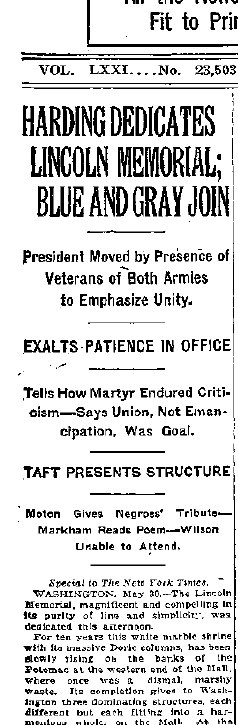
The Lincoln Memorial in Washington, D.C. was dedicated on Memorial Day a century ago (five score years). From the May 31, 1922 issue of The New York Times:

dedicated

WASHINGTON, May 30. – The Lincoln Memorial magnificent and compelling in its purity of line and simplicity, was dedicated this afternoon.

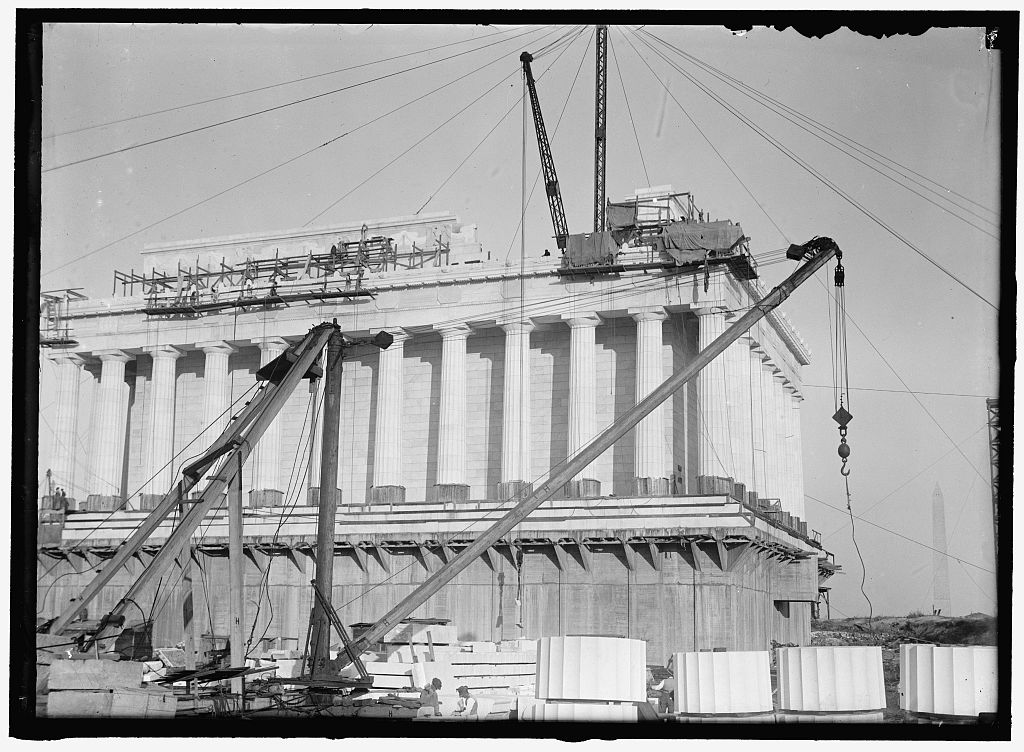
For ten years this white marble shrine with its massive Doric columns, has been slowly rising on the banks of the Potomac at the western end of the Mall, where once was a dismal, marshy waste. Its completion gives to Washington three dominating structures, each different but each fitting into a harmonious whole, on the Mall. At the east is the imposing dome of the Capitol, between the perfectly proportioned Washington Monument points upward a granite index finger, and to the west, glistening like a flawless gem in its setting, stands the memorial that perpetuates in marble, sculpture and fresco, the spirit of Abraham Lincoln.

Today, fifty-seven years after the tragedy in Ford’s Theatre, the Civil War tunes, the martial airs of Spanish War days and the stirring songs of the A. E. F. sounded through Washington streets as veterans of three wars marched to visit the graves of their dead. In the afternoon these processions converged at the Lincoln Memorial, where Chief Justice Taft, as Chairman of the Memorial Commission, turned over the building to the Government, represented by President Harding.

Thus a palfietic [?] handful of the fast dwindling survivors of the Civil War, some of whom knew Lincoln, had the satisfaction of witnessing within their lifetime the dedication of a marble symbol of Stanton’s announcement that the Great Emancipator belongs to the ages.

“in the name of 12,000,000 negroes”

Blue and Gray Join in Tribute.

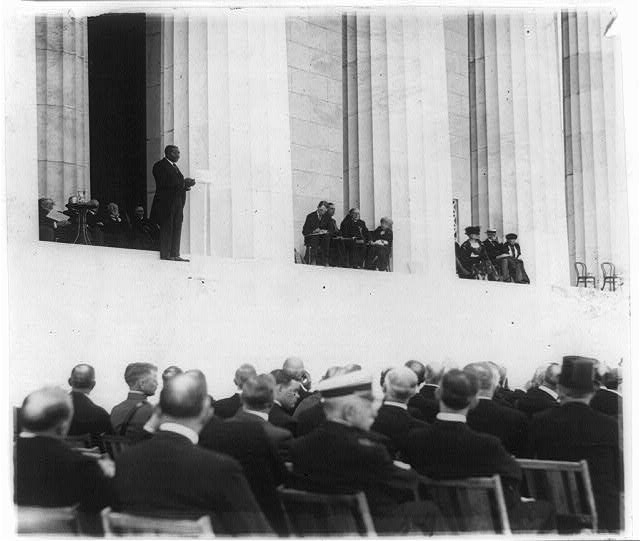
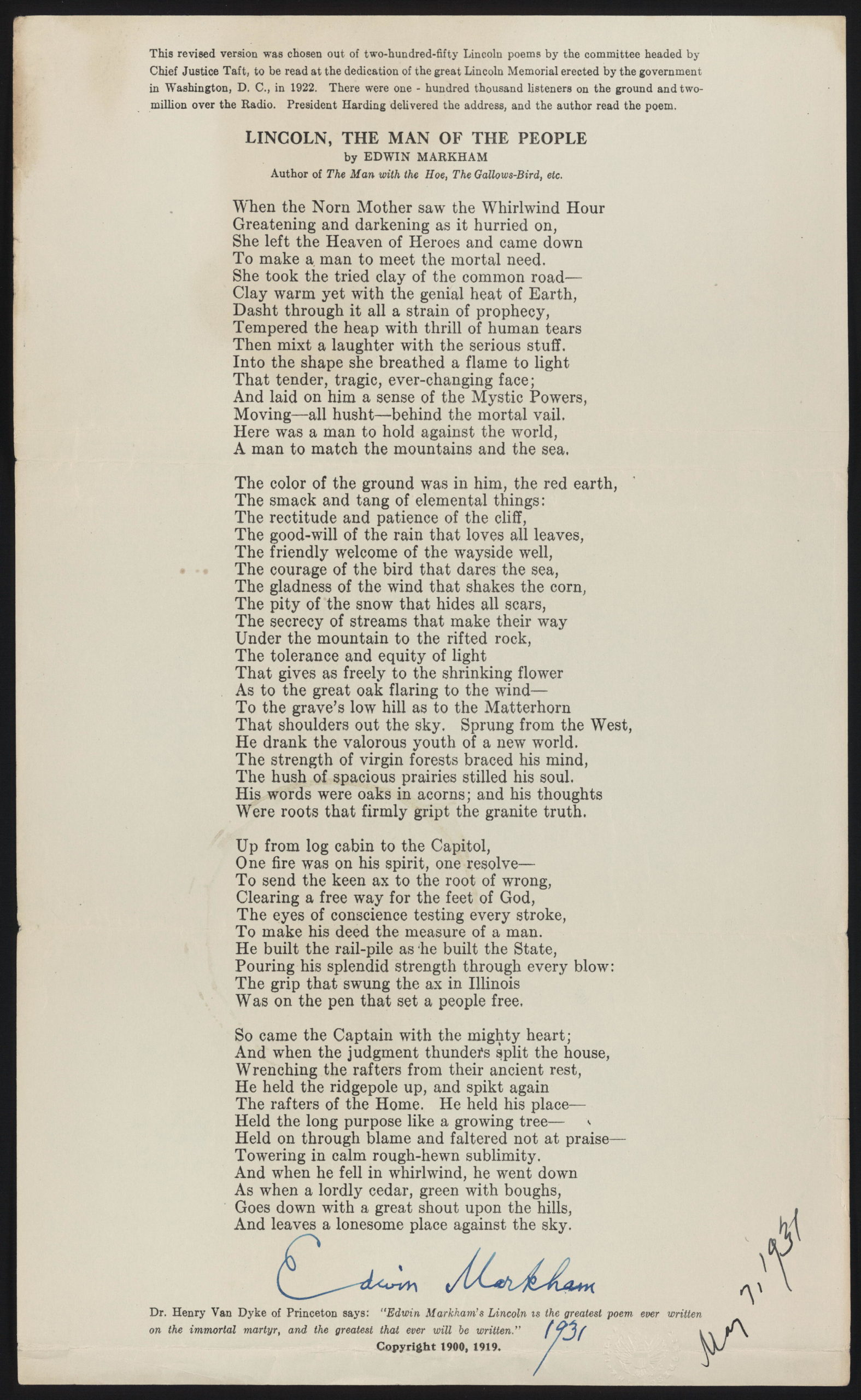
The ceremonies were in keeping with the simplicity of the memorial. Grand Army men, led by Lewis S. Pilcer [Pilcher], Commander- in-Chief, presented the color and laid symbols of the army and navy at the foot of the structure. Across the aisle sat gray-clad Confederate veterans, and from their seats they could look over the Potomac to the Virginia hills, where Arlington, once the home of Robert E. Lee, nestles among the trees. Robert R. Moton, President of Tuskegee Institute, paid tribute to Lincoln in the name of 12,000,000 negroes. Edwin Markham read the revision of his poem, “Lincoln, the Man of the People.”

Chief Justice Taft, under whose administration as President the memorial was begun, gave a short account of the labors of the Memorial Commission and delivered the building into the Government’s keeping. President Harding then accepted the memorial and drew a lesson from Lincoln’s steadfastness under criticism, eulogizing him as not a superman but as a “natural human being with the frailties mixed with the virtues of humanity.” The Invocation and benediction were delivered by the Rev. Wallace Radcliffe, pastor of the New York Avenue Presbyterian Church, where Lincoln worshipped.

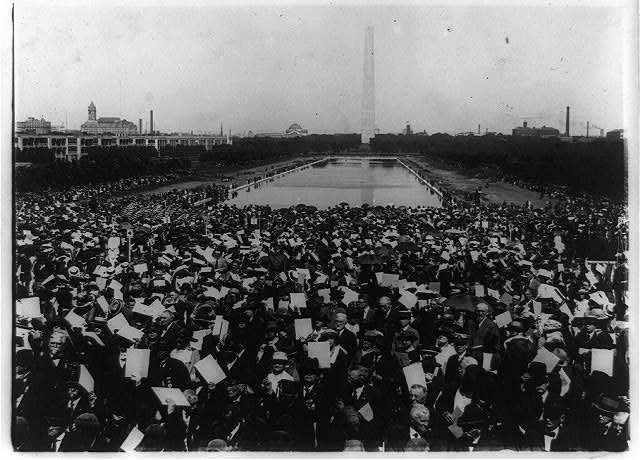
part of the crowd with “granite index finger”

Thousands assembled at the approaches to the memorial and the crowd extended down along the quarter-mile long mirror basin in which the Washington Monument was reflected with the background of a cloudless sky. Amplifying devices, cleverly concealed so that they did not detract from the beauty of the memorial, carried the speakers’ voices several hundred yards, and by the same means the speeches were sent broadcast by radiophone.

Wilson Unable to Attend.

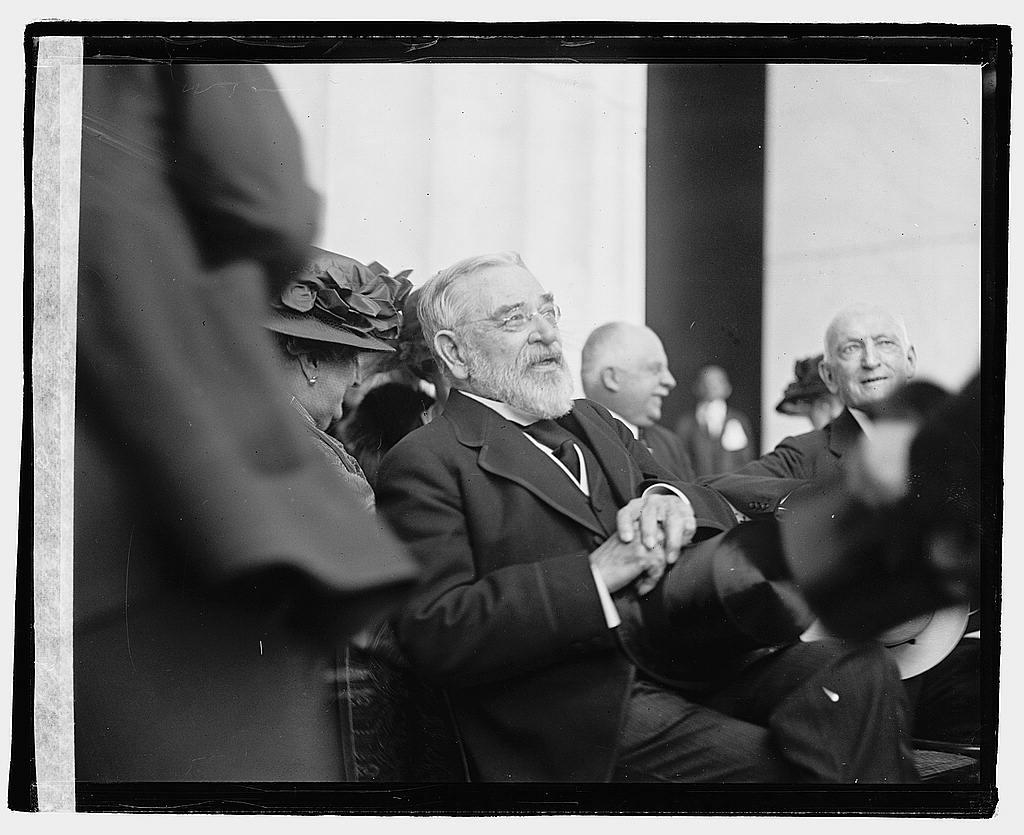
Just back of the east colonnade were seated the official members of the party, the president and Mrs. Harding, members of the Cabinet and their wives, Robert T. Lincoln, the martyred President’s son and Mrs. Lincoln; members of the Memorial Commission; Henry R. Bacon, architect of the memorial; Daniel Chester French, sculptor of the heroic seated figure of Lincoln placed in the centre of the memorial, and Jules Guerin, designer of the allegorical frescoes. Places were reserved for former President and Mrs. Wilson, but early this morning Mr. Wilson sent word to Chief Justice Taft that he would be unable to attend.

“martyred President’s son”

To the left along the colonnade were members of the Supreme Court and to the right Foreign Ambassadors and their staffs. On the terrace were other members of the Diplomatic Corps and members of both houses of Congress.

A conspicuous figure at the end of the row of Ambassadors was Otto Wiedefelt, the German Ambassador, who presented his credentials last week. He arrived late and alone and followed the proceedings with close attention, occasionally leaving his seat and standing against one of the columns to obtain a better view of the speakers and the crowd beneath.

There were two incidents that gave temporarily a touch out of keeping with the dignity of the ceremonies. One was at the end of the exercises, when the Chief Justice requested the people in the audience to remain in their places until the President proceeded to his car, whereupon several dozen members of

Continued on Page Three

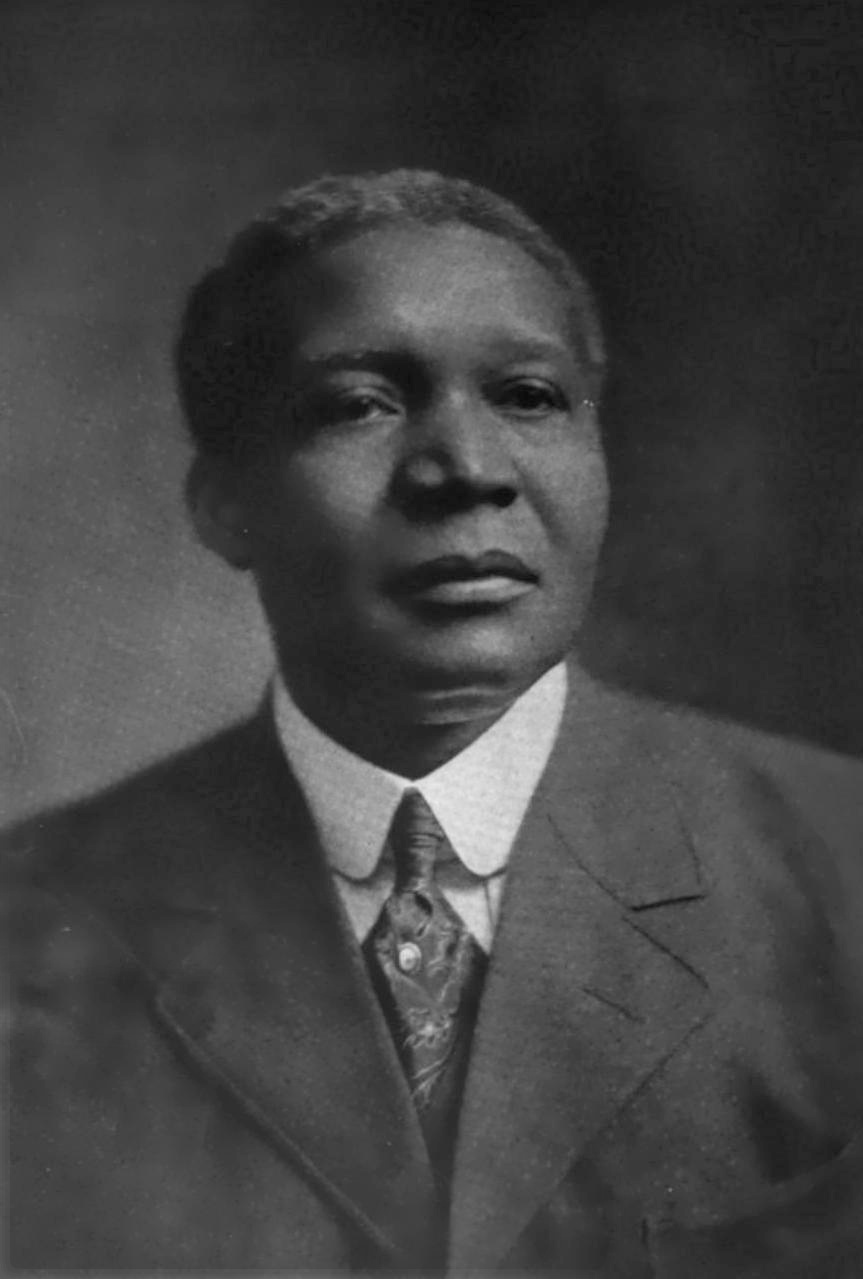
According to documentation at the Library of Congress, Robert Russa Moton began his Lincoln memorial speech by looking back to 1620, when the Pilgrim Fathers “laid the foundations of our national existence upon the bed-rock of liberty.” Since then liberty had been the common bond of “our united people,” and Americans had fought to extend freedom throughout the world. In his second paragraph Dr. Moton looked back a year before the Pilgrim landing, when a ship landed in Jamestown, Virginia that brought the first African slaves to North America. Those slaves were “pioneers of bondage, a bondage degrading alike to body, mind, and spirit.”

Robert Russa Moten in 1916

Those two contrasting principles eventually led to the costly Civil War, which, with Lincoln at the helm, the Union fought to win, and which, at its conclusion, Lincoln’s life was sacrificed. Dr. Moton agreed that Lincoln fought the Civil war to keep the Union together, but he also fought it to free the slaves. Despite doubt and adversity, President Lincoln “put his trust in God and spoke the word that gave freedom to a race, and vindicated the honor of a nation” by making it live up to the principle of the Declaration of Independence that all men are created equal.

In answering the question of whether Abraham Lincoln’s sacrifice was worth it, Mr. Moton first pointed out the loyalty of African-Americans, from Crispus Attucks killed during the American Revolution to the black doughboys who had recently sacrificed their lives in France. He used statistics to detail all the progress African-Americans had made in less than sixty years of freedom. Lincoln’s sacrifice was worth it because the black race “had taken full advantage of its freedom to develop its latent powers for itself and for the nation.” There was still more to do, but progress was being made: “As we gather on this consecrated spot, his spirit must rejoice that sectional rancours and racial antagonisms are softening more and more into mutual understanding and effective cooperation.” Dr. Moton hoped that the nation would be dedicated anew to the task for which Lincoln died – “equal opportunity and unhampered freedom” for all citizens, even the most humble, regardless of color or creed.

_____________________________________________________________

poet

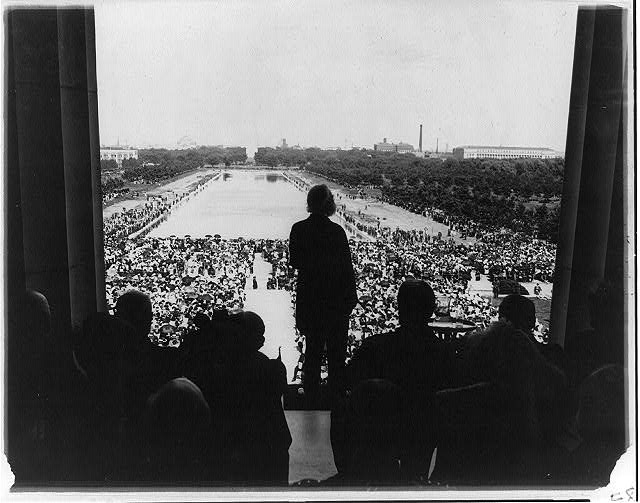
at the dedication

“the Captain with the mighty heart”

___________________________________________________________

Robert Lincoln ascends the steps

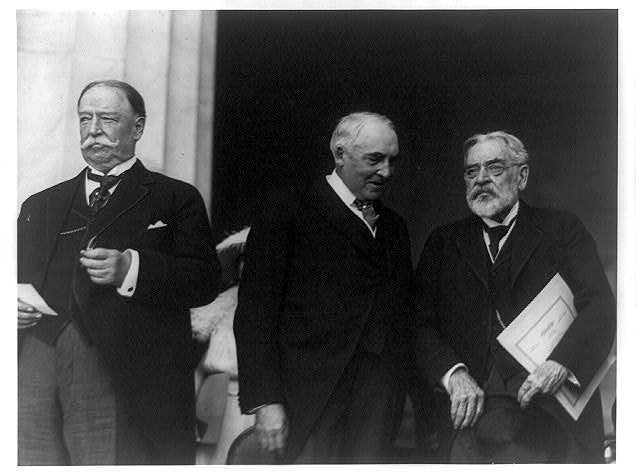
William Howard Taft, Warren G. Harding, and Robert Todd Lincoln, standing, left to right (http://www.loc.gov/pictures/item/89708459/)

Taft, Harding, Lincoln (Robert Todd)

_____________________________________________

According to Abraham Lincoln Online the Bliss copy of the Gettysburg Address is the version reproduced on the Lincoln Memorial. A couple places of the places where you can read more about Robert Russa Moton would be Encyclopedia Virginia and Tuskegee University. In 1920 Dr. Moton wrote the introduction to The Upward Path: A Reader For Colored Children:
INTRODUCTION
The Negro has been in America just about three hundred years and in that time he has become intertwined in all the history of the nation. He has fought in her wars; he has endured hardships with her pioneers; he has toiled in her fields and factories; and the record of some of the nation’s greatest heroes is in large part the story of their service and sacrifice for this people.
The Negro arrived in America as a slave in 1619, just one year before the Pilgrims arrived at Plymouth in search of freedom. Since then their lot has not always been a happy one, but nevertheless, in spite of difficulties and hardships, the race has learned many valuable lessons in its conflict with the American civilization. As a slave the lessons of labor, of constructive endeavor, of home-life and religion were learned, even if the opportunity was not always present to use these lessons to good advantage.
After slavery other lessons were learned in their order. Devoted self-sacrificing souls—soldiers of human brotherhood—took up the task in the schoolroom which their brothers began on the battlefield. Here it was that the Negro learned the history of[Pg x] America, of the deeds of her great men, the stirring events which marked her development, the ideals that made America great. And so well have they been learned, that to-day there are no more loyal Americans than the twelve million Negroes that make up so large a part of the nation.
But the race has other things yet to learn: The education of any race is incomplete unless the members of that race know the history and character of its own people as well as those of other peoples. The Negro has yet to learn of the part which his own race has played in making America great; has yet to learn of the noble and heroic souls among his own people, whose achievements are praiseworthy among any people. A number of books—poetry, history and fiction—have been written by Negro authors in which the life of their own people has been faithfully and attractively set forth; but until recently no effort has been made on a large scale to see that Negro boys and girls became acquainted with these books and the facts they contained concerning their people.
In this volume the publishers have brought together a number of selections from the best literary works of Negro authors, through which these young people may learn more of the character and accomplishments of the worthy members of their race. Such matter is both informing and inspiring, and no Negro boy or girl can read it without feeling a deeper pride in his[Pg xi] own race. The selections are each calculated to teach a valuable lesson, and all make a direct appeal to the best impulses of the human heart.
For a number of years several educational institutions for Negro youths have conducted classes in Negro history with a similar object in view. The results of these classes have been most gratifying and the present volume is a commendable contribution to the literature of such a course.
Robert R. Moton
Tuskegee Institute, Ala.,
June 30, 1920

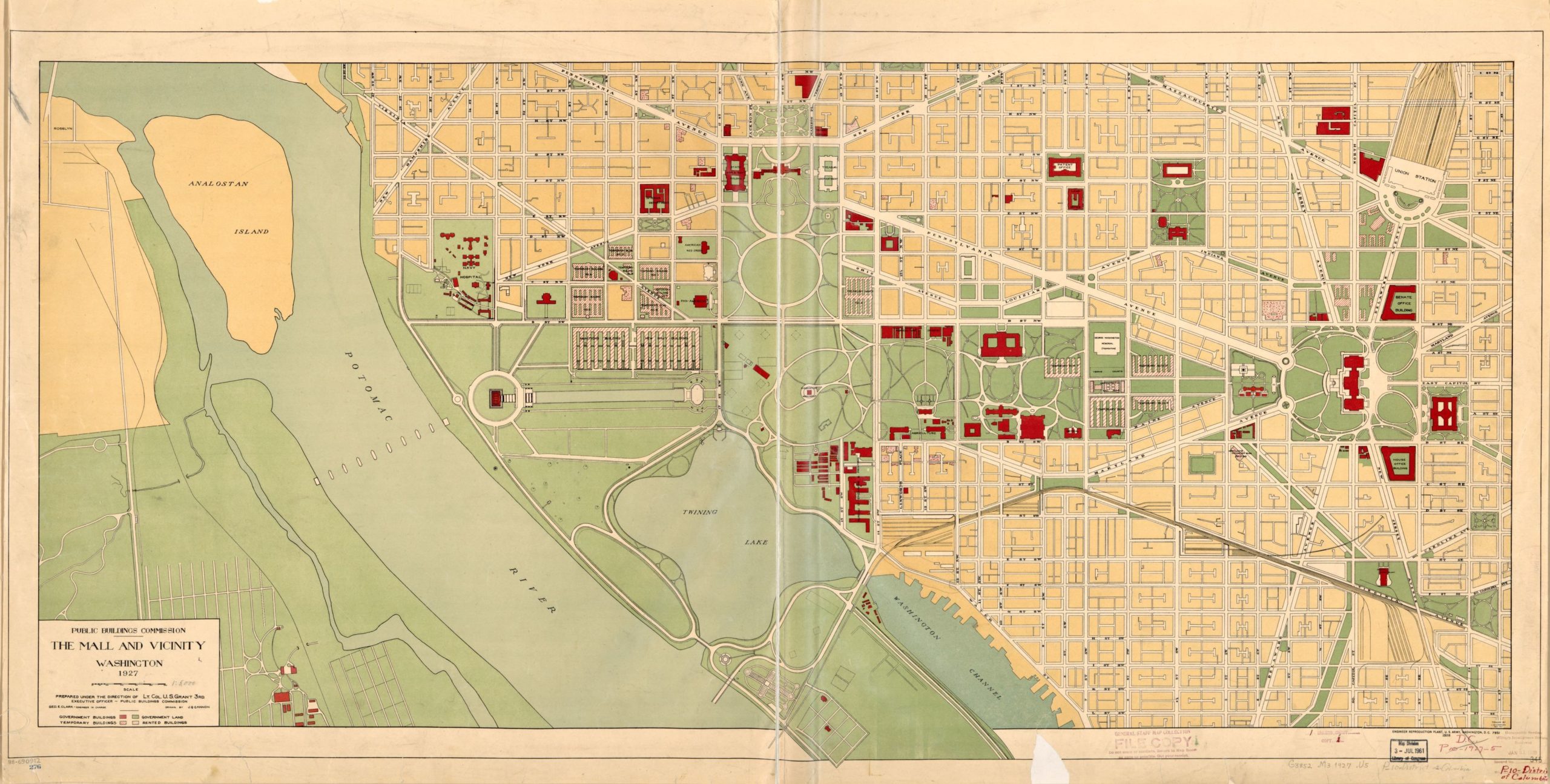
mall mapped (1927)

I took the New York Times material from The New York Times The Complete Front Pages 1851-2008. New York: Black Dog and Leventhal Publishers Inc., 2008. on one of the DVDs.. The 1916 portrait of Robert Russa Moten is from Wikimedia Commons.

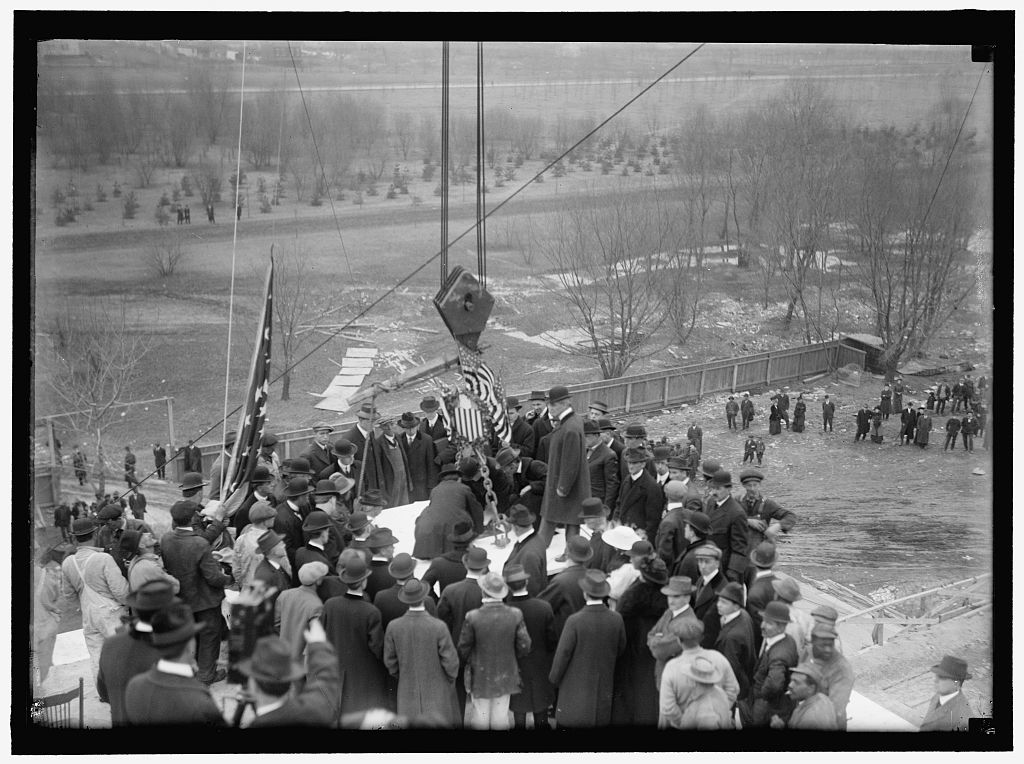
“laying the cornerstone” February 12, 1915

under construction

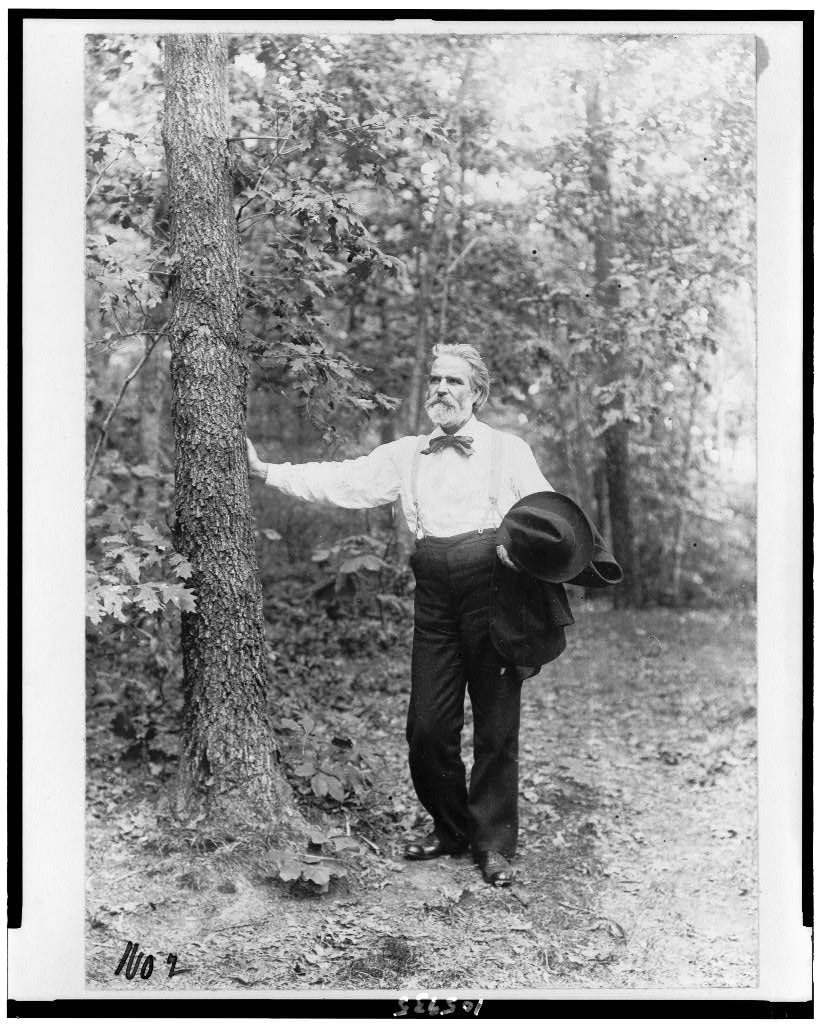
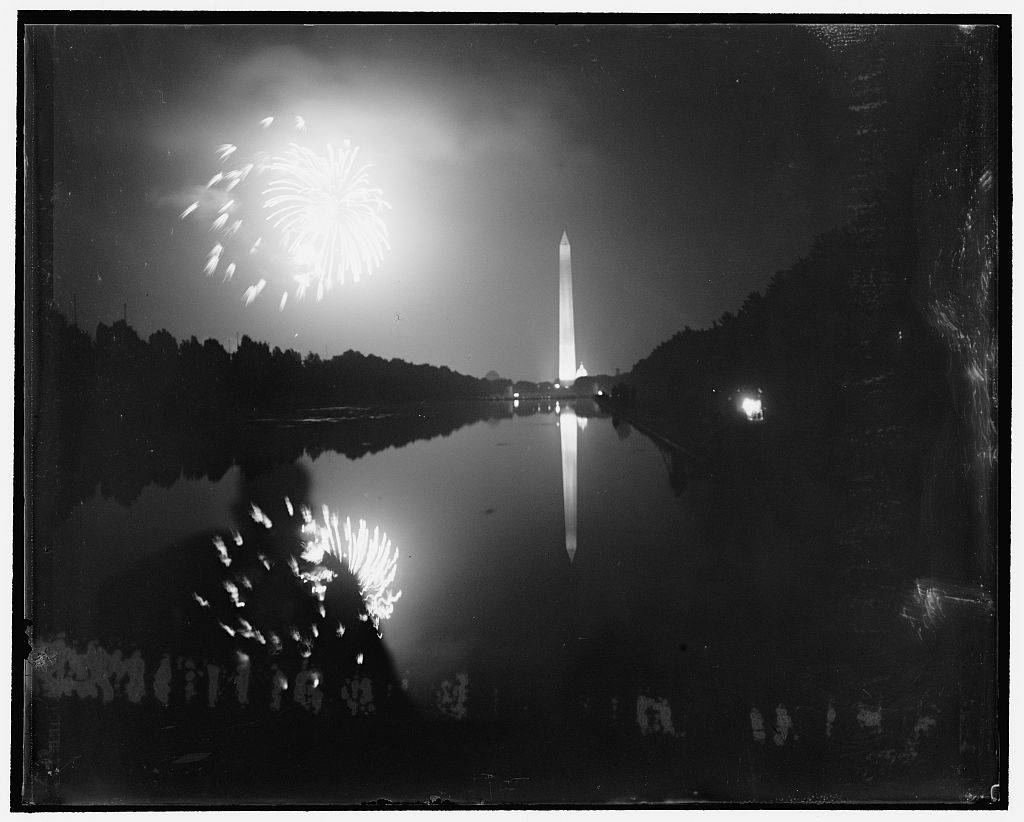
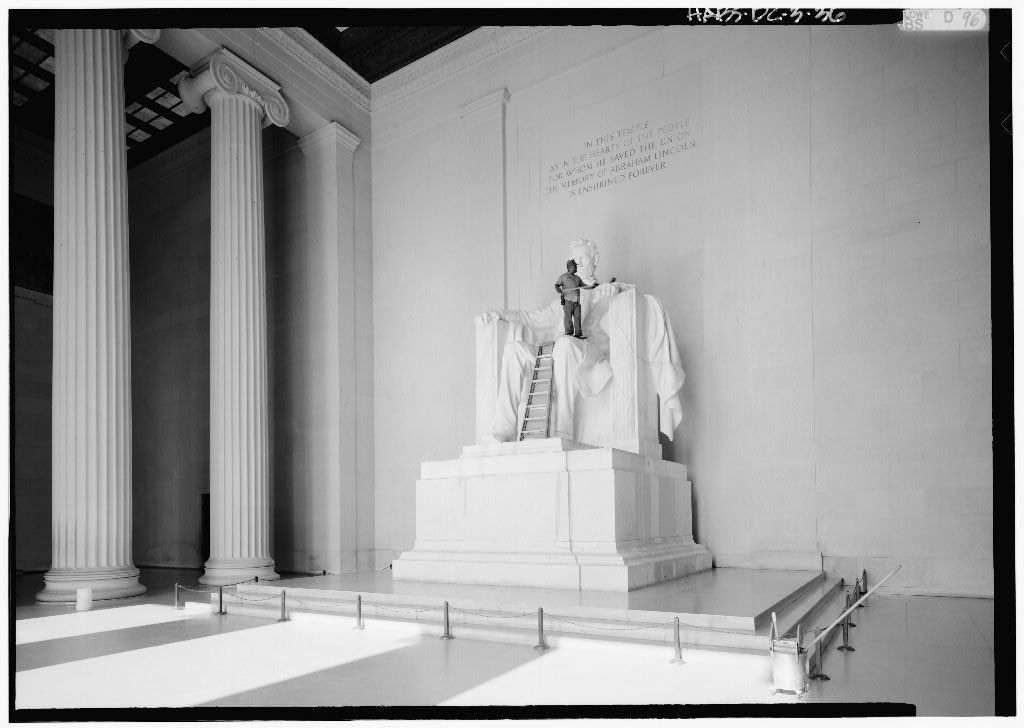
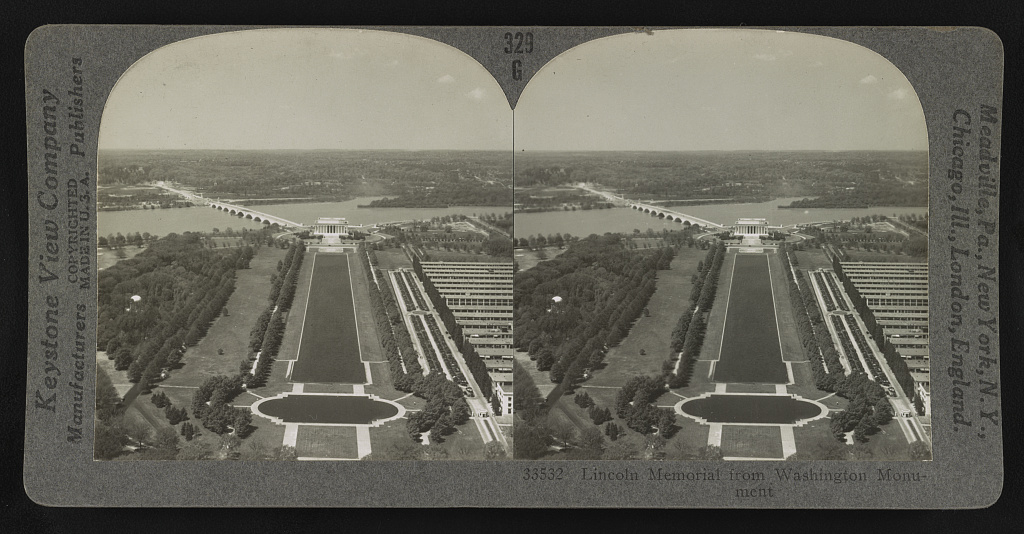
From the Library of Congress: the long view of the dedication; part of the large crowd with Washington Monument in background; 1927 map of the Mall in Washington, D.C.; laying the cornerstone on Lincoln’s birthday in 1915; Robert Russa Moton paying tribute to Mr. Lincoln; Taft, Harding with Robert T. Lincoln; Edwin Markham out in the country, apparently; Markham at the Lincoln Memorial dedication; Markham’s poem; the Memorial from the Washington Monument (1935);Robert Todd Lincoln seated; Robert and (I’m guessing) wife arrive; the Memorial under construction; July 4, 1939 fireworks as viewed from Lincoln Memorial; the memorial being cleaned. According to the Library the photo was taken on June 4, 1991. The cleaner was James Hudson, “who died at the Lincoln Memorial 4 July 1993.”

Happy 4th of July!

memorial maintenance

Memorial from Monument

Posted in 100 Years Ago, American History, Monuments and Statues | Tagged , , , , , , , , , , , | Leave a comment

forget the feud

remember the dead

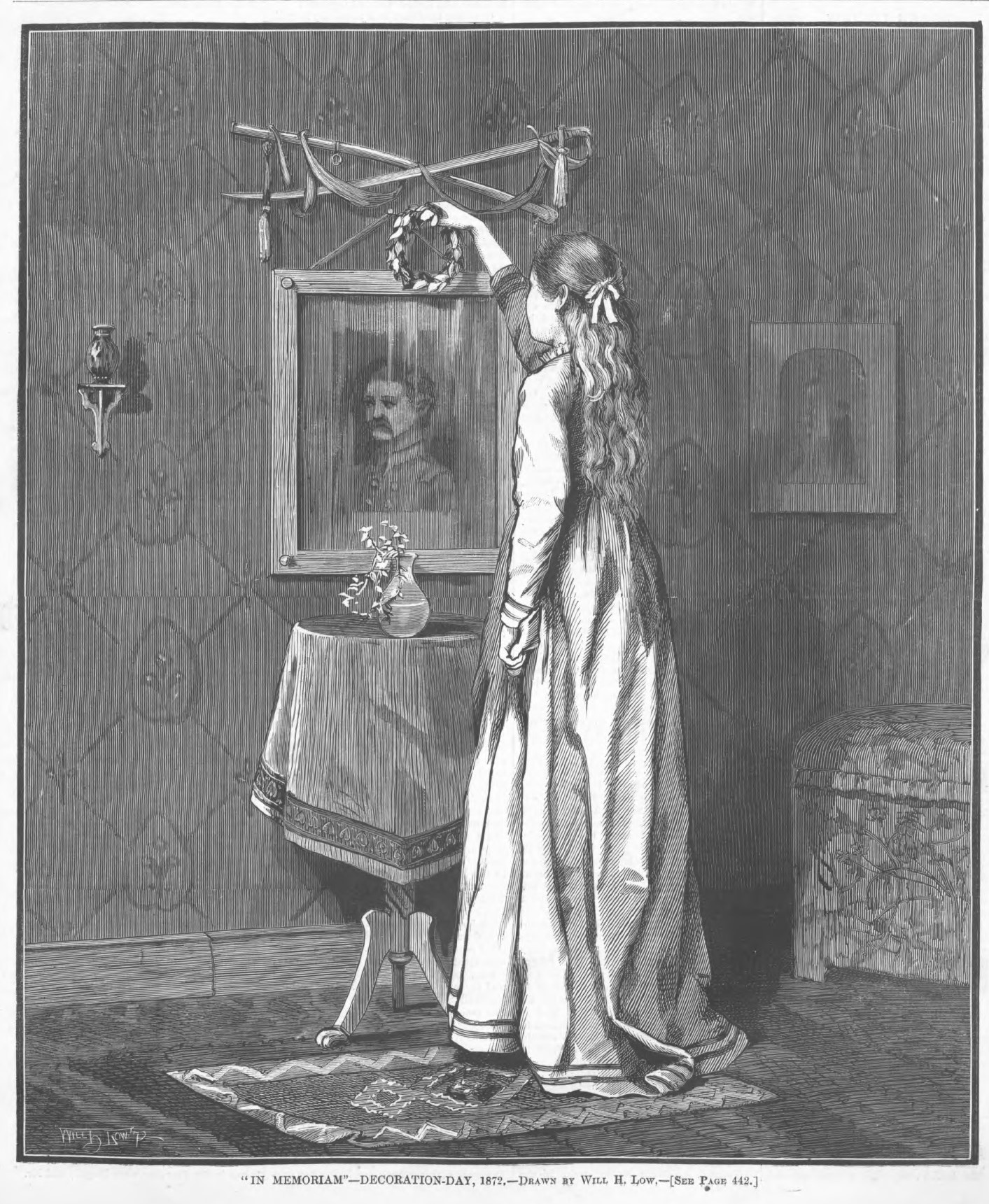
From the June 8, 1872 issue of Harper’s Weekly:

DECORATION-DAY.

In the beautiful and touching illustration on our first page this week our artist expresses the universal feeling of the country. While the people have no wish to keep alive the smouldering fires of old feuds and sectional hatreds, they will not let the memory of their dead heroes perish, or the freshness of their laurels fade. Year by year affectionate hands will strew their graves with flowers and hang wreaths upon their portraits. Not in hatred or anger, but in love and gratitude, the nation’s voice will every year repeat,

“How sleep the brave who sink to rest
By all their country’s wishes blest!”

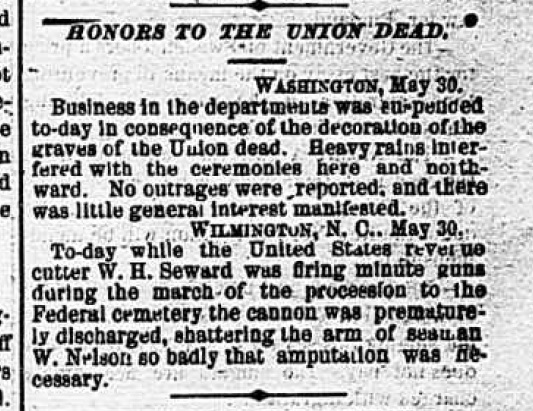
Southerners might have considered May 30th a Northern holiday. From the May 31, 1872 issue of The Charleston Daily News:

rain and amputation

You can read most of Harper’s Weekly for 1872 at HathiTrust – the article reproduced here is on pages 441-442. The clipping from the May 31, 1872 issue of The Charleston Daily News is from the Library of Congress (image 1).
Posted in 150 Years Ago This Week, Aftermath, Postbellum Society | Tagged , | Leave a comment

preacher woman

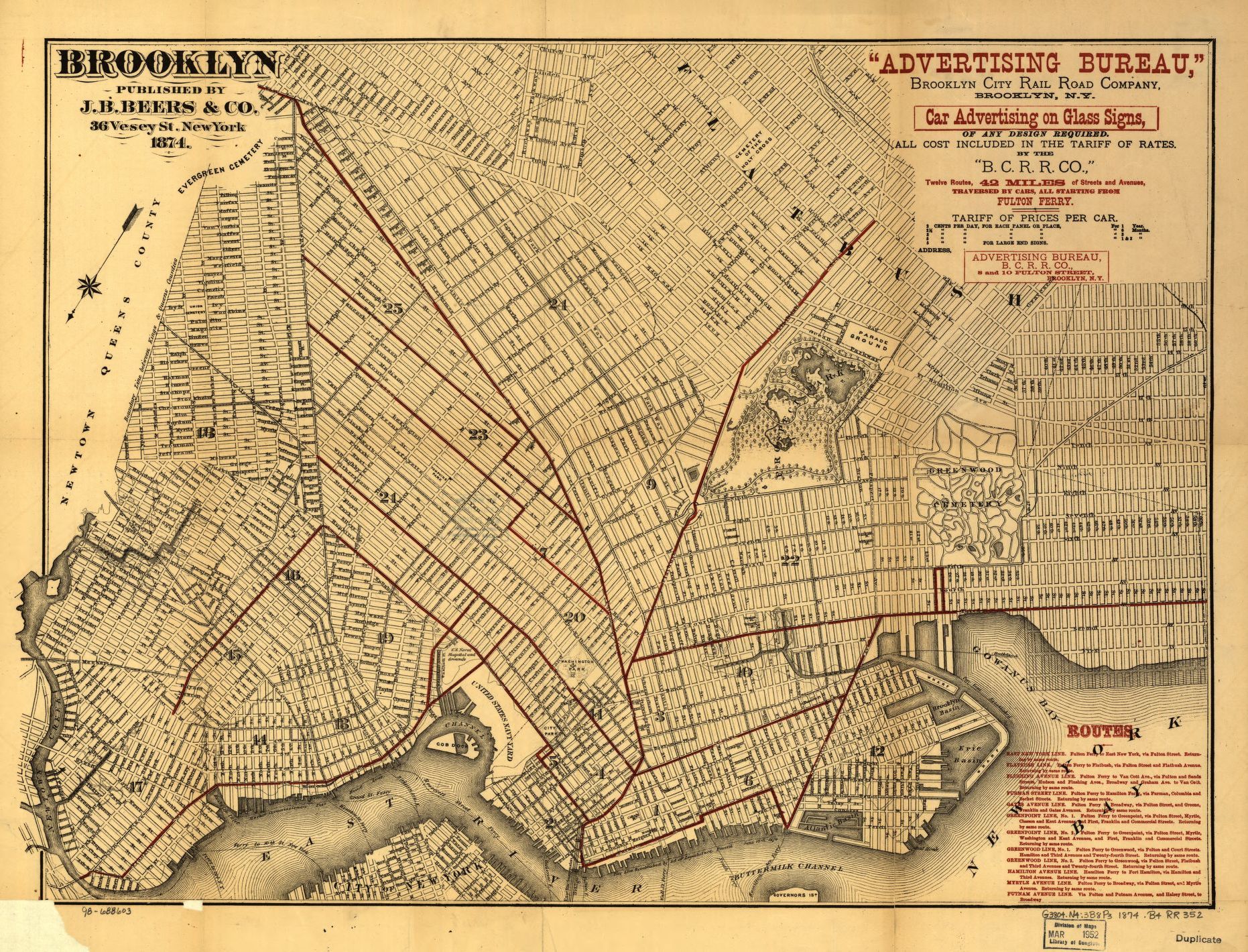
This was the city – Brooklyn, New York

From the March 2, 1872 issue of Harper’s Weekly:

A WOMAN IN THE PULPIT.

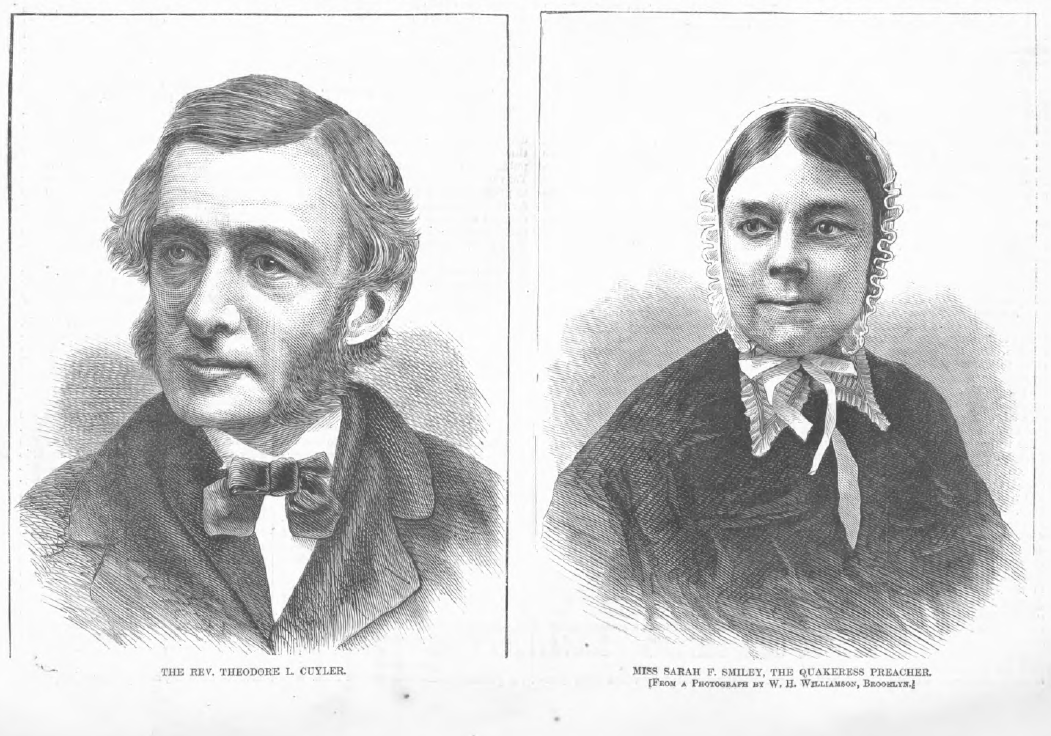
THE good Presbytery of Brooklyn have been greatly scandalized of late by the appearance of Miss SARAH F. SMILEY, a Quakeress preacher, in the pulpit of the Rev. THEODORE L. CUYLER, of the Lafayette Avenue Presbyterian Church. Miss SMILEY, as we learn from the daily papers, preached a most excellent and acceptable sermon, and none of the congregation took the least offense at the unusual spectacle of a woman in the pulpit. Not so, however, the Presbytery. Alarmed and apparently horrified at the innovation, they took immediate steps to call Dr. CUYLER to account, and a meeting of that body was held to consider what action, if any, should be taken in reference to his conduct. The moderator, the Rev. Joseph M. GREEN, expressly stated that the meeting was not called in an unfriendly spirit toward Dr. CUYLER or his church, but chiefly to ascertain the sense of the Presbytery upon the following questions: “First, shall the Presbyterian Church open corresponding relations with the Quaker Church, or Society of Friends? second, shall women be ordained as preachers? and third, shall the Presbyterian Church change its practice and modify its interpretation of Holy Scripture so as to recognize the right of women to ordination?”

At this meeting Dr. CUYLER made a full statement of the circumstances under which Miss SMILEY was invited to preach in the church of which he is pastor; and, without entering into the merits of the question at all, we do not hesitate to say that his statement was exceedingly creditable both to himself and Miss SMILEY. Dr. CUYLER’s relations with the Society of Friends are of the most intimate and cordial character. He long resided in a Quaker family. A short time since he received a courteous and fraternal invitation from the Friends to address one of their revival meetings in Brooklyn. He had accepted this invitation, had been welcomed to their preacher’s bench, or pulpit, and at the close of his discourse one of their most eminent ministers rose and said, with feeling: “We arein full accord with all that has fallen from our esteemed and beloved brother, THEODORE CUYLER. “Behold how good and how pleasant it is for brethren to dwell together in unity.’”

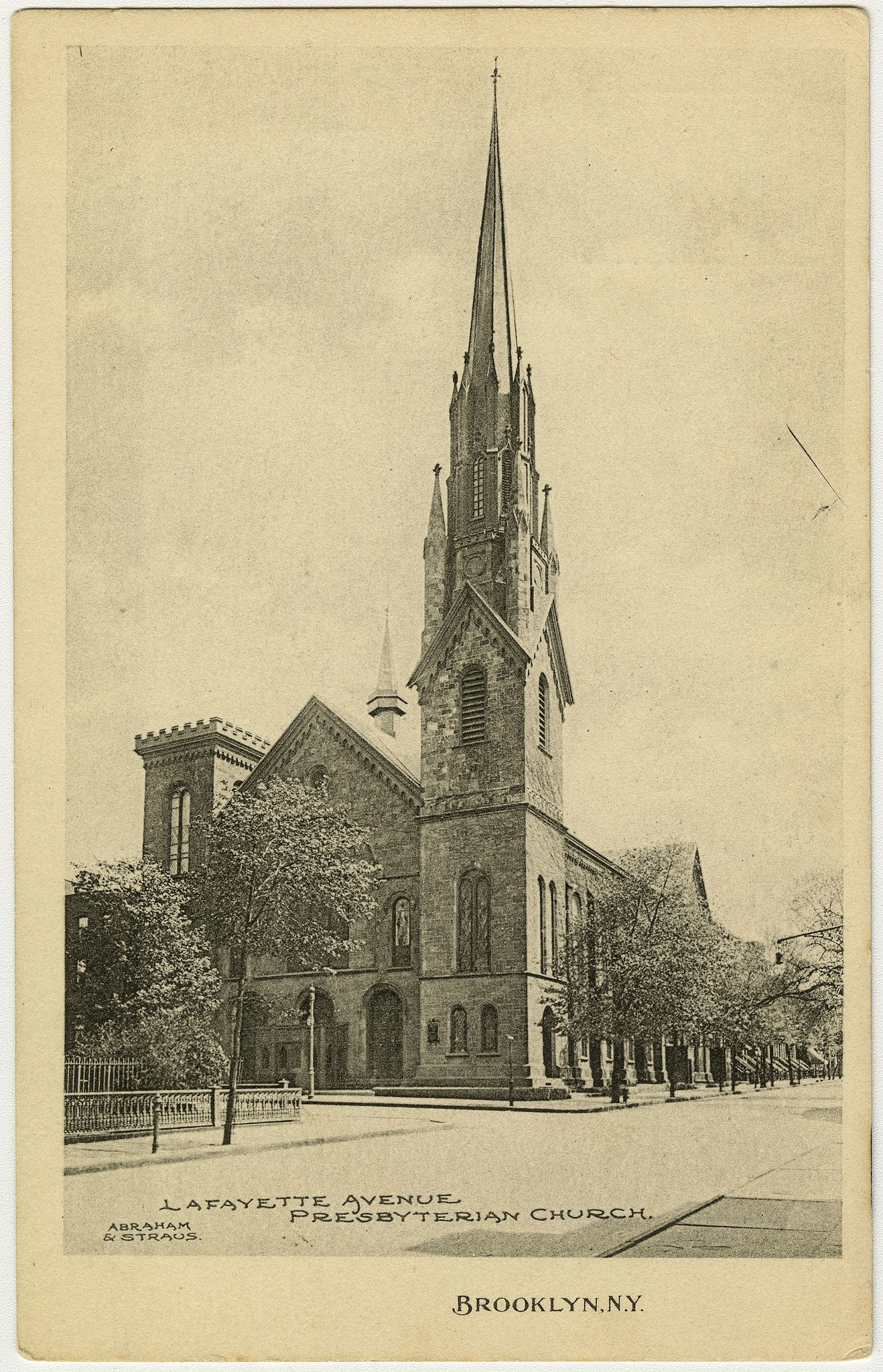
“Lafayette Ave Presbyterian Church, before 1933 when its steeple was shortened”

In response to this invitation Dr. CUYLER invited Miss SMILEY, to whose discourses he had listened with deep interest, to address his own congregation on a Sunday evening. He announced the fact to his people in advance, and not a single member of the church expressed the slightest objection. “On the following Sunday evening,” says Dr. CUYLER, “Miss SMILEY was conducted to the Lafayette Avenue pulpit by the pastor. She came there in the decorous Quaker garb, and clothed upon with humility as becometh the saints.” Unlike some of the more extravagant ladies of our own congregation, she obeyed the Pauline precept, ‘I will that the women be not adorned with gold, or pearls, or costly array.” After the usual opening services I introduced my friend to the very large, intelligent, and deeply solemn and attentive auditory. I said: ‘My esteemed friend and co-worker in the service of Christ, SARAH F. SMILEY, will now give to us such a Gospel message as she may have to offer.” Dr. Hodge, of Princeton–Dr. Hodge, of Christendom—says that St. PAUL saluted PRISCILLA as his ‘fellow-laborer in the promotion of the Gospel.” As such I introduced the good Quakeress, who having edified me with her pen, I was quite certain would edify my congregation from her lips. She used no text, but took the vision of JACOB at Bethel as her theme, and illustrated from it the upward steps of the soul from sin toward holiness and heaven; the steps being repentance of sin, faith in the atoning Saviour, and so forth. Her address, or discourse, was weighty, solemn, Scriptural, orthodox, tender, and melted some men to tears whom I have never seen so much moved before. She offered a devout and reverent prayer, a hymn was sung, and I concluded with the apostolic benediction.”

On the conclusion of Dr. CUYLER’s address an animated debate took place upon the subject of the meeting. It was not quite certain that the Presbytery knew exactly what they had come together for, or what was the real nature of Dr. CUYLER’s offense. The Rev. Dr. SPEAR and the Rev. Dr. TALMAGE and the Rev. ALFRED TAYLOR contended that the Presbytery had no occasion to act in the matter; but the Rev. Dr. VAN DIKE, the Rev. Mr. PATTON, and others took the opposite view, and spoke strongly in condemnation of women as preachers. What they had to say on the subject was most plainly and succinctly stated by the Rev. Dr. M’CLELLAND, a blind Scotch clergyman. He contended that preaching by women was not sanctioned by church law nor by the Scriptures. Not from the beginning of Genesis to the end of Malachi could a single instance be found where a woman was installed into ordinary ministerial functions. That record covered 3500 years, and during all that time only three prophetesses were mentioned, and these clearly had qualified powers. Thus you have an average of one in 1200 years. The exceptional cases, he argued, established the rule against the women. In the New Testament he contended that the authority was all against the women. The Christian church, he remarked, was founded on the synagogue, not on the temple, and who does not know that no woman was ever permitted to teach in the synagogue? Both history and presumption were against women preaching, and he concluded by contending that direct prohibition was against it also.

At length, after a long and desultory debate, the following expression of opinion was adopted: “The Presbytery having been informed that a woman has preached in one of our churches on Sabbath, at a regular service, at the request of the pastor, with the consent of the session; therefore,

“Resolved, That the Presbytery feel constrained to enjoin upon our churches strict regard to the following deliverance of the General Assembly:
“Meetings of pious women by themselves for conversation and prayer we entirely approve. But let not the inspired prohibitions of the great Apostle as found in his epistles to the Corinthians and to Timothy be violated. To teach and to exhort, or to lead in prayer in public and promiscuous assemblies, is clearly forbidden to women in the Holy Oracles.”

The Presbytery then adjourned, without without having brought Dr. CUYLER or his church to a sense of the enormity of their offense in listening to a sermon by a Christian woman.

preachers

Miss SMILEY, of whom we give a portrait on this page, is a woman of maturity, of sweet Christian character, and gifted with extraordinary powers as a preacher. She has passed her life in doing good with the talents God has given her. Two years ago she made a “religious visit” to Great Britain, and was not only honored by the British “Yearly Meeting” of Orthodox Friends with fullest fellowship, but was cordially welcomed by eminent persons of all denominations. The most brilliant man of letters in Scotland (himself a Presbyterian) sought her friendship, and opened up to her some of his spiritual difficulties; and as PRISCILLA of old expounded to the eloquent Apollos “the way of God more perfectly,” so this gifted woman brought her wise counsels to the man of genius. After the war was over she left her cultured home and went as a voluntary missionary to the emancipated slaves of the South. She taught and addressed both males and females. Those liberated bondmen “heard her gladly.” And, says Dr. CUYLER, I do not believe that if the Apostle PAUL had stood by her side he would have said, “Woman, it is a shame for you to preach Jesus Christ to these poor negroes.” Miss SMILEY is a native of Vassalborough, Maine, and is now resident in Baltimore, Maryland.

The Rev. THEODORE L. CUYLER, of whom also a portrait is given on this page, was born at Aurora, on Cayuga Lake, in 1822. His father, a lawyer of reputation and ability, died when he was only four years old. He graduated from Princeton College at the age of nineteen, and from the Princeton Theological Seminary three years later. Since then he has been settled at Burlington, Trenton, the Market Street Church, New York, and is now pastor of the Lafayette Avenue Church, in Brooklyn, whose member ship is over 1400. The church edifice seats 2000 persons.

Dr. CUYLER is not only an eloquent preacher, but a very accomplished and successful writer. He has contributed over 1500 articles to various religious papers and magazines. The ensuing spring he will visit Scotland as the delegate of the General Assembly of the Presbyterian Church to the General Assemblies of Scotland and Ireland. His course in regard to the Quakeress preacher is generally approved by the religious and secular press of the country.

The Lafayette Avenue Presbyterian Church still exits. According to its website, “The church was founded in 1857 by a number of prominent Brooklyn families residing in Clinton Hill and Fort Greene.
They sought Rev. Dr. Theodore Cuyler, a well-known author and vibrant preacher as their first Pastor. To lure him from Manhattan, they acceded to his request by building a church seating 2,000. Ground was broken in 1860 and the building was completed in 1862, with additions in 1885 and 1917.”
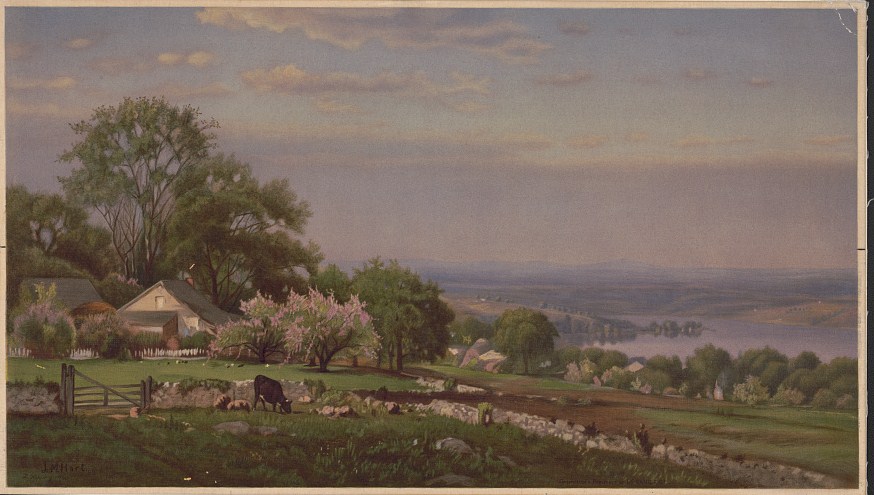
Scene near Cayuga Lake, N.Y., Spring / J.M. Hart. (1870; LOC: https://www.loc.gov/resource/pga.13768/)

overlooking Cayuga Lake

In Recollections of a Long Life An Autobiography (at Project Gutenberg) Theodore Cuyler included reminiscences about his boyhood near Cayuga Lake and the Sarah Smiley incident much later on:
BOYHOOD AND COLLEGE LIFE
Washington Irving has somewhere said that it is a happy thing to have been born near some noble mountain or attractive river or lake, which should be a landmark through all the journey of life, and to which we could tether our memory. I have always been thankful that the place of my nativity was the beautiful village of Aurora, on the shores of the Cayuga Lake in Western New York. My great-grandfather, General Benjamin Ledyard, was one of its first settlers, and came there in 1794. He was a native of New London County, Ct., a nephew of Col. William Ledyard, the heroic martyr of Fort Griswold, and the cousin of John Ledyard, the celebrated traveller, whose biography was written by Jared Sparks. When General Ledyard came to Aurora some of the Cayuga tribe of Indians were still lingering along the lakeside, and an Indian chief said to my great-grandfather, “General Ledyard, I see that your daughters are very pretty squaws.” The eldest of these comely daughters, Mary Forman Ledyard, was married to my grandfather, Glen Cuyler, who was the principal lawyer of the village, and their eldest son was my father, Benjamin Ledyard Cuyler. He became a student of Hamilton College, excelled in elocution, and was a room-mate of the Hon. Gerrit Smith, afterward eminent as the champion of anti-slavery. On a certain Sabbath, the student just home from college was called upon to read a sermon in the village church of Aurora, in the absence of the pastor, and his handsome visage and graceful delivery won the admiration of a young lady of sixteen, who was on a visit to Aurora. Three years afterward they were married. My mother, Louisa Frances Morrell, was a native of Morristown, New Jersey; and her ancestors were among the founders of that beautiful town. Her maternal great-grandfather was the Rev. Dr. Timothy Johnes, the pastor of the Presbyterian Church, who administered the sacrament of the Lord’s Supper to General Washington. Her paternal great-grandfather was the Rev. Azariah Horton, pastor of a church near Morristown, and an intimate friend of the great President Edwards. The early settlers of Aurora were people of culture and refinement; and the village is now widely known as the site of Wells College, among whose graduates is the popular wife of ex-President Cleveland.
In the days of my childhood the march of modern improvements had hardly begun. There was a small steamboat plying on the Cayuga Lake. There was not a single railway in the whole State. When I went away to school in New Jersey, at the age of thirteen, the tedious journey by the stagecoach required three days and two nights; every letter from home cost eighteen cents for postage; and the youngsters pored over Webster’s spelling-books and Morse’s geography by tallow candles; for no gas lamps had been dreamed of and the wood fires were covered, in most houses, by nine o’clock on a winter evening. There was plain living then, but not a little high thinking. If books were not so superabundant as in these days, they were more thoroughly appreciated and digested.
My father, who was just winning a brilliant position at the Cayuga County Bar, died in June, 1826, at the early age of twenty-eight, when I was but four and one-half years old. The only distinct recollections that I have of him are his leading me to school in the morning, and that he once punished me for using a profane word that I had heard from some rough boys. That wholesome bit of discipline kept me from ever breaking the Third Commandment again. After his death, I passed entirely into the care of one of the best mothers that God ever gave to an only son. She was more to me than school, pastor or church, or all combined. God made mothers before He made ministers; the progress of Christ’s kingdom depends more upon the influence of faithful, wise, and pious mothers than upon any other human agency.
As I was an only child, my widowed mother gave up her house and took me to the pleasant home of her father, Mr. Charles Horton Morrell, on the banks of the lake, a few miles south of Aurora. How thankful I have always been that the next seven or eight years of my happy childhood were spent on the beautiful farm of my grandfather! I had the free pure air of the country, and the simple pleasures of the farmhouse; my grandfather was a cultured gentleman with a good library, and at his fireside was plenty of profitable conversation. Out of school hours I did some work on the farm that suited a boy; I drove the cows to the pasture, and rode the horses sometimes in the hay-field, and carried in the stock of firewood on winter afternoons. My intimate friends were the house-dog, the chickens, the kittens and a few pet sheep in my grandfather’s flocks. That early work on the farm did much toward providing a stock of physical health that has enabled me to preach for fifty-six years without ever having spent a single Sabbath on a sick-bed!
My Sabbaths in that rural home were like the good old Puritan Sabbaths, serene and sacred, with neither work nor play. Our church (Presbyterian) was three miles away, and in the winter our family often fought our way through deep mud, or through snow-drifts piled as high as the fences. I was the only child among grown-up uncles and aunts, and the first Sunday-school that I ever attended had only one scholar, and my good mother was the superintendent. She gave me several verses of the Bible to commit thoroughly to memory and explained them to me; I also studied the Westminster Catechism. I was expected to study God’s Book for myself, and not to sit and be crammed by a teacher, after the fashion of too many Sunday-schools in these days, where the scholars swallow down what the teacher brings to them, as young birds open their mouths and swallow what the old bird brings to the nest. There is a lamentable ignorance of the language of Scripture among the rising generation of America, and too often among the children of professedly Christian families.
The books that I had to feast on in the long winter evenings were “Robinson Crusoe,” “Sanford and Merton,” “The Pilgrim’s Progress,” and the few volumes in my grandfather’s library that were within the comprehension of a child of eight or ten years old. I wept over “Paul and Virginia,” and laughed over “John Gilpin,” the scene of whose memorable ride I have since visited at the “Bell of Edmonton,” During the first quarter of the nineteenth century drunkenness was fearfully prevalent in America; and the drinking customs wrought their sad havoc in every circle of society. My grandfather was one of the first agriculturists to banish intoxicants from his farm, and I signed a pledge of total abstinence when I was only ten or eleven years old. Previously to that, I had got a taste of “prohibition” that made a profound impression on me. One day I discovered some “cherrybounce” in a wine-glass on my grandfather’s sideboard, and I ventured to swallow the tempting liquor. When my vigilant mother discovered what I had done, she administered a dose of Solomon’s regimen in a way that made me “bounce” most merrily. That wholesome chastisement for an act of disobedience, and in the direction of tippling, made me a teetotaller for life; and, let me add, that the first public address I ever delivered was at a great temperance gathering (with Father Theobald Mathew) in the City Hall of Glasgow during the summer of 1842. My mother’s discipline was loving but thorough; she never bribed me to good conduct with sugar-plums; she praised every commendable deed heartily, for she held that an ounce of honest praise is often worth more than many pounds of punishment.
During my infancy that godly mother had dedicated me to the Lord, as truly as Hannah ever dedicated her son Samuel. When my paternal grandfather, who was a lawyer, offered to bequeath his law-library to me, my mother declined the tempting offer, and said to him: “I fully expect that my little boy will yet be a minister.” This was her constant aim and perpetual prayer, and God graciously answered her prayer of faith in His own good time and way. I cannot now name any time, day, or place when I was converted. It was my faithful mother’s steady and constant influence that led me gradually along, and I grew into a religious life under her potent training, and by the power of the Holy Spirit working through her agency. A few years ago I gratefully placed in that noble “Lafayette Avenue Presbyterian Church” of Brooklyn (of which I was the founder and pastor for thirty years) a beautiful memorial window to my beloved mother representing Hannah and her child Samuel, and the fitting inscription: “As long as he liveth I have lent him to the Lord.”
For several good reasons I did not make a public profession of my faith in Jesus Christ until I left school and entered the college at Princeton, New Jersey. The religious impressions that began at home continued and deepened until I united, at the age of seventeen, with the Church of the Lord Jesus Christ. As an effectual instruction in righteousness, my faithful mother’s letters to me when a schoolboy were more than any sermons that I heard during all those years. I feel now that the happy fifty-six years that I have spent in the glorious ministry of the Gospel of Redemption is the direct outcome of that beloved mother’s prayers, teaching example, and holy influence. …
A RETROSPECTIVE …
Another change for the better has been the enlargement of woman’s sphere of activity in the promotion of Christianity and of moral reform. As an illustration of this fact, I may cite a rather unique incident in my own experience. During the winter of 1872 I invited Miss Sarah F. Smiley, an eminent and most evangelical minister in the Society of Friends (and a sister of the Messrs. Albert and Daniel Smiley, the proprietors of the Lake Mohonk House) to deliver a religious address in my pulpit. The discourse she delivered was strong in intellect, orthodox in doctrine and fervently spiritual in character; the large audience was both delighted and edified. A neighboring minister presented a complaint before the Presbytery of Brooklyn, alleging that my proceeding had been both un-Presbyterian and un-Scriptural. The complainant was not able to produce a syllable of law from our form of government forbidding what I had done. Long years before, a General Assembly had recommended that “women should not be permitted to address a promiscuous assemblage” in any of our churches; but a mere “deliverance” of a General Assembly has no binding legal authority.
In my defense I was careful not to advocate the ordination of women to the ministry in the Presbyterian Church, or their installation in the pastorate. I contended that as our confession of faith was silent on the subject, and that as godly women in the early church were active in the promotion of Christianity (one of them named Anna having publicly proclaimed the coming Messiah), and that as the ministry of my excellent friend, the Quakeress, had for many years been attended by the abundant blessings of the Holy Spirit, my act was rather to be commended than condemned. The discussion before the Presbytery lasted for two days and produced a wide and rather sensational interest over the country. The final vote of the Presbytery, while withholding any censure of my course under the circumstances, was adverse to the practice of permitting women to address “promiscuous audiences” in our churches. Two or three years afterwards, a case similar to mine was appealed to the General Assembly and that body wisely decided that such questions should be left to the judgment and conscience of the pastors and church sessions. When the news of this action of the assembly reached us, the old sexton of the Lafayette Avenue Church hoisted (to the great amusement of our people) the stars and stripes on the church tower as a token of victory. It has now become quite customary to invite female missionaries, and other godly women, to address audiences composed of both sexes in our churches; the padlock has been taken off the tongue of any consecrated Christian woman who has a message from the Master. I invited Miss Willard and Lady Henry Somerset to advocate the Christian grace of temperance from my pulpit; and if I were still a pastor I should rejoice to invite that good angel of beneficence, Miss Helen M. Gould, to deliver there such an address as she lately made in the splendid building she has erected for the “Naval Christian Association.”

a spoonful of sugar?

In its February 10, 1872 issue The Charleston Daily News published correspondence from New York City. The article reported on the Presbyterian “trial” of Reverend Cuyler for allowing a woman to preach from his pulpit and then went on to describe how some Brooklyn ministers were using Sarah Smiley’s star power to help attract the unchurched to services:
A recent exhibit of the condition of the churches in New York showed that the seating capacity was less than three hundred thousand. This leaves a population of seven hundred thousand unchurched; or, taking into account young children and invalids who cannot attend religious services, at least a third of a million of people in the city could not be accommodated with church sittings if they desired them. The larger proportion of these is, undoubtedly, of the poorer classes. With them, however, it is rather indifference than want of church accommodations that prevents their hearing the Gospel preached unto them.
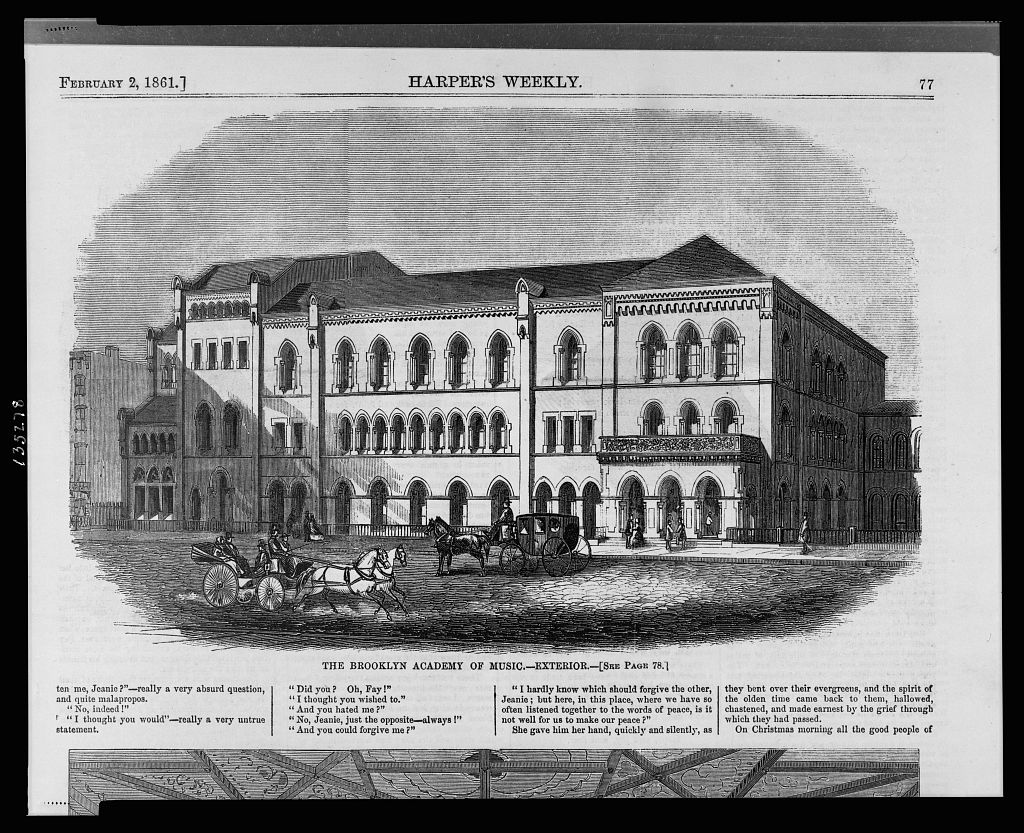
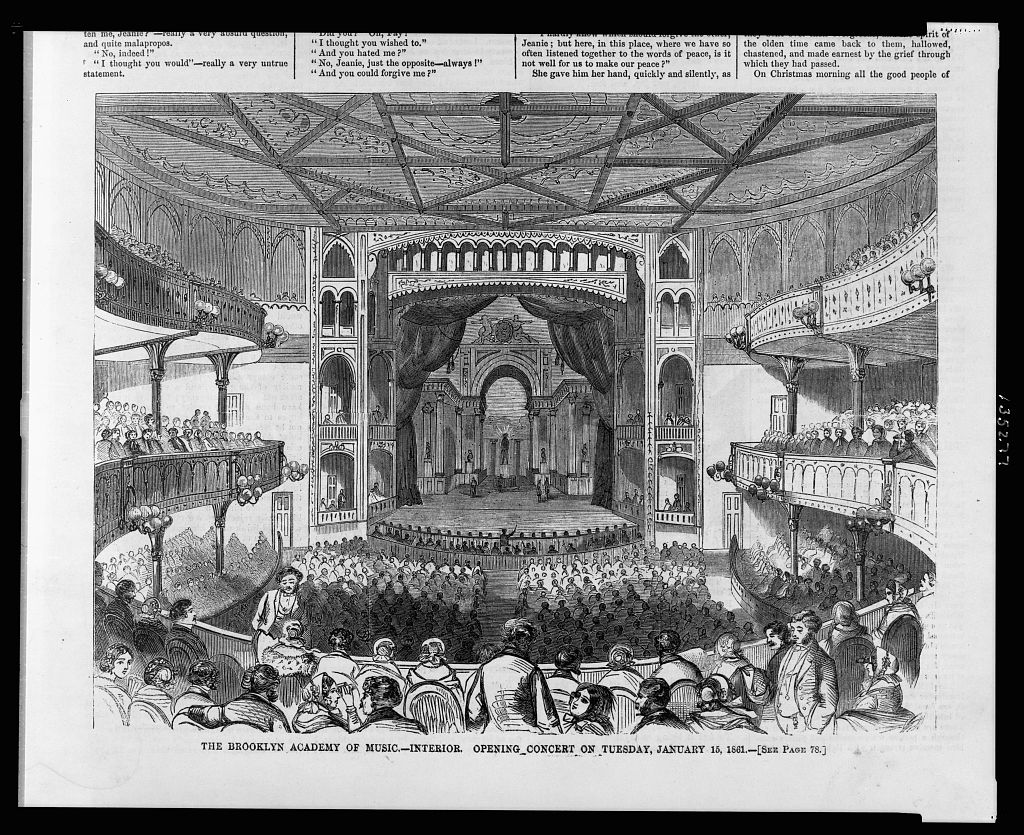
How to get down the drag net so as to gather in the people who don’t care to go to church has been the interesting problem of some of our local evangelists. Services in theatres have oftentimes before attracted the indifferent class, and many, doubtless, who came to be amused remained to pray. A number of Brooklyn ministers hit upon a plan for alluring the outsiders to religious services, and last Sunday night it we it went into successlul operation. The elegant Academy of Music in that city has been engaged for a series of Sunday evenings at a cost of one hundred dollars per night, the expenses being defrayed by subscription. Posters were put up all over the city announcing the programme of entertainments for the evening. “Seats free and no collection taken up.”The star name was that of Miss Smiley, the Quakeress preacher, whose appearance in Dr. Cuyler’s pulpit has caused that gentleman so much bother. Madame Varian Hoffman, the celebrated singer, was announced for solos, assisted by a first-class choir. Mr. Gallaher, the most sensational of the Baptist ministers, (who draws equal to Beecher,) and Dr. Powers, a powerful Congregational preacher, were also promised.
The consequence was that never since the Academy of Music was built had such a multitude filled it. Not only was every seat occupied, but every inch of standing room in the auditorium, even up to the roof. The stage in rear of the speakers and singers was packed with human beings, who stood during the service. The orchestra was full and so were the stage boxes. The doors had to be closed a quarter of an hour before services began, as no more people could get in with safety to the building, and even some of the choristers were unable to penetrate through the mass. The services were a decided success, and when Miss Smiley concluded her earnest appeal, so strong is habit, there was a round of applause in the gallery. Dr. Powers, who conducted the proceedings, announced as stars for the forthcoming evenings Rev. Dr. Chapin and Rev. Mr. Hepworth. One of the secular papers irreverently called this “sugar¬coated religion,” but what matter so long as the class for which it is intended are induced to accept it?

NYM

opened three months before Fort Sumter

Sarah F. Smiley published several books about her Christian faith. In Who is He? An Appeal to Those Who Regard with Any Doubt the Name of Jesus (at HathiTrust), Sarah Smiley refutes the idea that truth of the gospel is changeable, but does write, “Unquestionably Christian practice admits of development and change. The Gospel is not a collection of precise forms and minute directions. It does not propose to chisel out for us rows of perfect statues, but to give us armies of living men —laborers for our harvest-fields —adapted variously to the age they live in, and the work which is assigned them. The laws of life and health, the laws of perfect growth and full service, are, indeed, most jealously guarded; but in minor matters, a large authority and power of judgment is entrusted to the Church, under the control and direction of the Head of the Church. For guidance in his own special path of duty, the believer must rest on that broad promise: “I will guide thee with mine eye [Psalm 32.8]. But this is not our question —Is ” the word of the truth of the Gospel” to change ? Abundant space there is, indeed, both in our individual lives, and from one generation to another, to grow in knowledge— to understand and to apply, under ever-changing circumstances, that which has been once revealed. But as to the Truth itself, that promised Spirit of Truth came then, and was given to the Apostles, largely and miraculously, for their all-important work in the Church of Christ. And so it is still the one unchangeable Truth …”

ordained in 1853

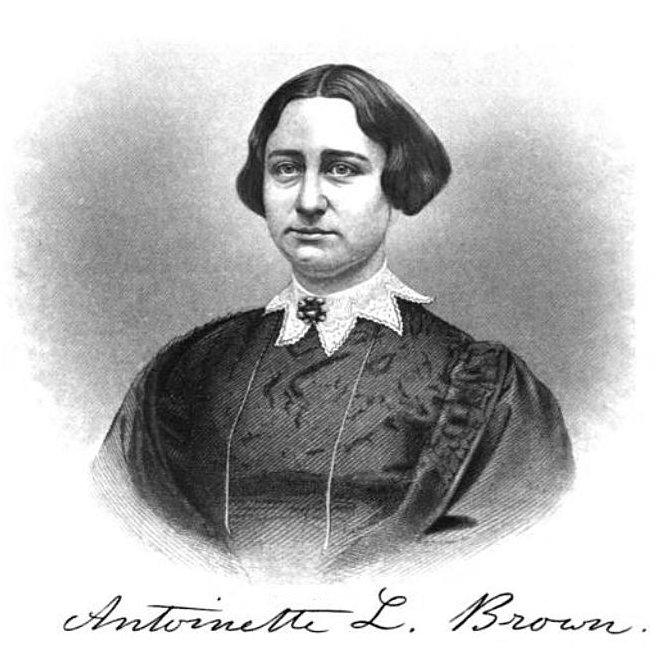
Coinciding with Women’s History Month this year, Seneca County (NY) historian Walt Gable produced a pamphlet chock-full of “Famous (or Should Be-Famous) Finger Lakes Females.” Needless to say, I wasn’t familiar with many of the females. A good example is Antoinette Brown Blackwell, “the first woman to be ordained as a mainstream Protestant minister in the United States.” After receiving a literary degree at Oberlin College, she was allowed to take some theology courses at the college, but the college administration prohibited her from receiving “formal recognition.” Nevertheless, she weighed in on women’s place in the Church:
Antoinette was a prolific writer and charismatic public speaker. Her exegesis on the writings of the Apostle Paul was published in the Oberlin Quarterly Review. It is there, from a brief excerpt, that her understanding of what may now be popularly called feminist theology, takes shape as she writes: “Paul meant only to warn against ‘excesses, irregularities, and unwarrantable liberties’ in public worship.'” She insisted that the Bible and its various pronouncements about women were for a specific span of time and certainly not applicable to the 19th century. Even though women were not asked to do public speaking during this time Antoinette was asked to speak in Ohio and New York to speak about anti-slavery and on women’s rights. In April 1860, Brown returned to Oberlin College to deliver a lecture entitled “Men and Women.” Testament to Brown’s oratory skills appeared in a student letter which noted, “it was an excellent lecture.”
On September 15, 1853, Antoinette Brown (she was married in 1856) was ordained a minister at the Congregational Church in South Butler, New York. You can read Reverend Luther Lee’s sermon for the service, “Woman’s right to preach the gospel,” at the Library of Congress. His text was part of Galatians 3.28: “There is neither male nor female; for ye are all one in Christ Jesus.” Reverend Lee analyzed many bible verses and thought the preponderance of the evidence was in favor of females being allowed to preah. Here is his conclusion:
We are here assembled on a very interesting and solemn occasion, and it is proper to advert to the real object for which we have come together. There are in the world, and there may be among us, false views of the nature and object of ordination. I do not believe that any special or specific form of ordination is necessary to constitute a gospel minister. We are not here to make a minister. It is not to confer on this our sister, a right to preach the gospel. If she has not that right already, we have no power to communicate it to her. Nor have we met to qualify her for the work of the ministry If God and mental and moral culture have not already qualified her, we cannot, by anything we may do by way of ordaining or setting her apart. Nor can we, by imposition of our hands, confer on her any special grace for the work of the ministry, nor will our hands if imposed upon her head, serve as a special medium for the communication of the Holy Ghost, as conductors serve to convey electricity; such ideas belong not to our theory, but are related to other systems and darker ages. All we are here to do, and all we expect to do, is, in due form, and by a solemn and impressive service, to subscribe our testimony to the fact, that in our belief, our sister in Christ, Antoinette L. Brown, is one of the ministers of the New Covenant, authorized, qualified, and called of God to preach the gospel of his Son Jesus Christ. This is all, but this even renders the occasion interesting and solemn. As she is recognized as the pastor of this flock, it is solemn and interesting to both pastor and flock, to have the relation formally recognized. But as a special charge is to be given to both, by others, I forbear to open the subject of their mutual responsibilities, and will conclude by invoking the blessing of the Father, and of the Son, and of the Holy Ghost upon both preacher and people. Amen
Antoinette was only pastor for about a year. She returned to her “work as orator and reformer.” According to Wayne County historians, the South Butler church is now a private residence.
Apparently the Presbyterian Church has changed over the years. According to a sign and a historical marker out front, the first equal rights amendment was proposed at the First Presbyterian Church in Seneca Falls, New York On July 20, 1923 by Alice Paul.

at Presbyterian Church, Seneca Falls, New York

You can read all of Harper’s Weekly for 1872 at HathiTrust – the article reproduced here is on pages 169-170. I got the postcard of the church before the steeple was shortened at Wikimedia Commons. More about Reverend Cuyler at Wikipedia and Banner of Truth. The image of Antoinette Brown comes via Wikipedia. The photo of the historical marker at the the First Presbyterian Church in Seneca Falls, New York was taken on April 20, 2022.
From the Library of Congress: Brooklyn street map (1874); painting of Cayuga Lake (1870); Brooklyn Academy of Music exterior and interior, both published in the February 2, 1861 issue of Harper’s Weekly
Posted in 150 Years Ago, Postbellum Society | Tagged , , , , , | Leave a comment

artifact on parade

still rollin’

From the March 16, 1872 issue of Harper’s Weekly:

WASHINGTON’S CARRIAGE.

ONE of the most interesting incidents of the grand parade in this city [New York City] on the 22d of February was the appearance in the procession of a carriage of venerable and antique structure which once belonged to GEORGE WASHINGTON. The carriage, which is nearly a century old, was drawn by four horses driven by a member of the order of United American Mechanics. It is, of course, but a mere wreck: portions of the old lamps are still remaining; the windows are entirely gone, but some parts of the green Venetian blinds are still there. The vehicle is unlike any of the present day; the body of the carriage can only be compared to a monstrous chapeau turned upside down, and hung upon leather springs, by which all personal discomfort to the rider is prevented, even when passing over the roughest kind of road, for only a pleasant swinging motion is produced. The lower portion is a dirty yellow, the upper black. It will seat four persons comfortably, provided they are of moderate size. Behind the carriage is a sort of cushion, covered with leather, on which the footman stood in the olden time.

Father of his Country

This venerable vehicle was built in Philadelphia for General WASHINGTON during his first Presidential term. On his departure for Mount Vernon it was presented by him to Miss POWELL, who retained possession of it till her death, when it descended to her nephew, Colonel JOHN HARE POWELL, a wealthy and influential citizen of Philadelphia. In order to preserve it, this gentleman built a coach-house on his premises at Powelton, where it was housed for many years. His estate having been purchased by a railroad company, the carriage was sent for safe-keeping to the establishment of Mr. WILLIAM DUNLAP, in Philadelphia, in whose possession it still remains.

For some years past the carriage has been a prominent feature in patriotic processions in Philadelphia and other cities. It was the principal attraction at the Philadelphia Sanitary Fair, when thousands of visitors were allowed, for a trifling fee, to sit on the cushions once occupied by the Father of his Country. It was procured for the recent procession by Mr. WILLIAM H. MATHER, of Hoboken, New Jersey, a prominent member of the order of United American Mechanics, to whose courtesy we are indebted for the photograph from which our illustration was made.

According to The Library Company of Philadelphia, the Order of the United American Mechanics ” was an anti-immigration, anti-Catholic benevolent society that provided its white, native-born members with sick and funeral funds.”
John Hare Powel was reportedly “an American agriculturist, politician, art collector and philanthropist from Pennsylvania.” His son, “John Hare Powel Jr. (1837–1890) served as lieutenant colonel of the 9th Rhode Island Infantry during the Civil War …”
The 1872 volume of Harper’s Weekly is at HathiTrust. From the Library of Congress: portrait – said to be a photograph by Matthew Brady of a Gilbert Stuart painting of Mr. Washington during his presidency; carriage.

Happy 290th!

Posted in 150 Years Ago This Week, American Culture, American History | Tagged , , , , , | Leave a comment

with counsel like that

From the January 27, 1872 issue of Harper’s Weekly:

THE KU-KLUX.

klandestine toilet

WE give on this page an illustration, engraved from a photograph from life, showing three members of a band of Mississippi Ku-Klux, who are now under indictment in that State for the attempted murder of a family by the name of HUNICUTT. These men were captured last September in Tishamingo [sic] County, Mississippi, by G.W. WELLS, United States Attorney for the Northern District of that State, assisted by United States Marshal J.H. PIERCE, and his deputy, JOHN M’COY. The illustration is doubly interesting as showing the disguises actually worn by these miscreants. They are not, however, always so elaborate in their brigand toilet. A white blanket or sheet thrown over the head, with holes for the eyes, is usually sufficient.

It is gratifying to know that the government is putting forth efficient exertions to bring to justice these miscreants in every part of the South troubled by their presence. While there is evidence that the better portion of the Southern people discountenance the outrages committed by the Ku-Klux bands, it is no less evident that nothing short of the most energetic and summary measures on the part of the general government can bring them to an end, and give protection to peaceful citizens, black and white. The outrages committed in Kentucky, Mississippi, and the Carolinas by these brigands are too notorious for denial. In the recent trials at Columbia, South Carolina, one of the counsel for the prisoners, the Hon. REVERDY Johnson, felt compelled by the evidence to use this extraordinary language toward his own clients:

indefensible

“Neither my distinguished friend Mr. STANBERY nor myself are here to defend, or justify, or palliate any outrages that may have been perpetrated in your State by the association of Ku-Klux. I have listened with horror to some of the testimony which has been brought before you. The outrages proved have been shocking to humanity; they admit neither of justification nor excuse; they violate every obligation which law and nature impose upon men. These men appear to have been alike insensible to the obligations of humanity and religion; but the day will come, however, if it has not already arrived, when they will deeply lament it. Even if justice should not overtake them, there is another tribunal from which there is no escape. It is their own conscience, that tribunal which sits in the breast of every living man, that still small voice that thrills through the heart, and as it speaks gives happiness or torture — the voice of conscience — the voice of God.”

Had this language come from the lips of a “Federal judge” or a “military satrap,” it might have been characterized as exaggerated, or suspected of violent partisanship; but forced by irresistible evidence from the lips of the prisoners’ own counsel, it must be accepted as conclusive testimony to the truth of the charges against these lawless disturbers of the South.

Recent intelligence from Kentucky shows that the government can not be too prompt and energetic in its measures of protection. On the night of the 2d inst. a band of twenty Ku-Klux made a raid upon some negroes near Frankfort, in that State, whipping one of them and ordering the others to leave the neighborhood on pain of death. One farmer was warned to employ none but white laborers. It is the declared purpose of these outlaws to drive the negroes from the county. But the day is past when such threats can be carried out. These outlaws will speedily be taught that the government will protect peaceable citizens in the full enjoyment of their rights, life, and property, if it takes the whole military power of the nation to do it.

From the same newspaper’s February 24, 1872 issue:

THE artist, on page 160, pictures an outrage of frequent occurrence in some of the most turbulent districts of the Southern States. The scene is the interior of a negro cabin, where the little family – fearing no evil — is gathered after the work of the day is over. Suddenly the door is opened, and a member of the Ku-Klux Klan appears, with gun in hand, to take the life of the harmless old man who sits at the fire-place, and whose only “crime” is his color. It is to be hoped that under a rigorous administration of the laws these deeds of violence will soon cease forever.

page 160

In its January 20, 1872 issue Harper’s Weekly reported a riot in Rochester, New York:

DOMESTIC INTELLIGENCE.


There was serious trouble recently at Rochester, New York. A negro named Howard brutally outraged a white child ten years old. Upon being arrested he was threatened with Lynch Law by an excited crowd, by whom the jail in which he was confined was attacked. It was defended by a military force, who were compelled to fire upon the rioters, several of whom were killed. The negro was subsequently tried secretly, and on pleading guilty, he was sentenced to twenty years’ imprisonment in the Auburn State-Prison, whither he was immediately conveyed.

honoring an alumnus

You can read all of Martin Luther King Jr.’s August 28, 1963 “I Have a Dream” speech at NPR. Here are a couple paragraphs:

I have a dream that one day even the state of Mississippi, a state sweltering with the heat of injustice, sweltering with the heat of oppression will be transformed into an oasis of freedom and justice.

I have a dream that my four little children will one day live in a nation where they will not be judged by the color of their skin but by the content of their character. I have a dream today.

You can read more about Reverdy Johnson at the Library of Congress.
Thomson200’s photo of the MLK statue at Morehouse College is at Wikimedia Commons. Mr. King earned his BA there and graduated in 1948 when he was nineteen years old (see Wikipedia).
The 1872 volume of Harper’s Weekly is at HathiTrust. The article about the Ku Klux Klan trial in Mississippi appears on page 73. The illustration of the raid is on page 160 with description on page 157. You can see the summary of the Rochester riot on page 51. From the Library of Congress: Reverdy Johnson.
You can read more about the Ku Klux Klan at Mississippi Encyclopedia.

Posted in 150 Years Ago This Month, Postbellum Society, Reconstruction, Southern Society | Tagged , , , , , | Leave a comment

resolutions galore

150 years ago today a Chicago editorial looked at the year just past and saw the terrible destruction of the Great Chicago Fire in October 1871 as a source of hope for the coming year – citizens had a great opportunity to apply their energy and industriousness to the work of rebuilding the city. The piece next offered a series of New Year’s resolutions for various city stakeholders, and then the Tribune resolved to continue it’s own work as an advocate for non-partisan “Truth, Justice, and Right.”

From the January 1, 1872 issue of The Chicago Tribune:

The Russian is coming

THE NEW YEAR.

The New Year has come with Alexis, bringing with it sundry provocations to make allusions to scythes, hour-glasses, biers, garlands, cherubs, and other properties which pertain to the last act of 1871 and the first act of 1872. The curtain goes down upon a reality of ruins, and rises again upon the future no man can draw, except with the inspiration of hope. We transfer from the books of 1871 to the new set, a clear balance of acres of broken brick, stone, and iron, and a dozen broken Aldermen, with a determination to remove the one entry and correct the other, as a basis for this year’s work. At the commencement of no previous year has Chicago had such a magnificent field for labor. There is work enough for every man, woman, and child, and plenty of money to pay for it; and, as work brings contentment and peace with it, our chances for a Happy New Year ought to he of the brightest description.

The Old Year left us a margin of time sufficient to clear away the wreck and now we have some three hundred and sixty-six days for good honest endeavor. The fire which burns over the prairie in the fall makes the young grass of the next spring always greener and stronger, and the soil richer and more productive. The same result will ensue in our own case, if we hasten to seize upon the advantages offered us. It would be quite superfluous for us to suggest what course should he adopted or what dangers avoided in shaping and making the New Chicago. Every jagged wall and heap of bricks is eloquent enough with these suggestions, and it is to be presumed that every owner of a pile of this sort has wisdom enough to heed these suggestions and act thereon.

Opportunity for the New Year

As all of us become violently virtuous on New Years Day and make sundry resolutions, it is probable that we shall do the same to-day. It will be in order, therefore, for city officials to resolve to be honest and spurn bribes and other moneyed considerations to do wrong; for property-owners to resolve to build no more shams, and for builders to observe honesty as a material part of their contracts; for the horse railroad companies to be compassionate toward their brute servants and not tax them beyond their strength; for the West Side Gas Company to furnish a better article for illumination; for grocers to put less sand in their sugar, and for all dealers to give better measure and weight; for young men to drink less whiskey, and for young women to wear less finery; for the unmarried to get married. and for the married to stay married; for the clergy to write better sermons, and for the laity to pay better attention to them; for the lawyers to be more scrupulous, and for the doctors no longer to consort with death; for the rich to be more charitable to the poor, and for the poor to be more tolerant of the rich; for insurance men to be repentant, for insurers to reduce per cents, and for Board of Trade men not to doctor grain; and for every man to forgive his enemy and not let the sun go down upon his wrath, this evening.

It were useless to speak of the New Year elsewhere, for we shall have all that we want to do here with it; and, in the great work of municipal reorganization to be done, the newspaper must of necessity take a prominent place. While wishing all its readers a Happy New Year, and thanking all its patrons for favors in the Old, THE TRIBUNE will henceforth, as always, labor for the best interests of the new city; will still continue to be the people’s Tribune, advocating the right without regard to men; and, in the administration of City, State, and National affairs, demand only the Truth, Justice, and Right, for these are higher than Party, Creed, and Sect.

Hospitality, American Style

Grand Duke reviews NY City Metropolitan Fire Brigade

Grand Duke tours Chicago’s burnt district

According to Wikipedia, Grand Duke Alexei Alexandrovich actually arrived in Chicago on December 30, 1871:
The city was recovering from the great fire. Joseph Medill, mayor of Chicago, had written to the Grand Duke:
“We have but little to exhibit but the ruins and débris of a great and beautiful city and an undaunted people struggling with adversity to relieve their overwhelming misfortunes.”
He visited the destroyed part of the city and was impressed by the rhythm of the reconstruction. He gave US$5,000 (equivalent to $250,000 today) in gold to the homeless people of Chicago. Alexei also visited the stockyards and a pork processing plant.
As the Tremont House Hotel had been burnt to the ground, he was accommodated in the New Tremont House which had opened on Michigan Avenue, where he was awarded the “Freedom of the City”. On New Year’s Day General Philip Sheridan initiated him into the American custom of making “New Year’s calls upon the ladies”.
Wikipedia goes on to say that later in January the Grand Duke participated in a buffalo hunt in Nebraska, apparently with Generals Sheridan and Edward Ord, Lt. Colonel George Custer, and “Buffalo Bill” Cody.

Custer and Grand Duke pose

You can never tell. The Chicago Tribune’s January 1, 1871 editorial seems kind of ironic after a year:
Our own city of Chicago is striding forward –
“To her throne amid the marts,”
with a rapidity unexampled in the history of cities. Republican palaces are rising around us on every street. Edifices, modelled after the residences of the crowned heads of Europe in their order of architecture, are rising on our central streets, and will be devoted to the purposes of commerce, or the wants of travel — thus reasserting, in stone and iron, the essential truth of the sovereignty of the people. Where the people resort, there are our palaces; and none in the world are vaster or more permanent. In all these exhibitions of progress there is not merely the toil of the effort, but the enjoyment of success. Side by side with the temples of trade, and not less costly, are those of art, of song, of worship, and of amusement. These are significant proofs that our enterprise is not sordid, but that our success is human, and that, hand-in-hand with it, go all the amenities, graces, and enjoyments of a true life. Trusting that all these may fall within the experience of our readers, one and all, we tender them gratefully and cordially the wish of the hour — a Happy New Year.
From the Library of Congress: Chicago ruins, looking northwest from Michigan Ave. hotel; Grand Duke’s drive through the burnt district, from Frank Leslie’s illustrated newspaper, vol. 35, no. 899 (1872 Dec. 21), p. 301; the photo of Custer and Alexiei; Currier & Ives 1876 wish.
Harper’s Weekly provided a lot of coverage of the Archduke’s American visit from the middle of October through at least the end of 1871. The portrait, cartoon, and review of the fire brigade come from that publication. You can see almost all of Harper’s Weekly for 1871 at HathiTrust.
Happy new year (New York : Published by Currier & Ives, c1876.; LOC: https://www.loc.gov/item/2002695831/)

hope it is a good one

Posted in 150 Years Ago This Week, American Culture, American History, Postbellum Society | Tagged , , , , , , , | Leave a comment

Charleston and Chicago on Christmas

halt, please

150 years ago a couple editorials, North and South, seemed to share some similarities.

From the December 25, 1871 issue of The Charleston Daily News (image 2):

Christmas.

May we not hope that this day of days, the festival of Universal Christendom, will cheer the hearts which, through persecution and pestilence, are heavy-laden with care? For these few hours may not all this people put carking grief aside, and find, in the blessedness of giving, a tranquil joy which they shall never know who cannot, at this auspicious season, become as the little children whose gala time it is? One day in the year devoted to compassing the happiness of others! This is the secret of the jocund face, the dimpled cheek and the kindly-beaming eye, which make beautiful our streets and give to sturdy grandsire and stately matron, to graceful girl and stripping gallant, to the familiar forms at the fireside, and to the stranger within the gates, their part in the joyousness of the merry Christmas morn.

There is trouble enough behind. The brave boy whom war had spared, the proud young mother, whose little ones sadly lisp her name, a host of the tender and the true, who, twelve months ago, sang on earth the Christmas canticle, are numbered with the saints who keep eternal Yule before the Jasper Throne. And who shall say what new desolation the future has in store? But until the rising of the morrow’s sun, all who will may know the great joy which is born of forgetfulness or self.

Harper’s Weekly December 30, 1871

The burdened thousands who thronged the thoroughfares on Saturday had said a short good-bye to business anxiety and domestic sorrow. They were willing laborers for sweetheart, for kinsman or for friend. Who shall tell the sweet story of the whispered debates which went before the modest outlay which shall bring exquisite content to loving hearts this day? The pondering of tastes; the weighing of the claims of utile and dulce; the hiding of the gift until the reindeers halt at the expectant threshold; the shy wonder whether the child of larger growth will be gladdened by the Christmas offering. These may be small things, but they are the happiness of peoples. They make this a day of good deeds, when many a sullied page shall be washed into whiteness in the chancery of heaven.

Very soon the hard battle of life must begin anew, but the Yule sunshine will linger on silvered beads as well as childish faces. We have Yule with us as long as thought and act are pure. And the best wish we can offer, to friend and foe alike, on this blessed morn, is that they may have Christmas in their hearts every day of the year.

“on the plains of Bethlehem”

From the December 25, 1861 issue of The Chicago Tribune (image 4):

CHRISTMAS.

“Christmas comes but once a year,” says the old proverb; and it might have added, [“brightest ]and best when it comes.” It takes its place in these dying days of 1871, the merriest, the stateliest, the most sacred of all, crowned with holly and ivy, merry with carol and good cheer, musical with chimes of happy bells ringing peace and good will, whose tones reach every blazing fireside, and whose memories reach every wanderer on seas or lands, be they never so distant.

There is never any ill-omen in a Christmas fire, and the Yule-logs of future Christmases will burn all the brighter for tho remembrance of this birthday of our blessed Lord, in this memorable year now closing. Since last Christmas a cruel fire has swept over our city, destroying millions of dollars in property, well nigh blotting out our grand material interests, and laying in ashes thousands of homes; and yet, this Christmas, our misfortune has been made beautiful by the tender sympathy and human brotherhood, by virtue of which we no longer sit in its shadow. We as a city have been the recipients of the grandest gift ever vouchsafed to men since the unspeakably blessed gift Heaven made to earth on that first Christmas morning, on the plains of Bethlehem. Nothing has more grandly attested the song of the angel messengers to the shepherds than this great Christmas gift of charity, which the nations of the earth have sent to us for the healing of our wounds; nothing has more nobly evidenced the feeling of universal brotherhood, which links man to man, in the presence of an overwhelming desolation. The broad, rich stream of charity has not yet ceased to flow, and, this Christmas day, its largess comes to beautify and bless, making glad the homes of the poor and hiding our ashes from sight. We are richer than we know. Rich in material resources, rich in the means of utilizing them, and, leaning upon the strong arm of all the world, rich in the energy and determination to recover what we have lost, and by another Christmas see our streets throbbing again with the busy life of commerce, each in his old place working with his old might.

The first duty of this day is charity. It is sacred to the poor, in memory of Him who had not where to lay His head, and sacred to the children, for of such is His kingdom. And, according to the measure of that charity which has been meted out to us, let us remember the poor on this day, more than on all other days, in memory of the firesides which are in ashes. The cheery little old man from the cold latitude will miss many of the old familiar chimneys on his route, and there will be fewer Christmas trees this day in Chicago than usual. More than ever, therefore, it belongs to us to remember the poor, and make this Christmas a merry one for them, and to recognize them as brothers with us, in token of Him, the son of a peasant woman and carpenter, whose natal day we celebrate.

pretty tall orders

This, too, is the children’s day, and let them be bountifully remembered, that they may not lose faith in Santa Claus. One of the best of Nast’s cartoons is in the current number of Harper’s Weekly. It represents Santa Claus sitting at his desk, opening his mail. At his right hand is a huge pile of letters, reaching to the ceiling, labelled, “Letters from Naughty Children’s Parents,” and at his left, a very small pile, labelled, “Letters from Good Children’s Parents.” The little old man holds an open letter in his hand, and, as he puffs the smoke from his mouth, looks slyly at the correspondence touching the bad children. His own opinion is quite clearly expressed in two pictures on the wall. One represents two lusty, chubby youngsters,with faces full of mischief, and forms full of wildlife, romping at play. These are the had children. The other represents two miserable little wretches, sitting on a bench, with folded hands and upturned eyes, not daring to say their souls are their own, for fear of reproof. These are the good children. By this fine touch of satire the artist means to have us infer that the sympathies of Santa Claus are with the bad children. We bespeak his good offices for both, and especially for the children of the poor, not forgetting Ginx’s Baby, that it may grow up into a better life than its father, and not curse the day on which it was born.

And throughout our city, so sadly changed since last Christmas, our wish is for a merry Christmas; and that every home may be full of all gladness, as befits the day; of all love, and gentleness, and innocent mirth, as befits the day; of all gratitude for the mercies of the past and of all faith in the results of the future, as befits the day; and of all solemn joy, as befits the birthday of Christ. On this day, more than all others, there should be a forgetting of all enmities and a forgiving of all enemies; and so, a merry Christmas to all, saints and sinners; a merry Christmas to Dives and Lazarus; a merry Christmas to all kind souls and poor outcasts; a merry Christmas to those at home and to the absent ones; and God bless us all.

Bethlehem bell

ruined church in Charleston, April 1865

Chicago’s Pacific Hotel after the great fire

I am thankful that I discovered the Brooklyn Tabernacle Choir this year on Youtube. I became familiar with the choir fairly early in the year, and then later on, a couple of their songs really helped me out when I was going through a bit of a rough patch. And I’ve kept right on listening. They have many good songs, and all their lead singers are excellent. In “He Loved Me” from their Youtube repertoire, the singer reminds me of church bells – loud and clear, strong and true. Relating this somehow to the American Civil War, we know during a personally painful time in 1863 Henry Wadsworth Longfellow wrote “Christmas Bells,” a poem which later became the Christmas song “I heard the Bells on Christmas Day.” You can read the words to the original poem here

drawing a crowd

My mistakes seem to be mounting. All year long I’ve been saying you can read all of Harper’s Weekly for 1871 at HathiTrust. That is almost true, but I found out that the page with the Thomas Nast cartoon of Santa and his received missives and the next page are missing. Thankfully the image of Santa blowing smoke comes from the Internet Archive. It is on page 1217 in the December 30, 1871 issue of Harper’s Weekly.
From the Library of Congress: Currier & Ives 1876 greeting; Bethlehem bell between 1898 and 1946 (another link at the Libray suggests that the bell is “The Bethlehem Christmas bell in belfry of Church of St. Katherine”); the ruined Cathedral of St. John and St. Finbar in Charleston April 1865; Chicago’ post-fire Pacific Hotel; Xmas Charity, from other pictures it seems the Santa helper is ringing a little bell to possible solicit donation.
The image of Santa Claus and his team at what seems to quite a northerly latitude is from The Christmas Reindeer by Thornton W. Burgess at Project Gutenberg. The image of the 1577 painting of the nativity by Maerten de Vos comes via Wikipedia.
Merry Christmas (New York : Published by Currier & Ives, 125 Nassau St., [1876])

to you and yours

Posted in 150 Years Ago This Week, Northern Society, Postbellum Society | Tagged , , , , , | Leave a comment