Black and White

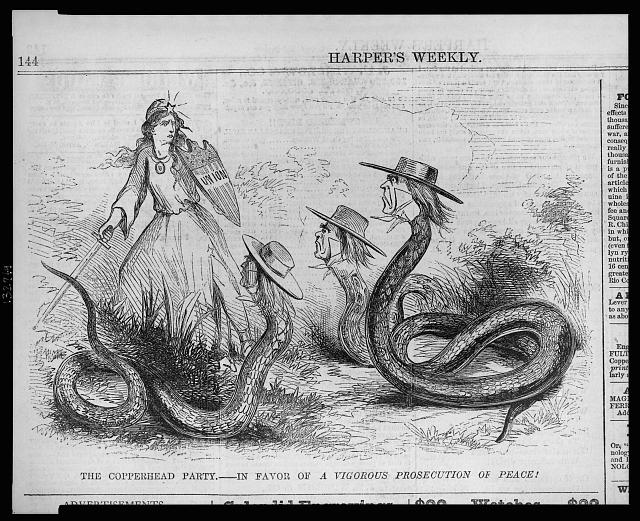
The copperhead party - in favor of a vigorous prosecution of peace! (arper's weekly, v. 7, no. 322 (1863 February 28), p. 144; LOC: LC-USZ62-132749 )

guerrilla operations no more – peaceniks out in the open for separation

A pro-Union editorial saying that Northerners who propose compromise and peace are really supporting Disunion because the South is never going to willingly rejoin the Union, with or without guarantees for slavery. Because the Administration has settled on its anti-slavery policy as part of its war strategy, those who publicly oppose Emancipation are actually opposing the war effort itself.

From The New-York Times February 2, 1863:

The Political Future Bolder Positions and Clearer Issues.

The Northern auxiliaries of JEFF. DAVIS must soon give up their bush-fighting. It has served them a good turn. They owe to it all their success hitherto. But it could not last. No sort of bushwhacking ever does. People come to understand it, and when it is understood there is an end of it. Counterfeited flags, stolen uniforms, false alarms, decoys, traps, ambuscades, doublings on the track, and all the other means of deception, known to the political guerrilla quite as well as to any other, after a while — especially in earnest times like these — lose their effect. There is no alternative, then, but to take a little more courage, and change to regular warfare. This transition is now going on. These rebel allies are gathering fresh boldness every day, and are fast ranging themselves under their true colors in the open field. We may expect straightforward battle from them soon. It will be this political battle, quite as much as any other, that will decide the fate of the Union.
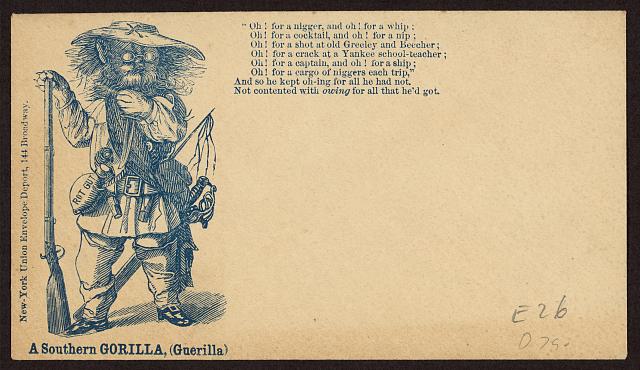
A Southern Gorilla, (Guerilla) (between 1861 and 1865; LOC: LC-DIG-ppmsca-11336)

Guerilla warrior

The political controversy has at last come to this supreme and plain issue: War and Union, or Peace and Separation. All other issues have dwindled, and are fast disappearing. People have differed about the Emancipation Proclamation, about arbitrary arrests, about the financial policy of the Administration, about the comparative merits of different Generals, and about many other matters, and the rebel sympathizers of the North have done their best to magnify these differences and turn them against the Government. It was the consummate art with which this variance was stimulated, under false professions of devotion to the war and the Union, that was the chief agency in giving the Fall elections their strange results. But their management no longer answers its purpose. Its impelling motive is at last understood; and so, too, is its fatal tendency. All true National men are agreeing to bury these differences, and bend their energies to the one great end of crushing the rebellion. All others are going over outright to an Anti-War position, and acknowledging the leadership of VALLANDIGHAM, COX, and their compeers, who have opposed the war from the outset — who opposed it while MCCLELLAN was still Commanding-General, while the Administration was doing its utmost to prevent interference with the slaves, and long before such a thing as arbitrary arrest, in a loyal State, was heard of or thought of. Thus the parties are consolidating. Every man will speedily have to find his place on the one side or the other.
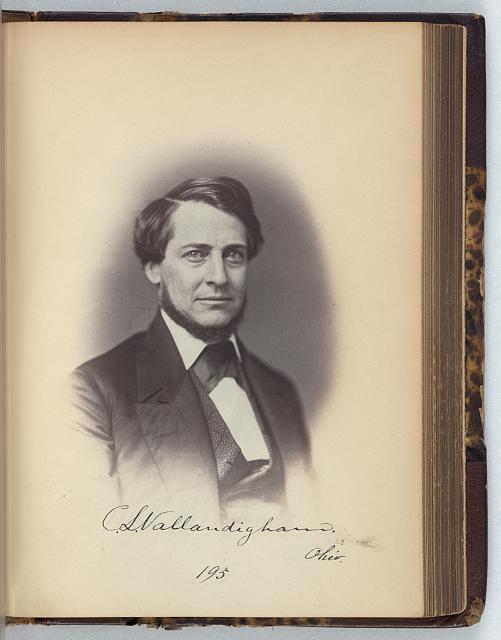
Clement L. Vallandigham, Representative from Ohio, Thirty-fifth Congress, half-length portrait (by Julian Vannerson, 1859; LOC: LC-DIG-ppmsca-26734)

Anti-War leader

The day of the supreme test of devotion to the country has come. An absolute sacrifice of every extraneous consideration is required. The time has passed for conditional loyalty. The man who subordinates his present patriotic duty to this or that favorite object or favorite policy of his own, thereby proves himself a false man, and, at heart, no better than a traitor. The Government, after long deliberation, has fixed its war policy in reference to Slavery. While that policy was under consideration it was a fair subject for public discussion. It was discussed everywhere and thoroughly. In the light of that discussion, as well as of the new developments of the war, the Government settled upon its action. There is not the slightest ground for believing that this action will be reversed, or materially modified. It is no longer an open question. The policy, wise or unwise, is henceforth an inseparable part of the war itself. If there [b]e those who don’t like it, it is their duty to acquiesce in it. To stand out against it, in this stage of the matter, is practically equivalent to opposing the war itself. This, in effect, is nothing more or less than making the preservation of the nation subordinate to the preservation of Slavery; for it is certain that without further war the rebellion must prevail, and the nation go down.

Of course, acquiescence in the general war policy of the Administration need not impose silence as to the practical conduct of the war. Whatever use the Government may choose to make of its war power in relation to Slavery, it is bound, none the less, to take care that the war itself is prosecuted with all possible skill and vigor. If it fails in this, its best friends may consistently rebuke it; nay, their duty is so to do. The more devoted one is to the war, the more faithful ought he to be in protesting against its delays and its blunders. There is all the difference in the world between such anxiety to have the war prosper, and the desire that it should be abandoned; though similar criticisms may often be prompted by both feelings. The rebel sympathizer does all that he can to render the war unpopular, and this makes it all the more the duty of every loyal man to do all that he can, both by word and act, to render it successful.

The idea of compromise has been a mockery and a snare from the beginning; but we owe it to the candor of the rebels that it is now better understood. They have always declared that they will never consent to reunion; but at no time with greater emphasis than since the election successes of the opponents of the Administration. They hailed those successes simply as the harbingers of the acknowledgment of their independence. Not a public journal, nor a public man in the Confederacy gave them any other construction. Not one of them, so far as is known here, with whatever antecedents, has ventured to admit either the desirableness or the possibility of taking new guaranties for Slavery, and coming back into the Union. They have all unanimously scouted it — and not only in the most positive, but in the most contemptuous manner. They no longer know the word compromise, and it is high time it should be dropped out of our own political vocabulary. Even if we were abject enough to entertain the question, War or Compromise? the chance is denied us. Our only choice is between War and Disruption. Our political contests from this time on to the end must be fought on that ground only. The South, precisely because it made Slavery its supreme consideration, sacrificed the Union. Those in the North, who also make Slavery the first consideration, consistently join in the same parricidal work. It has had to come to that. There is no middle ground.

Here, then, is the real issue. All true public men should mark it, and stand unflinchingly up to it. There should be no dissensions among them, no invidious references to the past. Agreeing upon the vital matter of sustaining the war, and with it the present Anti-Slavery war policy, as now the sole means of saving the unity of the nation, they should be united as one man, and hold firm to the end against traitors and the abettors of traitors. They will triumph in the end, as surely as there is a faithful people around them, and a just Heaven above them.
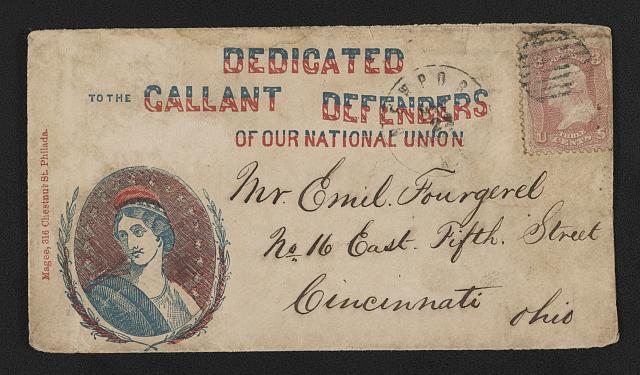
Civil War envelope showing bust of Columbia encircled with laurel branches bearing message "Dedicated to the gallant defenders of our National Union" (by James Magee, between 1861 and 1865; LOC: LC-DIG-ppmsca-31701)

“will triumph in the end”

Posted in 150 Years Ago This Week, Confederate States of America, Lincoln Administration, Northern Politics During War | Tagged , , , | Leave a comment

Ahoy, Y’all!

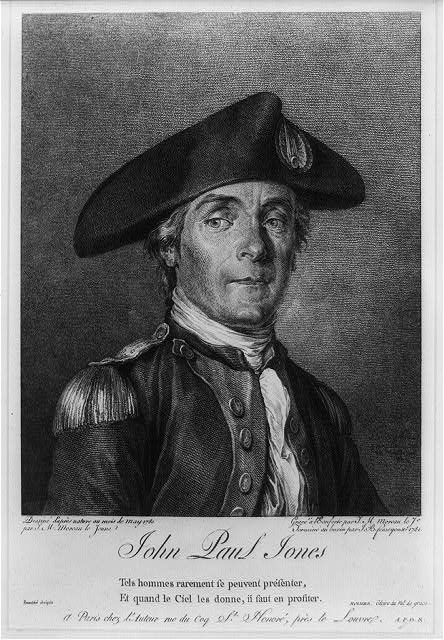
John Paul Jones (by Jean Michel Moreau c.1780; LOC: LC-USZ62-10884)

inspiring Semmes, Maffitt, et al

Confederate Navy hasn’t begun to fight.

A Southern editorial from 150 years ago today thinks the Confederate government should wake up to the potential of a bigger Confederate navy.

From the Richmond Daily Dispatch February 2, 1863:

The Confederate Navy.

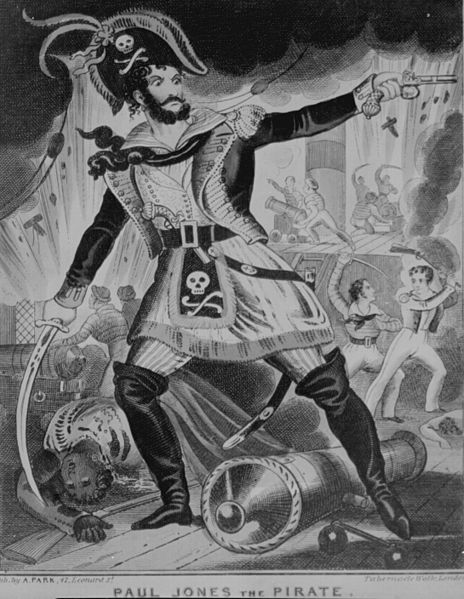
Since the days of Paul Jones there have been no achievements of a single ship in naval warfare as brilliant as those of the Alabama. Capt. Semmes has won for himself and his country imperishable laurels. The Florida , which has just put to sea under her gallant commander, bids fair to rival the renown of the Alabama. The Navy Department and the Confederate Congress ought to devote their utmost energies to putting more ships afloat, and giving an opportunity to our gallant naval offices to distinguish themselves and render service to the Confederacy. The is the only arena upon which we can carry on aggressive warfare against the Yankees, and touch them in the vital spot of both their pride and interests. The extreme sensitiveness manifested in their commercial circles to the operations of a single ship, the Alabama shown us their weak spot, and we should strike at it with all our power. With all the boasted prowess of the Yankee upon the deep, we believe that a Confederate navy can be built up which will make the sea as uncomfortable to them as the shore, and drive their commerce — the source of all their wealth — from the face of the [earth, ocean?]

"Paul Jones the pirate", British caricature (engraving) of American naval commander John Paul Jones

Paul Jones to the Brits like Semmes to the North

Posted in 150 Years Ago This Week, Confederate States of America, Naval Matters | Tagged , , , , | Leave a comment

Like Eating Fish on Friday?

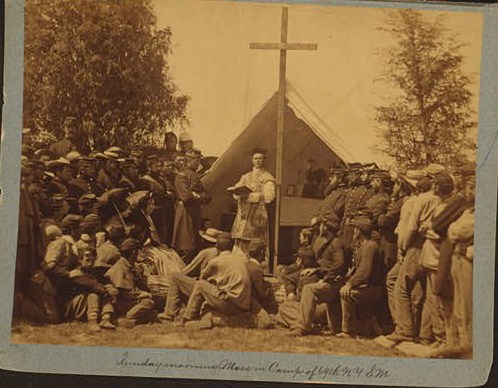
Sunday morning mass in camp of 69th N.Y.S.M. (photographed 1861, printed later; LOC: LC-USZC4-7964)

in the Abolition camp

150 years ago this week the Dispatch reported on an editorial in The Times of London that compared slavery with some practices of Roman Catholicism – the Bible might frown on some of the activities of each but does not outright forbid either. And only slavery has a national government using its war power to try to abolish it. The Richmond paper also points out that much of the English press condemned the editorial in The Times.

From the Richmond Daily Dispatch January 29, 1863:

The London times and the scriptural view of slavery.

In an editorial of the London Times, commenting on the share Messrs. Beecher, Chever, Tyng, and others, have taken in this war, the following paragraph occurs:

These gentlemen preach not for an infallible or an established church, for no such church has yet ventured to be as dogmatic and positive on this point as they are. They preach with the Bible in their hands. In that book there is not one single text that can be perverted to prove slavery unlawful, though there is much which naturally tends to its mitigation, its elevation, and its final extinction. In the New Testament we have an epistle written by the man who represents the last revealed phase and development of the Gospel, sent by the hand of a runaway slave, who had sought a refuge with the writer, to his lawful master, to the purport that the master and his slave were to get on better and do their duty to one another more thoroughly for the future. The same writer tells his recent converts that if they are slaves they must make the best of that condition, and not try to escape it, at least by any means contrary to the laws of the country. The only possible doubt about the exact meaning of his advice is, whether the slaves are to refuse their liberty, even if it be offered, or whether they are merely to remain true to their masters, even if chance presents the opportunity of escape. The context, which says that a faithful and dutiful Christian slave becomes the freedman of his Heavenly Master, clearly proves that a slave who refuses the offer of freedom has a high scriptural argument for his choice. If it be said that slavery is at variance with the spirit of the Gospel, so also are a good many things which are not yet laid under the ban of Abolition, or threatened with the “war power.” Sumptuous fare, purple and fine linen, wealth, ecclesiastical titles, unmarried clergy, good clerical incomes, and many other things are contrary to the spirit of the Gospel, or, at least, can be proved so as easily as slavery. But the Roman Catholics have just as much to say for any one of their peculiar doctrines as the Abolitionists have for their one article of a standing or falling community. Whether the Confederates have done right to throw off the Union is a distinct question, but they cannot have a better defence than a proclamation of war to the knife, a solemn invocation of the “war power” against every slaveowner who still claims the duty of his slave.

This has raised a decided commotion among the Exeter Hall papers of England, and we give the following sample, shaving from the mass. It is from the Liverpool Post:

The Times has raised a lion in the path of the Southern Confederacy. For a long period it has supported the Southern cause by every argument ingenuity could suggest, and by every statement an easy and sanguine credulity could adopt. Southerners, themselves, have been startled by the vehemency of the Times’s advocacy and the strength of its assertions. At length it has gone beyond bounds, and overreached itself. –King Public will suffer his royal ear to be abused a good deal, but there are things to which he will not hearken, and which he must resent. The Times has actually gone the length of advocating slavery, or at least of asserting that Christianity and the Bible say nothing against it; and this has proved too much for the mental stomach of the English people. On all sides indignant repudiations are heard. Nearly the whole press has raised its voice in denunciation of this godless and illiberal doctrine. Unless we greatly mistake the signs of the times a reaction will set in from this point. Men will begin to ask themselves what amount of confidence need be placed in a journal which, at its clients’s bidding, goes so far as to cast aside British prejudices in favor of freedom, and to justify slavery almost as boldly as Mr. Stephens [slavery was the Cornerstone of the Confederacy], the Vice-President of the Southern Confederacy could do.

Posted in 150 Years Ago This Week, Foreign Relations, Southern Society | Tagged , , , | Leave a comment

Basket Case

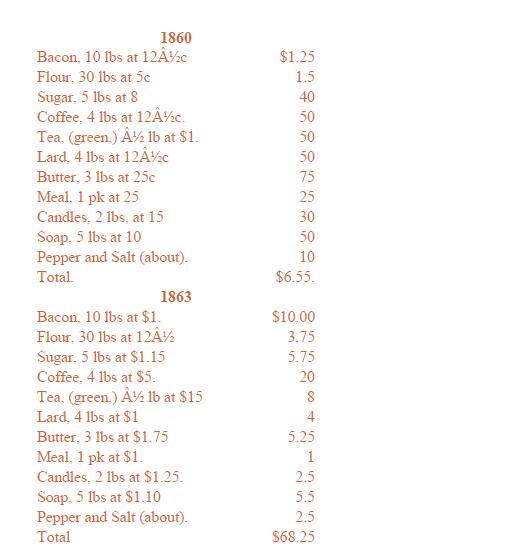
Comparing market baskets from 1860 and 1863

A newspaper in the Confederate capital compared antebellum prices with 1863 prices and helped quantified the high inflation in Richmond since the war began (the basics in the baskets were at least ten times more expensive). The publication then jumped to the conclusion that the problem was solely the result of speculators charging exorbitant prices.

From the Richmond Daily Dispatch January 29, 1863:

The Results of extortion and Speculation.

–The state of affairs brought about by the speculating and extortion practiced upon the public cannot be better illustrated than by the following grocery bill for one week for a small family, in which the prices before the war and those of the present are compared:

Market Baskets

So much we owe the speculators, who have staid at home to prey upon the necessities of their fellow citizens.

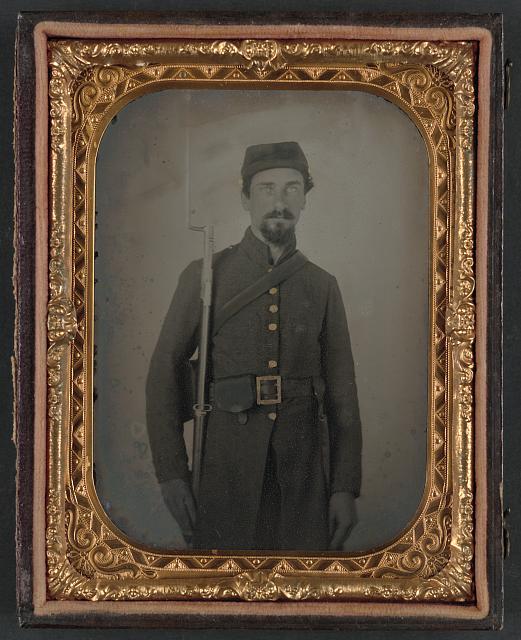
Unidentified private in Confederate uniform and Georgia frame buckle with bayoneted musket (between 1861 and 1865; LOC: LC-DIG-ppmsca-32479)

what the speculators should be doing

And the editors knew exactly what to do with these speculators.

From the same issue:

Put them in the army.

Our Generals can do no better service at present than seizing all the extortioners who are selling articles at such enormous prices to the soldiers and putting them in the army. Fellows who can make such famous charges should have bayonets put in their hands at once, and try their charging qualities upon the enemy.

_________________________________________________

It might not have been extortion. According to
InflationData.com
, the most important factor in the Southern price increases was the expansion of the money supply.

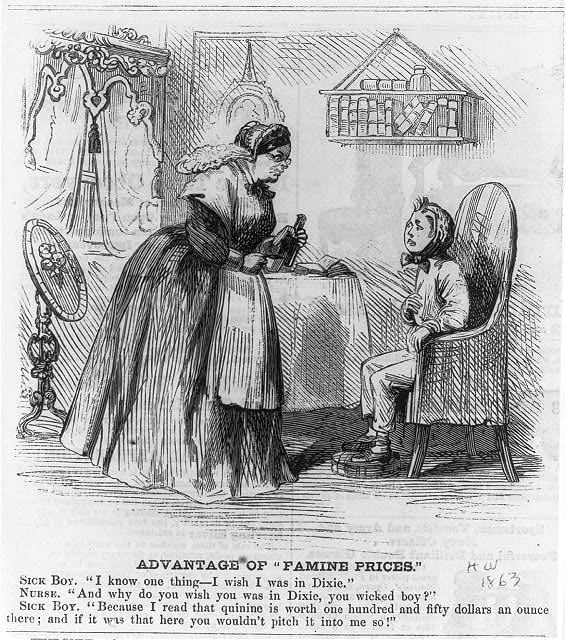
Advantage of famine prices (Harper's Weekly, November 14, 1863; LOC: LC-USZ62-48350)

Hooray! for Dixie (prices)

Posted in 150 Years Ago This Week, Confederate States of America, Southern Society | Tagged , | Leave a comment

All Hands on Deck

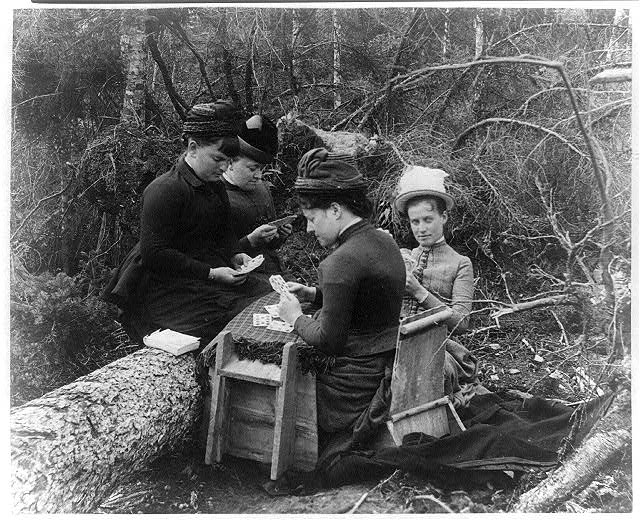
The “Sumpter” hasn’t made an appearance today. Knowing him, he’s out trolling the woods, looking for a hot game of canasta.

Mrs. Cox, Miss Townsend, Mrs. Rowland, Mrs. Phills (?) playing cards at 1st falls of Socateau River, Maine (by Joseph John Kirkbridge, between 1884 and 1891; LOC:  LC-USZ62-25358)

Posted in Uncategorized | Leave a comment

Burned up

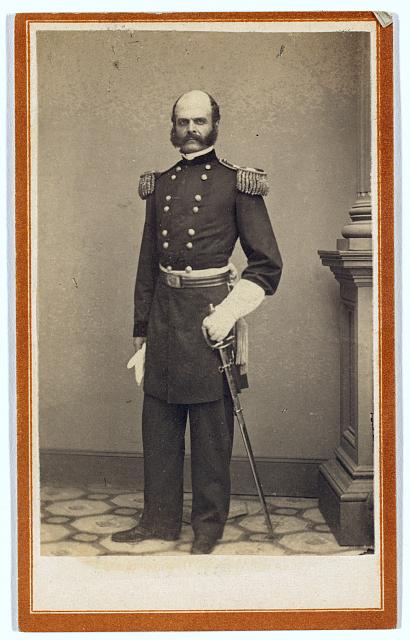
Gen'l. Burnside (ca. 1861; LOC: LC-DIG-ppmsca-08350)

got no co-operation, no support

A Democrat publication in western New York state uses Ambrose Burnside’s resignation from command of the Army of the Potomac as reason to launch another tirade against the Lincoln Administration.

From a Seneca County, New York newspaper in 1863:

Resignation of Gen. Burnside.

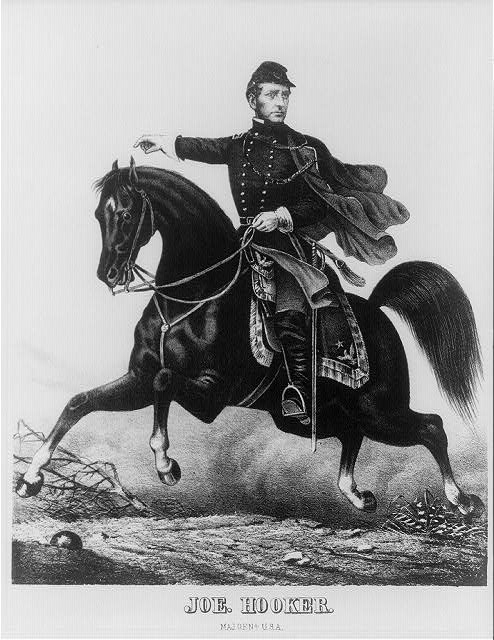
Gen. BURNSIDE on Monday [President Lincoln issued the order on Sunday, January 25, 1863] resigned the command of the Army of the Potomac, and his resignation was immediately accepted by the President. Major Gen HOOKER is now in chief command. Generals SUMNER and FRANKLIN have also been relieved of their respective commands, and thus we have in one week, the resignations of three of the most distinguished officers in our army – It is understood that Gen. BURNSIDE has repeatedly asked to be relieved, on account of not having the active co-operation of the War Department, as well as the cordial support of some of the Generals under his immediate command. This is truly a strange state of affairs, and it would seem that the threats, which of late have reached us from the War Department, are about to be realized. It has been given out that the Army of the Potomac is to be destroyed. The conduct of the Administration toward the gallant army has tended to its demoralization, and it will be impossible much longer to conceal the real purpose of the partisan maneuverers, who have disposed of its destinies from their closets at Washington.

Hon. Edwin M. Stanton (between 1855 and 1865]; LOC:  LC-DIG-cwpbh-02150)

aiming to destroy the Army of the Potomac?

The people have no longer any confidence in the Administration, nor the Administration in the army, nor the army in its commanders. The shameful malpractices of the President and his cabinet have disgusted the country, and crippled the national credit. The army in the field is fast diminishing by desertion, disease and slaughter; and it is morally impossible, in the present condition of things, to augment the thinned out ranks by a single recruit. Nothing but disaster stares us in the face. After almost two years of desperate conflict, we find ourselves financially bankrupt, with the flower of our manhood, mercilessly sacrigced [sacrificed] and not a single substantial result achieved.

It must be painfully apparent to even the most prejudiced, that the confidence of the people in the government can never be restored while a vestage of the present cabinet infests the Capital. The masses have suffered too long, and too much, to be deluded into even a lukewarm faith in the corrupt partisan Administration that has well nigh destroyed the country we love, its institutions, and all that is sacred in its association and memorable in its history. – Will the Administration listen to the voice of reason, – of the people, or will it allow the hopes of patriotism to languish in the atmosphere of disappointment?

Joe Hooker, Maj. Genl., U.S.A. (between 1862 and 1864; LOC: LC-USZ62-35089)

not exactly riding to the rescue? Hooker takes charge in a “strange state of affairs”

Posted in 150 Years Ago This Week, Lincoln Administration, Military Matters, Northern Politics During War | Tagged , , | Leave a comment

The Good Ship America

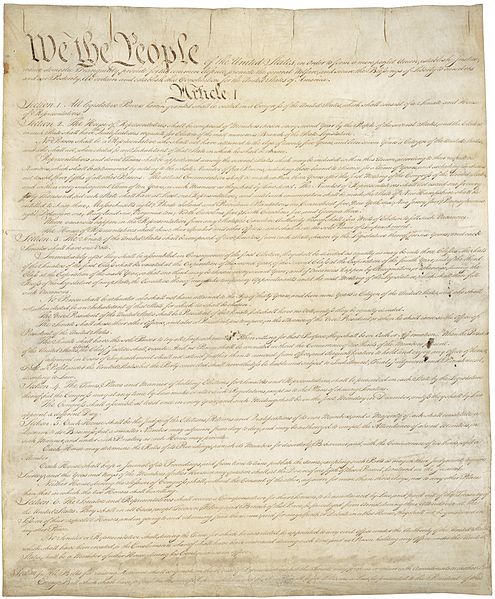
Constitution of the United States page 1

precious cargo

Eventually Headed for Peaceful Waters – if a Democrat at the Helm

Peace Democrat James Wall has his work cut out for him in the five weeks he’s going to be in the United States Senate.

From the Richmond Daily Dispatch January 28, 1863:

Address of a Newly-elected U. S. Senator.

Col. Wall, the recently elected U. S. Senator from New Jersey, was serenaded in Philadelphia on the 21st inst. He was introduced by Mr. James C. Vandyke in a brief speech, in which a eulogy was paid to the words “traitor,” “rebel”–words which he said had more than ordinary significance because Washington and his compatriots were proud to be honored with such appellations. We extract the following from his speech, as reported in the Press:

I know, fellow-citizens, that there are many of us here to-night who, like honest Gonsalvo in Shakespeare’s play of the Tempest, would give a “furlong of sea for a barren acre of ground.” My friends, we must stick to the ship, and, whatever be its fate, you and I must share its destiny. There is a precious freight on board this tempest tossed bark. The waters are white with the foam beneath her bow. There is no time to take to the long boat. That tempest-tossed vessel is freighted also with the precious Constitution our fathers gave us. The compass by which they steered it is still on board that vessel, and in order to preserve it we have got to stick to the ship. [Cries of “that’s so,” and cheers] My friends, there are men now navigating that vessel who are attempting to steer her by the compass of coercion, and to drive her by the chart of a “higher law.” [Cheers and counter cheers] It is to watch these men that we have got to stick to the ship. I do not believe that the old vessel will ever be saved until a Democratic commander again walks the deck [cheers] and the strong hand of a Democratic pilot is upon her helm. [Renewed applause and cheers for Wall]

The copperhead party - in favor of a vigorous prosecution of peace! (arper's weekly, v. 7, no. 322 (1863 February 28), p. 144; LOC:  LC-USZ62-132749 )

vigorous prosecution for the “calm and blessed shade of a long and lasting peace”

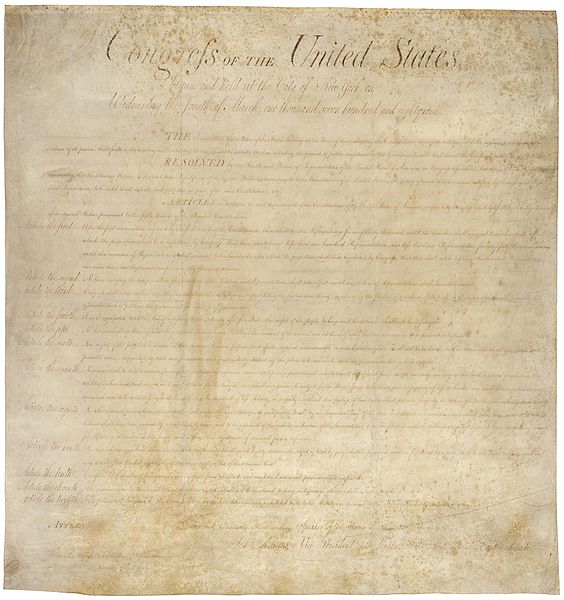
Fellow-citizens, I have recently at the hands of the Legislature of the State of New Jersey, [three cheers] been tendered the responsible office of Senator of the United States. I go there, my friends, as I understand it, to advocate as far as my limited abilities will permit — to advocate, I say, peace in that body. [Cheers for “peace.”] I cannot say, my friends, how this is to be brought about, but I believe I speak the sentiments of the people of New Jersey, and not only of the people of New Jersey, but of the loyal people of Pennsylvania, when I say that they will hail the hour, that shall bring us from out this lurid tempest of war into the calm and blessed shade of a long and lasting peace. [Cheers] My friends, I go, also, as I understand it, upon the floor of the Senate of the U. States to advocate those great principles of civil liberty which were handed down to us from our fathers [renewed cheers,] those great principles which are embodied in the amendments to the Constitution of the United States, every one of which I am sorry to say, has been trampled under foot by the present Administration. [Applause]

The Bill of Rights, the first ten amendments to the United States Constitution

trampled on by Lincoln administration

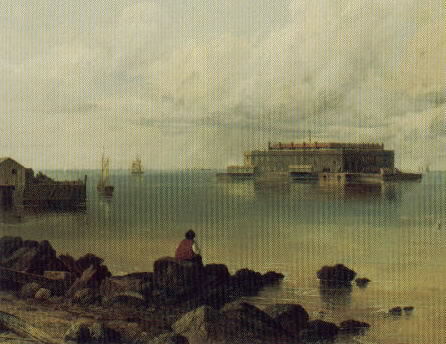
Gentlemen, you will recollect that it is but a few months ago that men were afraid to express the truth that was in them; but now, how great the charge! A short time ago, I gentlemen, endured obioquy and insult of the grossest character. Aye, my family had to submit to the grossest insults in the city of Burlington, and my daughters insulted by the wenches on the streets. When I ventured to complain I was charged with disloyalty. I have had no distinct accusation against me, though I have time after time demanded to know it. I wrote to Mr. Cameron to know why I had been imprisoned in the dungeons of Fort Lafayette. [Cheers and groans for Cameron.] But, gentlemen, after I had been imprisoned for weeks, and then let free, I wrote to Mr. William H. Seward. I said: “Sir, I have written to the Secretary of War for the purpose of being informed why I was put in the bastiles of the Administration; now please tell me why I was let out? [Cheers and laugher.] I have not been able to find out either.

Charles W. Carrigan followed in a short speech and the crowd soon after dispersed. The band played numerous tunes, but not one was of a national character.

The Cincinnati Enquirer thus commends the action of its political allies in New Jersey:

Col. Wall was one of the first victims thrown into the Administration bastile in New York by Simon Cameron. He is an able, bold, and eloquent man, and has been opposed to the war from the start. He is just the man for Senator. The Administration throws him into a bastile — the people make him Senator.

Fort_Lafayette_Brooklyn

Retaining Wall: Why was he detained, why let out? Lincoln Administration is mum

Posted in 150 Years Ago This Week, Lincoln Administration, Northern Politics During War, Northern Society | Tagged , , , , | Leave a comment

Rule, Britannia! rule the waves

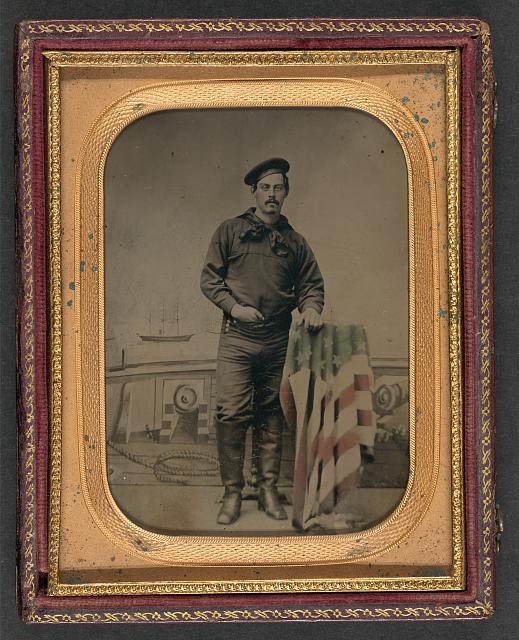
Unidentified sailor in Union uniform resting hand on American flag-draped table in front of painted backdrop showing naval scene (between 1861 and 1865; LOC: LC-DIG-ppmsca-36955)

Yankees “make very good sailors”

The following Southern editorial questions why Great Britain was remaining neutral during the American Civil War because, if the American states had not broken up, the United States would have eventually overtaken Britain as the world’s leading maritime power. The tone seems a bit wistful – what might have been “If the fanaticism of New England had not overthrown the old Constitution and Government …”

From the Richmond Daily Dispatch January 26, 1863:

The naval power of the United States.

We have never denied that, whilst the Yankees are rather indifferent soldiers, they make very good sailors. They have had long training, and have attained great proficiency, in maritime matters.–From the moment when their enterprise in the whale fisheries extorted the eloquent panegyric of Burke to the present day, they have shown unusual aptitude for a sea life. The fishing bounties, the monopoly of the coasting trade, and the vast carrying trade between America and Europe have given full scope and exposure to their great maritime energies. If the fanaticism of New England had not overthrown the old Constitution and Government, the United States would have soon be come the first commercial and naval power of the world. A third war with England, which would have been inevitable would have transferred the undisputed capture of the seas to American bands, and the lapse of another century would have placed the Old World at the feet of the New.

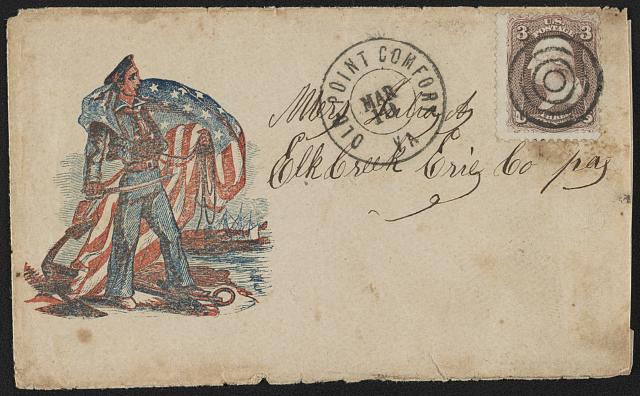
Civil War envelope showing sailor standing on anchor and holding sword, rope, and American flag (between 1861 and 1865; LOC: LC-DIG-ppmsca-31960)

North must “give up its proud ambition of being a first-rate naval and commercial power”

But such seems not to have been the design of Providence. The nerves and sinews of that maritime power which threatened to overwhelm the earth have been abruptly sundered in the dissolution of the Union. The land which furnished Yankeedom the great staples of its commerce, which furnished it the fishing bounties that trained its seaman, and even the very live oak, pine, tar, and hemp that equipped its ships, has been lost forever to the United States. It must hereafter give up its proud ambition of being a first-rate naval and commercial power. No wonder that it puts forth such gigantic efforts in this war. Those efforts are for self- preservation, over more than for Southern subjugation. The latter is now sought as a means to an end, and that end is, to keep itself on the map of the world. It is astonishing that England, which sees and knows the[s]e facts, statedly and perseveringly maintain the position of us [so?] called neutrality, and deliberately incur the hazard of a restoration of her old rival to the capacity of inflicting upon her at a future period the ruin of her commercial and naval ascendancy. So soon as the United States triumph in this struggle, which happily is now out of the question — so soon Britancia will cease to rule the waves, and a hundred years ago [?] will become a solitary barren side of the ocean.

Edmund Burke spoke about the American whaling industry in a speech arguing for conciliation with the American colonies in the House of Commons on March 22, 1775:

…look at the manner in which the people of New England have of late carried on the whale fishery … No sea but what is vexed by their fisheries; no climate that is not witness to their toils. Neither the perseverance of Holland, nor the activity of France, nor the dexterous and firm sagacity of English enterprise ever carried this most perilous mode of hardy industry to the extent to which it has been pushed by this recent people; a people who are still, as it were, but in the gristle, and not yet hardened into the bone of manhood. When I contemplate these things; when I know that the Colonies in general owe little or nothing to any care of ours, and that they are not squeezed into this happy form by the constraints of watchful and suspicious government, but that, through a wise and salutary neglect, a generous nature has been suffered to take her own way to perfection; when I reflect upon these effects, when I see how profitable they have been to us, I feel all the pride of power sink, and all presumption in the wisdom of human contrivances melt and die away within me. My rigor relents. I pardon something to the spirit of liberty.

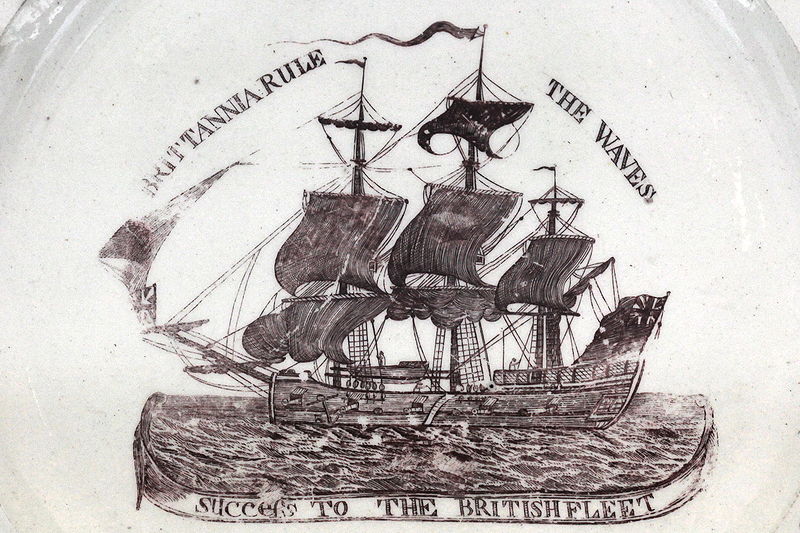
Rule, Britannia! was written in the first half of the eighteenth century:

“Rule, Britannia! rule the waves:
“Britons never will be slaves.”

Decorated plate made in Liverpool circa 1793-1794 On display at Château de Vizille, accession number MRF 1991-18.

unless “the United States triumph in this struggle”

The Britannia image is licensed by Creative Commons

Posted in 150 Years Ago This Week, American Society, Naval Matters, Southern Society | Tagged , , | Leave a comment

‘Lincoln rheumatism’ stirs hearts

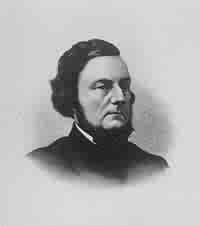
James Walter Wall

arm in a sling

In January 1863 the New Jersey legislature had to elect someone to serve out a U.S. senator’s term that would end in March of that year. One of the contenders was Democrat James Walter Wall, who had been locked up in Fort Lafayette for several weeks because of his involvement with the pro-Southern, pro-peace New York Daily News (not the same as today’s paper). Apparently, when Mr. Wall showed up in Trenton visibly effected by his captivity in the “American Bastille”, legislative hearts were moved and his election was secured.

Since Republicans are Abolitionists, “Mulatto Democrats” was a Democrat label for New Jersey Democrats who weren’t strongly enough opposed to the Lincoln administration.

One of the delegates presented a petition stating concerns about an influx of emancipated slaves into the state.

Here’s a report from Trenton via the Confederate capital.

From the Richmond Daily Dispatch January 24, 1863:

The New Je[rsey] Senatorial Election.

From the Trenton correspondence (January 14) of the New York Herald, we copy the following:

The nomination of Colonel Wall as United States Senator for the short term, has changed the whole programme for the long term. He was a candidate for that and not for the short term. But his friends began to doubt their ability to carry him against the combination and perfect organization of the other candidates. Mr. Wall himself had taken no pains to secure his nomination. He had said that his friends were at liberty to use his name for the six-year term, but that he should make no personal exertions to obtain it. His health has been very much impaired by confinement in Fort Lafayette, so much so that until yesterday he had not been out of his own house but a few times in three months. On Monday afternoon he was telegraphed from this city to know if he would accept the short term. His answer was short and characteristic–“No, never.” Yesterday his friends were telegraphing him all day that he “must accept,” and be sending back the uniform answer to every dispatch, “I will not under any circumstances.” Finding his friends were determined to use his name before the caucus last evening, he came up on a late train in the afternoon to personally forbid it. But his presence only added enthusiasm to the determination of his friends. His pale visage, with his left arm in a sling — his arm having been paralyzed with [rheuma?]tism almost over since he came out of Fort Lafayette–did the business both for himself and all the other candidates. He was still inexecrable that he would not have the short term. His friends were equally resolved that he should. A member of the Legislature who had been pledged to another candidate, on seeing Col. Wall in this condition, exclaimed, “Yes, by–, we will send him down to the United States Senate with that Lincoln rheumatism in a sling, where the necks of the infernal tyrants and scoundrels ought to be.”–This brought out the wildest demonstrations from the crowd. Still Wall was protesting, in language rather strong, that he would not have the short term, and kept up his protest until he was so entirely exhausted that he had to retire and go to bed at a private house before the hour for the caucus had arrived.

The friends of Gen. Cook–the most prominent candidate for the short term — were taken entirely by surprise by the of presenting Wall as his competition. Gen. Cook is the Chief Engineer of the Camden and Amboy Railroad, and is personally a gentleman of no inconsiderable popularity in this State. Had he not been considered a little too much of a war Democrat, he would probably have received the nomination for the short term unanimously.

They have a new name here for those Democrats who are still inclined to be a little merciful to Mr. Lincoln’s Administration, which is “Mulatto Democrats.” This decided hit originated with Mr. Lilly, of Lambertsville, late United States Consul to Calcutta. But there are not probably half a dozen Democrats of that complexion in the Legislature.

Dr. Stilley, Senator from Atlantic county, presented the following petition this morning, numerously signed by his constituents:

“In view of the large influx of the colored race among us, and their probably increasing migration into free States, caused by the emancipation policy of the present Administration, we, the undersigned, citizens of the First Congressional District, respectfully represent to your honorable bodies that the presence in our midst of this unprofitable and demoralizing class of people tends greatly to our injury, filling our aims-houses and jails, hindering our Courts, increasing our taxes, (already oppressive,) and reducing the wages of our working classes.” The same petition was presented in the lower House. There will be a bushel of such before the session is over.

Half-past 3 o’clock.

On joint ballot Colonel Wall has been elected by vote of 53 to 25, all of the Democratic members voting for him. The Abolitionists — what there are in both Houses — literally gnash their teeth. A member of the lower House from Camden, in a few bitter remarks, denounced him as “a Union patriot of the Confederate States.” The remark awakened hisses from the crowd of spectators, and one voice exclaimed, “O, you are only Forney’s dog. “–Not much of interest will transpire here until next Tuesday, when the Governor elect will be inaugurated.

Posted in 150 Years Ago This Month, Northern Politics During War, Northern Society | Tagged , , , | Leave a comment

“sublime Christian heroism”

150 years ago this week (January 19, 1863) President Lincoln responded to the working-men of Manchester, England, who had written him on New Year’s Eve to commend him for his Emancipation Proclamation and to encourage him to continue the work of eradicating slavery, regardless of the  economic pain the working-men were enduring because of the American Civil War:

TO THE WORKING-MEN OF MANCHESTER, ENGLAND.
EXECUTIVE MANSION, WASHINGTON, January, 1863.

TO THE WORKING-MEN OF MANCHESTER:

I have the honor to acknowledge the receipt of the address and resolutions which you sent me on the eve of the new year. When I came, on the 4th of March, 1861, through a free and constitutional election to fireside [?] in the Government of the United States, the country was found at the verge of civil war. Whatever might have been the cause, or whosesoever the fault, one duty, paramount to all others, was before me, namely, to maintain and preserve at once the Constitution and the integrity of the Federal Republic. A conscientious purpose to perform this duty is the key to all the measures of administration which have been and to all which will hereafter be pursued. Under our frame of government and my official oath, I could not depart from this purpose if I would. It is not always in the power of governments to enlarge or restrict the scope of moral results which follow the policies that they may deem it necessary for the public safety from time to time to adopt.

I have understood well that the duty of self-preservation rests solely with the American people; but I have at the same time been aware that favor or disfavor of foreign nations might have a material influence in enlarging or prolonging the struggle with disloyal men in which the country is engaged. A fair examination of history has served to authorize a belief that the past actions and influences of the United States were generally regarded as having been beneficial toward mankind. I have, therefore, reckoned upon the forbearance of nations. Circumstances—to some of which you kindly allude—induce me especially to expect that if justice and good faith should be practised by the United States, they would encounter no hostile influence on the part of Great Britain. It is now a pleasant duty to acknowledge the demonstration you have given of your desire that a spirit of amity and peace toward this country may prevail in the councils of your Queen, who is respected and esteemed in your own country only more than she is by the kindred nation which has its home on this side of the Atlantic.

I know and deeply deplore the sufferings which the workingmen at Manchester, and in all Europe, are called to endure in this crisis. It has been often and studiously represented that the attempt to overthrow this government, which was built upon the foundation of human rights, and to substitute for it one which should rest exclusively on the basis of human slavery, was likely to obtain the favor of Europe. Through the action of our disloyal citizens, the working-men of Europe have been subjected to severe trials, for the purpose of forcing their sanction to that attempt. Under the circumstance, I cannot but regard your decisive utterances upon the question as an instance of sublime Christian heroism which has not been surpassed in any age or in any country. It is indeed an energetic and inspiring assurance of the inherent power of truth and of the ultimate and universal triumph of justice, humanity, and freedom. I do not doubt that the sentiments, you have expressed will be sustained by your great nation; and, on the other hand, I have no hesitation in assuring you that they will excite admiration, esteem, and the most reciprocal feelings of friendship among the American people.

I hail this interchange of sentiment, therefore, as an augury that whatever else may happen, whatever misfortune may befall your country or my own, the peace and friendship which now exist between the two nations will be, as it shall be my desire to make them, perpetual.

A. LINCOLN.

You can read the letter from the working-men at answers.com:

As citizens of Manchester, assembled at the Free-Trade Hall, we beg to express our fraternal sentiments toward you and your country. We rejoice in your greatness as an outgrowth of England, whose blood and language you share, whose orderly and legal freedom you have applied to new circumstances, over a region immeasurably greater than our own. We honor your Free States, as a singularly happy abode for the working millions where industry is honored. One thing alone has, in the past, lessened our sympathy with your country and our confidence in it—we mean the ascendency of politicians who not merely maintained negro slavery, but desired to extend and root it more firmly. Since we have discerned, however, that the victory of the free North, in the war which has so sorely distressed us as well as afflicted you, will strike off the fetters of the slave, you have attracted our warm and earnest sympathy. We joyfully honor you, as the President, and the Congress with you, for many decisive steps toward practically exemplifying your belief in the words of your great founders: “All men are created free and equal.” …

Revealing Histories provides a lot of information about the Lancashire Cotton Famine.

Posted in 150 Years Ago This Week, Foreign Relations, Lincoln Administration | Tagged , , , , , , | Leave a comment